


Loading...
Loading...


When our team first began our iGEM project, we aimed to target the contemporary issue of pharmaceutical pollution by introducing a sustainable design to enable the feasible, robust and long-lasting deployment of our hardware. However, as we spoke to stakeholders across NHS England's healthcare and sustainability team, we slowly uncovered a gap between healthcare practices and pharmaceutical waste management in the UK.
According to Water UK [1], medications which are classified as cytotoxic/cytostatic “are not permitted to be directly discharged to foul sewers” under any circumstances. This stringency extends towards the rinsing of cytotoxic containers. However, patient bodily discharges containing “metabolised medications” are conversely permitted for sewage discharge. An issue arises when we consider that the degree of medication metabolisation is not black and white. According to Zhang et al., the degradation of cytotoxic medications by human metabolism can vary from 10–97% [2]. This can result in highly variable medication discharge rates by patients, roughly 3–90% [3]. This leaves the regulation of cytotoxic waste discharge up to the purview of individual healthcare providers, as metabolic rate statistics can be subjectively selected to bypass healthcare waste management regulations.
When we spoke to Dr Anne Woolridge, we learned that in England there is greater focus on cytotoxic exposure protection for personnel as opposed to downstream treatment. This can be seen in the Pan London Cytotoxic Policy, where advice provided to patients and carers for the management of chemotherapy waste primarily consists of measures to protect the patient and prevent sewage infrastructure from being damaged [4]. This was because effective sewage infrastructure is already prevalent in the UK and managed by water companies. However, more and more research has shown that even tertiary wastewater treatment solutions which utilise membrane bioreactors are only able to remove up to 51% of hydrophilic cisplatin [5]. This is backed by a study conducted by Vyas, Turner and Sewell [6] in a major UK hospital (Derriford, Plymouth), where it was shown that an average of 22% of platinum compounds was detected in their hospital wastewater outflows post-conventional wastewater treatment. This made our team realise there was an increasing discrepancy between the knowledge generated by academics and what is practised in accordance with healthcare regulations in hospitals and clinics.
Furthermore, through our conversations with Anne O'Connor and Dr Kumud Kantilal, we learned that chemotherapy outpatient treatment is increasingly becoming the norm as oncological treatments improve, increasing the availability of hospital ward space for critical patients. Although this allows the patient to be discharged after the chemotherapy drugs are administered, their bodily fluids can stay hazardous for up to seven days after treatment [4]. Hence, there is a significant proportion of patients for whom excreted cytotoxic residues cannot be captured by any in-house wastewater treatment systems which hospitals utilise.
Lastly, our conversations with Joe Burton and Dr Sharon Pfleger revealed a gap in the sustainability priorities of healthcare systems in England. According to NHS England [7], as part of their clinical waste strategy initiative, there is a predominant focus on eliminating waste outflows and converting them into a potential resource. A large driver of this strategy is the sustainability team's goal of reaching net zero carbon by 2040 for direct emissions and 2045 for indirect emissions. However, this was incongruent with our conversations with Sharon, who leads the One Health Breakthrough Partnership in NHS Scotland. She highlighted the importance of effectively managing pharmaceutical waste as part of the NHS's overall sustainability strategy and highlighted the political bias associated with net zero carbon targets. This made our team realise that we also had to provide a comprehensive and objective overview of the impact of pharmaceutical pollution and allow institutions to decide for themselves the importance of treating this problem as part of their sustainability strategies.
In summary, through our project we hope to make significant contributions in rectifying these three underlying issues we discovered through our stakeholder interactions:
Improve awareness of pharmaceutical pollution and the mismanagement of cytotoxic waste in healthcare institutions by translating academic knowledge into comprehensive and easy-to-understand concepts for the public and healthcare workers to adopt.
Acknowledge a regulatory and institutional issue with pharmaceutical waste management in England by highlighting inefficiencies and regulatory gaps in the treatment of hospital wastewater by conventional wastewater treatment.
Develop a flexible point-of-source hardware device which can accommodate outpatient chemotherapy treatment to ensure discharged cytotoxic residues can be captured at all bathroom wastewater outflows.
During the conceptualisation of SHELLter, the team decided on three core values that our project and its human practices would embody. Although the values may seem abstract and generalised at first, our team transformed them into specific working principles which shaped our project's direction.
To our team, being responsible meant constantly adapting our human practices work throughout the project to focus precisely on a problem real communities need and one which is currently being overlooked at an institutional level. Our work revealed an underlying issue which plagues the feasible deployment of sustainability projects, and an invisible pollution which has long gone unregulated despite general awareness of the situation. This was exacerbated by our interactions with patients and staff at the CPPAG meeting, who highlighted that they were unaware that platinum-based drug residues are able to bypass conventional wastewater treatment systems. Despite the difficulty of needing to remain flexible with design and project considerations, our team made an effort to always shift our project direction to the needs of the people. Responsibility for us also meant adapting our hardware and wet lab research to cater to results, metrics and functions that would contribute to deploying future environmental remediation projects.
This value governed our team's workflow, our stakeholder engagement process and, most importantly, the patients who are impacted by our project. Care meant recognising the aspect of humanity beyond the science of the project and actively engaging with patients and vulnerable communities to ensure we build proper safeguards, shape the project towards their needs and build something relevant to their community. This also meant forgoing certain design concepts and communication strategies if it meant we could protect the people who were already under a great burden.
Our team established honesty from our very foundation, and it was the most difficult value to uphold under competition pressure. The temptation to publish a polished and profound project consistently persuaded us to deliver a success story for teams and judges alike to marvel at. Instead, we committed to documenting and reflecting on our project's flaws and the barriers we failed to overcome. We identified these flaws, such as working with pre-processed chitin instead of shellfish waste, and evaluated how our choices impacted the final interpretation of our results and design choices. Throughout our stakeholder interactions, we also did not receive complete support for our project, and some stakeholders even highlighted its potential downfalls. We took the time to evaluate their opinions and focused on how we could change the project feasibly, whilst being mindful to critically evaluate their opinions against our own research and testing.
Click here to find out how we approached our stakeholder engagement and learn what we discussed!
When our team developed the very first iteration of SHELLter, we based the project on a few early assumptions. These were: an in-house hospital wastewater treatment technology, chelating specificity to cisplatin, hospitals serving as our primary customer base, and a reliable, cost-effective supply of discarded shellfish waste throughout England. We created this base-case scenario to start conceptualising and compartmentalising the relevant stakeholder groups we needed to engage. These were mapped under the four sub-groups below (click one to meet who we spoke to):
Patient & Public Involvement, Doctors, Pharmacists & Hospital Staff
To better understand the deployment setting and requirements of patients and hospital staff.
Water IndustryWastewater Treatment Industry & Water Quality Regulators
To understand the local wastewater treatment systems and regulatory requirements the team would need to abide by.
Academic / ExpertProject Feedback & Direction, Idea Refinement & Conceptualisation
To validate the technical aspects of our ideas and further refine the practicality and accuracy of our wet-lab and dry-lab work.
Shellfish / Food Waste IndustryAquaculture Industry & Food Waste Management
To understand the facets of our feedstocks, their supply-chain feasibility and market attractiveness for practical usage.
Human Practices was fundamental to SHELLter's final design and hardware conceptualisation. Our interactions with stakeholders across academia, healthcare, and the water and aquaculture industries revealed key insights which allowed us to refine our project's feasibility and specificity to a target audience.
Summary of how stakeholder feedback changed SHELLter
Public awareness of pharmaceutical pollution is low.
We changedWe started grassroots outreach with Thames21, the NHS and the Festival of the Girl.
2Patient-centred design We heardOur design did not put patients at the centre.
We changedWe consulted the Cancer Patient and Public Advisory Group on our design iterations.
3Change in customer base We heardHospitals have no mandate to act on downstream environmental impact.
We changedWe placed the wastewater industry at the centre, with a heavy metal chelation platform.
4Urine bag filtration device We heardA wastewater treatment system was not feasible for patients or hospitals.
We changedWe finalised a point-of-source urine bag filtration device.
5Techno-economic analysis We heardCost decides whether sustainable technology survives.
We changedWe built a techno-economic analysis of our process.
6Life cycle assessment We heardOur sustainability needed to be measured, not just claimed.
We changedWe built a life cycle assessment of our production process.
Initially, our team planned to participate in and spearhead outreach activities which promoted sustainable synthetic biology design and development. We felt that this would link well with the circular economy project we were building and would promote the development of sustainable technologies within the field of synthetic biology. However, as we spoke to stakeholders such as Rossana Fazzina and Dr Sharon Pfleger, we realised that baseline awareness of pharmaceutical pollution and its impact was not well understood by the public. We felt this was a critical aspect of the lack of stringent policy and regulation on pharmaceutical waste disposal, as society as a whole does not understand the issue and therefore why we need to properly regulate it. This resulted in the development of our grassroots initiatives (community-level outreach run directly with the public) with Thames21, the NHS and the Festival of the Girl to raise awareness and action on this contemporary issue.

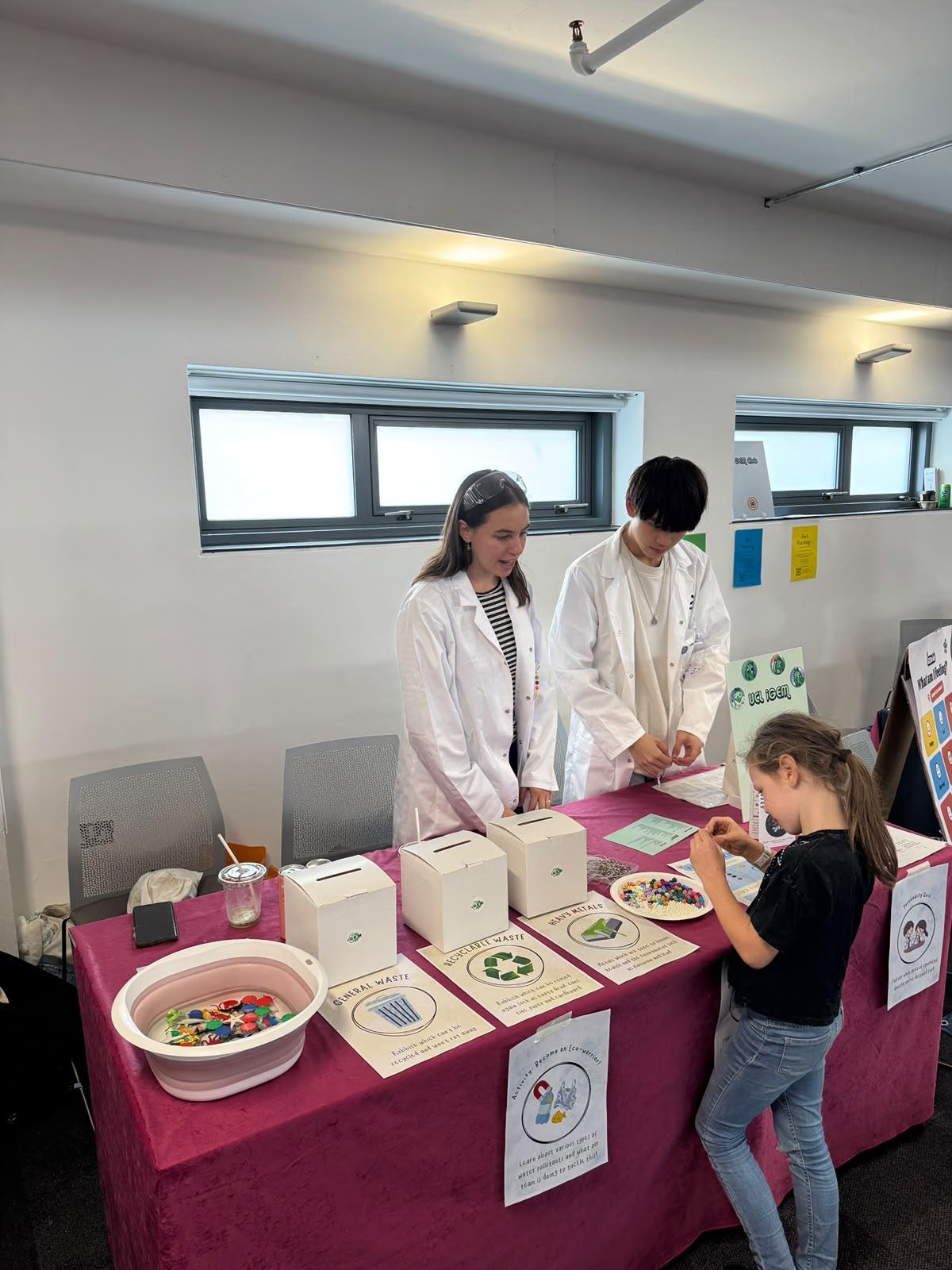

Through our stakeholder interactions with Rossana Fazzina and Dr Sara Lightowlers, we became increasingly aware that our initial design conceptualisation did not place the patients at the centre of our design ideology. Our focus on improving the effectiveness of the device slowly reduced its ease of use and practicality for the patients we were making it for. This made us realise we needed to take a strong stance on patient and public involvement (PPI) and ensure the patient's voice formed the core of our hardware design. We decided to engage the public at outreach events such as Tidefest and with patients at the Cancer Patient and Public Advisory Group (CPPAG) meeting, where we presented different design iterations to get a better understanding of the difficulties the patients face and what key design integrations we would need to make to accommodate their needs. This eventually resulted in the urine bag filtration device presented in our hardware section.
Initially, our team planned to market SHELLter towards healthcare institutions in England. However, our interactions with stakeholders, particularly Joe Burton, Dr Anne Woolridge and Professor Louis Grandjean, revealed the lack of mandate for hospitals to focus on the downstream environmental impact of their medical waste. Although this developed our grassroots initiatives for our team's outreach activities, we concurrently realised we needed to place the wastewater industry and its regulators at the centre of our customer base. Hence, we decided to market our wet-lab findings as a potential platform technology for heavy metal chelation.
Initially, our team conceptualised SHELLter to be integrated within conventional wastewater treatment systems, allowing for large-scale chelation of excreted cytotoxic platinum residues. However, from our discussions with Anne O'Connor and Dr Kumud Kantilal, Dr Vaughan Thomas and patients at the CPPAG meeting, we realised that this was not feasible for the patients or the hospital infrastructure in England. Through multiple iterations of the design cycle, the team eventually finalised our urine bag filtration device, which allows flexible point-of-source cisplatin filtration upstream. This ensured our device could be used by both inpatients and outpatients, fitted to any bathroom, and set up easily by patients and carers.
One consistent point was brought up throughout our myriad of stakeholder interactions when hardware feasibility, practicality and robustness were discussed. That is, the cost of manufacturing. Cost was highlighted by all our stakeholders as the cornerstone of failure for the viable research and deployment of sustainable technologies. In particular, Professor Laurence Lovat, Chiara Coleman and Professor Luiza Campos highlighted that our device needed to remain competitive against both conventional treatment methods and other sustainable treatment methods. This could be most accurately determined by performing a techno-economic analysis of our process overview and determining the cost of goods, capital expenditure and operating expenditure of our process. By doing so, we would be able to provide academics, investors and firms alike the ability to determine the opportunity cost of utilising our technology by comparing its cost-effectiveness against their current treatment methods.
Having pitched ourselves as a sustainable synthetic biology project, one question which was consistently brought up by our interactions with stakeholders was how we would quantitatively define our “sustainability”. We learned from Dr Jay Burt, Joe Burton and Ahmed Binesmael that NHS England has very targeted and specific carbon-reduction criteria as part of their overall sustainability goals. Without the ability to quantify the sustainable benefit of reducing pharmaceutical pollution and upcycling discarded shellfish shells, this leaves the impact feeling highly superficial. We took their feedback into account and decided to build a life cycle assessment of our overall production process to highlight the environmental impact at each stage of manufacturing. This would provide future researchers and investors the ability to determine how SHELLter could contribute to their sustainability criteria by providing a generalised assessment of its ecological impact and allow for easy comparison.
Throughout the development of SHELLter, our team recognised we had a duty to uphold and maintain a responsible research framework as a research team making a real and meaningful impact on our local community. We constantly assessed our research and outreach methodology and evaluated its practicality, social desirability and responsibility by using the Anticipate, Reflect, Engage, Act (AREA) framework developed by UKRI [8].
Anticipate and analyse the impact and extended economic, social and environmental implications of our research and design decisions.
Reflect on the purpose and motivations of our research and question the possible dilemmas and social transformations associated with its implementation.
Engage and open up dialogue with all communities and relevant groups to promote a two-way feedback loop to promote critical and inclusive feedback.
Act and influence research direction by considering the above keywords.
We put this into practice by evaluating our decisions throughout the project, as described below.
One of the biggest dilemmas our team faced throughout SHELLter's development was its potential to increase barriers to affordable chemotherapy treatment. In the worst-case scenario, a hospital would have to fund and maintain the capture hardware and integrate the device within its health and safety protocols. This can add a high cost to their clinical budget and make an affordable and generalised chemotherapy treatment such as cisplatin less attractive for cancer patients to undertake. Our team took this seriously by addressing where the regulatory responsibility for wastewater treatment lies. Our discussion with Dr Anne Woolridge revealed the legal obligation wastewater treatment firms carry to treat industrial and municipal wastewater to strict standards maintained by the UK Environment Agency [9]. Hence, rather than placing the cost burden on hospitals, we explored the potential of transforming our research into a platform technology for heavy metal chelation, attracting investment from heavy metal remediation research. Although this does not fully eliminate the potential of the aforementioned risk, it opens a pathway to keep the clinical pathway unaffected.
Envisioning a project at the interface of oncology and environmental protection carries a strong responsibility to respect and care for such vulnerable groups. Patients who undergo chemotherapy already bear a heavy physical and emotional toll on their health, well-being and families. By introducing a technology which interfaces with their treatment workflow yet provides no direct benefit to their health, we had to ensure that we did not complicate or compromise their treatment and safety. This duty shaped several of our design decisions and methodologies, such as establishing a patient and public involvement channel with our NHS stakeholders (Rossana Fazzina). By approaching cancer patients through the appropriate channels, we not only followed the UK Standards for Public Involvement [10] but also ensured we trod lightly and compassionately when we spoke to the patients who were willing to provide meaningful feedback on our project and the hardware (CPPAG meeting). Their insight contributed to meaningful changes in the device's operational and safety workflow, which ensured that the device's point-of-capture did not burden their physical health nor overstretch the clinical staff's responsibilities.
When SHELLter was first conceptualised, we wanted to highlight the plight of deploying feasible sustainable projects. Today, sustainability plays a central role for firms and research institutions alike, framing their environmental, social and governance commitments. However, according to PMI [11], there continues to be a widening gap between strategic ambition and delivery reality, even though sustainability is the top predictor of project success. Our team felt that this was often attributed to heavy generalisation of the goals, which made it unclear what “sustainability” meant for the teams. We wished to explore this issue as we delved into our circular economy project and discovered what was needed to deploy feasible and long-lasting sustainable projects. As we spoke to more stakeholders within the field of sustainability, it became increasingly apparent that we needed to explore what metrics determined the “sustainability” of our project and how we could communicate this impact. This question eventually developed into our techno-economic analysis and life cycle assessment, as it became clear we needed stronger and clearly definable metrics which could determine and communicate whether our project could truly be classified as sustainable.
Our primary research and interactions with stakeholders in the healthcare sector have shown a possible deployment pathway for our filtration device in point-of-excretion use in dedicated oncology toilets and home bathrooms. NHS-related stakeholders such as Sharon Pfleger, Rossana Fazzina, and patients at the CPPAG meeting grounded our project, shaped our project direction, and helped us build a realistic filtration device that is easy to use for patients undergoing chemotherapy, does not require third-party management, and can be fitted to any toilet. Our team aims to deploy and attain regulatory approval for our system by pitching the project as a non-medical device to a single receptive NHS trust before scaling, as advised by Sara Lightowlers and Laurence Lovat. This would allow our project to overcome the traditional regulatory hurdles of medical device deployment and allow us to attain real patient and public feedback through small-scale pilot testing.
Our project’s feasibility, attractiveness, and robustness are supported by our modelling: the techno-economic assessment, and our life cycle analysis. This correlates our project to real costs potential investors can understand and translates environmental benefits into tangible and quantitative impacts. This includes showing our cost-competitiveness against traditional tertiary treatment and the environmental impact of deploying our device itself.
On a broader scale, we also envision our project as a potential platform technology for sustainable treatment of heavy-metal-contaminated water bodies. Our interactions with Anne Woolridge and Jay Burt informed us that we were downplaying our project’s potential by restricting the device to a single target filtration system when the architecture of the chitin-based biosorption system could be implemented as part of a heavy-metal binding cocktail. Hence, we hope that by documenting our ChiA-CDA fusion characterization and our interactions with stakeholders in the wastewater industry, future iGEM teams may be able to extend our bioremediation work from healthcare to other environmental sectors.