Loading...

Education

Innovative educational tools and outreach activities have the ability to establish a two-way dialogue with new communities by discussing public values and the science behind synthetic biology.

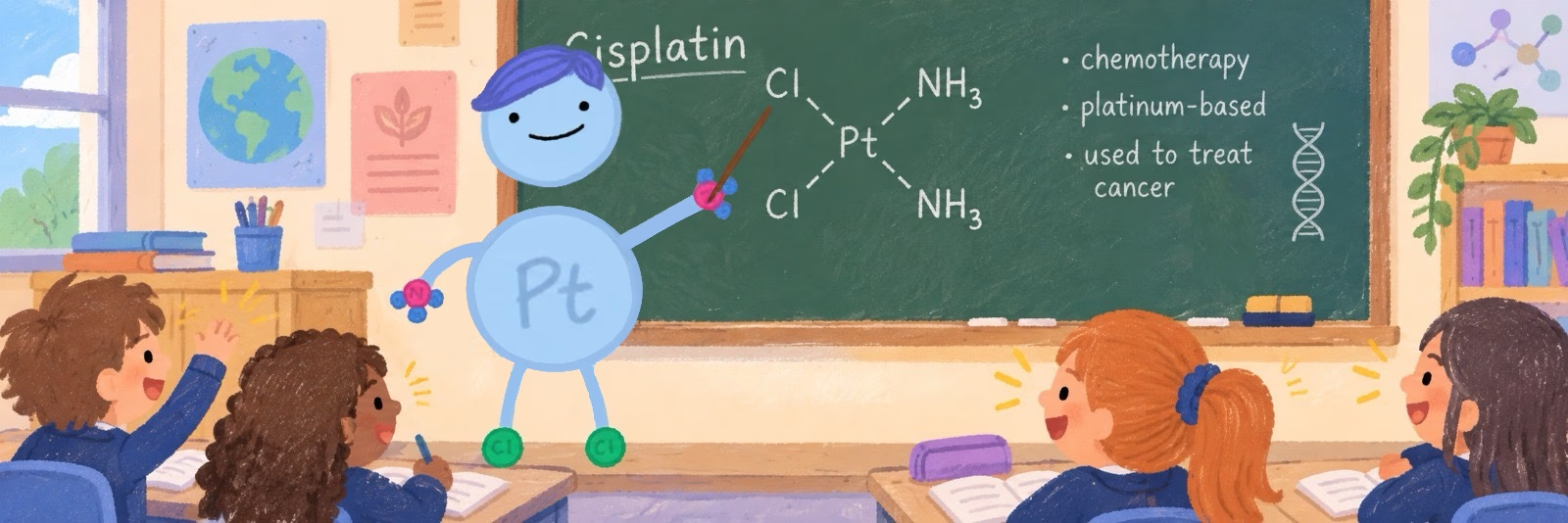
The platinum character teaching a classroom of children about cisplatin at a chalkboard

Education

Have you heard of the… ‘Circular Economy’?

✓ Your vote

✓ Your vote

According to the results from the iGEM pop-up voting booth.

In today's increasingly eco-conscious society, circular economy has become a well-known buzzword,but how many of us understand what it takes to make it a reality?

At one of our first outreach events, we set up a voting booth on our university campus to hear what passersby from all walks of life thought about SHELLter and the priorities that should guide our work. We wanted to understand not only how people viewed environmental challenges, but how they felt about synthetic biology as a tool for the solution. The conversations that ensued revealed an important disconnect: while environmental concerns resonated with many, the use of synthetic biology in addressing these issues was met with concern and surprise.

This insight became the foundation of our education programme. We set out to make synthetic biology more accessible while raising awareness of the role scientific research can play in a bioremediation context. Rather than treating education as simply the transfer of knowledge, we designed it as a journey: encounter, understand, question, and engage. We hosted and participated in events with a variety of delivery methods: online conversations, workshops, voting, and interactive game stalls to cover all of these areas.

Click a coloured line to see how one of our events informed the next!

    Figure 1: Timeline of educational events and how encounters at these events shaped our educational programme as it progressed.

    Link 1: Building with Biology → North Hertfordshire College Workshop

    Following the success of our pipetting activity, we further built upon it and formatted it to be appropriate for high school students. We also included an interactive Mentimeter to allow for two-way dialogue and discussion of opinions instead of the original quiz.

    Link 2: UCL Main-Quad Pop-Up Booth → Informational Instagram Posts

    Booth results showed that many people were unaware of the topic of synthetic biology and its real world applications. Therefore, we created informational posts and shared them on Instagram to reach the general public in an engaging manner.

    Link 3: UCL Main-Quad Pop-Up Booth → UCL Open Day

    When asked what they would prioritise when it comes to designing a production process, most participants at the pop up booth responded that they would prioritise a net environmental impact. Hence, our team designed a game where students could choose process options and calculate the net environmental impact of their choices.

    Link 4: UCL Open Day → “Meet the Department” Instagram Videos

    Through conversation with prospective students, we discovered they were curious to know what synthetic-biology-based research projects take place at university. We created ‘Meet the department’ videos on Instagram where PHD students in the department of Biochemical Engineering answered fun and informational questions.

    Link 5: Tidefest 2026 → Festival of the Girl

    While most of the audience at Tidefest consisted of older generations, many children were present and wanted to engage with our project. Thames21 had organised a river cleaning activity where children actively de-polluted the water. We were inspired by the hands-on approach and created materials to engage with younger generations.

    Link 6: Tidefest 2026 → Shrimp-Crochet Challenge (coming soon on our Instagram!)

    At Tidefest we found that many people were unaware of pharmaceutical pollution in the water. We wondered if this was the case within the iGEM community as well. By launching our shrimp-crochet challenge, iGEM teams can interact in a fun and creative way with water pollution and spread awareness of the pharmaceutical pollution problem.

    Link 7: Isle of Dogs Clean-up → Tidefest 2026

    At the Thames21 Isle of Dogs beach cleanup, we met individuals who were passionate about conserving our water bodies, yet found that many of them were unaware of heavy metal pollution. We learned the importance of engaging with communities who were already interested in these issues to provide them with a more comprehensive view of the problem. This inspired the creation of our opinion and question board - asking what people wanted to know about pharmaceutical pollution and what the consensus was on the greatest threat to our water bodies.

    We quickly learnt that different communities bring different experiences, perspectives, and questions to science, and defined our mission: tailoring educational materials to diverse age groups and audiences. Through this approach, we aim not only to introduce the possibilities of bioremediation, but also to encourage informed discussion and meaningful participation in shaping its future. All materials created and reflections are available on this page for future iGEM teams to build upon.

    Press the shrimp to discover our educational materials tailored to different audiences!

    General PublicGeneralPublicAll AgesHigh School StudentsHigh SchoolStudentsAges 16–18Children with Special Educational NeedsSENSpecialEducationalNeedsGirls aged 5 to 11GirlsAges 5 – 11

    Festival of the Girl Materials

    UCL iGEM x Vaxhub x Resilience Partnership

    Our stall inspired young girls to explore a future in scientific research by providing them the tools and confidence to understand biological structures, the pollution our water bodies face, and the multiplicity of fields that involve synthetic biology. All of the activities were delivered in a hands-on and engaging manner tailored to 7-11 year olds. With this in mind, we designed three activities, each building on the last: understanding the problem, exploring the science, and imagining their own future as scientists.

    1Clean Up the Ocean

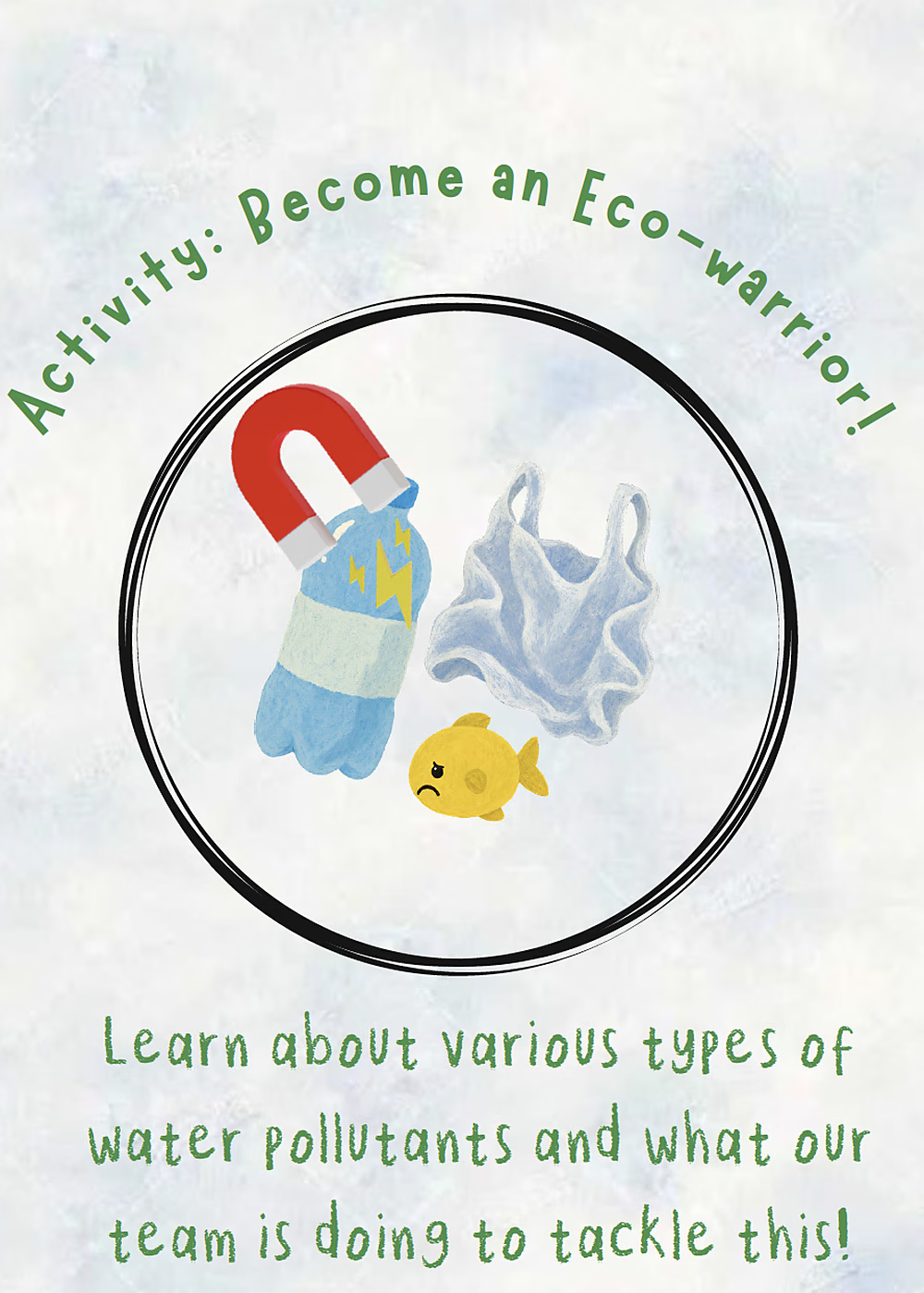
    Activity card: Become an eco-warrior. A magnet pulling a plastic bottle and a bag towards a goldfish, with the words "Learn about various types of water pollutants and what our team is doing to tackle this"
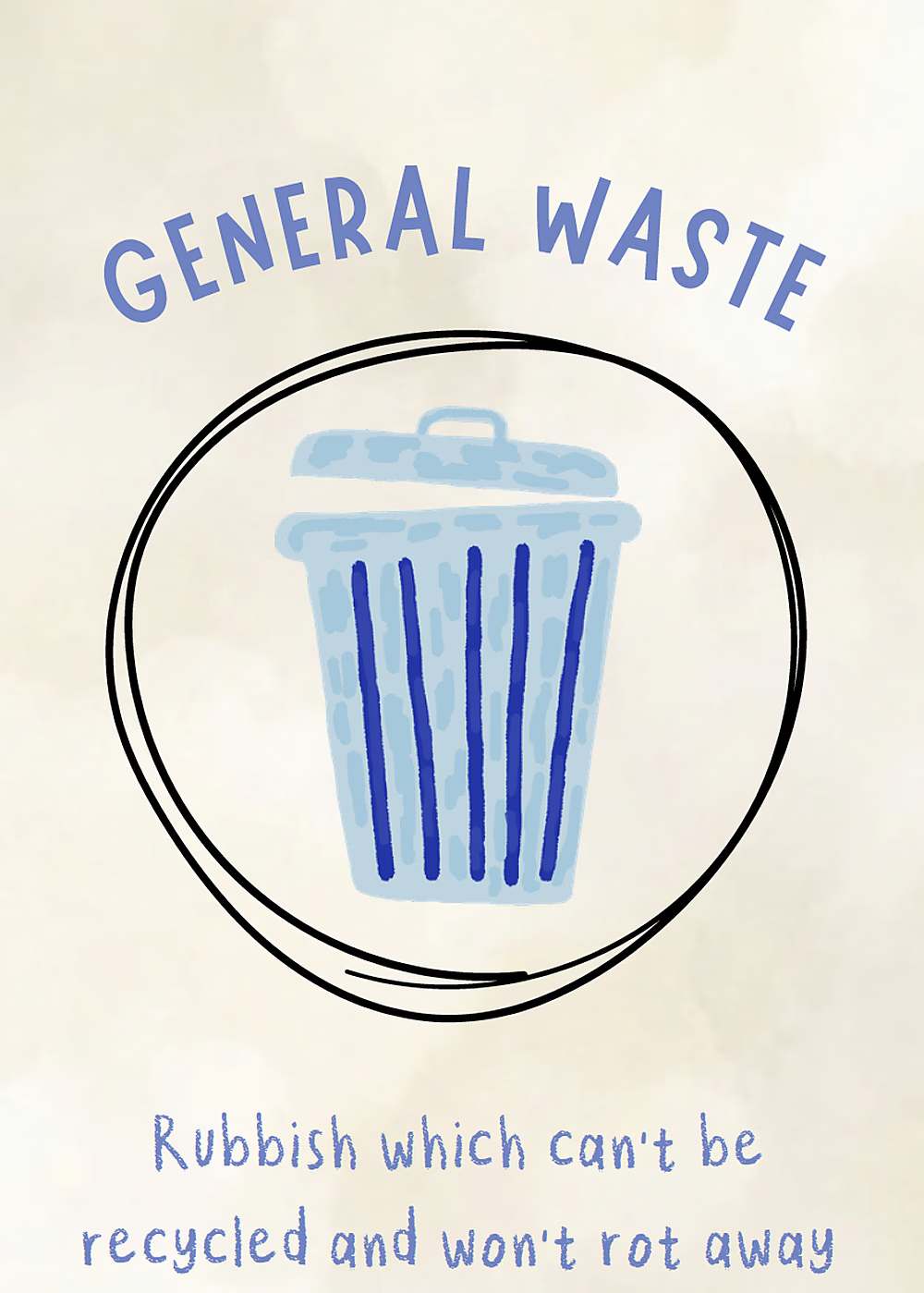
    Activity card: General waste. A blue bin, with the words "Rubbish which can't be recycled and won't rot away"
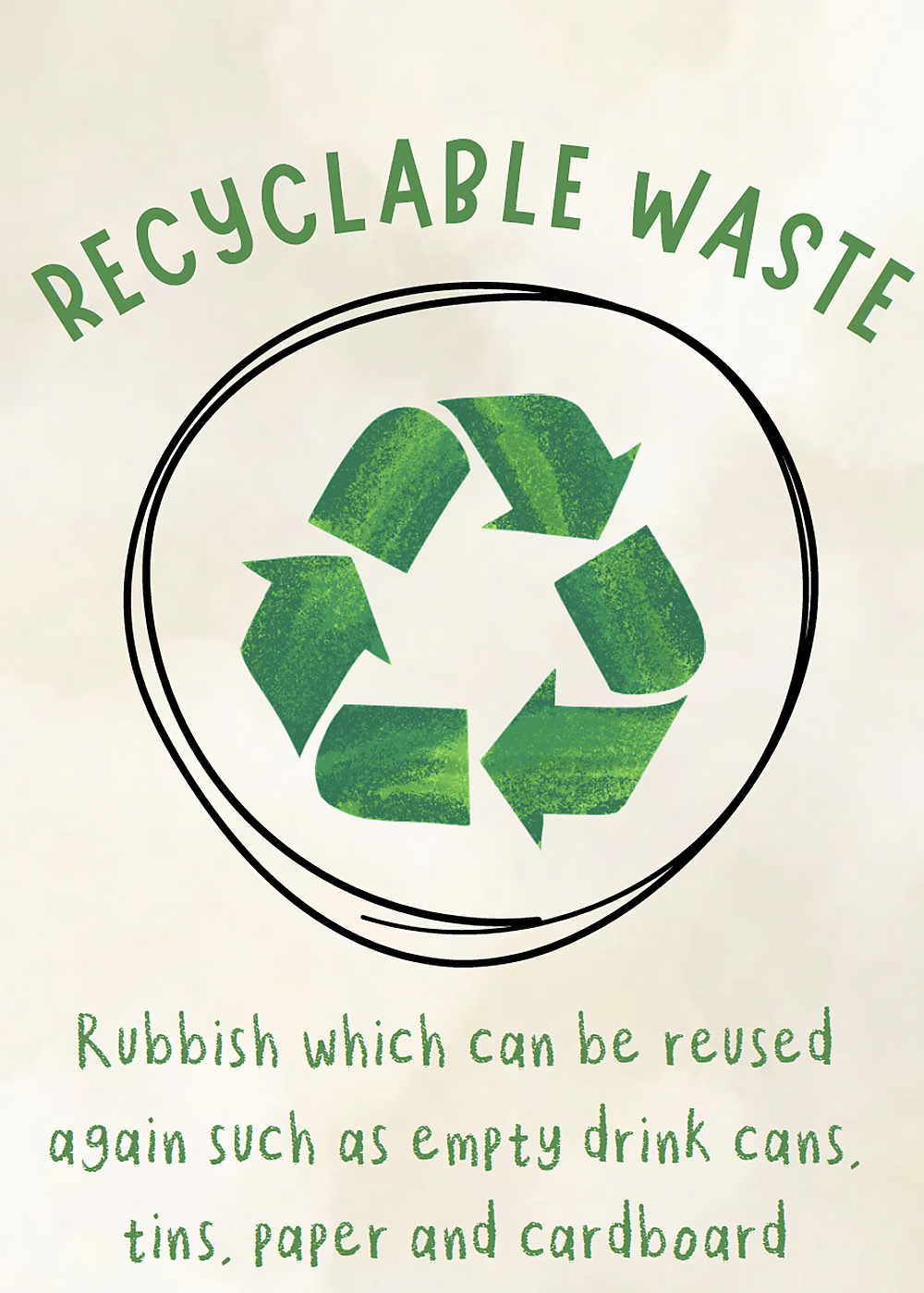
    Activity card: Recyclable waste. A green recycling symbol, with the words "Rubbish which can be reused again such as empty drink cans, tins, paper and cardboard"
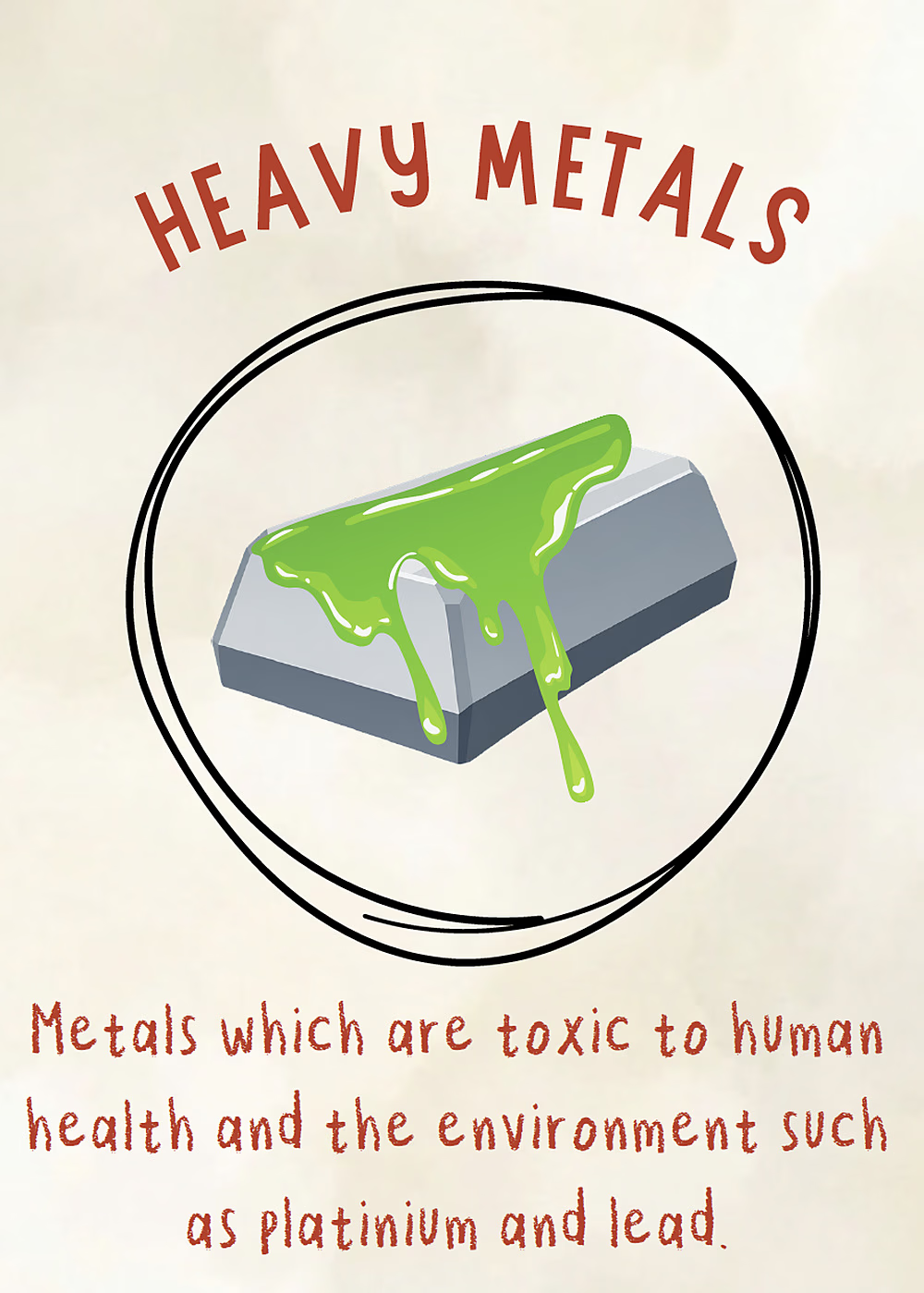
    Activity card: Heavy metals. A grey metal bar covered in green slime, with the words "Metals which are toxic to human health and the environment such as platinum and lead"

    Figure 2: Clean Up the Ocean activity cards.

    This activity aimed to raise awareness of waste and show that not all waste can be treated in the same way. We recreated a polluted ocean filled with toy sea animals and scattered it with coloured counters, each colour representing a different type of waste: recyclable waste, food waste and toxic waste. As participants worked to clear the ocean, they had to sort each piece of waste correctly, which showed them that cleaning up pollution is far more complicated than simply removing rubbish. We used the toxic waste counters to introduce metal ion pollution, explaining how some waste, even in tiny amounts, can seriously harm aquatic life and the health of our water bodies. This linked directly to SHELLter, which targets metal-based chemotherapy residues that conventional water treatment cannot remove.

    2Polypeptide Keychains

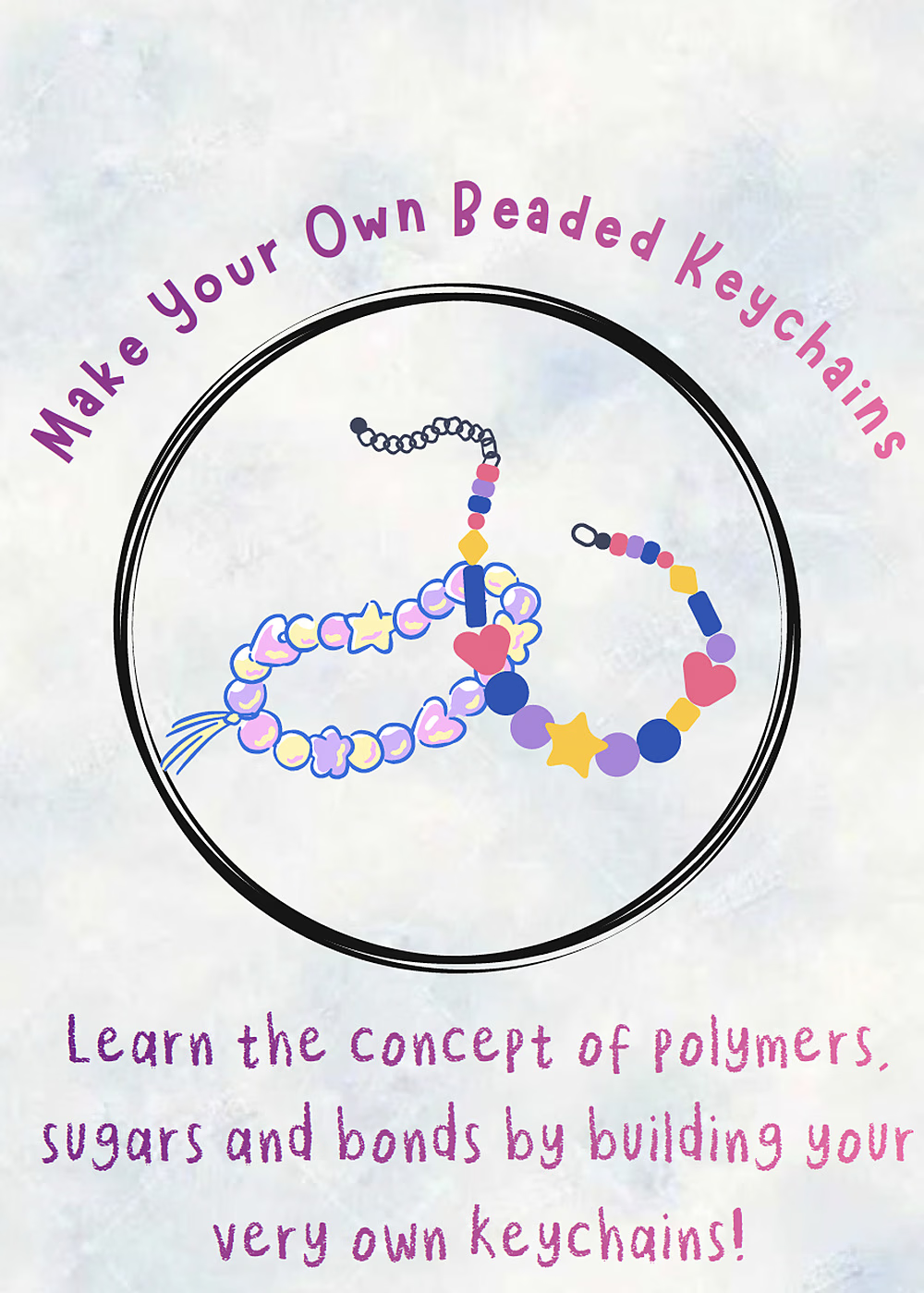
    Our project relies on chitin, a natural polymer found in shellfish shells, so our second activity introduced the concept of polymers through a hands-on, take-home craft. We began with a simple explanation of what polymers are, using beads to represent the repeating units and the bonds that link them together into long chains (large beads represented monomers which were joined by the small beads, representing covalent bonds. The repeated chain structure formed the backbone of a polypeptide). To make the concept relatable, we also pointed out everyday objects made from polymers, from plastic bottles and clothing to carbohydrates. Participants then built their own mini polymer keychains to take home, following a step-by-step guide, giving them a lasting reminder of what they had learned.

    Activity card: Make your own beaded keychains. Two beaded keychains, with the words "Learn the concept of polymers, sugars and bonds by building your very own keychains"
    Figure 3: Polypeptide keychain activity card.

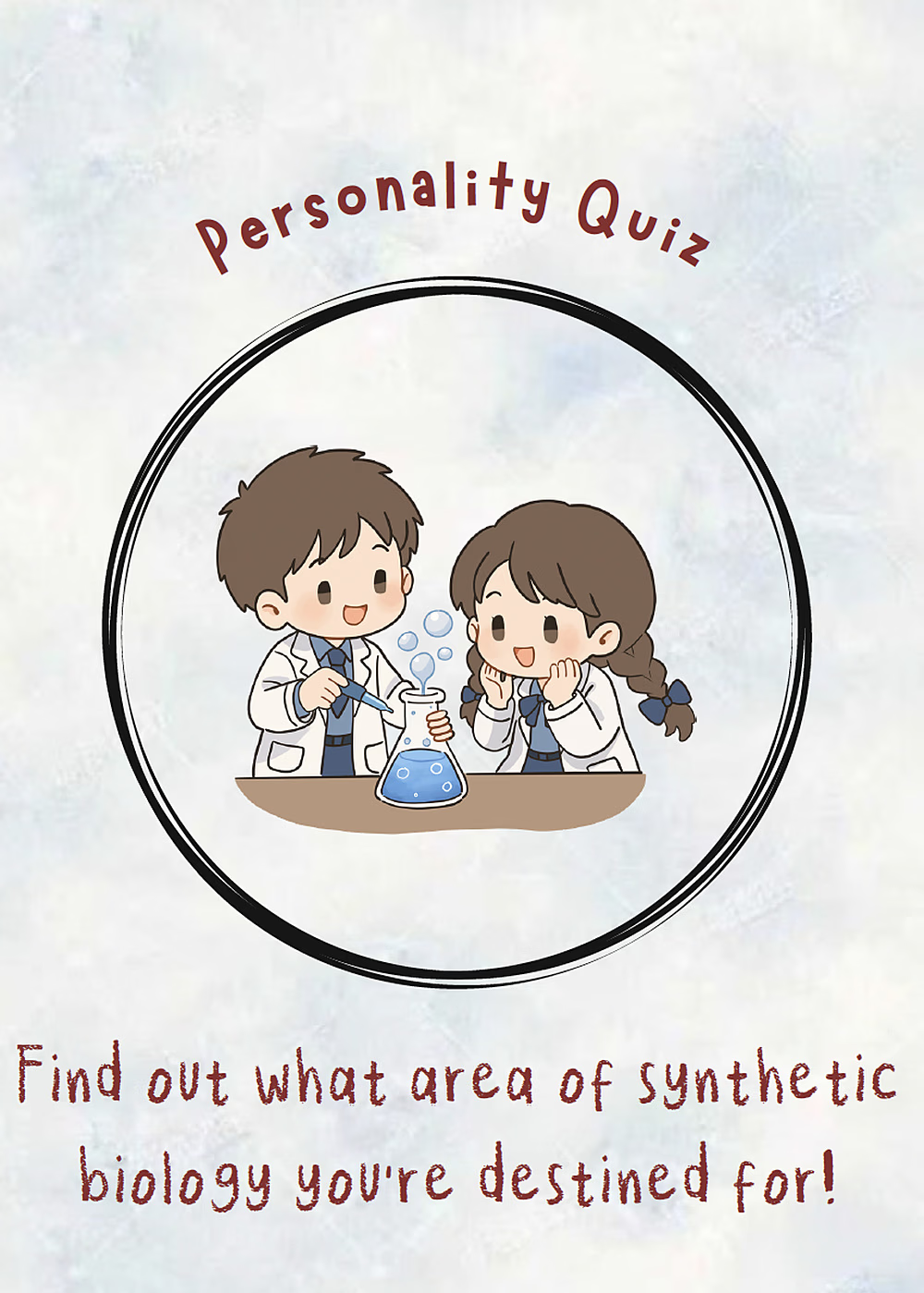
    3Personality Quiz – What Synthetic Biology Researcher Are You?

    Finally, while the number of women in STEM industries has seen a great increase over recent years, women are still outnumbered by men 3:1. Therefore, it was important to us to have the girls envision themselves with a future in a scientific field. Our fun personality quiz had girls answering personality-based multiple-choice questions, categorizing them into a field of synthetic biology research best suited to them. This showcased the great variety of research that synthetic biology can contribute to, including Medical, Environmental, biomaterials, and Plant research. An abstract description of the role was provided, as well as a real-world example. Our aim was to make them excited about becoming future scientists by showing the variety of real-world problems they can solve, and showing that everyone has a place in the scientific community.

    Activity card: Personality quiz. Two children in lab coats holding a flask, with the words "Find out what area of synthetic biology you're destined for"
    Figure 4: Personality quiz activity card.
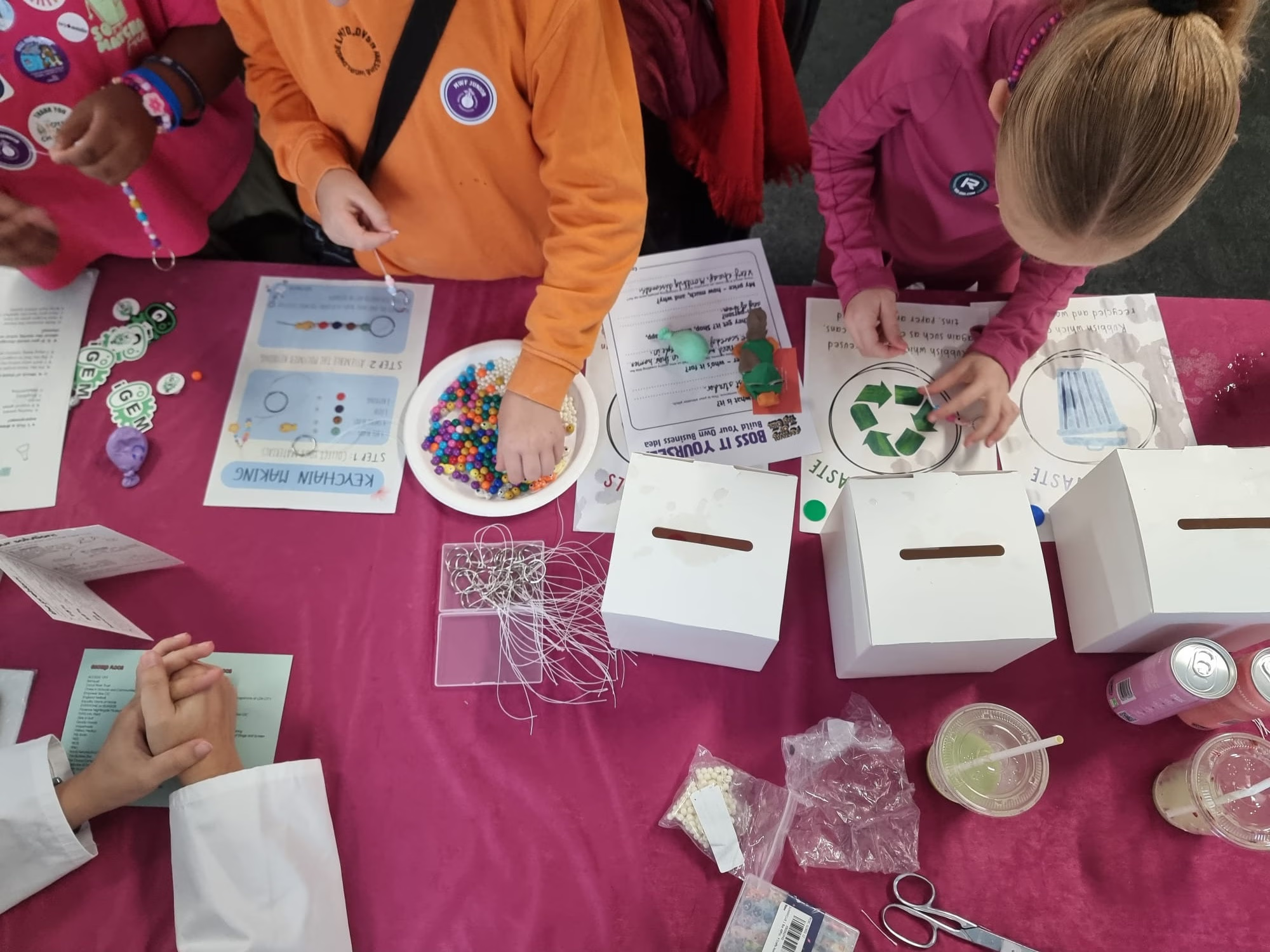
    A top-down view of the Festival of the Girl stall, with girls and team members around a table with a bowl of coloured beads, white sorting boxes and activity cards
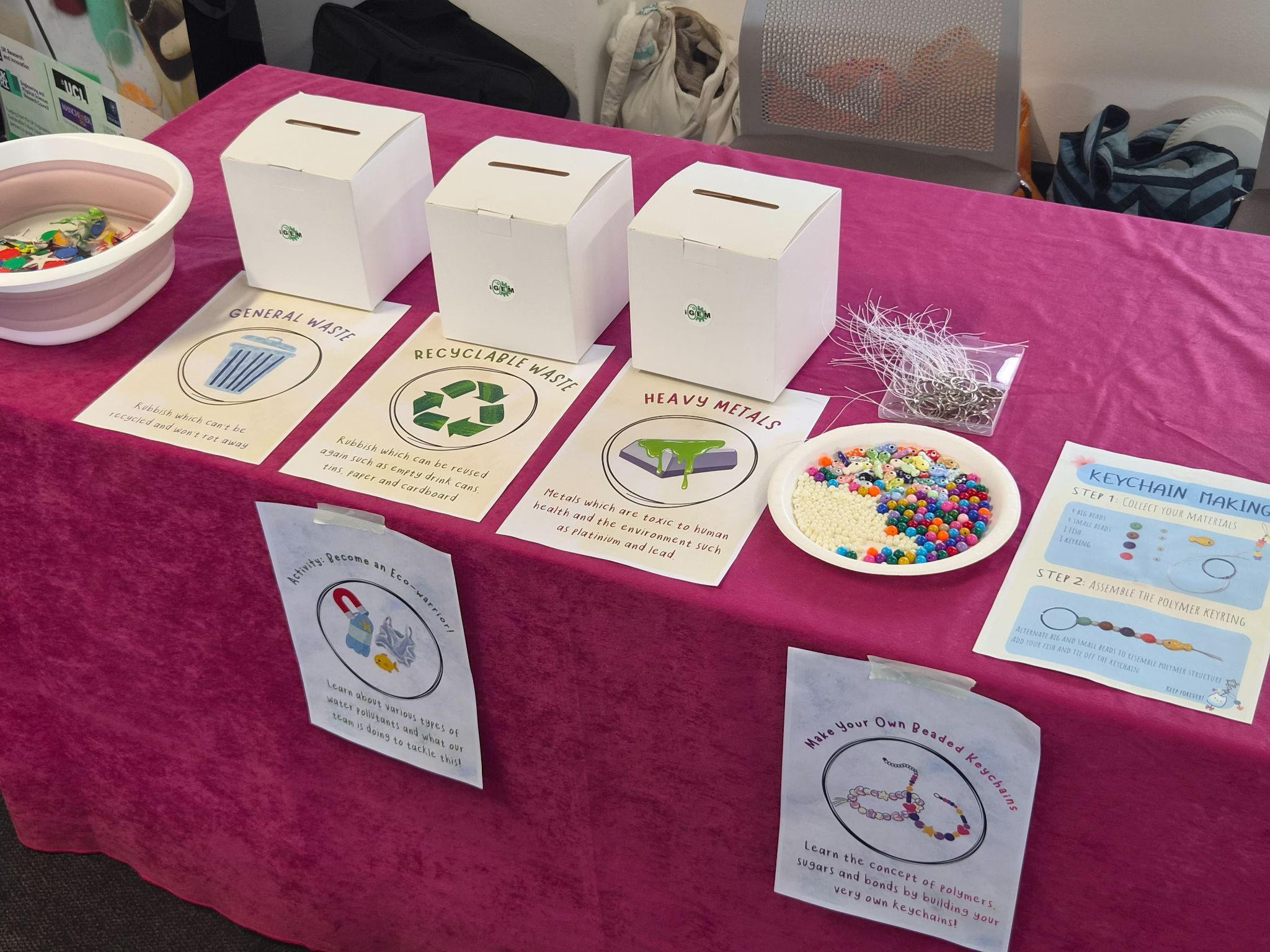
    The Festival of the Girl stall: a pink table with three white sorting boxes, cards for general waste, recyclable waste and heavy metals, a plate of beads and the keychain guides

    Figure 5: Our Festival of the Girl stall.

    Materials for Children with Special Educational Needs

    Festival of the Girl involved a dedicated half-day session for girls with Special Educational Needs. With this in mind, we ensured that the design of our activities centered around a multi-sensory and creative approach to scientific learning. All activity design choices making them accessible for SEN children were informed by the Department for Education's (2025) rapid evidence review on cognition and learning needs [1] and CAST's (2024) Universal Design for Learning Guidelines [2]. We identified three core principles. These sources highlight the value of structured instruction, clear representations and varied opportunities for engagement.

    Design Choices to Make Festival of the Girl Games Accessible for SEN Participants:

    1Ocean Cleanup

    • Concrete representations: using coloured counters to represent different types of waste made an abstract environmental problem into something children could see and interact with.
    • Structured problem-solving: sorting items into categories gives children a clear task and an opportunity to apply a concept rather than only listen to an explanation.
    • Connecting new and familiar knowledge: sea creatures and and recognisable waste provide a familiar context for introducing the new concept of metal-ion pollution.

    2Polypeptide Keychains

    • Physical representation: the beads allowed the children to construct a model of a repeating molecular structure instead of relying on an abstract verbal explanation.
    • Step-by-step instruction: the chain was built according to a step by step, easy to follow guide.
    • Learning through making: Creating a take-home object allowed for the children to keep a reminder of the concept and an opportunity to explain what they made.

    3Personality Test

    • Personal relevance: Relating science to different interests and aspects of the childrens’ personality helped to make the different types of scientific research meaningful and more relatable.

    Materials for High School Students

    Preparing Students Aged 16 – 18 for Future Study in Science and Engineering

    Students approaching university are at a crucial point, choosing the subjects and careers they will pursue for years to come, often with only a limited view of what those fields involve in practice. Most will have met the core ideas of higher-level biology and chemistry, yet few would have been introduced to fields such as bioremediation, the use of living organisms and their products to remove pollutants and repurpose waste, despite it being one of the most promising applications of synthetic biology. For this audience, we designed activities that introduced bioremediation through the skills scientists and engineers actually use: creative problem-solving, practical lab techniques, clear communication, and weighing up the trade-offs of real design decisions.

    North Hertfordshire College Workshop

    UCL iGEM x Vaxhub Partnership

    28th September 2026

    Introduction to Synthetic Biology Lecture

    To provide the students with an engaging yet informative overview of synthetic biology and our project, we designed a PowerPoint cum Mentimeter session which acted as an interactive learning experience rather than a lecture. We opened the session with a simple question on Mentimeter asking the students what they knew about the concept of synthetic biology. The responses were largely varied, with some students having a general idea of the concept, while others having no baseline knowledge. This allowed us to capture their attention and transition the presentation to an introductory overview of synthetic biology. We kept this style consistent throughout the presentation using an ask-then-teach format where we posed a question, asked the students for an answer, and only then taught the concept. By doing so, we ensured they remained engaged with the material and their answers were rationalised from their understanding of the content rather than passive learning.

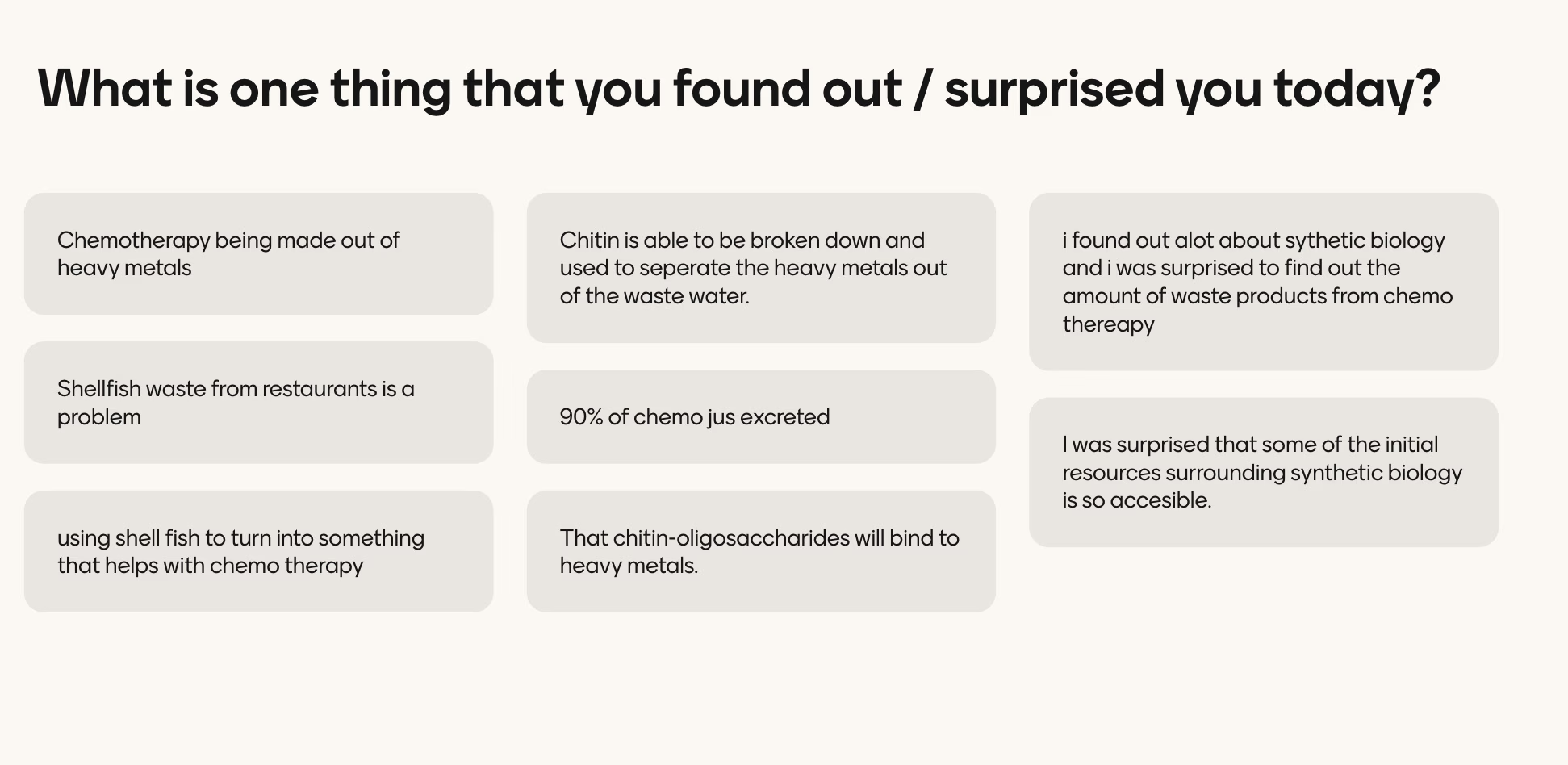
    Mentimeter answers to "What is one thing that you found out / surprised you today?", including chemotherapy being made out of heavy metals and chito-oligosaccharides binding to heavy metals
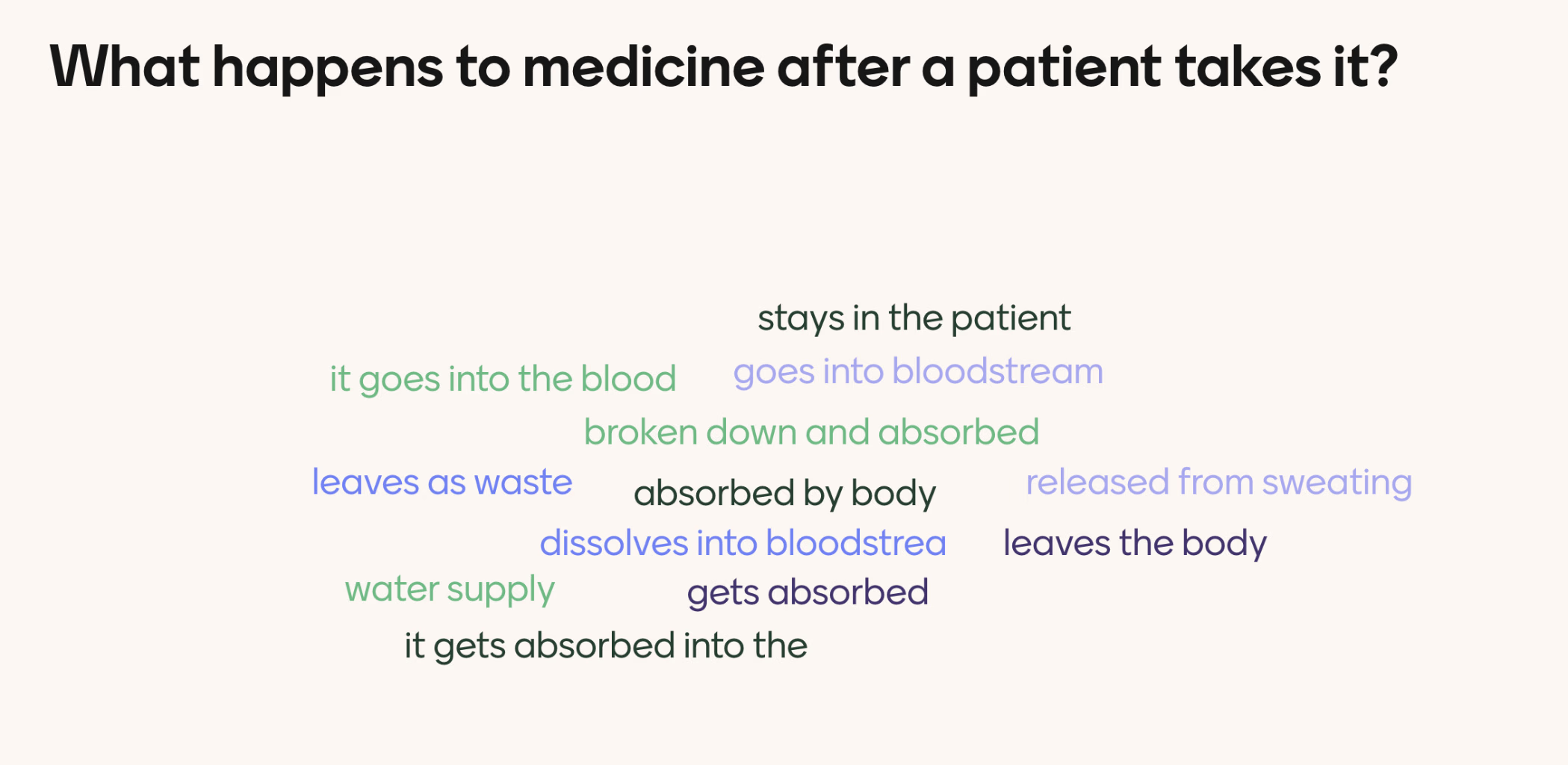
    Mentimeter word cloud answering "What happens to medicine after a patient takes it?", with answers such as it goes into the blood, leaves as waste and stays in the patient
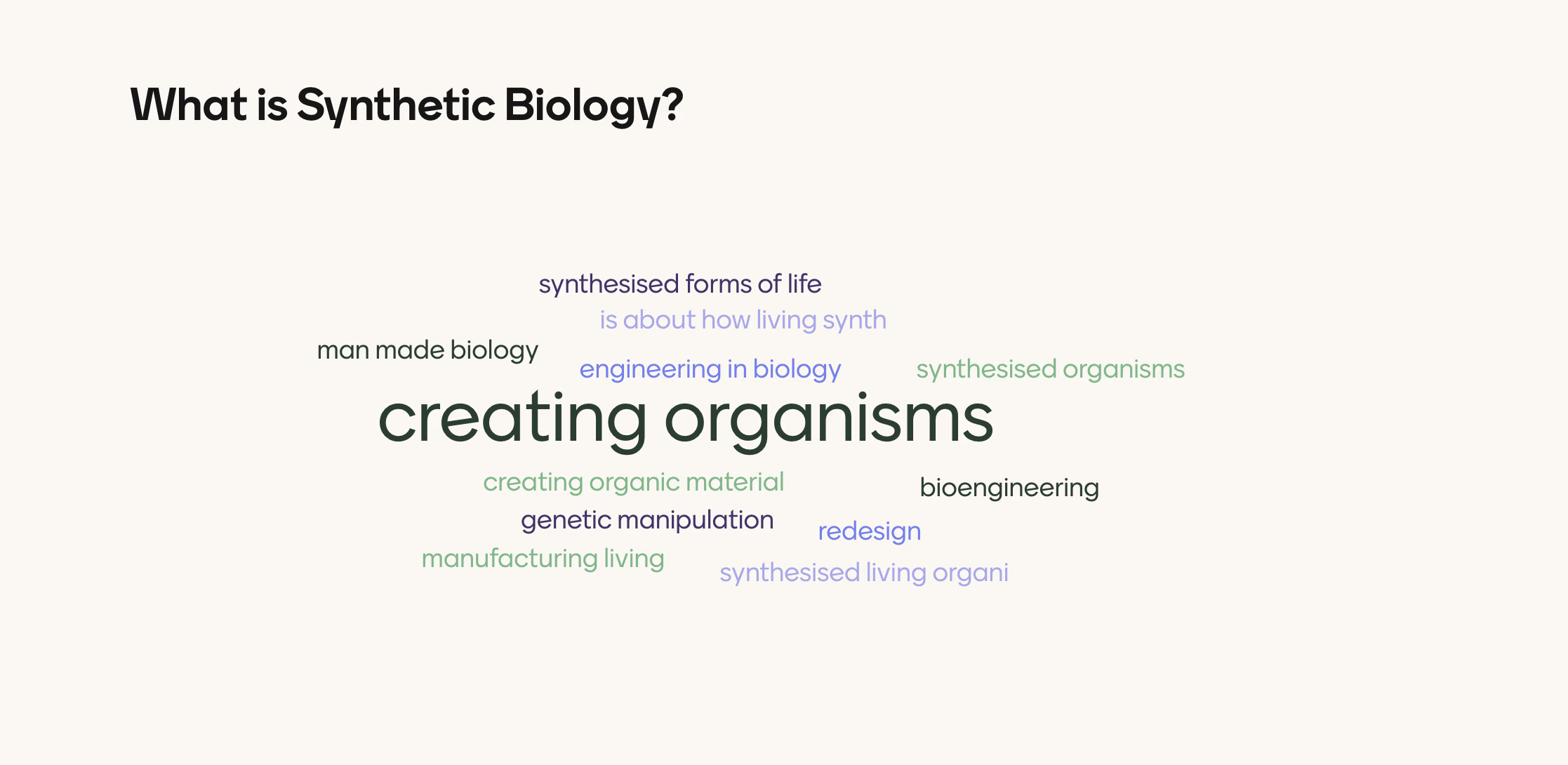
    Mentimeter word cloud answering "What is Synthetic Biology?", led by "creating organisms"
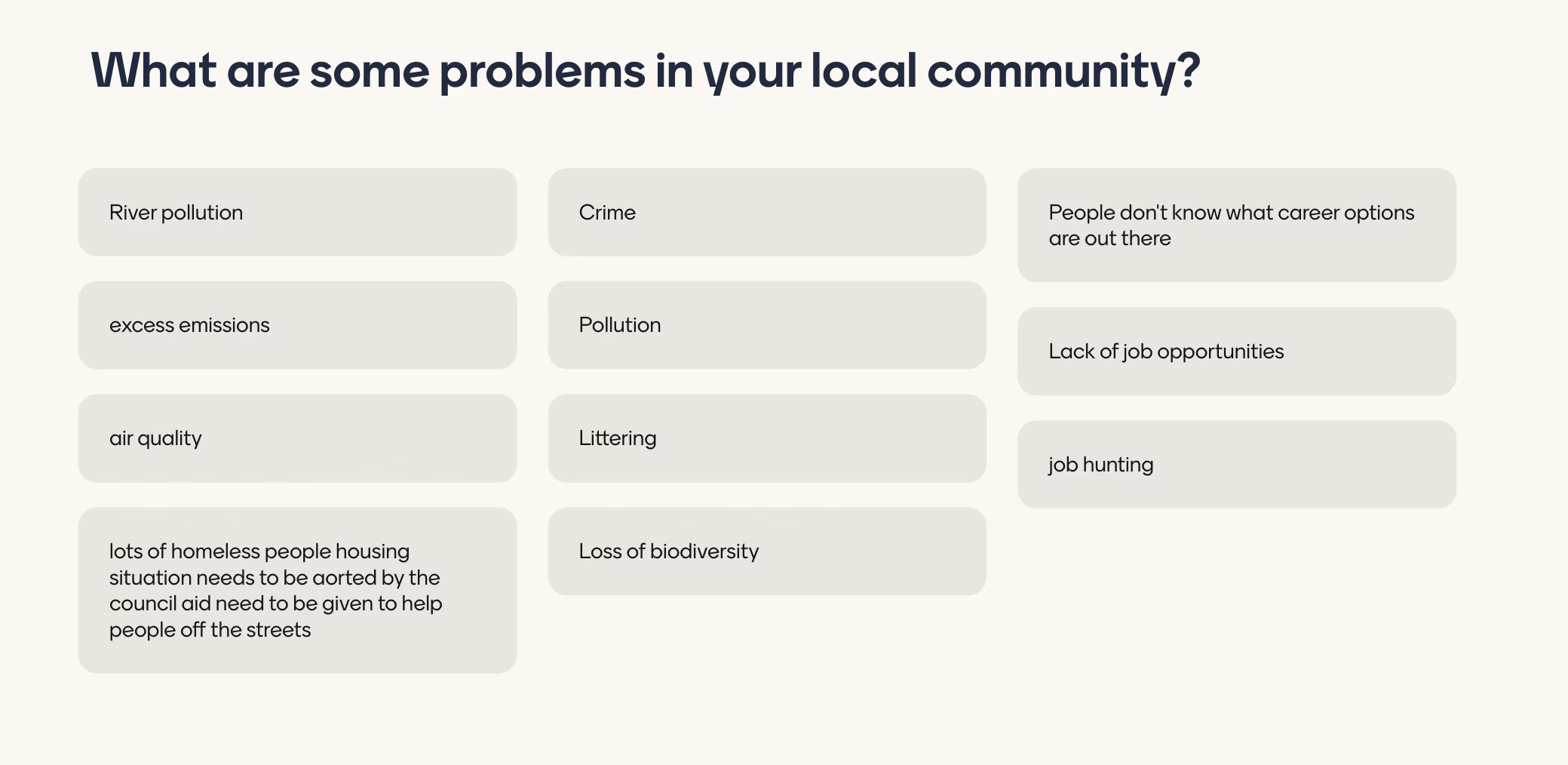
    Mentimeter answers to "What are some problems in your local community?", such as river pollution, crime, air quality and littering

    Figure 6: Student Mentimeter responses.

    Our presentation first provided an introduction to synthetic biology by grounding it in concepts and ideas the students can easily recognise. This included attributing the idea of cells as programmable biological software similar to computer code and providing real-life synthetic biology examples such as CAR-T cancer therapies. We then moved on to teaching them how to start a synthetic biology project. Throughout this topic, we challenged the assumption that science begins in the laboratory and walked through the foundational steps that must come first. This included identifying a specific local problem, researching what a living organism can do about it, and finally learning to build with standardised parts known as BioBricks. We highlighted the realities of failure when running wet-lab experiments and utilised it as a teaching point on how to learn from failure. We emphasised the importance of learning what to do upon failure and how to evaluate and interpret your results such that you can decide what to do next. We talked about our very own project SHELLter as a prime worked example of how these abstract principles come to life in the lab. Doing so, we were able to practically show what it means to go through one iteration of the design cycle and how they can potentially apply it to the work they do in the future.

    In the collaborative iGEM spirit, we have made these PowerPoint slides openly available for reuse by future iGEM teams and educators. We hope that others can build upon this short introductory presentation we have created and use it to easily deliver a strong foundational overview of synthetic biology, iGEM, and engineering success.

    Following our presentation, students took part in two hands-on games, designed so that they could apply what they had just learned about bioremediation and SHELLter.

    Game 1: Bioremediation Problem Linking

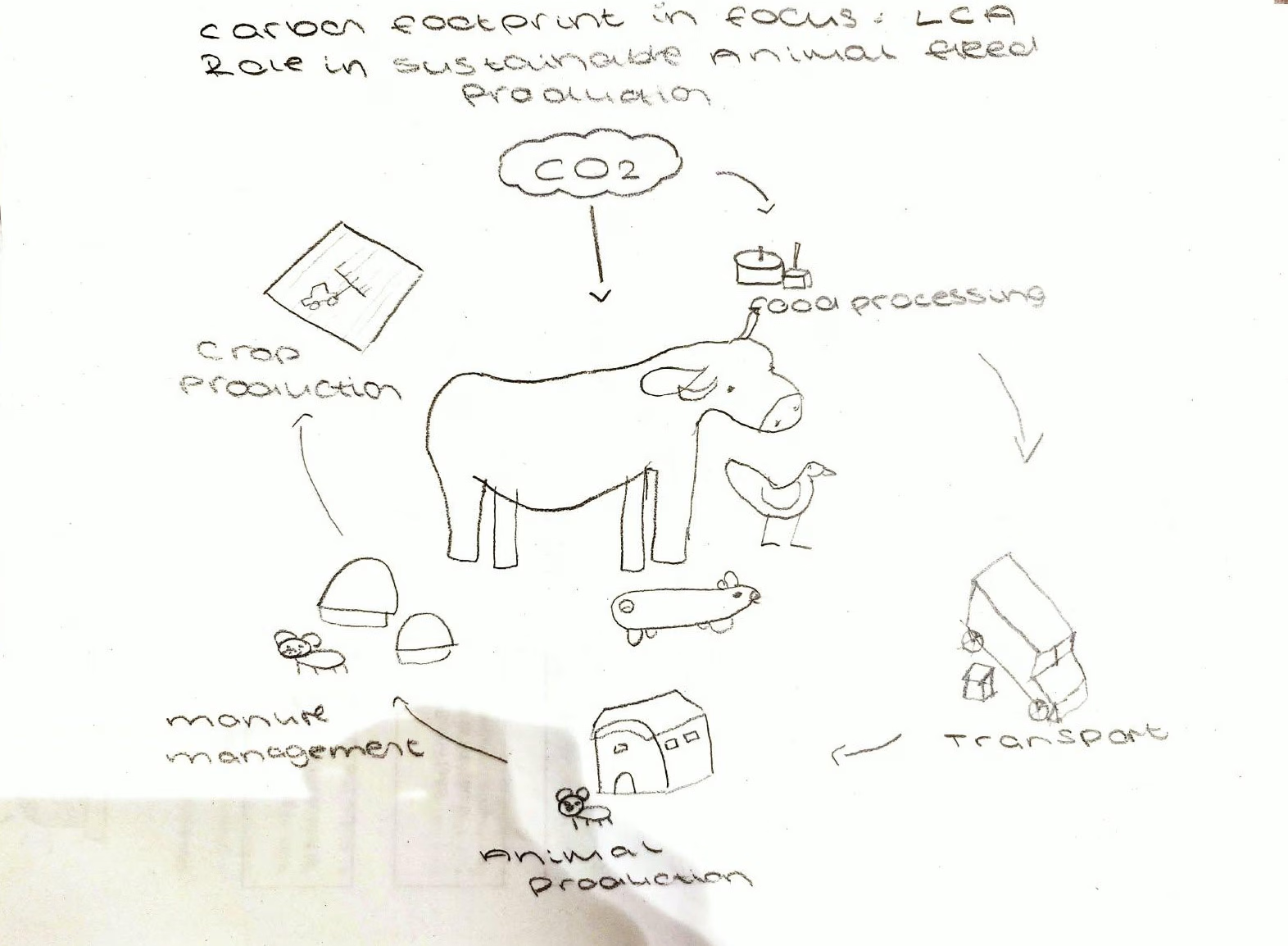
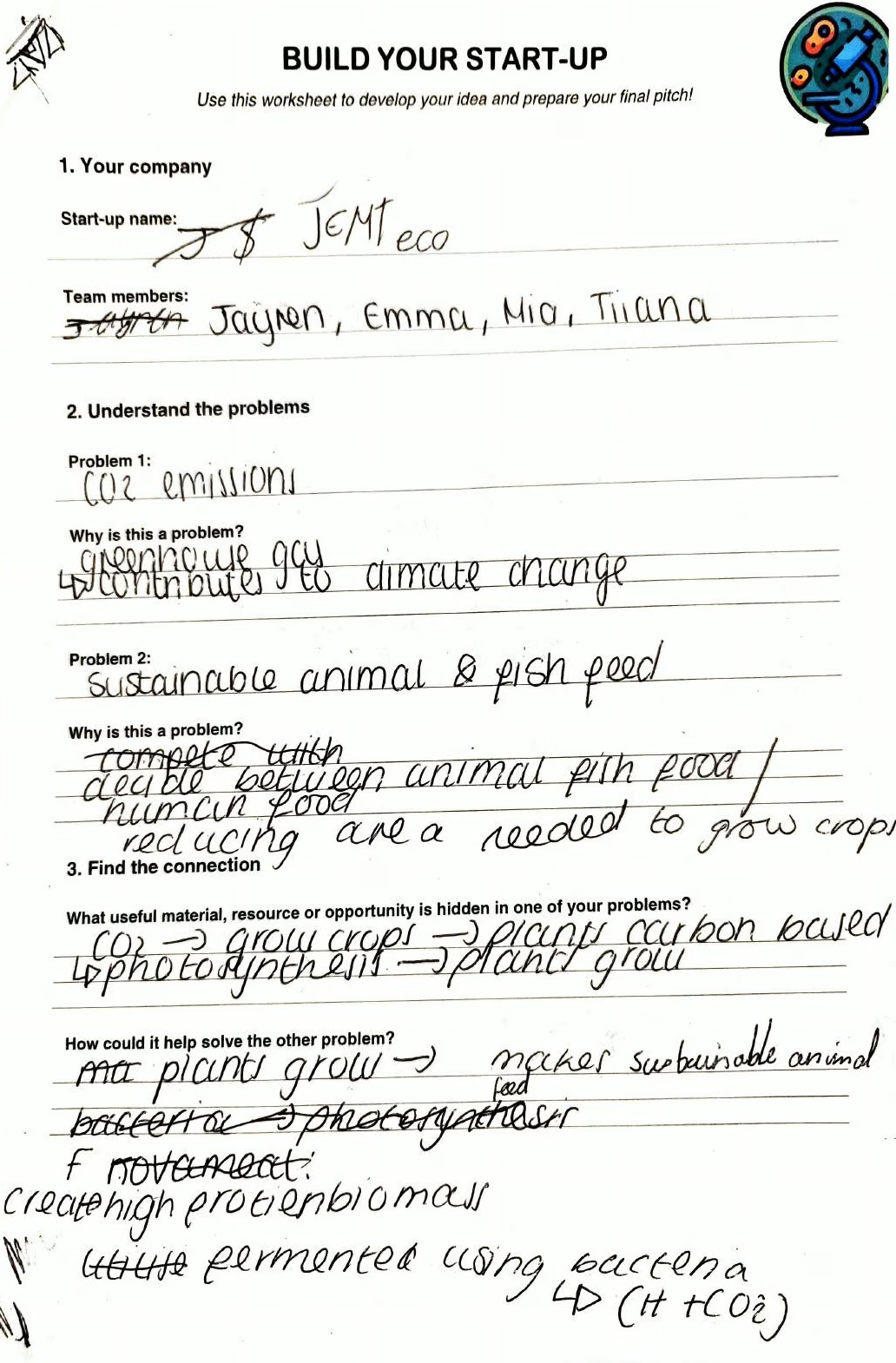
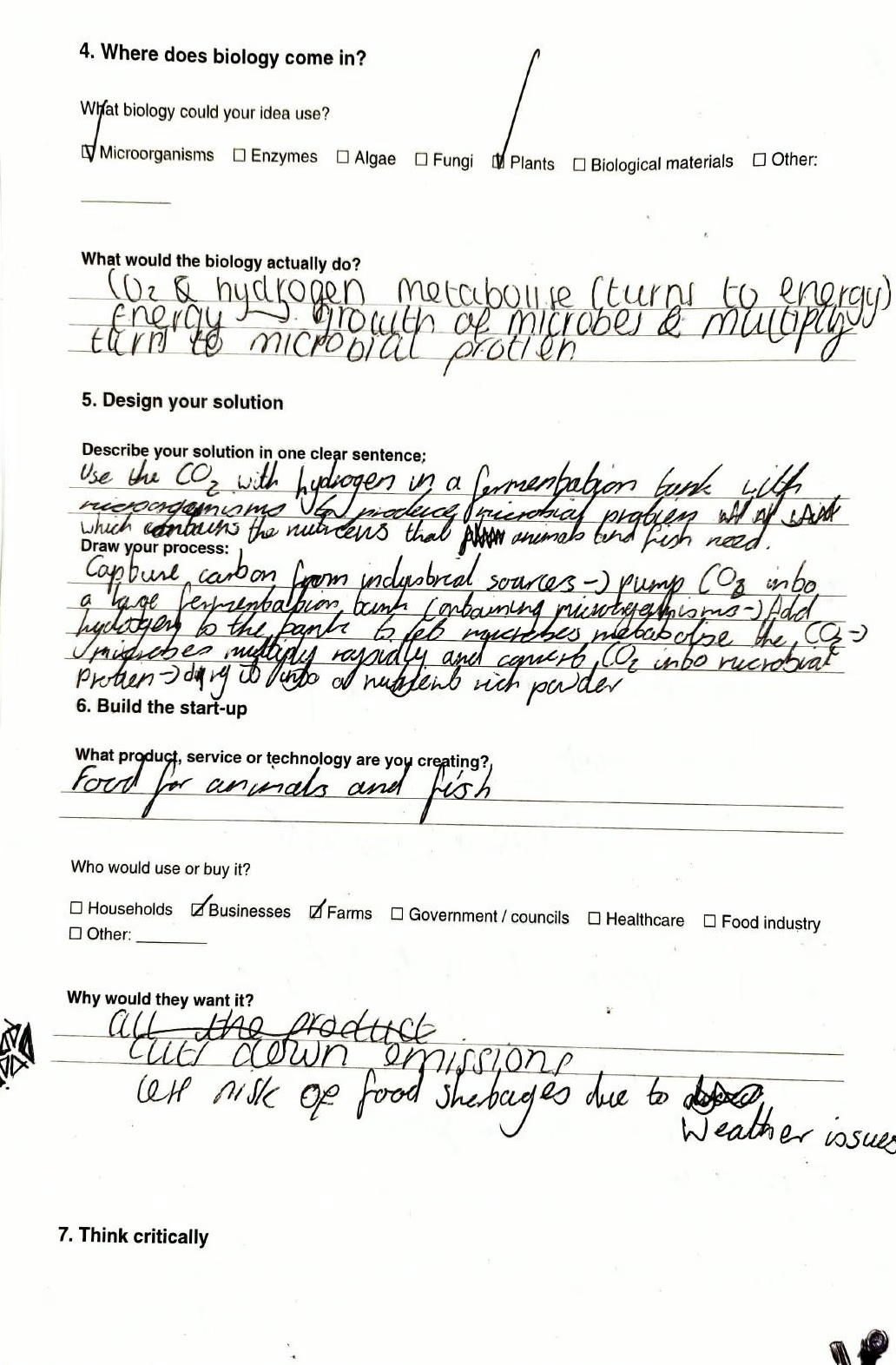
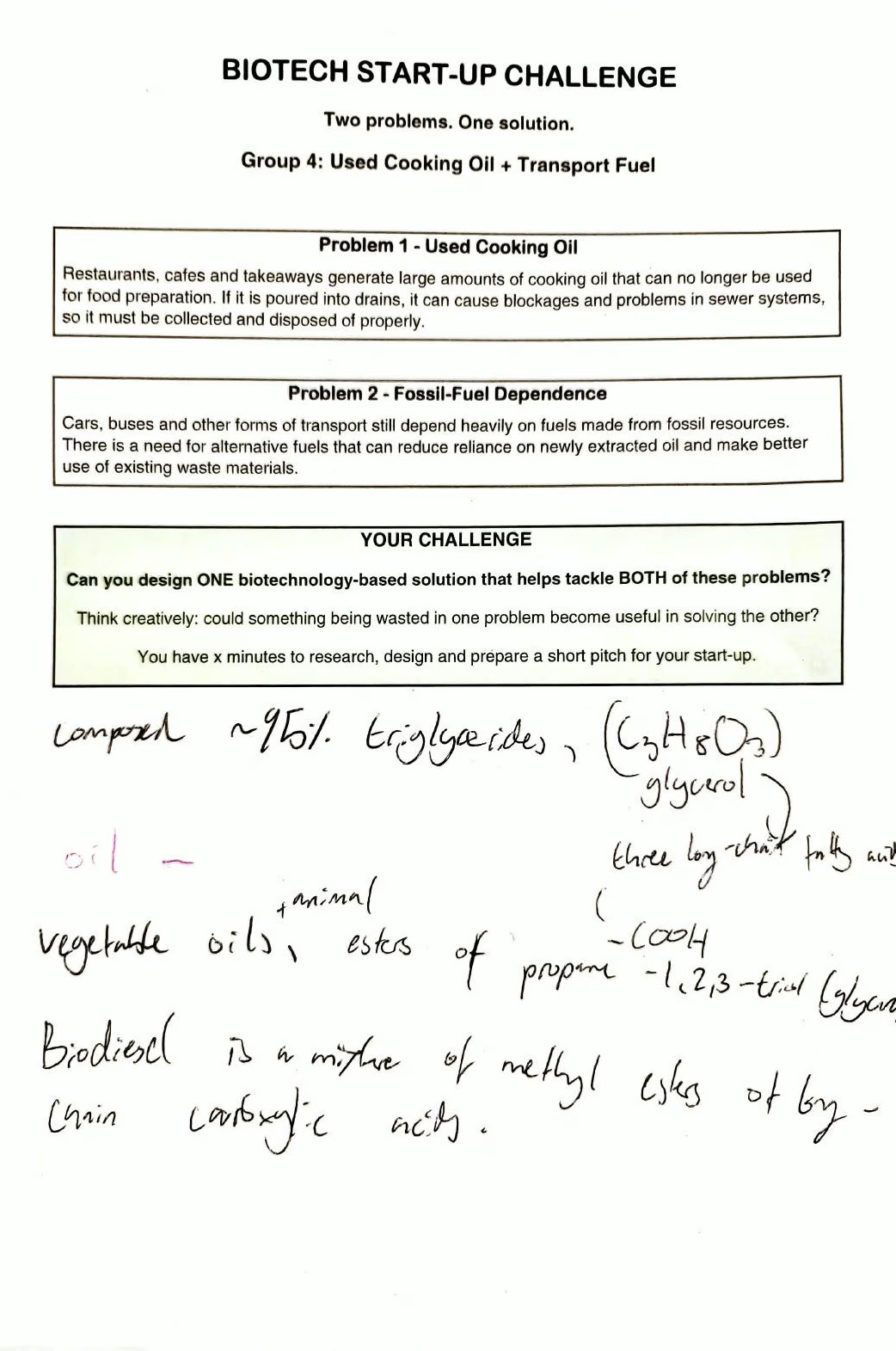
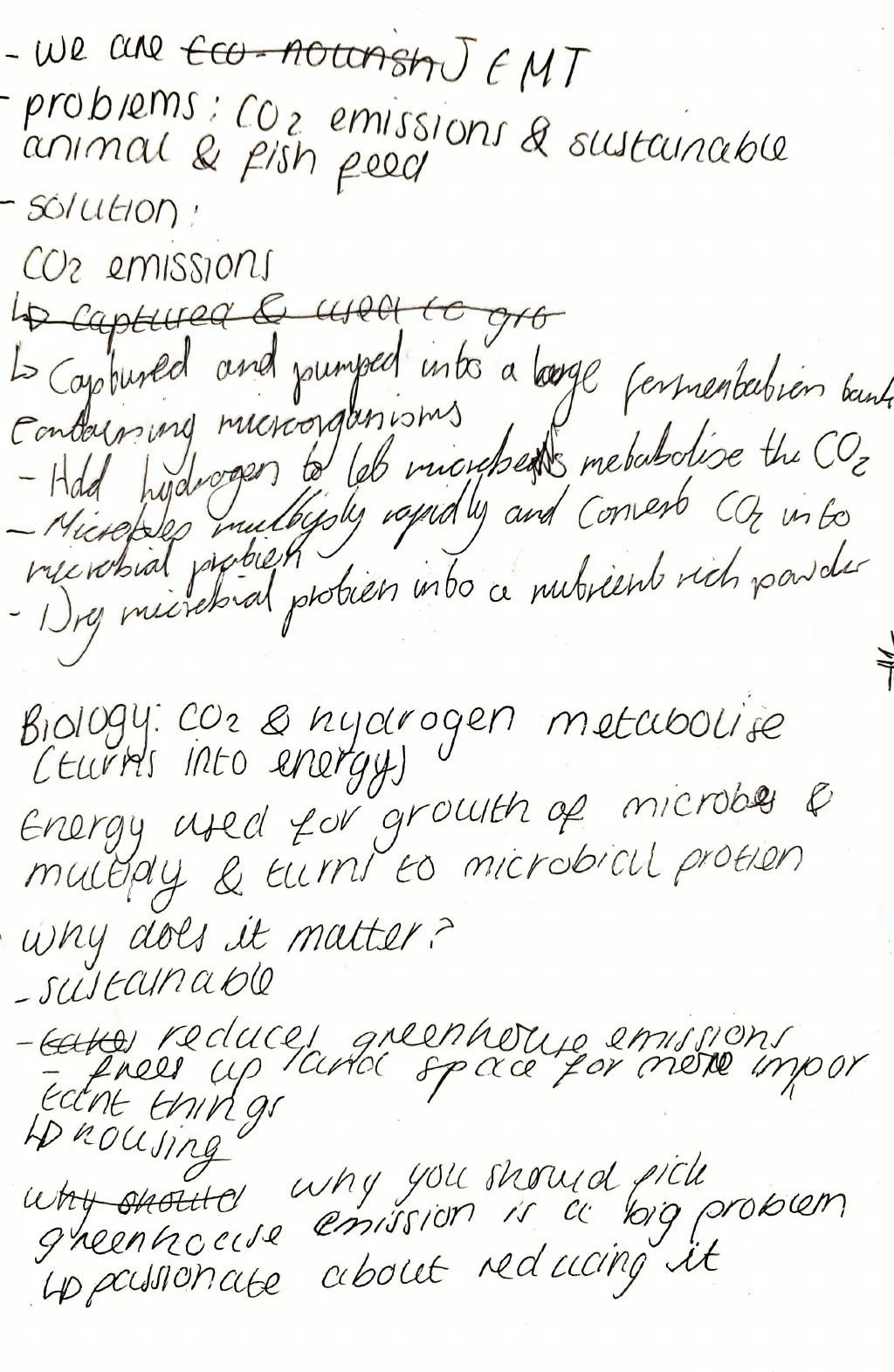
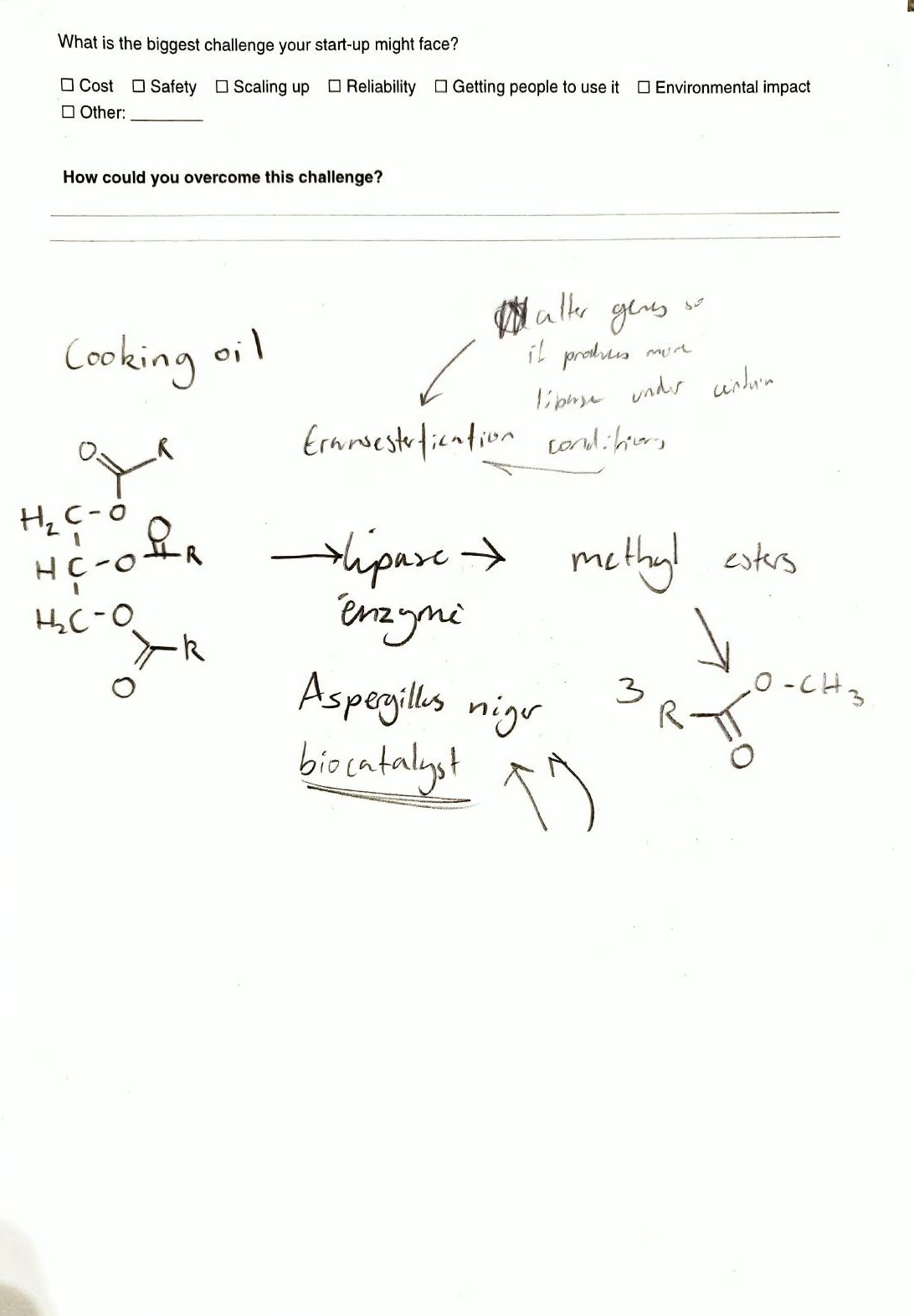
    Students were split into groups, and each group was given a brief describing two seemingly unrelated problems: food waste and renewable energy, coffee waste and food production, carbon dioxide emissions and animal feed, used cooking oil and transport fuel, or crop waste and plastic packaging. Their challenge was to design a single biotechnology-based start-up that tackled both problems at once, asking themselves whether something being wasted in one problem could become useful in solving the other. Over 30–40 minutes, groups researched their problems, completed a start-up worksheet guiding them through the connection, the biology involved, their target customers and the biggest challenges they might face, before delivering a 60-second pitch to the rest of the class.

    The format is well suited to pre-university students as it builds the independent research skills they will need at university, encourages them to apply their A-level biology to real environmental problems, and shows them that bioremediation can lead to entrepreneurship as well as research. The pitch element was equally deliberate, as it teaches students that even a brilliant idea can struggle to succeed if it cannot be communicated clearly, a lesson we learned first-hand when preparing our own iGEM pitches and presentations!

    To make the challenge accessible to students with different levels of confidence, we built in a tiered support system. Facilitators were given a hint sheet with a gentle prompt and suggested search terms for each group, which were only shared if a group was genuinely stuck, so that students were guided towards the answer without having it handed to them. A facilitator answer sheet outlined the expected connection for each pair of problems and some guidance on which topics to research, allowing any team member to run the activity confidently regardless of their background. There was no single correct answer, and we rewarded any group that made a logical connection, used a genuine biotechnology, and communicated it clearly.

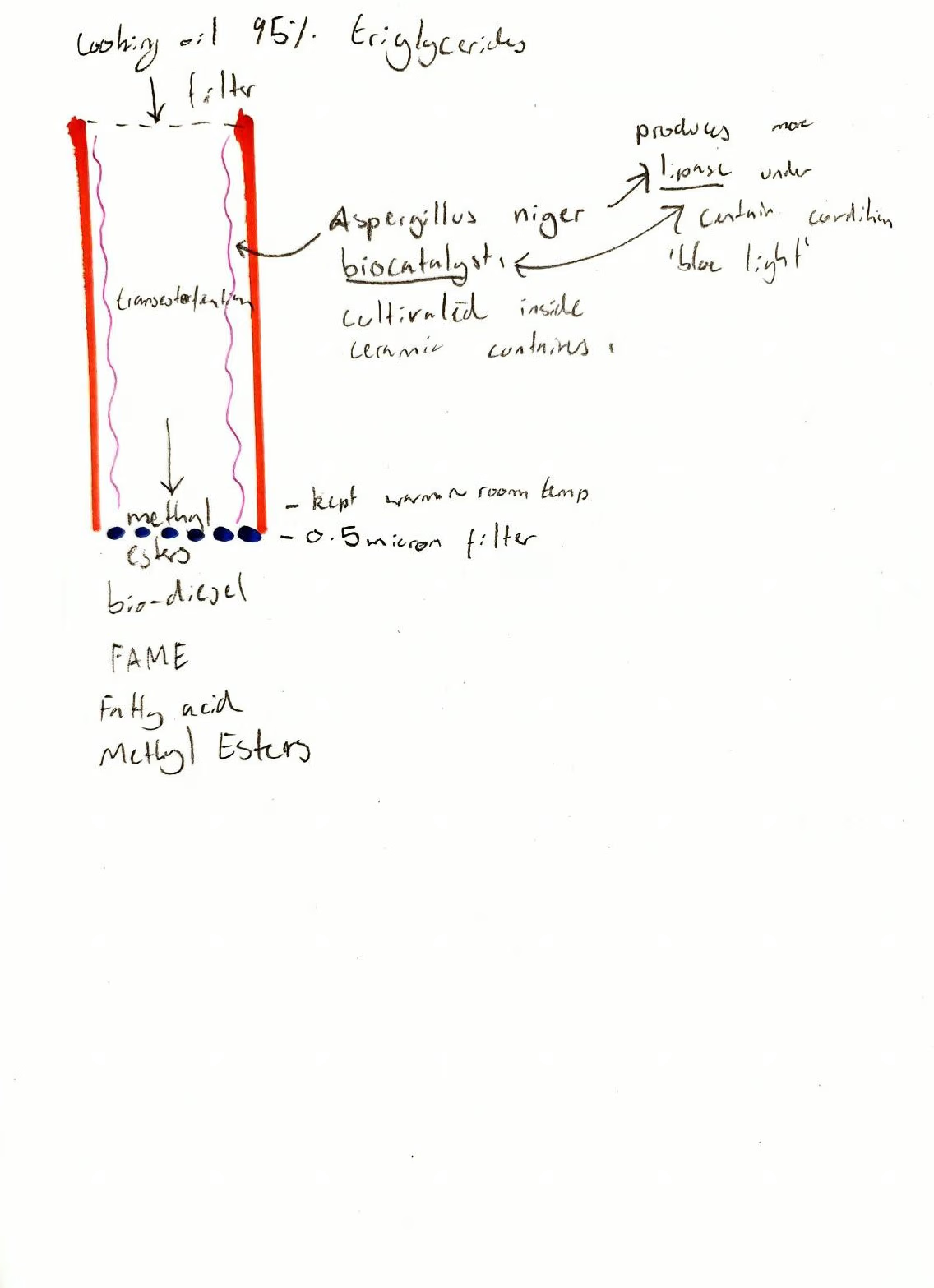
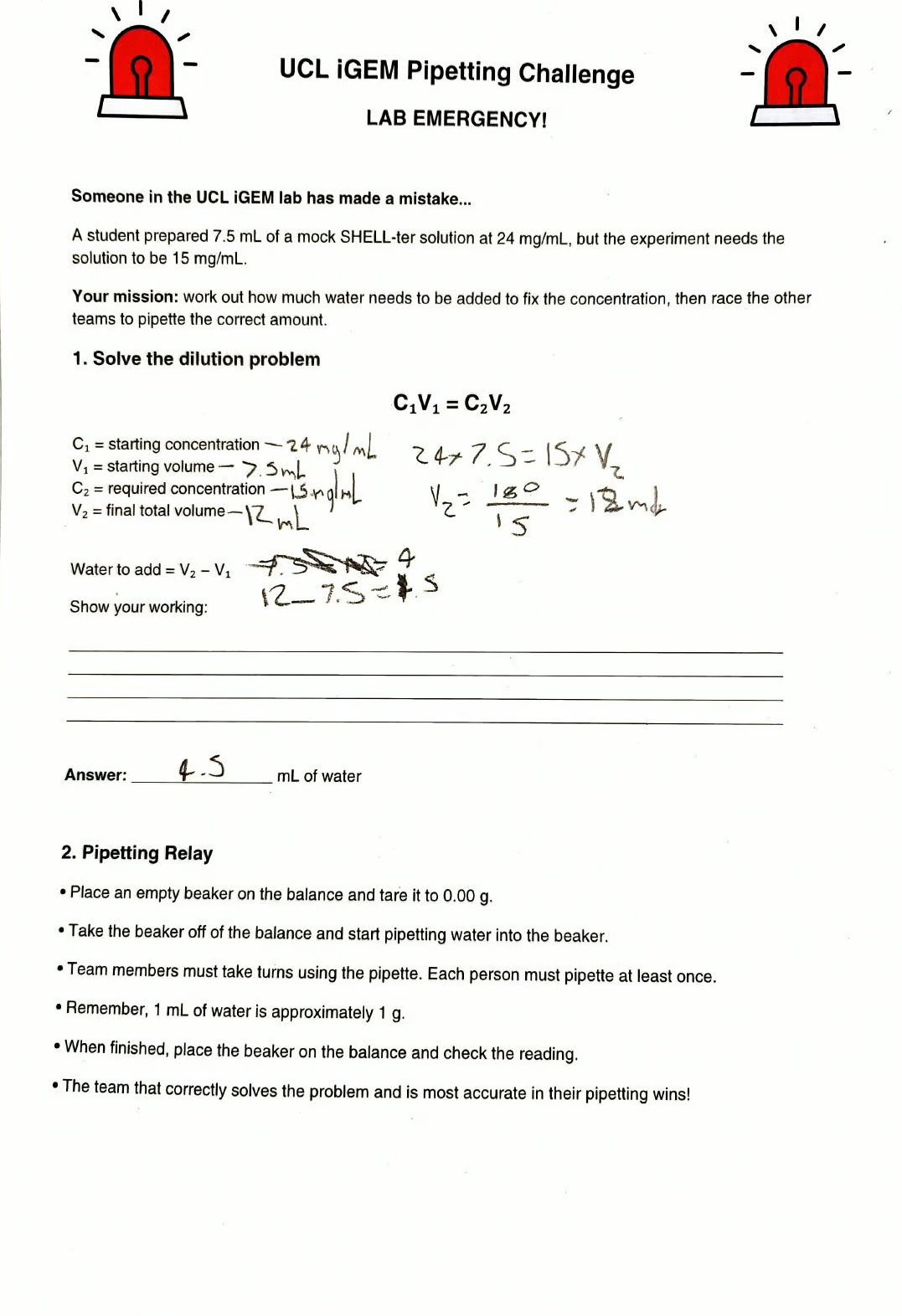
    A hand-drawn diagram of biodiesel being made from cooking oil, with an enzyme, a filter and notes on triglyceridesA hand-drawn diagram of a cow surrounded by crop production, manure management, animal production, transport and food processing, with a CO2 cloud above it: carbon footprint in focusThe UCL iGEM Pipetting Challenge worksheet, Lab Emergency, completed with the dilution calculationA completed Build Your Start-up worksheet for a company called JEMT ecoA completed worksheet page about where biology comes in, designing the solution and building the start-upThe Biotech Start-up Challenge brief for group 4, used cooking oil and transport fuel, with handwritten notes on triglycerides and biodieselHandwritten notes from a group: the problems of CO2 emissions and sustainable animal and fish feed, and a solution using microbes and hydrogenA completed worksheet page about the biggest challenge, with a hand-drawn diagram of cooking oil turned into methyl esters by a lipase enzyme

    Worksheet 1 of 8

    Click the pile to flick through the worksheets our students filled in.

    Figure 7: Worksheets completed by students.

    Building on This Game: For future iGEM teams, particularly those in the bioremediation track, this game is a simple way to introduce students to the pollutant or waste stream their own project targets. Teams only need to write new problem pairs that match a waste material with a pollutant it could help remove, keeping the connection hidden so that students discover for themselves how biology can turn one environmental problem into the solution for another. Running the game straight after presenting their project lets teams reinforce what students have just learned, as designing their own bioremediation start-up gives students the chance to apply the thinking behind a real iGEM project for themselves. For older or more advanced students, a final round of “investor” questions on safety, cost, scale-up, and public trust brings in the real-world challenges every bioremediation technology faces, from regulatory approval to whether people would accept engineered biology being used to clean their environment.

    The students were very engaged in brainstorming solutions, and focused on creativity of solutions, whilst at times lacking justifications and thoroughly considering how to balance environmental effects of their choices. To build on this activity in future we would add a section where the students state the environmental impacts of process decisions and research alternative solutions for more balanced processes.

    Game 2: Lab Emergency Pipetting Challenge

    This activity placed students in the middle of a lab emergency, where a researcher in the SHELLter lab had accidentally made a mock SHELLter solution too concentrated, and it was up to the students to rescue the experiment.

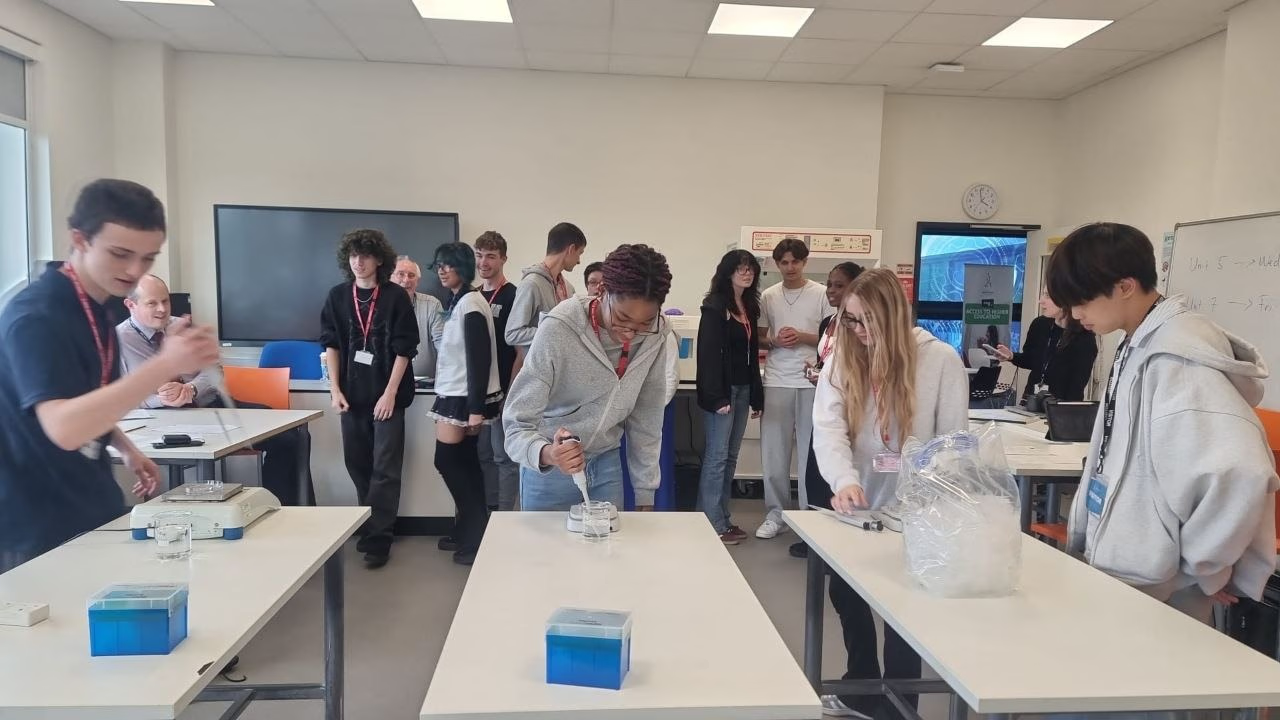
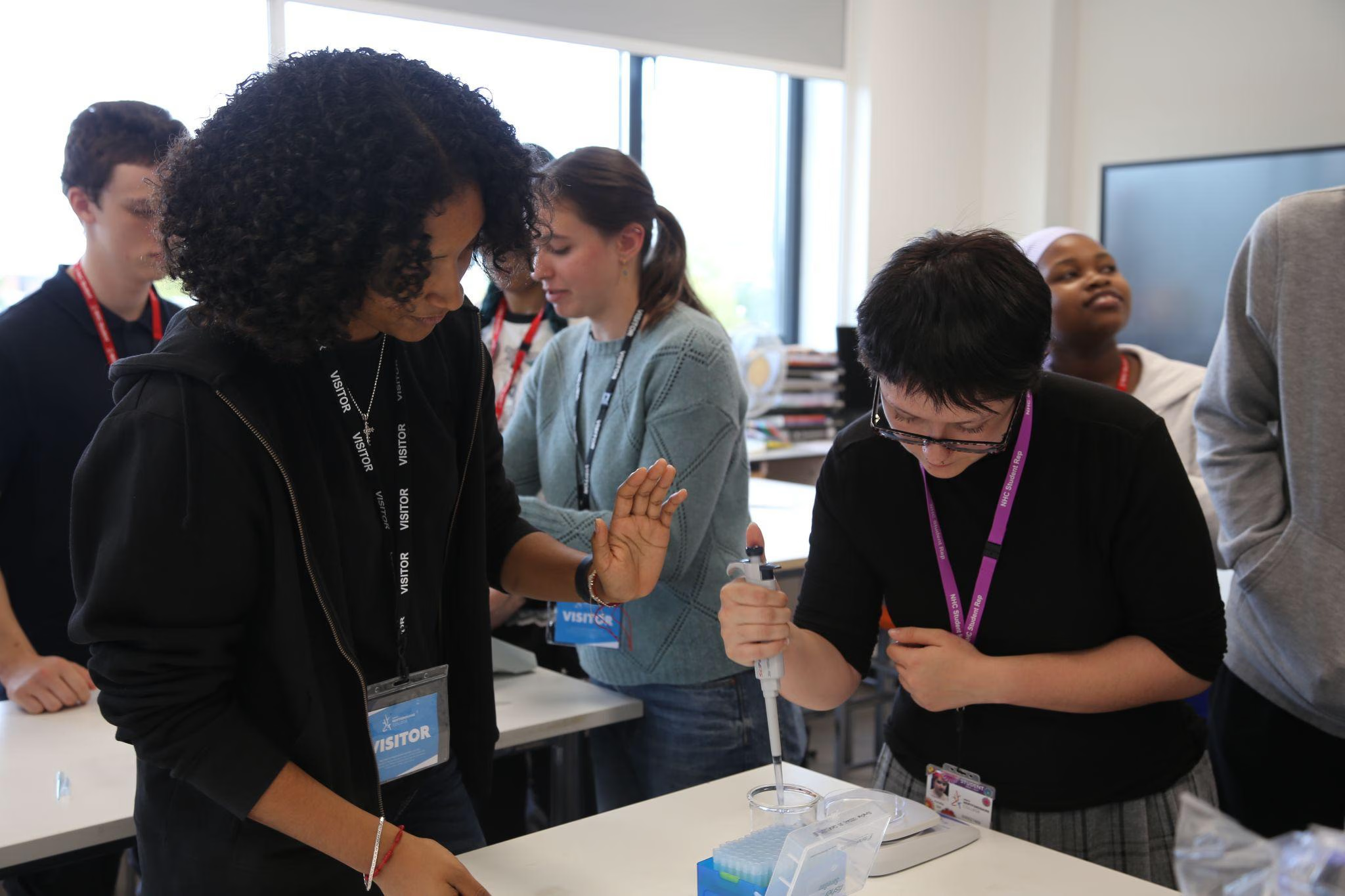
    As none of the students had used a micropipette before, one of our team members began with a live demonstration of correct pipetting technique, covering how to set the volume, attach a tip, use the first and second stops on the plunger, and hold the pipette vertically to draw up and release liquid accurately. Working in teams, students then used the dilution equation C1V1 = C2V2 to calculate how much water needed to be added to reach the correct concentration, before racing the other teams in a pipetting relay. Team members took turns to pipette water into a beaker sitting on a balance, which displayed the mass changing live, and as 1 mL of water weighs approximately 1 g, the first team to reach the target mass exactly won the challenge.

    Students and team members gathered in a teaching lab, watching a student use a micropipette during the pipetting challenge
    A team member helps a student hold a micropipette during the pipetting challenge, while other students watch

    Figure 8: The pipetting challenge.

    The activity was designed to teach a core lab skill that students would otherwise not meet until university. Pipetting underpins almost every experiment in molecular biology and biochemistry, including our own, and the relay format ensured that every student pipetted at least once, so that no one left without having held a micropipette and put the demonstration into practice. Learning the technique in a low-pressure, game-based setting also gave students the confidence to make mistakes and try again.

    Above all, the race forced students to confront the trade-off between speed and accuracy that every scientist faces at the bench. Teams that rushed their transfers often overshot the target and lost valuable time pipetting water back out, while teams that worked carefully tended to reach the target more reliably. This showed students that in the lab, working quickly is only useful if the result can be trusted, and that taking the time to do something properly is often the faster route in the end.

    The activity also showed students that theory and practice depend on each other. A team that made an error in its calculation would race confidently towards the wrong target, while a correct calculation was only useful if the pipetting was then carried out accurately. This mirrors real research, where a single mistake early in an experiment carries through to every result that follows. Furthermore, dilution calculations are a core part of higher-level chemistry and biology, yet students are rarely shown why they matter outside of an exam paper, so setting the calculation within a real iGEM experiment gave them a reason to care about getting it right.

    To make the activity safe and practical in a college setting, we used water only, with no biological materials. The game requires only pipettes, tips, beakers, and a balance, so it can be set up quickly in a classroom without access to a full laboratory.

    Building on this game: As the challenge uses only water and basic equipment, any iGEM team can run it safely in almost any school or college, giving students their first experience of a core lab skill wherever the team visits. Teams can rewrite the lab emergency around a solution from their own project, which makes it an easy way to introduce students to their research, and adjust the numbers to suit the pipettes available. The difficulty can be scaled to the audience: for more advanced students, the challenge can be extended to a serial dilution, while for younger students the calculation can be removed entirely so that the focus is on technique alone.

    Build Your Own Bioprocess

    UCL Open Day

    5th September 2026

    At the UCL Open Day, many of our visitors were prospective students considering degrees in engineering and the life sciences, so we designed a game that would give them a first-hand experience of thinking like a bioprocess engineer.

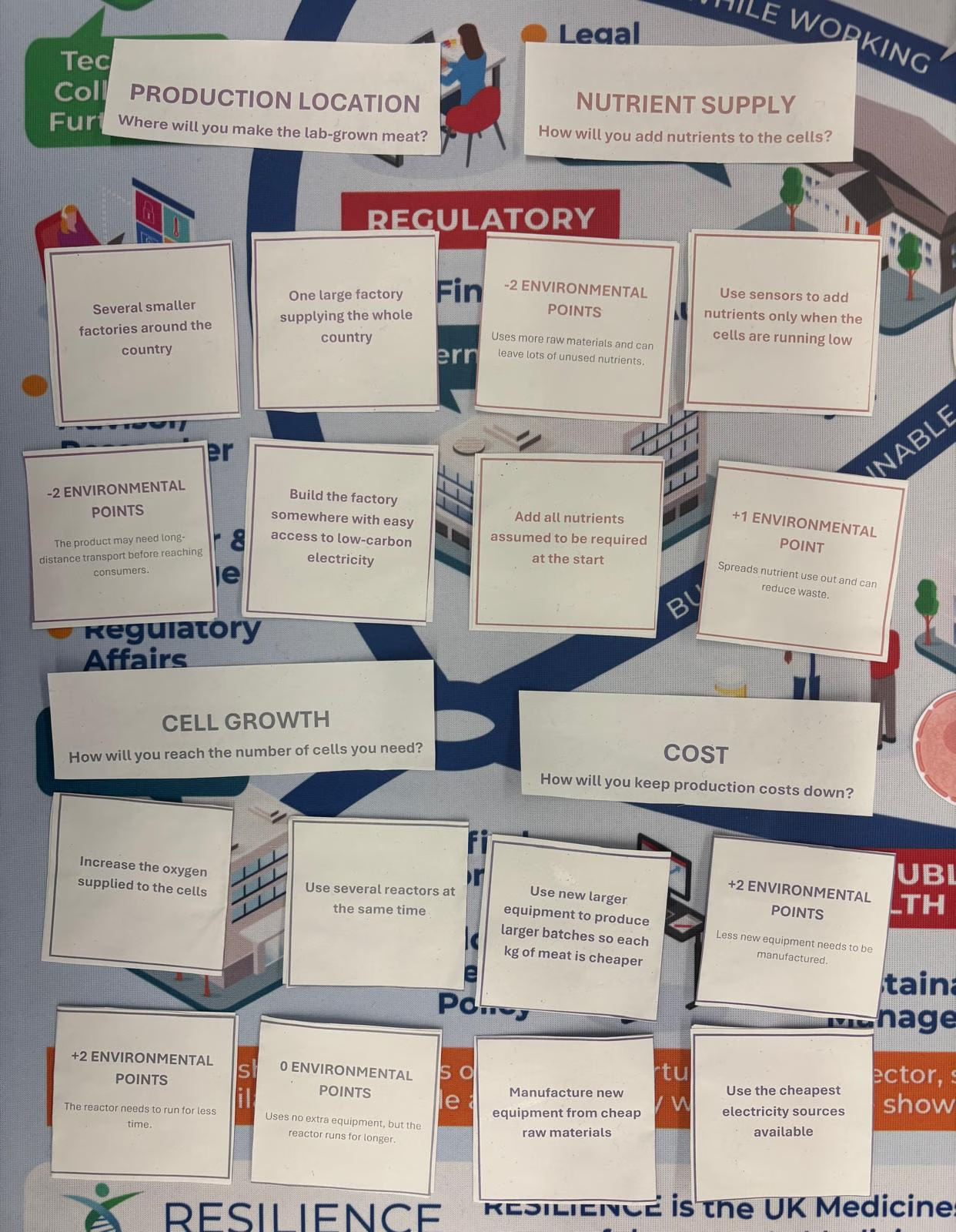
    Players designed their own lab-grown meat process by making one choice in each of four categories: cost, cell growth, nutrient supply, and production location. Each option carried a hidden environmental impact, which players only saw once all of their design choices had been made, before adding up their overall environmental score.

    The game was designed to challenge players’ instincts. Most students naturally chose the cheapest or most efficient option in each category, only to discover that these choices often came at a high environmental cost, leaving their process with a negative overall environmental impact. This showed them that the most obvious way to save money or speed up production is rarely the most sustainable, and that engineers must actively seek out alternative, more sustainable practices rather than defaulting to the quickest or cheapest route. Players also discovered that sustainability does not have to come at the expense of savings: by striking the right balance, it was still possible to make savings in every category while finishing with a net environmental benefit.

    This lesson lies at the heart of bioremediation. A system designed to clean up pollution still consumes energy, materials, and resources to run, so if it is poorly designed, it can end up causing more environmental harm than it removes. We based the game on a finding from our Main Quad Pop-Up Booth, where 72% of participants said a net sustainability benefit was the most important aspect of a pollution treatment system, and this principle has guided our own design decisions throughout SHELLter.

    The game suits pre-university students well, as it introduces them to bioprocess engineering, a field rarely covered at A-level, and encourages them to think critically about sustainability claims rather than taking them at face value.

    Building on this game: The hidden-impact card system can be built around any bioprocess, which makes it a simple way for future iGEM teams to show audiences the trade-offs behind their own project. It is especially useful for teams in the bioremediation track, as it shows students that any technology designed to benefit the environment must itself be sustainable to deliver a real benefit, a question every bioremediation project has to answer. Teams can also follow our approach of basing the game on what their audience has told them, using results from a survey or opinion poll to decide which trade-offs to focus on, so that the activity responds directly to the public’s own priorities.

    The Build Your Own Bioprocess game cards on a board. Grey cards ask the question (production location, nutrient supply, cell growth, cost) and white cards below give the options, such as several smaller factories or using sensors to add nutrients, with their environmental points.

    Figure 9: Build Your Own Bioprocess game cards.
    Instagram Engagement

    Our SHELLter Instagram page is a platform open to all, fostering a community of over 1000 individuals who want to learn about the importance of the circular economy, the role of synthetic biology in providing solutions to real-world problems, and the lives of scientific researchers.

    Meet UCL’s Biochemical Engineering Department 2,100 views

    A series showcasing the research conducted in PHD laboratory projects. We interviewed four PHD Candidates from our UCL Department of Biochemical Engineering, asking them the questions everyone wants to know: “If your job was a food dish, what would it be?” and more. The candidates provided insights on the laboratory equipment they use day-to-day, the challenges of working with bacteria, short descriptions of their projects, and barriers iGEM teams may face throughout their projects.

    Questions Asked:

    1. If your job was a food dish, what would it be?
    2. Can you explain your research in 10 words?
    3. Can you show me what the most important equipment is for your research and tell me why?
    4. Our project utilises bacteria to recombinantly produce enzymes; what is the most difficult aspect of getting bacteria to do what you want?
    5. What do you think is the biggest barrier our team will face over the course of the project

    Given more time, we would have extended the series further to include vlogs of a day in the life in the lab, as well as hosting students for lab tours to familiarise them in-person with the research environment.

    Synthetic Biology Explained

    1

    SynBio at the Movies 1,592 views – Following the release of Spider-Man: Brand New Day, our post delves into the concept of siRNA, the scientific basis of the gene-silencing chip created in the movie. We took the opportunity to explain that, using synthetic biology, concepts that may seem like Marvel pseudoscience can be practically explained. The post details the process of siRNA-mediated gene silencing, including real-world examples of products that use this technology.

    2

    The Circular Economy 957 views – Turning waste into something valuable lies at the core of SHELLter, so we created a two-part series to introduce the wider concept behind it. Part 1 explains what a circular economy is: a system that keeps materials in use for as long as possible rather than following a traditional linear model, along with its benefits. Part 2 then introduces the technical cycle, which keeps man-made materials in circulation through reuse and recycling, and the biological cycle, which safely returns natural materials to the environment. Splitting the topic across two posts kept each one short and digestible, and showed our audience how biotechnology, including SHELLter’s use of waste shellfish shells, can help design waste out of our systems.

    3

    What Is Synthetic Biology? 1,964 views – Many people have heard of “synthetic biology” but are unsure about what it actually means, so we designed an Instagram carousel to close this gap. Our goal was that anyone, whatever their background, could explain the term by the final slide. The post defines synthetic biology as the design and engineering of biological systems to carry out new and useful functions, then brings it to life with real-world examples. Each slide delivers one short, eye-catching idea, so followers learn the basics as they scroll and gain the foundation they need to understand projects like SHELLter.

    References
    1. Department for Education (2025). Identifying and supporting children and young people with cognition and learning needs: a rapid evidence review
    2. CAST (2024). Universal Design for Learning Guidelines