

Loading...
Loading...


Our project utilises a key polysaccharide that is primarily contained in shellfish waste. Chitin, present in up to 40% of shellfish processing waste [1], provides the valuable ability of metal adsorption due to the multiple reactive functional groups on its chains [2]. This ability is further enhanced when chitin is deacetylated. The deacetylated derivative of chitin, chitosan, has a much greater adsorption capacity [3], as deacetylation exposes a much higher number of free, active amino (-NH₂) and hydroxyl (-OH) functional groups that can bind with metal cations [2].
Therefore, the SHELLter project explores two key enzymatic pathways for the conversion of chitin into chitosan in order to enhance its adsorption capabilities.
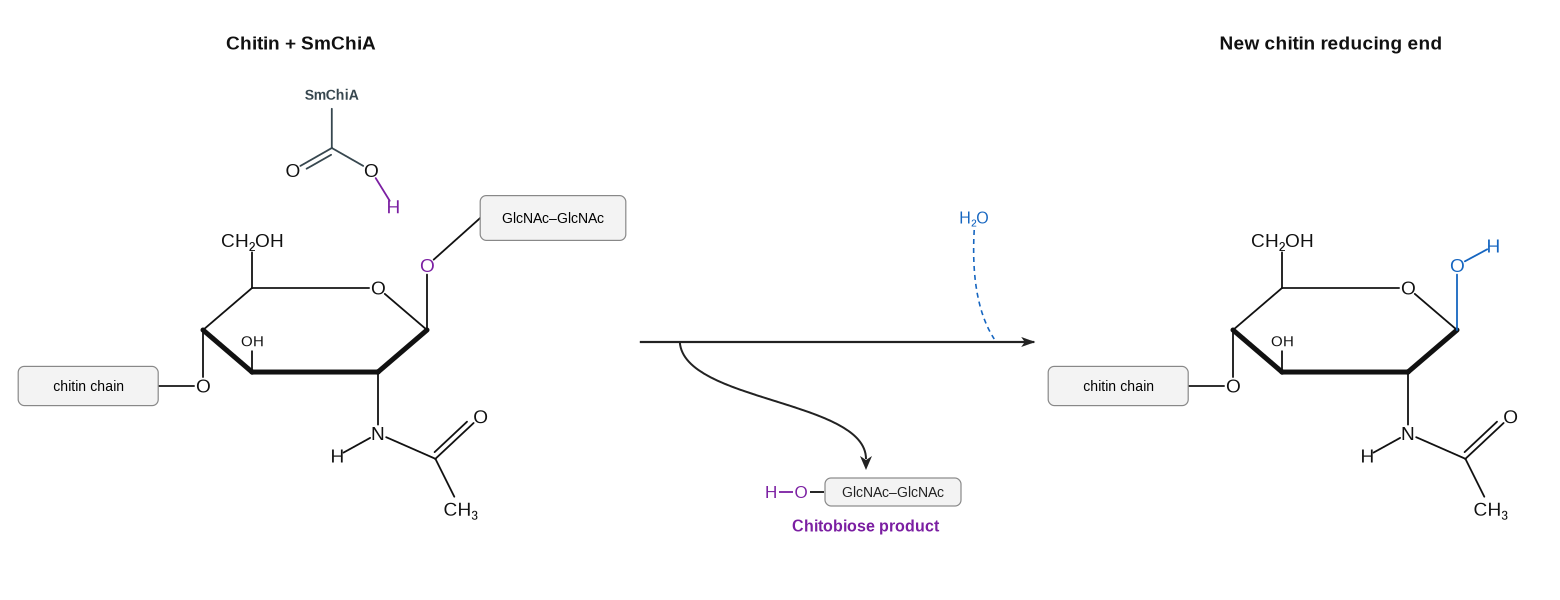
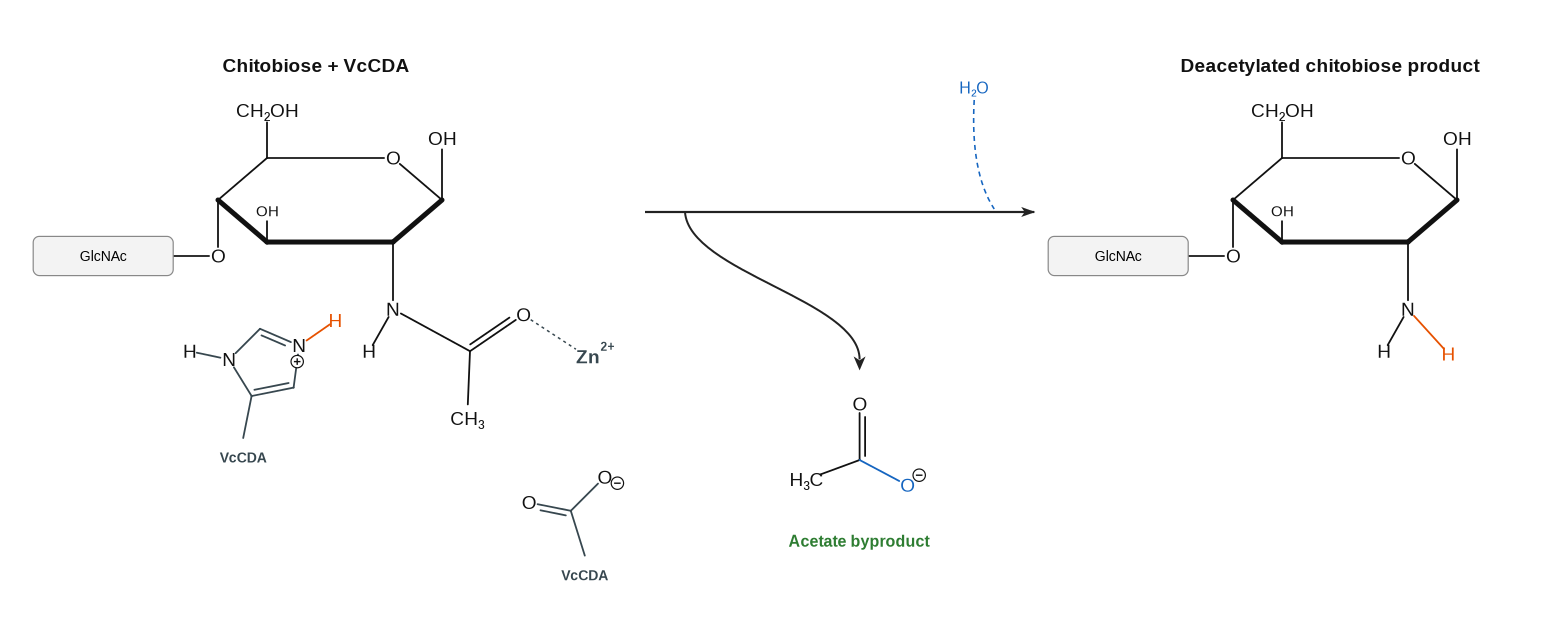
The first method is a two-step reaction involving chitinase and chitin deacetylase. Chitinase (SmChiA), chosen as a highly efficient exo-chitinase derived from the bacterium Serratia marcescens, binds to chitin and performs cleavage of the β-1,4-glycosidic bonds to release diacetylated chitobiose. This intermediate then reacts with Vibrio cholerae’s chitin deacetylase (VcCDA), where VcCDA performs hydrolysis of acetamide bonds to release acetate, producing monodeacetylated chitobiose. The full reaction mechanism can be seen in Figures 1 and 2.
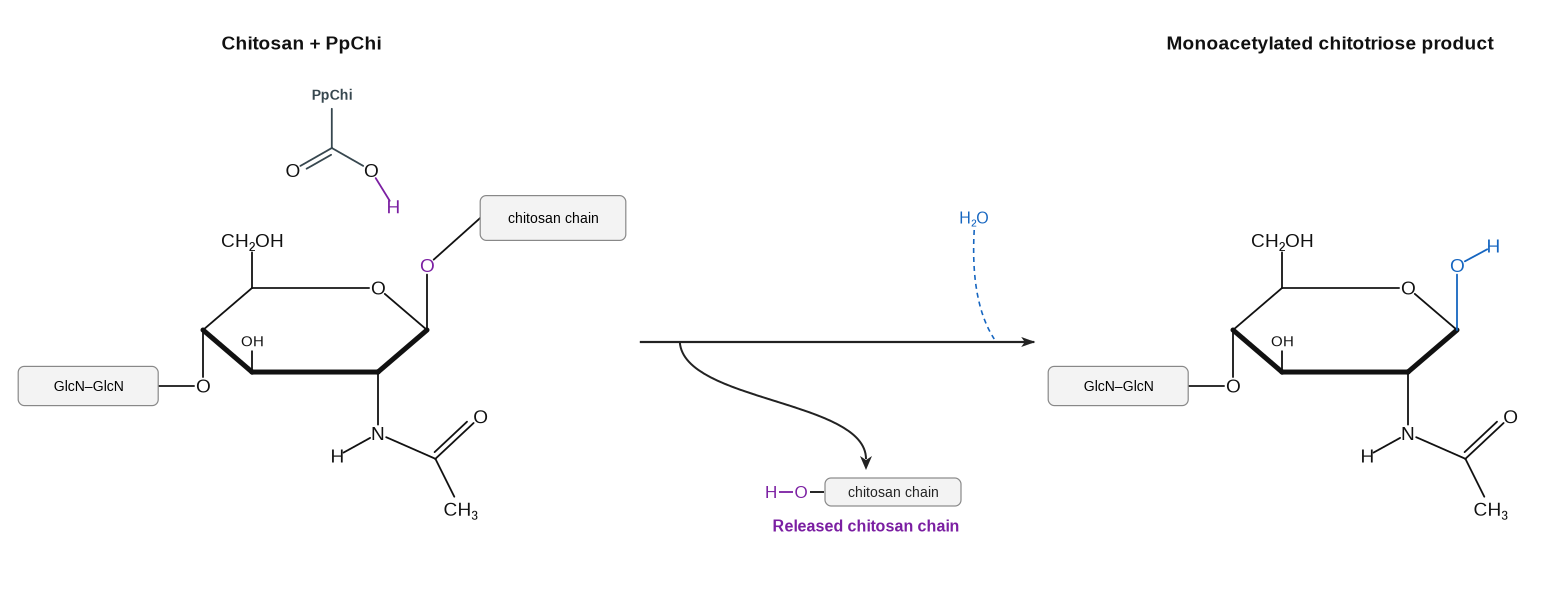
On the other hand, the second method utilises the novel enzyme discovery of Paenibacillus pabuli’s chitinase. This enzyme performs hydrolysis of partially acetylated chitosan to release monoacetylated chitotriose, shown in Figure 3.
Please refer to the Results page to see how the team expressed and tested the enzymes in the Escherichia coli BL21* (DE3) strain.
Upon completing the conversion, the next step is chelation of the heavy metal. In this situation, the hardware device will have our chitobiose or chitotriose product bound to a cellulose sponge in a disposable cartridge.
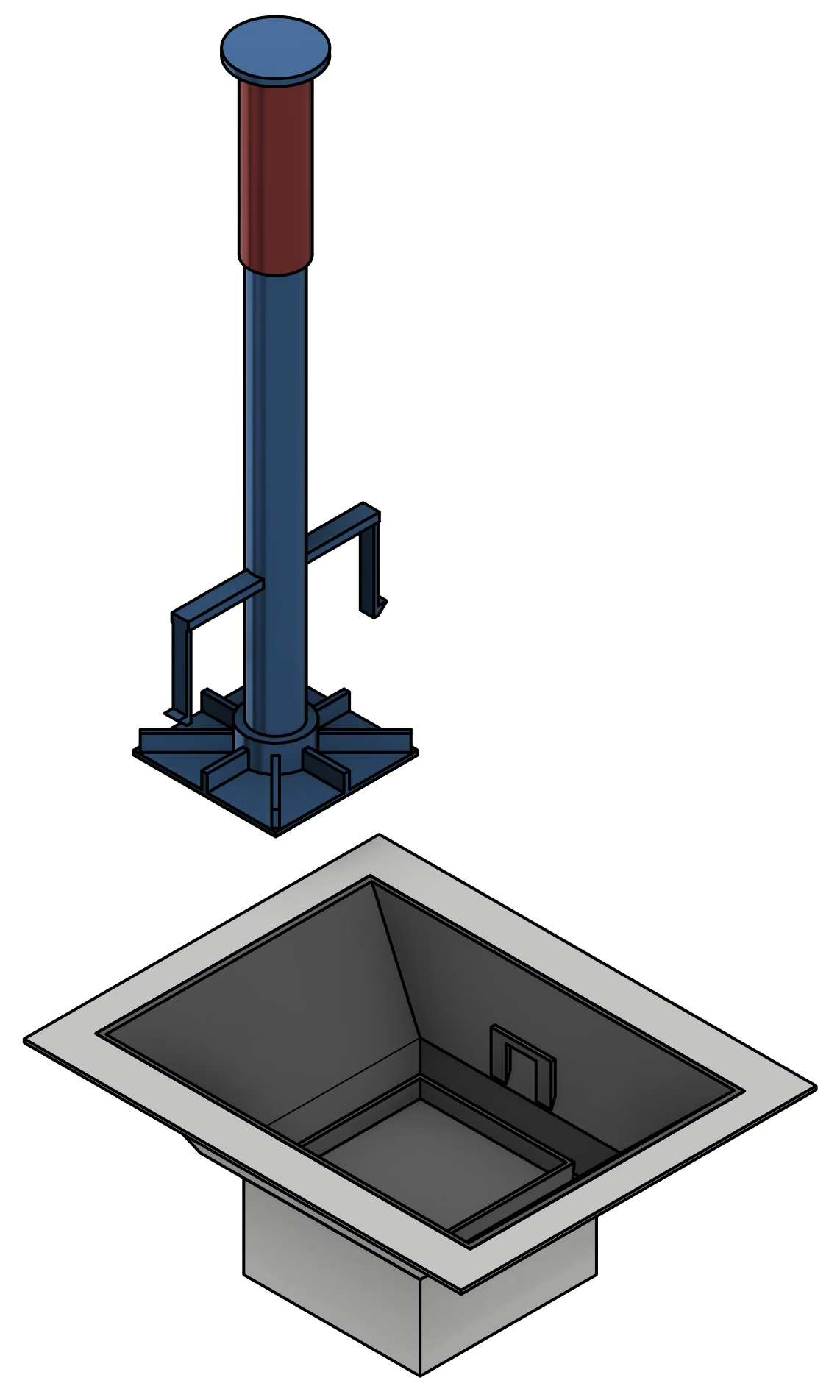
This device, visualised in Figure 4, will be fitted into the patient’s toilet bowl where, as the patient passes urine, chitobiose/chitotriose will capture the heavy metals (in this case, cisplatin). The disposable cartridges within the device will be replaced daily or every other day and sent off to a treatment facility for efficient disposal of heavy metal residues.