Genetically Modified Organisms (GMOs) are becoming increasingly prevalent due to their vast potential across various sectors, particularly in medicine and pharmaceuticals. However, significant misconceptions and controversies continue to surround them. While the majority of the scientific community advocates for the advancement of GMOs, public views remain mixed.
To better understand public perception of GMOs within the context of our Capture project, we designed a survey focusing on their application in treating Pseudomonas aeruginosa infections. We successfully distributed this survey to an international audience, ultimately collecting 376 responses.
Charts redrawn from the Google Forms summary of all 376 responses.
Population Sample
To properly contextualize our findings, we first analyzed the demographics of our 376 respondents. The data (Figure 1) reveals a predominantly young demographic, with 83.2% of participants being 25 years old or younger, which includes 26.1% under 18 and 57.2% aged 18 to 25. Furthermore, we were encouraged to see that a vast majority of respondents have attained at least a high school level of education, with 59.8% holding a senior high school diploma and 28.7% possessing a bachelor's degree (Figure 2). Interestingly, despite this high baseline of general education, only 23.9% of participants reported having a scientific background (Figure 3).
Age distribution, 376 responses
Answer
Responses
Share
Under 18
98
26.1%
18–25
215
57.2%
26–40
26
6.9%
41–65
34
9.0%
Over 65
3
0.8%
Figure 1. Age distribution
Highest education level, 376 responses
Answer
Responses
Share
Junior high
23
6.1%
Senior high
225
59.8%
Bachelor’s
108
28.7%
Master’s
16
4.3%
Doctorate
4
1.1%
Figure 2. Highest education level
Background, 376 responses
Answer
Responses
Share
Science
90
23.9%
Engineering
71
18.9%
Business
19
5.1%
Others
196
52.1%
Figure 3. Background
Knowledge on Infection
To begin our analysis, we sought to assess the general public's baseline understanding of Pseudomonas aeruginosa infections. We designed specific questions to gauge their familiarity with the pathogen. Surprisingly, only 37% of respondents had ever heard of P. aeruginosa (see Figure 4), and a mere 0.8% considered themselves to be well-informed about the infections it causes (see Figure 5).
Have you heard of P. aeruginosa infections?, 376 responses
Answer
Responses
Share
Yes
139
37.0%
No
237
63.0%
Figure 4. Have you heard of P. aeruginosa infections?
Understanding of P. aeruginosa infections, 376 responses
Answer
Responses
Share
1 – I don’t know
258
68.6%
2
73
19.4%
3
34
9.0%
4
8
2.1%
5 – Very knowledgeable
3
0.8%
Figure 5. Understanding of P. aeruginosa infections
These findings underscored a significant knowledge gap regarding Pseudomonas aeruginosa among the general public. Recognizing this lack of awareness shaped the workshops and outreach we ran after the survey, and confirmed the direction of those we had already begun in May.
Living Therapeutic Acceptance
Following our evaluation of public awareness, we sought to assess the respondents' acceptance of "living therapeutics" — specifically, the use of engineered bacteria as medical treatments. To achieve this, we posed several questions regarding their stance on genetic modification and gene-edited drugs.
The survey revealed a cautious public attitude. Only 48.4% of the participants expressed support for genetic engineering or modification in general (combining level 4 and 5 support), while a significant portion, 39.9%, remained entirely neutral (see Figure 6). Interestingly, when asked specifically about the development of gene-edited bacterial drugs (see Figure 7), support rose to 63.6% (combining level 4 and 5 support). However, when it came to the actual use of these bacterial drugs on themselves (see Figure 8), the acceptance rate dropped to 58.5% (combining level 4 and 5 acceptance).
Support for genetic engineering, 376 responses
Answer
Responses
Share
1 – No support
11
2.9%
2
33
8.8%
3
150
39.9%
4
135
35.9%
5 – Strong support
47
12.5%
Figure 6. Support for genetic engineering
Support for gene-edited bacterial drugs, 376 responses
Answer
Responses
Share
1 – No support
7
1.9%
2
25
6.6%
3
105
27.9%
4
171
45.5%
5 – Strong support
68
18.1%
Figure 7. Support for gene-edited bacterial drugs
Willingness to use gene-edited bacterial drugs, 376 responses
Answer
Responses
Share
1 – Not acceptable
8
2.1%
2
27
7.2%
3
121
32.2%
4
145
38.6%
5 – Very acceptable
75
19.9%
Figure 8. Willingness to use gene-edited bacterial drugs
From these responses, we deduced that a substantial portion of the population remains hesitant or neutral toward gene editing, particularly when these technologies are applied as direct medical treatments.
Seven Conversations, Face to Face
The 376 responses told us what people think. They could not tell us why. So we arranged to sit down with seven members of the public, asked them the same seven questions in person, and let them answer in their own words — about wounds that would not heal, about antibiotics, and about whether they would accept a living therapeutic.
How we found them. All seven came from the people who had already filled in the questionnaire. We approached them at random rather than picking by answer, told them what the interview was for, and asked whether they were willing to talk it through in person; only those who agreed went on to the individual interview. Nobody was interviewed without that consent, and declining meant the questionnaire response still counted exactly as it was.
Seven people are not a sample. We report them as counts out of seven, never as percentages, and we make no claim about the public from them. They are also a self-selected group twice over — people who chose to answer the questionnaire, and then agreed to be interviewed — so anyone unwilling to discuss the topic at length is missing by construction. What they add is the reasoning behind the numbers above — the arguments people actually reach for when they are asked to decide.
7people, each asked the same seven questions
4 / 7had been on antibiotics that did not work
5 / 7named cost among the first things they would weigh
0 / 7raised an ethical, religious or ecological objection
The seven questions, and what came back
Open a question to see how the seven answered it.
1 · Have you, or someone close to you, had a wound that would not heal — or turned inflamed and infected — after an operation, a hospital stay, or a deep wound such as a burn or a diabetic foot ulcer?1 / 7 yes
Only one of the seven had met this directly. The infection our project is built around is, for most people, something they have never seen — which matches the 63.0% above who had never heard of P. aeruginosa.
2 · Have you ever been on a long course of antibiotics that did not work, or felt unwell from taking too many?4 / 7 yes
Antibiotics failing is the far more familiar experience: four of the seven had lived it, nearly all in the same form — a long course that simply did not work. The interview notes also record antibiotic-associated diarrhoea among the group.
3 · If a hospital offered both conventional antibiotics and an engineered biological therapy, what would you weigh first?5 / 7 said cost
Cost came up more often than anything else — as the price itself, as whether it would be paid out of pocket, and as whether National Health Insurance would cover it.
Cost, self-pay or insurance5 / 7
How well it works3 / 7
Side effects and safety3 / 7
Evidence behind it1 / 7
One answered only “whether I have heard of it”, and one added the country the drug was made in.
4 · What would make you willing to try a brand-new biomedical technology?4 / 7 only as a last resort
This was the hardest answer to hear. Four of the seven set the same condition, in almost the same words: when nothing else is left — “when the illness has no cure”, “when there is no saving me”, “when conventional treatment has stopped working”. The other three asked instead for evidence: experimental data, or completed clinical trials. One of those three also wanted a doctor’s recommendation.
5 · Do you know what synthetic biology or genetic engineering is?1 / 7 could define it
Only one could say what the field actually is. Of the rest, two had heard of genetic engineering but said plainly that synthetic biology meant nothing to them, two had a vague sense of it, one said they knew it, and one knew neither term. The name of our own field is not a name that reaches people.
6 · Once we had explained the field — would you have concerns about it being used as treatment, and what concerns?6 / 7 had concerns
Six had concerns, and they were concerns about the body and about how finished the technology is — not about the idea of engineering life.
Side effects, sequelae, tolerance4 / 7
How mature or well-tested it is4 / 7
Cost2 / 7
The seventh had no concerns at all, on one condition: that it had been through clinical trials.
7 · If a product based on genetic modification solved the problem better than today’s methods, under what guarantee would you try it?4 / 7 if they could afford it
Asked what would actually unlock the decision, four returned to affordability and three to evidence — a success rate, a sample size, data they could look at.
If they could afford it4 / 7
Evidence, data, sample size3 / 7
Safety guaranteed3 / 7
A doctor they trust recommends it1 / 7
What the seven told us
01
The first gate is money, not ethics
Cost was named more often than efficacy, safety or evidence — five of seven when choosing a treatment, four of seven when asked what would make them say yes. One put it bluntly: they would try it if they could afford it, and generally they cannot.
02
Most would come to it last, not first
Four of seven would reach for a new biological therapy only once conventional treatment had failed. A living therapeutic is not, in the public mind, a first-line option — it is what you try when you have run out.
03
Evidence is the key that turns
Where people did name a condition they could be persuaded by, it was almost always the same one: clinical trials, a success rate, a sample size, data. Three asked for it in Q4 and three again in Q7.
04
“Synthetic biology” is not a word that lands
Only one of seven could define the field, and two knew “genetic engineering” while telling us that “synthetic biology” meant nothing to them. If we introduce ourselves with the name of our field, we have already lost most of the room.
05
Nobody objected on principle
Not one of the seven raised an ethical, religious or ecological objection to engineering bacteria. Every concern we heard was practical: will my body take it, has it been tested long enough, can I pay for it. The barrier is not belief. It is proof and price.
In their own words
“經濟能負擔就願意嘗試(但一般來講無法負擔)” “I would be willing to try it if I could afford it — though generally, I can’t.”
“怕副作用,人體試驗不夠長久。” “I am afraid of side effects. The human trials have not run long enough.”
“有人試過嗎?成功案例有多少?這是很常態的治療方式嗎?” “Has anyone tried it? How many succeeded? Is this a normal treatment yet?”
“只要有臨床測試就覺得沒問題” “So long as it has been through clinical trials, I see no problem with it.”
“透過一些生物技術進行基因或分子生物學的改動” “Making changes to genes or to molecular biology through biotechnology.” — the one definition we were given
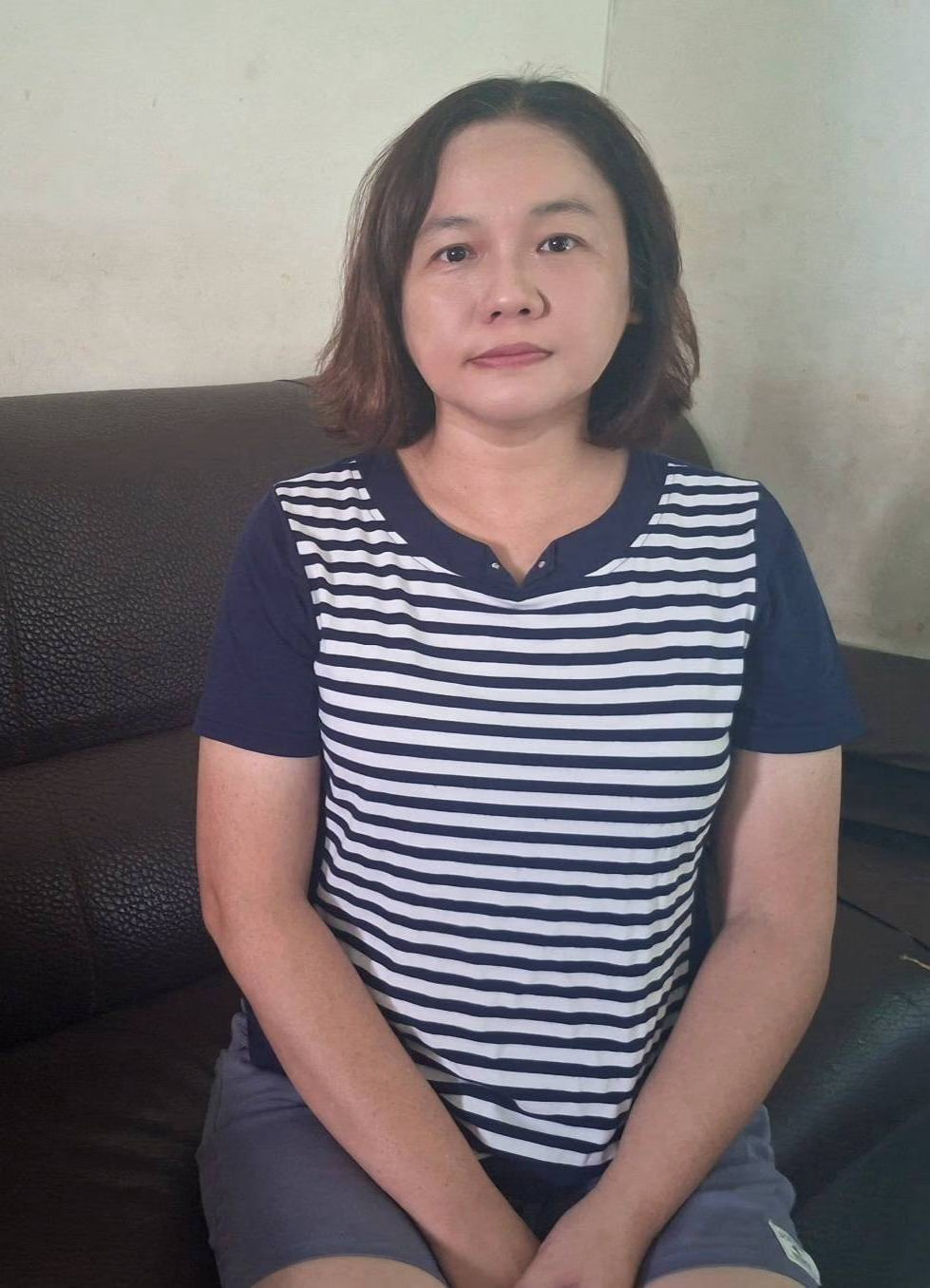
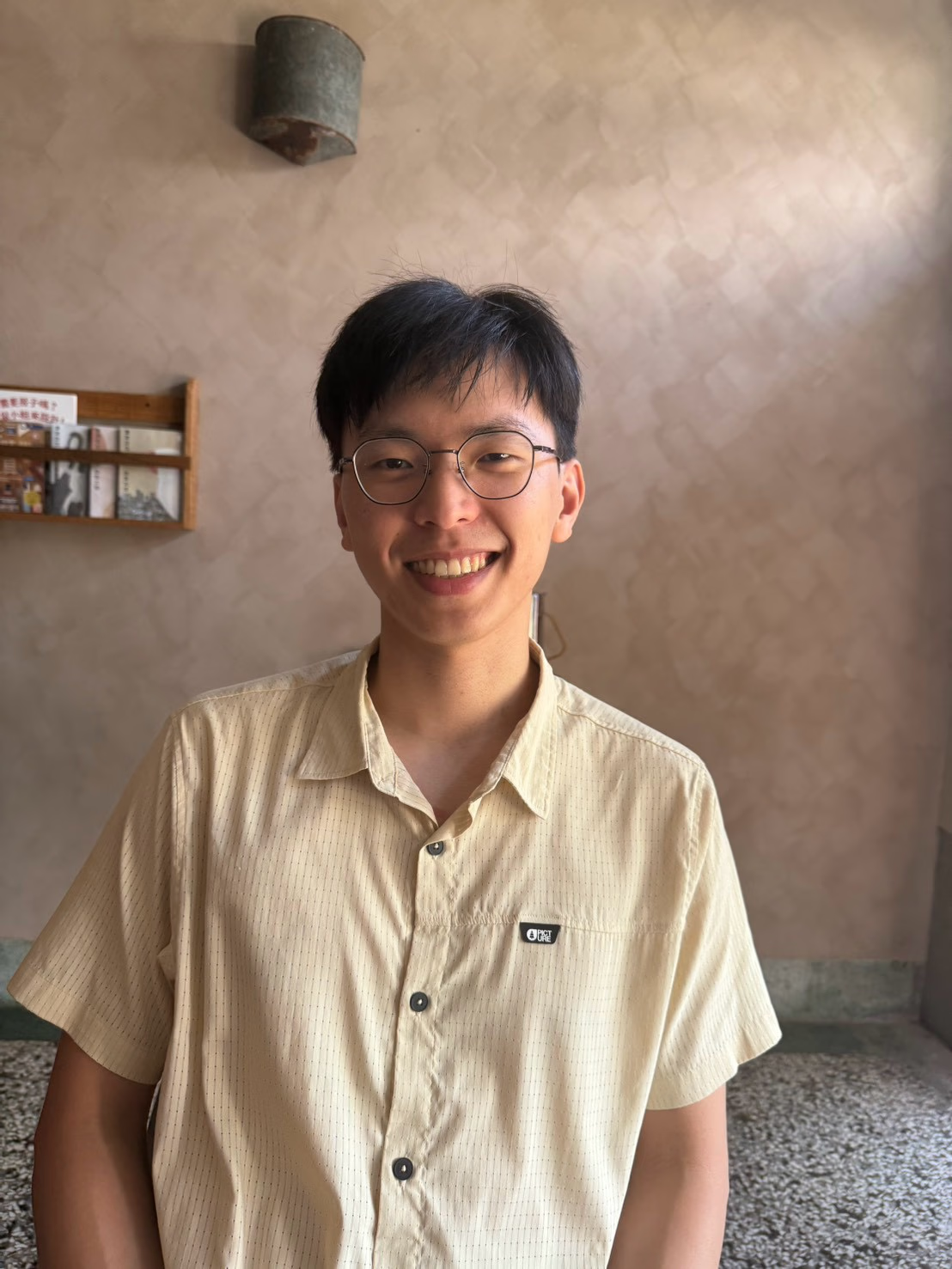
Every interviewee took part voluntarily and gave consent for their answers and these photographs to be published. Where an interviewee asked not to be identifiable, we covered their face before publishing, as in the third photograph. No names, contact details or other identifying information were recorded, and the 376 online responses were collected anonymously on the same basis.
Before we began, we asked our PIs, Prof. Wei-Chen Lin, and former members of this team, about ethical review. We raised in particular that some respondents to the online questionnaire would be under 18. On their advice, neither the questionnaire nor the street interviews required review by NCKU’s Human Research Ethics Committee: both collected anonymous opinions, recorded no identifiers, and involved no intervention and no clinical data; the interviews were conducted with adults only. We followed the same conditions throughout — voluntary participation, informed consent before each interview, and no identifying information recorded.
What we take from it
Two of these findings line up with where our own thinking had already landed. When Prof. Tsung-Lin Liu asked us what we valued most in the hardware, we answered low cost, speed and convenience. The seven people we interviewed arrived at the same place from the other end: price is the first thing most of them would weigh. That our own priority and the public’s first concern met is the clearest argument we have for keeping Capture cheap.
The second is about language. If only one person in seven can say what synthetic biology is, the word cannot carry the lesson on its own. Our workshops still set out to teach synthetic biology — that is what those sessions are for — but they reach it through the thing at the heart of Capture that children already have a sense of: bacteria, a wound, why handwashing matters. That is how we have run them since.
The third we record without a solution. Four of seven would only accept a living therapeutic once everything else had failed, and what would move them is evidence we do not yet have the standing to produce. We note it here as the honest limit of what outreach alone can change.
What It Told Us
Overall, the results of this survey provided critical insights for our Capture project. The data clearly highlighted a dual challenge: a profound lack of public knowledge regarding Pseudomonas aeruginosa infections, coupled with persistent hesitancy toward genetically engineered living therapeutics. That second finding came with a limit we only saw later: we had asked about engineered bacteria used as medicine, which Capture is not, so the hesitancy we measured is not hesitancy about our own project. The knowledge gap, though, was ours to act on. It became the driving force behind our subsequent educational workshops and outreach programs, which aimed not only to inform the public about P. aeruginosa but also to demystify genetic engineering, thereby fostering a more informed and receptive society.