Loading the page

Board Game

Behind the game

How The Green Cabinet was made

  1. Board Game Introduction

    The Green Cabinet is an educational board game about the UN Sustainable Development Goals. Players lead rival factions in a shared “international council,” each advancing 2 assigned SDG targets through action cards, events and special actions, racing to bring them to the finish line (GOAL) first.

    The point it makes: sustainable development has no single path. Every policy helps something and costs something, and the play is a constant trade between resources and political position.

  2. Sources of Inspiration

    We wanted people to understand what the SDGs actually contain, not memorise seventeen names. Play makes each goal familiar; the event cards carry real global issues, so players also meet what countries have actually done — and the game points outwards, past itself, at international affairs.

  3. Theme Development

    Policy really does come out of a tug-of-war, so the cabinet framing was the honest one. Leading a faction gives players the manoeuvring, which is where the strategy lives, and it makes the other point by itself: a decision rarely stays in one place.

  4. Translating the Rules into Design

    The loop is three phases:

    • Action — play up to 2 cards: help yourself, disrupt an opponent, hit everyone, or change how two SDGs relate.
    • Draw-and-resolve — the top card is flipped and resolved at once; a special action card is discarded and replaced.
    • Refill — back up to a hand of 5.

    Targets move both ways on the personal track, but once one reaches GOAL it locks and nothing touches it again: there is no absolutely safe endpoint in sustainable development, but progress already made does not simply vanish. Special actions — Veto, Policy Exemption, International Sanctions — make it a test of timing and resources rather than a straight race.


  5. Challenges

    • Balancing forward and backward movement. Early on each player tracked 2 targets while the cards spanned all 17 SDGs, so players kept refilling without drawing anything relevant and the pace sagged. Flipping and resolving the top card at the end of the Action Phase — which is where the draw-and-resolve phase came from — fixed the pace and added variation.
    • Card design. Some SDGs have fewer real-world events to draw on, so those categories ended up with fewer cards. We balanced forward against backward cards by rough calculation, but have not statistically verified that the distribution is fair. That is still open.
    • One event, many goals. A real event touches far more SDGs than a card has room for, so each event card shows at most 3. That is not fully precise, and when we teach the rules we ask players to think past what is printed.
  6. Playtest Feedback

    We ran a playtest at a workshop on 2–3 August 2026, with high-school students aged 15–18 (n = 33).

    What they wrote:

    “I hope more people get to play this game and learn what the SDGs are.”

    “I learned about some events that had a real impact on the world.”

    “you can tell a lot of care went into making this.”

    “希望能讓更多人玩到這項桌遊,讓更多人知道SDGs是什麼”

    “有認識到一些對世界有影響事件”

    “製作得很用心”

    Self-assessed understanding of the SDGs, before and after the session
    1 2 3 4 5 self-rated understanding (1–5) after 4.33 before 3.36

    Up 0.97 points. 24 of 33 improved (72.7%), 9 unchanged, none lower. Paired t(32) = 6.31, p < .001, 95% CI 0.66–1.28, Cohen’s d = 1.10; Wilcoxon W = 0, p < .001.

    Overall reception, mean rating per item
    Novel gameplay Comfortable art / layout Learned a lot Would play again Fun / engaging “Not appealing” 4.24 4.21 4.03 4.03 3.91 2.21 0 1 2 3 4 5 mean rating (scale 1–5)

    The last item is worded negatively and reverse-scored, so there a lower bar is the better result. It is set apart and in a different colour for that reason.

  7. Directions for Improvement

    What the playtest changed:

    • Players wanted to understand the events better, so the web version now carries event descriptions, Wikipedia links and annotations — why this event moves that SDG.
    • They asked for reversals, flip effects and more drama. We added two special action cards: Stance Reversal (formerly Step Reversal) and Back to Square One (formerly Step Reset).
  8. Looking Ahead

    We want both versions in classrooms, from primary through high school, and the online version on Board Game Arena. For the physical game we hope to sell it through NCKU’s Liwen Bookstore, or to find a publisher.

Off the screen

Green Cabinet Physical Edition

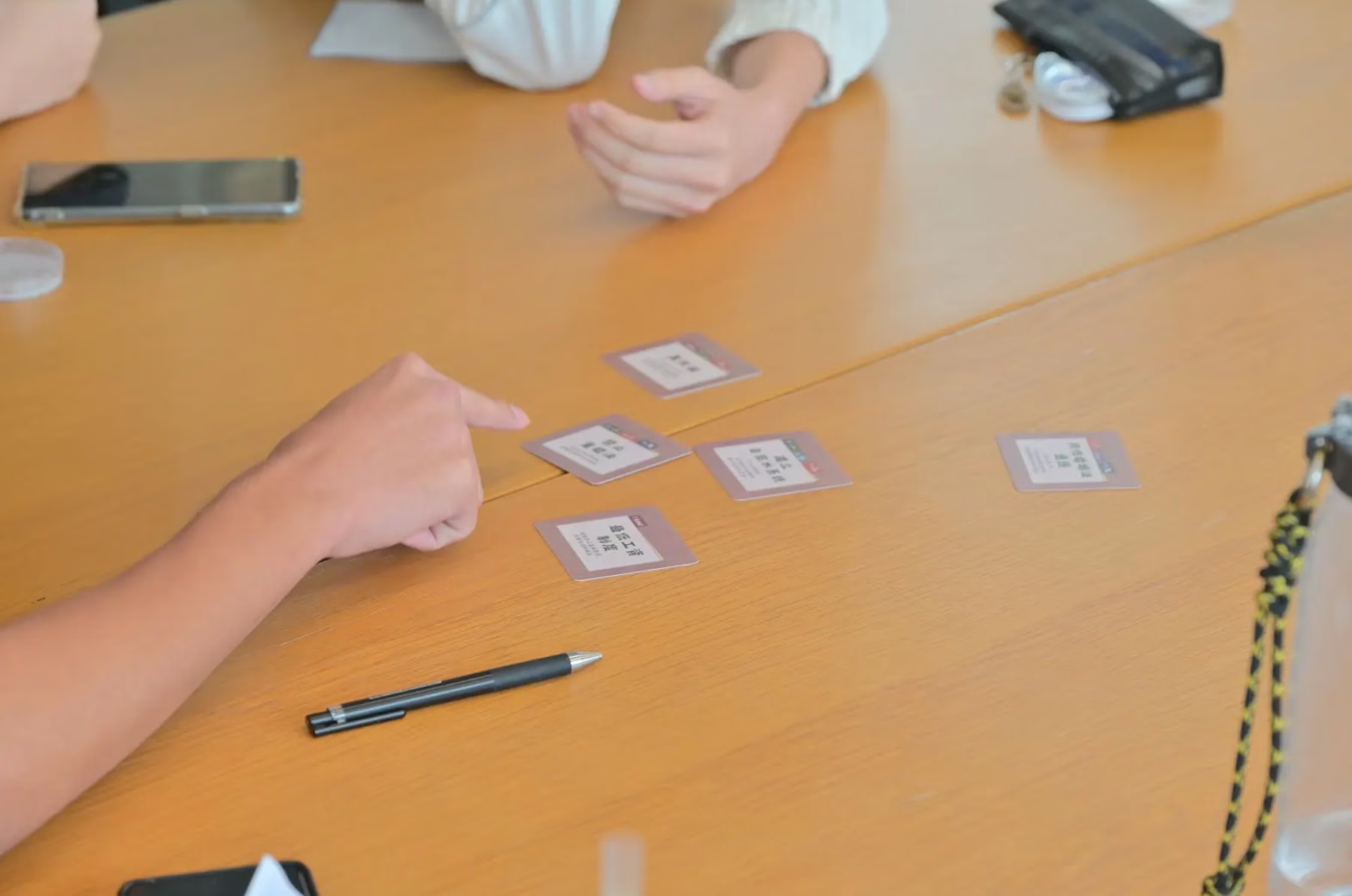
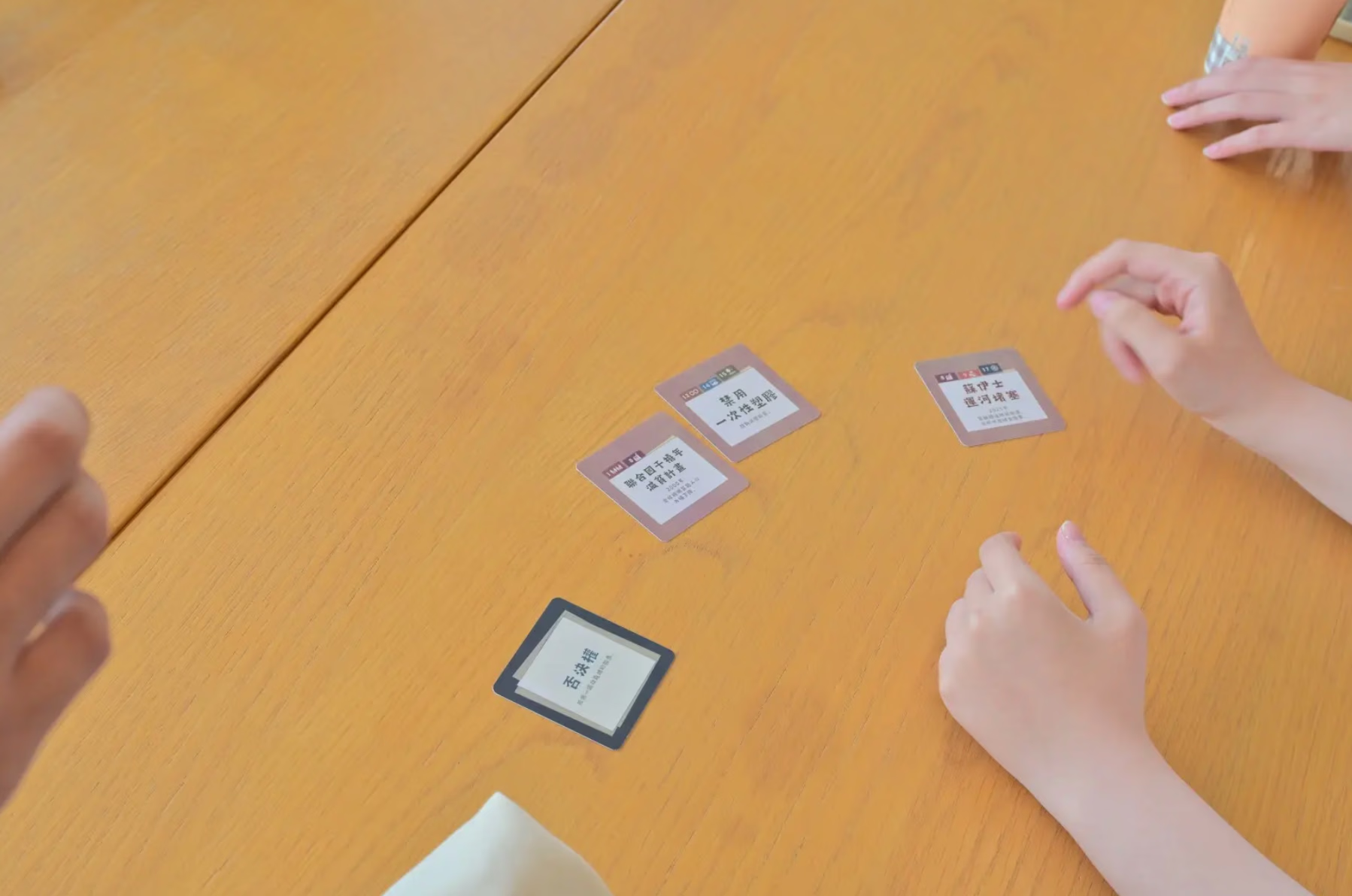
The printed cards were played at our National Cheng Kung University workshop on August 2–3, 2026. Read about the workshop on Education →
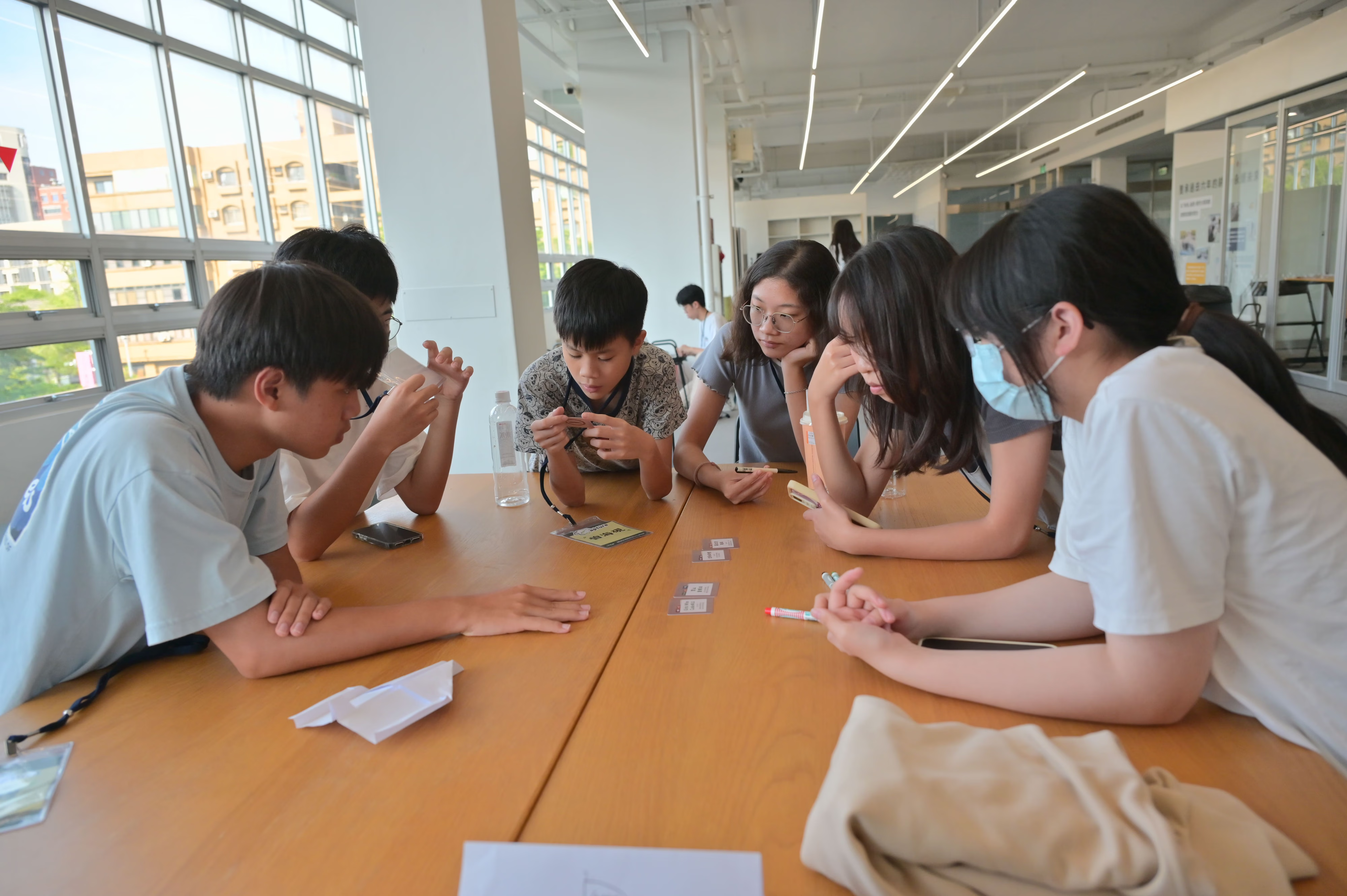
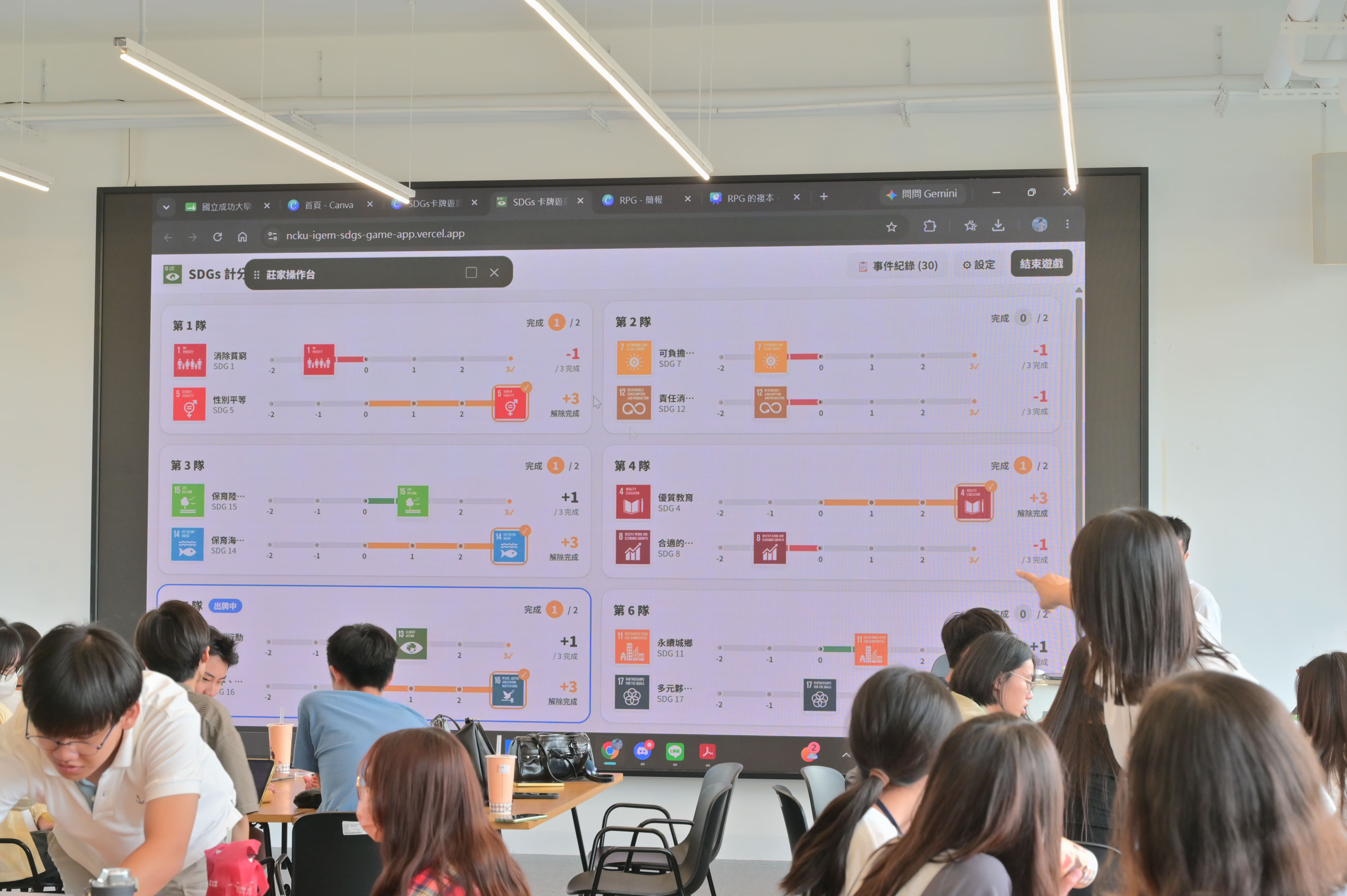
Students gathered around a table at the NCKU Workshop, playing The Green Cabinet with printed cards. A room of students at the NCKU Workshop, with each team's SDG scores for the game projected on the screen at the front. Printed cards of The Green Cabinet laid out on a table, with a player pointing at one. Printed cards of The Green Cabinet in play on a table, players' hands around them.

Play The Green Cabinet

The online version runs right here in the page, with no download and no account.
Play against the computer on your own, or pass one device around a table.

Multiplayer

Online Rooms

Room Lobby

Game Setup

Players

遊戲教學 · How to Play

中文

    English

      SDG Goal Draft

      Deck: 0 Discard: 0

      Current Hand

      Game Log

      Victory!