Both of our systems act on the
same quorum-sensing signal — one reports it, one binds it —
and the second is built on a retron that writes its aptamer inside the
cell. A team that wants a different aptamer changes one insert in it.
Every part is on the Registry.
Many iGEM teams build a fluorescent biosensor, and then have to measure
it: find a plate reader, turn its readings into concentrations, and work
out what went wrong when the numbers look odd. We built our own way
through all three for our AHL sensor, and this page hands it over: a
reader you can build for US$54 to US$161, the software that turns its
readings, or a plate reader’s, into concentrations, and the
troubleshooting we wrote down along the way. The files are on
iGEM’s GitLab under the MIT licence: free to use, change and pass
on, as long as the copyright notice goes with them.
What we took into classrooms is here as well: the handbook behind ten
science camps, and a card game about the SDGs that runs in the browser.
Getting started
Start from what your team already has. Each row is a part of our work
you can take as it is, or with one change.
Table 1. What to take, by what your team has
If your team has
Take
Change
The biology
An aptamer you want a cell to make for itself
The retron construct, BBa_26LDAZW5 (Ec67-Cb-2 retron)
One insert: the aptamer sequence in the retron’s msr–msd region
A project on the quorum-sensing signal of P. aeruginosa
The detection parts: LasR under two promoters, and an sfGFP reporter on pLasRV
—
Measuring it
A fluorescent biosensor and a plate reader
LasReader’s Plate Reader Assay: paste the plate, get a calibration curve and the concentrations of your samples
Nothing. Read its “AHL” labels as your own target
A fluorescent biosensor and no plate reader near the bench
CAPTURE-Screen, either build, and LasReader’s pages for it
Nothing, for sfGFP
A different fluorescent protein on that reader
The same reader and software
One file: the signal channel in frontend/config/unmix_basis.json, F4 (515 nm, for sfGFP) now
A low-cost reader of your own, built on an AS7341 sensor
The CAPTURE-Screen firmware, and LasReader’s pages and data model
Under Measuring it, the first four rows are the Software page’s
Who can use it, which also says what a new analysis or another plate-reader export would take.
Biological parts
Two systems, one signal: the first reports it, the second takes it away.
Every part behind them is on the Registry, and the one that produces the
aptamer was built to be pointed at a different target.
Reports the signal
Detection
Diagnosing a Pseudomonas aeruginosa infection today means
culturing sputum, which takes 48 to 72 hours. For those two or three
days treatment has to be empirical — which is itself part of
what drives resistance — and by the time a culture comes back
the biofilm is already up. Our engineered E. coli reads
the quorum-sensing signal instead of waiting for the organism to
grow. The signal is present early, before anything has appeared on a
plate, and 3-oxo-C12-HSL is characteristic of the organism we are
after, so the infection reports itself while the bacteria are still
coordinating rather than after they have built their defence. AHLs
are shared across many bacteria, so the signal places the organism
rather than identifying it on its own.
Rather than adding another compound that kills, we go after the
message. A DNA aptamer binds the AHL molecules themselves, so the
signal never reaches its receptor and the population never gets the
instruction to coordinate. Aptamers raised against AHLs are reported
not to kill bacteria or slow their growth; what they do is interfere
with quorum-sensing-coordinated behaviour, including biofilm
formation. If the biofilm is what keeps a drug out, weakening it is a
way of letting existing antibiotics work again rather than demanding
new ones. Taking a signal away is also a different kind of selective
pressure from killing, which selects for the survivors that resisted.
That is our design rationale, not a result we have measured.
The construct is built to be reused. The aptamer sequence sits in the
retron’s msr–msd region, so swapping the Cb-2 sequence for
another gives a cell that produces a different single-stranded DNA
aptamer — the same chassis, a different target. And the cell
manufactures the aptamer itself rather than having it chemically
synthesised, which is what makes producing a new one a matter of
changing a sequence rather than placing an order.
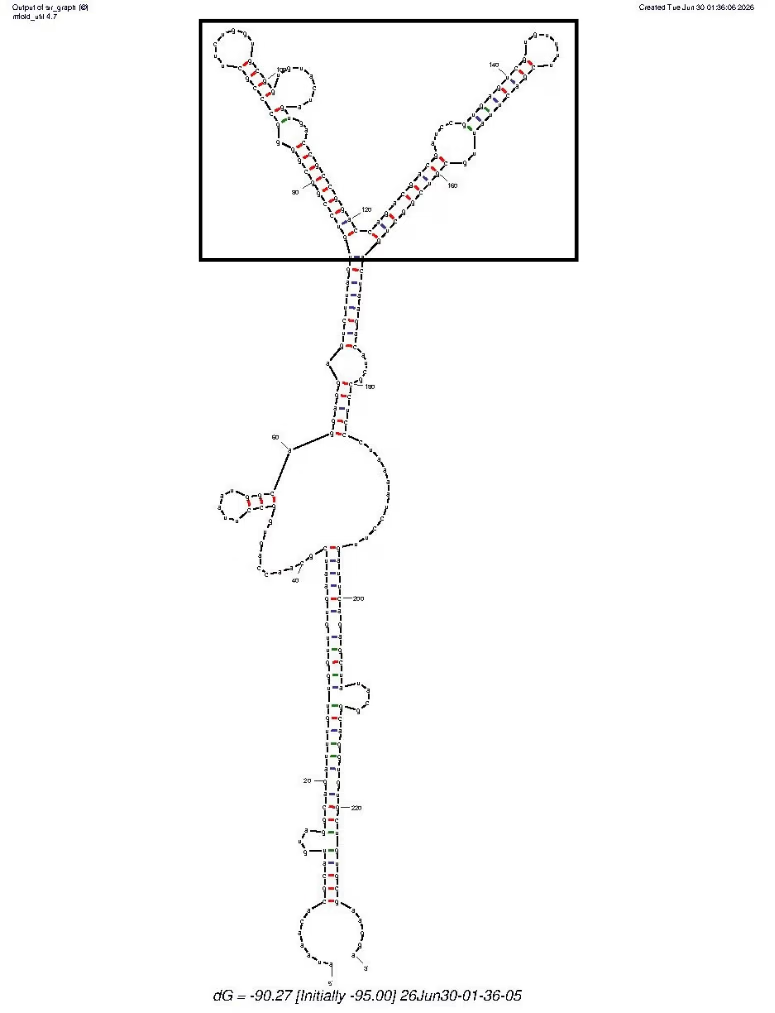
Fig. 1. Folding structure of the retron’s
msr–msd region with the Cb-2 aptamer in it, as predicted by
mfold (ΔG = −90.27 kcal mol−1).
The boxed arms are the aptamer, the sequence that sits in the msd
region; a team swapping in another aptamer replaces that part of the
fold with its own.
Fluorescence reader
CAPTURE-Screen reads one cuvette at the bench: a 470 nm LED lights
the sample, and a ten-channel spectral sensor reads it at 90°. We
built it twice, and either build can be made from what we publish.
A shared plate reader is booked, scheduled and in one building; a
reader of your own can sit next to the incubator. Everything below is written up in full on the
Hardware page;
each line links to the section that holds it.
3D-printed build
Print it, wire it, run it
52 printed pieces in matte black PLA, from 39 STL files saved out of the page’s 3D view — the 38 in the assembly plus the shims, inserts and fit coupons. On a printer other than ours, print the two fit coupons first.
12 assembly steps, in the order the reader’s builder checked.
The circuit: an ESP32, the AS7341 detector on its I²C bus, and a 2N7000 MOSFET switching the LED at about 10 mA through 217 Ω.
Run from any serial terminal at 115 200 baud, one command per line, with a script in the repository that stamps and keeps every line of the log.
About US$161, most of it printing bought from a shop; with a printer of your own, about US$38 and 180 g of PLA.
Parts generated in the browser from the measured thickness of your board. The optical layout stays fixed and thicker board makes the walls grow outward; the generator was checked across 2.80–3.20 mm and refuses to make files at 3.25 mm.
One 450 × 300 mm sheet for every jointed part, with 8 mm tabs and slots made 0.1 mm smaller a side for the laser’s kerf.
10 assembly steps and 6 operating steps, with an OLED display and a button on the reader itself.
Run from LasReader, or from a serial monitor at 115 200 baud.
US$53.70 as costed, the enclosure included. The cuvette, the USB cable and the power supply were not priced, and we have not guessed at them.
LasReader is the wet-lab workflow of a fluorescent biosensor in the
browser: standards, blanks, replicates and a curve, with nothing to
install.
We built it for our AHL sensor and our own reader, but the analysis
uses neither: it fits standards of known concentration to their
readings and converts samples through that curve. Any unit works, as
long as standards and samples share it. It keeps rules a team can rely
on: no concentration is given outside the range the curve can support,
and a reading left out of a fit stays in the run, on the plot and in
the export, with the reason.
Table 2. Three ways to use LasReader
To
You need
Where
Try it on your own numbers
Nothing but this wiki: a panel on the Software page runs LasReader’s own fitting code, unchanged. Paste a calibration from a spreadsheet and the curve appears. Nothing leaves the page.
Python 3.14 and Git. The frontend has no build step and needs no Node.js; setup and run scripts come for bash and PowerShell, and the 46 backend tests run with pytest.
Repository · MIT licencegitlab.igem.org/2026/software/ncku-tainan/lasreaderA README for what it is, who it is for and how to install, run and reproduce it; every dependency pinned; about 1.2 MB of files, 1.5 MB to clone.
Teaching materials
Not everything a team hands on is a part or a file. A camp that has
already been run ten times, and a game that has already been played, are
two of the things we can save another team from building from nothing.
Lessons made of everyday materials — DNA extraction, water rockets, elephant toothpaste and a chemical garden, as they were run across the ten sessions.
The questionnaire, as we asked it — the same six things before and after: curiosity about science, interest in it, tolerance for a failed experiment, willingness to ask a question, understanding of DNA, and grasp of a procedure.
The workflow, and what we would do differently — how a session runs end to end, with the recommendations written after running it ten times.
In English and Chinese, so a team can hand it to the school as well as read it themselves.
Why we did it
iGEM is not only a wet-lab and dry-lab competition. It is also a
chance to let people of every age find out what a gene is and what
science is. From senior high schools to elementary schools, from
workshops to the Little Sun Project, we went to places of very
different kinds, so that the students there could meet science
beyond their own timetable — not only to widen what they have
seen, but to build an interest in it.
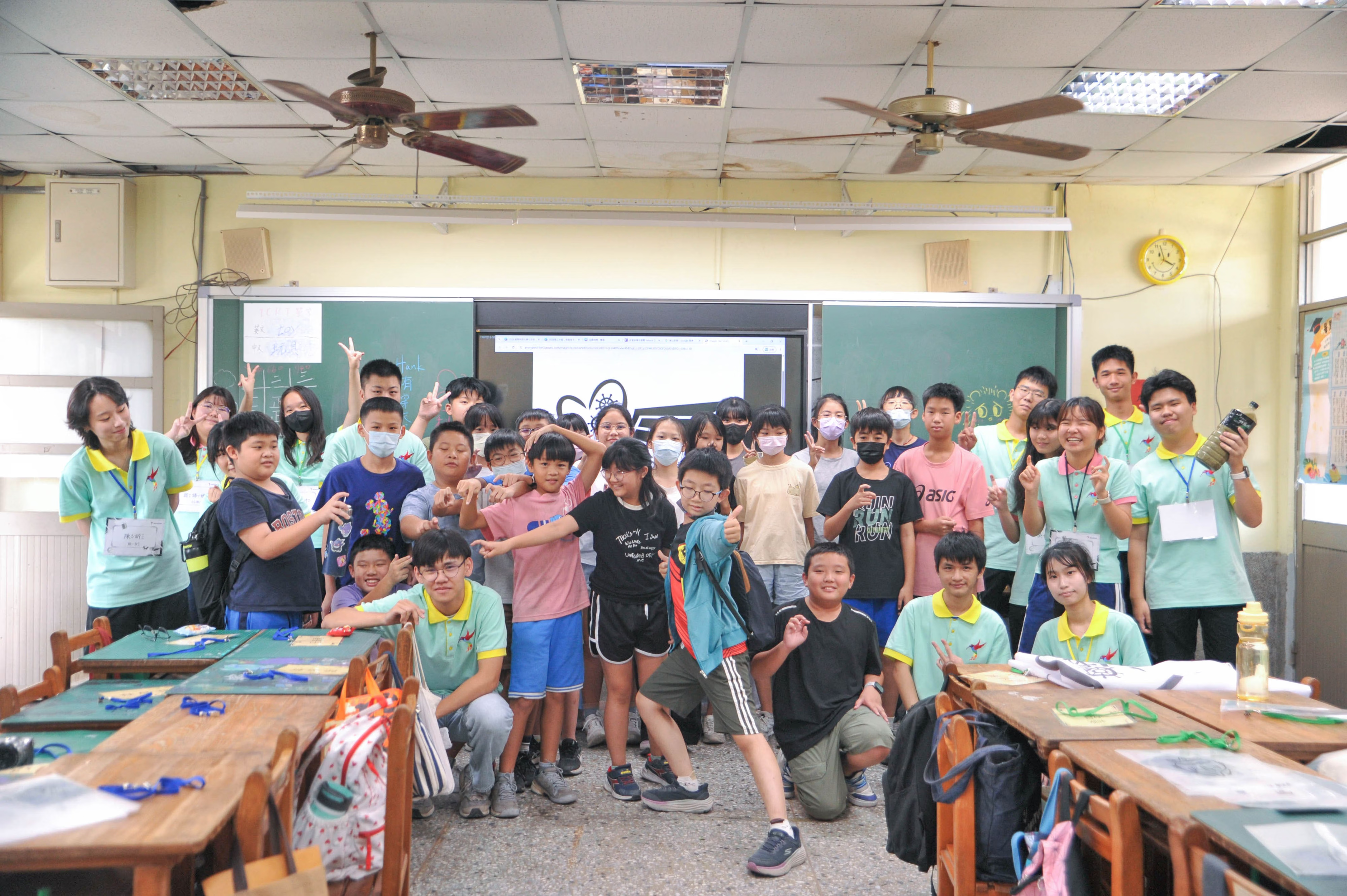
The ten camps in rural elementary schools in Tainan reached 266
children, and we asked every one of them the same questions before
and after. Their answers are what tell us a seed was planted. We
also want the work to be usable by the teams that come after us, so
we gathered what we had — the experience, the workflow, the
lessons we taught and what we would change — into a handbook
for running science camps in
rural elementary schools. It holds protocols a team can copy
straight out, whether they want the whole set of lessons or a single
one to fill an afternoon. Any team can also ask its own questions the
way we asked ours, so that an event is not only held but measured,
and what the students really thought is on the record.
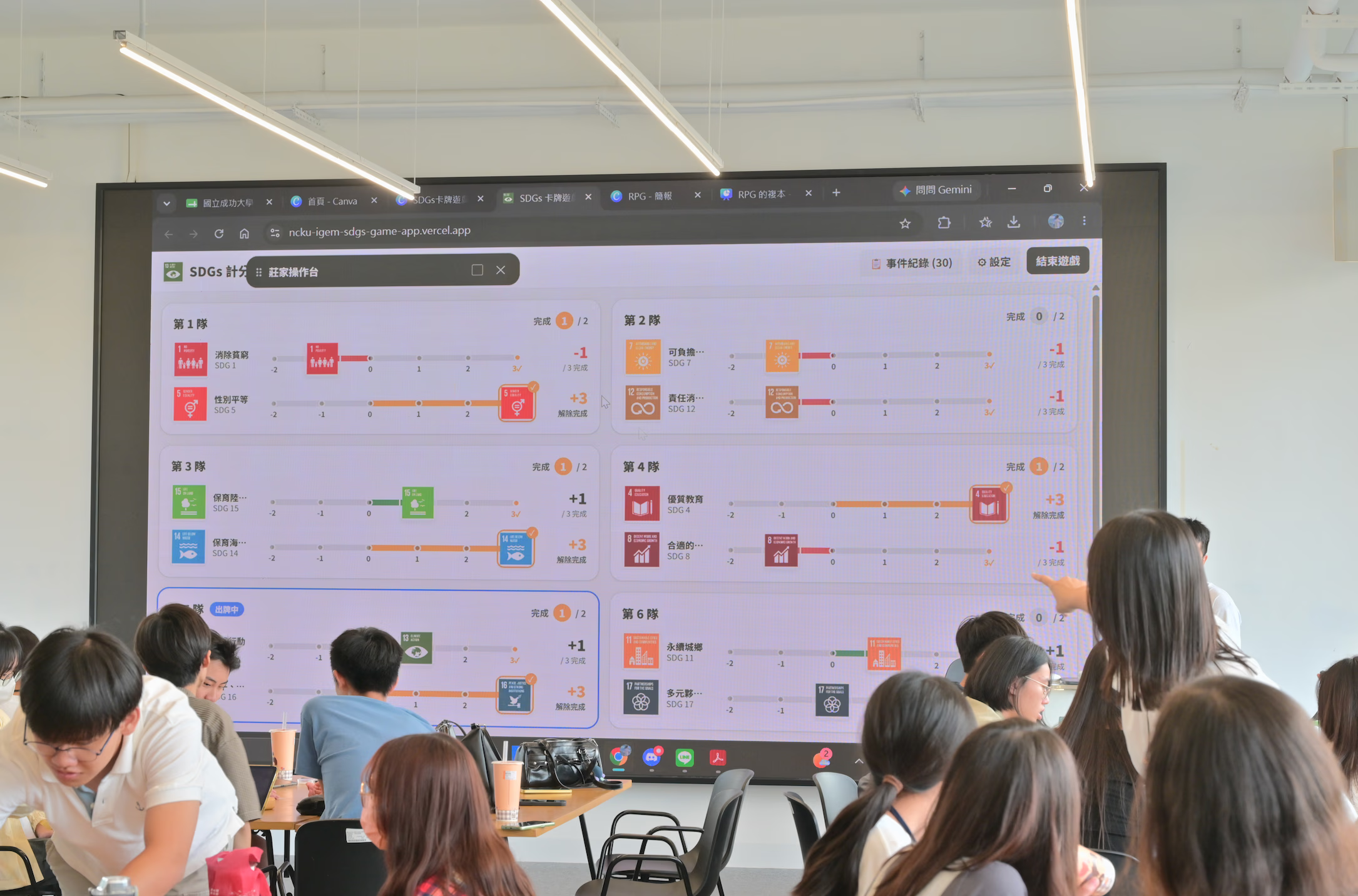
Teach the goalsSDGs boardgame
Six teams, two goals each, and a score that moves both ways —
the board is what makes the goals pull against each other.
Physical cards
a printed set, designed and illustrated from scratch
Four to eight players, one device passed round a table or a room code shared between them.
A turn in three phases — play up to two cards, flip and resolve the top of the deck, refill to a hand of five.
Goals that move both ways — a target can lose ground as well as gain it, and once one reaches GOAL it locks: progress already made does not simply vanish.
Veto, Policy Exemption, International Sanctions — the special actions that make it a test of timing and resources rather than a straight race.
Nothing to install, in English or Chinese: the browser version runs in our own page.
Why we made it
The SDGs are usually taught as seventeen icons on a poster. Students
can name them and still miss that the goals actually pull against
each other, and a policy that advances one can set another back. The
Green Cabinet was built so that players meet all seventeen goals
through play rather than in front of a poster. We designed it from
scratch — the idea, the cards and the artwork — and it
exists as a printed set and as a version that runs in a browser. What
we want is for people to come away with more than seventeen names:
a sense of what each goal asks for, and of how one event can carry a
gain for one goal and a cost for another.
Handbook · PDFeducation-handbook-en.pdf
The lessons, workflow and recommendations from the ten camps, written
to be copied from rather than read through. Also in Chinese:
education-handbook-cn.pdf.
Both are readable in the page on
Education.
Troubleshooting
What cost us time, so that it need not cost yours. Each problem is
written up on the Hardware page, in the section where it happened.
Table 3. Problems we met, and what fixed them
What you see
What it means
What to do
A dark read is not zero (AMBIENT_PRESENT)
Light is getting in.
Void the cycle, fix the shield and read again. Do not subtract it, and leave the voided row in the file.
The reader refuses: ENABLE is not in a defined acquisition state
The detector lost power or was reset.
Reset the controller once. If that fails, unplug the USB for five seconds and check the detector’s wires: SDA on GPIO21, SCL on GPIO22, and 3V3.
The LED lights while the controller boots
Without a pulldown on the MOSFET’s gate, the LED can light before the firmware takes charge of it.
Keep the gate pulldown in the circuit.
The LED never lights (NO_SIGNAL;LED_DISABLED)
It was not armed, or the sketch was built with its LED gate off, as it ships.
Arm and run again; build the sketch once with CAPTURE_LED_HARDWARE_ENABLE=1.
A channel reads 65 535 (SATURATED)
It has reached full scale.
Dilute the sample.
The same tube reads differently each time it is put back
The cuvette’s height and position were set by hand, with a collar, in four steps.
A seat that sets both by itself. Ours went from 3.6–6.3% of the tube’s own mean to 0.76%.
Counts do not match from one session to the next
The reader was moved between sessions: an empty chamber read about 310 in one and 160 to 190 in another.
Read a tube with no sfGFP in every session and reference that session to it.
Tubes below about 20% sfGFP culture scatter by tens of percent
They are the most sensitive to how they were mixed.
Mixing them by serial dilution should reduce this; we have not tested it yet.
Culture density cannot be read off the fluorescence channels
A 90° geometry suits fluorescence and does not track turbidity; no choice of channels recovers it.
Measure cell density separately, with a spectrophotometer.
The reading rises with how dense the suspension is, even with no reporter in it
In a suspension scraped from a plate, the emission channel picks up a background that rises with scatter. A cuvette without the reporter read 1.78.
Read the scatter channel of the same read beside it. In one session on our reader, a culture without the reporter read zero under about 33 counts of F3 and no longer did from 46. Compare samples of matched density, and read one without the reporter beside them.
Nobody has yet built a second reader from our instructions; the assembly order was checked by the reader’s own builder.
The 3D-printed build has been read beside a plate reader once, without settling whether the two are in proportion, and it has not been calibrated against a fluorescence standard; the laser-cut build has not been compared with one. Its one session on AHL plates did not resolve induction, and the laser-cut build has not read an AHL-induced culture.
The 3D-printed build has read one fluorophore, sfGFP, under one blue LED. Every read reports ten colour channels and the LED is a single 5 mm part, so another emitter or another excitation colour is a small change to try. We have not tried either.
A light-path check, reading a fixed reference such as the same blank tube at intervals, is not yet part of the firmware.
LasReader’s Plate Reader Assay is yet to be checked against a full real dataset.
LasReader fits rising responses only: a sensor whose fluorescence falls as its target rises gives no curve.
The detection system has not been run on a clinical sample. The case for reading the signal rather than waiting for a culture rests on what it reads, not on a run of ours against the culture it would replace.
The retron’s msd region has carried only Cb-2 so far. Pointing it at another target is a property of the construct, not something we have exercised.
The aptamer is extracted from the cells by us, not released by them, so a team taking this construct inherits that step.
The full lists are the Software page’s
Limitations and next steps
and the Hardware page’s
Limits and next steps.
If you build a reader from these files, run LasReader on your data, or
meet a problem that is not here, the contact links at the foot of
every page reach us.
 Loading the page