



Step 1
Capture
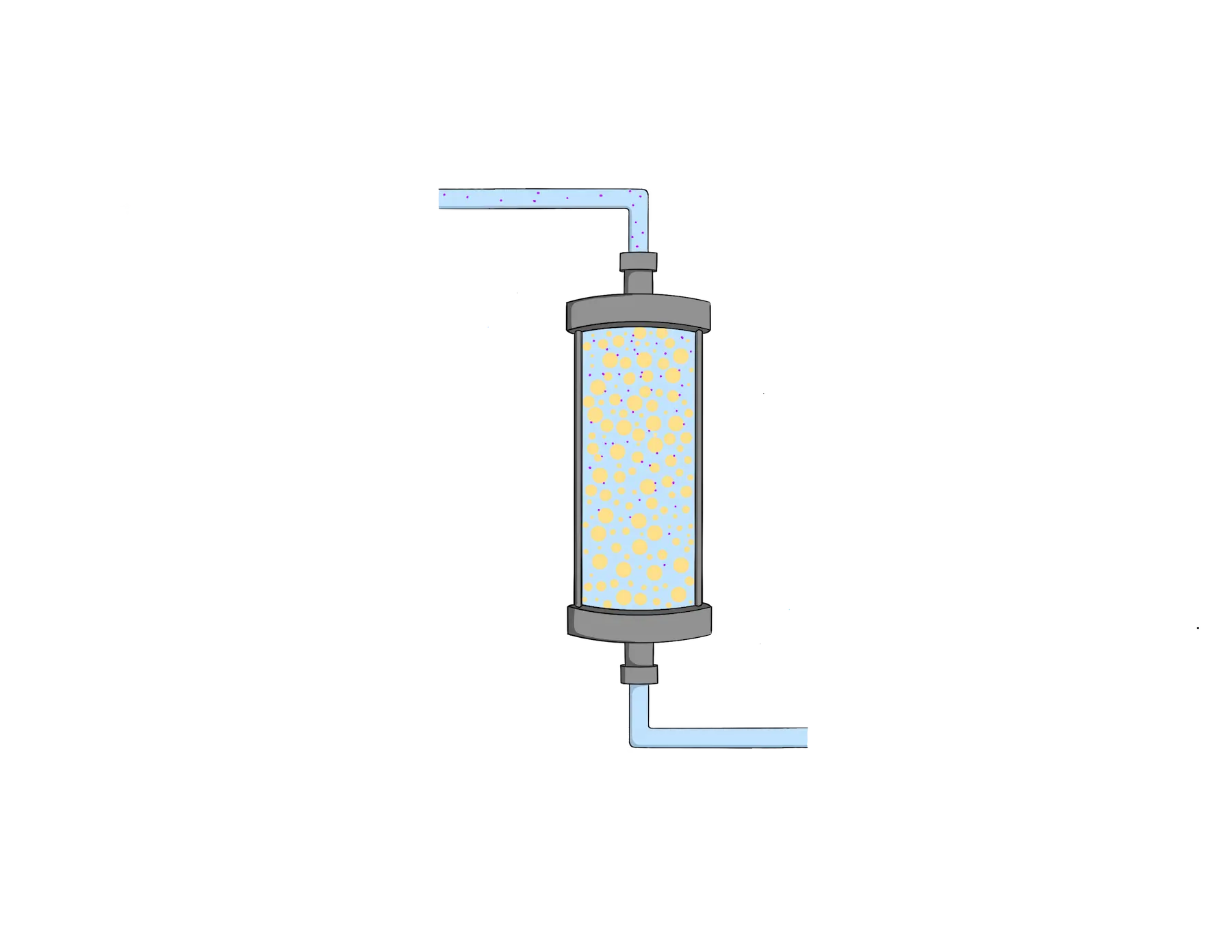
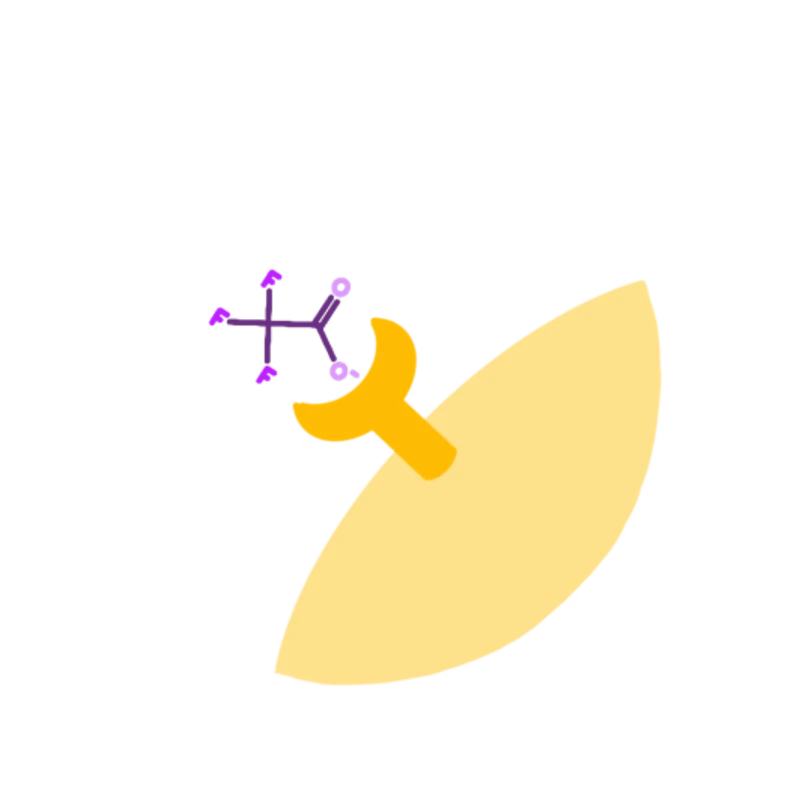
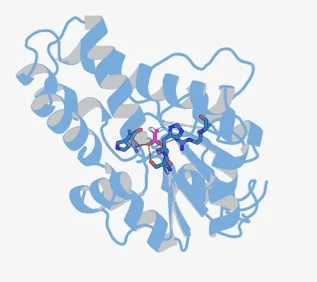
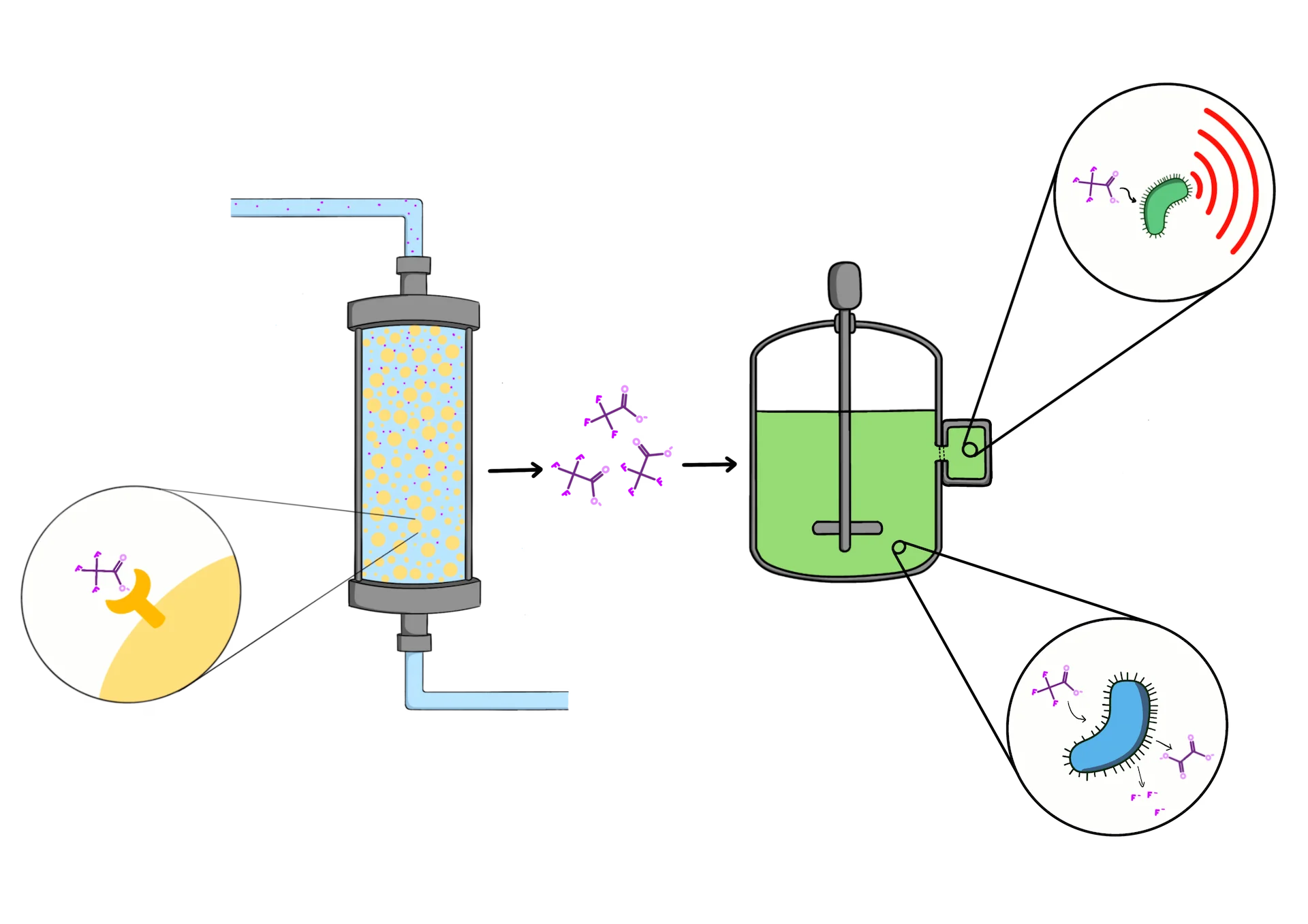
De novo proteins on bacterial cellulose beads grab TFA out of the water.
“A TFA binder would be fantastic, then you have gold in your hands.”
iGEM WageningenUR 2026
The smallest forever chemical is in almost every glass of water and everywhere else.
Meet TFAMeet TFA
PFAS (per- and polyfluoroalkyl substances) are synthetic chemicals that stay in the environment for so long, they are called forever chemicals.
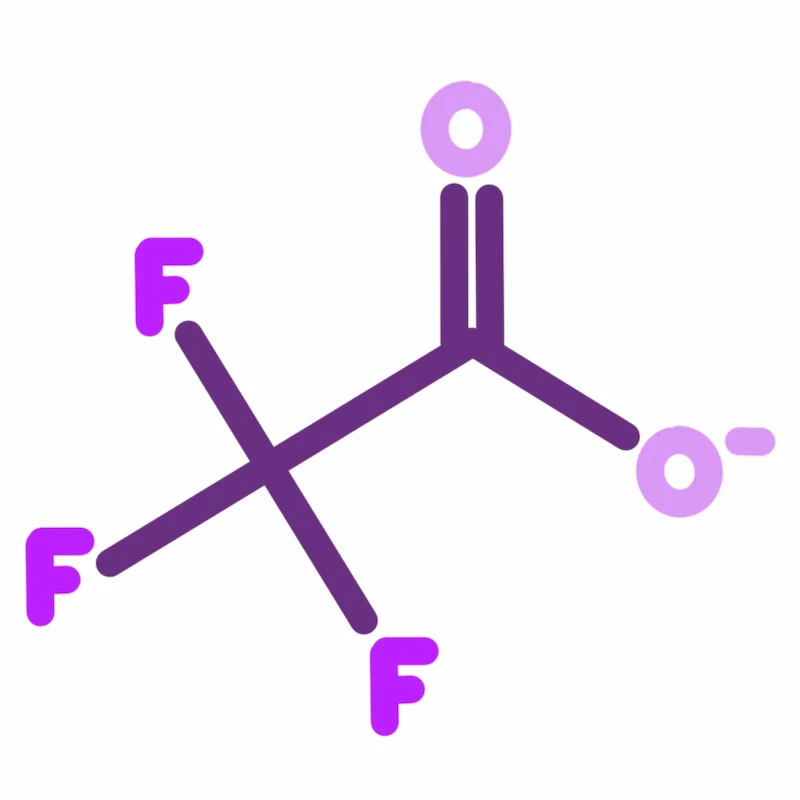 trifluoroacetate
More than 98% of all PFAS measured in river and groundwater samples from 10 EU countries was TFA.4

Impossible to avoid
“It’s not a question of if TFA will be added to the Drinking Water Directive, it’s a question of when.”
We will be ready with our solution. Breaking the cycle!
Step 1
De novo proteins on bacterial cellulose beads grab TFA out of the water.
“A TFA binder would be fantastic, then you have gold in your hands.”
Step 2
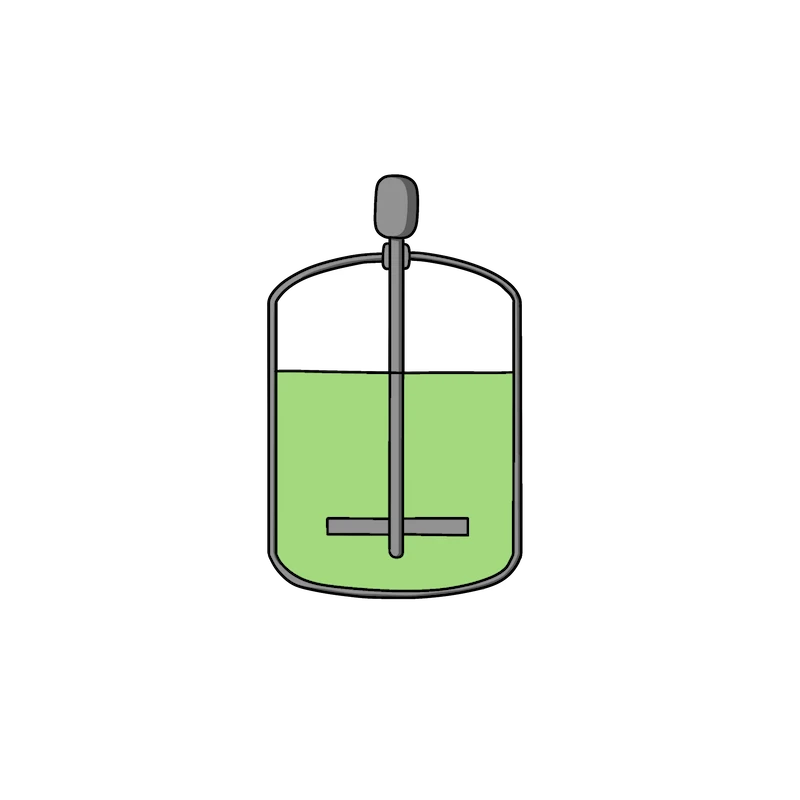
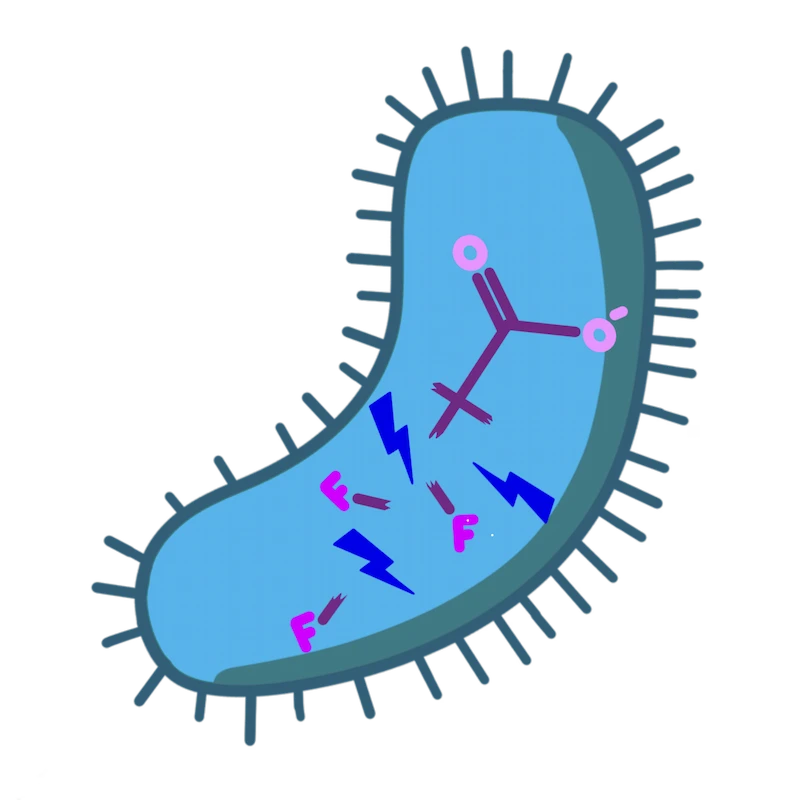
Harnessing lab evolution, we push enzymes to break the C–F bond of TFA and turn it into harmless compounds.
“Currently, there are no [TFA remediation] methods that work in practice. [...] Ultra-short chains break down last, so if you can do that biologically it would be fantastic.”
Step 3
Our biosensor monitors the TFA level, continuously and on-site.
Claude Opus 5.5 was used to facilitate the design of the wiki
Our promotional video is coming soon.
Our promotional video
Peter Fischer
Scientific advisor at Aqualab Zuid, one of the six companies legally tasked with assessing drinking water quality in the Netherlands
It’s not a question of if TFA will be added to the Drinking Water Directive, it’s a question of when.
Why we reached out
Aqualab Zuid test water quality for a third of Dutch households. They measuring a wide range of contaminants, including TFA. We reached out to Peter to enquire about TFA sensing, since we must be able to monitor TFA concentrations continuously to operate our bioreactor.
Main takeaways
PFAS cannot be measured continuously. Simple parameters such as pH can be monitored continuously, but TFA cannot.
TFA is measured through liquid chromatography–mass spectrometry (LC–MS). Samples are collected at the plants and sent to a centralised laboratory. Sample handling and data interpretation make this an expensive measurement.
In the Netherlands, only six companies are legally tasked with controlling drinking water quality standards. They are listed in the Drinkwaterregeling.
Currently, EU member states can choose whether to monitor TFA in drinking water, but this will soon change. It will become obligatory.
Reflection & integration
Peter showed us that current TFA measurements are expensive, discontinuous and cannot be done in situ, which means our bioreactor could not be operated without a new monitoring method. At first, this was discouraging, but it quickly lead us to develop a biosensor to measure TFA continuously.

Bert van der Wal
Professor in novel water treatment technologies
A TFA binder would be fantastic, then you have gold in your hands.
Why we reached out
Like Adriaan Mels, Bert has experience both in academia and in industry. We thought he could help us maximise the positive impact of Triton. We reached out to him to understand why TFA-enriched RO concentrate is not currently degraded.
Main takeaways
Concentrating TFA to mg/l would be fantastic for further processing.
Membrane filtration is the biggest current competitor in the field. However, its concentrate streams cannot be treated and are put back into the environment.
Removal of TFA from drinking water will probably be done by membrane technologies, but by not treating the concentrate streams, you only relocate the problem. The overall societal problem is not solved.
Integrating TFA-specific peptides into resins can be an alternative to whole-enzyme design.
Reflection & integration
Bert made us realise that TFA is still far too dilute after RO to be degraded. While RO concentrate was a better fit than drinking water, it seemed like we would need to pre-treat RO concentrate. His enthusiasm for a TFA binder encouraged us to develop our own capture module to concentrate TFA.
Freddy Dekkers
CEO of WaterIQ, a multinational water treatment company
Currently, there are no [TFA remediation] methods that work in practice. [...] Ultra-short chains break down last, so if you can do that biologically it would be fantastic.
Why we reached out
WaterIQ remediates water by breaking down contaminants like PFAS. We reached out to Freddy to learn about established remediation strategies, customer requirements and where Triton could be applied.
Main takeaways
There is currently no use case for drinking water treatment because of funding issues.
Remediation of contaminated ground and purifying TFA-contaminated irrigation water are potential applications of Triton.
Farmers reuse their drainage water for irrigation, so agrochemicals generally accumulate there.
Reflection & integration
Freddy pointed us towards irrigation water, which we considered but discarded because it could become a techno-fixA techno-fix is a technology that promises to cure problems without requiring society to change the habits that caused them in the first place [2]. and delay necessary bans on TFA precursors. He also made us aware that, without regulations, drinking water companies have no reason to invest in TFA degradation.