Problem statement
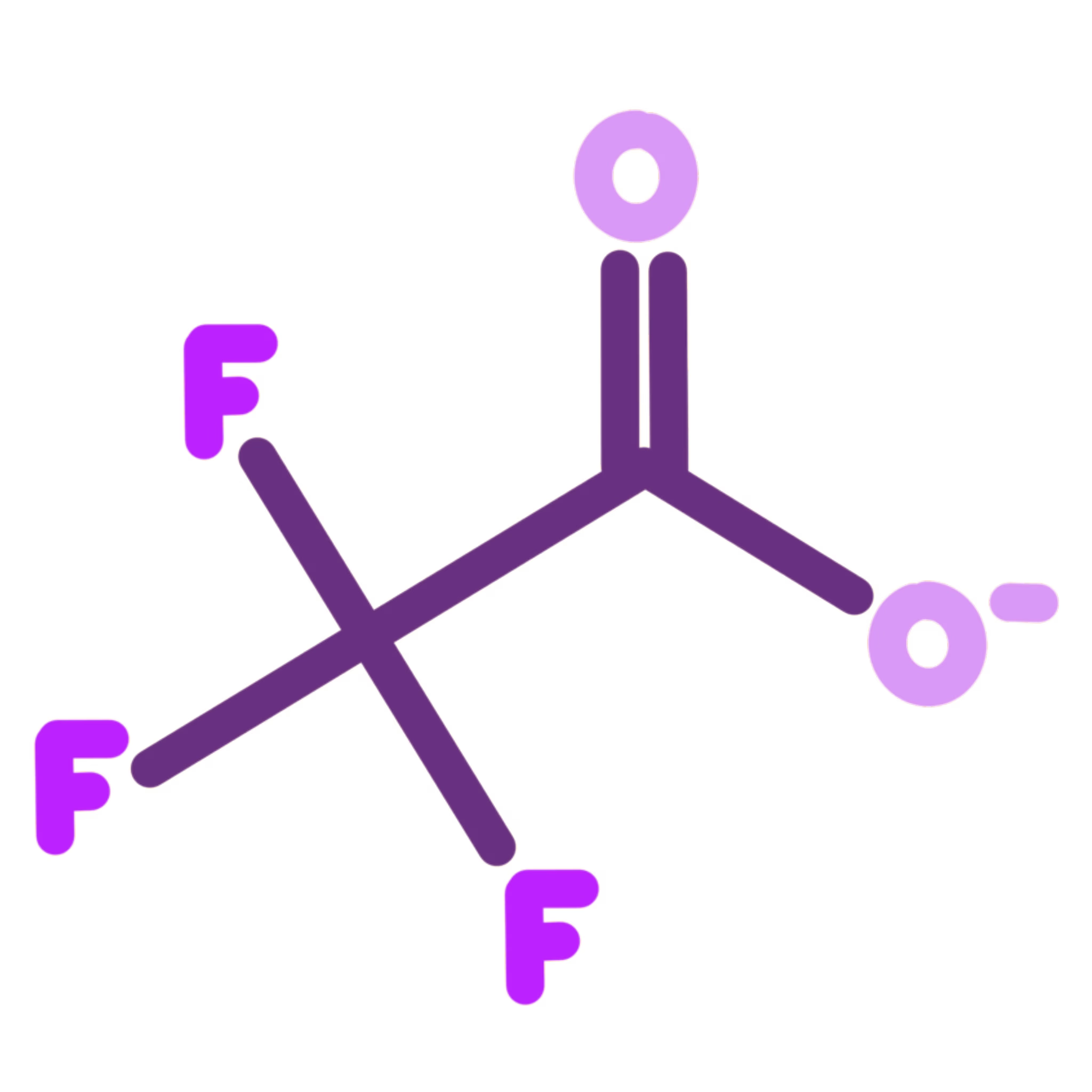
TFA is a PFAS molecule
Trifluoroacetate (TFA) is the shortest of per- and polyfluorinated alkyl substances (PFAS), a group of synthetic compounds known as ”forever chemicals” due to their environmental persistence. Since the 1940s, PFAS have been used in non-stick pans, agrochemicals, and waterproof textiles because of their chemical stability and repellent properties [1]. However, it has since become clear that these handy properties come at a cost: many PFAS are now known to be endocrine disruptors and carcinogens [2].
TFA poses a health risk
Scientific research has shown risks to fertility and unborn children, which has prompted the European Chemicals Agency (ECHA) to propose that TFA be classified as toxic to reproduction [3]. It has also been shown to be immunosuppressive [4] and to interfere with thyroid gland function [5]. It is therefore paramount that it be removed from the environment.
We are exposed to TFA
A recent study across 11 European countries found TFA in 94% of all tap water samples [6]. Humans are primarily exposed to TFA through water and food. How come?
When precursors such as PFAS-containing agrochemicals and refrigerant gases break down, TFA is formed, which does not degrade further. In fact, it is by far the most concentrated PFAS in the environment [7]. And its levels are rising! Trees in Germany have recorded a five to ten-fold increase in TFA levels over the past four decades [8]. From the environment, it finds its way through water purification plants into drinking water.
The theme of PFAS and TFA specifically is growing. [...] I would not be surprised if you can see future legislation, and more TFA standards popping up.
Read more about regulations
Regulatory bodies have long regarded long-chained PFAS as substances to avoid, but the short TFA has consistently slipped through the cracks. While long-chain perfluorocarboxylic acids, their salts and related compounds are included in the Stockholm Convention on Persistent Organic Pollutants, the small TFA is not. In fact, it is considered a High Production Volume chemical [9]. This is one of the reasons it still enters the environment, from where it ends up in drinking water. Since 2026, long-chained PFAS must be removed from drinking water in the EU, but with TFA, it is different. The EU’s Drinking Water Directive lets member states decide whether to filter out this dangerous compound [10] [11]...and many decide not to [12].
What is being done about this?
On the regulatory side, legal limits for TFA in natural bodies of water and in drinking water are being discussed [13]. On the technical side, however, many challenges remain unsolved.
Click here to read more about current practices in TFA degradation
Current practices in TFA degradation
Under current regulations, countries that decide to filter TFA out of drinking water can legally discharge TFA-enriched concentrate back into the environment. This practice is soon to become illegal [13]. Therefore, TFA will have to be degraded before any discharge can be made into the environment.
Current practices in TFA degradation include:
Incineration: at around 1000 ˚C, it results in CO and CF. This is an energy-intensive, non-specific process that is also applied to longer-chained PFAS [14].
Hydrothermal Alkaline Treatment (HALT): through HALT, TFA can be defluorinated at "only" 200 ˚C... but also requires over 200 atm of pressure and a very high pH [15].
These energy-intensive processes are commonly used for longer-chained PFAS. However, they are not practically suitable for TFA. These techniques require pre-treatment steps to enrich liquids in longer chained-PFAS. Techniques used here, such as foam fractionation, rely on the properties conferred to PFAS by the long CF chain, which is not present in TFA.
Click here to read more about current practices in TFA sensing
Current practices in TFA sensing
The gold standard in sensing is, like for other PFAS, liquid chromatography-mass spectrometry (LC-MS). While LC-MS can indeed quantify TFA at concentrations as low as 10ng/l this measurement is labour-intensive and non-continuous.
Triton’s solution
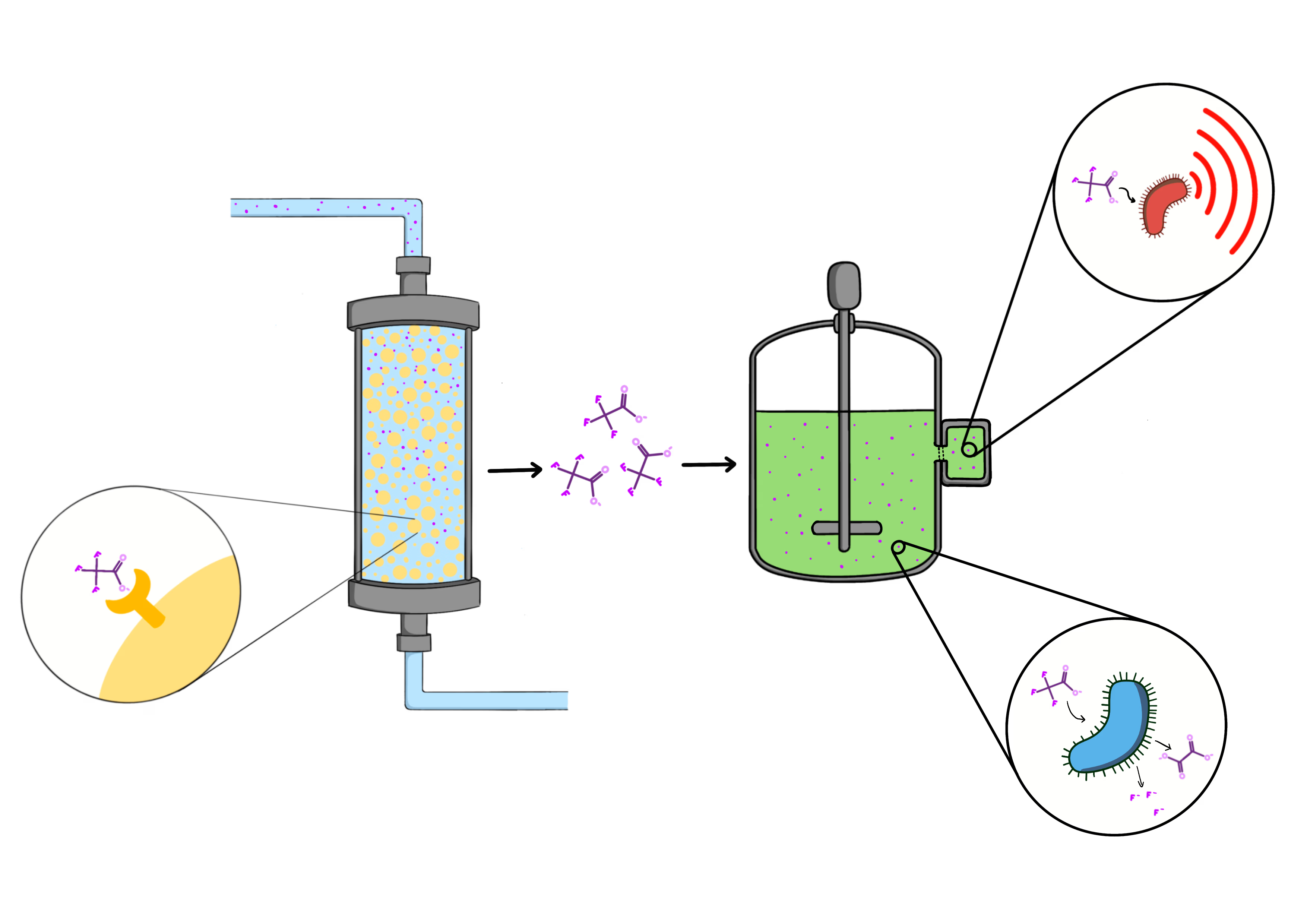
Our solution is divided into 3 modules: capture, degradation and sensing of TFA.
Why we chose TFA
Tackling PFAS is not new to iGEM. Team DTU 2023 [16] and Lyon 2025 [17] developed sensing methods and SDU 2023 [18] and INSA Toulouse 2025 [19] had a go at degradation. Their work has been an inspiration for us.
As team Triton, we seek to expand upon this work by focusing on the most prominent PFAS of all - TFA. We want to solve this problem once and for all. Our goal is to to degrade TFA to an innocuous compound. Like this, we will make the forever chemical forever no more!
Triton captures
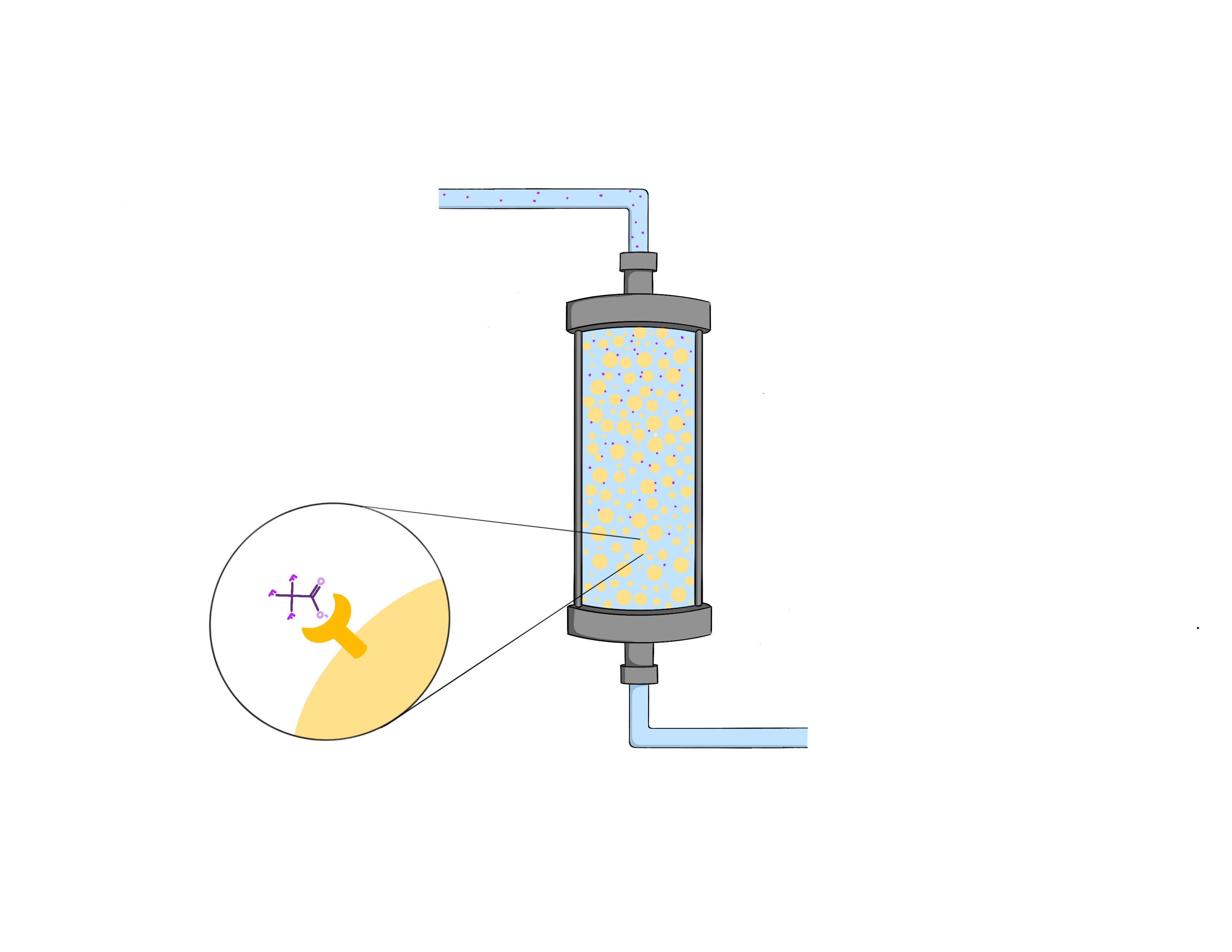
Our cell-free protein-based method captures TFA and concentrates it. Our in silico directed evolution pipeline develops potential TFA-binding proteins and our in vivo pipeline purifies and tests their binding affinity. We can fuse confirmed proteins to a cellulose-binding domain and thus immobilise them on bacterial cellulose beads. The beads are submerged in water, where they capture TFA. We aim to do what the industry cannot: filter TFA and concentrate it for degradation.
Triton degrades
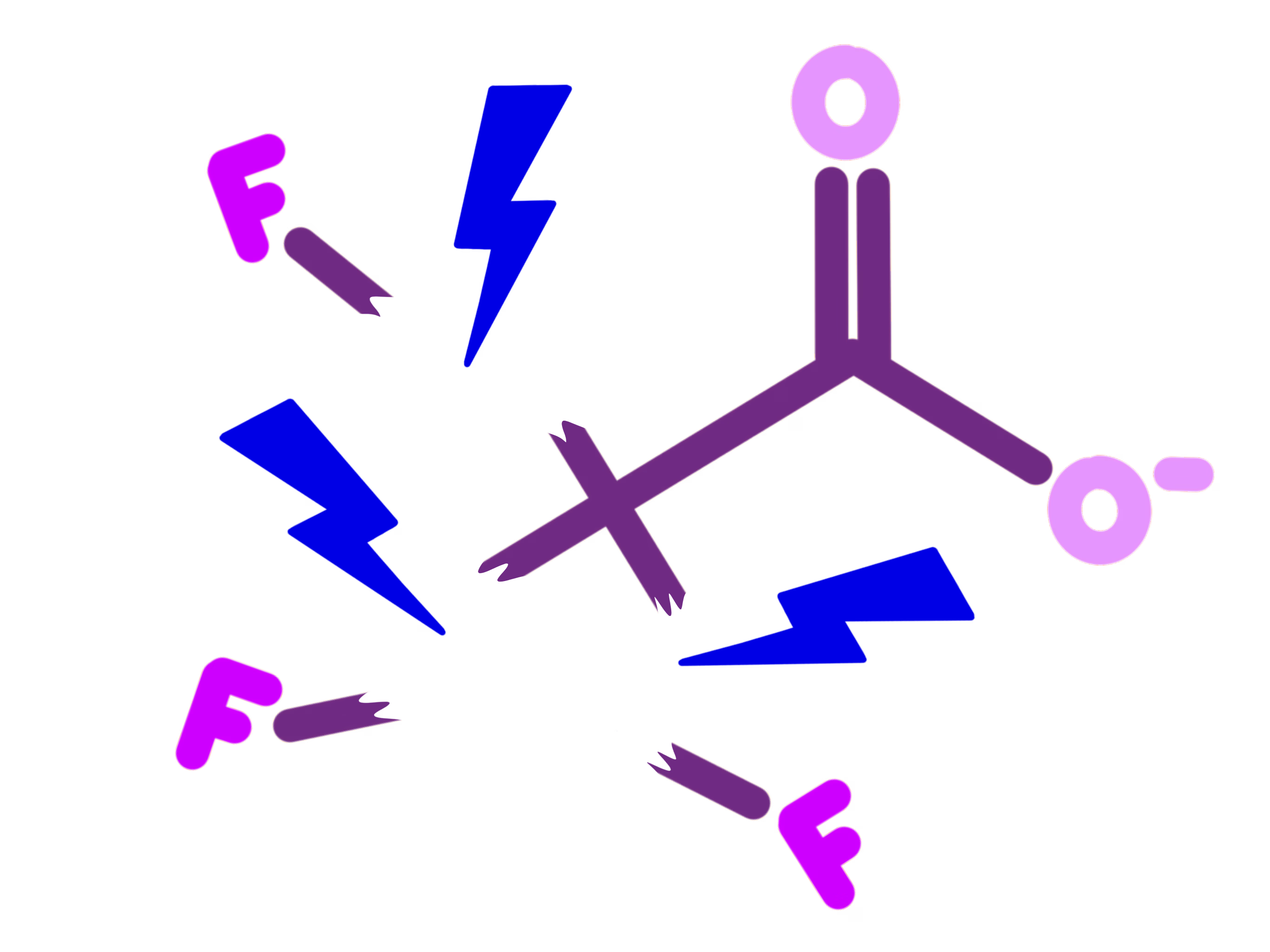
Our filter is washed, and the concentrated TFA solution enters a bioreactor: Triton’s degradation module. Here, an engineered E. coli degrades TFA. How, you may ask? It expresses a novel TFA defluorinase. To develop this enzyme, we engineered a TFA auxotroph in E. coli, and subjected it to in vivo continuous hypermutation of a defluorinase gene. We then applied TFA auxotrophy or TFA toxicity as selection pressures. To screen evolved defluorinases, we developed our own high-throughput assay.
Our degradation solution yields oxalate and F at 30 ˚C and 1 atm.
Triton addresses the two biggest problems in TFA degradation: energy intensity and pre-concentration of TFA. We aim to do what no other method can: specifically concentrate and degrade TFA in an energy-efficient way.
But that’s not all, we can also sense TFA.
Triton senses
Our cherry on top is Triton’s aptamer-based sensing module. Through DISARM, our dry lab pipeline, we have repurposed an RNA aptamer originating from Bacillus subtillis to react to TFA. We have tested it in vivo and developed a novel TFA biosensor in E. coli. This sensor is incorporated into Triton’s degradation module and provides real-time TFA concentrations. We aim to do what no other analytical method can: continuously measure TFA with minimal labour requirements.

Bas Eickhout
Member of the European Parliament for The Greens
The theme of PFAS and TFA specifically is growing. [...] I would not be surprised if you can see future legislation, and more TFA standards popping up.
Why we reached out
Bas is a member of the European Parliament working on PFAS regulation. He knows the regulatory landscape around TFA. To implement Triton and gauge its desirability, we wanted to learn about current and upcoming EU regulations affecting TFA.
Main takeaways
Interest in TFA regulation is growing at the EU level. The European Chemicals Agency (ECHA) is working on an analysis towards a PFAS-wide ban, and additional policy measures are expected as early as next year.
Legislation often lags behind research. Regulatory limits are getting lower as legislation catches up with research shedding light on the health concerns of TFA.
Reflection & integration
Bas confirmed that political interest in TFA is growing and that TFA standards are likely to follow. This reinforced our view that regulations are a key driver of the impact of a technology like Triton.