
With ENCORE, we engineer nanocompartments in yeast. Our project is part of fundamental research and lays the groundwork for future applications based on the insights we gain into cellular processes. Yet fundamental research often receives far less attention and funding than applied science, even though almost every breakthrough builds on it.
For us, this made public outreach so important: if people understand why basic research matters, they are more likely to support it.
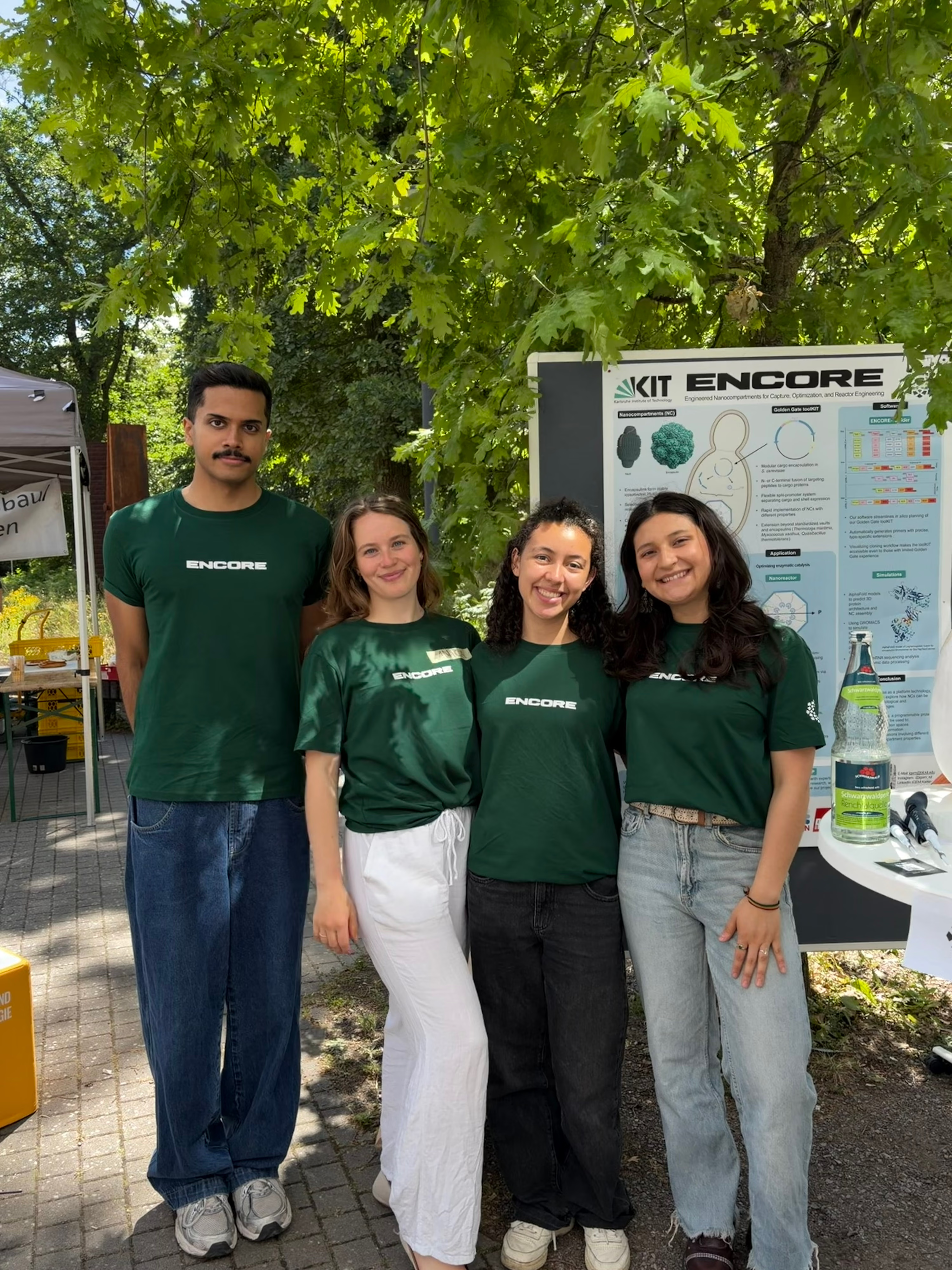
Our challenge was that nanocompartments are invisible and hard to picture. So we looked for formats that fit different audiences. We explained our project on stage at a Science Slam, translated it into art for an exhibition, and talked to visitors at Campus Day and over a pub quiz. With all of that we got a feeling for how to explain our project to people who aren’t involved in SynBio. We shared our work with the scientific community in BIOspektrum and with fellow students in clicKIT, and took our followers behind the scenes on social media. At meetups in Baden-Württemberg, at BFH and at the Mini Jamboree in Eindhoven, we exchanged ideas with other iGEM teams and got valuable feedback on ENCORE.
All the conversations we had and the feedback we received gave us valuable insight into the challenges of communicating basic research to the general public. With all of our public outreach activities, we also wanted to raise awareness of these challenges.
Reaching the General Public
Science Slam
From the Lab to the Ball Pit: Our Science Slam
How do you explain cloning, a genetic toolkit and nanocompartments to someone who has never set foot in a lab and maybe isn’t even entirely sure what a cell is? As a team competing in the Foundational Advance village, we struggled with exactly this question. ENCORE was built as a tool for other researchers rather than a solution to one everyday problem, and for a long time we could not find a way of presenting it that did justice to its potential.
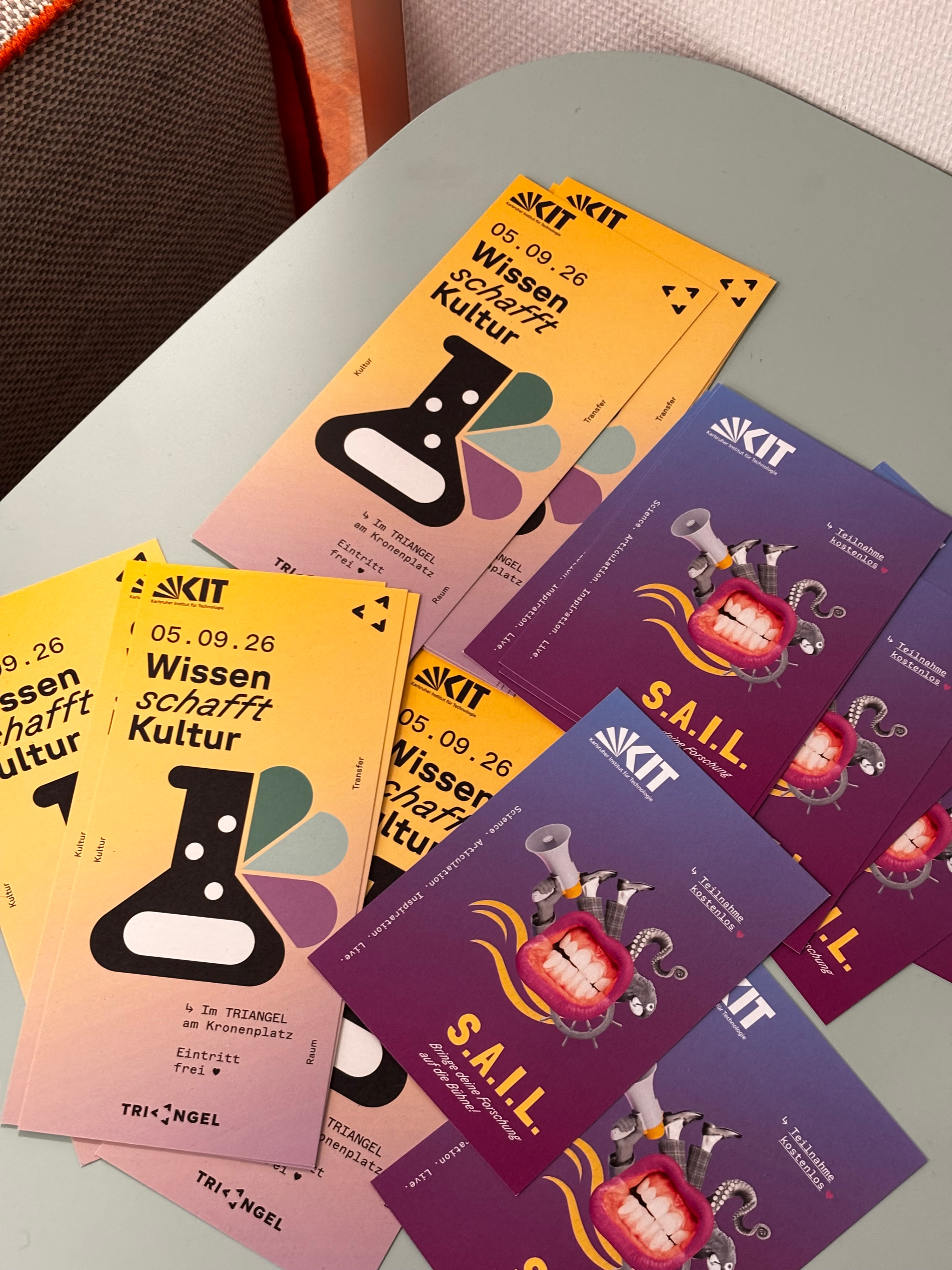
So when our university hosted its first science slam camp in the summer of 2026, three of us (Karo, Thomas and Jasmin) signed up. A science slam is a format in which researchers present their work to a general audience in short, entertaining talks. Together with six other researchers, we spent eight workshop days learning what makes or breaks science communication: the basics of the format, storytelling, stage presence, visualization and design, and public relations.
Putting all of this into practice, however, meant scrapping one presentation idea after another. Every discarded draft forced us to look at our project from a new angle, until we ended up somewhere we had not expected: in a ball pit.
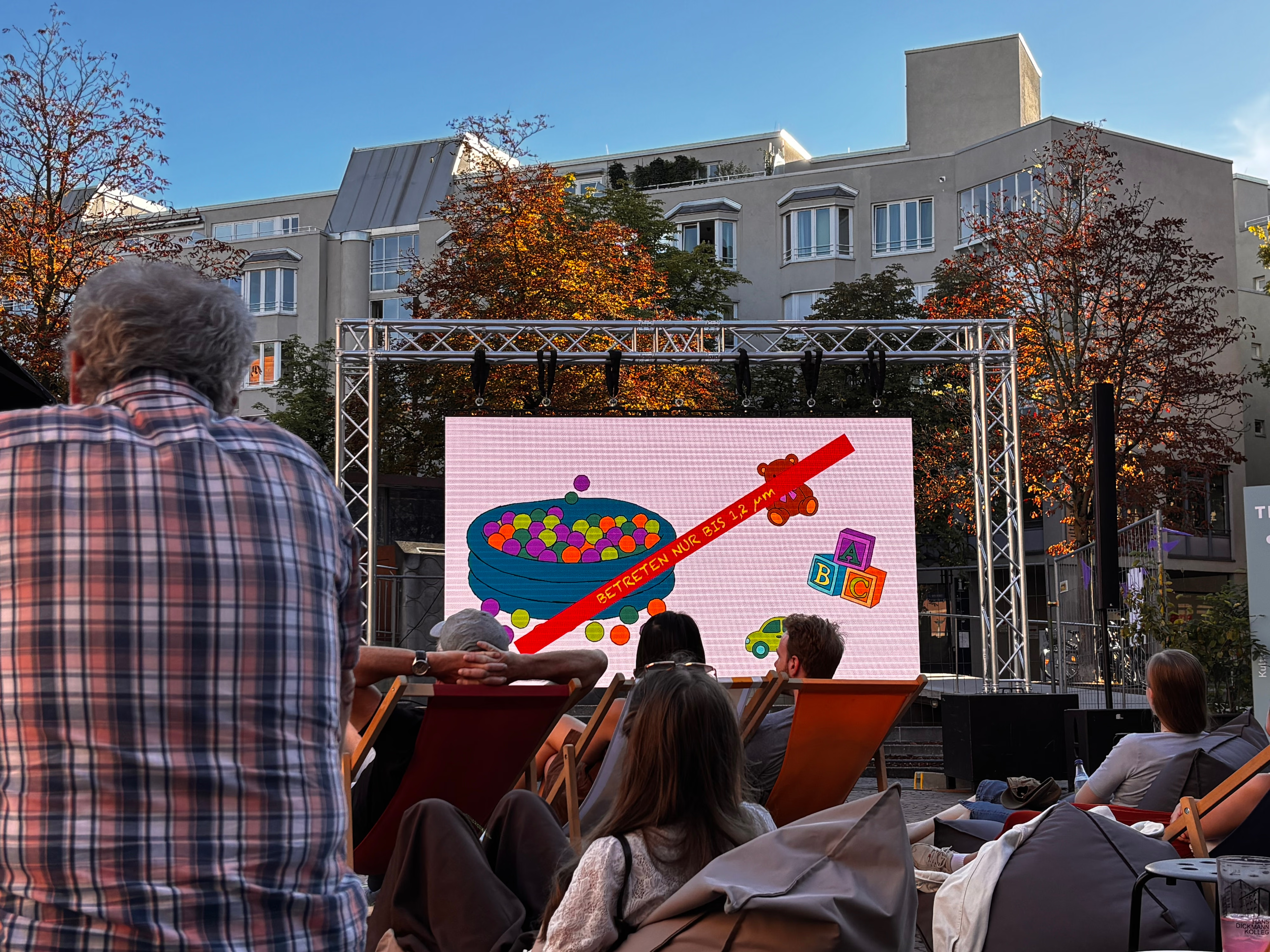
At the base of our slam, the yeast cell is a ball pit and the nanocompartment is a wonder machine. Have you lost a toy in there and are too big to climb in yourself? The machine fetches it for you. It also provides a protected space inside the ball pit, where a child can make chewing gum without harming anything around it. This is our picture for a shielded reaction space within the cell. Finally, it can take snapshots of children quarreling among the balls. This stands in for mRNA capture, which records the state a yeast cell is in at a given moment.
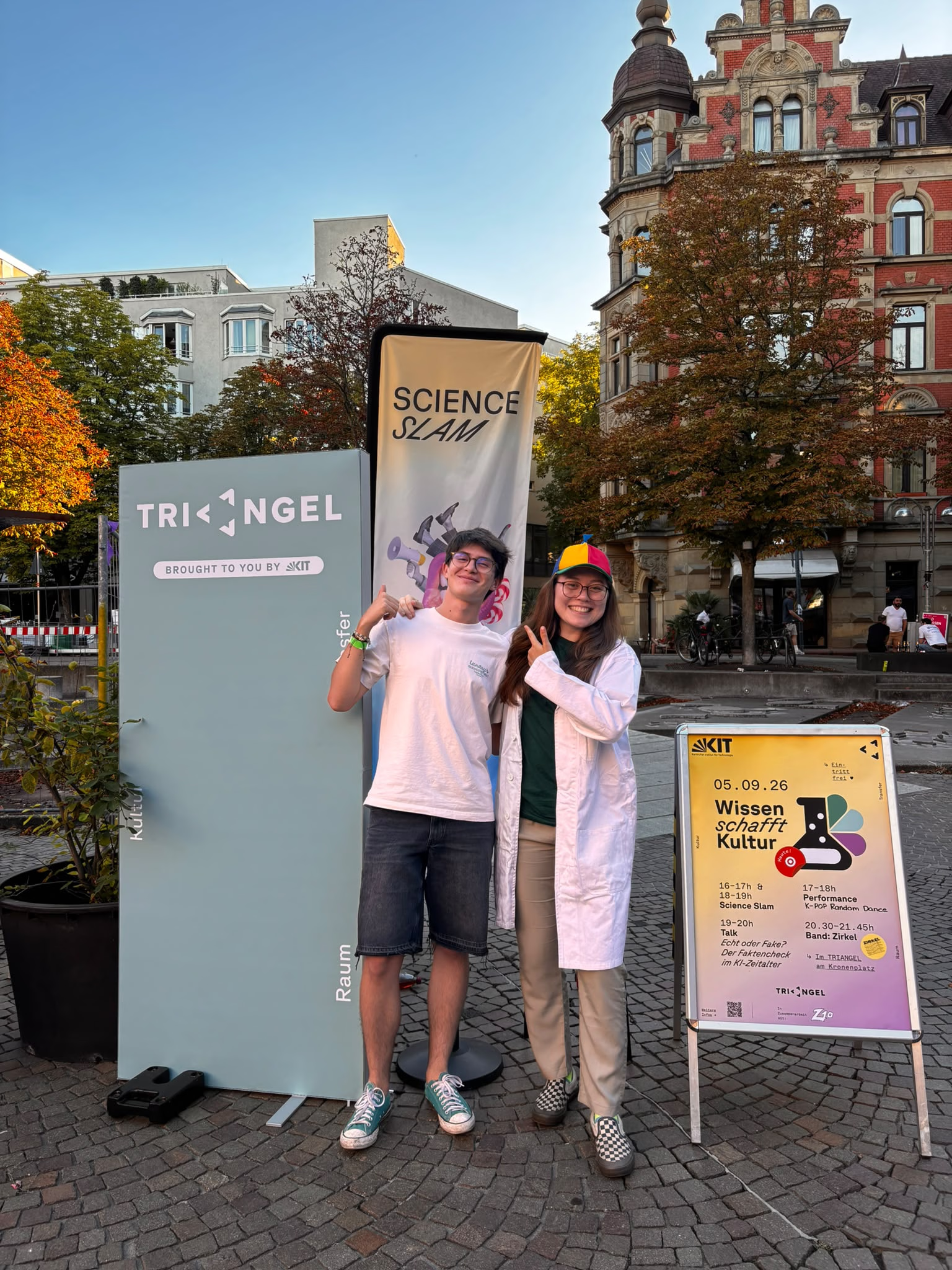
At the end of the summer, the ball pit finally made it onto the stage. All participants performed their slams at a science communication event in Karlsruhe in front of around 100 people. Despite the nerves, everyone gave a great performance, and afterward we were all proud. A particular highlight was hearing the other slammers’ final talks: having watched them evolve over the weeks, we could see just how far everyone had come.
Looking back, breaking our project down for a lay audience was challenging, but the audience’s feedback made it all the more rewarding. Above all, the process sharpened our own understanding of the value ENCORE brings.
We therefore encourage all iGEM teams to imagine their project as a science slam, even if there is no stage available to perform on. It is a great first step toward finding your core message and the story you want to tell.
Art Exhibition
CoLab
One of the things that got us started was a pretty personal experience. Whenever we tried to explain to friends and family what we actually do, we noticed how little understanding there is for synthetic biology outside of our bubble. For example, terms like “genetic engineering” trigger fears that are rarely addressed openly, because scientists mostly discuss them among themselves instead of with the public. We wanted to break that pattern.
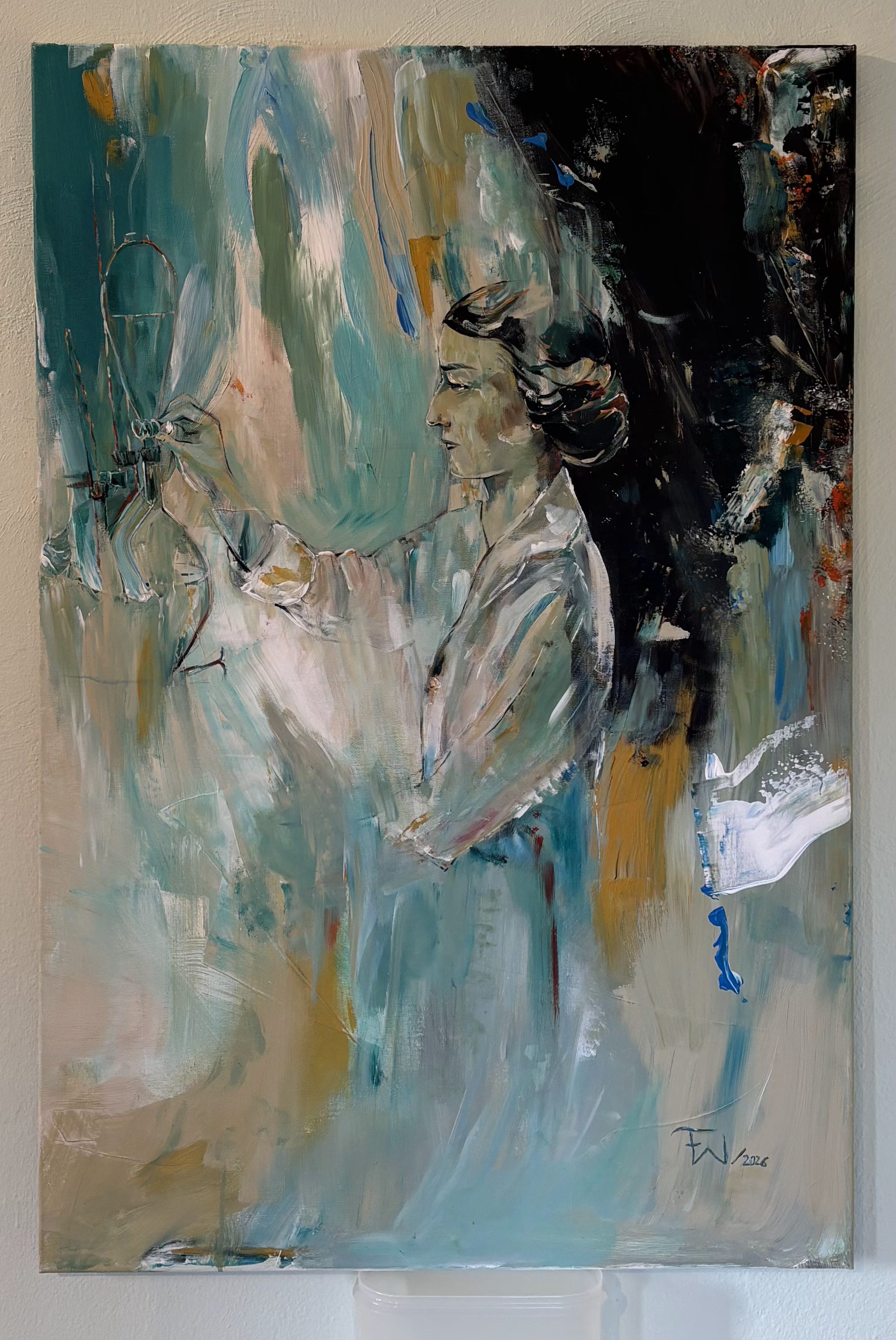
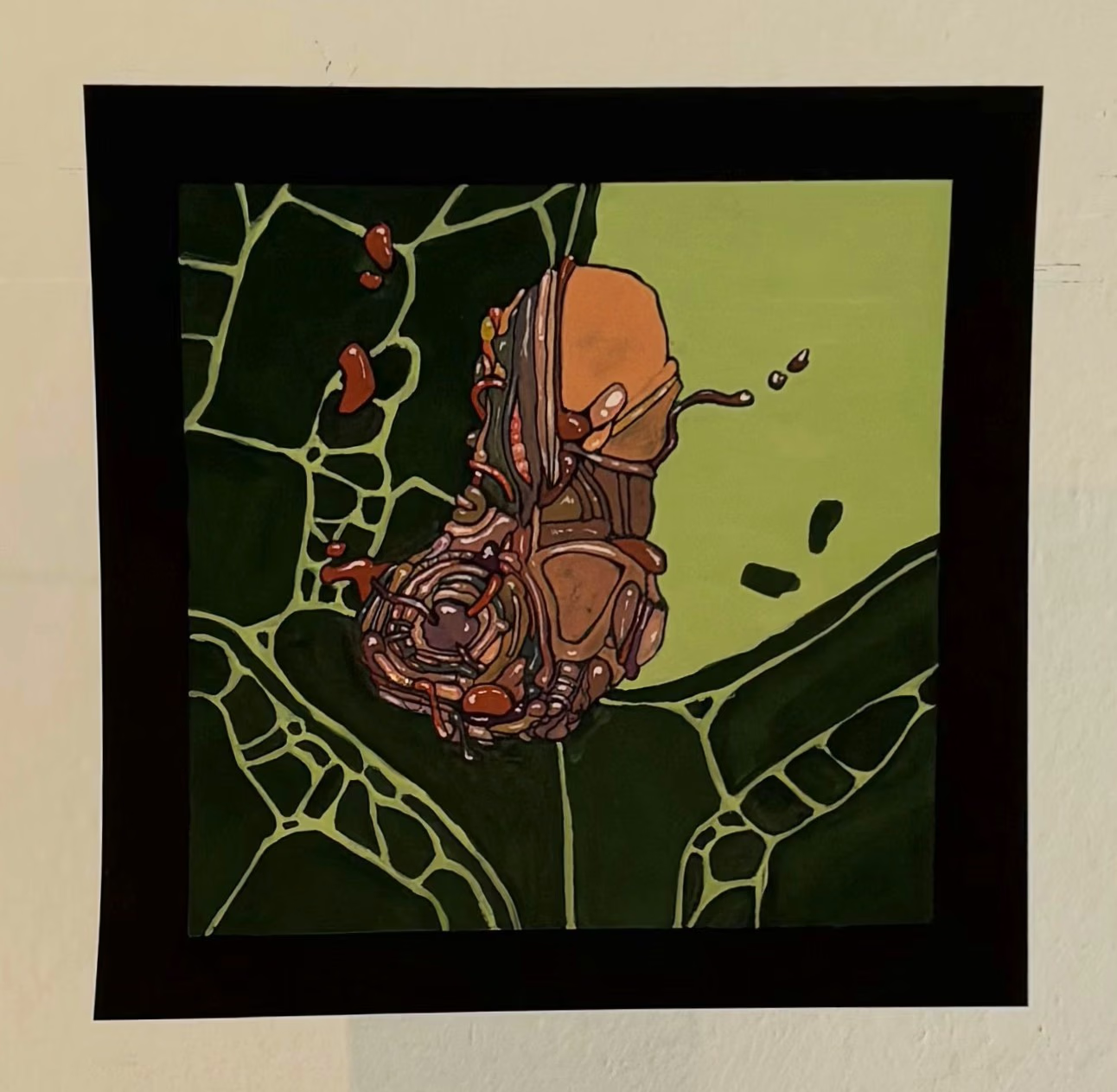
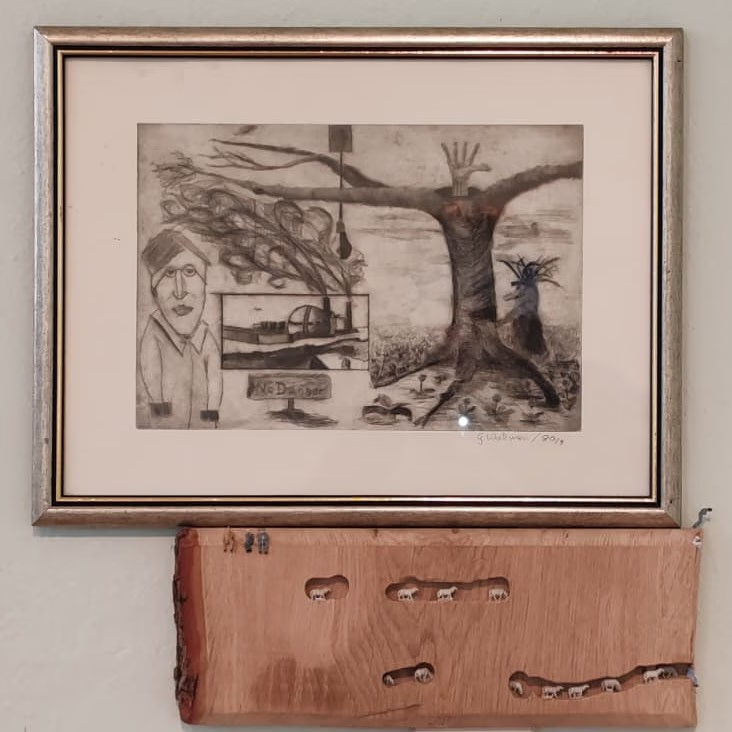
Our approach was a collaboration with artists, which also gave the exhibition its name: CoLab. Art lowers the barrier to entry. Nobody needs to know what a plasmid is to engage with an artwork and form an opinion about it. This made it possible for visitors to approach the topic directly, ask critical questions and voice their concerns.
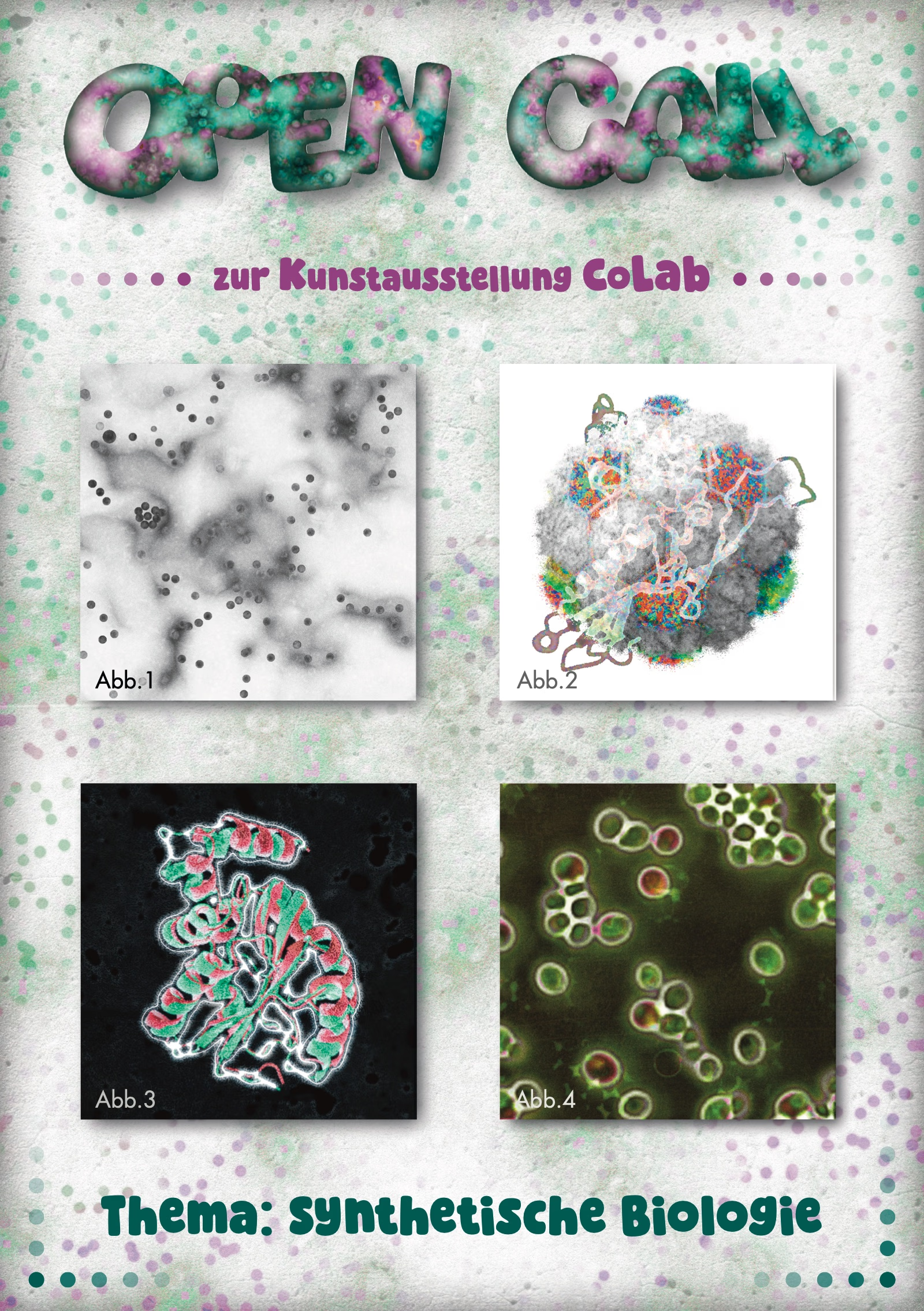
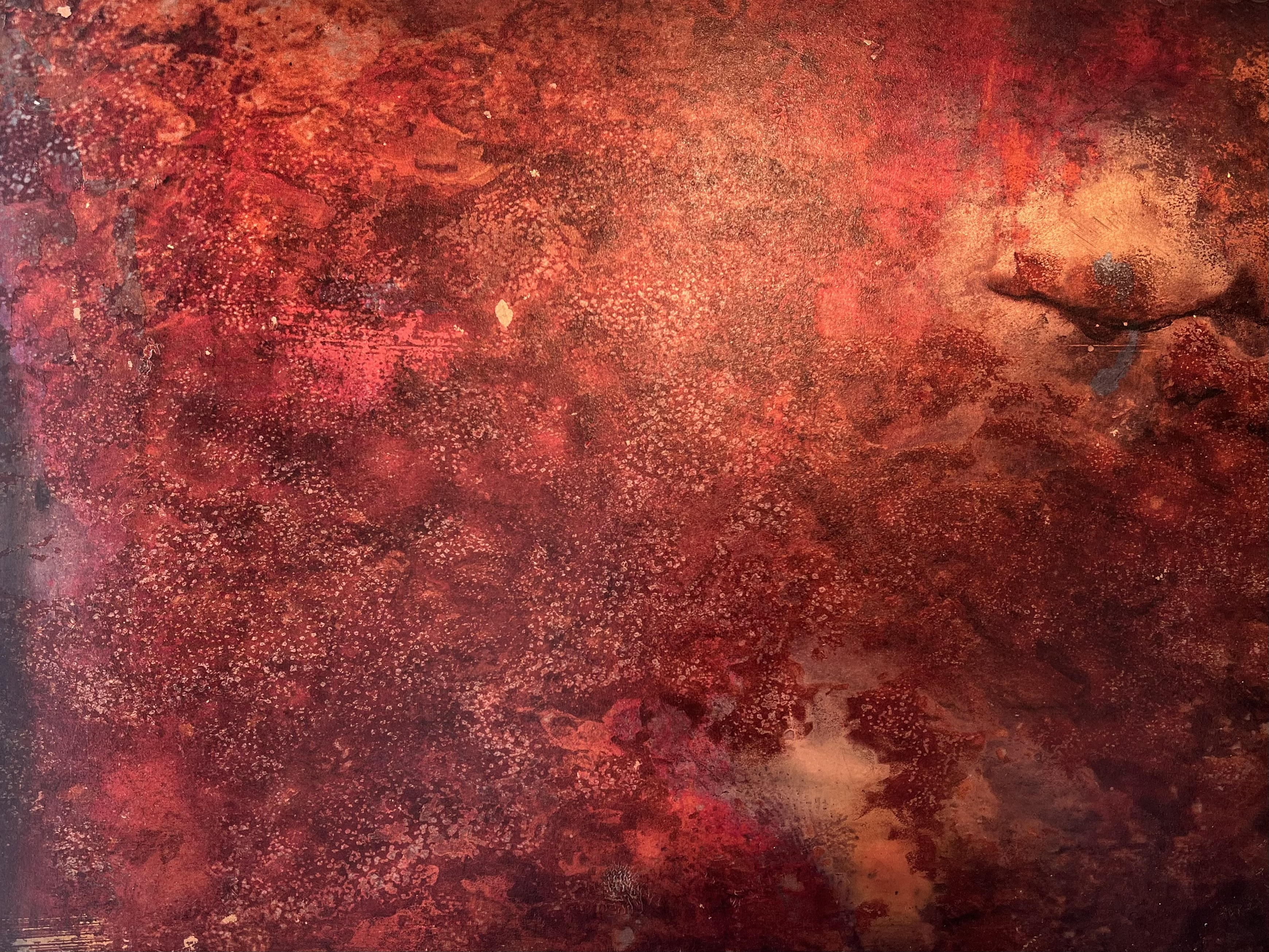
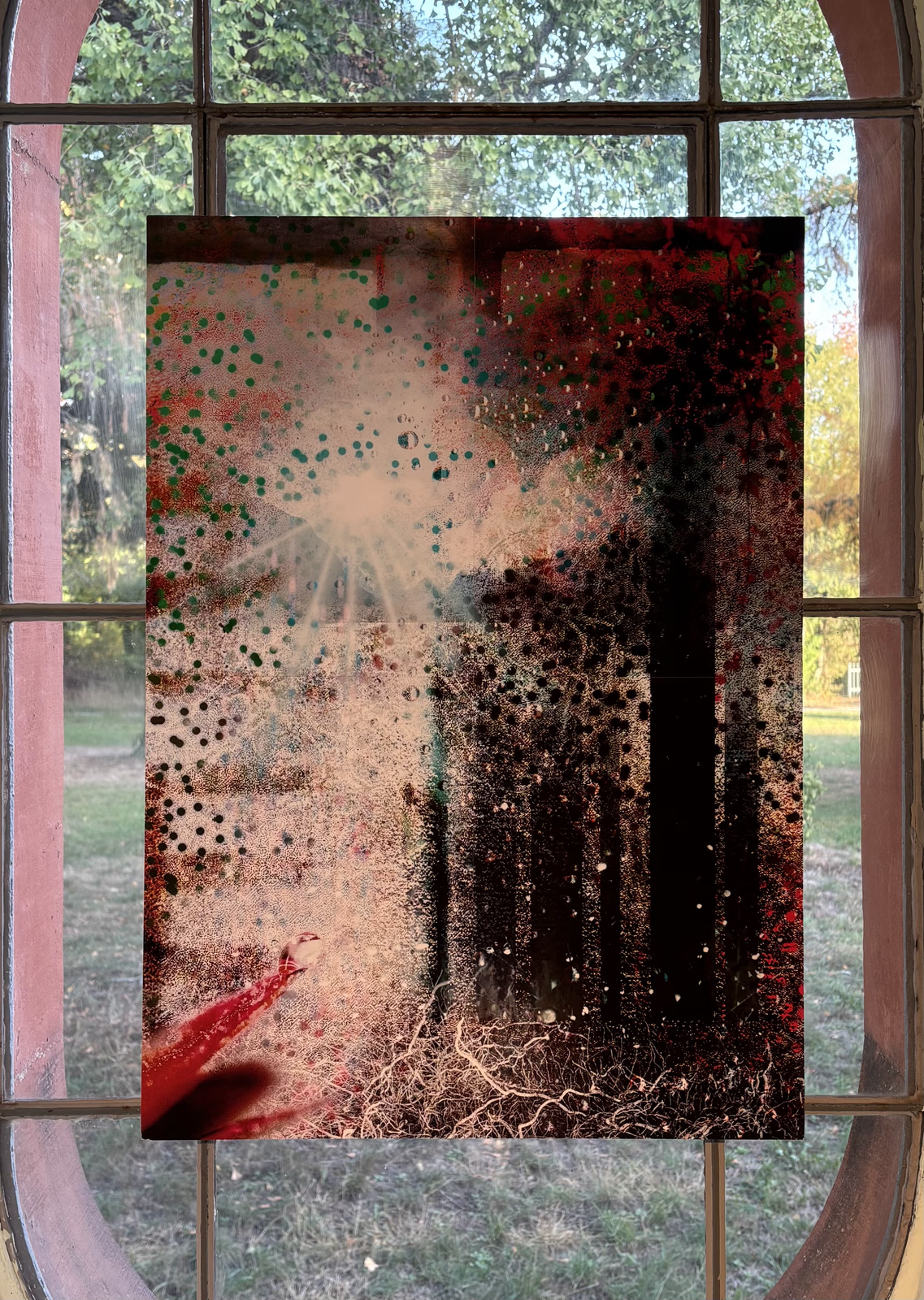
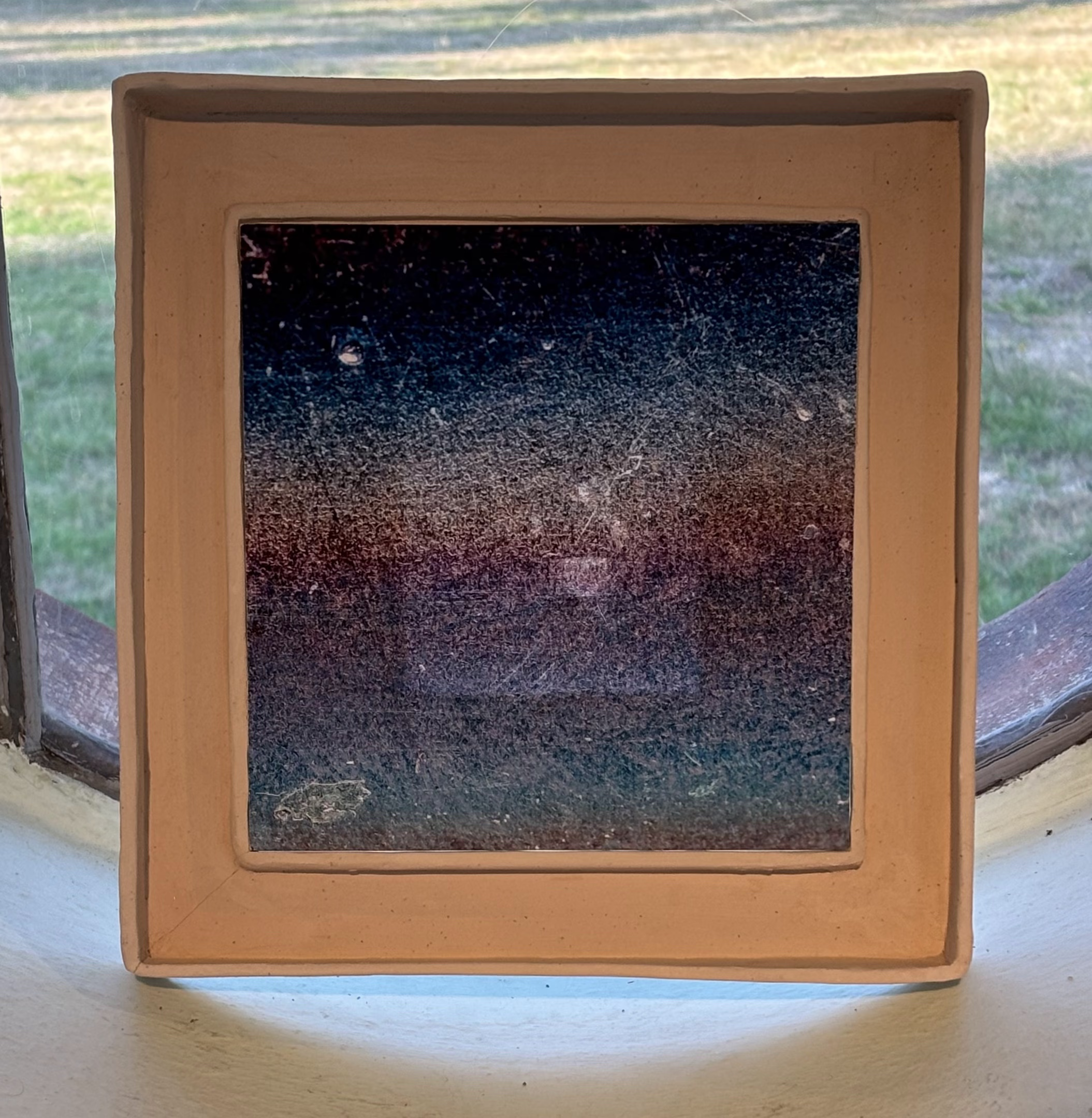
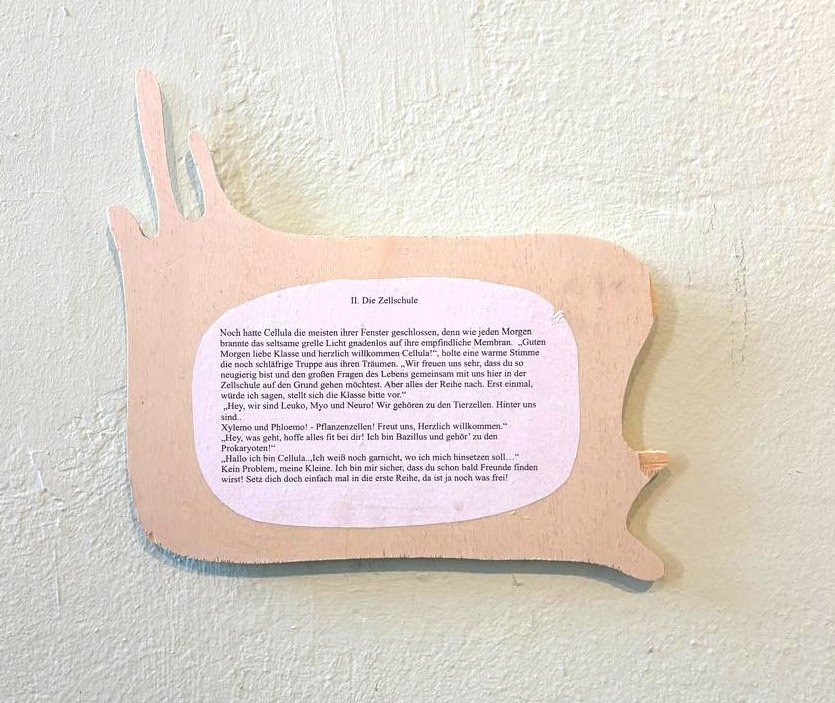
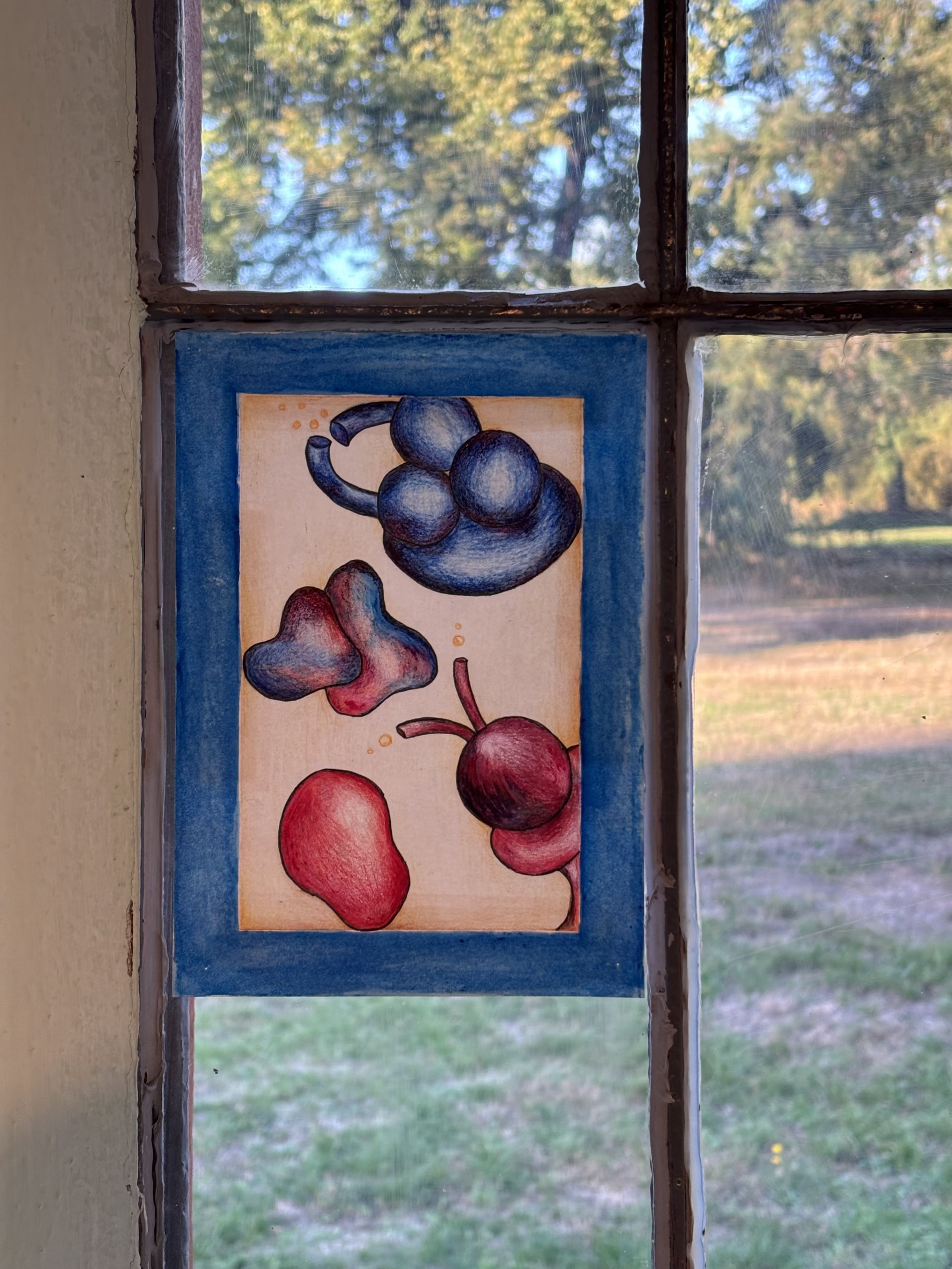
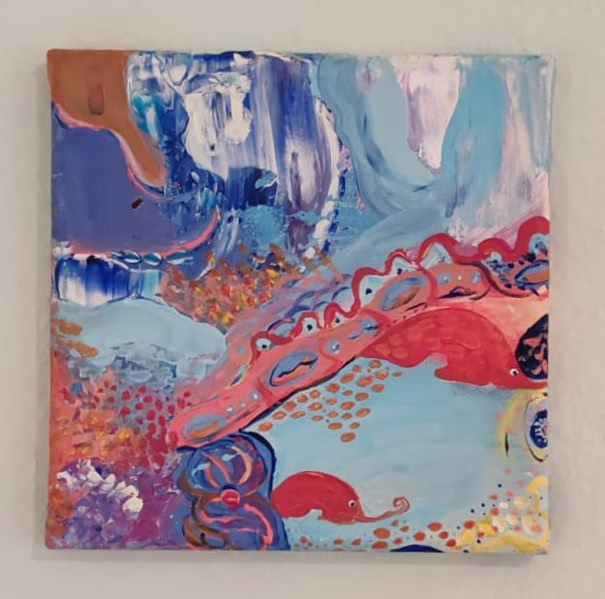
Rather than asking for illustrations of our project, we asked a question. What happens when you read the words of everyday lab life with different eyes? What becomes of a promoter? What could competent cells be? What does autoclaving mean? Alongside these terms we published four scientific figures from lab work, labeled only as Figure 1 to Figure 4, and asked what people saw in them. The choice of medium and of starting point was entirely free. The only rule was that the work had to start from the artist’s own view of synthetic biology, whatever associations the term brought with it.
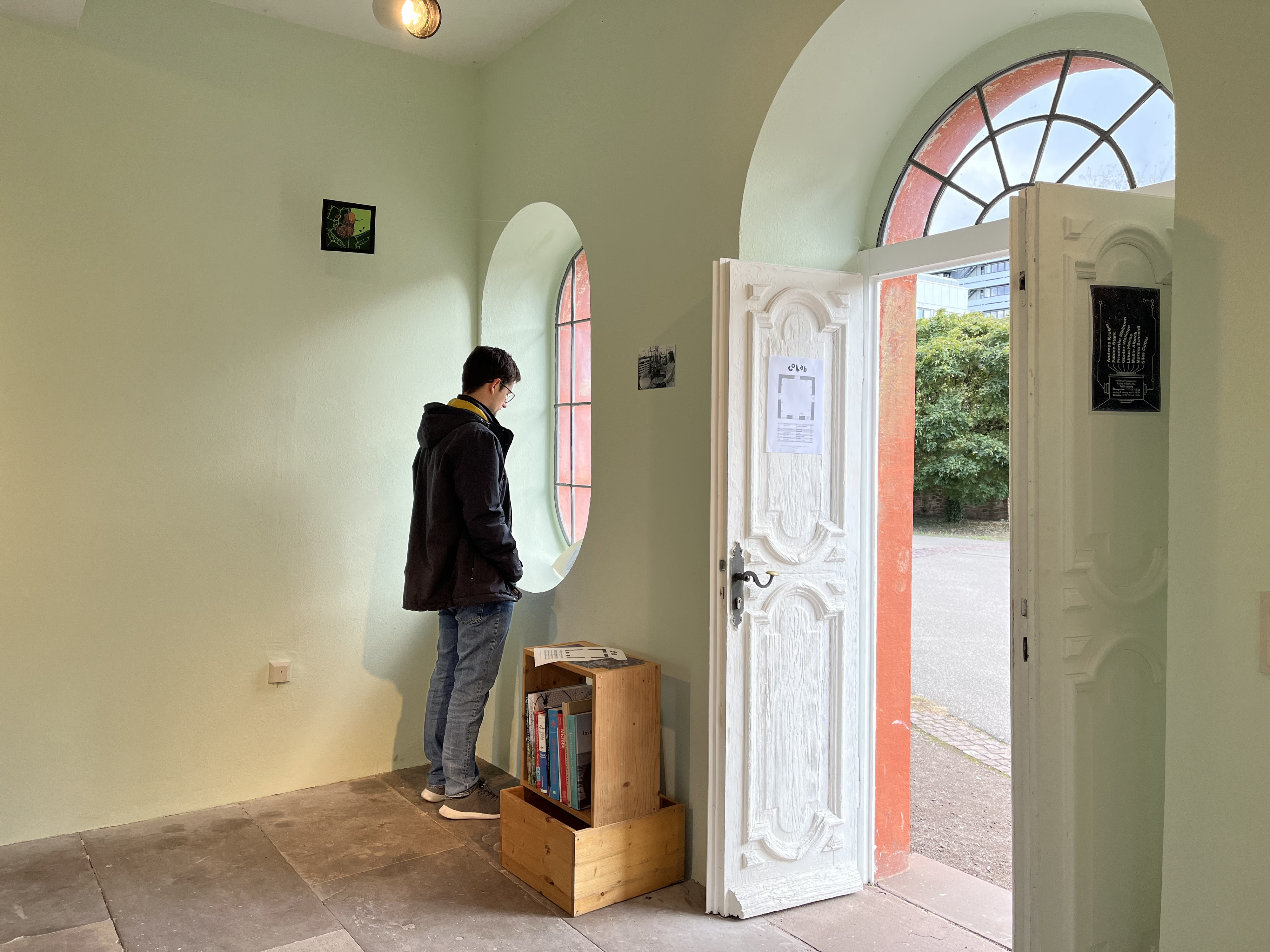
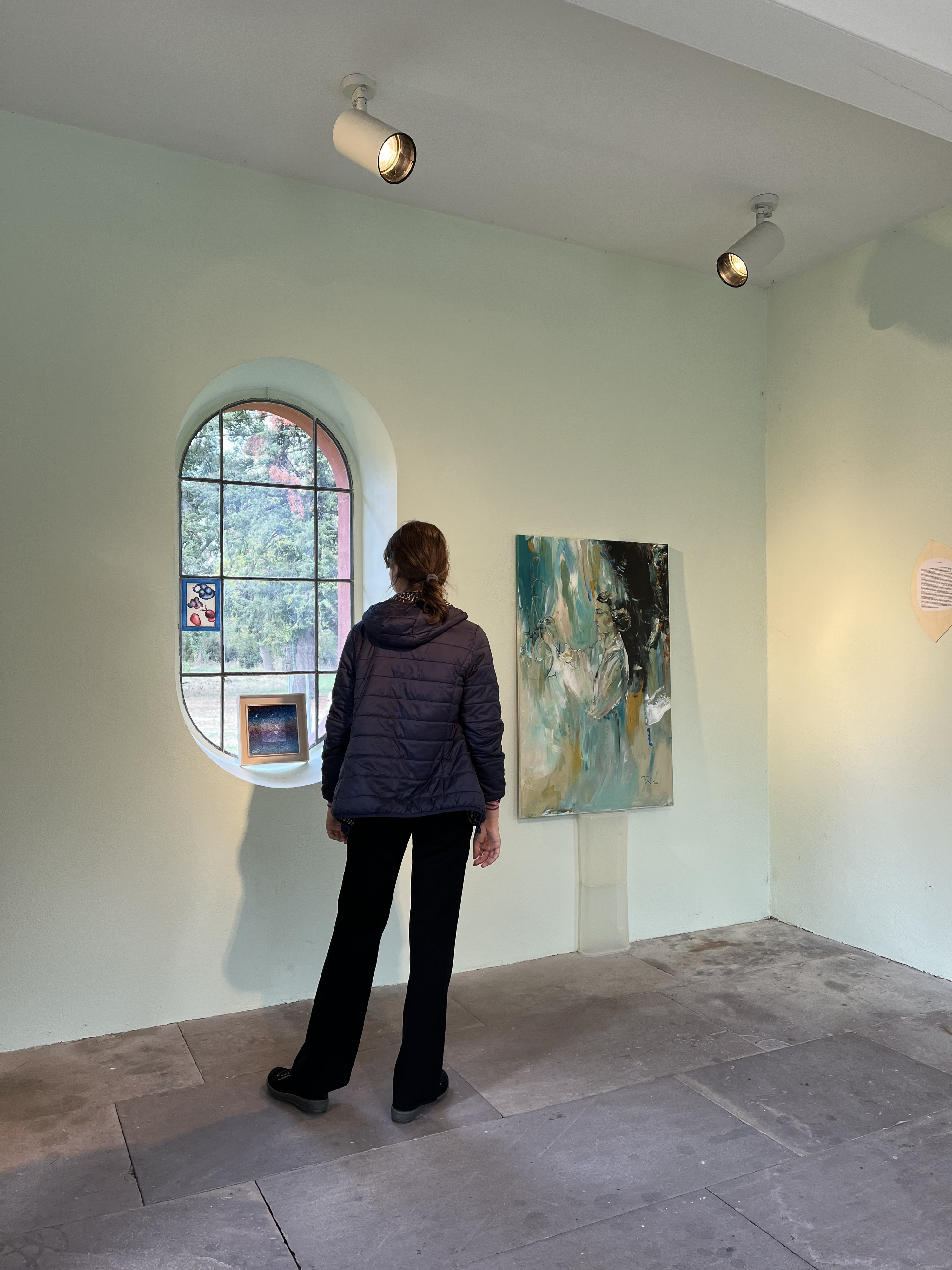
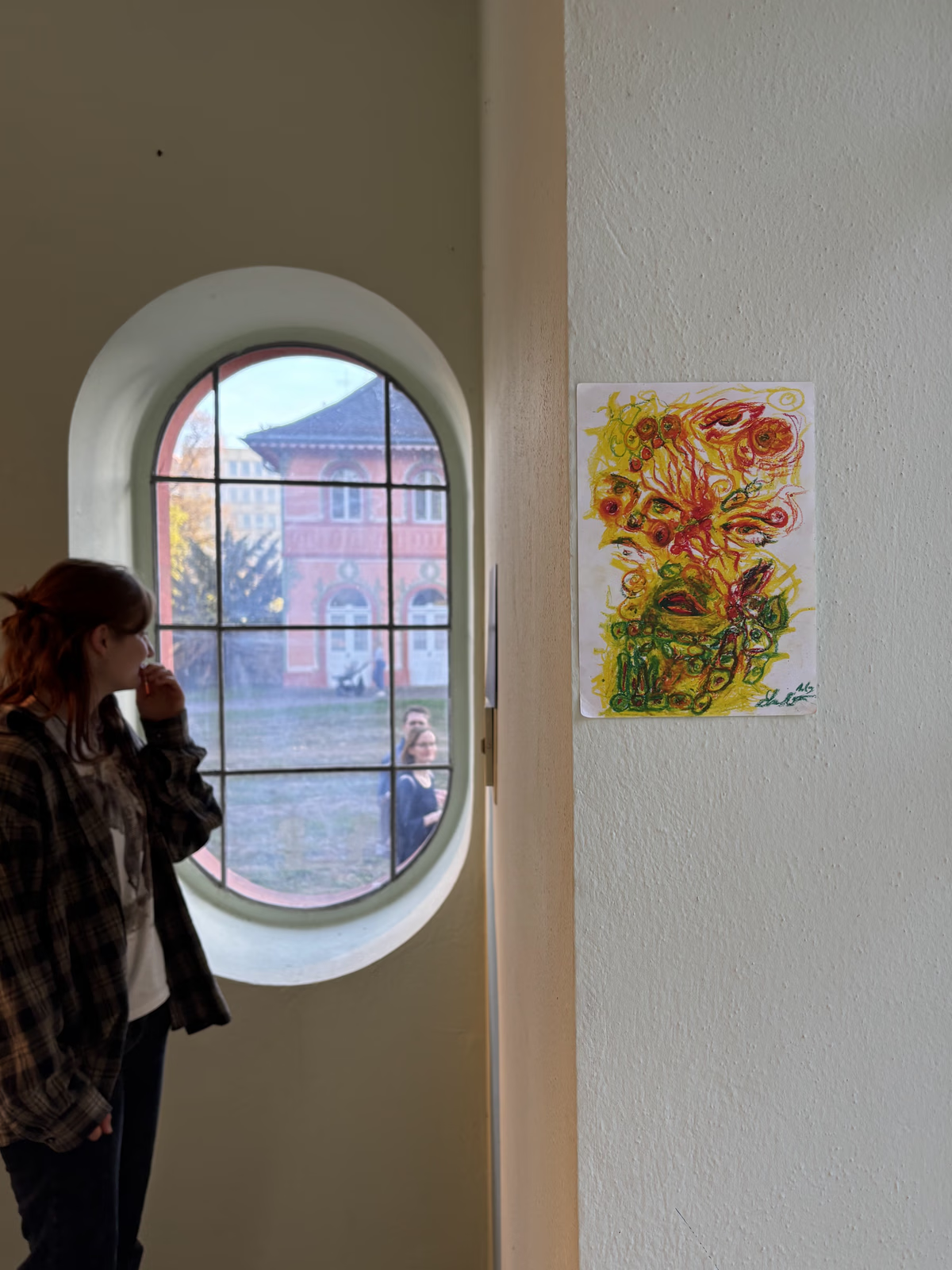
Some artists stayed close to the figures and turned them into images in their own right. Others took their own research or imagination.
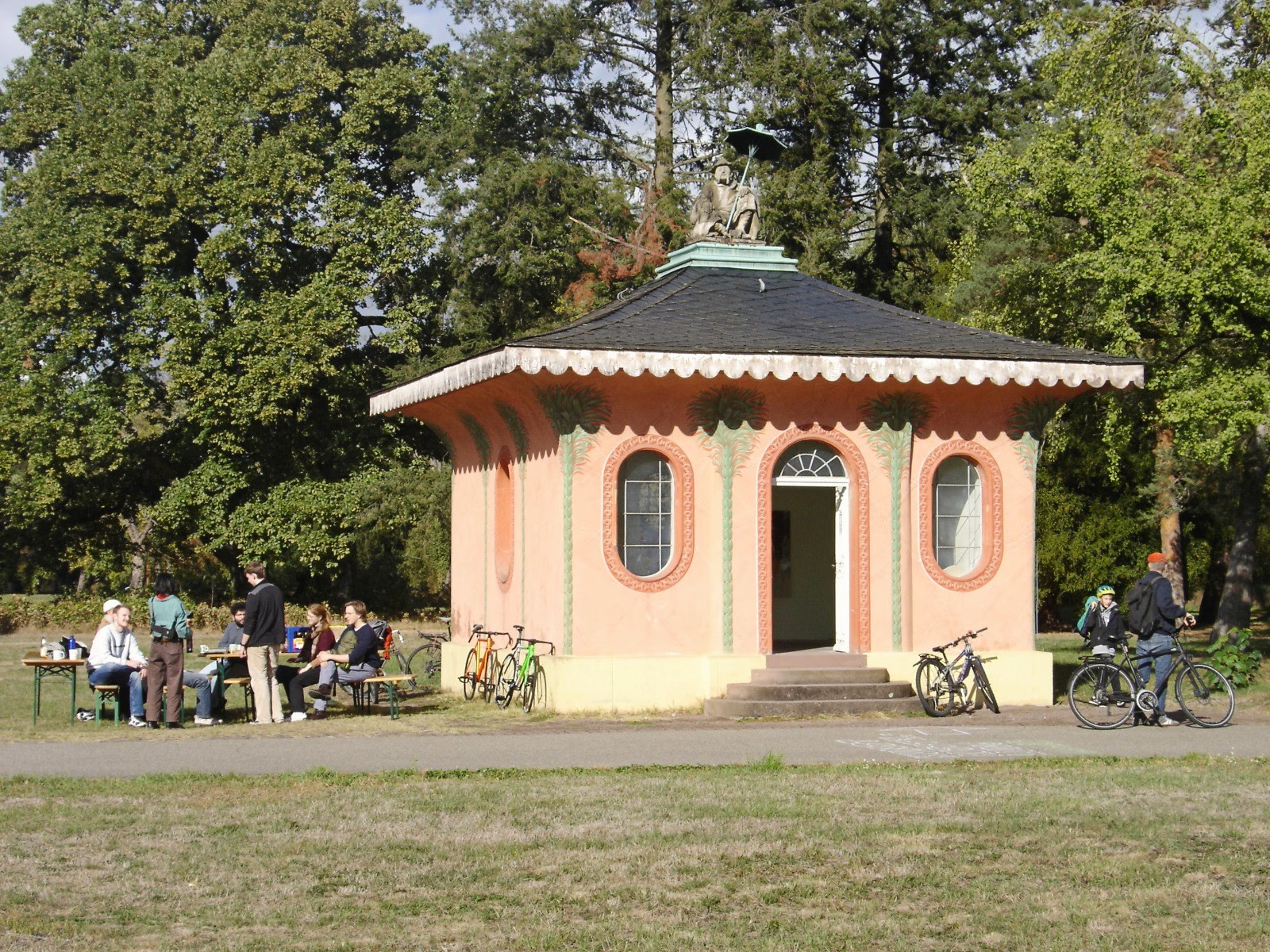
In the end CoLab took place on two weekends in October at the pavilions in the Fasanengarten in Karlsruhe. Team members were present throughout. Standing next to a work, people started conversations that simply do not come up in the daily routine of the lab, least of all with an audience like this. What exactly are you changing in those cells? What happens to them afterward? Who decides what is allowed? Some conversations stayed with the artwork, others moved to our project and to where they thought synthetic biology should and should not go.
With all of that we opened a room for discussion and gave our visitors an opportunity to engage with synthetic biology on their own terms.
Campus Day
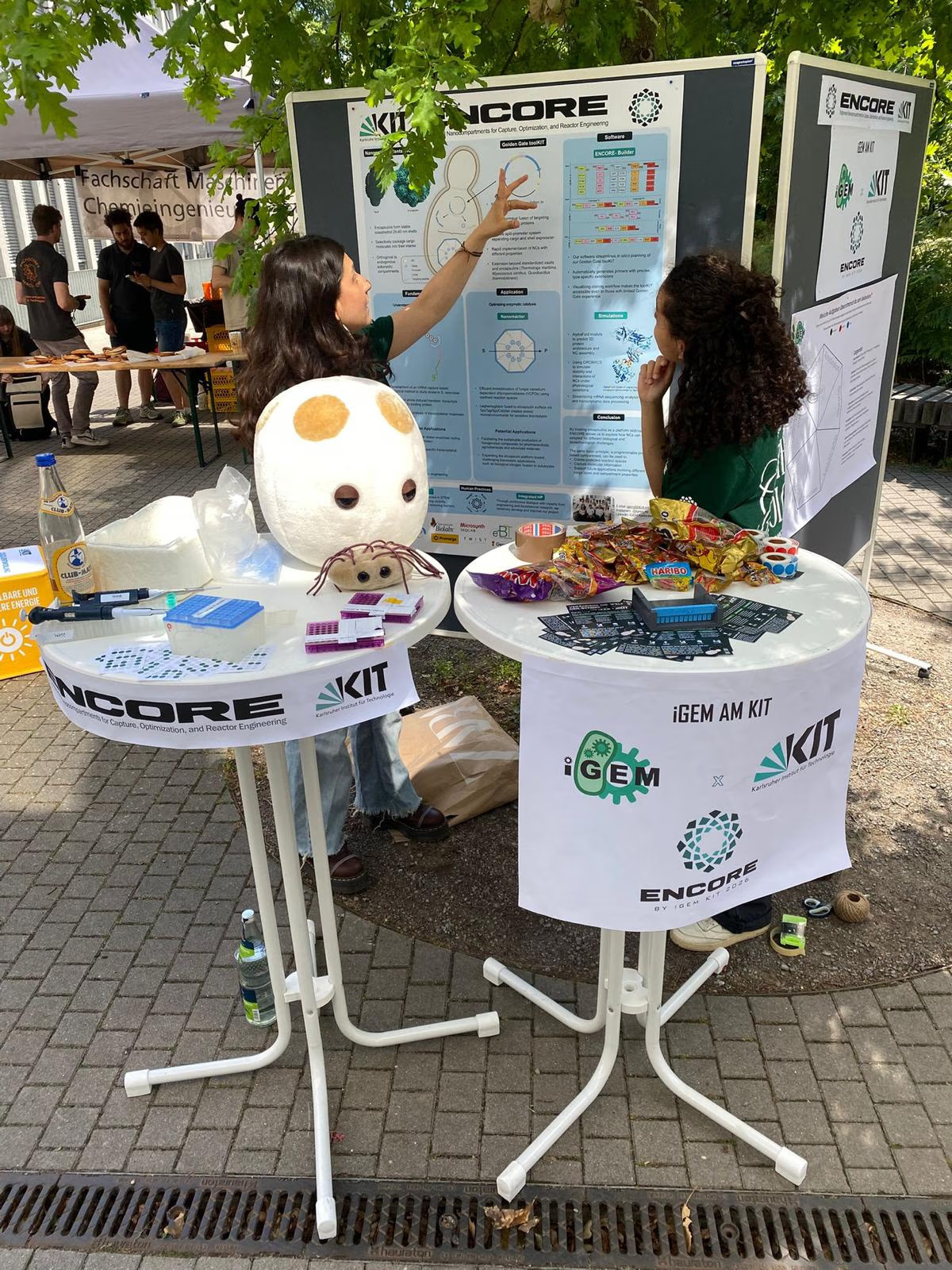
Connect, spark interest, introduce iGEM, and present our project to our university. Those were our four goals for Campus Day.
The event takes place every year at our university and gives faculties and research groups a space to show what they do, to students, to people considering studying here, and to anyone curious about research across science and technology. As the first iGEM team at KIT, taking part felt less like an opportunity and more like a responsibility. If nobody at our own university knows iGEM exists, that is where we have to start.
Our first step was contacting the bioengineering faculty to secure a stand. From there, the plan took shape: a set of activities to introduce iGEM to anyone who stopped by, covering what a student initiative looks like, what it means to work on a project with this many sides to it, and what it takes to stand out in STEM.
Without a full season of experience to speak from, our own perspective became the focus instead, along with the road still ahead of us. One thing drew more attention than anything else. Being the first team meant building everything from nothing, the lab and the team included, and visitors wanted to hear about that.
ENCORE itself was, of course, part of the conversation too, from the principles behind the project to what we are trying to achieve. The challenge was adapting the explanation to whoever was standing in front of us, so that each person walked away actually understanding what we do. Together with a few games and general science activities at the stand, this let us reach very different audiences and connect with people interested in iGEM, in ENCORE, and in science more broadly.
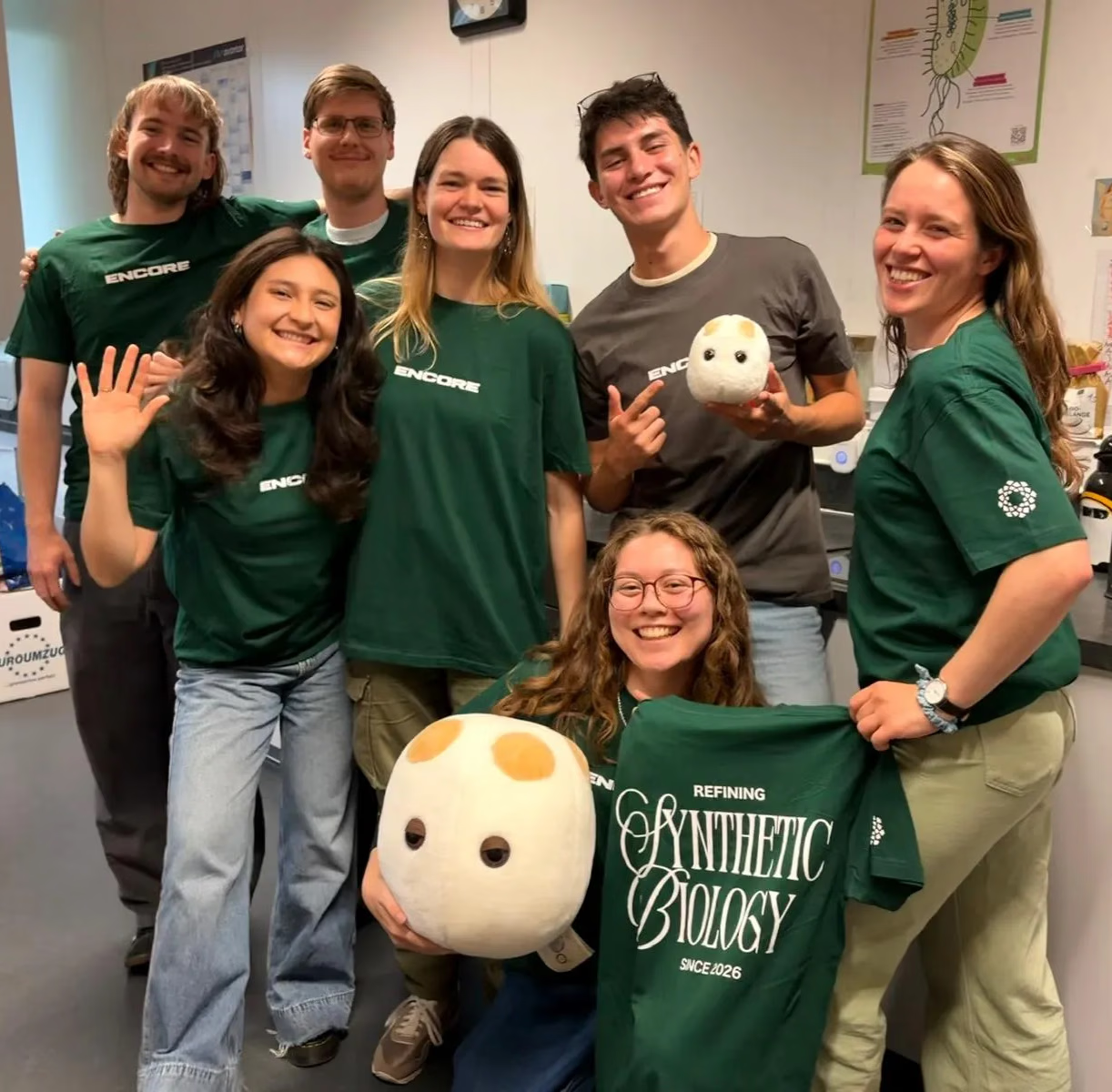
Over the course of the day every member of the team took a turn at the stand. Conversations ranged from experts and professors from the faculties of biology, bioengineering and chemical engineering to Bachelor’s and Master’s students who became genuinely interested in the project. The activities worked: a science quiz, a race to fill pipette tip boxes, and a chance to learn how to pipette, all of which gave visitors a small taste of what our days in the lab actually look like.
By the end of the day, the whole team was happy with how it went. It was also a real exercise for each of us, because explaining what you do, and why you care about it, to people from entirely different fields is harder than it sounds. The experience taught us a lot, and it brought us closer to the university around us.
Pub Quiz
Science doesn't have to happen in a lecture hall. Sometimes it works best over a drink and a quiz sheet.
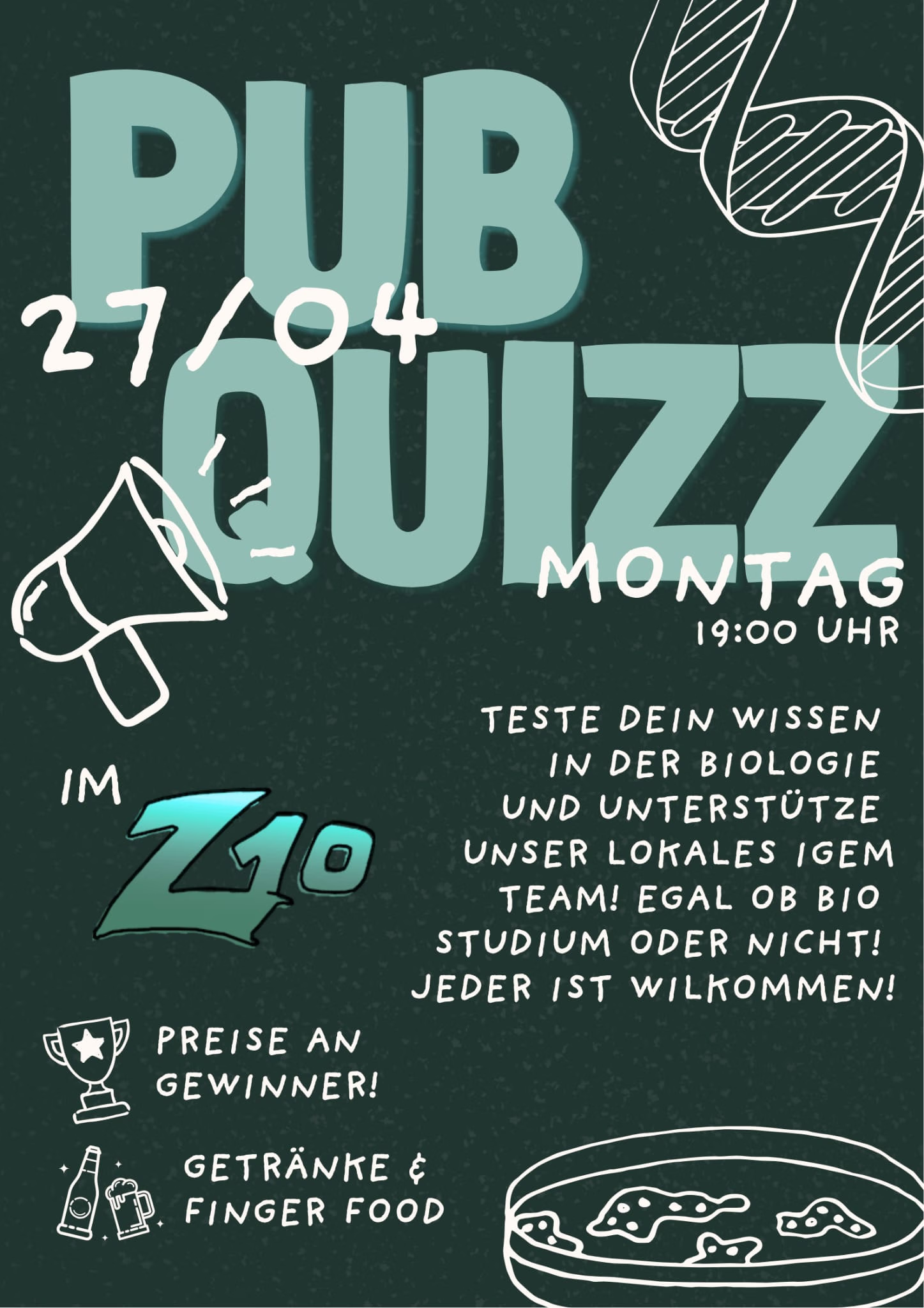
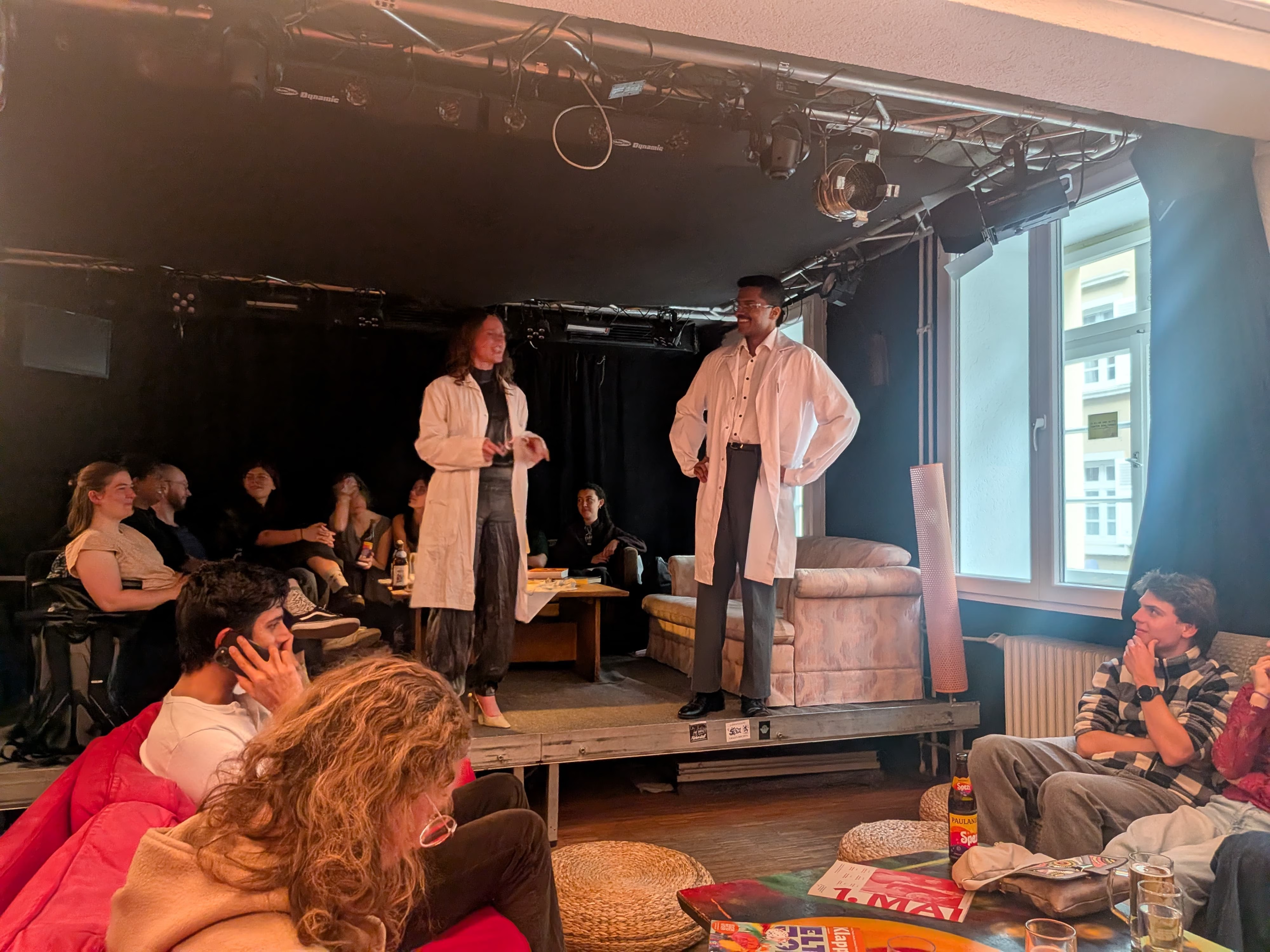
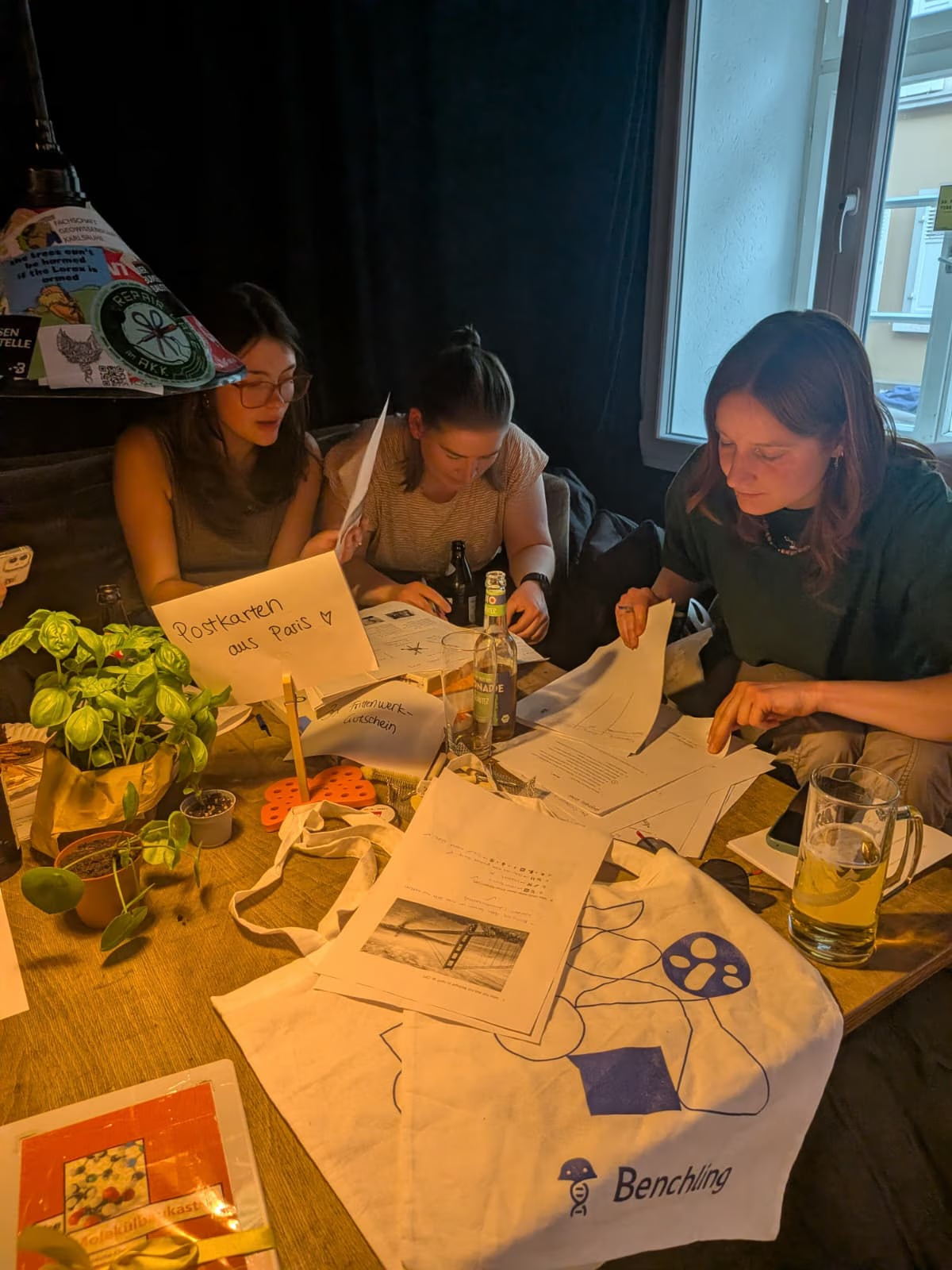
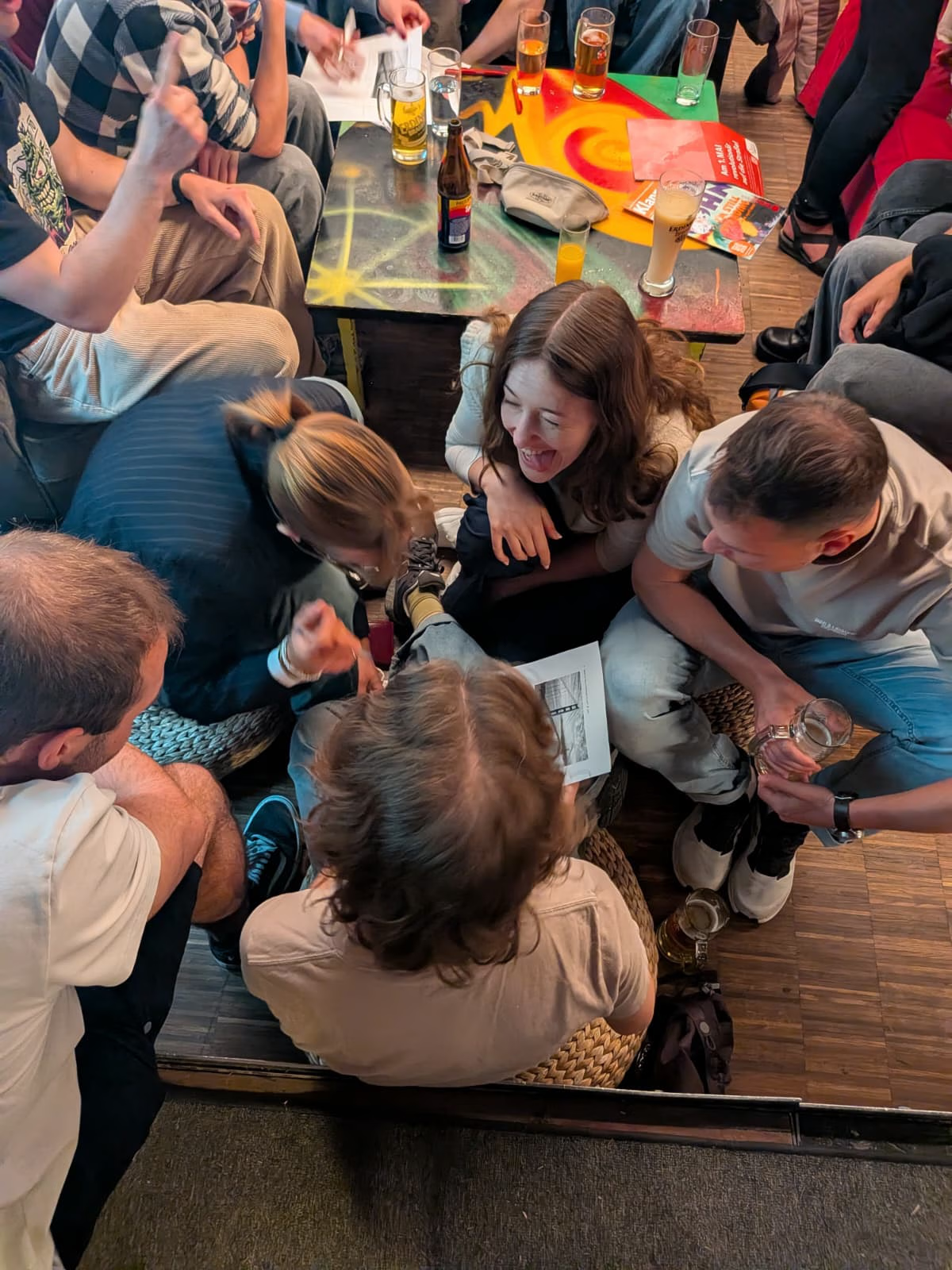
On April 27th, we hosted a pub quiz at Z10, a student-run venue in Karlsruhe. The evening had two goals. We wanted to spark curiosity about iGEM at KIT and our research project among people from all walks of life, and we wanted to share fascinating (and sometimes surprising) facts from biology in a fun, accessible way.
The quiz turned into a lively evening with a great crowd of guests and quiz teams. The winners took home small prizes, including plants and popular science books. Our favorite prize of all was a postcard sent by our team from the Grand Jamboree in Paris.
Because the pub quiz was such a success, we brought it back on October 15th as part of the orientation week for KIT's new first-year students.
Board Game


- 3–6 players
- ages 12+
- about 45 minutes
- no prior knowledge needed
Downloads
-
Everything you need to playThe rules (opens in a new tab), the game board as an image, and the cards, the score pad and the quick reference as PDFs to print
-
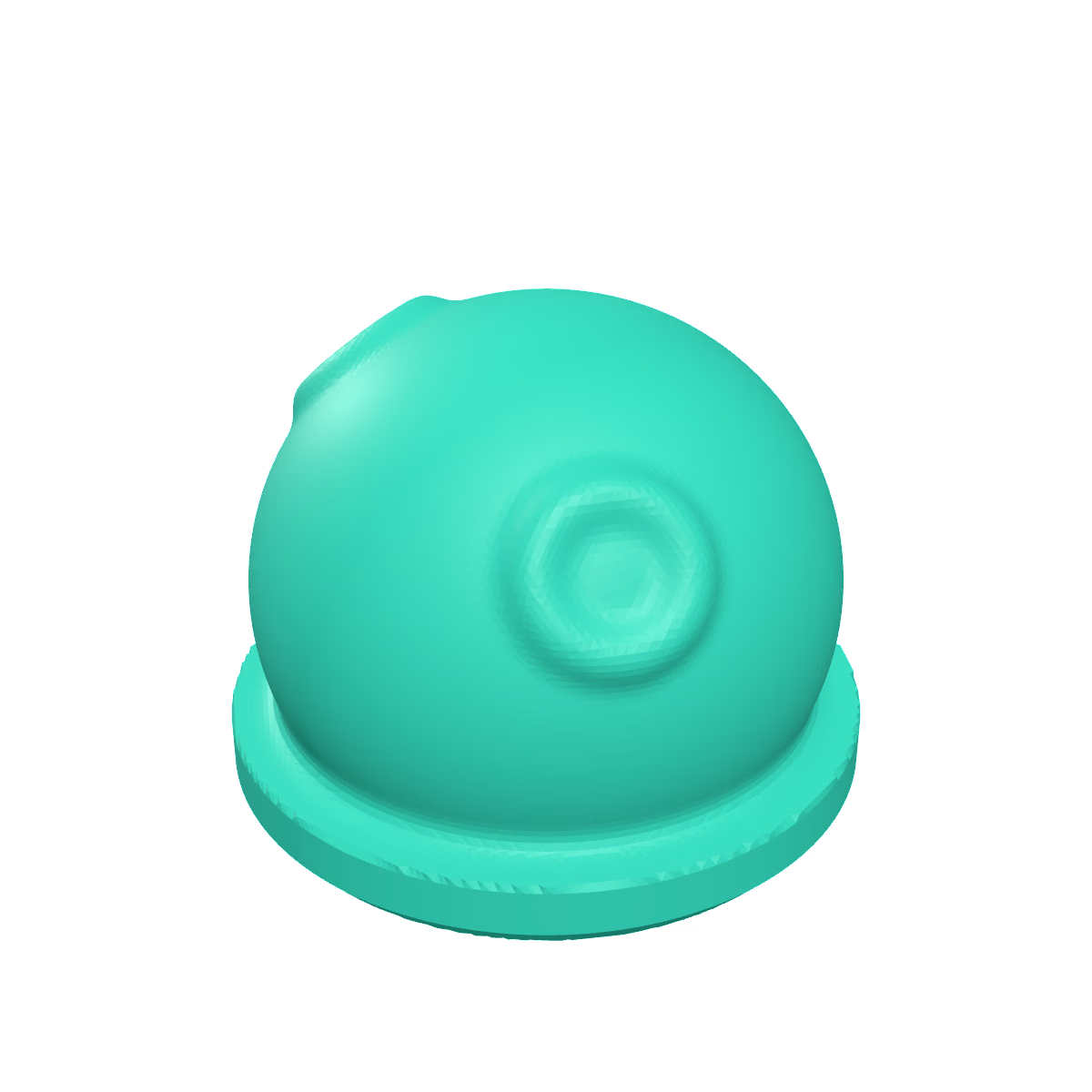
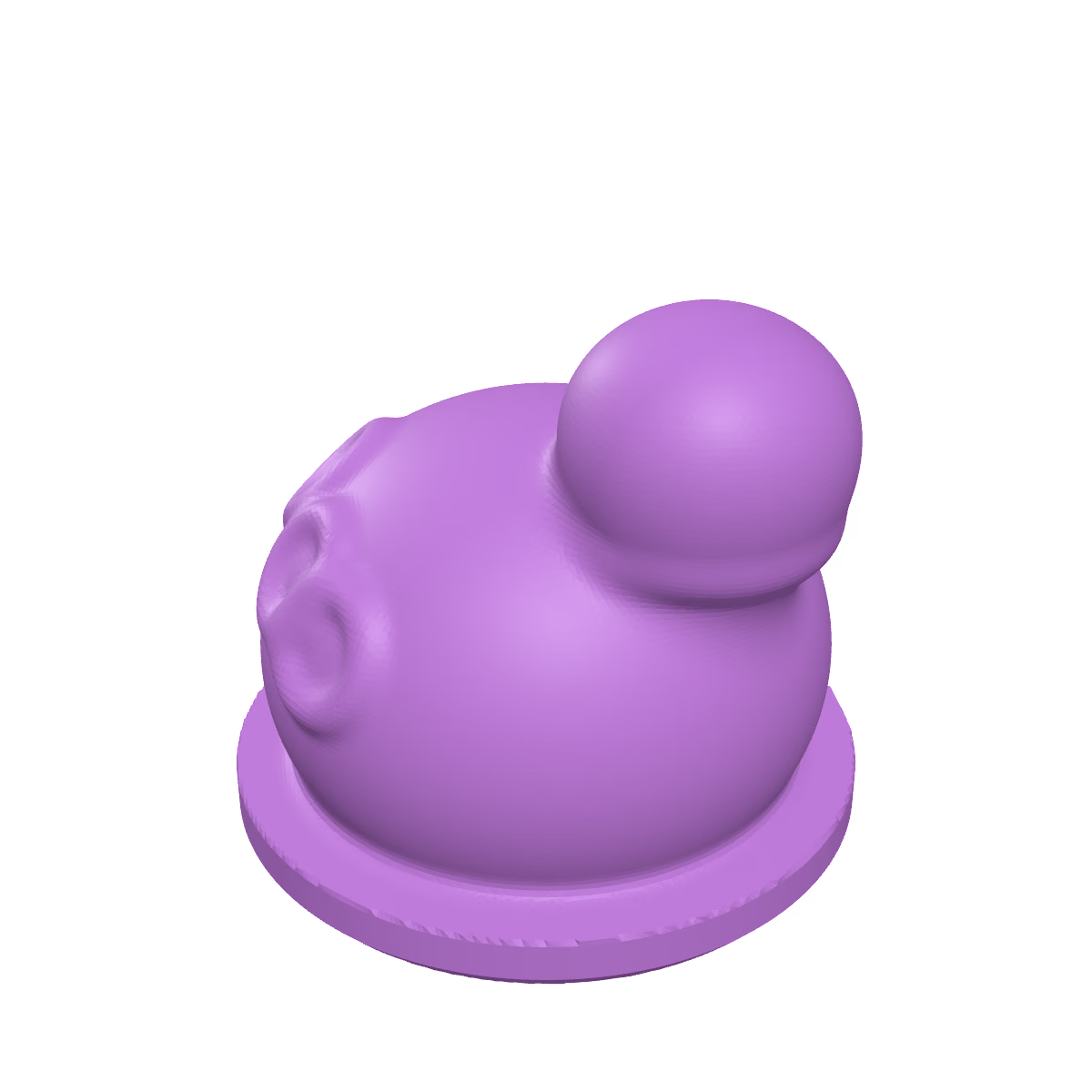
Figures for 3D printingSTL files of the yeast cell and the budding yeastDownload from GitLab
Why We Built a Board Game
Our project runs in the Foundational Advances village, and that name holds a lot of expectations. A foundational project is not measured by the one problem it solves, but by how many problems it lets other people solve.
At the heart of ENCORE is the functionalization of nanocompartments, made possible with our toolKIT. We aimed to fulfill a biologist’s dream: Build-a-bear but for cell compartments.
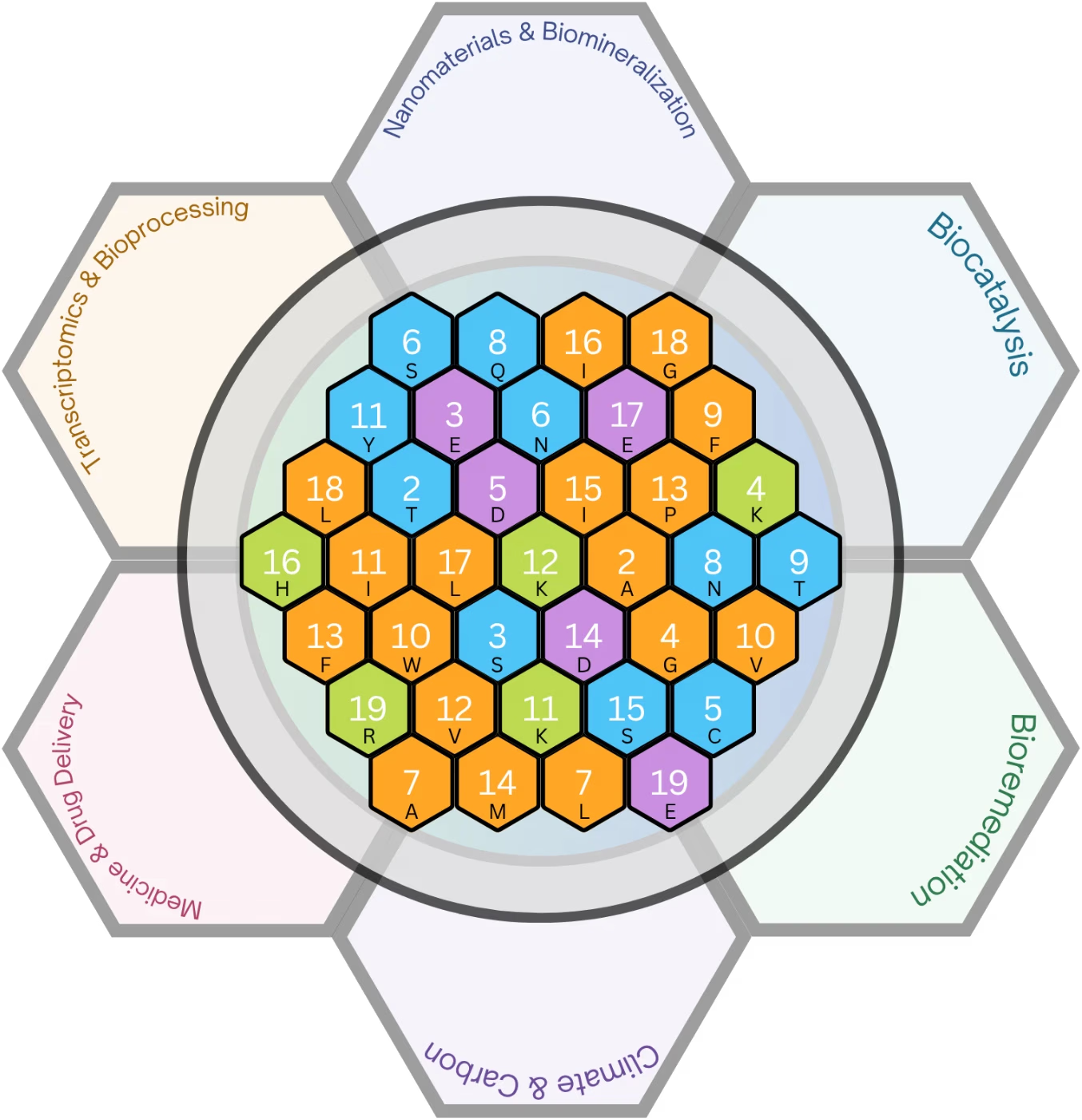
We built this game to showcase what would be possible in a world, where this dream came true. The Yeast We Can Do puts 19 missions on the table across six application areas, from breaking down forever chemicals to capturing CO2 and growing nanocrystals. Everyone competes for the same 20 amino acids on the same 37 fields of nutrient medium, and everyone builds something different out of them.
In this strategic game each player tries to collect the resources needed to build the cargo demanded by a given mission. Who collects the most points first wins!
Whether you play with people who know the amino acid groups by heart or with people who last heard of cells in high school (or haven’t heard of them yet), every level of knowledge can learn something new, no pre-existing knowledge is required. Someone who has never heard of synthetic biology leaves knowing that a protein is a chain of twenty kinds of beads, some of them hard to come by. An iGEMer might spot the catalytic triad in the plastic-degrading enzyme. Nobody is tested, and everybody takes something home.
Download the board, cards, rules and the 3D print files for the yeast figures here, print and play! The 3D structures run off any FDM printer, but you can also use other playing pieces if that is more convenient.
The fun is rising throughout the game like a yeast dough.
It’s a great and refreshing way to explore the world behind ENCORE!
I was hooked once I finished my very first mission.
Student Member & Wiki Lead
Publications and Social Media
clicKIT
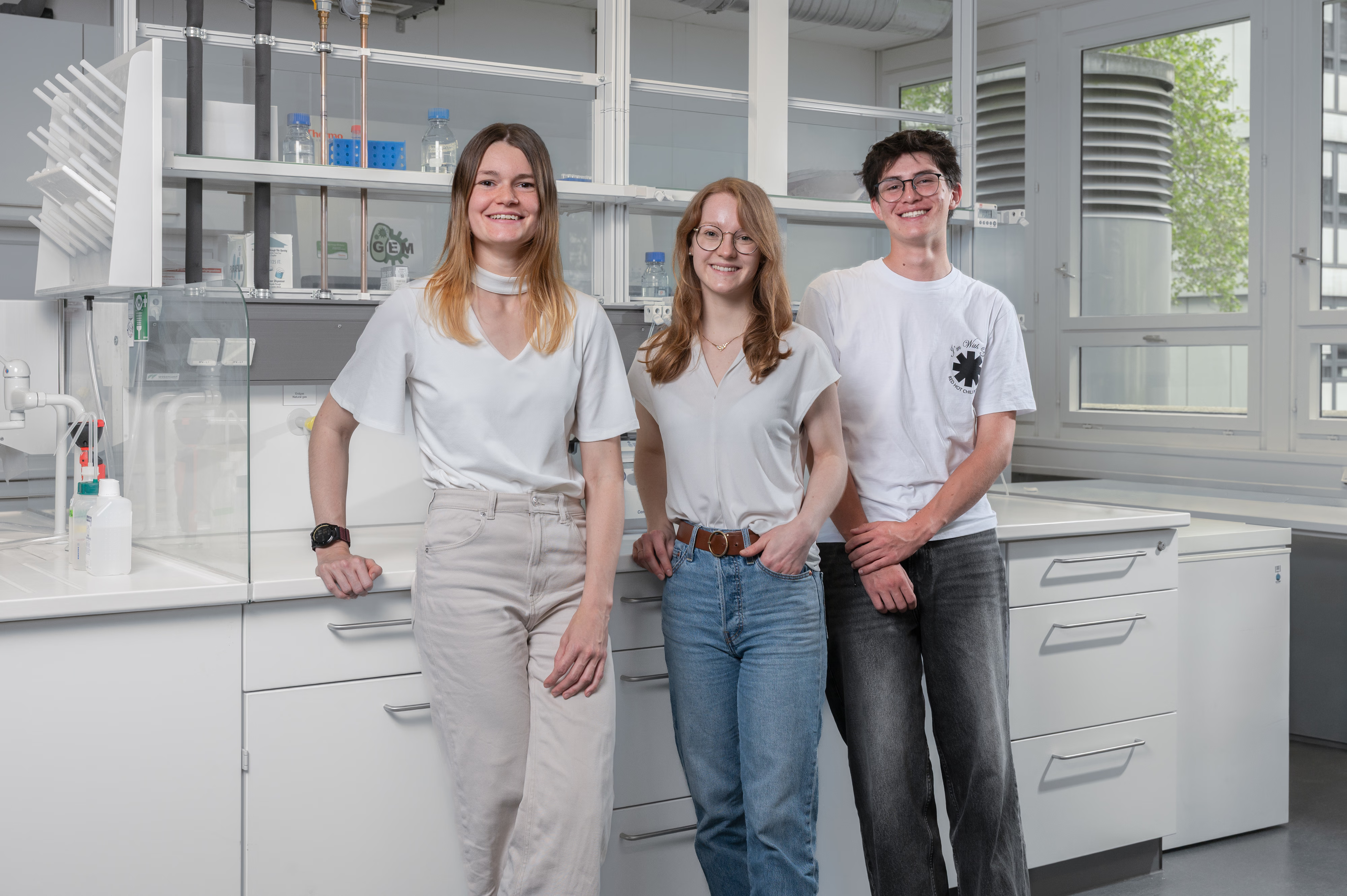
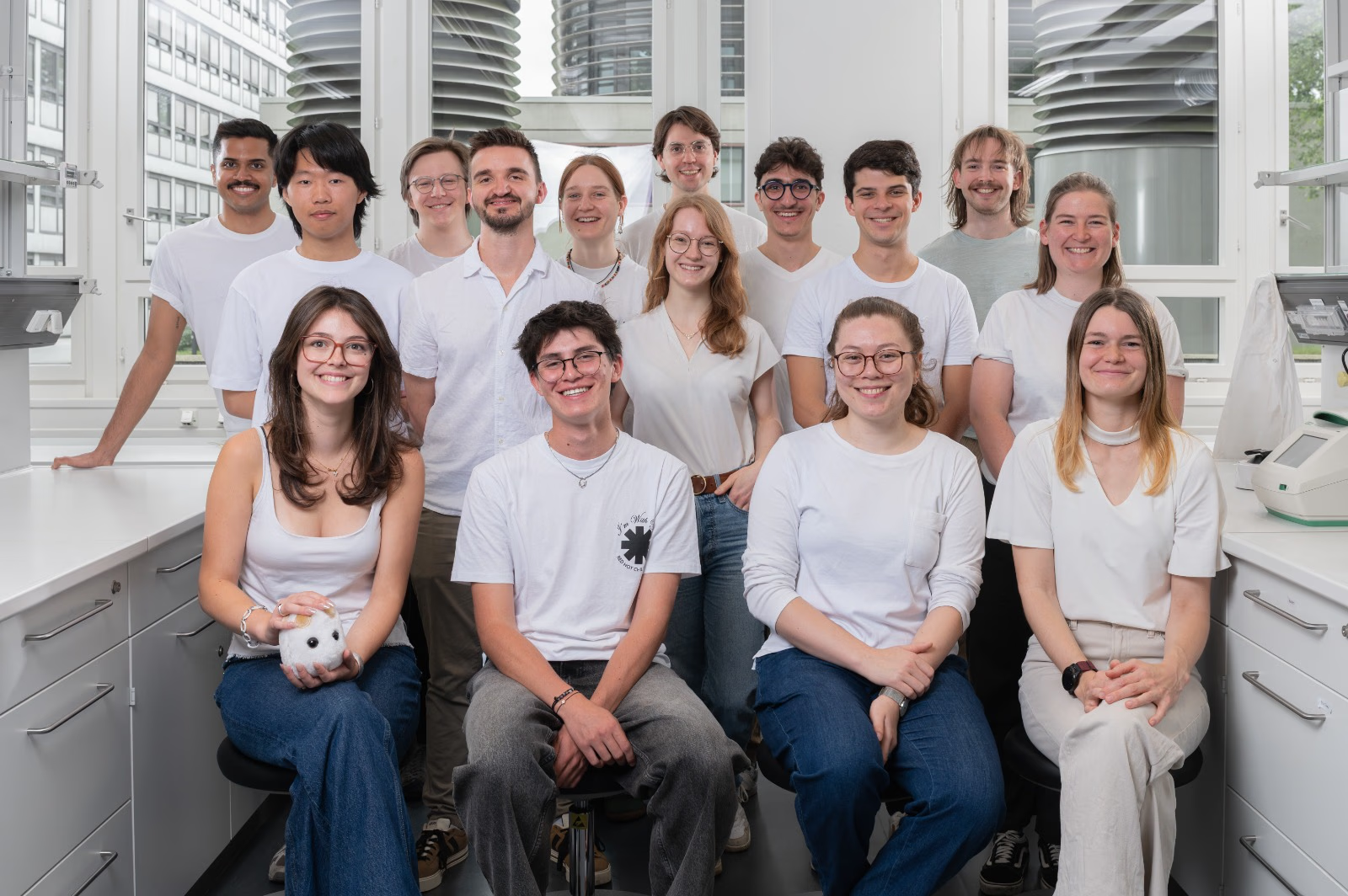
ClicKIT is an online magazine for students at KIT that features informative short interviews as well as fun stories about studies, research, and international topics. We had the opportunity to present our project and iGEM in general to the magazine. As the first iGEM team at KIT, we found that many students and researchers had not yet heard of our team or even of iGEM itself. This interview therefore gave us a valuable opportunity to introduce the competition and our project to the KIT community and raise awareness of what we are doing. Thomas, Karoline, and Friederike volunteered to participate in the interview, where they talked about the competition, our project, and what it means to work together as part of a diverse team.
BIOspektrum
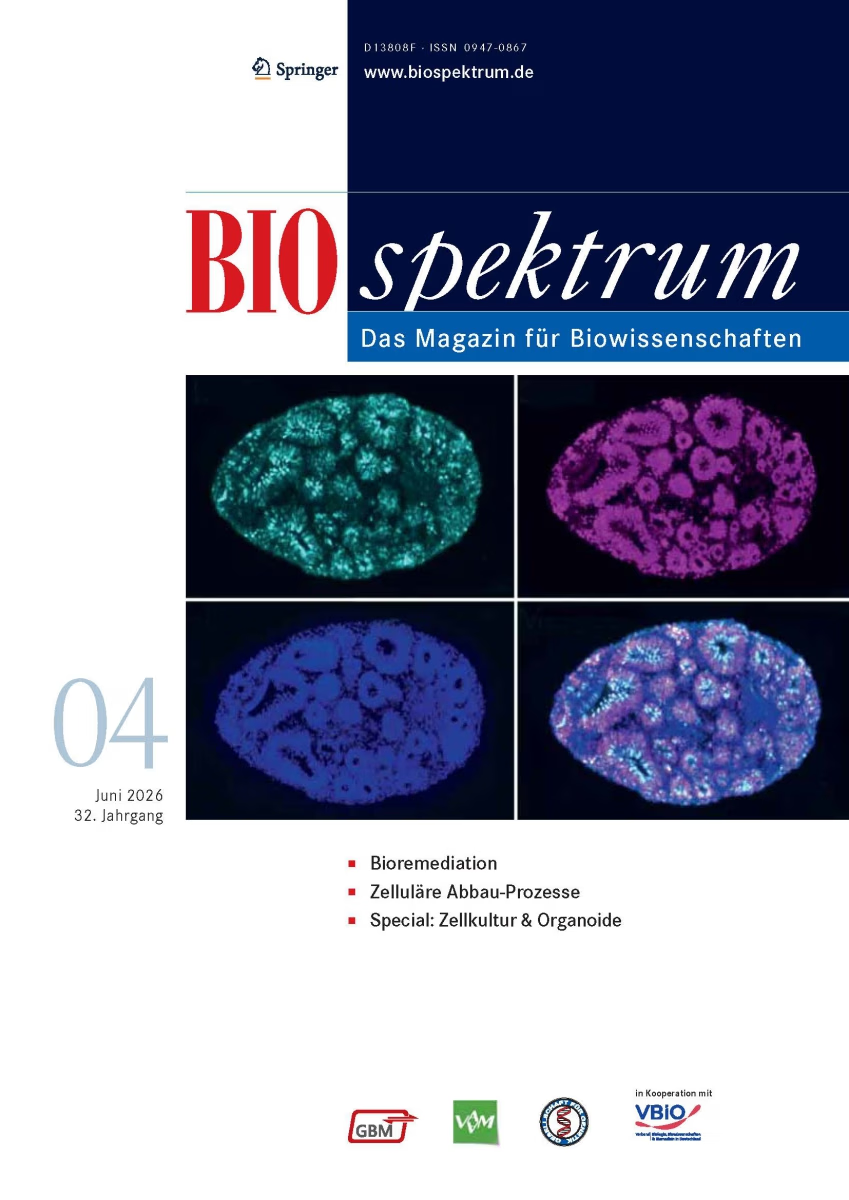
We were given the opportunity to present ENCORE in the April 2026 issue of BIOspektrum, one of the leading journals for the molecular life sciences in Germany, published by Springer Nature. Several iGEM teams from Germany each had the chance to present their own projects. We were excited to be among them and to introduce ENCORE to a broad scientific audience beyond the iGEM community. Writing the article also pushed us to condense our project into a clear and accessible form, which helped us sharpen how we communicate our ideas. Many thanks to BIOspektrum for including us!
BIOspektrum 04.26, 32. Jahrgang · Karriere, Köpfe & Konzepte
ENCORE – modulares Engineering funktionaler Nanokompartimente
Jasmin Kesting, Karoline Kaminski, Marina Schreidl and the iGEM Team KIT
Click to open the PDF
 Download the full PDF here
Social Media
Starting from zero
We are the first iGEM team at KIT. There was no account to inherit, no follower base, no reputation, no lab, no network. Everything had to be built from scratch, and that included our public voice.
That shaped how we approached social media. It was never a channel for promoting a finished project, because there was no finished project and no audience to promote it to. It was part of building the team itself: attracting members, making the project legible on campus, and giving a new name something to stand on.
Building the identity
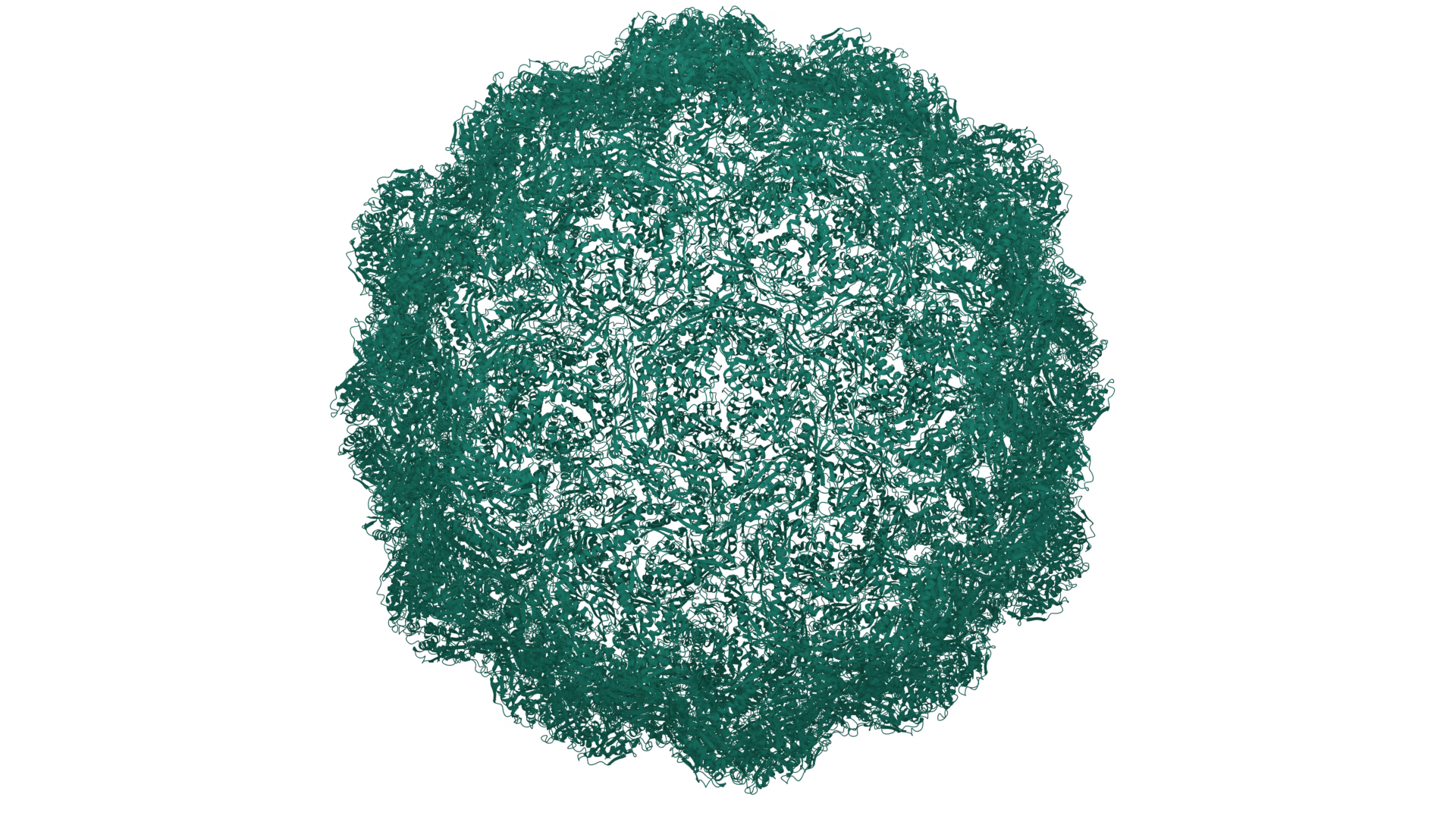
ENCORE stands for Engineered Nanocompartments for Capture, Optimization, and Reactor Engineering. Before posting anything, we defined what the name should look like, since a recognizable identity was the fastest way for a new team to become visible.
The logo takes the hexagonal architecture of encapsulins and turns it into something dynamic and clean, closer to a startup than a lecture slide. Small pieces assembling into a single compartment mirror the proteins forming the shell, which also gave us a motif we could animate across the wiki and our channels. The palette is built on KIT's signature colors so that anyone who sees a post knows where the project comes from. The design holds up on a poster, a slide, a story, and this wiki.
What we post
ENCORE brings together engineers, biologists, chemical biologists, and a student from Media and Communication Sciences, and we wanted the channels to show that range rather than reduce the team to results.
Alongside bench work, we post vlogs, photo dumps, stories, expert interviews, Human Practices activities, networking events, design work, and the organizational side of running a team. Research is not distant or rigid. It involves many different kinds of work, and we show all of them.
Why it matters for KIT
Our channels are an open invitation to students at our university. There are many ways into an iGEM team, whether the interest is lab work, project management, outreach, design, or content creation.
Being the first team means the most useful thing we can leave behind is not just a project but a starting point. The next KIT team should inherit an identity, an audience, and a lower barrier to entry, so they can spend their energy on their science instead of on the groundwork we had to do first.
iGEM Events
BFH
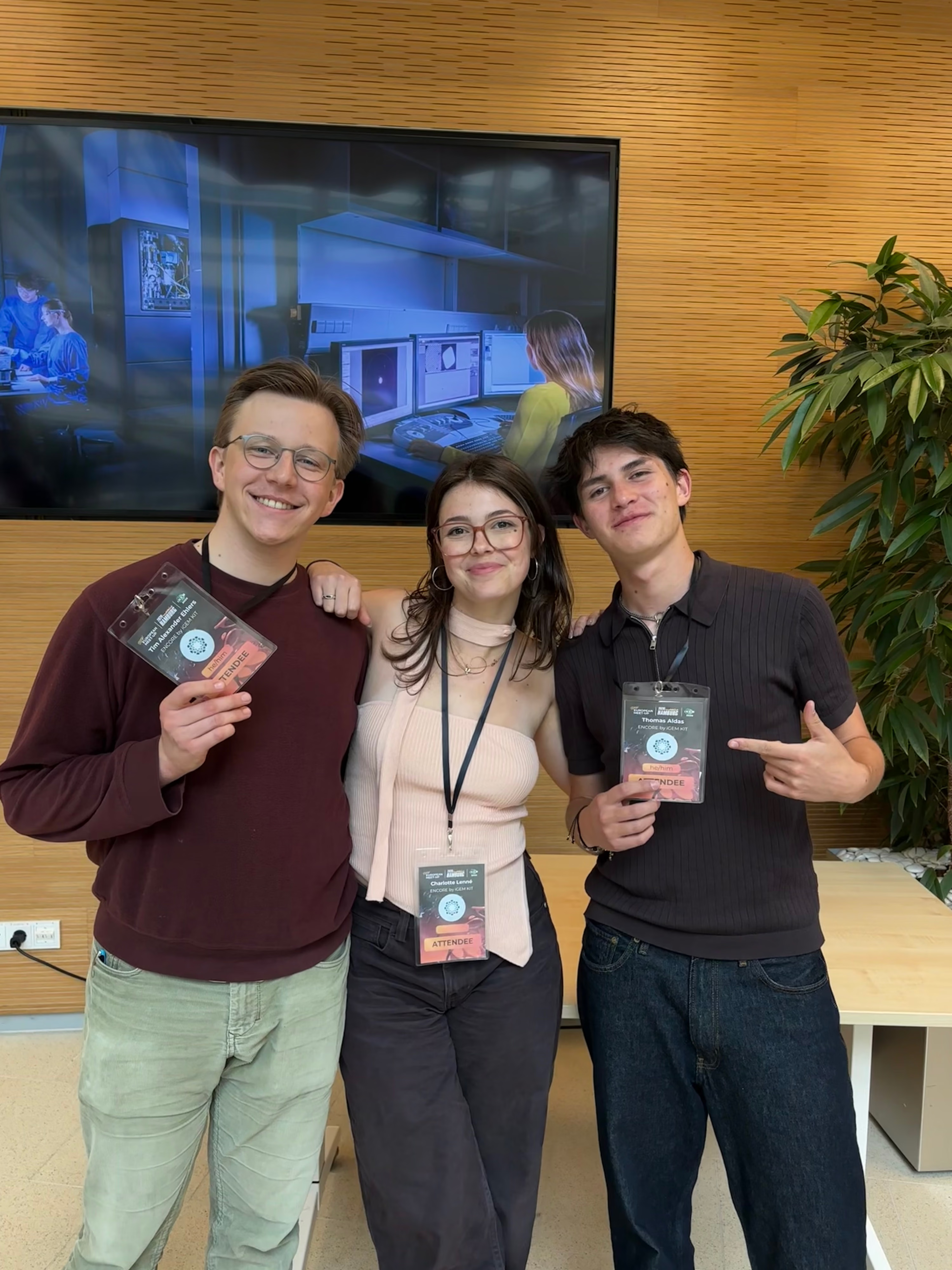
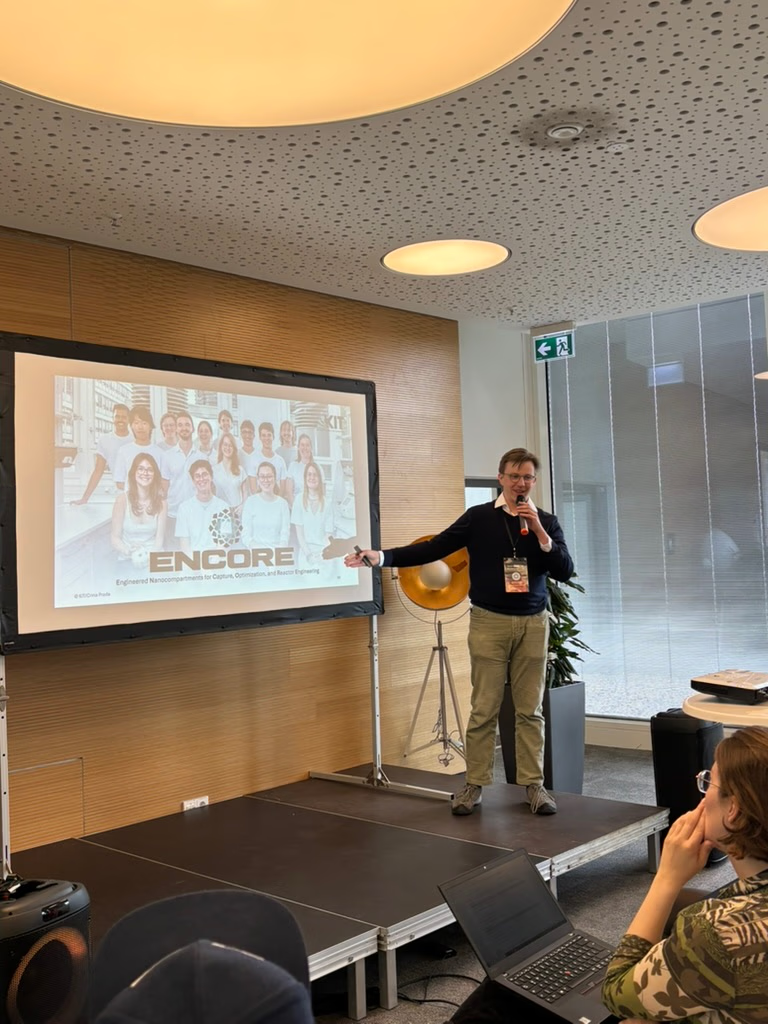
The BFH Meetup 2026, the annual European iGEM meetup hosted by the teams from Bielefeld, Frankfurt and Hamburg, was the first time ENCORE existed in public. We sent three delegates, Tim, Charlotte, and Thomas, to represent the team in Hamburg.
We presented our project and took part in the gallery walk with our poster. The feedback came from two directions at once: judges, who told us what an evaluator actually looks for, and other teams, who told us what they had already learned the hard way. Both were invaluable at a point where we had a concept and very little else.
We also spent the meetup talking to people. Some were first-year teams like us, working through the same questions about funding, lab access, and how to structure a project. Others had several seasons behind them and could answer things we did not yet know to ask. As the first team at KIT, we had no predecessors of our own, so this was the closest thing to inheriting experience. We left with one more thing than we arrived with: an idea.
BaWü Meetup
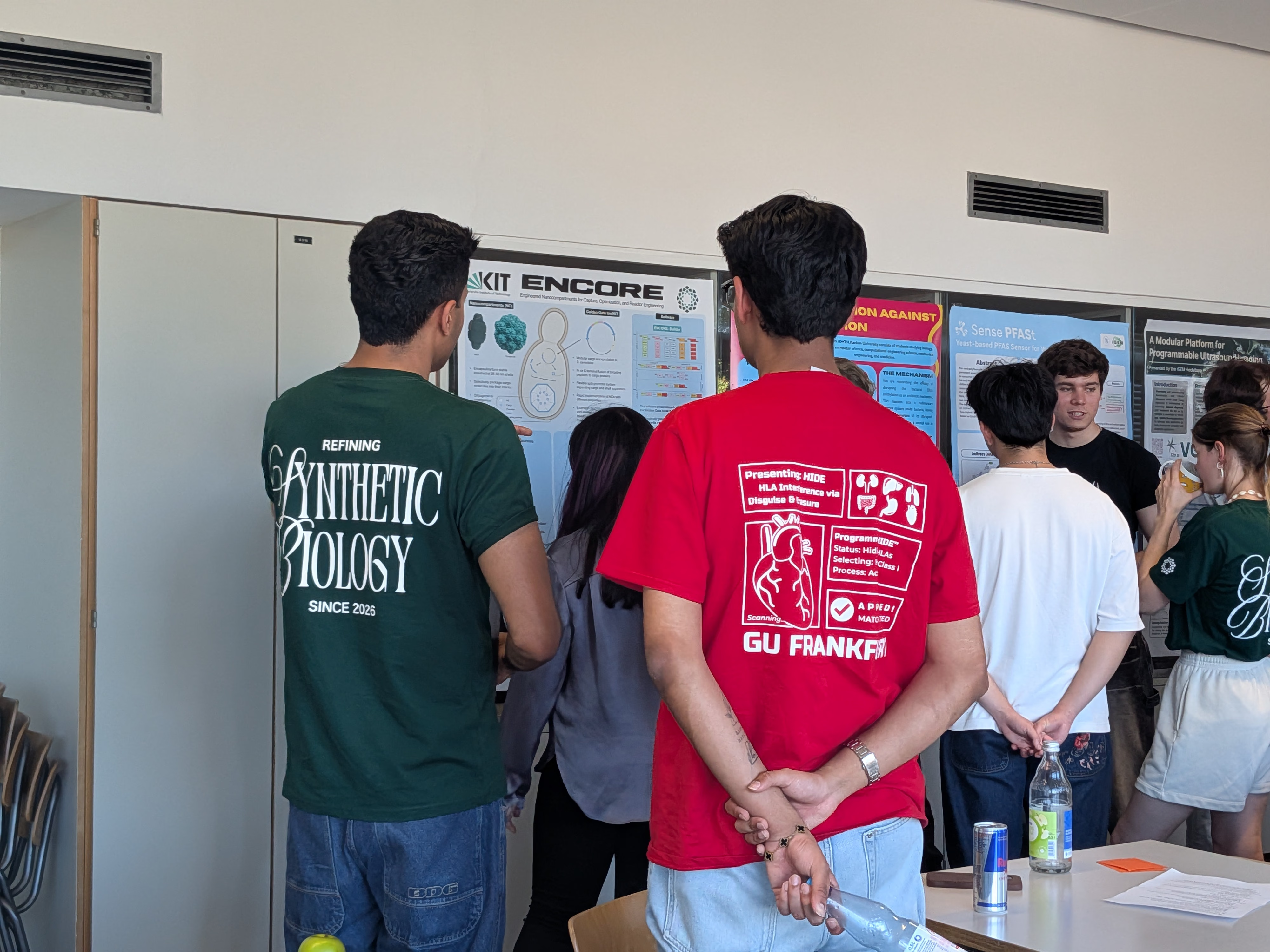
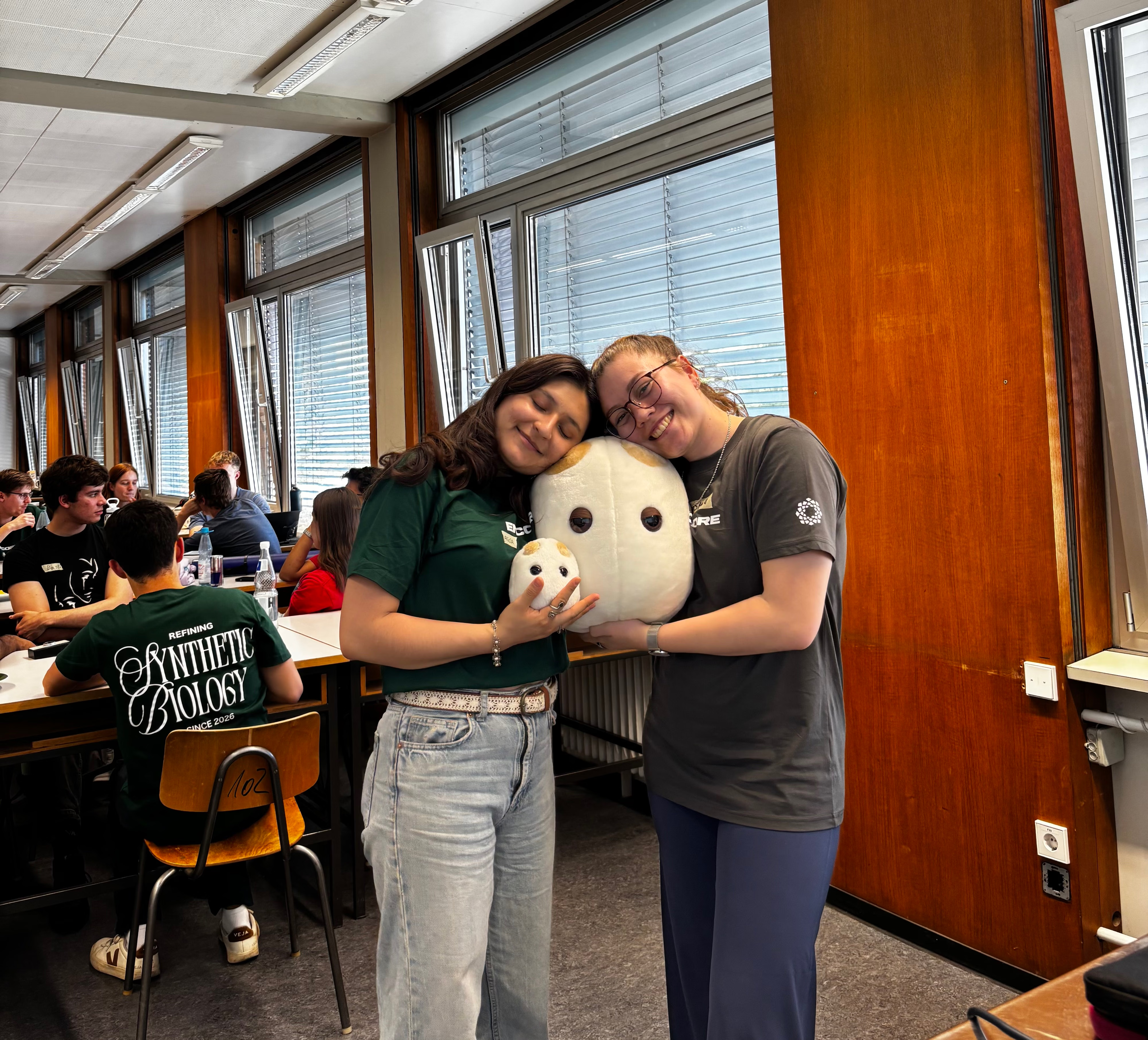
On 13 June, we hosted the first iGEM Baden-Württemberg Meetup at KIT. Jasmin and Thomas conceived, planned, and ran the event, and teams traveled to Karlsruhe from across Germany: iGEM GU Frankfurt, iGEM Bonn, iGEM Saarland, iGEM Aachen, iGEM Berlin, iGEM Heidelberg, and iGEM Stuttgart.
We opened with a session by Sylvia Erhardt from the Center for Synthetic Genomics on effective scientific poster design. Every team then got direct feedback on their own poster, which was a useful checkpoint for all of us with the Grand Jamboree ahead.
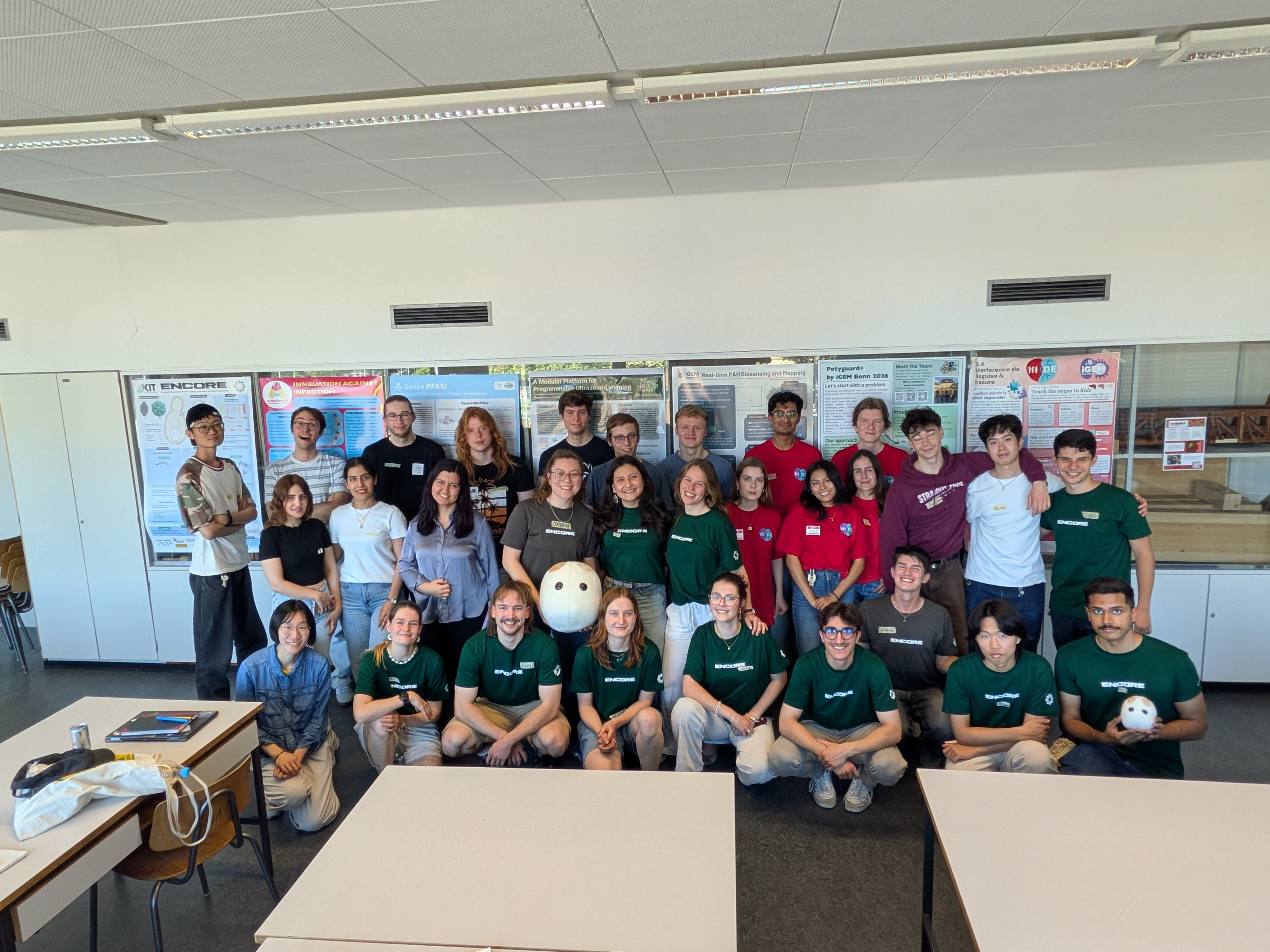
After the team pitches, Jasmin led a peer consultation workshop built around solving things rather than presenting them. Teams brought their most pressing internal problems and project bottlenecks and used structured peer feedback to work toward concrete fixes, including questions of team dynamics and organization that rarely come up in a formal setting.
The day closed with a poster gallery walk and a networking café. Teams presented their projects in depth, traded stickers, and gave each other constructive feedback in the kind of long conversations that a conference schedule usually cuts short.
Mini Jamboree Eindhoven
On 30 October, we will travel to Eindhoven for the Mini Jamboree hosted by the local iGEM team. It is our last stop before the Grand Jamboree and our final chance to put our presentation and poster in front of an outside audience while there is still time to work on them.