
What we work with
Every organism in ENCORE belongs to Risk Group 1, the lowest biosafety classification, reserved for microbes that are not known to cause disease in healthy humans, animals, or plants. Our chassis is ordinary baker's yeast, Saccharomyces cerevisiae, in two laboratory strains: MH272-3fα and BY4742. Alongside them we use Escherichia coli strains DH5α and BL21 Gold (DE3), which serve only for routine cloning and plasmid amplification.
Our yeast strains were not an arbitrary choice. Both MH272-3fα and BY4742 are auxotrophic, which means they cannot produce certain nutrients they need to grow. They survive on supplemented laboratory medium and not outside it. Containment is therefore built into the organism itself rather than added on top of it, and we selected the strains with that in mind.
The protein nanocompartments at the heart of our project originate from bacteria such as Thermotoga maritima, Myxococcus xanthus, and Quasibacillus thermotolerans, but we never cultivate these organisms. We work exclusively with their genetic sequences, synthesized commercially and codon-optimized for expression in yeast. The same applies to every cargo protein in our toolKIT, since all parts are ordered as synthetic DNA rather than isolated from a living source.
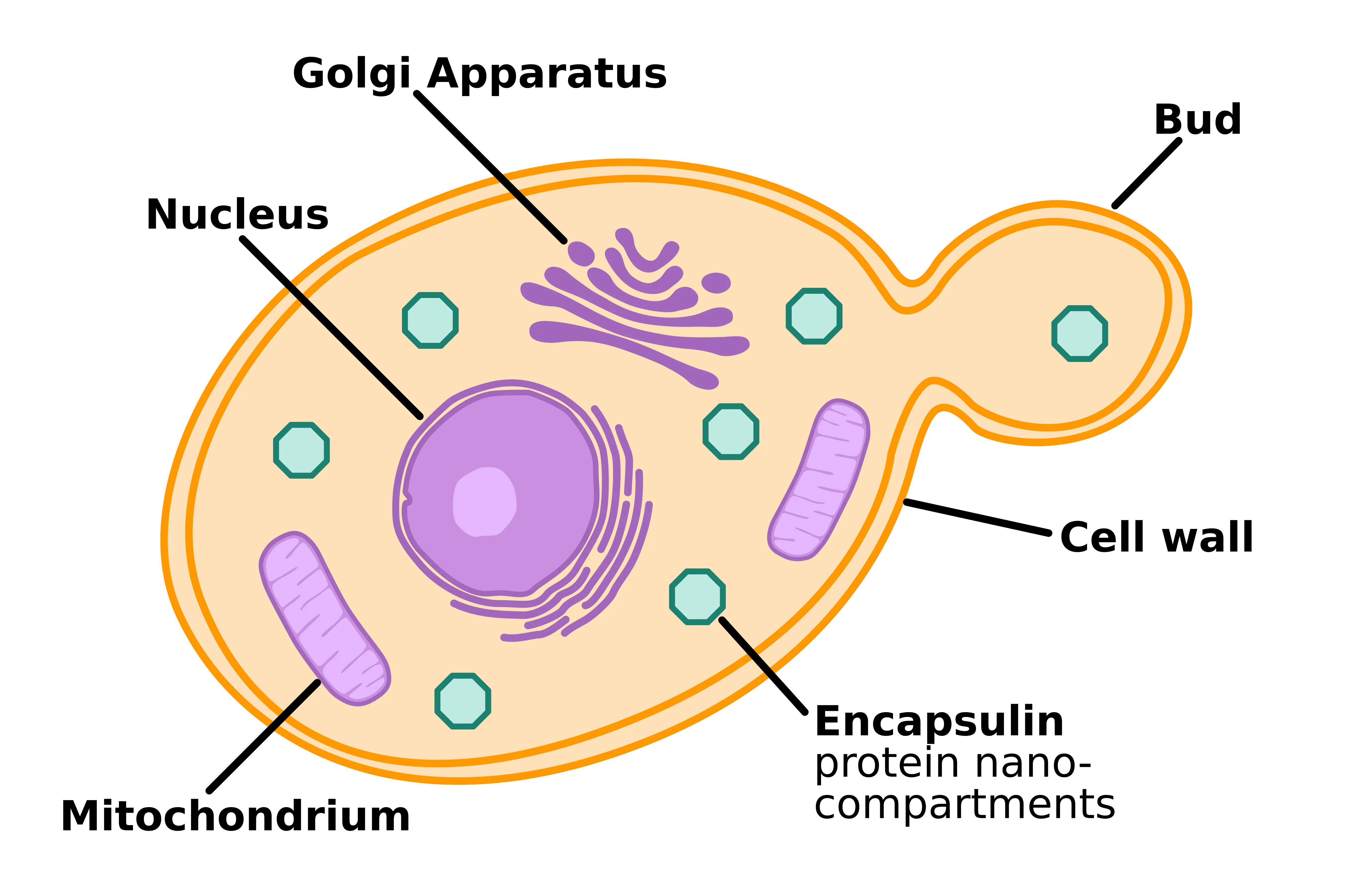
Cultivated in our Lab
S. cerevisiae MH272-3fα and BY4742
Our chassis. Both strains are auxotrophic, so they cannot grow outside supplemented laboratory medium.
Risk Group 1E. coli DH5α and BL21 Gold (DE3)
Used only for routine cloning and plasmid amplification.
Risk Group 1Source Organisms
T. maritima, M. xanthus, Q. thermotolerans
Source of our encapsulin shell genes, ordered as synthetic DNA and codon-optimized for yeast.
Synthetic DNA onlyCargo proteins
Every cargo protein in our toolKIT is ordered as synthetic DNA, not isolated from a living source.
Synthetic DNA onlyWhere we work
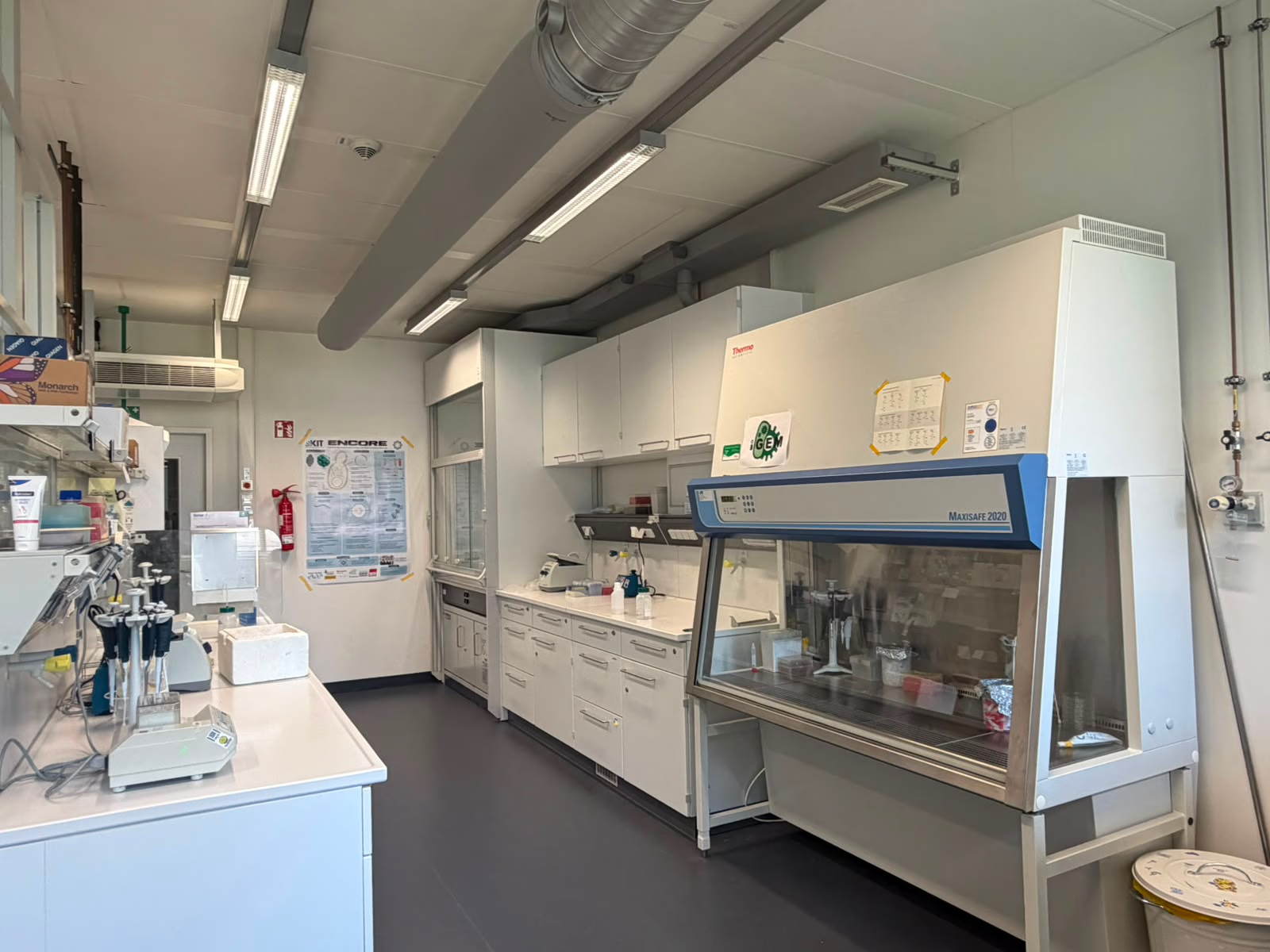
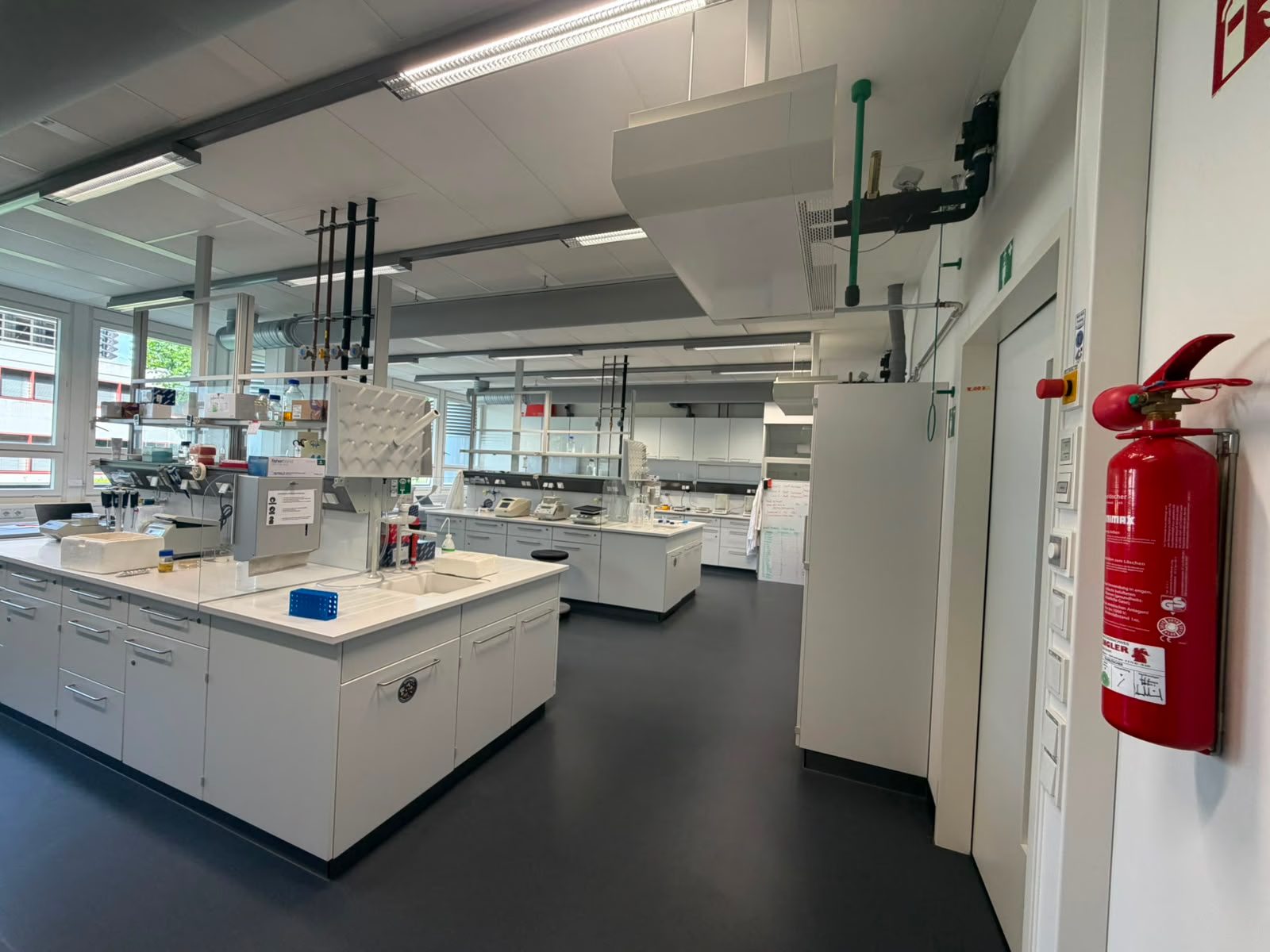
All of our experimental work takes place in a Biosafety Level 1 (BSL-1) laboratory at the Karlsruhe Institute of Technology, the containment standard appropriate for Risk Group 1 organisms. Our workspace includes a biosafety cabinet for handling biological material under sterile conditions, dedicated areas for chemical work, and proper biological waste disposal following institutional protocols. Before starting any work at the bench, every team member completed the mandatory safety training required by KIT.
What we handle
Like any molecular biology project, ENCORE uses a range of chemical reagents. For each one we maintain access to its safety data sheet and follow the appropriate personal protective equipment protocols at all times.
Flammable Solvents
- Ethanol
- Methanol
- Isopropanol
- Acetone
Corrosive Substances
- Sodium hydroxide
- Acetic acid
Reactive Laboratory Reagents
- DTT
- SDS
- Acetonitrile
- DMSO
Under which Rules
- Federal LawGenetic Engineering Act (GenTG) and Genetic Engineering Safety Regulation (GenTSV): ENCORE is Safety Level 1 (S1)
- State AuthorityRegierungspräsidium Tübingen (Referat 57): approves, inspects and monitors S1 facilities
- Our InstitutionKIT Safety and Environment (SUM) and the Biosafety Officer
In Germany, work with genetically modified organisms is governed by the Genetic Engineering Act (Gentechnikgesetz, GenTG) and its accompanying Safety Regulation (Gentechnik-Sicherheitsverordnung, GenTSV), which sort genetic engineering work into four safety levels. ENCORE is classified as Safety Level 1 (S1), the level for work that presents no risk to human health or the environment.
At state level, our laboratory falls under the competent biosafety authority for Baden-Württemberg, the Regierungspräsidium Tübingen (Referat 57), which approves, inspects and monitors S1 facilities. Our lab has passed an official S1 inspection by this authority.
At our own institution, biosafety is managed by KIT's Safety and Environment department (Sicherheit und Umwelt, SUM). One unit handles permits and acts as the contact point for the authorities; another provides the Biosafety Officer (Beauftragter für Biologische Sicherheit) required by the GenTG, who monitors every biological laboratory at KIT. The current officer is Dr. Nicolas Danylec, available for biosafety questions or incidents.
Our own risk management decisions were made in consultation with our supervisors, and every team member has completed the internal safety training required by the Institute of Process Engineering in Life Sciences, Section 2: Electrobiotechnology.
What leaves the Lab
No genetically modified organism ever leaves our laboratory. All biological waste is autoclaved before disposal, so that anything we engineered is inactivated before it goes anywhere.
Chemical waste is separated by hazard class and collected through KIT's institutional chemical waste management system, in line with German regulations.
Access to the laboratory is restricted to trained and authorized personnel, all materials are tracked in an inventory system, and a lone worker policy covers work outside regular hours. Any accident is recorded through the institute's reporting system, and medical surveillance is in place as required by German biosafety law.