
Retreats
Twice this year, we set aside a full weekend to work on ourselves as a team. Jasmin planned and facilitated both retreats in a workshop format. Almost everyone took part which made both times really special.
Retreat I: April, on campus
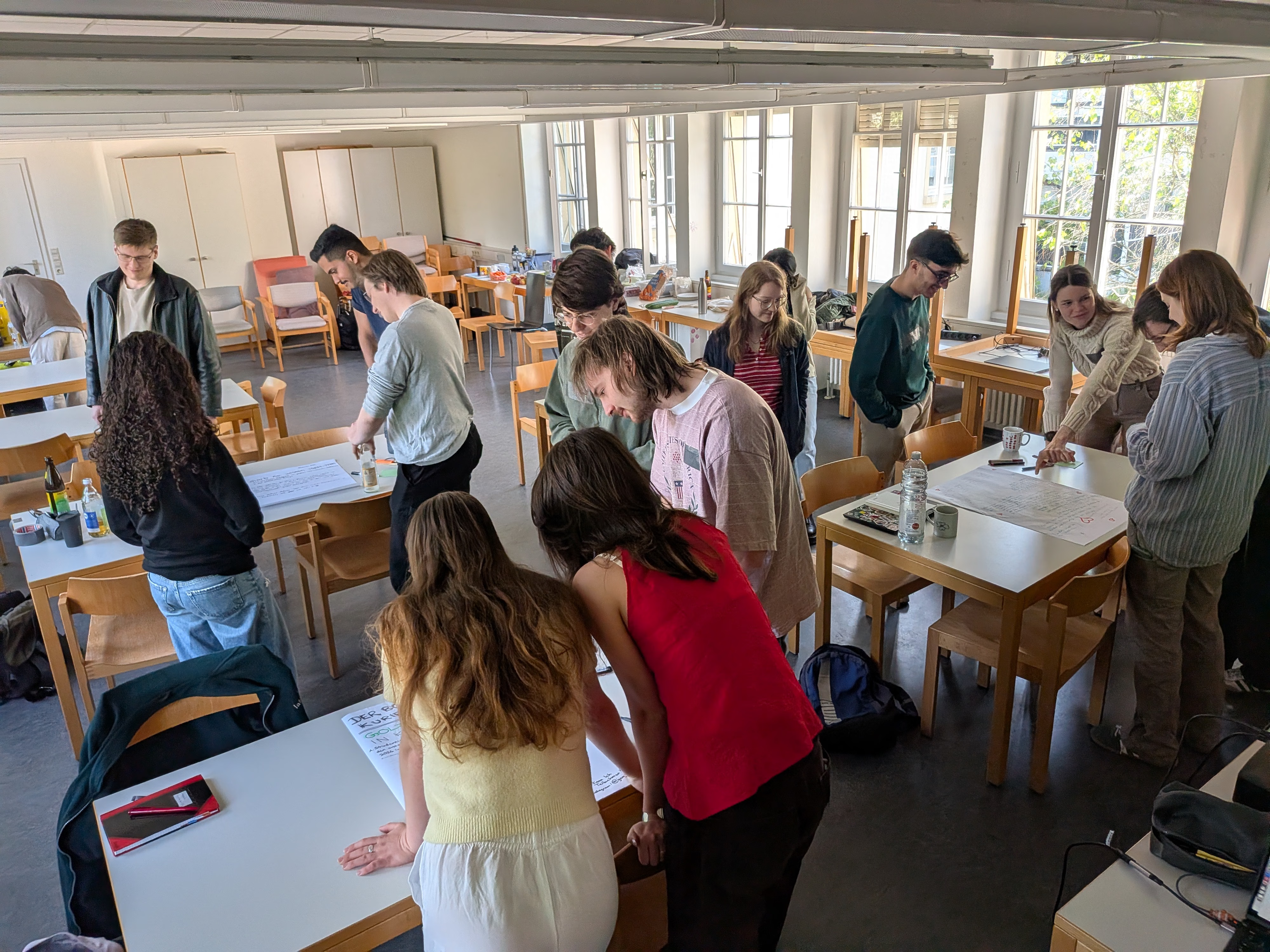
At the end of April, we held the first retreat on campus. At that point, many of us barely knew each other, and we had no shared idea of how we wanted to work together. We discussed our vision and what good teamwork means to us, and set up rules for our collaboration, mainly for communication and meetings. We also worked through the iGEM medal criteria and decided which of them we wanted to focus on, which gave us a shared understanding of what success means for us. Afterward, many said it was the first time they had really felt like a team.
Retreat II: October, Palatinate
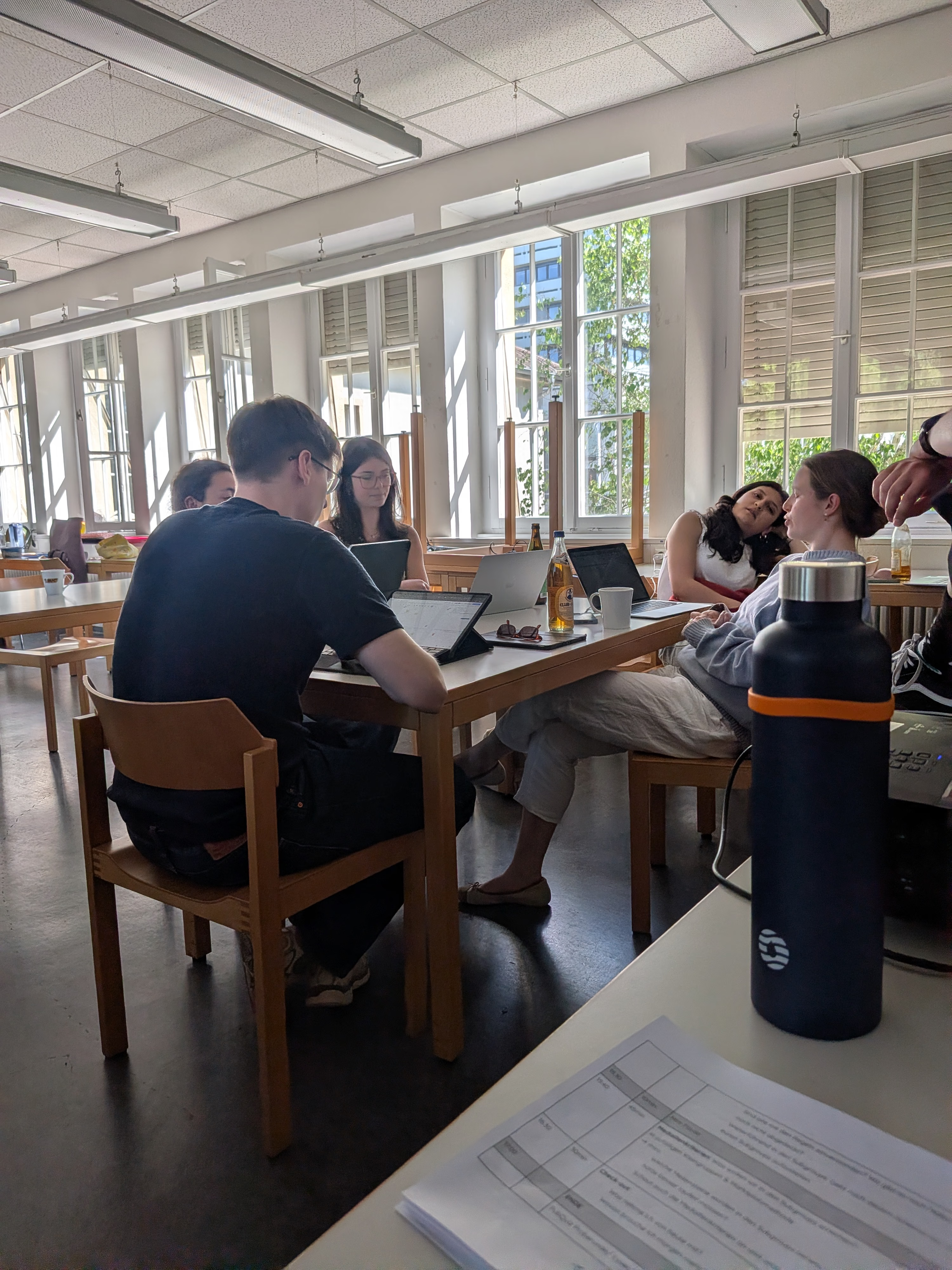
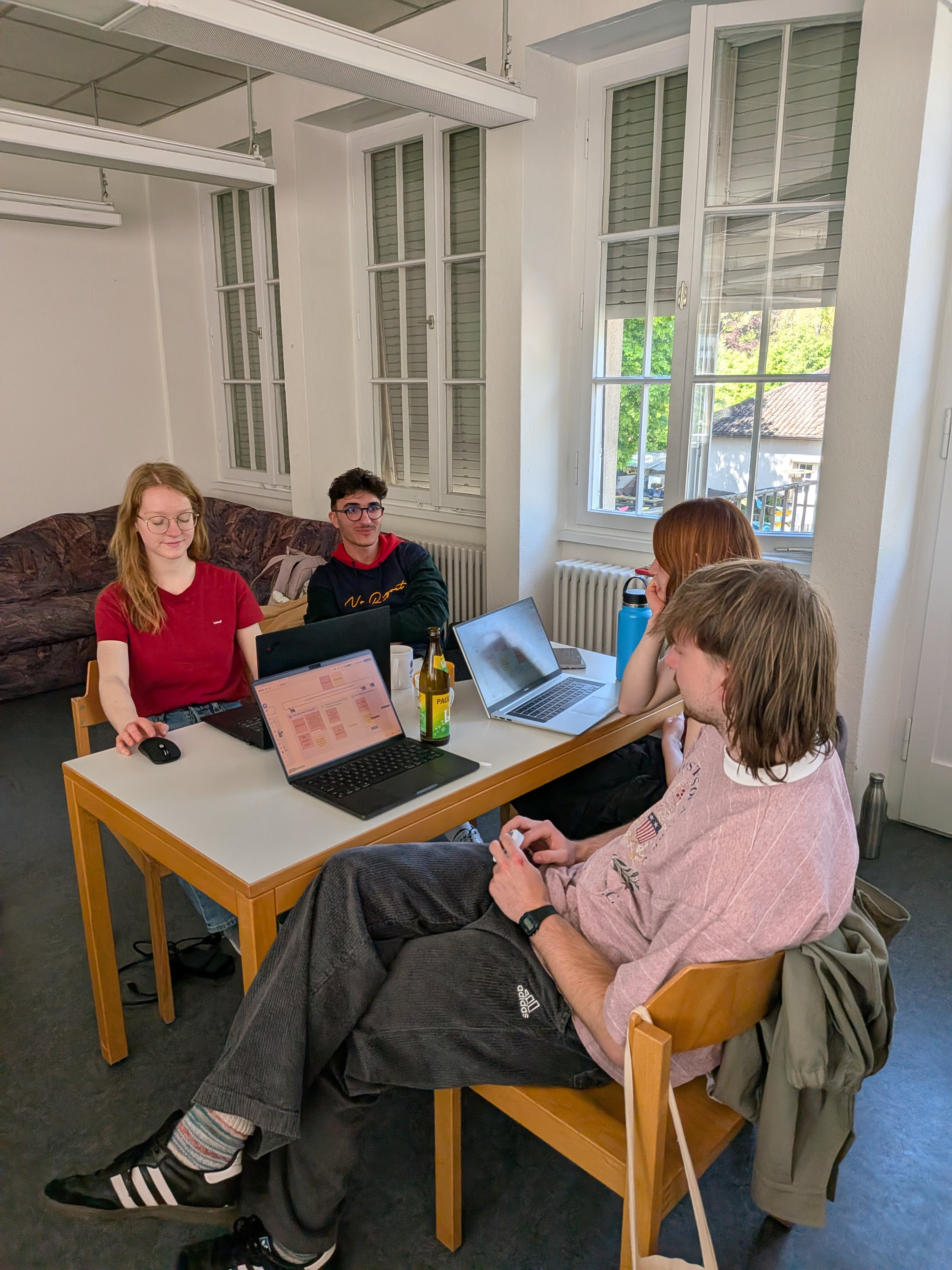
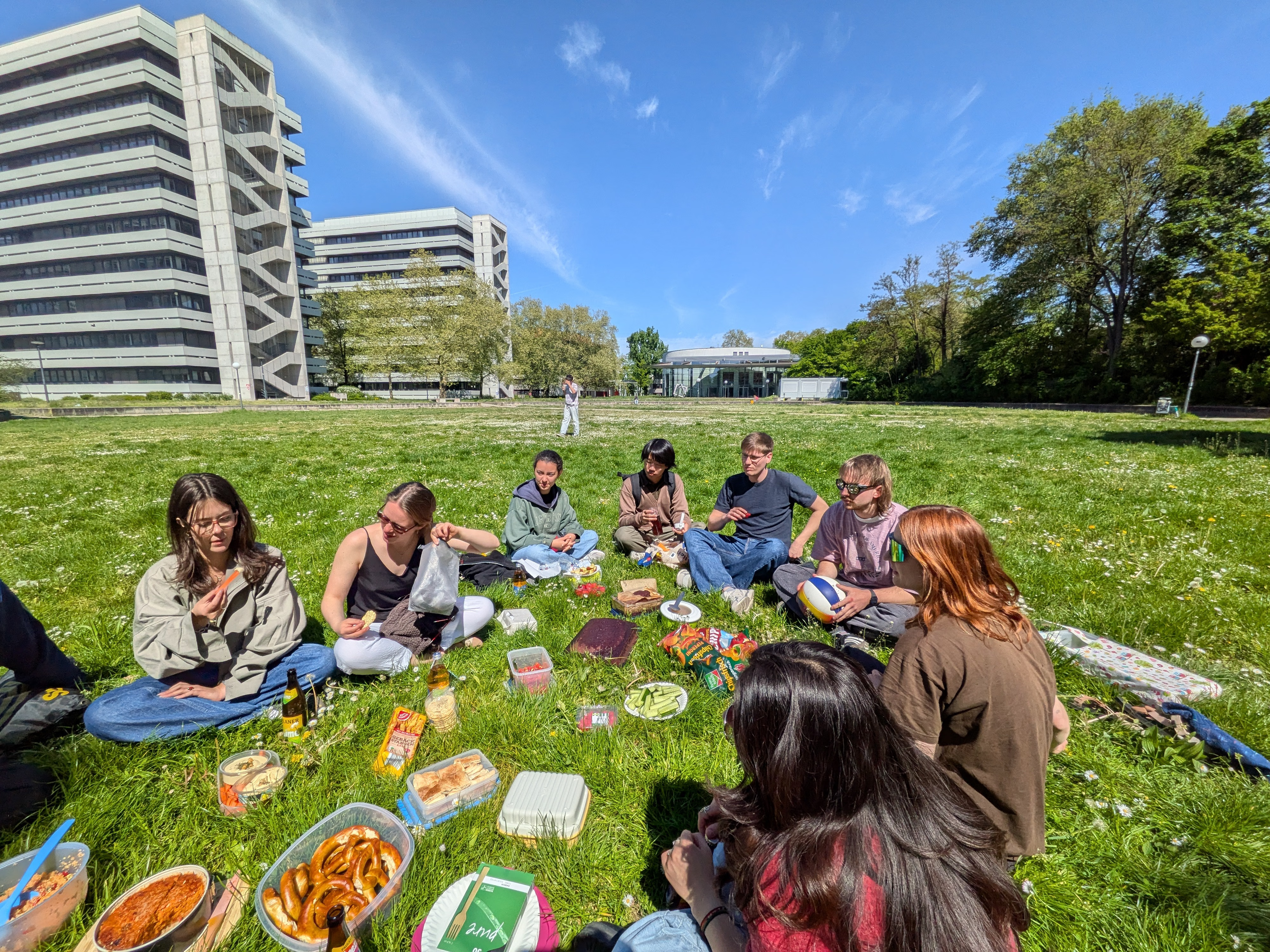
At the beginning of October, we spent a weekend in the Palatinate region. This time, the focus was on our story. We sharpened our storytelling, wove together the threads of our subgroups and aligned our perspectives so that the wiki would read as one. The first wiki texts were written during the retreat itself, and we left with a clearer sense of how important they are. Many of us also gained a clearer picture of how to approach the final weeks.
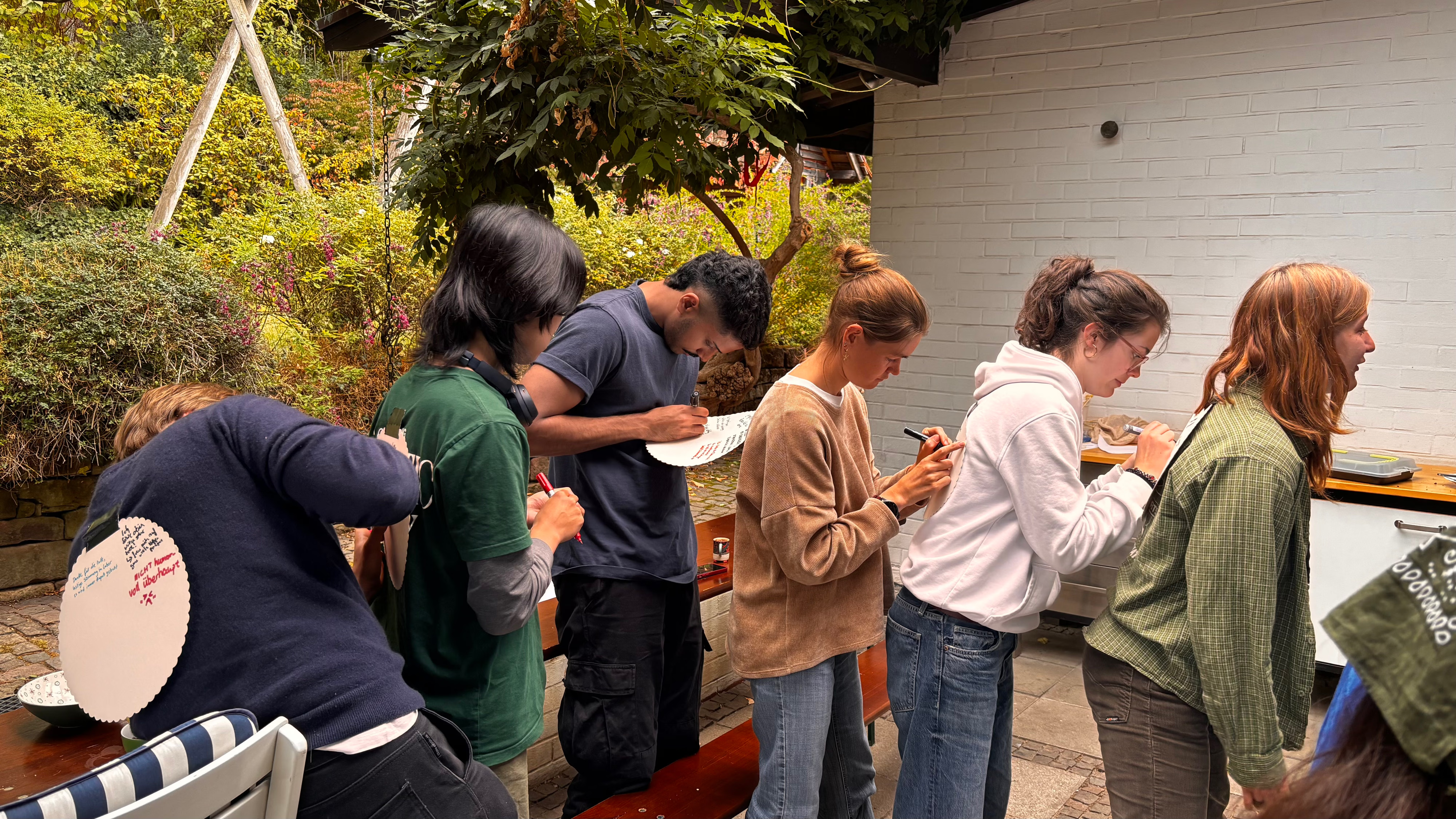
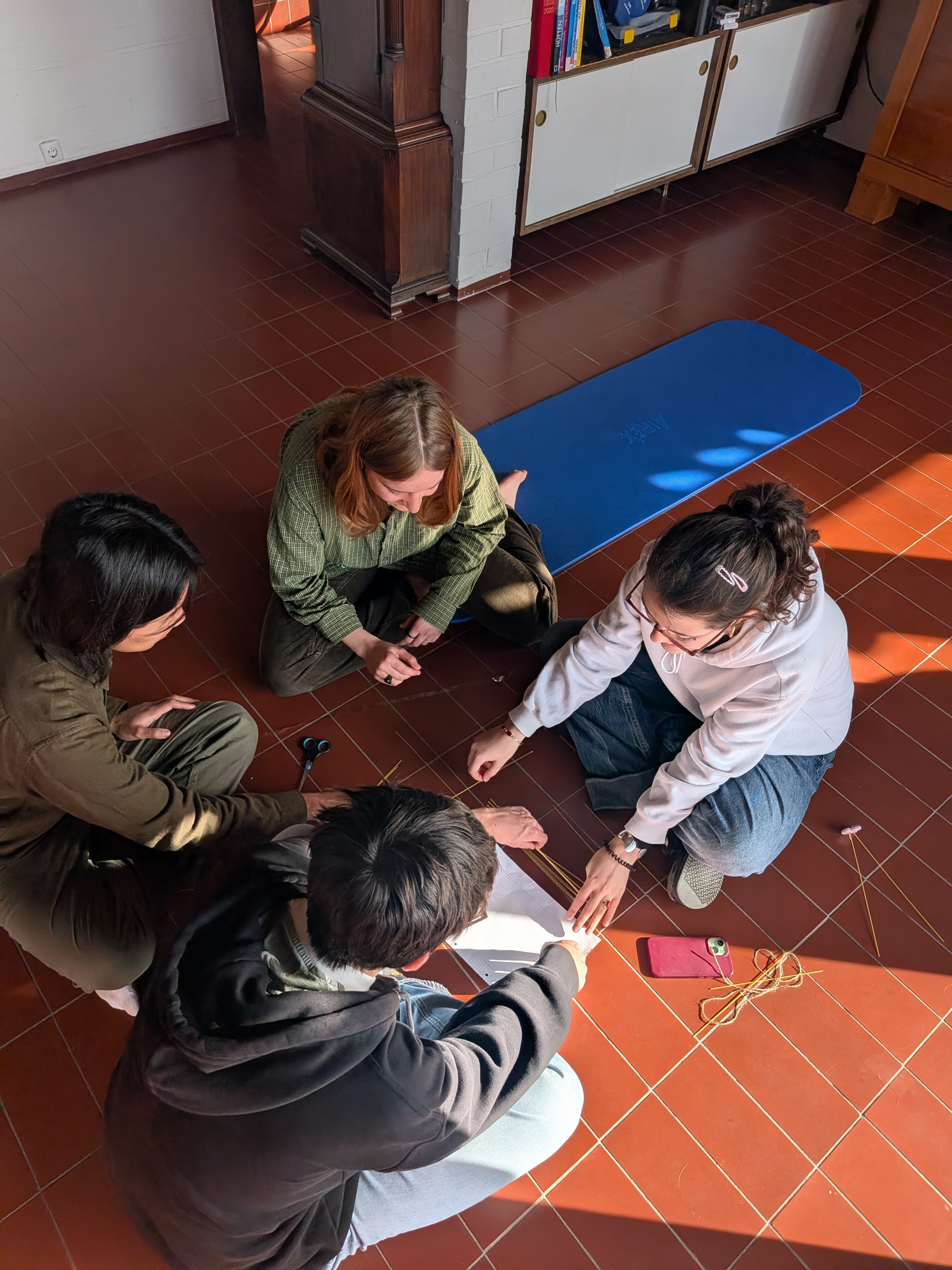
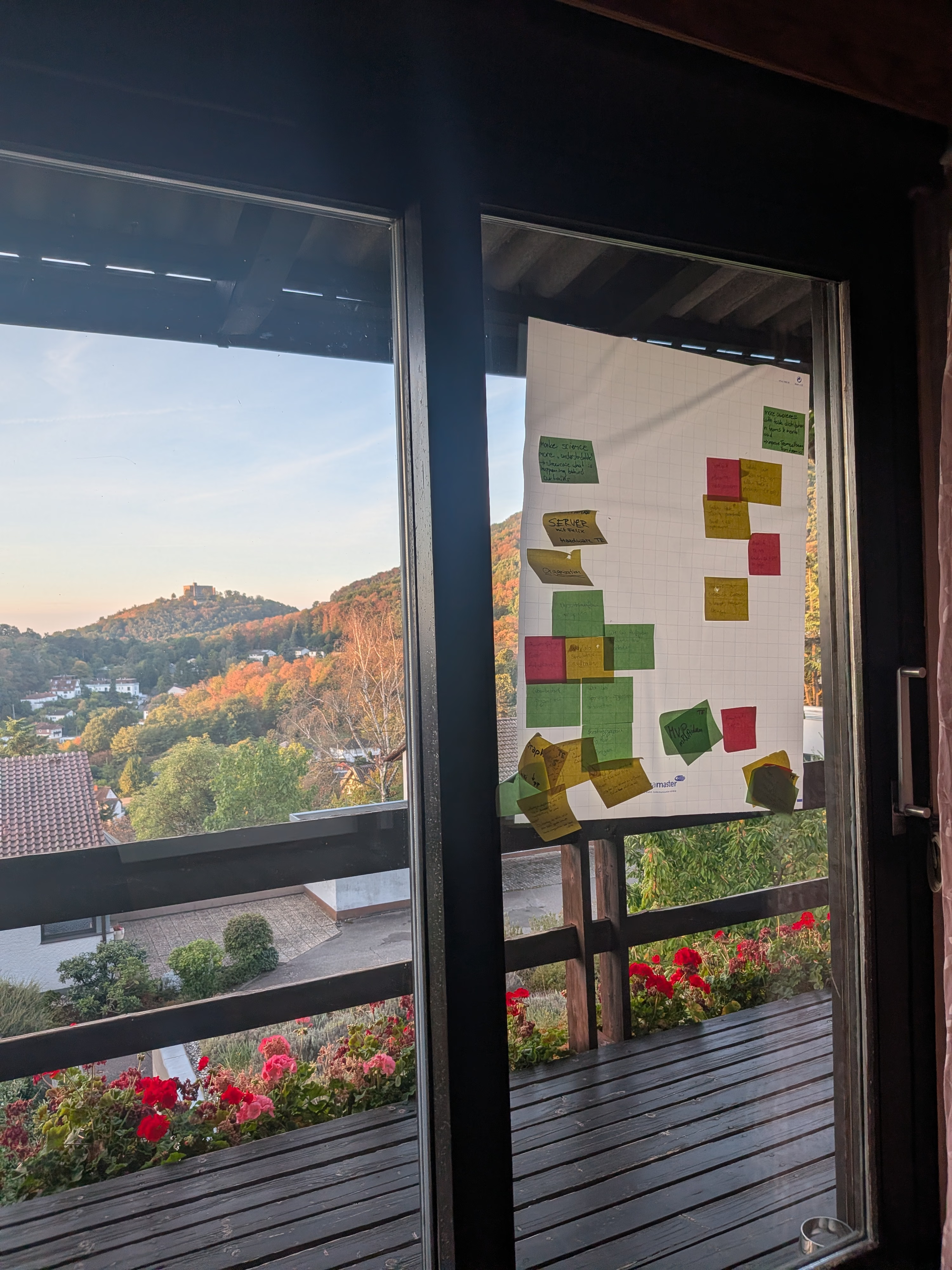
Both retreats gave us new energy and the motivation to get going (again).
Teambuilding & Workshops
Not every challenge in a team can wait for the next retreat. Throughout the year, the members of the organization team kept an eye out for what issues might need special attention and planned specialized workshops accordingly.
One of these workshops focused on process and role clarity. In our financial and organizational roles, unclear agreements had led to shortcomings. In the workshop, we talked openly about where our agreements had broken down and clarified who is responsible for what. This allowed us to resolve the problems.
Two practices from our TeamKIT have since become part of our routine. With tension-based working, anyone can bring up a gap between how things are and how they could be, and it is then dealt with as a concrete item instead of being left to grow. Our documentation guides make sure that knowledge stays in the team rather than with individual people.
Further workshop units focused on storytelling and on finding the common thread of our project.
For Future Teams at KIT
Laying the Groundwork: Our Talk for the Biology Student Council
As the first iGEM team at KIT, we had no predecessors to learn from and no structures to rely on. This makes it all the more important that future teams won't have to start from scratch. In mid-October, Alex and Jasmin therefore gave a talk to the biology student council of the KIT. Team and council already knew each other from an event they had organized together, but the talk was about more than loose cooperation and aimed to make iGEM a permanent part of the university.
After an introduction to ENCORE, the talk focused on what iGEM offers beyond the project itself. Students follow a scientific process from the first idea to the final result and gain a depth of methodological understanding that compulsory lab courses cannot provide. Along the way, they train teamwork, self-management, resilience and leadership. Almost every team member works in more than one subgroup and therefore gets to see research from every side. And since everything is organized from within the team, simply making it to the Jamboree takes real organizational and communication skills. For KIT and its faculties, iGEM brings interdisciplinary exchange and connections to leading universities worldwide.
The council responded with interested questions and gave advice on how best to reach the professors. Approaching them is our next step, and the first one for the teams that will follow.