
With our project, we find purpose in the name, because ENCORE stands for the idea that our team's work is just the beginning. An impulse meant to keep moving after we're done, like a wave that keeps building. That is why we placed ENCORE in the Foundational Advance village, to give future iGEM teams something concrete to build on.
We know exactly what a contribution is worth, because for most of this season we were looking for them. As the first iGEM team at KIT, we had no inherited protocols, no lab, and no one to ask directly about problems we did not yet know we could have. iGEM works because teams hand things forward, and that is something we took seriously.
A contribution is only real if someone can actually use it. Everything below answers a problem we ran into ourselves and is documented so others can pick it up and use it. From a standardized part collection and a cloning design tool to printable lab equipment, we developed resources that future teams can build on. The rest is harder to put in a repository, and just as central. We wrote three guides about running a team, building a lab from an empty room, and sharing the work fairly inside it. This way, the next team can spend more time on their own project.
The ENCORE toolKIT
 The ENCORE toolKIT
Nanocompartments, and encapsulins in particular, offer great potential as platforms for a broad range of biotechnological applications (see Project Description). Encapsulins can be loaded by fusing targeting peptides to a cargo of interest, yet no standardized system existed for expressing them with customizable cargo in Saccharomyces cerevisiae. Our toolKIT is the first system designed for the heterologous expression of nanocompartments with modular cargo from a single vector in S. cerevisiae. Its interchangeable shells, targeting peptides, linkers and cargo can be combined individually. It also enables engineering approaches such as co-encapsulation, pore engineering and surface display. Built on Golden Gate cloning, the toolKIT allows a functional Level 2 plasmid for inducible or constitutive expression to be assembled with little effort. Because the toolKIT is modular and not bound to our own project, future iGEM teams can extend it for their own nanocompartment applications.
Design
The toolKIT is built on hierarchical Golden Gate assembly and follows in parts the yeast MoClo Toolkit (YTK)1.
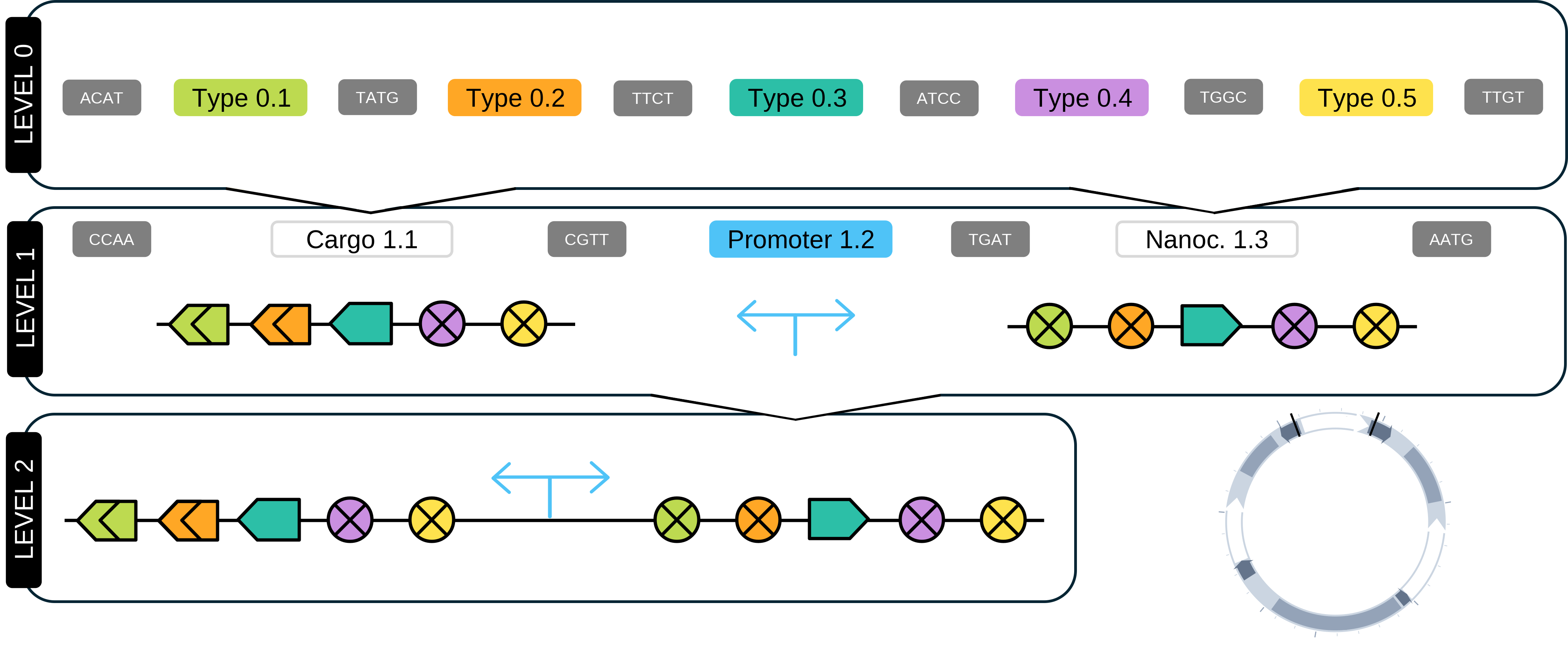
- Level 0: Basic parts (encapsulin monomers, cargo, targeting peptides, linkers, dummy parts)
- Level 1: transcriptional units (cargo cassette, nanocompartment cassette, bidirectional(split) promoter system)
- Level 2: two-component expression system for expression of encapsulins shell and Cargo in S. cerevisiae
Contents of the Part Collection
The part collection ENCORE toolKIT Nanocompartments Saccharomyces cerevisiae comprises 22 Level 0 modules, 21 Level 1 cassettes and 13 Level 2 plasmids. It covers the standardized encapsulin system from Thermotoga maritima (Tm), Myxococcus xanthus (Mx) and Quasibacillus thermotolerans (Qt) as well as a pore-engineered variant of M. xanthus, differing among other features in shell and pore size. All systems are optimized for expression in S. cerevisiae. See all parts on the part collection page.
Limitations
Induction and assembly of encapsulins could not be demonstrated. The next steps are to validate induction and assembly using the methods described in the toolKIT discussion. Nevertheless, Level 2 constructs with either inducible or constitutive (split) promoters can be cloned and tested easily with the ENCORE toolKIT. Once expression has been demonstrated, the assembly of the encapsulins should be validated by native PAGE and/or negative-stain transmission electron microscopy. For a more detailed description, see the discussion on the toolKIT page.
The ENCORE-Builder
 The ENCORE-Builder
Cloning a cargo into an encapsulin-based nanocompartment means assembling many standardized parts, and in hierarchical Golden Gate cloning every fusion site, reading frame and restriction site has to be correct before the first reaction is set up. The ENCORE-Builder takes over this design step for our ENCORE toolKIT. From a cargo gene and a nanocompartment, it computes the Level 0 parts, primers, oligos and DNA fragments and assembles them in silico through Level 0, Level 1 and Level 2 into an annotated map of the finished plasmid. Beyond the standardized encapsulins Tm, Mx and Qt, it offers the human vault and accepts the sequence of a shell of your own.
The Open NC Database answers the question of which nanocompartment fits an application. This curated collection of encapsulin candidates and their experimentally described assemblies can be searched by properties such as shell diameter, triangulation number and pores. Its view Choose a shell offers 24 reviewed shell sequences, and a click on Select for Builder hands a selected shell over to the Builder, together with optional targeting peptides. This makes the toolKIT extensible beyond the three standardized shells.
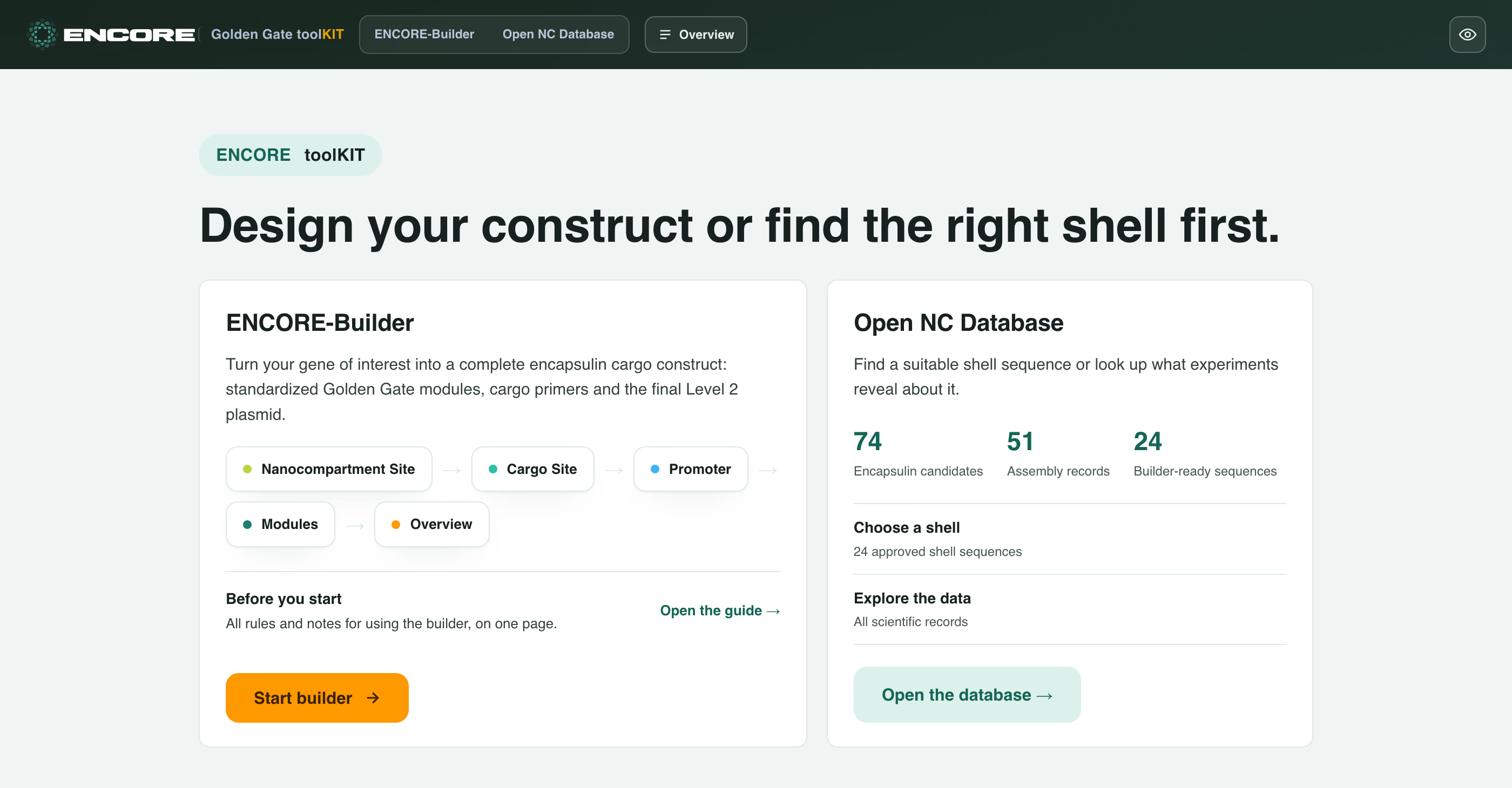
Other iGEM teams can use the software for two reasons. It replaces a manual and error-prone step: the Builder checks unique overhangs, the reading frame and internal restriction sites at every junction and every level, screens every entered sequence for biosecurity and reports errors before any DNA is ordered. It also lowers the barrier to ordering, because the output contains the primers, oligo pairs and DNA fragments that are needed, so that teams without bioinformatics experience can go from a sequence to an order. Parts, adapters and backbones are stored as one file per part, so teams can add their own parts or adapt the data to a similar Golden Gate scheme.
The contribution is a freely available, validated and extensible design tool for modular encapsulin constructs, together with a curated database of encapsulin candidates, which documents the design rules of the toolKIT in executable form for future teams to reuse and develop further.
You can download our software, the ENCORE-Builder and the Open NC Database, as ready-made Docker images from Docker Hub, and find the source code in our GitHub and GitLab repositories. The README in the repositories explains step by step how to start it on your own computer, and the Distribution page of this wiki summarizes the ways to get and start it.
Our Methods and Project Protocols
 Our Methods and Project Protocols
From the learnings in our lab, we developed and refined methods and protocols, and we are happy to share them here, so that anyone interested can reproduce our methods as easily as possible and build on them. To make the toolKIT faster to adapt and easier to use, we optimized two protocols that are essential for working with it: Golden Gate cloning and colony PCR in S. cerevisiae. In addition, we documented our encapsulin purification workflow in a dedicated protocol. This makes the workflow comprehensible and provides a basis for its further optimization and use.
The methods are written up on our Methods page, and the protocols themselves are in the Lab Protocols section of our Notebook, ready to be followed step by step or adapted to another setup.
3D-Aid: Printable Lab Tools
 3D-Aid: Printable Lab Tools
We did not have enough gel electrophoresis casting trays and combs to run experiments in parallel, so we designed and printed our own. What started as a fix for our own bottleneck became a complete, validated casting system with a tray, removable sealing parts and a set of combs in different well sizes, taken through three engineering iterations and tested across the whole workflow, from pouring a gel to running an electrophoresis.
How we got there, with all three iterations, the dimensions and the print settings, is on our Hardware page. The printable files are in the 3D_Model folder of our repository, so the tray can be reprinted as it is or rebuilt for a chamber of different dimensions.
Our Guide Collection
 Our Guide Collection
TeamKIT
You might be asking yourself what a booklet about teams and wellbeing is doing in a synthetic biology competition. Well, what if we told you that behind every construct, every experiment and every wiki page there's a team of people who have to figure out how to work together? And that this doesn't always go smoothly?
The Idea
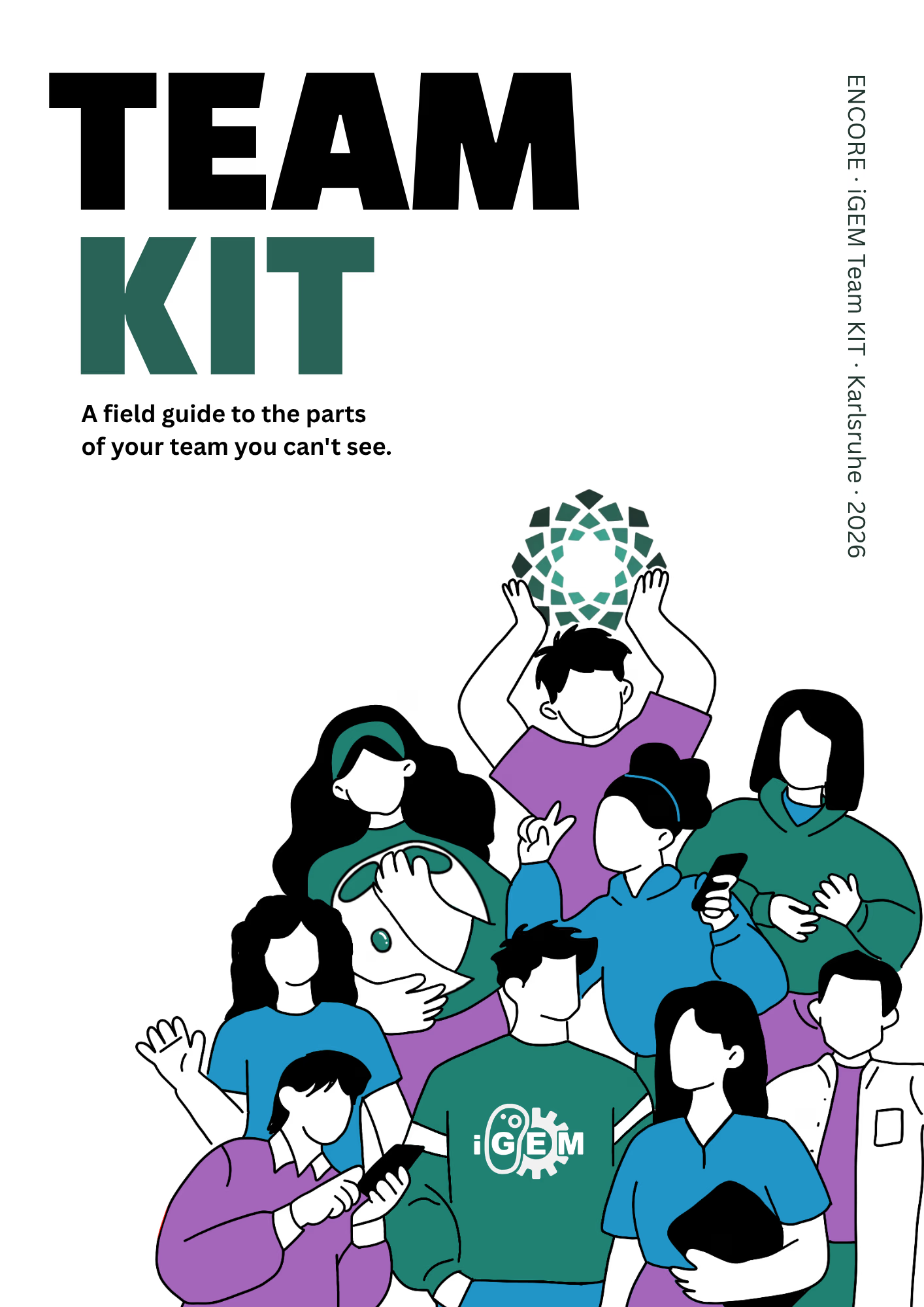
TeamKIT is a collection of theories and models from psychology, insights from experts, and our own experiences and methods, all brought together in one guide. Its goal is simple. It helps teams understand each other better and improve the way they work together, from everyday meetings to the moments when things get difficult.
Download the full PDF here
How it came to life
As the first iGEM team at KIT, we didn't have much to work with. There was no previous team to ask, no handbook, no "this is how we did it last year." We had to learn and build everything from scratch, the team itself, our understanding of iGEM, our lab, and our network with industry and sponsors. We did all of it on our own!
Of course, this led to problems within the team and challenges we had to overcome. We had to learn how to communicate, how to run meetings that actually work, and how to deal with conflict when it came up.
Then we noticed something. We weren't the only ones. At the BFH Meetup, we talked to other first-year teams like Aarhus and Berlin, and realized that they were facing many of the same struggles. Even better, some of the ways we had found to solve our problems could actually help them too.
Why TeamKIT?
That's how TeamKIT was born. It's our way of saying that no one struggles alone, and that running into problems as a team is simply part of the process. We wanted to give other teams something to take with them on this difficult but exciting journey that iGEM is, so that the next team starting from zero doesn't have to start from nothing.
What this is not
We are students, not psychologists. Models are simplified maps of reality and not the truth. If a topic touches serious distress, please don’t treat this booklet as therapy but reach out to professional support.
A Workshop on Task Distribution
Download the full PDF here
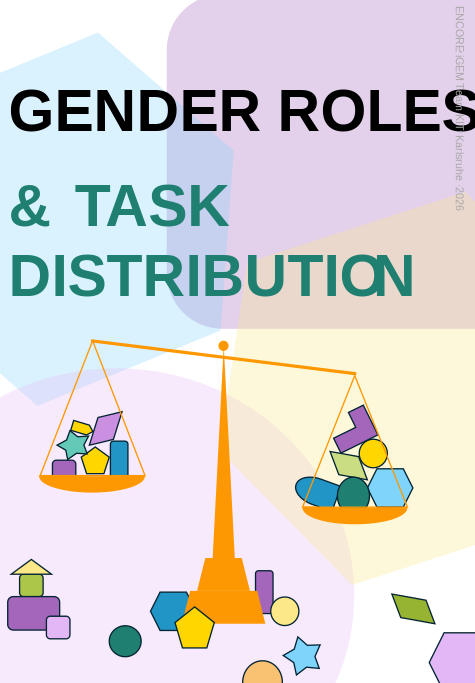
Our survey on who does which work inside a team showed that organizational tasks are recognized less than research, and that one in five women felt their contribution was not adequately recognized. Patterns like these form quietly, so we built a workshop that makes them visible while a team is still new enough to change them. Participants map how their own time splits across seven task areas, then talk in pairs with someone who regularly carries the work they would feel least confident taking on.
It ends with concrete steps rather than conclusions. Most iGEM work on gender equity looks outward, through outreach and role models; this one looks at how a team shares its own work, which is where every team actually starts. The moderation guide needs no prior knowledge of gender research and fits a session of 1.5 to 2.5 hours. The guide and its printable worksheet are on our Inclusivity page.
Setting Up a Lab from Scratch
Download the full PDF here
Being the first iGEM team at KIT, we needed to start a lot of different elements from scratch. One of the main elements was setting up a lab. During this process, we collected all the tips we wished we had had from the start, so that maybe they can help another first team to set up their iGEM team at their campus.
We started with an empty room. Everything in this guide we learned by getting it wrong first, and it is the kind of knowledge that usually never leaves a team. Click the cover to download it as a PDF.
How we built our own lab from an empty room is told on our Building a Lab page.
Wanna find something super fun?
Find the 5 hidden encapsulins on this page to unlock a cool surprise.
Our Board Game


- 3–6 players
- ages 12+
- about 45 minutes
- no prior knowledge needed
Downloads
-
Everything you need to playThe rules (opens in a new tab), the game board as an image, and the cards, the score pad and the quick reference as PDFs to print
-
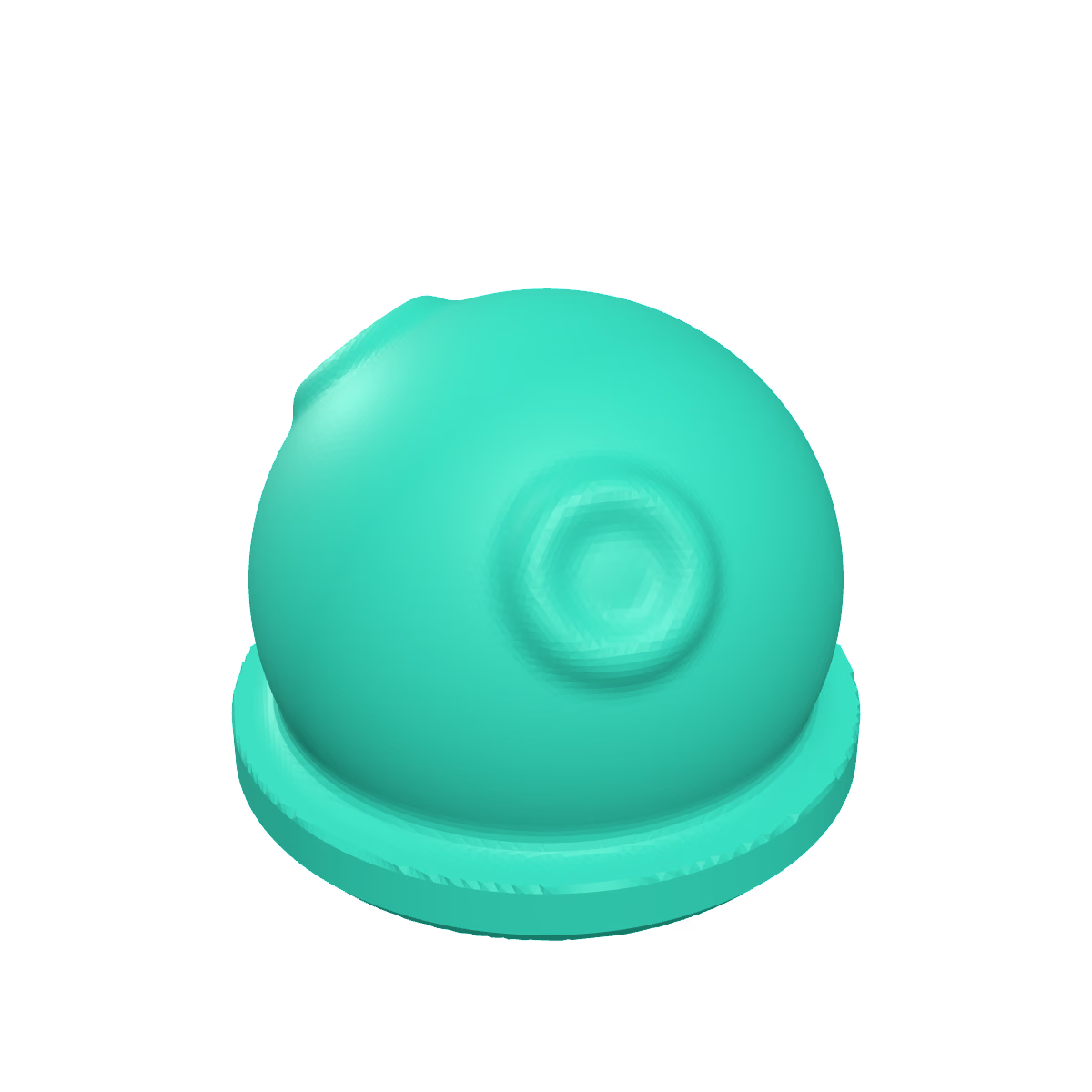
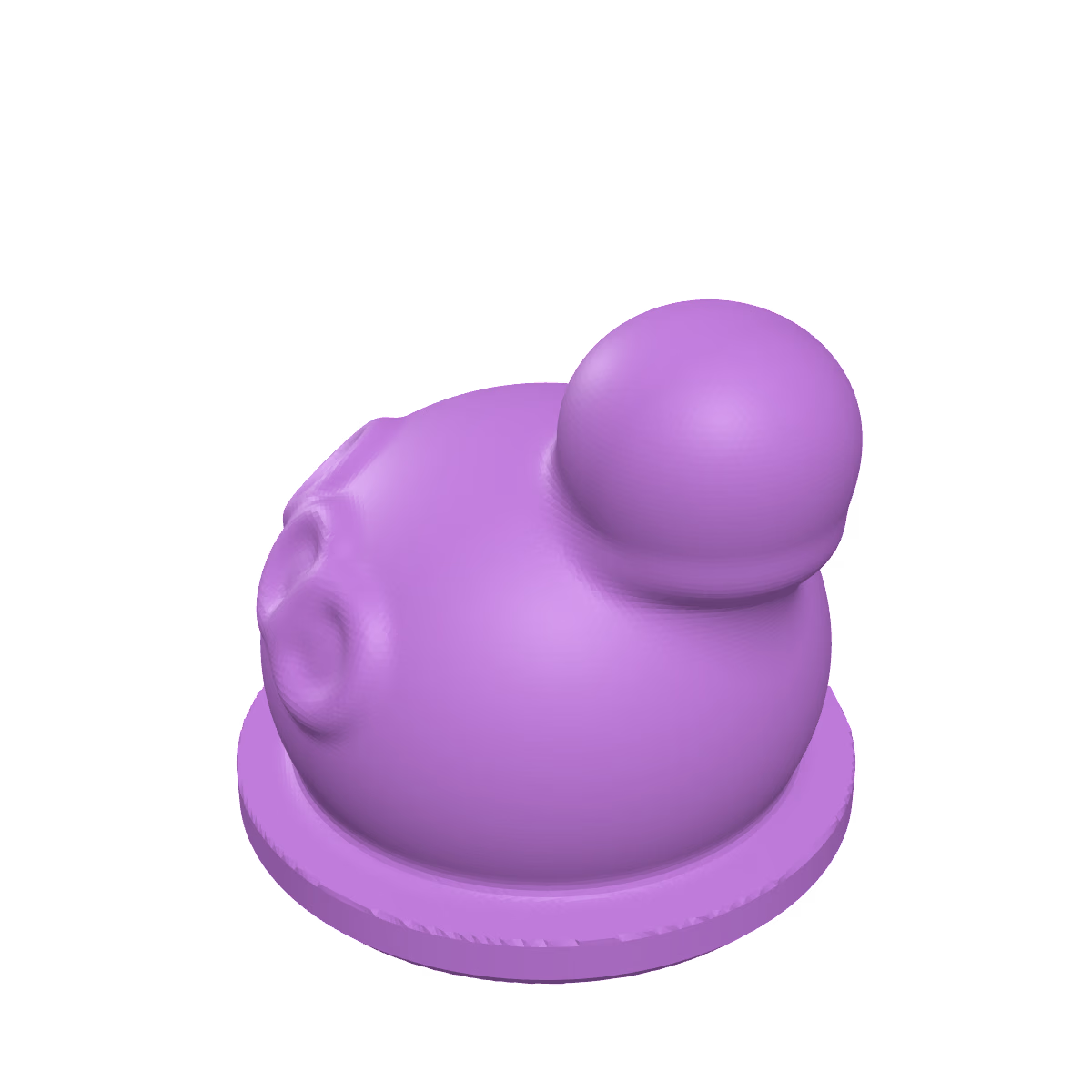
Figures for 3D printingSTL files of the yeast cell and the budding yeastDownload from GitLab
Why We Built a Board Game
Our project runs in the Foundational Advances village, and that name holds a lot of expectations. A foundational project is not measured by the one problem it solves, but by how many problems it lets other people solve.
At the heart of ENCORE is the functionalization of nanocompartments, made possible with our toolKIT. We aimed to fulfill a biologist’s dream: Build-a-bear but for cell compartments.
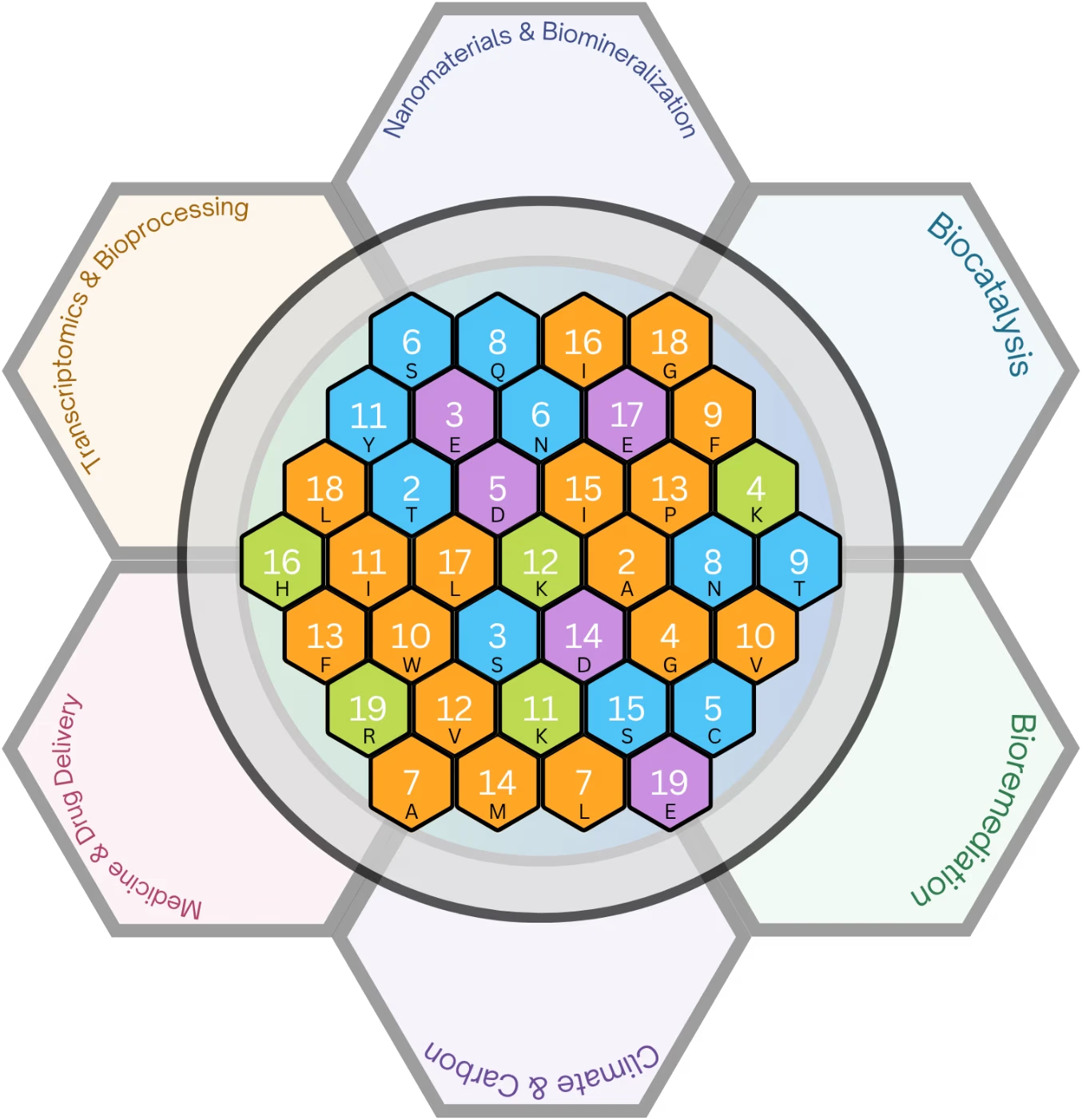
We built this game to showcase what would be possible in a world, where this dream came true. The Yeast We Can Do puts 19 missions on the table across six application areas, from breaking down forever chemicals to capturing CO2 and growing nanocrystals. Everyone competes for the same 20 amino acids on the same 37 fields of nutrient medium, and everyone builds something different out of them.
In this strategic game each player tries to collect the resources needed to build the cargo demanded by a given mission. Who collects the most points first wins!
Whether you play with people who know the amino acid groups by heart or with people who last heard of cells in high school (or haven’t heard of them yet), every level of knowledge can learn something new, no pre-existing knowledge is required. Someone who has never heard of synthetic biology leaves knowing that a protein is a chain of twenty kinds of beads, some of them hard to come by. An iGEMer might spot the catalytic triad in the plastic-degrading enzyme. Nobody is tested, and everybody takes something home.
Download the board, cards, rules and the 3D print files for the yeast figures here, print and play! The 3D structures run off any FDM printer, but you can also use other playing pieces if that is more convenient.
The fun is rising throughout the game like a yeast dough.
It’s a great and refreshing way to explore the world behind ENCORE!
I was hooked once I finished my very first mission.
Student Member & Wiki Lead
Foundations for Future KIT Teams
 Foundations for Future KIT Teams
Being the first team at a university means that everything you work out, somebody else will have to work out again next year unless you write it down. So we are handing over more than the science. The next KIT team inherits a documented handover with TeamKIT, the lab guide above, and the working structures that turned out to carry us through the season.
The centerpiece is our documentation of the lessons learned throughout the 2025/26 season. A compilation of what we learned and what we would do differently if we could go back in time. Alongside this, we are sharing our central Notion workspace template. Documentation, organization, and project management all live in one place. Having our documents, links, media files, and general information in a single, well-structured and interconnected workspace made our day-to-day work dramatically easier. On top of that, we are passing on our meeting formats, weekly organizational structure, and the approaches we used to work through challenges, both within the project and among team members. None of these resources are specific to our project, and future teams are welcome to adopt and adapt them.
A handover only helps if there is a team to hand it to. In mid-October, we are putting our preparations and action plan for the next generation of iGEM at KIT into motion. Starting with a presentation to the Biology Student Council, the official handover of our iGEM team as a recognized university student group (Hochschulgruppe), and recruitment activities, we are laying the groundwork for building next season's team. If you want to know more then we recommend go to Teambuilding page.
References
- Lee, M. E.; DeLoache, W. C.; Cervantes, B.; Dueber, J. E. A Highly Characterized Yeast Toolkit for Modular, Multipart Assembly. ACS Synth. Biol. 2015, 4 (9), 975–986. https://doi.org/10.1021/sb500366v