





























Integration of Copper into PET mesh
Materials and Preparation
First, a copper sulfate (CuSO₄) solution was prepared by dissolving 94.8g of CuSO₄ in 300mL of MilliQ water in a 500mL beaker. Separately, a 0.65M sodium hydroxide (NaOH) solution was prepared by dissolving 10.72g of NaOH in 400mL of MilliQ water in a glass baking plate. PET mesh was cut into 6 by 6 inch squares as needed for the desired number of plates.
Mesh Pretreatment
The PET mesh requires surface preparation prior to copper incorporation to facilitate even copper uptake. The cut mesh squares were soaked in the NaOH solution for 40 minutes at 37°C, covering with aluminum foil to prevent contamination. Following incubation, the mesh was washed thoroughly under tap water to remove all residual NaOH. Incomplete removal at this stage will cause CuSO₄ precipitation and compromise the integration process. The mesh was air dried on paper towels before proceeding.
Copper Incorporation via Boiling
The prepared CuSO₄ solution was heated to approximately 90°C on a hot plate. This temperature was maintained with constant monitoring to avoid exceeding 100°C, which promoted precipitation of CuSO₄in solution. The dried mesh was submerged into the heated CuSO₄ solution and boiling was maintained for a minimum of 2 hours with continuous stirring via magnetic stir bar on high setting. Some CuSO₄ precipitation at the bottom of the beaker occurred, and this was expected as well as acceptable as long as a stir bar was present. The solution was monitored throughout the incubation period. If water evaporated and the solution became concentrated, MilliQ water was added in small increments to maintain volume and prevent over-saturation.
Post-Incorporation Washing and pH Adjustment
After heating, the mesh was removed from the solution and cooled slightly on paper towels before aggressive rinsing under tap water to remove surface CuSO₄ contamination. The rinsed mesh was transferred to a falcon tube and approximately 15mL of NaOH solution was added. Incubation occurred at 37°C with shaking at 250 rpm for approximately 10 minutes to remove residual CuSO₄.
Precipitation and Verification
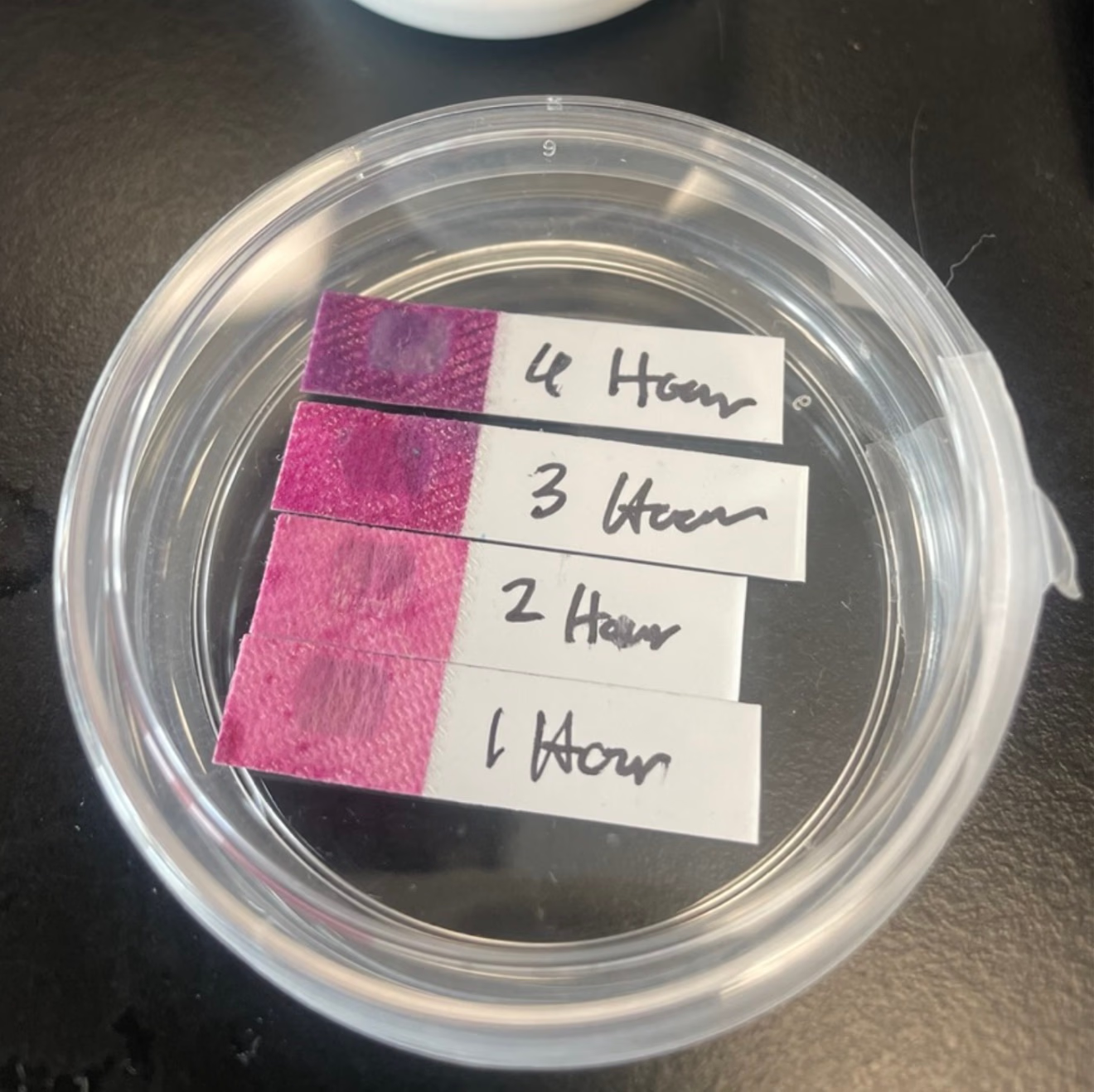
The mesh was removed after incubation. Using a pH meter, the solution was neutralized to a 7.5 pH in order to optimize accuracy of copper test strip reading. Slowly approximately 1.6 mL of 37% HCl was added to neutralize the solution. Copper incorporation was verified by testing pH with a pH meter and copper presence using copper test strips (contact for at least 15 seconds). Successful integration was confirmed by appropriate pH and positive copper detection.