



1. Executive Summary
PetaBite and PetaScale share a single ambition: transforming microplastic biodegradation from a student‑led research initiative into a commercially viable platform capable of global scale. PetaBite, our iGEM project, served as the technical proving ground, taking the technology and prototype from 0 to 1. PetaScale, our commercialization effort, now builds on that foundation to carry it from 1 to n, translating the validated science into real‑world deployment and industrial partnerships.
While iGEM Toronto's technical teams ran the experimental validation, our entrepreneurship team specifically worked on product-market fit, customer discovery, and regulatory mapping. We tested and refined our business model across five Canadian national competitions, four global competitions, and two international conferences, with support from 17 institutional and community sponsors - the most in iGEM Toronto history. In six of those competitions, we placed within the top 3 overall, standing out from a cumulative field of hundreds of early‑stage startups and university design teams.
Furthermore, through our project and pitch, selected team members attended or competed in several international summits, including Y Combinator Summer School, Web Summit Vancouver, SynBioBeta Global, and the Canadian Food Forward Summit. Three Canadian venture capital firms have engaged in early discussions with us, and we have successfully completed the Wilbe startup incubator sprint program. This outside interest shows that investors and industry see commercial potential in our approach. Further details are in the Appendix below.
PetaScale has also identified wastewater treatment plants (WWTPs) as its beachhead market. We held 20 feasibility conversations with WWTP operators, engineers, researchers, and managers, and these conversations confirmed that our approach fits their operations and that they need a solution. We have also mapped expansion paths into three adjacent verticals: microfibre filtration, landfill leachate treatment and textile effluent treatment. The same enzymatic platform supports all four verticals.
Q&A
2. Problem Statement
Global plastic production has grown far beyond what waste systems were built to handle. Annual output rose from about 1.5 million tonnes in 1950 to more than 430 million tonnes in 2024, a nearly 290-fold increase (PlasticsEurope, 2025), and the trajectory shows no sign of reversing. Under the OECD's baseline scenario, global plastics use is projected to grow from 460 million tonnes in 2019 to 1,231 million tonnes by 2060, outpacing most raw materials (OECD, 2022). Over the same period, annual plastic leakage into the environment is projected to double from about 22 million tonnes to 44 million tonnes, and the stock of plastic in aquatic ecosystems is projected to more than triple, from about 140 million tonnes to nearly 500 million tonnes (OECD, 2022). Much of this plastic breaks down into microplastics, particles smaller than 5 mm that persist for centuries under environmental conditions and spread through soil, waterways, food and drinking water.
Effects on Human Health
Unfortunately, evidence of microplastics in the human body continues to grow. Researchers have detected micro- and nanoplastics in human blood (Leslie et al., 2022), placenta (Ragusa et al., 2021), and organs including the kidney, liver, and brain. Concentrations in brain tissue rose by about 50% between 2016 and 2024 and were highest in patients with dementia (Nihart et al., 2025). Cardiovascular data raise similar concerns. Patients whose carotid artery plaque contained microplastics had about 4.5 times the risk of heart attack, stroke or death over the following three years compared with patients whose plaque did not (Marfella et al., 2024).
Effects on Agriculture
Microplastics also threaten agriculture. Microplastics that build up in soil can disrupt plant metabolism, reduce crop yields, and harm soil organisms (Zhou et al., 2021). The smallest particles can also enter plants directly. Crop plants absorb submicrometre plastics through their roots and move them into stems and leaves, including edible tissue such as lettuce leaves (Li et al., 2020). This creates a potential pathway for plastic particles to enter the food chain through the consumption of contaminated crops. Plastics in soil can also carry pathogens. When plastic surfaces come into contact with wastewater or livestock waste, microbial biofilms colonize them, and this community, known as the plastisphere, can harbour human pathogens and antibiotic resistance genes (Zhu et al., 2022). Because microplastics stick to crop surfaces and washing does not fully remove them, they may carry these pathogens onto food (Quilliam et al., 2023).
The Status Quo
Current approaches to plastic waste include membrane filtration, mechanical recycling, chemical recycling, and incineration with each having major limits. Filtration captures microplastics and moves them into sludge or waste streams without breaking them down. Mechanical recycling degrades material quality with each cycle. Incineration releases emissions and destroys the material. Chemical recycling can break PET into its monomers, terephthalic acid (TPA) and ethylene glycol (EG), and rebuild them into resin, but that resin costs more than fossil-derived plastic, which limits its commercial viability. None of these approaches removes microplastics already in the environment at a cost that works at scale. The world needs a way to break plastic down into its molecular building blocks at the points where it accumulates.
Regulatory Pressure
As a result, regulators across major markets now treat microplastics as a compliance issue. The EU Regulation 2023/2055 restricts the use of intentionally added synthetic polymer microparticles (European Commission, 2023), while Directive 2024/3019 requires member states to monitor microplastics in urban wastewater treatment systems (European Parliament and Council of the European Union, 2024). In Canada, the Federal Plastics Registry mandates that manufacturers and importers report detailed data on the plastics they place on the market (Environment and Climate Change Canada, 2024). Since 2022, more than 170 countries have been negotiating a global treaty to end plastic pollution (United Nations Environment Programme, 2022).
The Timing of PetaScale
Thus, the timing for PetaScale’s plastic degrading enzyme (PETase) technology is exceptionally strong. Governments are tightening compliance frameworks, and industries managing plastic waste urgently need scalable biological solutions to a problem that has persisted for decades. Advances in enzyme engineering and metagenomic discovery have brought enzymatic degradation closer to commercial viability. The scale of the challenge, its human and agricultural costs, coupled with mounting regulatory pressure, has created a market where technical advantage is both valuable and defensible. PetaBite/PetaScale meets this need through a scalable biological platform for PET microplastic removal, a solution explored in detail in the following sections.
3. Solution / Technology Overview
Plastic-degrading enzymes (PETases) are a promising solution to microplastic pollution and engineered variants such as FAST-PETase and LCC-ICCG already perform well under controlled lab conditions. However, two limitations still hold the field back: a lack of data and poor performance outside the lab. Most groups improve the same handful of known enzymes through rounds of engineering, which leaves most of nature's enzyme diversity untested. These enzymes also only work best under very narrow temperature, pH, and substrate concentration ranges. LCC-ICCG, one of the best-performing variants, needs temperatures near 70 °C, which makes it impractical in wastewater treatment plants, lakes and mixed waste streams. Wet lab testing is also slow, and while unlabeled sequence data is abundant, the field has very little labelled data on how enzymes perform across real operating conditions. Progress has therefore concentrated on optimizing a few known scaffolds for controlled reactor conditions, which leaves performance in the field largely unaddressed.
Our mission is to deploy the most efficient and versatile plastic-degrading enzymes at planetary scale. Our approach differs from existing work in two ways: we search nature's full enzyme diversity and we design and test every enzyme for the specific environmental conditions where it will be used.
We have already solved the first limitation: a lack of data. Before our work, researchers had characterized only about 495 plastic-degrading enzymes worldwide, far too few to train a model on which sequences degrade plastic and under what conditions. So our Dry Lab team built PETadex (petadex.net), the world's largest open-source database of plastic-degrading enzyme candidates, to close that gap. Using the Logan index, a planetary-scale metagenomic search system built from our associate lab, the RNALab identified about 300M unique proteins from environments worldwide, expanding the searchable pool more than 600,000-fold. The first screen of 161 randomly selected candidates returned two that outperformed FAST-PETase, a leading engineered benchmark, which confirms that the database contains enzymes worth finding. Finally, we made the PETadex open access so any researcher can build on this diversity, since proprietary datasets and siloed efforts have slowed the field.
This iGEM cycle, we are solving the second limitation: performance outside the lab. Even the best PETases lose much of their activity in industrial conditions, at variable temperatures or alongside mixed contaminants. We are building a machine learning pipeline that uses the PETadex dataset to select and engineer enzymes for specific real-world conditions, starting with room-temperature activity. We test each candidate with high-throughput wet lab assays and an in-house bioreactor array that replicates the conditions enzymes face during deployment. Each round of testing feeds labelled data back into our models, so every cycle improves the next set of predictions. No other PETase effort we know of combines this scale of candidate discovery with systematic, condition-specific testing.
Our first target is wastewater treatment plants (WWTPs), where our enzymes can degrade PET at ambient temperatures. We will then expand to landfill leachate and contaminated bioremediation sites, where PETases can break down accumulated PET in water and soil. We also see opportunities at the points where PET first enters the environment: degrading PET fragments shed during textile manufacturing, clearing PET microfibres from washing machine filters and dryer lint traps, and formulating PETases into detergents that degrade microfibres released from synthetic fabrics during the wash cycle.
4. Value Proposition
Every company commercializing plastic degrading enzymes today builds around one engineered enzyme and one operating window. Companies such as Carbios, Samsara Eco, and Protein Evolution use enzymes to recycle concentrated, pre-sorted plastic inside controlled reactors, where they can heat the material, adjust pH and pretreat the plastic to suit the enzyme. Carbios, for example, grinds and amorphizes PET before degrading it near 70 °C. That model may work in a recycling plant, but it ultimately fails where microplastics actually accumulate. Heating the large volumes of water that flow through a wastewater treatment plant would be far too expensive, and conditions change from one part of a plant to the next: clarifiers run at ambient temperature, mesophilic anaerobic digesters run at about 35 °C, and thermophilic digesters run at about 55 °C.
PetaScale, on the other hand, matches the enzyme to the site. For each deployment point, we select and engineer an enzyme that works optimally at that point's existing temperature, pH and salinity, so the facility needs no heating, pretreatment or new infrastructure. This keeps retrofit costs low and lets one bioengineering platform serve multiple WWTPs, landfill leachates, facilities producing textile effluents, and appliance filtration environments.
Our competitive advantage is a growing portfolio of patented optimized enzymes, each engineered for a specific real-world condition. Engineered enzymes such as FAST-PETase and LCC-ICCG come from optimizing a small handful of known enzymes, which limits how far any design can extend beyond its original operating window. Our approach starts from a much larger set of natural sequences that evolved across a wide range of environments, some of which already compete with the best engineered enzymes, such as when the two top candidates from our first screen produced about four times more TPA than FAST-PETase under identical conditions. From these starting points, we engineer variants for each deployment condition and profile them on our bioreactor array across temperature, pH and salinity. Field data from every customer deployment then guides the next round of engineering. Although the PETadex may stay open to all researchers, the engineered enzymes we build on top of it are our own, patenting each one. Every new deployment site and every new vertical adds more protected enzymes to our portfolio, so our lead widens as we grow.
5. Customer Segments
PetaScale serves municipal and industrial organizations that need a scalable way to remove microplastics from their water and waste streams.
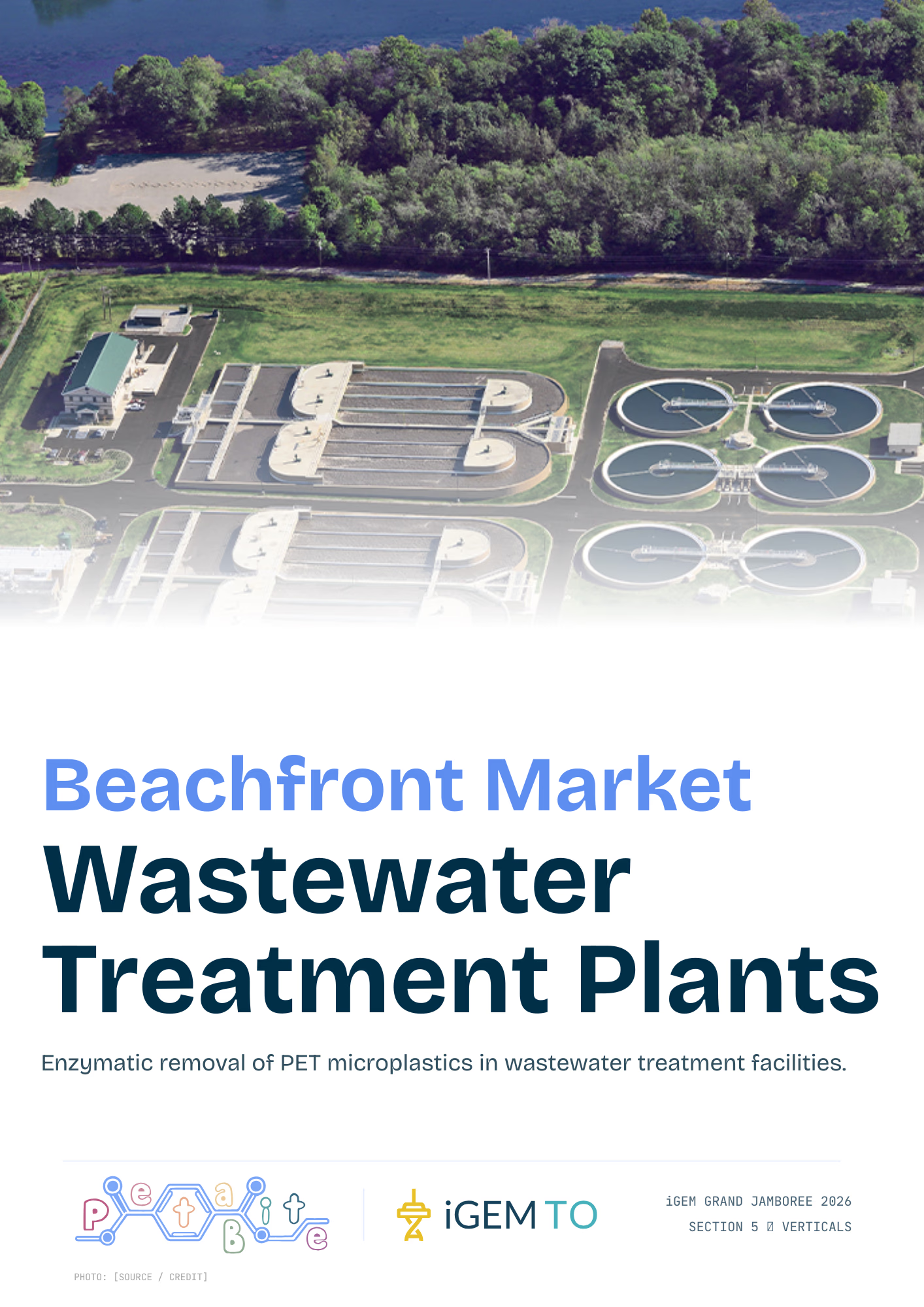
Beachhead market: wastewater treatment plants (WWTPs). WWTPs are our most technically validated and commercially promising entry point. Wastewater from homes and industry flows through these plants before it reaches lakes and rivers, which makes them the first point where operators can control microplastics before they spread downstream. We immobilize our PETases in packed-bed reactors, which degrade PET polymers inside the plant while keeping the enzyme contained. Through 20 interviews with operators, researchers, and technical staff across Ontario, Alberta, and Newfoundland, we confirmed that our approach fits existing plant workflows. Purchasing decisions in this segment involve municipal infrastructure directors, plant operators and environmental compliance officers. Regulatory pressure on these decision-makers is rising, led by the EU's new requirement to monitor microplastics in urban wastewater treatment (European Parliament and Council of the European Union, 2024).
Adjacent Verticals
Beyond WWTPs, we have also explored expanding into three adjacent verticals.
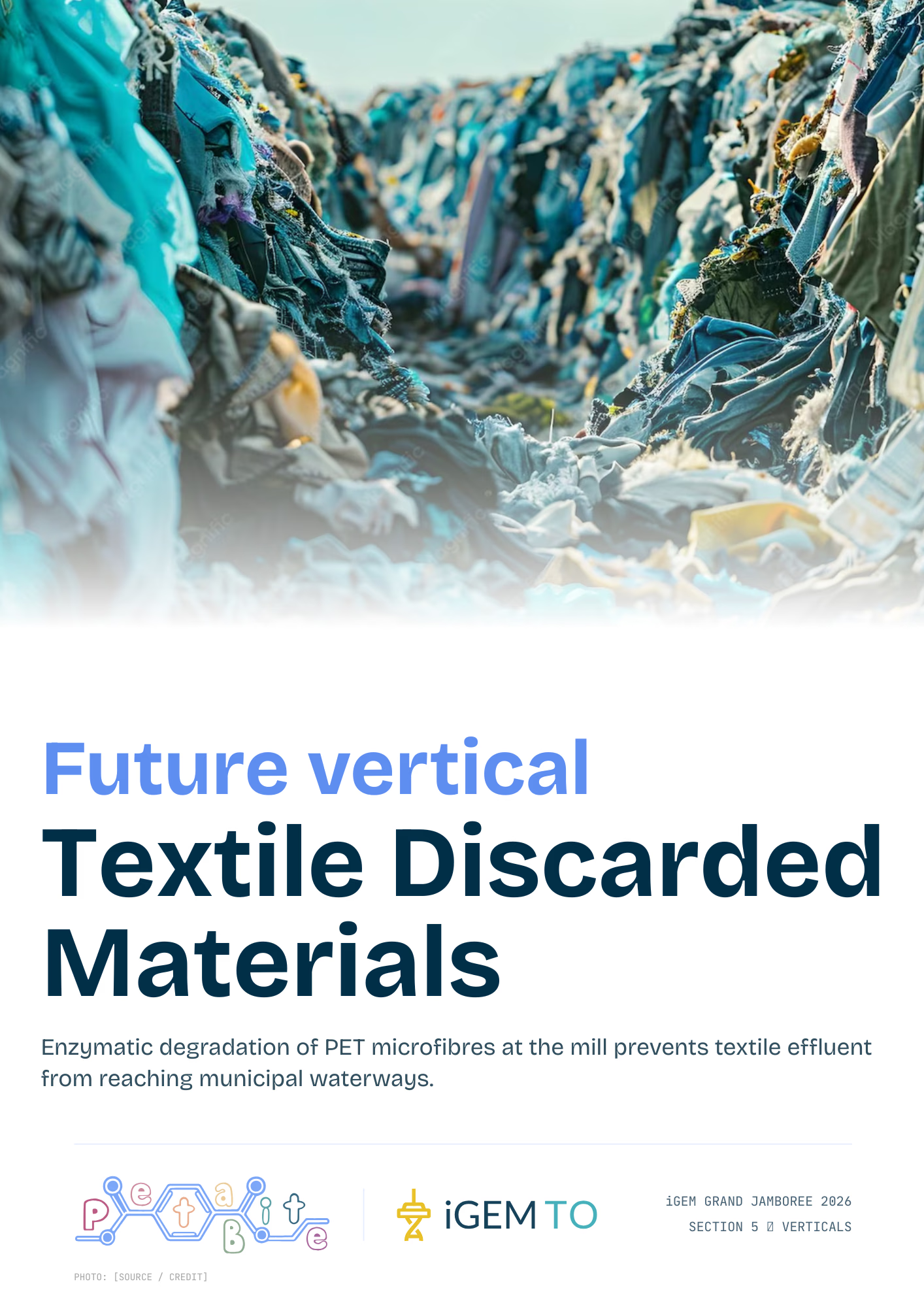
Textile effluent. Textile manufacturers release PET fibres and fragments into their wastewater during production. PETases add an in-line treatment step that degrades this PET before the wastewater leaves the facility, with no change to the production process. Sustainability officers and production managers are the buyers in this segment and the treatment step supports their compliance and ESG reporting.
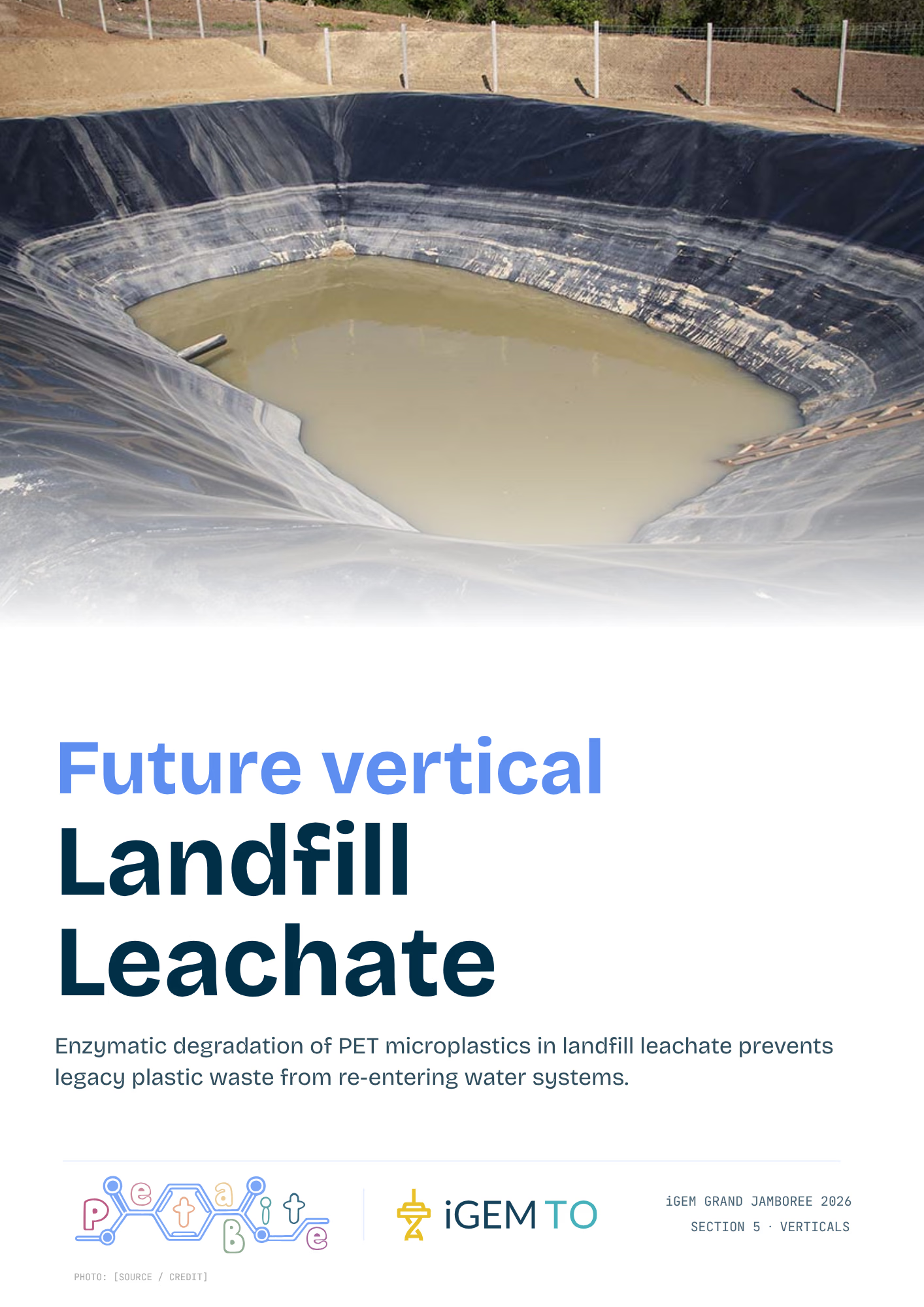
Landfill leachate. As plastic breaks down in landfills, it releases PET microplastics into leachate, which often flows to WWTPs or surface water. PETases can treat this leachate before it is discharged. Municipal waste authorities and environmental engineering firms that manage leachate treatment are the buyers in this segment.
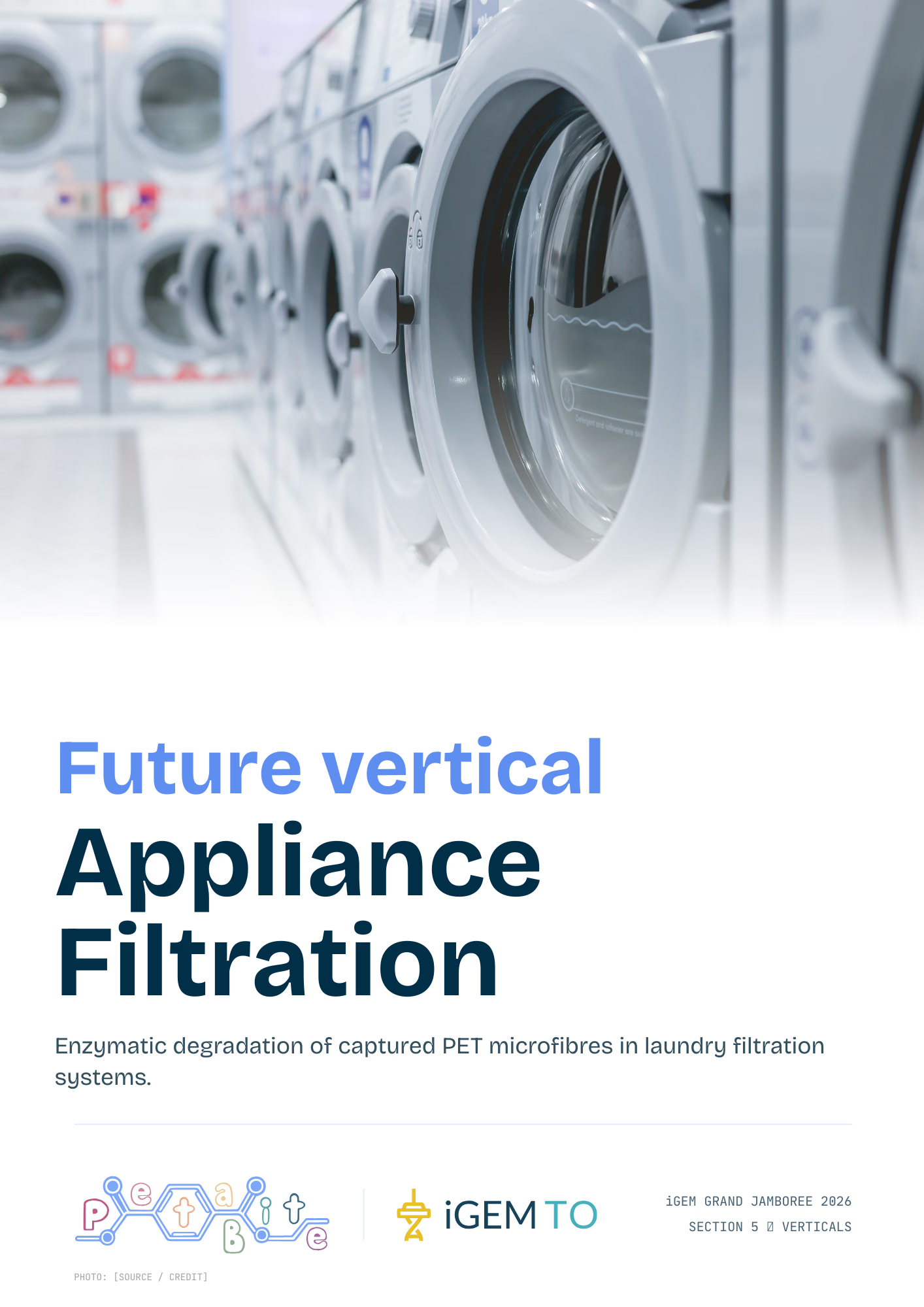
Filtration. PETases built into filtration cartridges or post-wash modules can degrade microfibres where the filter captures them, before the filter is cleaned or thrown away. Customers include appliance manufacturers and water treatment technology providers that develop household, industrial and municipal filtration systems.
Noticeably, for filtration in particular, regulation is pushing this market forward. France passed the first law requiring microfibre filters in all new household and commercial washing machines from January 1, 2025 (Loi n° 2020-105, 2020, art. 79), although it should be noted that the government has not yet published the decree needed to enforce it (Pillefer, 2026). The EU is also developing standards to measure fibre shedding and filter efficiency and is reviewing its ecodesign rules for washing machines, with both processes expected to conclude by late 2026 (Krzan, 2025). In the United States, the proposed Fighting Fibers Act of 2025 would require a microfibre filtration system in every new washing machine sold (Fighting Fibers Act of 2025, 2025). As filters become standard, manufacturers will need a way to deal with the microfibres those filters collect. PetaScale plans to supply the enzymes that break down captured PET.
Vertical Reports
We conducted comprehensive research across each of the four verticals, and the embedded reports below analyze them in detail through the following categories:
- Customer description and technical feasibility. What the vertical is, why these customers would benefit from PetaScale’s product, the technical literature supporting deployment under their conditions, the stakeholder interviews we conducted if applicable, and a SWOT analysis.
- Market size and opportunity. Total addressable market, serviceable addressable market, and serviceable obtainable market, with an estimate of the share PetaScale could realistically capture in Canada.
- Barriers to entry. The obstacles that could slow adoption, including procurement cycles, and, technical validation requirements, and, how we plan to navigate each one.
- Competitor matrix. The companies that operate in the vertical, what they offer, and, where their approach falls short.
Additional context: The vertical descriptions, particularly those for the WWTP and Textile Discardant Pellet sections, integrate quotes and insights from stakeholder interviews conducted by our team. Comprehensive documentation of all interviews is available in the Human Practices – Stakeholder Outreach section.
6. Regulatory Landscape
Deploying an enzyme-based microplastic degradation technology in Canada requires navigating a two-tier regulatory system. Federal review determines whether the enzyme itself is legal to manufacture and use nationwide, while provincial review governs its deployment at specific provincial facilities.
7. Business Model
PetaScale is a B2B enzyme company. We engineer plastic-degrading enzymes to work under the conditions each customer already operates in.
Fortunately, published work shows this is achievable. Researchers have found PET-degrading enzymes in compost, marine, and soil environments (Tournier et al., 2020; Lu et al., 2022). Our PETadex database gives us 300M unique proteins, so each engineered design begins from an enzyme that already works in conditions close to the customer's.
How PetaScale Works
- Defining the conditions. The customer provides the operating conditions under which our enzymes must function: parameters such as temperature, pH, and salinity. These inputs define the design environment specifications for enzyme development.
- Engineering the enzyme. We select the closest candidate from PETadex, engineer it to the specification, and validate its activity under the described customer's conditions.
- Building the delivery system. We produce the enzyme and package it in the format its environment requires.
- Deploy. The format depends on the vertical:
- WWTPs: a packed-bed reactor holding immobilized enzymes, installed on a filtered side stream so it adds to existing infrastructure without interrupting plant flow.
- Textile effluent and landfill leachate: metered enzyme dosing into existing treatment lines.
- Filtration: enzyme loaded into cartridges and post-wash modules.
How We Make Money
- WWTPs: Utilities pay per million litres treated under multi-year contracts with regional authorities. The fee covers reactor installation, maintenance, replacement of spent enzyme cartridges, and delivery. Revenue recurs and grows with the volume of water treated.
- Textile effluent and landfill leachate: Operators pay for a pilot, which converts to a per-site service contract once we prove performance.
- Filtration: Manufacturers license the enzyme or buy enzyme-loaded cartridges as a component, and they keep control of their product and distribution.
Why This Model Works
We start with WWTPs because a small number of regional authorities control most of the treated water in a region, which gives us recurring revenue and field data early. Each new vertical reuses the same four-step pipeline under different conditions, so expansion costs far less than entering each market from scratch. Every deployment also returns activity data from real operating conditions, and that data shortens the next design cycle.
8. Selling & Customer Relationships
The Business Model section sets out what our customers pay for. This section explains how we acquire those customers and retain them.
As aforementioned, our first customers run wastewater treatment plants (WWTPs), which are regulated public infrastructure. An operator's first responsibility is keeping effluent within permit limits, and few operators will change a working process because a new technology sounds promising. For that reason, every sale starts with data from the customer's specified environmental conditions. We ask for a commitment only after the customer has seen our enzymes function within their respective use-case.
How We Reach Decision-Makers
Our sales process starts with feasibility conversations. Over the iGEM cycle, we spoke with 20 WWTP operators, engineers, researchers, and managers in Ontario, Alberta, and Newfoundland. Through these conversations we learned how plants run day to day, collected data on conditions that would affect enzyme performance, and who approves spending. The conversations also gave us our first working relationships with the staff who would run a pilot.
A single purchase at a municipal plant involves several people and each one needs different evidence. Operators and engineers want to know whether the enzyme will work in their plant, so we show them activity data measured under their own operating conditions. Infrastructure directors and compliance officers focus on risk. For them, we explain how a contained packed-bed reactor fits within existing permits and budgets, and how it prepares the plant for future microplastic monitoring requirements. Procurement officers manage the purchase itself. Public contracts usually go to competitive tender, so our pilot results help define the technical requirements for that tender.
Outside the municipal sector, our buyers include textile sustainability officers, landfill engineers and filtration product managers. These buyers weigh cost against compliance, so we begin with a contained, closed-loop trial on their own waste stream.
From Feasibility Conversation to Contract
A feasibility conversation converts into a contract in four steps:
- Sample collection. We ask the customer for a sample of their material, such as thickened sludge, along with its temperature, pH and salinity. A customer who sends a sample and assigns staff time to the project has made a real commitment, and we treat that as the first sign of fit.
- Laboratory testing. Before testing begins, the customer sets the success criteria. We then test our enzymes on the sample under the customer's conditions and measure PET degradation using methods both parties have agreed on.
- Results report. We report how much PET the enzyme degraded, how quickly and at what dose. If the results meet the agreed criteria, the customer has evidence drawn from their own material.
- Pilot and contract. A successful test leads to a pilot agreement, under which we install a packed-bed reactor at one plant. If the pilot meets its targets, it converts to a multi-year contract. We write our WWTP contracts to cover every eligible plant a regional authority runs, so a single pilot can open several plants.
We have completed the feasibility stage in the WWTP vertical, and we will use the same process for textile effluent, landfill leachate and filtration.
What Product-Market Fit Looks Like
We judge fit by what customers commit, since positive feedback costs a customer nothing. In each vertical, we look for a specific commitment:
- WWTPs: A regional authority provides sludge samples, signs a pilot agreement with defined success criteria, and budgets for a full contract once the pilot meets those criteria.
- Textile effluent: A mill provides production wastewater samples and co-funds an in-line trial, and it names a sustainability or production lead who is accountable for the result.
- Landfill leachate: A waste authority or engineering firm provides leachate samples, shares its treatment data and commits a site to a contained pilot.
- Filtration: An appliance or filtration manufacturer signs a joint development agreement to test enzyme-loaded cartridges in its own product.
How We Retain Customers
After a contract is signed, we report PET degradation and system performance to each customer on a fixed schedule, using the testing methods agreed at the start. Regular reporting keeps results visible to the decision‑makers who approved the purchase which is very critical when contracts come up for renewal. Each deployment also feeds field data back into our engineering pipeline, enabling us to design higher‑performing enzymes for that customer and others within adjacent verticals.
9. Go-To-Market Timeline
PetaBite represents the scientific foundation of our work and the open-source stage of the project. PetaScale represents the next stage, which commercializes that research engine into a scalable platform. We are formally separating the two entities for intellectual property purposes, with a defined transition point at the finalization of our Dry Lab and Wet Lab publications.
Definitions
Two organizations appear throughout this timeline:
- BioZone is the University of Toronto's Centre for Applied Bioscience and Bioengineering, located in the Faculty of Applied Science and Engineering. It houses research labs in industrial biotechnology and environmental bioengineering, and it is where our current R&D takes place.
- MaRS Discovery District is a large innovation hub in downtown Toronto that provides office and lab space, commercialization support and investor connections to early-stage science and technology companies. Its MaRS Investment Accelerator Fund, funded by the Government of Ontario, is one of the province's most active seed-stage investors, and we are in conversation with them now.
Overview of the Next 12 Months: Milestones (September 2026 to December 2027)
| Milestone | Window | Focus |
|---|---|---|
| Milestone 0 | Now–Nov 2026 | Enzyme prototype development, through the iGEM Grand Jamboree |
| Milestone 1 | Aug 2026–Feb 2027 | Close the R&D cycle, manuscript, market validation, IP assignment sweep |
| Milestone 2 | Early March 2027 | PetaScale formation: Canadian incorporation and IP |
| Milestone 3 | Late March–April 2027 | Incubator submissions and Canadian VC raise |
| Milestone 4 | May–Aug 2027 | Move into MaRS, continued R&D, customer pipeline |
| Milestone 5 | Sept–Dec 2027 | Land at least two WWTP pilots, full patent strategy |
Milestone 0: Enzyme Prototype Development (Now to November 2026)
We are currently at this milestone. Our Wet Lab and Hardware teams are producing and testing the first candidate enzymes on the bioreactor array at BioZone. This work generates the room-temperature activity data that supports both our manuscript and our commercial claim. The milestone ends at the iGEM Grand Jamboree in Paris, where we present our preliminary prototype results publicly.
Milestone 1: Research Cycle and Market Validation (August 2026 to February 2027)
Our central deliverable is the combined Dry Lab and Wet Lab manuscript. Drafting began in August, and we target submission for February. This submission closes the PetaBite R&D cycle and sets the IP dividing line between PetaBite and PetaScale.
We also complete an intellectual property assignment sweep in this window, while the full project team is still together. Every member who contributed to the design pipeline, the enzyme candidates or the bioreactor hardware signs an assignment to the company, including members who have graduated or left the team. At the same time, we document exactly where the boundary sits between the open-source PETAdex release and the proprietary work PetaScale will own. Completing this before incorporation avoids the most common diligence problem for university spinouts, which is unassigned contributions surfacing years later.
Alongside this work, we continue customer discovery across our WWTP, textile effluent, landfill leachate and filtration verticals, and we evaluate incubator options. Our official raise opens with Canadian venture capital warm leads, building on early conversations with FrontRow Ventures, Northside Ventures and the MaRS Investment Accelerator Fund, among others.
Milestone 2: PetaScale Formation, Incorporation and IP (March 2027, Weeks 1 to 2)
This milestone establishes PetaScale as a legal and commercial entity while R&D continues inside BioZone. We incorporate federally under the Canada Business Corporations Act as a single Canadian parent company. This keeps PetaScale a Canadian-Controlled Private Corporation (CCPC), which preserves both the enhanced refundable SR&ED credit during our heaviest R&D years and the Lifetime Capital Gains Exemption for our founding team.
Company formation proceeds in sequence: incorporating the operating entity (three to ten days), registering for a CRA Business Number and SR&ED eligibility (one to three weeks), executing the founder IP assignment (two to four days), and finalizing University of Toronto ownership and licensing confirmation (one to three weeks). We negotiate the licence to permit assignment or sublicensing to a future parent entity, which preserves our options without committing us to any structure now.
We establish the cap table at the same time: one class of common shares, standard four-year founder vesting with a one-year cliff, and a documented option pool. We keep early capital in a single instrument rather than a series of differently structured agreements, so the cap table stays straightforward to model.
Regarding IP, we file a provisional patent immediately to secure a twelve-month priority window. In parallel, we secure letters of intent, advance industry conversations and maintain warm investor meetings. The first phase of the raise covers partner meetings followed by technical, IP and market diligence, benchmarked against internal comparables. We continue discussions with MaRS about office and lab space in the same period.
Milestone 3: Incubator Submissions and Canadian VC Raise (Late March to April 2027)
With the entity formed, we focus on closing capital while R&D continues to scale at BioZone. The investment process moves into its second phase: warm meetings leading to a lead investor, term sheet negotiation, final diligence and legal drafting. All three of our warm leads are Canadian funds, so a Canadian corporation raises no structural friction in this round. Operationally, we submit our MaRS space application, PetaScale becomes formally operational, and the round closes within this window to fund ongoing operations.
Milestone 4: Office Move and Pilot Preparation (May to August 2027)
We move into MaRS office and lab space across May and June, transitioning our scale-up R&D and customer pipeline out of BioZone and into MaRS. Over the summer, we prepare our first pilot installations, engage industry partners directly, and file our first SR&ED claim covering the R&D conducted since incorporation. That claim returns non-dilutive cash that extends the runway from our seed round.
Milestone 5: Pilots and Patent Strategy (September to December 2027)
We aim to launch at least two WWTP pilots between September and December, with the first targeted in Ontario alongside the Drinking Water Research Group (DWRG). Once monthly recurring revenue begins, we prepare the full patent application for the United States and Canada, converting the provisional we filed in Milestone 2.
Corporate Structure Beyond Year One
PetaScale operates as a single Canadian corporation for as long as that structure serves the business. Canadian-controlled status returns cash through the refundable SR&ED credit every year we spend on R&D, and it protects the capital gains exemption for our founding team at an exit.
We plan to establish a Delaware subsidiary once we sign our first United States customer, which lets us contract and hire there while the Canadian parent keeps its status. We will reassess the parent structure at Series A. Many United States venture funds invest only in Delaware C Corporations, so a United States lead investor would likely trigger that transition. Before acting, we will weigh the restructuring costs against the Canadian advantages we would give up. The IP and Administration section sets out the structural options and tax considerations on both sides.
The Next 10 Years: Phases
The twelve months above cover the start of Phase 1. Each phase moves PetaScale into a larger market and further up the value chain. The year ranges are directional and will shift depending on traction and capital.
Phase 1 (2026 to 2030): PET Polymer Specific Degradation
Our first phase focuses on room-temperature PET breakdown, deployed initially in wastewater treatment. We size this phase against the water treatment chemicals market, which is the budget these plants already spend and the budget we compete for. Success means a repeatable, revenue-generating enzymatic PET removal product with reference customers.
Phase 2 (2030 onward): Multi-Polymer Degradation
PET is one of several persistent polymers. In this phase, we extend our discovery and optimization engine to additional polymer classes, which expands us from a single-substrate product into the broader environmental remediation market.
Phase 3 (2033 onward): Circular Materials and Upcycling
The third phase moves from breaking plastic down to feeding it back into production. We size this phase against the bioplastic and biodegradable materials market, which is smaller in the near term and higher on the value chain. Here we convert degraded plastic into usable feedstock, which moves PetaScale from a remediation company to also a circular materials platform.
10. Financial Projections
Executive Summary
PetaScale Wastewater Treatment Plant (WWTP) Financial Projections Overview
Scope and Assumptions
These projections focus exclusively on PetaScale’s wastewater treatment plant (WWTP) vertical, reflecting its relative go‑to‑market (GTM) readiness. They are provisional and do not include the revenue or expenses associated with scaling into additional verticals. They use published benchmarks for the enzyme LCC-ICCG (Tournier et al., 2020) until PetaScale's own lab and pilot data replace them. The forecast holds prices and costs flat and does not account for any rise in the enzyme's price due to inflation. It includes only cash revenue, costs, and capital expenditures, leaving depreciation and other accounting treatments to the company’s accountant. All figures and projections are expressed in Canadian dollars (CAD).
Price
PetaScale sells enzymatic PET removal priced at $15.75 per megalitre (ML) of plant influent treated. That’s roughly 35% of what Region of Peel already spends on process chemicals, ($45.26/ML across G.E. Booth and Clarkson in 2023), so it fits within existing treatment budgets instead of requiring additional new budgeting. Variable cost is $3.02/ML: $1.62 for enzyme and $1.40 for cold-chain delivery, dosing and Py-GC/MS verification. Fully loaded cost, which adds production line operations, capex recovery and allocated G&A, is $7.51/ML, for a roughly 2.1x markup. Pilots are billed at $80,000 per pilot-year and convert to full-scale contracts once performance is validated.
Market
Plants in the United States, Canada and Western Europe treat 87.3 billion m³ of wastewater each year, a total addressable market of $1.37 billion a year at PetaScale's price. The serviceable market is Canada's 4.38 billion m³ of secondary and tertiary treatment across 11 provinces and territories, worth $69.1 million a year. Four provinces (Ontario, Quebec, Alberta and British Columbia) hold 89.6% of that volume.
Deployment
PetaScale sells to regional authorities, so one successful pilot wins every eligible plant that authority runs. Pilots begin in Year 1 at Region of Peel, Metro Vancouver and the City of Calgary. Contracts follow in Years 2 and 3, and York-Durham, OCWA's client plants, Winnipeg and Quebec City join in Year 4. By then, PetaScale will serve 24 plants across seven authorities: 13 in Ontario, 3 in British Columbia, 3 in Alberta, 3 in Manitoba and 2 in Quebec. Those plants treat 1.0 billion litres a day, which is 22.9% of the Canadian market and $15.80 million in annual recurring revenue.
Financial Performance
Revenue grows from $80K in Year 1 (pilot fees) to $2.3M in Year 2, $7.1M in Year 3 and $12.9M in Year 4, for $22.4M cumulative. Gross margin rises from 33% during pilots to 63% at scale as production lines fill up. EBITDA turns positive in Year 3 at $1.6M and reaches $5.2M in Year 4, with net income of $3.3M. By the end of Year 4, PetaScale has 7 authorities under contract across 24 plants and $15.8M in ARR, captures about 23% of its $69M Canadian serviceable market, and is cash-flow positive before financing.
Funding
PetaScale plans to raise $22.25M in total. A $7M seed at incorporation (March 2027) funds enzyme development, the MaRS lab fit-out, pilot dosing units, and pilots with Region of Peel, Metro Vancouver and Calgary, through to the first paid contract in Month 19. Cash stays above $1.9M throughout this period and never goes negative. About $830K in non-dilutive funding supplements the seed: $250K in grants and $580K in SR&ED refunds. A $15M Series A in Month 25 (Year 3) pays for the production build-out (8 lines, $12.1M of capex over four years) and expansion into Winnipeg, Quebec City, and other scalable vertical applications (not listed on spreadsheet). The company ends Month 48 cash-flow positive with $15.7M on hand.
Financial Projections Spreadsheet
11. IP Strategy and Administration
This section sets out how PetaScale protects its technology, structures itself as a company, and manages financial, legal and operational risk as it moves from research into commercial deployment.
IP Strategy
PetaScale’s primary protected asset is its engineered enzymes.
Each patent filing claims a specific engineered sequence, the mutations introduced into a natural starting enzyme, along with closely related variants. Engineered proteins are patentable, whereas naturally occurring sequences generally are not; our protection therefore rests on the modifications we make rather than on the natural candidates in the PETadex. As our customer base expands, our IP portfolio grows in parallel, allowing the business and its intellectual property to scale together.
A patent protects one enzyme for a fixed term. Our pipeline and accumulating field data enable us to design the next enzyme faster than competitors can engineer around the last.
IP Assignment and the Open-Source Boundary
PetaBite grew out of a large student team, so we will complete a full intellectual property assignment sweep before incorporation, while contributors are still reachable. Every member who worked on the design pipeline, the enzyme candidates or the bioreactor hardware signs an assignment to the company, including members who have graduated.
We will also document where the boundary sits between the open-source PETadex release and the proprietary work PetaScale owns. While the PETadex remains open to all researchers, the engineered enzymes belong to the company. By recording this boundary in writing, with contributor attribution on each side, prevents the ownership ambiguity that commonly delays university spinout financings.
Corporate Structure
We will incorporate federally under the Canada Business Corporations Act in March 2027 as a single Canadian parent company. This keeps PetaScale a Canadian-Controlled Private Corporation (CCPC), which carries two financial benefits:
- Refundable SR&ED credit. A CCPC claims an enhanced 35% credit on qualified R&D expenditures, refundable in cash even when the company owes no tax. A foreign-controlled subsidiary falls to a 15% credit that is generally non-refundable and returns little before profitability. On our projected R&D spend, this is our largest source of non-dilutive funding through 2030.
- Lifetime Capital Gains Exemption. Canadian founders can each shelter up to $1.25 million of capital gains at an exit, provided the company remains Canadian-controlled and its assets stay in active use in Canada.
Canadian control also preserves our eligibility for federal and provincial grant programs that restrict funding to Canadian-controlled companies, and it keeps CCPC stock option treatment available to Canadian employees, who can defer tax until they sell rather than when they exercise.
We will add a Delaware subsidiary when we sign our first United States customer, which lets us contract and hire there while the parent keeps its status. We will reassess the parent structure at Series A, since many United States venture funds invest only in a Delaware C Corporation. Restructuring to a Delaware parent would end CCPC status and the benefits above, and exchanging Canadian shares for shares of a United States parent is generally a taxable event for shareholders at fair market value with no cash attached. We will price that restructuring against what we would give up before we act, and we negotiate our University of Toronto licence to permit assignment to a future parent so the option stays open.
Cap Table and Governance
We will establish a single cap table at incorporation with one class of common shares, four-year founder vesting on a one-year cliff, and a documented option pool. We keep early capital in a single instrument rather than a series of differently structured agreements, and we document any equity discussed with advisors or early contributors in writing.
Our board forms when our first financing round closes. Until then, founder decisions above the thresholds in Financial Controls require agreement from two founders.
Financial Controls
PetaScale will operate under written financial controls from incorporation. Clear controls prevent overspending, reduce fraud risk, and produce the records investors expect during diligence.
- Spending limits. Before our first round closes, expenses above $5,000 require approval from two founders. Once the board is constituted, expenses above $5,000 require board approval, and we review the threshold annually as the operating budget grows.
- Approval workflows. We define who signs off on expenses, contracts, vendor payments and purchases. Medium-sized expenses require dual approval, and major commitments, including multi-year supplier agreements and capital purchases for the bioreactor array, require board approval. No single person can authorize a large or sensitive financial action alone.
- Audit procedures. We reconcile bank statements, expenses and accounting entries monthly. An external accountant reviews our records annually. We maintain documented standards for file naming, storage and retention, which supports both investor diligence and our annual SR&ED claim.
Our SR&ED claim depends on contemporaneous records, so we log R&D time, experimental hypotheses and results as the work happens rather than reconstructing them at year end.
Insurance
We will carry general coverage from incorporation and deployment-specific coverage before our first pilot installation.
- General liability. Covers physical injury, property damage and accidents arising from our operations, field testing and pilot deployments.
- Directors and officers (D&O). Protects founders and board members against personal liability for management decisions and fiduciary duties. We put this in place when outside investors join and the board is constituted.
- Intellectual property liability. Covers legal costs if another party claims infringement, and the cost of enforcing our own filings. Our portfolio is central to our defensibility, so this protects the asset the company is built on.
Coverage specific to a biological product. Deploying engineered enzymes creates several exposures we must account for:
- Environmental liability. Covers accidental release, contamination or unintended ecological effects. Fortunately, our contained packed-bed reactor design keeps this risk very low but insurers expect the category to be covered for any biological product operating in a water system.
- Product liability. Covers harm caused if an enzyme performs differently than expected or interacts with environmental substrates in an unintended way.
- Regulatory compliance risk. Covers the cost of regulatory investigations or enforcement actions from environmental regulators, wastewater authorities or biosafety agencies.
Regulatory and Biosafety Compliance
Our Human Practices and Entrepreneurship team has mapped the pathways our deployments fall under, including the Canadian Environmental Protection Act, EPA TSCA Section 5 in the United States, and provincial discharge permits. We will lead with a contained packed-bed reactor so our deployments are classified as contained use rather than open environmental release, which is the lower regulatory burden and the safer starting position.
We will prioritize enzyme candidates with close homology to naturally occurring proteins, and we maintain a documented risk framework that sets the ecological safety evidence we require before any deployment. We will engage regulators at Environment and Climate Change Canada and the United States EPA ahead of our pilots.
Data and Confidentiality
Customer samples, operating conditions and field performance data are commercially sensitive to the customer and central to our own pipeline. We will handle both under written agreements: customers sign a mutual non-disclosure agreement before providing samples, and our service contracts specify what data we may retain and use to improve future enzyme designs. Every employee and contractor signs confidentiality and IP assignment terms as a condition of engagement.
12. Appendix
Competitions
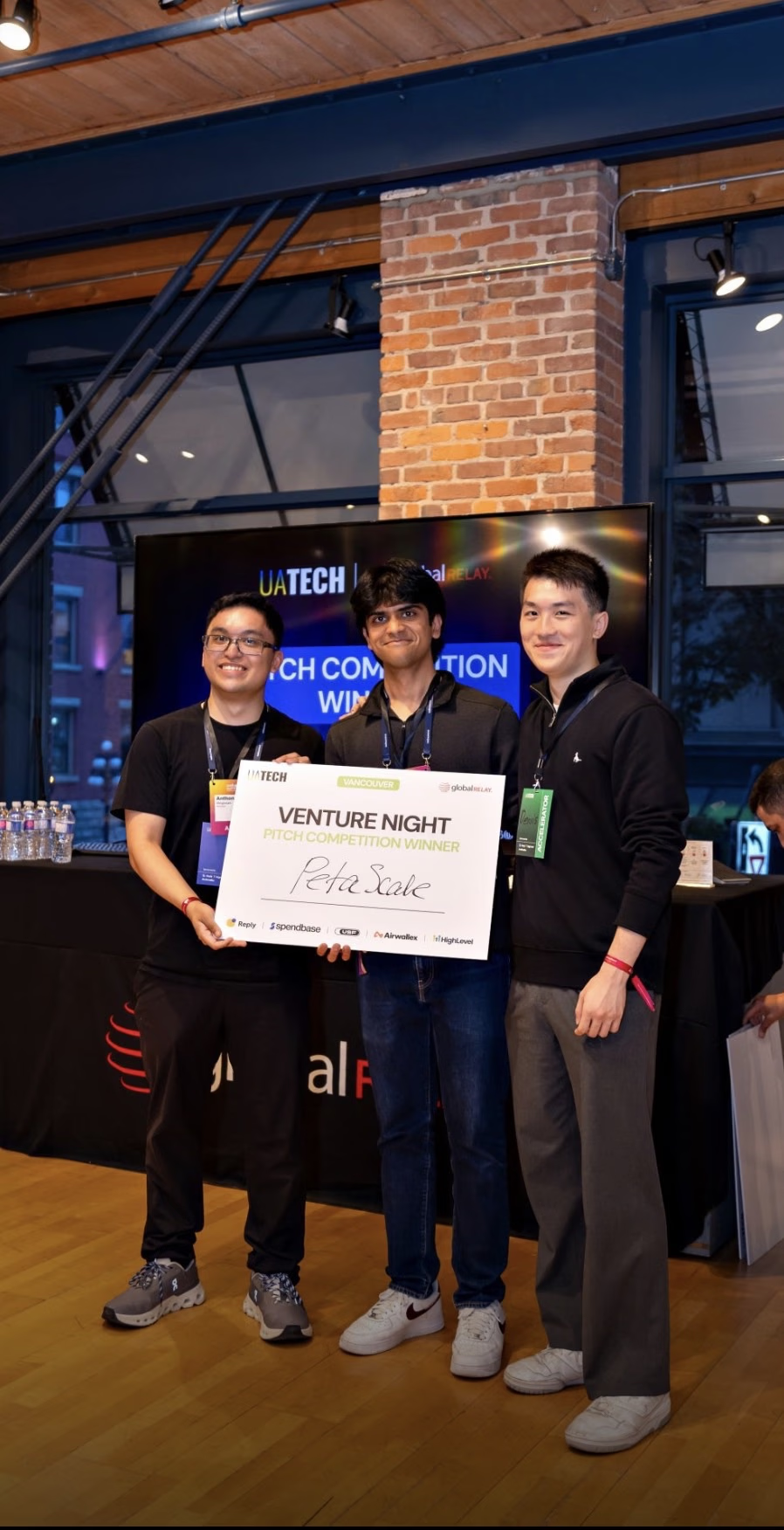
UATech Global Pitch Competition: Best Pitch and $25,000 (AWS)
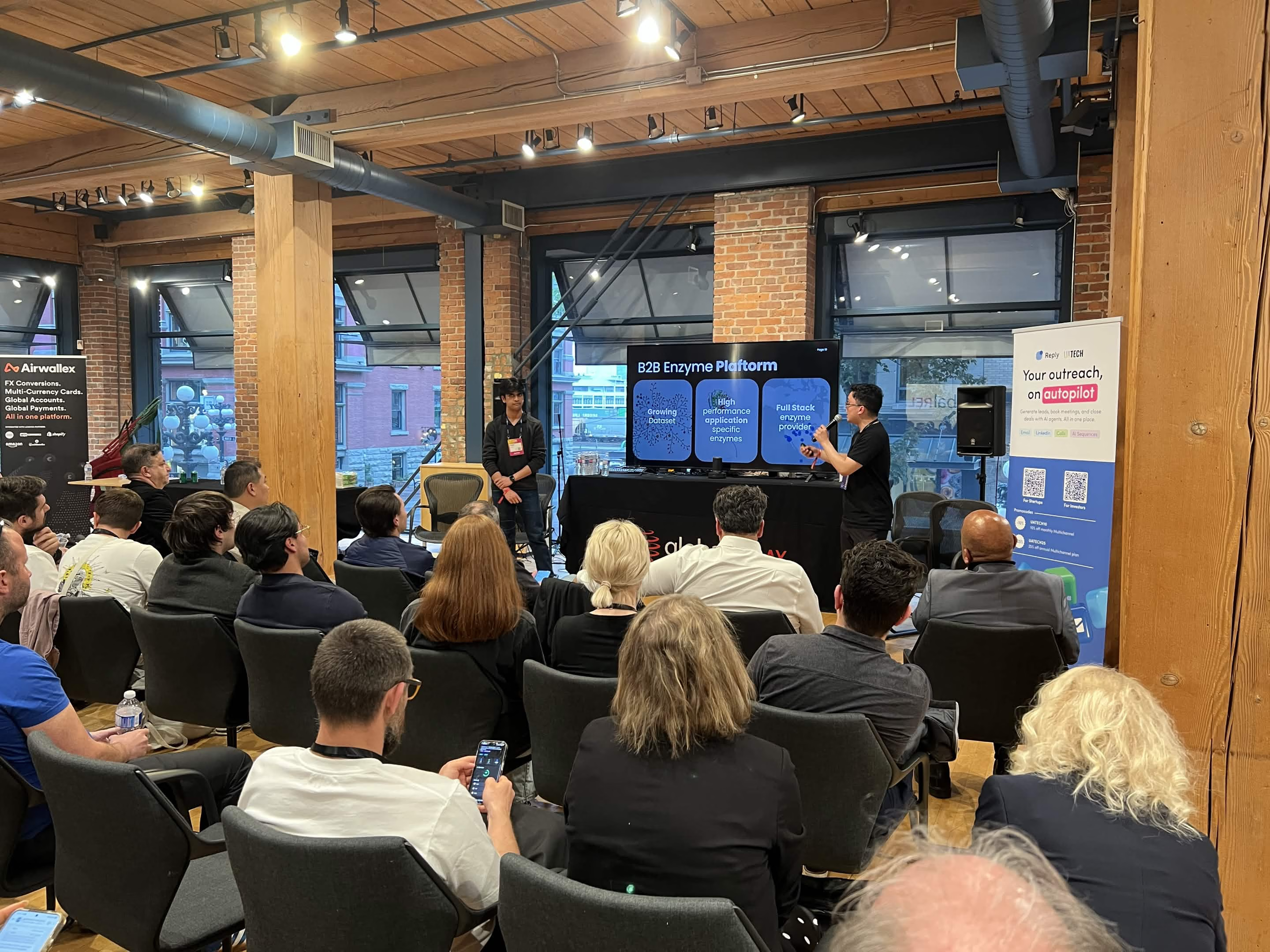
On May 12, 2026, we won Best Pitch at the UATech Global Pitch Competition, where we competed as one of 10 finalists. Co-Presidents Anthony Dinglasan, Purav Gupta and Dry Lab Lead Dennis Zhu presented on behalf of the team. The $25,000 USD in AWS credits funded AI model training and sequence clustering for the PETadex pipeline and covered much of the compute cost of screening our candidate enzymes.
What we learned: A technical audience responds best when we present our science as a cost problem. Pitching to a room focused on technology and cloud infrastructure pushed us to explain our compute needs in concrete, fundable terms, and that framing won us the in-kind resources we needed.
Website: Gallery — TechEmbassy
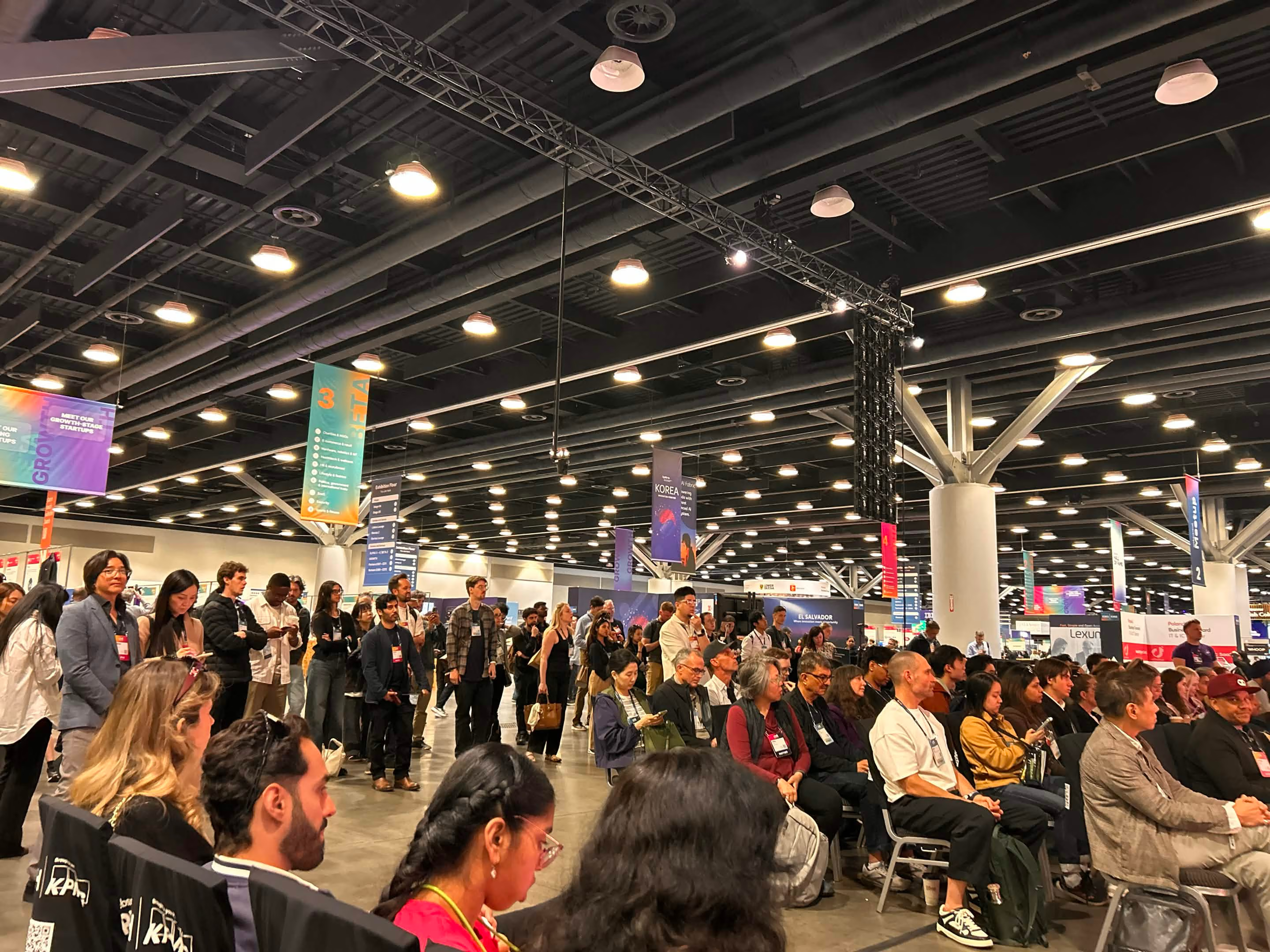
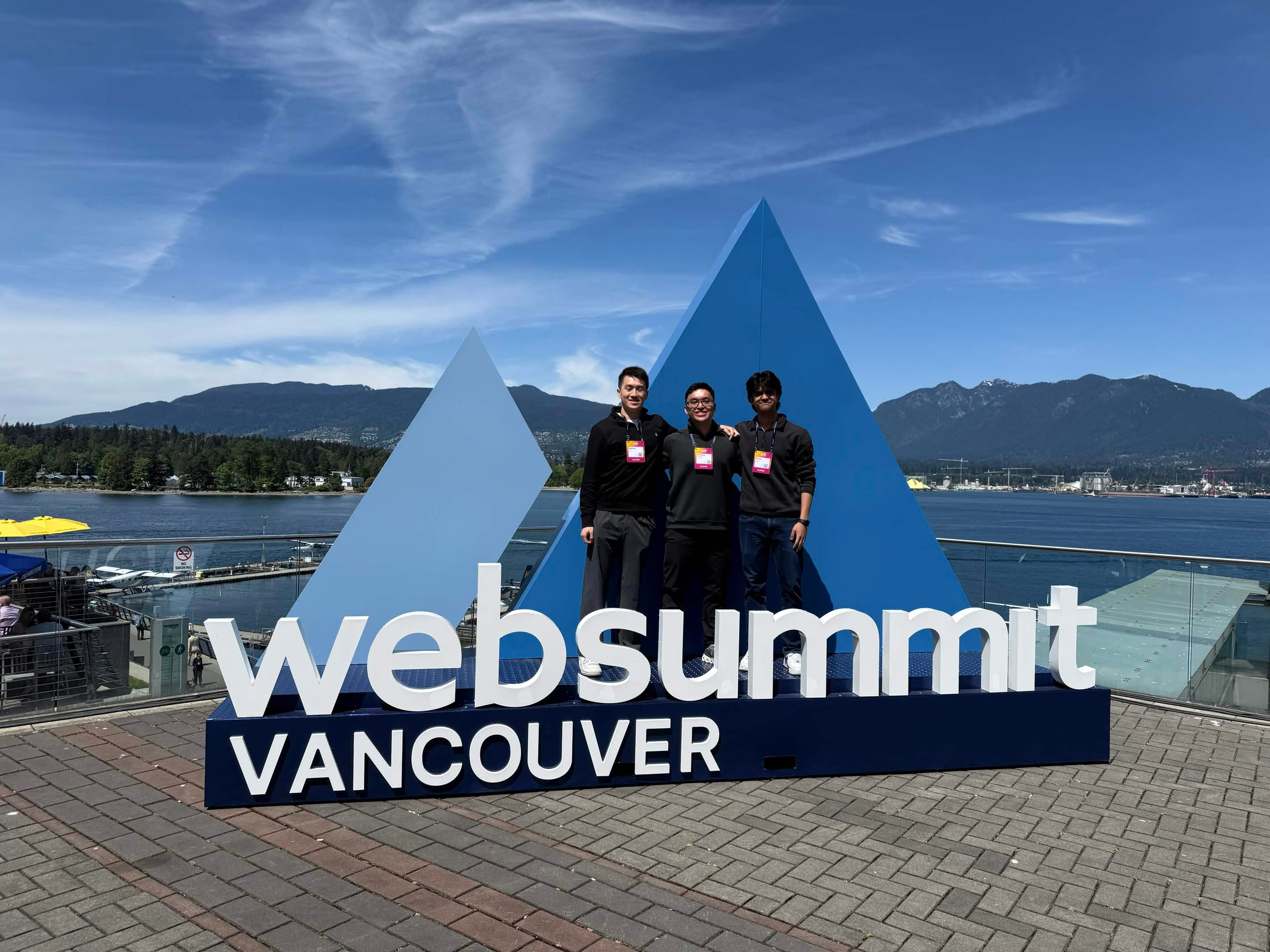
WebSummit Vancouver: Main Stage Presenter (Top 8% of 1,200 Startups)
Web Summit is a global technology conference founded in Dublin in 2009, and its flagship Lisbon event draws over 70,000 attendees from across the technology industry, venture capital and government. Web Summit Vancouver is its North American edition and it brings together founders, investors and industry leaders from around the world.
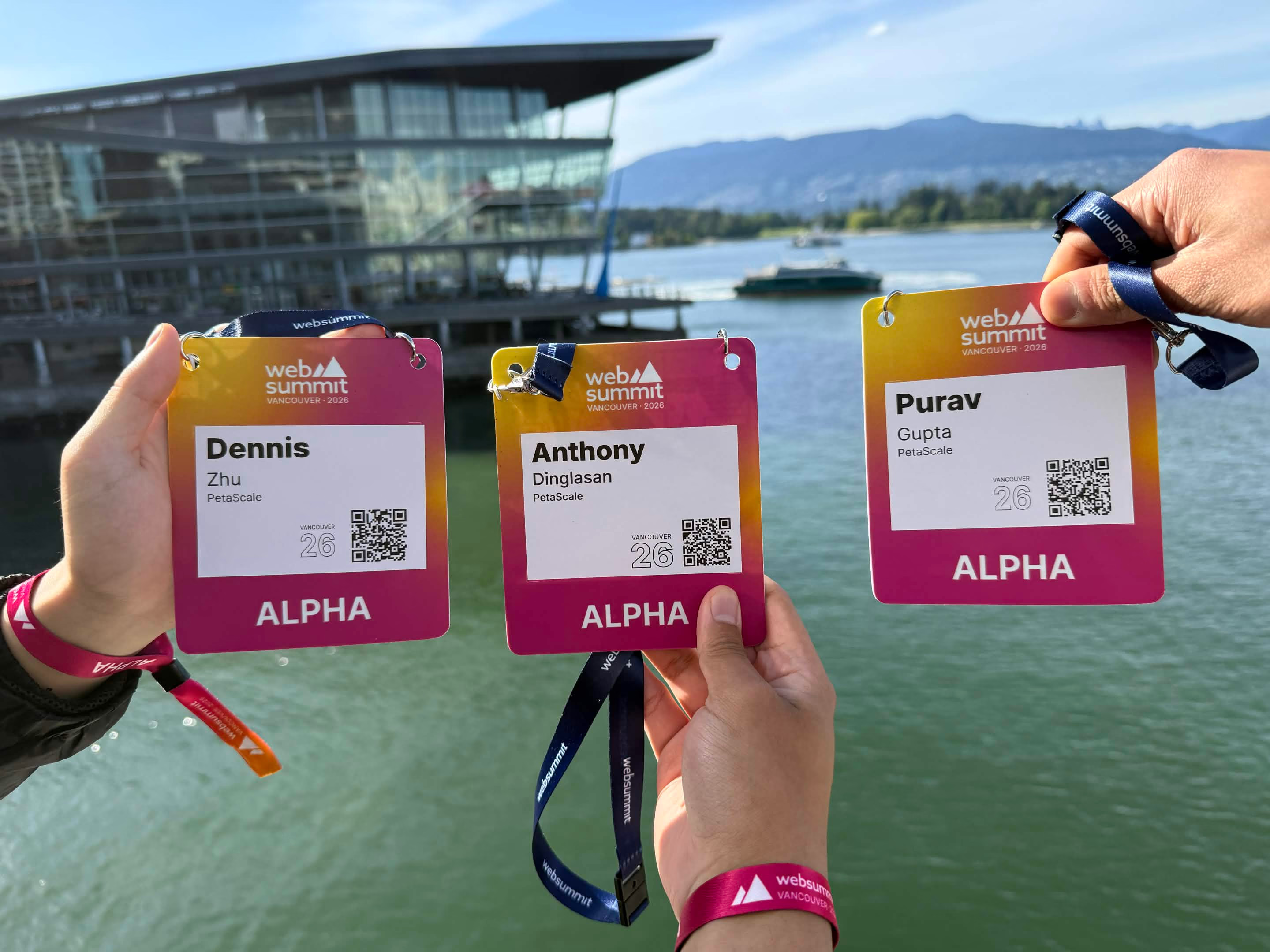
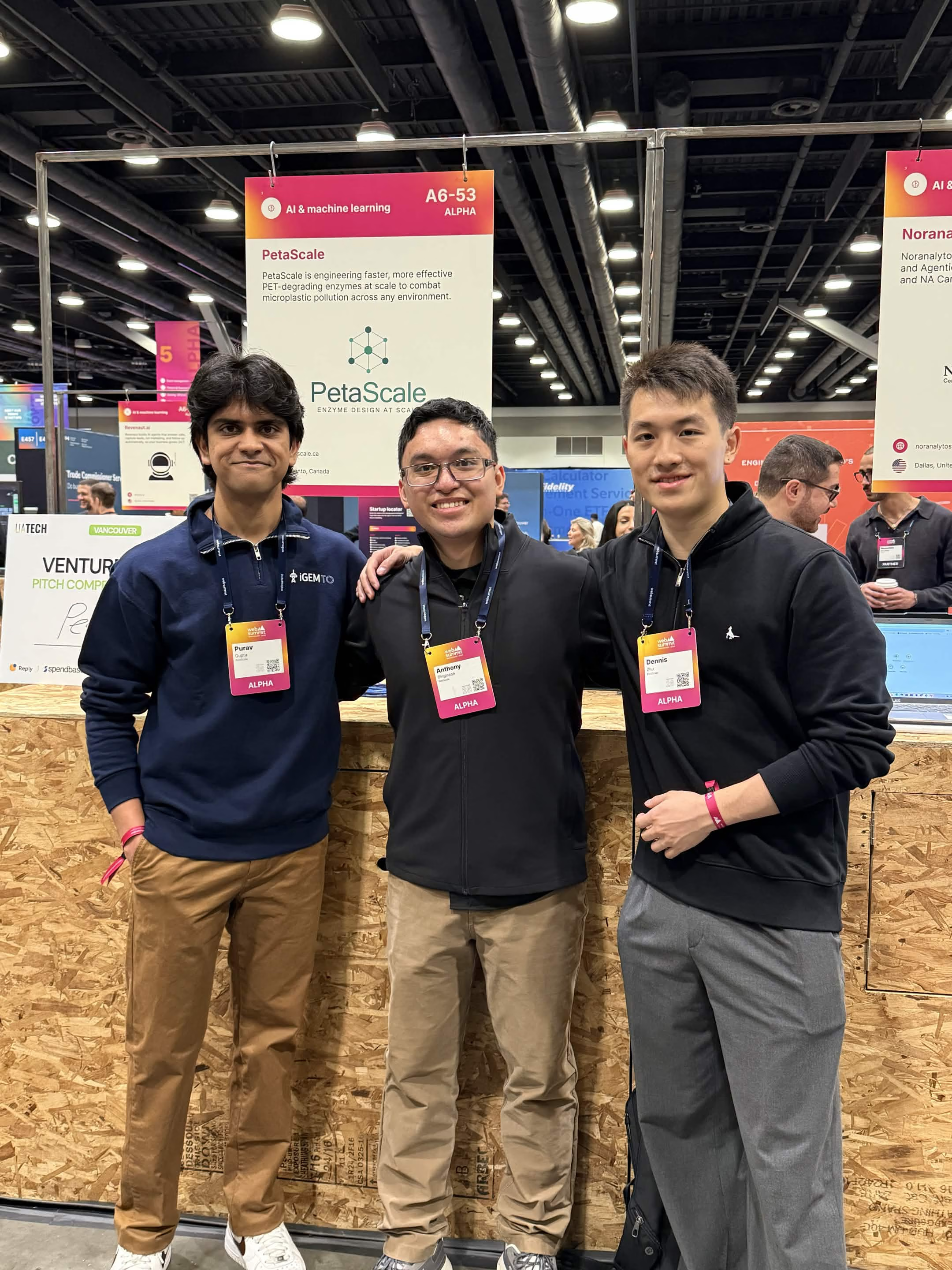
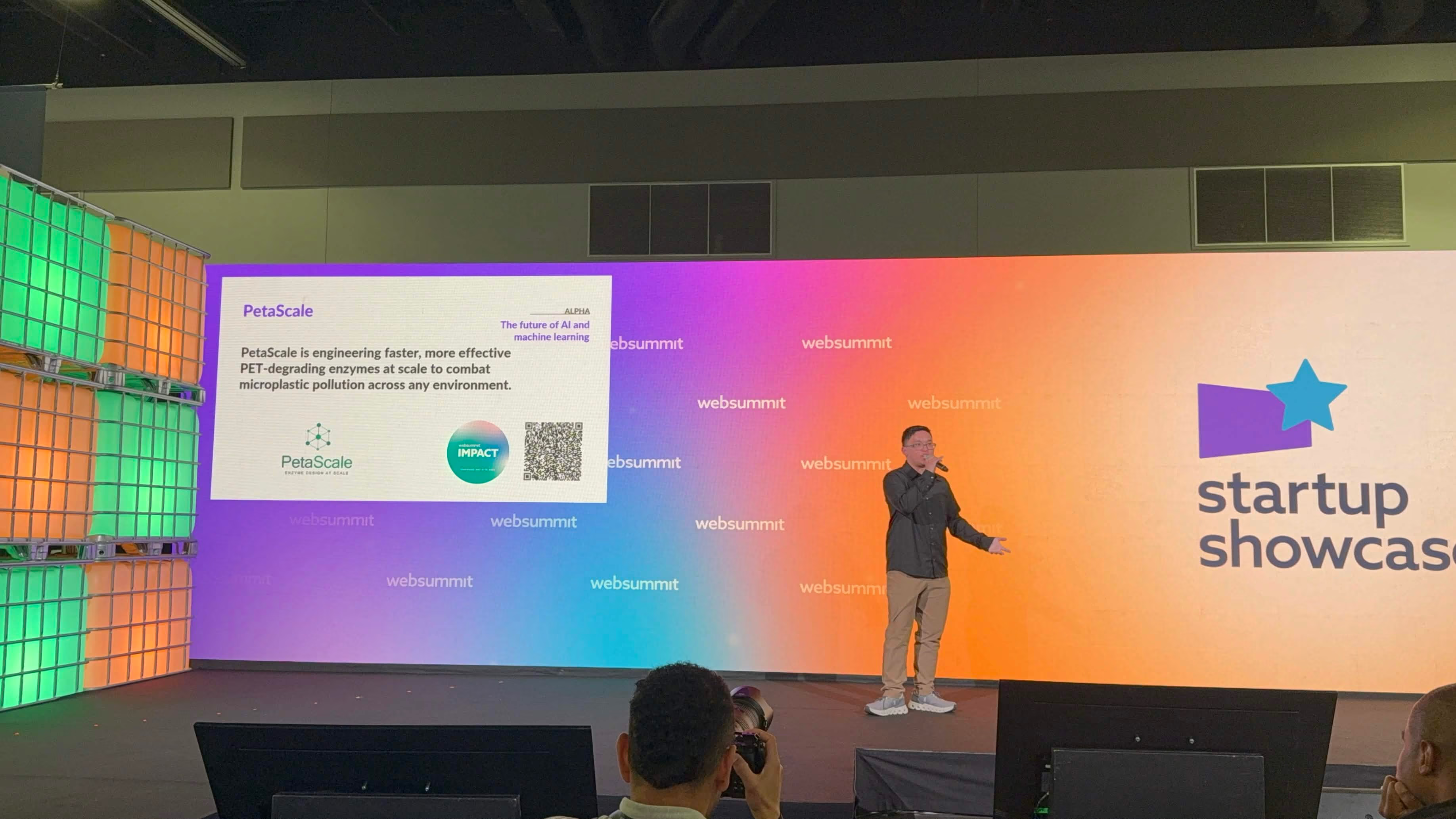
On May 14, 2026, PetaScale presented on the main stage at Web Summit Vancouver. Organizers selected us from about 1,200 startups, placing us in the top 8%. Our presentation appears at the 44-minute mark of the "Future of AI and Machine Learning" session:
The future of AI and machine learning - Web Summit Vancouver
Web Summit also named PetaScale an IMPACT startup for innovation in sustainability, a distinction given to the top 10% of startups on that measure. We also ran an exhibition booth, where we introduced our brand and the PETadex to hundreds of international attendees, investors and researchers.
What we learned: A general technology audience needs the problem and the outcome before the biology. We learned to open with what we are solving and why it matters, and to bring in the science only once the audience understood the stakes. This was our first real test of explaining PetaScale to people outside synthetic biology, and it shaped every deck we built afterward. Additional insights from this experience can be found in the Human Practices section.
iGEM Startups Global BioHackathon: Judges' Choice Award
We also won the Judges' Choice Award at the 2026 iGEM Startups Global BioHackathon, held March 27 to 29, 2026. The award recognizes outstanding innovation in biotechnology and judges highlighted our work in enzyme discovery. We built our full pitch and video within 48 hours and competed against other iGEM teams and established startups led by professors and biotechnology founders.
What we learned: We can build a clear, competitive pitch under real time pressure. Winning against founder-led startups showed us early in the season that our commercial story could hold up alongside experienced teams.
UofT Rendezvous Research Pitch Competition: Presenter
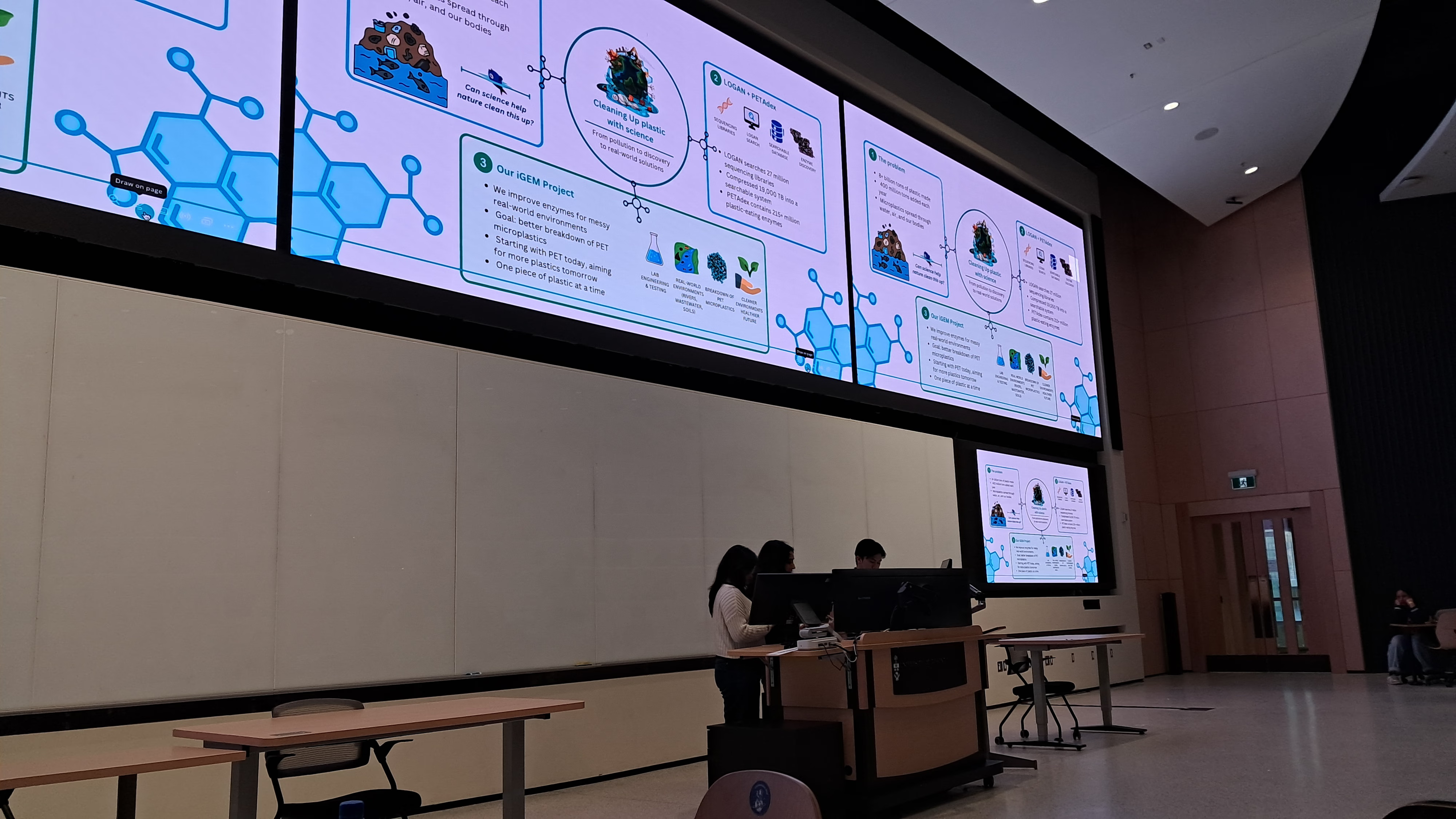
On May 9, 2026, we presented PetaScale at the University of Toronto's Rendezvous Research Pitch Competition. We pitched the impact of room-temperature enzymatic PET degradation to an audience of researchers and innovators from across the university.
What we learned: Research audiences value scientific rigour, but they still respond most strongly when we open with impact. Rendezvous was our first chance to test a plain-language version of our pitch, and it prepared us for UATech and Web Summit Vancouver later that week.
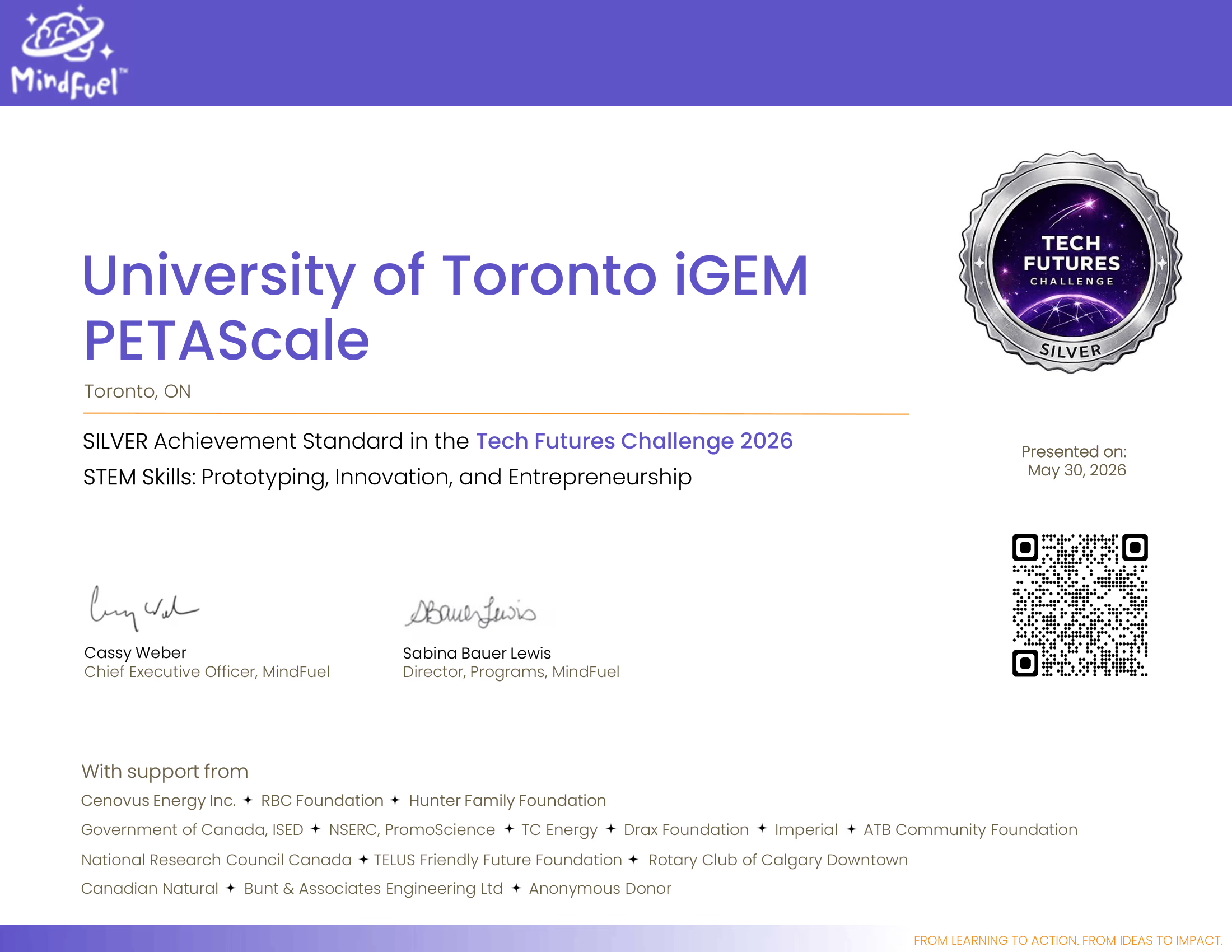
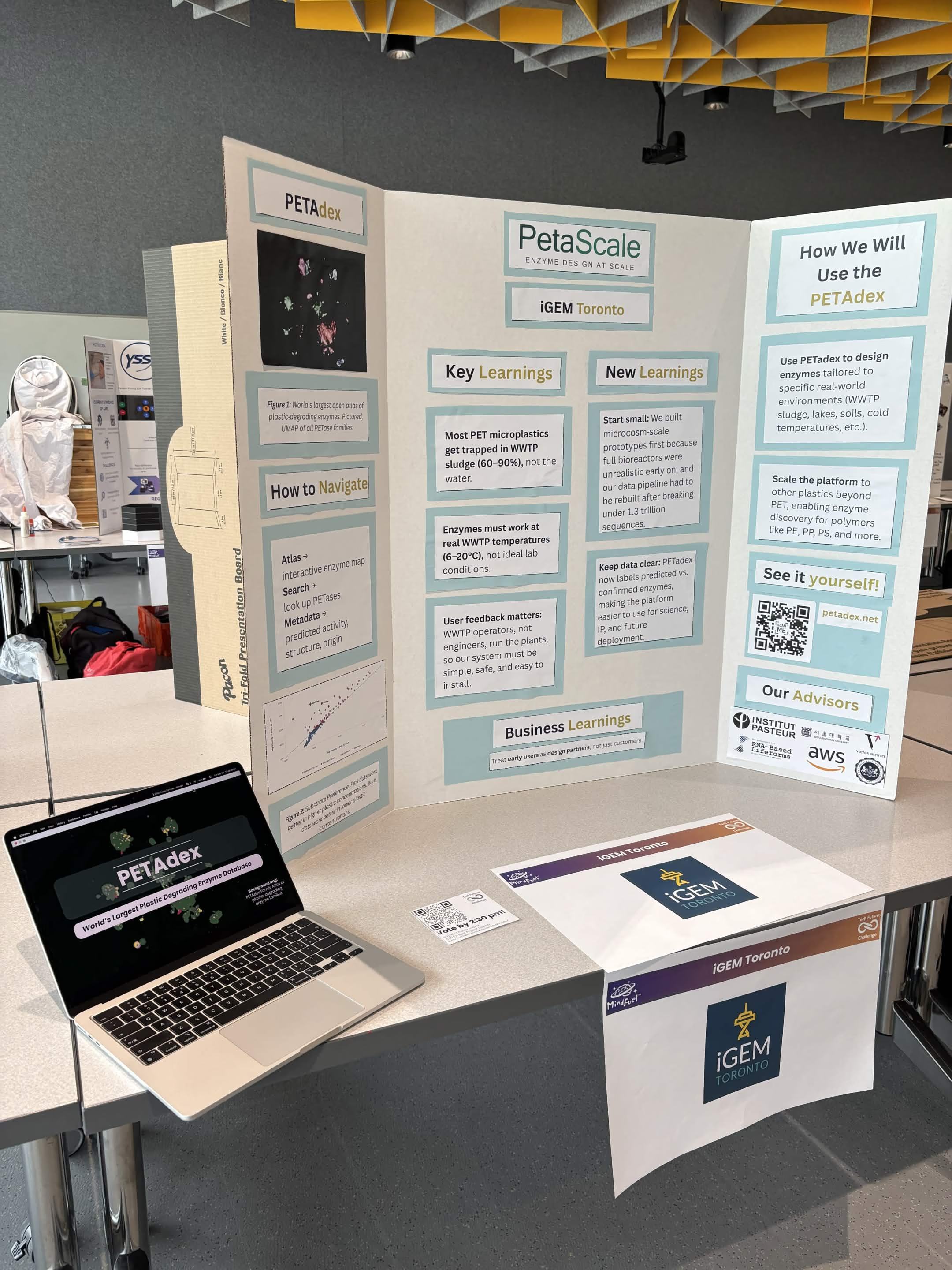
Tech Futures Challenge National Competition: Silver
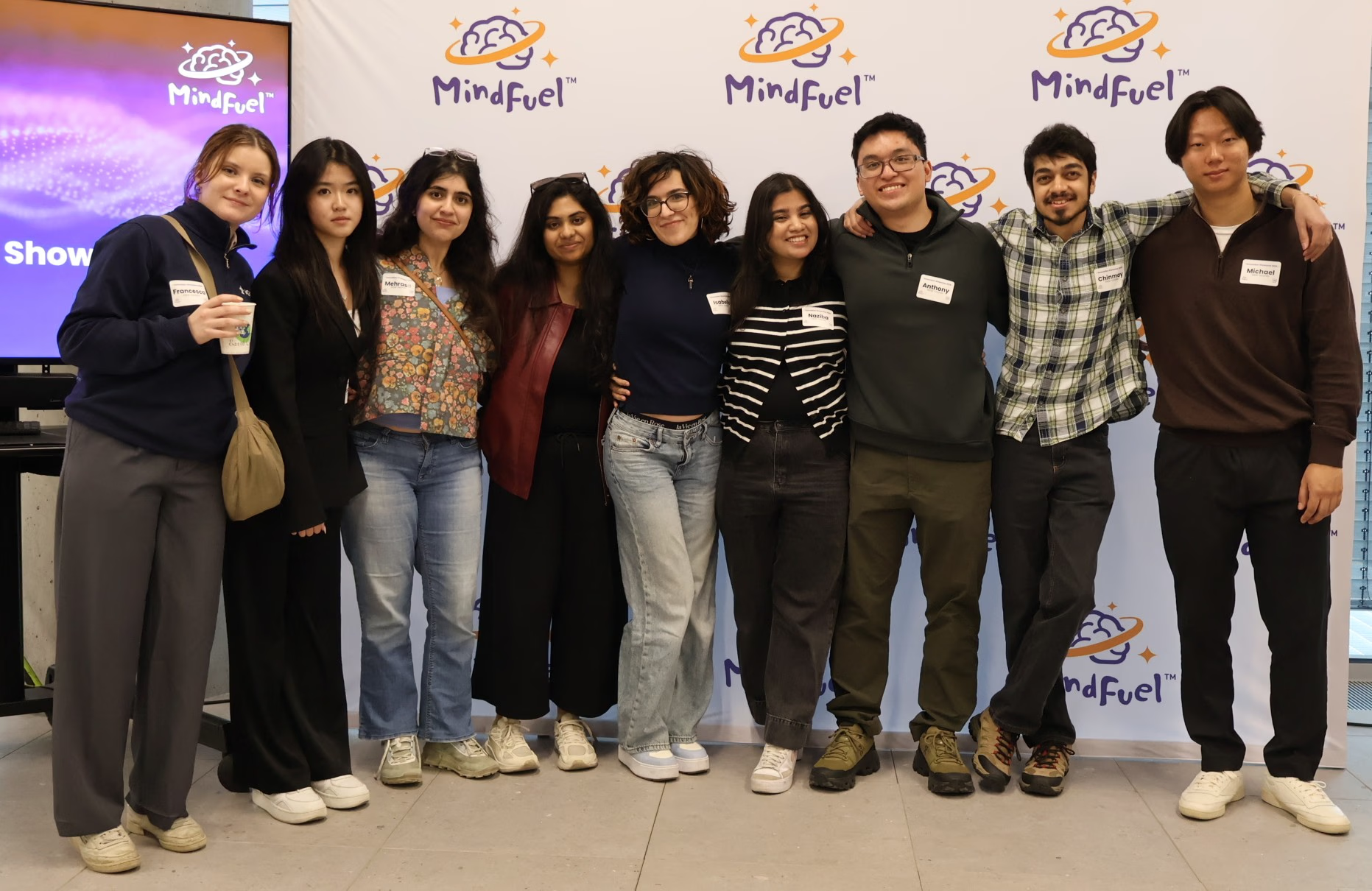
PetaScale earned Silver at the national final of MindFuel's Tech Futures Challenge, a national youth innovation program, held in Calgary on May 30, 2026. The award recognized our strong proof-of-concept prototype, which we backed with controlled testing and continuous iteration on mentor feedback. Judges described our work as "a strong and engaging project" with a "great explanation of problem" and "fantastic teamwork," and noted that our solution "demonstrates strong potential and technical depth." For continued growth, they suggested we "expand scalability considerations and clarify the core product focus ('enzyme or the website?')."
What we learned: That last comment was the most useful feedback we received all season. We had been blurring two separate things in our pitch: the enzymes we engineer and the public tools we built to find them. The feedback led us to separate the two clearly. We now present our engineered enzymes as the product, and PETadex as the open research platform behind them.
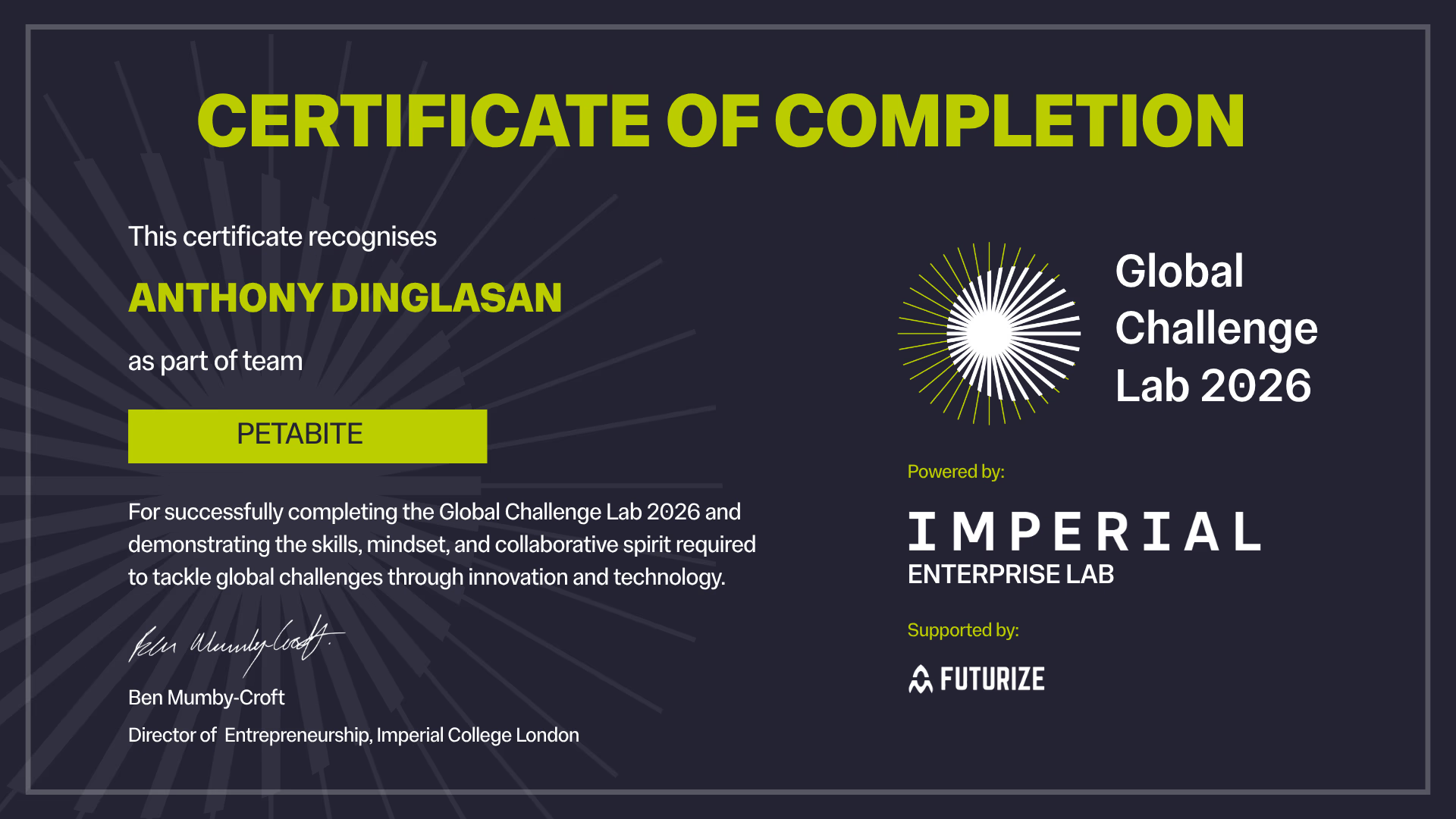
Imperial College London Global Pitch Competition: Participant
In July 2026, we represented PetaBite at the Imperial College London Global Pitch Competition, presenting PetaBite and PETadex to a panel of judges and an international field of over 100 competitors. The judges praised the strength of our technical evidence and challenged us to show stronger product-market fit.
What we learned: Strong technical evidence earns attention, but a winning pitch also needs proof that customers want the product. The judges' feedback reshaped how our Entrepreneurship team approaches customer discovery, and we now measure fit by the commitments customers make across our WWTP, textile effluent, landfill leachate and filtration verticals. A special thank‑you to Paul O’Donnell for his mentorship and guidance throughout the competition.
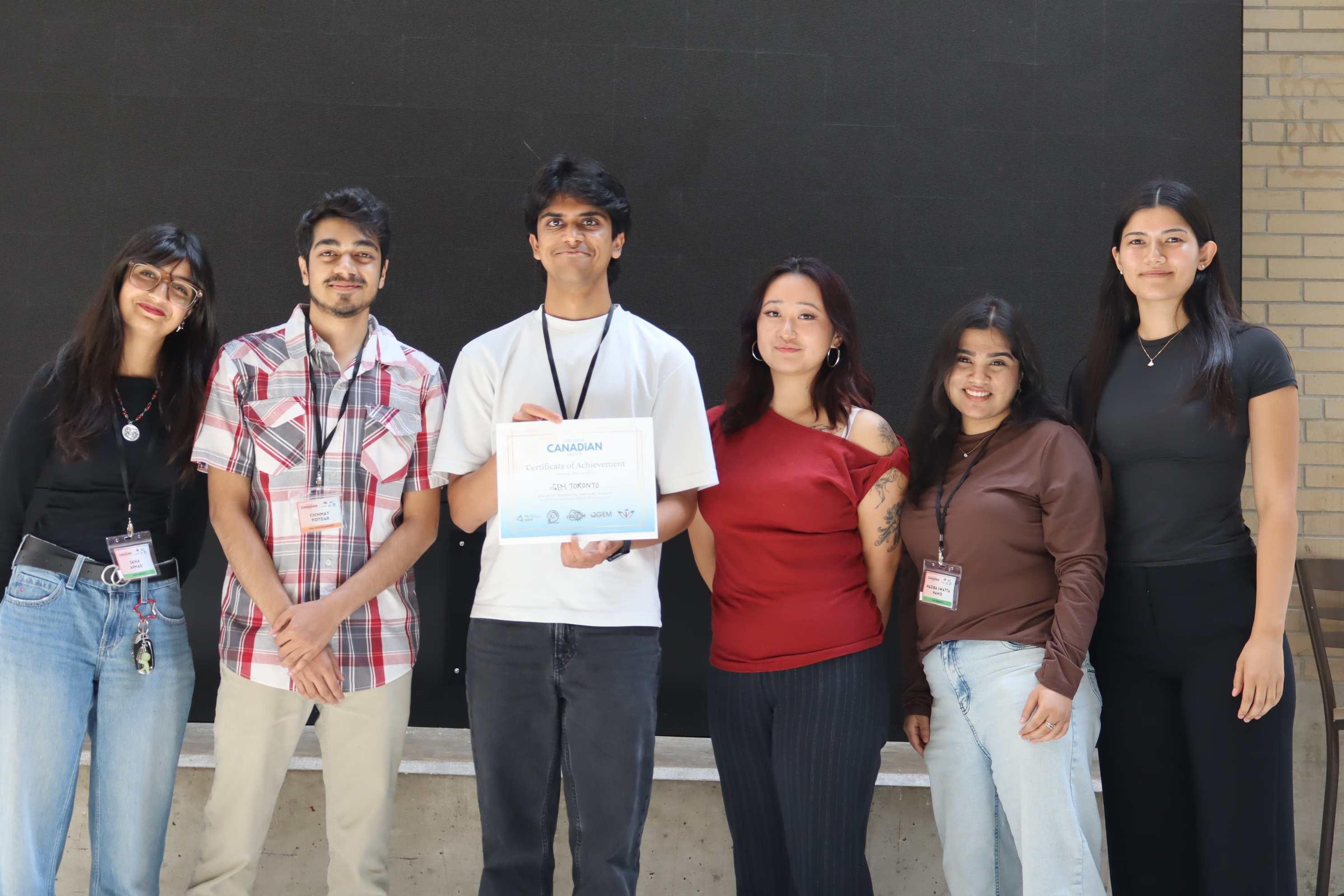
Great Canadian iGEM Meetup National Competition: Second Overall, Best Engineering Approach and Best Experimental Evidence
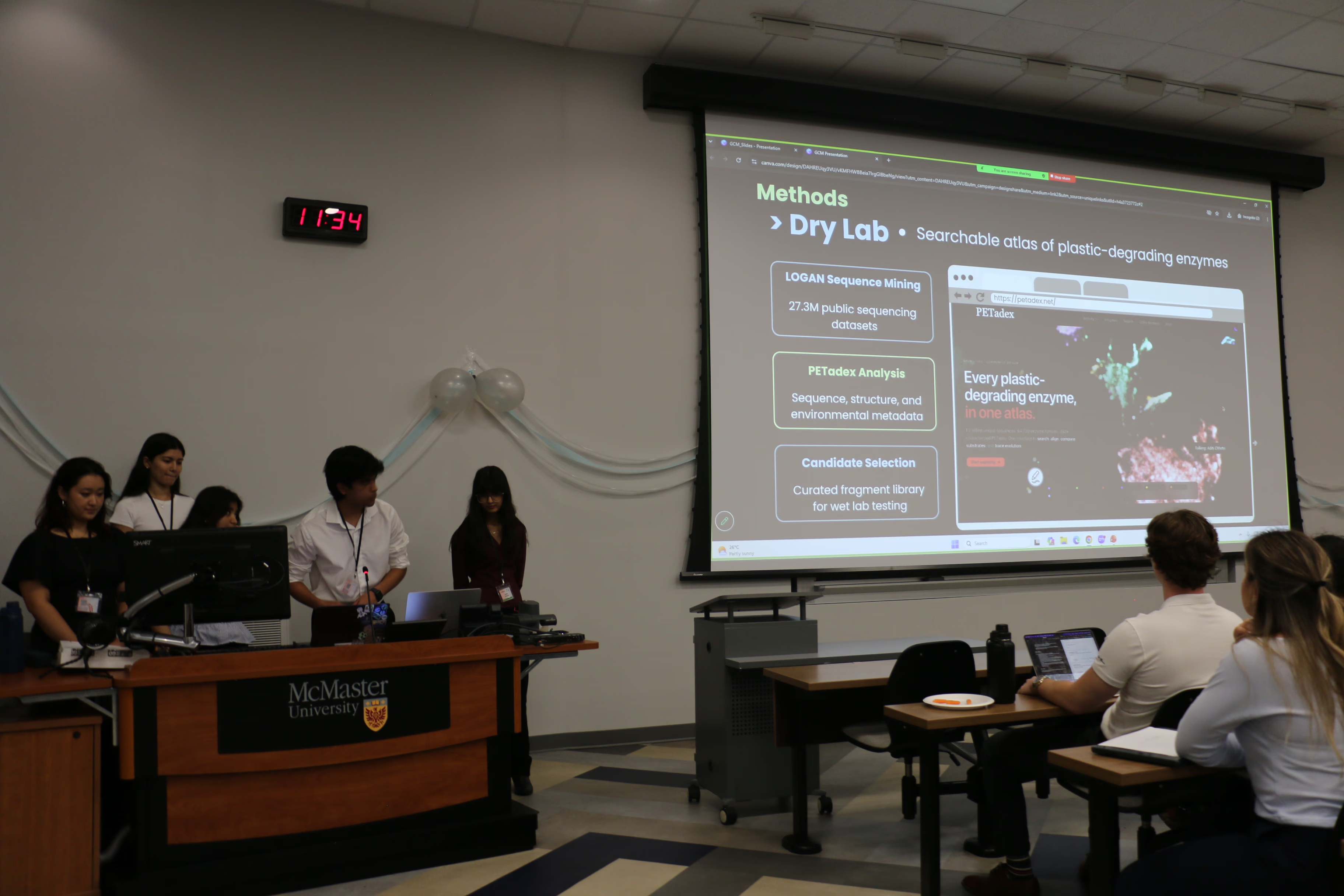
On August 8, 2026, we competed at the Great Canadian iGEM Meetup, the national gathering of Canadian iGEM teams, held at McMaster University in Hamilton, Ontario. Against 10 teams from across Canada, PetaBite placed Second Overall and won Best Engineering Approach and Best Experimental Evidence. The awards recognized our assay, the first version of our bioreactor and the quality of our early experimental data.
What we learned: Two of our three awards came from engineering and experimental evidence, which confirmed that our hardware and wet lab work set us apart from other teams. The results also showed us that our early data was already strong enough to present with confidence.
North American Mini Jamboree Biotechnology Competition: Second Overall
On September 12, 2026, we competed at the North American Mini Jamboree. PetaBite placed Second Overall out of 29 teams/universities, a field of over 200 participants from across North America. We also earned nominations in three categories: Best Entrepreneurship (top 3), Best Human Practices (top 3) and Best Presentation (top 5).
What we learned: Placing second and earning an entrepreneurship nomination against a large, competitive field showed us that our commercial story now holds up. This was the most refined version of our pitch to date, and it reflected the changes we had made since May, including a clearer product focus after Tech Futures and a sharper approach to product-market fit after Imperial.
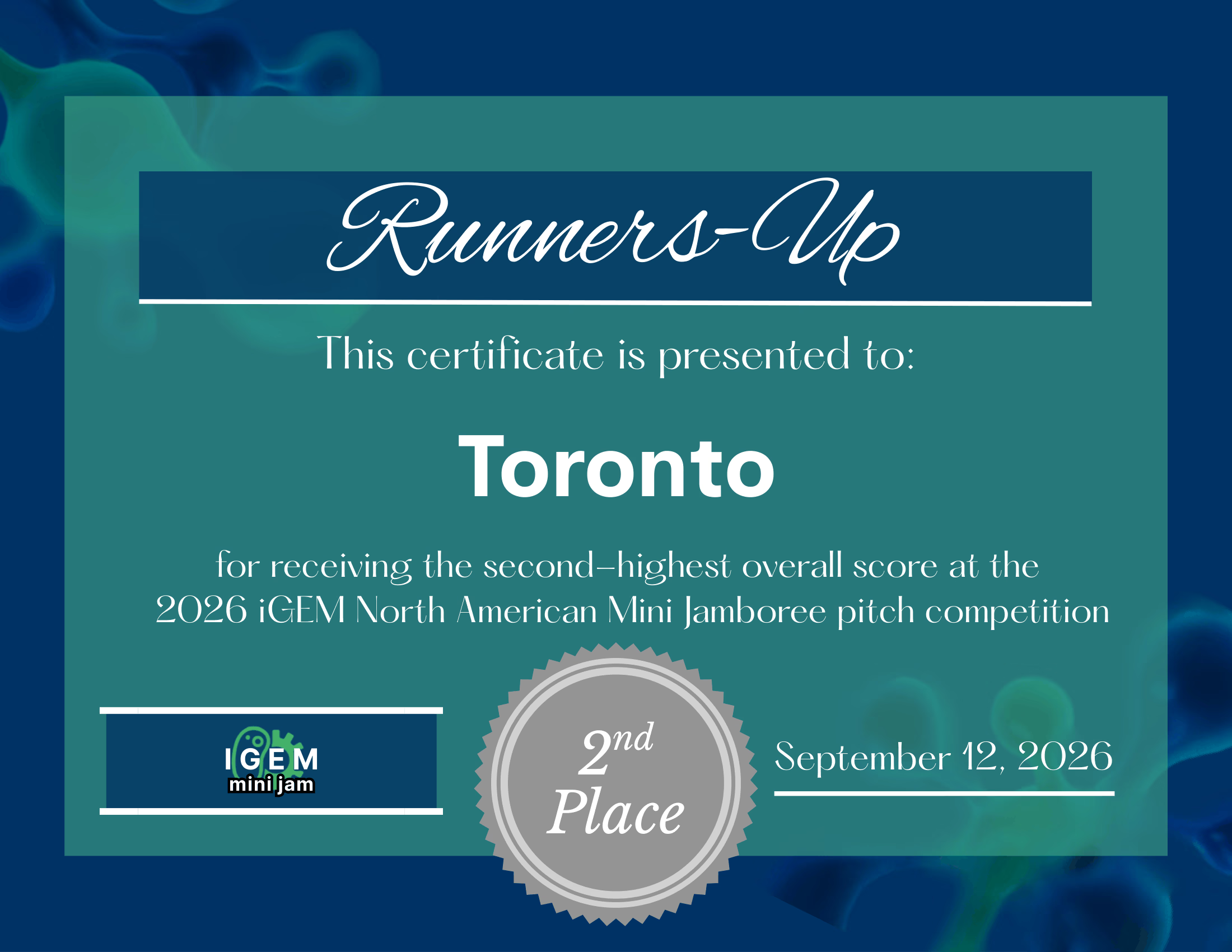
Finalized Scorecard: Scorecard: Toronto - Google Sheets
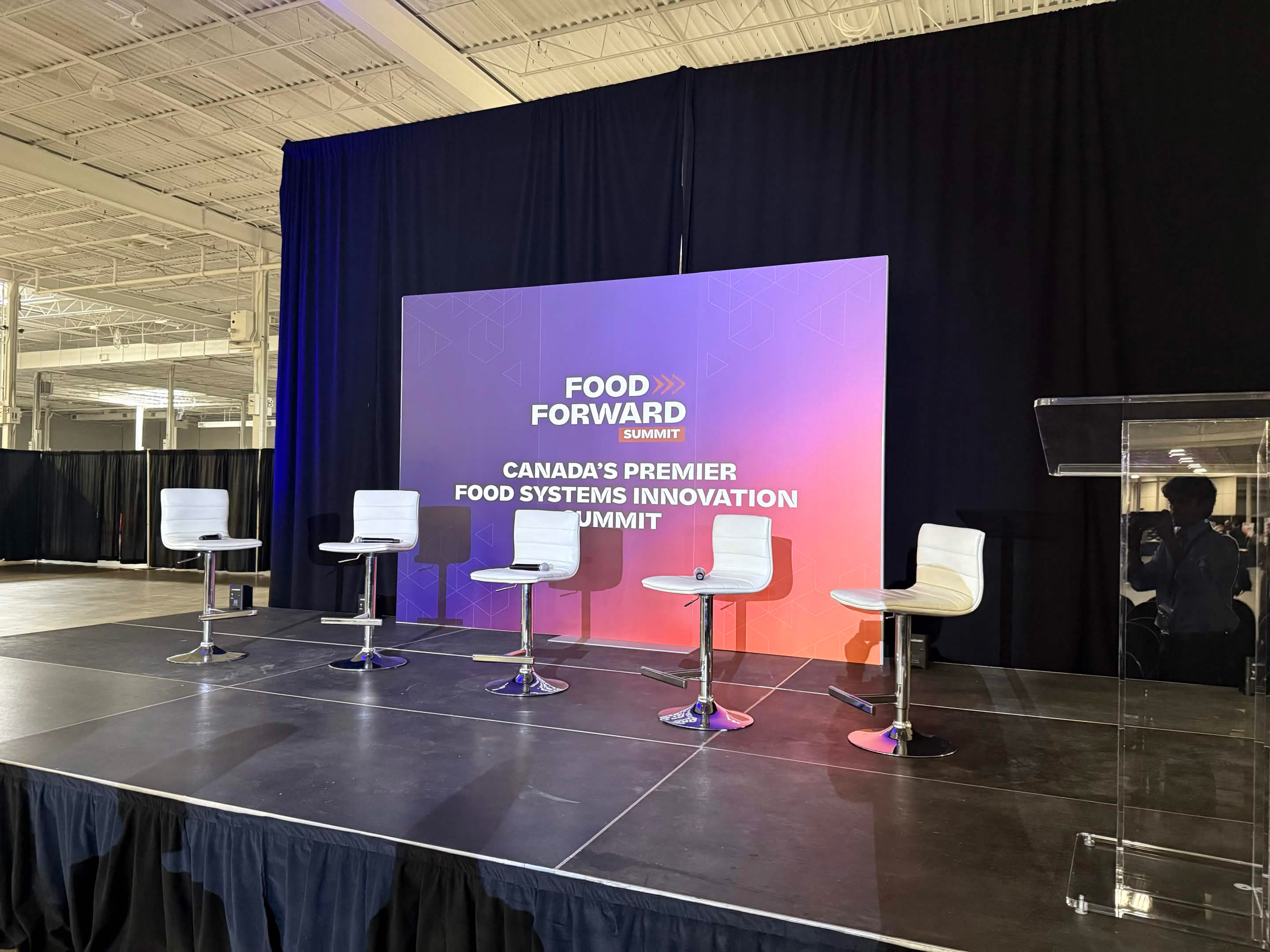
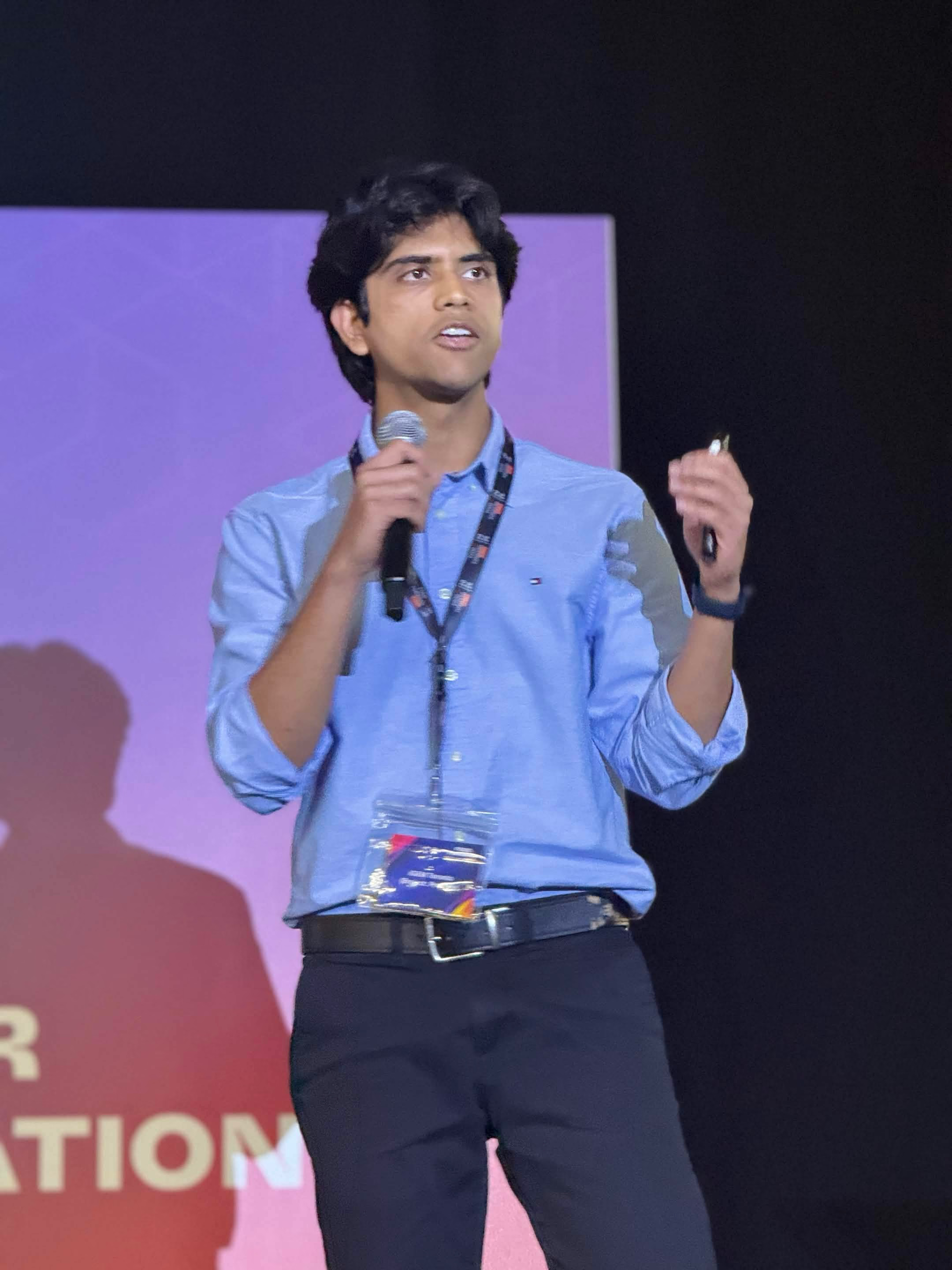
FOOD FORWARD Innovation Challenge: Finalist - Top 3 (October 8, 2026)
FOOD FORWARD Summit is Canada's flagship food systems innovation and trade event. The 2026 summit brings over 2,000 leaders, investors, policymakers and researchers to The International Centre in Mississauga, with representatives from Bayer, Royal Bank of Canada, Farm Credit Canada, the National Research Council of Canada, the Canadian Food Innovation Network, Canada's Ocean Supercluster, the Canadian Chamber of Commerce and Mowi Canada.
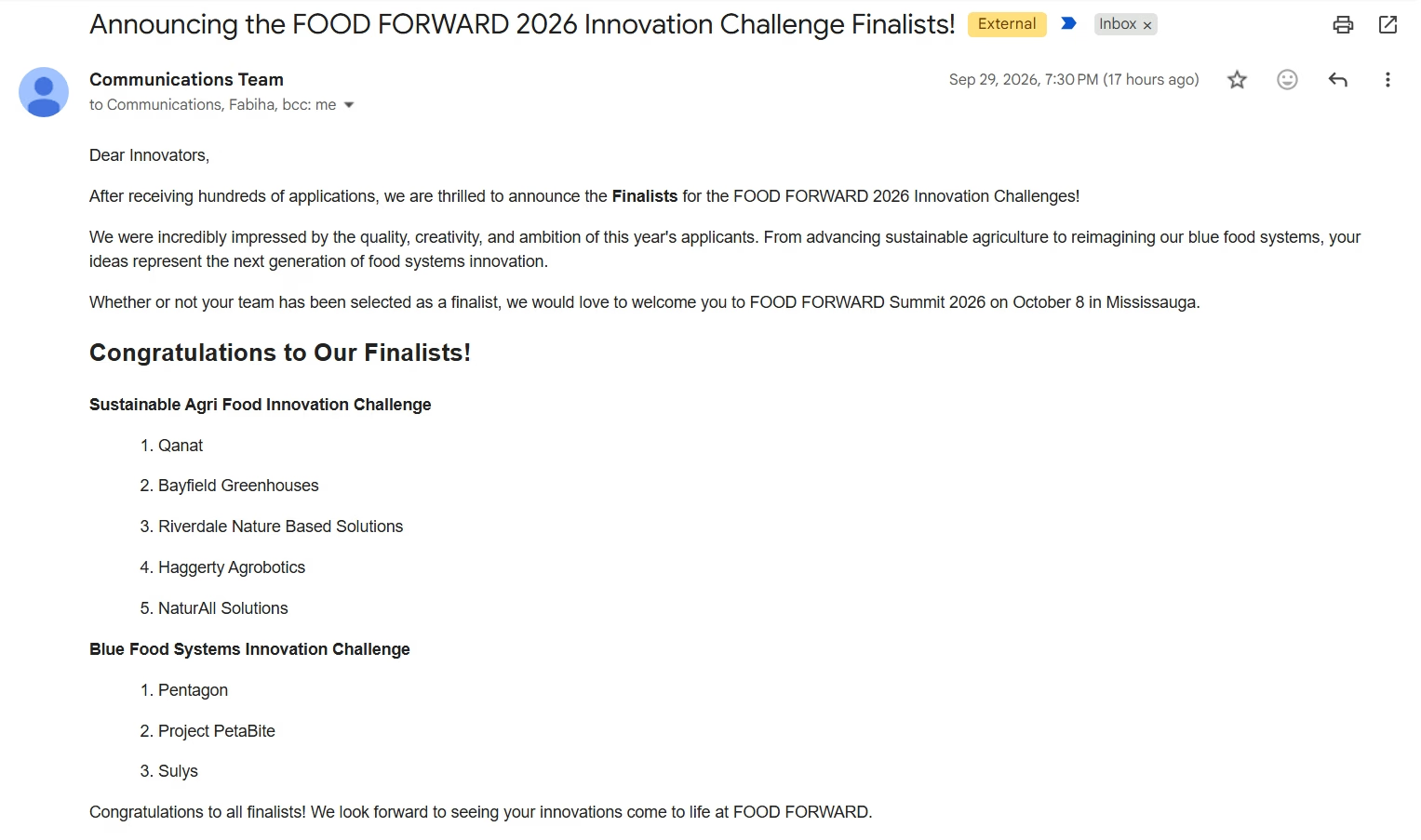
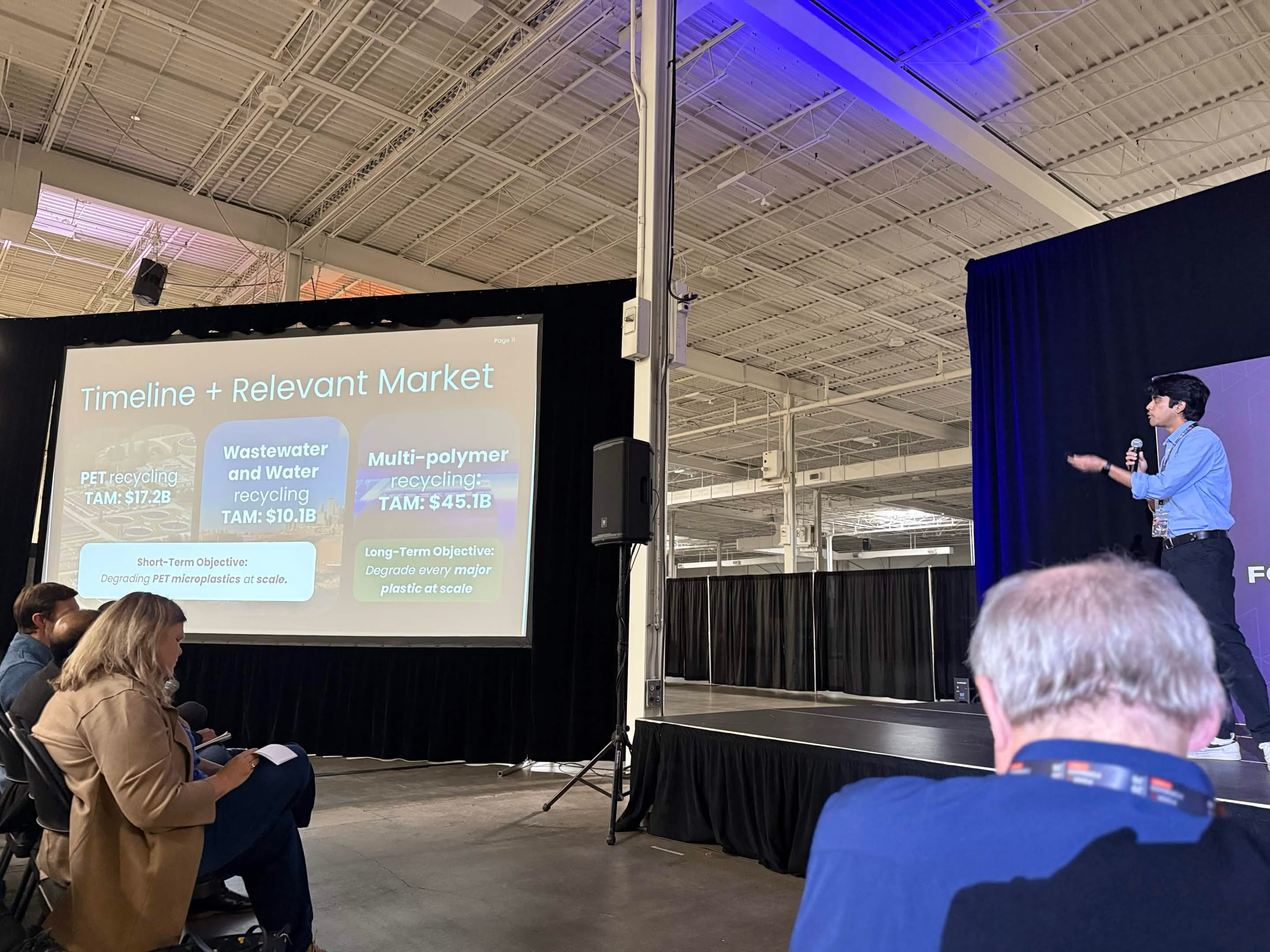
Out of hundreds of pre-seed and seed-stage startups, FOOD FORWARD selected PetaBite as one of three finalists in the Blue Food Systems Innovation Challenge, competing for $5,000 CAD, which recognizes innovations advancing environmental sustainability and resilience across fisheries, aquaculture and the broader blue food economy. We pitched on October 8 before investors and a concentrated, high‑signal audience representing the direct market we aim to serve.
After the conference, Co-Presidents Anthony Dinglasan and Purav Gupta were also invited to contribute to the FOOD FORWARD White Paper, helping translate key insights from the Atlantic, Ottawa, and Toronto event series into actionable recommendations for strengthening Canada's food system.
Website: FOOD FORWARD SUMMIT 2026 | Food Systems Innovation
Conferences
Y Combinator Startup School - (Top 5% of Applicants)
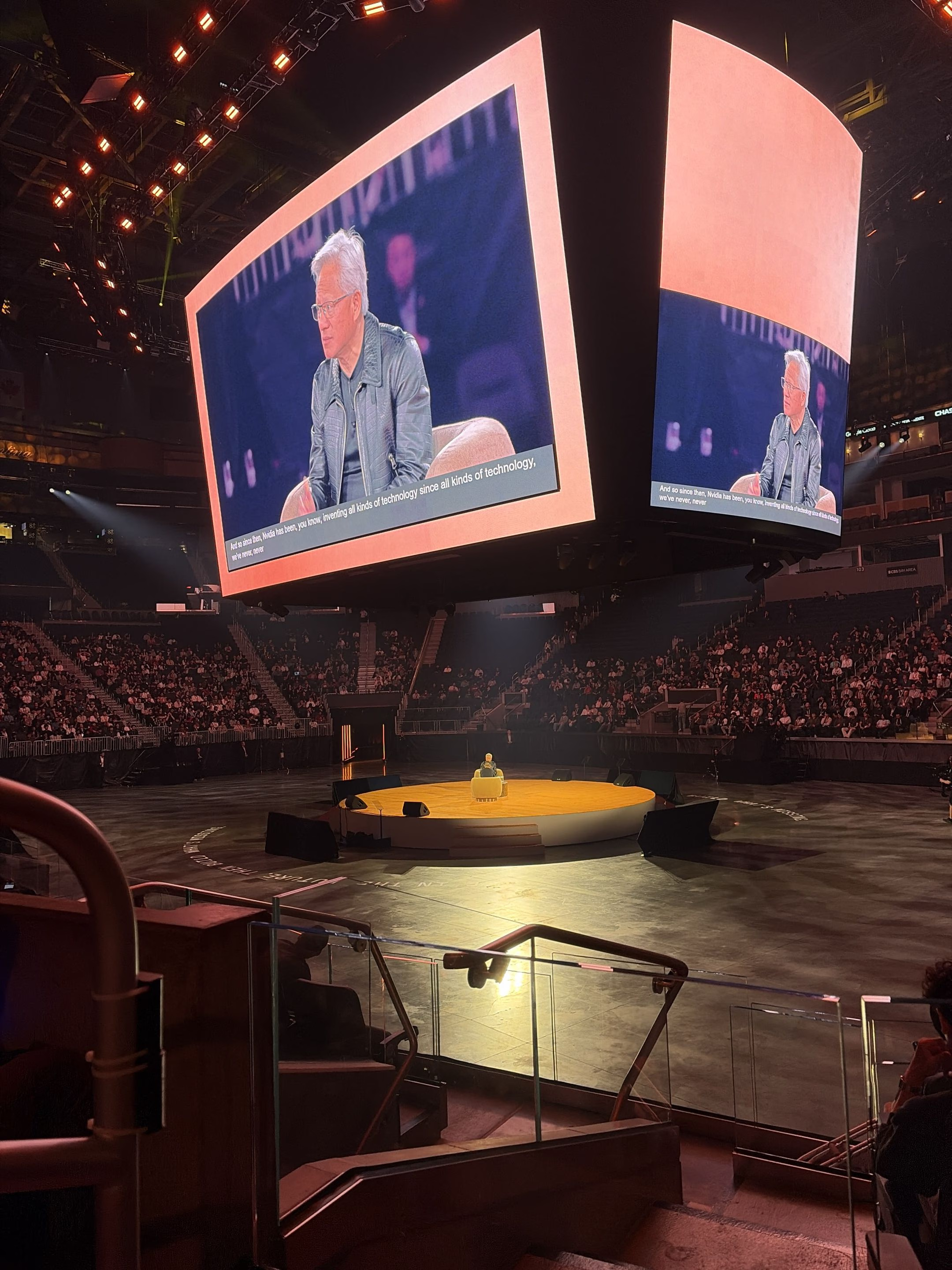
Y Combinator (YC) is the startup accelerator in Mountain View, California that funds early-stage companies in exchange for equity and connects them to its founder network. It has backed Airbnb, Stripe, DoorDash, Coinbase and Reddit, and its main accelerator batches accept roughly 1% of applicants, which makes it the most selective and widely recognized startup program in the world.
Co-president Purav Gupta was admitted to Y Combinator's Startup School 2026 in the top 5% of applicants. YC hand-selects builders from around the world for this in-person program, held July 25 and 26, 2026 in San Francisco. Purav learned directly from founders and leaders including Sam Altman, Jensen Huang, and Patrick Collison, gained exposure to YC's approach to go-to-market strategy, and connected with a network of early-stage founders.
What we learned: YC's emphasis on speed and customer obsession gave us a valuable counterweight as a team that naturally leads with science.

SynBioBeta Global Conference: Attendee
From May 4 to 7, 2026, we represented PetaScale at SynBioBeta 2026, a leading global synthetic biology conference, held at the San Jose Convention Center. The conference connected us with industry leaders, enzyme companies and investors working at the intersection of AI and biology.
What we learned: Conversations with enzyme companies and investors showed us where enzymatic plastic degradation fits in the market. They also confirmed that room-temperature activity is the feature industry values most. Additional insights from this experience can be found in the Human Practices section.
VC and Incubator Conversations
Venture Capital Conversations
PetaScale has held initial conversations with three venture capital firms:
- FrontRow Ventures: Canada's first and largest student-run venture capital fund. FrontRow backs student-led technology startups across more than 20 university campuses with early cheques and founder-friendly terms.
- Northside Ventures: A Toronto-based pre-seed and seed-stage firm that backs Canadian founders at company formation. Northside invests in artificial intelligence, software, fintech and cleantech.
- MaRS Investment Accelerator Fund: One of Ontario's most active seed-stage investors, delivered by MaRS Discovery District and funded by the Government of Ontario. The fund provides capital and commercialization support to early-stage technology, cleantech and life sciences companies.
What we learned: Early investor conversations served both as market research and as warm fundraising leads. Each firm asked how PetaScale moves from a validated enzyme to recurring revenue, helping shape our short‑term goal of shortening the timeline from lab result to first paying customer.
Incubator Programs
1. Wilbe Venture Incubator: Sprint Completion
In April 2026, we completed Wilbe's venture build sprint. Wilbe is an international venture platform for scientist-founders that offers business training, community, lab access and first-cheque capital. Its online cohorts help researchers turn an idea into an investment-ready venture case. The sprint produced an investment-readiness review of PetaScale with two main recommendations, and we have acted on both:
- Sharpen the value proposition. Replace our platform description with one sentence about customer outcomes that a non-expert, such as a wastewater operator, understands immediately. The review identified this as the change with the highest near-term return.
- Treat wastewater as the wedge. Build stronger evidence on customer willingness to pay and specific adoption triggers, and define the path from wastewater into adjacent markets.
What we learned: The review identified the clarity of our commercial story as our biggest gap. Both recommendations pointed to the same goal, making PetaScale easy for a non‑expert customer to understand.
2. Creative Destruction Lab: Invitation to Apply
Creative Destruction Lab (CDL) invited PetaScale to apply to its program. CDL is an objectives-based mentorship program for seed-stage science and technology ventures. It began at the University of Toronto's Rotman School of Management and now runs sites across North America and internationally.
Learning Opportunities
iGEM Entrepreneurship Bootcamp: Participant
On July 25 and 26, 2026, the Entrepreneurship team took part in the iGEM Entrepreneurship Summer Bootcamp, iGEM's introductory entrepreneurship training program for the synthetic biology community. We used the program to test PetaScale's product-market fit across our WWTP, textile effluent, landfill leachate and filtration verticals.
What we learned: Working through a structured entrepreneurship curriculum showed us which verticals we could defend with evidence and which still needed more customer discovery. It confirmed wastewater treatment as our strongest near-term entry point.