





















Problem statement
Plastic-degrading enzymes are a recent solution to a century-old problem. With the discovery of PETases, the ability to degrade PET materials that disrupt ecosystems across Earth has become more feasible. With new PETases being discovered regularly, the need to characterize their properties is growing.
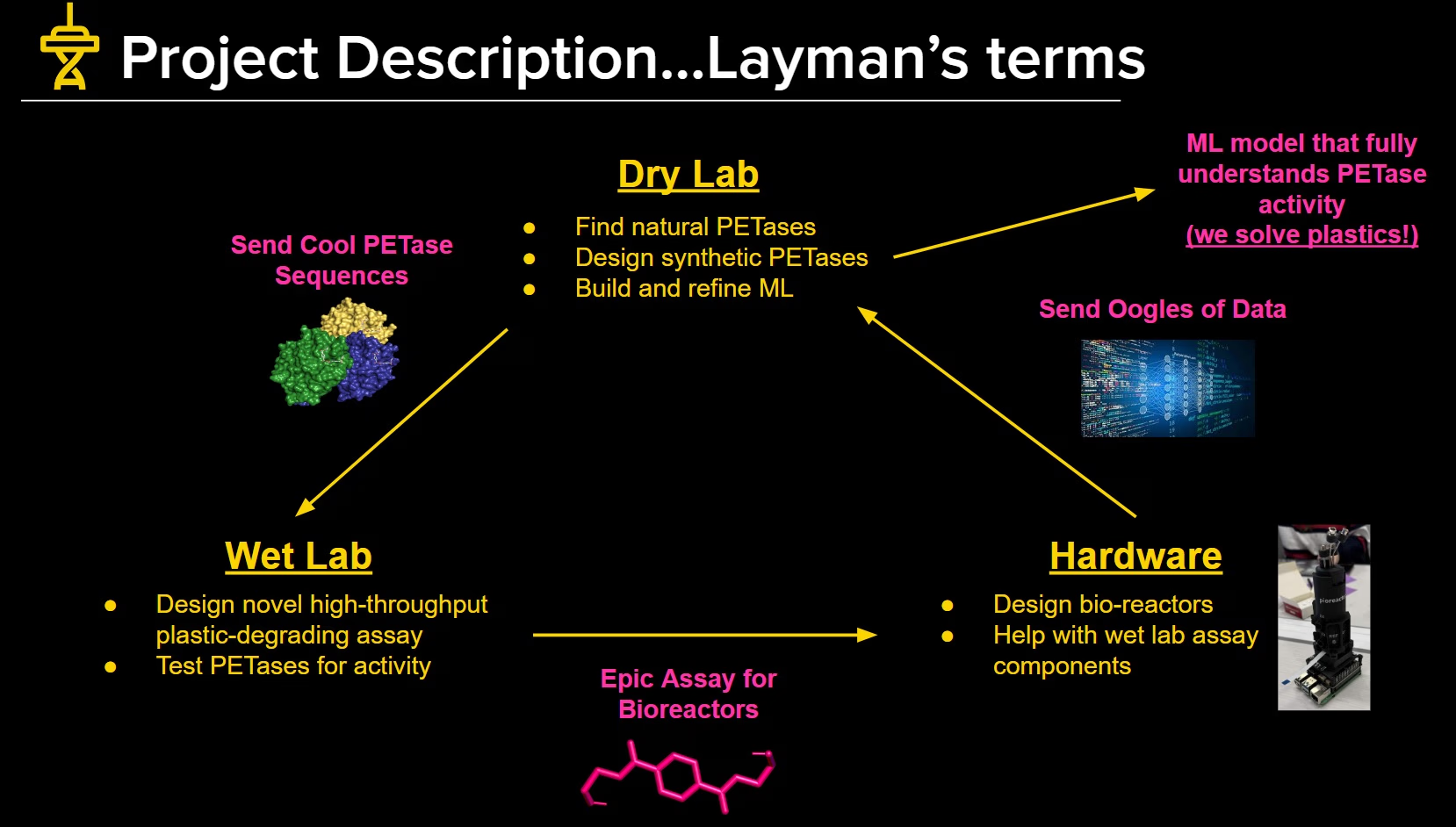
This cycle, iGEM Toronto’s dry lab subteam has constructed the PETadex, a revolutionary database that profiles millions of plastic-degrading enzymes. To test candidate enzymes, the wet lab subteam has developed novel high-throughput selection assays to identify strong performers under one condition. Yet these assays leave a clear gap: enzymes behave differently under different conditions. Each PETase has its own optimal pH, temperatures, salt concentrations, and more. Thus, to complete the PETase-development pipeline, we require a method to characterize the “fitness landscape” of PETase activity simultaneously and return this data back to the dry lab to improve their models. How can hardware help?
Behold, the bioreactor!
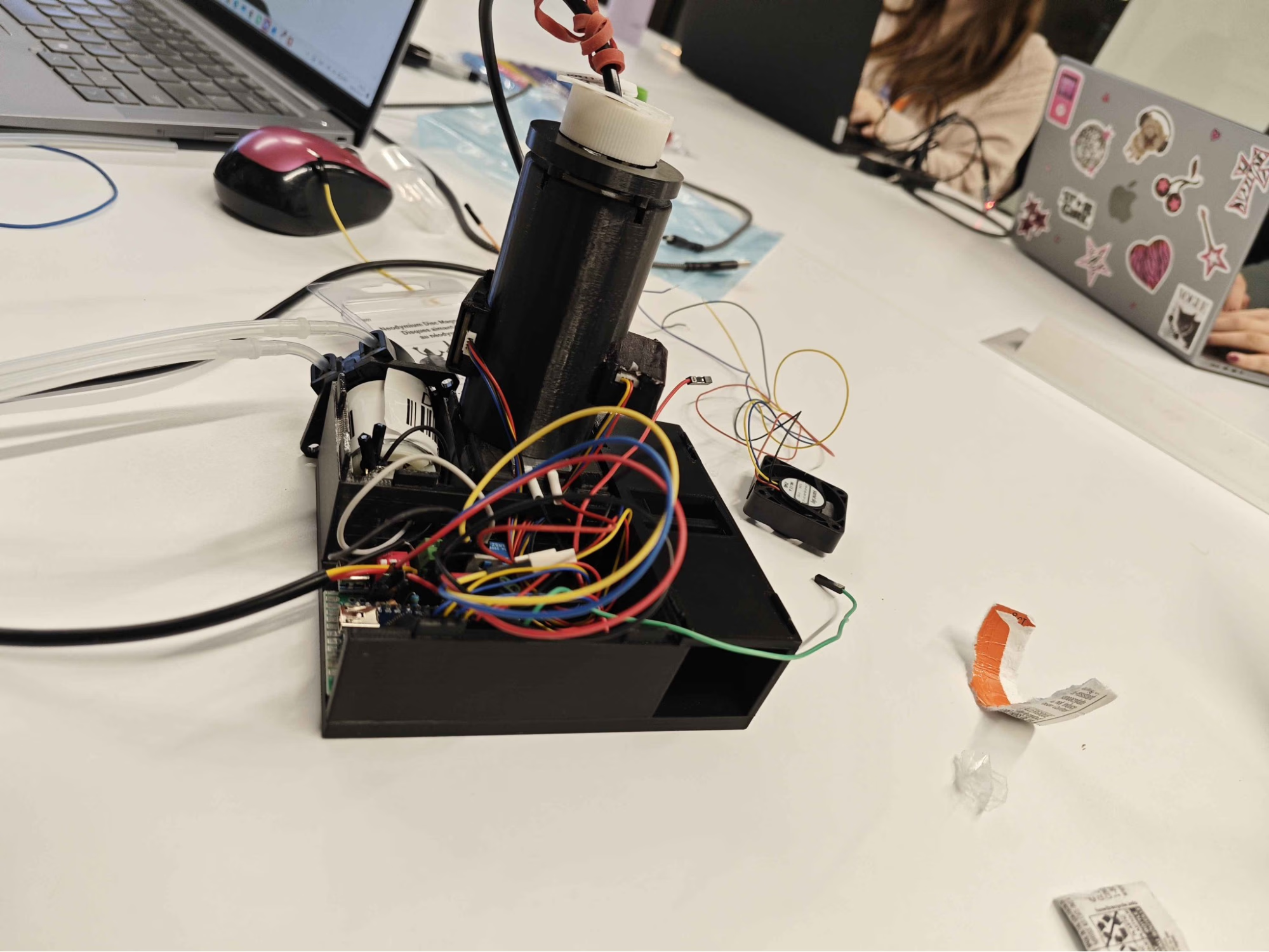
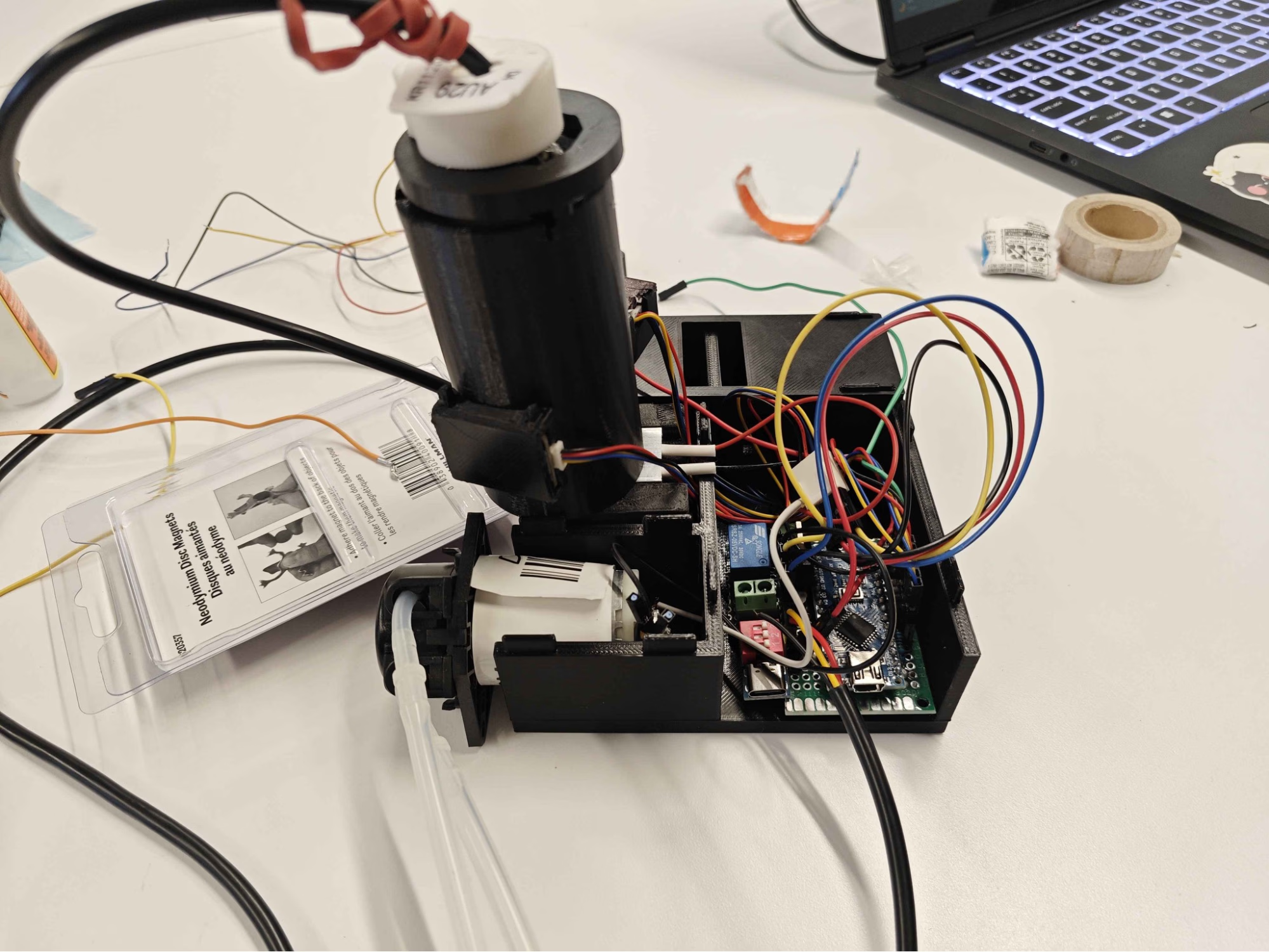
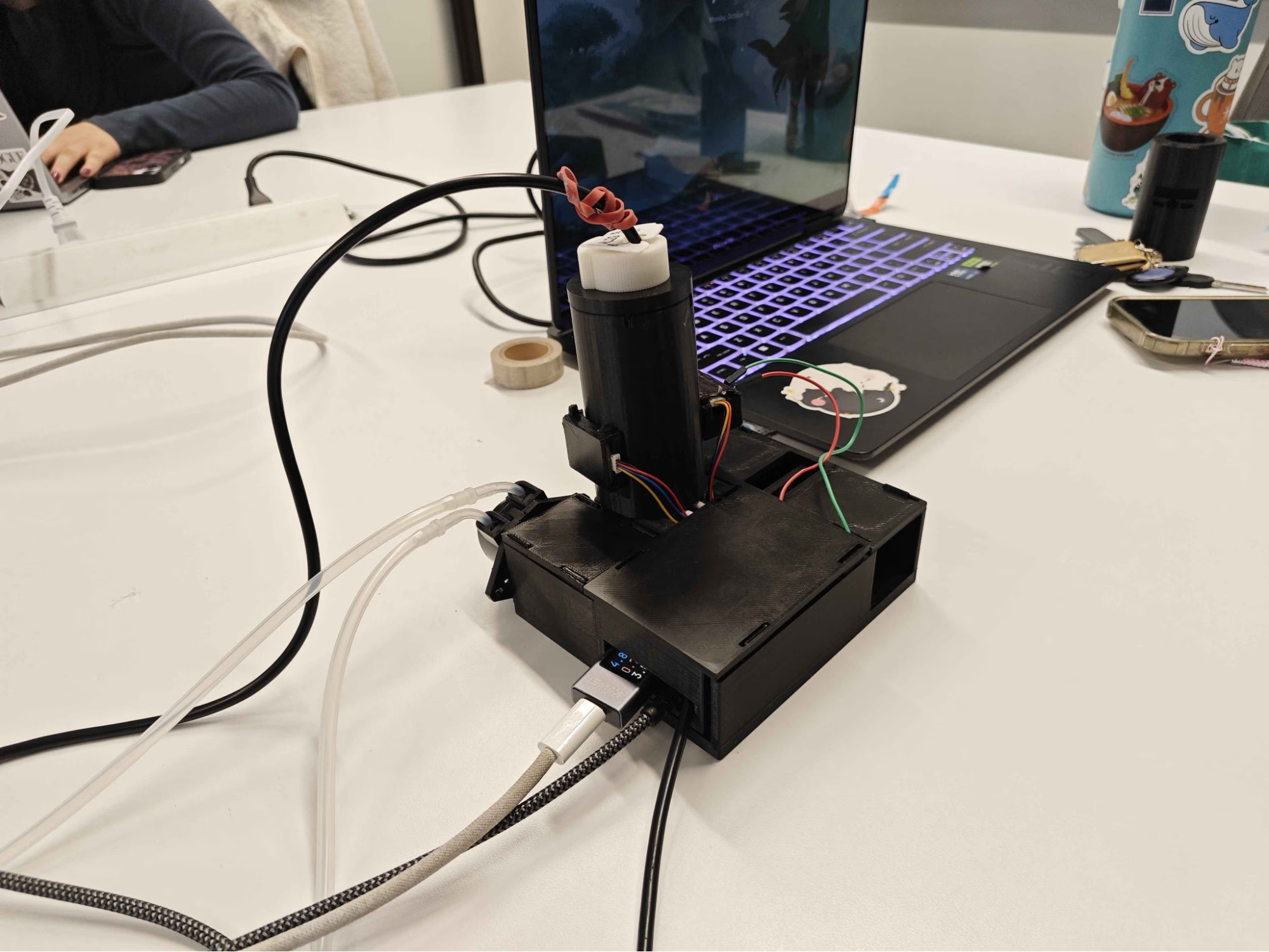
This year, iGEM Toronto’s hardware subteam built a bioreactor to bring enzyme screening at scale to the standard wet lab. In our case, the bioreactor was specifically designed for use in the Terrence Donnelly Centre, but it can be used elsewhere. The design retains the standard features of a bioreactor—stirring, temperature control, OD600 readings, etc.—but at a lower cost (<$250 compared to $450+) and transmits data to a central PC in parallel batches of 96. These parts are also widely-accessible, making assembly and repair simpler for the wet lab audience. Finally, it relies on a single, user-validated interface that permits control of multiple bioreactors each under independent conditions.
The ultimate goal? Run an assay based on PET degradation inside the bioreactor. Like wet lab’s selection assays, the degradation of a PET filament should release an indicator that is detectable via spectrophotometry, for example, or a gene inducer that identifies the most competitive enzyme hosting E. coli. But we can aim even greater. PETases are just one use case. Many other enzymes can benefit similarly from a system of parallel bioreactors.
Reference designs
1. Pioreactor
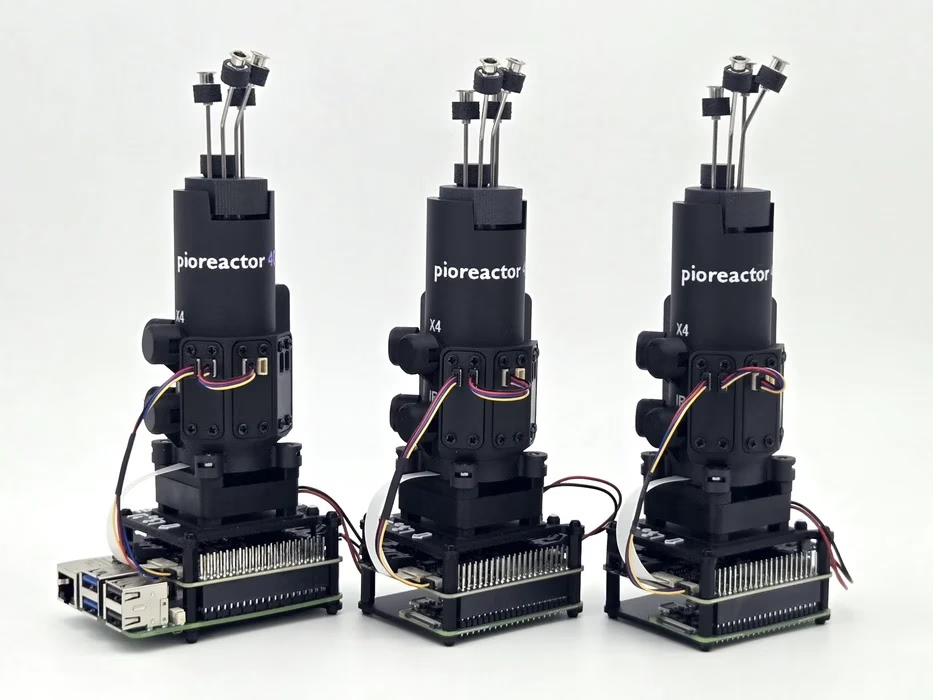
Our bioreactor was most heavily inspired by the Pioreactor: a retail 40 mL capacity bioreactor with modular add-on options ($450+). According to the CEO of Pioreactor, this design was made for hobbyists, educators, and even researchers. To begin our first design cycle (see V1), we took notes during assembly on its design, user-friendliness, and improvable qualities.
Advantages
- Highly modular design, allowing for the addition of new sensors and modules
- Relatively straightforward instructions make assembly simple
- Open source documentation on the website is helpful
Challenges
- 1:1 ratio between Raspberry Pi microcontrollers and Pioreactors increases unit costs and reduces maximum parallel capacity (~10-12)
- Raspberry Pi exposed to liquid spills due to position below the vial area
- Screws do not always fit
- Tedious wifi/laptop connection process
2. Open Bioeconomy Lab
Advantages
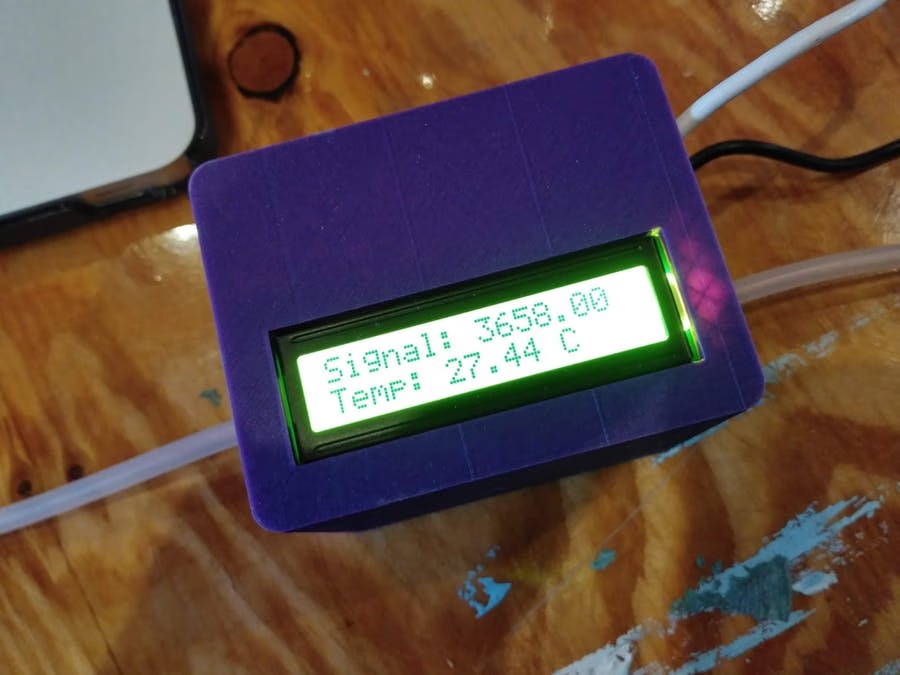
- Completely open source
- Flow through photometer allows for reading of bacteria
- LCD display makes control on each reactor easier
- 3D Printed shell, easily available parts
- Larger capacity (supports larger assays)
Challenges
- 1:1 ratio between microcontrollers and bioreactors
- Individual use, not designed for parallel use in large batches
- Larger capacity (bacterial cultures take longer to grow to scale)
3. ChiBio Bioreactor
Advantages
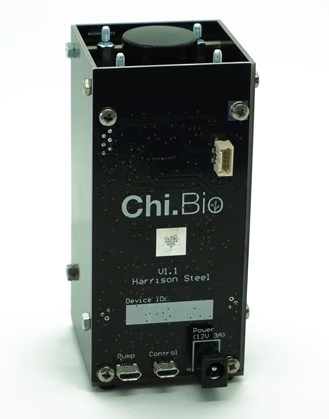
- Complete spectrum of wavelengths can be measured
- Four peristaltic pumps for input and output of various contents
- Measurements of both air and media temperature separately
- Compact external shape allows physical proximity between reactors
- Wires and cables not susceptible to leaks and spills
Challenges
- 1:1 ratio between microcontrollers and bioreactors
- Custom computers raise costs, a powerful custom UI is overkill for relatively simple functions.
Stakeholders

Cameron Davidson-Pilon
CEO of Pioreactor
What we hoped to learn: Scaling up, making devices user-friendly, and learning from the challenges of the first build.
Meeting minutes: Meeting Minutes with Cameron Davidson-Pilon
- PCB fabrication takes the longest.
- Software is fast and easy to iterate on, so save it for later in the design cycle.
- CAD iteration is also quick.
- The 1:1 ratio of microcontrollers to bioreactors was intended for consumers.
- Open-source design.

Artem Babaian
iGEM Toronto PI; Assistant Professor at the University of Toronto; Director of RNALab
What we hoped to learn: Motivation for the design, general assay concepts, and the bioreactor’s physical constraints.
Meeting minutes: Bioreactors Brainstorm — Artem Ideas tab
- Wi-Fi is not feasible for 96 bioreactors.
- Temperature and pH are important.
- Price is important; a cost below $100 is preferred.
- Bioreactors should be able to run for long periods and have controlled actuators.

Matthew Mackay
Professor, Teaching Stream, Mechanical Engineering; Associate Chair, Undergraduate Curriculum; Wallace Chalmers Chair in Engineering Design
What we hoped to learn: Identifying opportunities to reduce costs and improve efficiency, including different arrangements of microcontrollers and power supplies, drawing on experience with engineering systems design.
Meeting minutes: Bioreactors Brainstorm — Matthew Mackay tab
- A Raspberry Pi provides an excessive amount of computing power for one bioreactor.
- Scheduling or a separate power supply can make mixing, stirring, and heating less energy-intensive while maintaining their function.

Milica Radisic
Professor and Canada Research Chair in Functional Cardiovascular Tissue Engineering
What we hoped to learn: A researcher’s perspective on how our bioreactor would be used in the lab and how we can make it useful to researchers.
Meeting minutes: Milica Radisic interview
- Follow safety regulations and certification standards when designing a bioreactor to operate for days at a time.
- Ensure sufficient stability to avoid losing data during power or operational outages.
- Modularity is essential: researchers benefit from being able to swap capabilities in and out to suit different experiments.
Patricia Rea
DIYBio researcher and Wet Lab lead with a home lab
What we hoped to learn: A student researcher’s priorities for homemade devices that improve experimentation, and a DIYBio perspective informed by the search for better equipment for a home lab.
Meeting minutes: Patricia Presentation
- A design shaped around wet lab use is critical to a good user interface and experience.
- Discussed examples of user-friendly and user-unfriendly wet lab equipment.

Raphael Loll-Krippleber, Ph.D.
Senior Research Associate at Brown Lab, University of Toronto
What we hoped to learn: Additional insight from someone who regularly uses bioreactors for experiments.
Meeting minutes: N/A — conversation at a conference
- Learned more about the ChiBio bioreactor, a similar system used for yeast growth rather than E. coli.
- Learned about the challenges of pH control to consider for future versions of our bioreactor.
Bioreactor Build (ver June 17 2026)
Design requirements for the centralized living hardware (bioreactor) system.
Bioreactor build · requirements
The initial requirements based on the stakeholder interviews with Artem, Matthew Mackay, and Patricia Rea were compiled below. These requirements informed our future requirements and design decisions.
Overarching objective: try to be power efficient.
| Objective | Related sub-objectives | Metric & Criteria | Constraints | Links / references |
|---|---|---|---|---|
importantneeds-quantify Heating |
|
|
|  |
importantneeds-quantify Aeration for vials |
|
|
|
 |
importantneeds-quantify Mixing fluid (even concentration) |
|
| Complaints suggest heating affects the stirring magnet connection, so the mixer should not limit the temperature range the solution can work in. | |
importantneeds-quantify Pumping fluid (in and out) |
|
|
|  |
needs-quantify Vial volume |
|
|
| None |
Runtime | Minimum: 1 week to longer than a week. | None | None | None |