









Wetlab Safety
For the 2026 iGEM Toronto project, Wet Lab worked across 2 different organized lab spaces (one BSL1 space and one BSL2 space). Hence, proper training and organisation of the lab was ensured at all times.
To work in the lab, members of the 2026 iGEM Wet Lab team have completed safety training courses with passing grades from the University of Toronto’s Office of Environmental Health and Safety (EHS) including, EHS002 (Basic Health and Safety Awareness), EHS101 (WHMIS and Lab Safety), EHS115 (Fume Hood Training), EHS601 (Laboratory Biosafety) and EHS631 (Safe Use of Autoclaves). This totals to approximately 6 hours of training modules in preparation for entering the lab. These training informed the team on proper WHMIS practices, PPE usage and accident and incident management within the lab spaces.
Furthermore, members underwent lab tours and equipment-specific training with lab technicians to further prepare for safe and responsible use of lab equipment and facilities. For this iGEM Toronto cycle, Wet Lab introduced a ‘buddy-system’ where working in the lab required a minimum of two members present at all times for safety reasons and to ensure accountability.
The specific safety measures taken by the iGEM 2026 team in the lab spaces will be elaborated further in the following sections.
Safety in BioZone
To work in Biozone, our second lab space, the team began by completing the required EHS and ChemE safety modules. This included a 6-hour online module covering operational risks, emergency situations, safety procedures, and proper lab attire before in-person lab training. Team members then had to submit Research Registration Forms (RRFs) and the Memoranda of Understanding and Agreement on Biosafety (MOUs) after the completion of the safety courses.
Following RRF submissions, members participated in a safety interview done by our team’s primary PI, Dr. Christopher Lawson. Dr. Lawson reviewed our RRF’s, and assessed our understanding of biosafety regulation, institutional policies, departmental protocols, emergency procedures and lab specific hazards.
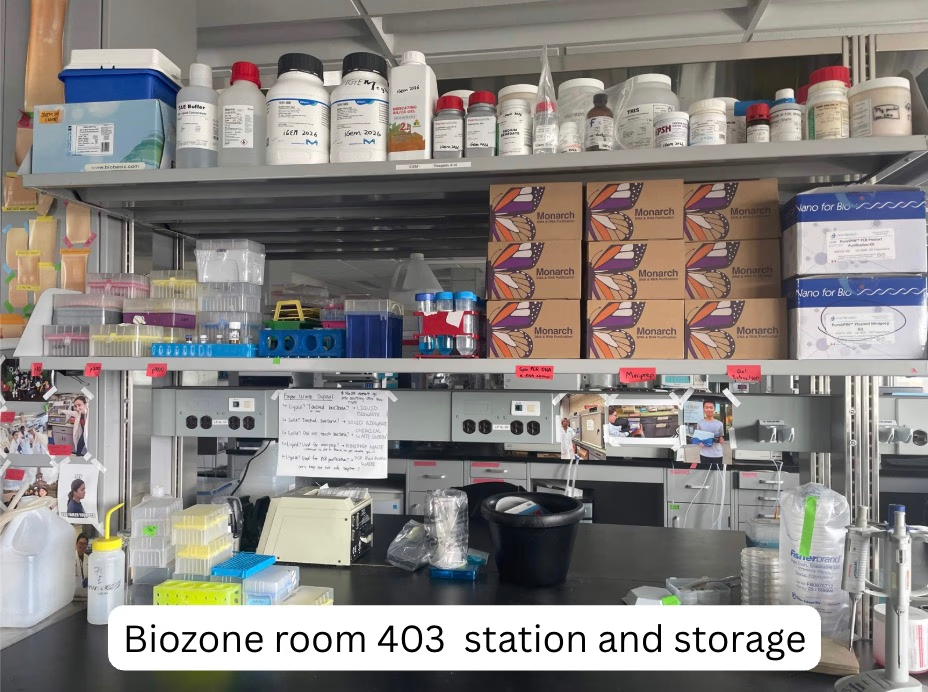
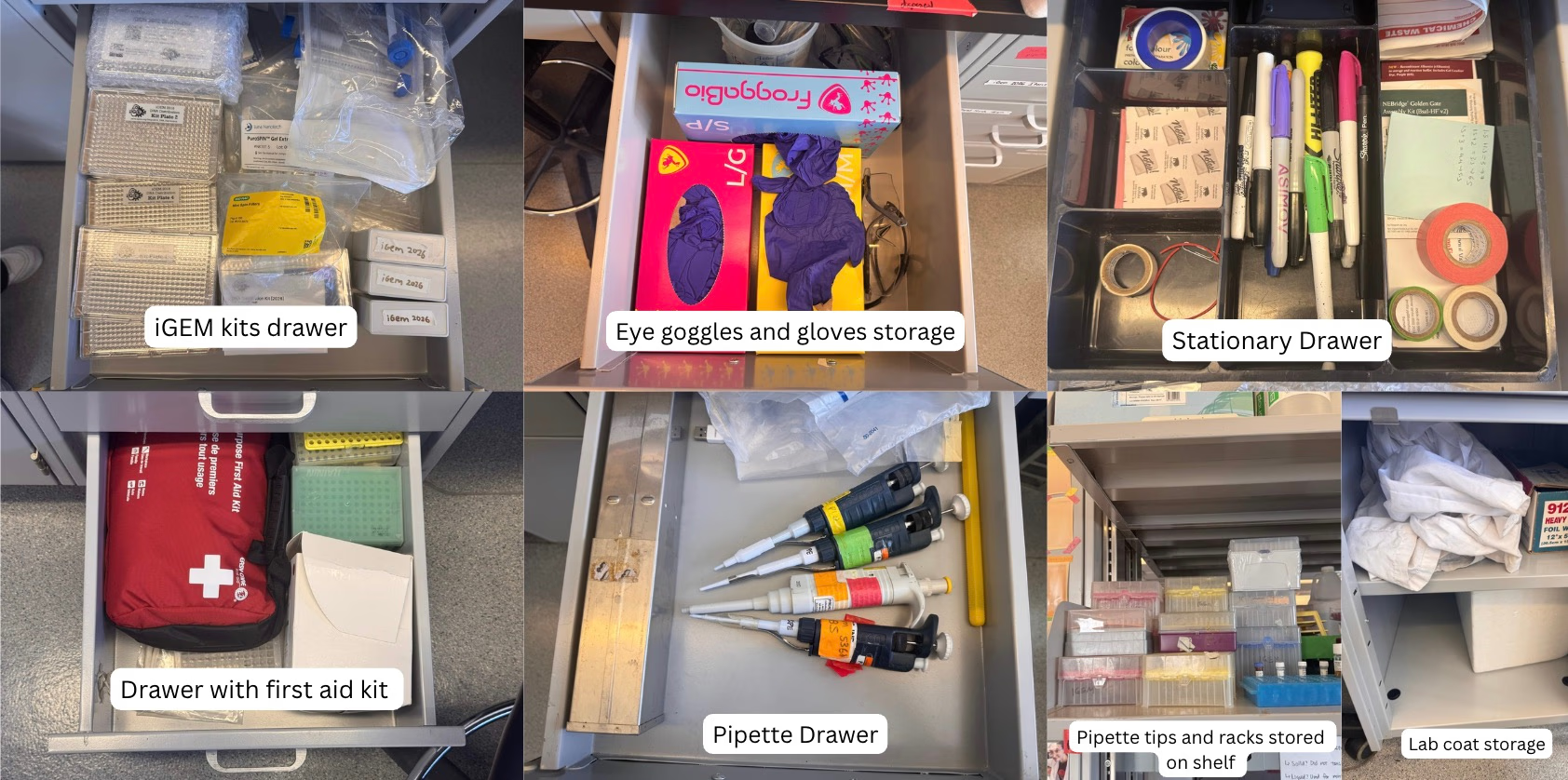
After each member successfully passed the assessment, the Wetlab team leads hosted Biozone tours for the team members. Throughout the tour, all team members wore appropriate Personal Protective Equipment (PPE) and maintained the lab clean at all times. This included lab coats, gloves, goggles, and closed-toe-footware. During the tour, the members were introduced to the physical layout of our lab space, informed where emergency equipment was and trained on lab safety essentials. This included the proper usage of safety showers, eyewash stations, spill kits, and first aid kits. We also received hands-on instruction in the safe and proper operation of lab essentials including autoclaves, centrifuges, and fume hoods, and reviewed protocols for waste disposal, reagent storage, and workspace maintenance.
The team also got the opportunity to attend an in-person Biozone orientation led by Endang (Susie) Susilawati, a ChemE Safety Committee member and BioZone lab manager. This orientation included a lab tour, a welcome message, an introduction to the Biozone lab council and a lab safety and etiquette session.
Only after the completion of all required training steps and demonstrating full compliance was the Wetlab team granted permission to work independently in the BioZone Lab.
Each team member understood the specific risks associated with the project and within their participation in research activities. Team members were committed to wearing appropriate Personal Protective Equipment (PPE) at all times within the lab and when working on research activities. This included lab coats, gloves, goggles and closed-toe footwear. Any incidents, safety violations or exposures were reported to our PI, and we ensured that we cooperated fully in any investigations. Safety was upheld to the highest possible standard and we were committed to maintaining a safe and responsible research environment at all times.
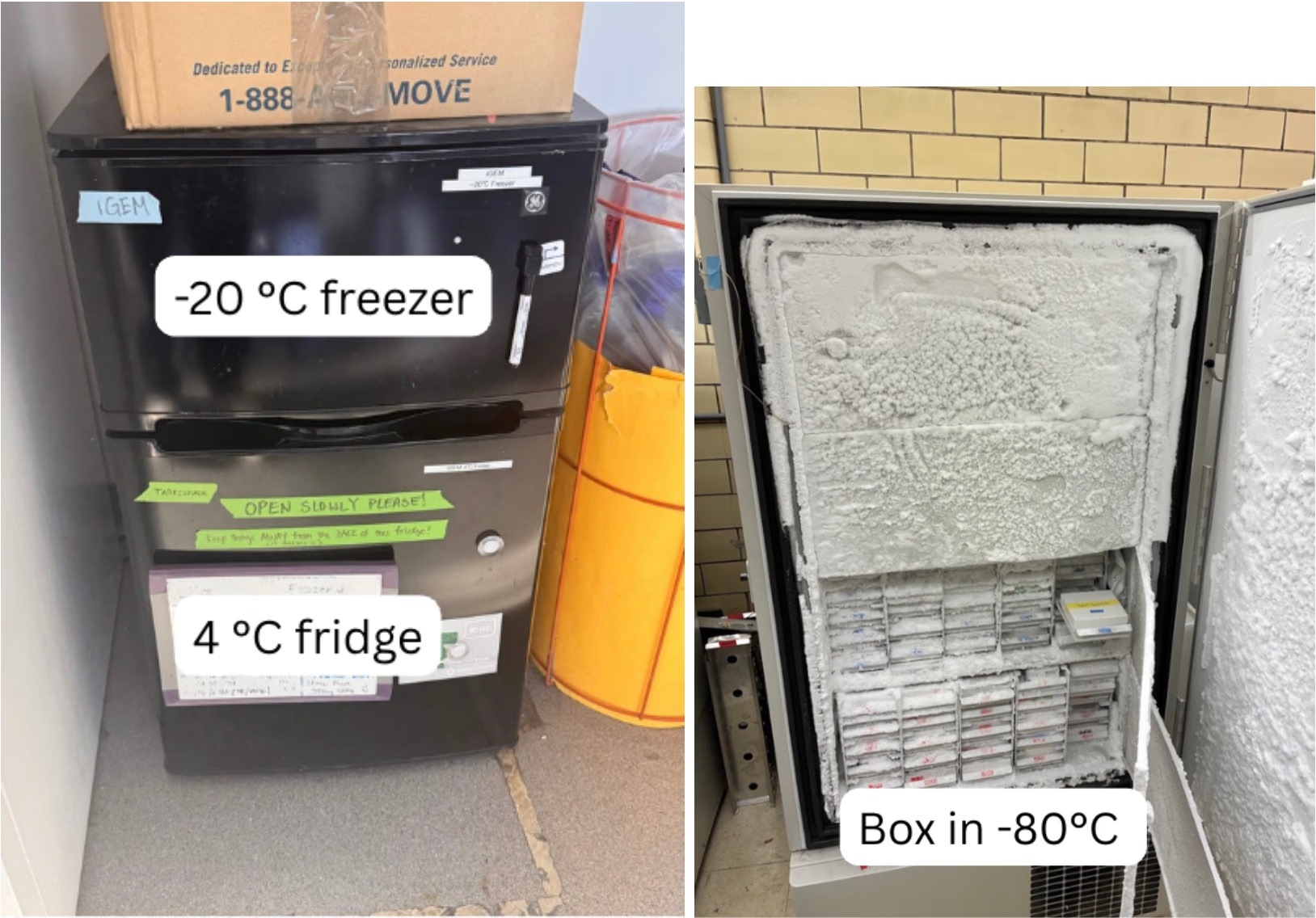
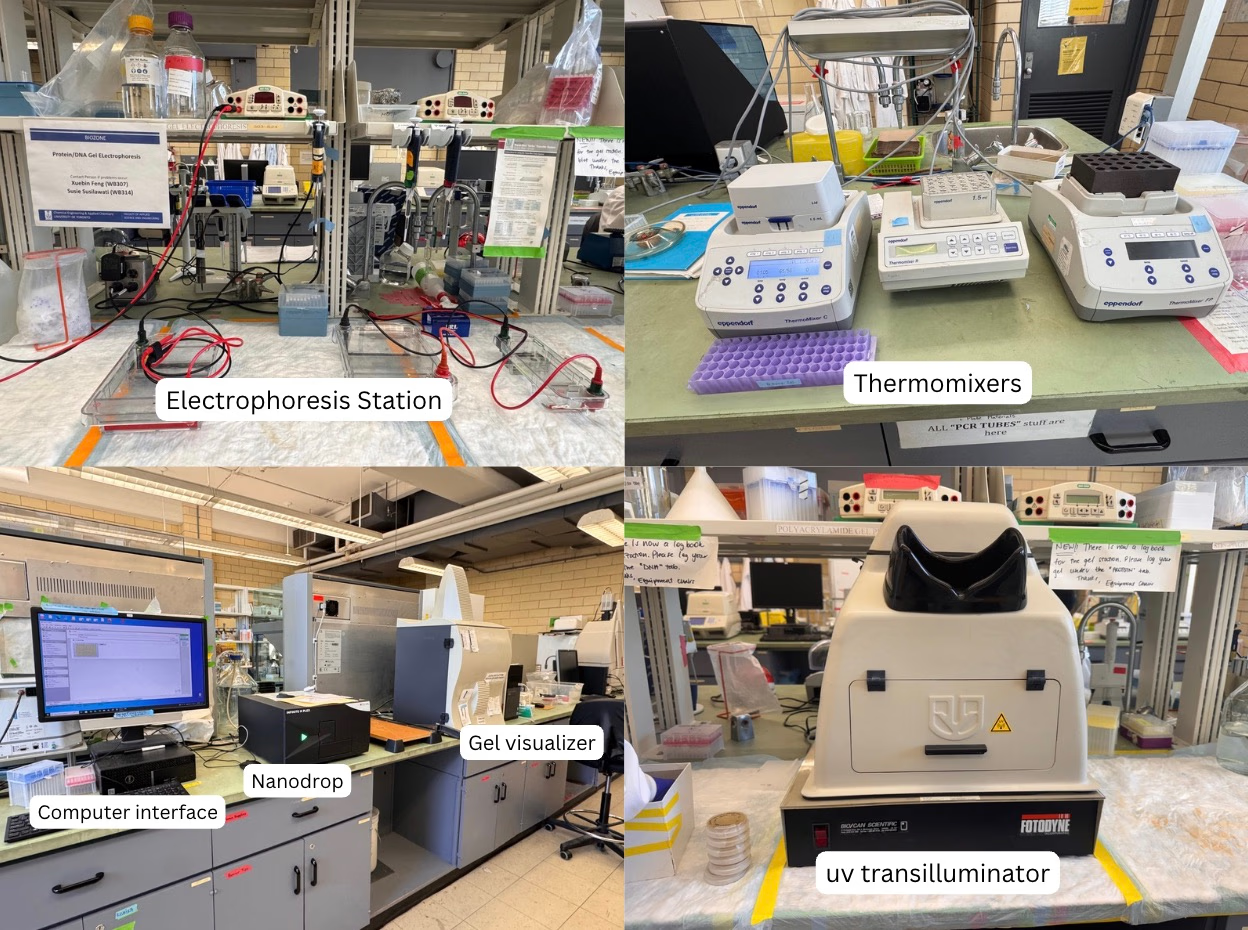
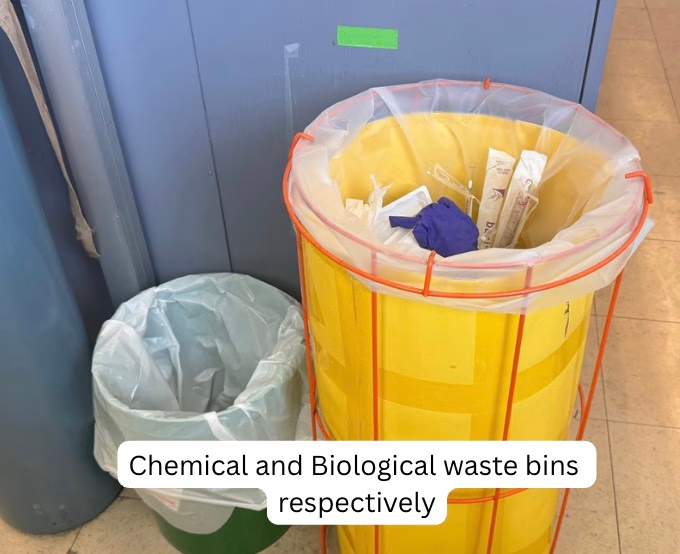
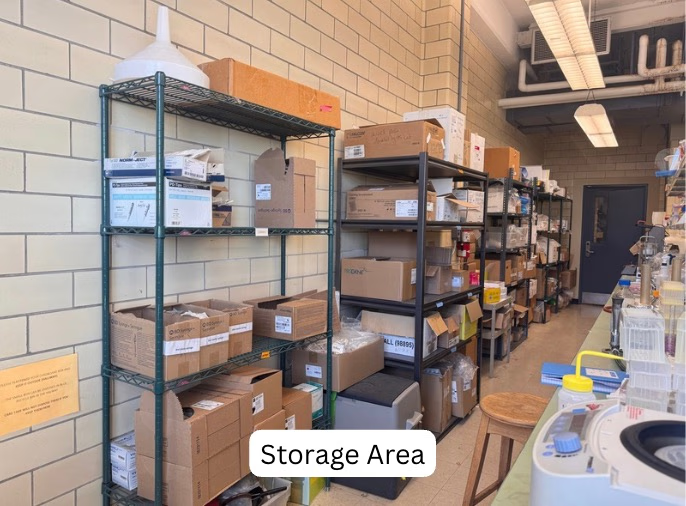
Safety in the BME Teaching Lab
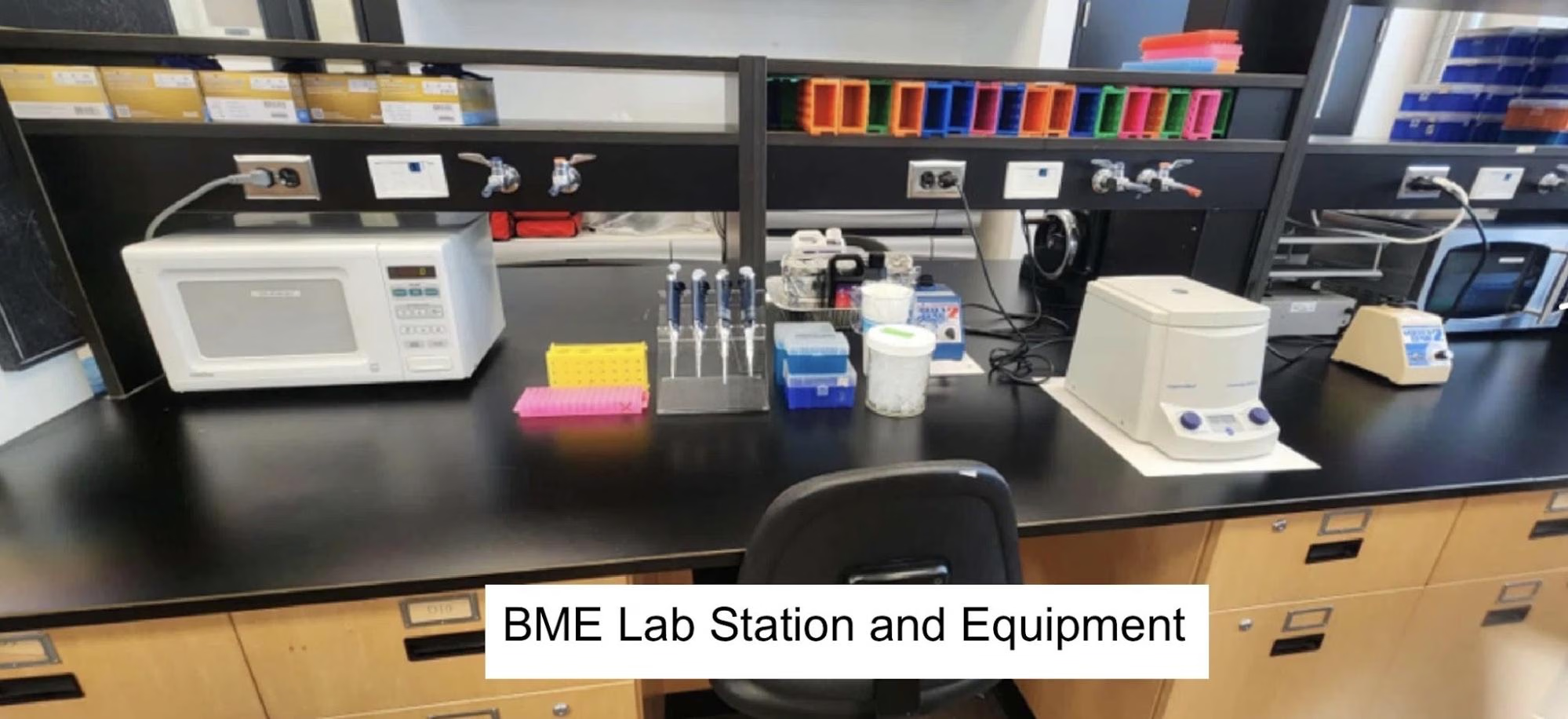
To work in the BME teaching lab, outside of the EHS safety training, iGEM members were required to participate in an in-person lab tour with BME teaching lab’s supervisor, Dr. Nguyen (Gary) Hoang. iGEM was only allowed to work in the lab with the supervisor present and members were expected to adhere to the best biosafety practices.
White List requirements
All the organisms, biological parts and proteins used in this project are all included in iGEM’s official White list. No materials needed to be sent for check-in.
Safety practices during lab work
To maintain lab safety, all members were required to wear PPE at all times in the lab. When exiting the lab members are required to remove their lab coats to prevent contamination and no gloves were used to open doors or touch trolleys. Members are required to wash their hands after lab work and to wear long pants as well as no open toe shoes/sandals. All laboratory spaces were organized and labelled accordingly.
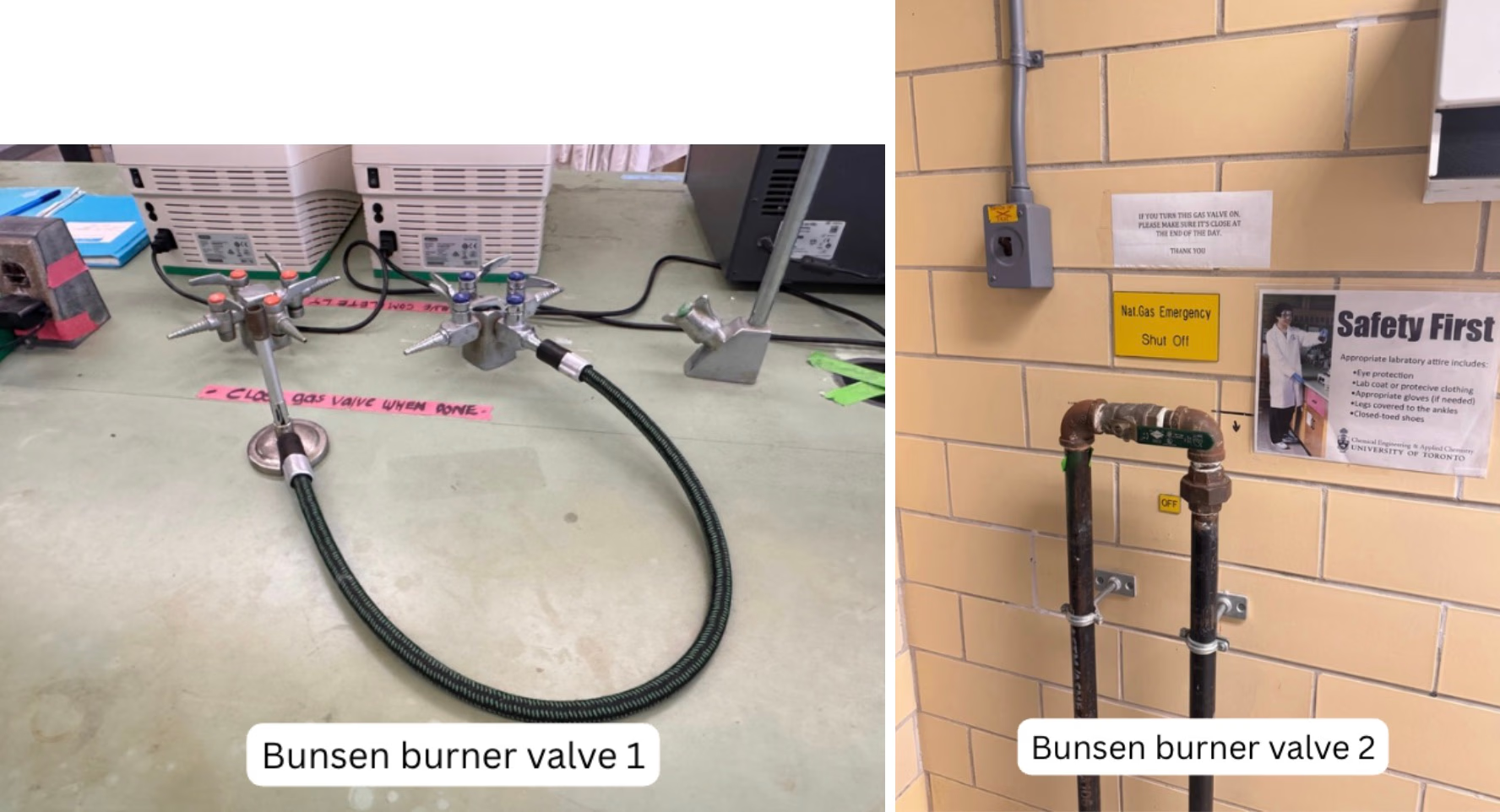
When working on the lab workstations, all team members maintained proper aseptic technique to prevent contamination. In BME, members worked around a flame from an alcohol burner to create a sterile field while in Biozone, members utilized a bunsen burner which had an extra gas valve at the back of the room for safety reasons. Pipette tips were autoclaved beforehand to maintain sterility.
When dealing with any harsh chemicals, the team worked under the fume hood and disposed of chemicals by aliquoting them from their original containers into designated disposal containers. These containers were properly labelled with WHMIS identifiers and disposed of in its designated facilities. Any liquids that are not at risk of chloroform were bleached before being disposed of while chloroform risk liquids were stored in a dry place to be discarded. All corrosive and flammable chemicals were stored in chemical cabinets in the respective laboratories.
Solid and liquid waste were discarded in its designated containers while biological and chemical waste were disposed separately into different bins. These wastebins were emptied regularly to prevent spillage.
Anticipating and mitigating future risk
To promote safety in our project, the following section features anticipated future wet lab risks that could be associated with our work, as well as how it can be mitigated.
| Risk | Hazard | Stakeholder | Safety Measures Implemented |
|---|---|---|---|
| Improper usage of PETases by consumer | Exposure, injury to individual, injury to surroundings, environmental release, unlawful usage of technology | iGEM members, General Public | To prevent the general public from getting access to future highly active PETases and using it outside its intended purposes, the team would make sure only certified disposal services and companies will be able to gain access to these PETases. This ensures that our technology is not used for nefarious purposes other than to degrade waste PET. Proper education must also be given to the general public to mitigate this. |
| Accidental transmission and contamination | Exposure, injury and possible infection and ailment of iGEM members and surrounding individuals | iGEM members, Biozone lab users, General public | To prevent accidental transmission and contamination, all members must mention any risks, problems or issues that arose during the lab that may cause accidental exposure within the lab notebook. Members are also trained in proper disposal technique. All level 1 biologicals must be autoclaved before disposal down the sink. Chemical waste also must be properly labelled with a container with the type, and must be stored properly until 2/3 full then sent to the department of Chemical Engineering's waste treatment facility to be further processed. |
| Misplacement of experimental materials | Exposure, injury, and possible infection and ailment of iGEM members and surrounding individuals | iGEM members, Biozone lab users | iGEM maintained that members must take photos of where all experimental materials have been stored at the end of a shift and updated on the lab notebook for the next shift. A Google Sheet of the team’s inventory was also regularly updated to prevent any items from being misplaced or lost. Training was mandated for all iGEM wet lab members to educate on proper storage methods for materials. |
| Injury or incidents in the lab | Injury, breakage, accidents, possible infection and ailment of iGEM members and surrounding individuals | iGEM members, Biozone lab users | Lab members are educated on proper methods of handling items and apparatus in the lab to prevent injury. All fire extinguishers and emergency exits were noted. They are also informed on the procedure to report an accident including filling out the incident report and informing the lab manager. The respective emergency numbers were also informed to the team in case immediate contact is needed. |
Dry Lab Safety
Dry Lab handled no biological material, so its risks are not exposure risks. They are risks of what the work tells other people to build. A sequence the model ranks highly becomes DNA that Wet Lab orders, and a dataset we publish becomes a starting point for labs we will never meet. The controls below are about keeping those outputs honest.
Scope of the search
PETadex is a homology search, not an open-ended one. The database is seeded on 609 experimentally validated plastic-degrading enzymes curated from PAZy, clustered to 411 centroids at 90% identity, and grows by sequence alignment of those centroids against the Logan assembly of the Sequence Read Archive and NCBI nr. Every candidate it returns is a relative of an enzyme already reported to act on plastic polymers.
We did no de novo or generative protein design. The model ranks sequences that already exist in public data; it does not invent new ones. That bounds the project to a single, well-studied enzyme family whose characterized members act on PET and related polyesters.
Putative sequences stay labelled putative
The main way a database like this can cause harm is by presenting a prediction as a measurement. Most of PETadex is putative: homologs recovered from metagenomic assemblies that nobody has ever expressed or assayed. Treating those as known plastic-degrading enzymes would put unverified claims into the literature at a scale no one could easily correct.
The released datasets keep the evidence behind every value attached to it. The human-curated and LLM-extracted label sets are published separately rather than merged, so a reader can always tell which measurements nineteen curators read out of papers by hand and which an extraction pipeline produced. The LLM-scraped set carries the evidence sentence behind every value, so any row can be traced back to the sentence it came from. A reference-membership column marks which ORFs are curated PETadex-PAZy enzymes, separating the characterized core from the putative expansion around it. The dataset cards document each table's columns and its known caveats, including where a label set is weak: the LLM set, for instance, recorded no pH, temperature or time, and contains no negatives.
What we released
The input data were already public, and the output is a curated view of sequences anyone could have downloaded themselves. We created no new biological risk by publishing it. All five datasets are released under CC BY 4.0; the measurements are facts and not ours to license, so what the licence covers is our compilation, curation, sequence recovery, clustering and splits. Source code for LOBSTER and the sharded DIAMOND search is released under the MIT License.
Where Dry Lab outputs became physical
One Dry Lab output crossed into the lab: the LOBSTER library of 1,744 sequences, which was synthesized for Wet Lab to screen. Every sequence in it is a homolog of a White List enzyme family, and that work ran under the wet lab controls described above. No material required iGEM check-in.
Hardware Safety
The bioreactor is designed to run unattended for days next to someone else's bench, which sets its two real hazards: electronics sitting beside liquid media, and a heater in a 3D-printed enclosure. Dr. Artem Babaian, as the primary stakeholder, set the wattage and heating constraints the design had to meet.
Electrical safety
The bioreactor runs entirely on low-voltage DC. A USB-C power delivery system supplies a regulated 5 V at 20 W, drawing about 12 W steady and never exceeding 16 W in testing, with up to seven bioreactors sharing one 200 W charging block. Nothing in the device carries mains voltage.
Fault protection is handled by the commercial power supply, which shuts off in the event of a short circuit. This was a deliberate choice: a certified supply does this more reliably than anything we would build, and it keeps the failure mode outside the 3D-printed assembly.
Exposed conductors were treated as a design requirement rather than an afterthought. The CAD specification caps exposed electronic surface at under 75%, with the housing enclosing the perfboard and pumps. Some exposure is unavoidable at the wiring and the connection to the computer. The components are safe to touch at these voltages, but become a hazard if shorted by liquid, so the housing is also arranged to keep spilled media away from them.
Thermal safety
The heater reaches a peak of about 60 °C and holds a target to within ±1 °C, keeping 37 °C within ±0.3 °C in testing. The 60 °C ceiling sits below the roughly 70 °C point at which the surrounding printed components would begin to soften, so the worst case of a heater left on does not deform the enclosure.
Temperature is held by a PID control loop through a closed hardware path: temperature probe to microcontroller to relay to heater. The relay means the microcontroller never switches heater current directly, and the probe gives the loop a reading to act on rather than running the heater open-loop on a timer.
Sterility and handling
The pump tubing is reachable through a snap-fit lid so it can be removed and autoclaved, which was a specific revision after the earlier prototype's tubing proved hard to detach for cleaning. Pipette tips and tubing were autoclaved before use. The peristaltic pumps keep flow into and out of the vessel closed, which protects the culture from contamination and keeps media inside the fluid path.
Anticipating and mitigating future hardware risk
| Risk | Hazard | Stakeholder | Safety Measures Implemented |
|---|---|---|---|
| Media spilled onto the electronics | Short circuit, damage to the device, loss of a running experiment | iGEM members, shared lab users | The 3D-printed housing encloses the perfboard and pumps, keeping exposed electronic surface under the 75% design cap, and is positioned so that spillage from the vial does not reach the board. The commercial USB-C supply shuts off on a short circuit. |
| Heater left running or control loop failure | Overheating, denatured protein, softening of printed components | iGEM members, shared lab users | The heater's peak of about 60 °C sits below the ~70 °C softening point of surrounding parts. A PID loop reading a dedicated temperature probe switches the heater through a relay rather than running it continuously. |
| Unattended multi-day operation on a shared bench | Fire or equipment damage outside working hours, disruption to other lab users | iGEM members, Biozone and BME lab users | The device runs on low-voltage 5 V DC with no mains wiring, drawing under 16 W, with fault protection in a certified supply. Power constraints were set with our PI for a device intended to operate for days at a time. |
| Contamination of the culture or the surrounding bench | Loss of experimental data, biological material outside the intended vessel | iGEM members, shared lab users | Tubing is removable through a snap-fit lid for autoclaving, and the peristaltic pump path stays closed during operation. Devices were used inside the lab spaces covered by the training and PPE requirements above. |