

Accessibility
Text size
Science and synthetic biology provide us with powerful tools to understand biological systems and address challenges that affect our lives. But the value of such tools depends not only on what they can achieve, but on how responsibly they are developed and used.
For ICHNOS, this responsibility begins with continually identifying, assessing and mitigating risks across our biological system, experimental work and potential applications. This means ensuring safety by preventing accidental harm to people and the environment, while strengthening security by protecting biological materials and knowledge against unauthorized access and deliberate misuse. "Safety" and "Security", therefore, are a continuous commitment to preparedness, prevention and responsible decision-making. Beyond its safe design, ICHNOS itself has the potential to serve as a safety tool. By preserving a trace of previous cellular stress that might otherwise remain unnoticed, it could provide an additional safeguard for decision-making, helping researchers identify previous disturbances before interpreting results or taking further action. In this sense, safety is not only something we seek to ensure around our project, but also something we seek to achieve through it.
However, we believe that the discussion around Safety and Security often leaves out an essential voice: society. A system can be carefully designed, validated and used according to rigorous laboratory standards, but its safety does not exist in isolation from the people who encounter, interpret, apply or are affected by it. Especially for ICHNOS that has potential future applications in the real world, societal understanding and participation are demanded. We do not see this as an extension of outreach, but as an integral layer of responsible safety. We acknowledge that a carefully designed technology can create risks if it is misunderstood or misused, while a lack of understanding can prevent people from critically assessing its potential benefits and limitations. Thus, an informed society can question emerging technologies and participate meaningfully in decisions about how they should be developed and used. In this sense, communication, education and dialogue become part of the prevention.
We therefore sought to make Safety and Security a point of connection across different communities and generations, linking synthetic biology with familiar ideas of care, ethics, trust and responsibility. As a result, we aimed to create spaces where different perspectives could enter the conversation around synthetic biology and safety, while those perspectives, in return, would challenge us to reconsider our own assumptions and decisions. Thus, a two-way relationship was formed: while we worked to make ICHNOS and our practices safer, our engagement with different perspectives guided us to reconsider our own decisions and strengthen our safety culture.
Ultimately, we see Safety and Security as a system of interconnected layers. At its core lies the practical responsibility to safely design ICHNOS. Surrounding and complementing this core is our obligation to cultivate an engaged, informed and critically minded society. Altogether, these concepts are not a boundary around the laboratory. They are a culture that extends from the laboratory to society and a continuous commitment to making both our technology and the world in which it will exist safer.
Our first steps focused on building our foundations as a team. Through training, expert guidance and shared reflection, we strengthened our understanding of core biosafety and biosecurity principles and practices, while placing particular emphasis on how we communicate, educate and collaborate with others. Open dialogue and connections with the wider scientific and public-health community broadened our perspective, helping us build a shared safety culture grounded in knowledge, preparedness, awareness and collective responsibility.
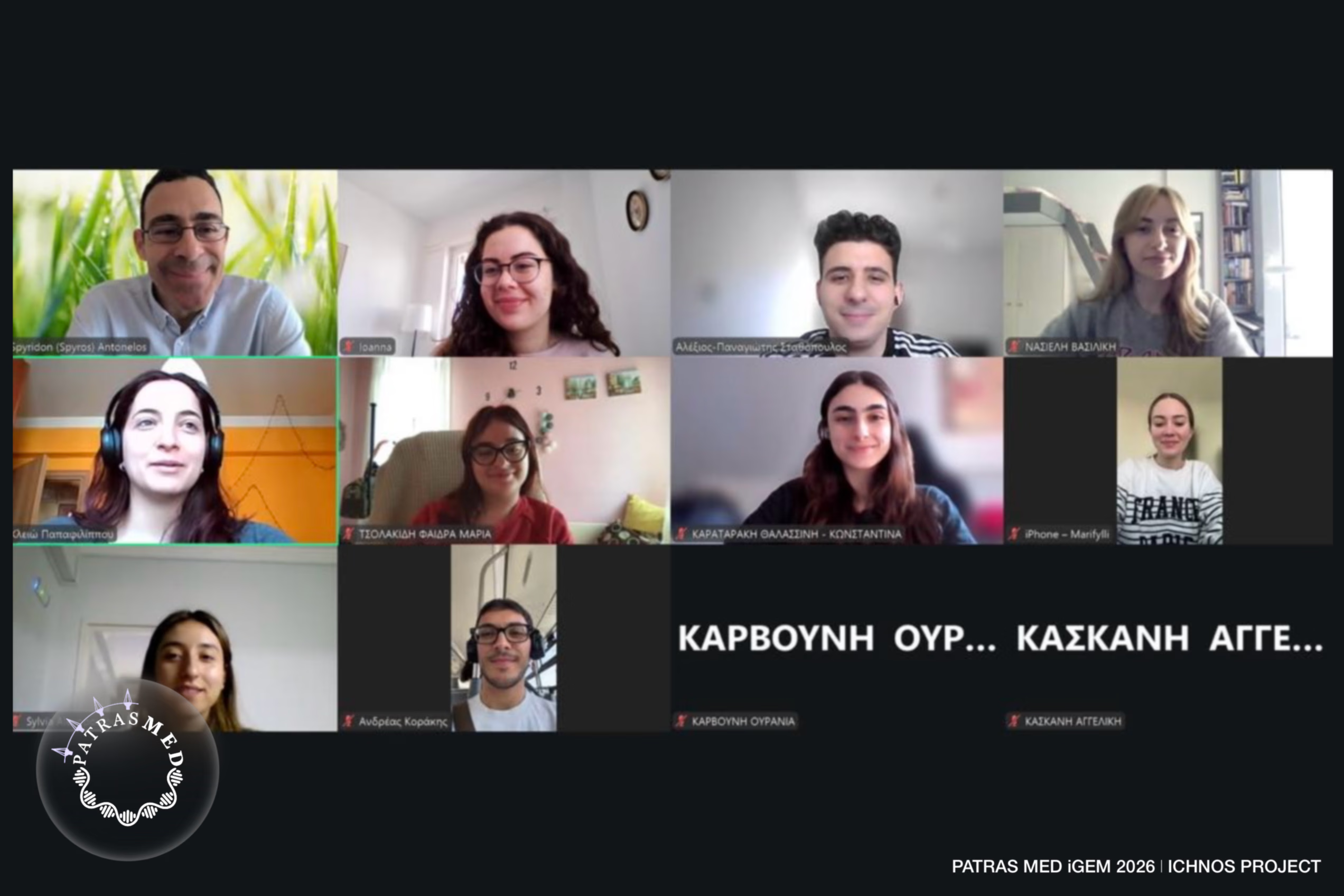
From the early stages of our project, we identified team communication as a key foundation of a safe laboratory environment. Therefore, before entering the laboratory, we focused on building a team culture based on clear communication, constructive collaboration and the ability to address disagreements responsibly.
To support this effort, we participated in a Core Skills Workshop with Mr. Antonelos, Organizational Mediator and Ombuds by the European Central Bank. The training focused on effective communication, conflict management and the development of interpersonal skills. The training showed us that communication is also a safety concern: when information is unclear, misunderstood or not communicated at all, the consequences can extend beyond teamwork and affect laboratory practice.
Laboratory safety is often associated with protocols, protective equipment and technical procedures. However, these measures depend on people understanding and applying them correctly. Within a student team, unclear instructions, assumptions or unaddressed concerns can interfere with this process.
We wanted to address this human factor from the beginning. Our aim was to create an environment where team members could communicate information accurately, ask for clarification when needed and raise concerns without hesitation. In this way, we could reduce the possibility that a communication gap would become a practical safety problem.
Our initial consideration was that communication skills are mainly associated with teamwork and collaboration. However, we came to recognise that they also have a preventive role in the laboratory. Clear communication supports the accurate transfer of instructions and responsibilities, while constructive conflict management makes it easier to address problems before they escalate. Safety therefore begins before an experiment takes place, including in the way a team communicates and responds to potential problems.
We participated in the 8-hour Effective Communication and Conflict Management: Core Skills Workshop with Mr. Antonelos, during the early stages of our project. The training provided us with practical approaches to effective communication, active listening and conflict management.
We carried these principles into our daily collaboration. We became more attentive to how information was communicated, encouraged clarification when something was unclear and addressed disagreements directly rather than allowing them to affect our work. These practices became part of how we organized ourselves as a team and prepared for laboratory work.
This also shaped the way we approached Safety and Security throughout the project. We did not view safety only as something to be applied once we entered the laboratory. We began by creating safer conditions within the team itself.
The workshop gave us an early foundation for responsible laboratory collaboration. It strengthened our ability to communicate information and concerns within the team while making us more aware of the role that human factors can play in safety. Most importantly, it broadened our understanding of prevention. A safety system can be technically sound and still be undermined by poor communication. By addressing this aspect early, we incorporated an additional safeguard into our team practices.
The action contributed to our approach by placing communication at the beginning of our prevention strategy. With the guidance of Mr. Antonelos, we developed a stronger awareness of how communication and human factors can influence laboratory safety. Rather than treating these aspects as secondary to technical safety measures, we addressed them from the formation of our team, creating the conditions for safer laboratory work.
Because clear communication is a fundamental part of preventing errors and maintaining laboratory safety.
Having first strengthened our ability to communicate effectively and responsibly as a team, we continued our preparation with formal Health and Safety training. Before starting the experimental phase of ICHNOS, all team members completed a series of seminars to build a shared understanding of laboratory hazards, preventive measures and responsible research practices. The seminars covered key aspects of laboratory safety and responsible research. Following the training, all team members passed an examination and received certification, establishing a common safety foundation for laboratory work.
Before beginning our experimental work, we recognised that our team members had different academic backgrounds and levels of previous laboratory experience. This could result in differences in familiarity with laboratory hazards, emergency procedures and appropriate preventive measures.
The challenge concerned the entire team, as understanding laboratory risks was relevant to everyone involved in planning, supporting and communicating our research. We therefore sought to ensure that all members could recognise potential hazards and understand the responsibilities associated with safe laboratory work.
The training emphasised that laboratory safety is fundamentally based on prevention and risk awareness, rather than simply reacting after an incident has occurred. We recognised that knowing laboratory rules does not automatically mean understanding when and why a situation may become hazardous. Safe decisions require recognising the risks behind a procedure and understanding how preventive measures reduce them, especially when conditions change or unexpected situations arise.
This shaped our understanding of preparation: safety should be established as a shared foundation before experimentation begins, developing informed judgement alongside familiarity with laboratory procedures. Understanding the reasoning behind safety practices helps team members recognise when to pause, seek guidance or take appropriate action.
Based on this understanding, we established formal Health and Safety training as a necessity for everyone in our team. The seminars covered chemical and biological safety, physical hazards and emergency preparedness, including radiation protection, compressed gas safety, fire prevention and earthquake response, as well as occupational health, workplace well-being and laboratory quality management principles. The seminars were organised by the University of Patras, under the supervision of Professor Vantarakis and the University's Technical Safety Officer, Professor Thomopoulos. All team members attended the relevant theoretical training sessions and were subsequently evaluated through an examination based on the material presented. Successful completion of the assessment resulted in certification.
In this way, rather than relying exclusively on previous experience or informal knowledge transfer between team members, we established a structured and common safety baseline before the experimental phase of ICHNOS began.
The training strengthened our team's ability to recognise laboratory hazards, understand preventive measures and respond appropriately to potential incidents. By completing the seminars and the necessary knowledge assessment, we established a common safety foundation across the entire team. This helped us understand our safety responsibilities, the reasoning behind protective measures and when to seek additional guidance. More importantly, the process reinforced the idea that safety is an active part of experimental planning and decision-making, rather than an additional requirement considered after an experiment has been designed.
The Health and Safety Training contributed to biosafety by establishing a common foundation in hazard recognition, prevention and responsible laboratory practices. The training, delivered by Professor Vantarakis and Professor Thomopoulos, was validated through formal assessment and certification, built upon established safety practices and helped us manage risks arising from our own experimental work before laboratory activities began.
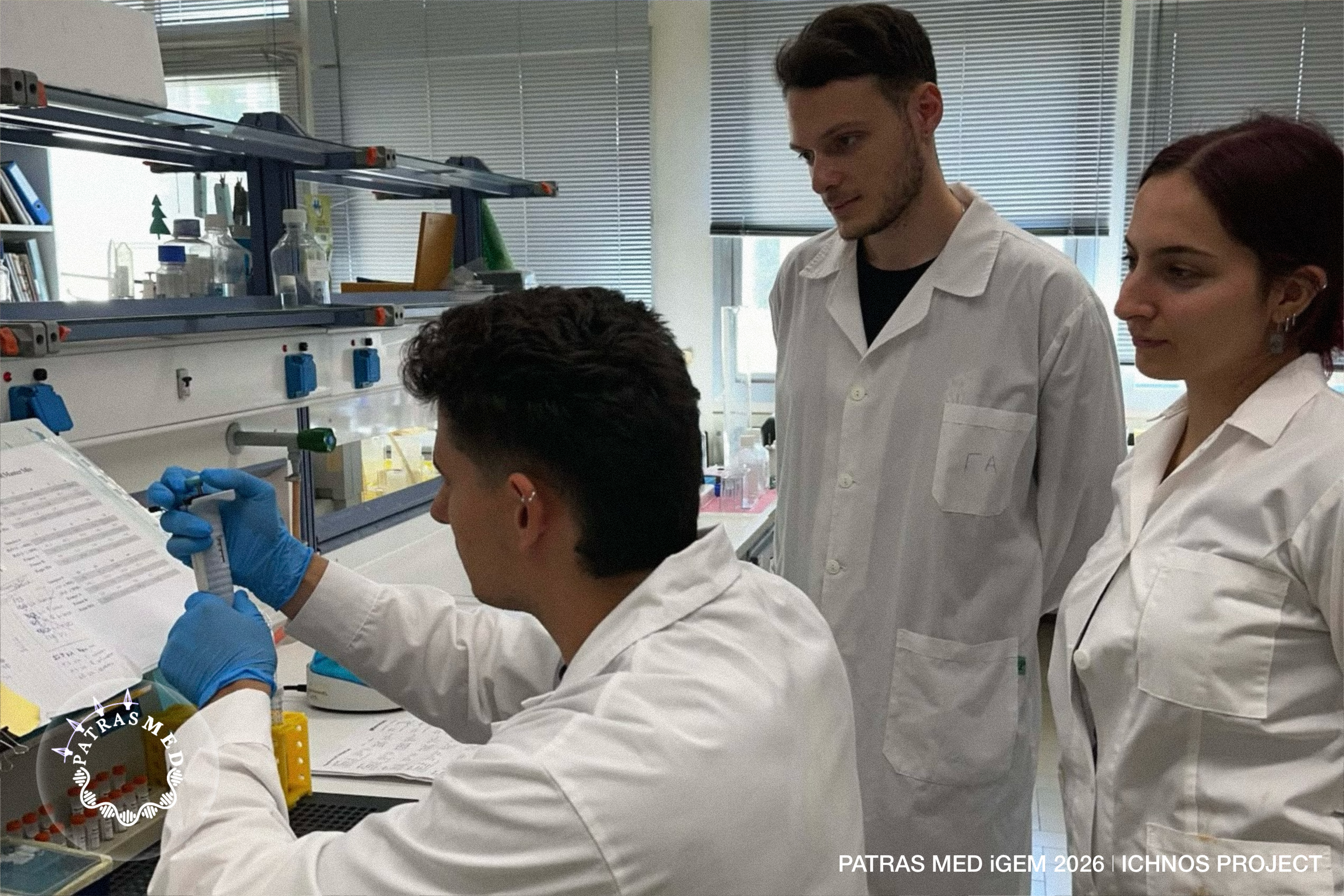
Having strengthened the team's theoretical foundation in laboratory safety, we then focused on developing the practical skills of our Wet Lab members. Before entering the experimental workflow, they underwent hands-on training by our Instructors Giannis Androulidakis, MSc Student at the University of Patras, and Vasiliki Adamopoulou, Postdoctoral Researcher in the Department of Chemistry. Rather than introducing laboratory techniques in isolation, the training focused on the core skills required to work reliably with our biological system and generate trustworthy experimental results: aseptic techniques, yeast cultivation, fluorescence microscopy and RT-qPCR.
Training in aseptic techniques established the basic practices required for working with biological cultures while minimising the risk of contamination and maintaining the integrity of the experimental material. This was particularly important for our work with Saccharomyces cerevisiae, where cultures had to be maintained and handled consistently throughout the experimental process. Members were therefore introduced to the principles of sterile laboratory practice and careful culture handling before proceeding to work with the project's yeast strains.
This was complemented by training in yeast cultivation, providing members with the practical understanding needed to work with S. cerevisiae as the biological chassis of ICHNOS. Cultivation formed the basis of the subsequent experimental workflow, from maintaining yeast cultures and preparing them for experimentation to working with transformed strains and evaluating their behaviour under different conditions. Our experimental plan relied on controlled yeast growth before downstream characterisation, making a sound understanding of culture handling an essential foundation for the Wet Lab work.
Members were also trained in fluorescence microscopy, one of the principal approaches through which the output of ICHNOS could be observed. The training provided the foundations for working with fluorescent yeast samples and obtaining meaningful fluorescence measurements, preparing members to distinguish and interpret reporter signals within the biological system. This became particularly relevant during the characterisation of the biosensor, where fluorescence measurements were used to compare responses under different stress conditions and over time.
Finally, the team received training in RT-qPCR, introducing the principles and practical considerations involved in analysing gene expression. This complemented the fluorescence-based readout of ICHNOS by providing a molecular perspective on the behaviour of the system. Within our experimental design, qPCR was used to examine TIP and TetR expression at defined time points alongside imaging, making careful sample handling and consistency between measurements particularly important.
Together, these four areas of training provided the technical foundation required to move from basic laboratory practice to the specific experimental demands of ICHNOS. Importantly, training preceded routine experimentation. Once members had been introduced to the required techniques, they continued with the experimental programme under the supervision of Dr. Zoe Piperigkou and Dr. Spyridon Mourtas, allowing newly acquired skills to be applied within the actual project while experienced oversight remained in place.
In this way, instead of treating our training as a formality, we established a common technical foundation across the Wet Lab team and created a structured transition from learning, to supervised practice and finally to experimentation. For us, this was the first practical expression of our safety culture: ensuring that the people carrying out the experiments were prepared for the techniques they would actually use before becoming responsible for their execution.
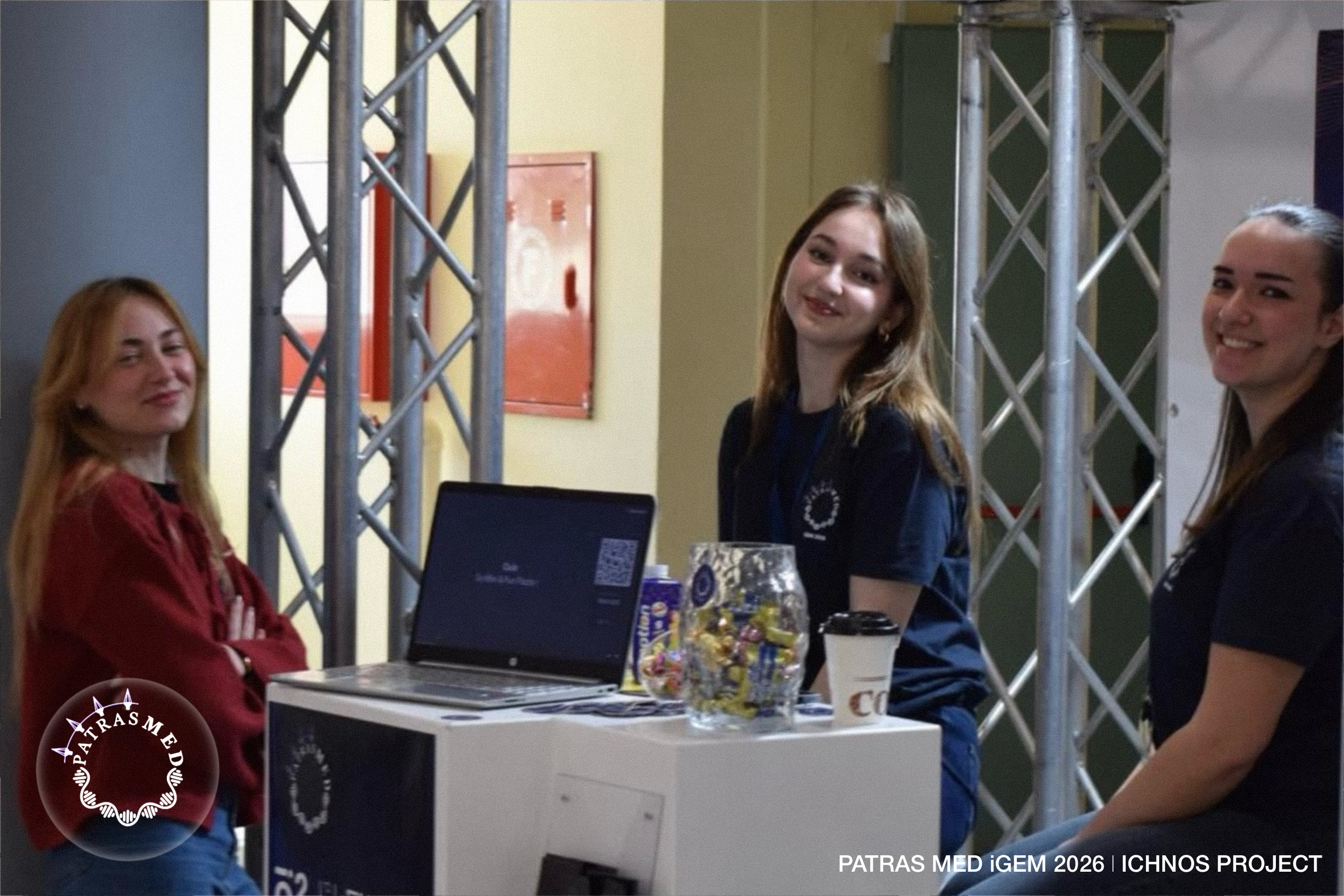
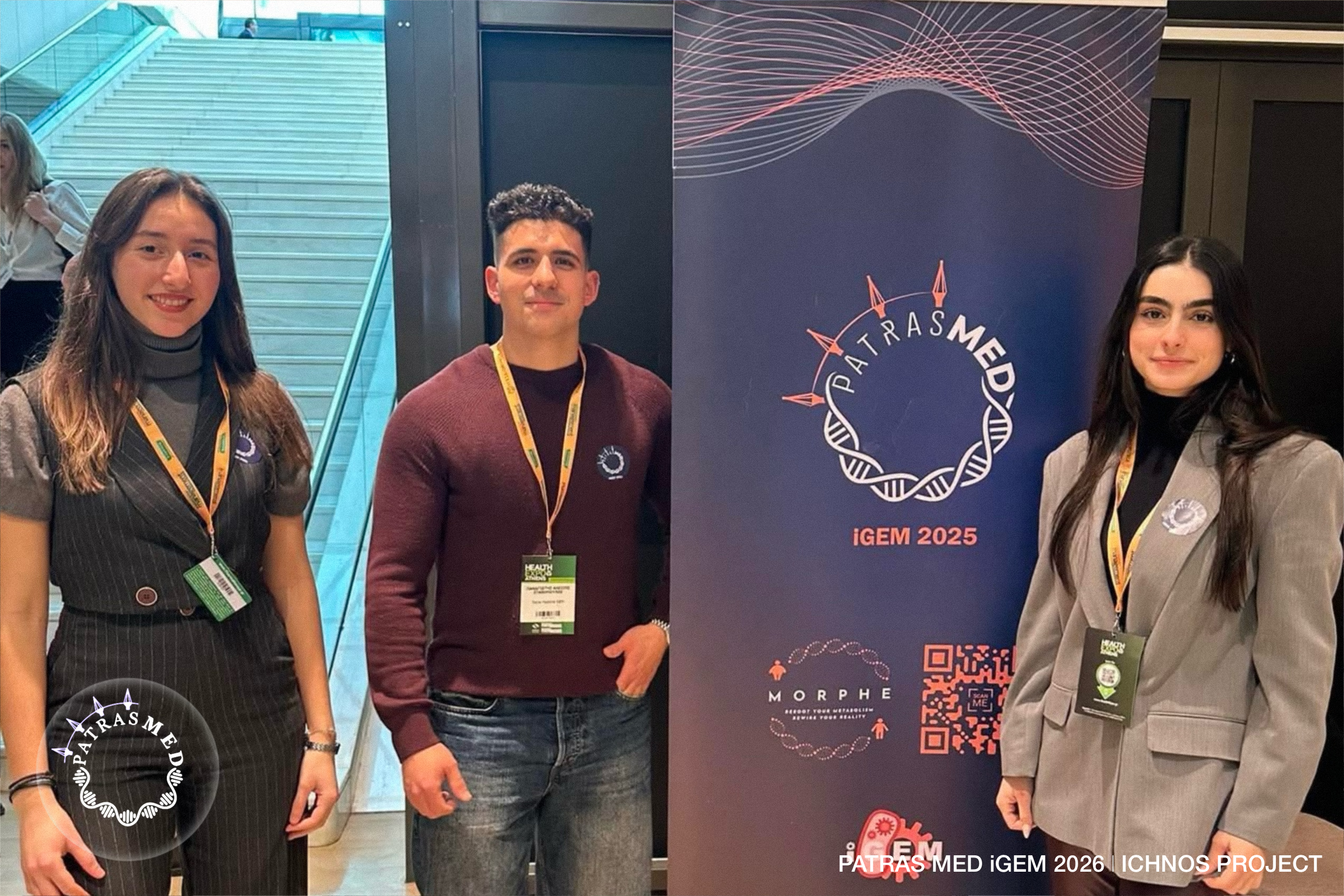
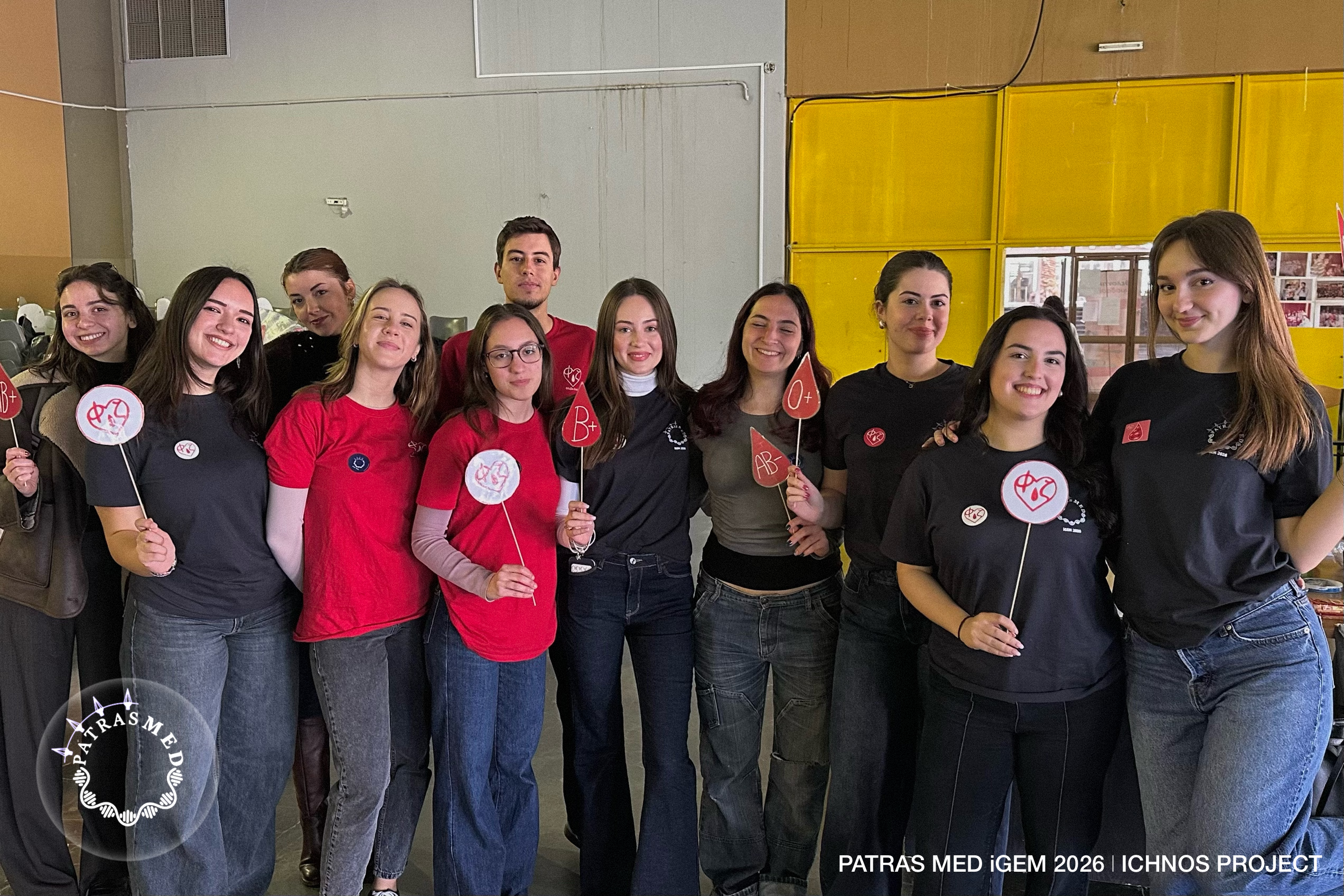
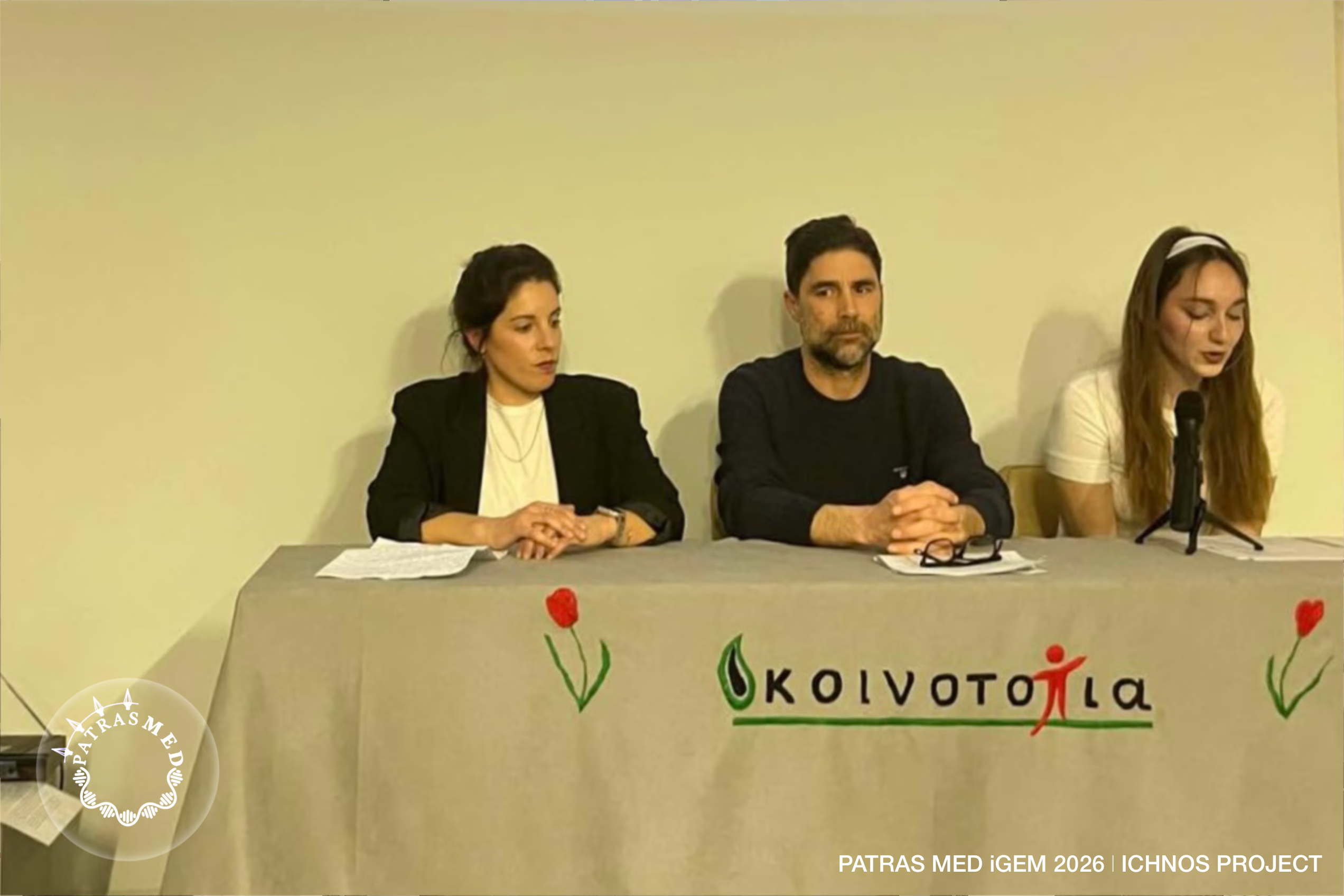
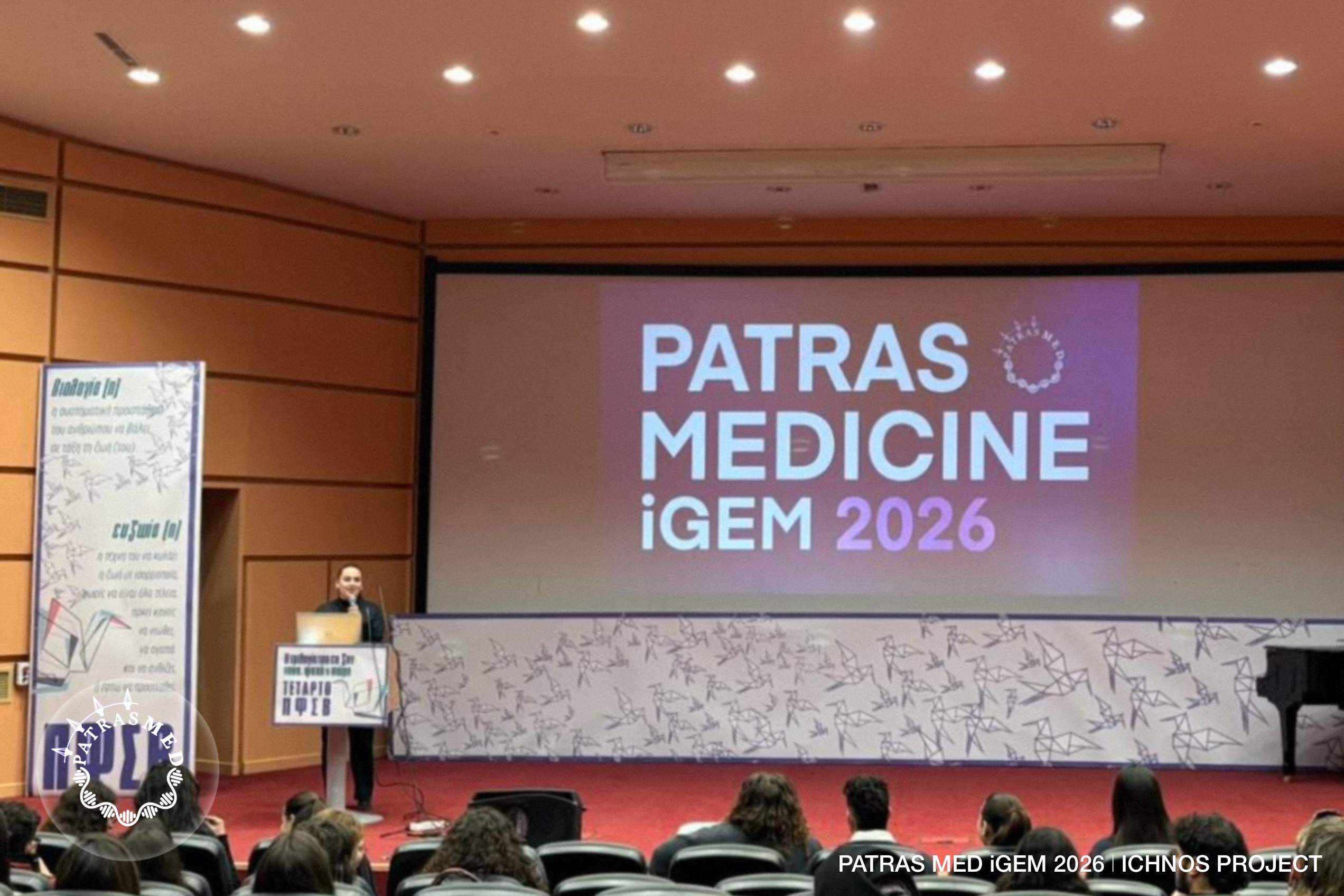
Building on our training in team communication, laboratory safety and practical skills, we extended our understanding of responsibility to how we engage with the public. Preparing to develop ICHNOS also meant learning to explain synthetic biology clearly, discuss its possibilities and limitations and distinguish established knowledge from ideas still under investigation.
While ICHNOS was still at an early stage, we organised public engagement, educational and community activities to strengthen scientific literacy, raise biosafety awareness and encourage informed dialogue about biotechnology. These activities helped us put responsible communication into practice by listening to questions, adapting our explanations to different audiences and acknowledging uncertainty.
These activities included participation in Patras IQ (Innovation and Knowledge Transfer Exhibition), HealthExpo and the Panhellenic Student Conference of Biosciences (PFSB) in Ioannina, as well as the collaboration with Kainotopia, a social action and culture organisation. We also organised a voluntary blood donation campaign with the University Blood Donation Volunteer Team “Fleva Zois” (Vein of Life).
At the beginning of the project, ICHNOS was still under development. We recognised that discussing synthetic biology publicly at such an early stage carries an important responsibility: avoiding misunderstanding, unrealistic expectations and unnecessary concern. Many people encounter synthetic biology mainly through fragmented media information, while students in health and life sciences often receive limited practical training in communicating biotechnology responsibly.
We therefore chose to focus first on how we communicate science before focusing on what we communicate about our project.
Through our first interactions with students, citizens and healthcare trainees, we observed that people engaged more openly when they were invited to participate actively rather than listen passively. Interactive quizzes, discussion prompts and real-world problem-solving activities encouraged questions about laboratory safety, genetic engineering, ethics and regulation. These conversations showed us that responsible communication is not simply the transfer of information, it is a process of building understanding and trust. Most importantly, we realised that safe synthetic biology includes the ability to explain uncertainty, limitations and risk in a way that is accessible to non-experts.
We implemented a coordinated series of activities targeting different audiences while maintaining a common goal: promoting informed and responsible discussion around synthetic biology.
Interactive Public Engagement Events
At Patras IQ, HealthExpo and the Panhellenic Student Conference of Biosciences (PFSB), we operated interactive booths where visitors explored synthetic biology through quizzes, short educational activities and open discussion. Instead of presenting a finished technological product, we used these events to identify common misconceptions, test different communication approaches and practice explaining complex concepts in clear, evidence-based language. The PFSB Conference also marked the first public presentation of the initial concept behind our project, providing valuable feedback on how our ideas were perceived by peers from across Greece.
2) Voluntary Blood Donation Campaign and Community Engagement
In collaboration with the University Blood Donation Volunteer Team "Fleva", we organised a voluntary blood donation campaign and developed a digital quiz game for participants during the waiting period. The activity connected public health responsibility, informed participation and scientific engagement in a supportive environment. We also participated in the Kainotopia public innovation event, where we discussed biotechnology, risk perception and the societal role of synthetic biology with non-specialist citizens.
The most important impact was internal. Through repeated interactions with students, citizens, patients and healthcare trainees, we learned to communicate synthetic biology with greater accuracy, transparency and caution. We became more aware of how easily technical terms can be misunderstood, how quickly expectations can become unrealistic and how important it is to distinguish between current evidence and future possibilities.
These experiences directly influenced the way we later presented ICHNOS. We reduced speculative claims, clarified experimental limitations, highlighted biosafety considerations and adopted a more evidence-based communication strategy across our presentations, educational material and public outreach activities.
The activities also strengthened public engagement by creating spaces where participants could ask questions, express concerns and discuss biotechnology openly rather than receiving one-way information.
These early activities became our first experience in responsible science communication. They contributed to biosafety and biosecurity by addressing misconceptions and encouraging informed discussion around biotechnology. By exploring the applications, risks and societal impact of emerging biological technologies, they also addressed synthetic biology in the real world. They taught us that safety extends beyond laboratory practices to the responsible communication of scientific evidence and uncertainty.
Ultimately, bringing science closer to society means carrying responsibility beyond the laboratory walls.
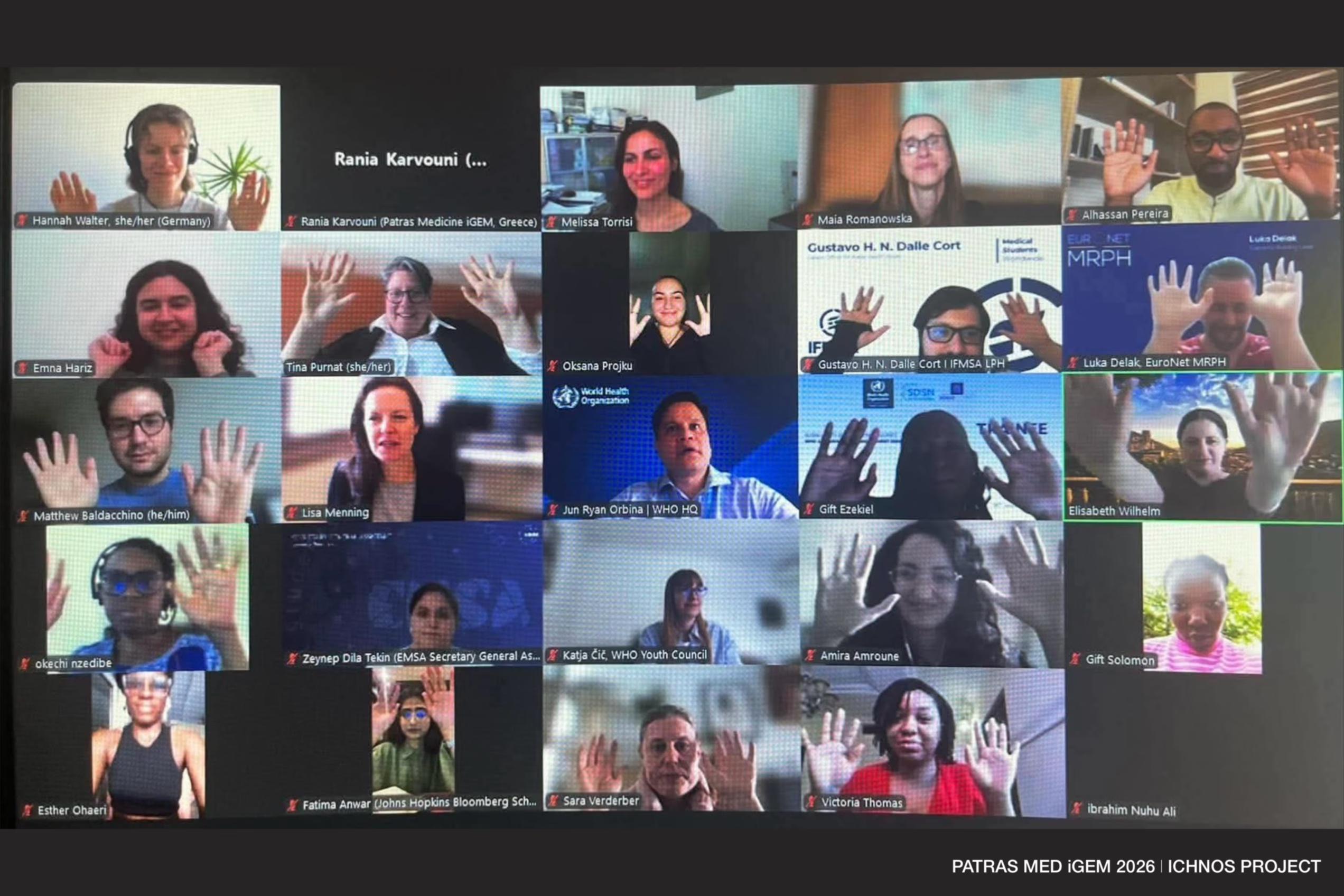
Alongside practising responsible science communication through public engagement, we strengthened our ability to critically assess the information behind our messages and research decisions. Early in our iGEM journey, our team participated in the WHO Youth Council interactive workshop "Prebunk, Debunk, Prevent: From Infodemic to Informed" during Global Public Health Week 2026.
This experience influenced not only how we communicate science, but also how we conduct research, the information we choose to trust, the evidence we rely on and the claims we decide to reproduce in our project.
As our project developed, we relied heavily on scientific literature to design experiments, justify biological mechanisms and discuss potential applications. We wanted to strengthen our ability to identify trustworthy sources, recognise weak evidence and avoid building project decisions on insufficient or overstated scientific claims.
Through interactive case studies and discussions, the workshop highlighted that scientific information should be evaluated critically by examining the quality of evidence, the limitations of the study and the distinction between experimental results and authors' interpretations. We realised that a large number of references does not necessarily mean strong evidence and that incomplete data should not be presented as definitive conclusions.
Following the workshop, we became more intentional about prioritizing peer-reviewed literature and trusted institutional sources and cross-checking information before incorporating it into our project design. We also learnt to distinguish primary evidence from opinion pieces or secondary interpretations, evaluate the credibility and expertise of a source and document evidence carefully. Lastly, we realised the importance of communicating limitations transparently instead of presenting preliminary information as established facts.
These practices directly affected the way we developed ICHNOS, particularly when discussing biological mechanisms, health-related implications and future applications. Therefore, they helped us develop a project built on safety and suitable for the real world.
This experience improved the quality of the scientific evidence used throughout the project and changed the way we interpreted literature. We became more careful in recognising data limitations, avoiding overstated conclusions and clearly separating validated findings from hypotheses or proposed future applications in our reports, presentations and wiki content. Overall, these steps guided the development of a scientifically responsible, safety-conscious project grounded in real-world needs and constraints.
Our participation in this workshop contributed to biosafety and biosecurity by strengthening our evidence-based research practices and promoting the responsible interpretation and communication of scientific data. The knowledge and research principles we gained were validated by the World Health Organization (WHO), providing our team with a reliable framework for evaluating evidence and recognising its limitations. The action also helped us manage risks arising from our own project, including the overinterpretation of results, unsupported claims and the unclear presentation of hypotheses as validated findings. By applying these principles to the evaluation of ICHNOS and the communication of its potential applications, the workshop addressed synthetic biology in the real world, supporting research that is accurate, transparent, trustworthy and socially responsible. In this sense, participating in the WHO workshop became one of our first practical exercises in safely doing research.
Because safe and responsible research begins with the questions we ask and the evidence we choose to trust.
Having built our own safety foundations and expanded our perspective through dialogue and education, we turned this knowledge inward to examine ICHNOS itself. We systematically identified potential concerns, assessed their significance and considered how they could be addressed across our project, from the tool and laboratory practices to its future applications. This process allowed safety and security to become an integral part of how ICHNOS was designed and developed, leading us to introduce concrete safeguards and adapt our approach where needed.
What could still go wrong if ICHNOS works exactly as intended?
Instead of asking only how our technology could be useful, we invited individuals of different ages, levels of scientific familiarity and areas of expertise to challenge it. Each participant examined ICHNOS from their own perspective, helping us identify weaknesses that might not be visible to our research team. Rather than focusing solely on the biological mechanism, we explored how ICHNOS could be misunderstood, misused or produce unintended consequences in real-world applications and therefore potentially pose risks to biosafety or biosecurity.
As researchers, we naturally tend to evaluate a technology by asking whether it works. However, real-world implementation raises additional questions: Who will use it? How will they interpret its output? What could they misunderstand? What could happen if the result is taken out of context? We therefore wanted to deliberately challenge our own assumptions and identify weaknesses that might only become visible once ICHNOS leaves the laboratory. We did not limit this assessment to the molecular mechanism. Instead, we considered the entire pathway from biological signal to interpretation and decision-making, including scientific limitations, accessibility, public understanding, regulatory uncertainty and possible unintended consequences.
The most important risks of ICHNOS may emerge not when the system generates a signal, but after the signal has been generated. A biological output does not carry its meaning independently. Its interpretation depends on the user, the context in which it is used and the decisions made from it. This meant that assessing ICHNOS only at the level of its biological mechanism would leave a critical part of its safety profile unexplored. To understand the real risks of ICHNOS, we had to follow the signal beyond our research team to the people who would interpret it and the consequences that could follow.
Rather than asking whether participants supported ICHNOS, we asked them to break it. People with different levels of scientific familiarity and professional expertise were invited to identify the weaknesses they would be most concerned about if ICHNOS were introduced into a real-world setting. We included perspectives from scientific experts, educators, parents, students, policymakers and potential users.
Their input allowed us to build a stakeholder-based risk map for ICHNOS. At its centre is the challenge "Try to Break ICHNOS," surrounded by five attack points: scientific interpretation, usability and accessibility, public communication, regulation and operational consequences. Each point connects a different perspective with a critical question, a potential weakness and the risk that could follow.
The map demonstrated that a reliable biological signal is not automatically a safe or useful outcome. Risks may emerge when that signal is overinterpreted, used incorrectly, misunderstood by the public or translated into decisions without clear responsibility. Excessive sensitivity could also lead to unnecessary interventions and costs.
The exercise therefore functioned as a pre-deployment stress test. Instead of waiting for weaknesses to appear during implementation, we actively searched for them beforehand and identified where additional safeguards, guidance and validation would be needed before ICHNOS could be responsibly applied beyond the laboratory.
The activity changed how we approached the responsible development of ICHNOS. By learning how people outside our team could interpret and use the system, we identified risks that had not been fully visible from a technical perspective. We then began addressing them by clarifying what an ICHNOS signal can and cannot demonstrate, communicating its limitations more carefully and considering the guidance, accessibility requirements and decision-making responsibilities needed for its future use.
At the same time, the exercise introduced ICHNOS to society not as a finished technology seeking approval, but as a developing project open to criticism. Participants became active contributors to its risk assessment and their perspectives helped us make ICHNOS more transparent, understandable and responsive to real-world concerns.
The "Try to Break ICHNOS" stress test contributed to biosafety and biosecurity by examining how risks could emerge not only from the technology itself, but also from its interpretation, communication and use.
Through this process, we identified and began managing potential risks arising from our own project, recognising that ICHNOS has no single risk profile. Each future application must therefore be evaluated within its specific context, with safeguards adapted to the users, decisions and actions connected to its output.
Because before ICHNOS can trace the invisible, we must make visible the risks hidden in how its signals are interpreted and used.
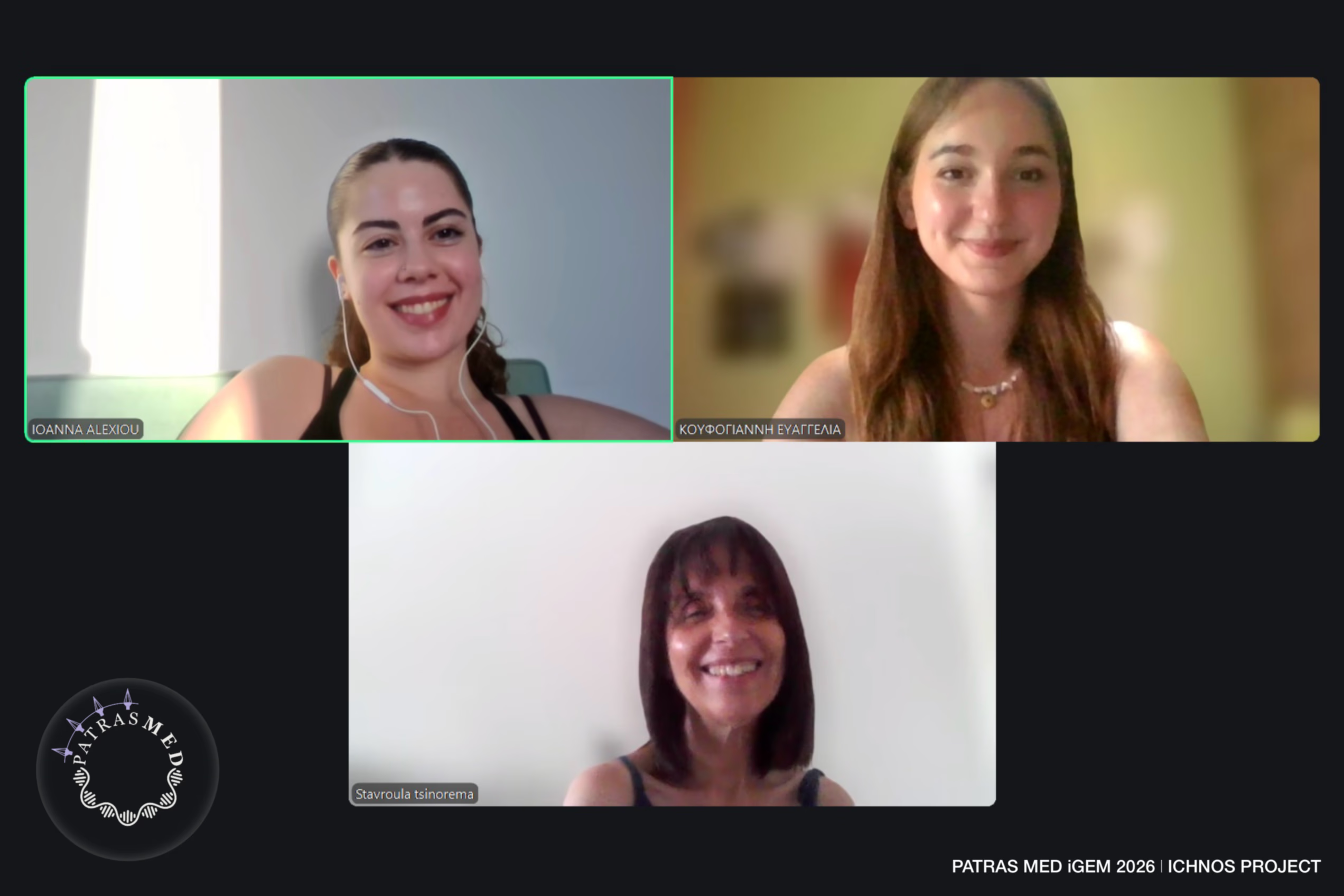
Our discussion with Professor Tsinorema highlighted that the safety and security considerations of ICHNOS extend beyond its biological mechanism. As the project developed a scientific tool, ICHNOS-Vail, for the analysis and storage of stress-related data, we identified a new layer of potential risk concerning data access, storage and protection. In particular, we considered the implications of storing data locally versus using cloud infrastructure, including risks related to unauthorised access, server security and data sovereignty. The discussion also raised legal and regulatory considerations, particularly the differences between European and US frameworks governing data stored through external cloud providers. Finally, we acknowledged that although broader concerns such as misuse in future applications fall beyond the scope of our current project, they should remain part of our security awareness as ICHNOS evolves.
To assess the risks associated with ICHNOS, we examined its biological components and how their interactions could lead to unintended outcomes. The following assessment considers potential biosafety and biosecurity concerns and the measures needed to address them.
Assessing the risks of the ICHNOS mechanism encouraged us to extend this work to the documentation of its individual parts. We included a Safety and Chassis section in each Registry entry, presenting relevant considerations alongside the part’s function and technical description. These entries complement the assessment above with more detailed information about the components used in our design. You can access our Registry entries here.
Complementing the risk assessment of the ICHNOS mechanism presented above, we examined the hazards associated with the biological materials, chemicals and consumables used in our experimental work. The following analysis identifies potential exposure risks and the handling, storage and disposal measures required to reduce them.
After finalising our experimental protocol and assessing our technical needs, we recognised that safe experimentation depends on both researcher practices and the environment in which they are applied. We therefore reassessed the facilities available to our team, considering equipment, supervision, occupancy, sample transport and the infrastructure needed to manage biological and chemical hazards.
The laboratories we initially considered each presented limitations for our workflow. One provided an advanced fluorescence microscope but lacked other necessary equipment, which would have required transporting biological samples between facilities through shared areas, introducing additional handling and transport risks. Another offered basic equipment but had high daily occupancy, making it harder to maintain a dedicated workspace and avoid interruptions. Its fluorescence microscopy module had also remained inactive for an extended period and required operational checks before use. Both options had limited access to personnel experienced in Saccharomyces cerevisiae research, further highlighting the importance of selecting a laboratory with appropriate equipment, working conditions and yeast-specific supervision.
We ultimately moved our work to a laboratory whose infrastructure and qualified supervision more closely matched the requirements of ICHNOS. It provided the fluorescence microscope needed for our experimental readouts, allowing microscopy-based analyses to take place within the same laboratory and reducing unnecessary transport of biological samples. The laboratory also included an open bench, chemical fume hood, laminar flow clean bench, incubator and appropriate sample-storage and waste-management infrastructure, supporting the different stages of our workflow within a more organised environment. The laminar flow clean bench was used specifically as a DNA workstation for PCR sample preparation, with subsequent PCR products purified through a PCR clean-up protocol. We used it for product protection and contamination control, not as a biological containment device, recognising that it does not provide personnel or environmental protection.
This was therefore more than a change of workspace: we addressed risks through the organisation and infrastructure of the experimental workflow itself. Bringing the necessary equipment and supervision together reduced avoidable sample movements and supported controlled cultivation, appropriate sample handling and waste management.
The change also supported the reliability of our work. ICHNOS required repeated handling and characterisation of yeast cultures, fluorescence measurements and molecular analyses. Conducting these activities in a suitably equipped environment helped us maintain consistent conditions and coordinate procedures more effectively, supporting both biosafety and data integrity.
Our selection process reinforced that a suitable laboratory is an active part of responsible experimental design: it must support the procedures, people and precautions that safe research requires.
In the ICHNOS dry lab, responsible practice included protecting the integrity of computational analyses and preventing unsupported predictions from being interpreted as experimental conclusions. We treated these safeguards as part of the modelling and software workflow, from checking input data to communicating uncertainty in the final outputs.
Our models distinguish literature-derived parameters, fitted values and provisional assumptions. Computational checks examine module connections, shared parameters and numerical behaviour, while recorded configurations link results to the inputs and model settings used. Alternative stress-input histories are evaluated as explicit scenarios rather than presented as confirmed biological mechanisms. These practices help identify errors and make the limits of each prediction traceable.
The image-analysis workflow applies the same principle to measurements. Input manifests, image alignment and quality checks help identify problems before they propagate into fluorescence summaries. We also assessed segmentation against manually marked cells, recognising that passing software tests alone does not establish measurement accuracy. For empirical decoding, evaluation on held-out imaging days examines whether performance extends beyond the data used to construct the reference.
Communicating insufficient evidence is another safeguard. The software includes quality flags and validation verdicts, and distinguishes synthetic benchmarks from performance on experimental images. Where the available data do not support reliable dose or elapsed-time estimation, that limitation is reported. Model outputs are intended to support research interpretation and experimental planning. They do not replace laboratory risk assessment or establish safe exposure conditions.
The application runs locally, allowing image processing without requiring users to upload microscopy data to an external analysis service. Local operation does not itself guarantee cybersecurity: deployment must still follow institutional requirements for access, software dependencies, storage and backup.
Together, these choices make responsible computation part of the experimental environment. The aim is to preserve a clear connection between data, assumptions and conclusions, so that computational outputs can inform subsequent work without overstating what has been demonstrated.
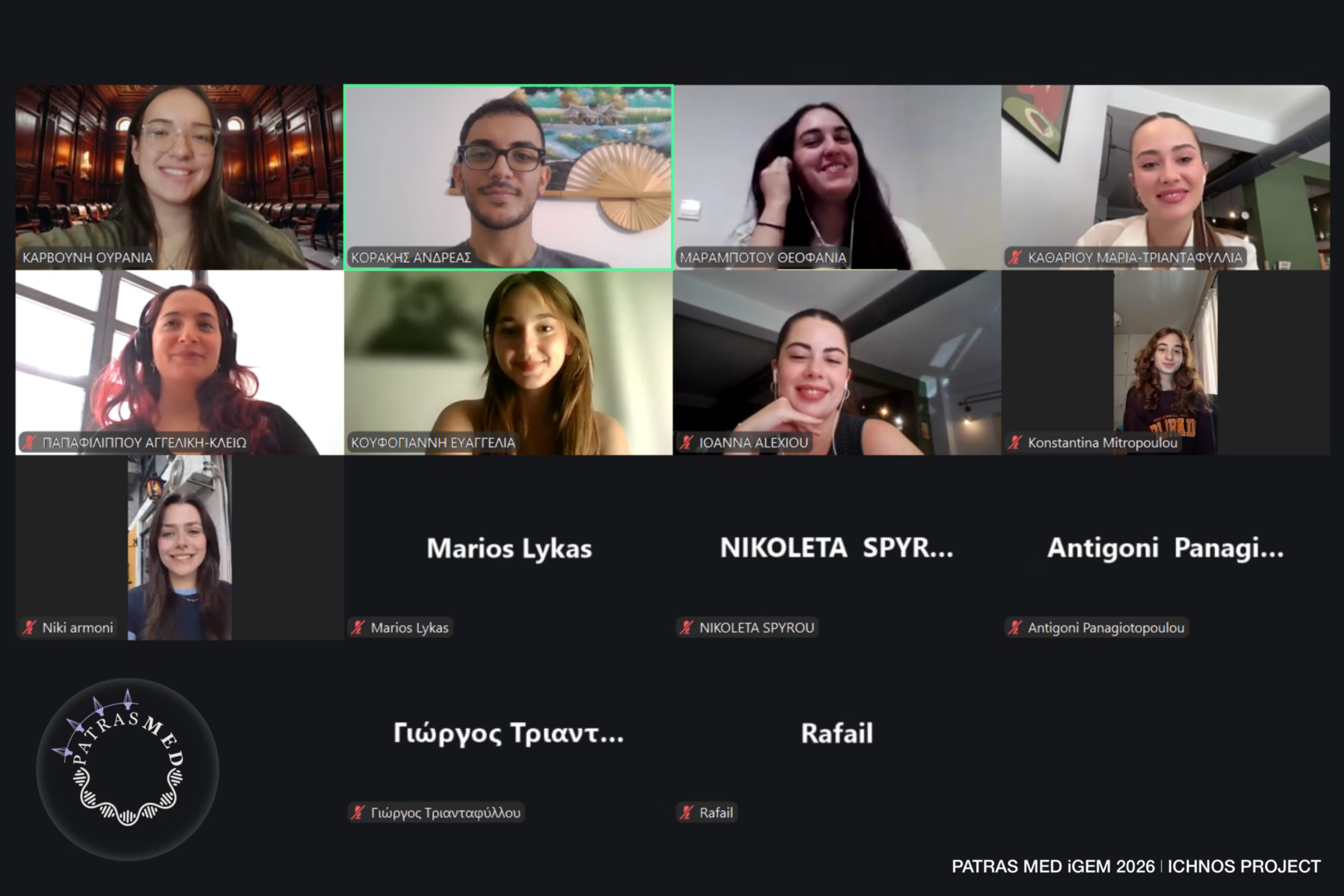
Having taken measures to strengthen safety in our laboratory work and the design of ICHNOS, we also sought to examine the responsibilities surrounding our project from a legal perspective.
What happens when biotechnology reveals that something went wrong, but nobody can prove that anyone was harmed?
This question became the basis of our interdisciplinary mock trial, organised in collaboration with a group of law students from the National Kapodistrian University of Athens (NKUA). We created a hypothetical laboratory near-miss scenario in which a biological recorder revealed that samples had temporarily experienced conditions outside an approved protocol. The event caused no demonstrable harm, but the signal created a new problem:
What responsibility follows from detecting a potential risk?
As we developed ICHNOS, we realised that making an invisible biological event detectable also means deciding what should happen once that information exists.
ICHNOS is designed to preserve traces of transient cellular events that may otherwise disappear unnoticed. This raised a question beyond the technology itself:
If ICHNOS makes an invisible event visible, who decides what that evidence means and what should happen next?
A signal does not automatically establish its cause, severity or appropriate response. We therefore focused on the space between detection and action, particularly in biosafety near-misses where a deviation may be detected without demonstrable harm. This also raised a biosecurity concern: what if the information generated by the detection is intentionally withheld or not communicated in an ethical way?
We identified three questions that biology alone could not answer:
This led us to a broader insight: the value of biological detection does not end with the signal. Once generated, biological information enters a decision-making process involving interpretation, accountability and regulation.
To explore this uncertainty, we developed "The Invisible Incident Case", an interdisciplinary mock trial with students from NKUA Law School. The case centred on a hypothetical biological recorder detecting that samples had temporarily deviated from approved conditions. The scenario deliberately contained no demonstrated human or environmental harm, creating uncertainty rather than a predetermined outcome.
Participants examined the case from different perspectives:
The discussion addressed the legal significance of near-misses, responsibility, reporting obligations, the reliability of biological data as evidence and the adequacy of existing regulatory frameworks. Rather than seeking a predetermined legal answer, we used the ambiguity of the case itself as the subject of discussion.
Participants feedback indicated that the interdisciplinary approach successfully connected biological evidence with legal and biosafety decision-making. 95.2% reported a better understanding of biosafety near-miss incidents, while 85.7% reported a clearer understanding of the connection between biological evidence and legal responsibility. 81% recognised that a near-miss may have legal significance even without demonstrable harm and 85.7% considered biological data potentially relevant when investigating an incident. Furthermore, 76.2% recognised the importance of evaluating the reliability of biological data before using them to support decisions, while 100% reported that the activity contributed to their understanding of the issue.
Beyond participant learning, the action changed our perspective on ICHNOS. We moved from thinking primarily about whether an event can be detected to considering how the resulting information should be interpreted, traced and acted upon responsibly.
"The Invisible Incident" mock trial contributed to biosafety and biosecurity by examining how uncertain biological risks should be interpreted, communicated and acted upon. Its accompanying guide extended this contribution for educational purposes, offering a reusable framework for exploring biological evidence, legal responsibility and safety decision-making. The content of both the activity and its guide was validated by Professor Spyridon Vlachopoulos, Professor of Public Law at the National and Kapodistrian University of Athens. The action also helped us identify and manage potential risks arising from ICHNOS, including signal misinterpretation, withheld information and unclear responsibility.
Because safety begins when evidence becomes responsibility and responsibility becomes action.
As biomanufacturing emerged as the most immediate potential future application of ICHNOS, we considered it important to define how the system could be evaluated responsibly before introducing it into a production setting. Drawing on expert feedback, we developed a prospective safety protocol that begins with controlled studies outside the production line and addresses containment, potential effects on production and product quality and reliable interpretation of stress records. It distinguishes between deployment configurations and outlines the evidence and safeguards required for further development, providing a structured basis for future evaluation alongside biosafety and manufacturing teams.
Having strengthened our own practices and applied what we learned to make ICHNOS safer, we extended our efforts to the university community. Through knowledge-sharing, practical resources, we worked to promote awareness of biosafety and biosecurity and strengthen the university's safety mechanisms. This meant supporting both the people who put safety into practice and the systems that help them prevent, report and respond to risks.
To strengthen safety awareness among students in our university community, we organised "Lab Rules: True or False?", an educational activity delivered across the Departments of Biology, Chemistry, Medicine, Pharmacy and other laboratory-based disciplines at the University of Patras. With the lecturer's permission, our team introduced a quiz at the end of scheduled university classes. Participants tested their laboratory-safety knowledge by deciding whether each rule was true, false or misleading. After completing the quiz, students took part in a brief guided discussion about the answers, common misconceptions and the reasoning behind safe laboratory practices.
Students from Biology, Chemistry, Medicine, Pharmacy and other laboratory-based university departments are expected to follow safety rules whenever they enter teaching or research laboratories. However, there was no shared way to examine whether students across these departments could interpret routine biosafety practices correctly rather than simply recognise familiar instructions. Misconceptions may remain unnoticed when gloves are treated as a substitute for handwashing, small spills are considered too minor to report, laboratory coats are worn in shared spaces or previous experience is assumed to replace local protocols. These gaps can affect personal protection, contamination control, waste handling and incident reporting. Our challenge was therefore to identify the specific practices that students understood, the statements that created uncertainty and the areas in which clearer safety communication was needed.
We recognised that asking students simply whether they knew laboratory safety rules would provide limited information, because confidence does not always reflect understanding. A quiz containing both genuine and deliberately misleading statements required participants to evaluate each practice more carefully.
We approached lecturers from Biology, Chemistry, Medicine, Pharmacy and other departments involving regular laboratory work at the University of Patras. With their permission, our team briefly presented the activity after the completion of a scheduled class and invited students to complete the anonymous Google Forms quiz. It covered hand hygiene, personal protective equipment, food and drink, labelling, sharps, biological waste, spills, aerosol-generating procedures, controlled access, incident reporting and compliance with local protocols. Participants were informed that their identities would remain anonymous. The statements were presented as true, false or uncertain, allowing us to examine both knowledge and confidence.
The quiz was followed by a brief facilitated discussion. Rather than only announcing the correct answers, we asked students to explain their reasoning and consider how a seemingly minor shortcut could affect other people or the laboratory environment. We clarified that risk assessment and the approved procedures of each laboratory always take priority over assumptions or experience gained elsewhere. The quiz statements and their explanations were developed using the WHO Laboratory Biosafety Manual, 4th edition[1] and the CDC/NIH Biosafety in Microbiological and Biomedical Laboratories, 6th edition[2]. The quiz was used as an educational tool rather than a substitute for formal laboratory training.
The quiz showed that laboratory safety knowledge was not equally established among students. Although the average score was 84.8% and the median 90.9%, the lowest score was 40.9%, meaning that some participants correctly evaluated fewer than half of the statements. On average, 15.2% of statements were evaluated incorrectly. These responses gave the guided discussion a concrete focus: revisiting incorrectly answered statements, explaining why they were unsafe or misleading and clarifying the reasoning behind the relevant rules. The activity therefore helped identify specific learning needs and provided immediate feedback, rather than simply assigning a score.
The action constitutes a contribution to biosafety and biosecurity by translating established laboratory-safety guidance into a reusable educational tool that tests understanding, makes misconceptions visible and identifies the practices that require further reinforcement. The quiz was built upon existing knowledge from the WHO Laboratory Biosafety Manual and the CDC/NIH BMBL, providing a validated foundation for its statements, explanations and safety messages.
Because a safety rule protects people only when we understand the reasoning behind it.
Alongside helping students understand laboratory rules through "Lab Rules: True or False?" activity, we considered how they could access reliable safety guidance during laboratory work. Having, also, needed such guidance during our own preparation, we reviewed the existing laboratory safety guide provided by the Department of Biology. It contained essential information on laboratory practices and hazards, but was primarily available as a printed resource.
What if a liquid was spilled on the guide?
What if the letters were too small to read?
What if you needed an emergency procedure in seconds?
These simple questions highlighted that having safety information available is not enough if it cannot be accessed and used effectively when it matters. Rather than replacing the established guide, we chose to build upon it and explore its evolution into a more accessible, organised and user-oriented safety resource.
The Department of Biology's existing safety guide contained essential information on laboratory practices and hazards. However, its primarily printed format presented practical limitations: pages could be damaged by spills, small text could be difficult to read and specific instructions could take time to locate. These barriers were particularly relevant for new laboratory members or anyone needing guidance quickly. Our challenge was to ensure that the guide's format did not become an obstacle to finding, understanding and using important safety information when it mattered.
We realised that the availability of safety information does not necessarily guarantee its effective use. For safety guidance to support responsible decision-making, users need to be able to find, understand and apply the relevant information when required. This shifted our focus from simply providing safety information to improving its accessibility, organisation and usability.
We decided to build directly upon the existing departmental safety guide, preserving its established safety framework while exploring ways to make it more accessible and practical for laboratory users. Our approach focused on reorganising and presenting the information in a clearer, more user-oriented format, with particular attention to navigation and accessibility. In this way, the existing institutional knowledge could remain the foundation of the resource while its practical usability was expanded.
The initiative laid the groundwork for bringing essential safety guidance directly within reach of students, researchers and other laboratory users. A digital, interactive format would allow them to access the guide from their own devices, prepare before entering the laboratory and locate relevant instructions without relying on a printed copy. This gives the existing guide a wider practical role: supporting new students as they become familiar with laboratory responsibilities and helping experienced users revisit guidance when needed. By improving access and navigation, the initiative supports more informed decisions and everyday laboratory risk prevention.
You can explore and use the interactive laboratory safety guide directly below.
Laboratory Safety Guide 2.0 contributed to biosafety and biosecurity by improving access to established laboratory safety knowledge. It was built upon the Department of Biology's existing safety guide rather than replacing it, while making its information more accessible and actionable. The initiative also supported risk management within our own experimental work by improving access to relevant safety procedures and guidance.
As part of our continuous effort for more transparent and safe lab practices, we developed a short documentary based on concise interviews with university professors and laboratory researchers. Participants were invited to reflect on a biosafety or biosecurity incident, near miss or unexpected situation from their professional experience, explain how it was managed and identify the lesson that followed. The final video connects personal experience with prevention, transparent reporting and responsible laboratory practice.
People outside the laboratory often see only the final results of scientific work. Scientists and laboratory experts are therefore expected to know exactly what to do at all times and are sometimes treated as if their expertise prevents mistakes altogether. In reality, even experienced professionals can face accidents, near misses, unexpected results or moments of uncertainty. What distinguishes responsible laboratory practice is not the absence of mistakes, but the ability to recognise them, respond appropriately, report them and prevent them from happening again. Because the public rarely sees this part of laboratory work, we wanted to challenge the idea of the 'infallible expert' and present safety as an active process of preparation, accountability and continuous learning. At the same time, this had to be done without sensationalising incidents, assigning blame or revealing confidential and operationally sensitive information.
We recognised that the misconception referred above, could be addressed most directly through the voices of people who have actually worked in laboratories. First-hand stories can show that uncertainty and mistakes are part of real scientific practice, while also demonstrating how training, teamwork, reporting and established procedures prevent a difficult situation from becoming more serious. These confessions make it possible for the general public to move beyond the image of experts as people who never get anything wrong and instead present expertise as the ability to respond responsibly, learn and improve.
To translate this idea into practice, we recorded brief, structured interviews with university professors and laboratory researchers. Each participant was asked the same three questions: whether they had encountered a biosafety or biosecurity incident, near miss or unexpected situation, how it was managed without disclosing sensitive details and what lesson or advice they would share with younger researchers. This common structure allowed the video to focus not on the mistake itself, but on the response and the improvement that followed.
The interviews were edited thematically into a short documentary. A brief introduction distinguishes biosafety from biosecurity, while authorised laboratory footage and on-screen keywords connect the accounts with preparation, prevention, containment, reporting and responsibility. Consent was obtained for recording and publication. Contributors were asked not to identify affected individuals or disclose pathogens, restricted materials, access arrangements or procedural information that could create further risks.
The documentary offers students, early-career researchers and people outside the laboratory a more realistic view of scientific practice. By hearing experts speak openly about incidents and near misses, viewers can understand that safety does not depend on never making a mistake, but on recognising problems, reporting them and learning from them. The shared accounts turn principles such as preparation, teamwork, containment and accountability into concrete experiences rather than abstract rules. Because the video was shown and can be shown again in educational activities and laboratory training, its impact extends beyond the original interviews and provides a lasting resource for encouraging a more open and responsible safety culture.
The video itself constitutes a contribution to biosafety and biosecurity by making real laboratory experience available as a reusable educational resource. The action was validated through our direct collaboration with university professors and laboratory researchers, whose expertise and first-hand experiences shaped both the interview structure and the safety messages presented in the video. It was therefore built upon existing knowledge and real laboratory practice, ensuring that its content reflects the challenges professionals actually encounter and the responsible ways in which they respond, report, learn and improve.
Because a safer laboratory is built when experiences are shared, incidents are reported and lessons are put into practice.
Our efforts to strengthen safety and security practices at the University of Patras culminated in UniSafe Patras, a prototype Accident and Incident Reporting System designed to document accidents, incidents and near misses, connecting safety awareness and accessible guidance with reporting, collective learning and prevention. The system addresses the absence of a central automated reporting pathway at the University of Patras. Multiple meetings and discussions with the University's Health and Safety Coordinating Committee stakeholders shaped its structure, connecting reporting with official guidance, risk assessment and the ambition to strengthen safety culture across the University.
Through our discussions with Professor Vantarakis, a member of the University's Health and Safety Coordinating Committee, we learned that no central automated system existed for reporting accidents and safety incidents. Although the Technical Safety Officer, Professor Thomopoulos, and Occupational Doctor, Dr. Triantafyllou, recorded events brought to their attention, these records were not consolidated into a unified archive. The Coordinating Committee had an advisory role and near misses did not generally reach it. As a result, warning signs could remain scattered or unnoticed before a more serious event occurred.
The challenge therefore extended beyond reporting serious accidents. It concerned the University's ability to build a consistent picture of safety across laboratories and other spaces, identify repeated risks and use that knowledge to prevent future harm.
Professor Vantarakis highlighted gaps in health and safety knowledge and automated monitoring. He argued that all incidents should be recorded and classified according to their impact. This shifted our focus from creating a simple reporting form to supporting a wider process of documentation, review and prevention, accompanied by accessible education.
Multiple meetings and discussions took place with Professor Vantarakis, with the Technical Safety Officer, the Occupational Doctor and Vice-Rector Eleni Albani, who is the Coordinator of the University's Health and Safety Committee. Their complementary perspectives helped align the structure with institutional needs and responsibilities. Professor Vantarakis outlined a pathway from the reported event to the Technical Safety Officer and Occupational Doctor, then to the Coordinating Committee for conclusions, followed by the Head of Department and responsible professor. His feedback also made clear that transparent reporting must acknowledge existing accountability requirements and be supported by clear explanations and training.
Our discussions helped us define what a reporting system would need to achieve within our own institution. We also looked beyond the University of Patras and explored how universities internationally use digital reporting systems to document safety events and support institutional learning. These examples showed us that structured reporting can be a practical part of a wider safety framework, rather than simply a way of recording accidents. We therefore wanted to adapt this approach to the needs and responsibilities of our own University.
We first developed a structured reporting form and then translated it into a web-application prototype. Reporting is its central function: users can document accidents, incidents, near misses, exposures, unsafe conditions and security concerns, including their location, timing, description, hazards and immediate actions. To minimise irrelevant submissions and maintain the quality of the reporting data, reports can only be submitted by faculty members, laboratory teaching staff and specialised technical laboratory staff. An authorised-access area supports review by responsible personnel. Alongside the reporting system, the Safety Assistant chatbot is configured to answer according to the University's Official Health and Safety Guide, helping users consult guidance and understand reporting. Similarly, a dedicated risk assessment page was developed using official University documents supplied by Professor Thomopoulos. The platform makes official safety information accessible alongside reporting, helping users understand how to document an event and where to find relevant guidance. Professional assessment and follow-up remain the responsibility of the University's designated personnel. The framework also connects biosafety with biosecurity by enabling reports of unauthorised access, missing materials or possible misuse of laboratory resources.
The action transformed an institutional gap into a concrete prototype shaped by stakeholder feedback and official resources. Therefore, it provides a practical starting point for consistent reporting across departments and learning from otherwise isolated events.
Looking beyond the competition, in our discussions with Vice-Rector Albani, we explored the possibility of integrating the system into the University's websites after iGEM, with the aim of strengthening the safety culture. This gives the initiative a route toward use beyond our team and competition cycle. Such integration remains a future step, the current outcome is the prototype and the institutional dialogue supporting its further development. With institutional adoption, the system could help reveal recurring hazards, inform targeted training and support corrective and preventive action across University spaces. Its broader potential lies in making safety reporting part of everyday University practice, allowing individual experiences to contribute to collective protection.
The video below demonstrates how UniSafe Patras works, while the accompanying user guide provides a detailed walkthrough of its features and reporting process.
The Accident and Incident Reporting System, called "UniSafe Patras" is our contribution to safety and security at our University. Its structure was validated through the feedback of Professor Vantarakis, Technical Safety Officer - Professor Thomopoulos, Occupational Doctor - Dr. Triantafyllou and Vice-Rector Eleni Albani. It is built upon existing knowledge shared by these stakeholders and on the University's Official Health and Safety resources, translating that knowledge into an accessible reporting framework. Inspired by similar systems used by universities internationally, we adapted the concept to the needs of our own University. The accompanying user guide is an additional contribution, supporting understanding and continuity. Together, these resources provide a foundation for institutional learning and a stronger University safety culture.
As the concepts of Safety and Security became a central pillar of our work, we realised that extending safety beyond the laboratory required more than assumptions about what people know or fear. If our approach was meant to include society, it first had to listen to it. Therefore, we used a structured questionnaire to explore knowledge, trust, misuse, responsibility and bioethics. The responses showed that concerns focused less on biotechnology itself and more on the conditions surrounding its responsible use.
This gave our societal Safety and Security approach an evidence-informed foundation.
If Safety and Security were to extend beyond technical safeguards, we needed to understand what people considered necessary for biotechnology to be used responsibly. Rather than measuring awareness alone, we wanted to explore where participants placed risk, trust and responsibility and what conditions they associated with its safe and ethical use.
The responses showed that concern was directed less toward biotechnology itself and more toward the conditions under which it is used. Only 8.2% selected technology itself as a concern, compared with potential misuse (55.1%), lack of information (44.9%) and insufficient controls (34.7%). This shifted our focus from simply explaining biotechnology to addressing responsible use, safeguards and clear communication.
We designed the questionnaire to examine Safety and Security from multiple connected perspectives: knowledge, perceived risk, malicious use, scientific trust, shared responsibility, public information and bioethics. By bringing these dimensions together, we could examine not only what participants knew, but also what they considered necessary for biotechnology to be used responsibly. The findings were then used to define the questions we explored further through expert consultation and subsequent public engagement.
The questionnaire provided a clear direction for the next stages of our societal Safety and Security work. The responses showed a strong demand for engagement: 93.8% of participants wanted more public information, while 77.6% believed that better information could reduce fear.
Rather than treating these findings as descriptive data alone, we used them to shape our next steps. They provided our consultation with bioethicist Dr. Tsinorema with facts and guided the development of subsequent public engagement activities focused on clearer communication, responsible use and meaningful participation.
The questionnaire contributed to biosafety and biosecurity by providing direct evidence of how the public understands Synthetic Biology, its risks and the responsibilities surrounding its use. Its content and structure were validated by Dr. Tsinorema, ensuring that the questions captured public perceptions, concerns and knowledge gaps in a meaningful way. These findings replaced assumptions with evidence and helped us shape our subsequent communication and educational activities around the needs identified by participants. In this way, public perspectives became an active part of how we approached responsible scientific communication.
Before science can speak to society, it must first learn to listen.
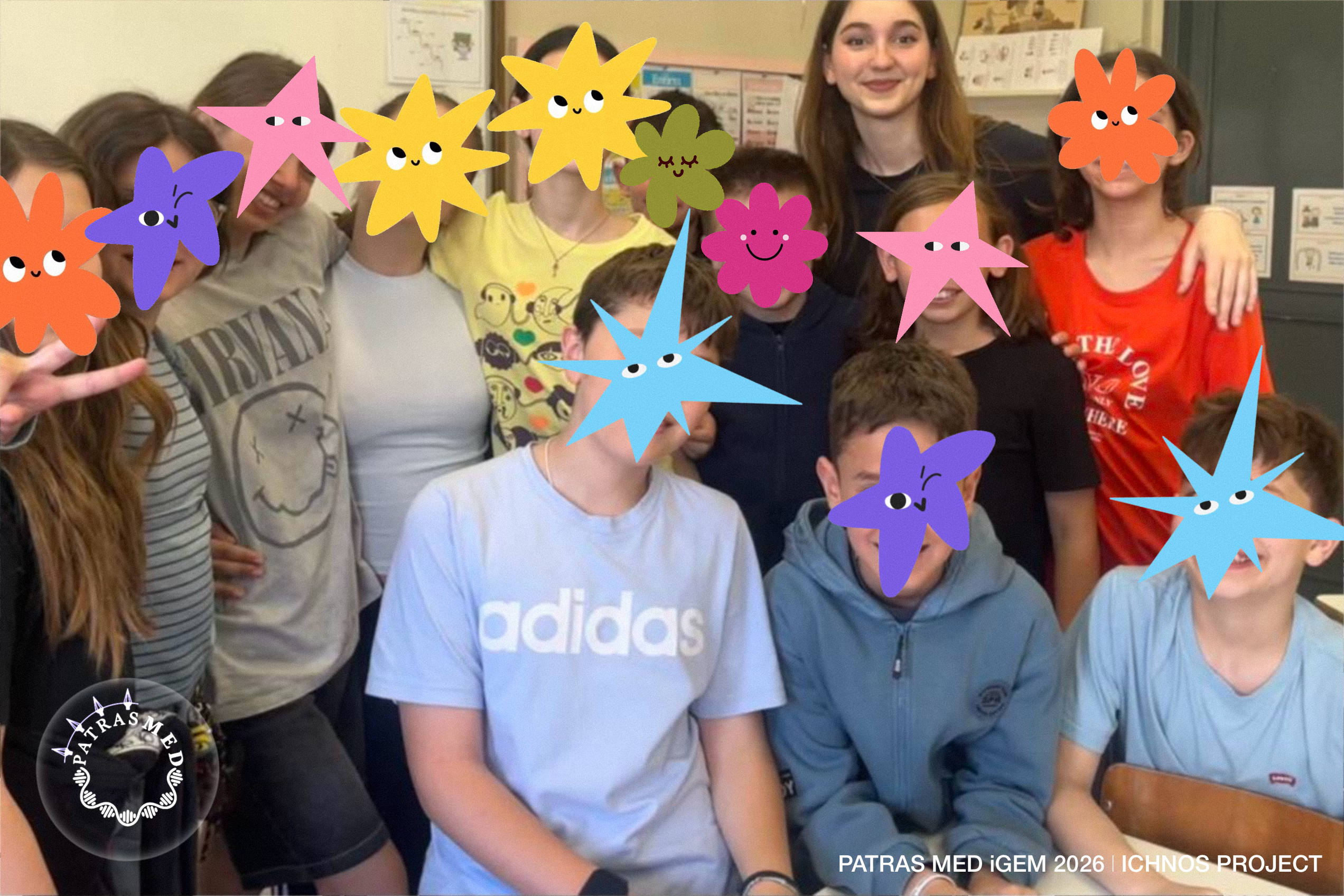
Having used a structured questionnaire to explore public knowledge, trust and concerns around biotechnology, we began our educational activities with primary school students. We aimed to introduce the foundations of a biosafety culture at an earlier stage of education, while students are still developing their attitudes towards science. Rather than presenting biosafety as a laboratory checklist, we approached it as a mindset that can be cultivated before formal laboratory education begins. Because many students had not yet received formal biology education, we first introduced basic concepts such as the cell and its functions through simple, interactive activities. Once this foundation had been established, students explored the principles of biosafety and biosecurity through a "spot the differences" activity featuring correct and unsafe laboratory practices. In this way, safety was introduced gradually, building upon biological knowledge that the students had already begun to understand.
Scientific responsibility is often introduced only after students have already formed their first ideas about what science is and what scientists do. We wanted to introduce it earlier, showing that understanding biology also means thinking critically about how scientific knowledge is applied.
Scientific understanding is not developed only through the acquisition of factual knowledge, but also through the choices students learn to make. By encouraging active problem-solving, we recognised that even young students can begin connecting biological concepts with responsibility, consequences and safe decision-making. This allowed us to introduce biosafety as part of scientific thinking itself, rather than as a separate set of rules taught only before entering a laboratory.
We divided the classroom into six stations representing major cellular functions, synthetic biology and laboratory safety. Students worked in small teams, with two teams participating simultaneously at each station and competing to complete each challenge correctly first. The activities included matching DNA bases, assembling protein structures, collecting cellular energy, deciding which molecules could cross a membrane, connecting real-world needs with suitable genetic traits and identifying unsafe laboratory behaviors.
Since the participants were primary school students, many had not yet been introduced to biology. Just as children first learn the alphabet before forming words, we began by introducing the cell and gradually built upon this foundation through simple, interconnected activities.
Once the students had understood these key concepts, we placed biosafety at the centre of the final stage of the activity. Through a "Spot the Differences" challenge, they compared images depicting correct and incorrect laboratory practices. This allowed us to explain why protective equipment, careful handling of biological materials, controlled access and responsible behaviour are essential. In this way, students learned that understanding how biology works must always be accompanied by knowing how scientific work can be conducted safely, securely and responsibly.
The winning team was recognized based on its performance, while all participating students received certificates, medals and treats as a celebration of their effort and engagement.
The complete structure, materials and instructions are available in our Step Inside the Cell Activity Guide, created to support the adaptation and reuse of this educational experience by other teams and educators.
The activity embedded safety thinking within the same learning journey as cell biology and synthetic biology, rather than presenting it as an isolated set of rules. Through interactive challenges, students connected biological concepts with decision-making, teamwork and responsible practice. The competitive format maintained their engagement, while the feedback questionnaire helped us reflect on how clearly the scientific and safety messages were understood.
For our team, the action demonstrated the value of introducing biosafety awareness alongside scientific curiosity from an early stage. By documenting the activity in a reusable guide, we also transformed one classroom experience into a resource that can support similar educational initiatives in the future.
You can access the Step Inside the Cell Activity Guide below to explore the activities and adapt them for your own educational setting.
This action constitutes an educational contribution to biosafety and biosecurity, as its complete structure and materials were transformed into a reusable activity guide for educators and other teams. The activity was built upon existing knowledge from school textbooks and fundamental laboratory safety rules, which we adapted into simple, age-appropriate activities. Its scientific content and educational approach were validated by the students' teachers and the school director, Eleni Papasimakopoulou, Chrysoula Karampela and Fanis Zagouras. Finally, through stations connecting biological functions and genetic traits with contemporary needs, the action addressed the use of synthetic biology in the real world, while emphasising the responsibility required for its safe and secure application.
Scientific curiosity may be the starting point, but responsible scientific practice must grow alongside it from the beginning.View the guide here
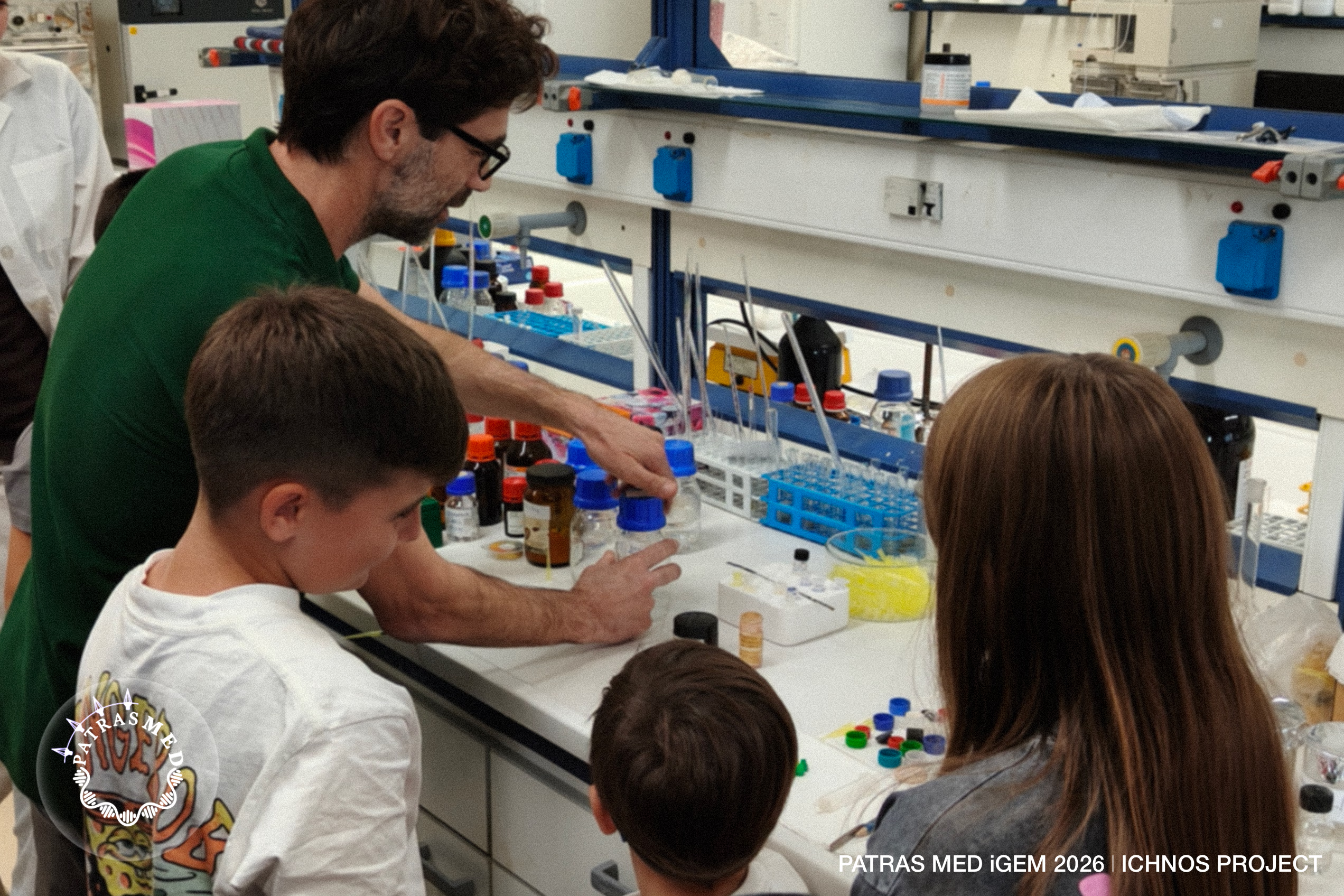
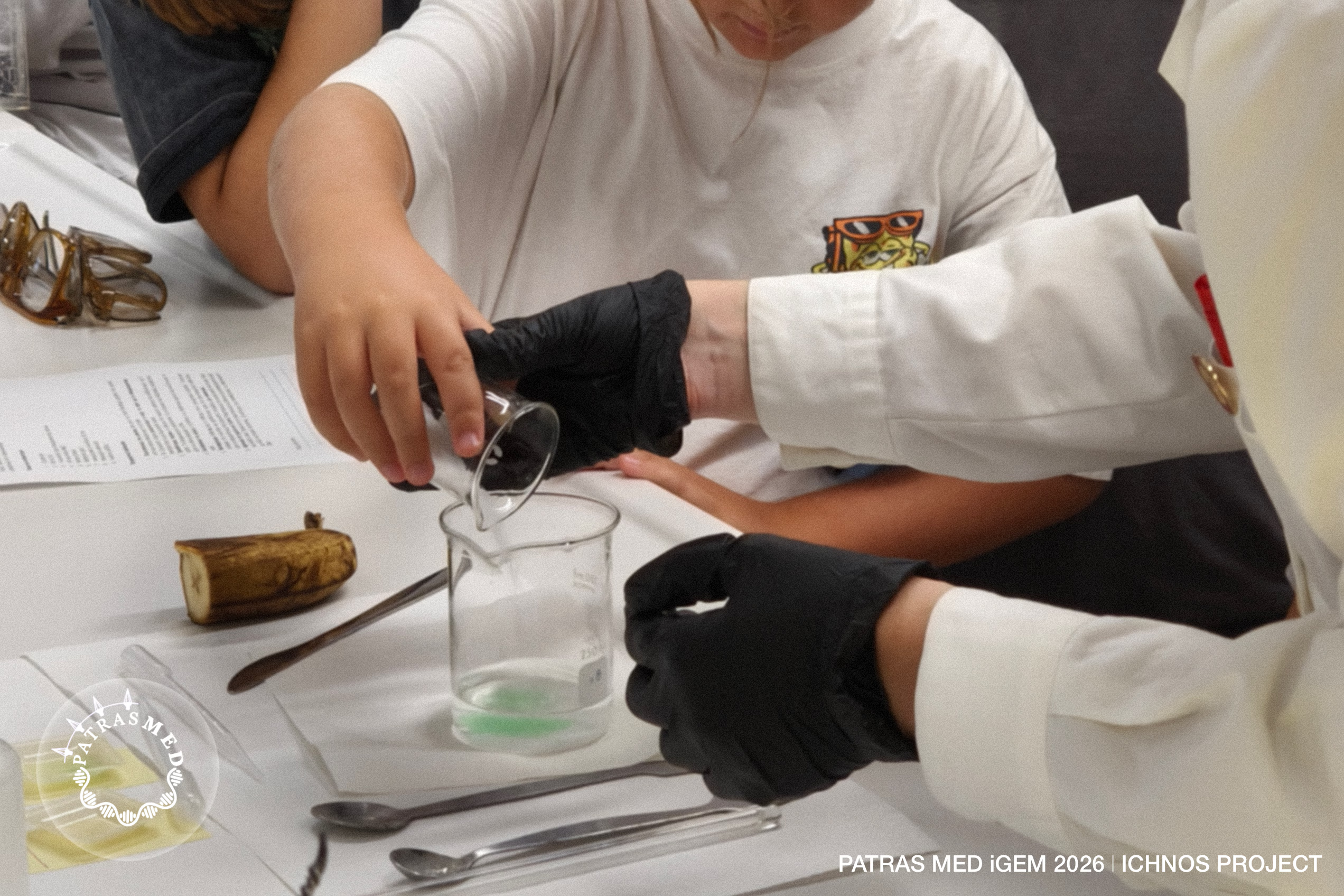
Alongside introducing primary school students to basic biological concepts and safety principles, we wanted to give young learners the opportunity to explore how these principles apply in a real laboratory. Inspired by the European Researchers' Night, we wanted to give young people with a preexisting interest in STEM the opportunity to experience a real laboratory environment. In collaboration with CoLab Makerspace, we welcomed primary and lower secondary school students, who are familiar with robotics and innovation.
Entering the laboratory also meant understanding the responsibility that comes with working inside it. Through our Open Lab Day, participants explored laboratory equipment, observed and took part in supervised low-risk experiments, while learning the safety principles behind each step. We wanted safety to be experienced as part of scientific practice, not taught separately from it.
The participating students were already developing scientific and problem-solving skills through their engagement with STEM innovation. However, exploring scientific ideas is different from experiencing how experiments are conducted. Opportunities to encounter the practical considerations that accompany laboratory work are less common for students in our country. As a result, safety can be perceived as a set of rules to follow rather than as an integral part of how experiments are designed and carried out. Therefore, we tried to face this challenge by introducing them not only to laboratory equipment and experimental activities, but also to the preparation, awareness and responsible decision-making that make scientific work possible.
Safety measures become more meaningful when their purpose is understood within the context in which they are used. Instead of presenting precautions as instructions to follow, we wanted participants to see what they protect, why they are necessary and how they support the scientific process. The students' existing engagement with STEM provided a strong starting point. By connecting laboratory practice with a form of problem-solving they already understood, safety could be presented as an integral part of scientific exploration rather than as a separate set of restrictions.
In collaboration with CoLab Makerspace, we invited primary and lower secondary school students interested in robotics and innovation to visit our university laboratories. Participants explored scientific equipment, observed and conducted supervised low-risk experiments and had the opportunity to take part in selected activities. Safety was integrated throughout the experience. Before and during each activity, participants were introduced to the relevant precautions, the risks they were designed to address and the practices required for the experiment to be conducted responsibly. In this way, safety was presented as part of the experimental process itself rather than as a separate set of instructions.
The Open Lab Day allowed students already engaged in STEM to move beyond theoretical knowledge and observe how safety operates in practice. Through supervised participation, they connected laboratory equipment and experimental activities with the preparation and precautions required at each stage.
Participant feedback supported the value of this approach. More than 75% reported that the experience helped them understand laboratory safety rules more clearly, while over 60% expressed interest in participating in a similar activity again. These results indicated that integrating safety into hands-on experimentation supported both understanding and continued engagement.
The activity also created a first point of contact between Patras Medicine iGEM and the CoLab Makerspace community. The visit supported the students as they began exploring how chemistry and biology could inform their next innovation project, while continued communication with our team provided an opportunity for further questions and scientific feedback.
The action constitutes an educational contribution to biosafety and biosecurity by translating fundamental laboratory-safety principles into a supervised and reusable learning experience. It was built upon existing knowledge, drawing on established laboratory rules and protective measures followed in real laboratory environments. Its content was validated by our Principal Investigators, Professor Spyridon Mourtas and Professor Zoe Piperigkou, who supported and supervised the development and implementation of the activity.
Because safety becomes meaningful when it is not only explained, but observed, understood and applied.
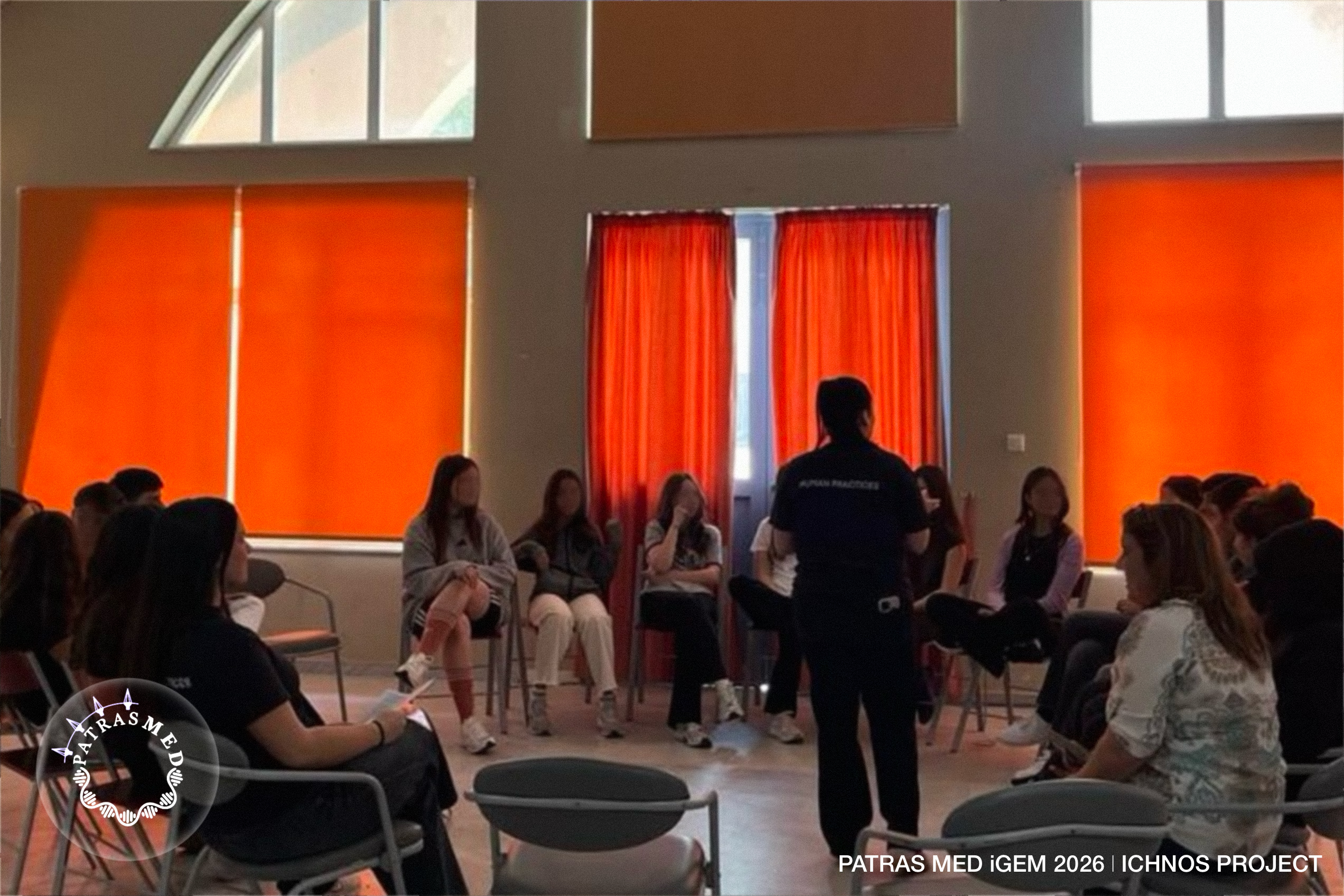
Moving from primary to middle school education, we expanded our focus from basic biological concepts and laboratory safety to the more complex questions of biosafety, biosecurity and the responsible use of synthetic biology. We designed an accessible and engaging session tailored to this age group, which we delivered to the STEM Club of the Experimental Middle School of the University of Patras. We chose to adapt the familiar social-deduction game "Night Falls in Palermo", transforming it into "Night Falls in the Laboratory". By taking on the roles of Scientists, Biohackers and Biosafety Officers, students explored these concepts through different perspectives and decisions, before reflecting on the experience through an anonymous questionnaire.
The participants belonged to their school's STEM Club and already had an active interest in science. Nevertheless, the initial questionnaire revealed clear knowledge gaps. Most reported little or no familiarity with synthetic biology, approximately 53% had never heard the terms biosafety and biosecurity and around 76% could not distinguish between them. These findings were particularly important because they emerged among students who had already chosen to participate in a science-focused extracurricular group. We therefore aimed to explain what synthetic biology can achieve and why innovation requires prevention, oversight, ethical judgement and protection from both accidental harm and deliberate misuse.
Students understand safety more clearly when they make decisions within a realistic scenario. Role-playing presented the laboratory as a system where useful research, hidden threats and protective mechanisms coexist. Instead of memorising definitions, students considered who protects a project, what happens when safeguards fail and why safety cannot depend on one person. The game encouraged collaboration and critical thinking without requiring previous scientific knowledge.
Before the activity was scheduled, its structure and scientific content were developed and evaluated with Ms Konstantina Marazioti's help, a biology teacher at the school, to ensure everything was scientifically accurate, understandable and age appropriate. In the beginning, the activity started with an accessible PowerPoint presentation on synthetic biology and examples including insulin production, environmental cleanup, disease detection, modified crops and vaccines. Students then received hidden roles. Scientists worked in pairs on projects, Biohackers secretly attempted to sabotage a participant and the associated project and Biosafety Officers selected players-projects to protect. During the night phase hidden actions occurred, while during the day, the facilitator announced the outcome and students discussed responsibility.
Every incident became an educational prompt. An affected insulin project led to discussion of containment, quality control and patient safety. Environmental projects raised questions about unintended spread and ecological effects, while diagnostic projects highlighted validation and inaccurate results. Successful protection was connected with protocols, layered safeguards and early intervention. Students then voted and reflected on preventing accidental harm versus protecting research from deliberate interference.
After the game, all participants completed an anonymous questionnaire. While the initial responses had shown limited familiarity with Safety and Security, 100% later rated their understanding of synthetic biology and their ability to distinguish biosafety from biosecurity as good or very good. Similarly, 100% reported a good or very good understanding of why science requires rules and responsibility. Approximately 53% considered laboratory protection measures more important after the activity, while the remaining 47% stated that they had already considered them important. The activity was rated very or extremely positively by 100% of participants and everyone answered "yes" or "maybe" when asked whether they would like to learn more about synthetic biology. These results indicate that the game addressed the knowledge gaps identified before the activity while maintaining students' interest and active participation.
You can access the Night Falls in the Laboratory Activity Guide below to explore the game's structure and adapt it for your own group of learners.
The action contributed to biosafety and biosecurity by making risk assessment, prevention, layered protection and responsible decision-making understandable through an interactive laboratory simulation. It also addressed synthetic biology in the real world by connecting applications such as insulin production, environmental protection and disease detection with the risks and ethical responsibilities that accompany their use. Its evaluation and co-development with Ms Konstantina Marazioti, the biology teacher of the school, allowed the activity to be validated for the specific audience. As a further contribution to biosafety and biosecurity culture, we developed a practical guide that allows teachers, educators and other teams to reproduce and adapt the activity for different groups, extending the activity's impact and promoting responsible science from an early age.
Because when students make decisions together, safety becomes a responsibility they can recognise and share.View the guide here
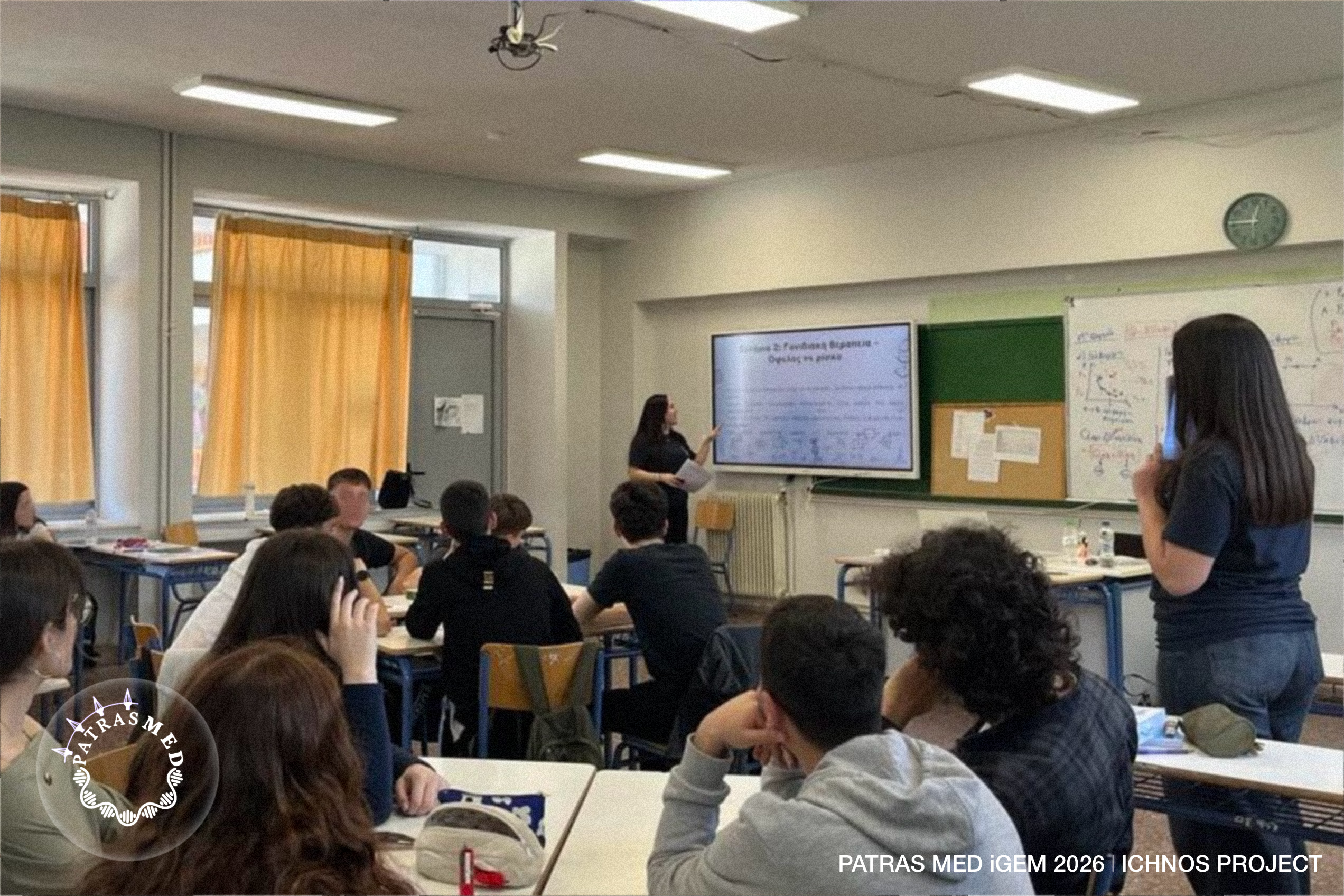
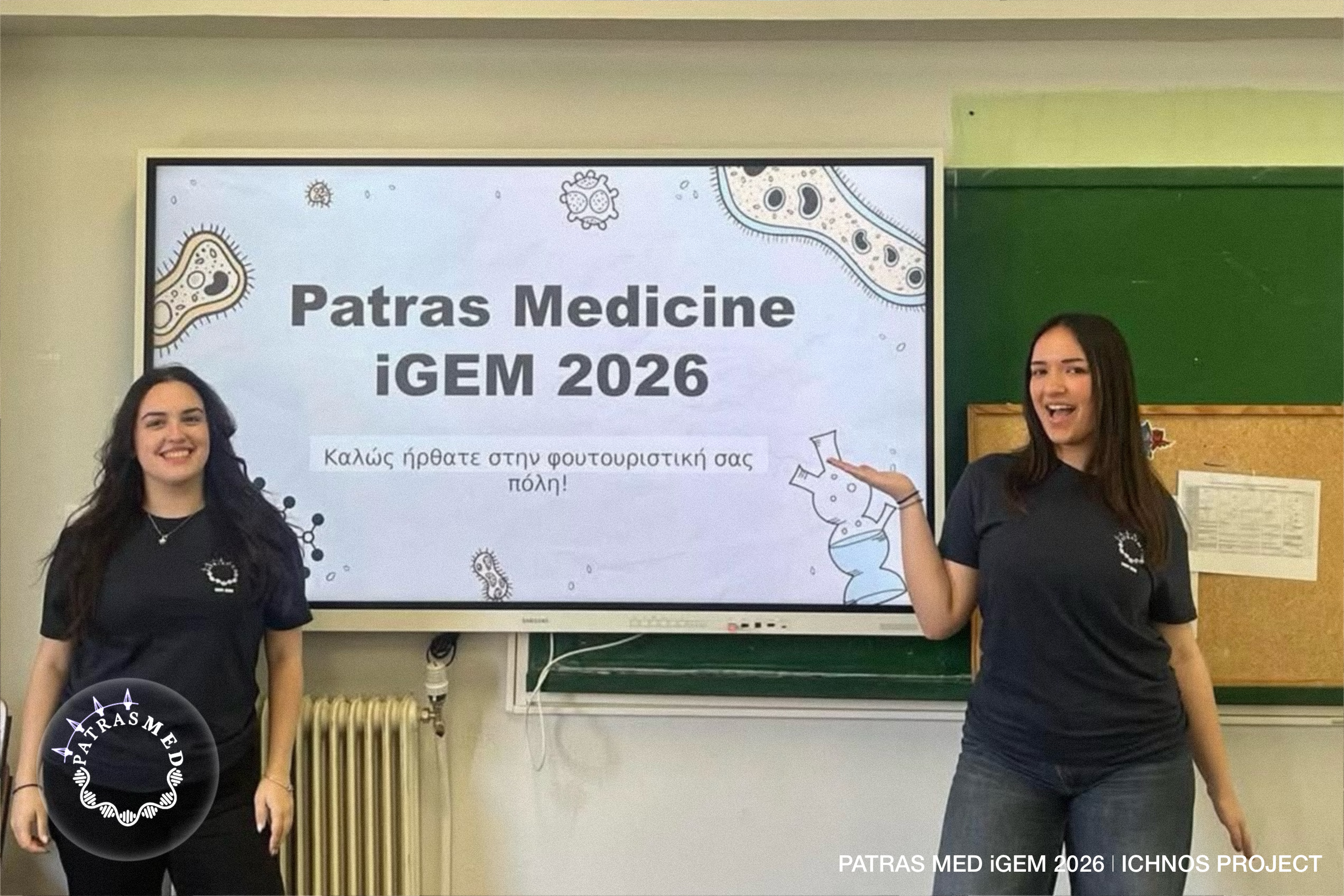
Building on our middle school activity, where students explored biosafety and biosecurity through role-playing, our school initiatives culminated in BioCity 2040 at the high school level. We introduced more complex dilemmas centred on one question:
What happens when there is no "safe" answer, only different consequences?
We explored this question through BioCity 2040, an interactive role-playing simulation for the students of the Model General High School of Patras. Participants took on the roles of scientists, biosafety officers, government representatives, companies and citizens and had to make biotechnology decisions as new evidence and unexpected consequences emerged.
We designed the activity to move beyond teaching safety as a set of rules and instead let students experience how risk, uncertainty and responsibility shape real biotechnology decisions.
Biotechnology is often presented through what it can achieve. We wanted students to also experience what happens when achieving something creates competing responsibilities. Rather than teaching safety as a list of rules, we asked students to confront decisions involving scientific innovation, environmental concerns, public interests and uncertainty.
The simulation was built around one principle: A decision can be reasonable with the information available today and still need to change tomorrow. New evidence can alter the balance between benefit and risk, while different stakeholders may evaluate the same outcome differently. We therefore designed the activity so that students had to reassess their decisions rather than simply defend them.
We transformed the classroom into BioCity 2040, assigning students different roles with competing priorities. They then faced evolving biotechnology scenarios involving genetically modified crops, experimental gene therapy and a potential biosecurity incident. New information and unexpected events required them to reconsider their previous choices. The activity concluded with a structured debrief, where participants reflected on how their assigned roles influenced their decisions and how their perception of biotechnology had changed. The goal was to make them experience why responsible decisions can be difficult when different perspectives, risks and interests have to be considered simultaneously.
To evaluate the experience, we used an anonymous questionnaire before and after the activity, combining knowledge-based questions, activity evaluation and open-ended reflection.
The activity successfully engaged students with biotechnology concepts and the challenges of responsible decision-making. Students began with limited knowledge of synthetic biology (13/17 knew nothing), yet after the activity 12/17 reported good or very good understanding and 14/17 good or very good ability to distinguish biosafety from biosecurity. Following the activity, 8 of 17 students reported greater trust, while 9 reported no change and none reported less trust. At the same time, 16 of 17 participants said they would consider learning more about synthetic biology in the future. All students felt the activity improved their understanding of biotechnology dilemmas, while 16/17 highly valued the role-play and decision-making process. They particularly highlighted exploring different perspectives, exchanging roles, discussing dilemmas and making decisions under uncertainty.
Overall, the activity showed that responsible biotechnology is not simply about finding the "right" answer, but about considering who is affected, what information is available, what remains uncertain and how different perspectives influence the decision being made.
You can access the BioCity 2040 Activity Guide below to explore the scenarios, roles and discussion prompts and adapt the simulation for your own educational setting.
BioCity 2040 contributed to biosafety and biosecurity by allowing students to explore the uncertainty, responsibility and safety considerations accompanying Synthetic Biology. Its educational guide extended this contribution by providing a reusable resource for similar learning activities. The content and structure of both the activity and the guide were validated by George Arlapanos, Biology teacher at the Patras Model General High School. Through the applications presented and the realistic case-study scenarios discussed by the students, the activity addressed synthetic biology in the real world. It encouraged participants to consider not only what biological innovation can achieve, but also the risks, choices and safeguards involved in its responsible use.
Responsible biotechnology is not about eliminating every uncertainty. It is about making better decisions when uncertainty remains.View the guide here
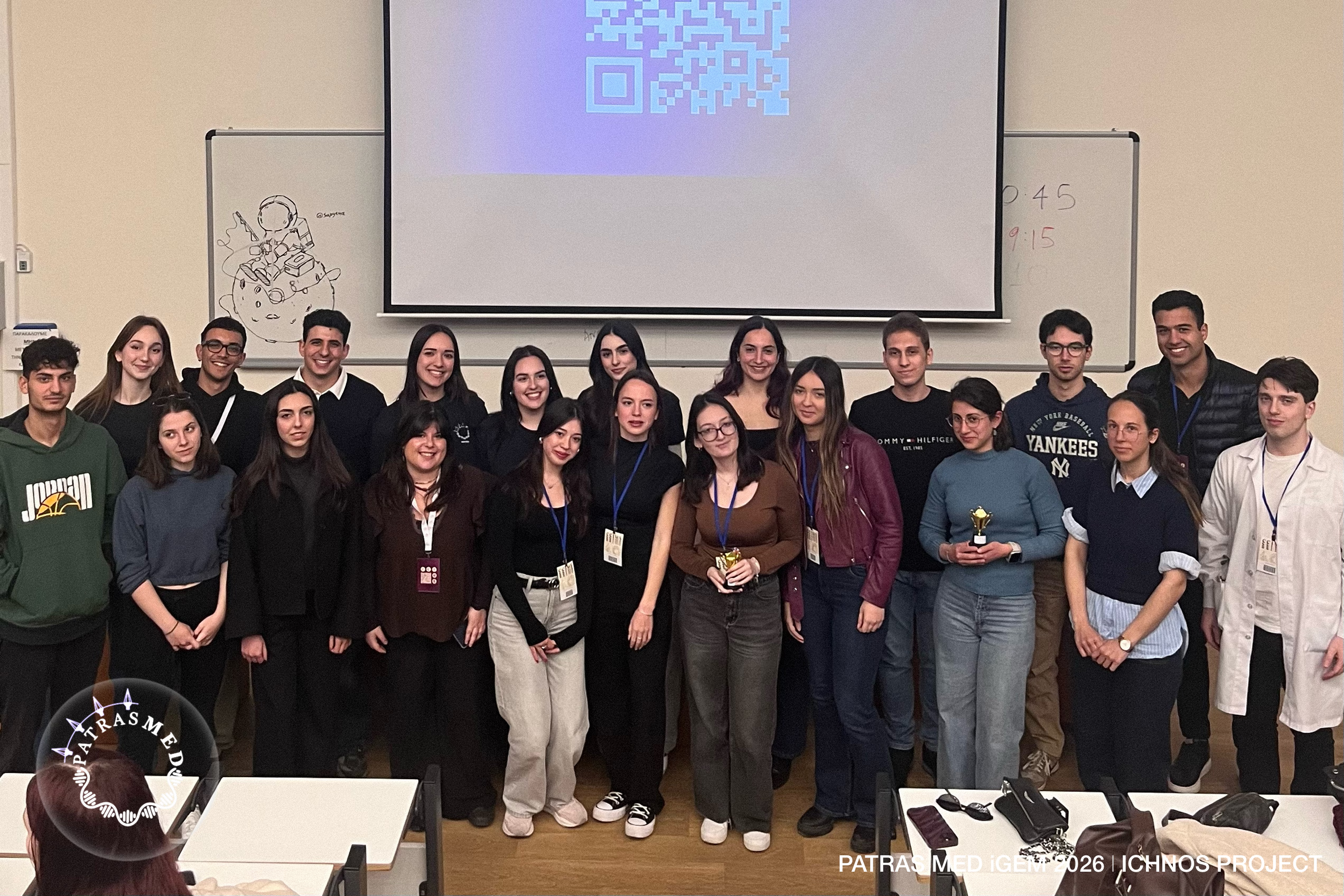
Having explored responsible biotechnology decisions with school students, we extended this discussion to medical students and the challenges they may encounter in their future practice. The wide range of potential applications of synthetic biology in medicine provided a setting to examine how scientific innovation, patient safety, ethics and regulation are connected. To explore this intersection, we participated in the CCIMS Medical Conference, organised by the Scientific Society of Hellenic Medical Students (EEFIE), where we conducted our own Clinical Synthetic Biology Workshop. Participants were introduced to synthetic biology and were challenged to design potential solutions to five clinical problems: early pancreatic cancer diagnosis, Type 1 diabetes, drug-resistant tuberculosis, multidrug-resistant bacterial sepsis and rapid RNA-virus detection.
Rather than stopping at how a biological system could be engineered, the activity encouraged participants to consider the conditions, risks, safety factors and responsibilities surrounding its use.
Synthetic biology can provide innovative solutions to complex clinical problems, but clinical applicability requires more than technical feasibility. A diagnostic system, therapeutic circuit or engineered biological system must also be considered in relation to its safety, potential risks, ethical implications, regulatory requirements and clinical use.
The five clinical cases demonstrated that the same question cannot be applied to every synthetic biology application. A system for detecting cancer biomarkers raises different considerations from an engineered cell regulating insulin, a diagnostic for drug-resistant tuberculosis or a system detecting pathogenic bacteria. What remained common was the need to evaluate an innovation together with the context in which it will operate. Its value depends on whether it can be controlled, safely implemented, appropriately regulated and responsibly used.
To put this approach into practice, we designed the workshop around five clinical case studies, inspired by already existing iGEM projects, representing different applications of synthetic biology in the medical field:
For each case, participants critically examined the clinical problem and biological target before proposing a potential synthetic biology solution and evaluating the implications of its use in a real clinical context. This allowed safety considerations to become part of the reasoning behind the proposed technology, rather than an assessment added afterwards.
The impact of the workshop was reflected in participants' responses on a brief questionnaire, before and after the activity. Before the workshop, 60% of participants did not understand or were unfamiliar with the connection between medicine and synthetic biology, nor with the importance of biosafety and biosecurity in this field. Following the activity, 80% of participants reported a significantly improved understanding of the usefulness and applications of synthetic biology in medicine. Through the clinical case studies, participants were also able to explore how synthetic biology can be applied in medical and research settings while considering the conditions required for its safe and responsible use.
The results showed that the workshop helped bridge a gap between synthetic biology as a technological concept and its real-world medical applications, while introducing safety considerations as an integral part of the field.
The workshop also influenced how we evaluated the potential applications of ICHNOS. We started to wonder where ICHNOS can provide meaningful value and what would responsible use require in that context. This shifted our application analysis towards considering not only scientific relevance, but also risks, safeguards, regulatory requirements and conditions of implementation. In this way, CCIMS helped us move from application-driven thinking to responsible application design.
The CCIMS workshop contributed to biosafety and biosecurity by integrating safety, ethics and risk awareness into the design of synthetic biology solutions. It addressed synthetic biology in the real world by connecting clinical needs with biological engineering and responsible use. The workshop was built upon existing scientific knowledge due to the use of iGEM projects as our foundation for the case studies, while its content was validated by Professor Spyridon Mourtas and the CCIMS Organising Committee.
In the end, synthetic biology can truly serve medicine only when scientific innovation and safety move forward together.
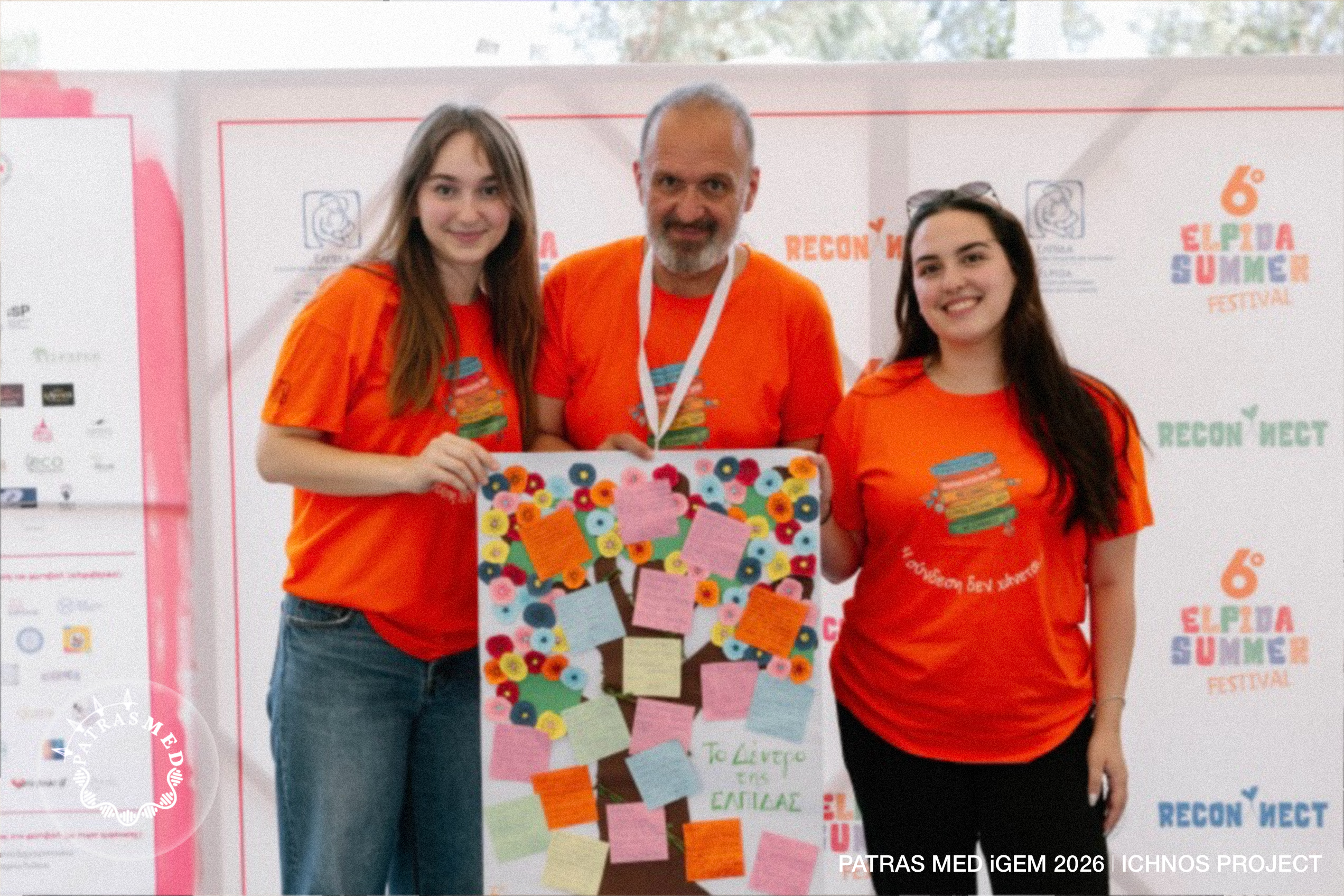
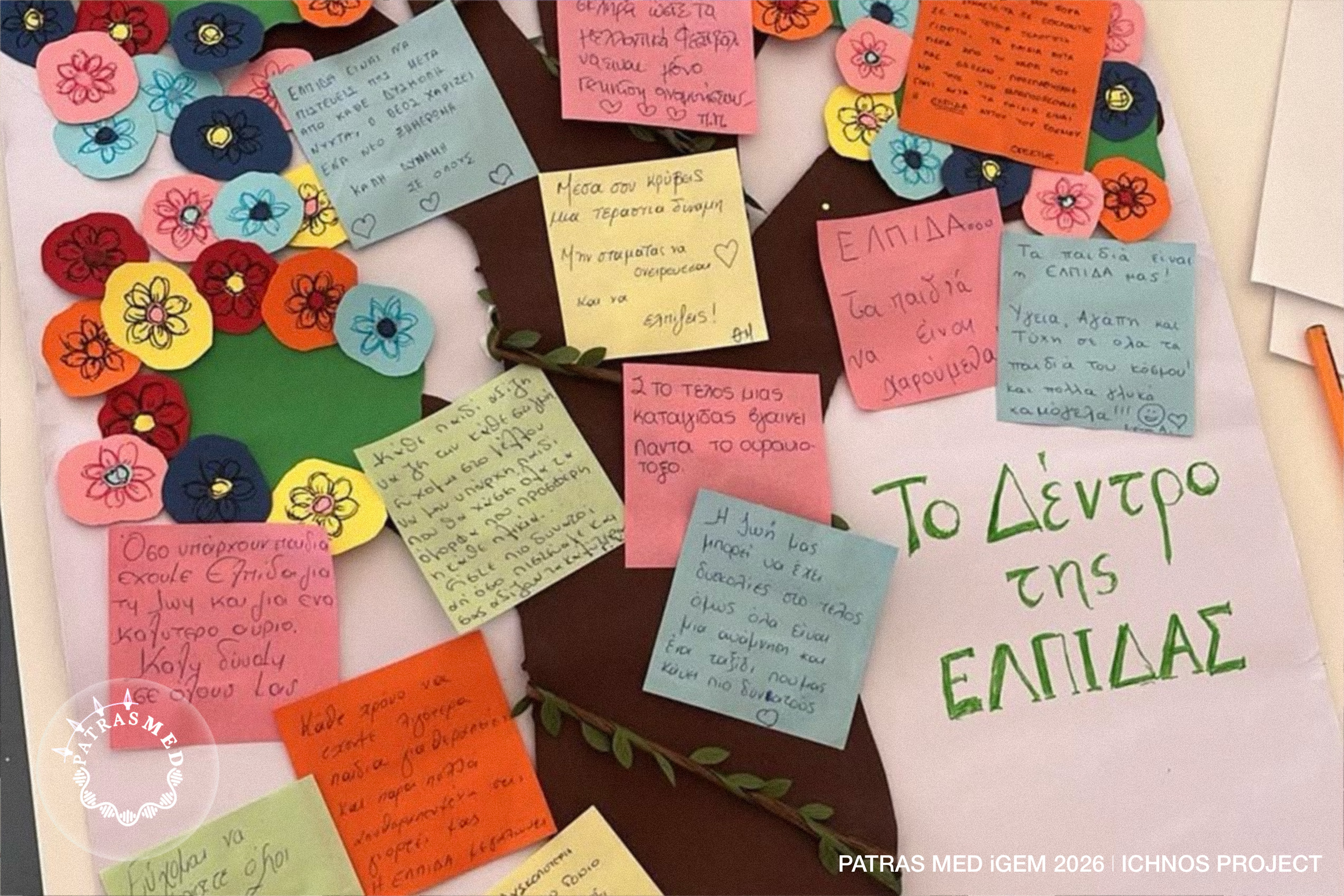
As part of our team's long-standing relationship with ELPIDA, Association of Friends of Children with Cancer, we participated in its annual festival with an interactive activity designed to bring hospitalised children closer to science and the safety principles that guide it. Rather than presenting safety simply as a set of rules, we built the activity around the simple observation that many of the children, due to their hospitalisation, were already familiar with practices such as hand washing, wearing masks or using protective equipment, though in a passive way. Thus, we tried to specify and communicate the reasoning behind these familiar practices and give the children the opportunity to see themselves not only as people who follow safety measures, but as people who can understand, apply and engage with them.
For many families within the ELPIDA community, science is closely connected with healthcare, treatment and clinical environments. We wanted to introduce another side of that relationship: science as a space of curiosity, creativity and possibility. At the same time, we wanted to move away from the idea that safety is something imposed by experts and simply followed by everyone else. Our aim was to reveal the values behind safe practice including preparation, care and responsibility, in a way that children could explore without losing the sense of excitement that first draws people to science.
We recognized that being familiar with medicine does not necessarily mean understanding how science is practiced or feeling part of that process. By revealing the purpose behind safety measures - what they protect, why they exist and how they support responsible research - we could make scientific practice more transparent and meaningful. This led us to combine explanation with play and creativity. Instead of separating scientific responsibility from the enjoyable side of discovery, we treated them as part of the same experience. In this way, safety became something that enabled exploration rather than something that limited it.
We structured the activity around conversation, role-play and creative expression. Lab coats, gloves and safety glasses became prompts for discussing what each item protects and why researchers prepare before beginning their work. We then invited the children to design their own scientific spaces freely through drawing. This allowed them to build on what they had experienced, turning the activity from a simple demonstration into a space for personal interpretation and creativity.
Alongside this activity, we created the "Tree of Hope", inspired by the meaning of ELPIDA, "hope" in Greek, and invited hospitalised children, parents, healthcare professionals, volunteers and visitors to contribute their wishes. The completed tree was offered to ELPIDA, leaving behind a collective symbol created by the community itself. Symbolically, this echoed the central idea behind ICHNOS: that experiences can leave lasting traces even after the moment has passed.
The activity connected scientific responsibility with curiosity, creativity and possibility rather than restriction. Children did not simply observe personal protective equipment: they wore it, explored what each item protects and used their experience to imagine scientific spaces of their own. The Tree of Hope broadened participation beyond the activity itself by bringing together wishes from children, parents, healthcare professionals, volunteers and visitors. By offering the completed tree to ELPIDA, the activity also left behind a tangible collective contribution shaped by the community.
For our team, this provided a concrete example of how biosafety principles can be communicated beyond expert settings through participation and age-appropriate explanation. It reinforced a broader principle within our Safety and Security approach: technical safeguards are essential, but a strong safety culture also depends on whether their purpose can be understood and shared.
The action contributed to biosafety and biosecurity by helping children understand the purpose of laboratory safety practices through protective equipment, participation and creative expression. It was validated by Ms Tatiana Pikrou of ELPIDA's Social Service Secretariat, ensuring that the activity was appropriate for the children's needs. It also addressed the use of synthetic biology in the real world by inviting children to imagine themselves as scientists and explore how scientific work can be carried out safely and responsibly.
In the end, a lasting safety culture is not built through procedures alone, on the contrary, it should be understood, shared and carried forward.
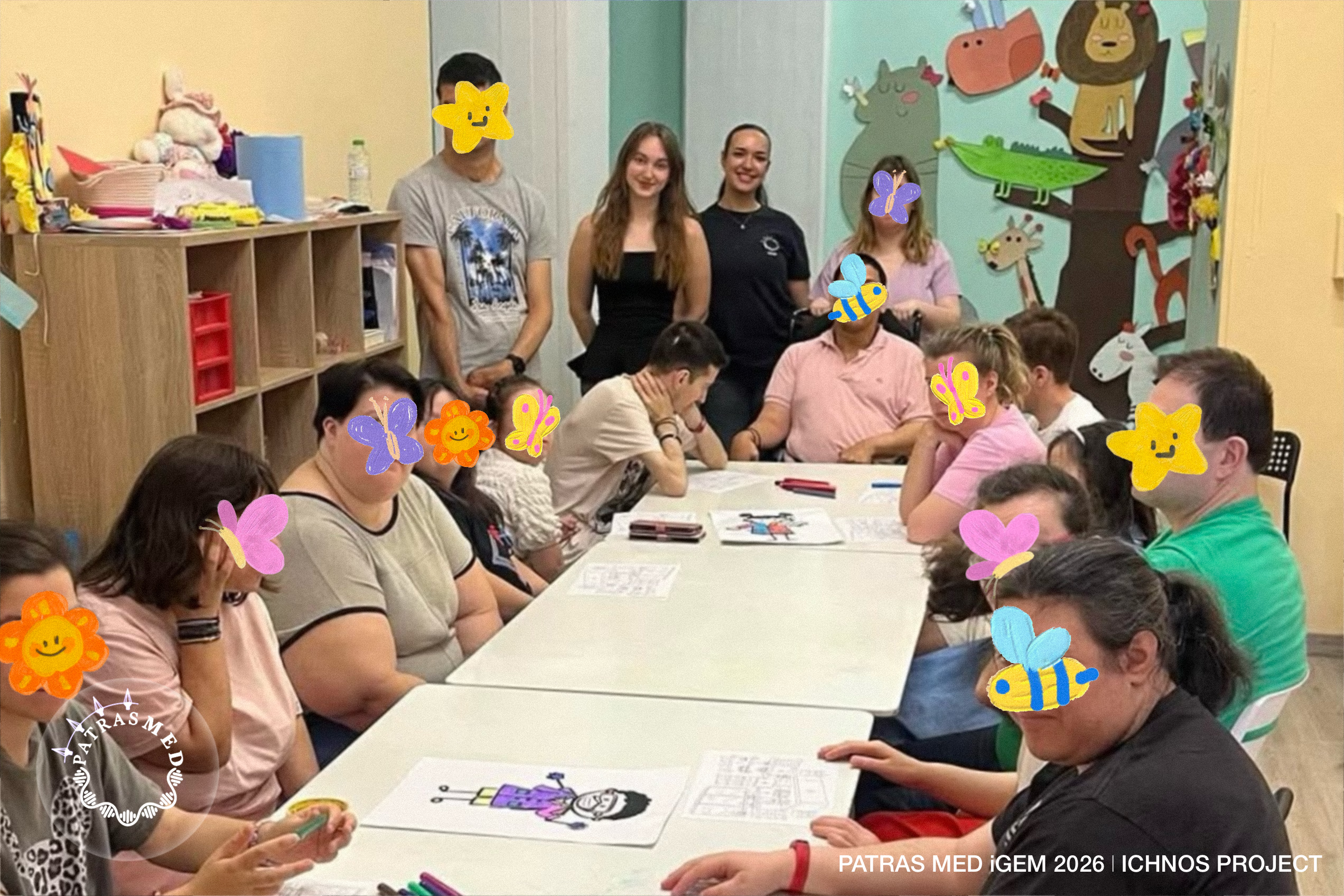
The action "A Safe Laboratory for Everyone" was a participatory activity carried out at ANTHI-ZO, a Creative Activity Centre for children, adolescents and adults with disabilities in Patras. Through visual material, creative tasks and guided discussion, participants explored what makes a laboratory safe, understandable and accessible. The activity introduced laboratory safety while allowing us to learn from participants and staff. Afterwards, we spoke with the centre's social workers and participants themselves. Their perspectives informed our guide, "Safe Laboratory Access and Use for People with Disabilities", focusing on meaningful laboratory work with the greatest practicable independence.
Laboratory safety guidance may assume everyone can read labels, reach controls, follow procedures and perceive alarms equally. These assumptions can make essential safety information and equipment difficult to use. We wanted to address these barriers without treating disability itself as a reason for exclusion. Our concern extended to routine laboratory use, including handling materials, operating equipment and responding to an interruption or emergency.
We recognised that safe and accessible laboratories should be designed with the people who encounter access barriers. People with disabilities and professionals who support them hold practical knowledge that should inform laboratory guidance. A narrow doorway, an unreachable control or an unclear instruction can create risk by preventing someone from performing a task safely and independently. This understanding shaped our decision to combine accessible science activities with opportunities for participants to contribute their perspectives to our guide. Inclusivity and accessibility therefore became an integral part of our understanding of laboratory safety.
We visited ANTHI-ZO and organised the activity around opening a new laboratory that was not yet ready for everyone. Participants helped improve it, first identifying protective equipment on a large scientist illustration and then classifying visual laboratory situations as safe or unsafe. A simple banana DNA extraction experiment allowed them to observe a scientific procedure. Before beginning, we demonstrated the purpose and use of a laboratory coat, gloves, a mask and protective goggles. We explained that protective equipment must be selected according to the procedure and complements careful technique, hygiene and supervision. Large images, simple instructions and practical demonstration offered several ways to engage with protection, clear workspaces and safe behaviour.
Participants then adapted a large laboratory plan by adding or discussing ramps, wider routes, reachable work areas, colour-coded signs, clear symbols, assistance points and accessible instructions. Afterwards, participants and the centre's social workers discussed what we should include in our guide. These exchanges brought attention to participation, communication, sensory comfort and emergency support. We used their perspectives to inform the guide's emphasis on understandable information, usable equipment and assistance that supports autonomy, with precautions based on the task and individual access needs.
The resulting guide links access barriers with task risks, agreed adjustments and practical checks. It covers laboratory spaces, accessible training, equipment use, protective equipment and emergency arrangements. Specific guidance addresses tasks such as pipetting, weighing and loading instruments. Reusable work plans and procedure records help users and laboratory staff document adaptations, responsibilities and checks before relying on them.
For participants, the activity created an opportunity to engage with scientific practice, discuss protection and contribute their own ideas. Their role extended to helping shape a resource intended for people with disabilities. For our team, these conversations made accessibility a practical design question and helped us avoid developing guidance solely from assumptions.
The broader contribution is a reusable guide that can support discussions between laboratory users, managers and safety personnel. Its practical tools help translate accessibility into arrangements that can be implemented and checked locally. By addressing everyday work, independence and emergency response together, it offers a basis for sustained participation beyond a single educational activity.
You can access our "Safe Laboratory Access and Use for People with Disabilities" guide below to explore practical tools for identifying access barriers and planning adjustments that support safe and independent laboratory participation.
This action is a contribution to biosafety and biosecurity through accessible laboratory participation, usable safety information and appropriate support. The guide is built upon existing knowledge, including established safety and accessibility guidance and the acknowledged contribution of Patras-Medicine iGEM 2024. Its content and implementation tools were independently developed and informed by our exchanges at ANTHI-ZO. Developed with input and validated by ANTHI-ZO Creative Activity Centre for People with Disabilities, it supports safe laboratory use while preserving authorisation, material identification and individual responsibility.
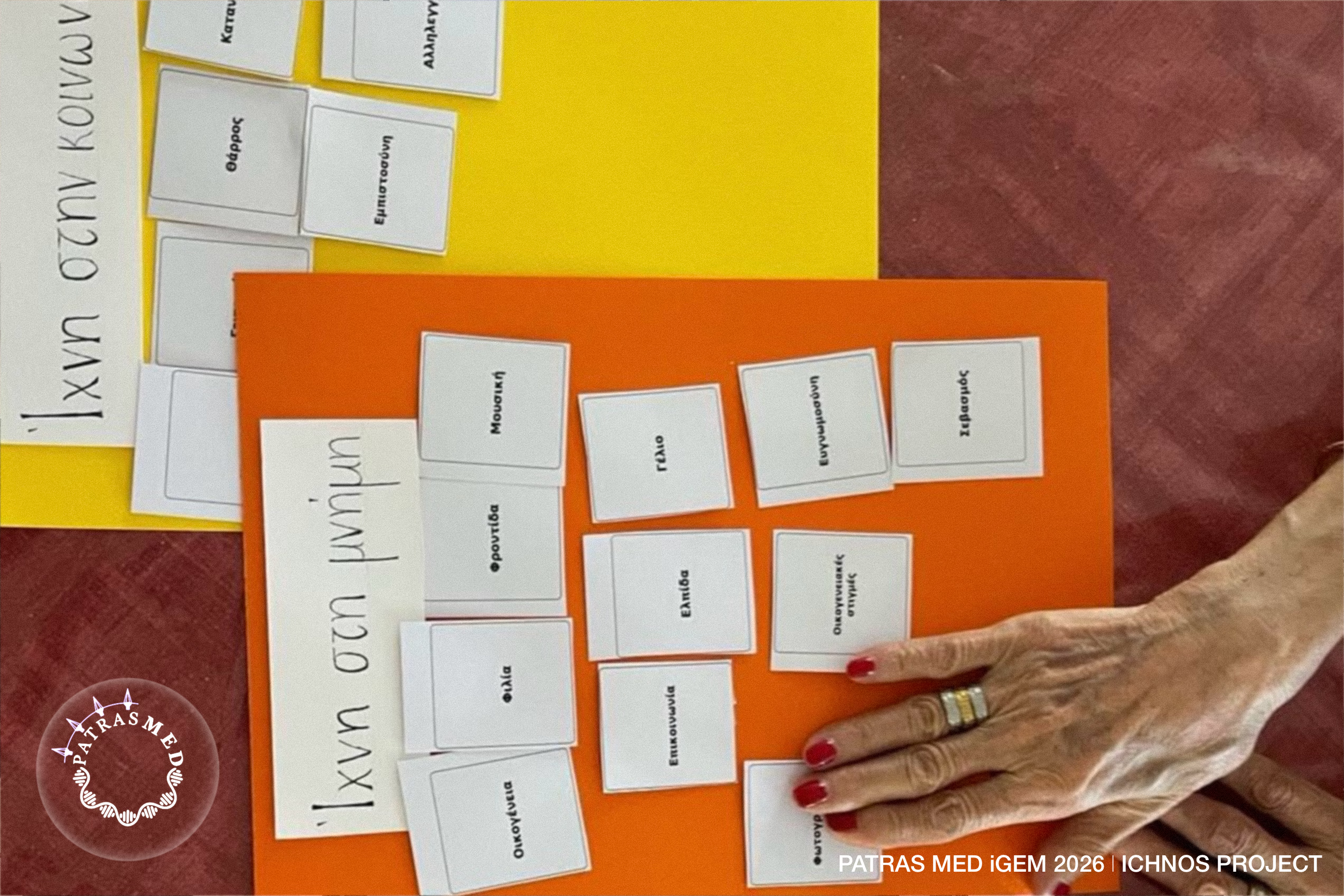
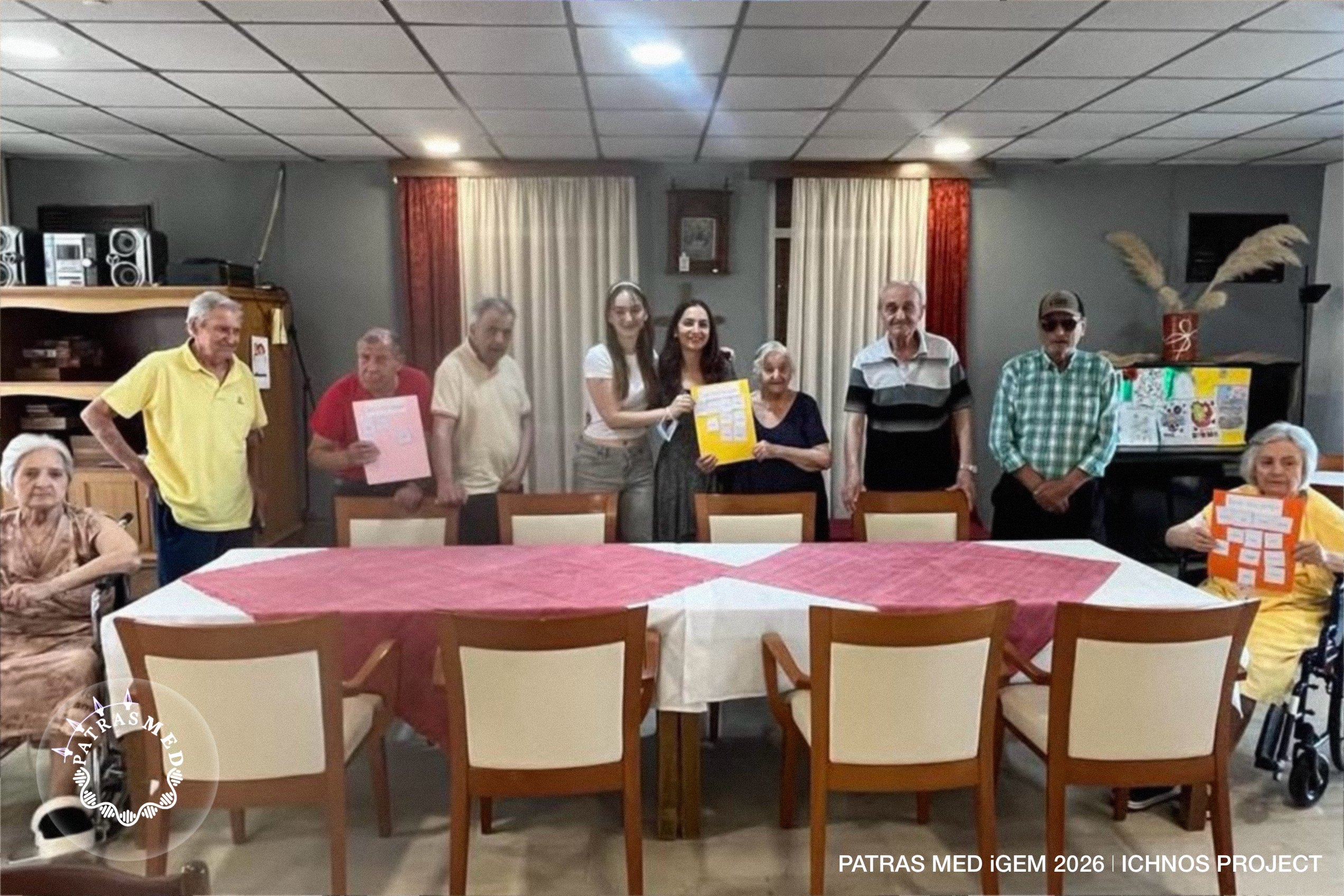
"The Traces We Leave Behind" was an interactive activity carried out at the "Konstantopouleio" Care Home of Patras. Through conversation, creative expression and intergenerational exchange, residents shared memories, values and messages for younger generations. The idea of the "trace" connected their experiences with ICHNOS, our project on how cells may retain information from previous events. Safety was approached as care, dignity, prevention and inclusion.
Scientific engagement often reaches people who are already familiar with research, while older adults living in care settings are frequently left out of activities that could keep them connected to and actively involved in their community. This exclusion is particularly important because many older people have extensive knowledge, memories and experiences to share, yet are not always given enough opportunities to be heard. At the same time, limited access to scientific outreach can leave them unfamiliar and make them distrustful of new scientific developments, synthetic biology and the applications that already support healthcare and society in everyday life. We therefore aimed to introduce ICHNOS and Safety and Security without relying on a lecture or technical language, while respecting different communication, mobility and cognitive needs. Through this approach, we aimed to show that safety extends beyond laboratory rules to encompass care, prevention and inclusive environments where every person feels heard, respected and protected.
We recognised that the idea of a "trace" exists in everyday life. Memories, relationships, illness, stress, kindness and care can leave lasting effects on individuals and communities. This created a bridge to ICHNOS: just as people retain experiences that shape them, cells can preserve information about previous conditions. Furthermore, our collaboration with Co2gether and participation in the "1st Festival of Healthy and Active Ageing" highlighted how skeptical older adults were with scientific evolution and new discoveries, despite their desire to remain active members of our society. Therefore, we built an activity around their knowledge, values and experiences to familiarise them with science and its connection to everyday life.
The activity had three adaptable parts. Its structure and implementation were developed with the contribution of Ms Maritina Tsatsarou, the care home's social worker, whose knowledge of the residents helped us adapt the content, pace and methods of participation to their needs. At first, participants selected prompt cards about safety, care, memories and lessons for future generations. They could respond verbally, in writing or with one word, while participation remained voluntary. In the second part of our activity, they placed concepts such as family, stress, illness, prevention, trust and science on a board under "traces in memory", "traces in the body" or "traces in society". There were no wrong answers, while each choice encouraged discussion about how experiences and conditions affect us.
Finally, participants contributed a word, wish, drawing, symbol or message to a collective artwork entitled "The Traces We Leave Behind". The format was adapted to each person's comfort and abilities. We used clear language, avoided pressure and prioritised consent, comfort, accessibility and respect.
Fifteen residents took part in the activity and shared memories, values, advice and personal messages through conversation and the collective artwork. By the end of the session, we had received warm and positive comments from the participants, together with a great deal of affection that reflected how meaningful the interaction had been for both sides. The activity encouraged social interaction and active participation, gave residents space to be heard and highlighted the value of personal memory and intergenerational knowledge. It also introduced science and ICHNOS through familiar ideas rather than technical terms. Most importantly, the residents' reflections on trust, dignity, care and prevention allowed us to present safety as a shared social responsibility and as part of a society that protects and includes its members. The collective artwork preserved their messages in a visible and lasting form, ensuring that their contribution remained at the centre of the action.
You can access "The Traces We Leave Behind" Activity Guide below to explore the prompts, materials and participation options and adapt the activity to the needs of your own community.
The action contributed to biosafety and biosecurity through a social approach, showing that a strong safety culture is built not only through laboratory protocols, but also through care, prevention, inclusion and respect for the people affected by scientific progress. Its co-development with Maritina Tsatsarou, the care home's social worker, allowed the activity to be validated for the specific audience, as its structure, language and methods of participation were adapted to the residents' needs. At the same time, it addressed the use of synthetic biology in the real world by introducing older adults to the field, its applications and ICHNOS through familiar experiences of memory and lasting traces. Finally, the accessible practical guide we created extends the contribution beyond this single event by enabling other teams and educators to reproduce and adapt the activity safely and responsibly for older adults and other audiences that are often left outside scientific engagement.
Because a culture of safety includes every voice, especially those too often left outside the conversation.View the guide here
The "GATTACA" film screening was an educational and discussion-based activity organised by Patras Medicine iGEM 2026 with KOFEPP, the University of Patras Students' Film Club. Using cinema as an accessible point of entry, the action invited participants to explore how genetic technologies and synthetic biology may shape individuals and society. After the film, a discussion connected its fictional world with bioethics, biosafety and biosecurity, emphasising scientific potential and the need for its responsible governance.
Synthetic biology and genetic engineering are developing rapidly, yet people without a scientific background often encounter them through simplified narratives that focus either on extraordinary benefits or on extreme dangers. What is frequently missing is an accessible opportunity to consider the real decisions that accompany these technologies: who can access them, how genetic information is protected, where the limits of intervention should be set and what safeguards are needed to prevent accidental harm or deliberate misuse. Concepts such as bioethics, biosafety and biosecurity can also seem highly technical and removed from everyday life. We therefore aimed to help participants examine how the irresponsible, unequal or uncontrolled use of genetic technologies could affect autonomy, equality, privacy and justice, while also putting individuals, communities and the environment at risk.
We recognised that cinema could make the questions above easier to approach by presenting them through a story rather than a technical lecture. "GATTACA" depicts a society in which genetic information becomes a tool for classification, exclusion and control. Its narrative allowed participants, regardless of their scientific background or prior knowledge of biology, to reflect on access to genetic data, the distinction between disease prevention and genetic enhancement and the challenge of advancing innovation without compromising human dignity, equality or freedom.
In collaboration with KOFEPP, we organised a screening of "GATTACA" as the central element of an interdisciplinary science-cinema activity. The film offered a reference for examining genetic determinism, unequal access, discrimination and misuse of biological data. Instead of relying on a formal lecture, the film encouraged attendees to form interpretations and identify parallels with challenges that already emerge in the contemporary world.
After the film, we discussed bioethics, biosafety and biosecurity. Participants considered the ethical limits of genetic intervention, safe applications, prevention of accidental harm and protection of biological knowledge from deliberate misuse. We concluded that scientific capability alone does not make an application responsible. Risk assessment, clear protocols, transparency, oversight, legislation and cooperation are essential for protecting people and the environment, while the active participation of scientists, institutions, policymakers and the public is equally necessary to ensure responsible innovation.
The activity transformed a familiar cultural experience into a space for public engagement with synthetic biology. During the discussion that followed, more than 80% of participants recognised that progress in genetic technologies cannot be evaluated only through its potential benefits, but must also be accompanied by clear rules, ethical oversight and measures against accidental harm, discrimination and misuse. Participants connected the fictional examples in the film with current concerns surrounding genetic privacy, unequal access and responsible innovation. Their responses showed that cinema can help non-experts approach bioethics, biosafety and biosecurity as practical questions that already concern society rather than as distant scientific concepts.
The action contributed to biosafety and biosecurity by introducing risk assessment, prevention, ethical oversight and responsible decision-making through an accessible film screening and discussion. At the same time, it addressed the use of synthetic biology and genetic technologies in the real world by presenting not only their potential to improve health and society, but also the risks that may arise when innovation develops without clear rules, effective oversight and equal protection.
Because scientific progress becomes responsible when society has a voice in deciding how it is used.
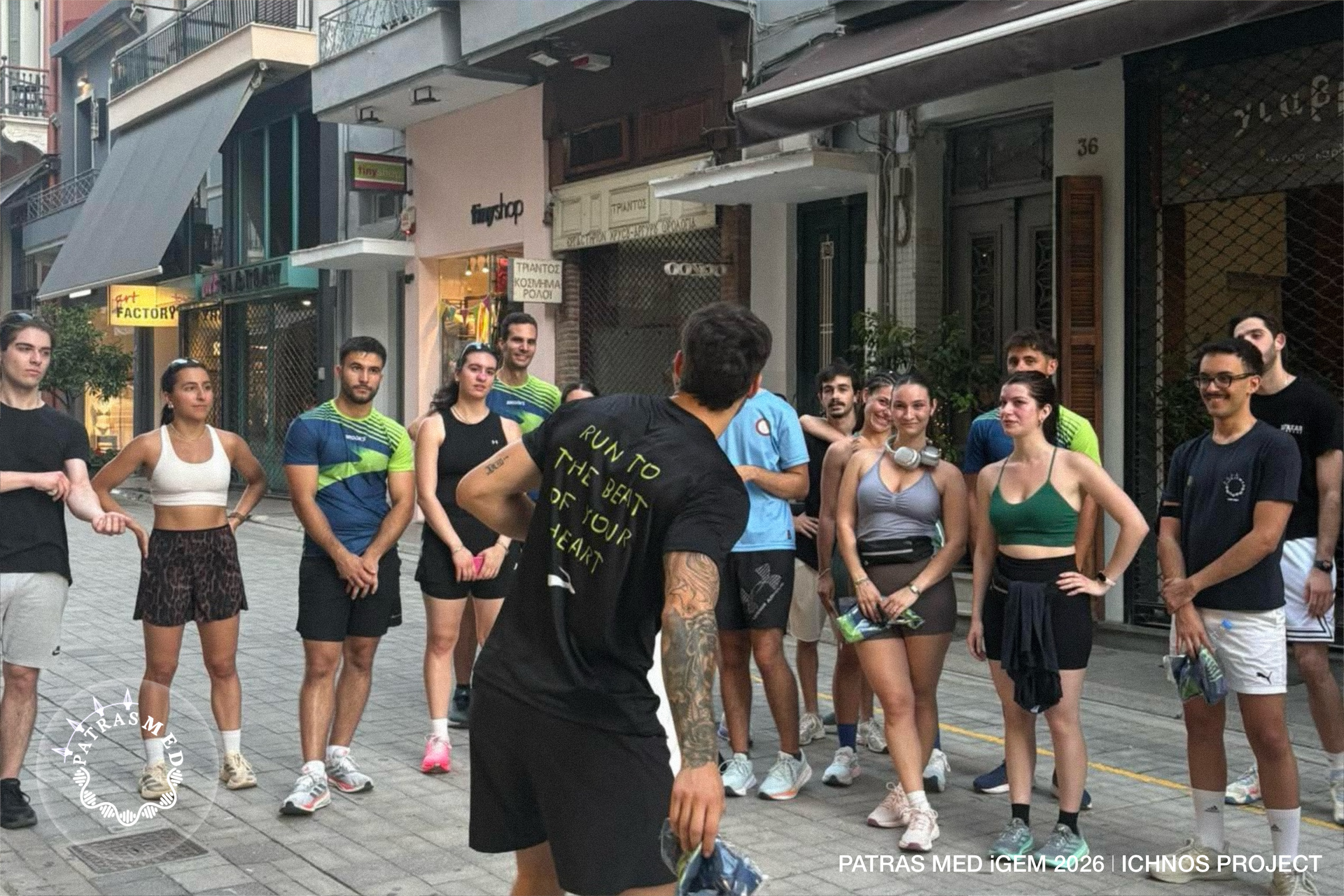
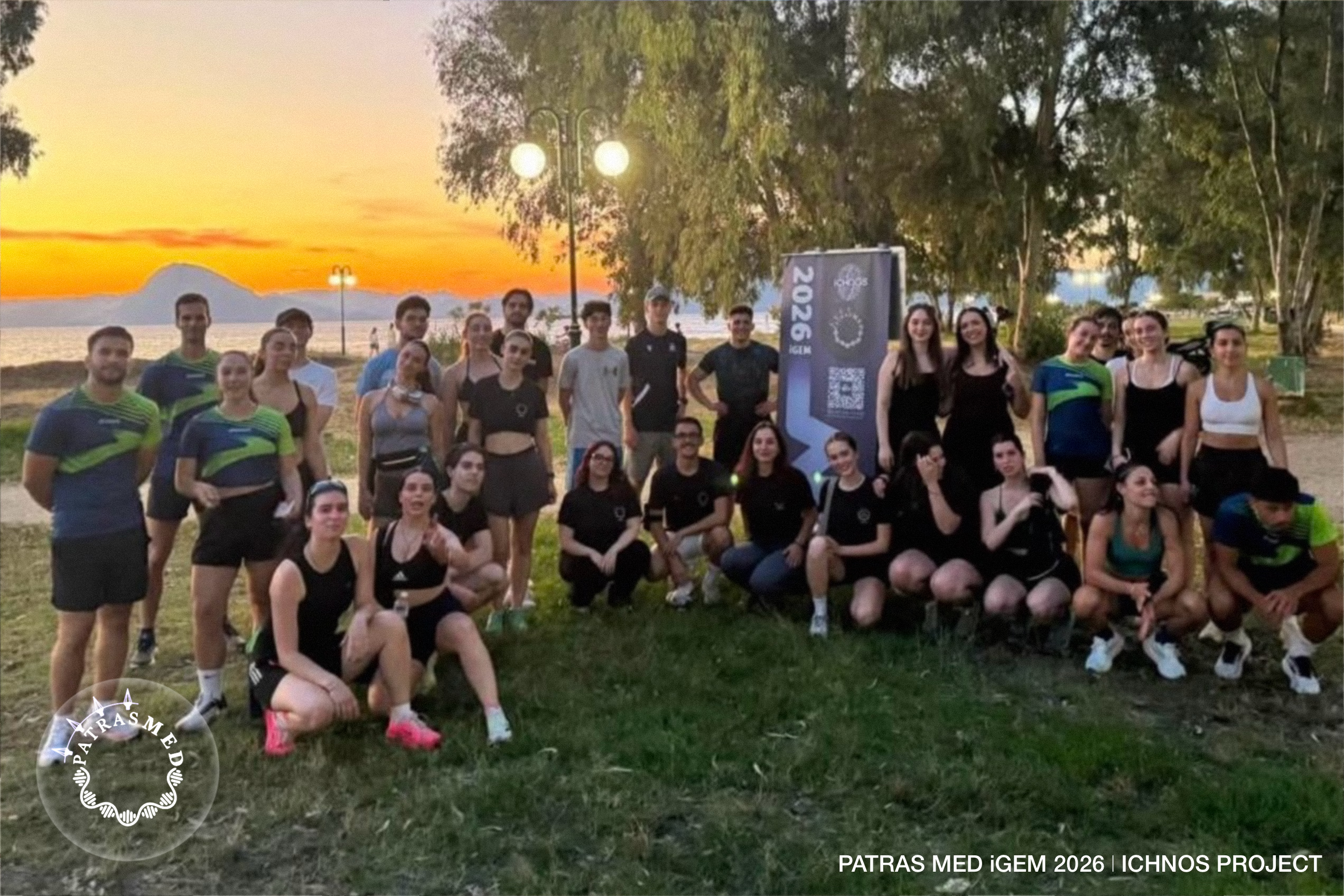
"Stressed Out? Run It Out!" was an experiential and experimental activity, aiming to introduce biosafety into a concept, where it does not traditionally belong, while educating an entirely new audience. This activity was developed in collaboration with a running club called "CRESCO Crew", combining running, biosafety and the concept of stress. Through an interactive route, participants explored how preparation, prevention and responsible behaviour can support safety both in the laboratory and in exercising, while also becoming familiar with cellular stress and ICHNOS. By placing scientific ideas within a shared physical activity, the event encouraged curiosity, participation and discussion without requiring previous knowledge of biology.
Biosafety is usually discussed in laboratories, classrooms or other scientific settings and may seem distant to people without a background in biology. Cellular stress, which lies at the centre of ICHNOS, can feel equally unfamiliar when it is explained only through molecular mechanisms. At the same time, running and running clubs have become an increasingly popular trend, bringing together large and diverse groups of people through an activity they already enjoy. We saw this as an opportunity to reach a wider audience that would not necessarily attend a conventional scientific event or already be familiar with synthetic biology and safety. Our challenge was therefore to take Safety and Security into a setting where it would not normally have an obvious place and make it relevant through clear parallels with preparation, risk, protection, stress and recovery during a run.
We realised that the growing popularity of running clubs offered more than access to a broader audience: running itself provided a familiar language for explaining unfamiliar ideas. Preparing for a route, choosing the right equipment, recognising hazards, responding to physical stress and recovering afterwards all have direct parallels with safe laboratory practice. By building on these everyday experiences, we could introduce biosafety and cellular stress without beginning with technical definitions. In this way, we deliberately created a place for Safety and Security within an activity that would not normally be associated with either science or the laboratory.
In collaboration with CRESCO Crew, we created an interactive running route through Patras. The activity was organised around five clearly defined stations, each connecting one stage of the running experience with a corresponding principle of biosafety:
Around 40 people participated in the activity, allowing us to introduce synthetic biology, cellular stress and biosafety to a broad audience in a setting they had chosen primarily for exercise and social interaction. The collaboration with CRESCO Crew was particularly constructive. Members of the club described the action as a valuable opportunity to bring science and safety together with physical activity in a way that felt both accessible and enjoyable. By the end of the route, participants had not only exercised and spent time as a group, but had also encountered practical safety principles, new knowledge and memorable facts about how cells respond to stress and how ICHNOS works. Everyone left feeling refreshed, while the discussions across the stations showed that scientific engagement can fit naturally into popular community activities when it begins from experiences people already share.
The action contributed to biosafety and biosecurity by taking core principles such as preparation, risk assessment, protection and evaluation beyond the laboratory and placing them within a popular community activity. At the same time, the activity addressed synthetic biology in the real world by using physical stress during running to introduce cellular stress and ICHNOS. The subjects presented in this action were validated by Professor Spyridon Mourtas, our Primary Principal Investigator (PI).
Because safety begins before the first step, with preparation, awareness and care for one another.
How people respond to science depends not only on the information available to them, but also on the assumptions they already carry. Building on what we learned through our initial questionnaire, school activities and exchanges with different communities, we developed "Myth vs Reality" to explore and address these assumptions. We first listened to how people from different social and educational backgrounds interpreted synthetic biology, biosafety and scientific risk through open questions that captured their spontaneous associations and then addressed misconceptions through myth-busting discussions around synthetic biology, biosafety and biosecurity.
Rather than treating misconceptions simply as "wrong answers", we used them as windows into how safety in science is perceived. By doing so, we explored a broader societal dimension of Safety and Security: how public perceptions can shape the way risk, prevention and scientific responsibility are understood.
Public perceptions of synthetic biology are often shaped by limited information and uncertainty about how scientific developments are controlled and used. This was also reflected in our questionnaire: 54% identified possible misuse as the main concern, 46% highlighted lack of information and 34% insufficient controls. However, 78% believed that education could reduce fear, while 93.9% wanted to learn more about biotechnology, biosafety and biosecurity. Through "Myth vs Reality", we aimed to respond to this need by exploring the assumptions behind participants' answers, addressing misconceptions and explaining the scientific reasoning behind each statement.
Using the findings of our questionnaire, we aimed to shape the themes and statements included in "Myth vs Reality". Understanding public perceptions requires more than simply providing information. We first needed to listen to what people already believe, identify misconceptions and create space for reflection. Rather than simply correcting answers, we aimed to explain the reasoning behind each issue and support a more informed understanding of synthetic biology, bioethics, biosafety and biosecurity.
We combined open questions with a set of "Myth vs Reality" statements. Participants first shared their immediate thoughts about synthetic biology, bioethics and safety, allowing us to capture their initial perspectives before discussing biosafety and biosecurity myths in greater depth. We then moved to the main part of the action. The statements explored prevention, responsible experimentation, risk management, biological materials and the distinction between accidental harm and deliberate misuse. Finally, we revealed the scientific reasoning behind each statement. Rather than treating the activity as a simple true-or-false exercise, we used each phrase as a starting point to explain the evidence and logic supporting the correct interpretation.
Selected interviews and explanations were brought together in a video, allowing the discussion and the misconceptions it revealed to remain accessible beyond the original interactions.
More than 50% of the participants interviewed within the university setting showed some prior familiarity with the concepts discussed. However, confusion between biosafety and biosecurity emerged as a recurring pattern, revealing that awareness of scientific terminology does not always correspond to a clear understanding of its meaning.
The action allowed us to directly inform participants, clarify the distinctions between these concepts and explain the scientific reasoning behind each statement. While the resulting video transformed the individual interviews into a reusable resource, the action also showed that short public interactions could not fully address the knowledge gaps identified. This observation led us to continue our effort through a dedicated webinar that would create space for a broader and more structured discussion on synthetic biology, biosafety, biosecurity and responsible scientific development.
"Myth vs Reality" constitutes an educational contribution to biosafety and biosecurity by communicating established safety principles in an accessible way that encouraged participants to question misconceptions and understand the reasoning behind them. The statements were built upon existing knowledge from recognised biosafety and biosecurity guidelines and appropriately adapted to the interactive format of the action. Finally, the activity addressed synthetic biology in the real world by using existing applications to demonstrate how biosafety and biosecurity principles shape its responsible use beyond the laboratory.
Because clear safety communication goes beyond delivering facts: it requires ensuring that scientific meaning remains clear across different audiences.
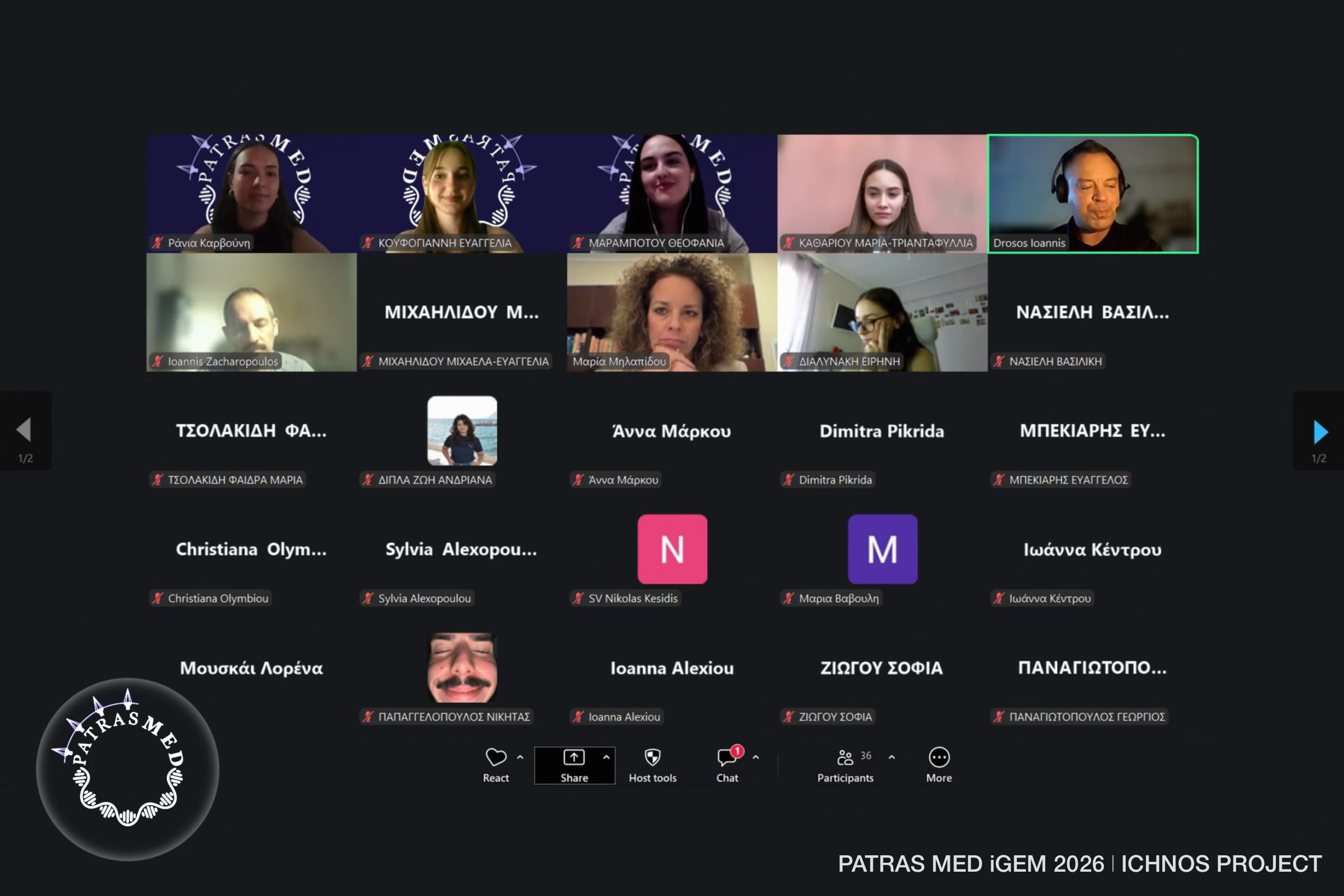
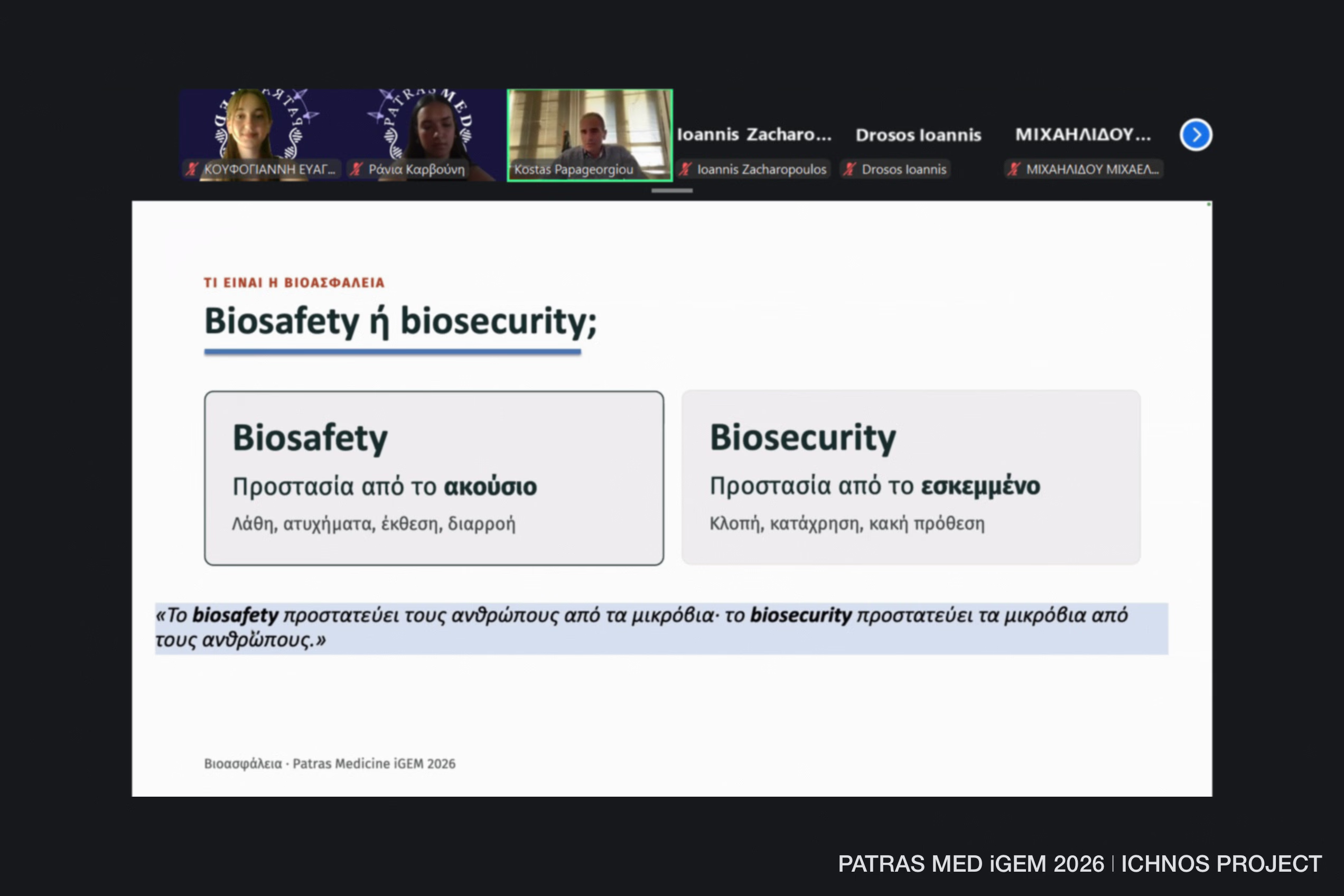
Throughout our Human Practices journey, listening to people's questions guided how we brought synthetic biology closer to society. After exploring these questions through educational activities, community interactions and Myth vs Reality, we took the conversation a step further: bringing the public and experts together to discuss the possibilities of biotechnology and the responsibilities that come with them.
To do so, we organized "From 'Can We' to 'Should We' - Biology, Safety, Responsibility and Society", an interdisciplinary webinar with experts in synthetic biology, bioethics, biosafety, biosecurity and cyberbiosecurity. Each speaker introduced their field and explained its role in the responsible development and use of synthetic biology. The webinar concluded with a shared synthetic biology scenario, bringing these perspectives together in practice.
Scientific progress does not stop at the laboratory. New technologies and discoveries can influence healthcare, research, industry and everyday life, yet public understanding does not always develop at the same pace. This can create a gap between what science makes possible and what society is able to understand about it. Without accessible and reliable information, it can be difficult to distinguish potential benefits from risks, understand why safeguards are necessary or recognize the responsibilities involved in developing and using new technologies.
Through our previous Human Practices activities, we saw the importance of addressing this gap. We wanted to contribute to a form of science communication that does not simply explain what a technology is, but also helps people understand why it matters, what questions it raises and how it can be developed and used responsibly and safely.
Our journey showed us that meaningful engagement with science requires more than scientific knowledge alone. Understanding a new biotechnology also means understanding its ethical implications, how risks can be managed, how misuse can be prevented and how the systems supporting it can remain secure. At the same time, we realized that these topics should not remain accessible only to specialists. If society is expected to engage with scientific developments responsibly, it must also have access to the knowledge needed to understand them. This shaped our final action. Rather than communicating these issues solely through our own perspective, we used our platform to connect society with experts who could explain each dimension accurately and clearly.
We organized an interdisciplinary webinar designed to introduce participants to five complementary dimensions of responsible biotechnology.
The program included Synthetic Biology with Ioannis Drosos, introducing the field, its potential and its applications. Ioannis Zacharopoulos explored Bioethics and responsible innovation in synthetic biology, addressing the ethical considerations that accompany scientific development. Konstantinos Papageorgiou presented Biosafety, focusing on how biological technologies can be developed and handled safely. Maria Milapidou addressed Biosecurity and the prevention of potential misuse, while Giannis Stamatios explored Cyberbiosecurity and the protection of systems and data connected to biotechnology.
We designed the webinar to move beyond five separate presentations. Each session addressed a different part of a broader question: what does it take for synthetic biology to be developed and used responsibly?
The webinar concluded with a shared synthetic biology scenario, allowing the audience to apply these perspectives to the same example. Each expert approached it through a central question from their field:
This final discussion demonstrated how different forms of expertise contribute to the same process. Scientific innovation can create new possibilities, while ethics helps examine whether and why they should be pursued, biosafety addresses safe development and handling, biosecurity considers potential misuse and cyberbiosecurity protects the digital systems and information involved.
The webinar brought together perspectives often encountered separately, helping participants understand how synthetic biology, ethics, safety and security contribute to responsible biotechnology. The introductory talks made specialised knowledge more accessible, while the shared scenario showed how these perspectives inform decisions about the same technology. The positive feedback highlighted the value of the productive discussion created through this interdisciplinary exchange. Speakers also expressed their appreciation for the initiative, emphasising the importance of public awareness and accessible information on these issues.
For our team, the webinar brought the questions gathered through our social activities into direct dialogue with experts. It allowed us to respond to the needs we had identified with accessible knowledge grounded in expertise from each field. The discussion also broadened our perspective: responsible biotechnology raises questions that extend beyond individual laboratories and communities. This connected our social approach with the global dimension of Safety and Security, where shared challenges call for dialogue and cooperation across borders.
The webinar brought together the ideas that shaped the social dimension of our Safety & Security approach, connecting accessible knowledge with informed participation.
It contributed to biosafety and biosecurity culture by bringing scientific possibilities and their associated responsibilities into public discussion. Through expert talks and a shared scenario, it addressed the real-world use of synthetic biology, exploring how ethics, safety and security shape responsible decisions. Finally, the structure and content of the action were validated by our speakers, grounding this interdisciplinary exchange in their expertise.
Because closing the gap between science and society means giving society a voice in the future that science creates.
Building on our engagement with local communities, we broadened our perspective first to Europe and then to the wider world. Through international connections, we explored how biosafety and biosecurity are understood and approached across different contexts. This exchange helped us connect our local efforts with a broader culture of shared responsibility, learning from others while contributing our own experiences.
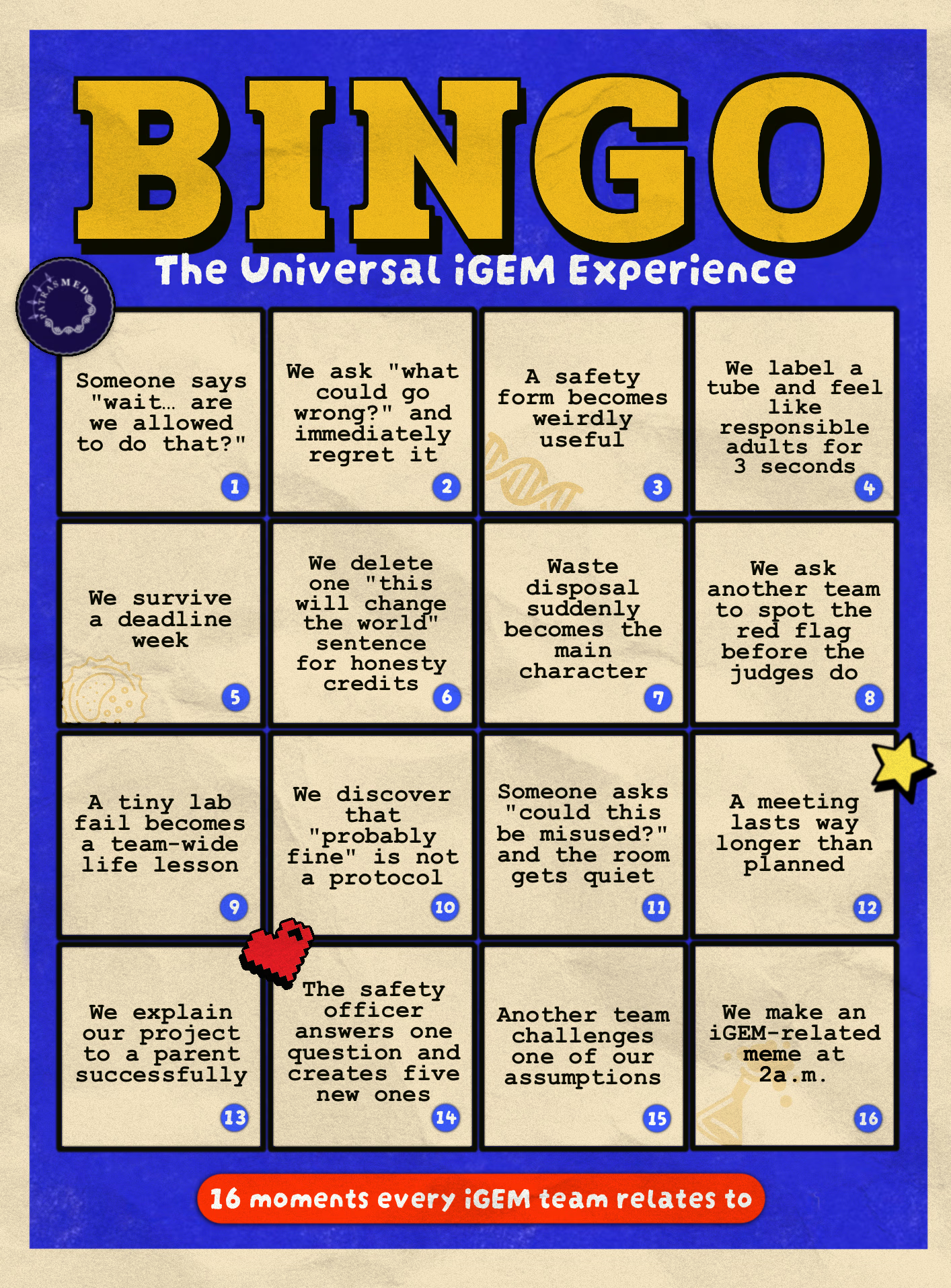
As we broadened our Safety & Security perspective beyond our local community, we turned to the international iGEM community to explore shared experiences through humour and connection. "BINGO: The Universal iGEM Experience" was a community activity developed as part of our participation in the BFH Community Blackboard, bringing iGEM teams together through the experiences they share throughout the competition, including the everyday challenges of working safely and responsibly. Although teams work on different projects, the everyday reality of iGEM often looks surprisingly similar: experiments fail, deadlines approach, meetings run late and unexpected problems arise. We wanted to explore the relatable and humorous side of safety, recognising that these moments connect teams across scientific and geographical boundaries.
We turned these shared experiences into a Bingo card and invited teams to complete it, share their experiences and challenge other teams to take part.
iGEM brings teams together in the same competition, but interaction between them often happens around specific collaborations, project discussions or formal competition activities. There are fewer opportunities to openly share the everyday questions, uncertainties and mistakes that accompany responsible research. Safety is part of this shared experience. Teams may encounter similar concerns about procedures, waste handling or potential misuse, yet discuss them mainly within their own groups or through formal documentation.
This matters because competition can easily make teams focus inward on their own projects, deadlines and goals. We wanted to encourage a different kind of interaction: one based on friendly competition, shared experiences and mutual support, where teams could recognise that they were going through many of the same things.
We realised that the strongest common ground between teams was not necessarily their scientific work, but their everyday experiences. A failed experiment, a difficult deadline, a long meeting, a surprisingly useful safety form or the realisation that "probably fine" is not a protocol, can happen to any team. These shared moments reveal a universal, relatable side of the iGEM journey, from the challenges of teamwork to the small successes worth celebrating. They may seem small, but they are often what shape the experience of being part of iGEM. We therefore wanted to create an activity where teams could recognise these familiar situations in one another, laugh about them and use them as a reason to interact and support each other.
As part of the BFH Community Blackboard, we created "BINGO: The Universal iGEM Experience", a 16-square card built around recognisable moments from iGEM life.
The prompts combined everyday team experiences with situations that naturally arise when working responsibly in a laboratory. They included:
Other squares captured the wider experience of being an iGEM team, from surviving a deadline week and turning a small laboratory failure into a team-wide lesson to successfully explaining a project to a parent or making an iGEM-related meme at 2 a.m. By placing safety-related prompts alongside these familiar moments, we presented safety as part of everyday iGEM life.
We shared the card through our Instagram and the BFH Community Blackboard and invited teams to complete the squares that matched their own experiences. Each team was also encouraged to challenge another iGEM team, allowing the activity to move through the community and creating further opportunities for friendly interaction. This also opened opportunities for international connections, bringing teams from different countries together through the experiences they share throughout iGEM.
The responses from teams that used the Bingo showed us how widely these experiences are shared. Teams recognised themselves in the same situations despite working on different projects and coming from different backgrounds. The activity gave them a reason to interact outside their usual collaborations and created a more relaxed form of connection within the competition.
The feedback also showed us that the safety-related situations included in the Bingo were familiar to other teams. Questions about what could go wrong, whether something is allowed, how waste should be handled or whether a project could be misused were not abstract scenarios. They were part of the everyday decisions teams already faced.
Within our Human Practices journey, the activity also highlighted how peer interaction can support learning: teams can compare experiences, question assumptions and support one another while participating in the same competition. Humour also helped make safety approachable and open to discussion, encouraging reflection on shared responsibilities and experiences that might otherwise remain within individual teams.
The Bingo card contributed to biosafety and biosecurity awareness through humour and shared experiences, making everyday safety questions more approachable. Alongside the wider challenges of iGEM life, these situations offered opportunities for connection, reflection and peer learning. By creating space for teams to share these experiences, the activity helped make the iGEM community feel less like a collection of teams and more like a community that can connect and learn from one another at the same time.
Because across different laboratories and distant countries, the moments we laugh about remind us that we share more than a competition - we share a journey.
Our approach for communicating the concepts of safety and security began with the environments closest to us. As we expanded our activities, we recognized that responsible biotechnology also depends on the systems surrounding it. Biological risks do not stop at national borders, while the rules governing them are shaped by both European and national frameworks.
This raised a new question for us: how is responsibility for biological risk organized across Europe and what becomes visible when different national approaches are examined together?
To explore this question, we initiated the development of an accessible EU report on biosafety and biosecurity in collaboration with the European Youth Parliament Greece (EYP Greece). The report examines the European regulatory landscape, its implementation across Member States and the position of Greece within it.
Our earlier activities had focused on strengthening safety within contexts we could directly engage with. The next step was to examine what happens beyond them.
Europe provides a shared environment for research and biotechnology, yet European requirements are ultimately applied through national legislation, institutions and practices. Understanding biosafety across Europe, therefore, requires more than identifying common rules. It requires examining how responsibility is translated into practice in different settings. We set out to explore this relationship across Member States and to place the Greek context within the wider European landscape. Rather than producing an exhaustive legal analysis, we chose to develop a focused resource that makes the main mechanisms understandable while bringing differences, uncertainties and open questions into view.
This broader perspective led us to a central insight:
Having regulations is not the same as having effective safety and security.
A regulatory requirement can define an obligation, but it does not by itself determine how a risk will be managed. Its practical value depends on whether responsibilities are clear, requirements are understood and appropriate measures are put into practice. This shifted our focus from simply asking what rules exist to asking how those rules become responsibility in practice. That question became the foundation of the report.
We translated this approach into a concise, evidence-based EU report developed in collaboration with the European Youth Parliament Greece.
The proposed report follows the path from shared European principles to their application in national contexts:
EYP Greece contributes an external European perspective to the report's scope, structure, relevant sources and accessibility. This strengthens the action by ensuring that its European dimension is considered beyond our own national perspective.
The report brought European biosafety and biosecurity requirements, their national implementation and the Greek context into one structured resource. This enabled us to compare approaches across Member States, identify similarities and differences and highlight questions requiring further investigation. By presenting these findings in an accessible format, we made it easier for readers to understand how European requirements relate to national systems and where Greece fits within this framework. The report could also provide a reference for other student teams exploring the wider responsibilities associated with biotechnology and synthetic biology.
You can access the full report below to explore the different national approaches and the findings of our analysis.
The action contributed to biosafety and biosecurity by examining how biological risk is governed across Europe and by placing the Greek context within that wider landscape. It also addressed synthetic biology in the real world by looking beyond laboratory practice to the regulatory environment in which biological technologies are developed and used. The EU report became a further step in our Safety and Security progression: after examining responsibility within our immediate environment, we extended the question to the European level. Our collaboration with the European Youth Parliament Greece provided external validation of the report's European scope and direction, adding an independent perspective to the development of the action. By exploring how responsibility for biotechnology is organised across Europe, we expanded Safety and Security beyond the laboratory and into the systems that shape its wider use.
The Global iGEM Teams Interactive Map was our most extensive activity within "Safety Through an International Lens". It brought our exploration of safety as a shared language into dialogue with iGEM teams around the world. Biosafety and biosecurity are universal responsibilities, but the challenges, resources and public understanding that shape their implementation vary across communities. Through these exchanges, we explored local problems alongside safety concerns, gaps in public understanding and lessons about responsible research. We also discussed whether ICHNOS could contribute to addressing these problems and what safeguards any potential use would require.
The map brought these perspectives together in an interactive resource, connecting local experiences with a broader understanding of safety and security.
Our laboratory work and community activities helped us understand Safety and Security within our own context. However, they could not show us how these responsibilities were understood and approached elsewhere. Different communities face different biological and environmental challenges. They may also encounter different barriers to containment, oversight, access to reliable information or public participation. We wanted to understand where safety concerns converge across regions and where local circumstances demand different approaches. Our challenge was to move beyond assuming that our own experience represented a universal one. This also mattered when considering future uses of ICHNOS: a locally relevant problem could suggest a potential application, but its value had to be considered alongside risks and conditions of use.
Safety can be a shared language without being practised in identical circumstances. Preventing accidental harm and potential misuse concerns every research community, while local priorities, regulation and public understanding influence how these responsibilities are put into practice. Our exchanges also highlighted that recognising a problem does not necessarily mean understanding its biological consequences or the responsibilities involved in addressing it through biotechnology. This encouraged us to explore safety through both scientific and social perspectives, connecting the problems communities experience with the knowledge and safeguards needed to respond responsibly.
We connected with iGEM teams from different regions and invited them to share their perspectives through a common discussion structure:
We organised these contributions into regional entries within the Global iGEM Teams Interactive Map, allowing readers to explore similarities and differences across contexts. Alongside these safety-focused exchanges, we discussed the potential relevance of ICHNOS. Recording cellular stress offered a starting point for considering how synthetic biology might help investigate local problems, while keeping containment, risk assessment, regulation and communication central to any future application.
The map expanded our understanding of Safety and Security beyond our own laboratory and community. It brought together perspectives on local challenges, biosafety and biosecurity concerns and public understanding, revealing shared responsibilities and differences in how communities approach them. For our team, these exchanges reinforced the importance of learning from local knowledge before proposing technological solutions. They helped us consider potential future uses of ICHNOS through the needs, concerns and safeguards relevant to each setting. The interactive format also made the collected perspectives accessible to others, creating opportunities to compare experiences and reflect on shared responsibilities. The entries represent the perspectives of the participating teams, offering a basis for further dialogue across the iGEM community.
The Global iGEM Teams Interactive Map contributed to biosafety and biosecurity culture by making regional concerns, safety gaps and insights available through a shared international resource. Its content was validated by the iGEM teams we consulted, grounding the entries in their experiences and local perspectives. By discussing real problems and how ICHNOS could potentially help address them, the activity also addressed the use of synthetic biology in the contemporary world, connecting its capacity to contribute to solutions with the safeguards and responsibilities that such uses require.
Because while borders may set our communities physically apart, a shared commitment to safer science brings us all together.
From Safety Awareness to Social Responsibility
Reaching different communities and including different voices
After strengthening our own safety knowledge, applying it to ICHNOS and contributing to safety awareness within the University, we extended this responsibility to the wider community. Through inclusive and audience-specific activities, we created opportunities for different people to understand, question and participate in discussions around Synthetic Biology, Biosafety and Biosecurity.