The ICHNOS part collection has 27 entries in the iGEM Registry: 24 new parts from our
team (16 basic parts, 5 composite parts and 3 full genomic integration cassettes) and 3 existing parts from
earlier iGEM teams (the ADH1 terminator, TetR and the TEF1 terminator). Together they form a yeast stress
biosensor that is designed to return two numbers from one two-channel fluorescence image:
how strong a stress is and how long ago a burst of reporter synthesis began.
The collection is available in the Registry as the
ICHNOS part collection,
and every part number on this page links to its Registry page, where the sequence, features, references and
experimental entries are kept.
The circuit has four stages: Sense, Transduce, Actuate and Report. We built it in three
yeast strains, one for each input. The three strains share every part except the sensing promoter, so the
front end can be swapped without touching the rest. Everything after the sensing stage is designed to be reused
as it is.
Each strain carries one cassette that is designed to be assembled in the yeast cell from 5 or 6 overlapping
synthetic DNA fragments and to integrate at the HO locus of Saccharomyces cerevisiae
CEN.PK2-1C. The collection contains no plasmids (see Design History).
Where the project stands. The three strains were transformed and selected on
histidine-free medium (more than 10 colonies per strain in each of two independent transformations). The
reporter was detected in both fluorescence channels, and the pSynOS4(alt1) strain showed a dose-ordered rise
with H2O2 on one of three imaging days. The position of each cassette in the genome, the
response of the pKAR2 strain to DTT, the copper ladder of the pCUP1 strain, the transcript measurements and the
calibration of the timer are still open. Each part section below ends with its own status, and the
Results page has the data.
None of the parts or composites contains BsaI or SapI sites, so all are compatible with iGEM Type IIS
assembly (RFC1000) by sequence. The strains themselves were built by in vivo recombination, and Type IIS assembly
was not used or tested. Several parts contain XbaI, SpeI, PstI or NotI sites and are not compatible with
BioBrick RFC10; the Registry marks this on each part page.
Collection At-a-Glance
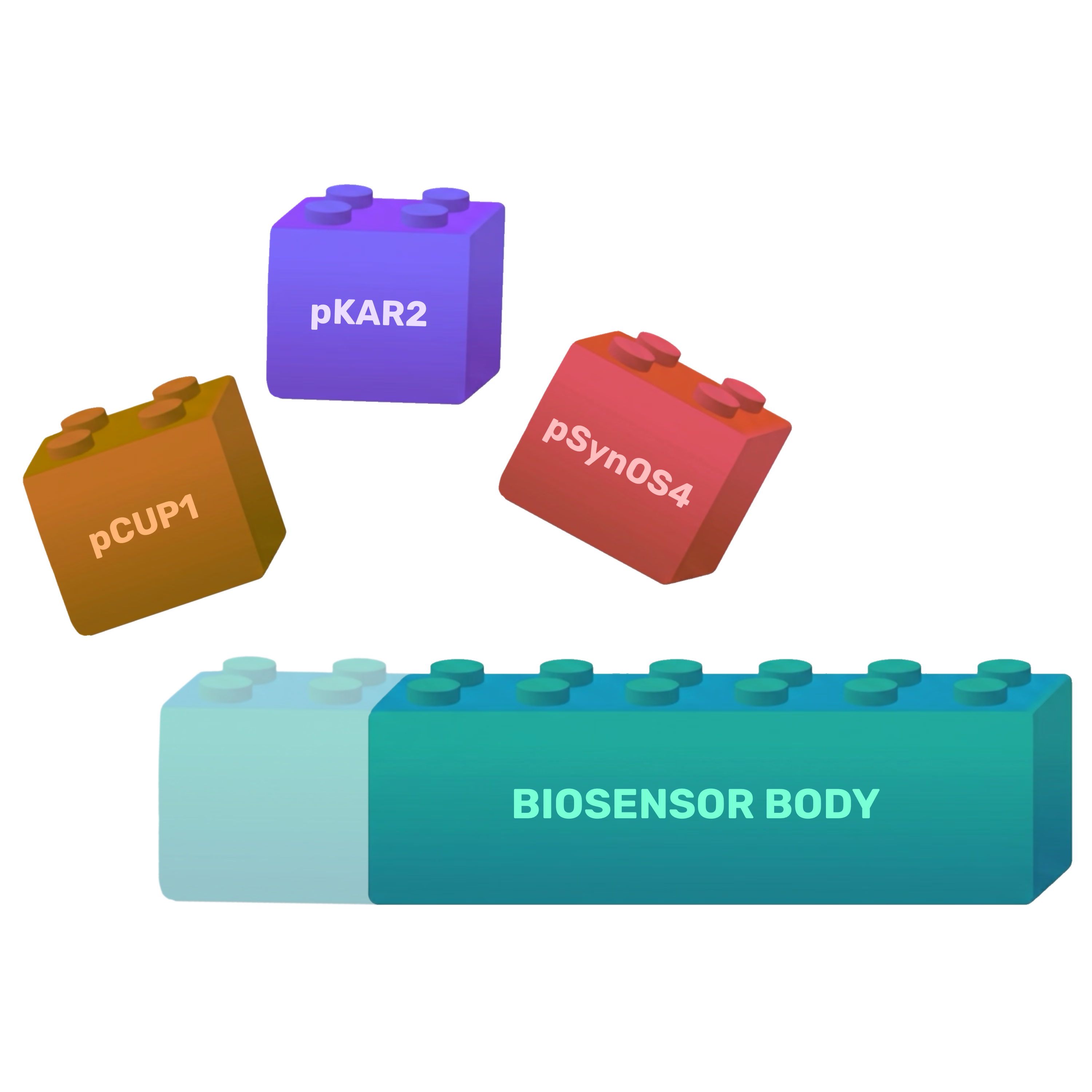
The five functional modules of the ICHNOS collection, with their parts and composite parts
One transcript gives mCherry and sfGFP in a 1:1 ratio. Green intensity is the designed dose readout and the red-to-green ratio is the designed reporter-age readout.
The two arms direct the cassette to the HO locus and HIS3 selects cells that keep it in a his3 background, without an antibiotic.
1. Sense: Modular Input Detection
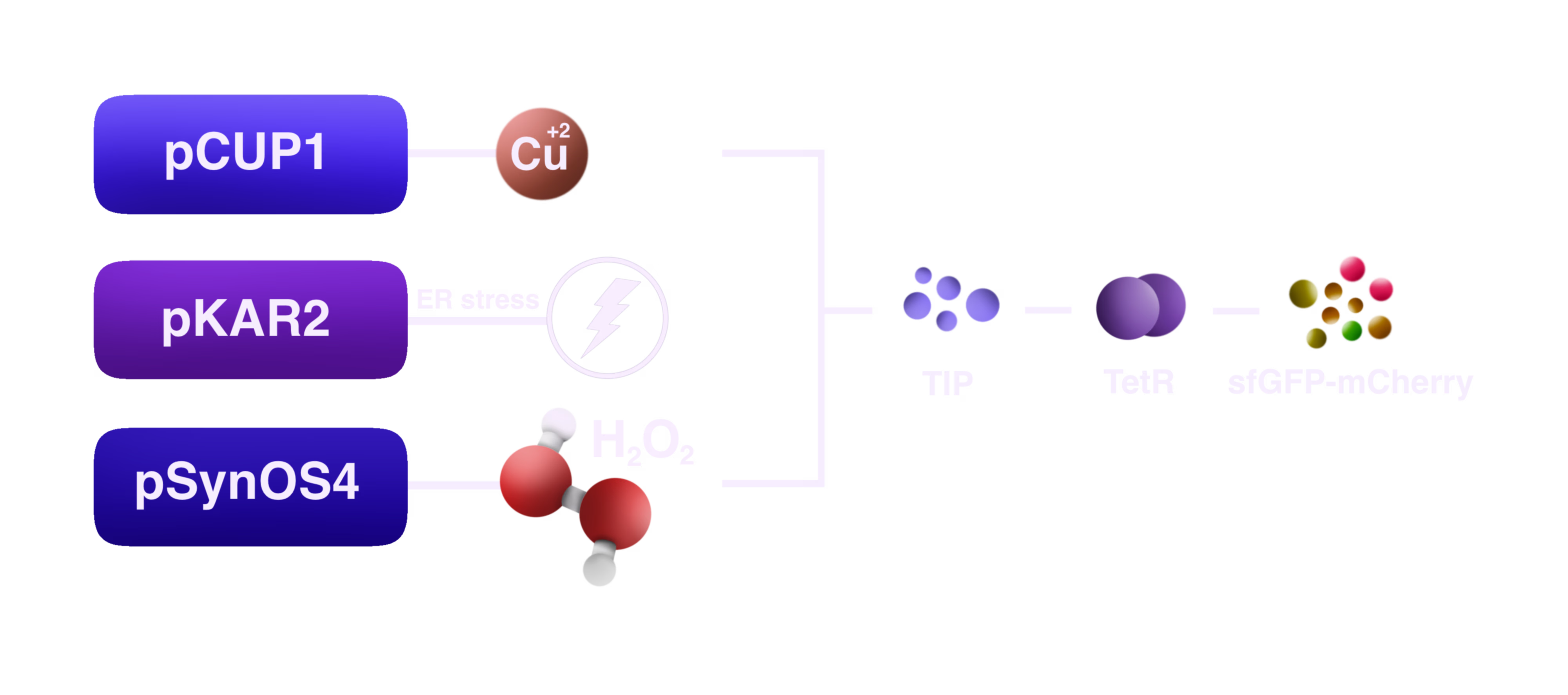
The front end is a promoter that turns a stress into transcription of TIP. Three promoters are included, one
per strain. Swapping this promoter is the only change needed to point the rest of the circuit at a different
signal.
pCUP1 (Copper-Inducible Promoter)BBa_266469YB: the native 464 bp CUP1
promoter of the yeast copper metallothionein gene. Induction by copper depends on the transcription factor
Ace1 (Thiele 198817), and copper-specific induction was shown in the original study of the gene (Butt et al.
19841). It is the positive-control input: Cu2+ acts through a pathway separate from oxidative and ER
stress, so a response in the pCUP1 strain tests the TIP, TetR and reporter cascade without the upstream
biology of the other two sensors. At high doses copper can generate reactive oxygen species, so the doses are
kept low (0 to 100 µM CuSO4).
Status: the copper ladder was imaged on 10 October and the images are
being quantified.
pKAR2 (ER-Stress-Inducible Promoter)BBa_261RAKU0: the 1,000 bp region upstream of
KAR2, the yeast BiP chaperone gene, which is induced through the Ire1/Hac1 branch of the unfolded
protein response (Mori et al. 199213; Cox and Walter 19963). The native promoter also carries a heat shock
element, so temperature can influence its expression and is kept in mind when it is used as a sensor. DTT is
the inducer.
Status: the first DTT ladder (100 to 2,000 µM, two imaging days) did
not give a detectable reporter response. The modeled half-activation point is 2,345 µM, above the top dose, so
the next ladder adds 2,200, 3,300 and 5,000 µM.
pSynOS4(alt1) (Synthetic Oxidative-Stress-Inducible Promoter)BBa_26MHLYVO: a
synthetic Yap1-dependent promoter, adapted from the minimal promoter of Dacquay and McMillen (2021)5, which
contains tandem Yap1-binding motifs. Yap1 is the oxidative stress transcription factor of yeast and is
activated by H2O2 (Delaunay et al. 20006). The Registry record is 261 bp: the 171 bp
promoter plus short assembly sequences, kept so that the record matches the integrated sequence. This is the
primary test strain.
Status: on 7 October the reporter rose with
H2O2 dose at 75, 300 and 600 µM, in the dose order the model predicts. This was seen on
one of three imaging days, so it is a lead to confirm in the next round.
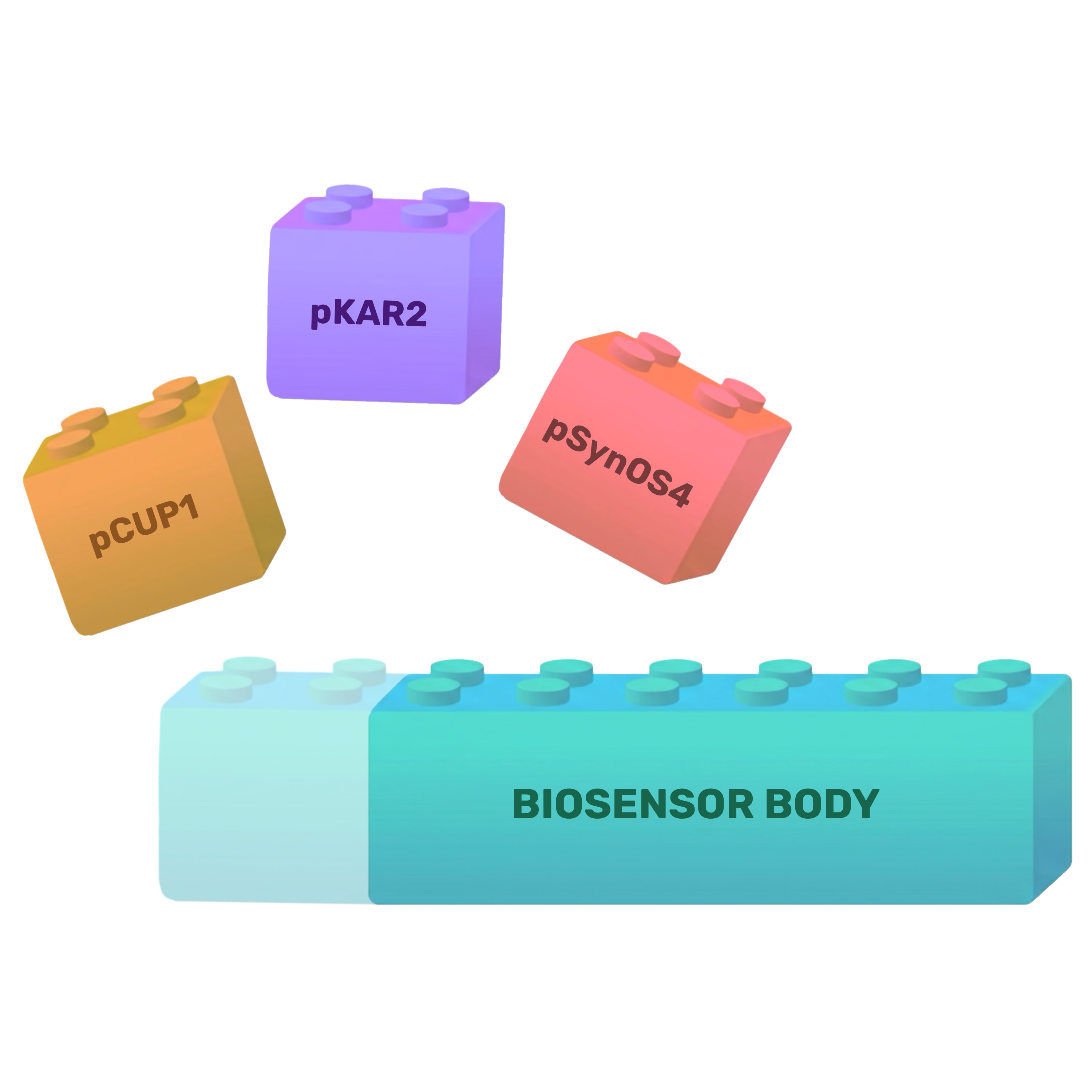
Try the swap below: pick a promoter to dock it into the sensing socket. Everything downstream of the socket
stays the same.
2. Transduce: From Stress to TIP
Whichever promoter is active, it drives the same open reading frame, TIP-GS-GB1-NLS. This
converts the different stress signals into one standard output: a nuclear peptide that releases TetR.
TIP (Transcription Inducing Peptide for TetR)BBa_269OAGCE: a 17-residue coding
sequence (51 bp, MWTWNAYAFAAPSGGGS) based on the Tip peptide, which was selected to induce the tetracycline
repressor TetR. Tip binds a site on TetR that overlaps but is not identical to the tetracycline site
(Klotzsche et al. 200510), and it induces TetR as efficiently as tetracycline when fused to the N or C terminus
of another protein (Luckner et al. 200712). In ICHNOS, TIP binds TetR and releases it from its tetO2 operators.
Status: the TIP-TetR affinity has been estimated only by calculation
from the TetR-Tip crystal structure (PDB 2NS8): 3.675 and 8.428 nM. It has not been measured.
GS LinkerBBa_26NDT5E8: a 6 bp Gly-Ser spacer (two codons) after TIP, placed to reduce
the chance that the GB1 domain blocks the binding of TIP to TetR (Chen et al. 20132).
GB1 (Solubility Tag)BBa_265IXRHS: the B1 domain of streptococcal protein G (162 bp),
a compact and very stable fold (Gronenborn et al. 19917) used as a solubility tag. It is meant to keep the short
TIP peptide soluble, and it gives the TIP transcript a 162 bp target for RT-qPCR, because TIP alone is only
51 bp. Status: the first RT-qPCR run (17 October, 20 ng of RNA per
reaction) gave late signals (Ct 32 to 37). The repeat uses at least 80 ng of RNA, redesigned reference-gene
primers and no-RT controls.
SV40 Nuclear Localization SignalBBa_261ZCBWY: the SV40 large T antigen signal PKKKRKV
(21 bp), the classical monopartite signal that directs fused proteins into the nucleus (Kalderon et al. 19848).
TetR acts on its operators in the nucleus, so the signal is there to bring the TIP fusion to it.
Status: nuclear localization of the fusion has not been imaged
yet.
ADH1 terminatorBBa_K2365044 (NAU-CHINA 2017)
:
an existing 188 bp ADH1 terminator that ends the sensing transcript before the TetR unit begins.
It is identical to the terminator used in ICHNOS, so we used the existing Registry part as it is.
Composite parts: the three Sensing Devices. Each device is, in
transcription order, a sensing promoter, TIP, GS Linker, GB1, SV40 NLS and the ADH1 terminator on one
transcript. The devices differ only in the promoter:
Sensing Device, pCUP1 variantBBa_267M5XYR (892 bp),
Sensing Device, pKAR2 variantBBa_26LHVF61 (1,428 bp) and
Sensing Device, pSynOS4(alt1) variantBBa_26IQZKSU (689 bp). They are expected to convert
Cu2+, ER stress or H2O2 into TIP production. The Registry records are the
contiguous designs; the integrated constructs add a short attB1 scar, a 6 bp spacer and a stop codon, which are
listed on the cassette pages.
3. Actuate: TetR and Its Feedback Loop
TetR is expressed from pGAL1-D12, a hybrid GAL1/tetO2 promoter. TetR binds the tetO2
operators of that promoter, so it represses its own gene (negative autoregulation) and, through a second copy of
the same promoter, the reporter. TIP releases TetR from the operators and relieves the repression.
Negative autoregulation of TetR was reported to linearize the dose-response and lower cell-to-cell variability
in yeast (Nevozhay et al. 200914). In our model, the feedback loop lowers the effective Hill coefficient of the
oxidative configuration from 3.75 to 1.80 and raises the linear R2 from 0.370 to 0.947, and for the
ER configuration from 5.13 to 2.57 and from 0.412 to 0.960. This is a model comparison: the open-loop circuit was
not built.
pGAL1-D12 (+UAS)BBa_26YUK89N: a 442 bp hybrid GAL1/tetO2 promoter of the kind used
in the TetR autoregulation circuit of Nevozhay et al. (2009)14. It carries two tetO2 operators and the Gal4
upstream activating sequence block. Each cassette contains two identical copies: one drives TetR, and one, on
the opposite strand, drives the reporter. Like the native GAL1 promoter, it is expected to be on in galactose
and off in glucose, so cultures are grown in glucose, moved to galactose and kept there for 3 h before any
stressor is added.
Status: reporter-positive cells were detected in galactose-adapted
cultures. The strength and the repression of the promoter have not been measured separately.
TetRBBa_K5303059 (NNU-CHINA 2024)
:
an existing tetracycline repressor coding sequence (624 bp, 207 residues), identical to the TetR sequence used
in ICHNOS, so we used the existing Registry part as it is. It binds the tetO2 operators of pGAL1-D12 and is
released by TIP. It is used here as the actuator, not for its response to tetracycline.
CYC1 terminatorBBa_260XIYYF: a 254 bp terminator from the yeast CYC1 gene
(Curran et al. 20134) that ends the TetR transcript. In the cassette it sits next to the TEF1 terminator of the
reporter unit and the two units are transcribed toward each other (convergent transcription), so each
transcript has its own terminator.
Composite part: TetR Expression CassetteBBa_26W2AF0V (1,320 bp):
pGAL1-D12 (+UAS), TetR and CYC1 terminator, in this order. It is shared and unchanged across the three strains
and is expected to express TetR in galactose, with TIP lowering the repression.
4. Report: The Tandem-Timer Reporter
The reporter is a single open reading frame, mCherry-(GGGGS)3-sfGFP, driven by the
second copy of pGAL1-D12. sfGFP matures in minutes and mCherry in tens of minutes, so the green intensity is
designed to report the dose and the red-to-green ratio is designed to report the age of the reporter
(Khmelinskii et al. 20129).
mCherryBBa_262M4BU4: monomeric red fluorescent protein (Shaner et al. 200416; 708 bp,
236 residues, codon-adapted for S. cerevisiae). It matures in two steps with half-times of 16.91 and
30.30 min in yeast (Khmelinskii et al. 20129), so it lags sfGFP. It is the N-terminal half of the fusion.
GGGGS LinkerBBa_263685UQ: three repeats of Gly-Gly-Gly-Gly-Ser (45 bp) that join
mCherry to sfGFP in one polypeptide, so both are made from one transcript in a 1:1 ratio and the ratio reflects
the age of the protein and not unequal expression.
Superfolder GFP (sfGFP)BBa_26CRGMI0: a green fluorescent protein variant engineered to
fold robustly (Pédelacq et al. 200615; 714 bp, 238 residues), with a maturation half-time of 5.63 min in yeast
(Khmelinskii et al. 20129). It is the C-terminal half of the fusion. The part has no stop codon of its own.
TEF1 terminatorBBa_K801011 (TU_Munich 2012)
:
an existing 507 bp TEF1 terminator, used as it is. It ends the reporter transcript. Its first 9 bp
(GGA GAT TGA) complete the reporter reading frame (Gly, Asp, stop), so it is placed directly after sfGFP.
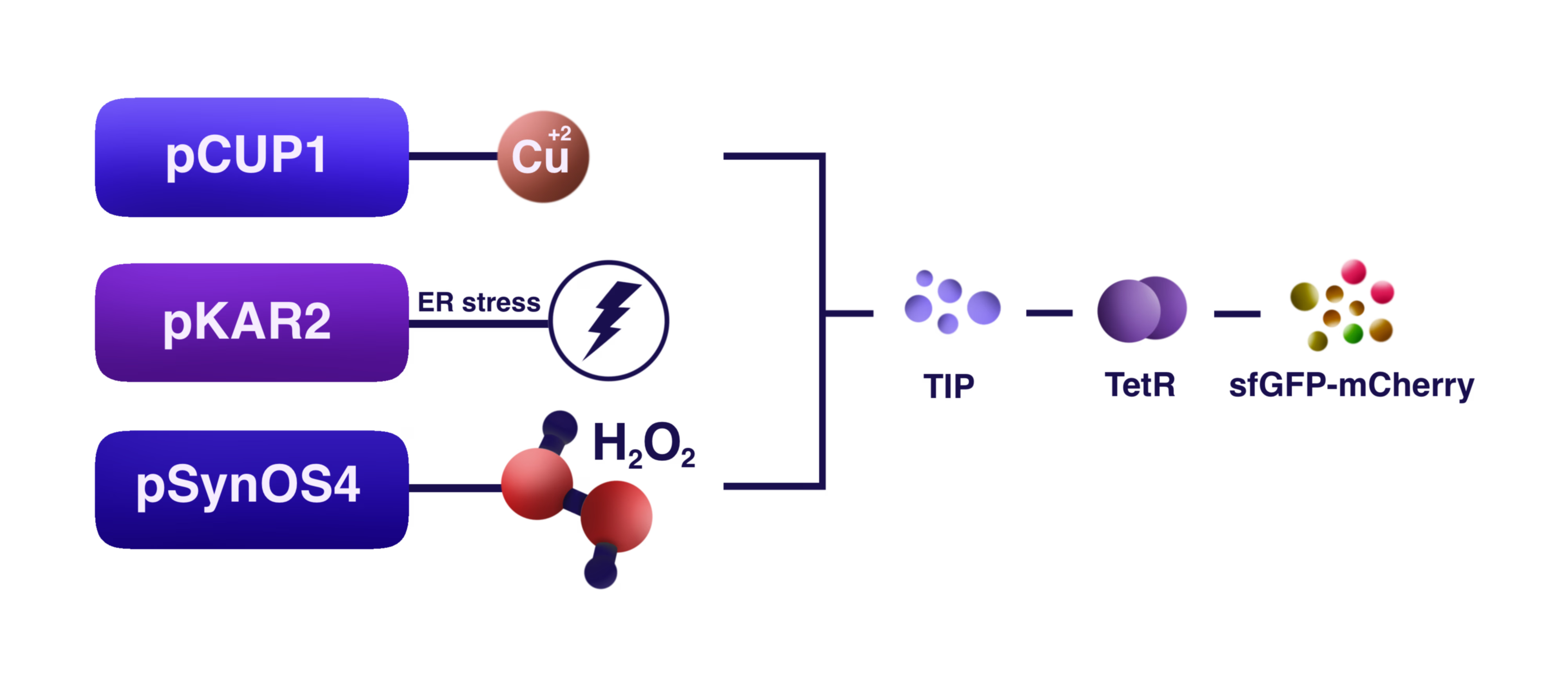
The logic of the circuit. Three sensing promoters feed the same TIP, TetR and reporter stages. The
label sfGFP-mCherry names the two fluorescent proteins; in the construct their order is
mCherry-(GGGGS)3-sfGFP.
Composite part: Tandem-Timer Reporter CassetteBBa_26RAWYJO
(2,416 bp): pGAL1-D12 (+UAS), mCherry, GGGGS Linker, sfGFP and TEF1 terminator, in transcription order. The
promoter is followed by one open reading frame of 491 residues. The cassette is shared and unchanged across the
three strains. In the integrated cassette it runs on the opposite strand from the sensing and TetR units.
Status of the reporter. Reporter-positive cells were detected in both
channels in the sensing strains, while unmodified cells show only weak, scattered signal. The timer readout
itself is untested so far, but it is not contradicted by the data, and the ratio is used as a relative quantity
until the optical calibration is done. A claim about timing needs an experiment in which the time of exposure
changes, such as a pulse followed by removal of the stressor; this has not been run.
5. Assembly and Genomic Integration
Each cassette is designed to be assembled in the yeast cell from 5 or 6 overlapping fragments (overlaps of 25
to 60 bp; the approach is described by Kuijpers et al. 201311) and integrated at the HO locus
(YDL227C) through 500 bp homology arms. A single genomic copy avoids the copy-number variation of a plasmid,
which matters when fluorescence is compared between strains and over time. HIS3 selects integrants in the
his3Δ1 background of CEN.PK2-1C, so no antibiotic is needed.
HO Left Flank (TS1)BBa_267PGF87 and HO Right Flank (TS2)BBa_26XKLS8Z: two 500 bp homology arms identical to genomic sequence on either side of the
HO locus. Insertion at HO has been reported to have no effect on yeast growth, which is why
the locus is used as a neutral integration site (Voth et al. 200118). Together the arms direct the assembled
cassette to that site by homologous recombination.
HIS3 PromoterBBa_26NPI0HF and HIS3 Coding SequenceBBa_26IVEAB5: the native 189 bp HIS3 promoter and the 663 bp HIS3 gene, which encodes
imidazoleglycerol-phosphate dehydratase, an enzyme of histidine biosynthesis. The recipient strain carries
his3Δ1, so only cells that keep a working marker grow without histidine. In the
cassette the HIS3 unit is transcribed away from the sensing unit.
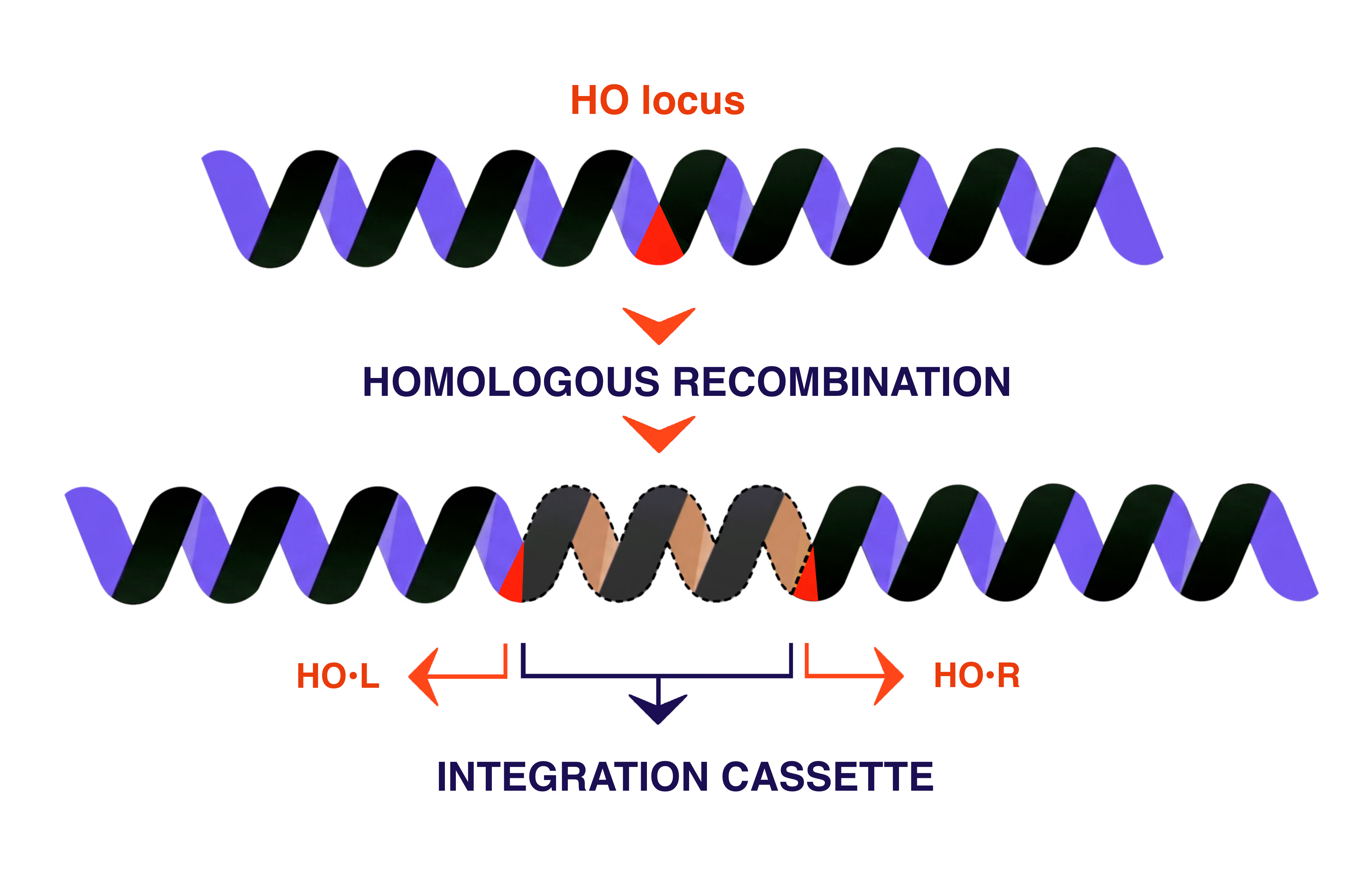
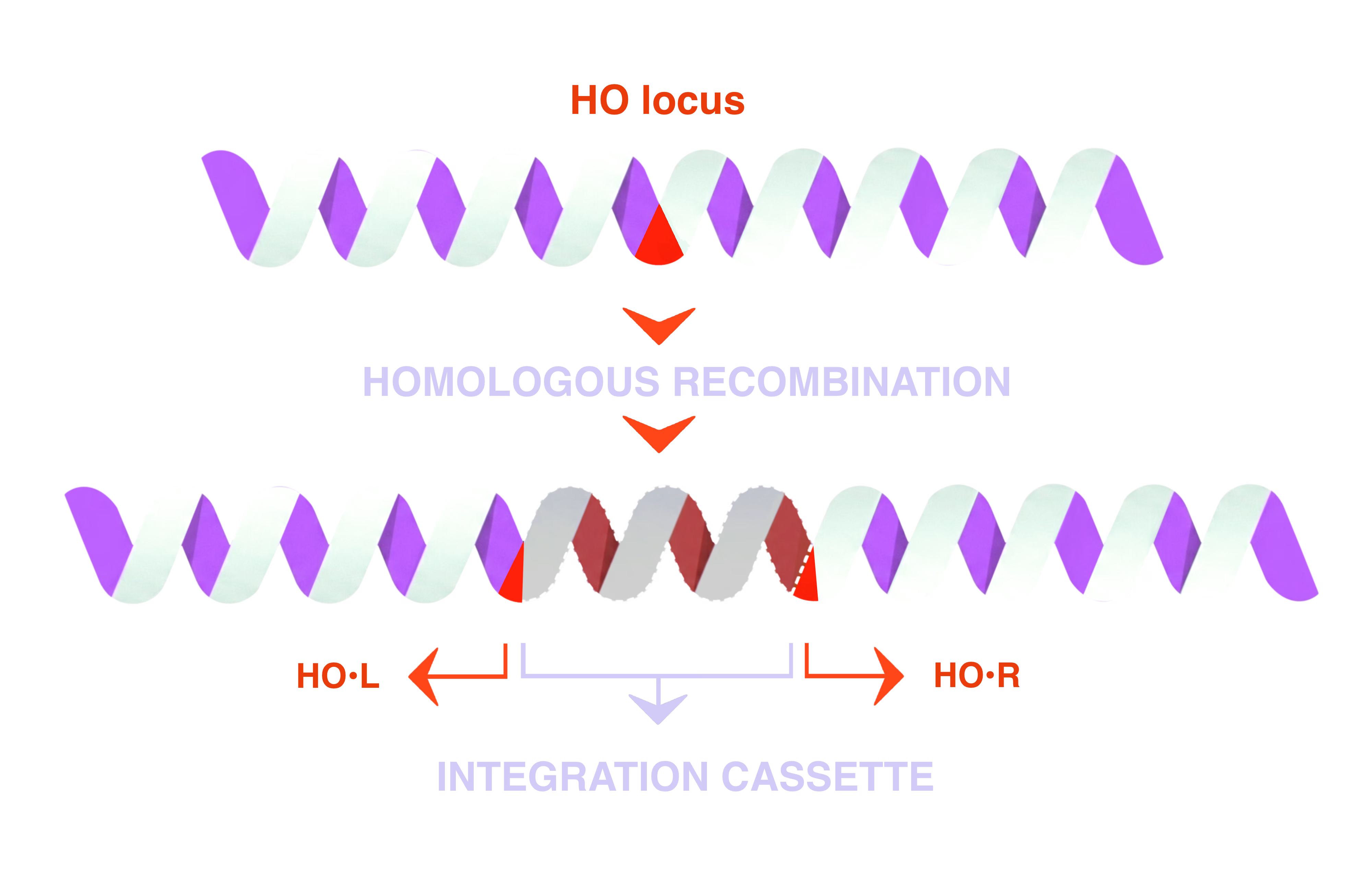
Integration at the HO locus (schematic). The homology arms HO·L and HO·R flank
the integration cassette.
Status of the integration. In two independent transformations, each of the
three strains gave more than 10 colonies on SD-His, while the no-DNA control stayed blank on SD-His and grew
normally on YPD. This shows that the HIS3 marker was taken up and maintained. It does not show where in the
genome the DNA sits. The position at HO is being tested with a left-junction colony PCR, which is being
repeated with a more effective yeast lysis step, and the integrated cassettes are to be sequenced.
Full Genomic Integration Cassettes
The three cassettes are the integrated designs. Each one joins the modules above into one construct, between
the two HO arms. The HIS3 unit and the reporter unit run from right to left, and the sensing and TetR
units run from left to right. The sequences are design sequences, assembled in silico from the ordered
fragments; the integrated loci have not been sequenced yet. Everything downstream of TIP is identical in the
three strains, so differences between them can be attributed to the sensing promoter.
Full Genomic Integration Cassette, pCUP1 strainBBa_260JV63R: 6,789 bp, assembled
from fragments 1, 2, 6, 7 and 8. Copper input and positive-control strain for the downstream cascade.
Full Genomic Integration Cassette, pKAR2 strainBBa_26VMYDOK: 7,325 bp, assembled
from fragments 1, 3, 6, 7 and 8. ER-stress input, with DTT as the inducer.
Full Genomic Integration Cassette, pSynOS4(alt1) strainBBa_26K3L3KY: 6,496 bp,
assembled from 6 fragments (1, 4, 5, 6, 7 and 8), because the short sensing module is split over two
fragments. Oxidative-stress input (H2O2) and primary test strain.
The drawings show the main parts in order and are not to scale. The short assembly
sequences are not drawn. The Registry pages list every element with its position and strand.
Design History: Why There Are No Plasmids
Our first design placed each cassette on a plasmid. We did not build those plasmids, because of cost. Instead,
the three constructs were split into synthetic DNA fragments, so that the regions shared by all three strains
were ordered once, and the cassettes are assembled in the yeast cell and integrated at the HO locus.
One fragment (Fragment 5, part of the pSynOS4(alt1) sensing module) was delivered in a carrier plasmid and was
used only as a PCR template. The collection therefore contains no plasmid constructs, and the parts above are
not offered as plasmids. The Engineering page describes how the fragments were
designed.
Role in the ICHNOS Project
This collection is the structural and functional basis of the ICHNOS biosensor. It separates sensing from
reporting: any promoter that responds to a stress can be placed in front of TIP, and everything after it stays
the same. The tandem timer is designed to add a second quantity, the age of the reporter, to the usual intensity
readout. The pCUP1 strain also serves as a built-in positive control, because copper acts through a pathway
separate from the other two.
So far we have built and selected the three strains, detected the reporter in both channels and seen a
dose-ordered response to H2O2 on one imaging day. The next round measures the size of the
responses, extends the DTT ladder, repeats the junction PCR and the RT-qPCR, and calibrates the timer.
Other teams can use the parts as they are. The sensing promoter can be replaced, and the Tandem-Timer Reporter
Cassette can serve as an output stage for any circuit that produces an induction or derepression event. This has
not been tried outside ICHNOS.
References
Butt TR, Sternberg EJ, Gorman JA, Clark P, Hamer D, Rosenberg M, Crooke ST. Copper metallothionein of yeast, structure of the gene, and regulation of expression. Proc Natl Acad Sci USA 1984;81(11):3332-3336. doi:10.1073/pnas.81.11.3332
Chen X, Zaro JL, Shen WC. Fusion protein linkers: property, design and functionality. Adv Drug Deliv Rev 2013;65(10):1357-1369. doi:10.1016/j.addr.2012.09.039
Cox JS, Walter P. A novel mechanism for regulating activity of a transcription factor that controls the unfolded protein response. Cell 1996;87(3):391-404. doi:10.1016/S0092-8674(00)81360-4
Curran KA, Karim AS, Gupta A, Alper HS. Use of expression-enhancing terminators in Saccharomyces cerevisiae to increase mRNA half-life and improve gene expression control for metabolic engineering applications. Metab Eng 2013;19:88-97. doi:10.1016/j.ymben.2013.07.001
Dacquay LC, McMillen DR. Improving the design of an oxidative stress sensing biosensor in yeast. FEMS Yeast Res 2021;21(4):foab025. doi:10.1093/femsyr/foab025
Delaunay A, Isnard AD, Toledano MB. H2O2 sensing through oxidation of the Yap1 transcription factor. EMBO J 2000;19(19):5157-5166. doi:10.1093/emboj/19.19.5157
Gronenborn AM, Filpula DR, Essig NZ, Achari A, Whitlow M, Wingfield PT, Clore GM. A novel, highly stable fold of the immunoglobulin binding domain of streptococcal protein G. Science 1991;253(5020):657-661. doi:10.1126/science.1871600
Kalderon D, Roberts BL, Richardson WD, Smith AE. A short amino acid sequence able to specify nuclear location. Cell 1984;39(3 Pt 2):499-509. doi:10.1016/0092-8674(84)90457-4
Khmelinskii A, Keller PJ, Bartosik A, et al. Tandem fluorescent protein timers for in vivo analysis of protein dynamics. Nat Biotechnol 2012;30(7):708-714. doi:10.1038/nbt.2281
Klotzsche M, Berens C, Hillen W. A peptide triggers allostery in Tet repressor by binding to a unique site. J Biol Chem 2005;280(26):24591-24599. doi:10.1074/jbc.M501872200
Kuijpers NGA, Solis-Escalante D, Bosman L, et al. A versatile, efficient strategy for assembly of multi-fragment expression vectors in Saccharomyces cerevisiae using 60 bp synthetic recombination sequences. Microb Cell Fact 2013;12:47. doi:10.1186/1475-2859-12-47
Luckner SR, Klotzsche M, Berens C, Hillen W, Muller YA. How an agonist peptide mimics the antibiotic tetracycline to induce Tet-repressor. J Mol Biol 2007;368(3):780-790. doi:10.1016/j.jmb.2007.02.030
Mori K, Sant A, Kohno K, Normington K, Gething MJ, Sambrook JF. A 22 bp cis-acting element is necessary and sufficient for the induction of the yeast KAR2 (BiP) gene by unfolded proteins. EMBO J 1992;11(7):2583-2593. doi:10.1002/j.1460-2075.1992.tb05323.x
Nevozhay D, Adams RM, Murphy KF, Josic K, Balázsi G. Negative autoregulation linearizes the dose-response and suppresses the heterogeneity of gene expression. Proc Natl Acad Sci USA 2009;106(13):5123-5128. doi:10.1073/pnas.0809901106
Pédelacq JD, Cabantous S, Tran T, Terwilliger TC, Waldo GS. Engineering and characterization of a superfolder green fluorescent protein. Nat Biotechnol 2006;24(1):79-88. doi:10.1038/nbt1172
Shaner NC, Campbell RE, Steinbach PA, Giepmans BNG, Palmer AE, Tsien RY. Improved monomeric red, orange and yellow fluorescent proteins derived from Discosoma sp. red fluorescent protein. Nat Biotechnol 2004;22(12):1567-1572. doi:10.1038/nbt1037
Thiele DJ. ACE1 regulates expression of the Saccharomyces cerevisiae metallothionein gene. Mol Cell Biol 1988;8(7):2745-2752. doi:10.1128/mcb.8.7.2745-2752.1988
Voth WP, Richards JD, Shaw JM, Stillman DJ. Yeast vectors for integration at the HO locus. Nucleic Acids Res 2001;29(12):e59. doi:10.1093/nar/29.12.e59