
Accessibility
Text size
As a team, we began developing ICHNOS with a fundamental question:
What might we miss when we observe only a cell's present state?
This question sparked our curiosity, but it also challenged us to look beyond the mechanism we wanted to build. Before deciding how to record past cellular stress, we needed to understand why that history mattered, what information a recorder should preserve and how it could be interpreted responsibly.
Integrated Human Practices became part of how we worked and learned together. Conversations with researchers across disciplines and experts in potential application settings brought new perspectives into our team discussions. They helped us examine the biological rationale of ICHNOS, question our assumptions and refine how we would construct, model and evaluate it. Listening to society also encouraged us to consider how our project could affect people and how their needs, concerns and expectations could shape its direction.
These exchanges also shaped our approach to safety. We considered how biological design, laboratory practices, communication and human factors influence responsible research. Dialogue helped us identify risks and practical needs, informing both the precautions surrounding ICHNOS and our wider efforts to support safety awareness, participation and preparedness.
We brought these contributions back to the team, discussed their implications and used relevant insights to guide our decisions. Some exchanges strengthened our reasoning, while others revealed limitations or led us to reconsider ideas we had invested in. As our understanding developed, we revised components, explored alternatives and recognised questions that needed further investigation.
Our core values guided this shared process: how we listened, how we assessed what we heard and how we allowed it to change our work.
We recognised that understanding the potential of ICHNOS required perspectives beyond molecular biology. Being an interdisciplinary team ourselves, we sought to bring together researchers and experts across disciplines to help us connect biological, technical, practical and societal considerations, identify questions we might otherwise have overlooked and examine the distinct requirements of potential applications.
We approached ICHNOS with curiosity and a willingness to question assumptions, explore new possibilities and move beyond our initial design. Yet simultaneously with curiosity, every proposed mechanism, model and measurement required critical examination and evaluation. Through expert dialogue and continuous reassessment, we strengthened our experimental reasoning and distinguished what our evidence supported from what remained hypothetical. We sought to understand what ICHNOS could reliably reveal, where its limitations lay and which claims required further validation.
We considered the responsibilities associated with developing ICHNOS and exploring its potential applications. Safety, practical constraints, ethical implications and the needs of those who might be affected informed our thinking and decisions. We examined the conditions, safeguards and further evidence that would be needed for future use to be appropriate and beneficial.
We approached knowledge exchange with a willingness to listen, ask questions and learn from both experts and society. Listening to people's needs, concerns and expectations was central to understanding how ICHNOS might affect society and how society could, in turn, shape its development. This dialogue helped us question our assumptions and consider the project's relevance and implications through the perspectives of those it could affect.
We believe that safety should extend beyond laboratory protocols and scientific institutions to become an accessible and shared responsibility across society. Access to safety knowledge should not be limited to experts, but made understandable and available to people of different ages, backgrounds and levels of scientific literacy. Through education, public engagement and inclusive communication, we sought to empower individuals to develop safety awareness, reflecting our commitment to fostering a culture in which everyone can be informed and contribute to safety.
We continually reassessed our decisions as new insights, questions and limitations emerged. When feedback challenged the feasibility of an approach or showed that it no longer adequately supported our objectives, we reconsidered our reasoning, explored alternatives and revised the design, methods or scope accordingly. Rather than treating our initial ideas as fixed, we allowed evidence and critical reflection to shape what ICHNOS could become.
Before choosing a molecular mechanism, we asked whether a transient stress event leaves an information gap once the immediate response has subsided. These early discussions assessed the biological problem and the value of preserving cellular history, independently of the design that ICHNOS would eventually adopt.

Interaction with Dr Marina Wright Muelas, Principal System Evaluation Scientist
To explore our fundamental question, we contacted Dr Marina Wright Muelas, whose work on cell culture optimisation and reproducibility in cancer cells offered a relevant perspective on how cellular changes may influence experimental outcomes. We asked whether an earlier stress event, no longer apparent from a cell's current condition, could still affect its behaviour. Her response supported the biological plausibility of this concern, while underscoring the distinction between a reasonable hypothesis and an experimentally established effect.
We wanted to investigate a potential limitation in how cellular states are interpreted: experiments typically assess cells at a particular moment, but that snapshot may not capture everything they have previously experienced. We therefore asked whether stress-related changes could remain relevant even when cells appeared healthy and whether existing quality-control approaches would necessarily reveal them. Dr Wright Muelas' experience in cell culture optimisation and reproducibility provided a relevant perspective for examining this concern.
Dr Wright Muelas considered it plausible that previous stress could influence subsequent cellular behaviour. She outlined a possible chain of effects in which stress alters cellular metabolism, potentially affecting gene and protein expression and, consequently, how cells behave. She also raised questions about whether cell line authentication services would capture these kinds of changes. By drawing attention to differences between cells at early and later passages, as well as the long-term use of cell lines, she highlighted the importance of considering cellular changes over time rather than assuming that a cell's present condition fully reflects its history.
We treated her feedback as a reason to investigate our initial hypothesis, not as evidence that a previous stress event necessarily produces a persistent or measurable effect. Her proposed connection between stress, metabolism and gene and protein expression helped us articulate a plausible biological rationale for looking beyond a cell's immediate state. At the same time, her uncertainty about the scope of existing authentication methods highlighted a question that required further examination: which aspects of cellular history are captured by current approaches and which might remain unrecorded?
Her contribution helped us sharpen the problem that ICHNOS seeks to address: a measurement of a cell's present state may not, by itself, reveal its previous stress history. This perspective supported our decision to investigate whether a biological recording system could preserve information about earlier cellular experiences and provide additional context for interpreting subsequent measurements.
Meeting with Spyridon Mourtas, Professor in the Department of Chemistry at the University of Patras
Following our exchange with Dr Marina Wright Muelas, we approached Professor Spyridon Mourtas, whose expertise in bioactive peptides and delivery systems offered a perspective on connecting molecular design with biological function. We wanted to explore whether the transient nature of cellular stress responses creates a meaningful limitation on how cellular behaviour is understood and whether a protein-based system that preserves information about previous stress could help address it.
We needed to determine whether the problem itself was worth pursuing. We discussed with Professor Mourtas the difficulty of understanding what a cell has previously experienced when the triggering condition is no longer present. We also asked whether retaining a measurable indication of a past stress event could offer information that is not always available through measurements performed at a single moment.
Professor Mourtas confirmed that cellular responses are dynamic and that biologically relevant changes may be temporary or may no longer be directly observable when a sample is analysed. He recognised the potential usefulness of a system that could preserve a trace of a previous cellular experience and make it accessible at a later time. Such a concept could support a better understanding of how cells respond to changing conditions and could eventually be explored in different research or applied contexts.
His contribution gave us another external validation of the problem we wanted to address. It showed that the value of ICHNOS depends on the broader ability to retain otherwise short-lived biological information. This allowed us to treat the project as a developing concept rather than committing prematurely to one design.
Following this discussion, we continued investigating different ways in which a cell could record a previous stress event. Professor Mourtas's feedback helped us preserve the central aim of ICHNOS while remaining open to substantial changes in its implementation. As our project evolved and the original mechanism was reconsidered, this early validation remained relevant because it concerned the underlying problem and the usefulness of cellular memory.

Meeting with Zoe Piperigkou, Assistant Professor of Biochemistry of the Extracellular Matrix, Department of Chemistry, University of Patras
Finally, we discussed the project with Professor Zoe Piperigkou, whose research on the extracellular environment and three-dimensional cancer models offered a relevant perspective on how cellular behaviour is shaped by its biological context. We focused on the broader biological question: whether knowing that a cell had previously experienced stress could improve the interpretation of its present condition and whether preserving that information could have wider scientific value.
We approached Professor Piperigkou to examine the biological relevance of ICHNOS itself. We discussed whether conventional observations of a cell at one time point can overlook important information about its earlier exposure to stress and whether a form of cellular memory could help bridge this gap.
Professor Piperigkou highlighted that cellular behaviour is dynamic and is influenced by both previous conditions and the wider biological environment. A stress response may be short-lived, while its influence on the cell may become evident later or may be difficult to connect with the original event. She therefore recognised that a technology capable of retaining information about earlier stress could provide a useful additional perspective.
Her research perspective on the extracellular environment and three-dimensional cancer models also helped us consider why apparently secondary aspects of cellular context can matter. For our project, an earlier stress event is another part of that context that may be absent from an endpoint measurement. Her feedback strengthened the biological rationale of ICHNOS. It helped us understand that the project's main contribution could lie in making a cell's recent history more accessible. The discussion also supported the view that such information could become relevant in more than one context, although each potential application would require separate investigation and validation.
Professor Piperigkou's contribution encouraged us to retain the idea of cellular memory as the stable core of the project while continuing to question and redesign the mechanism. When our initial approach later changed, the problem she had helped us validate remained the same: transient biological events can be difficult to reconstruct and a technology that leaves a detectable trace of those events could provide valuable information. Her early input therefore supported the project's direction without being tied to its current design.
Having established the relevance of the problem, we examined how to encode a transient event into a measurable biological trace. This section first follows the conceptual and genetic design in full, then addresses the fluorescent reporter and the experiments needed to evaluate it.
Before selecting a molecular mechanism, we needed to define what ICHNOS should record and what would make that record meaningful. We therefore examined the distinction between a transient cellular response and biological memory, establishing the criteria for retaining information about a past stress event.
Interaction with Seth Shipman, Associate Professor in the Department of Bioengineering and Therapeutic Sciences at the University of California, San Francisco
At the earliest stage of ICHNOS, we were exploring the concept of a protein-based system capable of recording a recent cellular stress event. The idea was to retain information about a transient stress response after the original stimulus had disappeared. However, before developing a specific molecular architecture, we needed to establish what would actually qualify as biological memory and what properties should be considered essential for a molecular recording system. We therefore contacted Professor Seth Shipman, whose work focuses on recording biological information in living systems, to evaluate our initial concept at this fundamental stage.
Our initial concept was based on a protein-level record of recent oxidative stress rather than a permanent change to the cell's DNA. At this stage, however, we had not yet defined precisely how such a record should be classified or what properties it should have to function as a meaningful biological memory.
We therefore asked Professor Shipman several conceptual questions before advancing the design. We wanted to understand what distinguishes genuine biological memory from a delayed or transient response, what conceptual pitfalls should be considered when recording temporary cellular events and whether principles developed for molecular recording systems could be applied to a protein-based approach.
This discussion was particularly important because our design depended on the idea that a past event could remain detectable after the original stress signal was no longer present. We needed to establish what "remembering" meant in this context before deciding how that information should be encoded.
Professor Shipman identified four considerations that he regarded as important for biological recording systems.
The first was permanence. He described biological memory as information that should not be lost or overwritten unless this occurs by design. This provided an important distinction between permanent molecular records and transient biological states. He also highlighted the cost to the cell. Recording information inevitably introduces some degree of perturbation, meaning that the burden imposed by a recording system should be considered as part of its design. A third consideration was retrieval and scalability. A recording system must not only store information but also allow that information to be practically recovered, particularly when recordings are made across many individual cells. This was relevant to our interest in resolving cellular history at the single-cell level. Finally, he emphasised dynamic range. A recorder should avoid saturating after only a small number or magnitude of events, since this would restrict the amount of information that could be represented.
Together, these points shifted our attention from simply asking whether a protein signal could persist after stress to considering what information the signal would contain, how robustly it could be retained and how it could subsequently be interpreted.
His feedback led us to clarify an important distinction in the identity of ICHNOS. Permanent molecular memory and a dynamic protein-based record of recent cellular history represent different recording strategies.
We therefore did not treat permanence as a requirement that our system necessarily had to reproduce. Instead, it became a criterion that helped us define what ICHNOS was and was not designed to do. Our aim was to develop a protein-based recording system capable of representing the history of a cellular stress event, rather than to create an irreversible molecular record. This distinction allowed us to retain the original direction of ICHNOS while establishing clearer criteria for evaluating the recording function as the project developed.
Professor Shipman's contribution therefore shaped the conceptual foundation of ICHNOS. We retained the protein-based and dynamic nature of the proposed recorder, while incorporating the broader considerations of cellular cost, information retrieval, scalability and dynamic range into our subsequent thinking about the system. Most importantly, the discussion established that the central design question was not simply whether ICHNOS could "remember" stress, but what type of biological record it should create and what information that record should preserve.
This provided an important starting point for the next stages of ICHNOS development. Having defined the conceptual requirements of a biological recorder, we could then move from the question of what memory should mean to the more practical question of how cellular stress could be encoded into a controllable molecular system.
From a bibliographical perspective, our early exploration considered roGFP2–Tsa2 as an analogue redox sensor whose recovery towards baseline might contain information about recent oxidative stress. We then explored a separate digital Sup35/[PSI+] component intended to retain a more persistent state, introducing us to the next question: could stress reliably establish a heritable protein-conformation state?
With the recording objective established, we explored whether a protein-based mechanism could retain information about cellular stress beyond the original stimulus. Prion formation offered a potential route to persistent molecular memory, but its suitability depended on whether the resulting state could be established and maintained reliably enough for our intended application.
Meetings with Dr Eirini Kanata and Theodoros Sklaviadis, Professor in the School of Pharmacy at Aristotle University of Thessaloniki
Our initial architecture combined an analogue redox sensor with a digital Sup35 switch. We hypothesised that mild stress would produce a reversible redox response, whereas severe proteostasis stress might trigger a persistent [PSI+] state, allowing the two components to capture different aspects of the cell's stress history.
To evaluate whether this could function as a reliable synthetic memory mechanism, we discussed the design with Dr Eirini Kanata and Professor Theodoros Sklaviadis from the School of Pharmacy at Aristotle University of Thessaloniki, whose expertise in prion biology and protein-folding disorders offered a relevant foundation for assessing the biological feasibility of the proposed Sup35 switch. Their guidance and the literature they recommended helped us critically reassess the assumptions behind this first design.
Our initial digital memory module relied on stress-induced Sup35 conversion as a threshold-dependent switch: mild stress would leave Sup35 soluble, whereas severe proteostasis disruption might establish a persistent [PSI+] state. Because this required us to distinguish transient aggregation from a genuinely self-propagating prion state, we sought expert guidance on whether Sup35 could provide a controllable and interpretable memory element.
Dr Kanata and Professor Sklaviadis directed us towards literature on prion biology, yeast prion analysis, molecular chaperones and protein-folding disorders. This reinforced the central premise that biological information can persist through self-perpetuating changes in protein conformation, making prions a compelling example of protein-level inheritance.
At the same time, their guidance highlighted an important limitation: Sup35 cannot be treated as an isolated synthetic switch. Prion formation and inheritance depend strongly on the cellular protein-quality-control network and molecular chaperones, which are themselves altered during proteotoxic stress. The reporter could therefore become coupled to the same proteostasis machinery that it was intended to record.
They also helped us recognise that aggregation is not equivalent to stable prion conversion. The fluorescent foci we initially planned to quantify could indicate Sup35 assemblies without proving that a self-propagating and heritable [PSI+] state had formed. Additional validation would therefore be required to distinguish transient stress-induced assemblies from genuine prion memory.
Finally, Sup35 has an endogenous role in translation termination, meaning that its conversion into a prion state could itself alter cellular physiology. This reduced the modularity and interpretability we wanted for ICHNOS.
Their feedback shifted our focus from asking whether Sup35 aggregates persisted after stress to asking whether the observed state could be reliably attributed to genuine prion conversion. We realised that this would require distinguishing reversible aggregation from hereditary memory while also accounting for the chaperone and proteostasis pathways controlling prion maintenance.
Because the same endogenous machinery responding to proteostasis stress would also influence the proposed memory state, the mechanism introduced substantial biological dependence. We therefore recognised that Sup35 was biologically interesting as a model of protein-based memory, but that its suitability as the core recorder of ICHNOS required further critical evaluation.
Their feedback did not yet lead us to abandon the prion-based concept, but it substantially changed how we viewed it. We became more cautious about treating Sup35 as a simple, modular synthetic switch and recognised that additional evidence would be required to determine whether the mechanism could be sufficiently predictable and interpretable for ICHNOS. This led us to seek further expert input specifically on whether stress could reliably trigger prion formation and whether the proposed switch could operate on a timescale compatible with the intended function of ICHNOS.
Interaction with Dr Reed B. Wickner, Laboratory of Biochemistry and Genetics, National Institutes of Health
Following the limitations Dr Eirini Kanata and Professor Theodoros Sklaviadis addressed, we contacted Dr Reed B. Wickner, whose work has defined major mechanisms controlling yeast prion formation and propagation. We specifically asked whether Sup35NM overexpression or cellular stress could overwhelm anti-prion defences and make prion formation sufficiently predictable for a synthetic biosensor.
Our design depended on more than the ability of Sup35 to form a prion. For ICHNOS to work as a recorder, a transient stress event had to increase prion conversion in a reproducible and interpretable way. We therefore asked whether high Sup35NM expression could saturate cellular anti-prion systems and whether proteotoxic or oxidative stress could make cells more permissive to [PSI+] formation. We also needed to determine whether prion formation could occur early enough to support the intended role of ICHNOS as an early-onset cellular stress sensor.
Dr Wickner explained that no clear saturation threshold had been demonstrated: even strong Sup35NM overexpression did not make prion conversion deterministic. He also clarified that anti-prion systems are effective but not absolute. Crucially, he challenged our assumption that stress would predictably trigger [PSI+] formation, citing difficulties reproducing oxidative-stress effects. He also emphasised that Sup35 aggregation alone does not demonstrate a transmissible prion state. Finally, he explained that prion formation occurs later than the initial stress response. Even if conversion eventually produced a persistent state, it would not capture the early stress phase that ICHNOS aimed to record. These insights challenged the reliability and timing of our proposed mechanism.
His feedback challenged the central input-;output assumption of our original module. We needed ER homeostasis stress to produce a reproducible increase in Sup35 prion conversion, but the evidence instead showed that [PSI+] formation is strongly buffered by several cellular systems and that proposed environmental triggers are not consistently reproducible. This meant that a Sup35 aggregate could not be treated as a calibrated proxy for a past stress event. The system risked stochastic false negatives, ambiguous interpretation of aggregates and strong dependence on the cellular context. We also revised our modelling assumptions by removing the unsupported idea of a simple anti-prion saturation threshold. The timing issue was equally important. Because prion formation occurs after the early stress response, the mechanism was not compatible with the early-onset sensing function we wanted ICHNOS to provide.
Dr Wickner's feedback showed that the Sup35-based mechanism would not provide the direct, predictable and timely relationship between cellular stress and recorded output that our design required. The problem was therefore not only the stochastic nature of prion formation or the difficulty of distinguishing aggregation from genuine [PSI+] conversion. The mechanism was also too slow to support the early-onset detection of cellular stress that we wanted ICHNOS to achieve.
We therefore moved away from Sup35 as the core memory mechanism and searched for a faster and more direct stress-responsive process. This led us to the HAC1 splicing mechanism, an early event of the unfolded protein response, which offered a more immediate connection between ER homeostasis stress and downstream recording.
Dr Wickner's feedback challenged our initial proposal to use Sup35 as the basis of a cellular memory system, prompting us to reconsider whether prion conversion could provide the predictability required for our design. We subsequently explored Ire1-dependent HAC1 mRNA splicing as an alternative route, linking an early event in the unfolded protein response to a measurable output. During this stage, we also considered a proposed Pma1/pH-based readout as an additional way to detect early cellular changes. These explorations marked a transition away from Sup35-mediated memory towards alternative approaches for connecting cellular stress responses to a detectable signal.
Having explored alternative mechanisms for recording cellular stress, we began examining how stress-responsive signals could be translated into measurable outputs. This stage broadened our view of cellular homeostasis, tested the rationale for an indirect physiological readout and helped us refine the proposed genetic architecture.
Interaction with Evangelos Daskalakis, Assistant Professor in the Department of Chemical Engineering at the University of Patras
As we explored the relationship between ER homeostasis and cellular stress, we wanted to understand whether molecular reporter signals could be interpreted alongside other features of the cell. We therefore consulted Professor Daskalakis, whose perspective on intracellular organisation and cellular physiology helped us explore complementary ways of characterising the cellular state beyond individual stress-response pathways.
We wanted to explore whether the cellular changes accompanying stress-sensor activation could be characterised beyond reporter fluorescence alone. We therefore discussed how ER morphology, intracellular structures and changes in cellular physiology might provide additional context for interpreting stress responses. This allowed us to consider complementary observations before deciding which measurements could meaningfully contribute to our design.
Professor Daskalakis suggested examining ER morphology and configuration, ER density, and the formation and temporal appearance of intracellular condensates. He also discussed cytoplasmic pH, measured using an appropriate indicator, as a potentially informative physiological parameter. Together, these suggestions highlighted aspects of cellular organisation and physiology that could be investigated alongside pathway-specific molecular signals.
We considered these features as complementary observations rather than direct substitutes for a molecular stress sensor. ER morphology and condensate formation could provide information about cellular organisation, while cytoplasmic pH could offer a separate measure of intracellular physiology. However, none of these measurements would independently establish which stress pathway had been activated. The discussion nevertheless encouraged us to examine whether pH could serve as an additional readout within an intermediate version of our design.
His feedback broadened our consideration of how cellular stress might be characterised and encouraged us to investigate pH as a potential source of additional information. This contributed to our exploration of an intermediate Pma1/pH-based readout. Subsequent discussions highlighted the need to distinguish intracellular pH measurements from extracellular acidification and to assess whether the proposed readout could reliably indicate the stress response of interest. We therefore treated pH as a design possibility requiring further evaluation, rather than an established component of the final recording system.
Interaction with Dr Sébastien Léon, Group Leader at the Institut Jacques Monod, CNRS and Université Paris Cité
As ICHNOS evolved beyond its initial prion-based architecture, we explored an intermediate ER homeostasis stress design combining two proposed outputs. Ire1-dependent HAC1 mRNA splicing was intended to trigger mCherry2 as a slower, accumulating fluorescent signal, while endogenous Pma1 was proposed as a rapid metabolic early-warning readout. Our hypothesis was that the energetic demands associated with the unfolded protein response might reduce Pma1-driven proton efflux, producing an early change in extracellular acidification before mCherry2 became detectable. We considered monitoring this change through the extracellular pH slope or in a PID-controlled bioreactor, through the Base Addition Rate required to maintain a pH setpoint. We approached Dr Sébastien Léon, whose research on how yeast adapt to changes in glucose availability could help us assess whether the proposed Pma1 readout would reflect ER stress or metabolic changes caused by the nutrient conditions.
In this intermediate design, Pma1 was not intended to serve as the memory element, but as the rapid physiological component of a dual-readout system. The Ire1/HAC1-;mCherry2 branch was intended to provide a stress-linked fluorescent signal, whereas endogenous Pma1 was expected to provide an earlier indication of cellular energetic disruption through altered proton export.
At the bioreactor scale, we considered monitoring this indirectly through changes in the Base Addition Rate required to maintain a pH setpoint. For proof-of-concept experiments, we also considered detecting changes in the extracellular pH slope. We therefore sought expert guidance on whether these changes would remain measurable under buffered conditions and whether normal metabolic transitions could produce similar signals.
Professor Léon questioned whether a change in Pma1 activity would necessarily produce a detectable extracellular pH shift. In sufficiently buffered media, the resulting change could be too small to measure reliably. This challenged a central assumption of our proposed early-warning arm: that altered proton export would translate into a measurable signal before the fluorescent output became detectable.
He also highlighted that Pma1 activity is strongly regulated by glucose availability, including through phosphorylation-dependent activation. Consequently, changes in its activity could reflect the metabolic state of the culture rather than ER stress itself. This introduced a significant specificity concern for our proposed dual-readout design.
Regarding the alternative of monitoring the PID controller's Base Addition Rate rather than extracellular pH directly, Professor Léon indicated that this approach fell outside his expertise. We therefore did not treat his feedback as validation of that measurement strategy.
His feedback showed that the Pma1 arm had two distinct limitations. First, the physical readout could be dampened by buffering, making an early extracellular pH change difficult to detect. Second, even if a change were measurable, Pma1 activity is sensitive to glucose-dependent metabolism, meaning that the signal could not be interpreted as ER stress without additional controls. This was especially important because Pma1 had been intended to act as an early confirmation alongside the more specific Ire1/HAC1-;mCherry2 branch. We therefore recognised that a rapid metabolic signal could not strengthen the system if its biological origin remained ambiguous.
This interaction changed how we viewed the Pma1/pH component of ICHNOS. We no longer considered it a sufficiently robust core readout for independently confirming ER stress, because both its detectability and its specificity depended strongly on culture conditions. Instead, Pma1-derived measurements became a context-dependent signal that would require strict metabolic controls and separate validation. More broadly, this feedback helped establish an important criterion for the next iterations of ICHNOS: the reporting signal should be linked as directly as possible to the stress-response pathway itself, rather than relying on an indirect metabolic consequence that could be reproduced by unrelated changes in cellular physiology.
As the ER homeostasis-stress branch evolved, we moved from an intermediate design centred on Ire1-dependent HAC1 mRNA splicing towards a promoter-based sensing input. In the endogenous unfolded protein response, Ire1-mediated HAC1 splicing enables the production of Hac1, which regulates stress-responsive genes. This provided the biological context for exploring the KAR2 promoter as an alternative input for ER-homeostasis sensing. In the resulting proposed architecture, pKAR2-;TIP connected this stress-responsive input to the shared TIP processor, aligning the ER-stress branch with the architecture being developed for oxidative-stress sensing.

Interaction with Dr Louis Dacquay, Senior Scientist at AstraZeneca, Sweden, specialising in CRISPR Genome Editing and Synthetic Biology
To assess how Yap1-based sensing could provide an interpretable input to the downstream circuit, we contacted Dr Louis Dacquay, whose expertise in CRISPR genome editing and synthetic biology offered a relevant perspective on the design and interpretation of transcriptional sensing systems. Having engineered Yap1-based yeast biosensors himself, he could help us examine how the sensing promoter's activation and background expression would affect the TIP signal entering our recorder. At that stage, our design used the native TRX2 promoter, and we needed to understand how its activation would relate to oxidative stress and subsequent TIP production. His feedback helped us examine the sensing module's behaviour before interpreting the output of the complete circuit. The design later evolved towards the synthetic Yap1-responsive promoter pSynOS4 alt1.
At the TRX2-based design stage, we wanted to understand how oxidative stress would be translated into TIP production. The sensing promoter was the first step in this process: its basal transcription, activation threshold and variability could influence the downstream response even before the processor and timer became involved.
We therefore sought guidance on whether Yap1-responsive transcription could provide a sufficiently interpretable input and which assumptions needed closer examination. This was particularly relevant to distinguishing stress-induced activation from background expression.
Dr Dacquay highlighted cooperativity, the role of multiple Yap1-binding sites and cell-to-cell variability in transcription-factor-based biosensors. He explained that responses to ROS may be threshold-dependent, meaning that a change in oxidative stress would not necessarily produce a proportional change in transcription.
He also discussed the relatively high basal activity of the native TRX2 promoter in the system under consideration. This raised an important question for ICHNOS: how much TIP could be produced before stress induction, and how clearly could induced expression be distinguished from that baseline? His observation concerned the TRX2-based design and could not automatically be extended to the later synthetic promoter.
We recognised that TIP production could not simply be assumed to scale linearly with ROS concentration. A downstream fluorescent signal would reflect both the sensing promoter's response and the behaviour of the processor and reporter. These contributions therefore needed to be considered separately when interpreting the circuit.
His comments on cellular heterogeneity also helped us question whether population averages would adequately describe the response. Similar average signals could conceal different patterns of activation among individual cells. Basal output, activation thresholds and cell-to-cell variation consequently became important properties to characterise for the promoter actually used.
His feedback helped us retain the Yap1-responsive sensing principle while adopting a more critical approach to its interpretation. We treated promoter behaviour as a component requiring characterisation, rather than assuming that oxidative stress would generate a directly proportional input to the circuit. This strengthened the rationale for comparing induced responses with an appropriate unstressed baseline.
The design subsequently evolved from the native TRX2 promoter to pSynOS4 alt1. This was a later decision in the team's design process, rather than a specific recommendation from Dr Dacquay. His contribution remained relevant by identifying the questions we needed to ask of the new input: its background activity, activation behaviour and variability. The resulting architecture separates oxidative-stress sensing from the shared downstream processor and timer, allowing each component's contribution to be evaluated.
Rather than developing a separate reporting circuit for each stress input, we designed a shared downstream architecture. Each stress-responsive promoter was intended to drive TIP production. TIP, in turn, was designed to relieve TetR-mediated repression, enabling expression from the TetR-regulated pGAL1-D12 promoter. This promoter was proposed to drive both the reporter and TetR itself, introducing negative autoregulation into the circuit.
The architecture therefore separates stress-specific sensing from downstream signal processing and reporting. Negative autoregulation was intended to influence the circuit's dynamic response, but the design alone does not establish linearity, a defined response range or a calibrated measure of stress intensity. In addition, because the circuit includes a GAL-regulated promoter, carbon-source conditions must be considered when interpreting its behaviour.

Interaction with Yves Muller, Professor and Chair of Biotechnology, Department of Biology, Friedrich-Alexander University Erlangen-Nürnberg
As we developed the TIP-mediated reporting module of ICHNOS, we wanted to understand how the interaction between TIP and TETR could be optimised to support the desired response of our biosensor. Our initial structural analysis using PyMOL allowed us to investigate published TIP-;TETR structures, but questions remained regarding peptide orientation, fusion architecture and the selection of suitable TIP variants. The expert's experience with TIP-based systems provided a valuable perspective on these design considerations.
Our dry lab investigation focused on understanding the TIP-;TETR interaction and identifying a suitable TIP variant for the ICHNOS reporting circuit. We used PyMOL to visualise published crystallographic structures and examine structural features, including distances between alpha-carbon atoms. However, selecting a suitable TIP required us to consider not only its interaction with TETR but also how it would be incorporated into a fusion protein with a carrier. We therefore sought expert guidance on structural considerations that could inform our design.
The expert highlighted the importance of fusion orientation, explaining that attaching a TIP peptide to the N- or C-terminus of its carrier could influence its accessibility to the TETR binding site. Based on the structural orientation of the peptides, he suggested exploring N-terminal fusion for TIP 1 and C-terminal fusion for TIP 2 and TIP 3. He also recommended considering the linker between the TIP and its carrier, mentioning glycine- and serine-containing sequences as a possible option. Finally, he emphasised that binding affinity alone cannot determine the best-performing variant: the appropriate choice depends on the response strength and dynamic range required from the system.
These insights helped us identify limitations in our initial structure-based approach. Although PyMOL allowed us to visualise crystallographic structures and investigate potential configurations, static structural information could not establish how the proposed fusion proteins would behave functionally. We therefore treated fusion orientation and linker design as additional parameters for investigation, rather than assuming that structural compatibility alone would guarantee successful performance. We also recognised that the selection of a TIP variant must ultimately consider its functional response, since higher binding affinity does not necessarily translate into a more suitable reporting system.
The discussion broadened our approach to TIP-;TetR design by highlighting the importance of considering the complete fusion architecture rather than focusing exclusively on the TIP sequence or its binding affinity. It provided specific structural considerations for further investigation, including alternative fusion orientations, potential linkers and differences between TIP variants. These recommendations informed our understanding of the parameters that could influence the reporting module, while their actual effects remained to be experimentally established. Our objective remained to develop a reporting system capable of producing a more informative and interpretable response, consistent with the broader aim of ICHNOS to capture both the intensity and temporal history of cellular stress.

Interaction with David McMillen, Associate Professor in the Department of Chemical and Physical Sciences at the University of Toronto Mississauga
Following our discussion with Dr Louis Dacquay, he referred us to Dr David McMillen, whose research in mathematical modelling of biological systems offered a relevant perspective on evaluating our proposed feedback architecture. His work on tuning synthetic biological response curves was particularly relevant to our question of whether feedback could preserve distinguishable responses to different stress inputs across a wider operating range before the recording circuit reached saturation.
Our exchange with Dr Dacquay raised the possibility of using negative feedback to improve sensor linearity. We needed a mathematical perspective to assess this idea and understand what an improved response would actually look like. In particular, we wanted to distinguish a circuit that responds strongly to an input from one that preserves useful differences between input levels. Once output saturates, further increases in input may become difficult to distinguish.
Dr McMillen explained that biological input-;output relationships commonly exhibit Hill-type saturation. A broader quasi-linear region can arise when the transition from basal expression to saturated output is more gradual. In the feedback behaviour we discussed, positive feedback could increase the effective Hill coefficient, making the transition steeper and causing saturation to occur sooner. His explanation showed why stronger amplification does not necessarily provide a wider range of informative responses.
We moved from asking whether feedback was beneficial in general to examining how it altered the response curve. Its steepness and onset of saturation became relevant to assessing whether different input levels would remain distinguishable. This provided a quantitative framework for considering the proposed architecture, while leaving its actual behaviour to modelling and experimental characterisation.
We incorporated feedback strength and saturation behaviour into our circuit-design considerations. For the TIP signal to remain informative, we needed to consider both its response to activation and the range over which further input changes could still affect output. His contribution therefore helped define criteria for circuit optimisation: feedback should be assessed through its effect on the usable input-;output range, rather than treated as an improvement simply because it amplifies or stabilises a response.
Interaction with Mustafa Khammash, Professor of Control Theory and Systems Biology, Department of Biosystems Science and Engineering, ETH Zurich
During our discussions on circuit design, we sought to understand how feedback, noise and memory could influence the robustness and responsiveness of ICHNOS. We therefore contacted Professor Mustafa Khammash, whose work in control theory, stochastic systems and cybergenetics offered a complementary perspective on these design challenges.
Beyond the deterministic behaviour of our circuit, we wanted to understand how noise and feedback could affect the reliability of its output. We were also interested in whether incorporating memory could preserve stress information without compromising the responsiveness of the system.
Professor Khammash explained that gene expression noise is unavoidable and can limit biosensor precision, with intrinsic and extrinsic sources contributing differently depending on expression levels. He also highlighted a key trade-off of negative feedback: while it can improve robustness and linearity, it reduces gain. Regarding memory, he explained that bistable systems introduce hysteresis, making them more noise-robust but less responsive to changing inputs and less suitable for graded sensing.
His feedback helped us distinguish between preserving information and permanently switching the system into a memory state. For ICHNOS, we need to record the history of stress while retaining sensitivity to its timing and intensity. This made the trade-offs associated with bistable memory particularly relevant to our architecture.
His insights supported our decision to use a fluorescent timer-based reporting strategy rather than relying on a bistable memory element. This allows ICHNOS to preserve information about a previous stress event while maintaining a graded and time-dependent output, rather than locking the circuit into a discrete state.
To explore the modularity of ICHNOS, we used the pCUP1/CuSO4 system as an alternative input to the shared TIP-;TetR processor. This allowed us to examine whether the same downstream architecture could respond to different upstream signals. However, copper can also affect cellular redox biology. We therefore performed our experiments in separate yeast strains, each carrying a different input module, including copper-inducible and oxidative-stress-responsive constructs, to evaluate each configuration separately.
Meeting and continued communication with Dr Hélène Martin-Yken, Senior Scientist at INRAE, Toulouse Biotechnology Institute and Instructor of Patras Medicine iGEM 2026
During the early development of ICHNOS, Dr Martin-Yken helped us translate a broad biological concept into a feasible experimental strategy for S. cerevisiae. Her work on developing yeast biosensors from cellular signalling pathways offered a relevant perspective on how to distinguish stress-dependent reporter activation from variability arising from the host and construct configuration. Through continued communication, she guided our evaluation of the assembly framework, host strain, reporter and expression strategy, while helping us identify which elements required direct validation in yeast.
Our first discussions with Dr Hélène Martin-Yken took place while ICHNOS was still changing considerably. The sensing mechanism had not yet reached its final Yap1- and KAR2-based form and even the route by which the circuit would be introduced into yeast was still under consideration. We therefore did not approach her to validate a finished mechanism. We approached her to help us determine how a broad cellular-memory idea could become a realistic experiment in Saccharomyces cerevisiae: which strain to use, how to assemble the constructs, whether expression should remain plasmid-based or become genomic and which components could not simply be assumed to work in yeast.
Dr Martin-Yken directed us to the Yeast MoClo Toolkit and its extension resources as a practical, modular basis for yeast engineering. She also explained the usefulness of the pRS family of shuttle vectors, which can be propagated in E. coli before being used for yeast transformation and discussed the available auxotrophic markers and strain-dependent constraints. Most importantly, she helped us compare episomal expression with genomic integration. A plasmid could simplify early cloning, but stable integration would reduce the additional variability created by plasmid copy number and loss. She also treated mRubyFT separately from these established tools: because neither she nor her colleagues had used this fluorescent timer in yeast, she suggested contacting its developers and testing its fluorescence, stability and behaviour directly rather than presenting its compatibility as certain.
Her advice gave us a clear feasibility filter. The construction and transformation steps could be based on well-established yeast toolkits and protocols, whereas reporter performance and the behaviour of the complete regulatory circuit remained project-specific questions. This distinction was important because ICHNOS is intended to translate a transient cellular response into a measurable record. Variability introduced by the chassis, construct copy number or an insufficiently characterised reporter could easily be mistaken for biological memory. We therefore evaluated each design choice according to whether it improved stability, reproducibility and the interpretability of the final fluorescence signal.
We ultimately selected CEN.PK as our chassis, used yeast-compatible modular design principles and committed to genomic integration for the proof of concept. The ordered DNA could still be propagated as a plasmid in bacteria, but the functional yeast cassette would be released by restriction digestion and integrated into the genome. In parallel, we retained mRubyFT characterisation and basal fluorescence controls as necessary experimental steps. In this way, Dr Martin-Yken did not simply suggest individual laboratory techniques, she helped us establish the experimental logic on which all later redesign, transformation and verification decisions were built.
As the sensing mechanism of ICHNOS evolved, we consulted Dr Martin-Yken again, drawing on her experience in yeast biosensors to examine how promoter regulation and culture conditions could interact and affect the stress response we intended to measure. Her guidance helped us assess how carbon-source selection, growth conditions and sample handling could influence reporter activation and determine which controls were needed for reliable interpretation.
As our mechanism evolved from the very early SUP35 concept, through a Hac1-centred stage and finally to the Yap1 and KAR2 stress-responsive modules, the experimental conditions became part of the mechanism itself. Our reporter design used the hybrid pGAL1-D12 promoter, in which TetR represses expression through tetO2 sites. This meant that cells had to move from glucose-containing preculture conditions to galactose for reporter expression. We asked Dr Martin-Yken whether that transition, or the handling required to perform it, could activate the same stress pathways that ICHNOS was supposed to measure.
After reading the pGAL1-D12 publication and reviewing our design, she identified several interacting variables. If galactose were the only carbon source, yeast would consume it and its concentration would not remain constant without continuous monitoring and addition. If glucose remained present, GAL-dependent expression would be repressed. She recommended using cells in the exponential growth phase because they are more responsive as biosensors, but warned that washing, back-dilution and medium exchange could already stress the cells. She also highlighted pH when switching media, since pH changes can activate Yap1. When we considered avoiding the medium switch by growing cells in raffinose and adding galactose directly, she explained that raffinose would reduce catabolite repression but would slow growth, increase contamination risk for an inexperienced team and could itself alter stress sensitivity through cellular metabolic pathways.
This discussion changed how we defined a valid ICHNOS response. The fluorescence measured after induction could not automatically be attributed to the applied oxidative or ER homeostasis stress. Part of the signal might come from residual glucose, carbon-source adaptation, a pH difference, washing, dilution or the growth state of the culture. Dr Martin-Yken therefore insisted on controls that experienced exactly the same manipulation as the experimental samples but received no final stress treatment. Those samples would reveal the activation created by the protocol and establish the basal reference against which the actual response should be interpreted.
For the proof of concept, we retained the better-established glucose-to-galactose workflow instead of changing to raffinose. We planned to remove residual glucose carefully, use exponential-phase cells and keep the medium and pH conditions consistent. Most importantly, stressed and unstressed cultures would come from the same batch and would undergo the same washing, transfer and incubation steps. We also recognised that a glucose-independent promoter could be explored in a later version if the galactose transition proved to interfere with Yap1- or KAR2-mediated sensing. Her feedback therefore linked promoter choice, culture conditions and control design into one coherent validation strategy for the final mechanism.
When we moved from conceptual circuit design to genomic integration, we asked Dr Martin-Yken to review the architecture of our plasmids, drawing on her practical experience with yeast integration strategies. Her review exposed a critical problem in the proposed selection strategy and led to a complete redesign of the integration cassette before transformation experiments began.
Once genomic integration had been selected, Dr Martin-Yken continued to review the actual plasmid maps rather than limiting her contribution to general advice. Our first design assumed that linearising the plasmid inside HIS3 would allow the whole construct to recombine into the CEN.PK genome and that HIS3 selection would identify the correct transformants. During her review, she recognised that this assumption did not match the genomic context of our strain and warned us before we proceeded with an integration strategy that was unlikely to select the complete cassette.
She explained the two incorrect outcomes that the original architecture could favour. Recombination between the available HIS3 promoter and terminator regions could introduce the rest of the construct without restoring a functional selectable marker, or it could restore HIS3 without integrating the complete ICHNOS cassette. After discussing our maps with her PhD student Anthony, who regularly performs integrations in CEN.PK, she proposed a different architecture: the entire yeast region, including an intact auxotrophic marker, should be placed between two dedicated genomic targeting sequences. Restriction sites should then release this complete integration fragment from the bacterial backbone containing the origin of replication and bacterial resistance marker. She illustrated the principle with a laboratory construct and directed us to the public targeting sequences of the Yeast MoClo system.
Her intervention exposed a selection problem that could otherwise have remained hidden. Obtaining colonies on selective medium would not, by itself, have demonstrated integration of the full sensing and reporting system. We redrew the possible homologous-recombination products and confirmed that the marker, the expression cassettes and both targeting arms had to remain within the same released fragment. We then screened the full plasmid sequences for restriction enzymes that would not cut inside the desired yeast cassette and checked the redesigned maps and primer positions in silico.
All three plasmids were redesigned with integration sequences flanking the complete functional yeast region and with an intact HIS3 marker included inside those boundaries. HpaI was selected and verified to cut twice at the required positions, separating the integration cassette from the bacterial part of each plasmid. The revised maps and sequences were returned to Dr Martin-Yken for another review before laboratory work began. This feedback cycle directly changed the design of the ICHNOS constructs and prevented selection of transformants that might carry only HIS3 or only an incomplete version of the system. These plasmid designs were not built, because of cost. The principle that came out of this review, that the HIS3 marker and every expression cassette must sit between the two targeting arms, was carried into the synthetic fragments that were finally ordered (see Engineering, Making the Fragments Synthesizable)
The resulting design brings two candidate transcriptional inputs, pSynOS4 alt1-;TIP and pKAR2-;TIP, into a shared TIP-;TetR processor. Genomic targeting sequences and an intact selectable marker flank the functional yeast cassette. With the circuit rationale established, the next question is how reporter production can be translated into an interpretable temporal signal.
The fluorescent reporter changed during the project. The following discussions explain why a candidate timer could not be selected from its colour or published maturation time alone and why yeast-specific kinetics, dilution and measurement conditions became central to the design.

Interaction with Maya Schuldiner, Professor in the Department of Molecular Genetics, and Dr Ofir Klein, Consultant in the same department at the Weizmann Institute of Science

As ICHNOS moved from the conceptual definition of biological recording toward the development of a temporal reporting module, we began exploring whether the mRubyFT blue-to-red fluorescent timer could function in Saccharomyces cerevisiae. Because mRubyFT had been characterised primarily in mammalian systems, we needed to determine whether its maturation behaviour could be transferred reliably to yeast. We therefore contacted Professor Maya Schuldiner, whose group works extensively with yeast cell biology and fluorescent protein tagging, and received additional guidance from Dr Ofir Klein, a member of her team.
Our discussion focused on whether mRubyFT could provide a practical way to estimate protein age in yeast and, importantly, how its behaviour should be experimentally evaluated before incorporating it into ICHNOS.
Our interest in mRubyFT came from its blue-to-red maturation, which could potentially provide temporal information about when a reporter had been produced. However, the system had primarily been characterised in mammalian cells, while our intended host was S. cerevisiae.
We therefore wanted to establish whether the timer could function reliably in yeast and what factors might interfere with its interpretation. In particular, we asked about the behaviour of blue fluorescent proteins in yeast, possible limitations of fluorescent timers and practical considerations related to expression, folding and intracellular conditions.
This was an important step because a fluorescent timer could only provide useful temporal information if its maturation kinetics were sufficiently reliable in the host organism in which ICHNOS would operate.
Professor Schuldiner and Dr Klein indicated that mRubyFT might function in yeast, but highlighted an important uncertainty: blue fluorescent proteins that perform well in mammalian cells do not necessarily perform equally well in yeast. Their laboratory had experience with mRuby2 and found that its red fluorescence worked well, but the behaviour of the initial blue state would need to be tested experimentally.
They recommended starting with a free, non-fused timer expressed from a good inducible promoter and using an appropriate terminator such as ADH1. If this initial system performed well, lower-abundance conditions could then be explored by fusing the timer to proteins with different expression levels or by using a titratable system such as Z3EV.
For more precise measurements of maturation and protein turnover, they suggested an inducible system such as GALpr, where expression could be induced with galactose and subsequently shut off by transferring cells to glucose. This would allow timer maturation to be studied while also accounting for protein turnover.
They also recommended codon optimisation, while noting that its effect on fluorescent signal is not necessarily predictable. Regarding intracellular conditions, they advised initially testing the timer under standard growth conditions and considering its pH sensitivity, particularly because its performance could differ in environments such as the vacuole.
Finally, they highlighted the importance of checking the excitation profile of the red state carefully, since the unusual excitation properties of mRubyFT could affect detection depending on the laser wavelength used.
Their feedback transformed the question from simply "Will mRubyFT work in yeast?" into a more structured experimental problem. We recognised that timer performance had to be evaluated at several levels: the behaviour of the blue state, the effect of expression abundance, maturation and turnover, intracellular pH and the optical conditions used for detection. Importantly, these factors needed to be separated experimentally rather than allowing them to become confounding variables in the final stress-recording system.
Their recommendation to begin with a free timer under controlled expression was particularly useful because it provided a simple proof-of-concept configuration in which timer behaviour could be characterised before introducing additional variables associated with protein fusion or stress-responsive expression.
This interaction established the initial experimental framework for evaluating fluorescent timers in yeast. Rather than immediately incorporating mRubyFT into the complete ICHNOS circuit, we were guided toward first characterising its behaviour under controlled conditions. We therefore identified yeast-specific timer performance, controlled expression, maturation and turnover, codon optimisation, intracellular pH and optical detection as important factors to consider when evaluating the reporter.
Their contribution did not determine the final fluorescent reporter architecture. Instead, it established the practical requirements and proof-of-concept strategy for testing whether a fluorescent timer could provide interpretable temporal information in S. cerevisiae. This provided the experimental basis for the subsequent discussions on fluorescent-timer calibration, imaging and the biological constraints affecting temporal recording.

Interaction with Vladislav Verkhusha, Professor in the Department of Genetics at Albert Einstein College of Medicine
As ICHNOS evolved toward a modular cellular history recorder, fluorescent timers became central to our reporting strategy. Their progressive blue-to-red maturation could potentially provide temporal information about when a stress-responsive reporter had been produced, rather than simply indicating whether stress had occurred. We approached Professor Verkhusha, whose research on fluorescent-protein engineering and imaging offered a relevant perspective on the factors governing timer maturation and signal reliability, to determine whether this behaviour would remain reliable in Saccharomyces cerevisiae under cellular stress and to identify the experimental conditions needed for accurate interpretation.
Our reporting strategy relied on the progressive blue-to-red maturation of fluorescent timers to encode temporal information after activation of a stress-responsive pathway. However, most fluorescent timers had been characterised under conditions different from those of our yeast system. We therefore needed to determine whether their maturation kinetics would remain interpretable at 30°C, whether oxidative or ER stress could distort the signal, and how such a reporter should be integrated and imaged within a multi-module synthetic circuit.
Professor Verkhusha explained that fluorescent-timer maturation would be substantially slower at 30°C than at 37°C. For timers such as FastFT or mRubyFT, he estimated that the blue-to-red transition could become approximately 1.5-;2 times slower, but emphasised that the exact kinetics must be calibrated directly in S. cerevisiae under the same conditions used in our experiments. Regarding oxidative stress, he noted that direct interference with chromophore maturation was possible but likely less important than indirect effects on protein folding, translation, stability, degradation and aggregation, all of which could distort the apparent timer signal. For circuit construction, he recommended genomic rather than episomal integration, potentially distributing the circuit across several loci and avoiding unnecessary constitutive overexpression to reduce cellular burden. Finally, he highlighted a critical imaging constraint: excitation of the blue form can rapidly and irreversibly photoconvert timer molecules toward the red form. The red channel should therefore be imaged first, while the blue channel should be recorded only once and as the final imaging step, with cells protected from light beforehand. If repeated illumination were required, he suggested moving toward a two-fluorescent-protein timer architecture rather than relying on a single blue-to-red timer.
His feedback showed that the blue/red ratio could not be interpreted purely as a measure of elapsed time. Temperature, stress-induced changes in cellular proteostasis, reporter expression and the imaging procedure itself could all modify the observed signal. This was especially important for ICHNOS because the conditions being recorded, oxidative and ER stress, can themselves alter protein folding, synthesis and degradation. Without calibration and appropriate controls, these effects could therefore be mistaken for differences in the age of the fluorescent signal. His imaging advice also identified an experimental artefact capable of directly altering the readout during measurement.
Professor Verkhusha's feedback directly refined the fluorescent-timer module of ICHNOS. We incorporated yeast-specific calibration of blue-to-red maturation into our experimental planning instead of relying on kinetics reported in other systems. We also prioritised stable genomic integration and reduced unnecessary constitutive expression to limit circuit burden and variability. Most importantly, his warning about photoconversion made us reconsider whether a single-protein blue-to-red timer was suitable for repeated measurements. Rather than treating mRubyFT or FastFT as fixed choices, we began exploring two-fluorescent-protein timer architectures. We also considered the need to limit avoidable illumination-related stress, which could confound a system intended to record stress itself. His contribution therefore established the experimental and design requirements for the reporting module: calibration in yeast, controlled expression, careful imaging and, where repeated measurements were needed, separation of the timer into two fluorescent proteins. The specific fluorescent-protein pair was determined during later stages of ICHNOS development.

Interaction with Ralf Jungmann, Professor of Physics and Chair of Molecular Physics of Life at LMU Munich and Group Leader at the Max Planck Institute of Biochemistry
Following our discussion with Professor Verkhusha, we further examined whether fluorescent timers could preserve interpretable temporal information in a rapidly dividing yeast population. We approached Professor Ralf Jungmann, Group Leader of the Molecular Imaging and Bionanotechnology Research Group at the Max Planck Institute of Biochemistry, for an additional imaging perspective on timer behaviour in Saccharomyces cerevisiae. His group develops super-resolution and single-molecule fluorescence imaging approaches, including DNA-PAINT. Although fluorescent-timer biophysics lies outside his team's core work, his feedback highlighted an important biological constraint that had not yet been central to our design: dilution of the reporter through cell division.
Our fluorescent-timer concept depended on relating reporter maturation to the time elapsed since activation of a stress-responsive pathway. After identifying important imaging and calibration constraints, we wanted to further evaluate whether timer kinetics characterised in other systems could be transferred reliably to yeast and whether the growth dynamics of S. cerevisiae could limit the period over which a past stress event remained interpretable.
Professor Jungmann reinforced that maturation constants measured at 37°C should not be directly transferred to yeast grown at 30°C. He expected slower maturation rather than complete loss of the red fluorescent state and recommended empirical calibration under our exact experimental conditions. More importantly, he identified cell division as a fundamental constraint for a biological history recorder. As yeast cells divide, fluorescent reporter molecules are distributed between daughter cells, progressively diluting the signal. He therefore suggested defining the desired recording window relative to the yeast doubling time before committing to a final timer design.
His feedback expanded our interpretation of fluorescent-timer performance beyond chromophore maturation alone. We realised that a timer whose transition occurs on a timescale comparable to, or longer than, yeast division could lose temporal resolution because the reporter is continuously diluted across generations. Consequently, the useful lifetime of the signal depends on both the intrinsic maturation kinetics of the fluorescent proteins and the growth rate of the host cells. This meant that calibration had to be considered within the biological timescale that ICHNOS was intended to record.
This interaction helped us define a more realistic recording window for ICHNOS. We no longer considered published fluorescent-protein maturation times in isolation; instead, we recognised that reporter kinetics must be compatible with the doubling time of S. cerevisiae. Together with Professor Verkhusha's feedback, this shifted our approach from simply selecting a fluorescent timer toward designing a temporal reporting module in which maturation, signal persistence and dilution could be interpreted on the same biological timescale. Yeast growth rate therefore became an additional criterion when evaluating subsequent fluorescent-reporter architectures.
This discussion also refined our language: we moved away from implying permanent or indefinitely heritable cellular memory and instead described a finite record of recent stress history, constrained by maturation, turnover and cell division.
Interaction with Dr Anton Khmelinskii, Group Leader at the Institute of Molecular Biology, Mainz
Following our initial evaluation of fluorescent timers in yeast, we needed to address a more specific question: whether their temporal behaviour would remain informative when stress-induced expression was transient rather than continuous.
Our concern was that the effective recording window observed under steady-state expression might not directly apply to short stress events. We therefore contacted Dr Anton Khmelinskii, whose work includes the development and characterisation of fluorescent timer systems in yeast, to examine timer behaviour under transient induction.
At this stage, ICHNOS was being developed around the idea that a fluorescent timer could encode information about when a stress-associated expression event had occurred.
However, our intended application involved transient and dynamic induction rather than continuous expression. Consequently, we could not simply assume that the temporal behaviour of a timer under steady-state conditions would translate directly to a stress event lasting a few hours.
We therefore asked Dr Khmelinskii about experimental induction, maturation and degradation kinetics under non-steady-state conditions, as well as alternative fluorescent-protein combinations.
Dr Khmelinskii directed us to an experimental induction curve in the supplementary data of the relevant study. Although cells had been followed for only three hours, the observed curves suggested that the timer could continue providing information beyond this point. This was directly relevant to our concern that transient induction might result in an excessively short recording window.
He also clarified that the sfGFP-;mOrange combination we had considered had not been experimentally tested in yeast. Although it had been used in human cells, its behaviour in S. cerevisiae therefore could not simply be assumed.
Most importantly, he suggested that timer behaviour should be considered together with the kinetics of the stress events we intended to record, rather than evaluating the timer solely from its nominal maturation characteristics.
He also introduced irreversible recombination-based recorders as an alternative approach.
The discussion helped us separate two questions: can a fluorescent timer resolve a transient induction event, and is that temporal output appropriate for the type of biological history ICHNOS is designed to record?
The experimental induction data suggested that useful dynamics could extend beyond the first three hours, but did not establish that every timer configuration would behave identically under our stress conditions. Likewise, the absence of yeast-specific validation for sfGFP-;mOrange prevented us from treating it as an experimentally equivalent alternative.
The recombination-based alternative was also useful conceptually. It demonstrated that permanent molecular recording was possible, but also clarified that this represented a different recording objective from ours.
His fluorescent-timer paper was a central foundation for the temporal mechanism, and our dry lab used its published data to inform the analysis of reporter dynamics. These data supported model development rather than directly validating our own yeast construct. Dr Khmelinskii's contribution strengthened the kinetic definition of the temporal reporting problem in ICHNOS.
We began to consider timer output as the interaction between stress duration, induction, fluorophore maturation and reporter turnover rather than as a simple molecular clock.
At the same time, the alternative recombination approach helped clarify what ICHNOS was not intended to become. We did not pursue irreversible recombination because our objective was to preserve a dynamic record of recent cellular stress rather than permanently alter the genome.
This left us with a more precise experimental question: can our chosen temporal reporter translate transient stress-induced expression into interpretable information about when that stress occurred? That question led naturally to the next stage: determining how fluorescent-timer behaviour should be calibrated and interpreted under the biological conditions of yeast.
Our reporter exploration included mRubyFT, FastFT and sfGFP-;mOrange before later documents described a tandem sfGFP-;mCherry reporter, also written as sfGFP-;mCherry2 in the Pelet source. The move towards separate green and red fluorescent proteins responded to concerns about repeated blue-channel illumination, photoconversion and avoidable disturbance. The green/red relationship is intended to encode information about reporter age, but expression duration, maturation, degradation and dilution jointly shape that relationship. Published data and expert recommendations provide design criteria; the selected construct still requires calibration in our yeast system.
Interaction with Dr Serge Pelet, University of Lausanne
We consulted Dr Serge Pelet, whose work in yeast cell biology and fluorescence-based analysis offered a relevant perspective on sources of variability in the ICHNOS output. His quantitative imaging of yeast stress signalling was particularly relevant to our need to distinguish changes in reporter maturation from those arising from cellular physiology or measurement conditions. We therefore sought guidance on how genetic implementation and optical artefacts could affect the interpretation of a two-colour reporter and which controls would help distinguish genuine reporter responses from these sources of variation.
We sought guidance on sources of reporter variation during a period when construct delivery and integration were still developing. We also needed to determine whether a changing green/red ratio could reflect physiological or optical effects independently of reporter production.
Dr Pelet discussed strongly expressed fluorescent markers and FACS or plate-reader screening as possible approaches to distinguish candidate copy-number differences, as well as PCR for detecting tandem integration without determining its exact number. He noted possible expression differences between integration sites. For optical measurements, he recommended an untagged strain to measure cellular autofluorescence and single-fluorophore controls to assess channel-specific signals. He also emphasised pH sensitivity and the need to minimise or characterise environmental effects on fluorescence.
The copy-number discussion belongs to the earlier assessment of construct implementation, especially while plasmid-related variability remained a concern. It is not presented as a fluorescence-based confirmation of our final targeted-fragment assembly. The later construct design specifies targeting regions and fragment order, while correct integration is assessed through the genomic verification plan. The fluorescence advice remains relevant because background signal and pH can affect the apparent ratio regardless of delivery strategy.
His contribution reinforced the rationale for a stable and verifiable genetic implementation, and informed the optical control framework. We retained untagged and single-fluorophore controls as planned ways to separate reporter signal from background and channel effects. These measurements support interpretation of fluorescence; they do not replace junction PCR or establish that the circuit functions as intended. The reporter pair was selected during later design work rather than determined by this interaction.
Once the circuit and reporter choices had been considered, the experimental task was to distinguish the intended response from changes caused by induction, sample handling, illumination or incomplete integration. These interactions informed the practical conditions and controls for the yeast proof of concept.
Meeting with Myrto Denaxa, Assistant Professor of Physiology at the School of Medicine, University of Patras
We consulted Dr Myrto Denaxa to explore the biological value of temporal stress information and the experimental controls needed to interpret it reliably. Her perspective on physiology and neurodevelopmental processes offered a relevant context for considering how the timing of cellular stress responses might inform our understanding of cellular dysfunction. We also discussed how imaging conditions and appropriate controls could help distinguish the reporter's temporal signal from changes arising from the cellular state or the measurement procedure itself.
We wanted to assess whether knowing when a stress response occurs could add information beyond a single measurement of its magnitude. We also sought feedback on an imaging plan that would avoid introducing avoidable stress during measurement.
Dr Denaxa emphasised viewing cellular responses as dynamic processes and relating stress onset to cellular progression. The neurodevelopmental discussion provided biological context for this question, without establishing diagnostic specificity for ICHNOS. She also stressed the importance of controls: medium alone; cells without the cassette; cells without the cassette exposed to the stressor; and cassette-containing samples under matched conditions. She advised considering green and red channels rather than blue/violet illumination where compatible with the reporter, to reduce avoidable illumination-related disturbance.
We recognised that a temporal fluorescent signal reflects both the reporter and the state of the cell being measured. Medium fluorescence, yeast autofluorescence, stressor-dependent changes in background and illumination effects must be considered before interpreting a signal as stress history. Potential future biological uses motivated these measurements but did not demonstrate clinical utility.
The discussion reinforced time as a core output and informed the imaging control framework. We planned comparisons between stressed and unstressed cassette-containing samples, alongside the background controls above. Her advice also supported the consideration of a green/red reporter strategy. Together these choices aim to make the temporal output more interpretable while limiting disturbance introduced by measurement itself.
Meeting with Irene Dereki, Biology Laboratory, Hellenic Open University
Moving from the design of ICHNOS toward experimental implementation required us to consider both how the system could be measured and which cellular models would be suitable for its development. We therefore approached Ms Dereki, whose work in the Biology Laboratory at the Hellenic Open University offered a potential route to fluorescence imaging support, while also providing an opportunity to discuss our experimental strategy and the choice of cellular models.
Because ICHNOS produces a fluorescent output, we needed access to suitable microscopy infrastructure for its experimental characterisation. We therefore contacted Ms Dereki to explore whether her laboratory could support our measurements through a potential collaboration, particularly using its fluorescence microscope for live-cell imaging.
Ms Dereki confirmed that the Leica DMI4000 fluorescence microscope available in her laboratory could potentially support our imaging needs, making a possible experimental collaboration feasible. Beyond the practical aspects, our discussion also provided feedback on our mechanism and led us to examine why yeast was preferable to bacteria as our initial chassis, as well as how the system could subsequently be adapted to mammalian cell lines.
Her feedback provided an additional layer of validation for our experimental approach, while helping us connect the molecular design of ICHNOS with the conditions required to characterise it experimentally. The discussion also helped us evaluate our choice of chassis and consider how the system could evolve beyond its initial implementation.
The interaction helped us approach ICHNOS as a system that needed to be considered across different stages of experimental development. We retained yeast as the initial chassis while considering its advantages over bacterial systems and the possibility of future adaptation to mammalian cell lines. At the same time, the potential collaboration gave us a concrete experimental route for measuring and evaluating the fluorescent output of ICHNOS.
Meeting and continued communication with Dr Hélène Martin-Yken, Senior Scientist at INRAE, Toulouse Biotechnology Institute and Instructor of Patras Medicine iGEM 2026
Dr Martin-Yken supported the practical implementation of ICHNOS by drawing on her experience with yeast genetic engineering and genomic integration to review our transformation and verification workflow. Her recommendations addressed the practical challenges of preparing large linear DNA fragments, promoting homologous recombination and confirming correct integration through junction PCR.
The final challenge was not simply to follow a published yeast-transformation protocol, but to adapt it to large linear integration fragments, homologous recombination without CRISPR-Cas9 and the equipment and reagents available to our team. Dr Martin-Yken reviewed successive versions of our workflow and answered practical questions about DNA digestion, PEG, culture preparation, fragment recovery, transformation efficiency and post-transformation confirmation. Her support was especially important because small technical choices at these steps could determine whether the redesigned plasmids ever produced a testable strain.
For plasmid linearisation, she advised following the restriction-enzyme supplier's conditions and extending the digestion long enough to ensure that no circular plasmid remained. Because integration without CRISPR requires substantial DNA, she considered 2 to 3 micrograms appropriate and advised that we could increase the amount to approximately 5 micrograms. She recommended measuring DNA after cleanup by gel or NanoDrop and using warm water with a longer elution step because long fragments can remain bound to the purification resin. She reviewed the LiAc/PEG transformation workflow, recommended PEG 3350 or PEG 4000 rather than the PEG 8000 available in our laboratory, and suggested adjusting the 1:100 preculture dilution according to the actual growth of CEN.PK. For drug selection she described a longer recovery in YPD, while for auxotrophic selection the cells could be plated directly. When several PCR fragments were involved, she advised checking every reaction on a gel, balancing unequal yields, pooling the fragments, precipitating the DNA and testing several transformation volumes.
Together, these recommendations created a stepwise troubleshooting framework. A failed transformation could be examined in terms of incomplete digestion, insufficient or poorly recovered linear DNA, inappropriate PEG, unequal fragment quantities, culture density, heat shock or recovery conditions rather than being treated as one unexplained failure. Dr Martin-Yken also emphasised that colony growth was not enough to prove correct integration. She reviewed our diagnostic primers, questioned the genomic position of one external primer when it produced no BLAST hit against the expected CEN.PK reference, and requested the reconstructed hybrid locus used in our PCR simulations. This prompted us to recheck both the strain-specific reference sequence and the predicted post-integration genome.
We incorporated complete linearisation, DNA quantification, appropriate PEG, controlled cell preparation and multiple DNA inputs into the final transformation protocol. For verification, we planned two junction PCRs: each combined a primer outside one genomic homology region with an internal primer in the cassette, thereby testing both boundaries of the integration. The two external genomic primers were retained as a negative-control pair expected to amplify the native locus in non-integrated yeast. If chemical transformation remained inefficient, electroporation was kept as a possible second-line strategy through a protocol from her colleague. Her contribution therefore connected troubleshooting with verification: every optimisation was tied to evidence that the complete ICHNOS cassette had entered the correct genomic locus, not merely to the appearance of colonies.
The proposed validation sequence starts with checking the construct and genomic junctions, then examines the processor and reporter under controlled conditions before interpreting stress-induced output. Stressed and unstressed cultures should undergo matched handling. Medium-only, untagged, stressor-treated untagged and single-fluorophore controls address background and optical effects. Timer calibration must account for expression duration, temperature, turnover, growth and dilution. These linked checks define what evidence is needed for a credible cellular-history readout; their inclusion in the plan is not itself a report that every check has been completed.
As part of our effort to develop a robust computational framework for ICHNOS, we sought expert guidance on how to integrate image analysis, mechanistic modelling and biological information into a coherent dry-lab pipeline. Our aim was to connect quantitative measurements with biological mechanisms and ensure that each computational step had a clear interpretation, documented assumptions and appropriate supporting evidence.
Meetings with Christos Makris, Associate Professor in the Department of Computer Engineering and Informatics at the University of Patras
During our discussions, Professor Makris helped us reconsider the structure of our dry lab as an integrated system rather than a collection of independent analyses. His research in data mining and bioinformatics offered a relevant perspective on how our two fluorescence measurements could be connected to the underlying biological dynamics to infer stress intensity and elapsed time. Guided by these discussions, our team explored different analytical approaches, including biologically informed modelling, component-level analyses and model comparisons, while reconsidering how fluorescence measurements should be interpreted.
The computational framework of ICHNOS needs to translate fluorescence measurements into biologically meaningful information about the intensity and timing of cellular stress. This requires several interconnected steps, including image processing, signal extraction, fluorescence-ratio analysis and mathematical modelling.
We therefore sought expert guidance on how these components could be integrated without losing biological interpretability. In particular, we wanted to investigate how mechanistic ODE models incorporating Hill-type regulation could be complemented by data-driven approaches while preserving biological interpretability.
Professor Makris encouraged us to take a broader approach to modelling, considering how different sources of information could be integrated to build a more complete understanding of our biological system. This perspective helped shape our modelling strategy and guided how we connected experimental observations with biological knowledge and theoretical analysis.
He also encouraged us to explore a physics- and bio-informed modelling framework. Rather than replacing our existing Hill-based ODE model with a purely data-driven neural network, we considered how the mechanistic equations could remain at the core of the model, while data-driven components could help identify biological dynamics not captured by the initial formulation.
This perspective was relevant to the dynamic behaviour of both stress-sensing modules. We examined adaptive sensing structures to represent activation followed by attenuation of the response, rather than relying solely on a static Hill relationship. The oxidative module was informed by published Yap1 measurements, whereas the ER module remained more provisional and required further experimental constraints.
His emphasis on incorporating biological information also motivated us to explore biologically informed modelling approaches, including BINNs, as a possible extension of our mechanistic framework.
Finally, Professor Makris highlighted the importance of identifying the role of each component in our system and explaining how it contributes to the overall biological response. In response, our team incorporated ablation studies into the modelling workflow and used mechanistic interpretation and sensitivity analysis to examine these contributions. This allowed us to investigate which behaviours depended on particular feedback mechanisms, reporter properties and modelling assumptions.
His feedback encouraged us to critically examine our dry-lab approach and design analyses to test the assumptions underlying our models.
We translated these questions into in silico ablation and sensitivity studies. These examined the roles of TetR autoregulation, sensor adaptation, differential reporter maturation and basal TIP expression, alongside the effect of the FRET correction in the observation model. The comparisons helped us distinguish biological circuit mechanisms from assumptions about how fluorescence is measured.
We also reconsidered the way in which fluorescence information is represented. Rather than assuming that the red-to-green fluorescence ratio is automatically the optimal metric, we identified the need to compare it with alternative representations, including the green-to-red ratio, the difference between channels, normalised differences and logarithmic ratios. These alternatives can be evaluated using synthetic data with known ground truth, allowing us to determine which metric preserves temporal information while minimising noise.
His feedback also prompted us to question what biological information each fluorescence observable retains. Our analyses examined the complementary roles of fluorescence intensity and the red-to-green ratio, and showed that the ratio's interpretation depends on dose, elapsed time and exposure history. Comparing alternative fluorescence representations remains a useful next step rather than an established outcome of the current studies.
We also used model comparisons to assess how well different modelling approaches represented the biological response while accounting for their complexity. This helped us recognise the limits of the available data and identify where further experimental evidence was needed.
Professor Makris' guidance helped us organise the dry lab around a shared principle: connecting image-derived measurements to biological mechanisms, examining the role of individual components and using modelling uncertainties to guide further experiments. We used synthetic data to test computational methods, while recognising that experimental measurements were still needed to confirm how the biological system behaves.
His discussion of biologically informed modelling also provided a potential route for extending our ODE framework when experimental data reveal dynamics that cannot be adequately described by the initial equations. His emphasis on explainability reinforced a central principle of our dry lab: the model should not only predict what happens, but also help us understand why it happens.
Together, these efforts helped us investigate stress-response dynamics, relate observable signals to biological mechanisms and identify where additional experimental evidence was needed. They also established the modelling framework within which our subsequent work on data limitations and image-derived features could be evaluated.
Interaction with Evangelos Daskalakis, Assistant Professor in the Department of Chemical Engineering at the University of Patras
As part of the development of the ICHNOS dry lab, we discussed our image-analysis and machine-learning strategy with Professor Evangelos Daskalakis. His background in biomolecular modelling and quantitative analysis offered a relevant perspective on whether our limited fluorescence dataset could support additional model complexity while preserving meaningful biological interpretation. We therefore explored how computational methods could extract biologically relevant patterns without becoming overly sensitive to noise or image-specific artefacts, focusing on matching model complexity to the available data and identifying cellular features that could provide a more interpretable basis for analysis.
Our dry lab involved extracting information from microscopy images and using computational models to relate these measurements to cellular stress. One possible approach would have been to train a deep neural network to predict stress directly from images.
However, our experimental dataset was relatively small. Training a high-capacity neural network on such a dataset could increase the risk of overfitting, allowing the model to capture noise or dataset-specific patterns rather than features associated with the underlying biological response.
We therefore sought expert guidance on how to choose an approach appropriate to the scale of our dataset while retaining the ability to investigate meaningful relationships between cellular measurements and stress.
Professor Daskalakis highlighted the relationship between dataset size, feature space and model complexity. When data are limited, a highly flexible model may be difficult to constrain reliably, increasing the risk of overfitting.
He suggested reducing the complexity of the input representation through dimensionality reduction or feature extraction before prediction. For example, Principal Component Analysis (PCA) can represent high-dimensional data using a smaller number of components, although the biological interpretability of those components depends on the structure of the input data.
He also proposed Gradient Boosted Regression (GBR) as a potential alternative to a deep neural network for capturing nonlinear relationships between extracted features. This approach could be explored in future modelling work, but its suitability would need to be evaluated against the available dataset and appropriate validation criteria.
Rather than applying dimensionality reduction directly to whole microscopy images, we examined whether this representation would preserve the biological meaning of the information we wanted to extract.
Because cells occupy different spatial positions across images, PCA applied directly to whole-image pixel data could produce components influenced by spatial variation rather than features that correspond to biologically meaningful cellular structures. This led us to adapt the underlying principle: instead of representing each image through a reduced set of components, we focused on representing each cell through a limited set of interpretable measurements.
These measurements include fluorescence intensity in each channel, cell size and the red-to-green fluorescence ratio. This representation allows us to work with features that have a clearer biological interpretation, although their usefulness for prediction still depends on the quality and quantity of the available data.
We also considered whether data-driven approaches such as Non-negative Matrix Factorisation (NMF) could help separate fluorescence signals. However, the red and green signals in our system originate from the same molecular reporter and reflect its different chromophore maturation dynamics. A mathematical decomposition alone would therefore not establish the biological origin of the resulting components. This reinforced the importance of interpreting image-analysis outputs in the context of the reporter's mechanism and using appropriate experimental controls to support their interpretation.
The discussion with Professor Daskalakis changed the way we approached machine learning in ICHNOS. Instead of asking how sophisticated a model we could use, we began by asking how much information our data could realistically support. This perspective encouraged us to consider model complexity in relation to the available evidence, making data limitations and robustness central to our modelling decisions.
Importantly, the predictive stage of ICHNOS does not rely on a machine-learning model trained to infer stress directly from microscopy images. Instead, cellular stress is inferred through a mechanistic decoding approach based on 2D posterior inversion over a precomputed forward map derived from our ODE model. This connects the inferred stress state to the behaviour predicted by the underlying biological model, while allowing us to assess how strongly the available fluorescence measurements constrain the estimates.
The discussion reinforced a central principle of our dry lab: computational complexity is only valuable when it helps extract reliable, biologically meaningful information from the data available. Rather than treating more sophisticated algorithms as an end in themselves, we prioritised an approach grounded in interpretable cellular features and mechanistic modelling, while recognising that alternative predictive methods would require further evaluation before being incorporated into the pipeline.
Meetings with Emmanouil Psarakis, Professor in the Department of Computer Engineering and Informatics at the University of Patras
For our image-analysis pipeline, we sought expert guidance from Professor Psarakis, whose expertise in image processing and signal analysis offered a relevant perspective on extracting reliable quantitative information from microscopy images. A key challenge was determining which measurable features could meaningfully describe the state of an individual cell and how overlap between our fluorescence channels could affect their measurement before calculating the final fluorescence ratio.
Part of our dry lab's work was to translate microscopy images into a quantitative description of each cell. However, a cell cannot be represented adequately by a single measurement alone. Features such as fluorescence intensity, size and morphology may contain complementary information about the state of the cell.
At the same time, the two fluorescence channels used by our reporter are not completely independent. Spectral overlap between the microscope filters can cause signal from one channel to appear in the other, potentially distorting the fluorescence ratio that we ultimately use to infer cellular maturation.
We therefore sought expert guidance on which cellular features should be extracted from our images and how the fluorescence signals should be processed before these features are quantified.
Professor Psarakis highlighted that cellular morphology and fluorescence should be treated as quantitative variables rather than qualitative observations. In addition to brightness, he identified cell size and shape as features that could potentially contribute to the description of individual cells. Although these measurements may not independently determine cellular maturation, quantifying them allows us to evaluate whether they contain additional information and whether they introduce unwanted variation into the model.
He also drew our attention to the sparse nature of our images. Most of the image consists of background pixels with values close to zero, while meaningful signal is concentrated around the cells. This suggested that background removal could simplify the representation of the images and reduce unnecessary computational information.
This observation also prompted us to consider whether sparse image representations could be explored in future work, particularly across time-lapse image sequences. Such approaches could potentially capture recurring structures across images, although their suitability would require further evaluation.
Finally, Professor Psarakis helped us clarify the nature of our unmixing problem. Our objective is not simply to separate two completely independent sources. Instead, the red and green fluorescence signals partially overlap because of the spectral characteristics of the imaging system. The computational task is therefore to estimate the contribution of each fluorescence component despite this interference.
The discussion led us to reconsider the role of fluorescence-channel correction within the overall image-analysis pipeline. Rather than treating unmixing as an independent image-processing step, we examined how it could affect the fluorescence measurements used in our biological analysis.
Our pipeline begins with cell segmentation and background correction, followed by fluorescence-channel correction or unmixing. We then extract cellular features and calculate the fluorescence ratio, which is used to estimate cellular maturation.
This connection matters because errors introduced during image processing can propagate into the final biological interpretation. If signal from one channel contributes to the measurement of the other, the calculated ratio may change independently of the underlying biological state.
We therefore recognised that obtaining a meaningful cellular fluorescence ratio depends not only on the final calculation, but also on the reliability of the measurements entering it. The extent to which channel correction improves this reliability must be established using an appropriate method and suitable experimental controls.
Professor Psarakis' feedback helped us connect image processing more directly to the biological measurements ICHNOS aims to obtain. Rather than treating microscopy analysis as a preliminary computational task, we considered how each stage affects the information ultimately extracted from individual cells.
This perspective reinforced the importance of describing cells through measurable features, including fluorescence intensity, size and morphology, while accounting for background signal and potential interference between fluorescence channels.
Most importantly, the discussion clarified the relationship between image analysis and the interpretation of our reporter. The purpose of fluorescence-channel correction is not simply to improve image appearance, but to support a more reliable estimate of the red-to-green relationship used to infer reporter maturation.
By connecting image processing to the biological meaning of the final measurements, we established image analysis as an integral part of the ICHNOS measurement strategy rather than an independent preprocessing task.
The final stage considers why the same recording principle might be useful beyond the laboratory proof of concept. The bridge to applications follows the construction and interpretation of the system, so that its possible value is tied to a clearly defined and appropriately qualified output.
For each interaction, we distinguish the expert's contribution from our interpretation and the decisions that followed, while also recognising that adaptation to other biological models and sector-specific use are future steps and need further examination.
Meeting with Professor Dimitrios Rekkas, Department of Pharmacy, National and Kapodistrian University of Athens
We approached Professor Rekkas to evaluate the broader usefulness of ICHNOS beyond its initial laboratory context. At that stage, we wanted to understand whether preserving information about previous cellular stress could address a meaningful need across different research and applied settings, rather than being limited to a single application. His experience with process development and biological variability offered a practical perspective on how information about cellular history might help researchers interpret differences between cells, samples or biological processes.
We approached Professor Rekkas to obtain an external perspective on the usefulness and possible scope of ICHNOS. At that stage, we wanted to understand whether recording previous cellular stress could address a genuine need and whether the same central idea could remain valuable when transferred between different settings. His experience with process development and biological variability allowed us to discuss the concept from a practical point of view without limiting it to one final application.
Professor Rekkas emphasised the adaptable nature of the concept and recognised that a technology such as ICHNOS could potentially be relevant to research, medicine, industry and environmental applications. Using biological medicine production as an example, he explained that cells and other biological materials are inherently variable and that this variability can influence later outcomes. He referred to the importance of characterising cells and identifying which factors contribute most strongly to the observed differences. In this context, knowledge of whether cells had previously encountered stressful conditions could offer an additional layer of information.
His feedback supported the broader usefulness of ICHNOS rather than validating only one proposed application. The discussion showed that the value of the platform lies in revealing part of a cell's history that might otherwise remain hidden and in helping researchers interpret differences between cells, samples or biological processes. The pharmaceutical examples demonstrated one possible context for this information, but the same principle could be investigated wherever previous stress affects later cellular behaviour.
Professor Rekkas's contribution encouraged us to present ICHNOS as an adaptable platform rather than as a solution designed for a single sector. He motivated us to consider the future development of general evaluation principles that could be adapted separately to each potential use. Most importantly, the discussion showed us that the same central concept could respond to different needs depending on the context in which it is applied. This prompted us to investigate the broader applications of ICHNOS more systematically and to explore how its ability to preserve information about previous cellular stress could create value across different scientific, medical, industrial and environmental settings.
These discussions encouraged us to investigate biomanufacturing, agriculture, food and nutrition and cosmetics as distinct future settings. Their relevance depends on adapting the input, defining the biological question and validating the readout in each context. The present yeast proof of concept remains the basis from which such applications would need to be developed.
Investigating cellular stress history in biological production
Our yeast platform provides a starting point for exploring cellular stress history in biological production. Expert input helped us examine a potential application: relating that history to unexpected process deviations and interpreting it in the context of the production objective.
The discussions addressed deployment, sampling, productivity, product quality and containment. They also introduced an external testing approach, in which ICHNOS could first be evaluated outside the bioreactor under relevant operating conditions. Together, these perspectives helped us outline a future development pathway while keeping different implementation possibilities open.
Meeting with Evangelos Topakas, Professor of Industrial Biotechnology at the School of Chemical Engineering of the National Technical University of Athens
Our yeast chassis made biomanufacturing a plausible starting application, but it did not by itself establish where a recorder would be useful. We approached Professor Topakas to identify production events for which information about previous cellular stress could support process evaluation and to examine which assumptions made at laboratory scale might need reconsideration. We also wanted to compare two deployment ideas: integrating the recorder into the producing organism or maintaining it in a separate reporter population. His expertise in industrial biotechnology and biocatalysis offered a relevant perspective on both the potential information value of these configurations and their possible effects on the production process.
Our yeast chassis made biomanufacturing a plausible starting application, but it did not by itself establish where a recorder would be useful. We approached Professor Topakas to examine which production events could benefit from information about the cells' previous stress exposure and which assumptions made at laboratory scale might need reconsideration. We also wanted to compare two deployment ideas: integrating the recorder into the producing organism or maintaining it in a separate reporter population. His experience in industrial biotechnology and biocatalysis allowed us to examine both the information these configurations might provide and their possible consequences for production.
Professor Topakas explained that stress depends on the organism and the production process. Adaptation after inoculation, agitation, aeration and other operating conditions can affect cellular physiology, but their consequences differ across hosts and configurations. He encouraged us to focus on unexpected events, such as a temperature excursion after equipment failure, when operators need to investigate whether the culture has been affected.
He also distinguished the monitoring needs of robust yeast processes from those of more sensitive mammalian cultures. We took this as a reason to define the production context, rather than present one stress-recording approach as equally valuable in every host.
Regarding deployment, he warned that a separate reporter population could consume nutrients and alter the fraction of productive cells. Integration into the producer would also need comparison with the parental strain. He emphasised containment and inactivation of genetically modified cultures and their associated waste.
His questions exposed the difference between an interesting biological recorder and a useful manufacturing tool. We recognised that broad research-reproducibility figures could not establish industrial losses or demand. The application needed its own use case, with information linked to a defined production question. We also separated evidence of stress from evidence of irreversible damage. A recorded response could guide investigation of a deviation without justifying abandonment of a batch on its own. We would need to interpret it alongside process measurements and consider whether introducing the recorder changes growth, productivity or product characteristics. The deployment discussion therefore became a comparison of trade-offs. We retained integration and reporter co-culture as alternatives whose information value and interference with production should be assessed separately.
His feedback focused our application on investigating the cellular history around an unexpected process deviation. This gave the stress record a concrete role: supplying biological context when a change in operating conditions raises questions about the culture. We incorporated comparison with the parental production system, productivity and product compatibility into future planning. Containment and waste handling also became part of the prospective safety framework. These were changes to the application's development pathway, rather than claims that industrial suitability had already been demonstrated.
Meeting with Christos Chatzidoukas, Associate Professor in the Department of Chemical Engineering at Aristotle University of Thessaloniki
We approached Associate Professor Chatzidoukas to examine how information about cellular stress history could be interpreted across different biological production processes. His work on biochemical processes and microalgae offered a relevant perspective on whether our initial assumption that stress signals an undesirable event was too narrow. We wanted to understand how the meaning of a stress response could change with the production objective and culture stage and how sampling and readout constraints would affect the interpretation of ICHNOS measurements in a production setting.
We approached Associate Professor Chatzidoukas to understand how stress history could inform culture development and production beyond recombinant medicines. His work on biochemical processes and microalgae offered a perspective that could test whether our initial interpretation of stress was too narrow. In particular, we wanted to examine whether a stress response would always indicate an undesirable event, how its meaning could change across the culture trajectory and which sampling and readout assumptions would matter when applying ICHNOS to a production system.
Using microalgal astaxanthin production as an example, he explained that stress can stimulate synthesis of a desired compound. A culture may therefore benefit from low-stress conditions during biomass growth and a deliberately induced response during production. He saw potential value in examining the changing trajectory, including the inoculum and preculture, rather than relying on a single endpoint. He also discussed how fluorescence microscopy could be used to examine samples from the production culture, highlighting the role of sampling and analysis in connecting observations from individual cells with the behaviour of the wider population. For a reporter co-culture, he questioned whether the reporter's response would represent the producing cells. Sharing a vessel would not establish equivalent cellular behaviour, particularly if the organisms or populations differ.
We used this feedback to reconsider the assumption that stress should always be treated as harmful. Its interpretation should depend on the host, product and culture stage. The microalgal example broadened the application concept while remaining a future extension of the yeast-based work. The inoculum discussion also made the beginning of the process more relevant to our recording objective. We began considering how earlier culture conditions could be examined alongside later growth and production, rather than treating stress history only as information collected after a failure. Finally, we separated the biological recording mechanism from the operational readout. This helped us define what sampled observations can represent and made reporter-producer comparisons an explicit question in our proposed evaluation.
His contribution broadened the application and introduced product-specific, culture-stage interpretation into our planning. We retained inoculum history and measurements across growth, production and scale-up as directions for future study. We also clarified the offline workflow discussed in the consultation and the need to examine reporter representativeness and non-interference. A future continuous process-monitoring arrangement would have its own sampling and analytical requirements, distinct from the recording function within the cell.
Meeting with Alexandros Kiparissides, Assistant Professor in the Department of Chemical Engineering at Aristotle University of Thessaloniki
We approached Assistant Professor Kiparissides to examine how a record of cellular stress could support the investigation of a disturbed or unsuccessful bioprocess. We wanted to understand how the timing of a cellular response could be interpreted alongside bioreactor measurements to investigate process deviations, without treating the recorded response as proof of their cause. We also sought to identify what would need to be assessed before integrating ICHNOS into a production strain, particularly regarding product activity and quality. His expertise in biochemical engineering and systems biology offered a relevant perspective on both the diagnostic value of the information and the evidence needed to evaluate its compatibility with production.
We approached Assistant Professor Kiparissides to examine whether the proposed stress record would be useful to an engineer investigating a disturbed or unsuccessful bioprocess. We wanted to connect the cellular response with the operating conditions recorded by the bioreactor and the questions raised by a deviation. We also discussed stable integration into a producer and its possible consequences for the product. His expertise in biochemical engineering and systems biology helped us examine both the diagnostic use of the information and the evidence needed to assess interference with production.
He proposed relating the timing of stress to independent bioreactor measurements during root-cause investigation. This extended the application beyond simply flagging a response: the record could help identify which parts of the process history deserve closer examination.
He also pointed out that a broad response such as protein misfolding does not necessarily identify the operating parameter that should be changed. He encouraged us to consider sensing inputs more directly related to metabolism or a particular production process. For product compatibility, he raised possible interactions between circuit components and the product, including aggregation and competition for post-translational processing. He suggested comparing the biological activity of products made by parental and ICHNOS-bearing producers as an accessible initial assessment, while recognising the need for fuller characterisation.
We recognised that the temporal information becomes more useful when interpreted alongside process records. Coincidence between a stress response and a deviation would provide a lead for investigation, rather than establish causation or prescribe a corrective action by itself. We also separated an initial activity comparison from a complete compatibility assessment. Product activity would answer one question, while purity, aggregation, relevant product attributes and process performance would address others. This gave us a more concrete evaluation framework than a general requirement to show that the circuit is safe.
The discussion of biological safeguards also reinforced containment as an independent part of future implementation. Strain auxotrophy could be considered within that framework without replacing handling and waste controls.
His feedback extended the application towards retrospective investigation of the conditions surrounding a process failure. We retained comparison with bioreactor records as the way to connect the timing of a biological response with the operational history. We added parental-versus-recorder comparisons and relevant product-quality measurements to future planning, including product activity and purity. We also retained the option of replacing the upstream sensing input with a module suited to the production question.
Meeting with Dr Georgios Skretas, Director of the Institute for Bioinnovation at the Biomedical Sciences Research Center "Alexander Fleming"
We approached Dr Skretas to identify a practical starting point for evaluating ICHNOS in a biomanufacturing context. Previous consultations had helped us define its potential value and the requirements for eventual use in production, but the application still needed a more specific focus. His expertise in synthetic biology, including engineering microbial systems for protein production and developing protein-based biosensors, could help us examine whether our synthetic recording circuit could provide useful information about physiological disturbances affecting a producing culture. We therefore sought his perspective on how to begin testing the system outside the bioreactor, under controlled conditions relevant to a selected production process. This would help us investigate whether the system responds to the conditions of interest before considering the additional challenges of introducing it into a production environment.
We approached Dr Skretas to discuss the relevance of ICHNOS to biological production and identify a practical starting point for future investigation. The earlier consultations had outlined possible uses and implementation requirements, but these possibilities still covered a broad range of production settings. We wanted his perspective on how to narrow this scope and begin examining the system's response to conditions associated with a bioreactor. This would help us connect the proposed application with an initial study that could be pursued using our cells and recording system.
Dr Skretas described the application as interesting, while emphasising that biomanufacturing is a broad field. He highlighted the importance of deciding which area of production we would focus on, such as recombinant proteins or antibodies, so that the application could be examined within a more specific context. His feedback informed potential next steps for development after the competition. As an initial study, he proposed testing ICHNOS outside the bioreactor, exposing our cells to conditions representative of its operation or changes occurring within it. This would help us investigate whether these conditions elicit a stress response detectable through our system and guide further exploration of its possible use in production.
His feedback helped us distinguish initial evaluation from deployment in production. Testing outside the bioreactor would provide a controlled setting for examining biological responsiveness. We understood this as a way to investigate a basic requirement of the application: whether the system responds meaningfully to the conditions we want to study. We also recognised that choosing a production focus would make future testing more purposeful. The conditions examined and the information sought should relate to a defined production question, rather than treating biomanufacturing as a single, uniform setting.
In relation to our earlier consultations, this external approach could provide an initial basis for further evaluation. A detectable response would still need to be interpreted in the context of the selected process, while deployment within production would raise the additional questions of representativeness, compatibility and effects on the producer discussed with the other experts.
His contribution introduced external testing as a first step for future evaluation. Alongside possible integration into the producer or use of a separate reporter population, we considered how studies outside the bioreactor could help establish the system's responsiveness to relevant process conditions. This expanded our development options by giving ICHNOS a possible role in studying production-related conditions before its introduction into a production culture. His feedback also highlighted the need to select a specific production focus, which would guide the choice of conditions and the questions addressed by future testing.
Together, these points gave us a clearer starting direction: define the production context, investigate relevant responses under controlled conditions and use the findings to guide the next stage of application development.
The proposed biomanufacturing application uses ICHNOS to investigate cellular responses to production conditions and explore how stress history could support the assessment of unexpected process deviations.
Development after the competition could begin by selecting a specific production context and testing the system outside the bioreactor under representative operating conditions or changes. These studies would examine whether the resulting responses provide meaningful information for the selected process. Possible future deployment includes integration into the producing cells or use of a separate reporter population, with evaluation of effects on production, product quality and reporter representativeness. When stress is recorded during the process, the output could be examined alongside bioreactor measurements to identify periods requiring closer investigation.
The aim is to provide complementary biological information that supports process evaluation and helps guide further investigation.
From biological memory to a validated testing concept
We explored a future in vitro skin-cell model that could add temporal information to studies of cosmetic ingredients. Our work in yeast provides the experimental foundation for the recording approach, so adapting it to the relevant human-cell model is the apparent next development stage.
The discussions progressively defined the biological question, ingredient-focused scope, experimental comparisons and potential users. They also helped us place the proposed readout alongside the methods used to investigate other aspects of cosmetic performance and safety.
Meeting with Michalis Rallis, Professor in the Department of Pharmacy, National and Kapodistrian University of Athens, with research interests in Dermatopharmacology, Dermatotoxicology and Oxidative Stress
We approached Professor Rallis because his research interests in dermatopharmacology, dermatotoxicology and oxidative stress offered a relevant perspective on the biological questions underlying cosmetic research. We wanted to understand how oxidative stress and subsequent cellular recovery affect the interpretation of a cell's current state and whether recording an earlier response could provide additional information for cosmetic evaluation. His perspective helped us establish the biological rationale for this application before selecting specific products or cellular models.
We approached Professor Rallis for an introduction to the questions underlying cosmetic research. We wanted to understand where cellular stress matters, how recovery affects its interpretation and whether a record of previous responses could offer useful information. His expertise helped us examine the application before selecting particular products or cellular models. Our aim was to establish a relevant research question and understand what would make the proposed temporal information meaningful.
Professor Rallis asked about the sensitivity and reproducibility of our system and whether a previous event could still be recognised after endogenous antioxidant mechanisms had resolved the oxidative stress. These questions prompted us to explain how our fluorescent reporting strategy was intended to retain information beyond the immediate response.
He also invited us to the 12th International Conference of Oxidative Stress in Skin Medicine and Biology in Andros. This extended our engagement with researchers working on oxidative stress and skin biology and provided opportunities to discuss the possible translation of ICHNOS into cosmetic research.
His questions helped us clarify the intended value of biological memory: providing information about an earlier response that might no longer be apparent at the time of measurement. We also recognised that recording a past response and demonstrating a lasting harmful effect are different research questions. At the time of our discussion, the sensitivity estimates presented were based on mathematical modelling. We therefore treated experimental characterisation as an important next step and considered how the temporal signal would need to be interpreted alongside exposure conditions and other biological measurements.
Professor Rallis established the initial biological context and helped us identify the questions requiring further investigation. The conference extended this consultation to additional researchers. The discussions in Andros also helped us connect the recording mechanism with a plausible cellular target. We kept yeast as the foundation for understanding the system and considered keratinocytes as the relevant next model for cosmetic research.
This provided the foundation for our subsequent consultations. We then moved towards a more focused question: which cosmetic applications could benefit from information about cellular responses over time?
Meeting with Apostolos Papadopoulos, Assistant Professor, Department of Biomedical Sciences, University of West Attica
Following our discussion with Professor Rallis, we approached Assistant Professor Apostolos Papadopoulos to identify specific cosmetic research questions that could benefit from information about cellular stress history. His studies evaluating skin-care interventions offered a relevant perspective on how ICHNOS could complement research on anti-ageing and sunscreen products. In particular, we explored whether selected protective ingredients alter the cellular stress history retained after exposure to defined stress conditions, providing a basis for comparing their biological effects.
Following our first discussion, we needed to identify more concrete uses for the recording concept. We met with Apostolos Papadopoulos to explore which types of cosmetic products and biological activities could provide a relevant starting point. We were particularly interested in whether the system could contribute to studying protective effects. This included considering how cellular stress information might help compare the influence of different ingredients or products under defined exposure conditions.
During our meeting, he directed us towards anti-ageing and sunscreen applications. He suggested exploring the biological activity and effectiveness of these products, giving our proposed application a clearer focus on the effects cosmetic interventions are intended to achieve. He also shared literature on sunscreen ingredients and formulations. Our review of this material helped us examine how studies address photoprotection, formulation stability and biological responses and how these different measurements could inform a future ICHNOS-based study.
We took his feedback as a direction for investigating whether the temporal readout could contribute to studies of cosmetic bioactivity. Cellular responses could, for example, be compared under a defined stress condition, with and without a selected ingredient, to examine its potential protective contribution. The literature also helped us distinguish the questions answered by different endpoints. Temporal cellular information could contribute to a biological study, while photoprotection, stability and other aspects of product effectiveness would require their respective measurements.
His contribution moved the application towards anti-ageing and sunscreen-related research. We began considering how ICHNOS could provide additional information when investigating protective ingredients, combinations and, in appropriate models, formulations. This gave the next consultation a more concrete purpose. Having identified possible uses, we needed to determine which cells could support the application, how our system would need to be adapted and what other measurements would be necessary to interpret its output.
Meeting with Professor Alexandros Tsoupras, Department of Chemistry, Democritus University of Thrace
Building on our discussion with Assistant Professor Papadopoulos, we approached Professor Alexandros Tsoupras to translate the proposed cosmetics applications into a more concrete experimental framework. His research on the antioxidant activity of bioactive compounds offered a relevant perspective on evaluating how cosmetic ingredients influence cellular stress. We sought his guidance on selecting suitable cellular models and defining comparisons that could help investigate both the desired biological activity and the potential toxicity of different ingredients, while determining how ICHNOS could complement established biological assays.
We approached Professor Tsoupras to translate the proposed uses into an experimental framework. We needed guidance on suitable cellular models and on comparisons that could help investigate the activity of cosmetic ingredients. We also wanted to understand how the reporter could contribute to a study alongside existing methods. This meant considering both the response recorded by ICHNOS and the measurements needed to assess protective activity, viability or other cellular effects.
Professor Tsoupras suggested keratinocytes as a possible starting model, while retaining fibroblasts and, at later stages, primary cells or ex vivo tissues as options for different biological questions. His advice connected model selection with the response being investigated. He also broadened the application to include potential ingredient toxicity alongside desired bioactivity. He discussed comparisons between ingredients and concentrations, single exposures and repeated low-dose exposures, with appropriate controls. Importantly, he considered potential uses across different stages of cosmetic development, from initial ingredient screening to formulation comparisons and optimisation. He also highlighted sensitivity and detection limits as important properties to characterise.
His feedback helped us consider how ingredient identity, concentration and exposure pattern could influence a future study. We also recognised that a change in reporter output would need to be interpreted alongside measurements of viability or other relevant effects, rather than being labelled protective or harmful on its own. This broadened our perspective towards investigating both desired bioactivity and unwanted cellular responses.
Keratinocytes emerged as a promising starting model, while fibroblasts remained an option for questions involving dermal responses. We also recognised that the system's recording window would need to be considered when studying repeated exposures. These insights helped us identify relevant questions and possible approaches, while leaving the detailed experimental design open to further investigation.
His feedback helped us consider where the application could contribute within cosmetic development. Early ingredient screening emerged as one possible use, with further opportunities in formulation comparisons and optimisation. This broadened our view of its potential role across different stages of research.
We therefore continued exploring which industry needs could benefit from temporal cellular information. This led us towards discussions about existing testing services, practical costs and the interest of potential users.

Meeting with Dr Yiannis Kapetanstratakis, Head of Regulatory and Clinical at QACS The Challenge Test Laboratory
After defining the scientific direction of the cosmetics application, we approached Dr Yiannis Kapetanstratakis to assess its practical relevance within existing cosmetic testing services. His experience in cosmetic safety and efficacy testing offered a relevant perspective on how an additional assay would be evaluated by potential users. We wanted to understand whether the information provided by ICHNOS could address a meaningful gap in current testing practices and justify the additional cost and turnaround time, as well as which stakeholders would need to recognise its value.
We approached Dr Kapetanstratakis to understand how our proposed application could fit within cosmetic testing practices. We wanted to identify possible users and examine what would influence their interest in an additional biological assay. A central question was whether the additional information provided by ICHNOS would be worth the time and cost involved and how useful it could be in practice.
He explained that cell-based testing and reconstructed tissue models are already used in cosmetic evaluation. He encouraged us to investigate available commercial services and obtain actual quotations, so that the proposed application could be assessed against realistic costs and existing alternatives. He emphasised two practical questions for a potential user: how much would the method cost and what additional information would it provide? Cost and turnaround time could influence whether it is used frequently during early development or reserved for a focused study later.
He also encouraged us to discuss the application with cosmetic companies. Alongside R&D teams, he suggested engaging Marketing and New Product Development professionals to understand different perspectives on its potential value.
We recognised that industrial relevance would depend on the research question answered by the system and the decisions its information could support. We therefore needed to understand what potential users already measure and where temporal information might contribute. His feedback also helped us consider how practical requirements vary between development stages. A method intended for frequent screening may have different cost and turnaround requirements from one used for a specific follow-up investigation.
His advice connected the proposed assay with a specific user, research question and cost comparison. We retained innovative active ingredients as possible starting cases and identified existing testing services as a reference for assessing its additional value.
This strengthened our industry engagement and broadened the stakeholders we considered. Our subsequent discussions with members of the research and development (R&D) teams at APIVITA and KORRES, two Greek cosmetics companies, allowed us to examine the application from an industrial research perspective, while keeping practical use and development needs central to the conversation.
Meeting with Konstantinos Gardikis, Research and Development Director at APIVITA, Pharmacist, MSc, PhD and Assistant Professor in the Department of Pharmacy at Frederick University
Following our discussion with Dr Kapetanstratakis on the practical requirements of cosmetic testing, we approached Konstantinos Gardikis to explore how ICHNOS could address specific needs in industrial R&D. His role at APIVITA offered a direct perspective on the types of ingredient studies that could benefit from temporal cellular information and the requirements for making such a system useful to companies. We therefore examined both potential applications, including comparisons of selected ingredients and time-dependent responses, and a possible delivery format: a standardised, pre-engineered keratinocyte model that users could access without having to construct the recording circuit themselves.
We approached Konstantinos Gardikis because his role at APIVITA offered a direct perspective on cosmetic research and development. We wanted to understand which studies could benefit from temporal information and what would make the system useful to a company. We were also interested in the format through which the application could be offered. Beyond developing the circuit, we needed to consider how a future user could access the model and incorporate its output into a testing workflow.
He encouraged an initial focus on selected active ingredients, concentrations and combinations. A simple keratinocyte culture would not capture all the factors involved in evaluating a finished sunscreen, including product distribution, absorption and interactions with an organised tissue. Defined ingredient studies therefore offered a more focused starting point. He highlighted delivery and time-release systems as relevant settings for temporal research. Existing methods can investigate responses at multiple time points, but this may require substantial sampling and analytical work. The question for ICHNOS would be whether its recorded information could provide a useful contribution to such studies.
He also discussed a standardised, pre-engineered human-cell model, initially focused on keratinocytes, which companies could use without constructing the circuit themselves. Validation, reproducibility, additional information and cost were central requirements. He stressed that work in yeast would need to be followed by experiments in the intended human-cell model.
We used his feedback to clarify the information the system would need to provide. Possible questions included comparing concentrations of an active ingredient, combinations of antioxidants and cellular responses associated with time-dependent delivery. His contribution also refined the scope introduced earlier. We retained anti-ageing and sunscreen-related research as application areas, while focusing the initial model on defined cellular responses and ingredient comparisons. Broader formulation studies could follow with models appropriate to their requirements. Finally, we connected the proposed delivery format with practical adoption. A pre-engineered model could make the system accessible to future users, but its additional cost would need to be justified by reproducible and useful information.
His contribution refined the application into a proposed pre-engineered keratinocyte model for studying selected ingredients and time-dependent cellular responses. This gave us both a focused starting use and a possible format through which companies could access the technology.
We also made the intended industrial contribution more concrete: investigate whether temporal information could support ingredient comparisons, formulation research or delivery studies. Further development would therefore combine adaptation to human cells with comparison against relevant assays and an assessment of practical costs.
Meeting with Dr Georgios Stavropoulos, Scientific Affairs Manager, and Angeliki Lamia, Pharmacist and Scientific Affairs Assistant, at KORRES

Following our consultations on the scientific design and practical requirements of the cosmetics application, we contacted Dr Georgios Stavropoulos, Scientific Affairs Manager and Angeliki Lamia, Pharmacist and Scientific Affairs Assistant, at KORRES. We wanted to present the proposed application to another potential industrial user and explore whether the information provided by ICHNOS could address questions relevant to the company's product and ingredient research. This discussion allowed us to assess initial industrial interest in the concept and identify whether further dialogue could help define a suitable research question for future development.
We approached KORRES to present the application to another potential industrial stakeholder and explore whether its proposed contribution aligned with the company's interests. We wanted to discuss possible uses in relation to actual products and research needs. This was also an opportunity to present the development pathway emerging from our consultations. We explained the proposed contribution of temporal cellular information and the future adaptation of the system to a skin-cell model.
We presented the application and discussed how it might contribute to studies involving KORRES products. Dr Georgios Stavropoulos and Angeliki Lamia expressed interest in the concept and indicated that they would like to keep open the possibility of collaboration after the competition. Their response encouraged us to continue exploring the application's industrial relevance. It also provided an opening for future discussions about which products, ingredients or research questions might offer a suitable starting point.
They expressed interest in the proposed application and indicated that more focused discussions could help identify a suitable study and clarify the model, comparisons and information it would require. The exchange connected the proposed application with a company's perspective and helped us consider how this research direction could develop around questions relevant to product and ingredient studies.
The discussion reinforced our intention to develop the application in dialogue with industrial users. Future exchanges could connect the proposed keratinocyte model with a concrete research question and help identify useful experimental comparisons.
We kept the possibility of post-competition collaboration open as a next step. This would build on the scientific and practical guidance gathered throughout our consultations and allow further development around an identified industrial need.
The resulting cosmetics scenario is a pre-engineered human skin-cell model, initially focused on keratinocytes, for examining responses to selected cosmetic ingredients over time. Possible uses include studies of protective bioactivity in anti-ageing and sunscreen-related research, potential ingredient toxicity and time-dependent delivery.
The temporal information could complement existing measurements when comparing ingredients, concentrations and single or repeated exposures. We envision its use in ingredient selection and formulation research, where understanding when a response occurs could provide useful additional information. Further development would involve adapting ICHNOS to human cells, examining its reliability alongside established assays and exploring whether its practical value justifies the time and cost involved.
Fibroblasts and more complex skin models remain possible extensions for different research questions.
Exploring ICHNOS as a complementary biological screening approach
We explored whether the cellular response to a food-related sample could provide useful biological information alongside chemical analysis. The proposed application focuses on selected exposures and screening workflows, rather than assuming that a general stress response identifies a particular contaminant.
The discussions moved from practical reservations and specialist referrals towards candidate substances, control settings and an experimental starting point. Recording history during fermentation and screening a food sample are distinct use cases, so we considered their contribution separately.

Meetings with Argyro Bekatorou, Professor of Food Chemistry and Technology, and Dr Vasiliki Adamopoulou, Postdoctoral Researcher at the University of Patras
Our first discussions focused on identifying a meaningful and feasible application for ICHNOS within the food sector. Since our initial idea was broad, we approached Professor Bekatorou, whose work centres on food biotechnology and Dr Adamopoulou, whose research focuses on fermentation, to explore which direction would be most relevant. In particular, we wanted to determine whether the yeast recorder should investigate stress in fermentation cultures or serve as a separate screening tool for food samples and what scientific and practical constraints would affect either approach. Their complementary perspectives helped us narrow the scope of the application and identify the questions requiring further specialist input.
We approached Professor Bekatorou and Dr Adamopoulou to establish an initial food-sector direction and consider practical constraints before choosing a specific application. Our starting idea covered several possibilities, from examining food-related samples to investigating cells used in fermentation. We needed to determine which question was sufficiently specific to pursue and what practical constraints might limit its value outside a research setting.
Professor Bekatorou questioned whether a non-specific response could meet industrial needs and saw research as a possible starting setting. She referred us to other specialists for further discussion. Dr Adamopoulou highlighted cost, ease of use and the finite lifetime of sensing cells. She discussed fermentation-related use and laboratory screening, where an initial indication could be followed by established analytical testing.
We took their reservations as questions that needed a more focused answer: what should be tested, who would use the result and what would a positive response mean? We also separated fermentation monitoring from testing food samples, since these concern different biological systems and decisions. The concern about non-specificity made us reconsider what a screening result would be asked to do. It could prompt a more focused investigation without identifying a particular substance itself. The discussion of sensing-cell lifetime also made usability a repeated-use and cost question, not simply a matter of making the fluorescence easy to read.
These exchanges directed us towards specialists in chemical hazards and food control. We retained screening as a possible role while making specificity, cost and practical handling part of its development. Our next discussion examined which exposures could provide useful starting candidates.
We therefore continued with a more defined set of questions for the following experts: which chemical exposures are worth examining, where could biological testing add information, and how would a user act on the result? Cost and handling remained part of this investigation, rather than being left until after the biological concept was complete.

Meeting with Christina Nannou, Assistant Professor in the Department of Chemistry at Democritus University of Thrace
Following our initial discussions, we needed to move beyond the broad concept of food safety and identify chemical hazards that could provide a meaningful context for investigating ICHNOS. We therefore approached Dr Christina Nannou, whose work in targeted and non-targeted chemical analysis offered a relevant perspective on selecting food-related exposures for testing and determining what chemical evidence would be needed to interpret a yeast stress response. We wanted to explore how biological testing could complement chemical analysis, particularly when samples contain contaminants, transformation products or mixtures and whether a cellular response could provide information beyond identifying and quantifying the compounds present.
We approached Dr Nannou to identify candidate food-related chemical exposures and examine how biological testing might complement analytical chemistry.
Her analytical perspective was important because the sample may contain known contaminants, transformation products and mixtures. We wanted to understand which candidates were worth investigating and how a cellular observation could relate to the information obtained by chemical identification and quantification.
She discussed mycotoxins, pesticides, PFAS and substances associated with food-contact materials, including transformation products and mixtures. She underlined that targeted analysis remains necessary when a particular compound must be measured. She also described a workflow in which chemical analysis identifies an exposure of interest and biological testing then examines its effects, especially where its biological significance needs further investigation.
We distinguished identifying a chemical from observing its effect on sensing cells. We also recognised that her proposed post-analysis workflow differed from our initial-screening idea. Both could be explored, but neither should be presented as the sole sequence endorsed by the discussion. Her post-analysis scenario clarified that biological testing can be useful even when the compound is already known: the question may concern the response to that exposure or mixture. We retained this distinction rather than force all of her input into our initial screening narrative. It made the possible contribution of the assay more precise.
Her feedback expanded our candidate list and clarified two possible workflows: biological evaluation after chemical analysis or an initial biological indication followed by analytical investigation. We continued by asking Professor Lianou where such information could be useful and what a practical tool would need to provide.

Meeting with Professor Alexandra Lianou, Assistant Professor in the Department of Biology at the University of Patras
Building on our discussion with Dr Nannou about relevant chemical hazards and the role of biological testing, we approached Professor Alexandra Lianou to explore how ICHNOS could contribute to practical food-protection workflows. Her research in food microbiology and safety offered a relevant perspective on whether food-associated metabolites or toxins could provide useful screening targets even when the organism itself was not being detected. We also wanted to understand who might use such a tool, what information they would need and which requirements, including sensitivity, signal interpretation and portability, would determine its practical value beyond a specialised laboratory.
We wanted to understand whether biological screening could contribute to food safety, quality and authenticity and which exposures would be worth investigating first. We also sought her perspective on potential users, the settings in which testing could take place and the requirements that would make a prospective tool useful in practice.
Professor Lianou suggested using the food protection matrix to consider the application beyond a single type of hazard. She identified biogenic amines as a relevant example: substances produced by microorganisms may matter even when the microorganisms themselves are not the main concern. Other candidates she raised included mycotoxins, bacterial toxins, lipid oxidation products and acrylamide, with possible extensions to pesticide residues and feed-related checks.
She emphasised a small, portable format for professionals conducting checks in production facilities, points of sale and mass catering. A fluorescence-based reader could provide a possible route, provided that its sensitivity and signal interpretation were appropriate for the intended use. Ease of handling, she underlined, would influence adoption.
She also distinguished between detecting the presence of a substance and assessing it against a defined limit. These uses would require different performance criteria. For the proposed testing-only setting, she highlighted the handling of material remaining after analysis as a practical safety consideration.
Her feedback helped us separate three questions: which exposures might activate ICHNOS, what the resulting signal could establish and how that signal could be read by the intended user. The candidate substances provided directions for investigation, rather than evidence that our stress-response modules could detect them. We also recognised that sensitivity to cellular stress would not, by itself, establish a substance-specific detection limit. Any claim about presence, absence or concentration would require a demonstrated relationship between the target exposure and the biological response. Her comments therefore helped us define performance questions without assigning capabilities that had not been tested. Portability and waste handling added practical requirements to this biological evaluation. An accessible format would need both an interpretable result and a clear procedure for handling the engineered cells after use.
Her contribution broadened the application into a professional food-protection context, with possible uses in raw-material and feed checks, production facilities and checks on finished products. It also gave us clearer development priorities: select relevant exposures, establish what the response means and consider an easy-to-handle portable format.
This provided a practical foundation for examining where additional information could be useful across the food chain. Our discussion with Professor Gardeli and Professor Mallouchos developed that perspective further, particularly around changes occurring after initial production checks.

Meeting with Chrysavgi Gardeli, Associate Professor of Food Chemistry, and Athanasios Mallouchos, Associate Professor of Food Analysis, at the Agricultural University of Athens

Building on our discussions about potential screening targets and the practical requirements of a food-control tool, we approached Associate Professor Chrysavgi Gardeli and Associate Professor Athanasios Mallouchos to explore where ICHNOS could provide useful information across the food chain. Professor Gardeli's work on food oxidation and Professor Mallouchos's research on food quality markers offered complementary perspectives on whether a yeast stress response could provide information about food deterioration or differences in antioxidant capacity. We also explored the potential value of an early biological indication at stages where food condition may change after initial checks, as well as future extensions to packaging-associated monitoring, recognising that each application would require separate evaluation.
We sought their perspectives in food chemistry and analysis to examine where ICHNOS might provide useful complementary information. We wanted to consider both the testing of samples at different control points and the possibility of monitoring changes during transport and storage. Their expertise also offered a way to explore applications beyond detecting a potential problem, including comparisons of the antioxidant capacity of different foods.
They suggested that, if the system proved effective, its use could extend from raw materials and early production stages to the wider production line, finished products and supermarket shelves. They explained that raw-material checks are often more organised, while control becomes more difficult during transport, movement and retail storage. They highlighted the possible value of a rapid indication before the cause of a problem has been identified. Such an indication could prompt investigation and, where appropriate within a food-control process, consideration of action on an affected batch. Their proposal placed emphasis on recognising a potential problem early, with analytical investigation following to determine its cause. An easy-to-use kit was a possible format that we discussed.
They also proposed a future packaging-associated format for monitoring during distribution, particularly when intended temperature conditions are not maintained. In addition, they raised comparative assessment of antioxidant capacity as a potential application.
We distinguished an early biological indication from a conclusion about food safety or the cause of deterioration. Their proposal showed why speed could be valuable, while leaving an essential validation question: whether a response in the sensing cells reliably relates to the food condition being investigated. Decisions about a batch would require that relationship to be established and the result considered within the wider control process.
The packaging concept introduced a separate development challenge. Unlike testing a collected sample, monitoring during distribution would require the sensing cells to experience an exposure that meaningfully reflects relevant changes in the product or its surroundings. We therefore retained it as a future possibility requiring its own design and evaluation. We also treated antioxidant comparisons as a distinct research use, requiring defined conditions and appropriate comparisons to understand how food components influence the cellular response.
Their contribution extended our perspective from individual sample checks to potential use throughout the food chain. It clarified the proposed role of an early indication: drawing attention to samples or stages that warrant further investigation, including after production.
We retained sample testing as a possible starting format, while recognising packaging-associated monitoring and antioxidant comparisons as separate directions. This broader range of possibilities made prioritisation more important.
Meeting with Maria Giannakourou, Professor in the Department of Food Science and Technology at the University of West Attica
Building on our previous discussions about potential targets, users and control points, we approached Professor Maria Giannakourou to define a feasible starting point for evaluating ICHNOS in a food-safety context. Her research on changes in food quality during processing and storage offered a relevant perspective on whether a retained cellular response could provide additional information when assessing food after exposure to relevant conditions. We therefore wanted to identify which food-related exposures to investigate first, how to evaluate the resulting cellular responses in defined model systems and what evidence would be needed before considering more complex samples or practical deployment.
We approached Professor Giannakourou to identify a manageable starting point for future testing and examine how the proposed system could relate to food quality and safety assessment. We wanted to understand which exposures could be prioritised, how evaluation should progress and where a biological indication might contribute to existing control practices.
She repeatedly emphasised that the first step would be to determine which substances could trigger the system. She proposed beginning with selected exposures in model systems, including melamine, acrylamide and fungal toxins such as aflatoxins, alongside quality-related changes involving lipid oxidation and peroxides. She distinguished chemical safety hazards from quality-related changes and discussed a possible complementary role within HACCP-based control. Drawing on the time and expense associated with chemical analyses, she suggested that a rapid biological indication could have value as a first alert. Potential in situ or online use could support the preventive approach of food manufacturers, while an easy-to-handle kit and portable fluorescence reader offered possible future formats.
She also questioned how stress history would relate to testing a food sample, distinguishing this application from recording stress during fermentation, where temporal information could relate to process performance. Further possibilities included allergen cross-contamination and substances migrating from packaging.
We used her proposed order of development to outline a future evaluation pathway: investigate selected exposures first, then consider sample complexity, format and intended use. The substances she identified remain candidates for future testing.
We retained rapid, in situ and online screening as potential development directions. Whether ICHNOS could support them would require evaluation of its response time, reliability and compatibility with the selected setting. Allergen and packaging-migration studies would likewise require separate evidence that the relevant exposures produce a useful response.
Her contribution helped us define a plan for future testing: select relevant substances, investigate their effects in defined model systems, assess whether responses remain interpretable in complex samples and then consider handling and readout for a specific use.
The resulting proposal is a complementary biological screening tool that could flag samples for further investigation. Developing a kit, portable reader or integration into a control process would depend on the findings of that future evaluation. Her feedback gave us a clearer research direction while preserving the wider possibilities raised across the consultations.
The resulting food scenario is a proposed complementary biological assay for selected chemical exposures and quality-related changes. Future testing would begin with candidate substances in defined model systems, followed by suitable food samples and comparisons with relevant analytical measurements.
Two possible workflows emerged: an initial biological indication followed by chemical investigation, or biological evaluation after chemical analysis has identified an exposure of interest. The signal could flag samples for further investigation, while compound identification, quantification and food-control decisions would rely on the wider analytical workflow.
A compact kit and portable fluorescence readout could support professional use, with potential future integration into HACCP-based control. Possible settings extend from raw-material checks to production, distribution and retail. Packaging-associated monitoring and comparative studies of antioxidant capacity remain additional directions requiring separate development and evaluation.
From plant stress detection to a contained biological sensing platform
We explored a contained yeast-based platform for examining whether soil, water or plant extracts induce a cellular stress response. This could provide biological information about agricultural samples alongside existing environmental and plant measurements. The expert discussions moved the concept from a broad interest in plant stress towards sample testing, interpretation, data integration and practical adoption. For plant extracts, comparisons with material from plants under defined stress conditions could investigate whether the response also offers an indirect indicator of plant condition.
We are also considering a transgenic plant adapted to function as a biological sentinel in a greenhouse or field setting. This possibility would require further development and adaptation of ICHNOS to plant systems, alongside a clearer understanding of the applicable legislation and the different requirements for contained greenhouse use and field deployment.

Meeting with Christos Damalas, Professor of Agronomy at Democritus University of Thrace, with research interests in Crop Management and Plant Protection
Our first step was to establish whether ICHNOS could address a meaningful challenge in agriculture. We approached Professor Christos Damalas, whose expertise in crop management, plant protection and plant responses to abiotic stress offered a relevant perspective on the importance of early stress detection in Greek agriculture. We wanted to understand whether recording a plant's biological response could provide information beyond environmental measurements, particularly given that the effects of drought and high temperatures depend on the crop and its developmental stage and whether such information could help inform decisions such as irrigation or the timing of other interventions.
We approached Professor Damalas to establish which agricultural problems might benefit from additional biological information. We wanted to understand the importance of early stress detection and what would make such information useful to growers. We were particularly interested in the gap between knowing the environmental conditions around a crop and understanding its biological response. His crop-management perspective allowed us to examine whether that gap was relevant to agricultural practice, including irrigation and the timing of other interventions.
Professor Damalas identified drought and high temperature as major concerns for Greek agriculture. He emphasised that the effect on yield depends on the crop and its developmental stage and that several stressors may act together. He also explained that detecting stress has practical value when it can inform an intervention. Environmental measurements, such as soil moisture, help guide management, but do not necessarily describe the plant's physiological response.
We took this as a criterion for the application: the objective should be information that supports a decision, rather than an additional signal without a clear use. We also recognised that the crop and the timing of exposure must guide interpretation. The developmental-stage distinction also changed how we framed early detection. A signal would need to be interpreted in relation to a crop's vulnerability at that moment, rather than treated as equally important throughout its life cycle. This made context and practical interpretation part of the application from the outset.
His feedback established early, actionable stress information as the agricultural need we wanted to address. We therefore continued by examining existing plant measurements and what a biological recorder could add. The need to turn observations into practical guidance also motivated our later exploration of precision agriculture.
We also retained the distinction between detecting a response and deciding what to do about it. This shaped our later questions to other experts: which measurements could contextualise the signal, how could it be obtained safely and who would be equipped to translate it into an agricultural recommendation?

Meeting with Georgios Liakopoulos, Professor of Plant Stress Physiology, Department of Crop Science, Agricultural University of Athens
Following our discussion with Professor Christos Damalas about the potential value of recording plant stress, we approached Professor Georgios Liakopoulos to define what information ICHNOS would need to contribute beyond existing methods. His expertise in plant stress physiology, photosynthesis under stress, photoprotection and water stress offered a relevant perspective on how established physiological and biochemical measurements characterise plant responses. We wanted to understand what these methods can already reveal and how temporal information could be evaluated as a complementary source of evidence.
We approached Professor Liakopoulos to understand what established plant-stress measurements already reveal and where a recording approach might offer complementary information. Our initial interest in stress history needed to be placed alongside measurements already used by plant researchers. We therefore asked about the strengths of optical and biochemical methods, the processes they describe and the comparisons that would help us define a useful contribution for ICHNOS.
He discussed chlorophyll fluorescence as a rapid, non-destructive way to examine photosystem function, together with biochemical measurements such as products of membrane oxidation. He also highlighted that ROS participate in normal signalling and development as well as stress responses. His questions drew attention to plant autofluorescence, the location of the response being measured and possible effects of an introduced circuit on plant physiology. He indicated that the latter would need experimental assessment.
We distinguished three questions: whether a response can be detected, what biological process it reflects and whether it identifies the cause of stress. These are not answered by the same measurement. We also identified comparison with existing methods as a way to assess the contribution of temporal information.
His discussion of chlorophyll fluorescence was particularly useful because it gave us a concrete comparison rather than a general claim that current methods miss stress. We could investigate whether temporal recording contributes information alongside these measurements, while recognising that different readouts may describe different parts of plant physiology.
His feedback gave us concrete reference measurements for future comparisons and sharpened the interpretation of ROS-related signals. We carried these questions into the next discussion about implementation: how could the sensing principle be used practically while accounting for the risks of transferring it into plants? We also carried forward his questions about autofluorescence and the effects of an introduced circuit. These concerned the sensor-plant scenario specifically and helped us distinguish its development requirements from those of a yeast-based sample assay. The following consultation could therefore examine alternative formats with a clearer understanding of the biological questions involved.
Meeting with Ioanna Karamichali, Academic Associate in Bioinformatics, Databases, Plant Biotechnology and Systems Biology, Department of Agricultural Biotechnology and Oenology, Democritus University of Thrace
Following our discussions about the potential value of recording plant stress and the limitations of existing monitoring methods, we approached Dr Ioanna Karamichali to explore how ICHNOS could be translated into a practical agricultural application. Her expertise in plant biotechnology, bioinformatics and molecular analysis offered a relevant perspective on the challenges of using genetically modified plants as sensors and the feasibility of alternative formats. We therefore examined the possibility of retaining the yeast-based biosensor within a contained system for testing agricultural samples, rather than introducing the engineered organism directly into the field.
We approached Dr Karamichali to discuss possible agricultural formats, including engineered sensor plants and an alternative that retained the biosensor in yeast. The two scenarios posed different practical questions. A sensor plant would need to reflect the agricultural environment while remaining controllable, whereas a yeast format would need to accept representative samples and produce an interpretable response. We wanted to explore these alternatives before committing the application to a particular product form.
She raised concerns about gene flow and unintended spread when considering sensor plants, including plants intended to be sterile. She proposed a contained yeast capsule that could be exposed to collected soil or water samples, allowing investigation of the sample without releasing the engineered organism directly into the field. She also highlighted specialist users who could oversee handling and interpretation, rather than assuming immediate use by individual growers.
We saw the capsule as a more accessible development scenario than adapting the circuit to each crop. Its immediate question would be whether a soil or water sample causes stress in the sensing yeast. This differs from measuring stress directly in the crop and gives the application a clearer initial scope.
The sample-testing format also changed where responsibility would sit. Collection, exposure, fluorescence reading and disposal could form a defined workflow overseen by trained users. We took this as a way to connect the biological concept with practical handling, without assuming that every producer would perform or interpret the assay independently.
Her proposal shifted our emphasis towards contained testing of agricultural samples. We retained sensor plants as a separate, longer-term scenario and continued with Professor Chorianopoulou to refine the capsule, its sample types and the information needed to interpret its response.
This was a substantive change in the proposed application, not simply an additional safety precaution. The material being tested, the sensing organism and the intended user became more clearly defined. It gave the next discussions a concrete object to refine: a capsule that could analyse agricultural samples and contribute to a wider assessment of their suitability.

Meeting with Stella Chorianopoulou, Assistant Professor of Plant Nutrition Physiology, Department of Crop Science, Agricultural University of Athens
Following our discussion with Dr Ioanna Karamichali about a contained, yeast-based approach to testing agricultural samples, we approached Assistant Professor Stella Chorianopoulou to explore how the complexity of plant stress could affect the interpretation of ICHNOS responses. Her expertise in plant nutrition physiology and stress responses offered a relevant perspective on how interacting stressors, differences in stress severity and recovery after intervention could influence biological signals. We therefore sought to identify how experimental comparisons and additional indicators could help relate a yeast response to the condition of the plant from which a sample was collected.
We approached Professor Chorianopoulou to refine the biological question behind the proposed agricultural formats and explore how interacting stressors and recovery should be considered. We also wanted to clarify what the capsule might reveal when the sample came from a plant rather than its environment. Her perspective on plant nutrition allowed us to consider secondary effects, stress severity and the relationship between an observation and a possible intervention.
She explained that one stressor can produce secondary effects: water deficit, for example, may also lead to nutritional limitations. She suggested examining a selected sensitive plant under mild and severe stress and following recovery after intervention.
She supported the capsule direction for soil, water and potentially plant extracts. She also discussed stress-associated indicators, such as a proline-biosynthesis marker, and underlined the importance of controls under normal and stressed conditions.
We used this feedback to separate sample-induced stress in yeast from the interpretation of the plant's condition. For plant extracts, we considered comparing material from plants under defined normal and stressed conditions to investigate whether differences in the yeast response could provide an indirect indicator of plant stress. We also recognised that an additional marker could help interpret the response, while recovery measurements could connect an observation with the effect of an intervention.
The mild-versus-severe comparison provided a way to examine whether differences were limited to response magnitude or involved other changes. Following an intervention would add another dimension: whether the measured pattern changes as the plant recovers. We treated these as experimental questions that could help connect a signal with a meaningful biological interpretation.
Her feedback expanded the capsule concept and gave us a more specific experimental direction: defined samples, normal-versus-stressed comparisons, mild-versus-severe exposure and recovery. It also reinforced scientists and agronomists as potential users. We then explored how this information could fit into a precision-agriculture workflow.
We therefore envisaged a study that follows the plant and the sample assay together, rather than interpreting an extract in isolation. The proposed additional indicators would be investigated alongside the recorder and the resulting information could support agronomists assessing both the origin of a response and the effect of corrective action.

Meeting with Pavlos Dimadis, Founder of NeuroAgro4.0, Precision Agriculture, Sensors and Data Analysis
The next step was to consider how a biological sensing system could fit within the wider landscape of agricultural monitoring. We therefore approached Pavlos Dimadis, founder of NeuroAgro4.0, an agricultural technology company combining AI and IoT sensors to support precision farming and informed agricultural decisions. His work with agricultural sensors and data analysis offered a relevant perspective on how biological information could complement existing environmental and crop data. We wanted to understand what would be required to integrate a biological readout into this wider data framework and how its additional value could be evaluated before considering its use in predictive models.
We approached Pavlos Dimadis to examine how a biological readout could contribute to the environmental and crop data already used in precision agriculture. The need for practical guidance had emerged in our earlier discussions, but the biosensor alone would not contain all the information needed for a crop-management decision. We therefore asked how biological observations could be combined with weather, soil, imaging and historical data and how such a combined dataset might be used.
He described NeuroAgro's use of time-series models, environmental sensors, satellite observations and other agricultural data to estimate production outcomes and support management recommendations. He saw potential in adding biological stress information to this framework and expressed interest in future collaboration. He emphasised the importance of sufficient training data and monitoring changes in the conditions encountered by a model. A sample-based format and portable fluorescence reading were also discussed as possible ways to connect biological measurements with the data platform.
We interpreted this as a route from a sample response to contextual information, rather than expecting the biosensor alone to prescribe irrigation or fertilisation. We also recognised that collecting representative biological and environmental data would be the starting point for testing predictive usefulness. The discussion of changing model conditions was especially relevant to future deployment. We recognised that collecting a biological dataset is only part of the task: the conditions represented in it also matter. His feedback connected data collection, monitoring of model performance and interpretation, rather than treating the addition of a biological signal as an automatic improvement in prediction.
His feedback connected the agricultural concept with a wider decision-support workflow: analyse a sample, read the biological response and examine its contribution alongside field data. We retained data integration and predictive modelling as development scenarios. The next question was whether the resulting benefit could justify adoption costs.
A possible future workflow would connect sample collection and portable fluorescence reading with the analytical platform, allowing biological observations to be examined alongside other data streams. This could support better-informed recommendations, provided that the biological data adds useful information to existing measurements.
Meeting with Dimitrios Kremmydas, Agricultural Business Management, Department of Agricultural Economics and Rural Development, Agricultural University of Athens
Our final agricultural discussion focused on the practical and economic feasibility of adopting ICHNOS. We approached Dimitrios Kremmydas, whose expertise in agricultural business management offered a relevant perspective on how production costs, potential benefits and user needs shape the feasibility of agricultural technologies. We wanted to identify which users and application settings might be suitable starting points and how the cost of a future system could be evaluated against the value of the information it provides.
We approached Professor Dimitrios Kremmydas to examine who might use the proposed system and how its cost and benefits should be assessed. We presented both the sensor-plant and capsule scenarios because their costs, users and implementation requirements could differ. We wanted to understand how to approach these choices economically and avoid selecting an attractive format without considering whether its proposed users could justify adopting it.
He explained that adoption depends on the combined cost and benefit, including reduced production risk and the effort required to change familiar practices. He emphasised that costing should include consumables and research-and-development expenditure recovered over time. He suggested focusing on high-value crops and considering wineries, larger producers or research organisations, depending on the final cost. He also raised the need to examine the legal context of genetically modified agricultural systems.
We recognised that the intended user cannot be chosen independently of the product format and its cost. The same sensing principle might be relevant to a research organisation or a producer for different reasons. We treated the numerical examples discussed as illustrations for costing, rather than established prices. His emphasis on production risk broadened our understanding of benefit beyond an immediate increase in profit. More consistent outcomes could matter to a producer, but would still need to be weighed against purchase, testing and workflow costs.
His feedback turned economic assessment into a concrete development task: define a use case, estimate its full cost and compare that cost with the benefit for a specific user. It also reinforced the need for legal input. Together, the agricultural discussions led us towards a contained sample-testing concept with a separate pathway for interpreting its practical value.
We retained high-value crops and organisations with research or production resources as candidate starting settings. A future cost-benefit assessment could compare the number of sensing units, frequency of use and development costs with the decisions the information supports. His legal questions also reinforced our decision to seek a perspective covering the proposed application scenarios.
The resulting agricultural scenario is a contained capsule that exposes the yeast biosensor to collected soil, water or plant-extract samples. Its immediate readout would describe stress induced in the sensing yeast by that sample.
For soil and water, this could help investigate conditions that affect cellular physiology. For plant extracts, comparisons from plants under defined normal and stressed conditions could examine whether the response provides an indirect indicator of plant stress. The relationship between the sample, the yeast response and the intended agricultural question would guide this evaluation. We envision the resulting information being interpreted by scientists or agronomists, potentially alongside precision-agriculture data. The next development steps are to define representative samples and comparisons, refine handling and containment and assess the benefit and cost for a specific user.
Sensor plants remain a separate, longer-term scenario.

Meeting with Dr Takis Vidalis, Senior Researcher and Legal Advisor at the Hellenic National Commission for Bioethics and Technoethics
As we explored potential applications for ICHNOS across biomanufacturing, cosmetics, food and nutrition, and agriculture, we also needed to consider the legal and bioethical questions that could arise beyond our current research. We therefore approached Dr Takis Vidalis, Senior Researcher and Legal Advisor at the Hellenic National Commission for Bioethics and Technoethics. His expertise in biolaw and the ethical assessment of biotechnology research helped us examine the responsibilities associated with adapting the same recording system to different biological settings, ranging from contained yeast-based testing to potential uses involving engineered plants or human cell models. In particular, we wanted to understand how the organism involved, the intended use, the conditions of deployment and the source of biological material could shape the requirements for future implementation.
Our technical consultations explored where ICHNOS might provide useful information. We also wanted to understand the responsibilities associated with pursuing these possibilities beyond the laboratory. We therefore presented our four proposed applications to Dr Vidalis and sought his perspective on genetically modified systems, contained and environmental use, human biological materials and the future development of research results.
Dr Vidalis emphasised that legal assessment depends on the organism and the circumstances of its use. He highlighted the distinction between controlled research and use in an open environment, explaining that a monitoring purpose or exclusion from consumption does not, by itself, resolve the relevant legal questions. He also drew attention to the source of biological material. Commercially available human cell lines and newly collected human samples raise different considerations, making provenance an important part of defining a research proposal. He considered the research described during the meeting comparatively straightforward from a legal and ethical perspective.
His feedback helped us identify which details would need to be specified before each application could undergo a more focused assessment. These included the deployment configuration, degree of containment, contact with food materials and provenance of human cells. We understood his assessment in relation to the proposal presented during the meeting. It informed our planning but did not establish authorisation or a complete regulatory pathway for future implementation. We therefore used the discussion to clarify the scenarios and the questions that would require further legal and institutional review.
Agriculture: We applied his distinction between controlled and environmental use to the different agricultural scenarios. The proposed contained yeast capsule for testing soil, water or plant extracts would need to be assessed according to its configuration and conditions of use. Modified witness plants represent a separate development route, with controlled research distinguished from possible open-environment deployment. His guidance clarified that a monitoring purpose and exclusion from consumption would not, by themselves, resolve the questions surrounding environmental use.
Cosmetics: We made the provenance of human cell lines a consideration in future development of the proposed skin-cell model, initially focused on keratinocytes. His distinction between commercially available cell lines and newly collected human samples helped us identify the information needed before pursuing studies of selected ingredients and exposure patterns.
Food and nutrition: We defined the initial scenario as a contained biological assay for testing selected substances and food samples. This clarified the distinction between using engineered yeast as an analytical tool and introducing it into production or the food chain. Applying the questions raised in the meeting, we recognised that packaging-associated sensing would require separate assessment of its configuration, containment and relationship with the product.
Biomanufacturing: We distinguished the proposed first step of controlled testing outside the bioreactor from possible later deployment within production. Integration into the producer and use of a separate reporter population remain different configurations to evaluate. His guidance helped us recognise that future review would need a clearly specified organism, production context and mode of use.
Across the applications, his contribution helped us connect each proposed use with the information needed for further legal and institutional assessment. Intellectual-property and university technology-transfer advice also became considerations for development after the competition.
For ICHNOS, safety involves both developing our biological system responsibly and examining how the information it preserves could support safer decisions. Recording previous cellular stress could help researchers recognise disturbances that might otherwise remain unnoticed. Its value therefore depends on appropriate safeguards, reliable signals and a clear understanding of what those signals can explain.
We engaged with experts, institutional stakeholders and the general public to examine the responsibilities surrounding ICHNOS and understand the concerns, expectations and needs of people it could affect. Their perspectives challenged our assumptions and informed how we assessed potential risks, considered safeguards and communicated the project. These exchanges also revealed opportunities to strengthen safety within our University and support informed participation in biotechnology beyond the laboratory.
These exchanges helped us examine the purpose, risks and responsibilities surrounding ICHNOS. Bioethical reflection encouraged us to question the project’s value and implications, while public perspectives brought concerns about its safety, usefulness and potential consequences into the discussion. Our exchange with EUROAVIA then helped us explore how the black-box analogy could support clearer communication and inform our thinking about reliability, interpretation and safeguards.

Meeting with Stavroula Tsinorema, Professor of Philosophy and Bioethics in the Department of Philosophy at the University of Crete
Responsible scientific innovation requires more than technical progress. It also calls for reflection on the ethical responsibilities researchers carry and the relationship between scientific development and society. We therefore approached Professor Stavroula Tsinorema, whose expertise in philosophy and bioethics offered a relevant perspective on the ethical dimensions of developing ICHNOS. We wanted to examine the purpose and potential implications of our technology, the responsibilities associated with its future applications and the importance of communicating its capabilities and limitations transparently.
As we developed ICHNOS, we wanted to examine our project as a whole from a bioethical perspective. Beyond its technical feasibility, we needed to reflect on its purpose, potential value and implications, the people it might benefit or affect and the responsibilities associated with its development and future use.
These questions required us to look beyond technical expertise. We sought a bioethical perspective that could help us evaluate our choices and consider the broader implications of our work.
We also recognised that biotechnology develops within a social context. How scientific advances are presented influences how people understand their capabilities, limitations and potential consequences. To examine both dimensions, we turned to Professor Tsinorema, seeking guidance on the ethical considerations surrounding ICHNOS and the responsibilities researchers carry beyond the laboratory.
Innovation requires more than technical feasibility
Our discussion with Professor Tsinorema encouraged us to question not only what a technology can achieve, but also why it should be developed and how its use should be guided. Identifying potential risks is only a starting point. Researchers must also consider appropriate safeguards and recognise that new applications may introduce different ethical challenges.
We also discussed the relationship between scientific freedom and accountability. The freedom to pursue research is essential, but it comes with an obligation to consider the implications of scientific advances and the boundaries that should govern their use. This perspective reinforced the importance of critically assessing the purpose and added value of ICHNOS rather than treating technical feasibility as sufficient justification for innovation.
Public trust depends on transparent communication
Professor Tsinorema also challenged the assumption that public concerns about emerging technologies simply reflect a lack of scientific knowledge. Such concerns may also reveal shortcomings in the way science is communicated.
Explaining scientific advances requires more than presenting their potential benefits. It means being clear about uncertainties, limitations and possible implications, allowing people to form informed opinions rather than unrealistic expectations. This responsibility extends to universities, scientific communities and public institutions, which have an important role in providing accessible information and supporting meaningful public discussion.
We came to understand that trust cannot be presumed simply because research produces promising results. It depends in part on whether researchers communicate honestly, acknowledge the limits of their work and remain open to scrutiny.
We brought this bioethical perspective into our approach to ICHNOS by considering not only its technical objectives, but also its purpose, potential applications and limitations. This encouraged us to view ethical reflection as an integral part of responsible development, taking into account the wider implications of the technology and the responsibilities associated with its future use.
The discussion also shaped our approach to Human Practices. Rather than assuming we already understood public attitudes towards emerging technologies, we recognised the need to listen to people's perspectives and examine their concerns directly.
As a practical step, we developed a questionnaire to investigate public perceptions and concerns surrounding emerging technologies, drawing on the issues raised during our discussion with Professor Tsinorema. It offered a structured way to explore how people view scientific innovation and what might influence their understanding of it.
This activity connected our bioethical reflection with public engagement. It reinforced that effective science communication is not simply about making information accessible, it also requires listening to the questions people raise and recognising their perspectives as part of the conversation.
Through this process, we came to recognise that a technology's value depends not only on what it can achieve, but also on how responsibly it is developed and how openly its potential and limitations are communicated.
Questionnaire and follow-up discussions with people outside our research team, including parents and friends with varying familiarity with synthetic biology
Our exchange with Professor Tsinorema and the questionnaire findings highlighted the need to understand how people outside the scientific community viewed ICHNOS itself. We sought perspectives from people who might encounter or be affected by its future applications without having a background in synthetic biology. We therefore approached parents, friends and others outside our research team to explore what they found concerning, unclear or difficult to trust. Their perspectives could challenge our assumptions and help us examine whether the project’s purpose, potential value and risks were understandable and meaningful beyond the laboratory.
Our scientific consultations helped us examine whether ICHNOS could work and where cellular stress recording might be useful. We also needed to understand what people outside the scientific community might question, find concerning or consider insufficiently justified.
The questionnaire provided a starting point. Among respondents, 93.8% wanted more public information. Concerns included potential misuse at 55.1%, lack of information at 44.9% and insufficient controls at 34.7%, while 8.2% selected the technology itself as a concern. These responses suggested that interest in biotechnology could coexist with reservations about its use and oversight.
We followed this broader investigation with informal discussions about ICHNOS itself. We invited people outside our team to question the project and its proposed applications. These conversations brought perspectives from our immediate networks into our evaluation, without constituting a representative assessment of public opinion.
A central concern was the use of genetically modified organisms, both in the ICHNOS system itself and in its proposed future applications. People could recognise the potential value of recording cellular stress while remaining hesitant about modifying living organisms. Questions focused on whether these organisms would remain contained, could enter everyday products or might spread beyond their intended setting, with possible consequences for people and the environment.
Participants also wanted to understand how the system would be tested, who would oversee its use and what would happen if something went wrong. The possibility of adapting ICHNOS to different biological systems raised further uncertainty about whether the same safeguards would be sufficient for every application.
The meaning of cellular “memory” and the reliability of the results also required clarification. People questioned what the system would actually remember and whether a signal necessarily meant that something was harmful. Misleading results could create unnecessary worry or false reassurance, highlighting concerns about who would interpret the information and decide whether action was needed.
Practical questions also arose about ease of use, accessibility and possible additional costs. Together, these perspectives showed that understanding the purpose of ICHNOS did not automatically resolve concerns about its safety, oversight or usefulness in everyday settings.
We used these concerns to review how we assessed and presented the biological system behind ICHNOS. Explaining its recording mechanism also required explaining the engineered organism involved, where it would be used and how it would be contained. We made clearer distinctions between our current laboratory research and future applications, whose risks and safeguards would need to be evaluated separately.
Questions about possible exposure and unintended consequences directed attention to containment and the relationship between the organism and the material being tested. In response, we explicitly defined our initial yeast-based application scenarios as contained use, with appropriate cell inactivation and disposal after testing. We clarified that we do not plan any open-environment release. Sensor plants and packaging-based sensing remain longer-term ideas requiring separate legal and institutional review before further development, as highlighted by Dr Vidalis.
Concerns about misleading results also reinforced the need to define what the retained information could support. We clarified that a stress signal would not independently establish that a product was unsafe or that an intervention was necessary. Equally, the absence of a signal should not be presented as a general guarantee of safety. Interpretation would require experimental context, appropriate validation and potentially complementary evidence.
These discussions helped us consider practical usefulness alongside scientific novelty, including whether the information would be understandable, accessible and relevant to the decisions a future user might face.
The questionnaire and follow-up discussions led us to reconsider how we communicated ICHNOS, its potential uses and associated risks. We placed greater emphasis on explaining the role of genetic modification, the conditions under which the system would be used and the limits of the information it preserves.
We also carried these concerns into our risk assessment, examining opportunities for practical mitigation and identifying questions requiring further study. Concerns about containment, unintended effects and oversight encouraged us to consider safeguards in relation to each proposed application rather than assume that one approach would be suitable for every setting.
Alongside this assessment, we worked towards clearer communication through familiar concepts and analogies. Describing ICHNOS as a “cellular black box” helped explain why preserving information could support later investigation. It also offered a way to distinguish retaining evidence from independently explaining what caused an event. We explored this analogy further through our subsequent exchange with EUROAVIA Patras.
These conversations encouraged us to treat public hesitation as feedback that could inform both project evaluation and communication. Some concerns required further scientific investigation or safeguards, while others revealed explanations we needed to make clearer. Addressing them meant remaining open to both possibilities.

Meeting with EUROAVIA Patras, University of Patras affiliated society of the European Association of Aerospace Students
Our discussions with people outside the scientific community highlighted the importance of explaining what ICHNOS records and what that information can reasonably tell us. Describing it as a “cellular black box” offered a familiar analogy for preserving evidence after the original conditions have changed. This led us to approach EUROAVIA Patras, our University's affiliated society of the European Association of Aerospace Students, to explore how aircraft flight recorders support subsequent investigation. Alongside improving our explanation of ICHNOS, we wanted to use this parallel to seek additional ideas for safeguards concerning the reliability, interpretation and use of its retained biological record.
We wanted to understand how aircraft flight recorders contribute to aviation safety beyond simply storing data. By retaining information that might otherwise be lost, they help specialists reconstruct events, investigate failures and identify opportunities to prevent similar incidents.
This principle was relevant to ICHNOS because cellular stress can be transient. By the time researchers examine a cell, the conditions that triggered its response may have disappeared. ICHNOS aims to retain a biological trace of that earlier response, making it possible to investigate a stress event after the original conditions have changed.
Questions arising from our public discussions also made the interpretation of that record particularly important. We needed a clearer way to explain why evidence of previous stress would not automatically establish danger or justify an intervention.
Our discussion with EUROAVIA Patras therefore had two purposes. We wanted to understand the engineering principles behind flight recorders and gather ideas for safeguards that could inform the reliability and responsible use of ICHNOS, while examining how this familiar analogy could support its communication.
Our exchange highlighted the importance of distinguishing between recording an event and explaining it. Flight recorders provide evidence that specialists can examine during an investigation, but their recordings do not independently establish the cause of an incident. Conclusions depend on interpreting the available information in context and considering other relevant evidence.
This perspective raised a broader question for ICHNOS: how can a recorded biological response be useful without being mistaken for a complete explanation? A signal may indicate that a cell experienced stress, yet its meaning depends on the conditions under which it was generated and the evidence available to interpret it.
Looking at the problem through an engineering lens also encouraged us to consider the reliability of the recorded information and the consequences of uncertainty. The value of a system does not depend solely on whether it produces a signal, but also on how confidently that signal can be interpreted and what conclusions it can reasonably support.
We used the black-box analogy as a starting point for examining ICHNOS more critically. Alongside its ability to retain a trace of previous cellular stress, we considered what would be needed to interpret that trace responsibly.
An ICHNOS signal could indicate a previous stress response, but it would not independently identify the responsible stressor or reconstruct the circumstances in which the response occurred. Its interpretation would require experimental context and potentially additional evidence. This distinction helped us frame ICHNOS as a tool that could support further investigation rather than one that automatically determines what happened.
The exchange also broadened our consideration of potential safeguards. We examined questions about verifying the signal, defining interpretive limits and identifying when complementary evidence would be needed before acting on a result. These questions did not amount to an implemented safeguard, but identified aspects requiring continued scrutiny as ICHNOS develops.
We also used this distinction to refine our explanation for non-specialist audiences. The black-box analogy helped communicate why retaining a record could be useful without suggesting that the record alone identifies a cause or determines whether something is safe. We treated it as an explanation of the recording concept, while addressing questions about engineered organisms, containment and potential exposure separately through risk assessment.
The meeting with EUROAVIA Patras extended our understanding of the “cellular black box” beyond an analogy used to communicate ICHNOS. It offered another perspective on the responsibilities accompanying biological recording and the safeguards needed around the interpretation of its output.
The exchange also connected our public discussions with a more focused examination of reliability. Concerns about misunderstanding a result or acting unnecessarily encouraged us to ask what the signal genuinely demonstrates, what remains uncertain and what additional evidence might be needed before a decision.
As ICHNOS progressed, this perspective informed both our evaluation of potential safeguards and our communication of the system. A familiar concept could make the project easier to understand, provided we also explained the limits of the analogy and the biological record itself.
A cellular black box should preserve evidence without overstating what that evidence can explain. This principle captures the key lesson we took from EUROAVIA Patras: responsible design requires attention to what a system records and to the reliability, limitations and appropriate use of its output.
Developing ICHNOS also led us to examine the wider context in which biotechnology operates. Our exchange with EYP Greece explored how European and national frameworks organise responsibilities for biosafety and biosecurity. Our consultations with international iGEM teams brought perspectives grounded in the needs and experiences of their own communities. Together, these discussions helped us consider how institutional structures and local priorities shape the questions we should ask about the relevance and responsible development of ICHNOS.
Meeting with the European Youth Parliament Greece
Understanding how biotechnology can be developed responsibly requires more than assessing its scientific feasibility. It also means examining the legal and institutional frameworks that shape its potential use. We therefore collaborated with the European Youth Parliament Greece to investigate how biosafety and biosecurity requirements are addressed at European and national levels, with particular attention to Greece. For ICHNOS, this offered a way to understand the public institutions and oversight structures surrounding biotechnology research and how responsibilities are organised beyond our own laboratory.
Developing ICHNOS prompted us to examine how responsibility for biotechnology is organised beyond the research team. We wanted to understand the relationship between European frameworks, national implementation and the institutions involved in biosafety and biosecurity. This raised a key question: How are responsibilities for biotechnology reflected in European and national frameworks and how can researchers and citizens understand them?
To investigate this, we looked beyond the European level to examine how relevant requirements are reflected in the frameworks of individual Member States, with particular attention to Greece. We wanted to understand the legislation, guidance and institutional responsibilities surrounding biotechnology research.
We were also interested in how this information could be made accessible to people without specialised legal knowledge. For our team, understanding this wider framework was part of recognising where our own responsibilities sit within the governance of biotechnology.
To broaden our perspective beyond our scientific background, we met with the European Youth Parliament (EYP) Greece to discuss how biotechnology is developed and used within European and national biosafety and biosecurity frameworks. Our discussion helped us recognise that understanding a regulatory framework involves more than identifying relevant legislation. It also requires examining how European requirements are translated into national practice and how responsibilities are distributed among the institutions involved. This distinction helped us place our work on ICHNOS within a wider institutional context. European frameworks needed to be examined alongside their national implementation and institutional responsibilities, with particular attention to Greece and the setting in which our own research takes place. Accessibility became another important consideration. Regulatory information has limited practical value if readers cannot navigate it or understand how different requirements relate to one another. We therefore aimed to organise the material in a clear and structured format that could support readers without specialised legal knowledge.
These insights broadened our understanding of responsible biotechnology development. Our work on ICHNOS prompted us to look at how oversight is organised and how researchers, institutions and public authorities contribute to it.
Following our discussion, we developed a joint EU Report on Biosafety and Biosecurity, organised into six sections:
The report follows a progression from foundational concepts to the practical implementation of relevant frameworks. This structure helps readers understand not only what the European framework includes, but also how national approaches and institutional responsibilities contribute to its application.
For ICHNOS, this investigation helped us understand the broader governance context surrounding our research. It drew our attention to the roles of different institutions and the relationship between European frameworks and national practice.
At the same time, we were careful to distinguish between mapping the relevant frameworks and establishing the regulatory status of our technology. The report does not determine whether ICHNOS would meet the requirements for a particular application. Instead, it organises the relevant information and highlights questions that would require further investigation and appropriate specialist assessment.
Developing the report brought together regulatory research, our scientific perspective and interdisciplinary feedback. In this way, we transformed a question arising from our own project into a structured resource with a wider educational purpose.
Our collaboration with EYP Greece expanded our understanding of safety beyond the immediate context of laboratory procedures and experimental design. We began to consider more explicitly how European frameworks, institutional responsibilities and national implementation contribute to biotechnology governance.
This perspective helped us place ICHNOS within a wider system of responsibilities. We recognised the value of understanding which institutions provide guidance and oversight and how researchers can navigate the information available to them.
The work also extended the contribution of our Human Practices activities beyond our own project. Questions arising from ICHNOS became the starting point for a resource designed to make European and Greek biosafety and biosecurity frameworks more accessible to a broader audience. The report therefore connected our scientific work with the legal and institutional context in which biotechnology is developed and applied.
Ultimately, this collaboration helped us understand how responsibility for biotechnology is shared across research teams, institutions and public authorities. Questions arising from ICHNOS led us to make this wider framework more understandable and accessible.

Consultations with iGEM teams from Mexico, Denmark, Japan, Taiwan and Canada
To explore whether the concept behind ICHNOS could be relevant beyond its initial application, we consulted iGEM teams working in different geographical and scientific contexts. We invited them to share challenges in their regions where understanding cellular responses to prolonged or repeated stress could be valuable and to discuss the potential relevance and limitations of our approach.
These discussions broadened our perspective on possible future research directions, spanning agricultural exposure, environmental pollution, animal health and metabolic disease. They also helped us understand how local priorities, familiarity with biotechnology and safety concerns shape the questions communities may ask about a system such as ICHNOS.
ICHNOS is based on the idea that biological measurements often capture a cell's state at a particular moment, while some biological responses develop following prolonged or repeated stress. We wanted to explore whether recording aspects of cellular history could provide complementary information in contexts where a single measurement might not capture the full biological response.
To investigate this possibility, we consulted iGEM teams from Mexico, Denmark, Japan, Taiwan and Canada. We asked them to identify challenges in their regions where understanding the biological consequences of prolonged or repeated stress could be valuable. This reflected the principle of “Local People solving Local Problems”: beginning with challenges identified by teams familiar with their own communities before examining the possible contribution of ICHNOS.
Our discussions covered potential applications involving agricultural and environmental exposure, pollution, animal health, heat stress and metabolic disease. We also explored local familiarity with biotechnology and synthetic biology, public understanding of biological consequences and the extent to which a system such as ICHNOS might address questions that existing measurements do not fully capture.
Alongside these potential applications, we considered the broader conditions for responsible development, including public trust, scientific literacy, biosafety, biosecurity and regulatory requirements. Our aim was to examine both the possible scientific relevance of ICHNOS across different contexts and the considerations that would accompany any future application.
The discussions brought forward different regional challenges that raised a related scientific question: could information about cellular responses over time complement what can be learned from measurements taken at a single point?
The discussion with the iGEM Chihuahua, Mexico team highlighted pesticide exposure in agricultural communities, particularly in rural areas where livelihoods depend on agriculture. The members raised concerns about the overuse of agricultural chemicals, limited surveillance and limited public familiarity with the long-term biological effects of exposure. This prompted us to consider whether ICHNOS could eventually be investigated as a research tool for studying cellular responses to prolonged exposure to agricultural chemicals.
The Copenhagen iGEM team introduced heat stress as a concern for humans and animals as climate change drives rising temperatures and more frequent heatwaves. This discussion prompted us to consider whether recording cellular stress history could provide complementary information for investigating biological responses to prolonged or repeated heat exposure.
Our conversations with the iGEM teams of Okinawa and Taiwan expanded the discussion towards environmental pollution and its biological consequences. In Okinawa, the team highlighted red-soil runoff, water pollution and PFAS contamination. In Taiwan, the discussion focused on PM2.5 and air pollution, drawing attention to the distinction between recognising an environmental problem and understanding its effects at the cellular level. Together, these perspectives raised the possibility of investigating whether cellular stress recording could complement research into the biological effects of environmental exposure. Such a system would not, by itself, identify a specific pollutant or establish the cause of an observed cellular response.
The consultation with iGEM Toronto, Canada team broadened the discussion towards metabolic disease and chronic cellular stress. We explored whether approaches that measure a biological system at a particular moment might overlook aspects of prolonged or repeated stress and whether recording cellular responses over time could provide complementary information. This connected directly with the central concept of ICHNOS: investigating cellular history rather than relying exclusively on a snapshot of the present state.
Across the consultations, the regional challenges differed, but they offered several contexts in which the relationship between stress exposure and biological responses could be investigated. The discussions helped us identify potential research directions for ICHNOS without establishing that the system could already address these challenges.
The teams’ perspectives helped us examine the potential applications of ICHNOS across a broader range of biological contexts. We brought these regional contributions together in our Global iGEM Teams Interactive Map, linking locally identified challenges with potential research directions and safety considerations. Rather than treating its initial application as the only setting in which its underlying concept might be relevant, we considered how recording cellular responses over time could inform future research into agricultural exposure, environmental pollution, animal physiology and chronic cellular stress.
These possibilities remained directions for future investigation rather than validated applications. Establishing their relevance would require appropriate biological validation and testing. The contribution of the teams was to identify questions grounded in their own communities, helping us examine needs and perspectives we could not have assumed from our own setting.
The discussions also broadened our consideration of the conditions under which potential applications might be developed responsibly. Differences in familiarity with synthetic biology, perceptions of genetically modified organisms and understanding of biosafety and biosecurity highlighted the importance of considering the social and regulatory context alongside technical performance.
The consultations encouraged us to ask whose needs a proposed direction would address, what people already understand about biotechnology and which concerns should inform further dialogue. This made local knowledge an important part of how we considered the possible relevance of ICHNOS.
In this way, the consultation helped us consider both where the concept behind ICHNOS might be relevant and what evidence and safeguards would be needed before any proposed application could be pursued.
The international discussions allowed us to examine the potential relevance of ICHNOS through challenges that extended beyond our initial research context. From agricultural chemical exposure to environmental pollution, animal health and metabolic disease, the consultations revealed a range of questions in which understanding cellular responses over time could be worth investigating.
At the same time, they reinforced an important distinction: a shared underlying research concept does not mean that the same system will be suitable for every application. Different biological contexts would require their own validation, assessment of limitations and consideration of how the resulting information could be used responsibly.
The value of the consultation therefore lay not in establishing new capabilities for ICHNOS or demonstrating that it could solve the challenges raised by the teams. It lay in examining its potential through different regional perspectives while recognising the evidence still needed to support each future direction.
By listening to teams familiar with their own communities, we gained a broader view of the questions ICHNOS could investigate. The consultation reinforced the value of “local people solving local problems”, with local knowledge guiding the needs we consider and the questions we take forward.
Our discussions within the University connected responsibility in our own research with the conditions that support safety across the academic community. They helped us identify needs in preparation, accessible guidance and incident reporting and explore how stakeholder feedback could inform a practical response.
Meetings with Apostolos Vantarakis, Professor of Public Health, Department of Medicine, University of Patras and Member of the University's Coordinating Health and Safety Committee
Responsible research requires more than following laboratory protocols. It depends on whether people understand the risks they face, feel prepared to respond and recognise their responsibility towards others. We therefore met with Professor Apostolos Vantarakis, whose expertise in Public Health and his role in the University of Patras' Coordinating Health and Safety Committee offered a relevant perspective on how individual awareness, continuous education and institutional support can foster a shared culture of safety. We wanted to understand how these principles could strengthen our own preparedness and inform our responsibilities as the team developing and experimentally investigating ICHNOS.
As students developing ICHNOS in a shared laboratory and academic environment, we wanted to understand what makes research genuinely safe beyond compliance with established procedures. We approached Professor Vantarakis because of his expertise in Public Health and his role in the University's Coordinating Health and Safety Committee.
Our central question was how individuals learn to recognise hazards, respond appropriately and contribute to the safety of those around them. We also wanted to understand how personal responsibility could be supported by education and institutional structures rather than left to individual awareness alone.
This raised an important consideration for our team. As students developing a Synthetic Biology project, we had a responsibility to understand the principles we hoped to communicate to others. Before encouraging a wider conversation about safety, we needed to examine our own knowledge and preparedness. We therefore approached the discussion not only as an opportunity to learn about safety, but also as a way to reflect on our responsibilities as researchers.
Safety depends on understanding, not just compliance
Professor Vantarakis helped us recognise that written protocols and protective measures are essential, but their effectiveness also depends on how people understand and apply them. Recognising a hazard, following the appropriate procedure and communicating a concern all require awareness of why a safety measure exists and when it matters.
This perspective shifted our attention towards a shared culture of safety. While individual actions are important, lasting safety also depends on an environment where people can ask questions, acknowledge mistakes and raise concerns without hesitation. Education and open communication therefore complement formal procedures by helping individuals make informed decisions in everyday situations.
Responsibility begins with preparation
Our discussion also highlighted the importance of equipping people with the knowledge needed to recognise and manage risks. Awareness alone is not always sufficient. Individuals need appropriate training and opportunities to understand how safety principles apply in practice.
For our team, this meant recognising that we first needed to strengthen our own understanding before extending our engagement beyond the laboratory. We began to view safety education as an ongoing responsibility rather than a requirement fulfilled through a single training session. This became the foundation for how we approached our subsequent activities and considered our role within the wider university community.
Following Professor Vantarakis’s guidance, we prioritised practical and theoretical safety education. We participated in training on laboratory conduct, hazard recognition, prevention and emergency response as well as the Health and Safety Seminar organised by the University of Patras. These activities helped us connect general safety principles with the situations researchers may encounter in practice. They also reinforced the importance of revisiting safety knowledge as experimental activities evolve and new responsibilities arise.
Beyond individual preparedness, we recognised the need to cultivate an environment where safety concerns can be communicated openly. This perspective informed how we approached our responsibilities within the team and reinforced the importance of shared accountability alongside technical precautions.
By strengthening our own knowledge first, we established a more informed basis for engaging with safety beyond our immediate research activities.
Our discussions with Professor Vantarakis encouraged us to consider how the principles of a shared safety culture could extend beyond our team. We began looking at safety not only through the procedures followed during our experiments, but also through the people and institutional structures that support safe research environments.
As a member of the University's Coordinating Health and Safety Committee, Professor Vantarakis encouraged us to speak with Georgios Thomopoulos, Technical Safety Officer and Dimitra Triantafyllou, Occupational Physician of the University of Patras. Their respective roles offered complementary perspectives on workplace hazards, prevention and the implementation of health and safety practices within the University.
These connections opened a path towards understanding how safety responsibilities are translated into everyday practice within our academic environment. They also helped us recognise that building a shared culture of safety requires collaboration between researchers, safety professionals and the institutions that support them.
Our experience with Professor Vantarakis therefore shaped both our understanding of safety and the direction of our subsequent engagement. By starting with our own education and then reaching towards the wider university community, we came to see safety as a collective responsibility sustained through knowledge, communication and continuous improvement.
Meetings with Georgios Thomopoulos, Technical Safety Officer and Dimitra Triantafyllou, Occupational Physician of the University of Patras
A culture of safety cannot be built through laboratory protocols alone. It depends on whether people understand the risks around them, know how to respond and have appropriate ways to communicate concerns. Building on our discussions with Professor Apostolos Vantarakis about strengthening safety awareness within our team, we asked how these principles could extend beyond our own laboratory to the wider University of Patras community. The development of ICHNOS takes place within that shared environment, making its safety practices and support structures relevant to our own work as well as to other teams.
Following his recommendation, we met with Georgios Thomopoulos, Technical Safety Officer and Dimitra Triantafyllou, Occupational Physician of the University of Patras. Their perspectives helped us connect safety education with the institutional practices that support risk prevention and explore how our Human Practices activities could complement existing university structures, including through more accessible educational resources and a potential Accident-;Incident Reporting System.
Building on our previous discussions with Professor Vantarakis, we wanted to understand how safety knowledge could reach people beyond our own team. The University of Patras brings together diverse research and educational environments, each with distinct activities and potential hazards. Students, researchers, academic staff and laboratory personnel all contribute to these environments and influence how safety is practised.
Students entering laboratories may face unfamiliar risks. Formal safeguards depend partly on understanding their purpose and applying them in practice. Accessible regulations therefore need to be accompanied by opportunities to learn, ask questions and develop responsible habits through guidance.
We wanted to explore how our Human Practices activities could contribute to this process while complementing the University's existing safety structures. This meant considering both how safety information could become more accessible and how members of the community could act when they identified a potential risk.
Georgios Thomopoulos and Dimitra Triantafyllou reinforced safety as a shared institutional responsibility, shaped by formal procedures, everyday guidance and observed behaviour. Academic and laboratory personnel can help students recognise hazards and apply safety principles responsibly.
We also recognised that safety guidance must be accessible enough to support action in practice. Regulations and technical documents establish essential requirements, but clear explanations and practical educational resources can help people understand how those requirements relate to their own activities. Making safety information easier to understand can support informed decisions without replacing formal procedures or professional guidance.
A further consideration was how identified risks and safety concerns could be communicated. Recognising an unsafe condition is an important first step, but prevention also depends on whether that concern can reach the appropriate personnel. Incidents, near misses and unsafe conditions can provide valuable information about potential weaknesses before further harm occurs.
This broadened our understanding of what a university-wide safety initiative could involve. Education could help people recognise risks, while accessible reporting mechanisms could provide a route for communicating concerns. Rather than duplicating existing institutional procedures, our role could be to explore complementary approaches that strengthen awareness, communication and prevention.
We continued developing educational activities that made laboratory safety more accessible to students and the wider university community. Through quizzes, discussions and simplified guidance, we aimed to explain not only what safety rules require but also why they matter and how they inform responsible behaviour in practice.
We translated key safety concepts into educational materials that students, educators and other teams could revisit and adapt. This aimed to sustain learning beyond individual events and extend its value beyond our own experiments.
However, our discussions also highlighted a limitation of awareness-raising on its own. Even when people know how to recognise a hazard, they need an appropriate way to communicate what they have observed. This led us to consider how education could be complemented by a more structured approach to reporting safety concerns.
The key shift was from helping people recognise risks to exploring how those risks could be communicated and addressed. This became the basis for our next step: developing the concept of an Accident-;Incident Reporting System for the University of Patras.
The meetings connected the knowledge needed to recognise risks with mechanisms for communicating them. Education could strengthen awareness, while structured reporting could direct incidents, near misses and unsafe conditions to appropriate university personnel. Together, these approaches could support prevention.
Building on the perspectives of Georgios Thomopoulos and Dimitra Triantafyllou, alongside our earlier discussions with Professor Vantarakis, we began developing the concept of an Accident-;Incident Reporting System for the University of Patras. Our aim was to explore a structured and accessible mechanism that could complement existing procedures and support the communication of safety-related information.
Recognising that such an initiative would need to reflect the University's institutional responsibilities and the needs of its students, the experts advised us to approach Professor Albani, Vice-Rector for Student Welfare. This provided a further step towards discussing the initiative within the University's wider support structures.
These discussions showed that awareness needs accessible channels for communicating concerns and institutional processes for using that information to prevent harm. Connecting education with a reporting mechanism helped us approach safety as a shared responsibility supported across the University community.

Meeting with Eleni Albani, Associate Professor in the Department of Nursing and Vice-Rector for Student and Cultural Affairs at the University of Patras
Our discussions with Professor Apostolos Vantarakis, Georgios Thomopoulos and Dimitra Triantafyllou had gradually expanded our understanding of safety from a responsibility within our own laboratory to a shared concern across the University community. We therefore approached Professor Eleni Albani, Vice-Rector for Student and Cultural Affairs at the University of Patras, to explore how this understanding could translate into an initiative with potential value beyond our own team. We also wanted to consider how engagement with people and institutions beyond our team could inform the relevance and responsible development of ICHNOS. Alongside this, we brought our proposed Accident-Incident Reporting System into the University's institutional context to consider how it might address the needs of the wider academic community. Her positive response encouraged us to pursue the proposal further, while recognising that its development and possible integration into existing university structures would require further assessment and collaboration.
Our earlier discussions had helped us recognise that a culture of safety depends on more than individual awareness. It also requires accessible guidance, effective communication and institutional structures that enable people to act on the risks they identify. We therefore wanted to explore how our efforts could contribute to these needs beyond the immediate context of ICHNOS.
We also wanted to examine how Human Practices connects responsible project development with the wider community. Stakeholder perspectives had challenged our assumptions and helped us consider ICHNOS’s scientific potential, limitations, communication and the implications of possible applications.
Our meeting with Professor Albani offered an opportunity to consider these questions alongside the University's perspective. We also sought to assess whether the safety initiative emerging from our previous discussions could address a broader institutional need and how it might be developed in a way that was relevant to students and the wider academic community.
Professor Albani recognised the importance of connecting research with society through meaningful Human Practices. For ICHNOS, engagement helped shape research questions and assess applications and responsibilities. Her perspective reinforced that an innovation’s broader value depends on its development and on how its purpose, limitations and implications are understood beyond the laboratory.
For ICHNOS, responsible communication must accompany careful risk assessment, appropriate safeguards and an honest account of limitations. Transparent claims and responsibility from the outset help support trust. Clear explanations remain essential but cannot substitute for responsible development.
The discussion also brought an institutional dimension to our safety work. Universities do not only provide environments in which research takes place. They also shape how students and researchers learn to approach responsibility, communicate concerns and contribute to a safer academic community.
Her positive response encouraged us to pursue the proposed Accident-;Incident Reporting System as a contribution beyond ICHNOS. It gave the initiative a clearer institutional direction, while further development and possible integration remained steps to explore.
The meeting reinforced that Human Practices should influence scientific decisions as well as communication. Engagement allows external perspectives to challenge assumptions, reveal overlooked needs and shape our response throughout development.
For ICHNOS, this meant continuing to consider how our work could be understood outside our team and how its potential applications, limitations and risks should be communicated responsibly. For our wider safety activities, it meant examining whether the concerns identified through our discussions could be translated into a practical initiative with relevance beyond our own experimental work.
In particular, the feedback and positive response surrounding the Accident-;Incident Reporting System encouraged us to continue refining the proposal with the needs of the University community in mind. Rather than treating safety awareness as the final outcome, we considered how people could be supported in communicating incidents, near misses and unsafe conditions through an appropriate reporting mechanism.
This was a key step in connecting stakeholder engagement with practical action. The perspectives we gathered did not remain solely as reflections in our Wiki but informed the direction and further development of an initiative intended to support safety beyond our team.
We retained stakeholder engagement in assessing and communicating ICHNOS's purpose, potential applications and limitations. We also continued refining the reporting proposal around user needs and accessibility, aiming to direct incidents, near misses and unsafe conditions to appropriate personnel while complementing existing safety procedures.
Professor Albani's positive response encouraged us to explore further development with the University and possible integration into existing structures. This would require continued discussion, coordination and assessment of institutional needs and procedures.
The significance of this meeting extended beyond the reporting system itself. It connected the different stages of our Human Practices journey: learning to develop ICHNOS responsibly, understanding safety as a shared responsibility and exploring how stakeholder engagement could lead to action beyond our project.
This experience reinforced that Human Practices should help researchers understand their responsibilities to society alongside helping society understand science. Bringing our proposal to the University's institutional level showed how stakeholder dialogue can identify needs beyond ICHNOS and guide a practical, collaborative response.
Regional leadership, public-health communication and innovation perspectives helped us examine the relationship between ICHNOS and society. We first considered how scientific evidence informs public decisions, then how people can understand and engage with science and finally what could make the innovation behind ICHNOS useful, accessible and safe for the people it aims to serve.
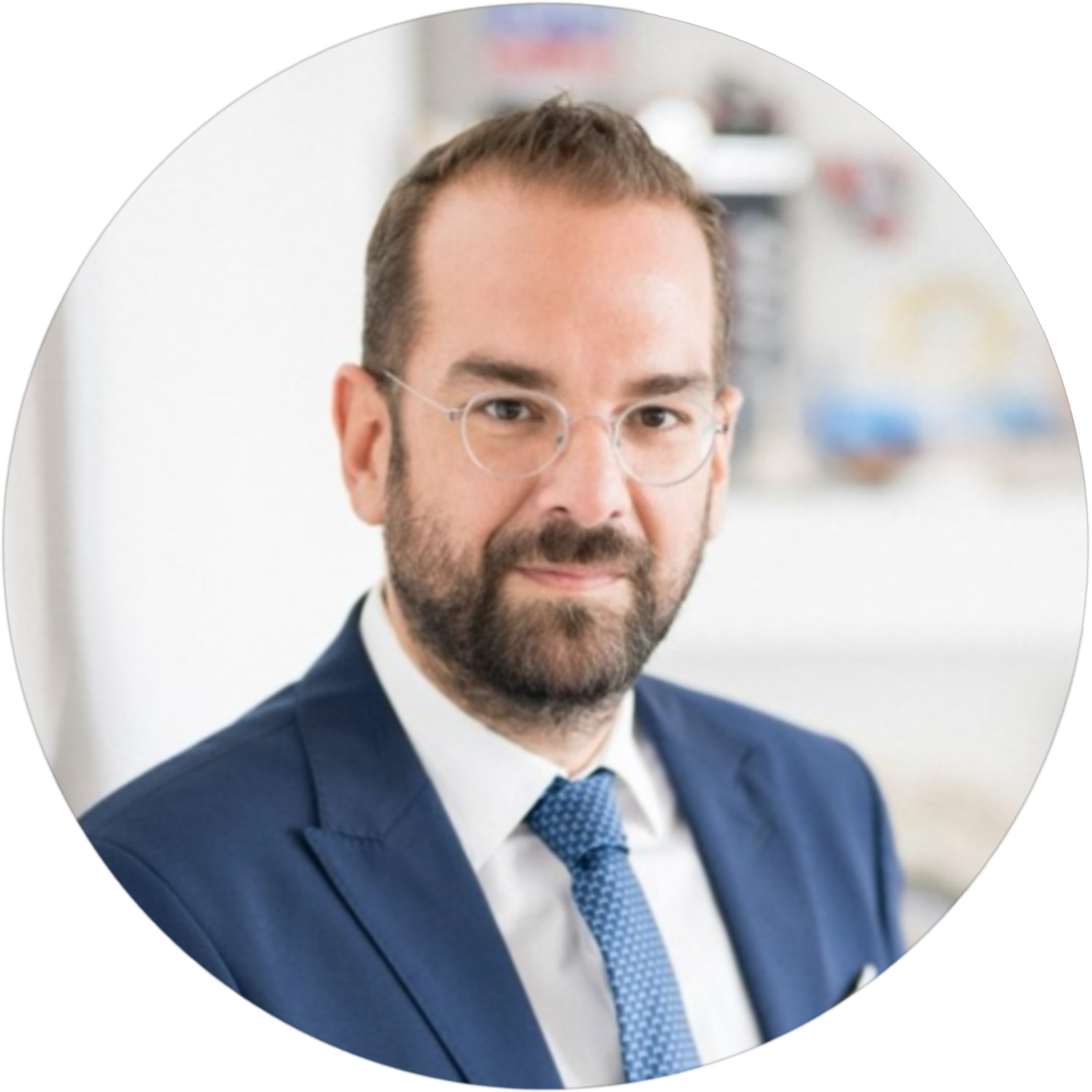
Meeting with Nektarios Farmakis, Regional Governor of Western Greece
Scientific innovation does not take place in isolation. Its responsible development also depends on how scientific knowledge informs public decisions and how complex issues are communicated to the people they affect. To explore this relationship, we met with Mr Nektarios Farmakis, Regional Governor of Western Greece. We wanted to understand how scientific expertise contributes to public decision-making when uncertainty is involved and how public institutions communicate scientific issues to citizens. His perspective helped us look beyond the scientific development of ICHNOS and examine the wider institutional and societal context in which emerging biotechnology may eventually be applied.
ICHNOS explores a biotechnology-based system with potential future applications across different sectors. While developing such a system requires scientific rigour, responsible innovation also involves understanding how emerging technologies are interpreted and discussed beyond the research environment.
We therefore wanted to explore how scientific expertise contributes to public decisions, particularly when uncertainty is involved. We were interested in the role of scientific experts in identifying possible solutions and in how their recommendations are considered alongside practical constraints and institutional responsibilities.
We also wanted to understand how public institutions approach the communication of scientific issues to citizens. When topics involve specialised knowledge or public health, communicating the underlying evidence clearly becomes essential to meaningful public understanding.
Meeting the Regional Governor offered an opportunity to examine these questions at the level of regional leadership. For ICHNOS, this meant considering how a future contribution would need to be understood alongside public needs, evidence, available resources and institutional responsibilities.
Regional Governor Farmakis emphasised the importance of consulting relevant scientific experts when decisions involve specialised scientific questions. Their knowledge can help identify possible solutions and provide an evidence-based foundation for evaluating different approaches.
However, scientific recommendations must also be considered within the circumstances in which they would be implemented. Feasibility, cost, institutional constraints and the management of public resources can all influence the final decision. This highlighted an important distinction: scientific expertise informs the available options, while public authorities must also consider the practical conditions and responsibilities involved in putting them into practice.
The discussion also highlighted the challenge of communicating scientific information to citizens. When scientific issues have implications for public health or society more broadly, specialised terminology can make important information difficult to understand. Effective communication therefore requires more than presenting accurate information. It also requires making that information accessible without compromising its scientific meaning.
Together, these insights helped us understand how scientific evidence, institutional decision-making and public understanding intersect. They showed us that the relationship between science and society involves not only producing reliable knowledge, but also considering how it can be interpreted, communicated and used within different contexts.
The discussion reinforced our approach to communicating ICHNOS beyond a specialised scientific audience. Rather than focusing exclusively on the biological mechanisms underlying our system, we aim to explain its purpose, potential applications and limitations through clear, accessible and evidence-based information.
This is particularly important when discussing potential applications of ICHNOS. Scientific promise should not be confused with demonstrated benefit. Responsible communication requires distinguishing between what a technology is designed to do, what its current development supports and what remains to be investigated.
For ICHNOS, this means presenting the scientific rationale behind our system alongside an accurate account of its current scope and potential future applications. We aim to make the underlying science understandable without overstating the capabilities of our technology or presenting future possibilities as established outcomes.
The discussion also encouraged us to consider communication from the perspective of its audience. Explaining biotechnology responsibly means anticipating what non-specialists need to understand, rather than assuming that presenting scientific information is sufficient in itself. This perspective informed our broader approach to making our work accessible while preserving its scientific accuracy.
The meeting with Mr Farmakis broadened our understanding of how scientific knowledge moves beyond the research environment and enters public life. By engaging with the Regional Governor, we gained insight into the institutional context in which scientific expertise may inform public decisions and the practical considerations that shape how knowledge is translated into action.
This helped us recognise that responsible innovation requires an understanding of more than the technology itself. It also involves understanding how public institutions engage with scientific expertise, how decisions are shaped by different responsibilities and constraints and how scientific issues are communicated to the citizens they affect.
This institutional perspective added an important dimension to our Human Practices journey. It encouraged us to consider both sides of the relationship between science and society: how scientific knowledge can contribute to public decision-making and how institutions can help make complex scientific issues understandable to the public. These considerations reinforced our commitment to communicating ICHNOS transparently, particularly when discussing its potential applications.
Ultimately, the meeting helped us place our project within a broader societal context. Responsible innovation depends not only on developing sound scientific solutions, but also on understanding how science, public institutions and citizens engage with one another.

Meeting with Anna Mastorakou, Deputy Regional Governor of Public Health
Scientific progress matters beyond the laboratory. For emerging technologies to be understood, people need opportunities to connect scientific information with real-life situations and engage with the questions it raises.
With this in mind, we met with Ms Anna Mastorakou, Deputy Regional Governor of Public Health, to explore how public health communication could shape our Human Practices activities. The discussion helped us define a more participatory approach to science communication, focusing on accessible explanations, relatable examples and interactive educational activities, such as quizzes and decision-making exercises, to help audiences engage with ICHNOS and understand both its potential applications and current limitations.
ICHNOS explores a biotechnology-based approach to detecting cellular stress, with potential future applications across different sectors that require further development and validation. As we considered how to present our work beyond the scientific community, we recognised that explaining the underlying mechanisms would not necessarily help everyone understand why the research matters or what responsible development involves.
We wanted to understand how public health communication could help bridge this gap. In particular, we explored how educational activities could make unfamiliar scientific concepts easier to understand and encourage people to think critically about prevention, safety and emerging technologies.
We also sought to understand how researchers can communicate potential benefits without creating unrealistic expectations. This was particularly relevant to ICHNOS, whose future applications remain subject to further validation. Our aim was to identify principles that could help us communicate our work accurately while making it accessible to people with different backgrounds and levels of scientific knowledge.
A key insight from our discussion was that effective public education depends not only on the information communicated, but also on how people experience and engage with it. Ms Mastorakou highlighted three complementary approaches that can make public health communication more meaningful.
These perspectives helped us recognise that providing accurate information is only one part of public education. Communication also needs to give people the context and opportunity to make sense of what they learn.
The most important outcome was a shift in how we understood the purpose of public engagement. We moved beyond thinking of communication as a way to explain ICHNOS and began considering how people could actively engage with the science behind it.
This changed the questions we asked ourselves when thinking about our Human Practices activities. Instead of focusing only on what information we wanted to present, we began paying greater attention to what an audience might find difficult to understand, which examples could make an idea more relatable and how an activity could encourage questions and reflection.
Ms Mastorakou's emphasis on interactive and experiential learning reinforced the value of designing communication around the audience rather than expecting the audience to adapt to the science. Her advice also highlighted the importance of accessible language, particularly when discussing technologies whose mechanisms and possible applications may be unfamiliar to the public.
This perspective was especially relevant when presenting ICHNOS and its potential applications. We recognised the need to distinguish clearly between what our system has demonstrated and what we hope it may achieve in the future. Communicating potential benefits alongside current limitations is essential to maintaining scientific accuracy and avoiding expectations that exceed the available evidence.
The discussion therefore influenced more than our choice of words. It shaped our understanding of what responsible science communication should aim to achieve: not simply making research easier to explain, but making it easier for people to understand and engage with.
Our discussion with Ms Mastorakou strengthened our understanding of the relationship between public engagement and responsible innovation. Trust cannot be secured simply by making scientific information available. It requires communication that is understandable, transparent about uncertainty and open to questions.
For ICHNOS, this means presenting our research in a way that makes its purpose and potential relevance clear while remaining honest about its current stage of development. It also means recognising that different audiences may need different explanations and opportunities to engage with the science.
This insight connected our project with a broader responsibility towards society. Public engagement is not simply the final step in presenting research. It is an opportunity to support informed discussion about emerging biotechnology, the possibilities it may offer and the responsibilities that accompany its development.
Our key takeaway was a change in the question guiding our approach: from "How do we explain ICHNOS?" to "How do we help people understand and engage with the science behind it?" This became an important principle in our Human Practices journey, reminding us that responsible innovation involves both developing scientific solutions and communicating their potential and limitations in ways that people can understand.
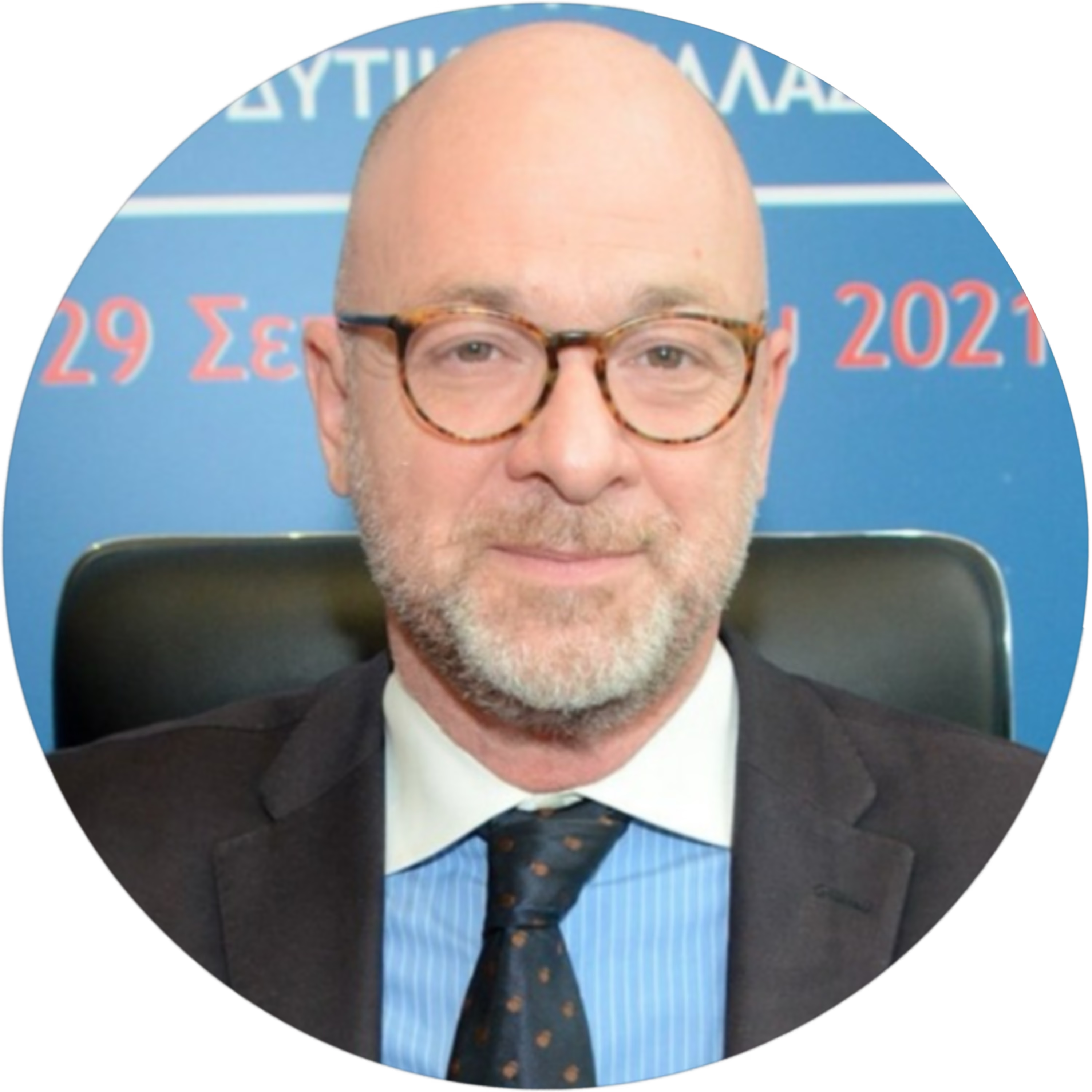
Meeting with Panagiotis Papadopoulos, Deputy Regional Governor for Entrepreneurship, Research and Innovation
Developing an innovative scientific solution requires considering not only its scientific foundations, but also the needs it could address and its potential relevance to society. With this in mind, we met with Mr Panagiotis Papadopoulos, Deputy Regional Governor for Entrepreneurship, Research and Innovation, to discuss the potential future applications of ICHNOS and the challenges involved in bringing scientific research closer to society. The discussion addressed the innovation behind ICHNOS alongside the need for its future contribution to be useful, accessible and safe for society, while recognising that further development and validation are needed before its potential applications can be realised.
We wanted to understand ICHNOS within the wider research and innovation landscape. Its biotechnology-based approach to cellular stress requires further development and validation, raising questions about how to present an emerging solution realistically in relation to its current capabilities and future prospects.
Given Mr Papadopoulos’ role, we explored the practical challenges facing research teams and how scientific novelty relates to the needs a technology addresses. For ICHNOS, we asked what would make its retained information useful, understandable and safe in a future application.
At the same time, we wanted to examine how innovation relates to society. We were interested in the role of public trust in the acceptance of emerging biotechnology and how researchers can communicate unfamiliar scientific concepts without overlooking questions of safety, limitations and responsible use.
These questions brought together two aspects of our Human Practices journey: understanding the potential of ICHNOS beyond its scientific foundations and recognising our responsibility to make that potential accessible and meaningful to people outside the research environment.
Mr Papadopoulos encouraged us to assess ICHNOS’s innovation through its potential usefulness, accessibility and safety for society. Its value depends on the problem addressed and the context of use alongside scientific novelty. This prompted us to explain why ICHNOS is being developed and what its proposed applications could mean in practice, alongside its biological mechanisms.
The entrepreneurial perspective brought attention to practical relevance, possible uses and development challenges. For ICHNOS, this meant exploring applications alongside the development and validation required before practical use could be established.
Another important aspect of our discussion was the relationship between innovation and public trust. Emerging biotechnologies can be difficult to evaluate when their underlying concepts are unfamiliar. Clear communication about their purpose, potential and limitations is therefore essential to informed public engagement. Responsible communication should neither obscure the scientific complexity nor create expectations that exceed the available evidence.
Together, these perspectives helped us connect scientific development with entrepreneurial awareness and social responsibility. We began to see these not as separate considerations, but as complementary parts of thinking responsibly about innovation.
The discussion encouraged us to examine ICHNOS through the needs it could address and the value its retained information might offer. Alongside explaining its scientific rationale, we considered what would make that information useful to future users and how its purpose, limitations and safe interpretation should be communicated.
Our Open Lab Day gave the public opportunities to encounter university research. Educational activities with children with special educational needs and engagement with older people in a nursing home extended this outreach to communities with different needs and experiences, including those less familiar with science.
These activities made accessibility part of our science communication. Adapting information and participation to different audiences helped make research approachable and create dialogue beyond academic settings.
ICHNOS’s novelty lies in retaining previous cellular stress information, whose value depends on addressing a meaningful need and supporting a useful decision. We therefore considered its proposed uses alongside evidence of reliability, accessible information and safeguards for interpretation.
The meeting encouraged us to consider ICHNOS as a scientific system needing validation, a potential solution whose relevance must be assessed and an innovation requiring responsible communication to society.
An entrepreneurial perspective encouraged us to examine needs, practical questions and the work required to assess future relevance alongside scientific novelty. This recognised the complementary demands of scientific progress and practical value without treating ICHNOS as market-ready.
Our Open Lab Day and outreach with children with special educational needs and older people connected innovation with different communities. These activities reflected our view that accessible public engagement should accompany development rather than wait until a technology is ready for use.
Ultimately, the meeting expanded our perspective on the responsibilities of a research team. Innovation requires not only scientific ambition, but also the ability to assess potential value realistically, communicate it responsibly and consider the needs of the society it aims to serve.
Looking back on the development of ICHNOS, we reflect on how the perspectives we sought influenced our decisions, broadened our understanding and revealed the limitations of our approach. Using the six dimensions of the iGEM Human Practices Maturity Model, we examine how we connected scientific design with the contexts, people and potential consequences surrounding our project. Rather than measuring our progress by the number of consultations, we assess what changed through these interactions, which perspectives we incorporated and what remains unresolved.
Developing ICHNOS required us to revisit the assumptions behind our design. Expert feedback challenged the feasibility of our initial memory mechanism and informed our subsequent consideration of stress sensing, circuit construction and fluorescent reporting. We used these discussions to reassess our approach and examine alternatives in relation to the project's objectives and technical constraints. Documenting the reasoning behind our decisions helped us trace how external perspectives informed the evolution of ICHNOS, while distinguishing design choices from questions that still required experimental investigation.
Through literature research and discussions with researchers, industry representatives and legal and bioethics experts, we explored the potential relevance of ICHNOS to different applications, such as biomanufacturing, cosmetics, food and nutrition and agriculture. These interactions helped us examine the challenges associated with each application and understand what further development would be required. However, our assessment remained based on published research and expert feedback, without experimental testing in these contexts. We therefore could not establish whether ICHNOS would work in practice or provide useful information for each application. Our progress lay in identifying these questions, rather than demonstrating the feasibility of the proposed applications.
We sought perspectives from researchers, application experts, public institutions, communities and other iGEM teams. Their contributions broadened our understanding of ICHNOS and its relationship with society. Different discussions brought scientific, practical, ethical and societal considerations and informed us about our project's objectives, technical capabilities and current stage of development. Thus, this process helped us recognise that the relevance of ICHNOS must be considered in relation to the needs and expectations of those who might eventually use, encounter or be affected by it.
Alongside exploring the potential benefits of ICHNOS for research and future applications, we examined possible risks and unintended consequences. Our considerations included laboratory hazards, possible misleading interpretations and questions surrounding containment and potential environmental use. Expert feedback helped us examine these concerns and consider the precautions, safeguards and evidence needed for responsible development. We therefore approached potential impact both as a question of what ICHNOS might enable and of what would need to be established to use its outputs and pursue its applications responsibly.
Human Practices informed decisions across our scientific work, safety practices and engagement with society. Expert feedback led us to reconsider the original memory mechanism, refine construction and measurement strategies and reshape proposed applications. Feedback also shaped how we approached safety and engagement beyond the laboratory, helping us turn identified needs into practical initiatives and adapt our work to the people involved. We translated what we learned into changes in both ICHNOS and our wider work, retaining unresolved questions as directions for further investigation.
Throughout the development of ICHNOS, we distinguished what we had designed and investigated from what remained to be demonstrated experimentally. The recording window, the reliability of temporal interpretation, the value of the information produced and the suitability for other biological systems or application contexts remain central questions for evaluation. Recognising these limitations helped us identify the evidence needed to assess the system more rigorously.
Creativity in our Integrated Human Practices approach meant looking beyond conventional forms of consultation to explore new ways of understanding ICHNOS and its potential role in different contexts. We drew parallels between concepts and connected perspectives across disciplines, using these connections to reconsider our understanding and communication of our project. Moreover, we explored alternative ways and used collaboration as an opportunity to adapt our approaches and address emerging challenges. By combining interdisciplinary thinking, peer collaboration and context-specific exploration, we aimed to make our Human Practices process an active part of the project's development.