of preclinical research is estimated to be irreproducible.1

Accessibility
Text size
A synthetic biology platform that gives cells a memory of the stress they have survived.
Every cell has a story.
The problem
Cells constantly face stress. They may recover and appear normal again, but as the signals fade, so does the record of what happened, how intense it was and when.
Researchers are left with a snapshot of their present.
Why it matters
of preclinical research is estimated to be irreproducible.1
estimated annual global cost of experimental failures.2
Cellular stress is not the sole cause of irreproducibility. But when the history of a biological sample goes unrecorded, researchers can miss context that may help explain variable results.
Our idea
What if a cell could preserve a trace of stress, even after the signals had faded?
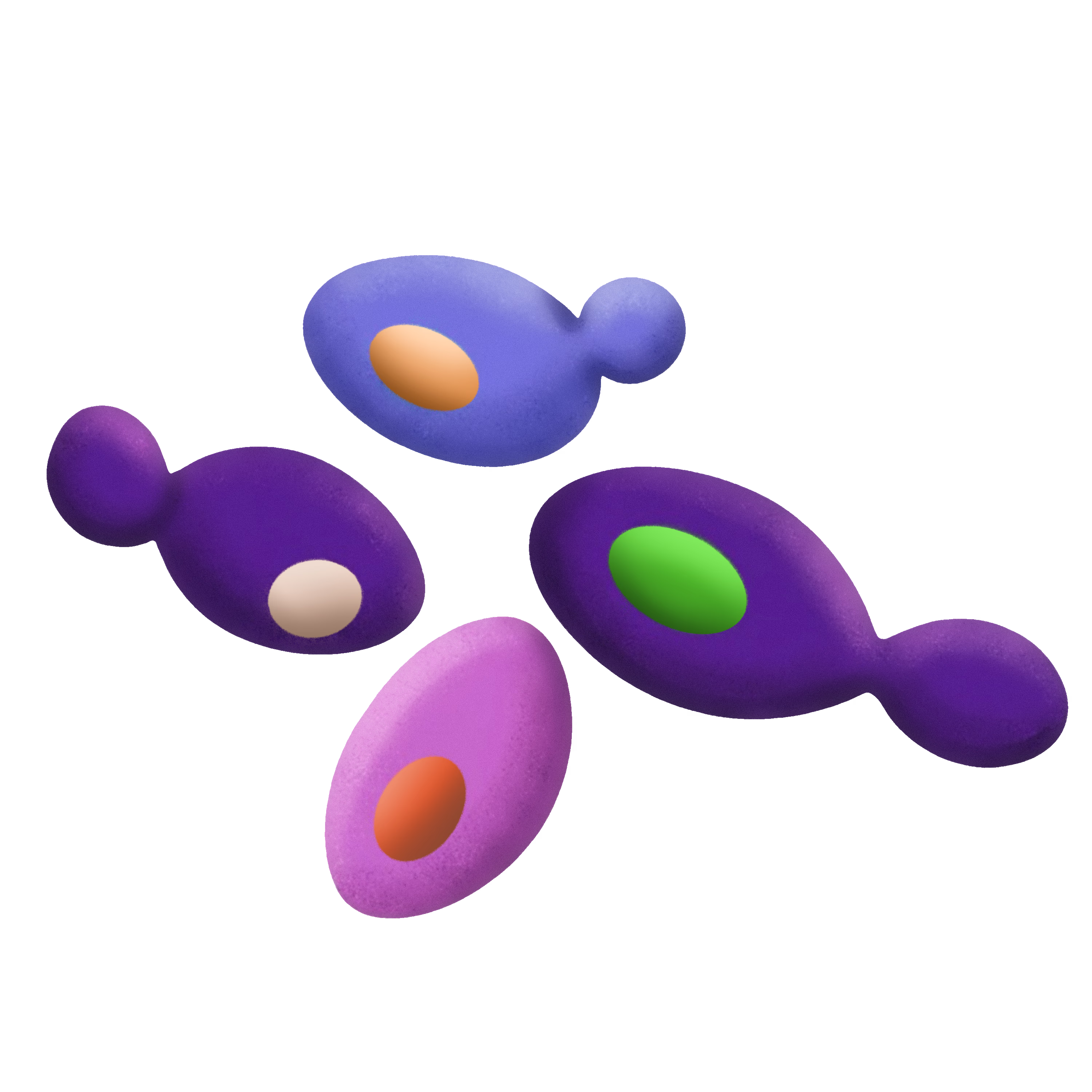
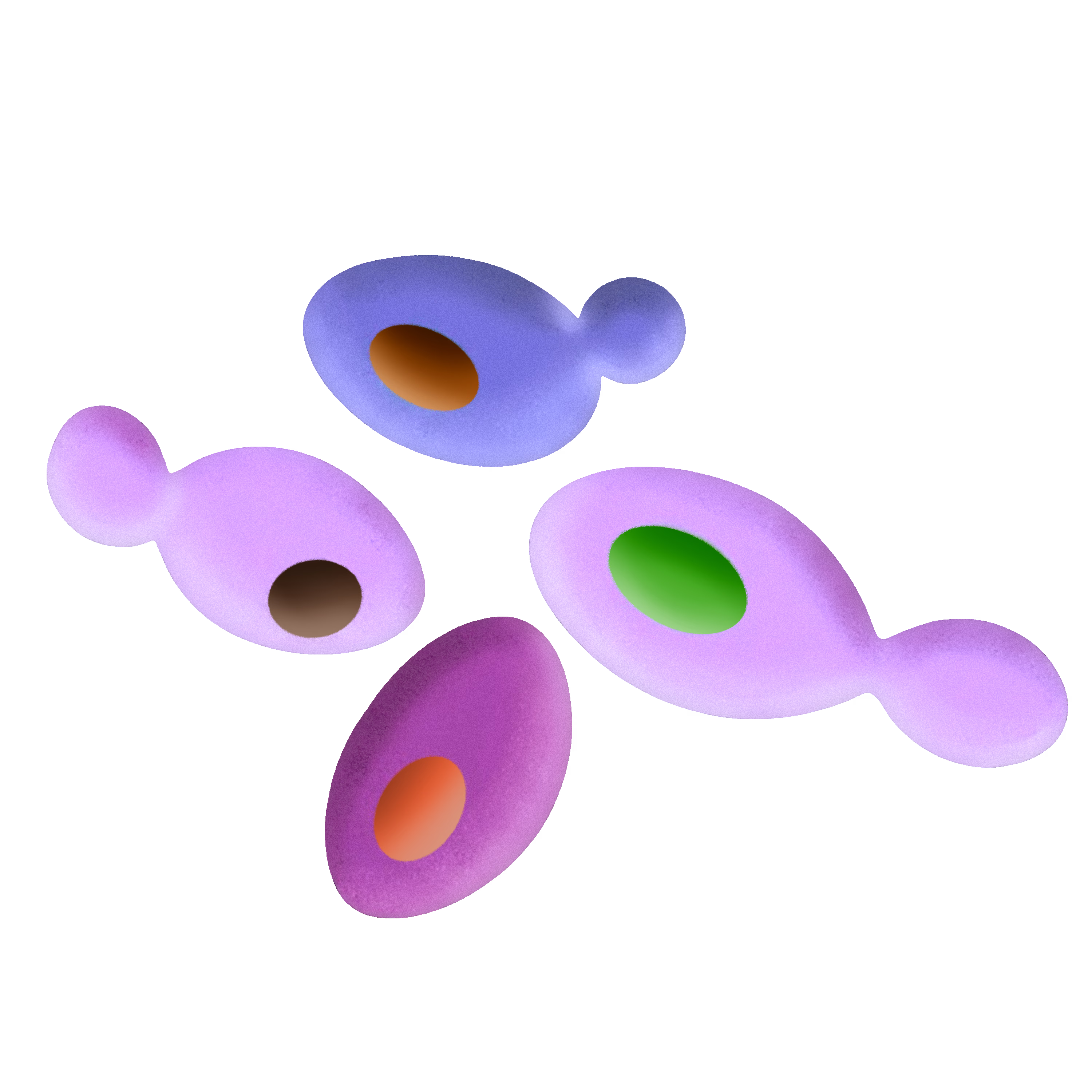
ICHNOS aims to turn a transient biological event into a lasting, readable record, revealing:
How it works
ICHNOS combines stress sensing, a TIP–TetR feedback circuit and a tandem fluorescent timer in budding yeast (Saccharomyces cerevisiae). Together, these modules are designed to preserve information about cellular stress intensity and timing for later analysis.
Promoters responsive to oxidative stress or disruptions in ER homeostasis drive production of TIP, a peptide that activates the downstream circuit. A copper-inducible promoter provides an alternative input for controlled testing.
TIP binds and inhibits TetR, relieving repression and allowing fluorescent reporter production. TetR negative feedback helps make the dose–response more proportional, supporting estimates of stress intensity.
Fast-maturing sfGFP and slower-maturing mCherry form a tandem fluorescent timer. Their red-to-green ratio changes as the reporter proteins mature. ICHNOS-Vail combines fluorescence measurements with mathematical modelling to estimate stress magnitude and timing.
Built to adapt
ICHNOS is designed as a modular platform, not a single-use sensor.
Swap the promoter to target a different stress input.
Signal processing and temporal readout stay in place.
Fluorescence intensity and colour ratio encode information about stress magnitude and timing.
The architecture is intended to let future users adapt the sensing layer without redesigning the downstream circuit from scratch.
The possibilities
where could reading a cell’s history make a difference?








The trace remains