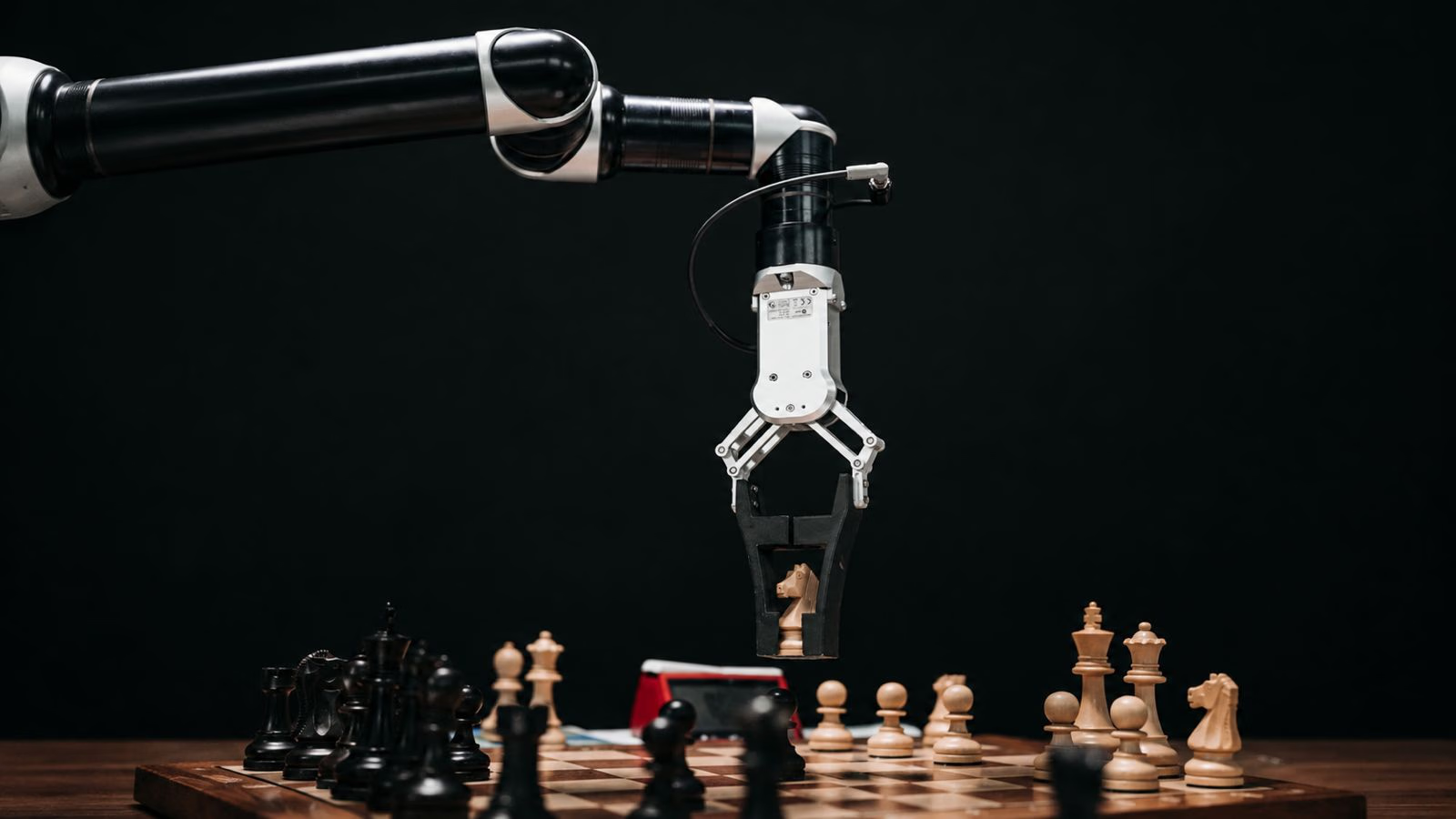
Overview
For the dry-lab part of our project we built iGEMforge, a plugin for Claude Code made of four skills: scientific evidence checking, experimental design, mathematical modelling and wiki animations.
We did not design it as an output generator, a black box that yields a response and nothing else. We designed it as an educational assistant, in other words, it should help any user, ranging from an iGEMer to any sort of researcher, to understand what they are doing, and let them adapt the result to their own needs. Even though it is especially designed for iGEM, it can be used as a template and tailored to other needs, such as specific wet lab work in more professional environments, or other fields of research. Furthermore, what we aimed for is consistency: the agent should return the same kind of structured answer, with its sources, its assumptions and what is left to check, every time a skill is used. In every case, the plugin is a tool in the researcher's hands: the researcher decides, checks and stays responsible for the work, and the plugin helps them do it better, not instead of them.
We built and tested iGEMforge during a Design-Build-Test-Learn cycle, and we describe each phase below; we then started a second cycle, applying small changes in order to improve the outputs. As the results show, the plugin does not always reach these goals yet, and we did not end up using it for Vinesys decisions, for the reasons we give in Limitations and risks.
Why we built it
In Spain, more than 38% of the population uses generative AI in their daily routines and 18% use it at work, according to data from the National Statistics Institute (INE) reported by El País.1 The 2026 AI Index Report from Stanford University puts the figure for university students at almost 4 in 5.2
However, generative AI is not a flawless tool. Its stochastic nature makes it prone to hallucinations, logical inconsistencies and unverified outputs.3 Applied to rigorous academic research, this is not a problem that can be overlooked: for 2025 alone, one estimate puts the number of hallucinated citations at over 145,000 across 2.5 million papers on arXiv, bioRxiv, SSRN and PubMed Central.4
We saw the same failure modes in our own dry lab work:
- claims written without a verifiable source behind them
- models whose parameters came from nowhere in particular
- static figures used to explain biology that is inherently dynamic, or that do not fully capture the whole circuit or biological system
This is what pushed us towards building a tool that could help us use AI more carefully. We always aim to keep a person in the loop, checking what the AI does, rather than leaving it working on its own without supervision, and we believed that a tool like this could help us improve our results.
From the Vinesys dry lab we decided to develop a plugin for an agentic harness, specifically Claude Code, made by Anthropic, one of our sponsors. An agentic harness is the program that surrounds an AI model so it can act and not only answer: it lets the model read and write files, run code and use tools, and keep going step by step until the task is done.
What a plugin is, and what we chose to build
Before designing anything we had to understand what a plugin is, what it is for, and what structure it needs. Throughout this page we use agent for the AI instance and user for the human using it.
An AI plugin is a folder with different components that an agent can use to fulfil specific tasks:5
Skills
Instructions in the form of a Markdown file (.md). The agent always has a short description of each skill in view, so it knows what the skill is for, and it loads the full instructions only when it decides that the skill is relevant to what the user is asking. A skill can also carry scripts, such as Python files (.py), which the agent runs when the instructions call for them.
Agents
Files that define subagents. A subagent is a second instance of the agent that the main one starts up, with narrower instructions and a context of its own, and it does one piece of the work and hands back only the result, so the main agent can delegate instead of holding everything at once. Several can run at the same time.
Hooks
Automated triggers that intercept the agent loop at specific points, for example on every document edit, and force a given command at that point. This command could be writing a document with all modifications that were done, or sending a specific message to the user.
MCPs
Tools from external servers, databases and files. These can range from protein and biological databases to access to your own mail account. They can give the agent more autonomy, but that autonomy is also a risk: the agent could act on external systems, such as your mail account, without the user checking each step.
This structure allows very complex setups inside a single unit, and since it can be customised as much as we want, we saw an opportunity to build one that would actually help us in our project.
We built skills only. We did not create subagents or hooks, because they were beyond what we could learn and test in the time we had. We did not build MCP tools either, for a second reason: Claude for Life Sciences already gave us access to many of the databases and tools we needed, such as PubMed, the Scholar Gateway developed by Wiley, Benchling and BioRender.6
Cycle 1
Design phase: from the idea to the structure
For each skill we drafted what we wanted to implement and what instructions we wanted the agent to follow, and those outlines became our requirements.
These are the four skills that we wanted to develop:
scientific-evidence: helps the researcher check claims against retrievable literature, so that every claim carries a verifiable source.experimental-design: helps the researcher build and review experimental plans, insisting on explicit controls and correctly counted replicates.mathematical-modeling: helps set up and document models, requiring a source for every parameter and a sensitivity analysis.bio-wiki-animations: helps produce animated figures for the wiki, keeping hypothesised steps visibly marked as hypotheses.
All four skills came from ideas we had and problems we came across during the development of our own project, some of which we listed above.
We also set out, before building anything, what the outcome of the test phase could be. Comparing the model with the skill against the model without it leaves three possibilities:
The model with the skill performs better
The skill is genuinely useful for the task, so it is something we can implement and distribute.
Both perform equally
The base model already gives good answers for that topic, and the skill adds nothing for that pipeline.
The model without the skill performs better
The skill is confusing enough to make the model produce worse answers, probably drifting off topic.
In order to assess how the plugin performs, we also need to bear in mind that, just by reading the instructions and implementing them, there is higher token use and the usage limits are reached faster. Hence, the use of a skill has to be well justified and clearly improve the results.
The last part of the design was leaving a project that can be useful for future teams from around the globe: the whole plugin is a folder, so it can be handed down to future iGEM UPF teams as it is.
Build phase: tailoring the skills to our needs and to fit the model
The build phase was about turning those outlines into files an agent can actually load, tailored both to our needs and to the model that would be reading them. A requirement written for a human reader only works for an agent if it says what to do, in what order, and what to do when something it expects is missing.
Each skill ends up as a single Markdown file inside the plugin folder, with two parts that do very different jobs. The header carries the name and a short description, and that description is all the agent sees when it decides whether the skill has anything to do with what the user just asked. The body holds the full instructions, and the agent only reads it once it has decided that the skill needs to be used to fulfil the task in front of it.
None of us had written skills before, so we wrote the requirements of each skill and gave them to Claude Sonnet 5, which drafted the text and brought all the skills to one consistent style. We directed the work and reviewed every skill section by section, checking that it was understandable and that it did what we had asked for. iGEM's Code of Conduct requires work to be described accurately, original work to be distinguished from work done by others, and external assistance and resources to be disclosed transparently.7 Its AI Policy for Teams adds that the work presented must reflect the understanding and decisions of the team, that AI is disclosed through the Attribution Form as a tool and never as a team member, and that the team verifies what the AI produces.8
What we could check at this stage was whether a skill read well: whether the instructions were coherent, whether they pointed at things that actually existed, whether a person could follow them, etc. What we could not check was whether an agent following them produces a better answer than an agent without them, which is what the test phase is for.
Test phase: how do we know whether it makes a change or not?
The question here was simple: does the skill make a difference or not? To answer it we ran the same prompts with and without each skill, in two rounds, the second using the claude plugin eval tool that Claude Code includes for this purpose.9
The test set had three kinds of case:
Real cases
Two of our own protocols, where we already knew what a good answer looks like.
Synthetic cases with planted flaws
We introduced the error ourselves, so we knew the right answer in advance.
Silence cases
Questions where a skill should stay out of the way, to check that it does not interfere with unrelated work.
A case is one test prompt, a task we give the agent: a realistic prompt that a team member could type. A run is one attempt at a case. We compared two conditions, which we call arms: one with the skill and one without it.
In the first round we wrote 11 tests for three skills: 4 for experimental-design, 4 for mathematical-modeling and 3 for bio-wiki-animations. scientific-evidence was not part of this round. Each test was run once with the skill and once without it, with the same model and prompt.
Each answer was graded against written assertions: short statements, written before the test, that a good answer has to meet (for instance, that a plan includes a negative control). Claude helped us draft them from what we considered a good answer, and we reviewed every one of them before using it. Each assertion was then checked against the answer, running the code and looking at the numbers and figures. The detail of every check, with the evidence behind it, is kept in the evaluation files.
In the second round we used the eval tool with 28 cases: 7 for experimental-design, 7 for mathematical-modeling, 8 for scientific-evidence and 6 for bio-wiki-animations.
Every case was run three times in each arm, so each case has six runs. Each run is scored from 0 to 1 by another AI model, an LLM-as-a-judge, against a rubric we wrote ourselves, and for each arm we report the mean of its three runs. The two rounds use different methods, so their numbers cannot be compared directly.
Learn phase: what did we realise from these results?
After testing, we realised some things that we had not come across when revising the SKILL.md files:
Three of the four skills sometimes stopped and returned nothing, waiting on a confirmation from the user. The problem was never that they asked, but that the question replaced the work instead of accompanying it. A bad answer can be read, checked and corrected by the researcher, but a stop leaves them with nothing to check after the tokens were spent.
On open-ended build tasks, where the question is broad and there are many ways to answer it badly. On narrow, well-defined tasks both arms did about as well.
A skill sometimes fails to start on a prompt that clearly matches it.
In the first round, with a single run per arm, the skills met more of the written assertions than the base model:
experimental-design: 20 of 20 assertions with the skill, against 16 of 20 without it.mathematical-modeling: 21 of 22 against 16 of 21 (one assertion did not apply to one answer).bio-wiki-animations: 12 of 13 against 5 of 12.
They also cost more: with mathematical-modeling the agent used 309,343 tokens against 224,460 without it, and with bio-wiki-animations 467,746 against 201,201.
In the second round, with three runs per arm and a judge, most of that difference disappeared. In the table, a positive difference means the agent scored higher with the skill than without it, and a negative one means it scored lower:
| Skill | Cases | Mean difference |
|---|---|---|
experimental-design | 7 | −0.11 |
mathematical-modeling | 7 | No clear difference |
scientific-evidence | 8 | +0.04 |
bio-wiki-animations | 6 | Mixed: higher with the skill in 2 cases, lower in 1 |
In other words, on average no skill clearly beat the base model in this round, which already answered most cases well. The clearest differences went both ways: experimental-design stalled on a plan designed from scratch, while bio-wiki-animations did better than the base model when it made a figure from scratch.
Example: in an open follow-up case, outside the main set, we asked whether a genetic toggle switch would hold its state for six hours. With mathematical-modeling loaded, the agent ran a stochastic simulation in Python and returned a sourced parameter table and a sensitivity analysis. Without it, the model gave a qualitative account, and in one run of three no number at all.
Full response
How to read these numbers
mathematical-modeling, and each answer is scored on two rubric claims plus a check for whether the agent actually computed anything. The without-skill pane can be switched between the run that failed the rubric and the run that passed it.The sample is small, three runs per arm in each case. Most cases are synthetic, written by us with the flaw planted on purpose, so they test whether a skill catches something we already knew was there. What we report are findings from internal testing, not a benchmark.
Cycle 2
Design phase: a rule against stalling
We decided to solve the stall bugs in the second iteration of the engineering cycle. The fix was a single rule, written into the skills themselves: when something is unclear or a source is missing, state the assumption or the caveat and continue.
By adding this simple rule, the agent tries to deliver its best attempt with all assumptions stated and carries on working. Those labelled assumptions are the part a user learns from, and they are also what makes the answer safe to disagree with. What the agent does not do yet is turn those assumptions into questions to confirm, which will be commented on in the following sections.
We preferred a draft with its assumptions stated over a list of questions for three reasons. First, seeing a concrete result and saying “not this, change it” is much easier than deciding in the abstract. Furthermore, a draft shows what matters: many times we only realise what is important once we see a result, and then we correct only what is needed. Lastly, it fits what iGEM expects of us. iGEM's AI Policy for Teams asks teams to verify and understand what the AI produces, including the assumptions and limitations of models.8 When the assumptions are written down in the answer, the user can review them one by one. When they stay hidden, they can slip into the work without anyone checking them.
Therefore, we made this one change to the three skills that stalled and left scientific-evidence as it was. We kept the change deliberately small and did not rewrite any skill.
Build phase: one fix prompt for three skills
We gave that rule, together with the test findings, to a separate AI agent, also Claude Sonnet 5, as a written fix prompt. The agent edited the three affected skills, experimental-design, mathematical-modeling and bio-wiki-animations, and we checked each change against the files before re-testing.
Writing the fix as a prompt instead of working through it in conversation had a practical reason: the same instruction reached all three skills in the same words, so we made sure that the instruction could get to the skill and be understood correctly. The division of labour was the one we had settled on in cycle 1, with us deciding what had to change and a model making the edit.
Test phase: what we measured
The test asks, for each skill, whether the fix removes the stall without making the answers worse. For experimental-design we expected a plan delivered in every run, with the assumptions stated, instead of a list of questions. For bio-wiki-animations we expected the figure file to be created, with the hypothesised step shown as such. The improvement we hope for is the same in both: the researcher receives something to read, check and correct.
We re-ran the cases of these two skills that had failed in cycle 1, three times with the skill and three times without it. For mathematical-modeling we ran its seven cases, three times per arm, but the fix itself had no dedicated test. We do not include scientific-evidence because it never stalled and was not edited. Since the skills changed between cycles, these results cannot be compared with those of cycle 1.
In the learn phase below we summarise the results and show only one example in detail.
Learn phase: what can future teams use and how could it be improved?
In general, the fix did what we asked of it where we could measure it: the skills stopped returning nothing and delivered something the researcher can read, check and correct. The fix stopped the skills from being worse, but it did not make them substantially better than the base model.
experimental-design
For instance, using the experimental-design skill, the prompt asked for an experiment designed from scratch. Before the fix, the skill asked five questions and delivered no plan in any of three runs, and the single-run trials we did before had failed too. After the fix, it delivered a plan in 3 of 3 runs.
A warning about this example: the plain model, without the skill, was already good enough and passed 2 of 3 runs. So the fix did not make the skill better than the base model, it only stopped it from being worse.
The lesson we take from this cycle is methodological rather than technical. Testing found problems that reading the skills would never have shown us: all four looked fine on the page, and three of them stalled in practice. Writing a skill and checking that a skill works are two different activities. The results also show that the base model can be good enough on its own for certain tasks.
Limitations and risks
We would rather be clear about what we did not do and about what can go wrong when using it:
Not validated in our project
With three runs per case and mostly synthetic cases, the evidence was too thin to rely on it for Vinesys decisions, which would go against iGEM's call to verify what the AI produces.8 We also did not test whether users learn from it.
Cost and model
It needs Claude Code, every skill that loads adds tokens, and it was only tried in Sonnet 5. Anthropic is one of our sponsors, but the choice of Claude Code was ours.
Wrong content and over-trust
The agent can still invent a citation, a value or an assumption, and a user can accept it without understanding it. The researcher has to check every source, number and assumption.
Privacy and installation
What the user writes goes to the model provider's servers, and a plugin runs with the user's permissions. Do not paste unpublished data, and read any plugin before installing it; ours has only Markdown skills and a couple of .py files.
Safety and official actions
A plan from the agent does not replace the safety review that iGEM requires, and the plugin never submits, signs or fills in anything for the user.10
Notes for future teams
What we leave behind is a folder. Install it and the four skills are available, and the agent should load each one on its own when a request matches it. Nonetheless, the user can still call it by its name when it is critical to use it.
What we would recommend to the team that picks it up:
The parts we did not build are still open
Subagents, hooks and custom MCP tools were out of our reach because we did not know how to make them, not because they would not help.
Test before you trust
Run the evals, and for anything you add, write cases with a flaw planted on purpose.
Give the assumptions back to the user
The skills state their assumptions and carry on, which is what stops them stalling. They do not yet ask the user to confirm them. Adding that, without bringing the stall back when nobody answers, is the clearest improvement we can point at.
Fix the triggering
Whether a skill loads is decided from the short description in its header, before the skill's own instructions are read. Therefore, the short description has to be optimised in order to be used when it is needed.
References
- El País. El uso de la inteligencia artificial para consultas personales casi duplica su uso en el trabajo [Internet]. El País; 2026 Sep 8 [cited 2026 Oct 11]. Available from: https://elpais.com/economia/2026-09-08/la-utilizacion-de-la-inteligencia-artificial-para-consultas-personales-casi-duplica-su-uso-en-el-trabajo.html
- Stanford Institute for Human-Centered Artificial Intelligence. 2026 AI index report [Internet]. Stanford University; 2026 [cited 2026 Oct 11]. Available from: https://hai.stanford.edu/ai-index/2026-ai-index-report
- Ji Z, Lee N, Frieske R, Yu T, Su D, Xu Y, et al. Survey of hallucination in natural language generation. ACM Comput Surv. 2023;55(12):248. doi:10.1145/3571730
- Zhao Z, Wang Y, Stuart T, De Vaan M, Ginsparg P, Yin Y. LLM hallucinations in the wild: large-scale evidence from non-existent citations [Internet]. arXiv; 2026 May 8 [cited 2026 Oct 11]. Available from: https://arxiv.org/pdf/2605.07723
- Anthropic. Claude Code plugins overview [Internet]. Anthropic; [cited 2026 Oct 11]. Available from: https://code.claude.com/docs/en/plugins/overview
- Anthropic. Claude for life sciences [Internet]. Anthropic; 2025 Oct 20 [cited 2026 Oct 11]. Available from: https://www.anthropic.com/news/claude-for-life-sciences
- iGEM Foundation. Code of Conduct [Internet]. iGEM Terms & Policies; 2026 May 26 [cited 2026 Oct 11]. Available from: https://igem.org/legal
- iGEM Foundation. AI Policy for iGEM Competition Teams [Internet]. iGEM Terms & Policies; 2026 Aug 20 [cited 2026 Oct 18]. Available from: https://igem.org/legal
- Anthropic. Plugin evals [Internet]. Anthropic; [cited 2026 Oct 11]. Available from: https://code.claude.com/docs/en/plugin-evals
- iGEM Foundation. iGEM Policy on the Responsible Use of Artificial Intelligence [Internet]. iGEM Terms & Policies; 2026 Aug 20 [cited 2026 Oct 18]. Available from: https://igem.org/legal