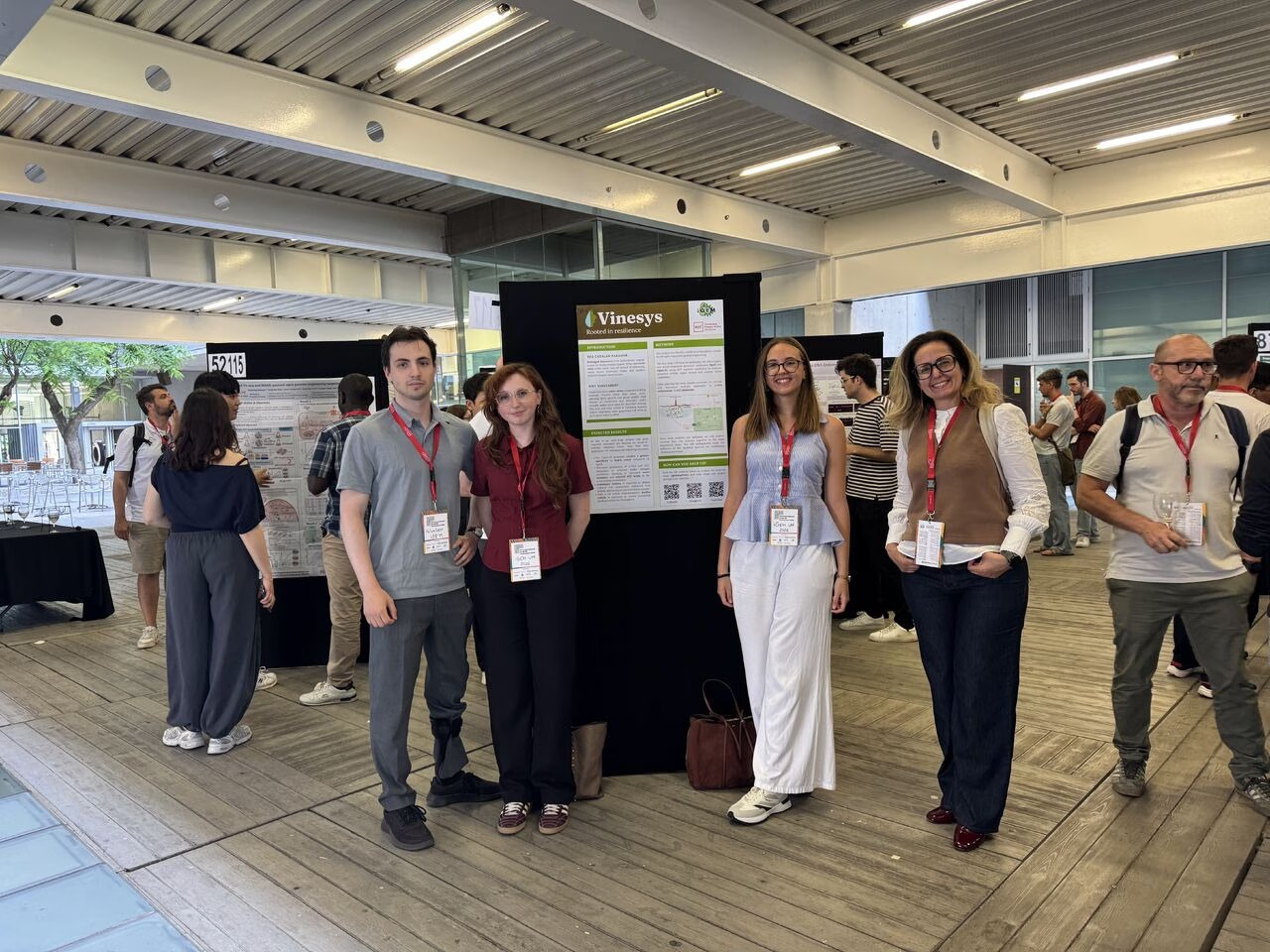
Curious about our education?
Every talk we gave, every activity we prepared, every conversation we had with our public... all of this started from the same question: what makes someone want to know about something? Not what makes them agree that synthetic biology is important or worth funding, but what makes them genuinely want to ask the next question themselves.
Curiosity is sometimes described as a fourth drive, alongside food, safety and belonging. It is the thing that, as far as we know, only humans do. It is integral to what it truly means to be a human. But it's not a given. It rises and falls depending on how the people around you respond to it. We set out to create a series of moments where someone's curiosity got a real response instead of a shrug.
It also meant being careful about what kind of curiosity we were aiming for. Diversive curiosity, the "what happens next" itch that gets you clicking one more link is easy to spark and just as easy to lose. Epistemic curiosity, the effortful, sustained hunger to actually understand something, is harder to build but it is what stays with someone after the talk ends. Most of our sessions started with the first kind: a live experiment, an unexpected fact, a "guess what happens", and tried to leave people with the second.
Where curiosity starts
To get us on the path to reach a true epistemic curiosity, we need a concrete method. To ask is to wonder. Wonder, as a noun, is what you feel when a real answer opens a bigger question instead of closing it. To leave people with curiosity, wonder is the engine.
Methodology: WONDER
By establishing a solid, guiding methodology, we can ensure people's wonder. We turned the main ideas we wanted to be present in our sessions into a six-step method applied to every session, where the last step feeds back into the first (just like DBTL cycles!).
-
We place the audience on the two axes below and identify the specific barrier we want to lower, such as jargon, confidence, access, language or cost. The session's language (Catalan, Spanish or English) follows from that choice.
-
Each session follows a general objective and two or three specific ones, written as an infinitive verb plus object and circumstances, each with a measurable indicator1,5. We define them before choosing activities2, pick verbs for the level of thinking we want3, and state what participants should be able to do afterwards in observable terms4.
-
Every session opens with a spark that makes people notice a question they didn't know they had, such as a live experiment, an unexpected fact or a "guess what happens". This is diversive curiosity, easy to trigger and easy to lose, so we use it only as a doorway.
-
The session then moves toward epistemic curiosity, the sustained wish to understand, by letting the audience's questions and prior knowledge visibly change what happens through challenges, games, debates or open questions. We teach real content along the way and aim to leave people with a next question of their own, not with agreement.
-
Every session has a before-and-after measure suited to the audience, at least one thing participants produce themselves, and a rubric completed within 24 hours. We report shortfalls alongside successes.
-
Within a day we write an activity summary, as is standard in leisure education6, covering the plan, what actually happened, what participants said and what we would change. The summary and materials go on the wiki so other teams can run the session without us.
The evidence and record from each session then feed back into W, deciding who we design for next.
WONDER is deeply rooted in educació del lleure (leisure education) methodology1. In Catalonia, scout troops are very common and many of our team members have been educating in these spaces for years. We've brought this dedication to educating beyond schools, and in interactive, proactive ways to every activity we've done.
| iGEM Education question | WONDER steps |
|---|---|
| Did the work promote mutual learning and dialogue? | N, D |
| Is it documented so others can build on it? | R |
| Was it thoughtfully implemented? | W, O, E |
| Will it enable more people to participate in synthetic biology? | W, O, D |
Kids
Teenagers and young adults
Adults
Seniors
Activity by activity
The most important activities we ran this season, one by one.
Starting from the roots: Talk at Col·legi Badalonès
- Date
- 10 June 2026
- Where
- Col·legi Badalonès, Badalona
- Who
- Three 5th-grade classes, 70 students in 8 groups
- Language
- Catalan
- Format
- 90-minute session with a hands-on experiment
Synthetic biology rarely reaches primary schools, and a 90-minute session on bacteria is a lot to ask of 10-year-olds.
Bring synthetic biology to an audience it rarely reaches, a primary school class, by letting 10-year-olds measure the effect our bacterium produces before they are told about it.
| Specific objective | Indicator | Result |
|---|---|---|
| To connect prior knowledge about water in their local river with water scarcity in farming. | Students refer back to their Besòs visit during phases 1 and 2. | Achieved. |
| To measure how much water different soils retain and reach the conclusion themselves. | The class identifies the soil with sponge as the one retaining most water before organisers confirm it. | Achieved. |
| To revise their own initial hypothesis giving a reason. | ≥50% of participants change or justify their hypothesis in the closing. | 7 of 8 changed their answer. |
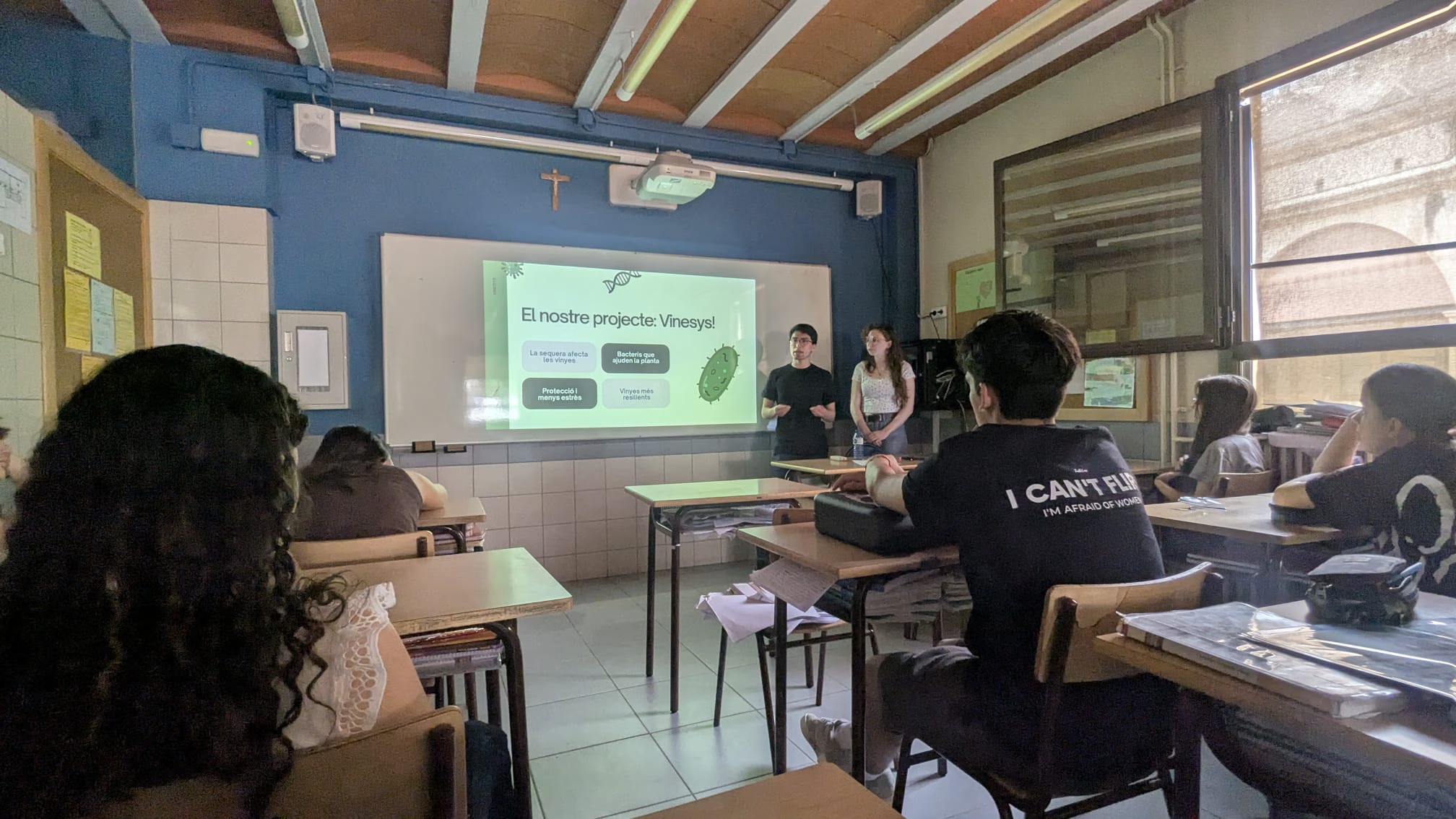
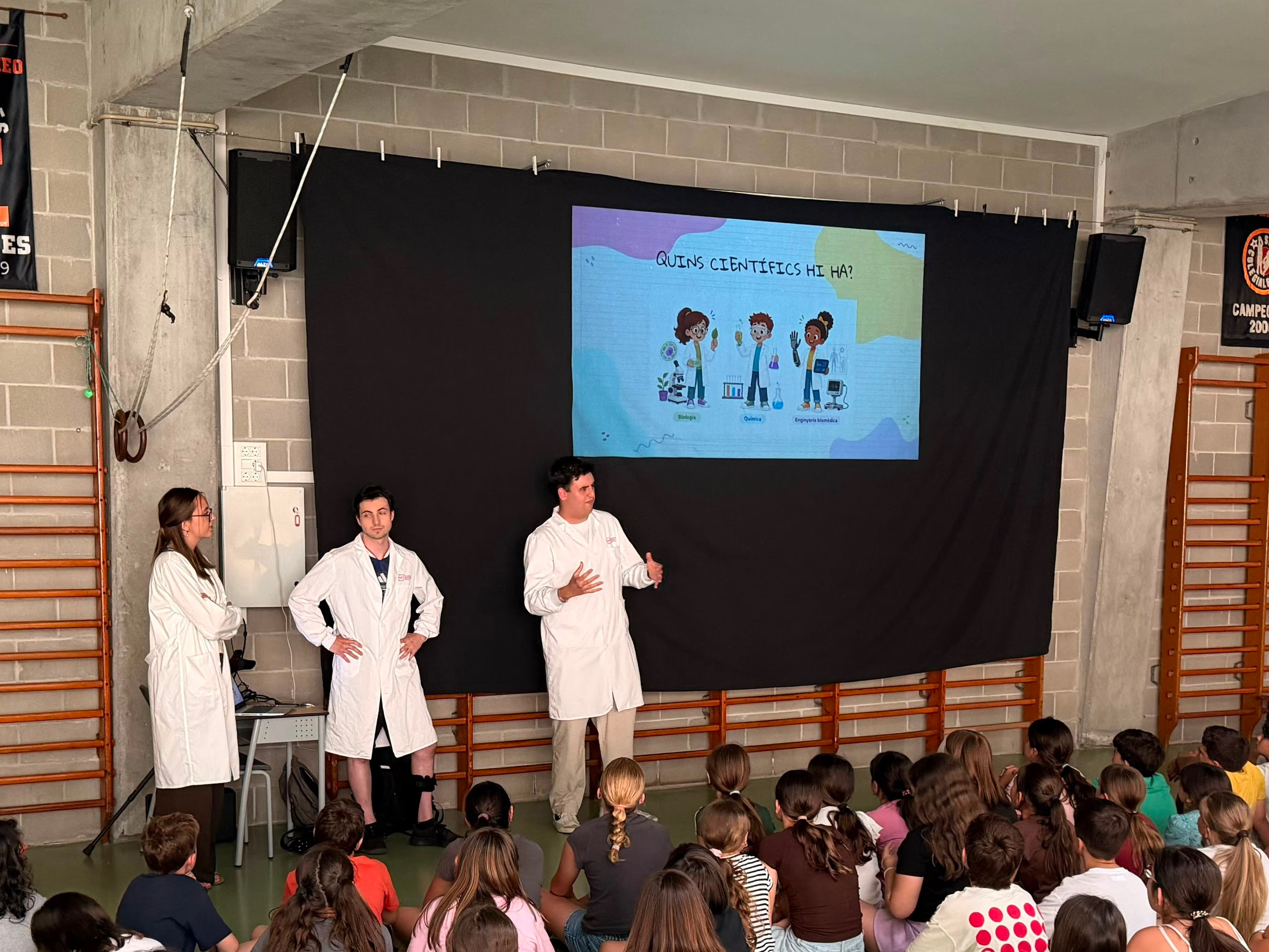
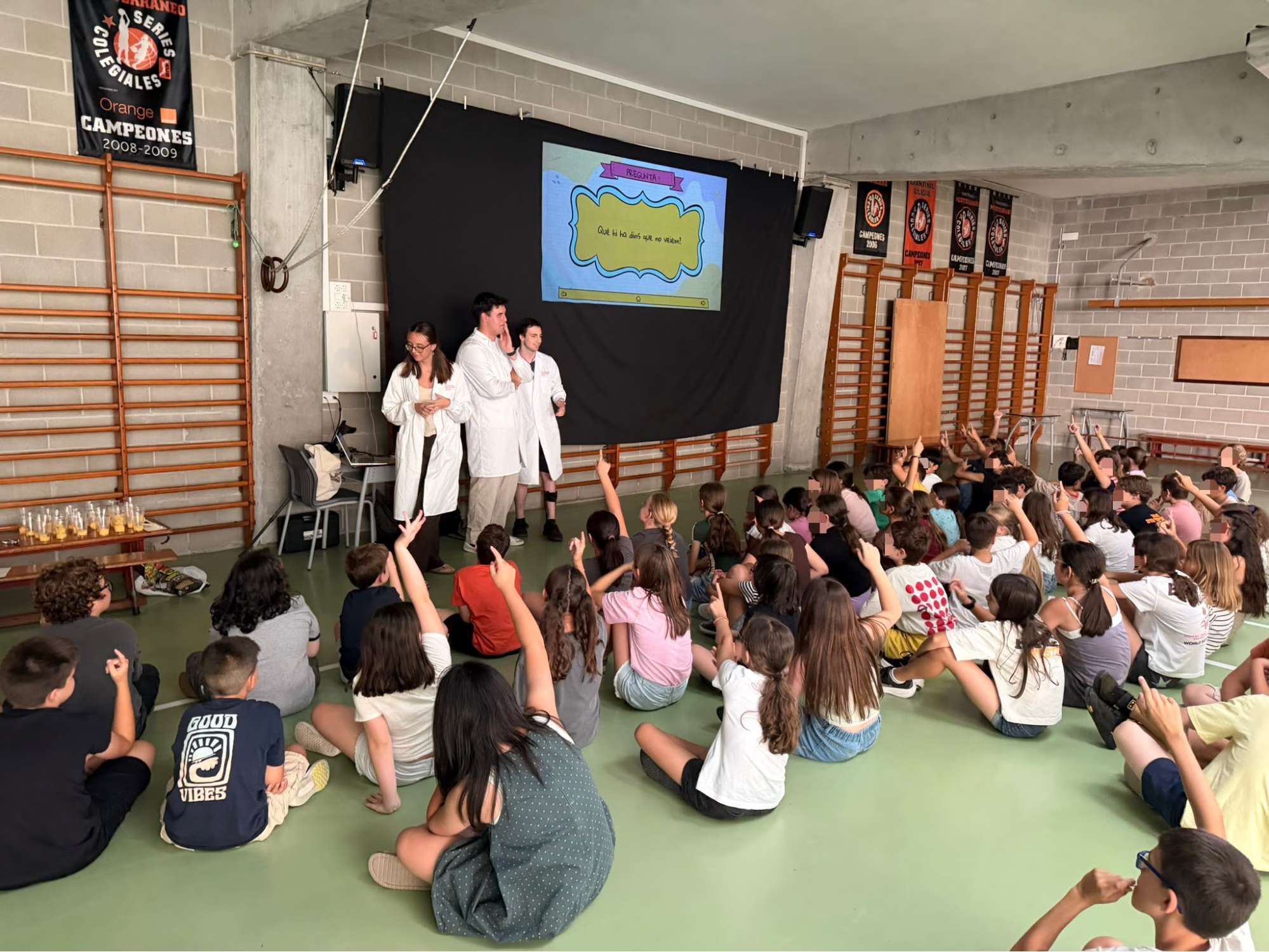
On 10 June 2026 we visited Col·legi Badalonès, in Badalona, where the three 5th-grade classes, 70 students in total, had recently visited the Besòs river as part of their work on water management and biodiversity. The barrier we wanted to lower was access, so we designed the session to start from that visit, ran it in Catalan and sent the full plan to their teachers for review beforehand.
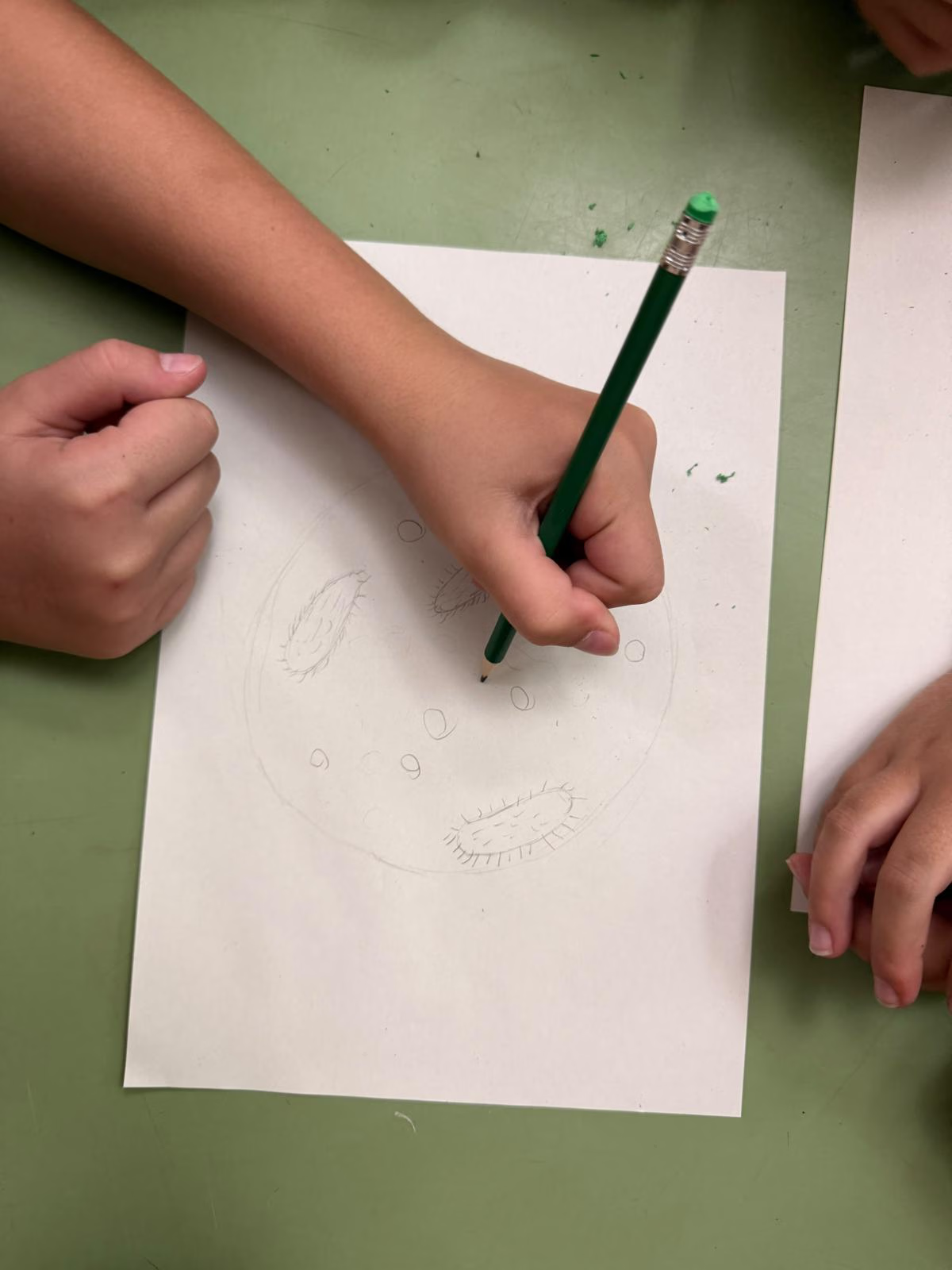
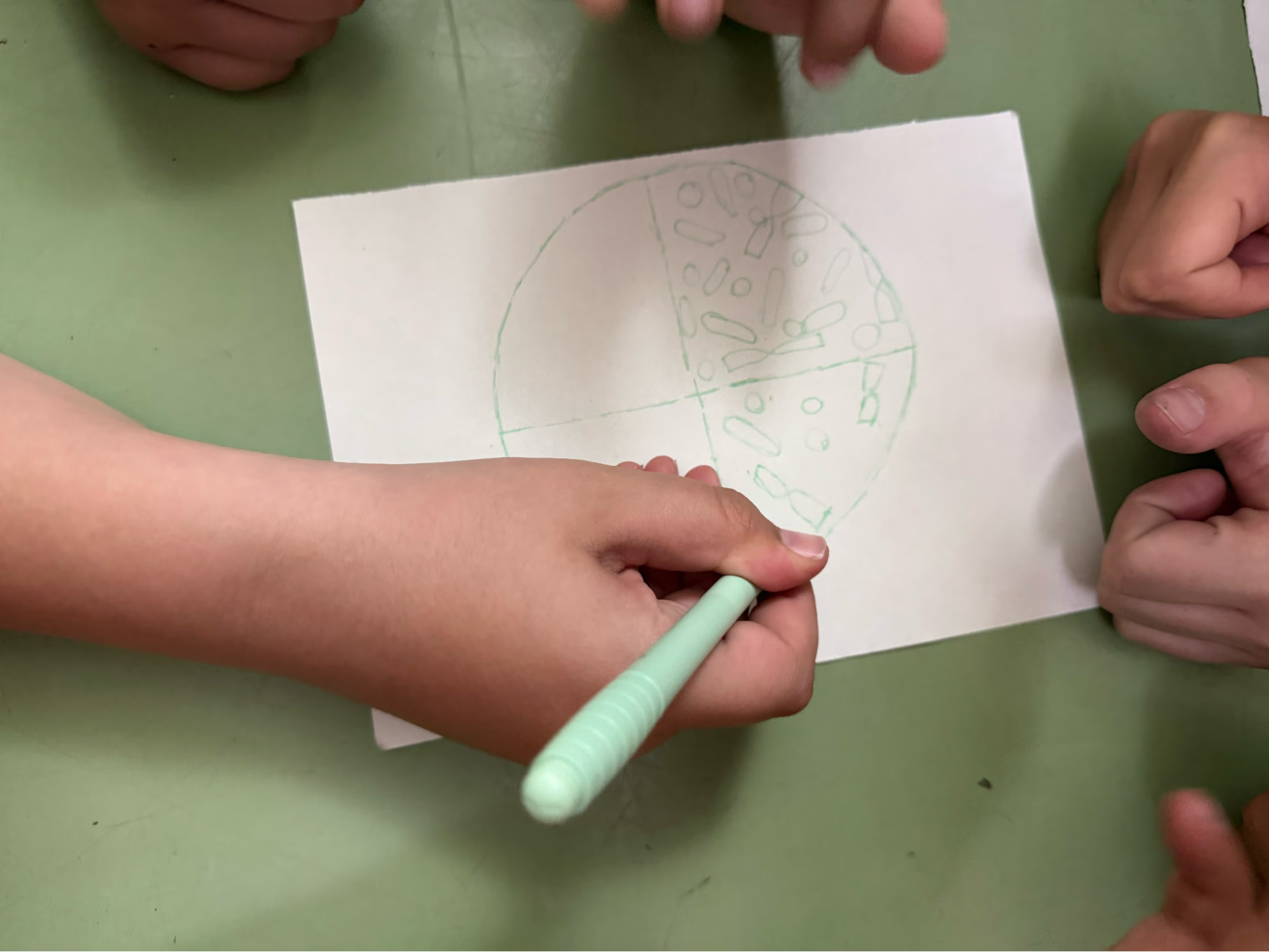
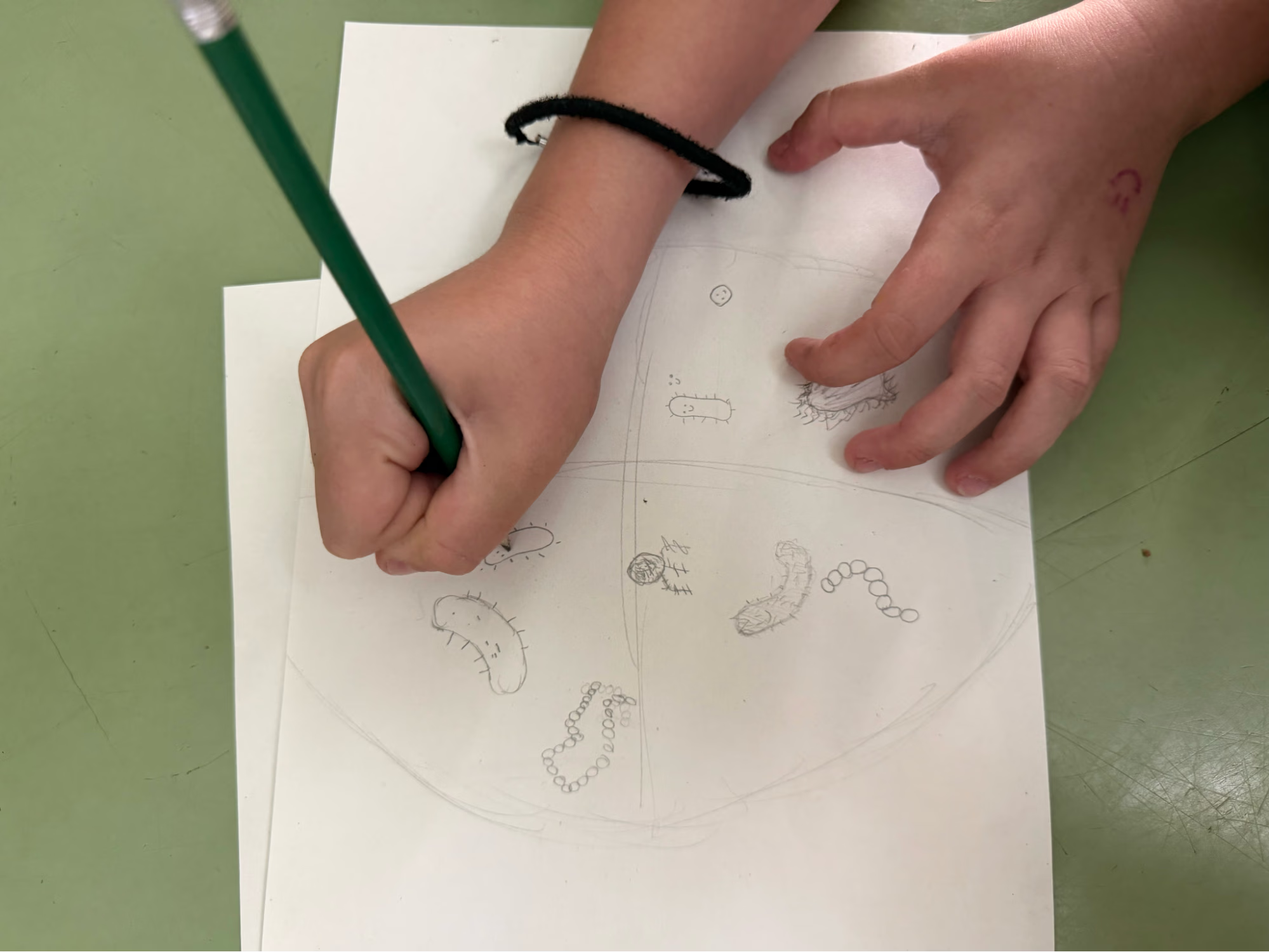
The session was built around one question: can an invisible organism save a vineyard from drought? Working in 8 groups, students first wrote their answer on a post-it. We then used the river they had previously learned about as a bridge because drought shapes what lives in the soil in a similar way water quality has shaped what lives in the Besòs. From there we showed the students how small bacteria really are, encouraging them to draw what they thought they would find when looking in a microscope and also explaining how most bacteria are harmless or even essential. Then we introduced Bacillus subtilis and the water-holding matrix it builds around plant roots.
Read more: the experiment and how it went
The experiment
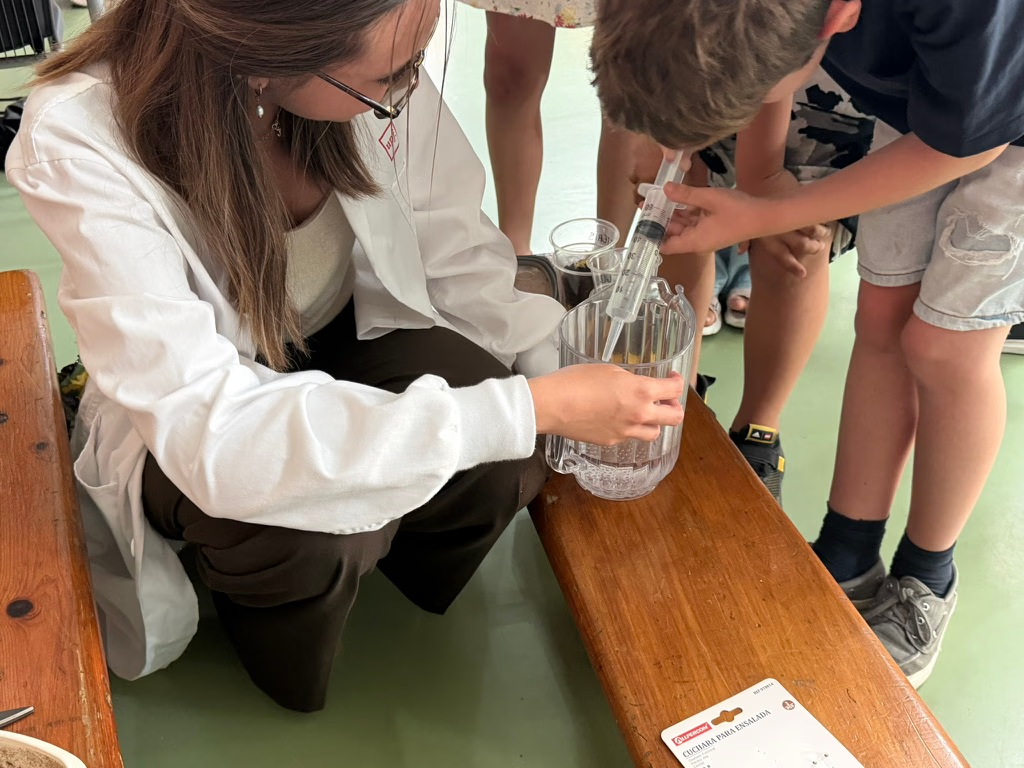
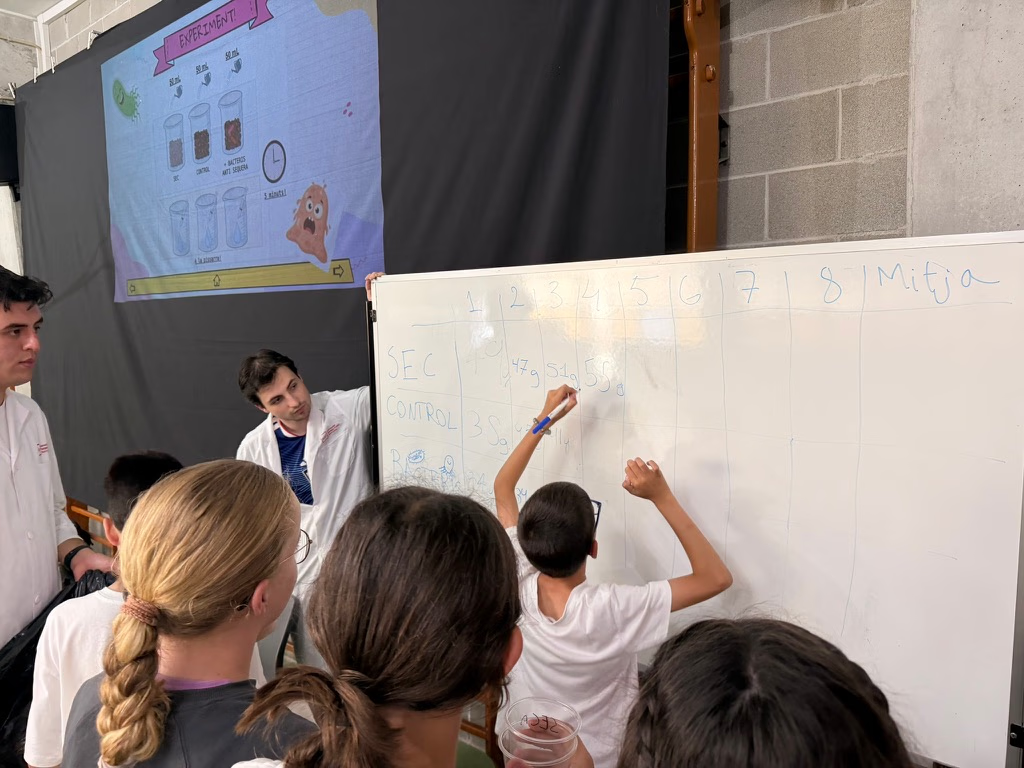
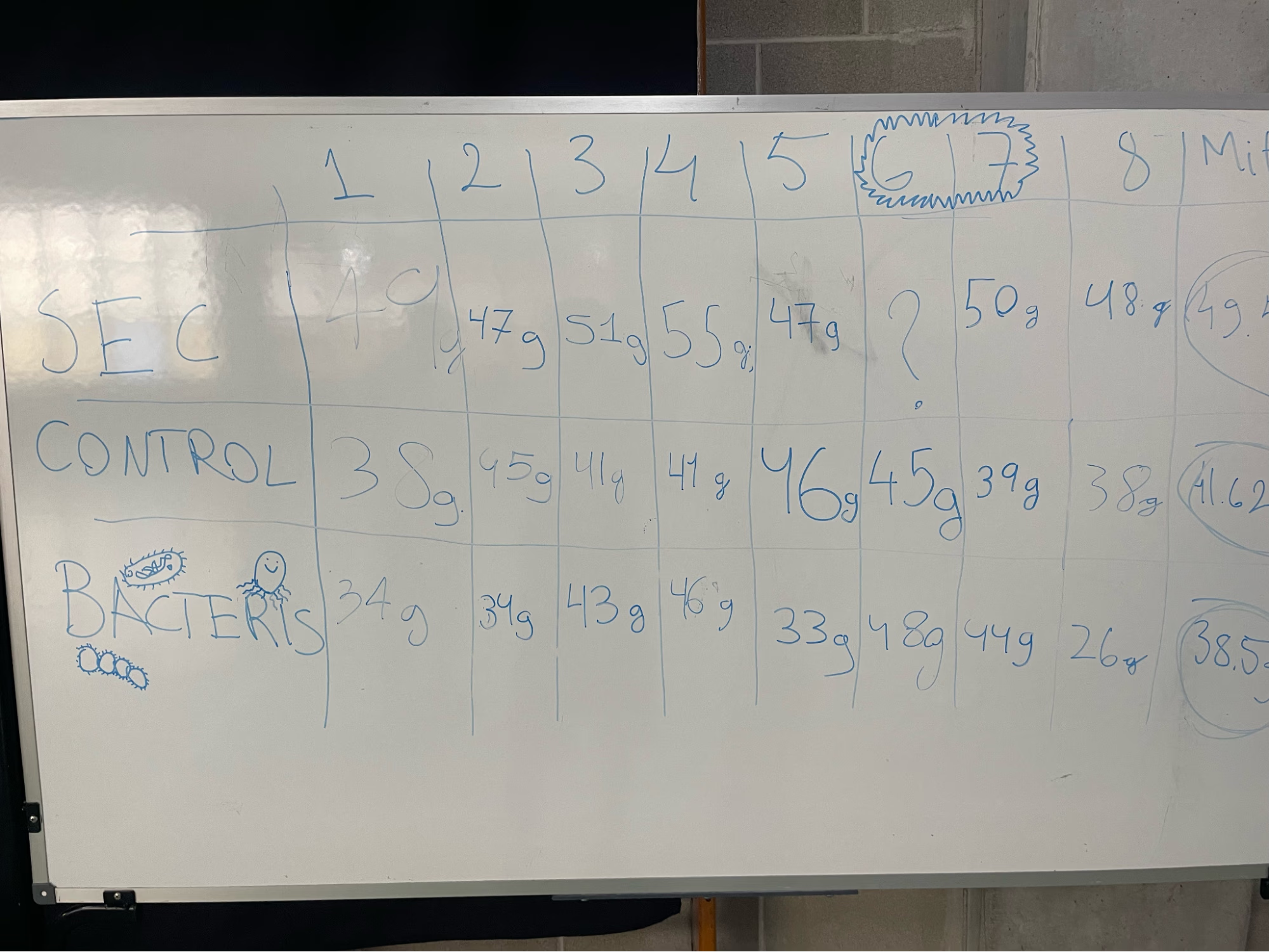
The core of the session was an experiment. In groups, students poured 50 ml of water into three cups: dry soil, normal soil and soil mixed with pieces of kitchen sponge, which stood in for the water-holding matrix our engineered B. subtilis produces. Groups wrote their measurements on the board and we averaged them as a class. The pooled result showed that dry soil retained almost nothing, normal soil retained 8.4 ml and soil with sponge retained 11.5 ml, around 37% more. Individual groups varied a lot, and four of the eight got a result that contradicted the class average, which gave us an unplanned chance to talk about why scientists repeat measurements and experiments.
We then introduced the team and Vinesys and also encouraged students to explain to each other two soil bacteria (B. subtilis and P. putida, which naturally carries the enzyme we transfer into it) using character cards we provided. To close, each group reread its first hypothesis and wrote a new one: "Now I think... because...". 7 of the 8 groups had changed their answer.
How it went
We were concerned about holding their attention for that long, as the time frame was ambitious, but the class stayed engaged and completed every phase. As a class, they worked out for themselves that the soil with sponge had kept the most water and their answers showed they had followed the link to the bacteria.
If we ran this activity again we would prepare the dry soil the day before rather than in the sun that morning and weigh the drained water on a tared scale, since several groups recorded more than the 50 ml they had poured.
Run it yourself
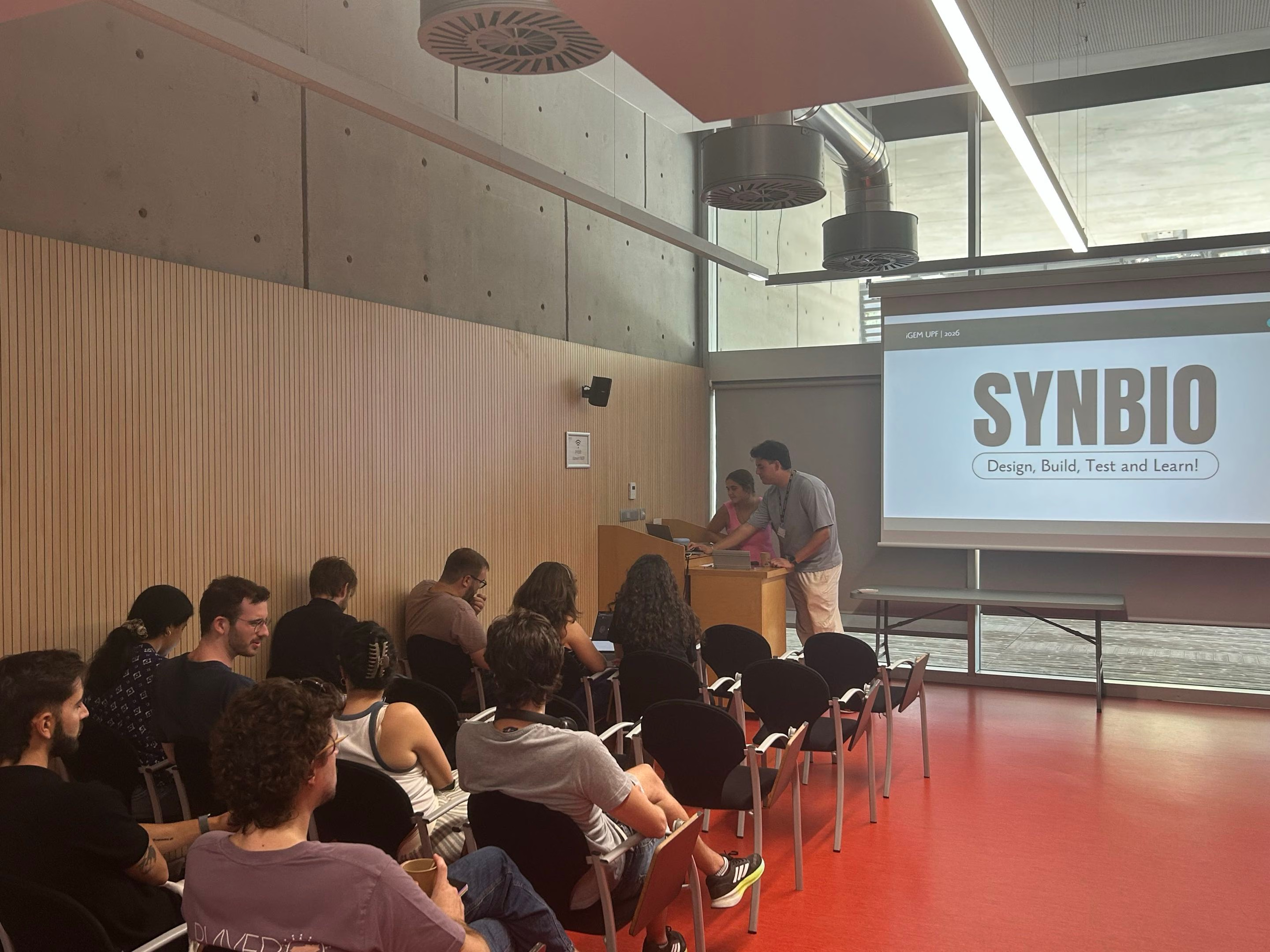
Want to run this session yourself? Our kit A Living Sponge has everything you need to run it as we did, from the phase-by-phase guide to the printables, and our Kit for Primary School Activities shows you how to design a similar activity around your own iGEM project.
A Living Sponge Kit (PDF) Kit for Primary School Activities (PDF)
Our MiniGEM
- Dates
- 6–16 July 2026
- Where
- BIYSC, Barcelona
- Who
- 10 pre-university students from several countries, in 5 groups
- Language
- English
- Our role
- Mentors and judges
Before an iGEM team touches a pipette, it spends weeks deciding which problem to solve, designing a system on paper and asking who it affects and how to keep it safe. That early stage is where most of the thinking happens and it needs no lab. MiniGEM recreates it for pre-university students.
Let pre-university students who already want to do science experience the part of an iGEM project that happens before the lab, by designing one project themselves.
| Specific objective | Indicator | Result |
|---|---|---|
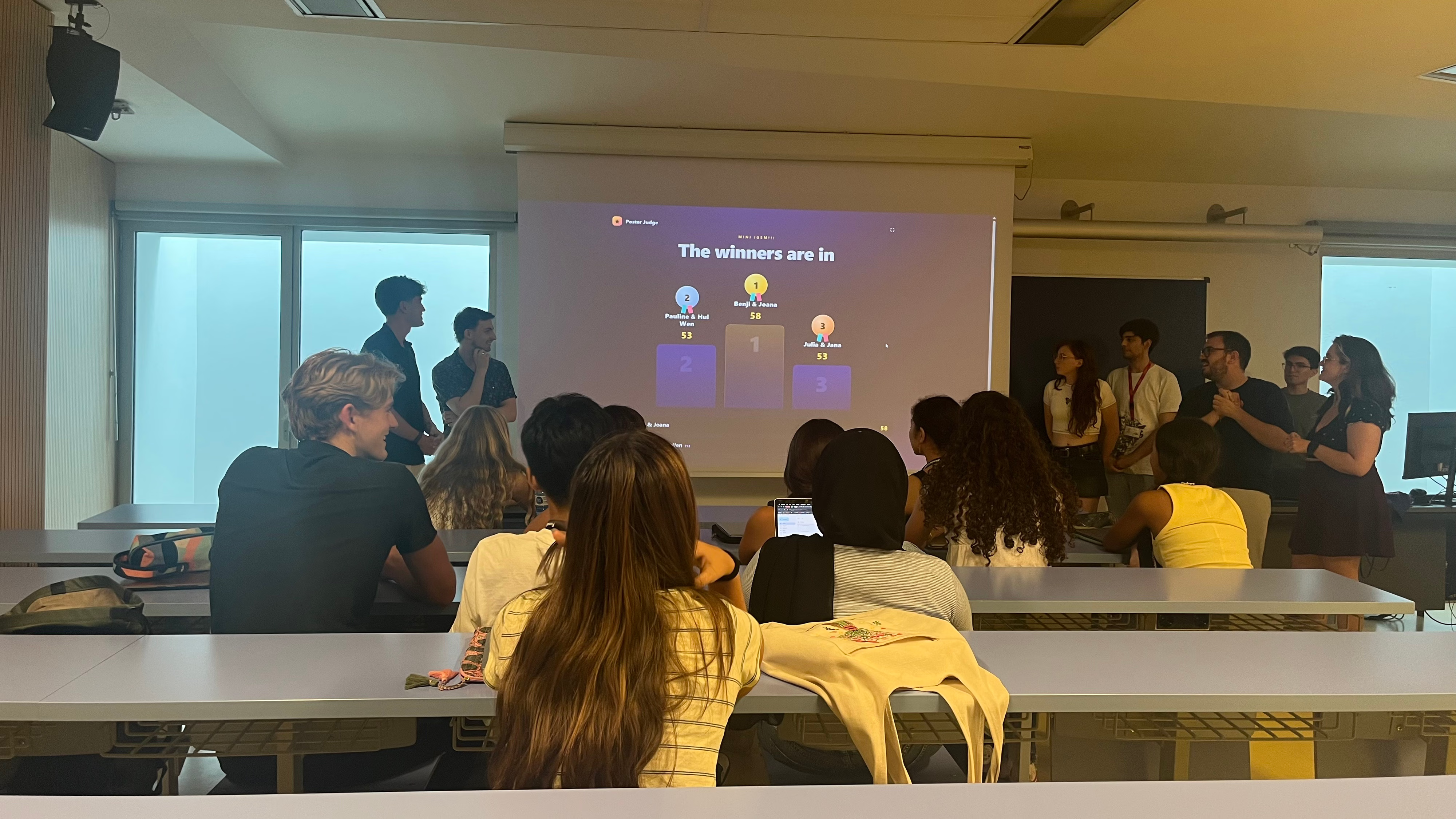
| To design and defend a conceptual synthetic biology project of their own. | Every group presents a completed project and defends under questions in the poster session. | 5 of 5 groups, scored by four mentors across five criteria, 43 to 58 out of 80 (2.2 to 2.9 out of 4 per criterion). |
| To plan how they would validate a design they could not test. | Assessed in every project through the rubric's Proposed Validation Plan criterion. | All five projects presented a validation plan of punctuation equal or higher than 2 out of 4. |
| To form and justify their own position on applications of synthetic biology. | Students give a reason for each decision in the final survey rather than a bare yes or no. | 8 of 8 did and every acceptance was conditional on the technology having been tested and proven safe. |
These students arrived with interest, which is something most audiences lack in the beginning, because they had already chosen to spend two weeks of their summer learning and applying synthetic biology. The barrier we wanted to lower was therefore access because they had never been in the part of science that precedes the pipette. The programme ran in English, with students coming from several countries.
Read more: how it worked, what students told us and what we changed
Introduction
Learned what iGEM is and followed our own project's path from first idea to final design, including the ideas we rejected.
Session 1: Design
Chose a real problem, identified who it affects and thought about a biological solution.
Session 2: Validation
Refined the mechanism and planned how they would check it works, including what failure would look like.
Session 3: Communication
Turned the design into a clear, honest story and rehearsed answers to hard questions.
Poster session
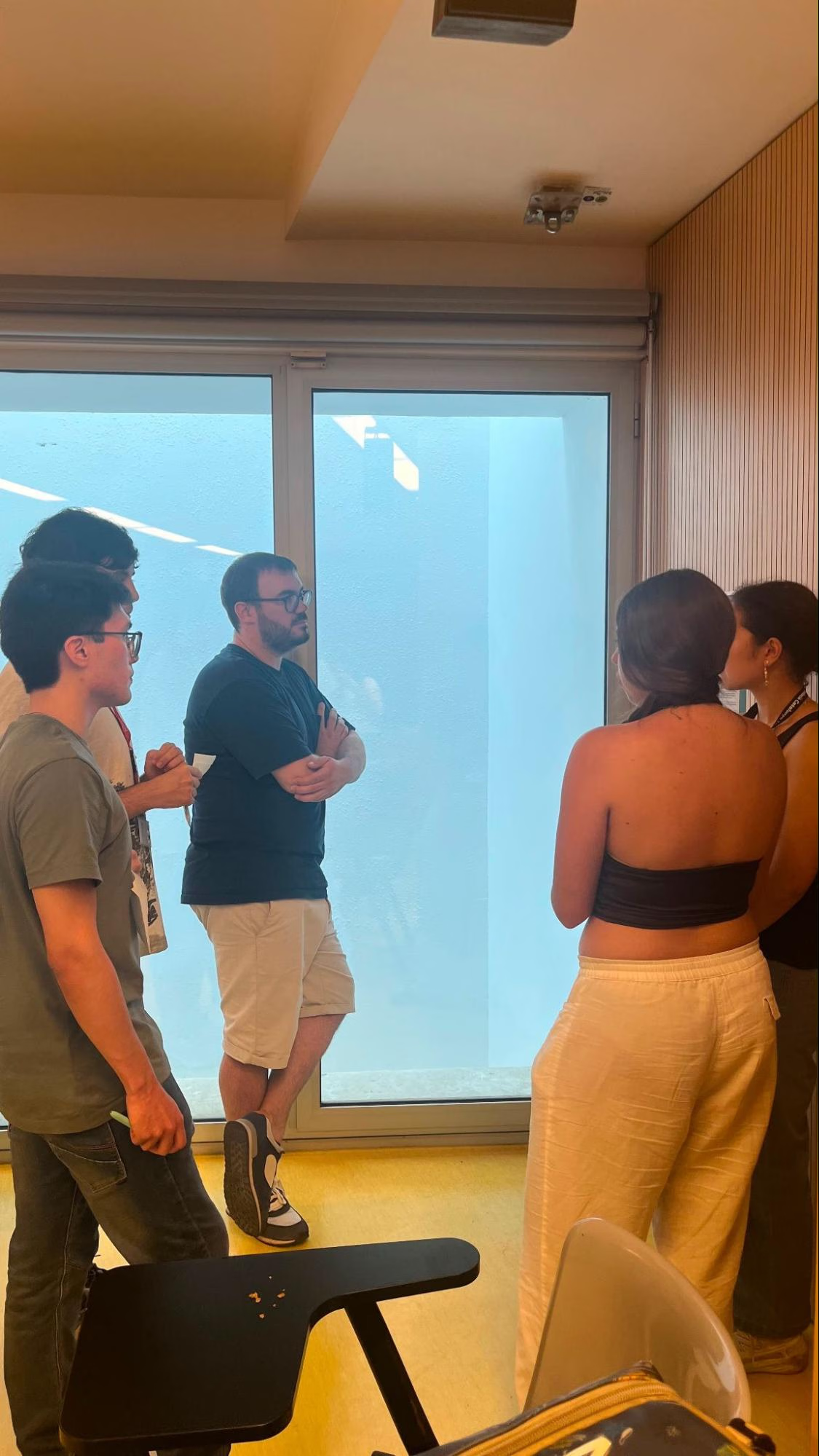
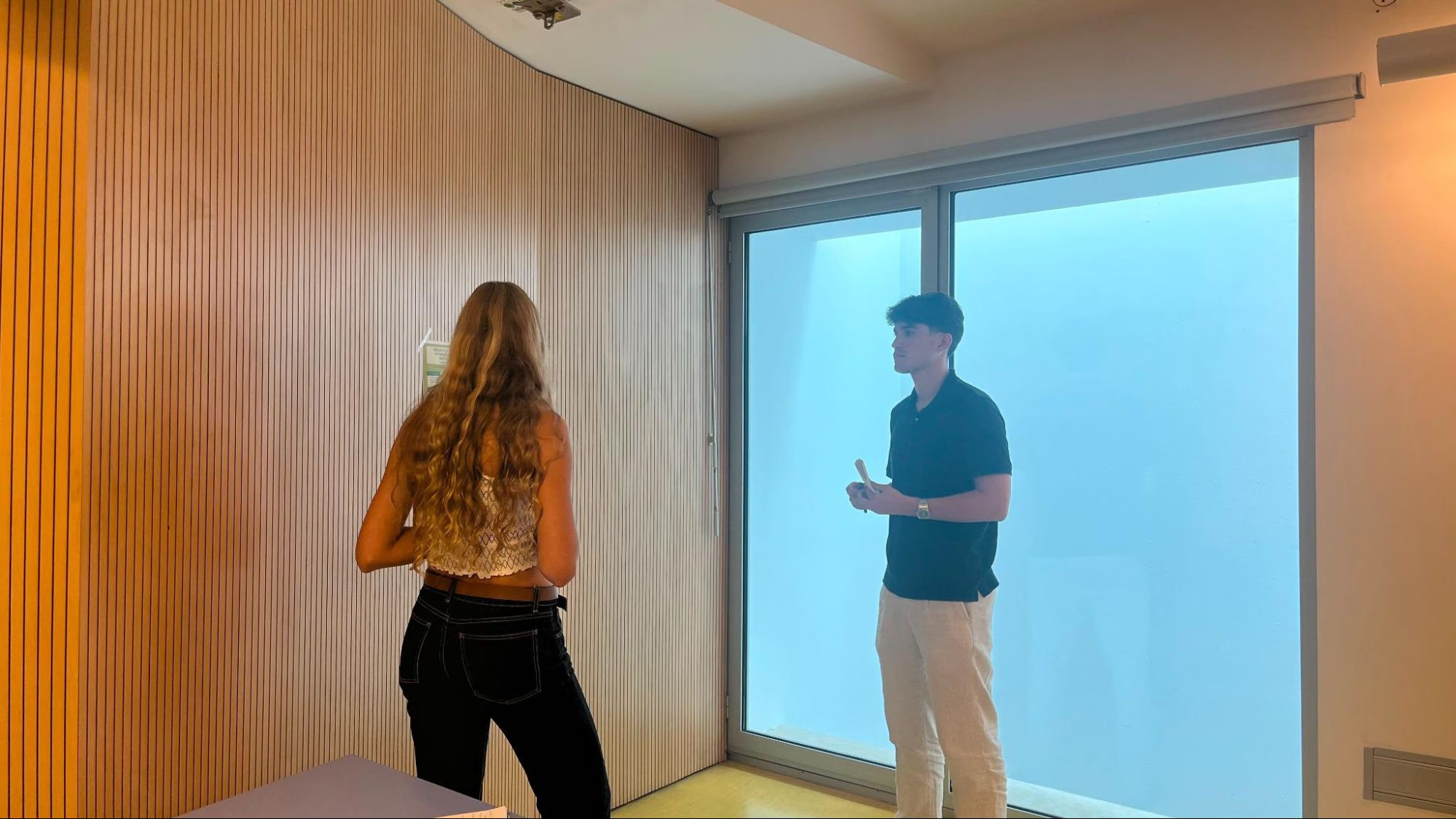
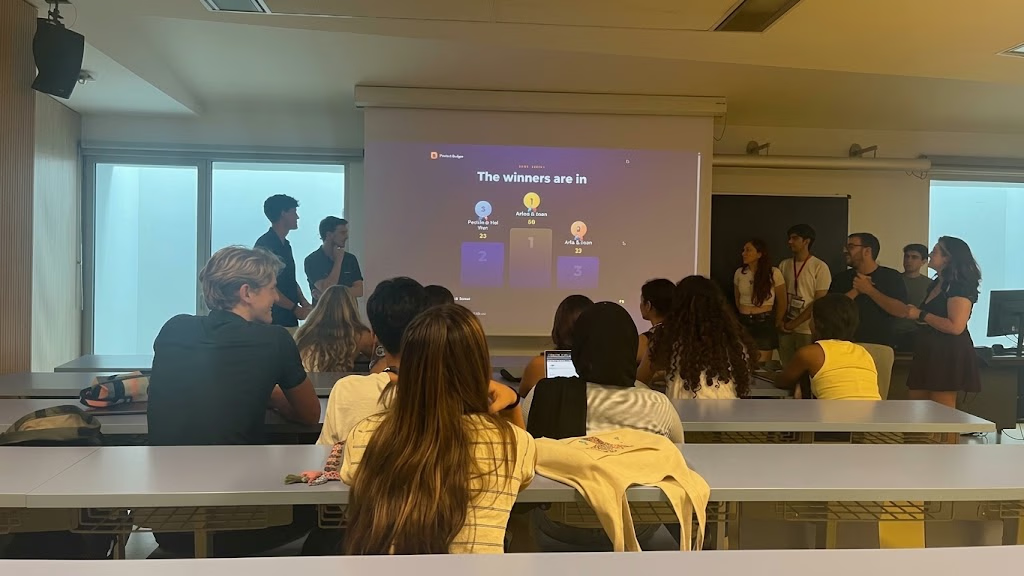
Presented their projects to us as judges and we awarded Best Poster and Overall Best Project.
Curiosity session
Before the results were announced, we worked on what curiosity is and how to keep it alive.
Between sessions, each group took away a task to keep working without us. Every project was judged with a rubric that rewarded reasoning, instead of results because what we wanted to reward was the validation plan each group designed and their honesty about its limits.
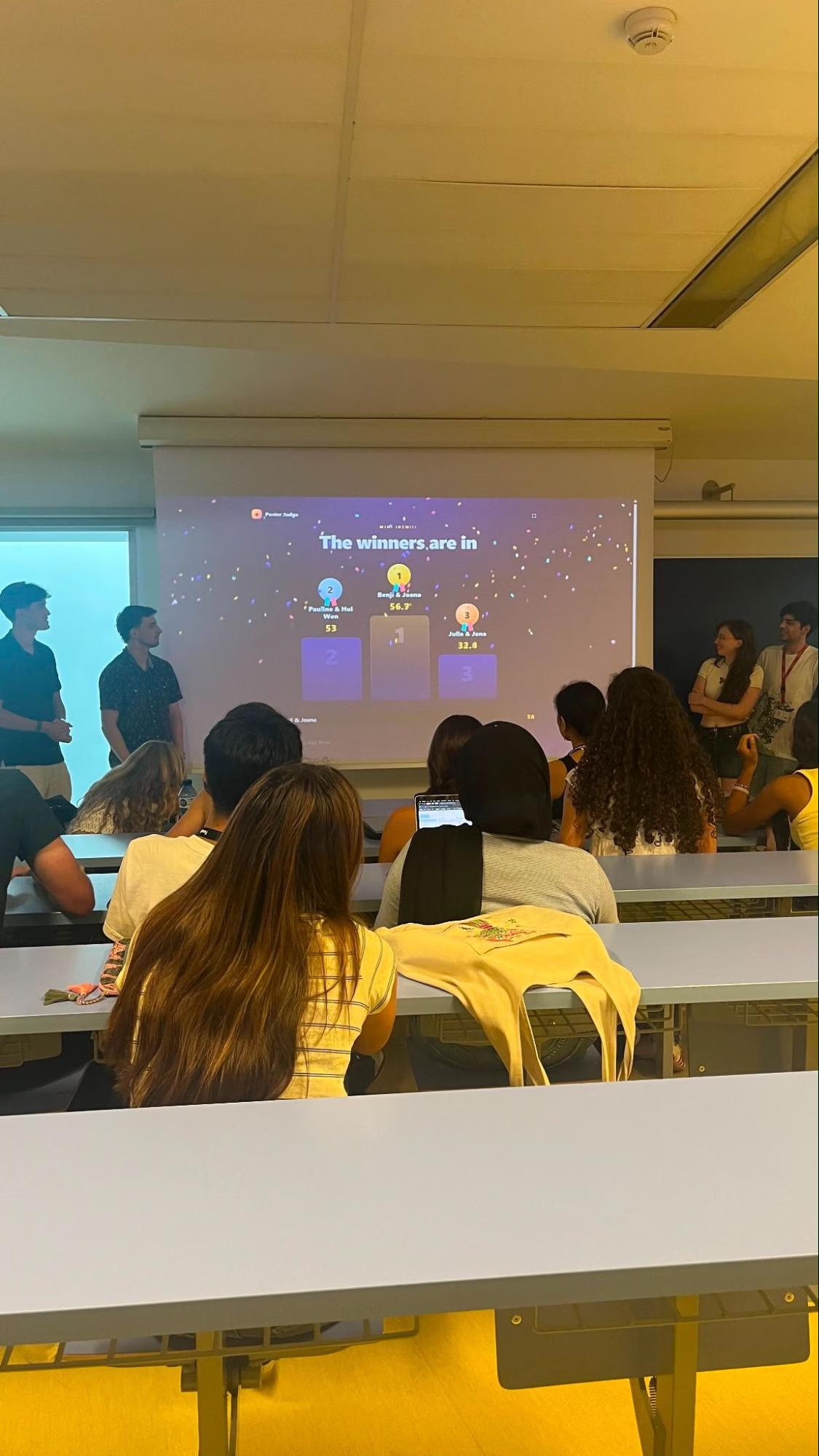
Each project was scored at the poster session by four mentors across five criteria, since none of us judged a group we had mentored. Totals ranged from 43 to 58 out of a possible 80, an average of 2.2 to 2.9 out of 4 per criterion, which places the winning project close to the "solid" level of our rubric and the lowest between "developing" and "solid". The 15-point spread between the top and bottom project tells us the rubric was discriminating rather than generous.
Expanding curiosity
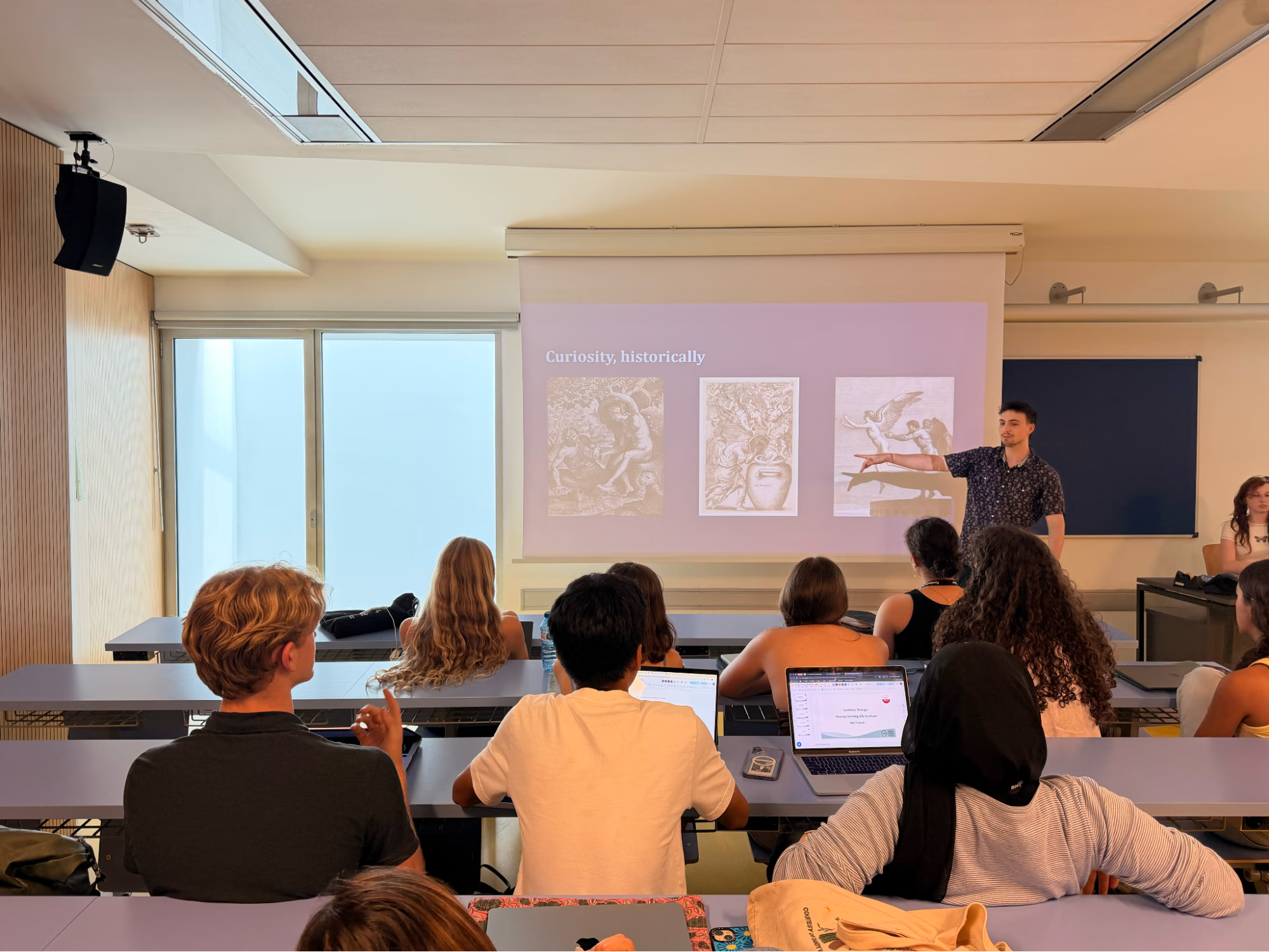
Before giving the final results after the judging session, the students were given a brief introduction to curiosity and how to empower this feeling among them. To do this, we worked from Ian Leslie's Curious: The Desire to Know and Why Your Future Depends on It (2014). This was the activity we were most explicit about curiosity and for a clear reason: this was the group of students that had the clearest drive of all the audiences we worked with and it was crucial to capitalize on that. As we said earlier, curiosity is something to be nurtured and when spotted it has to be rewarded so it continues to grow. We ended this session on a mystery instead of a puzzle, as Leslie suggests, and we welcomed them to revisit their submitted projects and find unanswered questions some months after our miniGEM.
What students told us
At the end of the programme, we sent students a short anonymous survey. It had three parts. The first asked about the mentoring: how helpful their mentor was, where we helped most and whether we taught them anything beyond the course. The second asked about synthetic biology in general: how much they knew before the course, where they think it can help most and how strictly it should be regulated. The third put them in front of concrete decisions, each one of them followed by a space to explain their answer: would they eat a genetically modified plant, would they have their own cells edited if it were the best available treatment and would they eat an unmodified plant grown alongside engineered microbes.
Eight students answered our feedback survey at the end of the programme (out of 10 total participants). Students rated their mentors 3.5 out of 5 on average. Half said we helped them most with validating whether their design was feasible, the step a real iGEM team finds hardest. The others chose looking for information or troubleshooting their solution as our most helpful contribution. Five of eight felt more comfortable asking us questions than asking their teachers and four said we taught them something beyond the course, such as how bacteria are actually used in real settings.
Some of their quotes about our mentoring:
Mentors knew a lot about our research topic and were able to give us information about it.
Thank you so much we really loved all your help and support and couldn't do this without you!!
About the synthetic biology part: most arrived not knowing much about the field because no one rated their prior knowledge above 3 out of 5. Their trust was conditional rather than blind: all eight would have their own cells edited if it were the best available treatment and five of eight would eat a modified plant, in both cases only if it had been tested and proven safe.
However, with only eight responses, these results describe this group, not teenagers in general and a single answer can shift a percentage noticeably. Small samples are hard to avoid in small-group activities like this one, so we interpret these numbers as signals that our education helped this specific group.
What we changed for the kit
Running MiniGEM showed us what was missing, so we improved it before sharing it:
- A reflection session at the end, so students look back on how their project changed and what they learned.
- Peer feedback before the poster session, so groups practise asking critical questions to each other, not only answering ours.
- A line in the mentor log for what mentors learn from students to capture the exchange in both directions.
- A redesigned judging rubric that separates more the different evaluated sections and adds a criterion for teamwork, which we watched all programme but never scored.
Run it yourself
The full MiniGEM kit contains the mentor guide, the questions for each session, the project sheet, the mentor log, the poster feedback form, the judging rubric and the student survey. It is written so that any iGEM team, teacher or outreach programme can run it with no lab and only printed materials (or the online version of them).
Our night at CosmoCaixa
- Date
- 25 September 2026
- Where
- CosmoCaixa, Barcelona
- Event
- European Researchers' Night (La Nit de la Recerca)
- Reach
- Around 165 people, across four activities
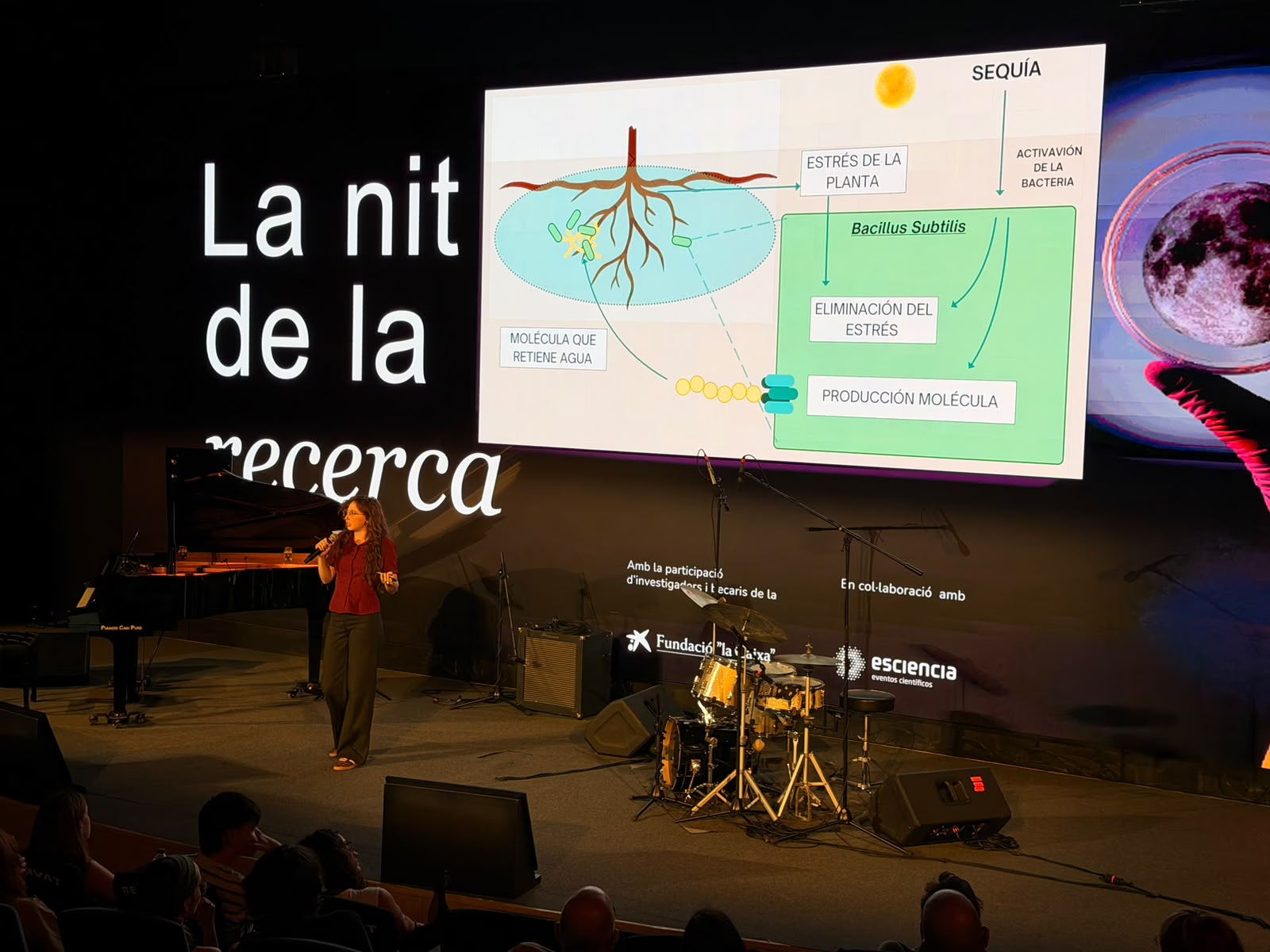
On 25 September 2026, we took part in the European Researchers' Night at CosmoCaixa ("La Nit de la Recerca"), Barcelona's science museum, organised by Fundació "la Caixa" and Esciencia. The museum opened for free to the public, with researchers from across Barcelona's institutions presenting their work through stands, workshops, games and short talks.
A science museum on an event day brings in people who would never attend a talk on synthetic biology: families, children, grandparents, visitors with no scientific background, so we made sure we had an activity for everyone. Each one of them was run in a different part of the museum. Between the four, we reached around 165 people in a single night. The barrier we wanted to lower that night was self-selection.
| Activity | Format | Audience |
|---|---|---|
| A living sponge for the roots | Interactive stand | All ages |
| Vania, Greta and Baudili, a story about a friendship that survives the drought | Illustrated storytelling | Families with children aged 5–8 |
| Operation Priorat: 25 minutes to save a grapevine | Card-based escape room | Designed for ages 12+ |
| The bacterium who thinks twice before acting | Short talk | Adult public |
Reach, in one night, four audiences that would never attend a talk on synthetic biology, giving each of them a version of the same project at their own level.
| Specific objective | Indicator | Result |
|---|---|---|
| To let visitors of any age handle one part of the project themselves at the stand. | Visitors complete at least one of the four stand activities and stay to talk. | Around 75 people stopped (this number was not measured beyond our own observation). |
| To have children from 5 to 8 years-old follow the story of a vineyard during drought and how synthetic biology can help. | Children answer the two questions asked mid-story. | Every child took part and most answered correctly, out of 10 attending. |
| To have players make the design decisions of an engineered organism themselves. | All teams opened the box within the time limit. | 5 of 5, and 4 of 5 also completed the optional biocontainment challenge. |
| To explain a two-signal activation mechanism to an adult audience with no background. | We set no measure for this talk in advance, which is one of the gaps we name at the end of this page. | Unplanned evidence came from the improvised scene that followed the talk because the performers rebuilt the bacterium and the intein mechanism from the talk alone and the audience recognised every idea. |
Interactive stand: A living sponge for the roots
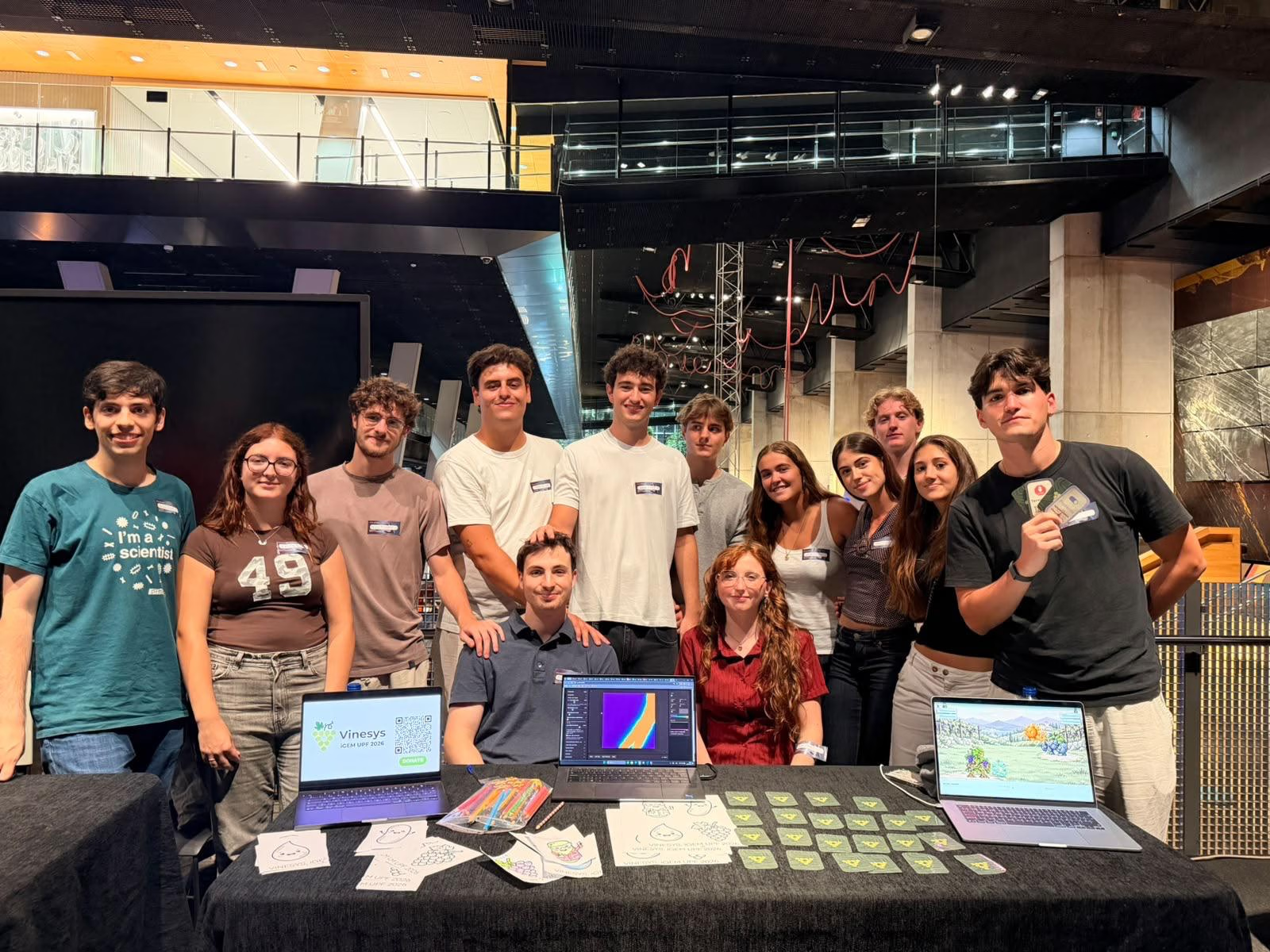
As part of the night's Research Fair, our stand explained step by step how a soil bacterium could help a vineyard survive drought. Each of its four activities showed one part of the idea, and all of them led into an open conversation about the project itself, since several of us were always there to answer questions or discuss synthetic biology with anyone interested.
Read more: the four stand activities and how they went
| Activity | Audience | How it works | What it shows |
|---|---|---|---|
| Drawing sheets | Young children | Sheets with drawings of our bacterium, a raindrop and a vine to colour while we explained to children the most basic parts of our project (what is a bacterium and how it can help plants). | In the simplest terms that a tiny bacterium can help a plant get through a drought. |
| Gene memory game | All ages, mostly families | A memory-style card game where players match well-known genes and also our bacterium's genes to the function each one has for the plant. | That genes are instructions, and that each one gives an organism a specific ability. |
| Vinesys video game | Teenagers and adults | A Pokémon-style computer game built around our project. | How the parts of our system work together to protect the plant. |
| Biocontainment software | Adults and visitors with a scientific interest | Visitors draw bacteria closer to or further from a plant's root in our software and a graph shows, based on our mathematical model, whether and how they would grow. We used it to explain the different kill switches built into the software. | That containment is part of designing an engineered bacterium and visitors can explore for themselves where it would survive. |
Visitors of all ages came by without a break and around 75 people stopped at the stand. Most had no scientific background, but the people who stopped to talk were curious and keen to understand what we were doing and why. Our impression was that most left with an idea of what synthetic biology is and of what our project does, though we had no way of checking it.
The memory game was the most popular activity because its competitive side made people stay and play. The drawing sheets were a hit with the youngest children, some of whom sat on the floor next to the stand to colour them, which gave us time to talk with their parents. However, playing is not the same as learning. At first, many people played the memory game without reading which gene matched which function, so during the night we started asking people to read each gene's function aloud before keeping a pair.
The video game had the opposite problem: it caught people's eye, but it only made sense if you understood our system in detail. Explaining a mechanism such as the intein to every visitor was too technical for a busy stand, so most could not enjoy it fully, although those who did told us they had loved the mechanics of the game. We believe this was not the ideal setting for it, so we decided we would use it again in a more calm environment where people can understand every step of our project and apply all that information to their try.
Finally, the biocontainment software gave the most curious visitors something to explore for themselves because instead of being told the bacterium was safe, they could place it where they wanted and see what happened.
Want to bring Vania, Greta and Baudili to your own classroom or stand? Download the drawing sheets, ready to print and colour. Or maybe you are more interested in the gene memory cards? Here you can find all of them. If you want to try our Pokémon game, check out its own space in this section of our wiki for more information!
Drawing sheets (PDF) Gene memory game (PDF)
Storytelling: Vania, Greta and Baudili: a story about a friendship that resists drought
For families with children aged 5 to 8, we wrote an original story in Catalan and added illustrations specifically for the night. Vania is a grapevine and her best friend Greta is a raindrop, who gets into the soil every time it rains so Vania can drink. But the summers get hotter and the rain comes less often, until the soil is so dry and hard that Greta slides over it without reaching the roots of Vania. Missing her friend, Vania becomes stressed and starts losing her leaves. Then Baudili appears, a tiny bacterium who lives around her roots and creates a net that makes the soil soft and spongy, comforting her while they wait for the rain. When the rain finally comes, Baudili's net holds Greta close to the roots, and that year Vania gives the best grapes she has ever made. At the end, we told the children that Baudili is inspired by a real bacterium, Bacillus subtilis, and that a team of UPF students is working to make it even better at helping plants.
Read more: the science behind the story and how it went
Every moment of the story stands for a real process:
| In the story | The science behind it |
|---|---|
| Greta seeps into the soil, leaving a little of herself everywhere | How soil absorbs water and stores it for the plant |
| On dry, hard ground, Greta slides away and the sun takes her back to the sky | Runoff and evaporation, the reason why drought soil holds water so poorly |
| Rain comes less and less often "because of climate change" | Longer, hotter, drier summers in wine regions |
| Vania loses her leaves when she is stressed | How drought stress damages a plant |
| Baudili weaves a spongy net around the roots | Our bacterium producing a substance that retains water around the roots |
| Baudili's comfort stops Vania's leaves from falling | Our bacterium reducing the plant's stress response |
| Vania shares her sugar with Baudili | The real exchange between plants and root bacteria, which feed on what the plant releases |
During the activity, we stopped twice to ask the children a short question: what plants need in order to grow and whether they had heard of climate change. Every child took part, answering with enthusiasm, and most answered correctly, which told us they were following the story and its key ideas. 10 children attended with their families.
The story held the children's attention from start to finish and the questions turned listening into taking part. Unfortunately, attendance was lower than we hoped because the session was in a room outside the main building and families were still arriving after we had finished. Next time we would try to repeat the session at different set times through the night.
We told the story in Catalan, the language of the families who attended. To make it usable by anyone, we also translated it into English. Here you can find both versions:
The story and illustrations, Catalan (PDF) The story and illustrations, English (PDF)
Operation Priorat: 25 minutes to save a grapevine
We ran Operation Priorat at one of CosmoCaixa's activity rooms, as a 30-minute session open to families. Around 30 people took part, split into 5 teams of about 6 players or more, each playing at its own table.
The game opens in the year 2033. It has not rained properly in the Priorat for nine years and the vines are dying of thirst, so players become the team of scientists who must design a bacterium to save them. Three piles of cards sit on the table, one for each challenge. Each challenge gives a digit and together the three digits open a padlocked box that holds the final challenge. The objective of the participants is to find the three digits and solve the final challenge within the time limit.
We did not want players to memorise facts about our project, but to make the same decisions an iGEM team makes when it designs an organism. This is why each challenge corresponds to one step of the process:
| Challenge | What players do | The real decision behind it |
|---|---|---|
| 1. Who will do the job? | Compare four candidate microorganisms, each card listing real advantages and drawbacks, against three requirements. | Choosing a chassis, where every option has real strengths and real drawbacks |
| 2. The anti-stress module | Decode a ciphered message to discover the name of the module and learn how it stops the stress hormone that halts root growth. | Choosing what the organism should do to help the plant |
| 3. Holding on to water | Choose, among four candidates, the molecule that retains water around the roots, translate its amino acids into codons using the codon usage of the organism chosen in challenge 1, write the complementary strand and count the G's. | Going from a function to the DNA that encodes it |
| 4. Inside the box | Discover that the design is not finished, because a bacterium that is always on would waste energy and die. Play a memory game to find the pair of signals that only occurs during real drought. | Deciding when the organism should switch on, using two signals at once, so it acts only when the plant really needs it |
| Our Gold Medal (extra) | Choose a containment strategy (kill switch, auxotrophy or toxin-antitoxin), imagine how it would work and explain it to the organiser to earn a badge. | Biosafety as part of the design |
Read more: how the game is designed and how it went
Inside the design
Here are the three design choices that conduct the activity the most:
- No wrong candidate is obviously wrong because every card lists real advantages and drawbacks, so players have to compare the four against the requirements instead of recognising a name.
- Challenge 3 depends on challenge 1 because each organism has its own codon table, so a team that chose the wrong organism writes different codons, counts a different number and finds that the padlock does not open. When that happens the organiser sends them back to their first decision.
- Wrong answers explain themselves in some phases because, for example, each incorrect pair of signals opens an envelope that says why that pair would not work.
For challenge 3, we did not expect younger players to understand the genetic code. Every escape room needs a way to hide its numbers and we preferred a biological one, so for younger players the codon table works simply as the cipher that opens the padlock, while older players can also learn that this is how cells turn the information in DNA into proteins.
In order for the game to still be playable for anyone that reads our wiki, we are not publishing the solutions here. They are in the organiser guide, together with the points where teams usually get stuck and the hint that unblocks each one.
How it went
On the night, many children under 12 came to the session, so instead of sticking to the recommended age we made mixed teams with children, teenagers and parents and one of us stayed with each team for the whole game to guide them through each challenge. In most teams, the adults and older children did the codon step, while the younger ones helped decode the message and play the memory game. Even with this support, the codon step was clearly too hard for the youngest children (the activity was initially designed for teenagers or older people, so it made sense). For this reason we now recommend the game for ages 13 and over, and for younger players only with an adult at each table who presents the codon table simply as the code for the padlock. Additionally, since we were there to help during the session, a lot of people asked for more information on our project, showing a deeper interest than the one necessary to pass the game.
As for the results, all five teams managed to open the box, although the teams with more young children needed more time and more help from the one of us that was there with them, especially in the codon step. Four of the five teams went on to complete the Gold Medal challenge and explained their containment strategy to the organiser that was with them during the session.
At the end of the game, we asked all the players the same questions as in the feedback form of our kit, but out loud and they answered by raising their hands. Asked how much they had enjoyed the game on a scale from 1 to 5, most of them raised their hand at 4. Most also said they had found the escape room difficult, mainly because the recommended age was too high for some of the children who played, and the codon step was named as the hardest challenge by almost everyone. When we asked what they had learned, the most common answer was that containment has to be taken into account when designing an engineered organism. In fact, the biosafety part also caught the interest of several parents, who stayed after the game to ask how these strategies would work outside the game and how products like our bacterium could be used and controlled in real fields. Because the answers were given by a show of hands rather than in writing, we do not have exact numbers and some players may have been influenced by the rest of the group. This is why our kit includes a written version of the same questions for future sessions.
Play it yourself
The printable version of Operation Priorat is the one we used at CosmoCaixa, which includes the cards and team sheet, plus a separate organiser guide with the setup, the solutions and the points where teams usually get stuck, so anyone can run the game in person.
Printable game, Catalan (PDF) Printable game, English (PDF) Organiser guide (PDF)
If you would rather build an escape room around your own project, our escape room kit explains step by step how we designed Operation Priorat and what we would change after running it, with templates to plan your own challenges, write your organiser guide and collect feedback.
Talk: "The bacterium that thinks twice before it acts"
Our talk was part of "La investigació a escena" (translation: investigation to stage), a programme of short, moderated talks in which researchers presented their work with humour and in an accessible language. We spoke in the "Science, technology and society" block. Around 50 people attended.
Read more: the talk and the improvised scene
The talk followed our project from the very first question, mainly focusing on what synthetic biology is, the problem we wanted to solve and the biological mechanism inside Bacillus subtilis. We explained that our bacterium should only act when the plant really needs it, so it works like an AND gate, needing two signals at once. Drought switches its genes on and our intein makes sure the final molecule only assembles when a second condition is met. We explained the intein step by step so people with no science background could understand this type of mechanism.
After our talk, the improvisation company Impro Barcelona, who hosted the session, performed a short improvised comedy scene based on what they had just heard. Working only from the talk, they acted out the key ideas of the project in their own words: they mainly talked about the bacterium (specifying its name) and the molecular mechanisms that lets the intein do its job. The audience laughed, joined in during the interactive parts of the show and recognised every idea on stage.
We did not design this part, but it added value to the activity. Professional improvisers with no scientific background could only build a scene around an intein if the explanation had worked and an audience could only laugh at it if they had followed too.
What the night taught us
Running four activities for four different audiences in a single night taught us several things we will apply to our future education activities:
- Interaction draws people in, while conversation teaches. Our most popular activities in the stand were not the ones where visitors learned the most, but the learning happened when some of those who were first interested in our interactive activities stayed to talk.
- One project, four formats, four audiences. The same core idea became a story for six-year-olds, a game at the stand, an escape room for families and a talk for adults. Each format needed its own level of detail and that is something to keep in mind always.
- The public was curious, which made us realise that what we had wanted from the start of our education campaign is actually possible with big audiences too.
- Hearing our science explained back to us was the best test of the talk. When non-scientists could turn our key ideas into a comedy scene, we knew those ideas had come across.
- We only measured part of the night. We collected feedback in the escape room, but at the stand and the storytelling we relied on what we observed. Next time we would add a simple measure at each activity, such as a sticker vote at the stand.
Game Night: Vinesys Pixel Battle
- Date
- 26 September 2026
- Where
- Online, alongside Minecraft
- Format
- Vinesys Pixel Battle, our Pokémon-style video game
Throughout our project, we looked for a dynamic way to explain some of the complex mechanisms we were designing to a younger audience. After several brainstorming sessions, we arrived at an idea we thought could work: Vinesys Pixel Battle.
The idea took inspiration from Pokémon and its two-versus-two battles. This format fitted the relationship at the centre of our project: an engineered Bacillus subtilis helping a vine cope with drought-related stress. In our game, the bacterium and the vine work together against two opponents representing the sun and adverse soil conditions.
We wanted the project's mechanisms to become part of the way people played. Rather than relying only on attacks, players need to activate the bacterium's protective and stress-relieving functions before they can win. This introduces the main mechanisms included in our bacterial design and the functions we wanted the bacterium to perform. Health points, energy costs and turns simplify these relationships into playable rules.
Give players a way to apply an explanation of our design, by turning the bacterium's mechanisms into the rules they have to play by.
| Specific objective | Indicator | Result |
|---|---|---|
| To activate the bacterium's protective and stress-relieving functions in the right order before being able to win. | Players cannot complete the battle without triggering the support functions first because the rules make it impossible. | Every player who finished did so. |
| To have the players' own difficulties change the game itself. | At least one rule or interface change follows directly from what we saw players struggle with. | Two things did: the menus were simplified and in Hard mode a move whose requirements are not met now consumes that character's action instead of being blocked. |
Read more: how it went and what we would change
How it went
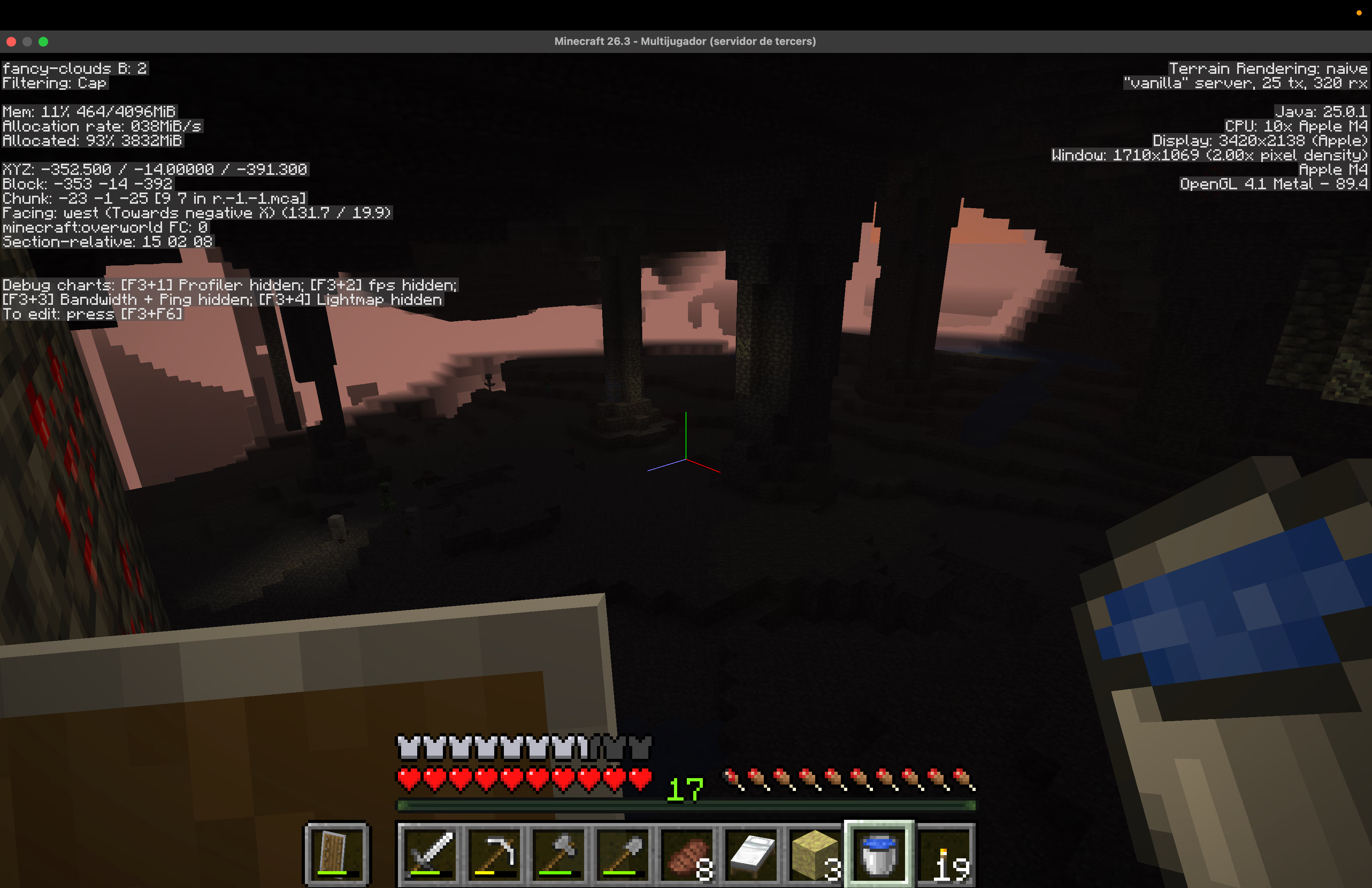
After its use during our night at CosmoCaixa, we introduced Vinesys Pixel Battle to our online Game Night, alongside Minecraft. Friends and family joined the session, where we first explained our project and the logic behind our bacterial design in detail. They then tried the game themselves.
The session gave us an opportunity to receive feedback and improve the experience. Two changes made during development were simplifying the menus and revising how unsuccessful moves work in Hard mode. We reduced unnecessary interface elements and made the difficulty selection more straightforward. In Hard mode, players can attempt a move even when its requirements are not met, but the failed attempt consumes that character's action. This makes the consequences of a missing condition part of the gameplay. Completing the battle, however, does not by itself demonstrate an understanding of the biology. Players may find a successful sequence through assistance or trial and error.
What we would change
- Ask one short question before playing and the same one afterwards (for example, about why the bacterium needs particular conditions before its protective functions become available). We think incorporating this would be essential in order to extract information from the learning because finishing the battle tells us nothing on its own, since a player can arrive at a winning sequence by trial and error or by being told.
- Give tutorials for the trickiest parts from the start instead of adding them halfway through. The first rounds of the game were hard for anyone who had not fully followed the explanation and adding this step would save a lot of time and frustration for the participants.
- Build in a way to get a hint without it feeling like losing. Players who finished on their own were pleased with themselves, while those who had needed help were frustrated, not with the game but at not having worked it out alone, which is what happens when completing the battle is the only form of success a game offers.
Run it yourself
To make this approach reusable, we created a Videogame Kit for future iGEM teams. It explains how to choose a learning goal, translate scientific relationships into game mechanics, adapt the experience to different audiences and assess what players take away. Our aim is for other teams to use this process to create games that communicate the logic of their own projects.
Cognitive Activities at a care home
- Date
- 6 October 2026
- Where
- Residència Colisée Valldoreix, Sant Cugat del Vallès
- Who
- 19 residents aged 72 to 85
- Format
- Three synbio memory games
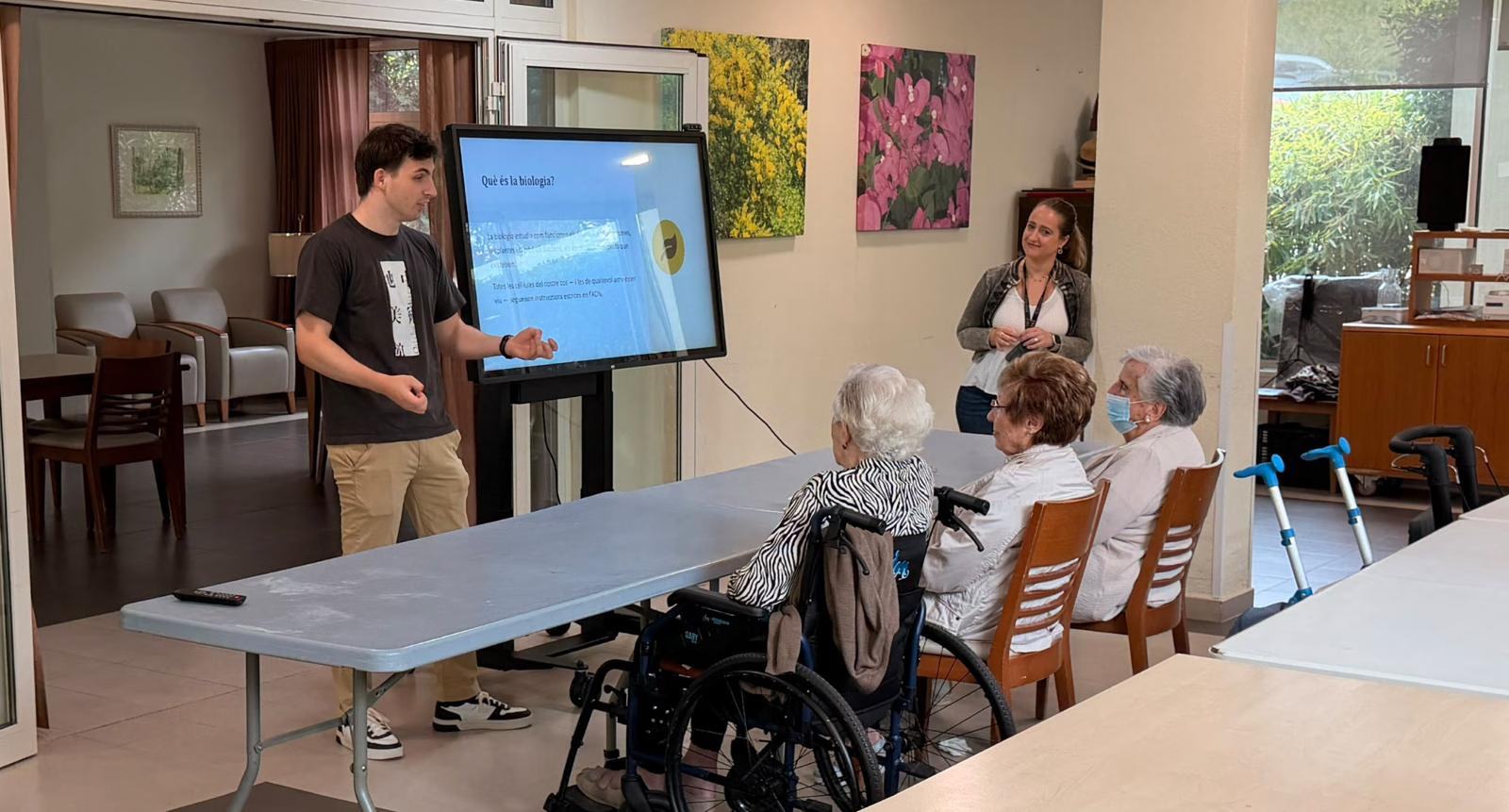
One of the central ideas to our educational approach was to include all kinds of publics. Not only to give them the opportunity to learn about things they wouldn't normally, but also for us to receive feedback from them. One of these publics were senior citizens. We reached out to several day centers and senior residences and were welcomed at Residència Colisée Valldoreix, home to over 100 residents, on 6 October 2026.
Give residents of a care home who had never heard of synthetic biology a way into the subject, built into the cognitive activity they already do every morning rather than added on top of it.
| Specific objective | Indicator | Result |
|---|---|---|
| To tell apart common claims about synthetic biology from widespread myths. | Participants score above chance on the 12 statements with a clear answer. | 8.6 of 12 on average (72%), against the 50% expected from guessing. |
| To voice their own position on questions that are still open. | The three deliberately open statements produce arguments from both sides rather than a verdict. | Achieved, with the most divided statements producing the longest discussion. |
| To keep every resident able to take part, whatever their hearing, sight or memory. | All participants take part in all three games. | 19 of 19. |
For this activity, we focused on two precedents to adapt our activity to their needs exactly. The first was to make sure to build on structural principles from two published, evaluated methods: TimeSlips, a creative storytelling approach used in dementia care since the late 1990s, and Meet Me at MoMA, a museum program for people with dementia evaluated by NYU in 2008. Both are built around the same core idea: every exchange opens with a question, not an explanation, and all answers are discussed. The second, in order to meet with the continuity idea from before, was to work it into the type of activities they already did, so as to somewhat maintain their routine. We found out they usually do a memory stimulating activity in the mornings, so we scheduled our session within that same slot, keeping the small-group, object-led shape they were already familiar with rather than introducing a new time and a new format at once.
To do this, instead of a talk, the activity consisted of three memory games, all relating to synbio and enticing conversation:
- Memory: We had synbio concepts that matched names with definitions and created an online, interactive game so they could see it on the big screen. Every time a match was made, we would briefly explain what the concept was and how we used it in the lab.
- Bingo: Since we were told they regularly played and enjoyed bingo, we decided to replace every number with a Vinesys or Synbio concept. As they came up, each concept was asked about and explained, so the pace was slow. We made the cards purposefully simple so we could replay it and everyone had another chance to react to and discuss them.
- True or false: We presented statements related to synbio and they had to vote on as true or false. Instead of directly giving the answer, members from both sides offered a justification for their decision, so we could see how everyone arrived at their conclusions. Often the statements had to do with common myths, so we had a brief discussion on misconceptions. To make sure not every round ended in a verdict, some statements were deliberately open-ended rather than true or false, which was meant only to surface their views and let them hear ours.
Read more: how it went and what they learned
How it went
For the first part of the session, we split the room in two and had half the residents played the bingo and half the memory.
This was first introduced by a short talk on who we were and what we did. We asked if they knew what Synthetic Biology was and they had not even heard the term. We went step by step, starting with biology, then synthetic biology, then Vinesys. All three sections started with asking them what they knew about the subject or what the subject made them think. The vocabulary itself was the first obstacle. "Biomedical Engineering", "Synthetic Biology", "engineered genetic code" are difficult to understand for people that have never heard of any. We had to repeat things a few times and adapt to their different levels. The centre had told us beforehand that the group would be mixed and within the same room we had to give some residents more time, more repetition and a seat closer to the screen than others.
They enjoyed the bingo and could engage in it easily, as it was something they regularly played, but it was more passive than the memory. Some concepts were easier for them (grapes and bread were hardly surprising), some were more novel (DNA and plasmids).
The memory was where they worked the hardest. It was a demanding activity, as they both had to focus on recalling where the cards were and on the new biology concepts we were explaining. In both rounds, it took a few guesses to get going, but once they started eliminating pairs and getting the hang of it, they were able to finish the game quickly.
Finally, we got them all together to play true or false. This meant recalling everything we'd talked about, which most of them did. Some questions had more divided opinions, which was perhaps even more welcomed, as it ensued in passionate discussion amongst them and rejoicing when revealing the answers.
What they learned
Nineteen participants of ages from 72 to 85 voted on 15 statements about synthetic biology, and the 12 with a clear answer were scored. They answered 8.6 of 12 correctly (72%) on average. They were most certain about the limits of science: all 19 rejected the claim that scientists know what every gene does and 79% correctly rejected the claims that CRISPR was invented from scratch and implanting an edited human embryo to start a pregnancy is legal in Europe. Nearly half believed that genes from genetically modified food pass into our DNA or that genetic modification always means adding genes from another species. These misconceptions are what the discussion that followed each vote worked on. Most of the terminology was new to them, so while they had general ideas, questions that were more technical about genes or DNA were harder for them.
Statements on topics we had covered in the introduction and the memory game scored 78%, against 68% for new topics, and almost all participants did better on the covered ones.
That is consistent with the earlier games helping, but it is not evidence of it because the statements are not of equal difficulty, the group is small and every vote was cast before the answer was revealed, so what we measured is what people knew and not what they gained. A short set of questions asked before and after the session would have measured learning directly, and that is what we would add next time.
What we learned
We learned to prepare for a public none of us had dealt with before. This was the session we had to adapt most on the spot because the room included residents with limited hearing, limited sight and dementia, so the same explanation had to arrive to all of them in different ways.
Even having researched successful activities done with elderly audiences, we still found ourselves in new territory. This really showed us how meaningful it is to make an extra effort to take our work as far away as possible and be able to adapt ourselves and our content. A group that had never heard the term synthetic biology at nine in the morning spent the rest of it arguing about gene editing, which told us that the appetite for these conversations does not depend on having had access to them before.
Build our project with us! Interactive talk
- Date
- 14 October 2026
- Where
- Centre Cívic Guinardó, Barcelona
- Who
- Adults with little contact with synthetic biology
- Language
- Catalan
- Format
- Five design challenges, with pre- and post-activity questionnaires
How we designed it
Let an adult audience with no background in synthetic biology design our project step by step themselves, so that they are able to question this kind of project in the future.
| Specific objective | Indicator | Result |
|---|---|---|
| To reconstruct the design logic of a synthetic biology project through five open challenges. | The audience's proposals match or improve on our own decisions in at least 3 of the 5 challenges. | Achieved, most clearly in the trigger challenge, where they proposed temperature and salinity, the actual two signals we work with. |
| To feel able to give an opinion on applications of synthetic biology. | The amount of participants who agree doubles after the activity. | From 18% to 50% (mean 2.1 to 3.1 out of 5). |
| To define synthetic biology in their own words. | At least 70% of people doing the post-questionnaire produce a definition naming the modification of an organism for a purpose. | 8 of 8. |
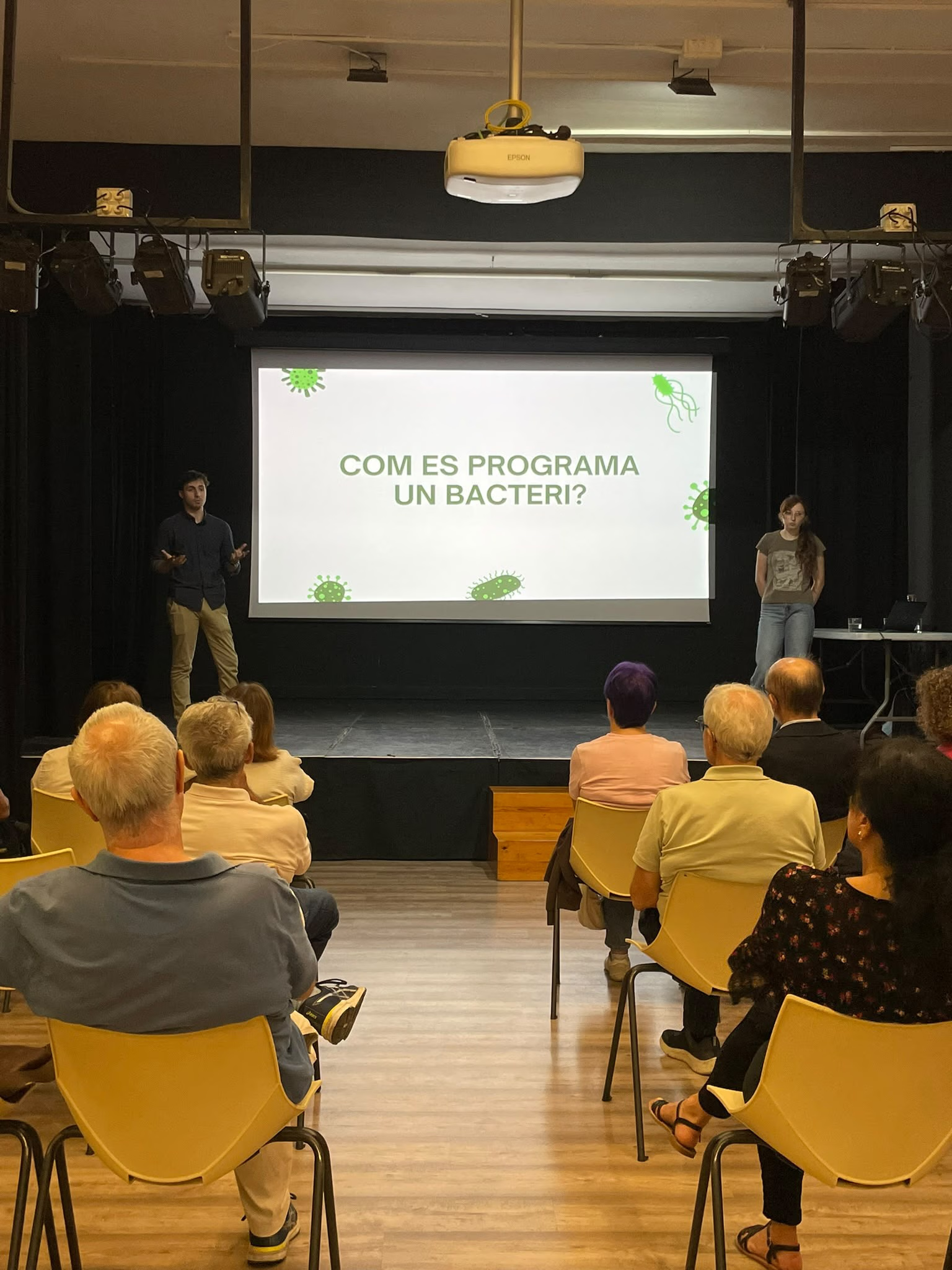
On 14 October 2026 we gave a talk at Centre Cívic Guinardó, a community centre in Barcelona, to an adult audience with little contact with synthetic biology. Centre Cívic Guinardó runs a weekly open science talk, "Xerrades de Ciència", that has an established attendance. The barrier we set out to lower was confidence to voice their opinions and ask questions and we ran the session in Catalan. In this activity, the public of the talk creates, step by step, our project again from scratch with our guidance, solving different challenges we present them.
Before any explanation, attendees completed a short questionnaire on their background, their knowledge of a few basic concepts and their attitudes towards synthetic biology. We also asked them for the first word that came to mind when they heard "genetically modified organism" and when we heard the words danger and uncertainty we knew a greater effort to explain regulations and limits was necessary (we adapted part of the talk on the spot so participants could get the necessary information to answer their fears).
Read more: the five challenges, what they learned and what we would change
Five challenges
We then introduced the synthetic biology field with a working definition and everyday examples, to show that it is already part of daily life rather than something remote (which sometimes causes the fear we saw at the beginning). Instead of explaining Vinesys directly, we split our project into the design decisions our team had faced and turned each one into an open challenge for the audience:
| Challenge | What we asked the audience | What we revealed |
|---|---|---|
| 1. The problem | "Vineyards lose 30% of their yield to summer droughts. You have every tool available to modify a bacterium. What exactly would you try to fix?" | Rather than modifying the vine, we engineer a soil bacterium that helps it. |
| 2. The function | "The bacterium does not naturally perform the function you need. What new genetic instructions would you give it?" | Two genes attacking drought on two fronts: γ-PGA, a molecule that holds water around the root, and ACC deaminase, an enzyme that lowers ethylene, the hormone a plant produces under stress. |
| 3. The trigger | "You don't want the bacterium producing your construct constantly, because that wastes energy and weakens it. What kind of signal would you use to switch the genes on?" | Heat and high salt concentration, which accompany drought. A sigma-factor stress sensor detects them and opens the PgsiB promoter. |
| 4. The risks | "Before releasing a designed organism into a real field, which risks would you take seriously?" | A kill-switch: the bacterium constantly makes a toxin (mazF) and only makes its antidote (mazE) in the presence of malate, a molecule found near the roots. Far from the root there is no antidote and the toxin kills it. |
| 5. The conversation | "You have designed the organism. Who needs to be part of the conversation before it can reach a real vineyard, and what would you ask them?" | Growers and winemakers, molecular biology experts on our bacterial chassis, soil and rhizosphere microbiologists, grapevine physiologists working on drought response, biofertiliser industry scientists and soil ecologists. |
After each challenge we collected the audience's ideas, discussed them and only then revealed our choice. We presented it as one reasonable option among several, not as the correct answer, and said so openly whenever their proposals differed from ours or improved on them. For the second, third and fourth challenges we also showed what could go wrong with our own choice, from the energy cost the construct imposes on the bacterium to the fact that heat and salt can appear for other reasons and that a mutation can disable a kill-switch. Once the design was complete we put a dilemma to the room, asking whether it is acceptable to release modified bacteria into a vineyard's soil and what people would need to know in order to decide. They voted, discussed it in pairs and then debated it all together. Finally, the session closed with open questions and a post-activity questionnaire repeating the same core items as the previous one.
What they learned
The questionnaires show a change in confidence. Before the talk, 18% of respondents felt able to give their opinion on synthetic biology applications (mean 2.1 out of 5), but afterwards, 50% did (mean 3.1). Agreement with "I understand what people working in synthetic biology do" rose from 64% to 88%. Additionally, all post-activity respondents could define synthetic biology in their own words, most of them as modifying an organism's DNA to solve a problem. However, the views on the risks of modifying organisms and on citizen participation stayed almost the same. We interpreted that as a sign that the talk informed people without changing fully their opinion on some of the discussed topics.
The sample was small (12 pre and 8 post answers) and only five people repeated their anonymous code, so we could compare the groups but not track individuals. Additionally, three of our four true or false items were already above 80% correct before the talk, which left no room to measure gains.
What we would change
- Run a longer session with more practical applications because attendees said they would have preferred that.
- Pairing the two questionnaires by handing out a printed code at the door people have to use as their username for the questions. This way, we would have been able to track individuals across the two parts instead of only seeing the general change of the audience. This appears as a recommendation in our kit and we applied it in future activities to not commit the same mistake again.
Run it yourself
We turned this format into a kit so that any iGEM team can run it with its own project. It explains how to break a project into design decisions, how to turn each decision into a challenge and how to reveal your choices without presenting them as the only right answer. It also includes a timing plan, facilitation tips and our pre/post questionnaire, already corrected with the lessons from this session.
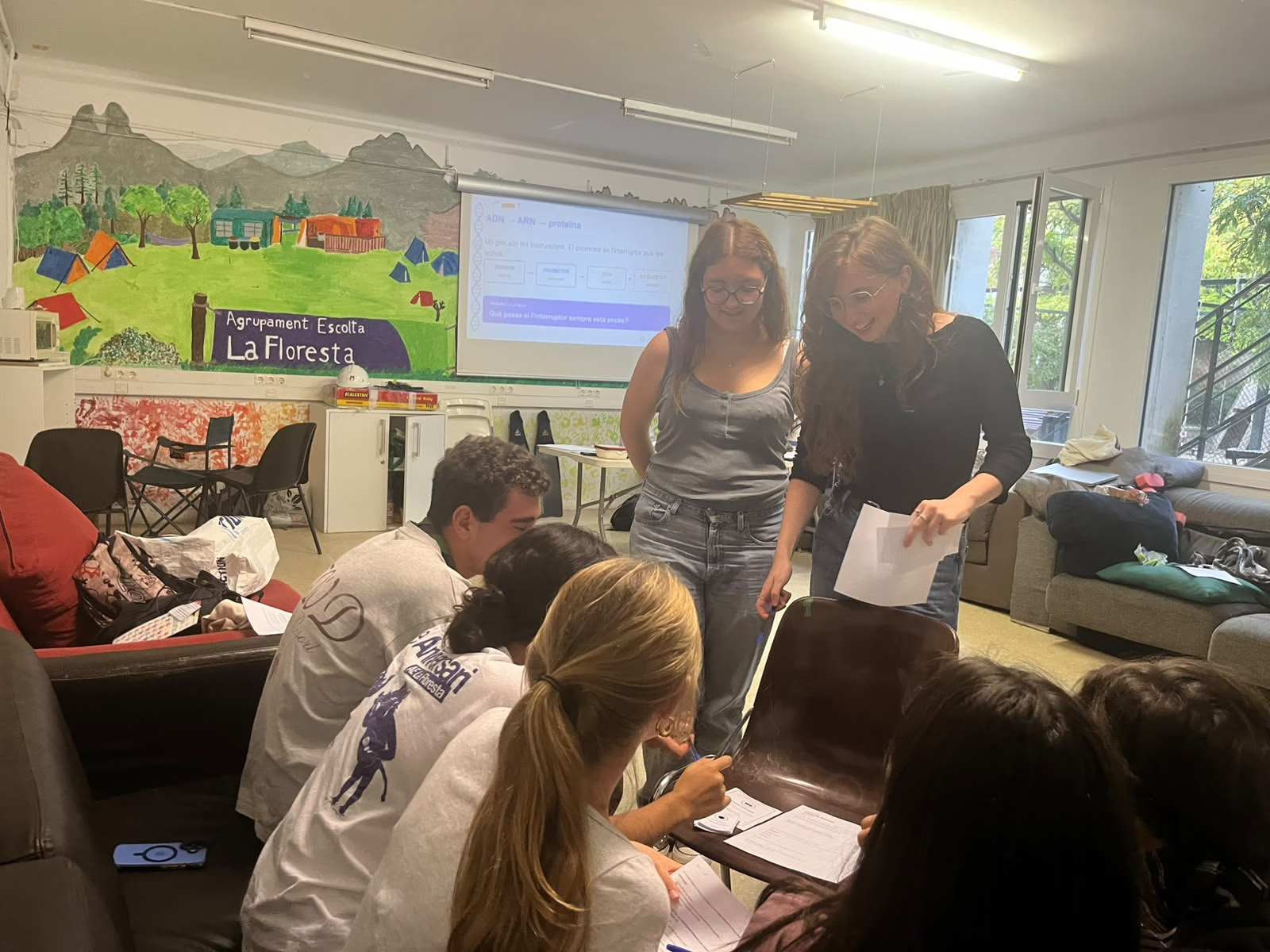
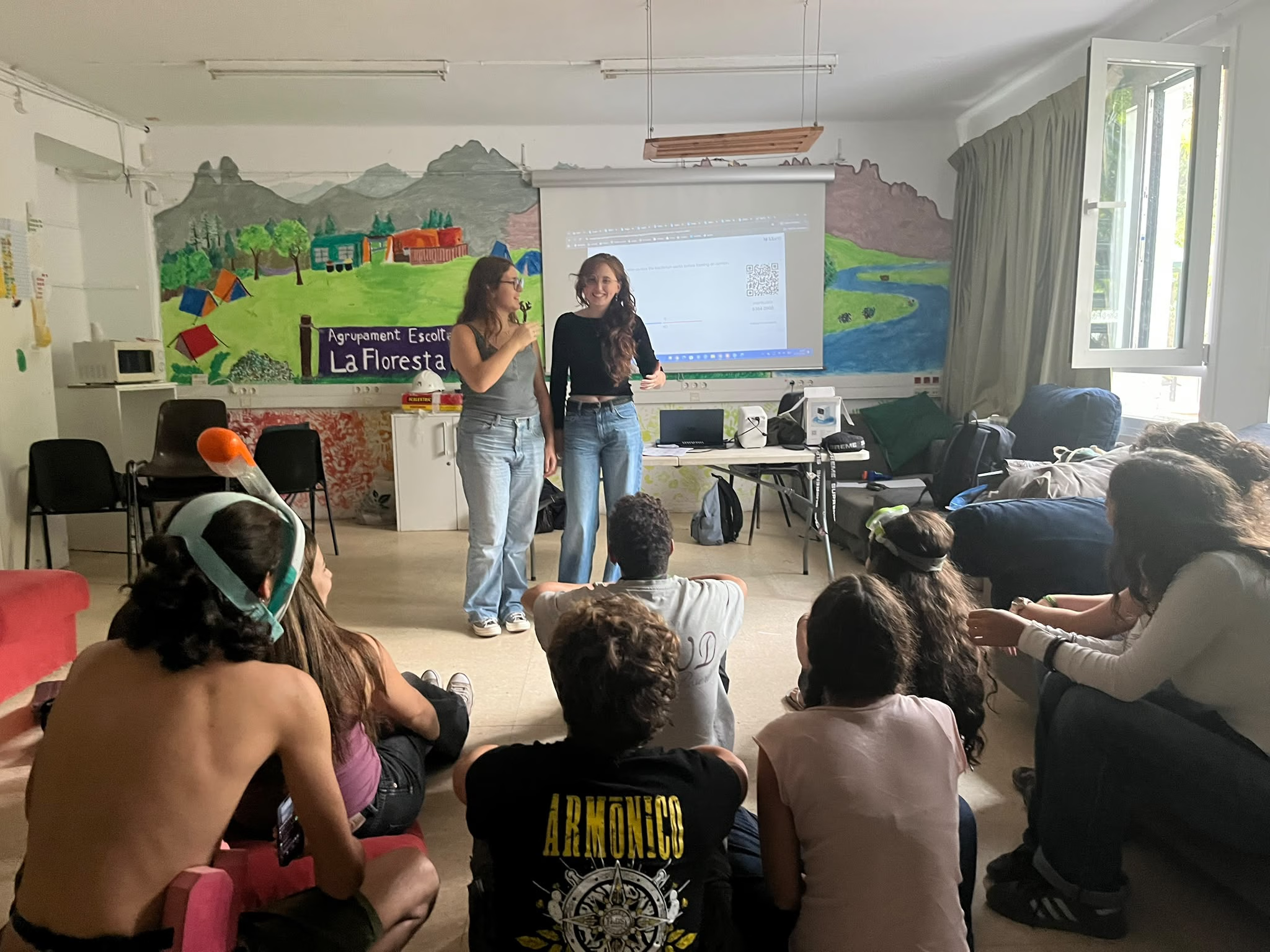
Same technology, different chair: an ethics role-play
- Dates
- 17 and 19 October 2026
- Who
- 15 scout leaders aged 18–23 at AE La Floresta, and around 20 Biomedical Engineering undergraduates
- Roles
- Consumer, regulator, winegrower, synthetic biology scientist
Decisions about new biotechnology will shape the food, farming and environment teenagers grow up with, yet they are rarely asked what they think. In this role-play, participants take on the role of a consumer, a regulator, a wine grower or a synthetic biology scientist, and decide whether a genetically modified soil bacterium should be allowed in vineyards.
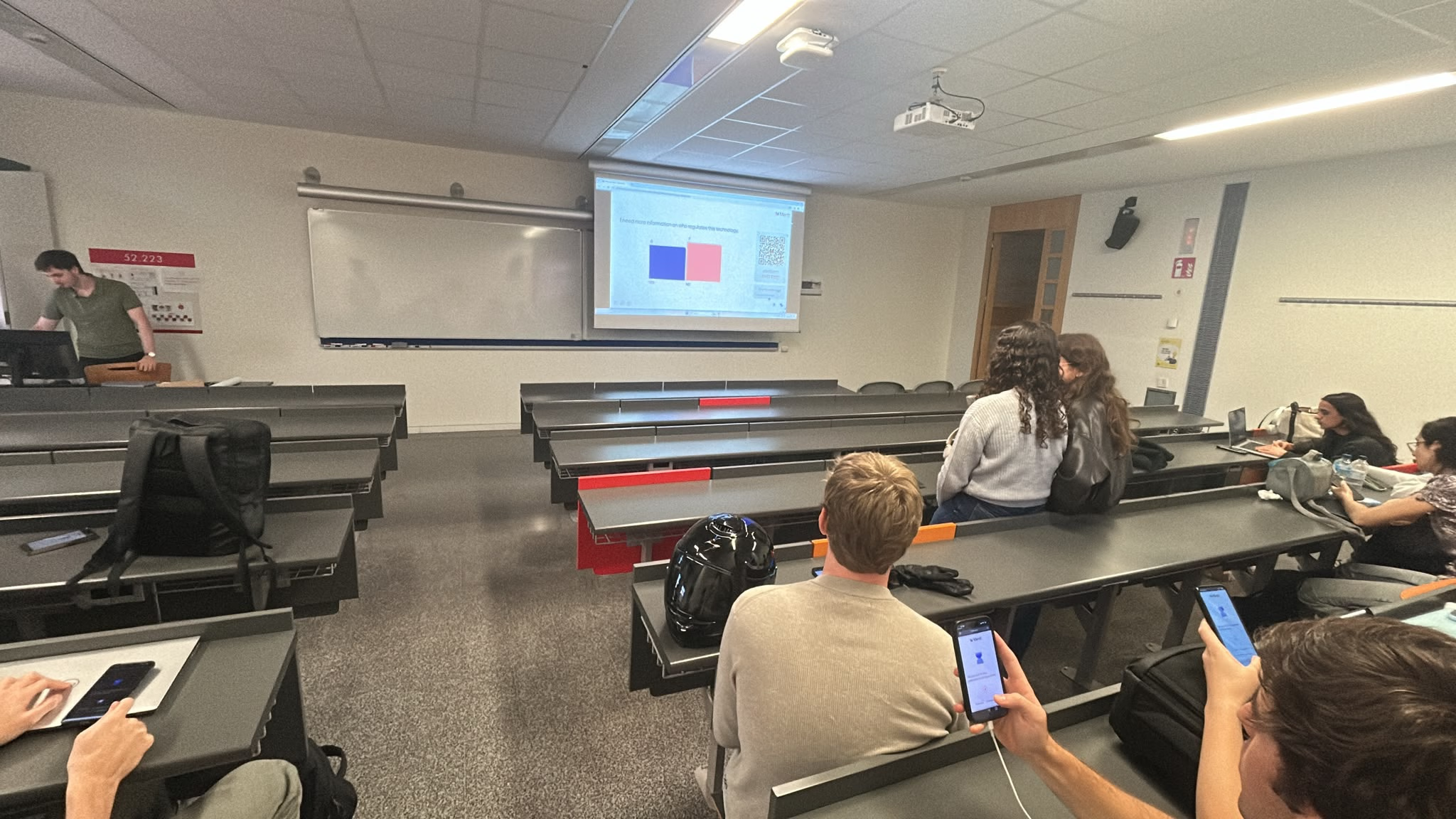
We ran it on 17/10 with 15 young adults aged 18-23 at AE La Floresta, and again with around 20 Biomedical Engineering undergrads. Our aim was not to convince them that the technology is good, but to show them that these decisions are open, and that their opinion counts in them.
The activity is designed so that participants do most of the talking and we do most of the listening because:
- Everyone takes a position. For each question, participants move to one side of the room for yes and the other for no. If you have access, we used a mentimeter to get more accurate numbers.
- Every position is explained. After each question we ask people on both sides why they stood there and this is where the dialogue happens because participants answer each other, not us.
- Everyone gets in other people's shoes. Each role brings worries a teenager may never have considered: a winegrower asked whether their wine still counts as "natural", a consumer reading an unexpected label, a regulator weighing benefits against unknowns.
- The last question turns it back on them: "Would you have answered differently in another role?"
Read more: how we designed it, what participants told us and who was not in the room
How we designed it
Each design choice responds to who was in the room and what we wanted them to be able to do:
| Choice | Why |
|---|---|
| Start with a short, plain-language introduction to synthetic biology | Participants might not have the necessary knowledge to debate what an engineered microbe is, so we give them the information to do it from a basic understanding. |
| Four roles, each with a short context and its own questions | A role gives permission to voice a concern or a hope people might not raise as themselves and this allows us to put several points of view in the same room. |
| Physical yes/no positions instead of a show of hands | Moving makes every opinion visible and starts the conversation between the two sides that are clearly separated (this also can start a conversation about how different are really those two positions). |
| Plain-language facts about regulation for the regulator role | Explaining the actual reality of laws regarding synbio helps focus the conversation on how they actually work. |
| Finish out of role, with a yes/no line and a short survey | Separates what people argue in role from what they now think, which gives us feedback on the activity. |
What participants told us
We collected feedback by having them follow a Mentimeter presentation where they answered all questions from their phones.
Scout leaders
- In the room: 15 of 15 participants said they had learned something new. Since we had extra time and they were interested, we replayed so they all got the chance to play all roles.
- Survey:
- Viticultor chair: "I would worry this technology could hurt my product's reputation, even if the plant itself was never modified." Mean ~4.0/5 (n = 15), skewed high, even though ~3.8/5 said they felt more comfortable knowing only soil microbes were affected.
- Synbio Scientist chair: "I would need more information on its potential environmental impact." Mean ~4.6/5 (n = 15), the highest of the block, while confidence in defending the product's safety to a farmer sat low at ~2.7/5.
The room's concern shifted from the science to perception: in the viticultor debrief, most high scorers said they worried about how others would see the product, not the biology. As "experts", participants also found they couldn't defend the product without knowing more about environmental impact, which surprised them more than the human-safety question.
Biomedical Engineering students
- In the room: 17 of 20 participants said they had learned something new. Different chair, different answer: 14 of 20 said they would have answered differently in another role.
- Survey:
- Viticultor chair: "I would worry this technology could hurt my product's reputation, even if the plant itself was never modified." 3/5 lower and more spread out than we'd expect from a lay group, even though 4/5 said they felt more comfortable knowing only soil microbes were affected.
- Synbio Scientist chair: "I would need more information on its potential environmental impact." 5/5, still the highest of the block, while confidence in defending the product's safety to a farmer sat at 3/5, higher than a lay group's but far from certain.
The room's concern was less about the science and more about everything around it. Students arrived comfortable with the biology, but the regulator and viticultor chairs exposed gaps they hadn't considered: how the law treats microbiome interventions, and how a label like "natural" shapes what farmers can sell. As "experts", many found that "it's safe" was easier to say than to defend, because they couldn't say how persistence in soil or gene transfer to native microbes would be assessed. The sharpest split came on whether microorganisms should be regulated differently from GM plants, with engineering-minded students favouring case-by-case assessment and others wanting one consistent framework.
Who was not in the room
The biggest limit of this session was who was not in the room. Everyone was a young adult from the same scout group, of similar age and similar backgrounds, and no one held any of the four roles in real life: the winegrower, the regulator and the consumer who buys the wine were all imagined by people who have never had to make that decision.
This matters because a role-play can only show the perspectives participants can imagine. A teenager playing a winegrower can only guess the fear of losing a harvest, but not argue it the way someone whose family depends on one would. The people with the most at stake in a decision like this were absent.
The format of the provided kit is built to fix this because it works with any age and group size and the roles can be played by people who hold them for real. The strongest version of this activity would mix them, with teenagers debating next to winegrowers, farmers, parents or grandparents, so each side hears arguments it could not have imagined.
Use it yourself
We turned the activity into a free kit, so that teachers, outreach groups and other iGEM teams can run it without us and without a lab. It is written for organisers with no biology background and needs only printed cards (it can also be adapted for an online version).
| Format | Time | Group | Best for |
|---|---|---|---|
| Whole room | About 30 min | Any size | The end of a talk or event |
| Council debate in groups of four | 60 min | 8 to 32 people | A class or a workshop |
The kit includes two scenarios with role cards, background knowledge for the organisers, debrief questions, adaptations for younger audiences and online sessions, and before and after questionnaires so others can measure what their participants learned. It also explains how to build the same activity around any other technology or iGEM project idea.
Ethics Role-Play Kit: Who Decides What Goes in the Soil (PDF)
Custom made bacteria
- Date
- 17 October 2026
- Where
- La Floresta scout troop, Sant Cugat del Vallès
- Who
- 45 scouts aged 12 to 17, in three age sections
- Format
- Card game with a risk committee, pre- and post-test
How we designed it
Let teenagers design an engineered bacterium themselves and then have that design questioned by another group.
| Specific objective | Indicator | Result |
|---|---|---|
| Describe a bacterium as a circuit of parts: sensor, processor, output and safety. | The mean score on the 7-point test rises between the pre-test and the post-test and open answers name both a sensor and an output. | 2.24 to 5.07 on average (normalised gain 0.59, n = 45), and answers naming both parts rise from 16% to 82%. |
| Spot what could go wrong with a design and suggest a way to reduce it. | Open answers name more concrete risks and measures tied to it in the post-test. | Concrete risk 38% to 69% and mitigation 2% to 47%. |
| Question each other's designs and change them in response. | Groups revise their design after the risk committee's questions. | 7 of 10 groups (70%). |
Since this activity was run at a scout troop and not at a school the barrier we wanted to lower was the setting itself because nobody there is obliged to pay attention and anything that feels like a lesson loses the room. So, we needed to get their attention.
The session was designed as a single structure that we adapted to different ages, according to the age groups in the scout troop (Raiers 12–14, Pios 15–16 and Klan 17). The activity could be reused with any group while keeping the idea the same. The session began with a pre-test and a five-minute explanation in which every slide was introduced with a question. Groups of around five then chose a real-world problem card (plastic on a beach, an infected wound, a vineyard during drought or spoiled food) and designed a bacterium to solve that problem. To guide them they had a set of part cards: sensor, processor, output and safety.
| Family | What it does |
|---|---|
| Sensor | Detects something in the environment |
| Processor | Decides when the output switches on |
| Output | Does something or gives a warning |
| Safety | Stops the bacterium if it leaves the intended place |
| Wildcard | A blank card for the group to invent a piece and justify it |
Adaptations changed only the difficulty: Raiers worked with three kinds of parts, Pios added processors and the logic from DNA to protein and Klan used logic gates and a budget.
| Section | Cards | What is added |
|---|---|---|
| Raiers (12–14) | 15 | Sensors, outputs, safety pieces and the wildcard |
| Pios (15–16) | 17 | Two processors: an "only if there is a signal" promoter and an "always on" promoter |
| Klan (17) | 19 + price table | A NOT repressor and an AND gate, plus a 10-point budget in which every card has a cost and the design must include at least one piece of each family |
The core of the session was a risk committee, in which groups paired up to swap designs and question each other about what could go wrong. They then had a chance to make changes in their original design. The activity closed with the same questionnaire as a post-test, with some items identical across ages, so that results could be compared, and an open question.
Read more: what they learned and what we would change
What they learned
They definitely left being able to do and explain things, which they weren't able to before. Over the three age groups, average scores rose from 2.24 to 5.07 out of 7 (45 participants), they closed about 59% of the gap between where they started and the maximum score (normalised gain). The clearest change was in vocabulary: who could say what a gene is went from 51% to 80%, and from 9% to 73% among the Raiers, who started at the lowest point (being the youngest, makes sense). Design was also learnt: asked to imagine a bacterium that detects contaminated water, the answers naming both an output and a sensor went from 16% to 82%. In their own words, one said "I thought a single gene was in charge of the entire task, now I know there's a chain of genes that is each in charge of their own step".
They also became better at questioning their designs. Answers that named a specific risk went from 38% to 69%, and in 7 of 10 groups the committee led to a design change, as another participant put it: "It was easier seeing the mistakes in others' work than in our own". The weakest result was imagining how to mitigate a risk. While it did rise from 2% to 47% overall, only to about a third among the Pios (33%) and the Klan (36%), and the logic-gate item stayed flat among the Klan at 45%. Nonetheless, their confidence in explaining how to design a bacterium grew from 1.2 to 3.1 out of 5, and one of them summed it up as "I now know what pieces bacteria use to perform a function, and which ones I would want to use for a function that I desired."
A note on wonder
This was the session that ended with the most questions. Most had never heard of bacteria being able to perform this many functions, and had awe-filled wonderings, such as:
Is it really that easy to design a living being to accomplish a specific task?
Is this actually being done right now?
as well as hunger for more details, such as:
How do sensors, processors and the different parts actually communicate with each other, in real life?
This is very similar to how some electronic circuits work. What other similarities are there, and where would they differ?
What we would change
- Take out minutes from the design phase and give them to the revision that follows the risk committee because this way the groups have more time to adapt their design to the discussed problems.
- Add a card to the committee asking not only what could go wrong but also what the group would change to prevent it (after giving them the time to think about it).
Use it yourself
The entire activity, with the explanation, test, problem and piece cards available for printing, so that anyone can prepare it themselves if they want. We also tried it outside the scout troop, since several of us took the printed version home and ran it with our own families, which is how we found out that the problem cards are also interesting for adults. The information shared is basic enough, so all the information one needs about biology is on the slides.
Our curiosity, extended
Across the year we worked with 10-year-olds in a school, teenagers in three age sections of a scout group, pre-university students from around the world, adults at a community centre, families at a museum, researchers at our own institute and residents of a care home, in Catalan, Spanish and English. What changed between all of our sessions was never only the vocabulary, but so much more. For the primary school the barrier was access, because synthetic biology does not reach them without a deliberate effort behind it. At the community centre it was confidence, since people who understood most of what we were explaining still did not feel entitled to an opinion. At the care home it was hearing, sight and memory, which meant every idea had to arrive in multiple ways at the same time. Naming the barrier before designing the session is the first step of our method and it is the main reason why our project has also become a story for six-year-olds, a locked box for children and families and a molecular explanation and discussion for researchers. That is what inclusivity has meant to us: a different version of the same project built around each barrier we found.
Additionally, we hope all our kits and virtual games travel further than we did and are able to become the water of a wider sea than the river our project is (check out this idea at the Contribution page!).
References
- Fundesplai. Estratègies per establir els objectius d'un projecte. Suport i Gestió d'Entitats i Associacions. https://suport.fundesplai.org/blog/actualitat-blog/estrategies-establir-objectius-projecte/ (accessed October 2026).
- Tyler, R. W. (1949). Basic Principles of Curriculum and Instruction. University of Chicago Press.
- Bloom, B. S. (Ed.), Engelhart, M. D., Furst, E. J., Hill, W. H., & Krathwohl, D. R. (1956). Taxonomy of Educational Objectives: The Classification of Educational Goals. Handbook I: Cognitive Domain. David McKay.
- Mager, R. F. (1962). Preparing Instructional Objectives. Fearon Publishers.
- Doran, G. T. (1981). There's a S.M.A.R.T. way to write management's goals and objectives. Management Review, 70(11), 35–36.
- Institut Obert de Catalunya, Generalitat de Catalunya. Oci i lleure en situacions de dependència, unit 2, activity sheet structure (fitxa d'activitat). https://ioc.xtec.cat/materials/FP/Recursos/fp_apd_oa01_/web/fp_apd_oa01_htmlindex/WebContent/u2/a2/continguts.html (accessed October 2026).