





1. Overview
1.1 Real-world problem and project motivation
Our project began with a simple observation from everyday life. Some people around us struggled with weight management and hoped to lose weight without completely changing their usual diet, as restrictive or unappealing meals were often difficult to maintain.
This led us to explore low-GI foods. However, many existing options were not easy to integrate into everyday meals or were less appealing in taste. We therefore decided to develop a low-GI-related product based on ordinary starch, aiming to make healthier staple foods more practical for daily use.
We focused on increasing the resistant starch content of ordinary starch, a major component of staple foods such as rice and noodles. Through IHP, we examined who could benefit, what they expected, and how technical and industrial choices could turn this approach into a practical product.
1.2 Our project and its current scope
Our product is low-GI starch: an enzymatically modified resistant-starch ingredient for staple foods. A synergistic multi-enzyme process involving hydrolysis, chain elongation and debranching restructures ordinary starch to increase its resistant starch content. Our current work focuses on the ingredient, with further application development addressing cooking performance, mouthfeel and incorporation into rice- and wheat-based foods.
1.3 Our four-stage IHP pathway
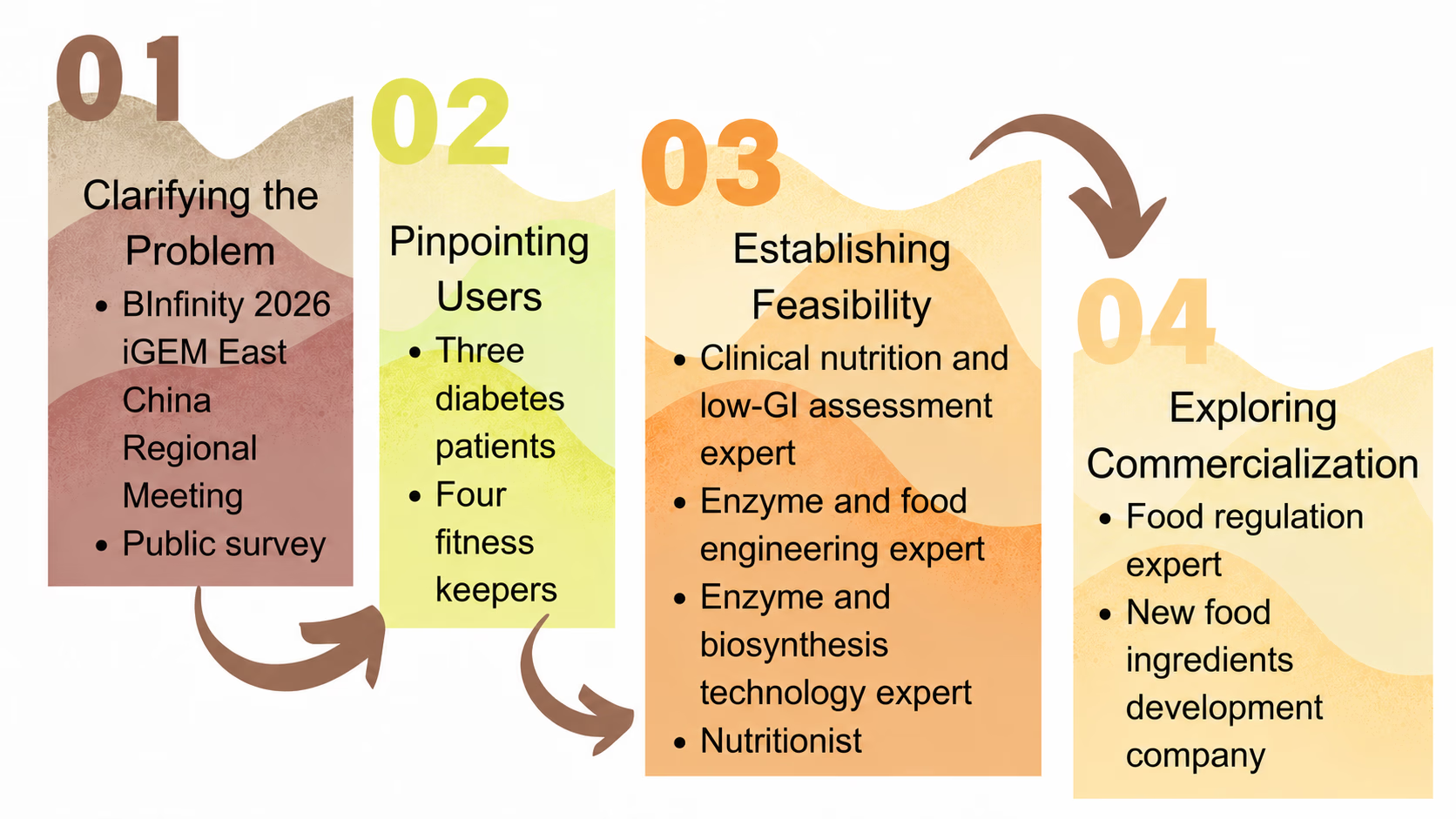
Our integrated human practices (IHP) connect resistant starch development with user needs, industrial conditions, and regulatory requirements through four stages: clarifying the problem → pinpointing users → establishing feasibility → exploring commercialization.
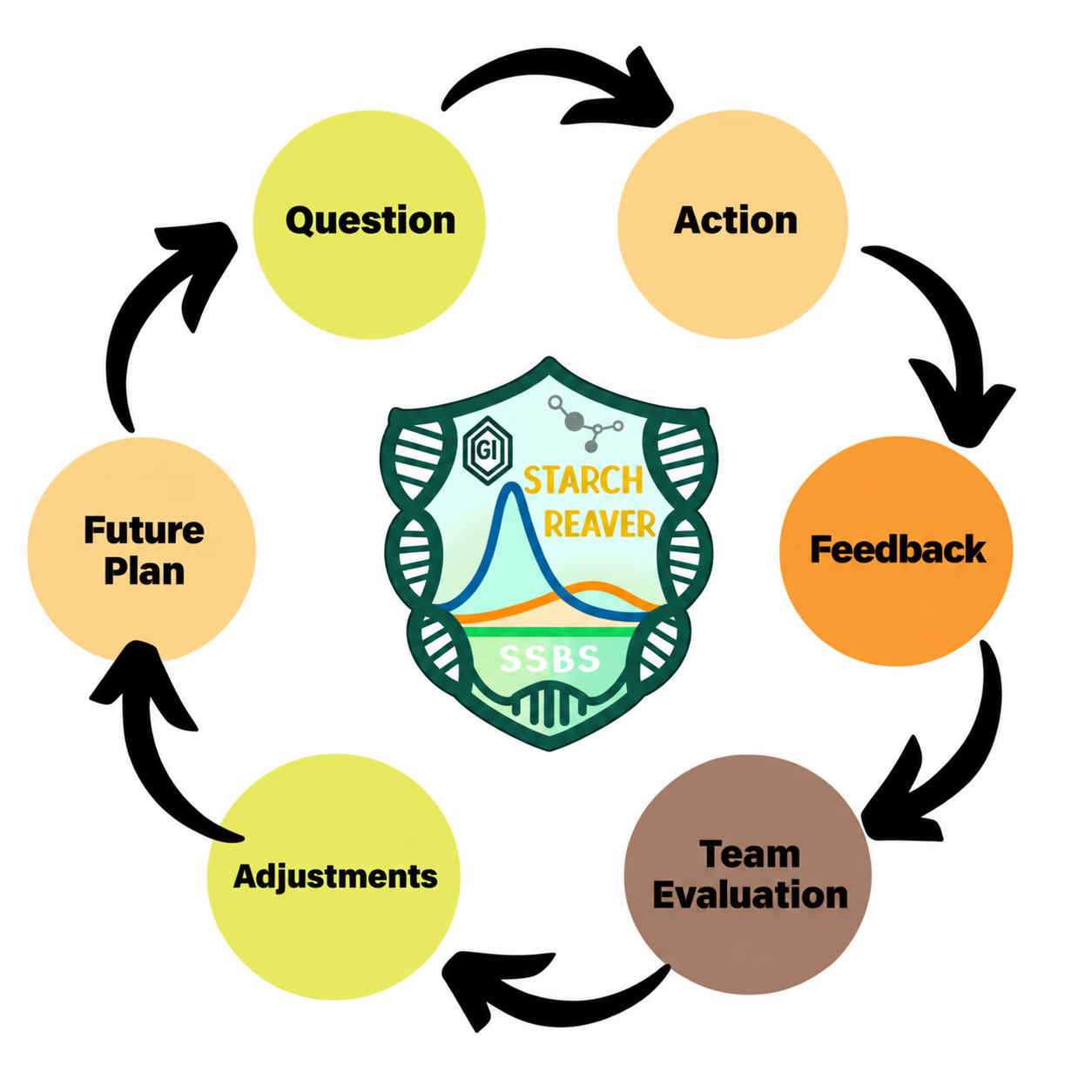
Within each stage, we explain the question, action, feedback, team evaluation, adjustments, and future plan. This makes the connection between stakeholder input and project decisions visible. Stage 3 develops the links with experimental work in greater detail.
2. Stakeholders and Decision-Making
2.1 Stakeholder map
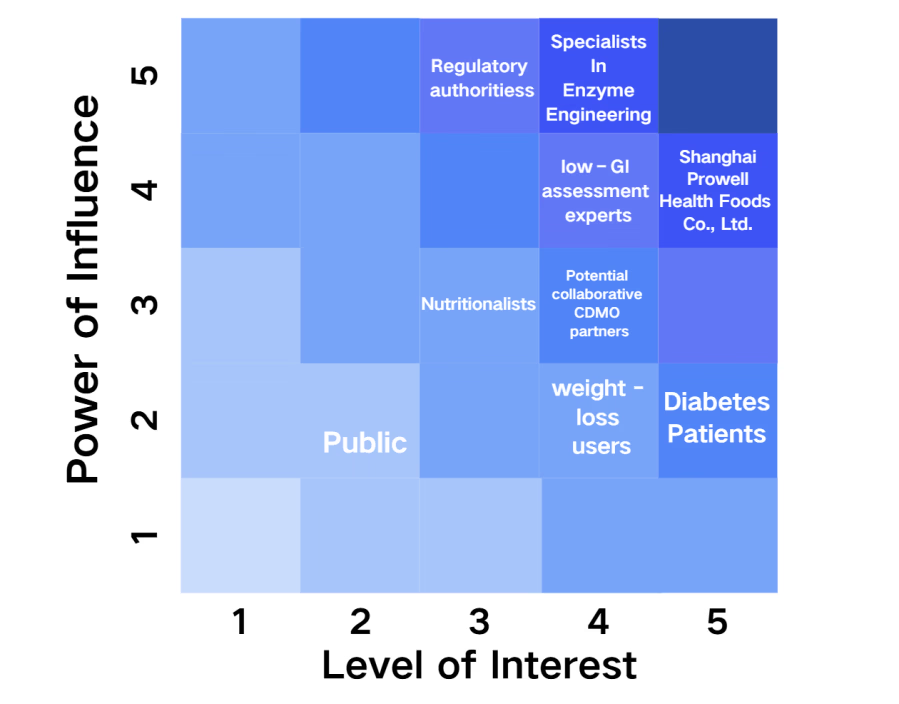
We mapped the groups that influence our project or are affected by it to guide engagement and responsible decision-making.
2.2 Why these stakeholders matter
| Stakeholder | Why their input matters | Relevant decisions |
|---|---|---|
| Consumers and people living with diabetes | They experience daily eating, cost and convenience concerns. | User needs, preparation and trust |
| Weight-management participants | They describe the challenges of sustaining dietary choices. | Taste, convenience and application forms |
| Clinical and nutrition experts | They inform nutritional interpretation and evaluation needs. | Evidence, suitability and usage questions |
| Enzyme and food-engineering experts | They assess technical and production constraints. | Expression, reaction conditions and cost |
| Regulatory specialists | They help identify requirements that need formal verification. | Product classification and claims |
| Food manufacturers | They understand downstream processing and ingredient adoption. | B2B supply and production compatibility |
2.3 How we evaluate feedback and resolve differences
We did not treat stakeholder feedback as a vote or simply average different opinions. We first considered what type of decision each stakeholder was positioned to inform. Users were most relevant to everyday needs such as taste, convenience, affordability and understandable information; clinical and nutrition experts helped interpret suitability and validation needs; engineering experts informed technical and production choices; and safety or regulatory requirements set boundaries that user preference could not override. Expert advice guided our next questions, but experimental results and formal regulatory verification remained necessary before treating a recommendation as established.
When recommendations differed, we compared them against four questions: whether they responded to the needs identified earlier, whether they matched our current technical evidence and project scope, what practical burden they placed on downstream users or manufacturers, and what further validation would be required. We then recorded whether a suggestion was adopted, adapted, retained as an alternative, or deferred. The disagreement between Dr. Qin and Dr. Mei over enzyme supply versus modified-starch supply in Stage 3 became the clearest example of this process: rather than choosing an expert to follow, we compared the consequences of both routes and then examined the preferred direction further through the Prowell visit.
3. Stage 1 — Clarifying the Problem
3.1 Question to Resolve
At the beginning of the project, our understanding of low-GI nutrition and resistant starch came mainly from academic sources. We therefore needed to understand how the public viewed existing low-GI staple foods, what prevented regular consumption, what product forms they preferred, how much additional cost they would accept, and what concerns they might have about ingredients produced through synthetic biology.
Stage 1 was therefore designed to identify the main user needs and unresolved questions before fixing our product direction.
3.2 Action and Key Content
We conducted a 15-question online survey through Wenjuanxing, covering dietary needs, low-GI awareness and purchasing experience, barriers to purchase, production-method concerns, acceptable product forms, trust and price.
The survey report records 605 valid answers. Percentages below use each question's valid-answer denominator. For multiple-response questions, percentages represent the proportion selecting each option and may sum to more than 100%. Source: Wenjuanxing survey report.
3.3 Feedback Received
Read More
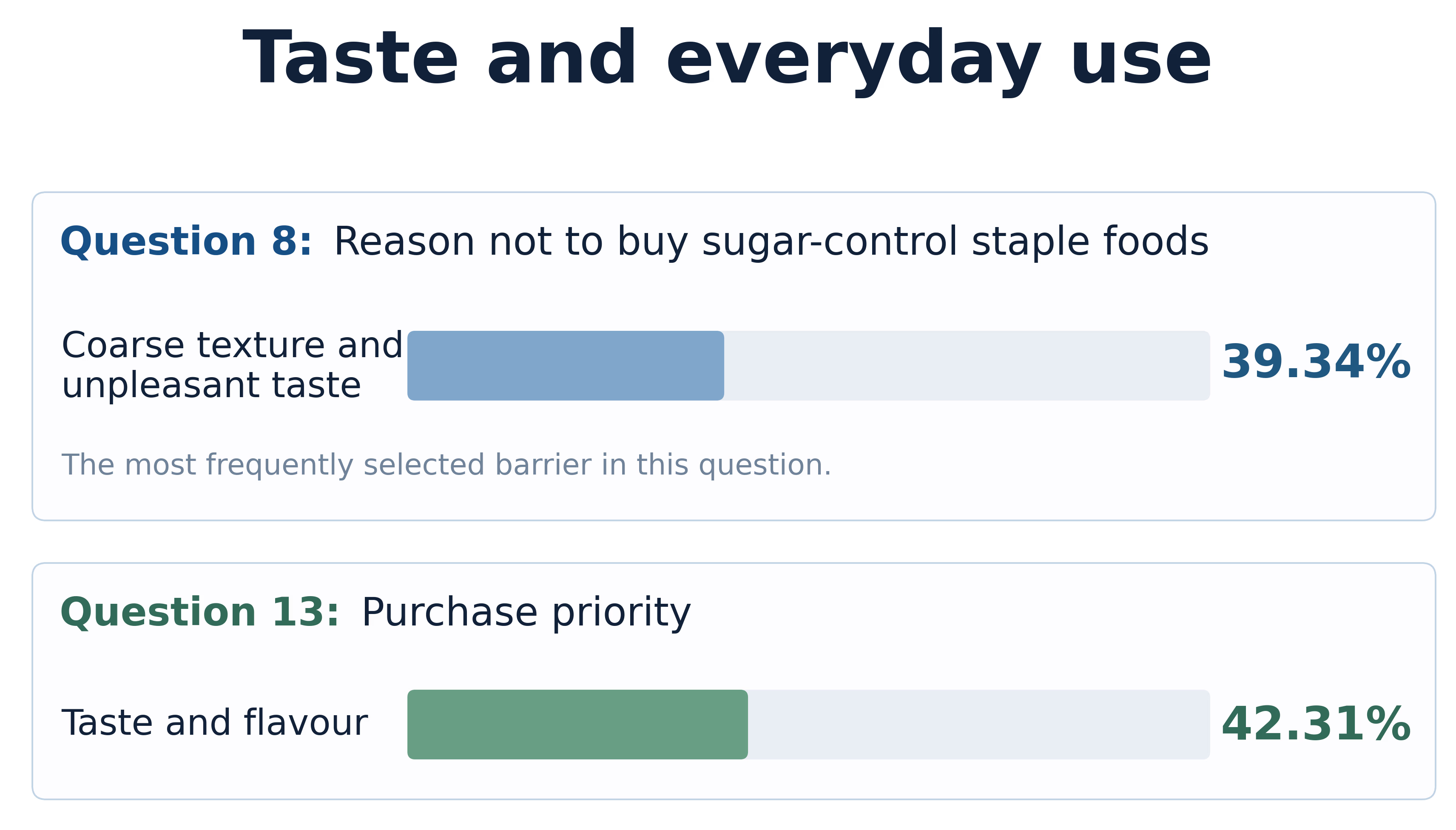
In Question 8, 39.34% of respondents selected coarse texture and unpleasant taste as a reason not to buy sugar-control staple foods, making it the most frequently selected barrier in that question. In Question 13, 42.31% selected taste and flavour as a purchase priority.
These responses identified taste as both a purchase consideration and a barrier to acceptance. They highlighted the need to consider whether a low-GI product could fit enjoyable everyday meals.
Safety and trust
Read More
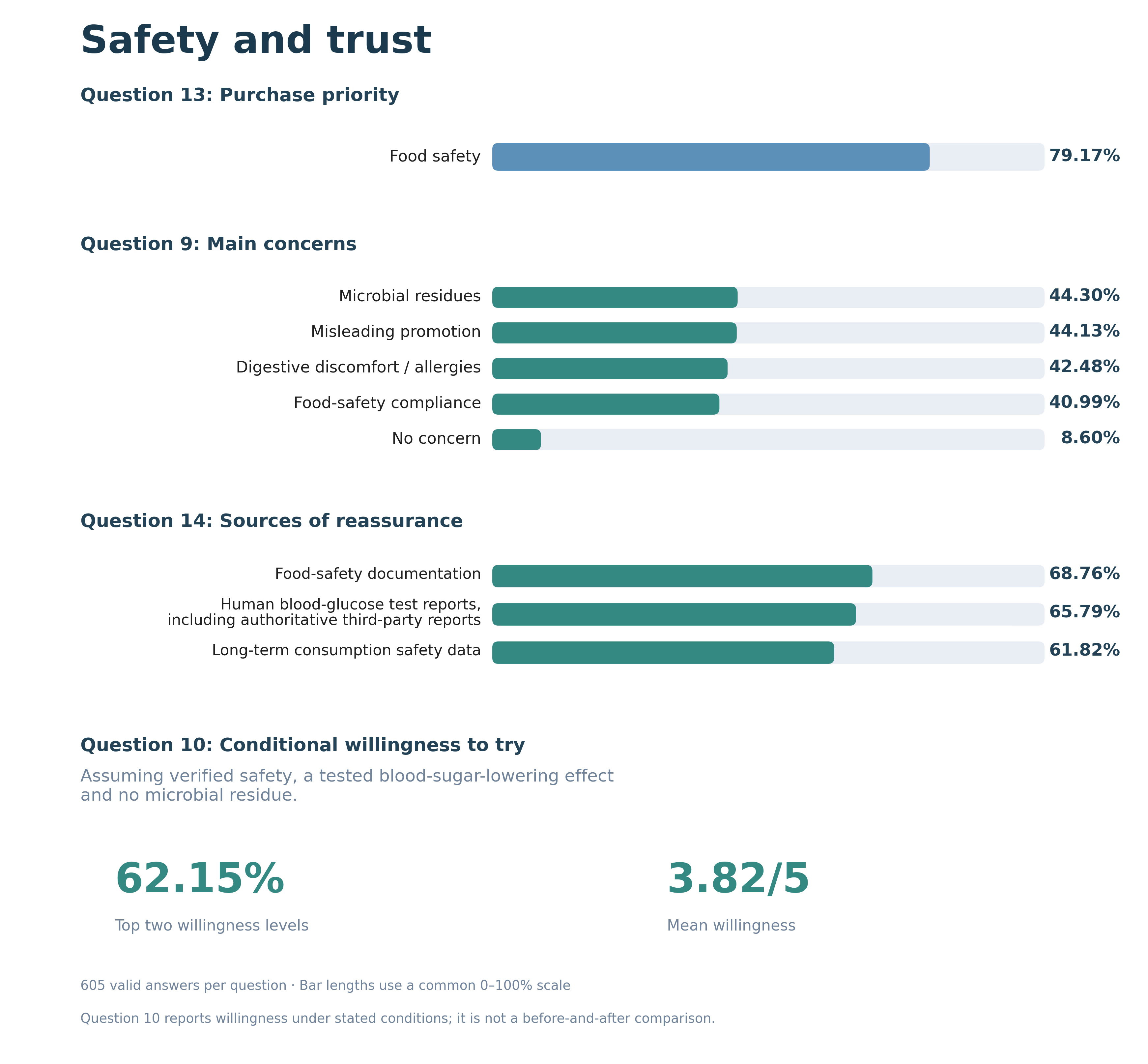
Food safety was the most frequently selected purchase priority in Question 13, chosen by 79.17% of respondents. Question 9 identified specific concerns about microbial residues (44.30%), misleading promotion (44.13%), digestive discomfort or allergies (42.48%) and food-safety compliance (40.99%). Only 8.60% selected the no-concern option.
In Question 14, the most selected sources of reassurance were food-safety documentation (68.76%), human blood-glucose test reports, including authoritative third-party reports (65.79%), and long-term consumption safety data (61.82%).
Under Question 10’s hypothetical conditions of verified safety, a tested blood-sugar-lowering effect and no microbial residue, 62.15% selected the two highest willingness levels; the mean was 3.82/5.
Together, these findings showed that acceptance depended on credible evidence and clear information about safety and performance. The willingness expressed in Question 10 was conditional on the stated assurances, rather than unconditional acceptance of the production method or our product.
Price and affordability
Read More
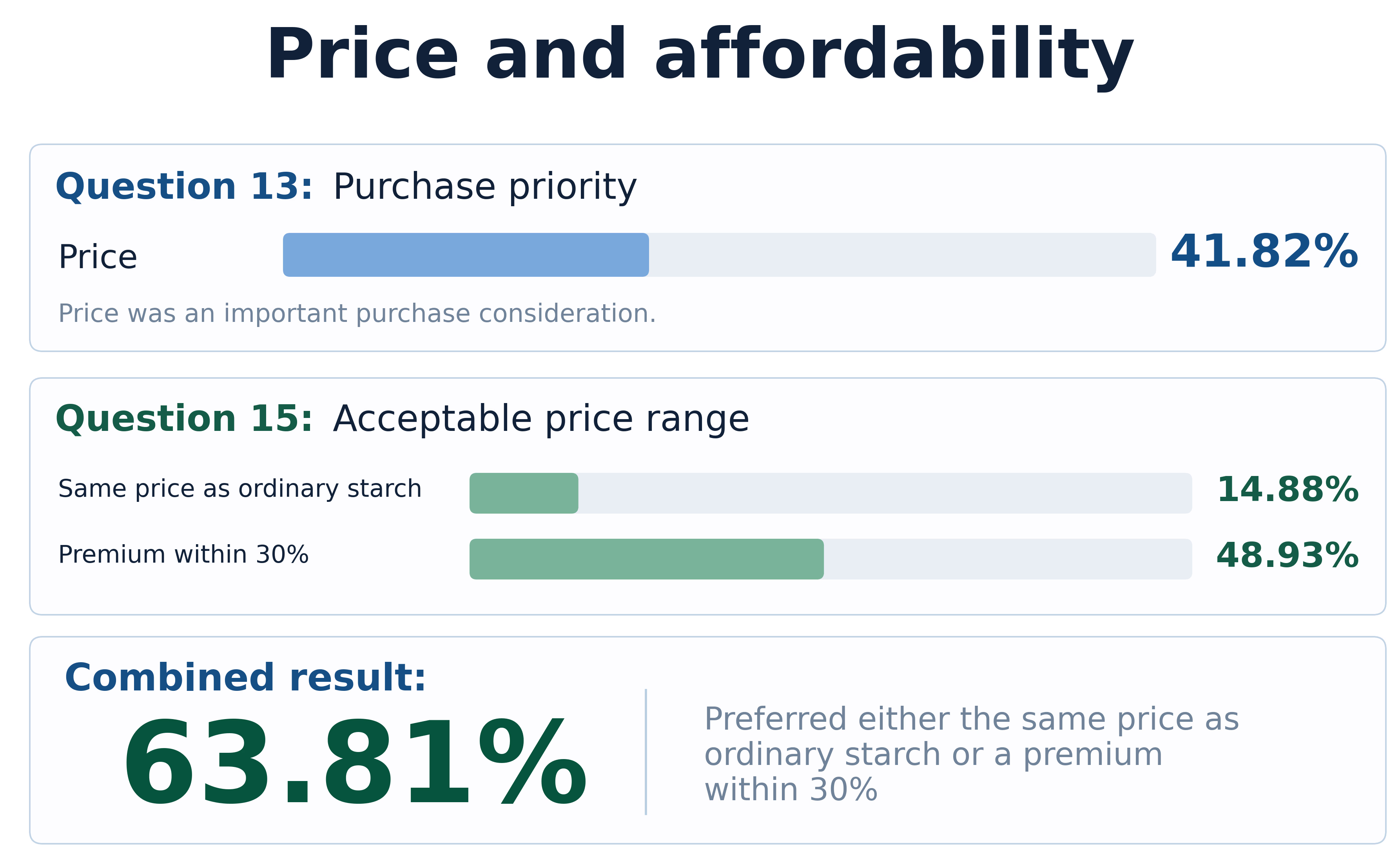
In Question 13, 41.82% selected price as a purchase priority. In Question 15, 14.88% preferred the same price as ordinary starch, while 48.93% accepted a premium within 30%. Together, these groups accounted for 63.81% of respondents.
Overall, respondents remained sensitive to price: more than half selected either no premium or a premium within 30% of the price of ordinary starch. Price was therefore an important factor for us to consider in subsequent development.
Product form
Read More
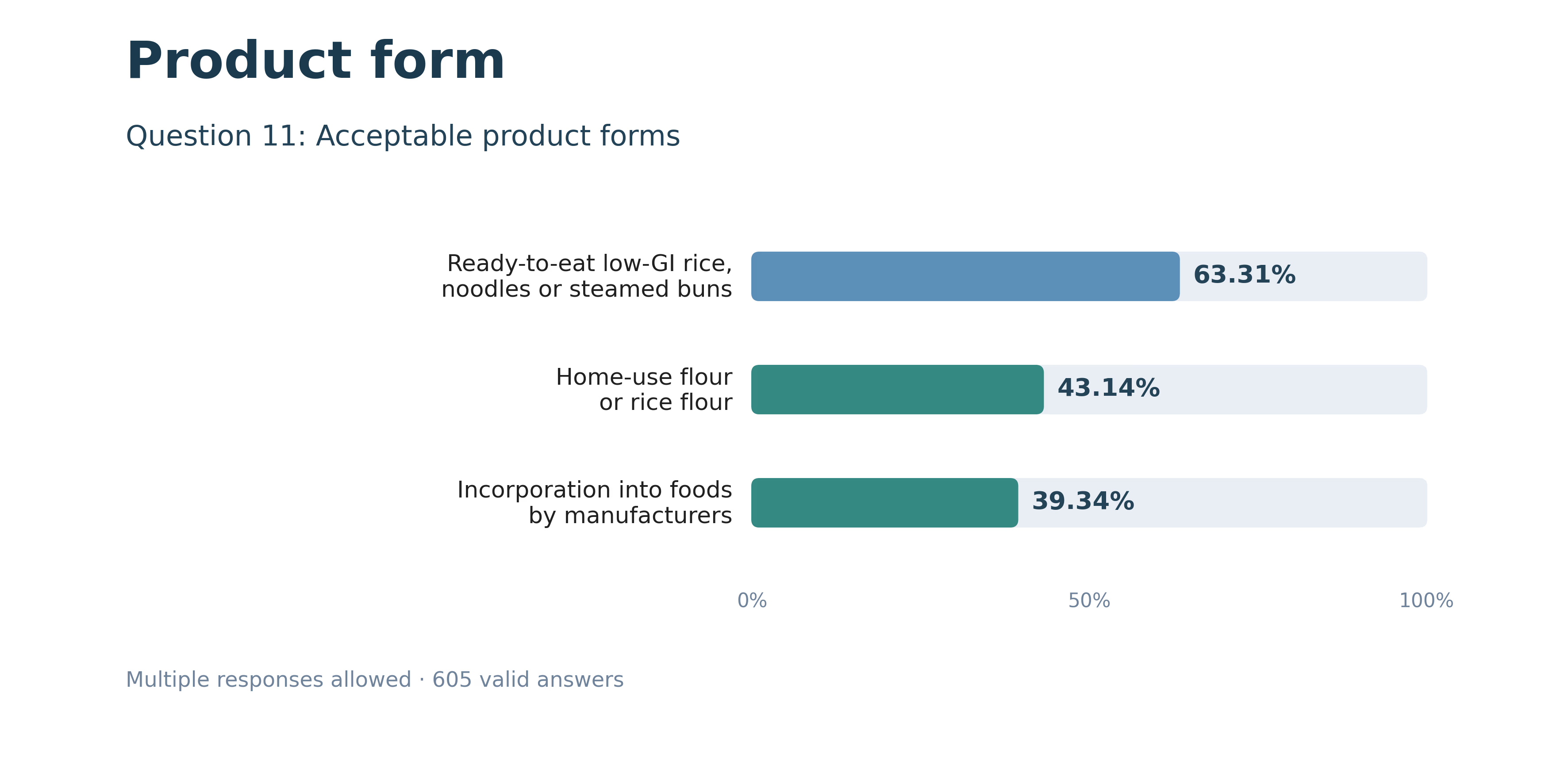
In Question 11, acceptable forms included ready-to-eat low-GI rice, noodles or steamed buns (63.31%), home-use flour or rice flour (43.14%), and incorporation by manufacturers into foods (39.34%).
Ready-to-eat staples attracted the most selections, but respondents also expressed interest in home-use ingredients and foods containing the ingredient. These findings kept several product forms open for further investigation. As consumer responses, they indicated acceptable ways to reach end users rather than demonstrating purchasing demand from manufacturers.
Functional expectations and potential use contexts
Read More
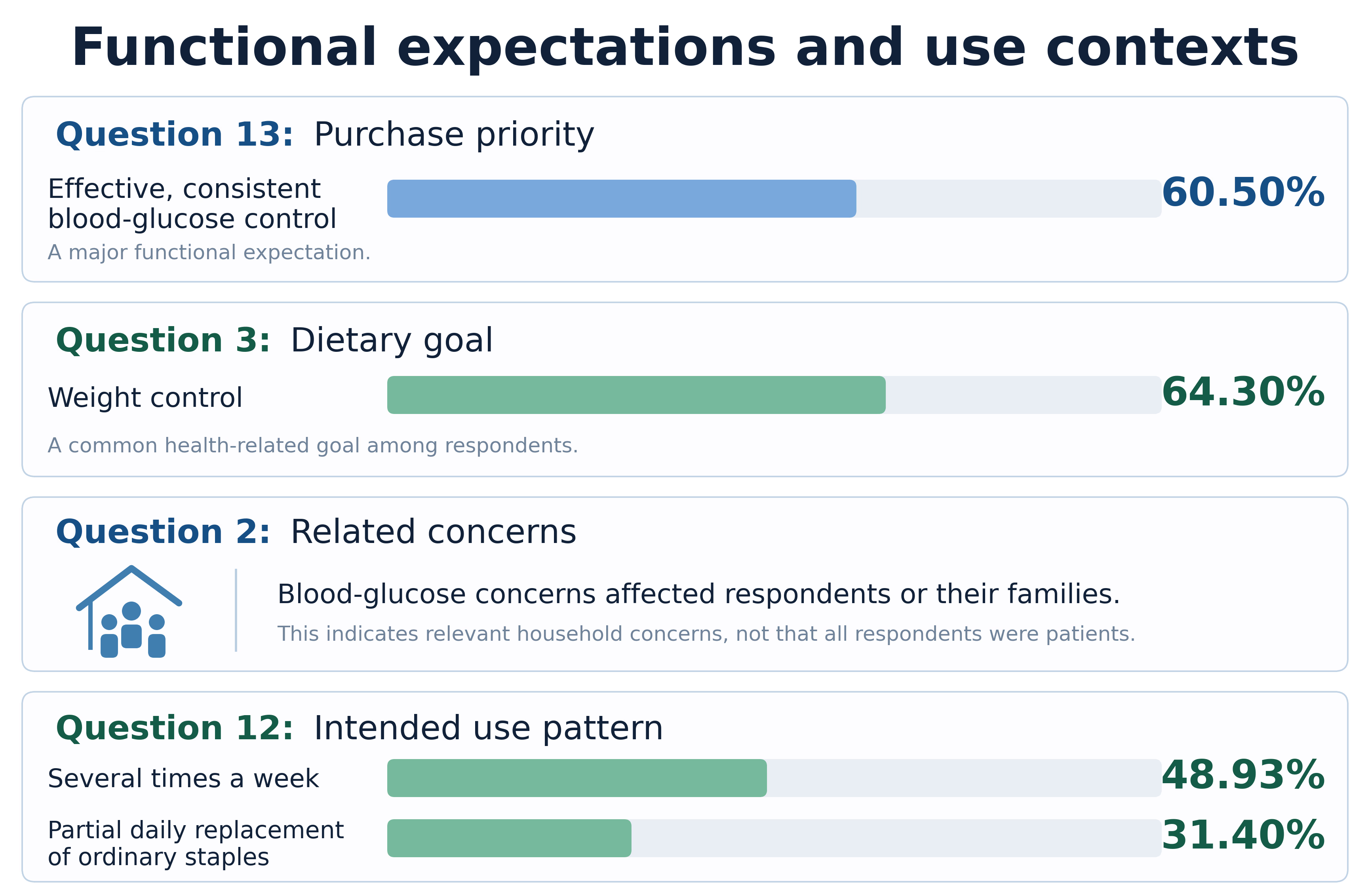
In Question 13, 60.50% selected effective, consistent blood-glucose control as a purchase priority. Weight control was also a dietary goal for 64.30% of respondents in Question 3. Question 2 identified blood-glucose concerns affecting respondents or their families, although these responses did not establish that all respondents were patients.
In Question 12, 48.93% indicated intended use several times a week, while 31.40% selected partial daily replacement of ordinary staples.
These responses highlighted expectations related to blood-glucose and weight management, often within routine dietary use. They provided a reason to investigate different users’ needs more closely through interviews, including the role of family meals. They described intended benefits and use patterns, rather than demonstrated health outcomes.
Education connection
Read More
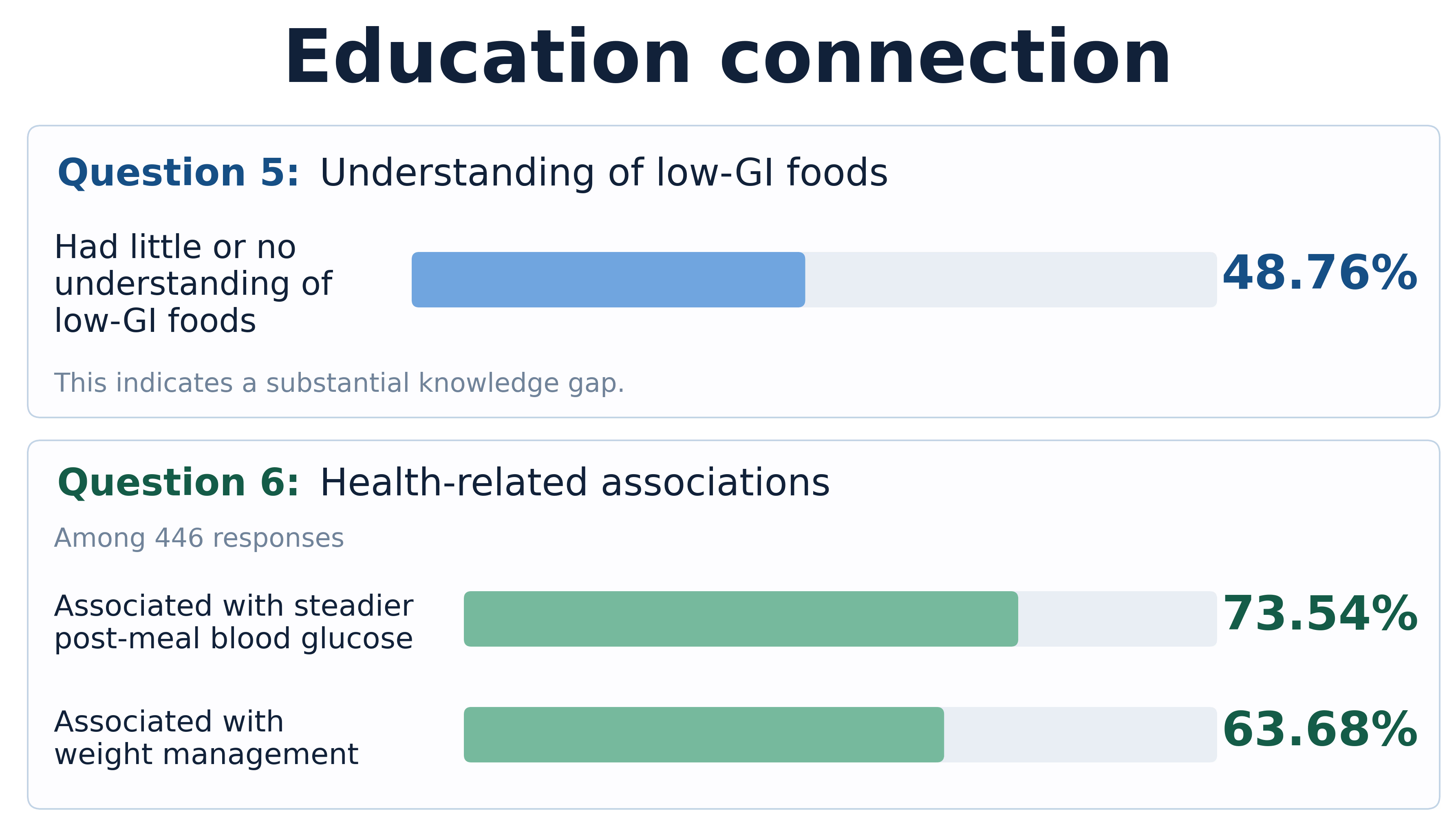
In Question 5, 48.76% of respondents had little or no understanding of low-GI foods. Among the 446 responses to Question 6, 73.54% associated low-GI foods with steadier post-meal blood glucose and 63.68% with weight management.
The findings showed a substantial knowledge gap alongside existing associations between low-GI foods and health-related benefits. This informed our subsequent Education activities on low-GI foods, resistant starch and related dietary knowledge (Education).
3.4 Team Evaluation and Trade-offs
We translated the findings into requirements: safety and credible evidence underpin trust; taste and convenience influence sustained use; price constrains affordability.
The survey could guide questions and priorities, but could not establish technical feasibility, demonstrate health outcomes or determine demand from downstream manufacturers. We therefore continued to engage with different stakeholders in the following stages.
3.5 Specific Adjustments
We moved from broad public research to interviews with people living with diabetes and people with weight-management experience, examining how taste, convenience, price and dietary needs interact in daily life.
We also carried safety, performance, taste and cost questions into later expert consultations and development planning.
Ready-to-eat foods received the most selections, but we kept B2C foods, home-use ingredients and B2B starch supply open for further evaluation.
3.6 Future Plan
Stage 1 identified blood-glucose management, weight control and healthy family meals as relevant use contexts. The reported frequency of use also emphasized everyday practicality.
The next question was how health conditions, living circumstances and dietary goals changed users' needs. We combined the three groups' perspectives with nutritional advice to examine the practical meaning of taste, convenience, cost and appropriate use.
4. Stage 2 — Pinpointing Users
4.1 Question to Resolve
Following the survey, we wanted to explore potential users’ dietary experiences and needs in greater depth through interviews. We first consulted Ms. Tang Xiaoya, a nutritionist, who advised considering people’s living circumstances, health conditions and dietary goals.
Following her advice, we interviewed three groups separately: people living with diabetes, general weight-loss users and fitness-oriented fat-loss users. Although individuals may share more than one goal, this grouping helped us examine how different health needs and daily dietary arrangements could influence product requirements.
4.2 Action and Key Content
Nutritionist Perspective on Different User Needs
We consulted Ms. Tang Xiaoya, a nutritionist who provides dietary guidance for people pursuing fitness and weight-management goals. We asked about dietary carbohydrates, the use of resistant starch, and how dietary recommendations should account for different living circumstances, health conditions and goals.
People Living with Diabetes
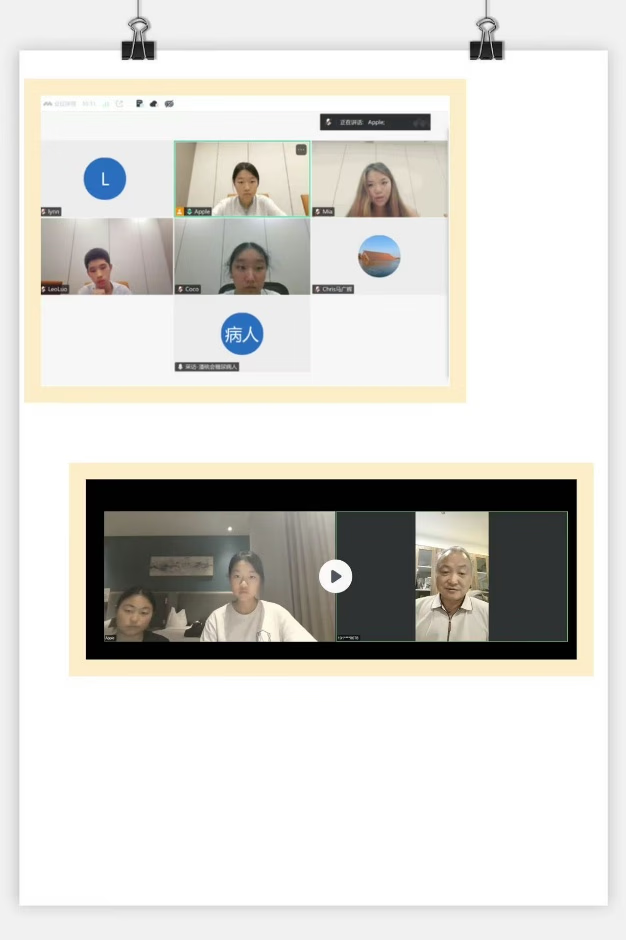
We interviewed people living with diabetes about dietary routines, staple-food choices and the difficulties of managing meals. We also asked about their expectations for function, taste, preparation, safety, price and product information.
General Weight-Loss Users
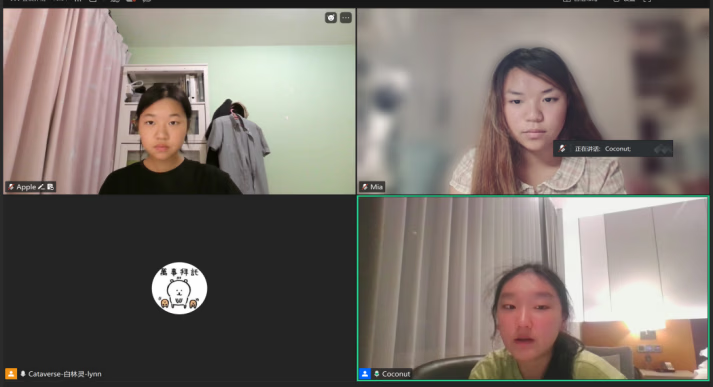
We interviewed people with weight-loss experience about their motivations, previous dietary approaches and difficulties with existing staple-food alternatives. Questions also covered long-term use, preferred product forms, price, purchasing and communication.
Fitness and Fat-Loss Users
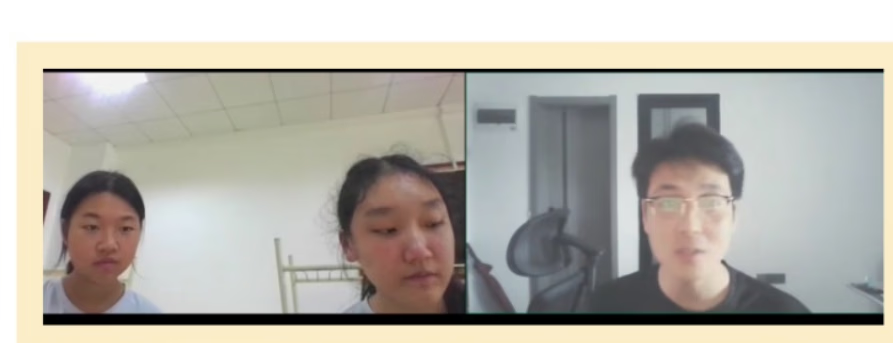
We interviewed fitness- and fat-loss-oriented participants about calorie control, exercise and dietary routines. We asked what would make a staple-food alternative practical for regular use, including taste, price, availability, preparation, product form and information needs.
4.3 Feedback Received
Nutritionist Perspective on Different User Needs
Individual needs: Ms. Tang advised considering people’s living circumstances, health conditions and dietary goals when making dietary recommendations.
Carbohydrate intake: She explained that dietary management should not simply eliminate carbohydrates and referred to the Chinese Dietary Guidelines when discussing dietary balance.
Digestive tolerance: She highlighted digestive differences and advised tailoring resistant-starch use to individual conditions.
People Living with Diabetes
Family meals: Managing a separate diet could create social inconvenience. One interviewee described the difficulty of following individual dietary requirements when family members ate together.
Taste and preparation: Interviewees wanted better taste and easier preparation alongside the product’s intended function, so that it could fit ordinary meals.
Safety and information: The interviews revealed limited familiarity with the term GI, concerns about misleading labels and a need for credible safety and performance information.
Price: Expectations varied between interviewees. Some emphasized that a daily food should remain affordable and should not be priced like medicine; others would pay more if it reduced the inconvenience of dietary management.
General Weight-Loss Users
Motivation: Participants described health concerns, including fatty liver and cardiovascular problems associated with being overweight, as well as appearance and general health as reasons for weight management.
Long-term use: Taste, variety and preparation burden affected whether dietary changes could be maintained. One interviewee described coarse-grain foods as limited in variety, relatively expensive and requiring extra preparation. Another noted that food eaten over a long period should at least be acceptable in taste.
Product form and purchasing: Portable or ready-to-use forms and familiar staple-food applications were mentioned. Participants also described online purchasing as convenient and short videos as a useful way to explain the product.
Price: Individual expectations differed. One participant ranked effect above taste and price and gave a personal reference of no more than 10 RMB per jin (500 g), while another said that health benefits could make price less important.
Fitness and Fat-Loss Users
Diet and exercise: Participants discussed calorie control, exercise and structured eating as part of their routines. They wanted a staple-food alternative that could fit these existing arrangements.
Affordability and access: One participant emphasized that staple foods should be affordable, widely available and simple to cook. Keeping the price close to ordinary staple foods is essential for long-term daily use.
Familiar meals: The same participant preferred rice, noodles or steamed buns that could replace part of a regular meal, rather than snack-style products.
Taste: For one participant, acceptable taste was sufficient, while price was more important. Another noted that something eaten regularly should at least taste acceptable, just as weight-loss users mentioned beforehand.
Communication: One participant found the prospect of having to learn complex technical concepts bothersome. This feedback pointed to a preference for a more understandable and straightforward product information.
4.4 Team Evaluation and Trade-offs
Based on these interviews, we found that different user groups placed different levels of importance on taste, price, convenience, product form and dietary guidance. For example, some participants were more willing to pay for better taste, while others considered affordability and everyday accessibility more important. This meant that not every preference could be treated as an equal priority in our current development.
To make a practical decision, we compared the needs that appeared most consistently across the interviews and survey. Safety, acceptable taste and affordability were repeatedly mentioned by different groups and were closely related to whether the product could be trusted, accepted and used over time. We therefore selected these three factors as the main priorities for our current product development.
4.5 Specific Adjustments
Product Formulation and Form
At this stage, we planned to develop a low-GI starch product that prioritizes safety, acceptable taste and affordability, meeting the most common needs identified across our current stakeholder research. Other needs, such as convenience, product form and differentiated dietary guidance, are also important.
We proposed combining ordinary starch with resistant starch to balance taste, price and performance. In future development, more diverse products and application strategies could address different user needs, with versions emphasizing taste, cost-effectiveness or resistant starch content according to formulation testing.
We considered familiar applications including noodles, rice-based products and steamed buns, keeping both ingredient supply and convenient food products open for technical and industrial assessment. Replacement ratios, consumption frequency and product-specific dietary guidance still needed professional and formulation assessment.
Product Information and Communication
Because interviewees, particularly those living with diabetes, emphasized safety and credible information, we proposed using QR codes to provide product composition, testing results, and verification information rather than relying only on broad health claims.
Potential Sales Channels
The user interviews supported prioritizing online sales because of convenience and accessibility. We also retained online videos and articles as important forms of product education.
Future Product Expansion
Mixed starch for manufacturers, premade noodles for home preparation, and nutritionally balanced meal applications remained possible directions. Their feasibility and priority would be assessed in the following stages.
4.6 Future Plan
Stage 2 clarified the requirements that a useful product would need to meet: credible performance and safety, compatibility with everyday meals, acceptable taste, convenience and affordability. The three user groups also showed why future applications and guidance should consider different health conditions and dietary goals.
These findings narrowed the development questions without yet fixing the final deliverable. Stage 3 therefore connected these requirements with professional assessment: users' emphasis on ordinary meals raised processing questions; their need for credible information raised validation questions; and affordability raised enzyme-production and scale-up questions.
5. Stage 3 — Establishing Feasibility
5.1 Question to Resolve
Performance after food preparation
Earlier interviews showed that users wanted a product that could fit ordinary meals. For our starch ingredient, this raised a practical question: how should we assess it after the preparation involved in everyday eating? We needed to understand how cooking, refrigeration and reheating might affect the modified starch, and which assessments could connect its structural properties with its intended performance.
Taste and nutritional suitability
We wanted professional advice on suitable food applications, preparation methods and the use of resistant starch under different health conditions and dietary goals. The question was how to respond to these differences while developing a practical staple-food ingredient.
Enzyme performance and production
Our experimental questions included GT-related cyclization, inclusion-body formation in E. coli, enzyme production costs and the maintenance of enzyme activity during scale-up. We also needed advice on production safety and waste management.
Enzymes or modified starch as the deliverable
For a B2B route, we needed to compare supplying the enzyme preparation with supplying the converted starch. We wanted to understand the production burden of each route and what downstream manufacturers would need to do with the material they purchased.
5.2 Action and Key Content
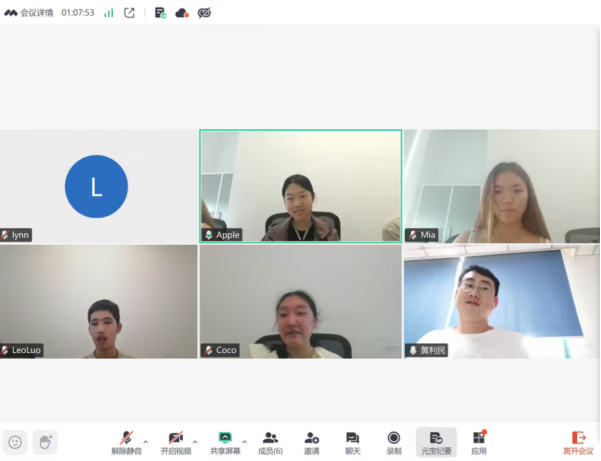
Clinical nutrition consultation — Dr. Huang Limin
We consulted Dr. Huang on areas such as clinical relevance, validation after food processing, suitable product forms and the boundaries of low-GI communication. In particular, we asked how to assess a starch intended for ordinary meals after food preparation. This connected the earlier user concerns about everyday use, convenience and trust with questions for professional evaluation.
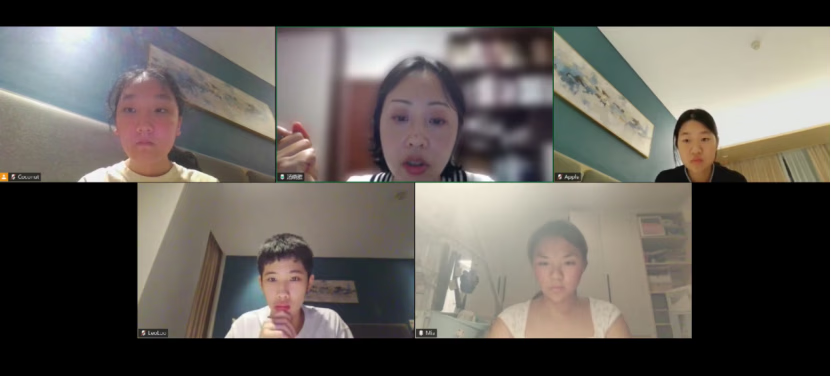
Nutrition consultation — Ms. Tang Xiaoya
In the consultation introduced in Section 4.2, Ms. Tang also discussed formulation, cooking and dietary compatibility. Here we use those aspects to examine application requirements.
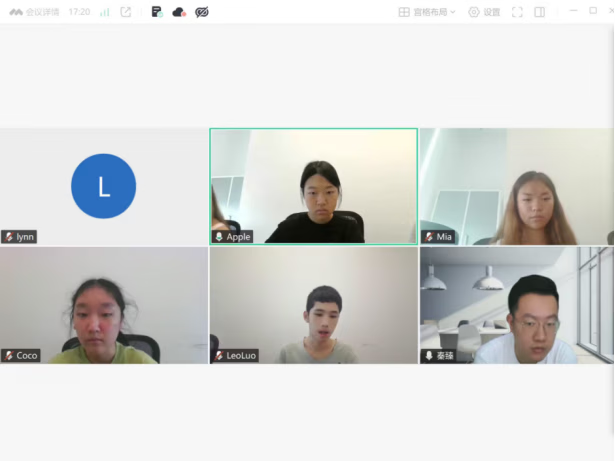
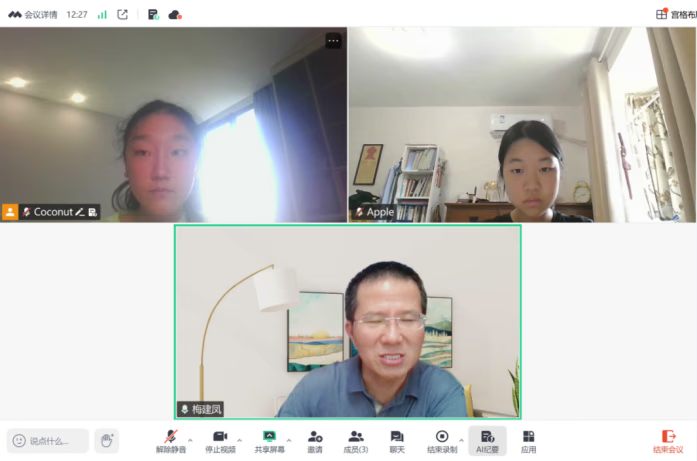
Enzyme engineering consultations — Dr. Qin Zhen and Dr. Mei Jianfeng
Our enzyme-engineering interviews focused on reaction conditions, byproduct control, soluble enzyme expression, cost, safety, modelling and mass production practicability. We also asked the experts to compare our two possible B2B routes: supplying enzymes versus supplying modified starch.
5.3 Feedback Received
Performance under realistic preparation conditions
Dr. Huang recommended combining structural characterization with digestion-related assessment and considering indicators beyond GI. He emphasized assessing the starch after cooking, refrigeration and reheating, since preparation steps could change our product structure and performance. He also advised us to consider different addition ratios and usage conditions for people with Type 2 diabetes and those pursuing weight management.
Dr. Qin and Dr. Mei also recommended simulating actual consumption conditions. For texture improvement, they suggested exploring physical or chemical approaches.
Food applications and nutritional suitability
Dr. Huang told us that we should sell premixed low-GI flour or semi-finished products to reduce the difficulty of measuring ingredients and preparing meals on the consumer end.
Ms. Tang emphasized overall dietary balance. She particularly warned us about individual differences in health conditions, digestive tolerance and dietary goals, with reference to the Chinese Dietary Guidelines. She also informed us that resistant starch should only serve as a partial form of staple-food intake rather than replace staples completely. Additionally, she suggested combining our product with compatible ingredients, using steaming or boiling as preparation methods, and obtaining appropriate safety evidence before market introduction. All of these are approaches that she utilizes as a professional nutritionist.
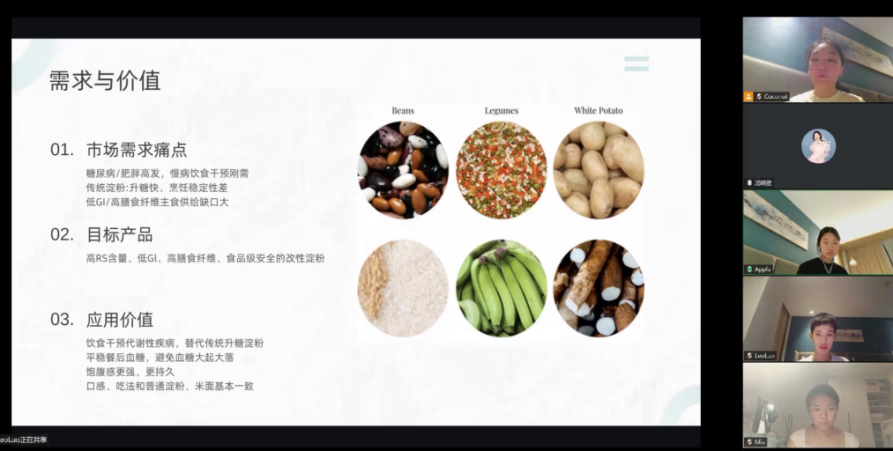
GT cyclization and soluble expression
Both enzyme-engineering experts supported our steps of "hydrolysis–elongation–debranching". To address GT-related intramolecular cyclization, they recommended enzyme engineering or control of reaction conditions. For inclusion-body formation in E. coli, they suggested screening alternative genes, reducing induction intensity or considering a yeast expression system.
Enzyme costs and extraction
The experts informed us that we should compare in-house enzyme production with commercially available AM and PUL, suggesting external purchase if in-house production offered no clear advantage. They also recommended simple extraction through cell lysis, ultrafiltration and dialysis for desalination to reduce reliance on expensive chromatography. In addition, Dr. Qin listed many alternatives to IPTG induction that could help cut costs for future production.
Enzyme activity and modelling
Dr. Mei recommended considering additional factors that affect enzyme activity, including pH, ionic strength, metal ions and cofactors. He also suggested using modelling to explore enzyme stability and reaction conditions.
Production safety and waste management
The experts raised concerns about production hosts and antibiotic markers, all of them recommending a food-production-compatible expression system and antibiotic-free construction for commercialization. Regarding waste management, Dr. Qin gave us an interesting path of recycling waste liquids and saccharides.
Different recommendations on the B2B deliverable
Dr. Qin recommended prioritizing enzyme supply in view of the practical challenges for us as high-school students. This route would reduce the team's starch-processing burden.
Dr. Mei favoured supplying modified starch, providing manufacturers with the converted ingredient despite the more complex upstream process. He also recommended exploring future CDMO cooperation.
5.4 Team Evaluation and Trade-offs
We adopted recommendations that addressed user needs and existing experimental problems. Because users wanted a product that could fit ordinary meals, we accepted Dr. Huang’s advice to examine starch structure and performance after preparation. This gave us a practical way to connect actual consumption questions with laboratory assessment. The enzyme-engineering and expression recommendations addressed the separate problems of cyclization and inclusion-body formation. Cost comparisons and extraction advice also helped us assess whether to retain our existing production route. For nutrition and formulation, we recognized the importance of adapting to different health conditions and dietary goals. However, our current priority remained developing the basic starch ingredient, so we reserved differentiated formulations and specific use guidance for later development.
Dr. Qin and Dr. Mei offered different recommendations on the B2B deliverable. Dr. Qin favoured supplying enzymes to reduce the team’s processing burden, while Dr. Mei preferred supplying modified starch directly. We considered that enzyme supply would reduce our workload but transfer starch conversion to downstream manufacturers, not all of whom had the necessary technical capability. Supplying resistant starch required more upstream processing, but matched our existing starch-modification work and allowed manufacturers to focus on food formulation and production. We therefore selected resistant starch as our current product and prioritized B2B ingredient supply. We retained enzyme supply as an alternative and included CDMO cooperation among the options for future manufacturing support.
5.5 Specific Adjustments
SEM characterization of gelatinized starch
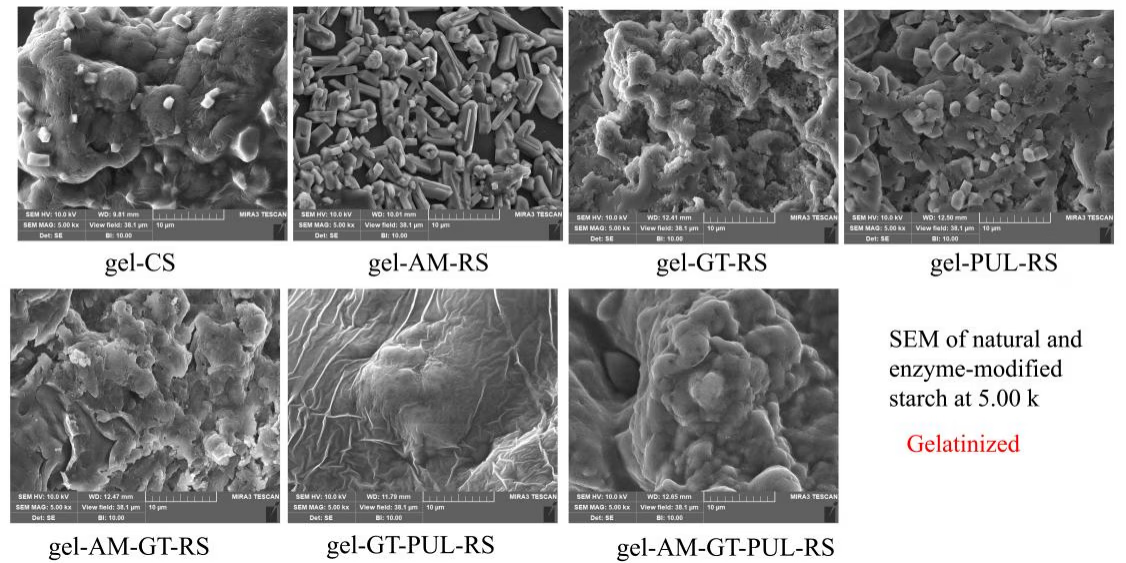
Following Dr. Huang’s advice, we carried out scanning electron microscopy (SEM) characterization of gelatinized natural and enzyme-modified starch (Figure 18). The comparison included unmodified starch, individual-enzyme treatments and enzyme combinations. By examining the samples after gelatinization, this work brought a preparation-related condition into our structural assessment. The images show differences in sample morphology; they do not by themselves establish crystal type, digestibility or sensory performance. This was a completed characterization step in response to the everyday-use question, with digestion-related and food-application assessment remaining in the further work described in Section 5.6.
Current GT engineering and expression adjustments
Our current experimental work includes mutating sites associated with GT cyclization to reduce the side reaction. We are also screening genes less prone to inclusion-body formation and using tags to support protein folding and screening. These are the adjustments undertaken; their effects on cyclization and soluble expression require comparative assessment.
Enzyme structural analysis
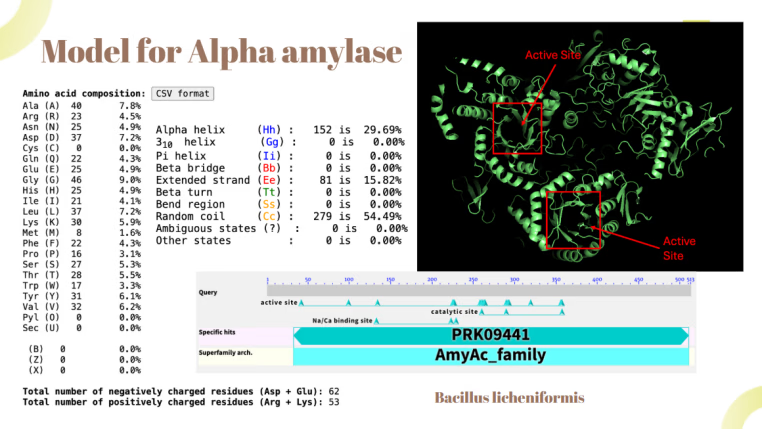
We followed the modelling advice by carrying out analysis on all three of our enzymes, documenting structural and active-site features (Model). This provides an enzyme-level analytical output. The separate GT cyclization and expression adjustments require their own experimental evidence.
Retaining the enzyme production and extraction route
We compared the cost-effectiveness of in-house and commercial enzymes. Our current cost evaluation supported retaining in-house production, so we continued with that route. The recommended cell-lysis, ultrafiltration and dialysis steps also broadly matched procedures already used in our experiments, providing support for retaining the existing extraction approach.
We included food-enzyme production requirements in our process review, with changes to the production host and antibiotic markers reserved for future scale-up.
Defining the product and B2B direction
We defined our current product as a resistant-starch ingredient and prioritized B2B supply to food manufacturers. Downstream companies could use their formulation and production capabilities to develop consumer foods. We retained premixed flour and other convenient staple-food products as possible future B2C applications.
We also researched Dr. Mei's CDMO suggestion and incorporated future cooperation into our Business Plan (Entrepreneurship). This records a development strategy, not an established partnership.
5.6 Future Plan
Building on the gelatinized-starch SEM comparison, we will continue to assess the starch under realistic cooking conditions, including refrigeration and reheating, and connect structural observations with digestion-related assessment. Comparative enzyme experiments will also evaluate the current adjustments. Further development will consider formulations and use guidance for different groups, alongside host selection, antibiotic-free construction, cost control and resource recovery for scale-up. Building on Dr. Qin’s recommendation to recycle waste liquids, the team will assess possible uses for oligosaccharides and cyclodextrins. These efforts will build on our defined resistant-starch ingredient and address its practical application and production requirements.
We also need to understand how this ingredient can enter downstream food production. The next stage therefore uses the Prowell visit and regulatory consultation to examine formulation, production, quality control and market-entry requirements. This will help clarify the division of work between our team and downstream manufacturers and connect the B2B route with consumers’ needs.
6. Stage 4 — Exploring Commercialization
6.1 Question to Resolve
Alongside technical development, we also needed to explore how low-GI starch could enter real food production workflows. In stage 4, we will examine product positioning, safety evidence and future commercialization conditions without assuming that all scale-up and application work had been completed.
Previously, in stage 3, we selected resistant starch as the current product and B2B ingredient supply as the initial route. Stage 4 therefore will focus on how this ingredient could enter downstream production, what evidence would be needed for market entry, and how it should be communicated to consumers.
6.2 Action and Key Content
Regulatory Consultation — Dr. Bao Huihui
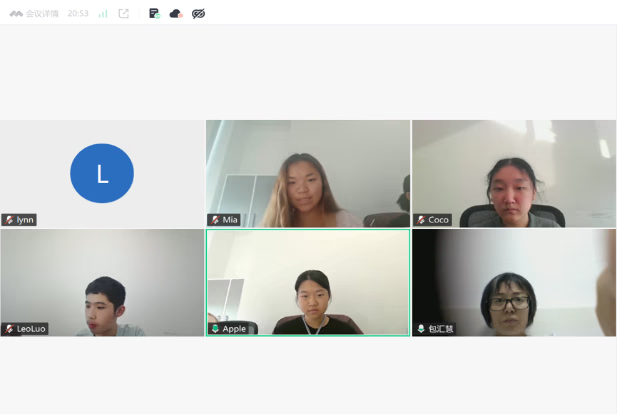
First, we interviewed Dr. Bao Huihui to discuss product classification, safety evidence, considerations for future registration, and the boundaries of health-related claims in food communication.
The purpose of this consultation was to identify regulatory issues that would need to be addressed before commercialization, rather than to treat expert advice as equivalent to formal regulatory approval.
Manufacturing Visit — Prowell
Next, we visited Prowell, a manufacturer of nutritional and low-GI food products, to understand how ingredients move through formulation, quality control, production, and packaging.
In this visit, we explored downstream applications through the production tour and underwent hands-on mixing of nutritional ingredients, as well as discussed taste evaluation with an employee.

6.3 Feedback Received
Product Classification, Safety Evidence, and Communication
Through our interview, we gained a lot of valuable insights from Dr.Bao.
First, Dr. Bao recommended considering a novel-food-ingredient registration route rather than a new-food-additive route, because our aim is to modify starch itself, and following a new-food-additive route would be much harder to gain registration from the country.
Next, she advised that we should consider the production system as well as the final starch in safety assessment, including the host strain and inserted genes. She also encouraged us to include cellular, animal and human studies of our modified starch, such as potential effects on gut microbiota, and include vulnerable groups as matters for further assessment.
On communication, she cautioned against directly promoting weight-loss or blood-glucose-lowering effects merely because the product has low-GI properties. Instead, she suggested that we consider consumer education and QR codes that could support users' access to research data and product information.
She also recommended that we further define the product’s competitive advantages, such as cost, purity, and functional performance, so that its value could be communicated more clearly to downstream companies.
Production Workflow, Downstream Application, and Taste Evaluation
During the Prowell visit, we also learned valuable knowledge of commercialization.
First, we learned about the basic workflow of food manufacturing, from ingredient intake and formulation to quality control, production, and packaging. This knowledge served as a basis for our formulations in the business plan.
In addition, we observed that manufacturers could combine purchased ingredients with their own formulation and production capabilities.
Also, an employee recommended using numerical taste scores to support sensory evaluation, which helped us gain insight in our later education activities.
6.4 Team Evaluation and Trade-offs
Product scope and regulatory interpretation
After our consultation with Dr.Bao, we built upon the product that we selected in stage 3 by clarifying its description and its proposed market-entry route.
First, our current deliverable is low-GI resistant starch, which was produced through enzymatic modification. Dr. Bao's advice helped distinguish the proposed registration route for this ingredient from that of a new food additive. We retained this as her pathway recommendation; however, its formal applicability still requires verification.
Also, users in Stage 2 had suggested final products such as noodles, rice, and steamed buns. These ideas clearly matched consumer demand for convenience and everyday use. However, directly developing final food products would also require additional work in formulation, processing, taste optimization, production, and sales.
Business Model: Why Prioritize B2B (Entrepreneurship)
Previously, we selected the B2B ingredient supply as the initial model. Now, after our interview with the regulatory department and our visit to Prowell, we started to consider how downstream food production could address the consumer needs identified earlier.
The Prowell visit helped us understand how manufacturers combine purchased ingredients with formulation and production capabilities. From these observations, we understood what our role in the market would be: our team would supply the starch ingredient, while downstream manufacturers would develop consumer foods. This was our interpretation of the visit and its relevance to the B2B route.
Also, for future consumer-facing products or downstream retail distribution, our channel plan prioritizes online sales and supermarkets, with pharmacies as a supplementary channel. In addition, user interviews particularly supported online purchasing, so we will also have this in mind when formulating our channel plan. These planned retail channels describe how final foods could reach consumers, while the team's current business focus remains B2B ingredient supply.
Responsibility to final consumers
Safety, credible functional performance, acceptable taste and affordability remain important even when the immediate customer is a manufacturer. Because of this, we retained these user requirements for future application development, cooperation and consumer communication.
We adopted transparent, evidence-based communication and retained numerical sensory scoring as a future assessment method. However, the applicable safety-testing package, formal product classification and market-entry requirements will still need further verification before commercialization.
6.5 Specific Adjustments
Product and delivery route
Through this phase, we clarified the implementation of our existing product direction, which is low-GI resistant starch supplied to food manufacturers through an initial B2B model. The team focuses on the ingredient, while downstream manufacturers can develop food applications. Online sales and supermarkets, with pharmacies as a supplement, remain planned channels for future consumer-facing products or downstream distribution.
However, direct B2C products and differentiated staple-food applications remain future development possibilities, and enzyme supply is still an alternative recorded in the earlier comparison.
Adjusting Product Communication
After we interviewed the diabetes patient and Dr.Bao, we retained the QR-code approach for composition, test results and supporting information. The survey's hypothetical blood-sugar-lowering wording also highlighted the need to distinguish product characteristics from broader health promises.
Future materials will focus on supported product characteristics, where QR codes and educational content will provide clear explanations rather than serve as an alternative way to make unsupported blood-glucose-lowering or weight-loss claims.
Adding Future Sensory Evaluation
In our previous efforts and feedback, we gained knowledge of the importance of taste and the necessity for numerical scoring. The survey identified taste as a purchasing obstacle, interviews explained its importance for continued use, and the Prowell employee suggested that we could try numerical scoring for taste. Because of this, we added a proposed 1-to-10 taste rating to future testing. This addition translated user feedback into a concrete evaluation plan, but taste tests remain future work, and participant selection and testing conditions will need to be defined.
6.6 Future Plan
In our stage of commercialization, we refined the implementation of our modified resistant-starch product and B2B direction that we had selected in Stage 3. We clarified the proposed division of work with manufacturers, the recommended registration route, communication boundaries, planned consumer channels and future sensory evaluation. These are development decisions and plans; however, downstream partnerships and market entry remain to be established.
Further work will examine application performance and taste under realistic processing, scale-up and the applicable regulatory requirements. These tasks will keep commercialization connected to the user needs that initiated our inquiry.
7. Overall Integration and Reflection
7.1 How Stakeholder Input Shaped the Project
In the four stages of our Integrated Human Practices, we connected stakeholder feedback with product requirements, experimental work and implementation decisions. The table summarizes the main responses and distinguishes completed work from current adjustments and future plans.
| Question | Key feedback | Project response | Current status |
|---|---|---|---|
| What do users need? | Survey and interviews: safety, credible performance, taste, price and convenience. Nutritional advice: different health conditions and routines. | We examined three user groups and used their shared needs and differing priorities to guide product requirements and expert consultation. | Survey and interviews completed. Differentiated formulations and use guidance remain future work. |
| What should we supply? | Dr. Qin favoured enzymes to reduce team workload; Dr. Mei favoured converted starch. The Prowell visit showed downstream formulation and production capabilities. | We weighed both routes, selected resistant starch and prioritized B2B supply. Stage 4 refined the proposed division of work. | Current product and B2B direction defined. Downstream cooperation and B2C foods remain in development. |
| How should the starch be assessed? | Dr. Huang recommended structural and digestion-related assessment after preparation. A Prowell employee suggested numerical taste scoring. | We carried out SEM characterization of gelatinized starch and included realistic cooking, digestion-related assessment and a proposed 1-to-10 taste score in further plans. | SEM completed. Application and sensory assessments remain future work. |
| How should enzyme work change? | Experts advised addressing GT cyclization and inclusion bodies, comparing enzyme costs and using modelling. | Current work includes site mutation, gene screening and tags. We completed AM analysis and a cost comparison, retaining in-house production and the existing extraction approach. | AM analysis and cost comparison completed. GT adjustments are current work; their effects need comparative assessment. |
| How should evidence reach consumers? | Users requested reliable information. Dr. Bao advised reviewing classification, safety evidence and communication, including QR-code access to information. | We retained QR-code-supported information and evidence-based communication. Stage 4 clarified the proposed registration route and future consumer channels. | Communication direction and channel plans defined. Formal requirements, retail implementation and further stakeholder review remain pending. |
| How should production develop? | Experts raised host, antibiotic-marker and cost issues. Dr. Qin recommended waste-liquid recycling. | We included production requirements in process review and CDMO research in the Business Plan. Our future extension considers recovering oligosaccharides and cyclodextrins. | Planning and research undertaken. Host changes, scale-up, resource recovery and CDMO cooperation remain future directions. |
7.2 Reflection and Remaining Questions
We began with an interest in helping people manage their weight through a product that could fit ordinary diets. The survey identified safety, functional expectations, taste and price as important considerations. Nutritional advice and interviews with three user groups then clarified how these concerns related to health conditions, preparation burden, family meals and existing diet and exercise routines.
Expert consultations helped turn these requirements into technical questions and choices. We carried out SEM characterization of gelatinized starch and AM structural analysis, incorporated cyclization and expression adjustments into current experiments, and retained in-house enzyme production after comparing costs. When Dr. Qin and Dr. Mei recommended different deliverables, we weighed the team's processing burden against the conversion work that would be transferred to manufacturers. We selected resistant-starch supply because it matched our existing work and provided a converted ingredient for downstream formulation. The regulatory consultation and Prowell visit then refined how this B2B direction could be implemented.
Through this process, our product became a defined low-GI resistant-starch ingredient, with B2B supply as the current focus and B2C foods as possible future applications. Our aim is to develop a product that is good for the world and responsible to its stakeholders. This means preserving the needs of final consumers within the B2B route, communicating evidence accurately, considering affordability and production impacts, and remaining willing to revise our choices as new evidence emerges.
7.3 Future Responsible Validation and Closing the Loop
As further cooking, digestion-related, and planned sensory results become available, we will return the developing applications and supporting information to users and professional stakeholders. Users can comment on taste, preparation and clarity; clinical and nutrition experts can assess interpretation and differentiated guidance; manufacturers can evaluate formulation and production compatibility; and regulatory specialists can review classification, evidence requirements and communication before market entry.
Alongside this feedback, we will continue the production-cost, host and resource-recovery work outlined in Stage 3. Dr. Qin's waste-liquid recycling advice remains distinct from our proposed extension to recovering oligosaccharides and cyclodextrins. We will use subsequent evidence and feedback to decide which designs and plans to retain, adjust or defer, and explain the reasons for those decisions.