


1. Education Strategy
1.1 Why We Conducted Education Activities
Our Integrated Human Practices survey identified a need for accessible information about low-GI foods. Of the respondents, 48.76% knew little or nothing about these foods. Among the 446 respondents who answered the question about their functions, 73.54% associated low-GI foods with more stable blood glucose after meals, and 63.68% associated them with weight management.
Interviews also indicated a preference for accessible articles and short videos.
We used these findings to select topics and formats for public education, while designing student activities around their existing biological knowledge.
We therefore used biological production and starch modification in our project as starting points. We wanted students and the public to understand how synthetic biology can provide useful functions and to ask questions about the mechanisms, applications, and supporting evidence.
Survey responses reinforced the need for clear explanations: 79.17% of respondents considered food safety a purchasing priority, and 44.13% were concerned about misleading promotion. Our education activities needed to address these information needs and explain our project methods so that participants could discuss them using scientific concepts and evidence.
1.2 Core Questions and Our Approach to Mutual Learning
Our education activities followed the pathway of genetic instructions → microbial enzyme production → enzyme-assisted starch modification → testing the intended properties. We helped learners explore three questions: What useful function do we want to achieve? How can a biological system provide that function? What evidence can show whether it works? Food and starch offered familiar starting points.
Our explanations then connected these topics to biological functions, genetic tools, or the biological production pathway in our project, helping participants understand the role of synthetic biology.
Mutual learning guided our education strategy. We explained synthetic biology and our project, while participants used questions, their own explanations, practical activities, and suggestions to show us their prior knowledge, concerns, and difficulties. We used their responses to adjust subsequent teaching.
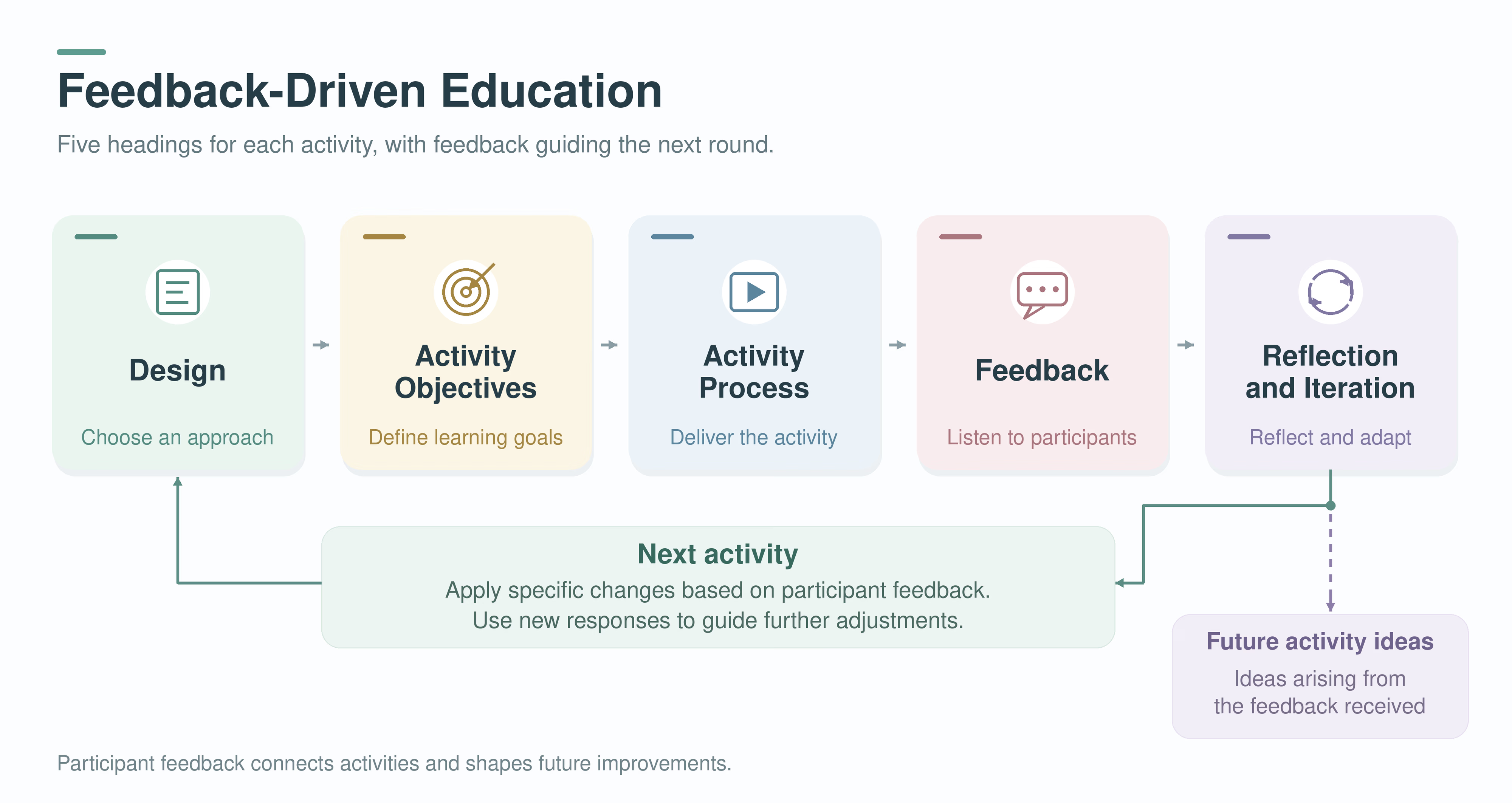
We documented each activity under five headings: Design → Activity Objectives → Activity Process → Feedback → Reflection and Iteration. Feedback from one activity informed specific changes in the next, whose responses then guided further adjustments. Iteration also included ideas for future activities arising from the feedback received.
1.3 Adapting Synthetic Biology Education for Different Audiences
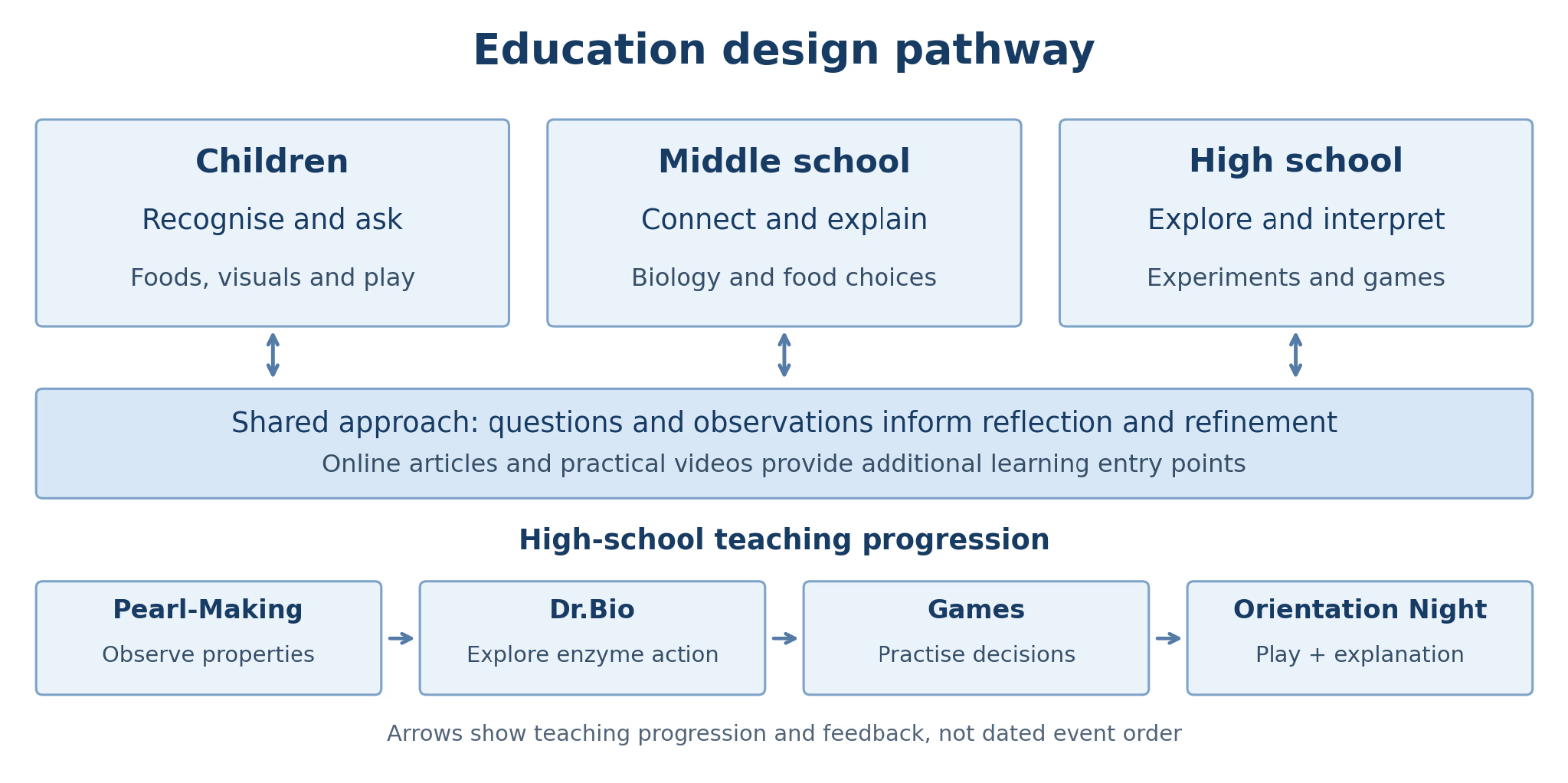
We included children, middle school students, high school students, and the general public based on their connections to our project, existing knowledge, and opportunities to participate. Food and starch are familiar to all these groups, but the depth of explanation and ways of participating need to vary when introducing synthetic biology.
Children are often curious about food, the human body, and microorganisms, but have limited biological knowledge. We aimed to introduce useful biological functions while allowing parents to participate alongside them. Middle school students are beginning to study biology and develop academic interests. Our team members' existing connections with SSBS and HBBSS enabled us to work with teachers and reach this group.
High school students have a stronger foundation in biology, and some have studied AP Biology or participated in competitions, making them ready for further discussion of functions, experiments, and design choices.
The general public has a direct connection to the use of low-GI foods, and our IHP survey identified a need to understand the relevant knowledge and evidence. Online audiences also include people who cannot attend in person, those who need flexible learning schedules, and beginners interested in basic laboratory skills.
We therefore combined education for different age groups in schools with online public education, providing suitable ways to participate for people with different levels of knowledge and availability.
2. Education Activities for Different Age Groups
2.1 Introducing Useful Biological Functions to Children
TianLin Community Activity Center Starting with Familiar Foods
Design
On August 3, 2026, we conducted a one-hour activity in TianLin with approximately 15 participants, including seven children aged 5 to 10 and their accompanying parents. We used food examples to introduce digestion and enzymes, then briefly explained how scientists can use genes and microorganisms to produce useful enzymes. Children were encouraged to ask questions and express their ideas verbally or through visual activities.
Activity Objectives
Use digestion as a familiar example to introduce enzymes as biological tools that can change starch.
Introduce the idea that genes provide instructions and that scientists can use microorganisms to produce useful enzymes.
Ask questions using words, drawings, or stickers, or explain one connection between microorganisms, enzymes, and our project.
Activity Process
We began by asking whether savory crackers taste sweeter after prolonged chewing. Several children said they had experienced this. We explained that enzymes in saliva break starch down into smaller sugars, connecting an everyday experience with digestion.
We introduced the glycemic index (GI) through simple visual analogies and a food guessing game, providing a starting point for discussing digestion.
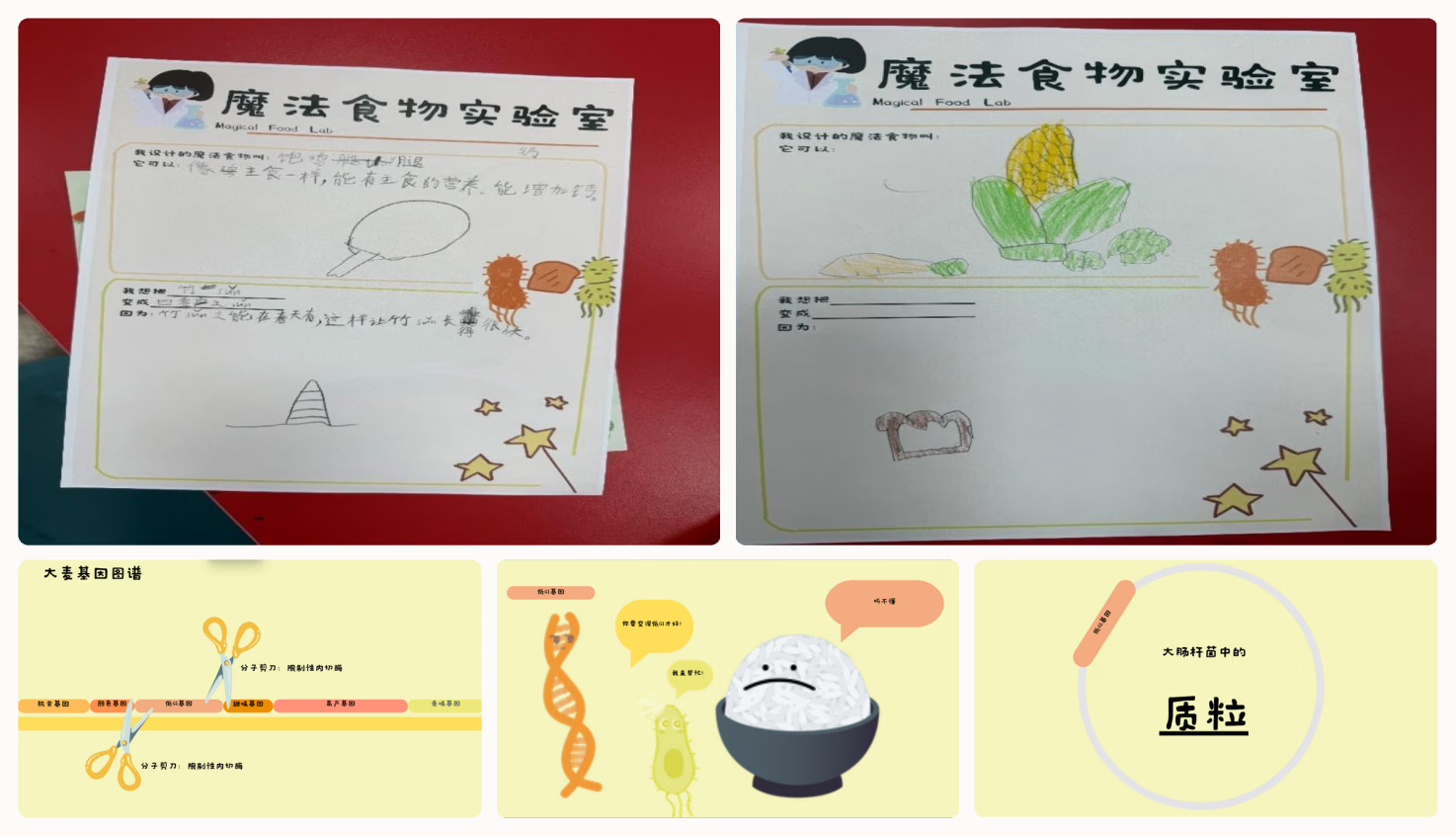
The children then used food stickers to assemble meal plates and explain their choices. These visual and verbal activities allowed them to join the discussion before encountering more abstract concepts.
We briefly explained that scientists can use genes and microorganisms to produce enzymes for tasks such as starch modification. One child asked whether all strains of Escherichia coli (E. coli) were harmful. We distinguished between strains and explained why suitable laboratory strains are selected for specific tasks. This question brought concerns about microbial production hosts into the discussion.
Before the activity ended, we held a quiz in which children passed a plush toy while music played. When the music stopped, the child holding the toy answered a question about the session, reviewing digestion, GI, and synthetic biology. The children then imagined new foods and shared their ideas and reasons with the group.
Feedback
Food questions, guessing games, and sticker activities generated the most visible participation. Explanations involving genes were harder for the children to understand.
Some children were initially shy, and some participants found written feedback slow or difficult to complete. Verbal sharing and visual tasks made it easier for them to express themselves.
The children answered 80% of the questions correctly in the closing oral quiz, providing feedback on their understanding during the session. They also shared food ideas, and some continued to ask follow-up questions afterward.
Reflection and Iteration
Children found it easier to join discussions through familiar food phenomena, while the connection between instructions, microorganisms, and useful enzymes required visual explanation. The question about E. coli reminded us to address strain selection and safety concerns when introducing production hosts. Shyness and difficulties with written responses also showed that feedback methods needed to suit children's communication abilities.
We explained the differences between E. coli strains during the session and used verbal sharing and stickers to support children's expression. Future lessons should introduce the uses of different strains earlier and show a sequence of pictures linking genetic instructions, microbial enzyme production, and enzyme action on starch. Children could identify one connection in this sequence.
Pair discussions before group questions, together with food-based icebreakers, stickers, and drawing, would give them more ways to participate.
2.2 Revising Middle School Teaching through Feedback
SSBS Lecture Identifying Gaps in Prior Knowledge
Design
Drawing on team members' experience as former students in the middle school divisions of SSBS and HBBSS, we discussed lectures for students in Grades 8 and 9 with teachers at both schools. These students are beginning to study biology and consider their academic interests and future directions.
Because they had limited laboratory experience and practical activities would require suitable space and supervision, we selected a lecture format and used questions and a post-lecture questionnaire to explore their understanding.
Activity Objectives
Introduce synthetic biology by clearly connecting biological components with useful functions.
Adapt explanations to students' prior knowledge, helping them describe the DBTL cycle and ask questions about an application.
Activity Process
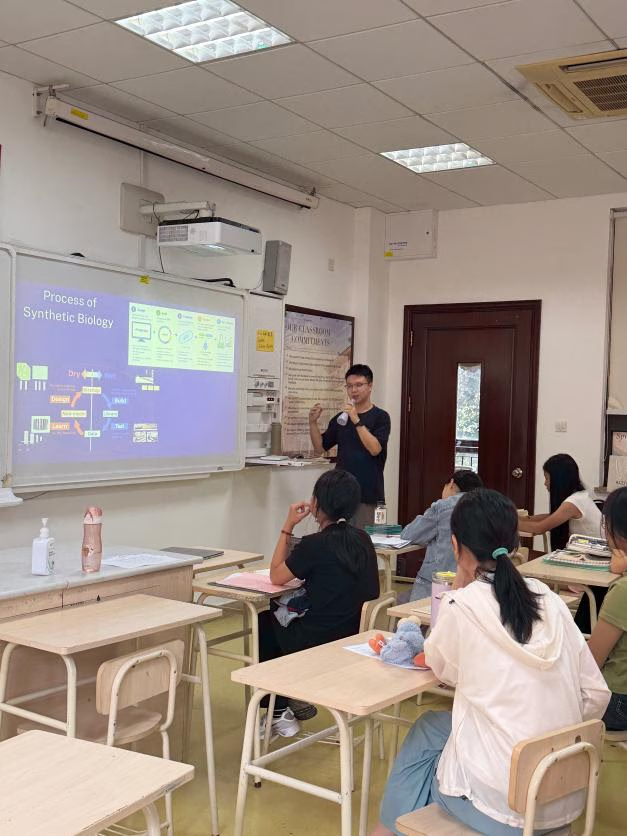
The first lecture took place on September 28 during an elective biology class at SSBS, with approximately 40 Grade 8 students. The second took place after school at HBBSS on September 29. Teachers helped arrange both sessions.
The first lecture was originally designed to answer four questions: What is synthetic biology? How can a design be built in the laboratory? How can it be tested and improved? What challenges remain when applying the results? We planned to move from the central dogma to the Design–Build–Test–Learn (DBTL) cycle, focusing on genetic circuits, BioBricks standard biological parts, restriction enzymes, DNA assembly, and gene editing during the Build stage.
We also prepared an industrial example of E. coli producing 1,3-propanediol to connect all four stages and discuss issues such as metabolic burden during production. Each tool was introduced through what it is and what problem it addresses. However, the overall plan assumed that students already understood the relationships between DNA, RNA, and proteins.
Feedback
The teacher had warned us that the students had not yet studied the central dogma. Although the presenter prepared additional explanations, they underestimated the time needed to explain codons, RNA, and proteins. These foundations took considerable time, and students found them difficult to follow. With insufficient time remaining, the presenter skipped planned topics including BioBricks, the lac operon, selectable marker genes, and CRISPR-Cas9.
As the original questionnaire still included these concepts, the presenter did not distribute it. The difficulty was that the lesson's complexity, timing, and assessment questions had not all been adapted to the audience.
Questions during the session showed that students were unfamiliar with synthetic biology, plasmids, and E. coli. Some students at the back also became less attentive. The presenter introduced a fictional “screaming bacterium” to illustrate how genes can affect function. At the end, students identified this as the most memorable example. The teacher also recommended more engaging synthetic biology applications connected to everyday life.
Together, the students' responses and the teacher's suggestions indicated that we should begin with a concrete function, then explain the biological components needed to achieve it.
Reflection and Iteration
The first lecture showed that the teaching sequence did not match students' starting knowledge. We introduced the central dogma and engineering tools before students had established how biological components provide functions. Additional foundational explanations then reduced the time available for the planned topics and feedback.
Our revisions that evening therefore addressed content, introductory explanations, and assessment questions, aiming to help the second audience understand what synthetic biology can do before examining how it does it.
We made three changes. First, we used a brief account of foundational discoveries to connect DNA, plasmids, PCR, and synthetic biology, retaining DBTL as the organizing framework. Second, we removed detailed explanations of the roles of different genes on plasmids, homologous recombination, and CRISPR-Cas9, shifting the emphasis to applications in food, cosmetic ingredients, infant nutrition, and materials.
Third, we revised the questionnaire so that its knowledge questions matched the content planned for the second lecture, while retaining interest ratings and open-ended responses. Feedback from students and the teacher thus directly changed the next lecture's slides and assessment.
HBBSS Lecture Implementing and Evaluating the Revisions
Design
Feedback from SSBS showed that foundational explanations took longer than expected and that applications attracted more interest. We therefore reorganized the second lecture: we first established basic connections among DNA, plasmids, and PCR, then used everyday applications to explain synthetic biology, retaining DBTL and revising the questionnaire accordingly.
The main audience was HBBSS students in Grades 8 and 9, while accompanying parents could join through questions related to everyday life.
Activity Objectives
Help students use an application to explain the intended function of synthetic biology and how biological methods can produce the relevant product.
Introduce the basic uses of DNA, plasmids, and PCR, and use DBTL to explain the process from design to testing and improvement.
Use a questionnaire aligned with the actual teaching content and open-ended responses to explore students' understanding and identify concepts requiring further explanation, informing subsequent lessons.
Activity Process
On September 29, the original presenter and another team member delivered the revised lecture to students in Grades 8 and 9 and their accompanying parents at HBBSS. Questions about everyday topics such as skincare invited parents into the discussion. We opened with a brief account of scientific developments to introduce DNA, plasmids, and PCR, followed by DBTL. Four types of application then formed the main content.
Each example connected an intended function, the biological method used, and the resulting product. The plant-based meat example introduced microbial fermentation as a way to obtain specific proteins. Hyaluronic acid and human milk oligosaccharides illustrated how biological production can supply functional ingredients.
Mycelium-based shoe materials provided a comparison with other biological materials, helping distinguish the use of biomaterials from genetic engineering. We then discussed public trust, development costs, and production at scale, and introduced our project's pathway of microbial enzyme production and starch modification. This allowed students to understand technical terms within concrete applications.
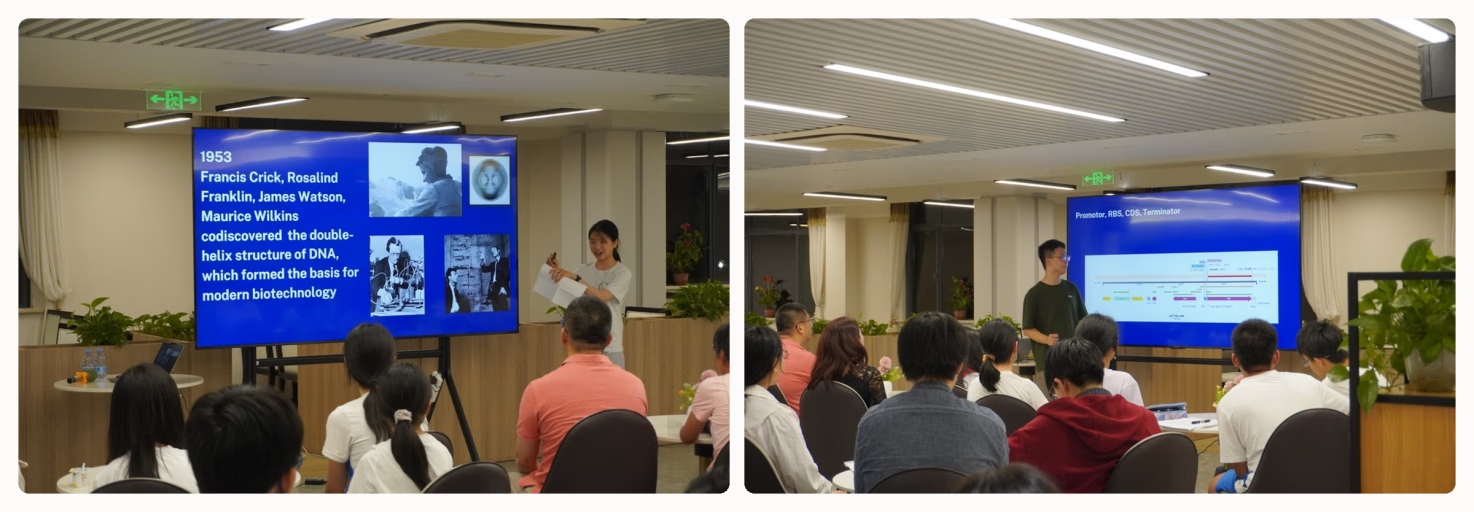
The revised core presentation took approximately 20 minutes, compared with the originally planned 40 minutes. The presenter used the remaining time to revisit slides from the first lecture and add explanations of genetic components and biotechnology. Organizers observed that students remained attentive, and the revised questionnaire was distributed and collected successfully.
Future lesson plans should allocate time more explicitly to discussion, questions, and practical tasks.
Feedback
The 24 valid questionnaires recorded participants' retrospective accounts of their knowledge before the lecture and their answers to knowledge questions afterward. Two respondents reported “some understanding” beforehand, five had “never heard of it,” and 17 had “heard of it but did not understand it.” None selected “a good understanding.” Thus, 22 respondents (91.7%) reported no substantive prior understanding.
After the lecture, respondents answered an average of 4.1 out of five knowledge questions correctly, and 12 answered all five correctly. The table below presents prior awareness and post-lecture performance side by side: the former was retrospectively self-reported, while the latter was recorded through knowledge questions. These describe the audience's starting point and understanding after the lecture, respectively.
| Timing | Measure | Results |
| Prior awareness Retrospective self-report | Whether respondents had heard of and understood synthetic biology | Never heard of it: 5; heard of it but did not understand it: 17; some understanding: 2; a good understanding: 0. |
| Post-lecture knowledge answers | Five knowledge questions | Average correct answers: 4.1; all five correct: 12 respondents. |
| Concept Assessed | Correct Answers n = 24 | Percentage Correct |
| Applications of synthetic biology | 24 | 100.0% |
| Purpose of PCR | 23 | 95.8% |
| Function of restriction enzymes | 15 | 62.5% |
| What a plasmid is | 18 | 75.0% |
| Central dogma | 19 | 79.2% |
The table above presents the results of five individually reported knowledge questions. In the multiple-response question about industry challenges, all 24 respondents selected public concerns about genetically modified products, 20 selected difficulties in translating research into applications, and 19 selected long development timelines and high costs.
None selected “no challenges.” All six activity evaluation items received mean scores of at least 4.0 out of 5. “I would like to learn more” scored 4.3, “I can understand the content” scored 4.0, and “I would recommend this activity” scored 4.1. In open-ended responses, plant-based meat, mycelium-based shoe materials, and DBTL were the most memorable topics.
Restriction enzymes and plasmids were each identified as difficult by five respondents, followed by the central dogma (three) and technical terminology (two). Students wanted more information about laboratory procedures, research directions, and real examples. Fourteen were interested in participating in iGEM, ten were unsure, and none indicated that they did not want to participate.
Reflection and Iteration
Knowledge answers and open-ended responses identified the next teaching priorities. Students understood applications and the purpose of PCR relatively well, while plasmids and restriction enzymes remained difficult. We therefore retained the memorable applications and DBTL, while adding explanations of how DNA tools contribute to the Build stage.
The two lectures formed a mutual learning process
feedback from students and teachers → revisions to slides and the questionnaire → implementation in the second lecture → knowledge answers and open-ended responses. This helped us move from identifying gaps in prior knowledge to locating difficulties with specific tools.
Future activities could retain one application example and ask students to identify genetic information on a labeled plasmid diagram. Paper cutting and joining could then illustrate how DNA cutting and ligation support construction, followed by an explanation of how these operations relate to the intended function. Teachers could use the plasmid selection mechanism in PLASMID LAND alongside their explanations.
Future game development could also include restriction enzyme mechanisms, with corresponding questions addressing these two difficult topics.
2.3 High School Education and Biological Design in Our Starch Project
Design
High school education connected the Food Club's starch comparisons with enzyme action and project explanations in the Dr.Bio workshop. Difficulties in explaining experimental results and equipment constraints then informed game development. Orientation Night provided an opportunity for in-person trials, helping us refine participation and feedback methods.
Overall Objectives
Explain how biological design connects genetic instructions, microbial production hosts, enzymes, and useful functions.
Place our starch project within this pathway and consider how its intended functions can be tested.
Invite learners to explain their understanding and ask questions, identifying scientific relationships that need clarification. The order below reflects teaching connections; activity dates are stated where available.
Food Club Pearl Making as a Familiar Starting Point
Design
The Food Club's pearl-making activity involved 12 high school students and used familiar starch pearls to introduce the material studied in our project. We selected a sequence of prediction, preparation, and comparison so that students could identify differences between their expectations and actual results.
The activity raised questions about materials and mechanisms for the subsequent Dr.Bio workshop, where explanations of synthetic biology continued through enzyme action and microbial enzyme production.
Activity Objectives
Compare pearls made from three types of starch to explore how starch sources and processing conditions may affect material properties.
Practice recording predictions and observations, distinguishing observed phenomena from explanations of their causes.
Ask how biological methods can change starch and how treatment effects can be assessed, providing context for understanding enzyme action and our project.
Activity Process
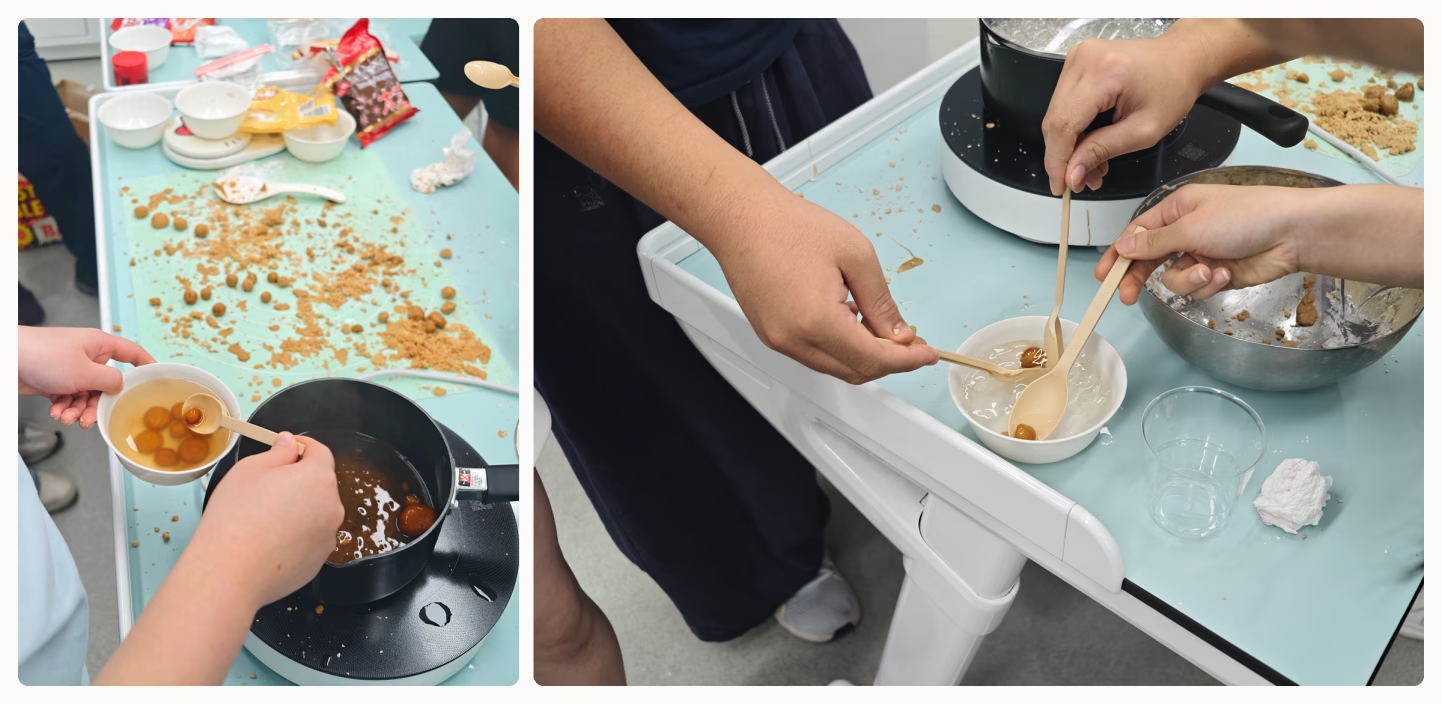
After a brief introduction to starch, the 12 students worked in groups to make and compare pearls from cassava, sweet potato, and potato starch. They predicted appearance, elasticity, and texture before recording the actual properties and discussing differences. The activity made the starch in our project tangible and comparable, while establishing shared questions for later explanations of enzyme action and biological production.
We used a cassava starch recipe as the reference: 100 g of starch, 80 g of water, and 50 g of brown sugar. The sugar was dissolved in boiling water, and the hot liquid was immediately poured into the starch. Students stirred the mixture until it could be handled, kneaded it into dough, divided it, and rolled it into pearls. The pearls were boiled until they floated, transferred to ice water, then cooled and drained.
We used the same ingredient proportions for all three starch types and asked students to consider both the preparation process and final properties.
The two tables below compare initial predictions with observations and discussion notes, preserving how students used results to review their judgments.
| Starch Type | Pearl Appearance | Predicted Elasticity | Texture |
| Cassava | Transparent to translucent; glossy | Very high | Springy with good rebound |
| Sweet potato | Translucent to slightly cloudy; usually less transparent than cassava starch pearls | High | Relatively firm |
| Potato | Transparent to fairly transparent | Moderate | Soft and sticky |
| Starch Type | Appearance in Observations and Discussion | Elasticity in Observations and Discussion | Texture in Observations and Discussion |
| Cassava | Transparent to translucent; glossy | High | Chewy and springy with good rebound |
| Sweet potato | Translucent to slightly cloudy; usually less transparent than cassava starch pearls | Moderate to high | Firm and chewy; possibly slightly dense |
| Potato | Transparent to fairly transparent | Moderate to high, depending on starch variety and cooking conditions | Soft to firm, cohesive, and slightly sticky |
Feedback
Students compared the results with their predictions and found that the elasticity and firmness of sweet potato and potato starch pearls did not always match their expectations. Discussion moved from listing starch types to explaining differences. Even with the same amounts of water, sugar, and starch, heating, mixing, boiling, and cooling could affect the final properties.
Color could also be influenced by brown sugar and heating, rather than being attributed solely to the starch source. These responses showed us that familiar foods could prompt questions, while a further activity was needed to connect material properties with biological action.
Reflection and Iteration
Students could observe differences among starches, but taste and appearance alone could not explain their biological causes. Differences between predictions and results established a clear task for subsequent teaching: How can starch be changed, and how can we determine whether a treatment has worked? Answering this required biological tools and comparable experimental results.
The Food Club activity therefore provided questions and a material context for learning synthetic biology.
We carried prediction, comparison, and discussion into Dr.Bio, shifting from the appearance and texture of pearls made from three starches to reducing sugar reactions after enzyme treatment of four starches. We also explained synthetic biology and our project during experimental waiting periods.
Future Food Club activities could end with a simple enzyme production diagram, asking each group to identify the roles of genetic instructions, microorganisms, and enzymes.
Dr.Bio Workshop Connecting Enzyme Action with Biological Design
Design
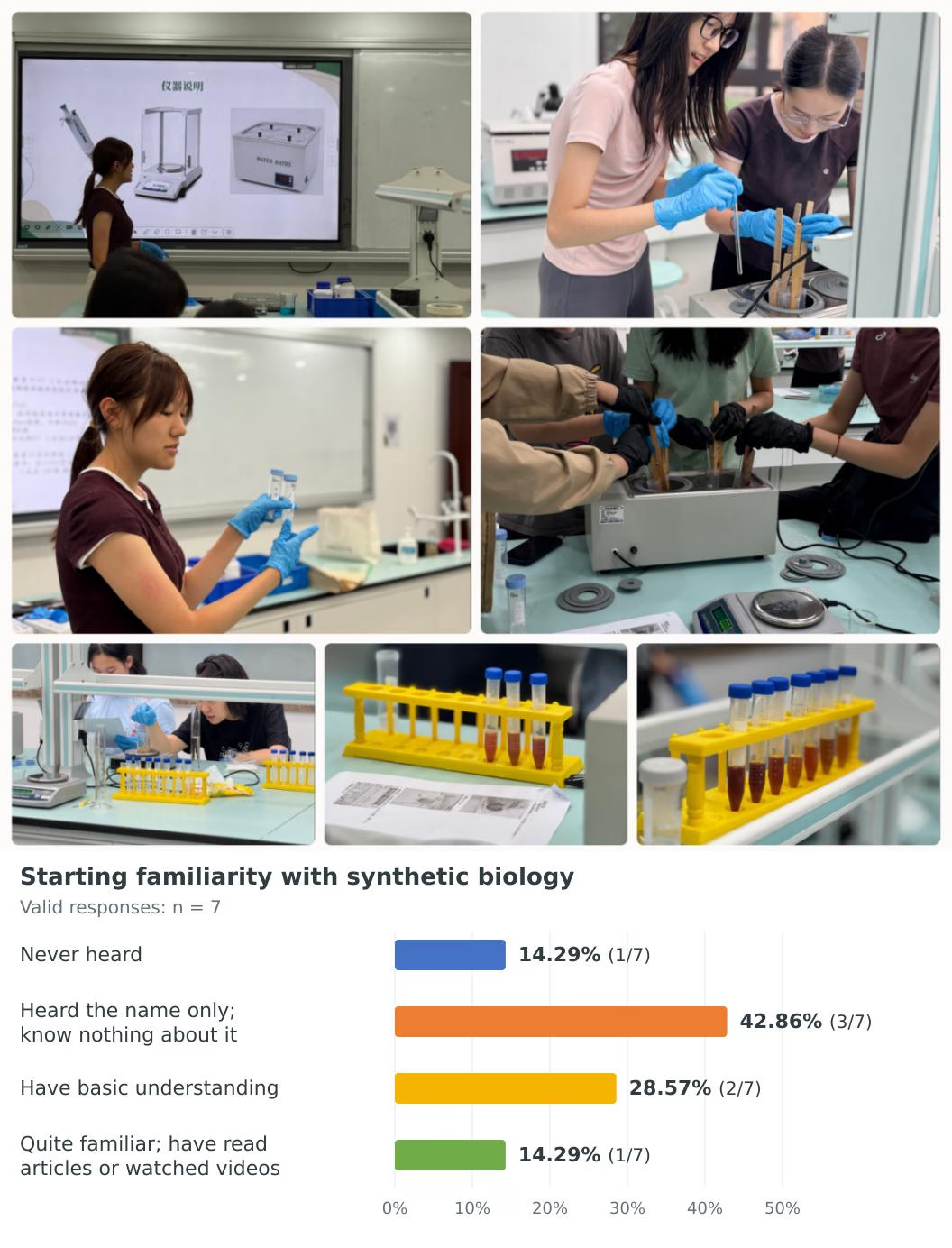
After school on September 22, we worked with Dr.Bio to conduct a workshop for 24 high school students in six groups of four, with a planned duration of 1.5 to 2 hours. Building on mechanistic questions raised by the starch comparison activity, we combined laboratory work and project explanations in one session. Students treated four types of starch with α-amylase and observed the Fehling's test results.
During incubation, we introduced enzymes, gene expression, and synthetic biology. We wanted students to understand how biological tools perform useful functions and why our team studies microbial enzyme production and starch modification.
Activity Objectives
Observe enzyme action as a starting point for explaining useful biological functions.
Explain the relationships among genetic instructions, microbial production hosts, enzymes, and our project's starch modification objective.
Consider how observations can test an intended function and which variables require examination before drawing conclusions.
Activity Process
The workshop alternated group laboratory work with explanations. We prepared reference samples and equipment in advance. Each group carried out gelatinization, enzyme addition, incubation, and the color reaction, listened to project explanations during waiting periods, and compared the samples afterward. This arrangement connected experimental observations with synthetic biology explanations in the same learning context.
Preparation: We prepared glucose reference solutions at 10, 15, and 20 mg/mL and a cellulose control at 20 mg/mL. Each group received 2 mL of each glucose reference concentration. We organized water baths, centrifuge tubes, pipettes, and test tube holders. Each group prepared separate suspensions of corn, glutinous rice, cassava, and potato starch by adding 0.8 g of each starch to 10 mL of distilled water.
We freshly prepared the enzyme solution before use by dissolving 0.04 g of α-amylase in 4 mL of distilled water. Fehling's solution A contained 0.35 g of copper(II) sulfate pentahydrate dissolved in 10 mL of distilled water. Solution B contained 1.7 g of potassium sodium tartrate and 0.5 g of sodium hydroxide dissolved in 10 mL of distilled water. The two solutions were mixed at a 1:1 ratio immediately before the color reaction.
Group Experiment and Teaching Procedure
1. Preparation and gelatinization: Each group thoroughly mixed the four starch suspensions, heated them in a 95°C water bath for 10 minutes, and cooled them to 55°C. All samples followed the same treatment schedule to establish common conditions for comparison.
2. Enzyme addition and incubation: Students added 1 mL of α-amylase solution to each suspension and allowed it to react for 20 minutes. Enzyme action on starch allowed students to investigate how a biological tool performs a function.
3. Project explanation during incubation: We introduced enzymes, gene expression, and synthetic biology, linking the reaction to our project's pathway of genetic instructions → microbial enzyme production → starch modification → testing. The experiment demonstrated what the enzyme could do, while the explanation addressed how biological systems can produce this tool and why it is relevant to our project.
4. Stopping the reaction and testing for reducing sugars: Students heated the hydrolyzed suspensions in a 95°C water bath for 5 minutes to inactivate the enzyme. They took 2 mL of supernatant from each sample and control, added 2 mL of freshly mixed Fehling's reagent, and heated the mixtures at 95°C for 3 minutes. They then removed and cooled the tubes to observe the color and precipitate.
5. Comparison and interpretation: Students compared the four starch samples with the glucose references and discussed the reducing sugar reaction and differences between groups. α-Amylase cleaves internal α-1,4 glycosidic bonds, producing smaller carbohydrates with reducing ends. Under the heated alkaline conditions of Fehling's reagent, reducing sugars can produce a brick-red copper(I) oxide (cuprous oxide) precipitate.
Visual observations supported qualitative discussion of enzyme action; they could not independently establish sugar concentrations or hydrolysis efficiency. Explanations of differences also needed to consider gelatinization, enzyme activity, and reaction time.
Feedback
The survey of prior knowledge showed that most respondents had either never heard of synthetic biology or knew only the term. Relatively few had a basic or deeper understanding. Even with a stronger foundation in school biology, high school students therefore needed explanations connecting the experiment to synthetic biology and our project.
During the practical work, organizers observed that some students could pipette, use water baths, and mix samples but found it difficult to explain color differences. Some attributed all differences to starch sources, overlooking gelatinization and reaction time. Differences in group procedures also led to inconsistent color results.
This feedback identified a teaching need: after completing the steps, students needed practice selecting evidence, considering alternative explanations, and proposing a further test.
Reflection and Iteration
The enzyme reaction provided a visual starting point for discussing biological functions. The accompanying explanation connected it to gene expression, microbial enzyme production, and our project's starch modification objective.
We learned that practical proficiency and conceptual understanding needed to be examined separately. The Food Club activity focused on describing materials, while the workshop introduced an enzyme and a visible reaction. However, results required interpretation. We taught enzyme action and biological production; students' explanations of the results showed us that the Test and Learn stages of DBTL needed more explicit learning tasks.
A subsequent educational format should allow learners to make a choice, observe its consequences, and explain whether it needs to be revised.
Experimental requirements also affected participation and opportunities for repeated practice. The 24 students required six sets of equipment, freshly prepared reagents, coordinated heating, and in-person guidance. Additional participants or repeated rounds would require more space, materials, and time. We therefore needed a complementary format that allowed repeated design and testing without water baths or chemical reagents.
This need, together with students' difficulties in interpreting results, informed subsequent game design.
We retained the workshop's focus on comparing results and explaining choices, translating selected synthetic biology concepts into repeatable actions in computer and card games. PLASMID LAND lets players select plasmids, add them to cells, enter test environments, and receive experimental records. The card game creates interactions around themes such as viruses, plasmids, and contamination risks.
Teaching thus moved from a single sequence of laboratory steps to choices and reviews that learners could repeat. The games address biological components, functions, and DBTL, while the workshop continues to teach laboratory skills.
Future Dr.Bio lessons should include predictions and reasons before the experiment. During discussion, groups should distinguish their observations, interpretations, and conditions requiring further testing. Gelatinization, incubation, and color reaction times should be standardized, with more complete controls for untreated starch, enzymes, and reagents.
At the end, students should explain enzyme action and how microbial enzyme production relates to our project.
PLASMID LAND Exploring Design Choices through a Game
Design
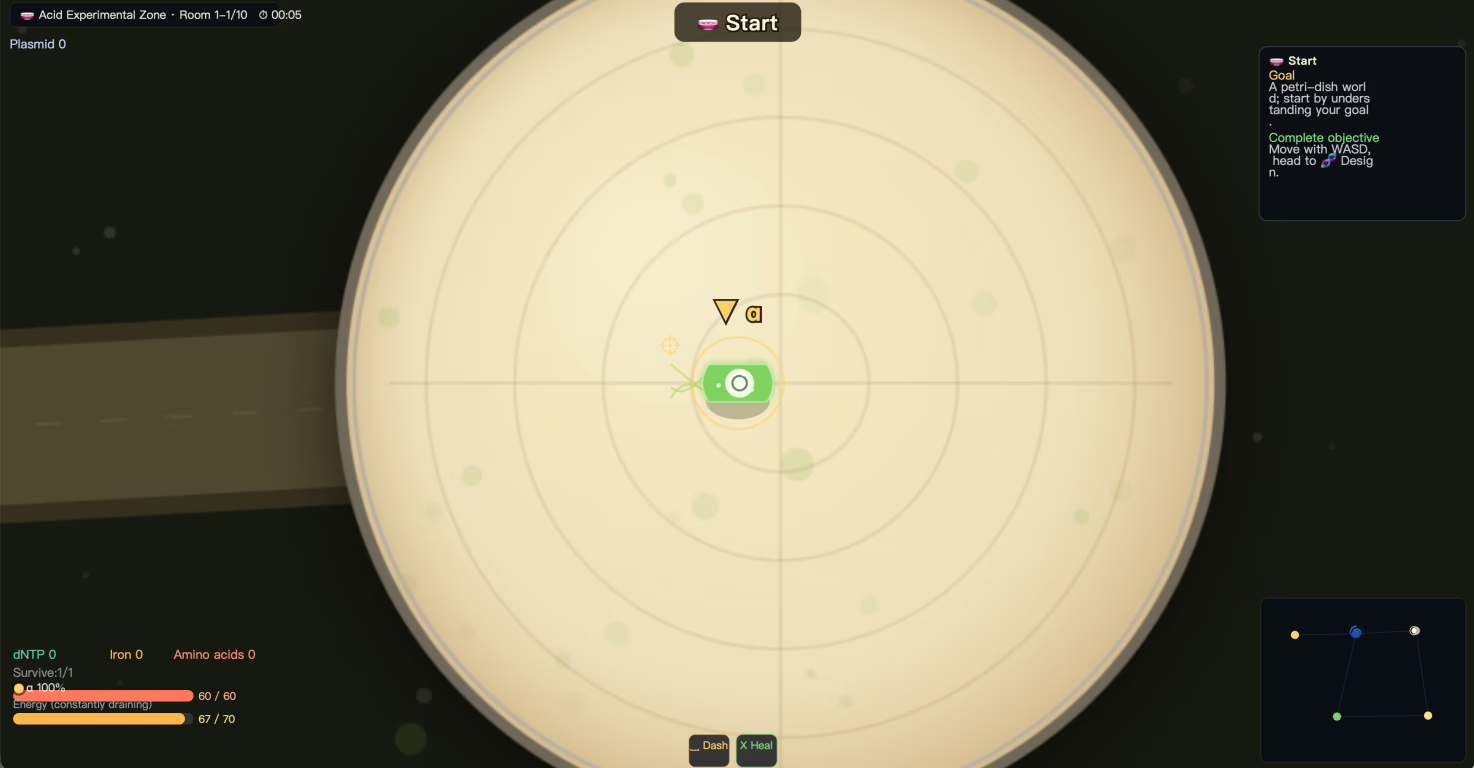
PLASMID LAND is a browser game for middle and high school learners. Players control a population of E. coli, select plasmids, and respond to different environments. Building on feedback from Dr.Bio, we focused on what functions genetic information provides, why a function is chosen, and how it can be tested and reviewed. The game turns these relationships into choices that learners can make, allowing them to repeat design and testing.
PLASMID LAND can be played directly in a web browser through the online link provided in Section 4.2. A session can last from around ten minutes to several dozen minutes and requires no laboratory equipment, making it suitable for classrooms, clubs, and short booth activities.
Activity Objectives
Recognize the connection between genetic information carried by plasmids and cellular functions, and select suitable functions for different environments.
Experience design choices, construction, testing, and result review in the game, connecting these actions to DBTL.
Use experimental record cards to review choices, consider functional benefits and energy costs, and explain a subsequent revision.
Activity Process
At the “Design Station,” players choose one of three candidate plasmids, representing Design. They add it to a cell, representing Build, then enter a challenge room to test their choice, representing Test. Afterward, they receive an experimental record and review their performance, representing Learn. Players make their own choices and experience the resulting consequences.
The game includes more than 30 plasmids with different effects, connecting adaptation designs with different test environments. For example, acidic and cold areas present different challenges, requiring suitable adaptive functions. Carrying more plasmids also increases energy consumption in the game, so added functions have costs.
Educational discussion can ask, “Why does this environment require this function?” and “Is adding another function worthwhile?” These questions introduce functional design, environmental adaptation, and metabolic burden.
An expression suppression mechanism provides a starting point for discussing gene expression regulation. A chromosomal integration mechanism lets players compare the persistence and inheritance of functions carried on plasmids with those integrated into chromosomes. Specific inheritance probabilities, permanent effects, and zero-cost settings in the game are simplified gameplay features.
Scientific explanations should clarify that these relationships require more specific analysis in real biological systems.
Some attack abilities and items labeled “RNAi” are fictional or simplified gameplay features. Teaching can focus on mechanisms such as adaptation and expression regulation that are more readily connected to scientific concepts, first explaining the game rules and then the biological concepts they draw on.
After each test, an experimental record card summarizes gameplay metrics such as damage received, targets defeated, and energy use, allowing players to review their design. Future guided activities could ask players to use these records to explain why they would retain or replace a plasmid.
Feedback
We shared the game through school year-group, biology, and gaming club chat groups. Eight hours after release, we had received one completed online questionnaire. Orientation Night also offered an in-person trial, with one computer game participant recorded. Details are presented in the next section.
Reflection and Iteration
The limited feedback after sharing the files prompted us to consider how resources could support direct interaction. At Orientation Night, we combined PLASMID LAND with a DBTL poster, team members' explanations, and the card game, giving visitors opportunities to try the games and ask questions.
Future guided activities could use the existing Design Station, test environments, and record cards for a short round with one plasmid and one environment. Players would state their expectations before selecting, interpret the record after testing, and propose a subsequent change. Facilitators could use their responses to clarify the relationships among function, environment, and design.
Orientation Night Testing Games at a Busy Event
Design
Orientation Night allowed us to engage with new Grade 10 students, extending our reach beyond the Grade 11 club members who had previously formed our main audience. Laboratory lessons require longer sessions, whereas visitors at Orientation Night can arrive and leave freely. We therefore introduced synthetic biology through an optional game booth supported by a concise poster and verbal explanations.
Activity Objectives
Provide a brief introduction to synthetic biology for students with different levels of prior knowledge.
Clearly connect gameplay actions with the scientific concepts they represent.
Invite interested visitors to explore the games and synthetic biology further after the event.
Activity Process
The booth offered three sections that visitors could choose freely. An A4 poster introduced DBTL, iGEM, and the game rules. The computer section offered PLASMID LAND, in which players controlled bacteria, selected plasmids, and encountered tests. The card section used gameplay inspired by Exploding Kittens, with viruses and contamination represented by risk cards, and biological components such as plasmids represented by function cards.
Team members provided explanations, participants could receive small souvenirs, and interested visitors could request the computer game files to continue playing afterward. This combined the games with supporting materials in an actual educational setting.
Feedback
During the 40-minute activity, five people played the card game and one played the computer game. Card game players described it as creative and enjoyable. One player was eliminated shortly after starting and suggested reducing the number of contamination risk cards. Neither game received completed questionnaires, but the team recorded participants' comments during the trials.
Reflection and Iteration
Participation numbers and player comments showed us the need to consider both the booth's visibility and the pace of gameplay. Location, promotion, and competition from other activities could affect visitors' willingness to stay. Early elimination also reduced the time available to explore plasmid functions and design choices.
Future booth activities could begin with an introductory round featuring one plasmid or function, with fewer risk cards that cause early elimination, allowing visitors to complete a choice and review its outcome.
Based on questionnaire return during this event, feedback could instead be collected through closing verbal questions such as “What did this plasmid card change?” or “Which choice would you change next time?” Team members would record responses and use them to adjust explanations and rules.
Future activities should also confirm booth location and promotion in advance so that visitors can find the booth and understand how to participate. Where more extensive discussion is needed, the same games could be used in clubs or lectures.
2.4 Synthetic Biology Education for Public and Online Audiences
Online Education Choosing Media for Learning Tasks
Design
Public surveys and interviews informed both the topics and formats of online education. Articles began with familiar low-GI contexts, explained the relevant mechanisms and our project, then introduced broader synthetic biology components and applications. Practical videos offered a complementary introduction to basic laboratory skills.
Activity Objectives
Connect low-GI and starch-related questions with our project's enzyme-based methods, explaining the role of synthetic biology in producing useful biological tools.
Introduce synthetic biology components and applications through articles, and support the basic laboratory skills needed for Build and Test through practical videos.
Invite readers to ask questions about mechanisms, microorganisms, and evidence, using their responses to improve subsequent explanations.
Activity Process
Articles on our WeChat Official Account used everyday breakfast choices to introduce GI, starch digestion, and starch modification. Later content introduced synthetic biology components and applications. The first article received more than 300 views.
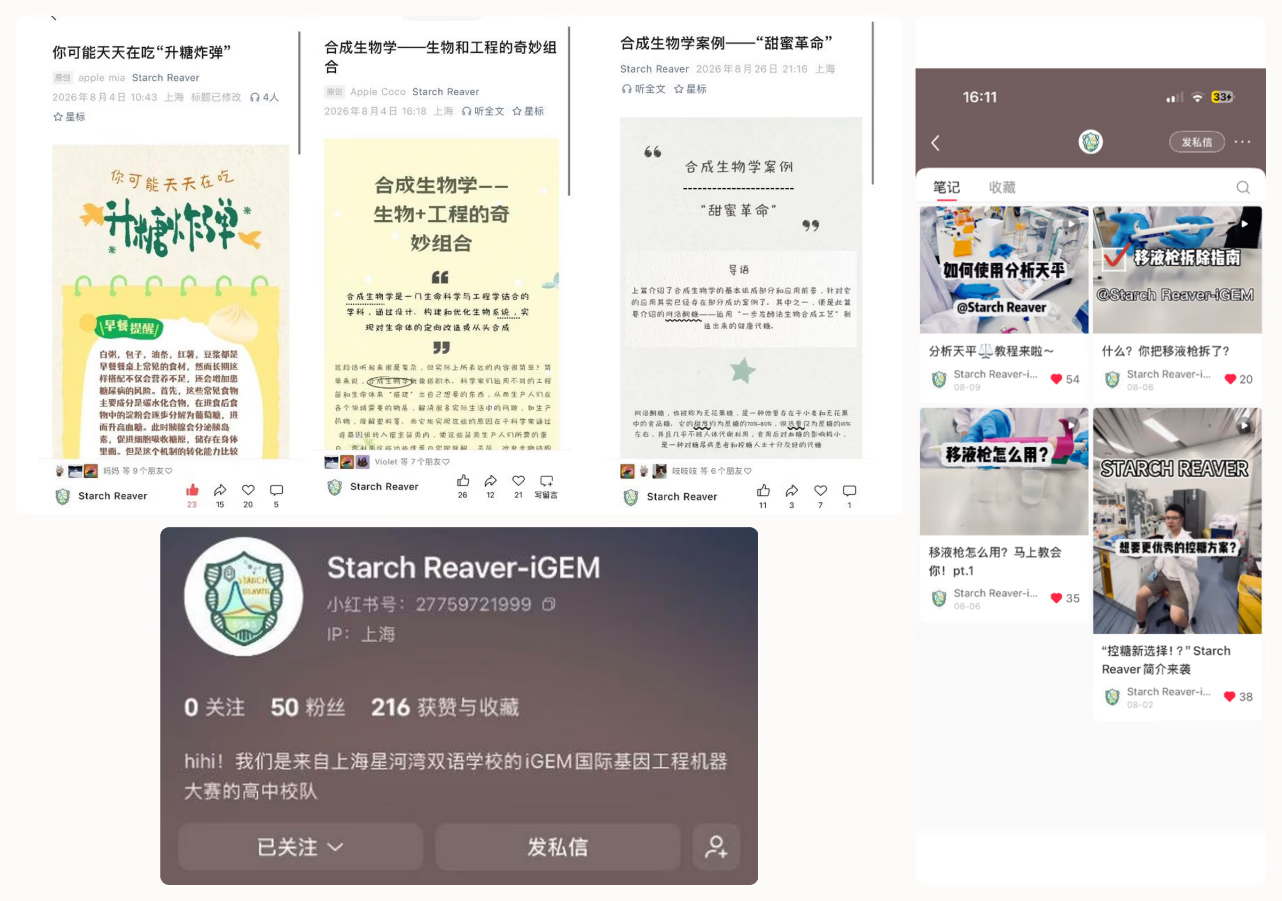
Short tutorials on pipette use and analytical balance operation complemented the conceptual articles, introducing beginners to biological laboratory procedures.
Feedback
Platform records showed more than 500 cumulative views of WeChat articles and more than 5,800 video views. Likes and comments also provided audience responses.
Reflection and Iteration
The public's preference for accessible articles and short videos informed our resource design. After publication, we aimed to continue collecting questions about specific mechanisms and procedures to guide revisions.
Future articles would invite readers to explain how synthetic biology contributes to our project's enzyme production pathway. Practical videos would ask why a particular step matters for Build or Test. We would use recurring questions to revise explanations, diagrams, or demonstrations.
3. Resources Supporting Participation in Synthetic Biology
3.1 Materials for Questions and Discussion
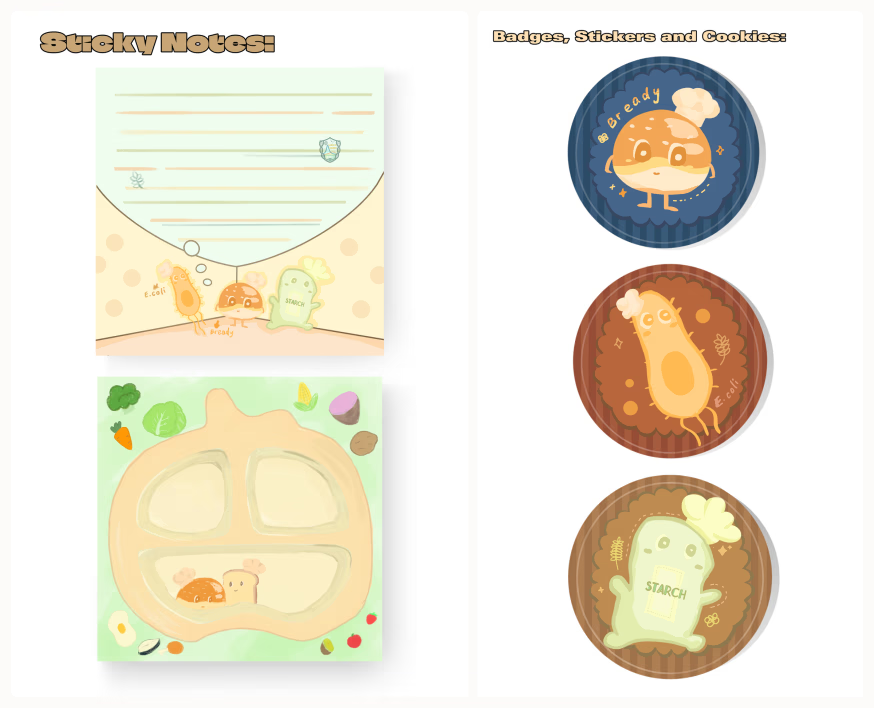
Badges, stickers, mascot cookies, and sticky notes supported informal conversations and made our project recognizable. Participants could use sticky notes to ask questions or offer suggestions.
Future use could include prompts about enzymes, microorganisms, or design choices. Younger learners could also respond verbally or through drawings.
4. Mutual Learning Iteration and Reuse
4.1 Teaching Content Audience Feedback and Subsequent Changes
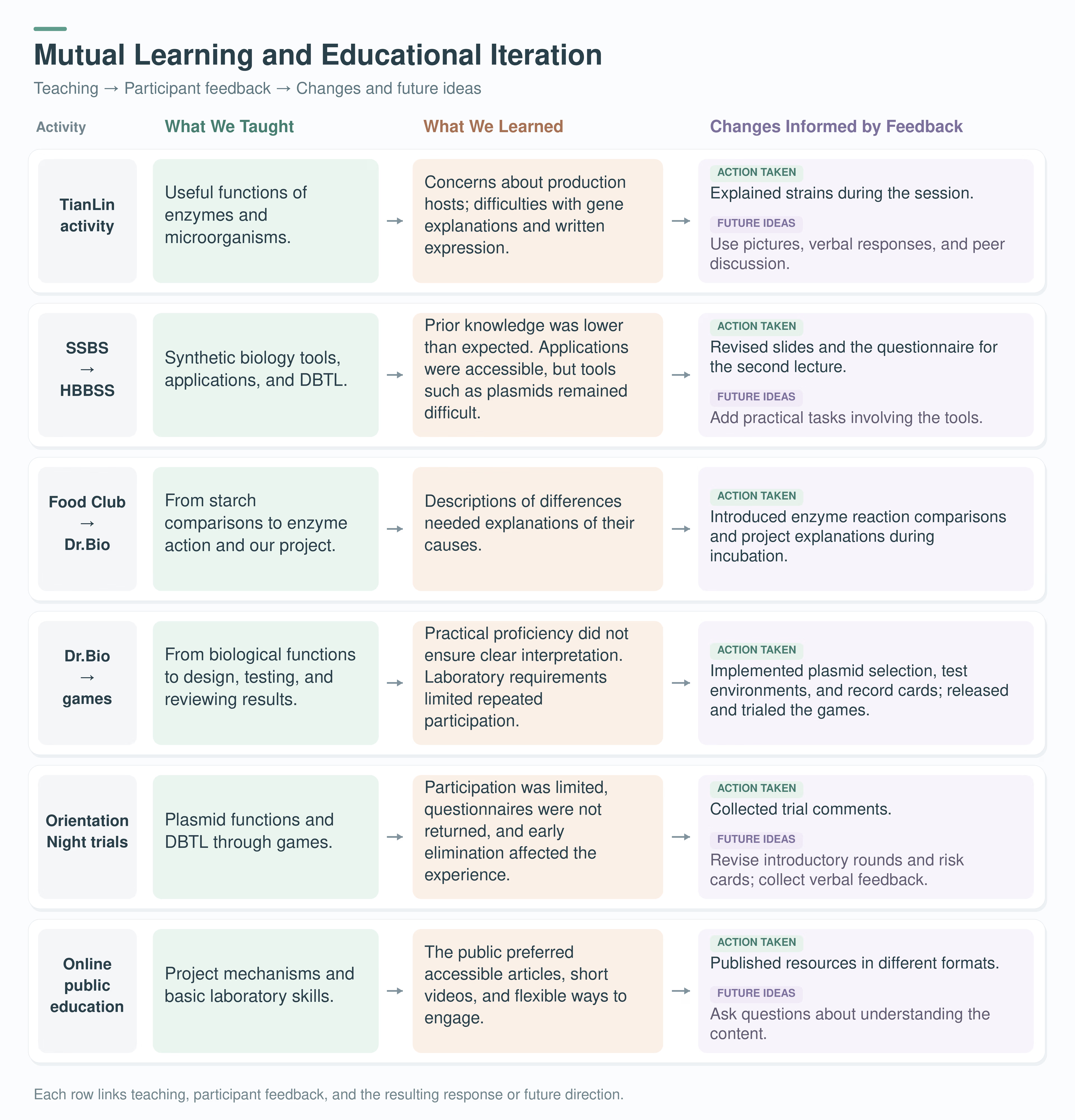
The figure below summarizes what we taught, what we learned from participants, and how their feedback informed changes already made and ideas for future activities.
4.2 Reusing Materials with Clear Scientific Learning Objectives
We want our educational materials to remain useful beyond this year's iGEM competition. We therefore provide downloadable card game materials and online access to the computer game PLASMID LAND so that future teams can use them for synthetic biology education.
Users can adapt the gameplay and explanations to their audiences' ages, prior knowledge, and available time, organize discussions around plasmids, biological components, and DBTL, and continue improving the materials through participant feedback.
Download Contamination rulebook (PDF)
Download Contamination cards (27 files)
- Contamination No 1
- Contamination No 2
- Contamination No 3
- Crispr Cas 9
- Data Theft
- E Coli
- Emergency Treatment
- Enhancer
- Experiment Card Backside
- Force Loading
- Game Backside
- Game Front
- Game Rule Backside
- Game Rule Front
- Gel Imaging
- Gene Synthesis
- Green Fluorescent Protein
- Inducer
- Kit
- Library Screening
- Protease
- S Cerevisiae
- Sample Reshuffle
- Sequencing Report
- Starting Funds
- Sterile Shield
- Tool Card Backside