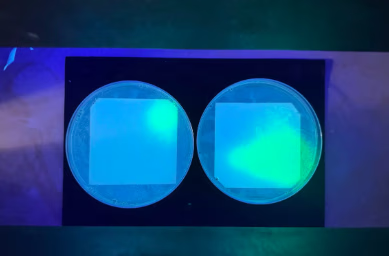
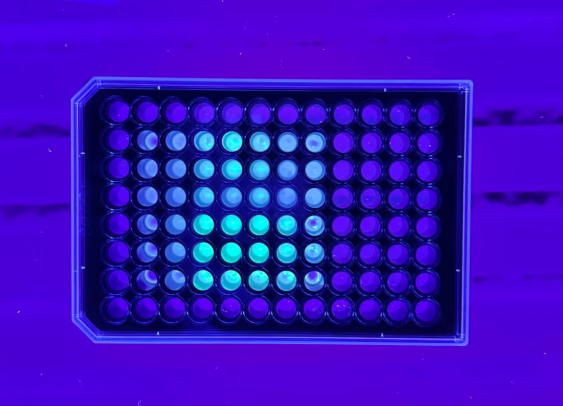
ZnuA Transformation
September 13 – October 5, 2026
System:
Attempted transformation of chemically competent E. coli DH5α cells with the ZnuA plasmid construct containing the pLuxR promoter (BBa_R0062), ribosome binding site (BBa_B0034), ZnuA coding sequence, and terminator (BBa_B0015).
Procedure:
- Thaw chemically competent E. coli DH5α cells on ice.
- Transfer 50 µL of competent cells into a sterile microcentrifuge tube.
- Add ZnuA plasmid DNA at a concentration of 2.5 ng/µL.
- Gently mix the cells and DNA without vortexing.
- Incubate on ice for 30 minutes.
- Heat shock at 42°C for 45 seconds.
- Immediately return the cells to ice for 2 minutes.
- Add 200 µL of recovery medium (x4 volume).
- Incubate at 37°C and 200 rpm for 60 minutes.
- Plate 100 µL of recovered cells onto each of two chloramphenicol-selective agar plates.
- Spread using sterile plating beads and allow the plates to sit for 3–5 minutes before removing the beads.
- Invert the plates and incubate overnight for 12–16 hours.
- Examine the plates for colony formation.
Experimental Modifications:
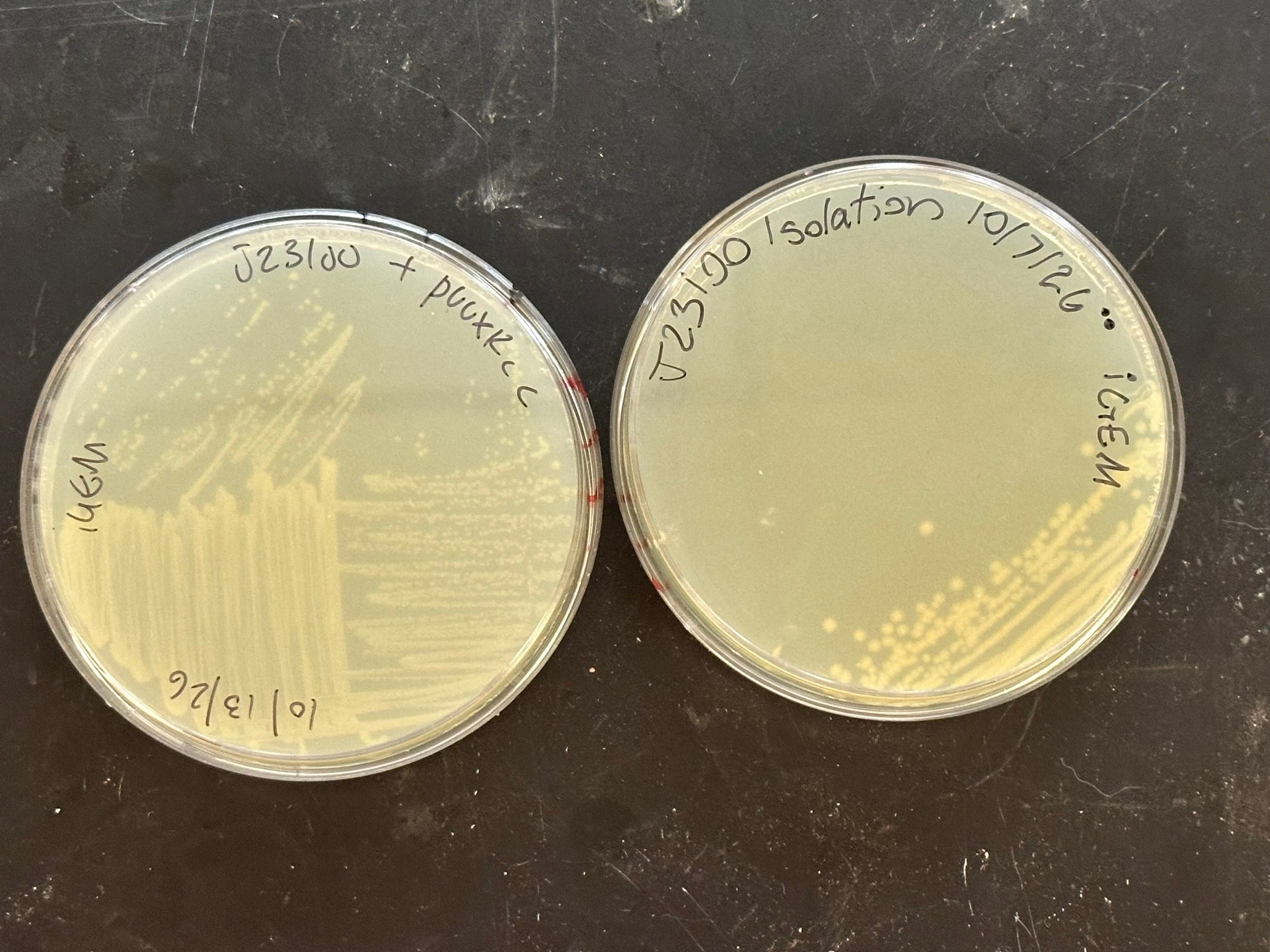
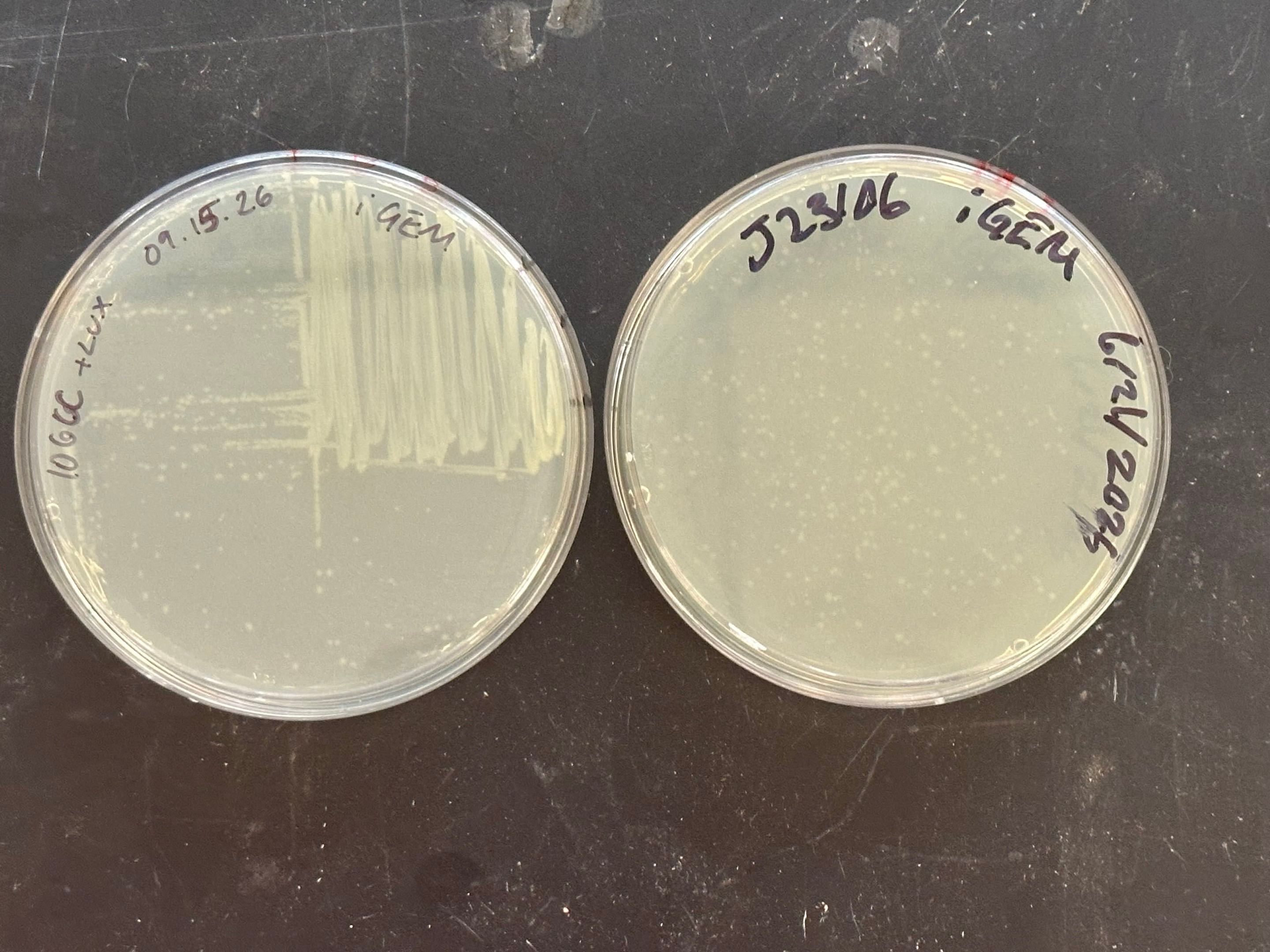
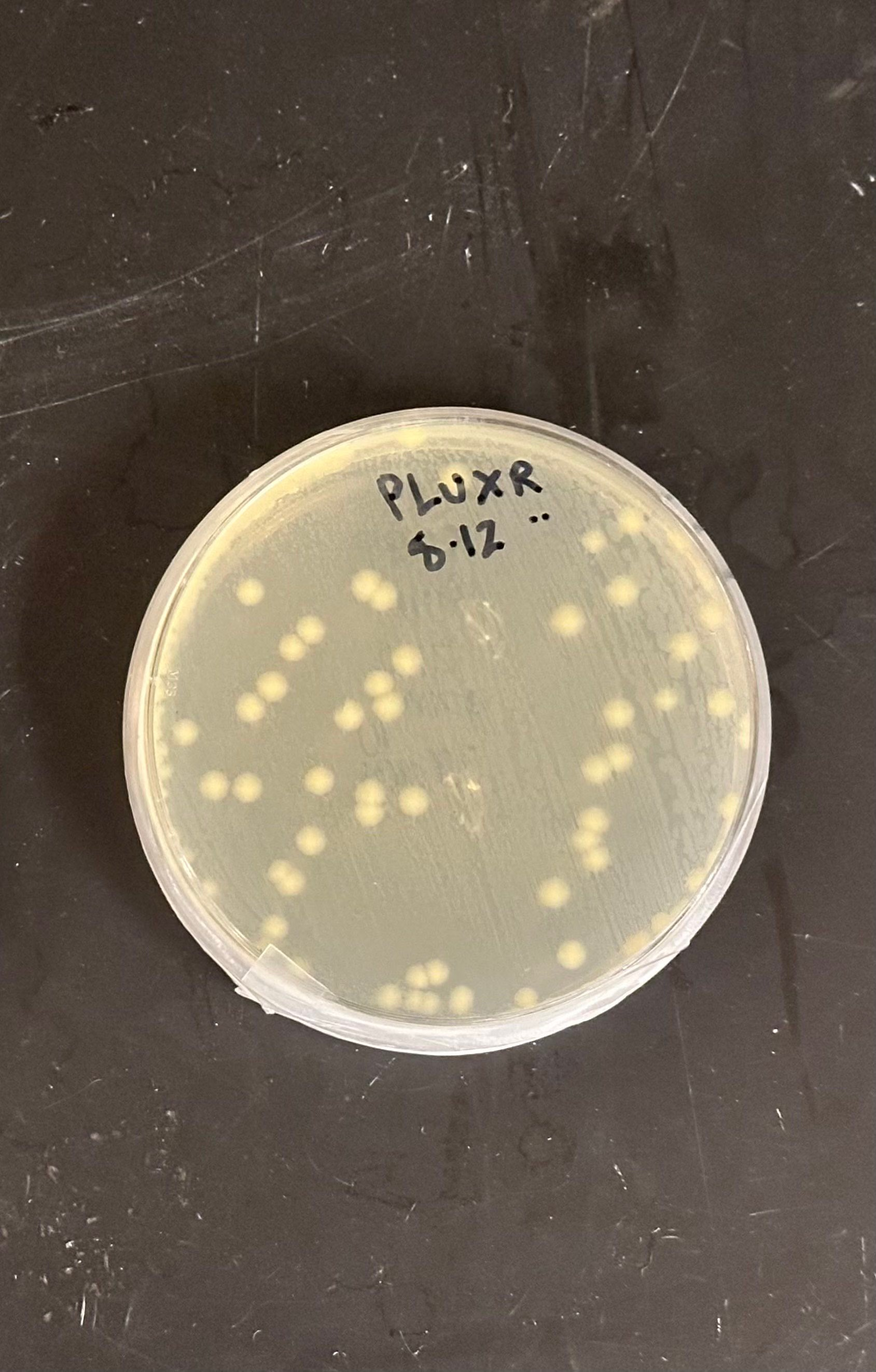
- Trial 1: Initial transformation using a 30-minute ice incubation and 60-minute recovery period. No colony growth was observed.
- Trial 2: Increased recovery time from 60 to 90 minutes at 37°C and 200 rpm. No colony growth was observed.
- Trial 3: Increased the initial ice incubation from 30 to 45 minutes while maintaining the original 60-minute recovery period. No colony growth was observed.
Conclusion and Future Work:
The ZnuA plasmid study ended after unsuccessful transformation attempts, before ZnuA expression or zinc-uptake measurements. We propose mutagenesis of native ZnuABC regulation with construction and testing of those modifications still ahead. The Module 1 conclusion explains the proposed direction and supporting literature.