Why We Started with Zinc
Mine water and runoff from tailings can carry dissolved zinc, as documented in a USGS study near Joplin, Missouri. Metlock was founded to find out whether engineered bacteria could help recover zinc from this kind of water. A library of metal-binding parts is being built, starting with zinc. For each new metal, testing binding selectivity and recovery in the water being treated would have to be done.
We want to build a library of metal-binding parts, starting with zinc. For each new metal, we would have to test binding selectivity and recovery in the water being treated.
Our Design
The study examines zinc uptake, protein expression and surface binding in E. coli through three parallel modules.
A conversation with Gen Sutton at Doe Run led to consideration of sites with limited treatment infrastructure and changes in temperature, water chemistry and flow. A self-contained vessel is being considered to control those conditions. The vessel is still highly conceptual. Its capacity, energy use, maintenance, containment and waste handling will need to be assessed.
Tunable Zinc Uptake
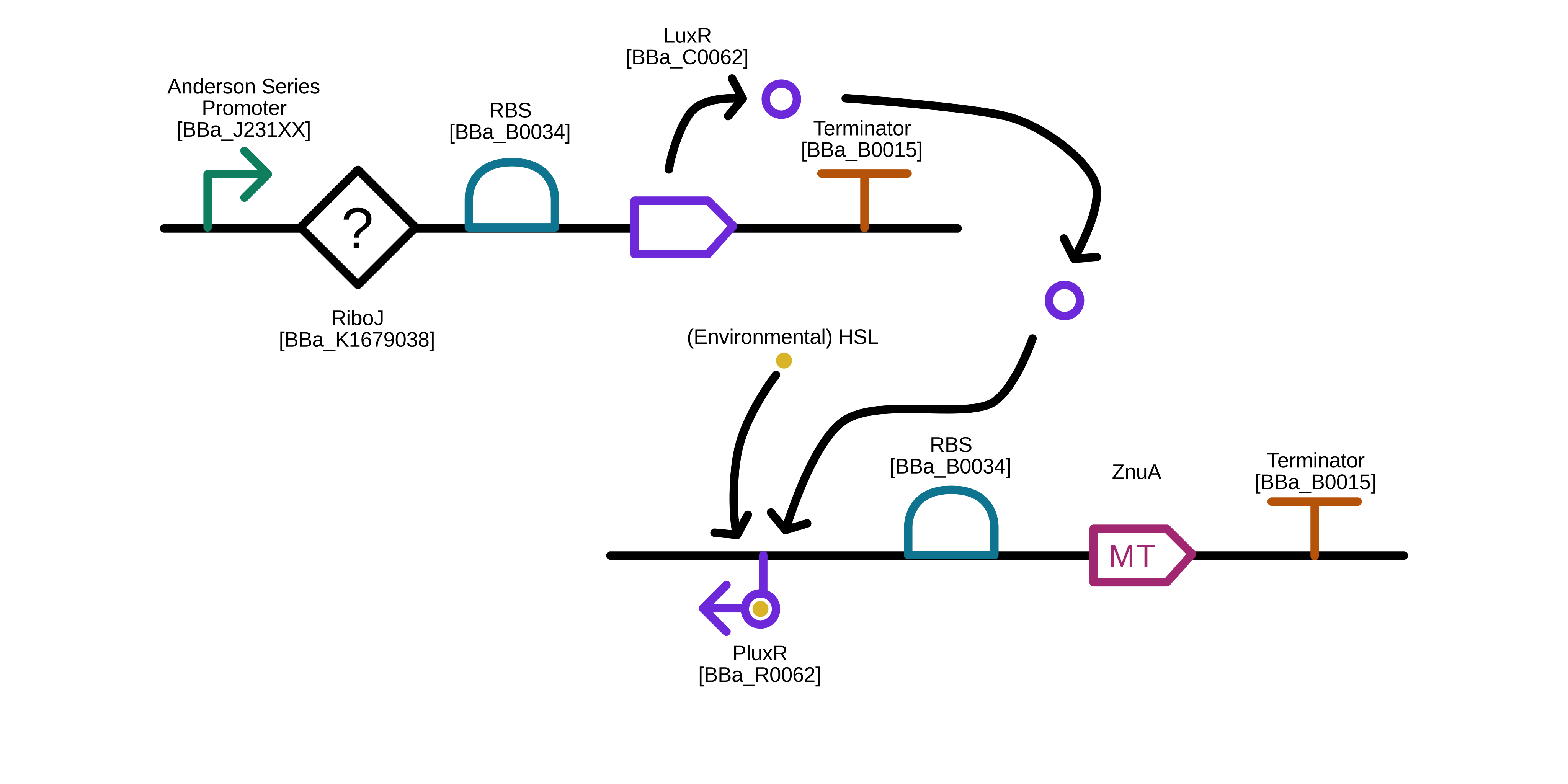
The plasmid design put ZnuA under AHL-LuxR control. ZnuA is the zinc-binding component of the native ZnuABC transporter. Three attempts to transform the plasmid into E. coli DH5α produced no visible colonies, so expression and zinc uptake could not be measured. The reason for the transformation failures is not yet known.
Next, the plan is to target native ZnuABC regulation through mutagenesis. The Module 1 page explains the regulatory options, and the Lab Notebook records the transformation trials.
sfGFP Expression and Analysis
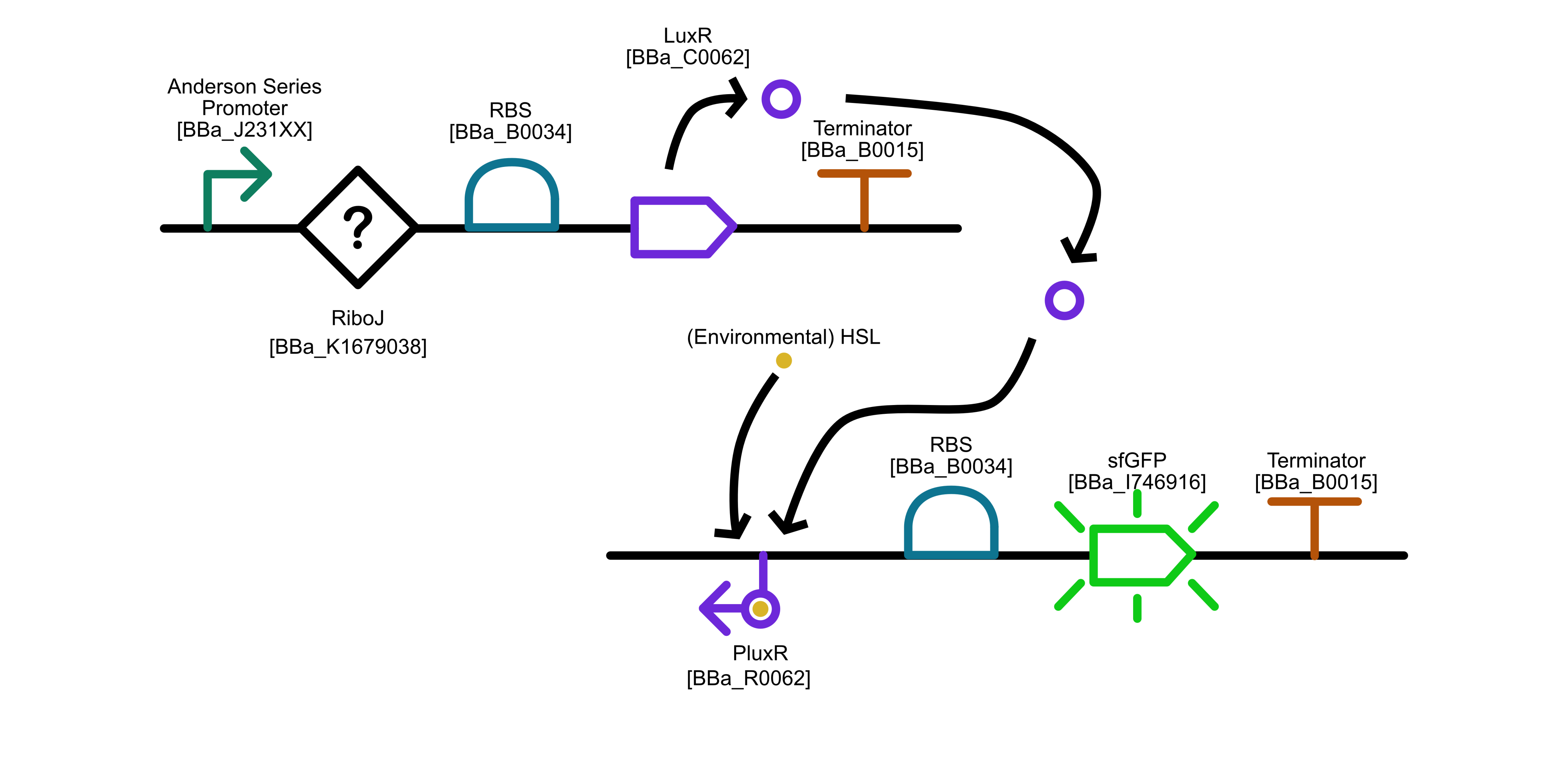
A two-plasmid expression system using standalone sfGFP as a fluorescent reporter was tested. J23106 drives LuxR production, and AHL-bound LuxR activates pLuxR–sfGFP.
Fluorescence and OD630 were recorded over 0–24 hours at six AHL conditions. The reader’s only available absorbance setting was 630 nm. WellPlotted plots the measurements by well or condition. Glow Getter predicts media-corrected sfGFP fluorescence per OD630 for this dataset.
The plan is to test the suggested harvest conditions by measuring recovered protein with a protein-specific calibration. Each new sfGFP-tagged target will also need its own dataset and prediction tests.
Ag43–SmtA Fusion Modeling
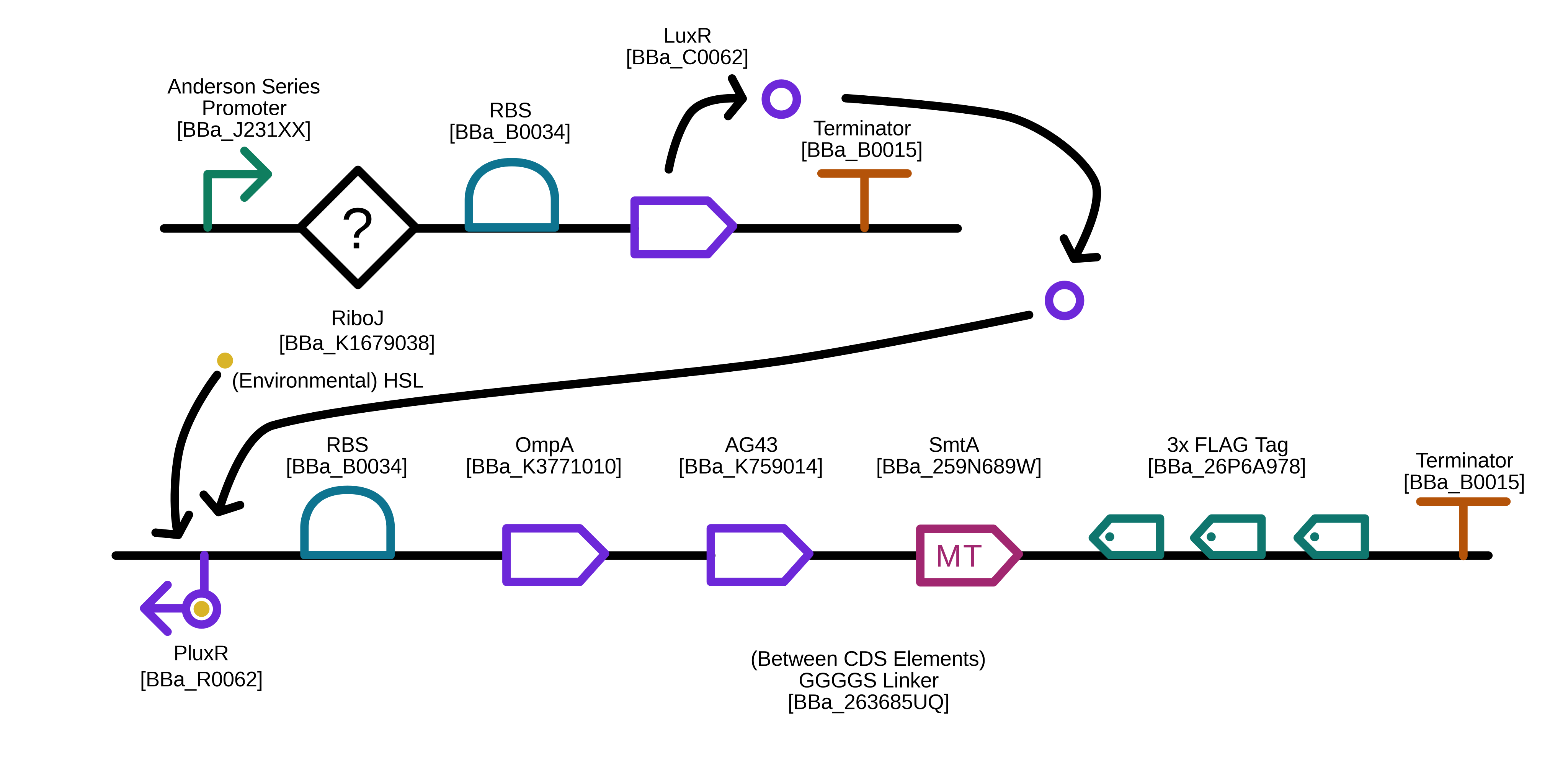
A fusion was designed in which Ag43 would display the zinc-binding protein SmtA on the surface of E. coli.
After reviewing the first models with a MilliporeSigma representative, we moved the targeting component OmpA to the N-terminus and the FLAG tag to the C-terminus. We also established a local prediction workflow and revisited the sequence with AlphaFold alongside further linker work. The second Ag43 prediction showed a more extended arrangement.
The procedure records successful diagnostic and project outputs. Matching those outputs to their exact sequences and settings remains a next step, followed by expression, surface-localization and zinc-binding tests.
How the Modules Connect
The Results page records our findings so far, and Engineering Success traces the design changes. This wiki publishes derived figures. The underlying measurements, fitted experimental models and complete prediction records remain private and local. A separate synthetic notebook example is available for checking the analysis code.