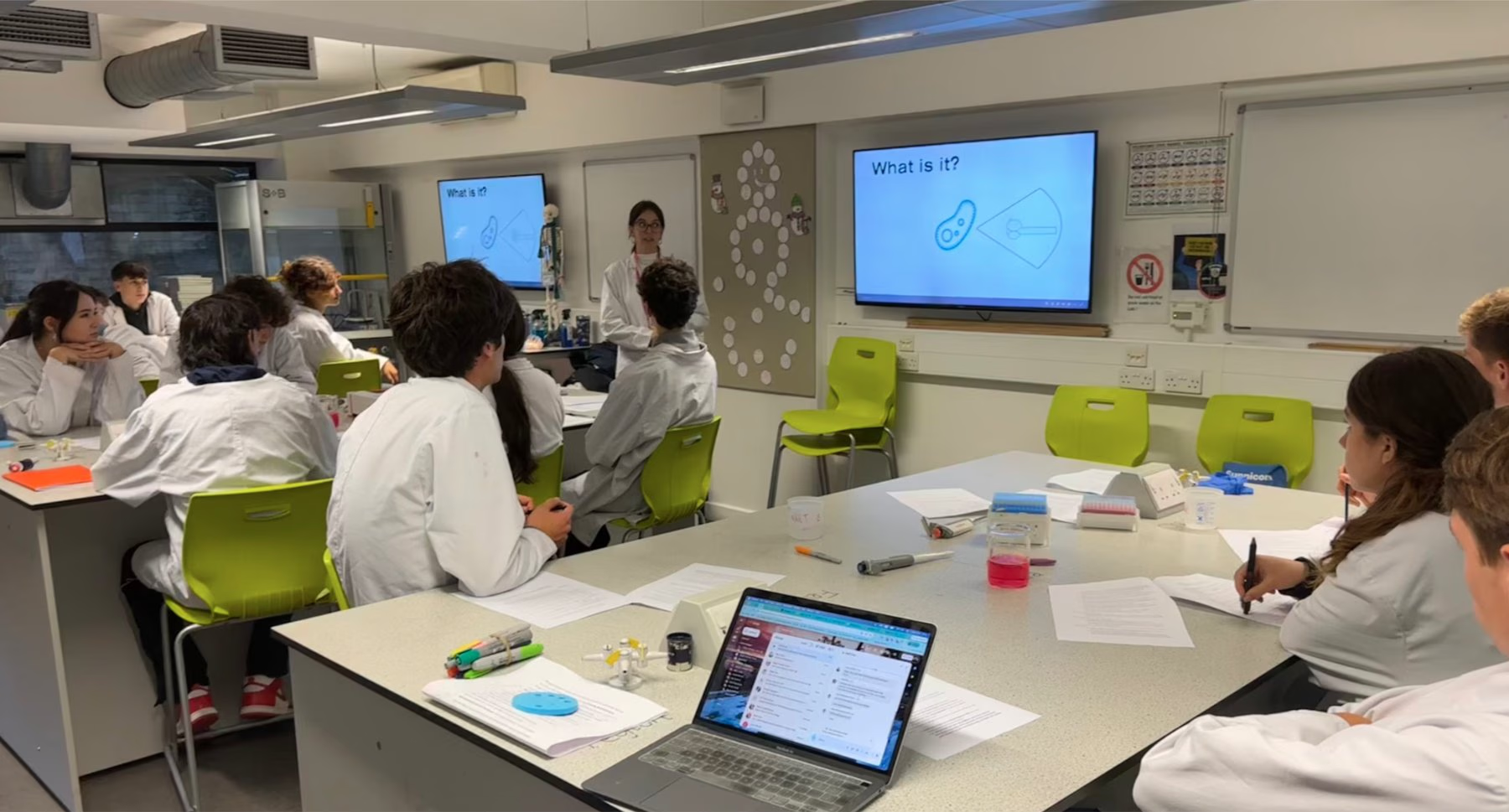
Mini Jamboree video banner

“They’ve got to understand what science is, how it works, and why it is such a reliable way of producing knowledge and trust.”

Sir Paul Nurse

Introduction

Just like in Human Practices, we open with a quote by Sir Paul Nurse. Gaining trust in science is an important objective we, collectively, as a scientific community, must strive towards in our educational endeavours. We placed the idea of showing that science is a reliable tool to generate knowledge at the epicentre of our education. Importantly, we also did not adhere to the deficit model — an idea that trust in science can be gained if people acquire sufficient knowledge. This stance was heavily influenced by our conversations with Danielle Hamm and Dr Patrick Boyle. One last important objective we worked towards was increasing familiarity with science and establishing positive personal and emotional connections between it and our students. After all, Dr Boyle described this familiarity as one of the most important factors to achieve the acceptance of novel technologies, such as synbio. Though initially designed for human practices, we applied our triple-R framework to our education as well.

Responsibility

When designing educational resources, we acknowledged the tremendous responsibility behind ensuring information is presented effectively and accurately. We did not want to misinform anyone we were educating. We also understand that a single bad experience can easily undermine one’s passion for science and synbio, hence we put on our shoulders the responsibility of making our educational outreach engaging and insightful. Lastly, we were transparent about science and its challenges when educating others about it to ensure we avoid painting an oversold and cherrypicked image.

Receptivity

We opened our minds to all feedback for our educational resources and activities, letting both “students” and teachers shape our work. Much of our work takes the path of a DBTL cycle, with us applying received feedback to enhance the educational value of our campaign and taking our work through multiple iterations.

Reach

“The whole of life, from the moment you are born to the moment you die, is a process of learning” – Jiddu Krishnamurti. Anyone can be educated. With this philosophy, we aimed to reach a broad range of ages, from young children to responsible adults. Overall, we engaged in educational initiatives with young children, middle school students, high school students, university students, and adults.

Explain it like I am

Our education journey

Our education journey, from primary school to public interviews

Primary School

Most children hold positive attitudes to science at the age of 10, but interest declines sharply after and is largely set by 14 (Archer et al., 2010; Archer et al., 2013). We targeted this age group to ignite passion for science and synbio before the sharp decline. We were also inspired by Dr Patrick Boyle’s argument that familiarity is more important to building trust than information; after all, it is quite difficult to teach the technical aspects of synbio in detail with children who often lack the sufficient background knowledge, being at the early steps of the education system. Finally, we wanted to teach ourselves to explain synthetic biology at elementary level, a skill highly valuable for scientific communication. The success of the latter is very evident in our DBTL cycle of the educational children’s book, when our young beta-testers highlighted heavy jargon words which we had forgotten were not basic.

Children’s Book

Bacterial transformation, getting bacteria to take up new DNA, is one of the most common techniques in synthetic biology. We wanted children to learn about it, so we designed a comic book that teaches bacterial transformation in a fun, friendly way. Follow our journey about how we went from our first edition to a second!

reGELerate's Children's Book

Children's book DBTL plain

Design
In our educational campaign, we wanted to engage a wide age range. Many drop their jaw at the idea of teaching synthetic biology and biotechnology to children. However, we identify this as a clear gap in not only the educational system but also in social paradigms. Following the good example of previous iGEM teams, particularly inspired by Imperial iGEM 2025, we designed an engaging comic book for children to teach them about bacterial transformation.

Children's book objectives

Build
Our team has combined their creativity and digital art prowess to build the comic book in ProCreate and PowerPoint.
Test
The most important part of the process. We realised that the only true way to test our resource is by reaching out to its target audience - the children. We therefore got two children to read our book and give us feedback: what they do not understand, what they like about it, what they feel could be better/more engaging. Before delivering the book, we designed parental and child consent information sheets and forms to ensure that parents approved of the content that their children would be exposed to and that the children understand that they could retract their answers at any time. These forms were designed in line with data protection policies from the UK GDPR and Data Protection Act 2018. The parents and children involved in our outreach all agreed for their children's feedback to be recorded anonymously.
Learn
Our first beta-tester, who is 11 years old, really enjoyed our book and gave us two useful ideas for improvement. Firstly, she felt that there is some scientific jargon that is too difficult to understand for a child, such as centrifugation. Secondly, she suggested that the book would be more entertaining with a second fun activity added, such as a maze. Our second beta-tester, also an 11 year old, similarly had positive thoughts on our book and helped massively by pointing out each word they did not understand: centrifugation, binary fission, pellet, membrane, pores, incubate, secrete, secretion system, and supernatant. Looking back, we realise how complex these words are. We fell victims to writer’s blindness, including words that to us are fundamental, but completely missing this as an issue for our young target audience. We were given valuable feedback and we listened. A second version of the children’s book was created, now with a brand-new maze activity, reduced jargon and processes like centrifugation and binary fission clearly explained. Hearing our testers’ feedback changed the way we viewed our resource and made us see other elements that could be improved: we italicised E. coli throughout the book, changed protein expression to production and bolded all key terms for our young readers to understand the most important words they should be learning from reading. We purposefully did not explain why E. coli is italicised, to prompt curiosity-driven independent explanation beyond our book – objective 2 of this resource.

Ask me what I think

Great Exhibition Road Festival

Great Exhibition Road Festival (GERF)

Figure 1. Our Great Exhibition Road Festival stall: the activities, the families and the photos from the day

Primary to Middle School

A notch up in their knowledge, late primary and middle schoolers differ from average primary schoolers in many aspects. A sudden drop is observed across fluency, flexibility and originality in seventh grade, around the age of 12–13 (Metwaly et al., 2019), which matches Samara Mahmood’s observation that younger children generate ideas freely while older students search for the single correct answer. We therefore focused on soft skills in our entrepreneurship workshops, recognising these change critically as children progress through middle school. We targeted this specific group due to the soft skills slump and as a last window before students begin to specialise in GCSEs and A-levels (or equivalent high school programmes) and avoid choosing science due to gaps in their transferable skills (Archer et al., 2020).

GRIDLESS Workshop

GRIDLESS Workshop

Parent testimonials

GRIDLESS workshop video

Figure 2. Our mentoring sessions on the GRIDLESS entrepreneurship programme, filmed with the 9 to 13 cohort

Figure 3. Photos from the GRIDLESS workshop

High School

Synthetic biology and biotechnology is not a prevalent topic in either A-levels or the IB, as Anne Liao told us. This is consistent with our own findings that 12 of 17 Year 12 and 13 students at Hampton School had never encountered the field prior to our workshop. It is also consistent with UNESCO’s 2026 guidelines, which exist precisely because engineering biology still lacks established curricular routes (UNESCO, 2026). We targeted this stage of life because it is often where career pathways are set in stone. Through our work, we hoped to excite and share the prospects of synbio and iGEM with students, as awareness was undeniably the greatest barrier to potential exploration. At this stage, we could also introduce more factual knowledge (albeit it was not our priority) to students, benefitting those willing to pursue a life sciences career due to substantial overlap with typical university biochemistry curricula, as we learned from our own example.

Four schools diagram

Genetic Circuit Workshop

Students in Year 12 and 13 are at stage of high school where they are making subject and degree decisions, but the A-level specification does not outline synthetic biology as an independent field, and very few UK undergraduate degrees are purely focused on synthetic biology, as this discipline is covered across biochemistry, biology, biotechnology and microbiology degrees. This underlines the importance of the UNESCO framework discussed during our interview with Dr Kirsten Jensen, which aims to build modules to design synthetic biology-focused undergraduate and postgraduate degrees. We created a series of workshops for sixth-form biology students to open their doors into synthetic biology.

Genetic circuit graphic

Design
We designed a workshop to be run with sixth-formers taking biology at Hampton School and Eltham College with two goals. The first was outreach, whereby we sought to introduce synthetic biology, the DBTL cycle that underpins it, and the iGEM competition, in order to show how students could get involved at a high school, university or volunteer level. The second aim was to test our science communication: if we could engage a sixth-former with limited exposure to the field, this would act as a promising indicator of how well the public might be able to understand our project. Given that hands-on activities tend to be more memorable than lectures, we built the workshop around a genetic circuit design challenge that does not require the facilities of a lab, rendering it accessible to any school.
Build
We ran a two-part session, first comprising a synthetic biology crash course. We began by defining the field using iGEM’s own definition but also by simplifying the concept in layman terms. We then worked through the central dogma which is the core of genetic circuit design, the concept of selecting a chassis based on the advantages that different organisms can offer, the DBTL cycle and biobricks as a method of standardising the field to make parts interchangeable across international barriers. We described various applications, including lab-grown meat, synthetic artemisinin, gene-drive-engineered mosquitoes, golden rice and bioremediation. We then explained the growing integration of the field with AI and the importance of understanding public perception as they define the future ethical and legal boundaries governing the use and growth potential of this field.

Figure 4. Pictures from the Genetic Circuit crash course at Hampton School

Students then worked in teams of five and were assigned to address a brief by designing a genetic circuit using a set of biobricks. We explained how transcriptional units can be assembled, underlining the roles of promoters, ribosome-binding sites, coding sequences, terminators and plasmids in particular. We then introduced repression through operator sequences and how their combination can form different types of logic gates. The brief we posed was drawn from a real problem: that groundwater arsenic contamination, that affects large populations across South and Southeast Asia, occurs as arsenic is released from aquifer sediments under anoxic conditions. Students were given physical biobrick parts and had twenty minutes to build a circuit producing a visible reporter only when arsenic is present and oxygen is low. One student was then selected to pitch their team’s design.

Figure 5. Pictures from the genetic circuit design task at Hampton School

Test and Learn feedback cards from the Genetic Circuit Workshop (Hampton School and Eltham College)

Synthetic Biology Ethics Debate

At Emanuel School, we worked with Year 12 and 13 students taking A-level Biology again. Unlike Hampton School, the students had not been greatly introduced to genetic engineering.

Debate graphic

Ethics debate dropdowns

Design
Our Hampton feedback showed that students wanted to take a more active role during educational workshops. Our project journey had led us to think carefully about the role of synthetic biology in society, including intellectual property, regulation and public perception. We therefore designed a discussion-based workshop that would introduce the field whilst encouraging students to form and defend their own views against both other students and counterpoints the facilitator would gently bring up. This format also suits schools whose students have less technical background as it relies on reasoning rather than prior knowledge of genetic engineering.
Build
We adapted the revised, interactive crash course for students who had not yet been introduced to genetic engineering and were still consolidating their understanding of transcription and translation. We then ran a structured debate using a set of questions that covered what it means for a compound or system to be ‘natural’, medical applications, environmental release, agriculture, biosecurity and governance. Students were asked to offer their opinions on statements such as:

Ethics debate statements

Ethics debate Test and Learn flip cards

Test and Learn flip cards from the Synthetic Biology Ethics Debate (Emanuel School)

Transformation Practical

At Halcyon London International School, we worked with Year 12 and Year 13 students taking the International Baccalaureate, running a full laboratory practical that made good use of the iGEM distribution kit.

Transformation graphic

Transformation dropdowns

Design
We realised that hands-on workshops, such as the Biobricks activity, but even more so a full laboratory practical, would be the most impactful for students. Of course, only a select few schools have the sufficient laboratory facilities to host a practical. This was a leading reason for us creating four different workshop types (building a genetic circuit, performing a transformation, performing DNA extraction and hosting a debate). A workshop we designed made good use of the iGEM distribution kit! Our goal was to teach high school students bacterial transformation, a crucial step in most biotechnology, molecular biology and synthetic biology workflows. We ran this workshop at Halcyon London International School with Year 12 and Year 13 students taking the International Baccalaureate.

Transformation design choices

Build
We created a protocol, assuming a two-hour timeframe for the workshop, with the student version including multiple questions throughout the practical, encouraging the students to think about the reasoning behind each step in the experiment. We have since turned this protocol into part of an educational resource pack that other teams can use to run the same workshop. The full transformation protocol is included in the pack, which you can find on our Contributions page. We then ran the transformation practical with Halcyon’s Year 12 and Year 13 IB Biology students, using the iGEM distribution kit.

Transformation kit list

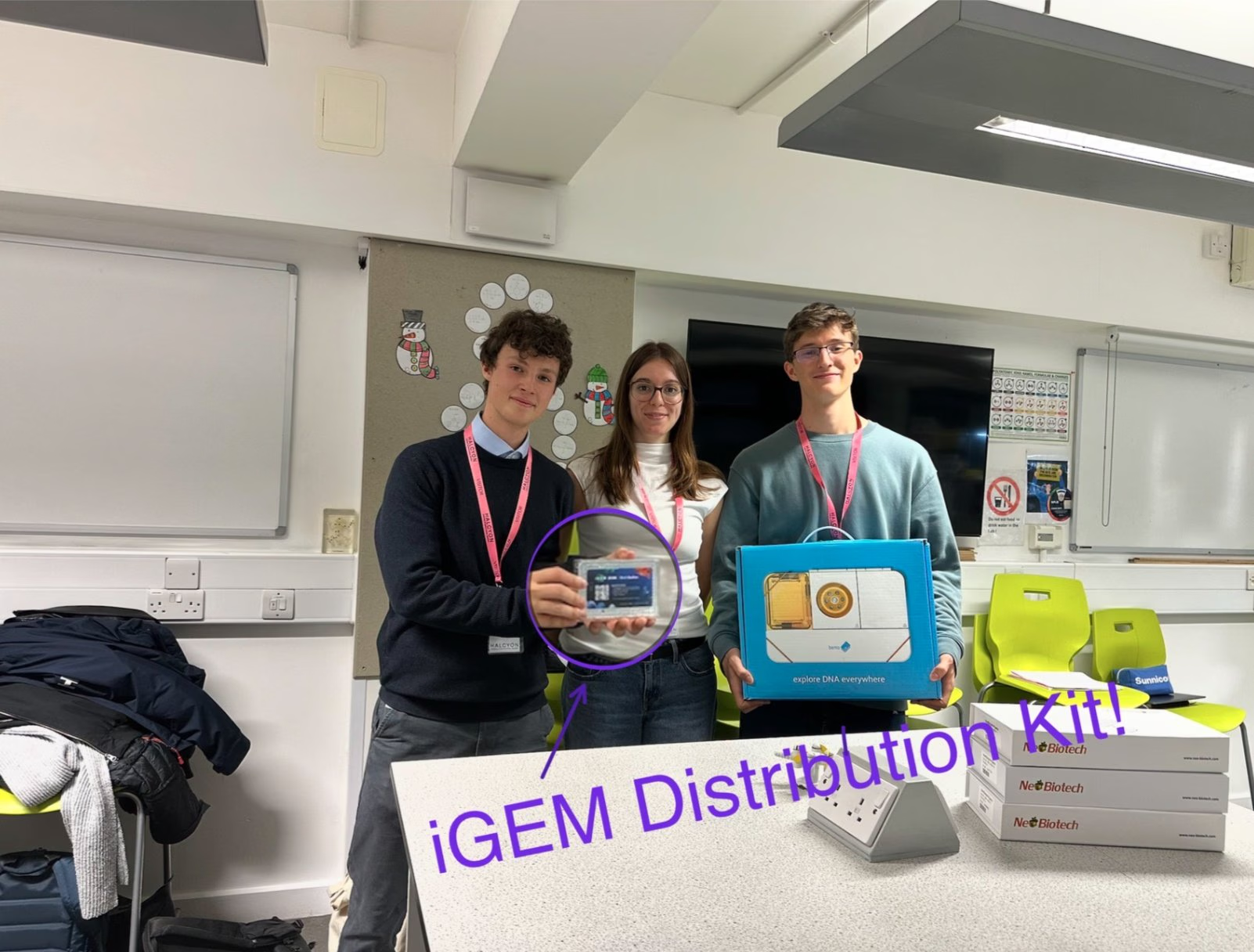
Three team members at Halcyon holding the iGEM distribution kit

Figure 6. Team members with the iGEM distribution kit at Halcyon London International School

A team member introducing the practical to students in lab coats

Figure 7. Introducing the transformation practical to students at Halcyon London International School

Transformation Test and Learn flip cards

Test and Learn feedback cards from the Transformation Practical (Halcyon London International School)

Version 1 (top) and Version 2 (bottom) of the PowerPoint slides accompanying our Transformation Practical. As established in the Learn section, two students suggested we include more visuals/diagrams in our presentation to aid visual learners. We integrated clearer visual explanations by including diagrams after every question asked on the PowerPoint, and a video explanation of transformation.

Follow-up notes shared with Halcyon London International School students after the Transformation Practical, covering expected plate results, troubleshooting, and a multiple-choice quiz with answers.

Internal Assessment (IA) ideas shared with Halcyon London International School to support independent IB Biology projects in molecular biology, cell biology, biotechnology and synthetic biology.

Educational Resource Pack

Our Educational Resource Pack, written alongside the workshops we created. This document can be used in the future by people who want to host synbio outreach workshops for middle and high schoolers.

DNA Extraction Practical

At the DLD College, we hosted a workshop where students extracted DNA from their own cheek cells. The workshop covered molecular biology, bioengineering and chemistry, and gave students the chance to see DNA with the naked eye.

DNA extraction dropdowns

Design
DNA extraction is a core molecular biology process and is central to bioengineering workflows because it provides the starting material for downstream steps such as PCR, cloning and sequencing. When teaching students about bioengineering, a key topic underlying synthetic biology workflows is DNA, specifically the central dogma and how it is used in those workflows. We also wanted to show that chemistry is often integrated into molecular biology workflows because each step relies on chemical reactions: detergents break down cell membranes, enzymes digest proteins, and salts and alcohol change how soluble DNA is. A simple DNA extraction was both accessible to high-school students and an interactive way to try out a real workflow.
Build
We began with a short introduction to what synthetic biology is and what it is used for, to raise awareness of its importance. This was followed by the DNA extraction practical. Bio-Rad offers an educational DNA extraction kit, Genes in a Bottle. Students took a cheek-cell sample and lysed the cells with lysis buffer, added proteinase K to degrade proteins in the lysate and then precipitated the DNA with ethanol. Finally, the precipitated DNA, which becomes visible as white strands, was transferred into a helix vial that students could keep as a necklace. Alongside the practical steps, we explained why we were performing each step and how each reagent contributed to the reaction. Our DNA extraction protocol is also included in our educational resource pack, which you can find on our Contributions page.

DNA extraction Test and Learn flip cards

University

Employers’ primary concern about bioscience graduates is a deficit in practical and analytical skills, with 57% of surveyed academics reporting that incoming laboratory skills had declined over five years and a documented mismatch between employer expectations and higher education output (Society of Biology, 2011). We targeted this issue with our seminar series, collaborating with SynBIC, and equipment tutorial videos to seal the possible gaps in undergraduates’ and even postgraduates’ knowledge. Moreover, many of reGELerate’s members began without prior synbio background and lost precious time getting to grips with the required concepts, leading us to focus on exposing more university students to them and, in parallel, investing this knowledge to empower the next generation of Imperial iGEMers.

Imperial College Synthetic Biology Society (SynBIC)

We ended up collaborating with SynBIC on multiple educational events throughout the course of our project. We started with an iGEM presentation in Spring Term, explaining our project, iGEM and its timeline, and talking about synthetic biology from a broader angle. This session was also an informal premiere for our Fundraising Video, the production of which wrapped up just a few days prior. We organised an informal networking session after the presentation to encourage students to speak to us and ask questions in a friendlier environment. Indeed, we had a few students interested in pursuing iGEM approach us and lead some interesting conversations. From there, our work with SynBIC grew into a cycle of three stages.

SynBIC cycle

The SynBIC design, build, test and learn cycle

SynBIC photos

Figure 10. Photos from our work with the Imperial College Synthetic Biology Society (SynBIC)

Our UK/EU Mini Jamboree

On 24 August 2026 we hosted the UK/EU Mini Jamboree at Imperial’s White City campus. It was a full-day conference for 90 attendees from 13 visiting teams across the UK, France, Spain and Germany, including a high school team (Eton College) and a non-iGEM team (Cambridge iDEC). We discuss some details of the event, including its initially set objectives, on other pages, such as Human Practices, Inclusivity, and Collaborations. Importantly, however, we also set out to educate all our guests about the current work in synthetic biology by hosting this event. Throughout the day, the iGEMers learned from key experts based in the UK.

1. Dr Szymon Manka: responsible design

The first point of education came from our PI, Dr Szymon Manka, who opened the stage and spoke about responsible design. He urged teams to always ask what problem they are solving, who benefits and what the downstream effects are before building something. These ethical considerations, often becoming a greater issue down the line, are crucial for iGEM teams to think about.

Talk: Szymon Manka

2. Professor Tom Ellis: engineered living materials

Professor Tom Ellis spoke next about engineered living materials and their future. He presented this through the lens of his lab’s research. He explained why synbio is highly compatible with biomaterial design, through its logic circuits, oscillators, and cell-to-cell signalling enabling controlled polymer formation in space and time. He defined a key design principle for biomaterials: durability balanced with the ability to be dismantled on demand. Professor Ellis also spoke about bacterial nanocellulose scaling in Southeast Asia, self-colouring black leather and its value for sustainability, and Puraffinity’s journey, which started as an iGEM project at his lab. This talk was of particular educational value to students interested in pursuing biomaterials in their careers and for iGEM projects revolving around them. In fact, there were certainly multiple people in the room who found the talk valuable in terms of the education it offered: when we asked attendees to pick their favourite event of the day and justify it, one person specifically said they are interested in biomaterials. Furthermore, Aix-Marseille’s Antibio Wars is largely a biomaterial project, focusing on laccase immobilisation, similar to ours; the talk therefore provided insights especially relevant to them.

Talk: Tom Ellis

3. Connie O’Donnell: engineering human stem cells and commercialising science

Connie O’Donnell, bit.bio’s Head of Commercial, gave a keynote talk about engineering human stem cells and commercialising science. Connie explained why over 90% of drugs that pass preclinical testing fail in human trials: “mouse data gives mouse answers”. She also compared sources of human stem cells for research, highlighting the pros and cons of each. Afterwards, Connie told the room about bit.bio’s opti-ox method, which uses the few transcription factors that define a cell’s identity, placed at genomic safe harbour sites, to make consistent human cells in days rather than months. She also covered regulation and sex bias in preclinical drug development, and shared insights into the business side of bit.bio. Specifically, she explained a set of decisions made to achieve a sustainable, and ultimately profitable, business model, and the questions iGEM teams should answer to correctly plan their business development strategy. Once again, we believe hosting Connie at our event enabled important educational outreach, influential to many iGEM teams present, including ours, as we directly implemented Connie’s advice and expertise into our project.

Talk: Connie O'Donnell

4. Panel: the future of synthetic biology

The panel discussion on the future of synthetic biology with Henrik Hagemann, Dr Alicia Graham and Dr Rodrigo Ledesma-Amaro was probably our favourite educational event of the day. The engagement was so high that we had to run overtime for our next event. The panel discussed a broad range of topics, sufficient for each speaker to showcase their expert opinion: supply chains in synbio, barriers to technology transfer, patent work, the integration of AI into synbio, biosecurity concerns around synbio, de-extinction, science communication, and the importance of the mundane, “unsexy” impact of synbio instead of constant “flagship” projects. For a room full of people considering pursuing synthetic biology in the future, the panel’s theme was a perfect match. We gathered three experts, representing very different perspectives (research, industry, entrepreneurship, iGEM, age) and created an opportunity for them to share their useful insights into the future of the field. The panel was designed to encourage all guests to begin thinking about engineering biology’s future: what it will likely be and what they want it to be.

Talk: panel

Learning by doing: pitches and mock judging

Besides hearing expert opinions and learning about the research at the frontiers of synthetic biology, we also provided our guests with a different learning opportunity. Namely, we encouraged learning by doing through team project pitching and mock judging sessions. Each team delivered an 8-minute pitch, modelled on the Grand Jamboree format, and then took questions from a judging panel of Dr Sonja Billerbeck, Kyle Jonsson and Dr Amritpal Singh. Dr Singh closed by summarising the panel’s advice for all teams: thread a single narrative through the whole pitch, and show real lab data. Teams told us what they took away:

What teams took away

Learning from each other

The event was, in addition, a chance for teams to learn from each other. We realised that there are no formally available opportunities for this before the Grand Jamboree and took the initiative into our own hands, hosting the UK/EU Mini Jamboree. Seeing very different projects approach similar problems, showcase their human practices campaigns, dry lab, wet lab and other project components enabled efficient idea exchange and inspiration. Our educational reach extended beyond the teams we compete against. Bringing in Eton College gave a high school team the same experience as undergraduates. Bringing in Cambridge iDEC introduced a non-iGEM team to iGEM’s human practices approach, which they told us their competition currently lacks. The latter also applied in reverse: Cambridge iDEC gave a talk about their competition, enlightening all the iGEMers in the room and opening future doors.

Reach diagram

The reach of the Mini Jamboree, by number of university iGEM teams

What our guests told us

We also surveyed our participants, asking them about their experience with iGEM and synbio. When asked what matters most for communicating synthetic biology, respondents put relatable real-world examples first (5), ahead of jargon-free language (3), honesty about risks (2), and effective visuals (1). This matched our school workshops done later on, where concrete applications landed best, and we prioritised recognisable examples over excessive terminology accordingly. We emphasised familiarity over technicality, a decision that was primarily supported by Dr Patrick Boyle’s advice but also further corroborated by these survey results.

Survey chart

What our guests said matters most for communicating synthetic biology (Mini Jamboree survey)

Finally, we invited Kyle Jonsson to speak on behalf of Nucleate UK; he shared the exciting opportunities available at Nucleate globally and specifically mentioned Nucleate’s chapters in the teams’ countries. As we mention on our Inclusivity page, we wanted to ensure a wider range of people gets access to the precious knowledge produced and shared during our conference. We therefore published the recordings of most Mini Jamboree components, similar to our interview series and also available on our YouTube channel.

Lab Equipment Tutorial Videos

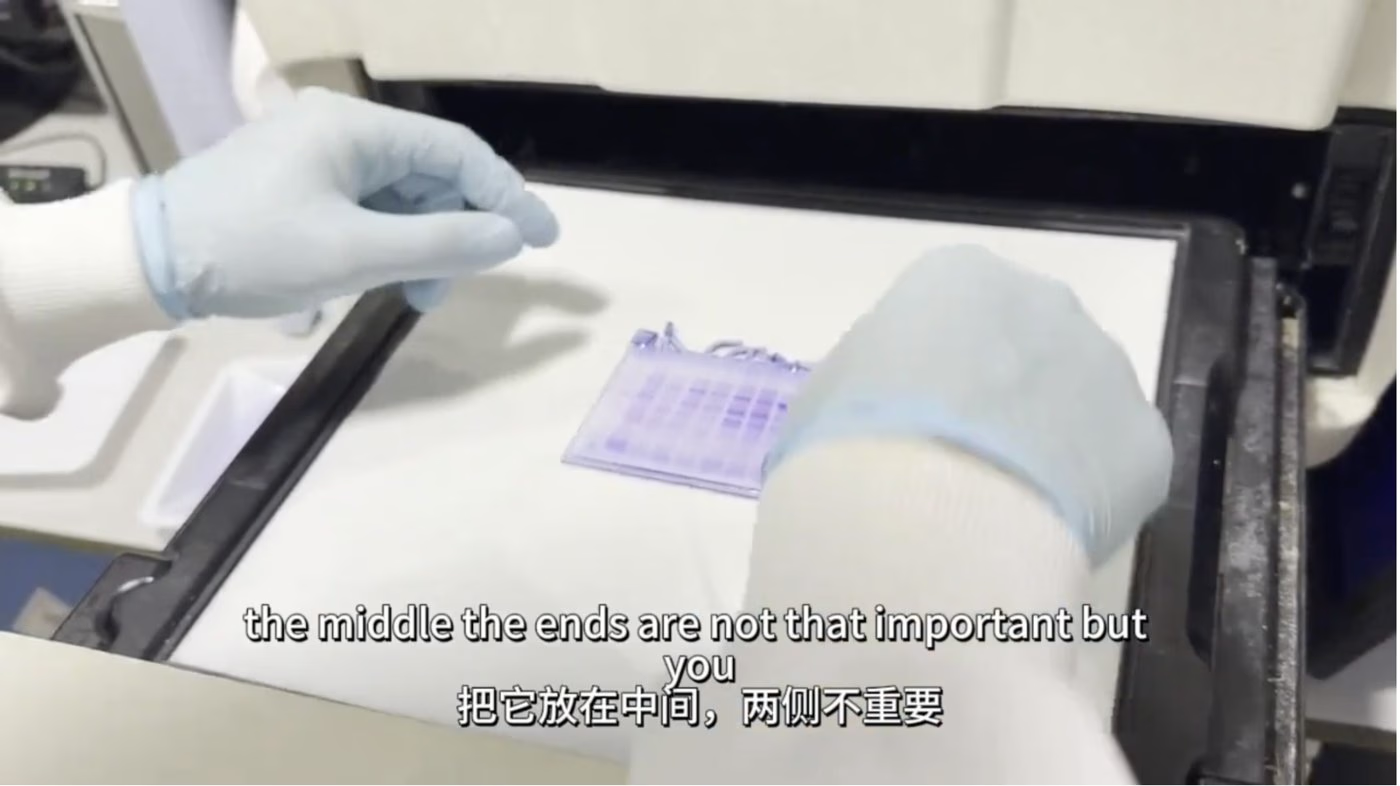
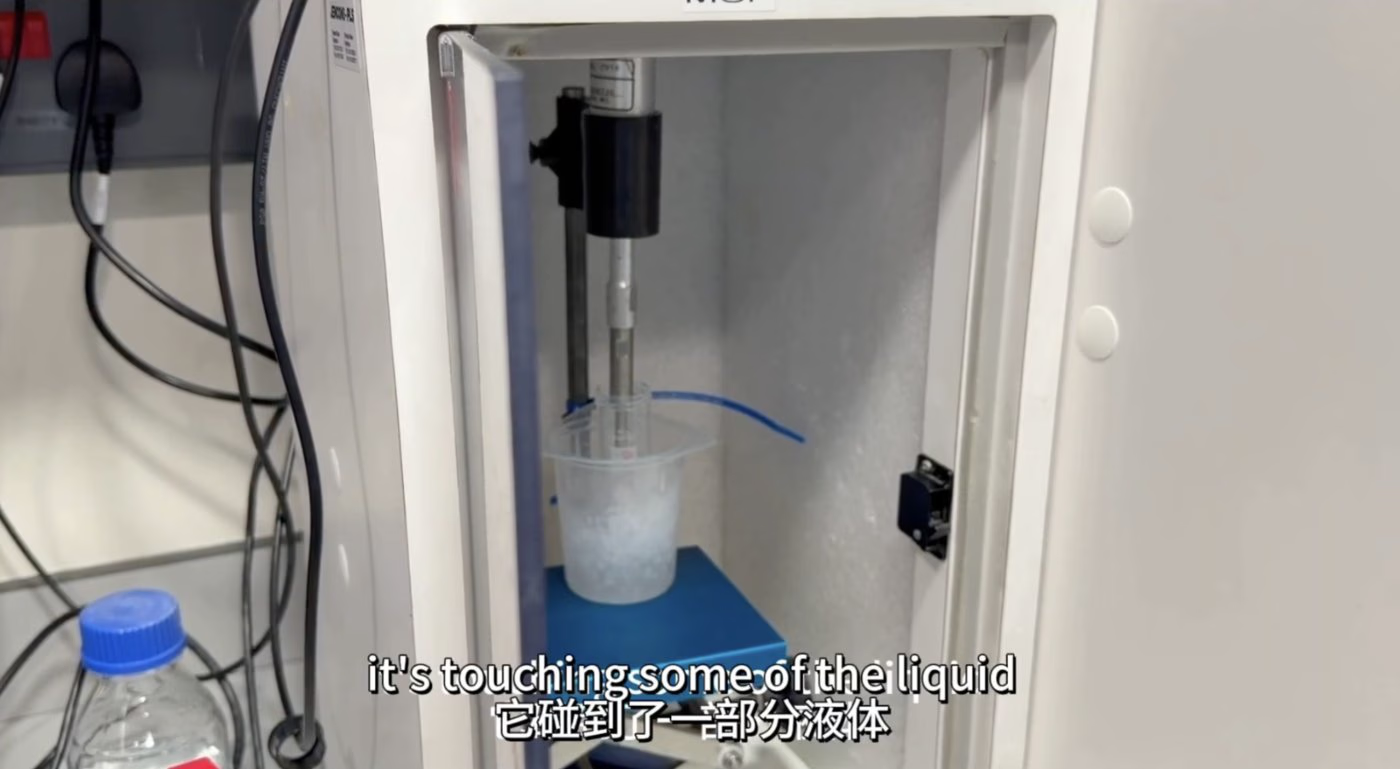
As part of our educational programme, we created two educational videos explaining how to use a gel doc and a sonicator to university students. We took on a very applied approach, focusing less on the theoretical aspects taught at university and more on the practical uses and skills required to operate this equipment. We felt that this aspect of education could be taught better at university and took the matters into our own hands. We also collaborated with Fudan iGEM, GlycoGarden, who wrote Mandarin and English subtitles for our videos, thereby increasing their reach. Unfortunately, these videos were not uploaded to this wiki. Nonetheless, they can be watched on YouTube.
Still from our gel doc tutorial: a stained gel is placed in the middle of the imaging tray, with English and Mandarin subtitles

Gel doc tutorial, with English and Mandarin subtitles by GlycoGarden

Still from our sonicator tutorial: the sonicator probe lowered into a sample on ice inside the cabinet, with English and Mandarin subtitles

Sonicator tutorial, with English and Mandarin subtitles by GlycoGarden

Beyond University

This section is not strictly limited to knowledge bearers beyond university. Most of our work here applies to university students and even keen high schoolers to a similar, if not the same extent. For example, our published interview series offers valuable insights into a plethora of diverse careers directly and indirectly linked to synbio, which is very useful for high schoolers, under- and postgraduates, and adults. In DSIT’s 2024 survey of 3,000 UK adults, 61% had never heard of engineering biology and only 11% could offer even a partial explanation, yet 76% wanted to know more and 72% would want to know before buying a product made this way (Department for Science, Innovation and Technology, 2024). During our street interviews we observed low recognition of synbio alongside purchasing decisions commonly made without reading what is in a product. Importantly, this tells us that appetite is not the issue: people want to know, but will not go looking, so honest information must sit where the decision is actually made. In our educational efforts with this target audience, we therefore focused less on supplying knowledge and more on familiarity, once again recalling the points by Danielle Hamm and Dr Patrick Boyle. Establishing dialogue, increasing familiarity and connecting other scientific fields with engineering biology was placed at the centre of our work, most directly through our accepted abstract for Prion 2026.

Published Interview Series

The knowledge gathered during an iGEM project is invaluable. Often, unfortunately, this knowledge does not transform into something great, staying within the confines of the iGEM competition. We felt strongly responsible to share the knowledge we obtained through our interviews with the rest of the world. Hence, we split most of our interviews into two halves: Integrated Human Practices and Education. In the educational parts of the interviews, usually mixed with their counterpart, we asked our interviewees broader questions related to their career decisions, general tips for their area of expertise, and more. When arranging interviews, besides meeting full compliance with informed consent forms, we asked the stakeholders if they would be comfortable with the interview being filmed and published online for educational purposes. The four chief themes covered by our published interviews are: responsible innovation, science commercialisation, scientific rigour, and careers in synbio. We also designed the series to help students explore different careers. Our interviewees work across research, industry and entrepreneurship, and each of them talks about the decisions that shaped their path. Together, the recordings let students see the range of careers that synthetic biology can lead to, hear how people actually got there, and pick up practical advice for choosing their own subjects, degrees and first steps into science. Below is a map of the recorded interviews we secured. Tap a name to zoom in and see their key educational value.

Interview map

Map of our Published Interview Series; tap a name to read about each interview

Full interview recordings can be viewed on our YouTube channel. Even the majority of human practices questions regarding our project carry educational value. We sincerely hope that interested members of the public, and especially other iGEMers, can benefit from watching these recordings. This can be by learning useful entrepreneurial tips, getting inspired by certain aspects of science, understanding the foundational ethics and biosafety concerns behind biotechnology innovations, discovering a new career path or some other exciting takeaway. Our Human Practices page also hosts an interactive interview timeline. It lists every stakeholder conversation we held, in the order they happened, and each one opens into a short write-up of who the person is, why we wanted to speak to them, what we discussed and how it changed our project. Our most recent entry, our interview with Dr Kirsten Jensen on 19 October, is about the UNESCO curriculum framework discussed below. Use the button to explore the timeline.

Interview videos

The interviews in our series, with links to watch each one

UNESCO Framework Commentary

In 2026, UNESCO published ‘Engineering Biology: international guidelines for constructing higher education curricula’, a framework that proposes an internationally adaptable way of designing university degrees in engineering biology. Today, elements of synthetic biology are taught across many different science degrees, and very few degrees in the UK are dedicated to the field alone, so a shared framework could shape what the next generation of students is taught and how fairly that teaching is spread across institutions with different resources. We wanted to explore it because so much of our education work has been about introducing students to synthetic biology, and this framework asks the next question: what should they learn once they reach university? In particular, we wanted to understand how a curriculum can balance technical knowledge, interdisciplinary creativity, practical and computational skills and responsible innovation. Tap the cover below to find out more about the framework itself, then read how we explored it, including our interview with Dr Kirsten Jensen on 19 October. This was the second time we interviewed Dr Jensen. The first was on 15th August, when we drew on her experience supervising iGEM teams to ask how to frame and present reGELerate as a foundational advance project. That first interview is on our interactive interview timeline: use the Read more button to find it.

The UNESCO Engineering Biology curriculum guidelines (2026)

Stakeholder
Dr Kirsten Jensen is an experienced synthetic biologist who directly supported iGEM teams from 2006 to 2016, supervising laboratory practicals and facilitating interdisciplinary collaborations between scientists and art and design students to push aspiring synthetic biologists to think outside the box. Dr Jensen is currently a Project Manager and Senior Research Officer in Prof Paul Freemont’s lab, and has worked alongside Prof Tom Ellis. Both are Imperial researchers who were active in the formation of UNESCO’s recently published framework on designing higher education engineering biology curricula, and Prof Ellis also leads the Synthetic Biology module offered at Imperial. Because she has close ties to those leading the charge in teaching synthetic biology on local and international scales, as well as mentoring experience of her own, we interviewed her to understand her perspective on translating curriculum frameworks into effective teaching practice.
Our interest
UNESCO’s 2026 initiative, ‘Engineering Biology: international guidelines for constructing higher education curricula’, proposes an internationally adaptable approach to higher education in engineering biology. Currently, elements of synthetic biology are taught across a range of scientific degrees, with few degrees in the UK dedicated exclusively to the field. We sought to investigate how these curricula could balance technical knowledge, interdisciplinary creativity, practical and computational skills, and responsible innovation, particularly across institutions with different access to resources. Our interview therefore explored whether existing biology and biochemistry degrees adequately prepare students to engineer biological systems, and how education could better encourage students to consider the safety, ethical, societal and economic implications that inevitably accompany these innovations.
Our conversation
Dr Jensen argued that engineering biology requires more than mastering biological techniques. She put forward that it is important for students to learn to visualise systems, troubleshoot failures and develop ideas beyond the established boundaries of their discipline into ‘blue sky thinking’. She described collaborations organised between art and design students and iGEMers to challenge conventional thinking. It may therefore be of great benefit to integrate interdisciplinary and project-based learning, rather than layering on technical content that is already taught in existing scientific degrees. Dr Jensen also emphasised that a crucial question aspiring synthetic biologists should ask themselves is who would benefit from a novel technology, whether existing solutions are adequate, and whether the innovation could disadvantage certain groups. As an example, she described her current work on a point-of-care diagnostic device for urinary tract infections, for which input is being sought from people with dementia and their carers. This showed that stakeholder feedback is essential in shaping technological design. Our discussion highlighted that responsible innovation should be embedded throughout project development, rather than added as a standalone ethics component. Drawing on her experience supervising laboratory practicals, Dr Jensen also underlined the importance of risk assessment, safety inductions and appropriate supervision. Using the example of the art and design students who were allowed to grow bacterial colonies for their projects, she explained that the greatest risk of misuse of synthetic biology comes from DIY biohackers, rather than researchers working under tight regulations who must justify the use of a tool at every step. She also described how, when she was setting up the lab at Imperial, they frequently invited members of the public in to explain their research. Although people came in with preconceived notions, once they saw the benefits synthetic biology could bring to food, biofuels and more, they became more accepting of it. These insights suggest that students need technical proficiency, but also the ability to recognise uncertainty and to understand when specialist advice is necessary, and that both can be fostered by science communication that speaks people’s language.
Impact on our project
Our conversation with Dr Jensen reinforced the importance of integrating responsible innovation into every stage of our iGEM project. She closed by saying that a key trait of a synthetic biologist is looking ahead to the future and setting up strategies to prevent issues from ever arising in the first place. This made us think about what contributions we wanted to make to enable future teams to do the same. It helped us shape our Biosecurity Framework, Environmental Impact Assessment and Ethics Handbook. In these, we guide teams on how to assess the societal, ethical and environmental implications of their projects, and finish by sharing our own experience of addressing all of these factors.

Media coverage

We wanted to make reGELerate known to the Imperial community, to inspire more students to join iGEM in the coming years and, above everything, attract attention to our product, educating readers about it. Throughout the course of our project, we had multiple appearances in media. Tap an outlet below to read about it and see the article.

Media coverage articles

Felix
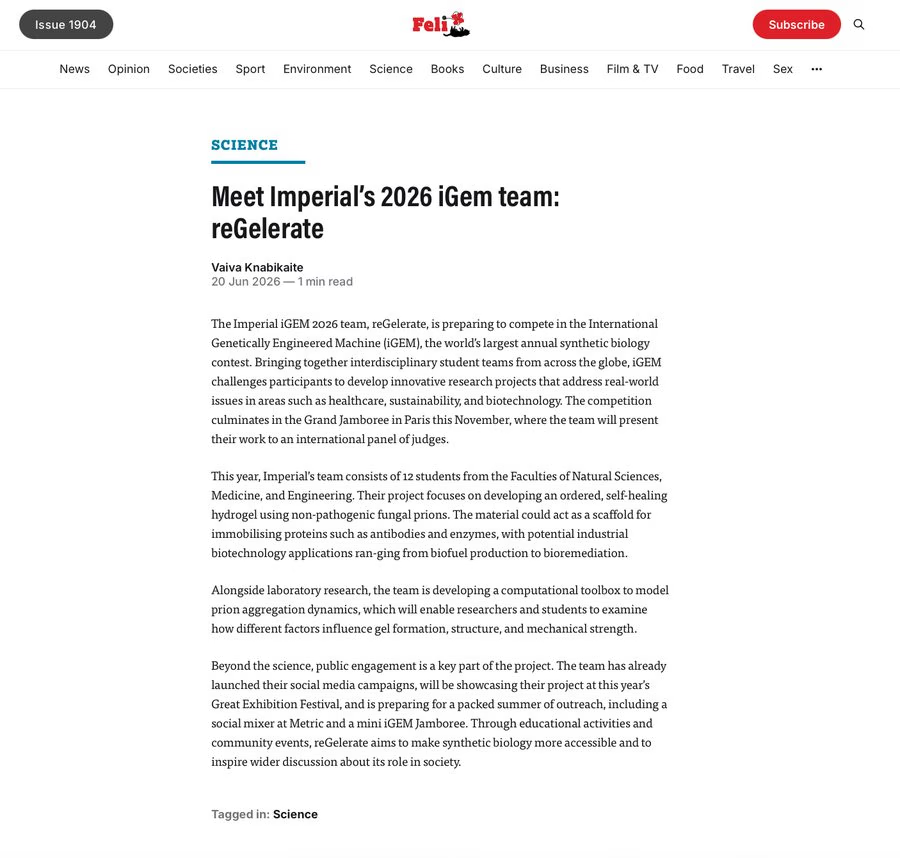
Felix is a student-led newspaper at Imperial College London. Our team member kindly wrote a brief article, “Meet Imperial’s iGEM team, reGELerate.”, explaining our project and broader outreach goals: making synthetic biology more accessible and inspiring wider discussion about its role in society.

Felix article

Felix article: Meet Imperial's iGEM team, reGELerate
Splice Journal
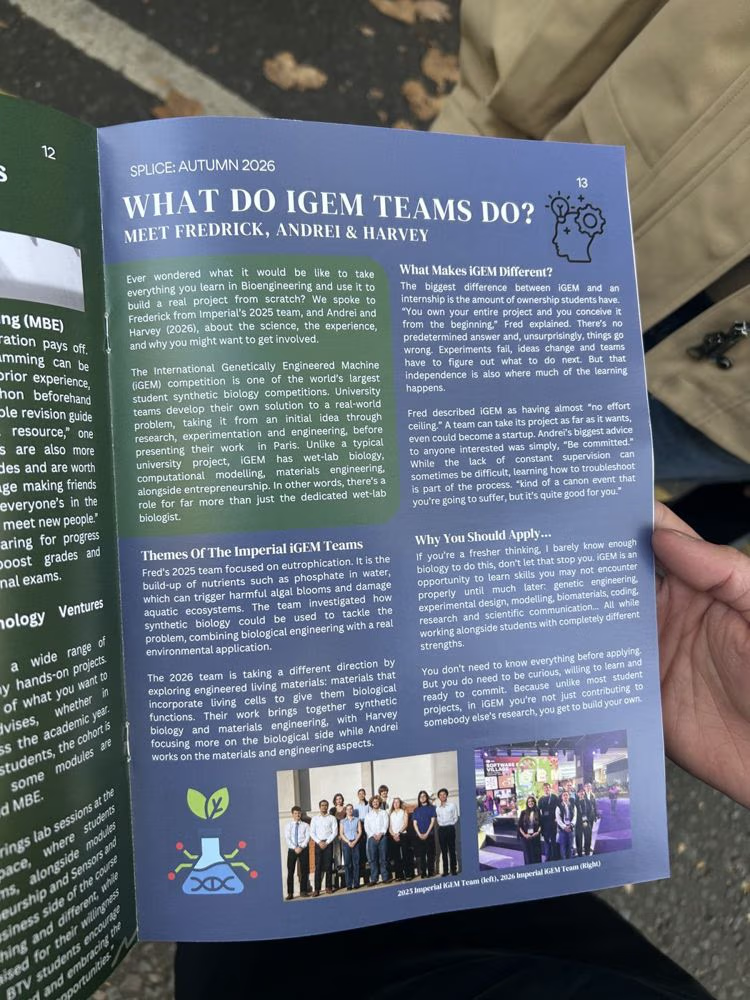
Splice is a student-run journal in Imperial’s Department of Bioengineering, which some of our team members are part of. We contributed to Splice’s article “What do iGEM teams do?”, explaining the iGEM competition through the Imperial teams’ lens. We included a brief description of reGELerate, once again, as well as advice to any students interested in trying out for iGEM. We were very transparent about the iGEM experience, as it is very demanding and time-consuming, yet truly rewarding in the end. Our goal in this student-focused article was to share our perspectives, closer to the end of the project, and spark curiosity in all our bioengineer readers regarding engineering biology and iGEM.

Splice Journal article

Splice Journal article: What do iGEM teams do?
Imperial Natural Sciences Blog
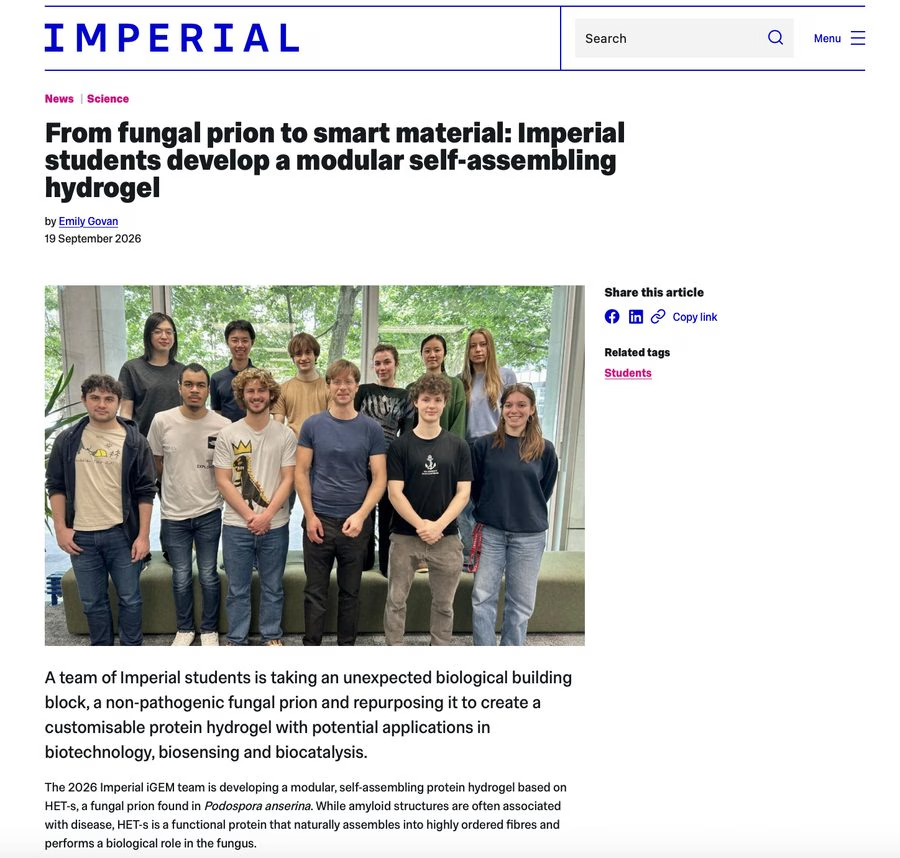
In early autumn, an article about reGELerate, “From fungal prion to smart material: Imperial students develop a modular self-assembling hydrogel.”, was published on Imperial’s Natural Sciences Blog, on its main website. This article was the most detailed of all, delving into depth with project specifics and providing updates on our wet lab progress at the time.

Imperial Natural Sciences Blog article

Imperial Natural Sciences Blog article: From fungal prion to smart material
MankaLab blog
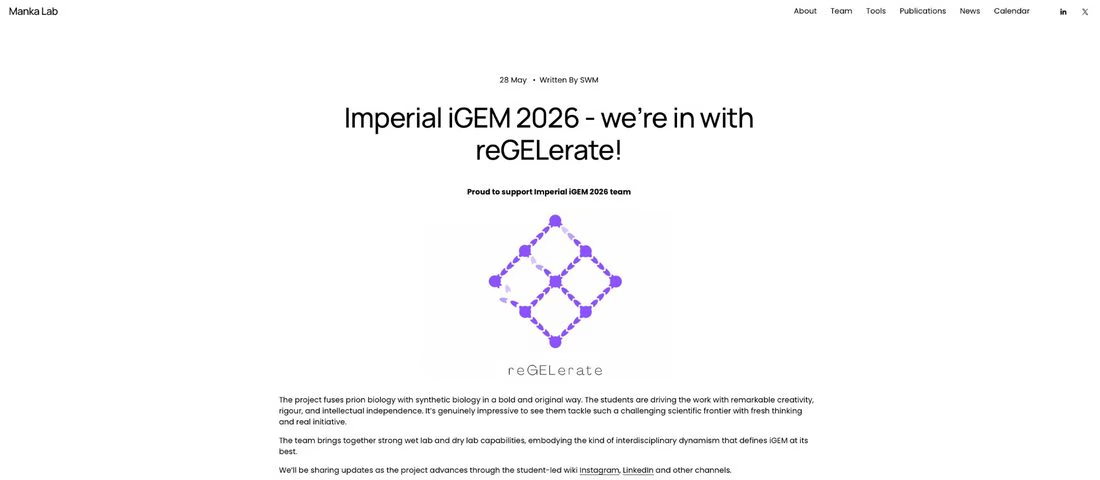
Our PI, Dr Szymon Manka, very generously posted about us and the project on his lab group’s blog, signposting to our own social media and including our fundraising video in the first post (“Imperial iGEM 2026 - we’re in with reGELerate!”). In the second post, Dr Manka shared about our UK/EU Mini Jamboree and his joy at being a host for it and opening the floor.

MankaLab blog post

MankaLab blog post: Imperial iGEM 2026 - we're in with reGELerate!

Our Own Media

Naturally, we had a direct media presence of our own. We continued building upon the work of the previous Imperial iGEM teams by using the same social media accounts on Instagram, LinkedIn and our Spotify podcast, Beyond the Bench. Instagram became more of an entertainment platform to host light-hearted content, such as a team introduction post and our reels. Our main focus with our social media was certainly on LinkedIn. There, we posted about some key events in our project’s timeline: project launch, fundraising video, Sir Paul Nurse’s lecture and interaction, celebrating our PI’s birthday, our iGEM run, MaterialHack, volunteering at the Great Exhibition Road Festival, meeting Henrik Hagemann, hosting the UK/EU Mini Jamboree, and our Project Promotion Video. All posts were unified by objectives to educate, promote and engage our readers, as well as keep a personal log of our progress. Our investment into this social media campaign paid off: Dr Amritpal Singh reached out to us having read our post on LinkedIn and was of massive help in multiple distinct aspects of the project. Tap an app on the phone below to open our page: Instagram shows photos from our events, and Spotify shows our podcast page and its episodes.

Phone with our apps

Our media on LinkedIn, Instagram, YouTube and Spotify

Prion 2026 Conference

Verona map

Our abstract, selected for a flash talk and poster at Prion 2026
JAGS Workshop

We are planning to do one more high school workshop at James Allen’s Girls’ School in early November to keep our educational impact going beyond the wiki freeze and continue inspiring young minds to explore and engage with synthetic biology! The workshop will cover our BioBricks design workshop again, along with our Synthetic Biology Crash Course. We also plan to end the workshop with a live Kahoot quiz to test the students’ understanding. Unlike a feedback survey filled in after we have left, a live quiz lets students ask questions as they go and lets us respond to them on the spot, so any misunderstandings are cleared up while we are still in the room.

JAGS soon diagram

References

  1. [1]
    Archer, L., DeWitt, J., Osborne, J., Dillon, J., Willis, B. and Wong, B. (2010) ‘“Doing” science versus “being” a scientist: examining 10/11-year-old schoolchildren’s constructions of science through the lens of identity’, Science Education, 94(4), pp. 617–639. doi:10.1002/sce.20399.View source ↗
  2. [2]
    Archer, L., Osborne, J., DeWitt, J., Dillon, J., Willis, B. and Wong, B. (2013) ASPIRES interim research summary: what shapes children’s science and career aspirations age 10–13? London: King’s College London. Available at: https://reshare.ukdataservice.ac.uk/851148/1/ASPIRES-summary-spring-2013.pdf (Accessed: 21 October 2026).View source ↗
  3. [3]
    Archer, L., Moote, J., MacLeod, E., Francis, B. and DeWitt, J. (2020) ASPIRES 2: young people’s science and career aspirations, age 10–19. London: UCL Institute of Education. Available at: https://discovery.ucl.ac.uk/id/eprint/10092041 (Accessed: 21 October 2026).View source ↗
  4. [4]
    Department for Science, Innovation and Technology (2024) Engineering biology public trust survey findings. Fieldwork by Deltapoll, 3,000 UK adults, 9–19 August 2024. Available at: https://www.gov.uk/government/publications/engineering-biology-public-trust-survey-findings (Accessed: 21 October 2026).View source ↗
  5. [5]
    Metwaly, S.S., Fernández-Castilla, B., Kyndt, E., Van den Noortgate, W. and Barbot, B. (2019) Developmental trend of school-age students’ divergent thinking: a meta-analysis. Research Synthesis 2019, ZPID. doi:10.23668/psycharchives.2484.View source ↗
  6. [6]
    Society of Biology (2011) Response to the House of Lords inquiry into higher education in STEM subjects. Available at: https://www.rsb.org.uk/images/society-of-biology-response-to-house-of-lords-enquiry-into-higher-education-in-stem-subjects.pdf (Accessed: 21 October 2026).View source ↗
  7. [7]
    UNESCO (2026) Engineering biology: international guidelines for constructing higher education curricula. Bangkok: UNESCO Office Bangkok and Regional Bureau for Education in Asia and the Pacific. Available at: https://www.unesco.org/en/articles/engineering-biology-international-guidelines-constructing-higher-education-curricula (Accessed: 21 October 2026).View source ↗

Contact