Introduction
Developing a new therapeutic approach not only requires one to ask whether it can work, but also whether it can be designed, tested, and safely and responsibly translated. For AETh3R, our approach is based on targeted protein degradation for Non-Small Cell Lung Cancer (NSCLC). Using our p-PROTAC, AETh3R, we aim to target two proteins with important roles in cancer progression: KRAS and MDM2. While oncogenic KRAS promotes aberrant proliferative signalling, MDM2 negatively regulates the tumor suppressor p53. As such, targeting MDM2 provides an indirect way of supporting p53-mediated tumor suppression, without targeting p53 itself.
While targeted protein degradation introduces exciting therapeutic possibilities, it also introduces new safety considerations: a degrader must not only reach the correct cells, but also recognize the correct protein, recruit the appropriate degradation machinery, and avoid interfering with physiologically important proteins in healthy tissues. For this reason, safety was not treated as a final checkpoint in AETh3R. It influenced how we worked in the laboratory, how we designed AETh3R, how we interpreted our computational predictions, and how we considered its possible future translation.
Safety Starts at the Bench
Building Safe Habits from Day One
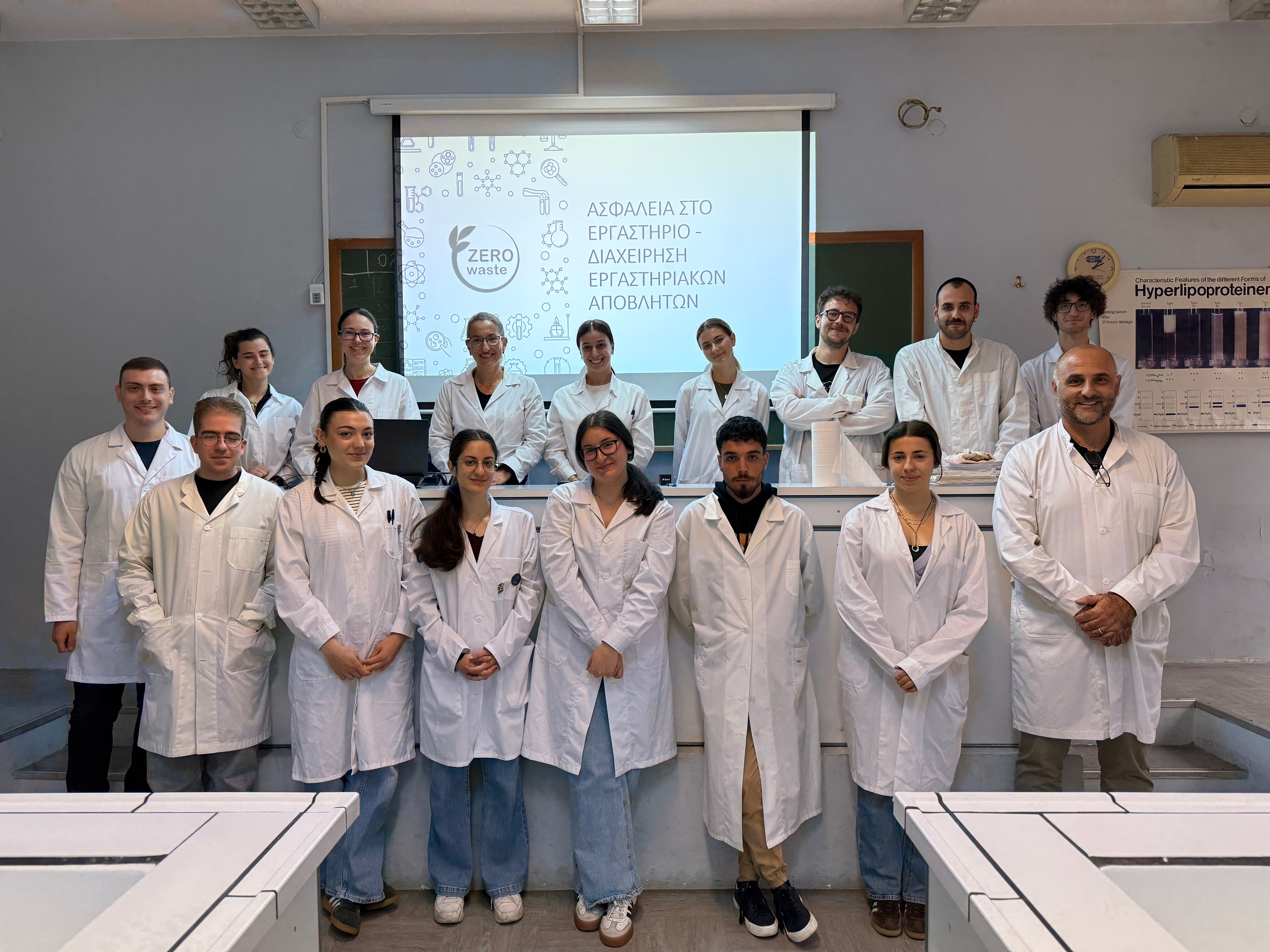
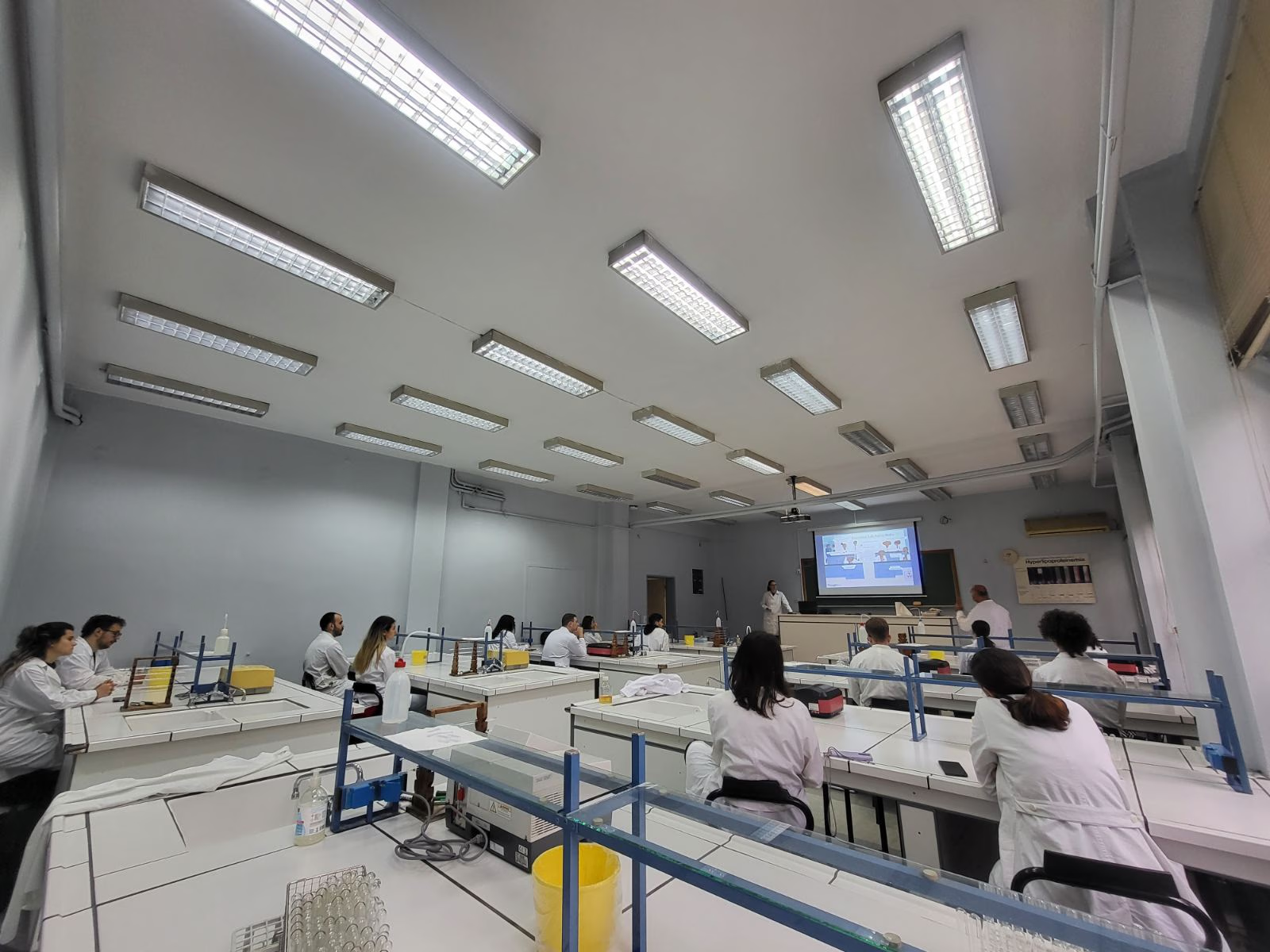
Before being allowed to engage in independent experimental work, our Wet Lab members underwent laboratory safety training and were guided through it by our supervisors. The training made our team well-versed in the basic principles of safe laboratory practice, such as proper conduct within the laboratory, use of Personal Protective Equipment (PPE), and handling of laboratory materials and equipment. Members were briefed on the use of laboratory coats, gloves, and any other PPE required for certain procedures. Particular attention was drawn to emergency procedures, including how to react to spills, exposure and other incidents, as well as the location and use of the laboratory's emergency and safety equipment. Another important feature of the training included waste management. Our team learned to differentiate biological, chemical, sharps and general laboratory waste, and use the appropriate disposal route for each category.
Laboratory organization was equally emphasized. Reagents had to be correctly labelled and stored, working areas had to remain clean and uncluttered and procedures had to be properly prepared prior to experimental work. Most importantly, this training took place before team members began engaging in laboratory procedures independently. For AETh3R, safety therefore began before the first experiment. Establishing good laboratory habits at the beginning helped us create a working environment in which safe practice became a part of the experimental routine rather than an additional step.
Working Safely with Human NSCLC Models
To test our therapeutic hypothesis experimentally, we worked with the A549 human lung carcinoma cell line as our in vitro model of NSCLC. A549 is an adherent human lung cancer cell line that carries a KRAS p.G12S mutation; this makes it particularly pertinent to the KRAS component of our project. Working with mammalian cell cultures requires consideration for both the researcher’s and the biological system's safety. We performed cell manipulation in accordance with appropriate biological safety cabinet practices, and following established biosafety procedures of our laboratory and institution. We disinfected working surfaces and equipment both before and after use, and introduced only the materials necessary for the procedure into the working space.
During procedures, aseptic technique was maintained, including careful handling of culture media, pipettes, culture flasks and other consumables. Attention was paid to avoiding contamination and cross-contamination; not only could contamination derail the cell culture process itself, but it could also compromise cellular behaviour and lead to inconclusive results. Used culture consumables and other biologically contaminated materials were separated from general laboratory waste and disposed of according to appropriate biological-waste procedures. By following these procedures, biological safety became intrinsically linked to the experimental quality: maintaining a consistent, clean, cell-culture environment not only protected our team, but also ensured the reliability of our findings.
Training Before Experimentation
Check all of our consultation meetings in our Human Practices Page. Safe experiments demand more than just appropriate equipment. They also demand researchers who understand the techniques that they are performing. Prior to conducting experiments independently, our members obtained practical training in the main techniques required for the Wet Lab component of AETh3R, including mammalian cell culture, cell viability assessment and protein analysis by Western blotting. For mammalian cell culture, members were trained in working aseptically and handling adherent A549 cells, monitoring cellular morphology and confluency, seeding cells consistently and harvesting them appropriately for subsequent experiments.
Training in viability experiments included appropriate cell handling, counting, and interpretation of cell survival following treatment. This became particularly important during our work with A549 cells. During our experiments, we encountered difficulties recovering sufficient numbers of cells for viability measurements. Following consultation with experts experienced in handling the A549 cell line, Dr. Nikolakaki and Dr. Ntokou, we learned that incomplete detachment could substantially influence the number of cells recovered from a well. We therefore paid particular attention to ensuring that cells were fully detached prior to counting, carefully inspecting wells for cells remaining attached and gently scraping them when necessary. Keeping this harvesting procedure consistent across experimental conditions was important so that low recovered cell numbers would not automatically be interpreted as treatment-induced toxicity. Members were also trained in Western blotting and protein analysis, including sample preparation, gel electrophoresis, protein transfer and antibody-based detection.
Training therefore contributed simultaneously to safety and reproducibility. Correct handling reduces the risk of accidental exposure and inappropriate equipment use, while standardized procedures reduce variability between experiments and between individual researchers. For a project investigating changes in cellular viability and protein abundance, reproducibility was itself an essential component of responsible experimentation.
Handling Chemicals and Experimental Reagents Responsibly
In addition to biological materials, our experiments also required numerous cell-culture reagents, solvents, buffers, and reagents associated with protein analysis. These items were handled according to their specific laboratory safety requirements and procedures established by our host laboratory. Reagents were appropriately labelled, stored, and prepared according to their required conditions. Stock and working solutions were prepared carefully, and appropriate containment and pipetting practices were followed when working with solvents and other potentially hazardous compounds. The same principles were applied to reagents used during cell culture and Western blotting procedures.
Particular attention was given to distinguishing between chemical and biological waste. Materials contaminated with cells or biological samples were discarded through the designated biological-waste stream while chemical reagents and solutions requiring specialized disposal were collected separately and managed according to laboratory procedures and not discarded together with biological or general waste. For us, responsible reagent handling did not end once an experiment was completed , understanding a material also meant understanding how it should be stored, handled and eventually disposed of.
Safety by Design
Engineering AETh3R with Risk in Mind
Laboratory safety protects the people working on AETHER. However, developing a therapeutic concept introduces an additional challenge:
Can safety also be incorporated into the molecule itself?
AETh3R is designed to utilise targeted protein degradation, where a molecule brings a protein of choice close to an E3 ubiquitin ligase, allowing the formation of a complex that gets degraded by the ubiquitin-proteasome system. We thought about safety in terms of this approach at a few levels: target selection, E3-ligase recruitment, molecular selectivity, and cellular delivery. Our goal was therefore not just to design a molecule that could get degraded, but to think about where undesired effects could happen and how future development could approach their elimination.
Why Degradation Instead of Inhibition?
Looking Beyond Conventional KRAS Inhibition
KRAS is one of the most important oncogenic driving forces in NSCLC and has historically been a particularly challenging target. The development of mutation-specific KRAS inhibitors marked major progress in the field. However, therapeutic resistance remains a challenge. Cancer cells can adapt through multiple mechanisms, including reactivating downstream signalling, activating other pathways and additional molecular adaptations that allow proliferative signals to continue despite treatment. This led us to investigate a different route: instead of simply inhibiting the function of oncogenic KRAS, could we degrade it? Targeted degradation reduces the amount of the disease-associated protein. In theory, taking oncogenic KRAS away from the cellular environment could impact functions that require its continued occupation of an inhibitory binding site, rather than its continued presence.
This was particularly interesting for AETh3R because the A549 cell line used in our experiments harbours the KRAS G12S mutation. However, increased biological activity does not always equate with increased safety. A degrader actively removes its target from the cell. In the event of inadequate molecular selectivity, degradation of physiologically important proteins or wild-type forms of your intended target can produce significant toxicity. Reviews of targeted protein degradation also note that degradation of the whole target protein can introduce toxicity concerns different from those of conventional inhibition. Therefore, our decision to degrade was a benefit–risk trade-off rather than assuming degradation is necessarily safer than inhibition.
Our guiding principle became: Effective degradation is valuable only when accompanied by sufficient selectivity.
Why MDM2?
The second target incorporated into AETh3R is MDM2. MDM2 is closely connected to the tumor-suppressor protein p53. One of its central biological functions is negative regulation of p53, thereby limiting p53-mediated responses such as cell-cycle arrest and apoptosis. This is particularly important for AETh3R: we are not attempting to degrade p53, but rather, by targeting MDM2 for degradation, we hope to alleviate a negative regulator of p53, and thus potentially restore p53-mediated tumor-suppressive responses. Therefore, AEThER has two potential biological directions: decreasing oncogenic KRAS signalling while also reducing MDM2-mediated suppression of p53. Nevertheless, the same safety principle applies to both targets; stronger degradation is only beneficial if it is happening in the right biological context and is not having unacceptable effects in healthy tissues.
Choosing the E3 Ligase: Why VHL?
A PROTAC generally contains three major functional components: a region that recognizes the protein of interest, a component that recruits an E3 ubiquitin ligase, and a linker connecting them. The E3 ligase provides access to the cell's ubiquitination machinery. When the target protein, degrader and E3 ligase form a complex, the target becomes ubiquitinated and subsequently recognized by the proteasome for degradation. For AETh3R, we selected von Hippel–Lindau protein, VHL, as our E3-ligase recruitment system. VHL represents one of the most extensively utilized E3 ligase systems in PROTAC development, alongside cereblon, and has been extensively investigated within targeted protein degradation research. Recent literature continues to describe VHL and CRBN as major ligases in ubiquitin–proteasome-system-based targeted degradation.
The availability of established VHL-binding ligands and extensive structural knowledge provided a strong basis for its incorporation into our design. However, VHL recruitment does not guarantee selective degradation. Whether degradation occurs depends on numerous factors, including formation and geometry of the ternary complex, accessibility of the relevant lysine residues, linker properties, intracellular localization and the surrounding proteomic environment. For this reason, our choice of VHL represents a rational design decision rather than proof of safety.
Experimental degradation studies and broader protein-level analyses would ultimately be required to determine whether AETh3R produces the intended degradation profile without unacceptable effects on other proteins.
Selectivity at the Molecular Level
For the KRAS component of our project, one of our most important safety considerations was the distinction between mutant and wild-type KRAS. Normal RAS signalling contributes to fundamental cellular processes, including proliferation, differentiation and survival. Therefore, indiscriminate degradation of wild-type KRAS could interfere with physiological cellular signalling. Because the A549 cells used in AETh3R contain the KRAS G12S mutation, mutant-selective recognition became an important aspect of our design. Our Dry Lab therefore investigated molecular interactions between the proposed targeting component and KRAS using computational approaches. Our analyses considered parameters such as:
- predicted binding poses;
- predicted binding affinity;
- residues participating in target interaction;
- structural complementarity;
- and comparison of interactions with mutant and wild-type KRAS.
By comparing the predicted behaviour of our binder against KRAS G12S and wild-type KRAS, we aimed to investigate whether the proposed design could preferentially recognize the disease-associated form. However, an important distinction must be maintained: these results are in-silico predictions, not experimental evidence of selectivity. Docking results and predicted binding affinities are useful tools for prioritizing designs and generating hypotheses. They cannot demonstrate that wild-type KRAS will remain unaffected in cells or in an organism. Future development would therefore require experimental binding studies, degradation assays and, ideally, broader proteomic analysis to determine whether KRAS degradation remains sufficiently selective.
The same principle applies to MDM2. Computational predictions can support molecular design, but the actual degradation profile and downstream biological effects must ultimately be established experimentally. For AEThER, our Dry Lab therefore served as a first filter for potential molecular risk, rather than a substitute for biological validation.
Delivery as a Second Safety Barrier
Molecular selectivity represents only one part of therapeutic safety. Even a highly selective degrader could produce unwanted effects if it reaches tissues where its biological targets perform important physiological functions. This made delivery another major consideration in the design of AETh3R. Peptide-based PROTACs can present challenges related to molecular size, cell permeability, and stability in circulation. Limited cell permeability is a recognized challenge for conventional PROTAC architectures, and peptide degraders are additionally exposed to proteolytic degradation and rapid clearance. To address this, we considered a lipid nanoparticle (LNP) delivery strategy in which AETh3R is encapsulated within the carrier rather than chemically modified to cross the membrane on its own. When evaluating LNP-based delivery approaches, we considered factors including:
- encapsulation efficiency and payload loading;
- particle stability and protection of the peptide from degradation;
- clinical and literature precedent for LNP formulations;
- predicted immunogenicity and tolerability of the lipid components;
- biodistribution and clearance profile;
- and compatibility with the p-PROTAC structure, which must remain intact and functional once released.
The objective was to facilitate intracellular delivery of AETh3R while preserving a structure compatible with its intended degradation mechanism. Because the payload is carried inside the particle, the peptide itself does not need to be altered to enter cells, which helps keep its design focused on target recognition and degradation.
However, efficient delivery creates its own safety challenge. LNPs improve cellular uptake and payload protection, but they do not automatically distinguish between cancer cells and healthy cells. Conventional LNPs also tend to accumulate in the liver and other clearance organs, which could lead to off-target exposure. Therefore, delivery efficiency should not be confused with tumour specificity. In our design, the optimization of lipid composition with incorporation of the cationic lipid DOTAP to shift biodistribution towards the lungs, combined with the proposed LNP functionalization with antibody fragments targeting the NSCLC-associated marker Integrin Aνβ6, aims to establish a dual-level tissue and cell specificity framework.
Future optimization should evaluate the safety of the entire delivery system, from circulation and tissue distribution to tumour-cell uptake and cytoplasmic cargo release. Adjustments to particle size, lipid composition, surface properties, and targeting-ligand presentation could potentially improve tumour accumulation while limiting exposure to healthy tissues. Ultimately, the safety advantages of our proposed system remain hypotheses that require experimental validation through biodistribution, cellular uptake, off-target activity, and toxicity studies. For us, delivery and molecular recognition therefore represent two interconnected questions: Does AETh3R recognize the correct molecular target? and Does AETh3R reach the correct cells and tissues? Both must ultimately be answered before therapeutic safety can be established.
Responsibility Beyond the Experiment
Bioethics, Transparency and Patient Perspective
Safety extends beyond preventing laboratory accidents and predicting molecular interactions. Cancer research ultimately aims to affect patients. For this reason, AETh3R also required us to consider questions of bioethics, transparency, acceptable risk and responsible innovation.
Ethics Before Experimentation
Before conducting the relevant experimental components of AETh3R, we considered the ethical framework surrounding our use of established human-derived cancer cell lines and the broader development of an experimental therapeutic strategy. The questions we examined included the use of an established human cancer cell line, the non-clinical nature of our experiments, and whether additional formal ethical authorization was required for the work we planned to perform. An important principle for our team was to distinguish between receiving ethical guidance and obtaining formal ethical approval. Where formal approval was not required or was not specifically granted, we do not describe our work as “approved.” Responsible communication means accurately representing both the scope of our research and the institutional oversight under which it was conducted.
Bringing Bioethics into Project Design
Laboratory regulations alone cannot answer every question raised by a new therapeutic technology. For this reason, we also approached AETh3R from a broader bioethical perspective through our interaction with Dr. Protopapadakis, Head of the Greek Unit of the UNESCO Chair in Bioethics. Our discussion explored the challenges associated with emerging therapeutic modalities such as peptide therapeutics and targeted protein degradation, as well as questions surrounding human cell-line research, therapeutic benefit versus potential harm and responsible innovation. Targeted degradation was particularly interesting from a bioethical perspective because its strength can also represent a potential source of risk.
Removing a disease-associated protein may achieve biological effects that conventional inhibition cannot. However, unintended degradation could equally produce effects that are difficult to predict solely from binding affinity. This reinforced an important principle for our project: Precision should be demonstrated, not assumed. Responsible innovation therefore requires acknowledging uncertainty, validating predictions experimentally, and avoiding statements that extend beyond the evidence currently available.
Designing with Patients, Not Just for Patients
Scientific success does not always mean a positive outcome for patients. In our discussions with oncologist Dr. Touroutoglou and his patient, as well as the Society of Cancer-Patients of Macedonia-Thrace, they highlighted that the value of new cancer treatments was viewed from a different angle: that of the prescriber and the recipient, and those who live with the consequences of treatment. The conversations reminded us that in addition to target engagement and mechanism of action, treatment with new cancer therapeutics can involve:
- treatment-associated toxicities,
- frequent physician visits,
- treatment response uncertainty,
- treatment resistance,
- psychological burden,
- and impact on patients’ quality of life.
These perspectives influenced how we approached AETh3R. Our objective should not simply be to produce the strongest possible degrader. A therapeutically meaningful degrader would need to provide sufficient anticancer activity while keeping unnecessary biological effects within acceptable limits. This changed the question from: “How much degradation can we achieve?” to: “How much selective degradation is necessary to achieve a meaningful therapeutic effect while minimizing risk?” That distinction became an important part of how we thought about responsible development.
What Happens Beyond the Lab?
Anticipating Risks Before Clinical Translation
The experiments conducted during AETh3R represent an early stage of therapeutic research. A549 cells can help us understand how a candidate strategy behaves in a controlled cellular system, but they cannot reproduce the complexity of an entire organism. Moving AETh3R beyond the laboratory would therefore introduce additional pharmacological, toxicological, regulatory, and ethical safety gates.
From AETh3R to a Regulated Medicine
To better understand the pathway from an experimental p-PROTAC toward a potential medicine, we communicated with the National Drug Organization, and specifically with Dr. Angeliki Roboti. One of the questions we explored was how a novel molecule combining peptide components with a targeted protein degradation mechanism could be approached from a regulatory perspective. A new therapeutic modality does not mean that conventional safety requirements disappear. Instead, its particular mechanism may introduce additional questions that must be addressed. Future development of AETh3R would require evidence concerning:
- pharmacological activity;
- dose–response relationships;
- toxicology;
- off-target interactions;
- unintended protein degradation;
- manufacturing consistency;
- purity and impurities;
- stability;
- delivery;
- pharmacokinetics;
- and pharmacodynamics.
For targeted degraders, conventional off-target binding represents only part of the safety question. It would also be necessary to investigate off-target degradation. A molecule might form unexpected productive complexes with proteins that were not intended to be degraded. Understanding the broader proteomic consequences of treatment would therefore become particularly important. The manufacturing process would also need to demonstrate consistency and control over the identity, purity and stability of the final product. AETh3R's novelty would therefore not lower the threshold for regulatory evidence. If anything, greater uncertainty creates a stronger need for careful characterization before clinical exposure.
The Next Safety Gate: In Vivo Testing
In-vitro experiments allow us to observe responses within individual populations of cultured cells. They cannot answer some of the most important questions surrounding drug safety:
Where does the molecule go after administration? How long does it remain there? How much reaches the tumour? And which healthy tissues are exposed?
Before any potential clinical translation, AETh3R would therefore require extensive in vivo investigation. Important parameters would include:
- biodistribution, to determine where the molecule accumulates;
- pharmacokinetics (PK), to understand absorption, distribution, metabolism and clearance;
- pharmacodynamics (PD), to establish whether exposure produces the intended KRAS and MDM2 degradation;
- tumour accumulation;
- exposure of healthy tissues;
- acute toxicity;
- chronic or repeated-dose toxicity;
- immune responses;
- metabolism;
- and clearance.
Particular attention would need to be paid to tissues in which disturbance of KRAS signalling or MDM2-related pathways might produce unwanted biological effects. This stage would also be essential for validating our LNP-based delivery strategy. Successful uptake in cultured A549 cells would not demonstrate that AETh3R preferentially reaches a lung tumour within an organism. A LNP can influence circulation, tissue penetration, metabolism and organ distribution in ways that cannot be reproduced using a monolayer cell culture. Therefore, whole-organism validation would represent a crucial safety gate for our delivery strategy.
Responsible Animal Research
If animal experiments eventually became scientifically necessary, they would also introduce an important ethical responsibility. Within the European Union, animal research is governed by Directive 2010/63/EU on the protection of animals used for scientific purposes. The framework is built on the 3Rs: Replacement, Reduction and Refinement. For AEThER, these principles would mean: Replacement: using non-animal alternatives whenever they can adequately answer the scientific question. Reduction: using the minimum number of animals necessary to obtain scientifically meaningful results.
Refinement: designing procedures to minimize pain, distress and unnecessary suffering. Our meeting with Dr. Papagianni helped us understand how much can be answered with advanced in-vitro systems before any animal work becomes justifiable. Advanced in-vitro systems should therefore be considered before moving to whole-organism experiments whenever scientifically appropriate. Animal experimentation should not simply be the automatic next stage of development. It should be a justified safety gate, used only when the required biological information cannot be obtained through suitable alternatives.
Preparing for First-in-Human Studies
Only after sufficiently convincing evidence from molecular, cellular, pharmacological, and toxicological studies could AETh3R potentially progress toward clinical investigation. A first-in-human study would require an especially cautious approach, because targeted protein degradation introduces both therapeutic potential and biological uncertainty. Our meeting with Dr. Zairi helped us understand how carefully patient selection and dose escalation must be approached in an early-phase trial. Initial clinical development would therefore require careful consideration of starting dose and dose escalation, supported by the available preclinical evidence. Patient eligibility would also need to reflect the molecular characteristics of the tumour. For the KRAS component in particular, the relevant mutation and biological context would determine which patients could reasonably be expected to benefit. Safety monitoring would include conventional adverse events as well as biomarkers directly associated with the mechanism of AETh3R. Potential parameters could include:
- evidence of KRAS degradation;
- evidence of MDM2 degradation;
- downstream pathway responses;
- effects on wild-type KRAS;
- changes within the MDM2–p53 axis;
- systemic drug concentrations;
- pharmacokinetic and pharmacodynamic relationships;
- and possible immune responses to peptide components.
Independent safety monitoring would be essential throughout early clinical development. Participant privacy, informed consent, transparent communication of uncertainty and appropriate management of clinical data would also need to be integrated into the study from its design. Data integrity would be particularly important when determining whether early signals of activity justify further patient exposure. The novelty of a technology should never be used as a reason to lower the standard of evidence required for human testing. Instead: the greater the uncertainty, the greater the responsibility to monitor it carefully.
Safety Beyond the Patient
Environmental and Sustainable Responsibility
Responsible therapeutic development also requires thinking beyond the patient and laboratory researcher. The materials, reagents and manufacturing processes required to produce a therapy can themselves generate environmental impacts.
The Environmental Footprint of AETh3R
AETh3R is a multicomponent molecule incorporating peptide components, targeting elements, a linker and a VHL-recruiting ligand. During our meeting with Dr. Van Willigen, he pointed out that a molecule’s environmental impact cannot be judged by only one part of its structure. It would therefore be incorrect to assume that the entire p-PROTAC is biodegradable or environmentally harmless simply because part of it is peptide-based. Different components may behave differently after use and disposal. The environmental footprint of AETh3R also depends on more than the properties of the final molecule. Its production may involve:
- synthesis of peptide components;
- linker synthesis and conjugation;
- preparation of the VHL ligand component;
- organic solvents;
- coupling and purification reagents;
- energy-intensive purification procedures;
- disposable laboratory plastics;
- and chemical and biological waste.
Our experimental development also generates consumable waste associated with mammalian cell culture and protein analysis. At our current stage of research, we have not performed a complete environmental lifecycle assessment of AETh3R. We therefore do not claim that AETh3R is inherently more sustainable than currently available therapeutic approaches. Instead, identifying the potential environmental burdens of the technology provides a starting point for improving them.
Designing for Sustainability in Future Development
Our approach to sustainability was shaped by a meeting with Dr. Zarotiadis and Dr. Manou, who highlighted the importance of considering sustainable development from the earliest stages of design. If AETh3R progresses beyond proof-of-concept development, sustainability could become another parameter considered during molecular and manufacturing optimization. Future directions could include:
- investigating greener synthetic routes;
- reducing organic solvent consumption;
- replacing hazardous reagents where suitable alternatives exist;
- improving reaction yields;
- reducing unnecessary material consumption;
- optimizing purification processes;
- and reducing laboratory and manufacturing waste.
Process optimization could reduce both the environmental burden and the amount of material required to produce AETh3R. At a more advanced stage, a formal Life Cycle Assessment (LCA) could help determine which stages contribute most to the environmental footprint of the therapy. An LCA would cover the full life cycle: raw-material production, synthesis, manufacturing, transport, and eventual disposal. These measures are future optimization goals, not current achievements of AETh3R. Our molecular design will evolve according to experimental evidence, and in the same way, sustainability should become part of future design iterations.
Safety Is Never Finished
Working on AETh3R changed how we thought about safety. Initially, it might seem that safety begins with wearing gloves, working in the correct cabinet and disposing of laboratory waste appropriately. Those things are essential. But they are only the beginning. For our Wet Lab, safety meant learning how to work correctly with A549 cells, understanding the materials we handled, and ensuring that our results were generated through reproducible procedures. For our Dry Lab, it meant questioning whether our molecular design could distinguish mutant KRAS from its wild-type counterpart and being transparent about the difference between computational prediction and experimental validation. For AETh3R itself, it meant considering the consequences of degrading KRAS and MDM2, rather than focusing exclusively on whether degradation could technically be achieved.
For delivery, it meant recognizing that efficient cellular uptake is not equivalent to tumour specificity. And when we looked beyond our experiments, safety expanded again to encompass bioethics, patients, regulation, animal welfare, clinical research and environmental responsibility. There is therefore no single experiment that can make AEThER “safe.” Each stage introduces a new question and, with it, a new safety gate. A molecular interaction must be validated experimentally. An effect observed in A549 cells must eventually be examined in more complex biological systems. A delivery strategy that works in vitro must demonstrate appropriate biodistribution. A promising therapeutic effect must be balanced against toxicity. And before a patient could ever receive AETh3R, every previous assumption would need to withstand increasingly rigorous testing. For us, responsible innovation therefore does not mean claiming that we have eliminated every risk.
It means identifying those risks early enough to design around them, test them and remain willing to change our approach when the evidence requires it.
“Safety is not the final checkpoint of innovation. It is a question we must keep asking at every step.”