
Explore the same project records in Calendar, Timeline or Gantt. Filter by workstream, date or status to follow the work that matters to you.
Dated records connect laboratory work, hardware development, modeling and team activities. Times use Taipei time (UTC+08:00).
Explore the chronicle
Filters
- Completed
- Planned
- iGEM official
Calendar
Calendar days through 20 October show completed team work. From 21 October, planned dates remain visible. Timeline and Gantt retain each full period’s status.
2026
September
Records matching filters: —
Read the complete chronological record
The calendar and reading record share one dataset. The team confirmed completion of project records ending before 21 October 2026, including unsuccessful attempts. Later and undated records retain their status. Session times use Taipei time (UTC+08:00); overlaps and missing evidence are preserved.
Recruit Team Members
Team recruitment: 19 March–6 April.
Reported calendar duration: 3 weeks. Reported actual time worked: 1 week.
Establishing the Project Direction and Team Assignments
Selected a fly-inspired PN → KC → MBON network for gas classification and sensor-drift studies.
No concrete data yet; the modeling team settled on the direction: a fly-inspired SNN for gas classification, emphasizing robustness to sensor drift (architecture following Caron et al., 2013).
Project Ideation and Receptor Panel Selection
Defined a HEK293 receptor panel with Orco and a calcium reporter.
Literature Review and System Design
Adopted insect OR–Orco ion-channel assay architecture in HEK293 with a nine-OR panel, following Zboray et al. (2023) as reference platform.
Project Ideation and Team Formation
Established AeroSense direction and defined hardware as the fluorescence-to-digital measurement bridge.
Development of Project Plan
Project planning: 13 April–11 May.
Reported calendar duration: 4 weeks. Reported actual time worked: 2 weeks.
TH-associated light-sheet work
The team update records TH-associated light-sheet work. The supplied 696-stack acquisition has a separate instrument-dated entry.
Literature Review and Hardware Requirements
Reviewed fluorescence readout architectures and defined LED → sample → photodiode → TIA → ADC → MCU with major measurement risks.
Getting Familiar with the Inherited Code and Data
Confirmed Brian2/original SNN could run in the new environment; noted dataset naming issues and suspected contamination.
Confirmed the new environment could get Brian2 installed and run the original SNN; no new experimental data yet.
Engineering Cycle 0 — Vector Rescue
Moved constructs to pcDNA3.1(+) to supply the mammalian promoter and poly(A) elements.
Consolidate all constructs onto pcDNA3.1(+), which supplies a CMV promoter, BGH poly(A) and a NeoR cassette for G418 selection.
GH146 imaging preparation
Prepared the GH146 × UAS-GCaMP6f imaging experiment.
Airflow and Optical Simulations
The hardware timeline records the airflow and optics simulation phase.
Hardware evidence and design files · Model methods and assumptions
Component Selection and First-Order Calculations
Converged on LED/PD/TIA/ADC/reference/ESP32 candidates; selected 100 MΩ as initial TIA feedback working point.
Selected 100 MΩ as the initial TIA feedback-resistor working point, retaining the principle that final gain should be decided experimentally.
Data pipeline audit
Verified inherited scripts; documented PC3×20 oracle ~0.85 F1 and SVM/ELM ~0.83; early SNN MBON readout only 0.34–0.55 F1.
Early versions of the PN-KC-MBON architecture had unstable MBON readout (F1 only 0.34–0.55), far below the SVM/ELM baselines — suggesting the bottleneck was in the SNN's coding/readout rather than a lack of information in the data itself.
Under the PC3×20 digitized representation, the theoretical-oracle macro F1 is about 0.85, with SVM/ELM baselines around 0.83.
PCB V1 Schematic and Footprint Development
Integrated the V1 signal chain in KiCad, including symbols/footprints and initial Raspberry Pi integration.
PCB V1 Design and Planning — Phase Window
The team reports the overall PCB V1 design and planning period.
Establishing Baselines: SVM/DAELM + Initial Fly-SNN Sweeps
DAELM improved batch accuracies; best early fly-SNN single-run F1 ~0.545 with unstable non-monotonic learning curves.
DAELM calibration: one batch's known-class accuracy rose from 0.741 (source-only) to 0.867 (DAELM); another batch rose from 0.567 to 0.603. Fly-SNN best single-run F1 was about 0.545 (KC=1000, IP=0, p=0.05, Wpn=450, Wmbon=15, lr=0.05, 200 cycles), but the checkpoint curve was non-monotonic — learning was unstable.
PCB V1 Layout — ERC/DRC Evaluation
Completed four-layer V1 layout; ERC/DRC found 73 DRC violations, 4 unconnected items, 7 ERC errors, 11 ERC warnings.
V1 review found 73 DRC violations, 4 unconnected items, 7 ERC errors and 11 ERC warnings. The board was held for revision.
Engineering Cycle 2 — Redesign as a Translational Fusion
Redesigned the reporter as GCaMP6f–(GGGGS)₃–DmOrco and checked ten construct sequences before synthesis.
Engineering · Wet Lab Cycle 3 · Design · Module 2 · Parts page
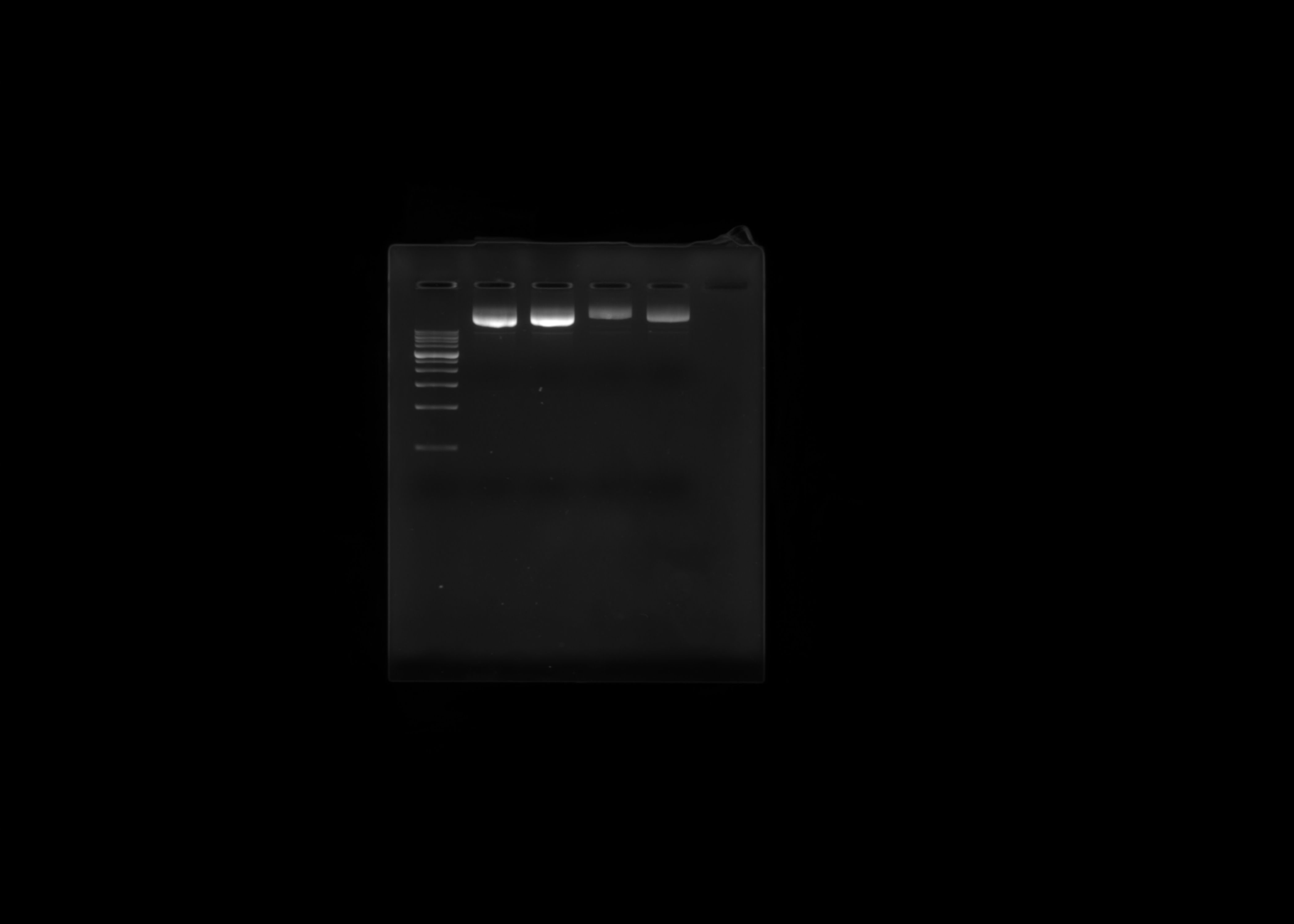
DNA electrophoresis · ORCO, Or67b
DNA gel with 4 sample lanes for ORCO, Or67b.
Lanes left to right: 1: 1 kb ladder, 2: ORCO_1, 3: ORCO_2, 4: Or67b_1, 5: Or67b_2.
Pixel-identical gel image (WebP) · Results · annotated DNA gels
The team confirmed undigested plasmids and the same 1 kb ladder in all four gels; the ladder brand and product are unavailable. Paired sample lanes share one construct label in the Results figure.
Learning Game: Ideas and Rules
Defined the web game idea and rules.
Learning Game: Initial Design
Prepared the initial web game design.
Learning Game: Internal Evaluation and Suggestions
Conducted internal evaluation and gathered suggestions for the web game.
Data Cleaning, Hyperparameter Breakthrough, Sensor/Precision Analysis, Repo Reorganization
Contaminated rows removed (9726→8421); denser PN→KC + weaker lateral inhibition reached F1 0.800 (pca-3); documented baseline F1 0.868 under stated settings.
Baseline setting: PCA-8, p=0.05, ip=2, KC=1000, lateral=2000, lr=0.025 → Precision 0.877 / Recall 0.872 / F1 0.868.
Preparing for Professional PCB Review
Contacted iST Group and prepared the KiCad/BOM/ERC-DRC package for external schematic and layout review.
Attributions · iST Group · Engineering · Professional review
PCB V1 Assessment — Engineering Cycle 1 Phase
Evaluated the V1 PCB through ERC/DRC checks.
Plasmid Synthesis Ordered
Ordered ten GenScript plasmids (nine OR modules + one Orco–GCaMP6f reporter) in pcDNA3.1(+).
Public survey
The 28-response diagnostic record informed food-decision teaching.
Use the responses to shape clearer education and claim boundaries.
FITI business-plan review
Mentors challenged the general-purpose electronic-nose pitch; the proposed agricultural beachhead narrowed to banana disease detection.
Define a more specific first use case and buyer question.
Engineering Cycle 1: Professional Review
Professional review and internal re-evaluation identified correction needs across TIA/guard, ADC, reference, and ESP32 control paths.
Engineering · Hardware Cycle 1 · Engineering · Professional review
PCB V2 Revision and Design — Engineering Cycle 2 Phase
The team reports the PCB V2 revision and design window.
Engineering Cycle 2: System Simplification and PCB V2
Completed the ESP32-standalone power and I/O redesign.
Reduce hardware complexity instead of adding more computation to the reader.
Learning Game: Updates and Outcomes
Updated the web game following the internal review.
Pipeline Cleanup, Baseline Confirmation, New Optimization/Validation Methods
Completed the September pipeline cleanup with F1 = 0.868 as the documented reference setting.
Electrical Bring-Up
Planned rail, ESP32, ADC, LED, and current-consumption bring-up tests after assembly.
Planned tests: 5 V rail; digital 3.3 V rail; analog 3.3 V rail; 2.5 V reference; ESP32 startup; ADC communication; LED switching; current consumption.
Pending output: Voltage table · Power-consumption table · Oscilloscope/logic-analyzer evidence
Record provenance: Source heading 'Late September–October' — preserved as month-bounded range 2026-09 to 2026-10.
Bacterial Transformation and Plasmid Preparation
Performed bacterial transformation and plasmid preparation.
Transfection and Stable Line Generation
Planned G418 kill curve, OR:Orco co-transfection by electroporation, and stable-pool selection.
Planned work: kill curve on untransfected HEK293 (0–800 µg/mL G418); co-transfection by electroporation, ~5 µg DNA at 2:1 OR : Orco per reaction; G418 selection from 24–48 h post-transfection: 100 µg/mL for two weeks, then 150 µg/mL for one week; untransfected control well at the same dose. Expected timeline noted in source: no visible effect for 1–2 days, bulk cell death at days 3–5, discrete resistant colonies by days 10–14.
Pending output: Kill-curve table · Transfection efficiency (mCherry-positive fraction) · Stable pools for each of the nine receptors
Record provenance: Original broad protocol/planning record retained. The 12 October team update adds dated execution sessions separately; those sessions do not confirm every reagent, dose, method or validation step in this older proposal.
V2 Schematic Correction and PCB Layout
Completed the V2 PCB layout on 11 September.
Plasmids Received
Received ten synthesized constructs on 4 September.
FITI pitch review
The second FITI review focused the business case on customer loss, buyer identity and the banana application.
Building the Team Wiki
Wiki development from 7 September to 20 October is confirmed complete.
Reported calendar duration: 6 weeks. Reported actual time worked: 4 weeks.
3D-Printed Enclosure V1 — Development Window
The team records the first 3D-printed enclosure development phase.
Transformation
Transformation was performed.
Colony picking
Colonies were picked.
Bacterial culture tube change
Bacterial culture tubes were changed.
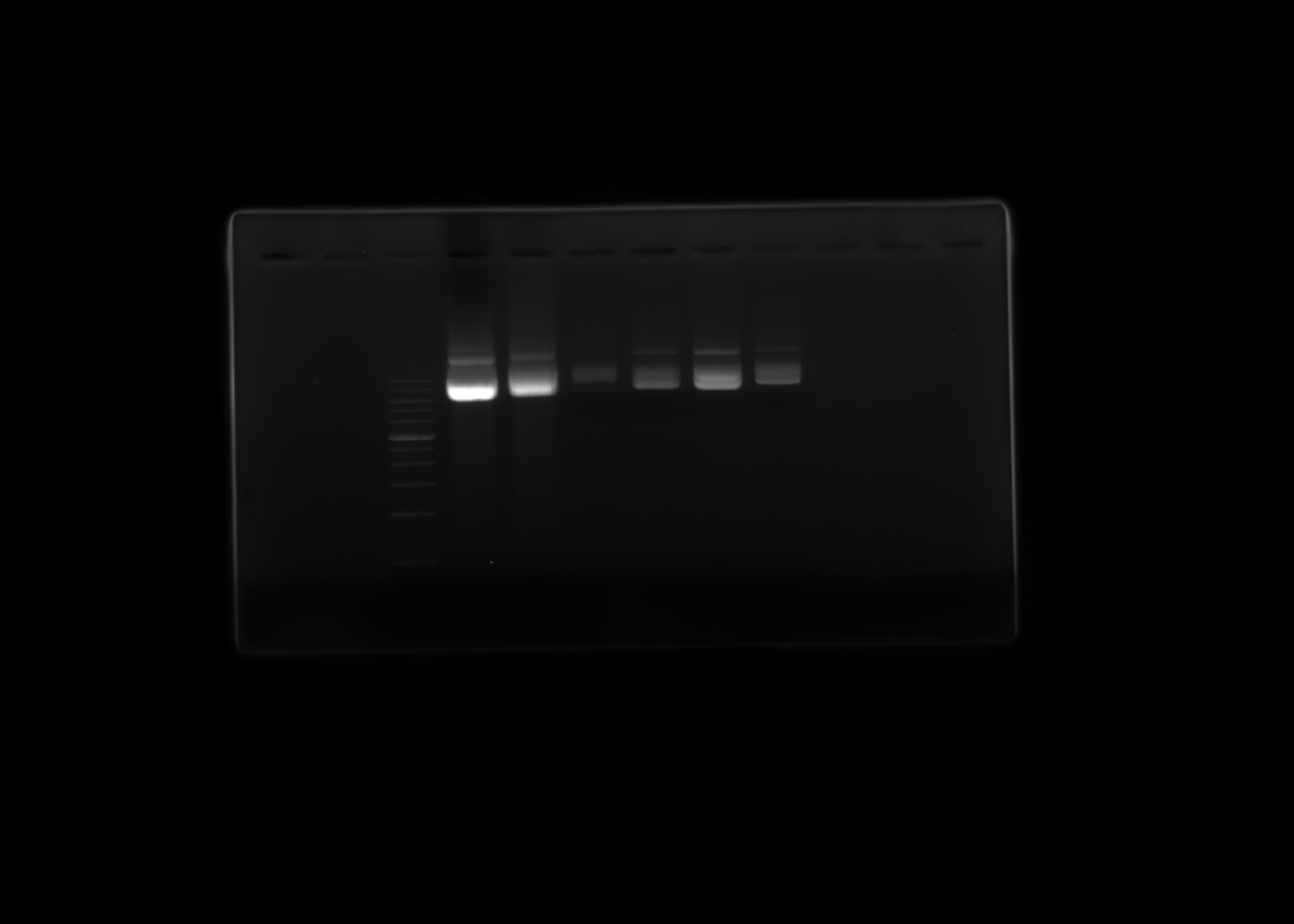
DNA electrophoresis · Or35a, Or85b, GCaMP6f
DNA gel with 6 sample lanes for Or35a, Or85b, GCaMP6f.
Lanes left to right: 1: 1 kb ladder, 2: Or35a_1, 3: Or35a_2, 4: Or85b_1, 5: Or85b_2, 6: GCaMP6f_1, 7: GCaMP6f_2.
Pixel-identical gel image (WebP) · Results · annotated DNA gels
The team confirmed undigested plasmids and the same 1 kb ladder in all four gels; the ladder brand and product are unavailable. Paired sample lanes share one construct label in the Results figure.
Colony picking
Colonies were picked.
Challenge Bioproducts interview
The team separated a VOC screening signal from a food-safety verdict and added confirmatory follow-up to the intended workflow.
PCB Layout and Vendor Fabrication — Reported Window
The timeline records vendor PCB layout and fabrication work from 12 September to 6 October.
Analytical-instrumentation interview
Feedback positioned AeroSense as a fast on-site screening layer before laboratory confirmation, not a replacement for GC–MS.
Preserve confirmatory testing in the proposed decision path.
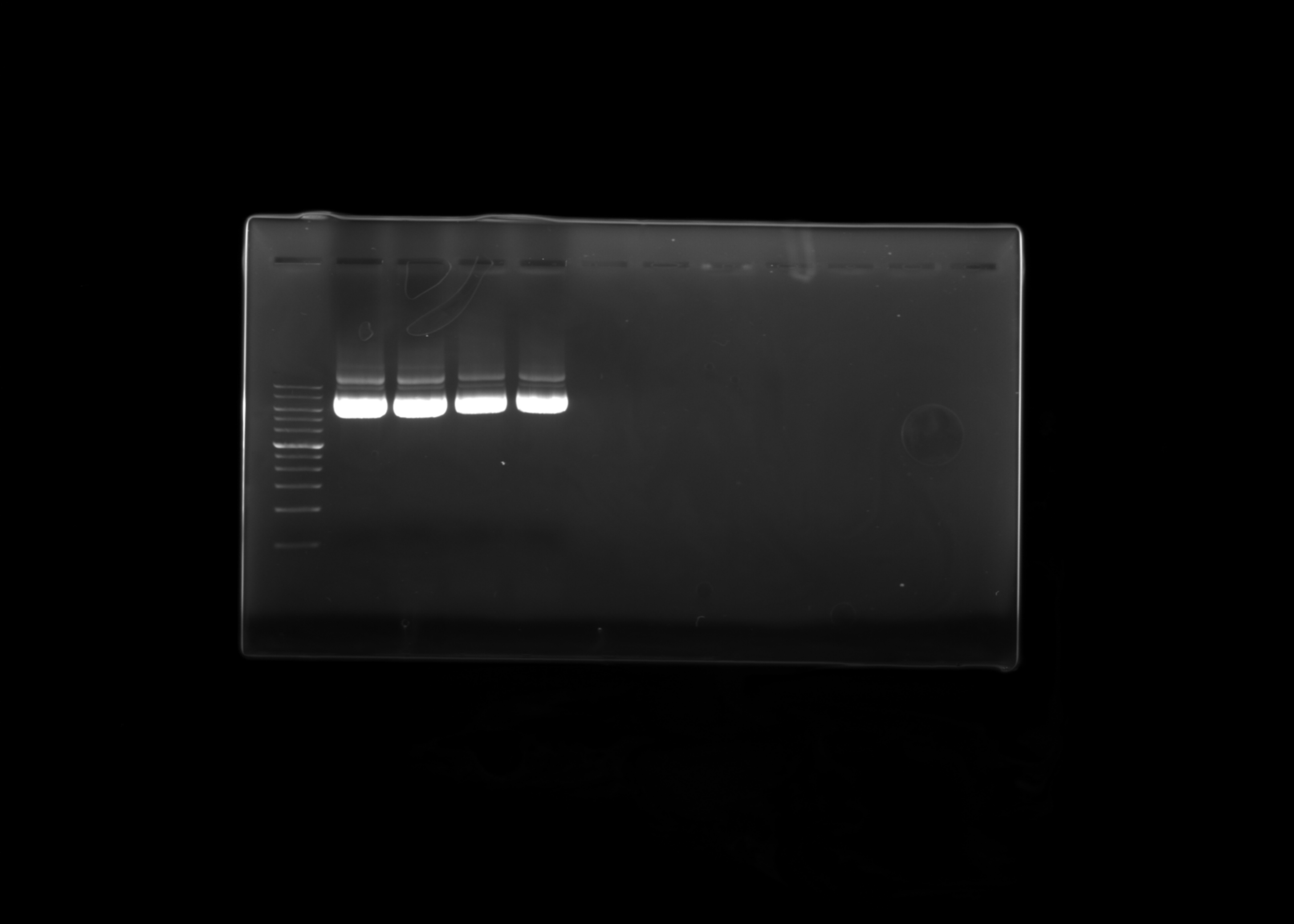
DNA electrophoresis · Or22a, Or59b
DNA gel with 4 sample lanes for Or22a, Or59b.
Lanes left to right: 1: 1 kb ladder, 2: Or22a_1, 3: Or22a_2, 4: Or59b_1, 5: Or59b_2.
Pixel-identical gel image (WebP) · Results · annotated DNA gels
The team confirmed undigested plasmids and the same 1 kb ladder in all four gels; the ladder brand and product are unavailable. Paired sample lanes share one construct label in the Results figure.
TH-GFP acquisition: 696 stacks
Recorded the 5137;TH preparation with three timed odor presentations.
The source settings record 18:18:19 and 696 five-plane stacks. TIFF filename timestamps span 0–132.013 s. Team-confirmed odor windows are 20–40, 60–80 and 100–120 s. The original ImageJ raw and corrected ROI exports are retained.
3D-Printed Enclosure V2 — Development Window
The 26 September–8 October enclosure-development window is confirmed complete.
Cell thawing
Cells were thawed.
Transformation
Transformation was performed.
Cell culture
Cell culture work was performed.
Colony picking
Colonies were picked.
October and November Evaluation Agenda
Planned continual-learning analysis, SNN drift evaluation, weight quantization tests, and final model packaging decisions.
Planned: complete full analysis of the two-phase continual-learning experiment; add drift evaluation for the SNN pipeline (train earlier batch, test later) following Vergara et al. (2012); test synaptic weight quantization of learned KC→MBON weights to N bits; depending on October validation results, decide on the final model version, organize results/figures, and prepare a report/paper outline.
System and User Testing
Planned workflow tests with users not involved in hardware design, after basic electronic/optical validation.
Planned work: once the electronic and optical measurement chain has passed basic validation, users who were not involved in hardware design will be asked to perform the intended workflow (prepare/insert sensing unit; power on; start measurement; interpret QC; identify invalid measurement; export; shut down/charge). Record task success, completion time, errors, help required, user comments, and resulting design changes.
Pending output: User feedback linked to specific design changes
Weak-Signal Validation
Planned dark-noise, leakage, calibration, FDM, crosstalk, SNR, and biological fluorescence measurements.
Planned tests: (1) Dark-noise measurement; (2) Excitation-leakage measurement; (3) Standard fluorescence calibration; (4) FDM frequency recovery; (5) Channel-crosstalk matrix; (6) Raw vs DLIA SNR; (7) Biological fluorescence measurement. The planned validation ladder and corresponding metrics are already defined in the hardware design report.
Pending output: Dark trace · Calibration curve · FFT spectrum · Crosstalk heatmap · SNR comparison · Biological comparison
Expression Validation
Planned microscopy, anti-His blot, ionomycin, and 50 µM VUAA1 chain tests, including IRES vs fusion comparison.
Planned tests: (1) Fluorescence microscopy — mCherry and GCaMP6f baseline; (2) Anti-His western blot — full-length Orco–GCaMP6f fusion at ≈ 105 kDa; (3) Ionomycin — isolates the reporter; (4) VUAA1, 50 µM — tests the whole chain. Acceptance criterion defined in advance: a VUAA1-evoked ΔF/F₀ large enough to quantify on the plate reader, clearly separated from vehicle, and abolished in Ca²⁺-free buffer.
Pending output: VUAA1-evoked ΔF/F₀ for Orco–IRES–GCaMP6 versus GCaMP6f–(GGGGS)₃–Orco on the same plate under identical conditions
Record provenance: Original broad protocol/planning record retained. The 12 October team update adds dated execution sessions separately; those sessions do not confirm every reagent, dose, method or validation step in this older proposal.
Experiments · EXP-AS-03 · Experiments · EXP-AS-04 · Notebook slot nb-EXP-AS-04
Calcium Imaging — VOC Panel
Planned 384-well VOC panel with VUAA1 normalisation across nine receptors.
Planned work: 384-well plates, 12,000–18,000 cells/well seeded 48–72 h ahead; two-round injection (7 µL vehicle, then 9 µL of 4× VOC); ex 485 / em 535 nm; VOCs at 1, 10 and 100 µM; 50 µM VUAA1 on every plate for normalisation; each VOC–OR pair measured on at least three separate days.
Pending output: Dose–response curves · Response matrix: nine receptors × VOC panel · Ca²⁺-free specificity control
Record provenance: Original broad protocol/planning record retained. The 12 October team update adds dated execution sessions separately; those sessions do not confirm every reagent, dose, method or validation step in this older proposal.
Cell culture
Cell culture work was performed.
Freeze and change bacterial culture tubes
Bacterial culture tubes were frozen and changed.
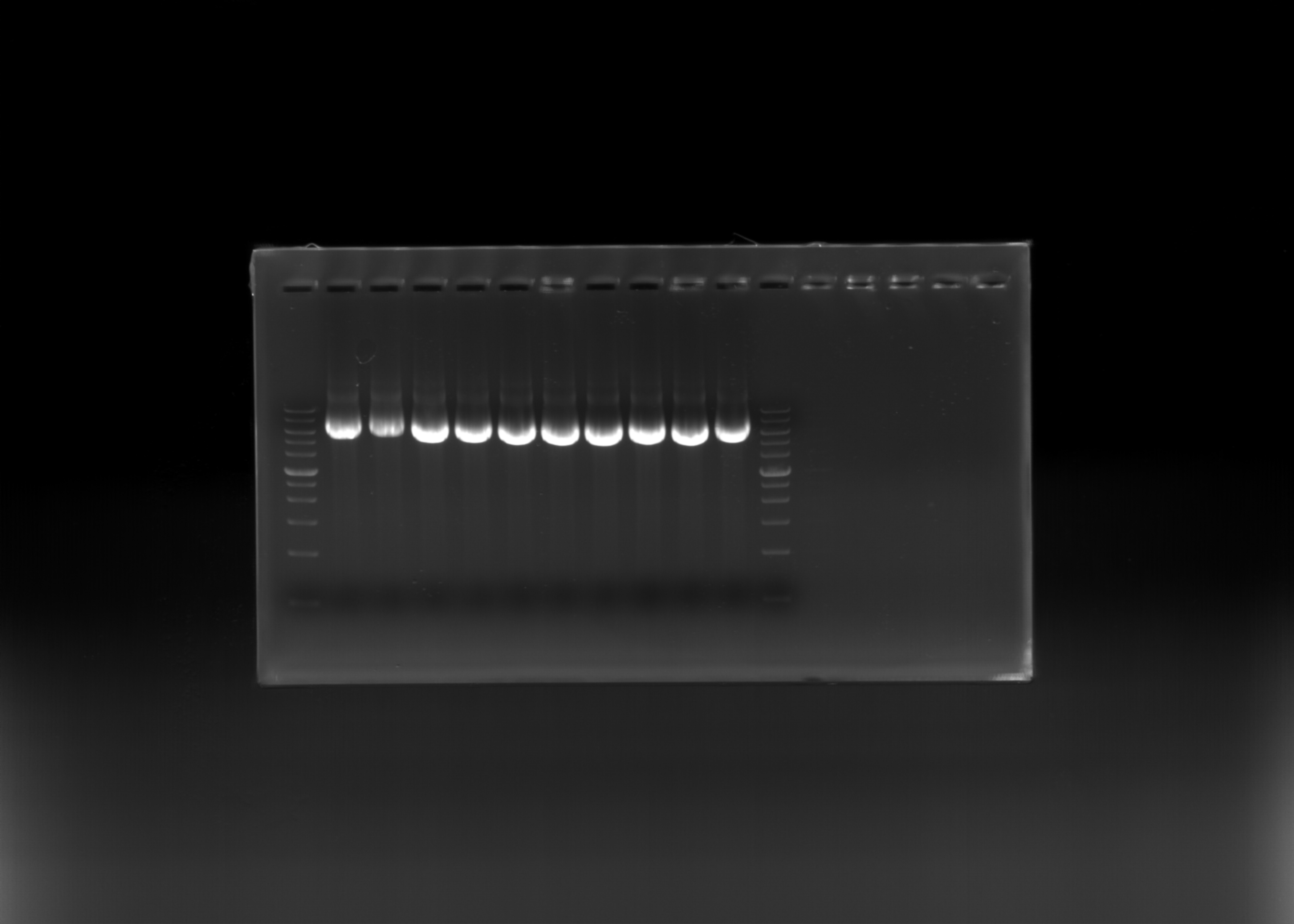
Plasmid miniprep and DNA electrophoresis
DNA gel with 10 sample lanes for Or7a, Or67a, Or19a, Or42a, Or98a.
Lanes left to right: 1: 1 kb ladder, 2: Or7a_1, 3: Or7a_2, 4: Or67a_1, 5: Or67a_2, 6: Or19a_1, 7: Or19a_2, 8: Or42a_1, 9: Or42a_2, 10: Or98a_1, 11: Or98a_2, 12: 1 kb ladder.
Pixel-identical gel image (WebP) · Results · annotated DNA gels
The team confirmed undigested plasmids and the same 1 kb ladder in all four gels; the ladder brand and product are unavailable. Paired sample lanes share one construct label in the Results figure.
Cell thawing and plasmid miniprep
Cells were thawed and plasmid miniprep was performed.
Cell culture
Cell culture work was performed.
Co-transfection attempt — unsuccessful
Co-transfection was attempted.
Unsuccessful: the cells were too dense and grew poorly, as reported by the team.
Cell seeding
Cells were seeded.
PCB Soldering and User-Interface Design
PCB soldering and UI design from 7–10 October are confirmed complete.
Co-transfection
Co-transfection was performed.
Hardware assembly, trial use and revisions
Hardware assembly, trial use and revisions from 9–16 October are confirmed complete.
Cell culture
Cell culture work was performed.
DAPI fluorescence session
DAPI fluorescence work was performed.
P2 kinetic fluorescence pilot — before G418 selection
Acquired 32 instrument runs and 3,840 fluorescence readings across one 96-well HEK293 plate, approximately 72 h after transfection and before G418 selection.
A11 reached an 11.86% excursion above baseline; the buffer-only Or35a + ORCO well reached 35.25%. Gain mismatch excluded 24 corrected metrics.
Results · acquired P2 pilot · Executed 96-well method · Data availability
Start G418 selection
Initiated G418 selection on 11 October.
Experiments · selection protocol · Post-selection odor record
User-interface review and adjustment
UI review and adjustment from 12–14 October are confirmed complete.
Medium change with G418
The 13 October medium change with G418 is confirmed complete.
Sodium fluorescein performance testing
Sodium fluorescein performance testing on 15–16 October is confirmed complete.
Medium change with G418
The 15 October medium change with G418 is confirmed complete.
GH146-GCaMP6f: three serial recordings
Acquired runs 02, 03 and 04 from the same female fly.
Instrument start times are 18:15:25, 18:19:49 and 18:24:30. Each run contains 696 five-plane stacks over approximately 132 s. Runs 02 and 03 share one three-odor sequence; run 04 uses a four-odor sequence. The Results analysis and linked raw measurements cover runs 03 and 04.
GH146-GCaMP6f results · Data availability · Fly imaging methods
Prepare co-transfected HEK293 cells
Preparation of co-transfected HEK293 cells for hardware testing on 17 October is confirmed complete.
Transfer culture to a 96-well plate
Transfer to a 96-well culture plate on 17 October is confirmed complete.
Hardware testing with cells
Hardware testing with cells on 18 October is confirmed complete.
Odor test after G418 selection
Odor testing after G418 selection on 19 October is confirmed complete.
Jeffrey’s birthday!!!
Happy birthday, Jeffrey!
WL-CLONE-01 · Colony plate photographs
Three plate photographs preserve colony growth and marked candidates.
Results · WL-CLONE-01 · Experimental methods · Data availability
WL-MIC-01 · Pre-selection endpoint microscopy
Acquired 25 fields across 12 conditions at 44–48 h after transfection, before G418 selection.
Segmentation retained 2,624 eligible DAPI objects.
Results · WL-MIC-01 · Experimental methods · Data availability
WL-MIC-01 · Fixation and DAPI labeling
Team-confirmed preparation: 2% PFA fixation, no permeabilization, followed by DAPI.
Results · WL-MIC-01 · Experimental methods · Data availability
WL-MIC-01 · HEK293 transfection evidence
Transfected HEK293 cultures produced the 25-field endpoint dataset.
Evidence is the endpoint image dataset. Neither the earlier electroporation specification nor the Lipofectamine/P 3000 workbook is assigned to this batch without an operator record.
Results · WL-MIC-01 · Experimental methods · Data availability
Official competition dates
Registration opens
PIs can start the team application.
Early registration deadline
Early program-fee rate ends.
Regular registration deadline
Regular program-fee rate ends.
Jamboree tickets open
Event website and ticket sales open.
Jamboree program announced
Official program overview release.
Jamboree early ticket deadline
Special early ticket rate ends.
Distribution Kit shipping begins
Shipping milestone; delivery varies by destination.
Final registration deadline
Stage I requirements and fee are due.
Mentorship application deadline
Optional mentorship application closes.
Village and project information due
Submit village, preliminary title and project description.
Project information published
Village and project information publication.
Preliminary safety form due
Submit the preliminary Project Safety Form.
Team finalization deadline
Complete Stage II; at least one Jamboree ticket is needed for in-person team eligibility.
Jamboree regular ticket deadline
Regular ticket rate ends.
Project promotion video due
Upload the project promotion video.
Promotion videos under review
Official review window for promotion videos.
Promotion videos published
Official publication window for promotion videos.
Animal Use Form due
Conditional requirement. Approval must precede the relevant work.
Expo booth safety proposal due
Required when requesting permission for restricted booth equipment or materials.
Live Stage Talk proposals due
Submit proposals for available live stage slots.
Team roster freeze
Final deadline to add or remove roster members.
IDT offer registration closes
Optional sponsor offer; its cut-off differs from standard deliverable deadlines.
Safety Check-In deadline
Conditional requirement. Approval is needed before work outside the White List.
Jamboree assignments announced
Judging, live talks and booth assignments.
Final safety form due
Complete final safety review and PI submission.
Team logo and photo due
Deadline for inclusion in printed Jamboree materials.
GenScript offer closes
Optional sponsor offer.
IDT synthesis orders close
Optional sponsor offer; its cut-off differs from standard deliverable deadlines.
Twist synthesis offer closes
Optional sponsor offer.
Wiki freeze
Complete the judged wiki content.
Attributions form freeze
Complete and submit project attributions.
Judging form freeze
Complete and submit the judging form.
Registry contributions freeze
Complete parts and documentation intended for evaluation.
Software repository freeze
Complete applicable project software in the dedicated iGEM repository.
Presentation video due
Upload the presentation video.
Presentation videos published
Official presentation-video publication date.
Jamboree badge collection opens
Paris on-site collection date; consult the event program for opening hours.
Jamboree Expo Days
Paris event dates. Consult individual assignments for times.
Judging sessions
In-person and online sessions follow each team's assigned time.
Finalists announced
Official finalist announcement date.
Jamboree final show and results
Final presentations, awards and results publication.
Participation certificates available
Certificates become available to eligible roster members.
Judging recordings available
Recordings become available on team pages.
Wiki editing reopens
Official reopening time for post-Jamboree updates.
Wiki final archival
Final editing deadline before permanent archival.
Timeline
Chronological project stream. Shared filters apply; the chips below also set the workstream filter.
Records matching filters: —
Gantt
Compare four months at a time; open a bar for the full record.
Matching records in this window: 0
Records matching filters: —
Team milestones
These dates and effort totals are transcribed from our team-entered Attributions form. Calendar weeks describe the span; actual weeks describe time worked. They are separate measures, and are not official iGEM deadlines.
| Activity | Start | End | Calendar weeks | Actual weeks |
|---|---|---|---|---|
| Recruit Team Members | 2026-03-19 | 2026-04-06 | 3 | 1 |
| Development of Project Plan | 2026-04-13 | 2026-05-11 | 4 | 2 |
| Building the Team Wiki | 2026-09-07 | 2026-10-20 | 6 | 4 |
Wiki development ran from 7 September to 20 October, with four actual weeks of work recorded.
Hardware and learning-game phase dates
| Activity | Start | End | Record status |
|---|---|---|---|
| Hardware ideation, personnel planning and team formation | 2026-04-01 | 2026-04-21 | Reported work period |
| Hardware literature analysis | 2026-04-22 | 2026-05-09 | Reported work period |
| Airflow and Optical Simulations | 2026-05-10 | 2026-07-05 | Reported work period |
| PCB V1 Design and Planning — Phase Window | 2026-06-07 | 2026-08-02 | Reported work period |
| PCB V1 Assessment — Engineering Cycle 1 Phase | 2026-08-03 | 2026-08-28 | Reported work period |
| PCB V2 Revision and Design — Engineering Cycle 2 Phase | 2026-08-29 | 2026-09-11 | Reported work period |
| PCB Layout and Vendor Fabrication — Reported Window | 2026-09-12 | 2026-10-06 | Reported work period |
| 3D-Printed Enclosure V1 — Development Window | 2026-09-08 | 2026-09-25 | Reported work period |
| 3D-Printed Enclosure V2 — Development Window | 2026-09-26 | 2026-10-08 | Completed |
| PCB Soldering and User-Interface Design | 2026-10-07 | 2026-10-10 | Completed |
| Hardware assembly, trial use and revisions | 2026-10-09 | 2026-10-16 | Completed |
| UI review and adjustment | 2026-10-12 | 2026-10-14 | Completed |
| Sodium fluorescein performance testing | 2026-10-15 | 2026-10-16 | Completed |
| Prepare co-transfected HEK293 cells | 2026-10-17 | 2026-10-17 | Completed |
| Hardware testing with cells | 2026-10-18 | 2026-10-18 | Completed |
| Learning Game: Ideas and Rules | 2026-07-13 | 2026-07-15 | Reported work period |
| Learning Game: Initial Design | 2026-07-16 | 2026-07-30 | Reported work period |
| Learning Game: Internal Evaluation and Suggestions | 2026-07-31 | 2026-08-29 | Reported work period |
| Learning Game: Updates and Outcomes | 2026-08-30 | 2026-09-15 | Reported work period |
Turning points
Documented decisions show how tests changed the design, including negative and incomplete evidence.