

Abstract
Fungal deterioration causes substantial crop losses, highlighting the need for accessible tools for early, on-site detection. Our project, AeroSense, is a modular biohybrid olfactory platform designed for agricultural screening, with banana production as its intended first application. The platform brings together a cell-based sensing array expressing Drosophila odorant receptors and their coreceptor ORCO in HEK293 cells, GCaMP6f fluorescence reporting, a compact four-channel optical reader, and a fly-inspired neural network for odor-pattern decoding. We documented reporter expression and conducted exploratory measurements of fluorescence kinetics. We also built and tested the optical reader using fluorescent standards, with transport and optical modeling informing its design. In parallel, computational studies evaluated odor-pattern decoding on external sensor datasets. Discussions with agricultural researchers and potential users shaped the proposed screening workflow and a shared-access deployment strategy. Together with reusable analysis code, hardware documentation, and educational resources, this work lays the groundwork for an accessible screening tool to guide follow-up inspection and confirmatory testing.
Follow the signal
Follow an odor from fruit-fly olfaction to AeroSense’s proposed living-cell sensor, reader and decoder.
Follow the signal
Reach each waypoint, then follow the odor into the proposed sensor.
Interactive 3D view unavailable on this device.
-
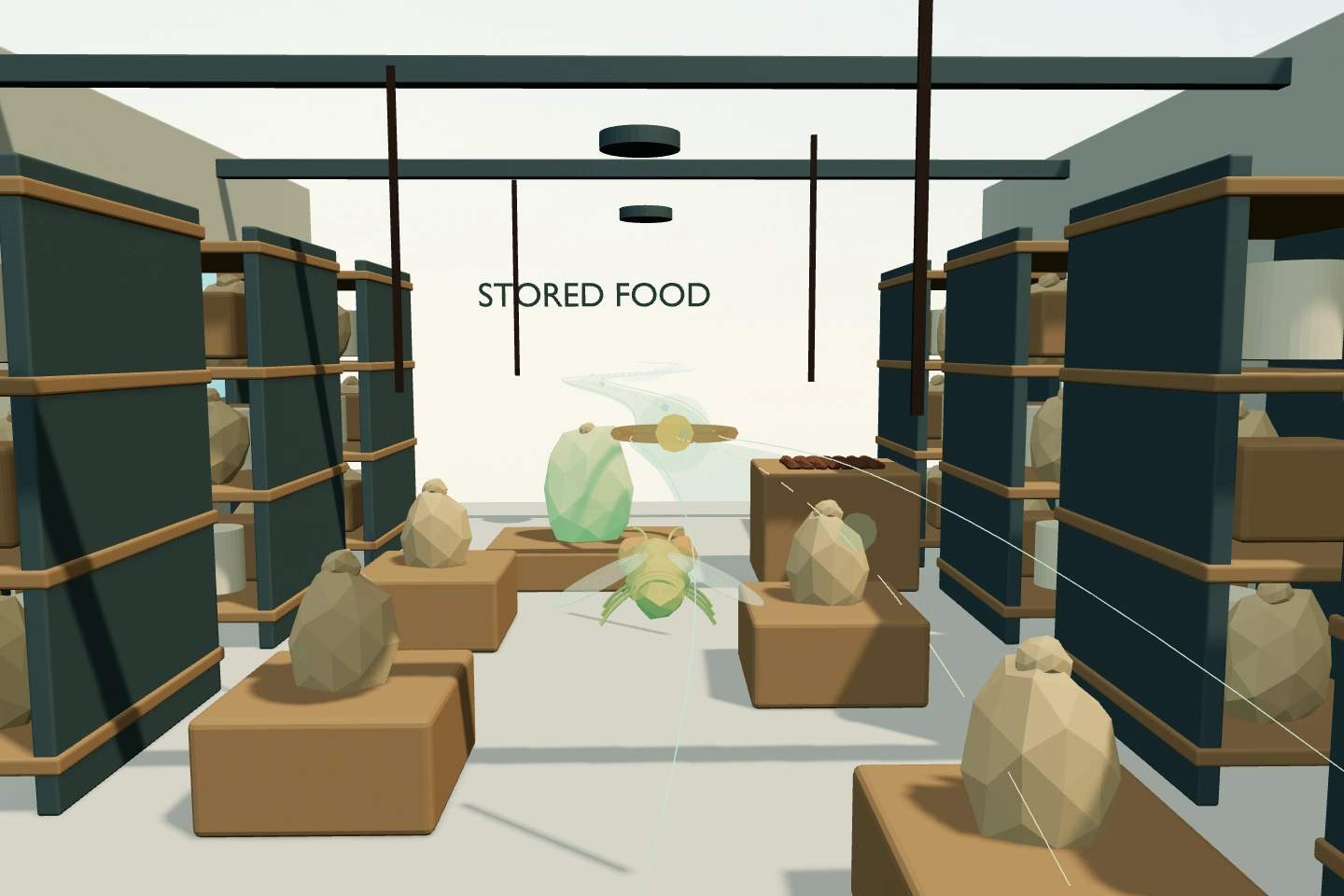 01 · Odor plume
Something changes before we see it.
Stored food can release changing volatile patterns as biological and environmental conditions evolve.
-
 02 · Olfaction
One odor. Many receptors.
Fruit-fly olfaction inspired AeroSense to treat odors as patterns rather than single sensor values.
-
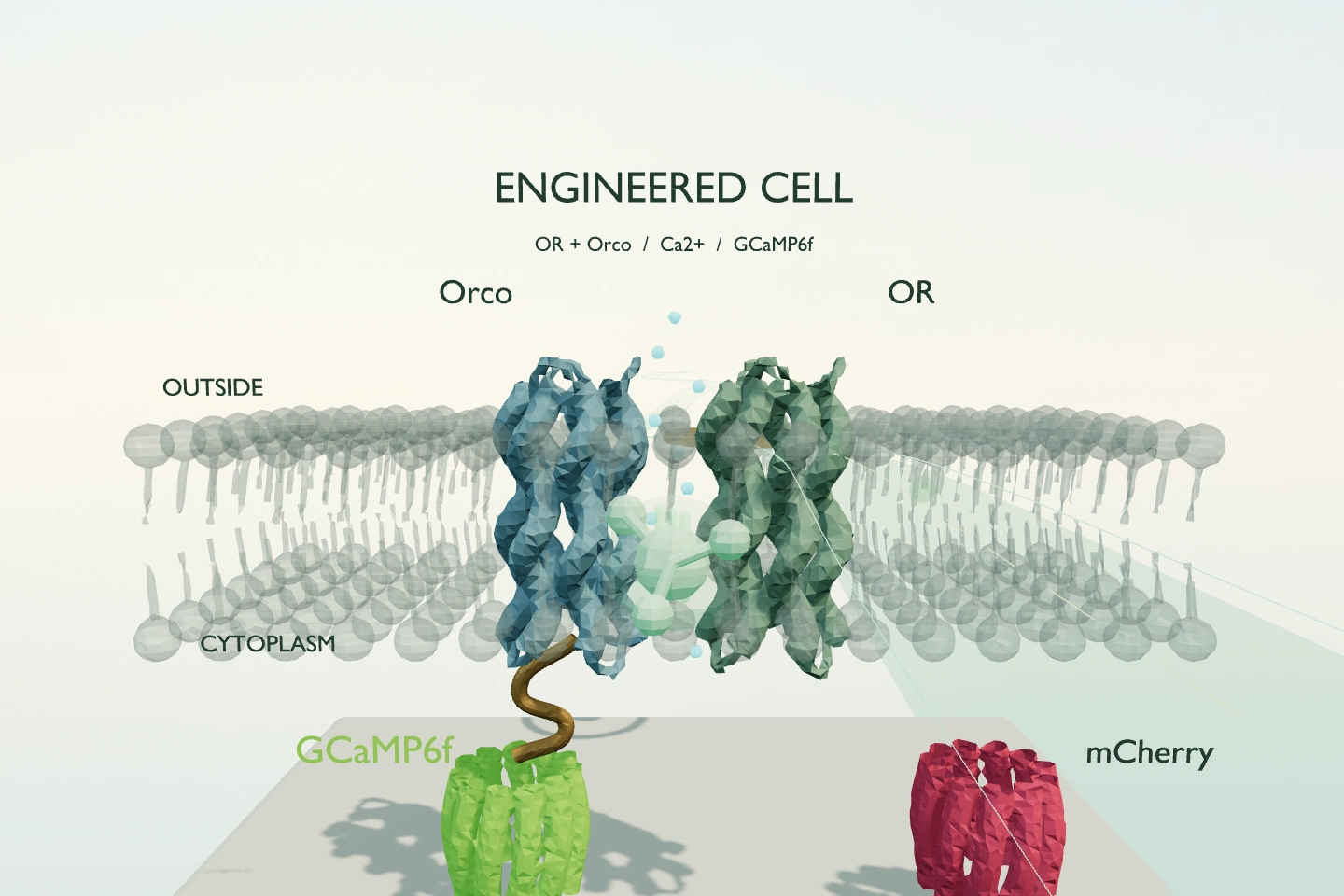 03 · Receptor / cell
We borrowed the receptor.
OR / Orco → HEK293 → Ca²⁺ → GCaMP. AeroSense is engineering living cells to translate receptor activation into measurable fluorescence.
-
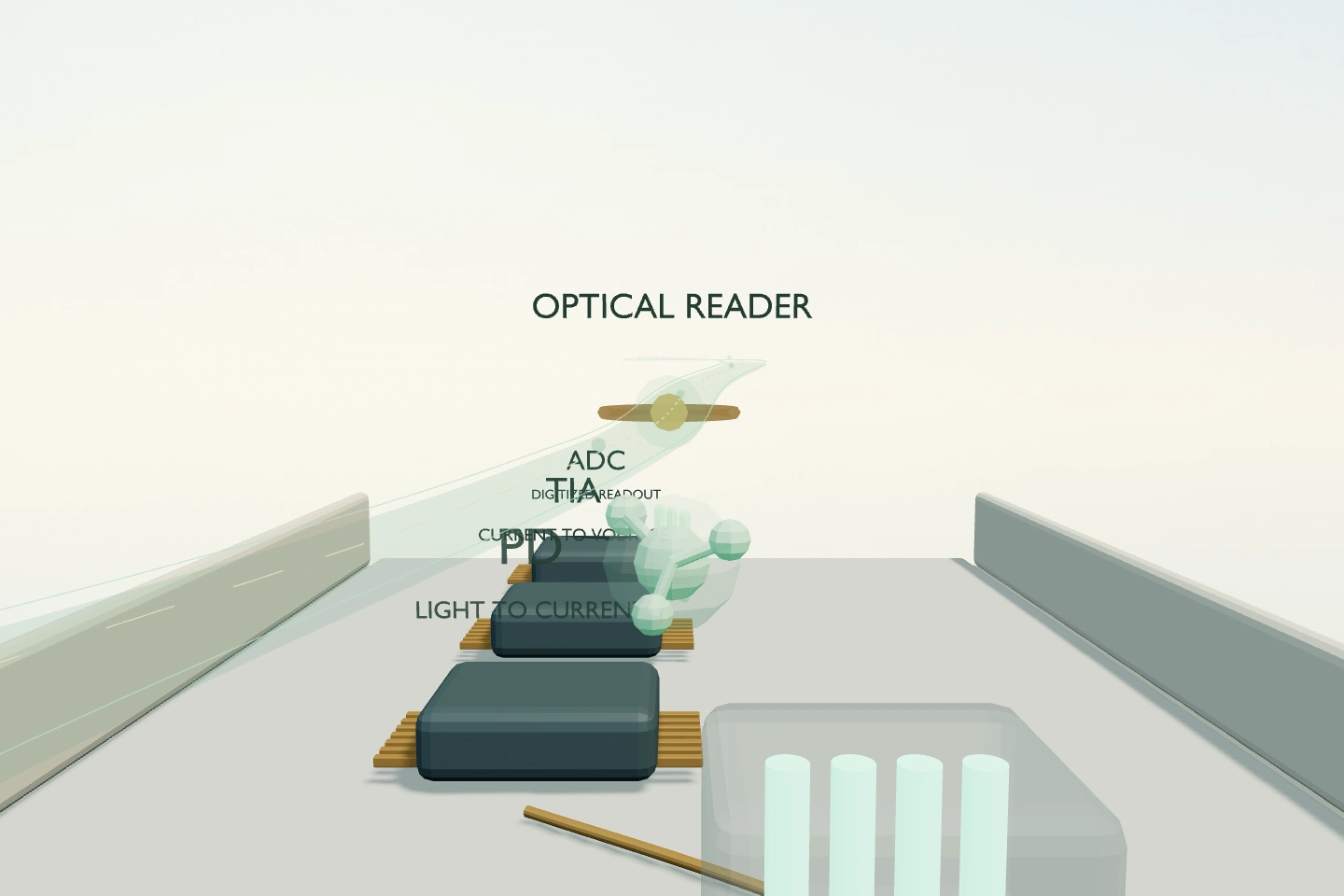 04 · Reader
Turning light into a measurement.
LIGHT → PD → TIA → ADC. Our reader is designed to convert weak optical responses into usable digital signals. FDM and digital lock-in processing are designed to isolate synchronized signal components from unrelated background variation.
-
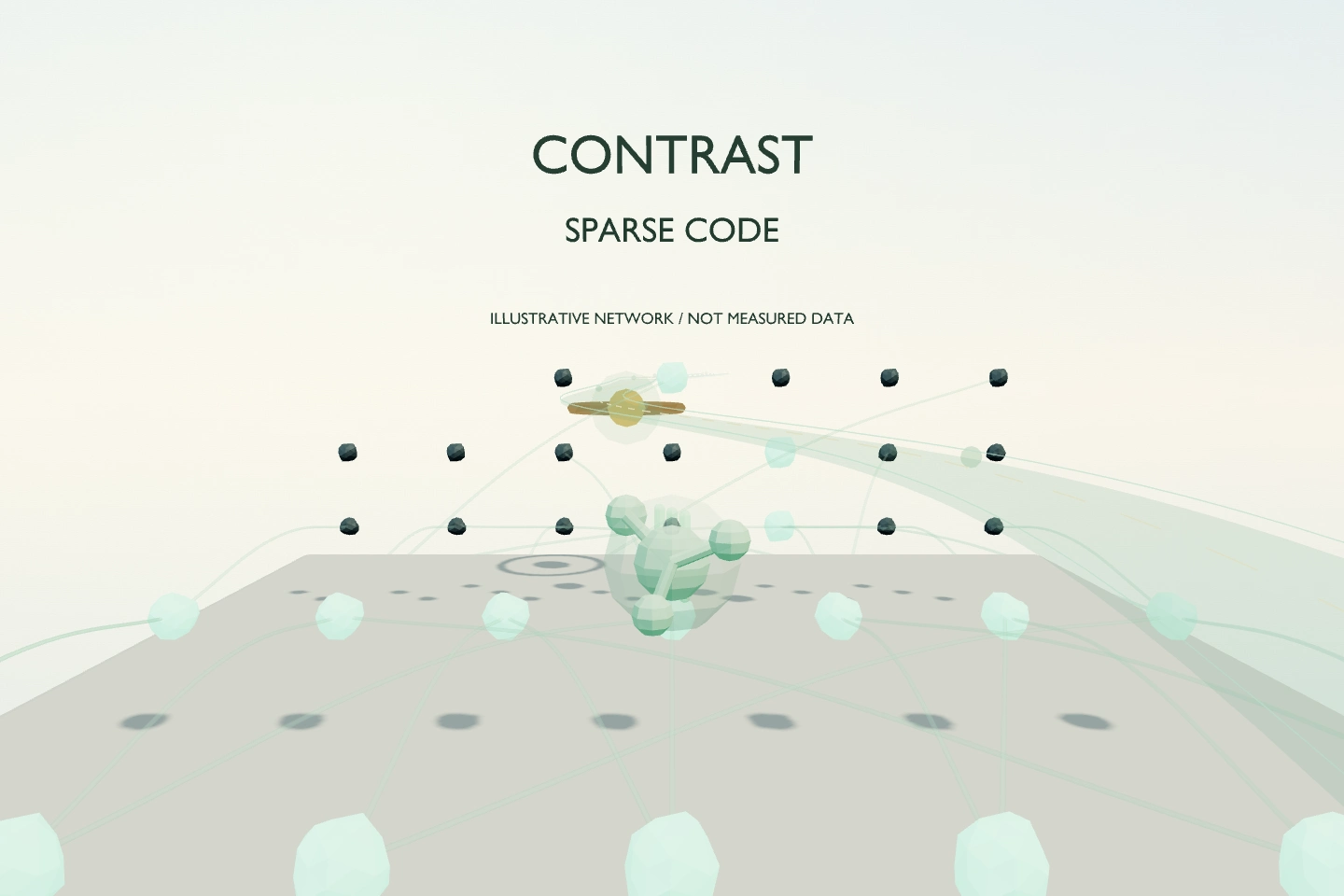 05 · Odor decoder
From a distributed response to a sparse pattern.
Our insect-inspired decoder explores how a distributed receptor-response pattern can become a sparse representation for comparing odors. This scene illustrates the proposed transformation; it is not a measured AeroSense classification result.
-
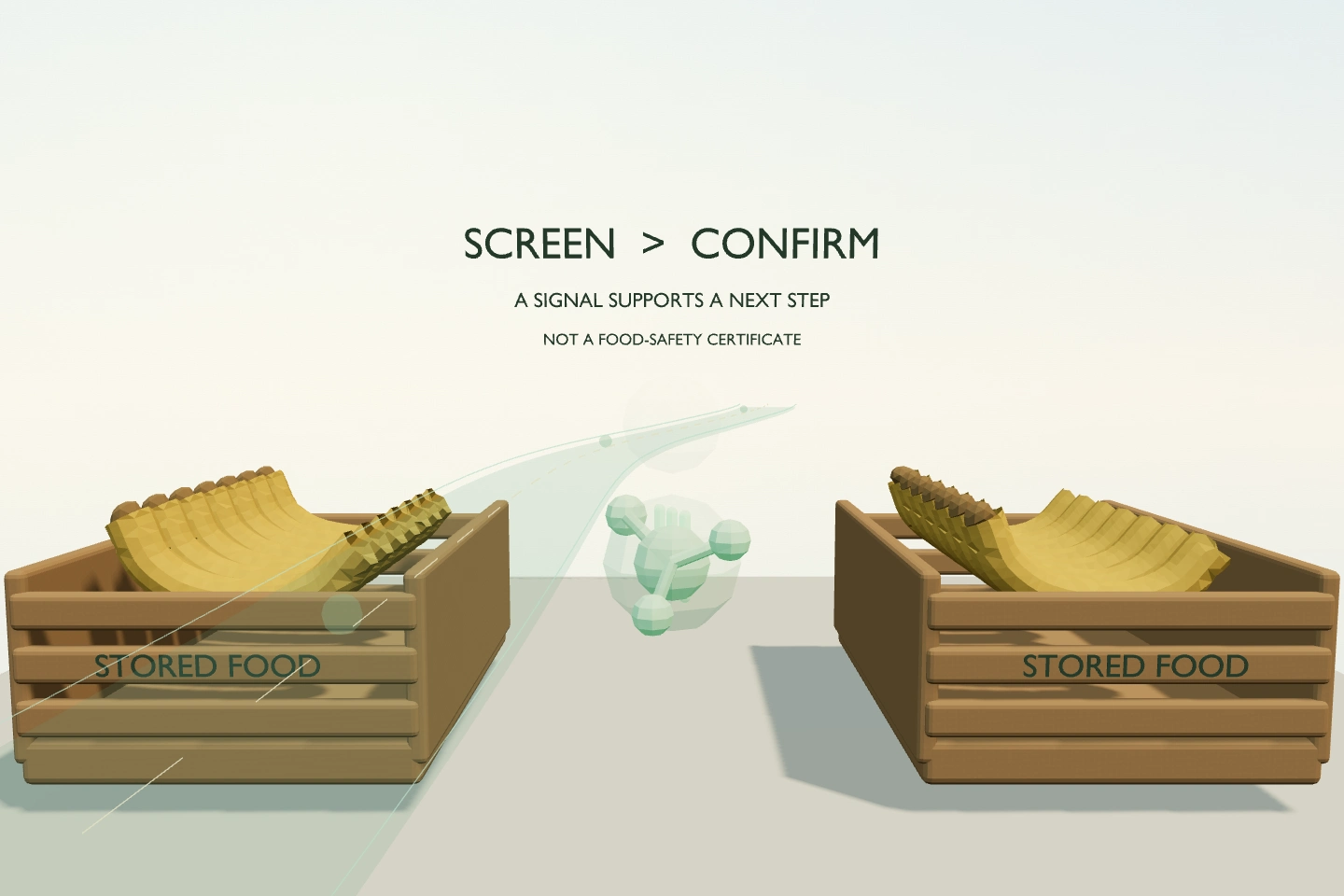 06 · Decoder / Act
From signal to a reason to look closer.
AeroSense is being developed as an early-screening layer for fungal-associated odor-pattern changes in stored food. Sense → Read → Decode → Act.
Read this journey as text
The same path, without the interaction
AeroSense is being developed to re-encode environmental odor information through biology, electronics, and computation. The walkthrough is a conceptual illustration of that chain, not a simulation of fly behavior and not experimental data.
Something changes before we see it.
Stored food can release changing volatile patterns as biological and environmental conditions evolve. A fruit fly can follow that airborne plume long before the food looks different.
One odor. Many receptors.
Fruit-fly olfaction inspired AeroSense to treat odors as patterns rather than single sensor values. The drawing does not reproduce an exact Drosophila recording.
We borrowed the receptor.
OR / Orco → HEK293 → Ca²⁺ → GCaMP. AeroSense is engineering living cells to translate receptor activation into measurable fluorescence.
Turning light into a measurement.
LIGHT → PD → TIA → ADC. Our reader is designed to convert weak optical responses into usable digital signals.
Compare response patterns.
The illustrated network moves from receptor inputs through contrast processing to a sparse representation. It introduces the fly-inspired decoding design; it is not a measured AeroSense response or classification result.
From signal to a reason to look closer.
AeroSense is being developed as an early-screening layer for fungal-associated odor-pattern changes in stored food. It is not a mycotoxin assay and does not replace formal food-safety testing.
Sense → Read → Decode → Act
Earlier signals of spoilage
Fungi and deteriorating biological materials release complex mixtures of volatile organic compounds (VOCs). These fingerprints change with species, substrate, environmental conditions, and growth stage, making VOCs promising non-destructive indicators of food and agricultural deterioration [1] Gu et al., 2019 — full entry in References. [2] Jiarpinijnun et al., 2020 — full entry in References. [3] Gu et al., 2022 — full entry in References. [4] Sanislav et al., 2025 — full entry in References. . Timing is the issue: by the time spoilage is obvious, the useful inspection window may already have closed.
The screening logic is summarized in Figure 1.

Conceptual workflow: a change in a stored food batch can alter its volatile profile; receptor responses provide a signal for follow-up inspection, sampling and confirmation. The diagram does not show measured sensitivity and an odor signal does not directly measure aflatoxin.
In controlled rice studies, electronic-nose and headspace GC–IMS methods have distinguished fungal contamination before visible growth, including discrimination of inoculated samples within approximately 24–48 hours under controlled experimental conditions [1] Gu et al., 2019 — full entry in References. [2] Jiarpinijnun et al., 2020 — full entry in References. [3] Gu et al., 2022 — full entry in References. . Those times are literature results from existing VOC methods. They are not AeroSense measurements.
GC–MS provides detailed chemical information, while electronic noses offer pattern-based measurements. AeroSense asks whether biological odorant receptors can supply a modular recognition layer for a compact, calibrated measurement system.
Sensor-based electronic noses have shown impressive results across food applications, but reviews continue to identify sensor drift, environmental interference, calibration, odor differentiation, model generalization, and real-world standardization as important challenges [4] Sanislav et al., 2025 — full entry in References. . AeroSense explores a complementary biological sensing architecture rather than claiming to replace all existing analytical technologies.
From a signal to a decision
For a warehouse or quality-control workflow, the useful question is rarely:
Not this
“What was the raw sensor voltage?”
But this
“Has this batch begun to deviate from its reference state, and should we inspect it now?”
The proposed screening output combines risk information with signal quality, confidence, calibration status and a recommended follow-up test.
AeroSense connects Drosophila receptor recognition, weak-fluorescence readout and fly-inspired decoding in a Sense → Read → Decode → Act chain. Our initial application is early fungal-risk screening of high-value food and agricultural products during storage and incoming quality control.
From odor to neural signals
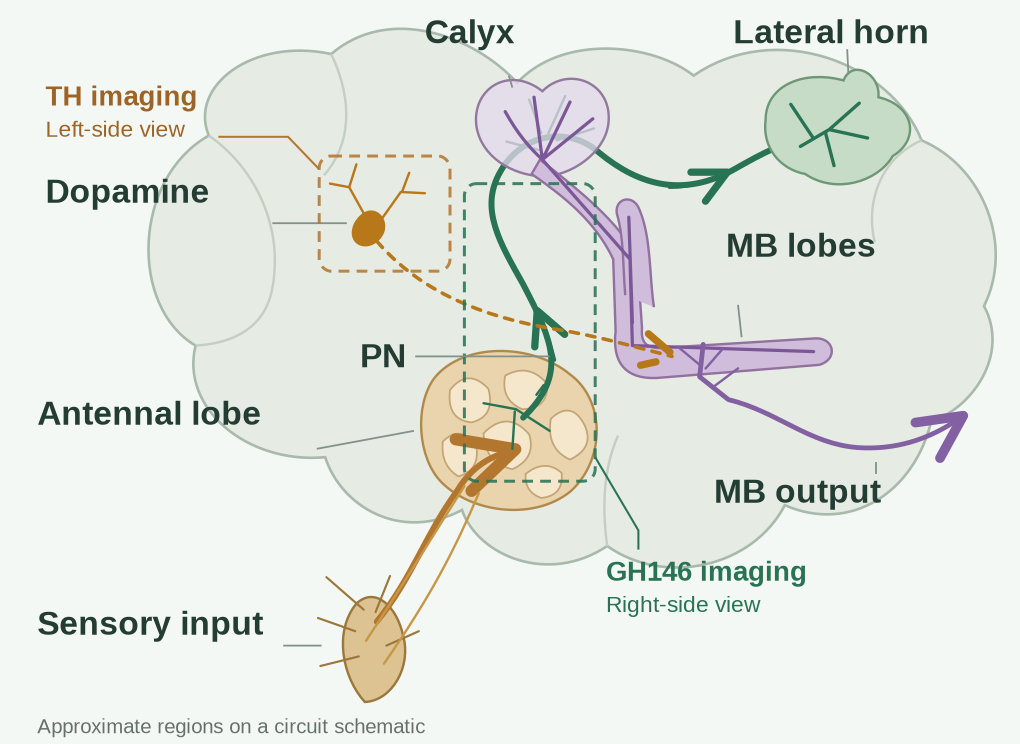
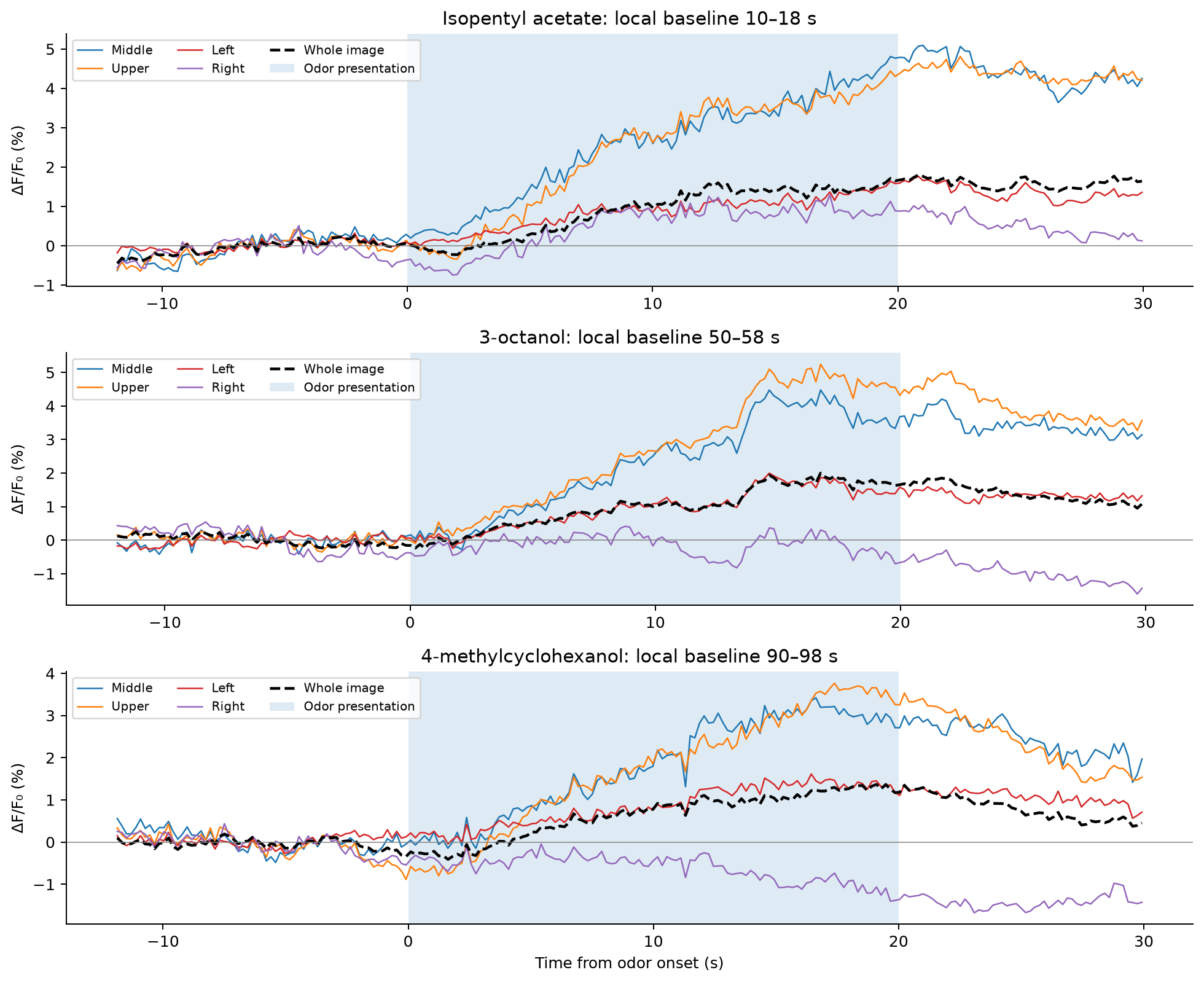
Fly olfactory circuits transform sensory input into neural patterns. We used light-sheet microscopy to observe TH-GFP labeled structures and GH146-GCaMP6f fluorescence during odor presentation.
Olfactory circuitry
Projection neurons relay olfactory input; dopaminergic neurons modulate selected circuits.
Pathway details and biological references
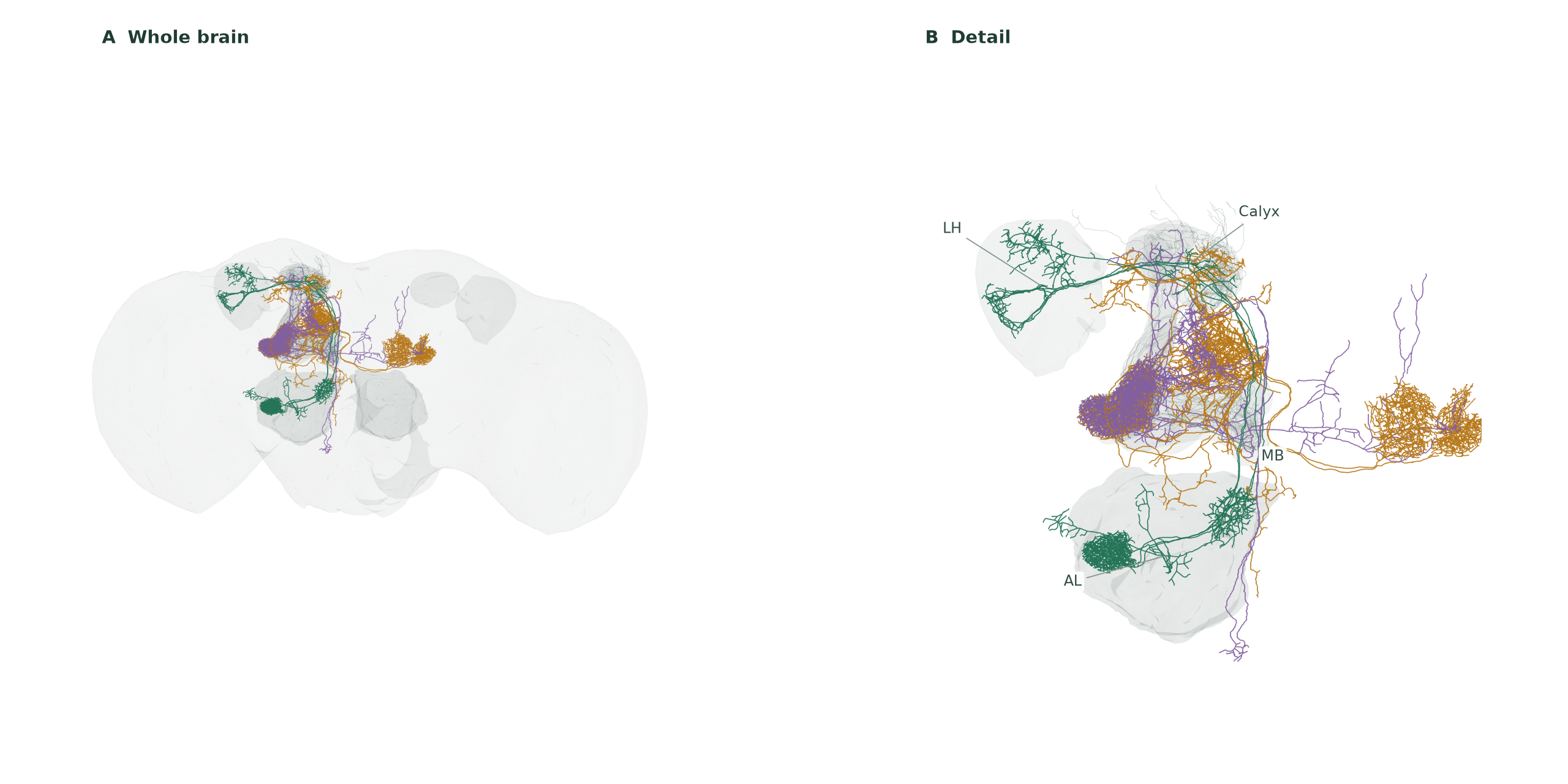
In the adult fly, olfactory receptor neurons in the antennae and maxillary palps send input to glomeruli of the antennal lobe. Projection neurons (PNs) then carry processed output toward higher brain regions, including the mushroom-body calyx and the lateral horn. In the mushroom body (MB), Kenyon cells (KCs) receive sensory input and connect to mushroom-body output neurons (MBONs). Dopaminergic inputs modulate this circuitry; they are not an obligatory extra step between PNs and KCs. [12] [13] [14]
- Projection neurons · PN
- Dopaminergic neurons · PPL1
- Mushroom-body output · MBON
- Kenyon cells · KC
TH-GFP: labeled structures
TH is tyrosine hydroxylase, an enzyme in dopamine synthesis. Published TH-GAL4 drivers label subsets of dopaminergic neurons, with expression patterns that depend on the driver line. [16] [17] [20]
The membrane-targeted GFP label reveals neuronal structures in our left-side recording. View TH-GFP imaging →
GH146: fluorescence dynamics
GH146-GAL4 labels many antennal-lobe projection neurons, revealing routes toward the mushroom-body calyx and lateral horn. Its expression also includes the anterior paired lateral (APL) neuron and other non-PN cells. [12] [18]
GCaMP6f provides a calcium-sensitive optical readout. The complete dataset covers seven odors in two recordings from the same fly’s right-side field. View GH146 imaging →
Atlas sources and selected cells
The anatomy uses published MaleCNS v1.0 neuron centerlines and neuropil surfaces: four projection neurons, two PPL1 dopaminergic neurons, three MBONs and 15 right-side KCg-m examples. Cell identities and selection criteria are preserved in the selected-neuron record and dataset provenance. These reference cells provide anatomical context; the team's driver-labeled recordings are presented in Results.
From inspiration to observation
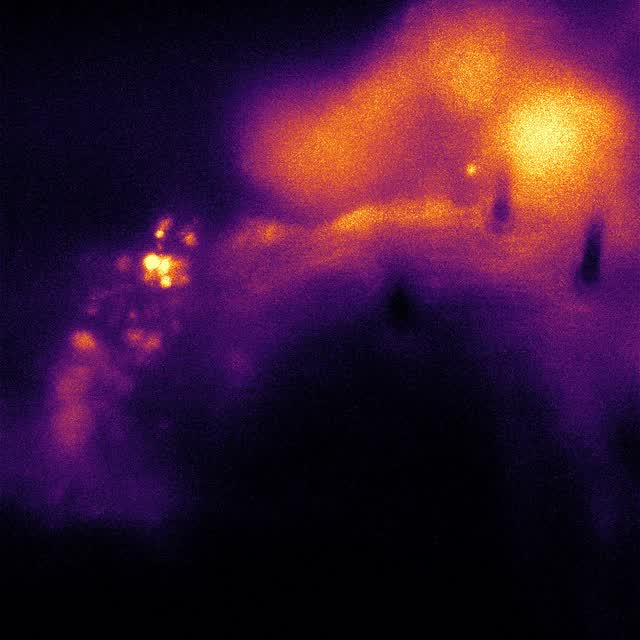
In a GH146-GCaMP6f recording, fluorescence changes differed across image regions during three odor presentations. This observation connects the biological inspiration to our choice of an optical readout.
 Watch on iGEM Video Universe ↗
Acquisition timing
696 frames · 0–132.013 s acquisition time
- Isopentyl acetate: 20–40 s
- 3-Octanol: 60–80 s
- 4-Methylcyclohexanol: 100–120 s
Odor intervals use acquisition time. The Video Universe player shows playback time; use the original timestamps for analysis.
Four parts of one sensing chain
Select a step to follow the measurement chain—from an odor cue to a screening decision.
Explore the measurement chain · conceptual overview
VOC → biological fluorescence
- 01470 nm LEDModulated excitation
- 02Cell fluorescenceOptical response
- 03PhotodiodeLight → current
- 04LMP7721 TIACurrent → voltage
- 05ADS8866 ADCVoltage → samples
- 06ESP32Digital lock-in recovery
Conceptual transformation — computational inspiration, not a recorded panel
- Overlapping responses
- Normalization
- AL-inspired contrast
- MB-inspired sparse map
- Classifier / SNN-like out
- 01Check measurement qualityBaseline · calibration · QC
- 02Interpret the patternResponse · confidence · context
- 03Choose a follow-upRemeasure · monitor · confirm
Sense: turn odor into fluorescence
Why use odor receptors?
Natural olfactory systems do not identify an odor using a single perfectly specific receptor. Instead, odors are represented by combinations of receptor activity, followed by neural transformations that make overlapping patterns easier to distinguish.
In insects, odorant recognition involves a tuning odorant receptor (OR) together with the conserved odorant receptor co-receptor Orco. Activation of the OR–Orco complex forms a cation-conducting sensory response (insect ORs are not GPCRs), converting chemical recognition into a cellular signal [5] Zboray et al., 2023 — full entry in References. [6] Jones et al., 2011 — full entry in References. . Construct-level mechanism and architecture: Design · how AeroSense senses. VUAA1, an Orco agonist, provides a useful experimental positive control for testing the functionality of this sensing pathway [6] Jones et al., 2011 — full entry in References. .
Published work gives this idea an experimental starting point. Zboray et al. established stable HEK293 cell lines expressing seven Drosophila odorant receptors, Orco, mCherry, and the genetically encoded calcium indicator GCaMP6. Their panel was characterized against 66 VOCs and demonstrated that heterologously expressed insect olfactory receptors can generate measurable fluorescence responses to diverse volatile ligands [5] Zboray et al., 2023 — full entry in References. .
GCaMP6 is a genetically encoded calcium indicator developed for sensitive fluorescence reporting of intracellular calcium dynamics [7] Chen et al., 2013 — full entry in References. . We use this optical signal as the interface between biological recognition and our electronic measurement layer.
The proposed receptor-to-fluorescence mechanism is summarized in Figure 5.
Biological sensing
Optical readout
Fluorescence → digital signal
Pattern decoding
Response pattern → screening cue
Conceptual sensing chain: a volatile cue engages the OR–Orco receptor system, calcium entry changes GCaMP fluorescence, and an optical reader supplies a signal for pattern decoding. This schematic explains the proposed roles; it is not a measured end-to-end response.
Established prior work
Heterologous Drosophila OR/Orco + GCaMP-based sensing already has published precedent. Zboray et al. expressed insect ORs with Orco and GCaMP6 in HEK293 cells and recorded fluorescence responses to diverse VOCs [5] Zboray et al., 2023 — full entry in References. . Jones et al. established VUAA1 as an Orco agonist for functional control of this pathway [6] Jones et al., 2011 — full entry in References. . GCaMP6 itself is a published genetically encoded calcium indicator [7] Chen et al., 2013 — full entry in References. .
Published mammalian OR/Orco sensing establishes the biological starting point for AeroSense.
Our engineering question
How can this biological sensing architecture be adapted, measured, decoded, calibrated and integrated into a reproducible bio-digital workflow?
Our contribution is the integration and evaluation of receptor modules, weak-fluorescence hardware and structured decoding within a traceable measurement workflow.
We express Drosophila odorant receptors (ORs) with Orco in HEK293 cells, adapting a published heterologous olfactory-receptor strategy [5] Zboray et al., 2023 — full entry in References. . Receptor activation drives a Ca²⁺ response, which GCaMP6f translates into green fluorescence. mCherry provides a separate expression reporter.
Does the sensing chain respond to a positive control? Does the chosen receptor respond to the target VOC? We use VUAA1 as a functional positive-control stimulus before receptor-specific characterization.
Explore in depth Design Experiments Parts
Read: recover weak fluorescence
Approximately 470-nm modulated excitation illuminates the sensor. A photodiode converts weak fluorescence into current; an LMP7721 transimpedance amplifier and ADS8866 ADC prepare the signal for acquisition with an ESP32.
Distinct modulation frequencies separate the optical channels. Digital lock-in detection recovers the corresponding periodic signals from background noise. Both principles build on published fluorescence and analytical-instrument methods [8] Tovar et al., 2019 — full entry in References. [9] Harvie & de Mello, 2023 — full entry in References. .
Excitation leakage, ambient light, electronic noise and channel crosstalk must be controlled together.
Explore in depth Hardware
Decode: interpret receptor patterns
A single receptor response is only part of the story. Fly olfaction provides inspiration for representing combinations of inputs as sparse activity patterns [10] Caron et al., 2013 — full entry in References. .
Our pipeline normalizes the receptor response, enhances contrast with an antennal-lobe-inspired stage, and projects the result into a sparse representation inspired by mushroom-body coding. A classifier then interprets the pattern. The computational analogy builds on work connecting fly olfaction with similarity search [11] Dasgupta et al., 2017 — full entry in References. .
Compare with simpler baselines, then examine noise robustness, concentration shifts and the contribution of each processing stage.
Explore in depth Model
Act: guide the next check
The readout brings measurement quality and the decoded pattern together. Baseline, ΔF/F, calibration, quality flags and confidence give context to a screening signal.
Remeasure an uncertain sample, increase monitoring, isolate a suspect batch or request confirmatory testing. The appropriate response depends on the use case and the evidence.
Explore in depth Integrated Human Practices
The AeroSense measurement chain.
What stakeholders changed
External feedback changed which application we pursue first, and what the system is supposed to output.
- Stakeholder / Feedback
Early idea
AeroSense began as a broad biological VOC-sensing platform with possible applications across agriculture, food, environmental sensing and medicine.
External feedback challenged this framing.
- Insight
A platform is not automatically a product
A technically versatile platform is not automatically a useful solution if the first user, decision, and value are unclear.
- Design decision
Application focus
We narrowed the initial application to early fungal-risk screening in high-value food and agricultural storage and incoming QC.
- Technical consequence
Output changed
Instead of stopping at “we detected a signal,” AeroSense is being designed around:
Biological change → VOC pattern → measurement → risk-oriented interpretation → follow-up action
These decisions shaped our validation metrics, user interface and calibration strategy.
Integrated Human Practices — How stakeholder feedback changed AeroSense
Next validation steps
These are the steps that still follow from the architecture on this page.
Related wiki pages
The pages below develop the biological design, measurement system and validation evidence behind this architecture.