Every kilogram lifted costs up to $20,000 Nothing gets thrown away
02 · Orbital lab
A biofoundry, 400 km up
Engineered E. coli make the enzymes that take plastic apart
03 · Onboard
A spent bottle goes in
The ISS makes 2,500 kg of plastic waste a year Today it burns up on re-entry
04 · The recycler
Water, enzymes, 37 °C
No extruder No metal catalysts
05 · Inside
PET is a chain
Terephthalate rings linked by ethylene glycol through ester bonds
06 · PETosome
Cut at every ester bond
PETase and MHETase side by side on one scaffold Each cut feeds the next
07 · Rebuilt
Monomers become PET again
TPA and ethylene glycol re-join into a new chain, and a new bottle
iGEM 2026 · TaipeiSynPETicEngineering life to recycle plastic in orbit
Home · The project in one page
Recycling plastic where nothing can be thrown away
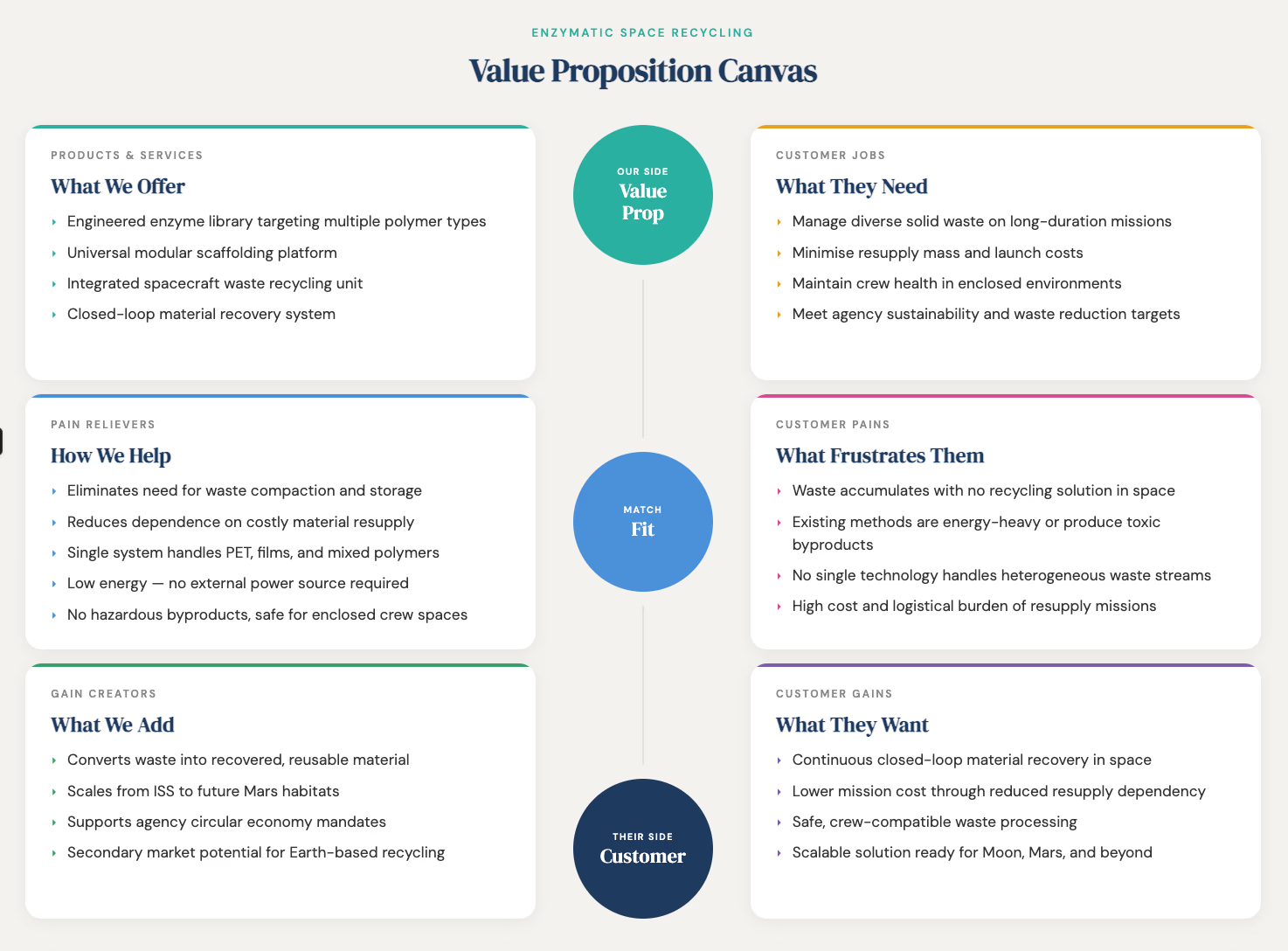
SynPETic is an enzymatic, closed-loop recycling system for PET, engineered by high-school students in Taipei for the mass, power and safety limits of a spacecraft
The problem
In space, plastic waste piles up.
Traditional recycling won't work there.
The ISS generates 2,500 kg of plastic waste per year.
A Mars mission produces 7.5–8 tons of trash over 2–3 years.
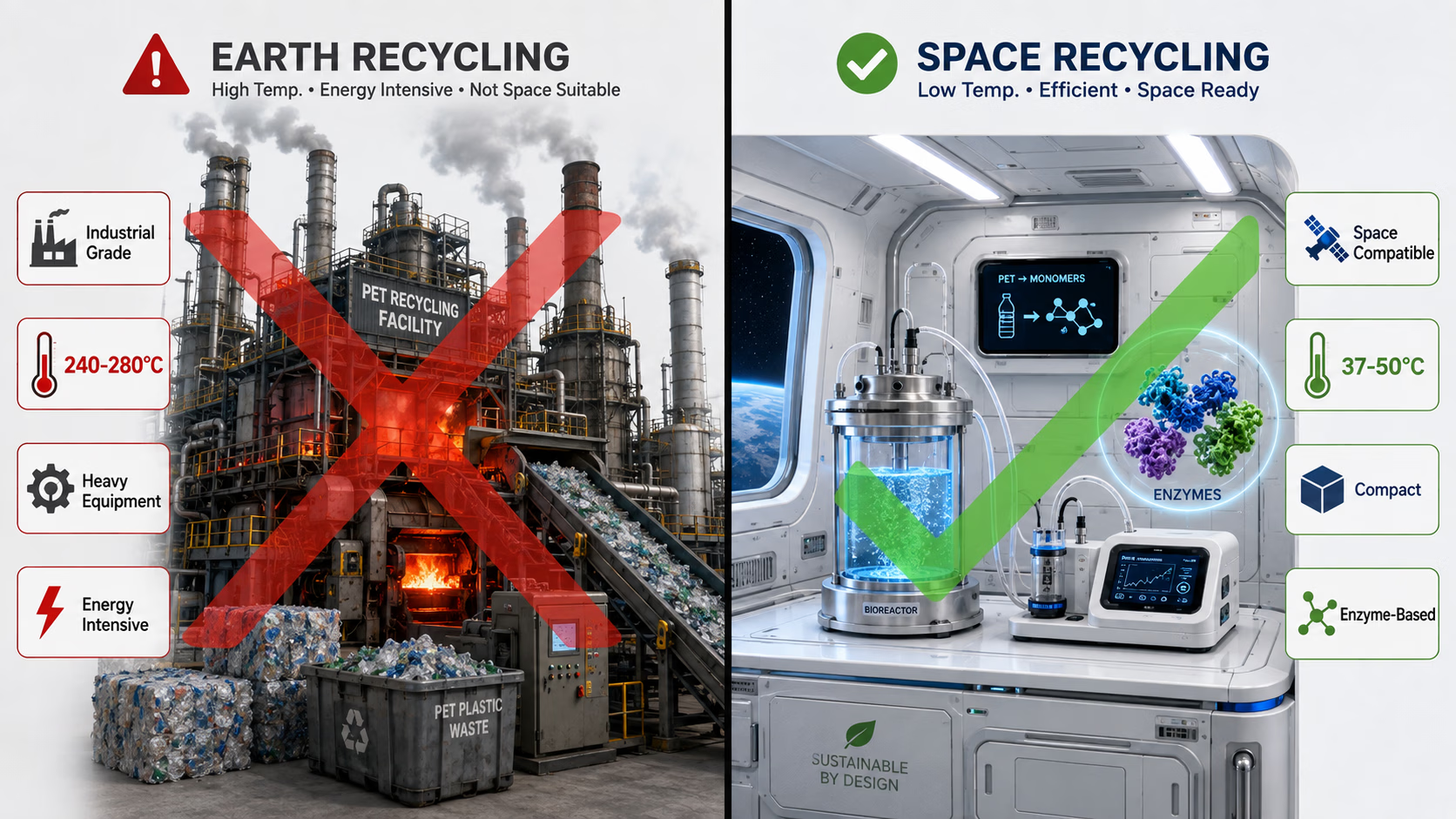
Industrial recycling needs 240–280 °C, heavy catalysts, and massive equipment.
None of those are available in space.
2,500 kgplastic waste per year on the ISS
7.5–8 ttrash from a 2–3 year Mars mission
240–280 °Cwhat industrial PET recycling needs
37–50 °Cwhere SynPETic works
Recycling on Earth and recycling in orbit: an industrial plant on the left, a compact enzymatic bioreactor in a station module on the right.
Our solution
SynPETic = enzymatic recycling at 37–50 °C. No heat. No toxic catalysts. Just biology.
We engineered three proteins into a “PETosome”, a multi-enzyme complex that:
Breaks down PET into building blocks,
Reassembles those blocks into new PET,
Operates as a closed loop in space.
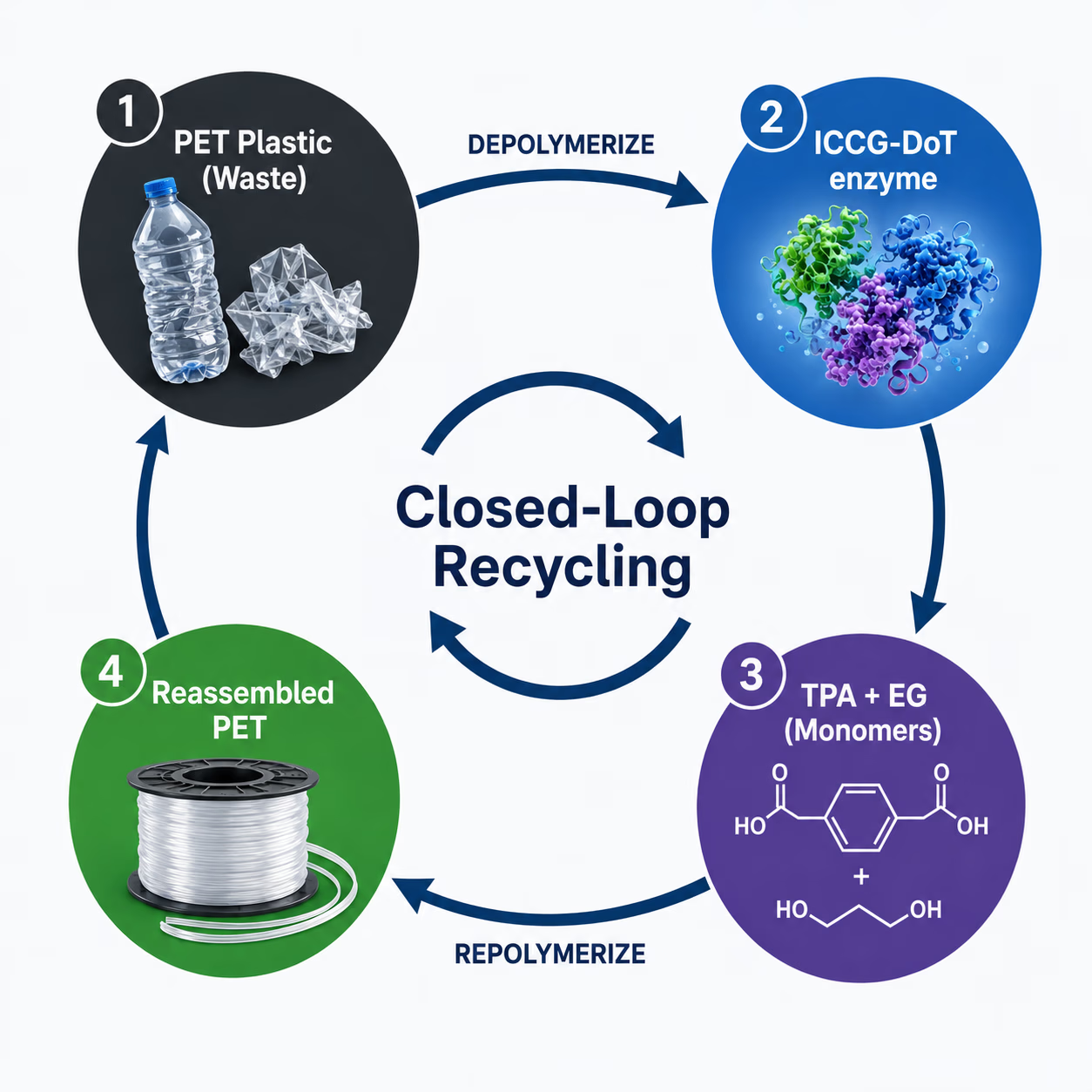
The closed loop: a spent bottle breaks down into monomers, and the monomers become new PET.
How it works in four steps
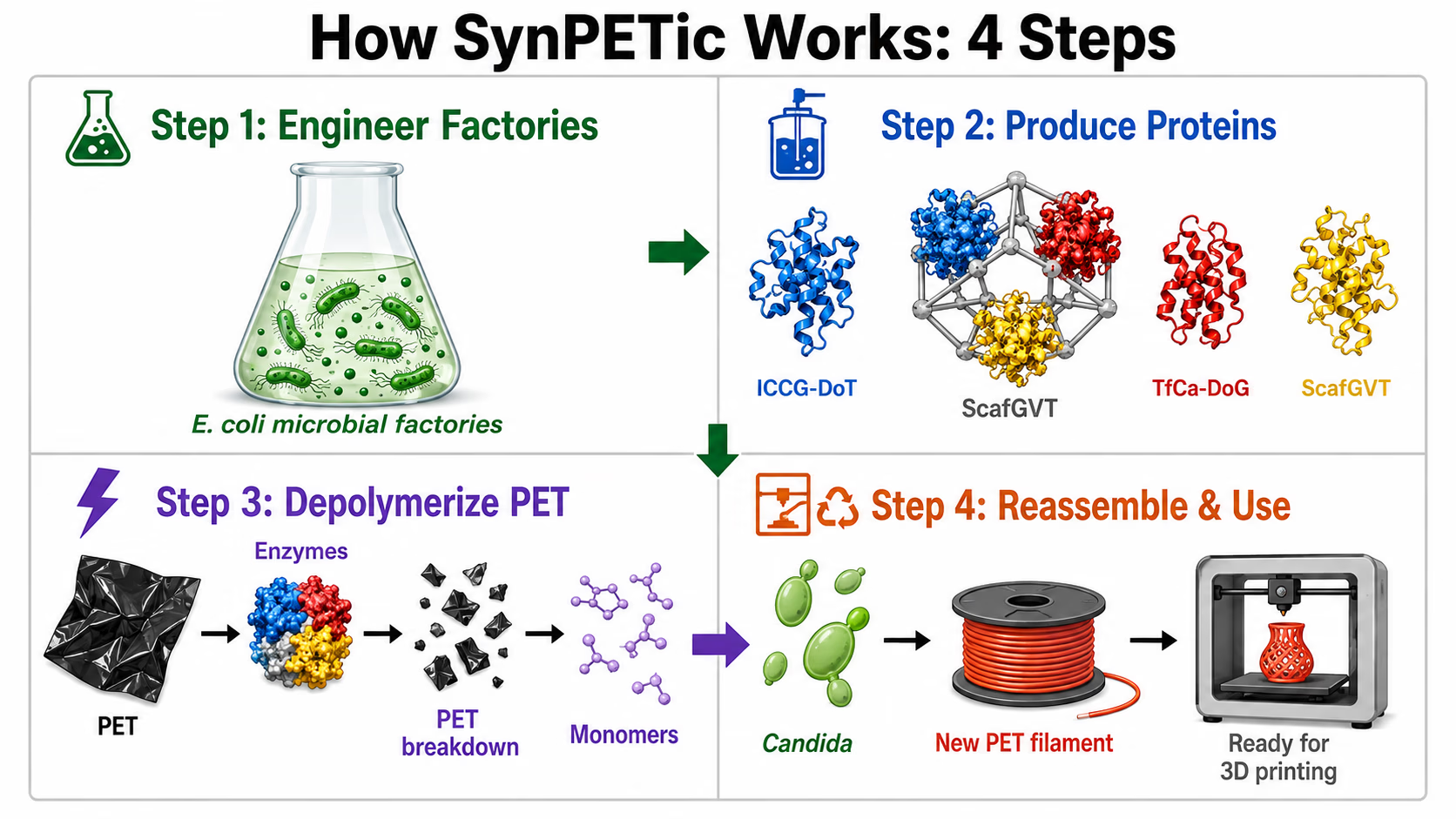
Engineer microbial factories
Tool: E. coli.
Produce three proteins: ICCG-DoT, TfCa-DoG, ScafGVT
Tool: fermentation.
Assemble the PETosome and depolymerize PET
Tool: enzymatic reaction.
Reassemble monomers into new PET
Tool: Candida species.
Step
Action
Tool
1
Engineer microbial factories
E. coli
2
Produce 3 proteins (ICCG-DoT, TfCa-DoG, ScafGVT)
Fermentation
3
Assemble PETosome, depolymerize PET
Enzymatic reaction
4
Reassemble monomers into new PET
Candida species
The four steps: engineered E. coli factories, protein production, enzymatic depolymerisation, and PET reassembled for use.
Why it works
Space-compatible (cold, lightweight, no toxic chemicals).
This page is dedicated to introducing the individuals who made our iGEM project possible. Here, you'll find information about our team members, instructors, and advisors
Our Team
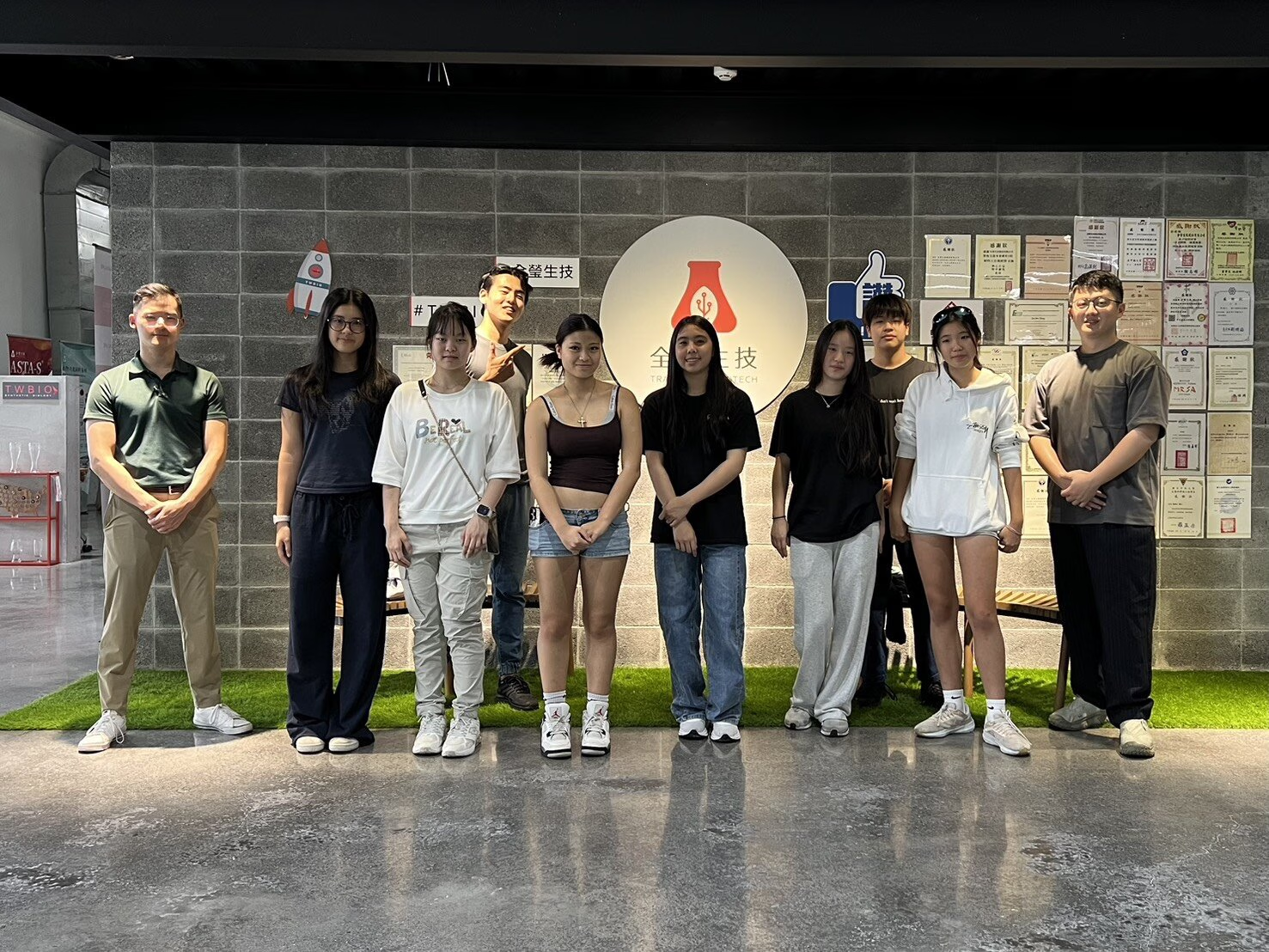
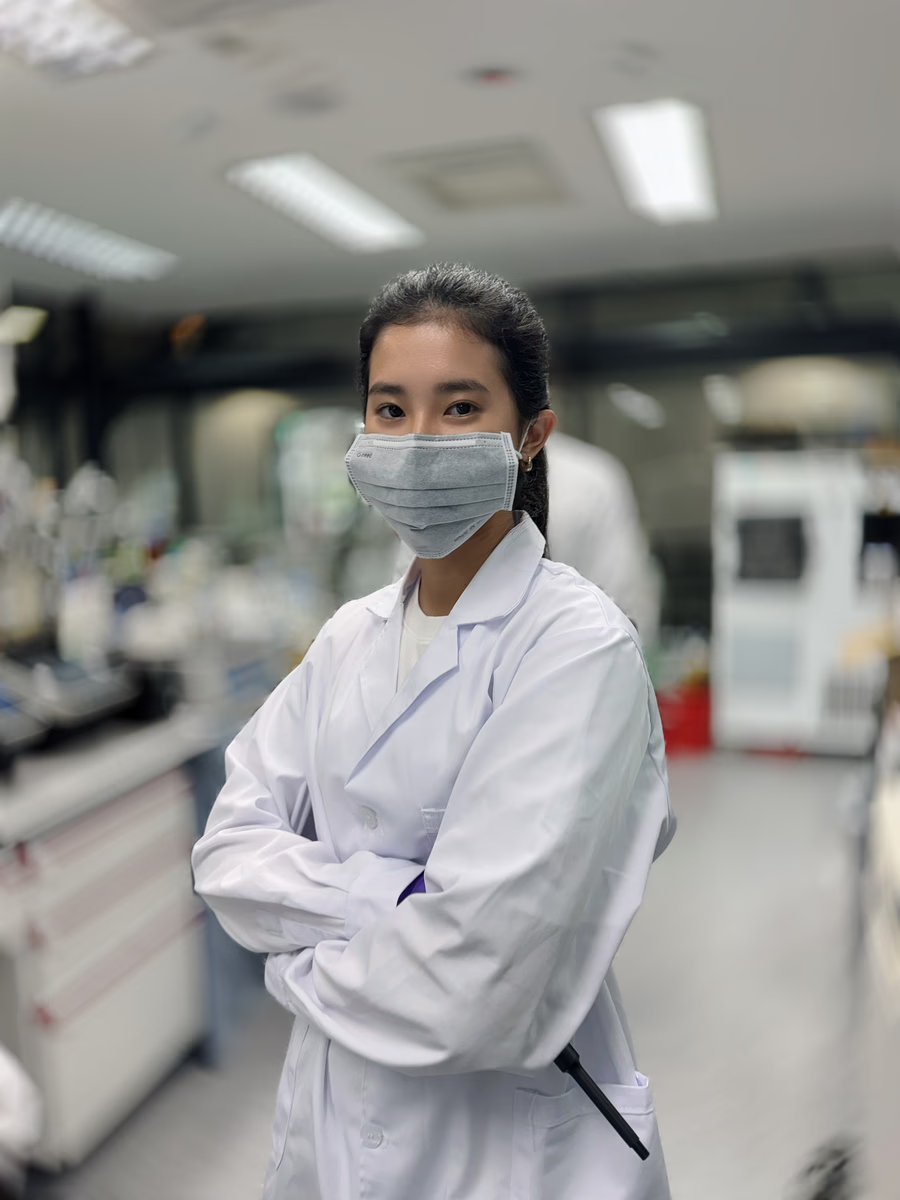
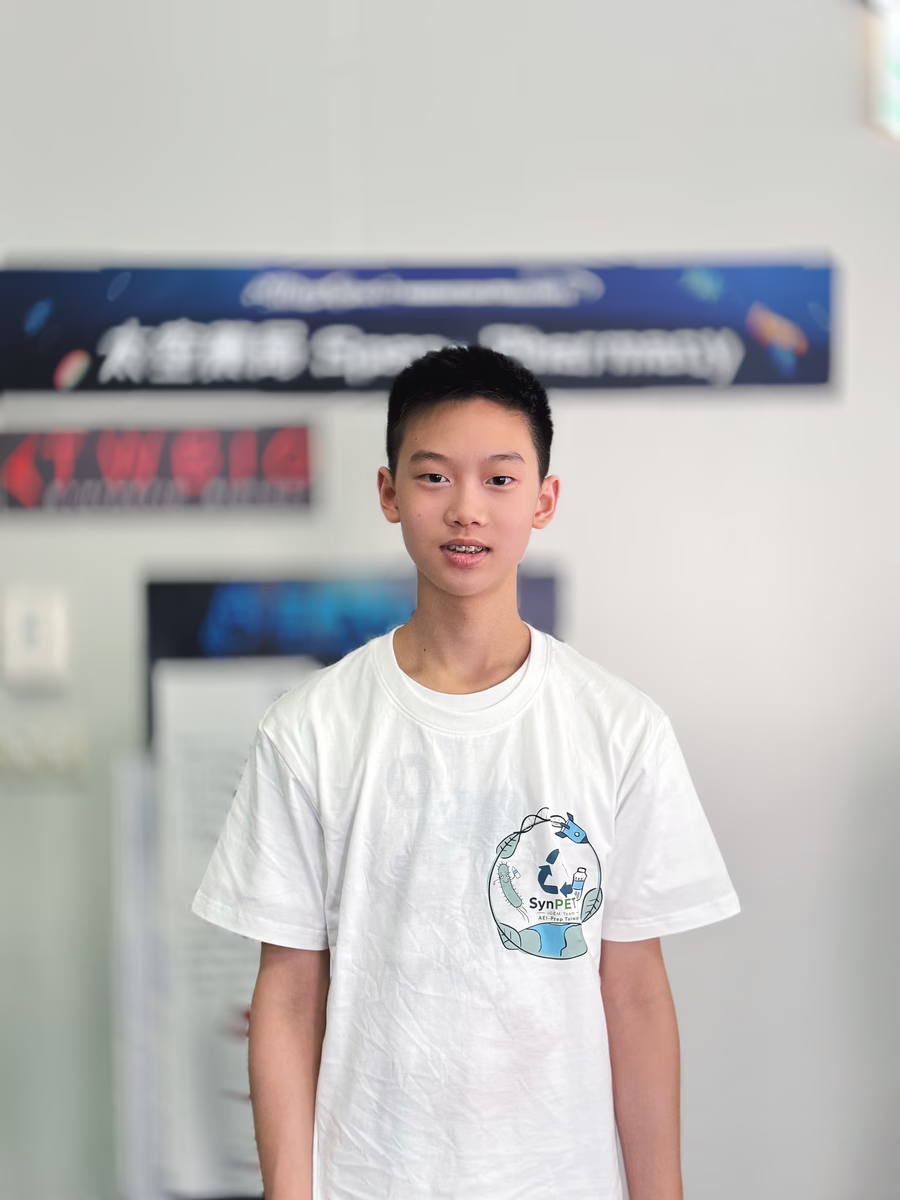
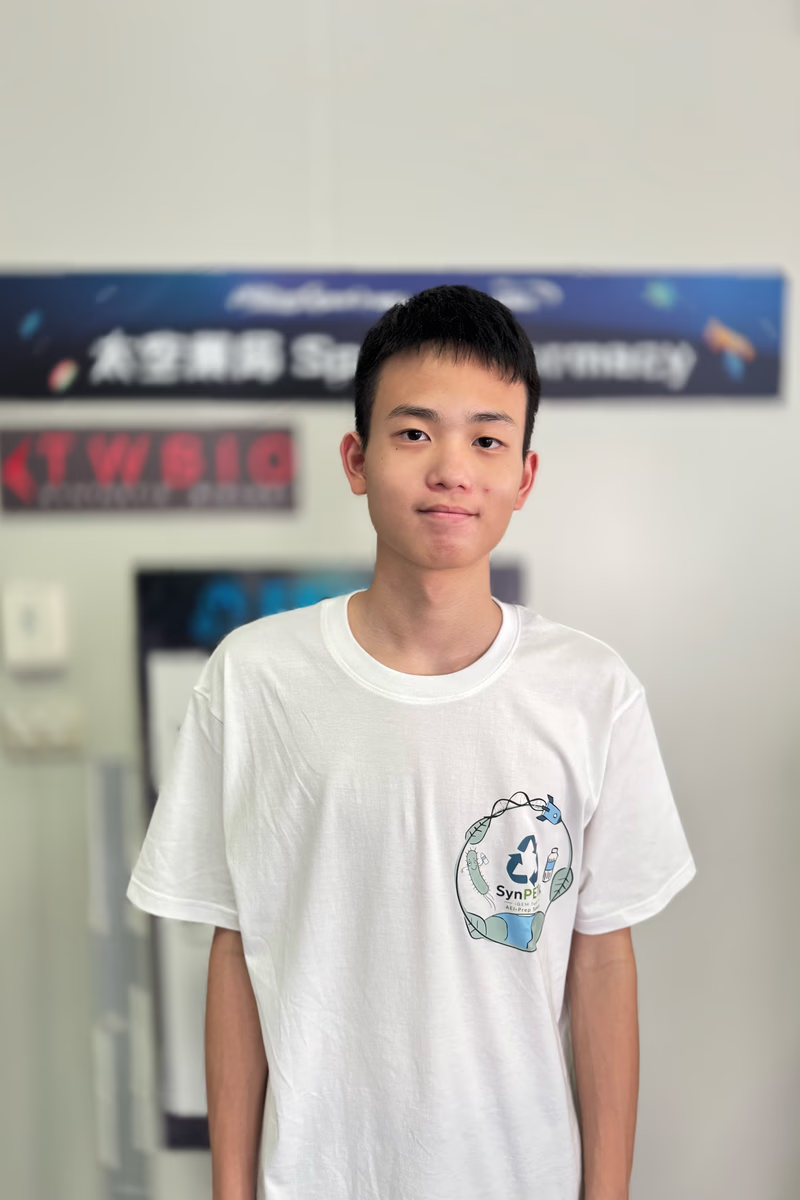
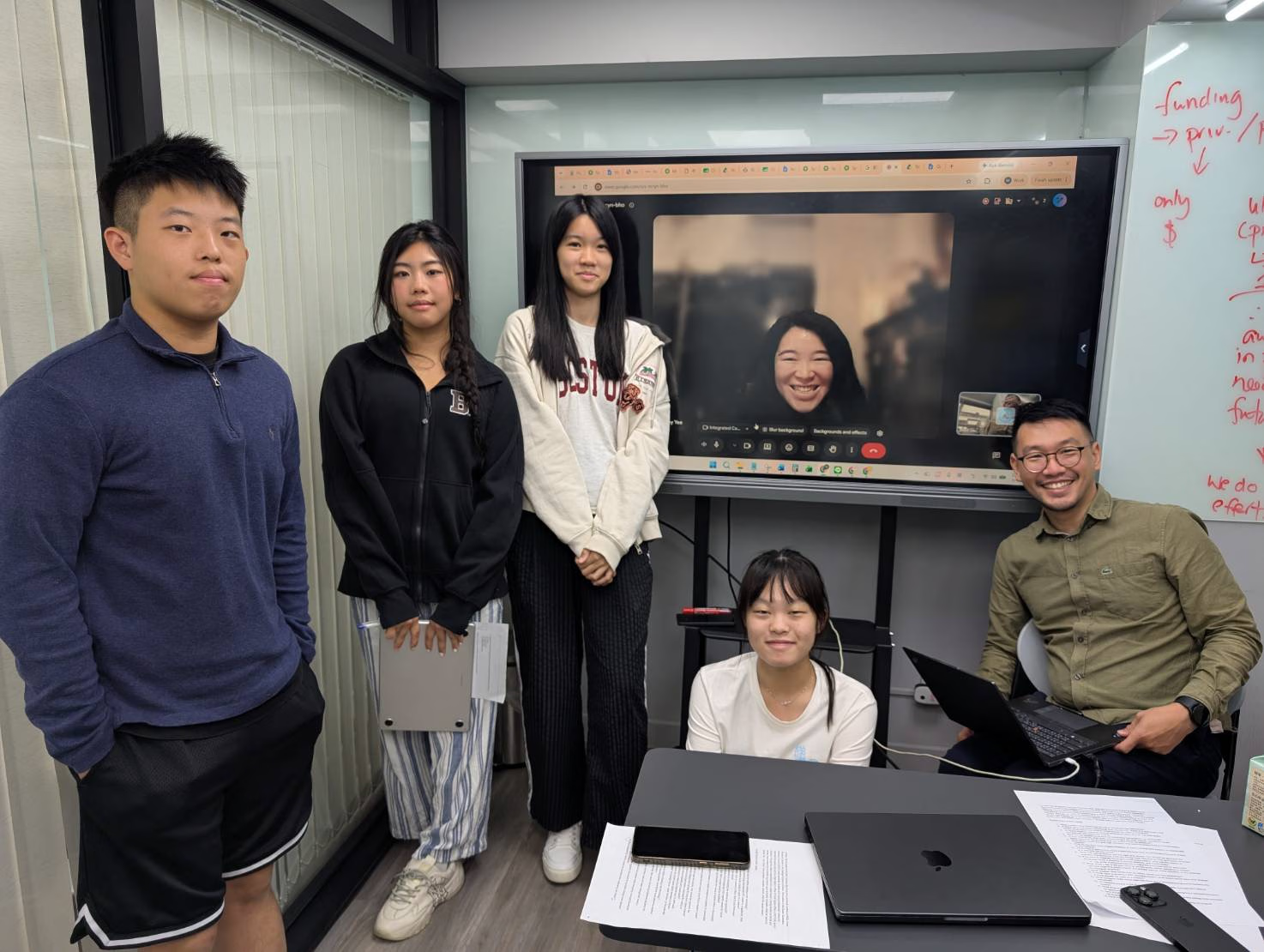
SynPETic iGEM Team logoThe full SynPETic iGEM team
Team Co-Captains
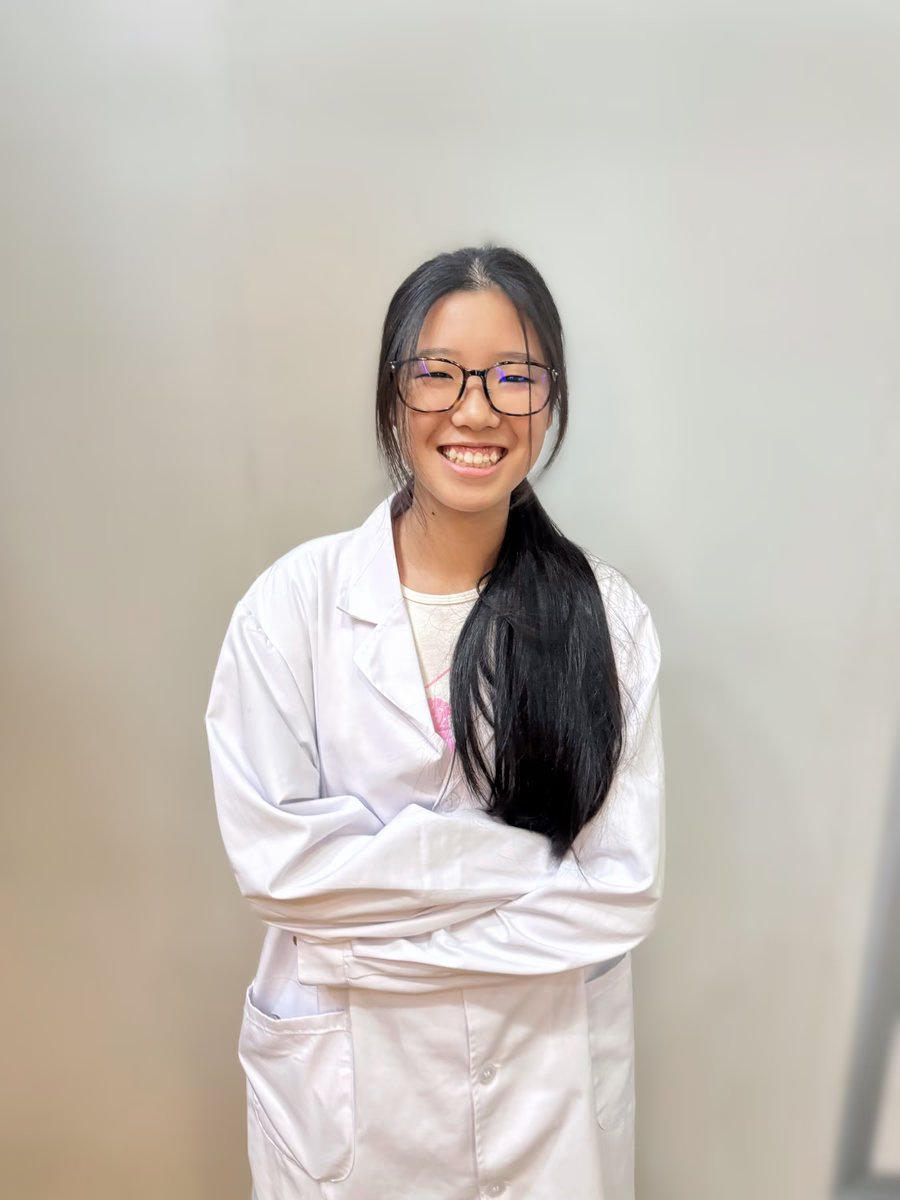
Bernice Wang
Team Co-Captain
My name is Bernice Wang, and I’m in my sophomore year. I enjoy travelling, hanging out with my friends, and hunting for food spots. I’m interested in finance and business, which is why I am on the human practices team in iGEM.
Liz Huang
Team Co-Captain
Hello! My name is Liz, and I am entering my sophomore year. As a team leader for iGEM, I guide the team to win the prize. I enjoy dancing, playing the piano, reading, singing, traveling, and hanging out with people, which is the reason why I chose to be a part of the Human Practices team. Since I want to learn more about synthetic biology, I joined the iGEM team!
Wet Lab Lead
Candice Hsueh
Wet Lab Lead
My name is Candice Hsueh and I am a junior at Morrison Academy Taipei. I have many hobbies such as drawing or playing volleyball or hanging out with friends which I often do in my free time. Academically, I am also interested in biology among other interests. I officially took a biology course back in ninth grade but I have always had an interest in learning about how living things work, which motivated me to join Wetlab in this iGEM team.
Wet Lab Members
Davion Lee
Wet Lab
Hi, my name is Davion, and I’m a sophomore at Kang Chiao International School, Linkou Campus. I’m currently part of the wet lab team. I'm more into marine bio stuff rather than straight bio because I do sailing and fishing as a hobby. Also, I’m really into music and sports. I play drums in my school band and listen to music a lot, while playing basketball and taekwondo, but I enjoy trying other sports too I guess. I also like reading comics, watching anime, and SOMETIMES spending time with friends.
Jacquelyn Liu
Wet Lab
I am interested in sports such as volleyball and basketball. One of my favorite things to do is roaming around the streets of Taipei trying to find cool cafes or food spots.
Hector Chan
Wet Lab
I enjoy the lab work, especially PCR, gel electrophoresis, cloning, and purifying samples. I feel this experience helped me prepare for my AP Biology.
Oscar Ho
Wet Lab
Hi I am Oscar, I am a freshman at Kang Chiao International School. I like to play chess in my free time and I love to debate. I am on AEI’s iGEM team and am excited about it because I love doing lab experiments.
Sophia Hsu
Wet Lab
My name is Sophia Hsu, a freshman in high school. I’m interested in biology and experiments, which is why I joined the wet lab team for iGEM. I enjoy playing volleyball and hanging with friends in my free time.
Evelyn Tsai
Wet Lab
Hi my name is Evelyn. I am a sophomore at Taipei American School. During my free time, I enjoy listening to music, as I like to play the guitar and the flute. I am super excited to meet everyone at iGEM, feel free to drop by and say hi. I am an open book.
Emily King
Wet Lab
I’m Emily King, a sophomore at Taipei American School. I watch a lot of movies and shows (favorites include Moonlight, Bottoms, Bones and All, the Bear, etc), and like many different types of music (Noah Kahan, PTV, Deftones, Ethel Cain, Dominic Fike, beabadoobee, Slowdive, etc). Outside of iGEM, I partake in debate, girlscouts, and different community service projects with my friends. I am interested in biology which has drawn me to the Wetlab team in iGEM, but also philosophy/ethics and poli-sci.
Lucas Pan
Wet Lab
I am Lucas, a junior from Fuhsing. My interests include reading and watching movies. I am excited to be a part of the wet lab because I really enjoy performing lab experiments. I’m also very passionate about synthetic biology and very excited to meet new people at Paris.
Dry Lab Members
Preston Tsai
Dry Lab
I am an aspiring engineer. I build robots. I use LLMs such as Google Gemini to spark my creative ideas and then I go from there. My creations don’t always work perfectly on the first iteration but I am always improving my creations iteratively. I don’t get a lot of sleep because I try to balance athletics, academics, and special research projects such as iGEM.
Jett Lin
Dry Lab
Hi, my name is Jett and I’m a sophomore in TAS. I’m in drylab and I joined iGEM because I wanted to learn more about synthetic biology.
Human Practices Lead
Ethan Chang (哲維)
Human Practices Lead
My name is Ethan Chang, I’m a junior in high school. I’m interested in business and economics, which is why I joined the human practices team for iGEM. I enjoy playing sports like baseball and golf, and I also like travelling to different countries.
Human Practices Members
Ethan Chang
Human Practices
Hi I'm Ethan a sophomore at Taipei American School. I enjoy playing basketball and hanging out with my friends. I joined iGEM to learn more about biology and explore the human practices side.
Lydia Chou
Human Practices
My name is Lydia Chou. I am a sophomore at Taipei American School. One of my hobbies is reviewing restaurants on Google Maps. I enjoy the small details in an experience and thinking about what information would actually be useful to someone else. Over time I realized that what I enjoy most isn’t simply rating restaurants but communicating my observations. This is what drew me to Human Practices in iGEM. I want to explore the human side of our project, understand the perspectives of the people it may affect and use those perspectives to help shape our project’s direction.
Bernice Wang
Human Practices · Team Co-Captain
My name is Bernice Wang, and I’m in my sophomore year. I enjoy travelling, hanging out with my friends, and hunting for food spots. I’m interested in finance and business, which is why I am on the human practices team in iGEM.
Angie Chao
Human Practices
Hi, my name is Angie, and I’m a junior at Taipei Fuhsing Private School. I’m part of the human practices team as an advisor and joined due to my interests of economics and business. I’m really into reading fiction novels and also enjoy hobbies such as chess during my free time.
Liz Huang
Human Practices · Team Co-Captain
Hello! My name is Liz, and I am entering my sophomore year. As a team leader for iGEM, I guide the team to win the prize. I enjoy dancing, playing the piano, reading, singing, traveling, and hanging out with people, which is the reason why I chose to be a part of the Human Practices team. Since I want to learn more about synthetic biology, I joined the iGEM team!
Interns
Emily King and Jacquelyn Liu were specially honored with certificates for completing internships at TradeWinds.
We believe iGEM can advance the cause of recycling in space
How and Why We Chose to Make GMO Factories for Space Recycling
Problem Statement & Motivation
2,500 kgof trash generated per year by four ISS astronauts
7.5–8 tonsof solid waste from a 2–3 year, four-person Mars mission
$10,000–$20,000resupply cost per kilogram to the ISS
180–285°C vs <50°Cindustrial recycling temperatures vs. safe spacecraft operations
Why Recycling Matters in Space
As space exploration ventures beyond Earth orbit toward the Moon and Mars, mission planners face a critical constraint: resupply cost increases exponentially with distance. For the International Space Station (ISS), which orbits just 400 km above Earth, resupply costs roughly $10,000–$20,000 per kilogram. For future deep-space missions to Mars, requiring 6–9 months of transit, resupply becomes logistically impractical and economically prohibitive. A crewed Mars mission lasting 2–3 years will generate an estimated 7.5–8 tons of solid waste for a four-person crew, all of which currently cannot be recycled and must either be stored (consuming valuable habitat volume) or discarded.
The ISS itself provides a concrete example. Four astronauts generate approximately 2,500 kg of trash per year, or roughly two trash cans per week. The ISS accumulates up to 2 tonnes of rubbish on board for a total of 12 tonnes per year, and this garbage is typically collected and loaded into cargo spacecraft bound for atmospheric re-entry, where it burns up on descent. While this solves the on-station storage problem, it wastes a valuable resource and creates atmospheric pollution.
Environmental Cost of Current Disposal
When spacecraft and orbital waste re-enter Earth's atmosphere at thousands of degrees Celsius, they release not only carbon dioxide and water vapor (which are harmless) but also metal oxides and combustion products from polymers like PET. After end of life, satellites and rocket stages reenter Earth's atmosphere and inject a substantial amount of their matter into the mesosphere and lower thermosphere. Recent research has documented significant and even dominant injection of several metal elements regularly used in spacecraft compared to natural injection by meteoroids, posing substantial risks of long-term adverse effects on the atmosphere such as ozone depletion, radiative effects and changes in cloud formation.
For plastic waste specifically, combustion at re-entry temperatures (>1000°C) releases particulates and volatile organic compounds. A future Mars program with multiple resupply missions could contribute measurably to this pollution, a burden that should be minimized through recycling rather than disposal.
Current Industrial Recycling: Why It Fails in Space
On Earth, PET recycling relies on two primary pathways, each with significant limitations for space:
Mechanical Recycling:
Mechanical recycling requires heating plastic to 285°C and high pressure for extrusion, followed by pelletization and polycondensation at elevated temperatures. A major drawback of mechanical recycling is the degradation of PET properties with each cycle, leading to a decrease in elasticity and viscosity, resulting in recycled polymer losing value and eventually being sent to landfills after several cycles. This process consumes significant energy and requires heavy industrial equipment, incompatible with the mass and power constraints of spacecraft.
Chemical Recycling (Industrial Standard):
The most mature industrial method is glycolysis. Glycolysis is widely adopted by major companies like DuPont, Dow Chemicals, and Shell Polyester for large-scale PET recycling, and it offers the mildest operating conditions among chemical recycling methods, operating at lower cost and lower volatility of solvents. However, glycolysis typically requires temperatures between 180–250°C and the use of catalysts or high pressures. Alternative chemical methods like methanolysis demand even harsher conditions: conventional methanolysis processes typically require harsh conditions exceeding 200°C and 2–4 MPa pressure.
Why These Fail in Space:
High temperatures require insulation and thermal management, adding mass and power consumption
Equipment footprint is too large for missions with severe volume constraints (a Mars habitat has ~100 m³ total pressurized volume)
Safety concerns with high-pressure reactors in microgravity environments (fluid dynamics change dramatically without gravity)
Power consumption for heating would strain spacecraft electrical systems
There is a critical temperature gap: industrial recycling operates at 180–285°C, while safe spacecraft operations typically stay below 50°C.
Our Solution: Enzymatic Recycling in Space
We propose SynPETic, a system that closes this gap by harnessing biological catalysts (enzymes) to depolymerize PET at mild temperatures and pressures, making it safe and efficient for space-based recycling.
The Core Innovation: The PETosome
Our solution combines three engineered proteins into a multi-enzyme complex inspired by nature's cellulosomes, catalytic machines found in cellulase-producing bacteria that degrade cellulose through coordinated enzyme action.
Three Engineered Proteins:
ICCG-DoT (PETase with dockerin linker)
Source: Leaf-Branch Compost Cutinase (ICCG), engineered for PET specificity
Function: Breaks PET polymer chains at ester bonds → releases bis(2-hydroxyethyl) terephthalate (BHET) and smaller oligomers
Specific activity: ~100 mU/mL (milli-units per mL)
TfCa-DoG (MHETase with dockerin linker)
Source: Thermobifida thermostable cutinase (TfCa), modified for MHET hydrolysis
Function: Converts MHET → final monomers (terephthalic acid [TPA] and ethylene glycol [EG])
Specific activity: ~100 mU/mL
Note: Addition of 2 mM CaCl₂ in growth medium stabilizes the catalytic domain
ScafGVT (Trimeric Cohesin Scaffold)
Source: Inspired by Clostridium thermocellum cellulosome architecture
Function: Provides three cohesin domains (G, V, T) that bind dockerin-tagged enzymes via high-affinity, specific interactions
Role: Co-localizes both enzymes on a shared scaffold, enabling substrate channeling and sequential reaction steps
Why Dockerin-Cohesin Scaffolding Matters
When ICCG-DoT and TfCa-DoG act independently in solution, their reaction products mix inefficiently:
ICCG-DoT rapidly produces BHET and MHET (intermediate)
MHET then accumulates because free TfCa-DoG has slower access to the intermediate
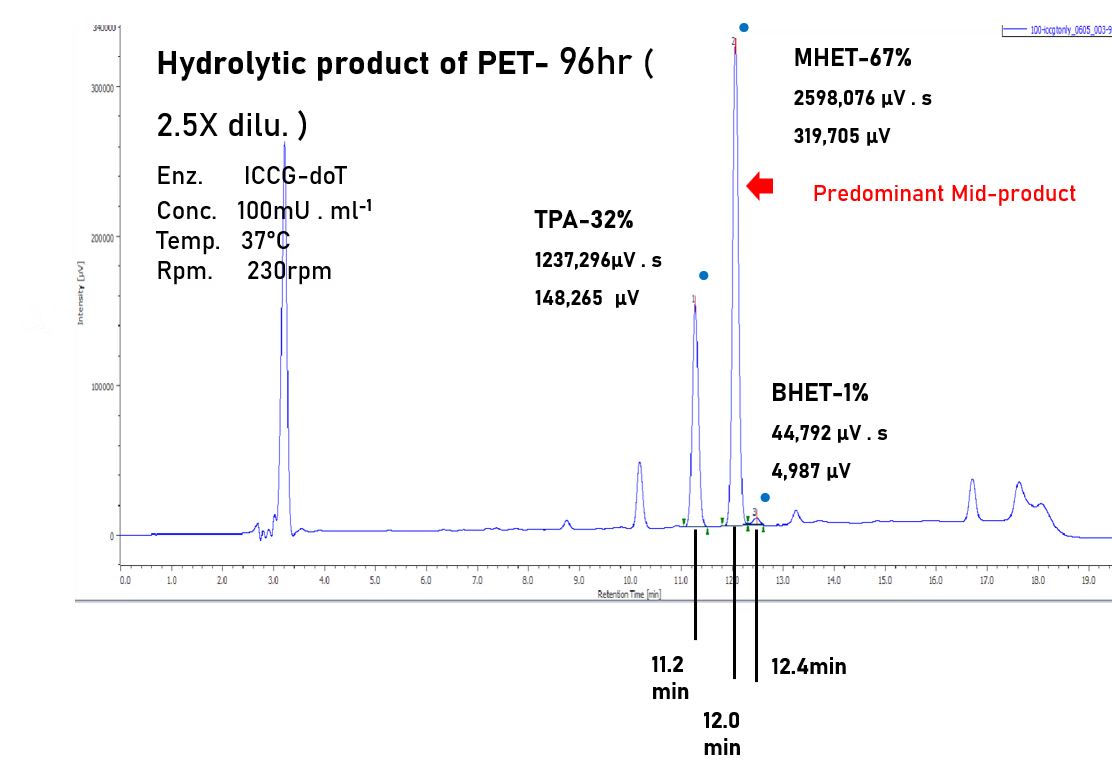
Result: Reaction bottleneck at the MHET→TPA step (67% MHET, 32% TPA, 1% BHET after 96 hours of free enzyme)
By fusing both enzymes to complementary dockerin/cohesin domains and loading them onto the ScafGVT scaffold, we achieve spatial co-localization: the intermediate product (MHET) released by ICCG-DoT is immediately adjacent to TfCa-DoG, enabling substrate channeling and more efficient sequential conversion:
Prior iGEM projects have explored PETase expression and basic enzyme assays. Several commercial efforts (e.g., Carbios in France, Quantumscape) focus on thermophilic variants or traditional chemical catalysis.
Our contribution is unique in three ways:
Enzyme pair is new to the iGEM registry: ICCG-DoT and TfCa-DoG have not previously been fused to dockerin/cohesin scaffolding in this combination. We're the first to pair a leaf-compost cutinase (ICCG) with a Thermobifida MHETase (TfCa) on a cellulosome-inspired scaffold.
Scaffolding approach is new: While BioBricks exist for individual PETase variants, coordinated multi-enzyme complexes for plastic degradation are rare in the registry. This composite part (ICCG-DoT + TfCa-DoG + ScafGVT) opens a new design pattern for other teams pursuing multi-enzyme plastic degradation.
Space-optimization is distinct: Our design emphasizes:
Low temperature (37–50°C operational range): compatible with spacecraft thermal budgets
Mild conditions: no strong acids, bases, or high pressures needed
Minimal equipment: enzymes can be produced via fermentation on or before missions
Product reusability: TPA and EG monomers can be rebuilt into PET using mild repolymerization routes (enzymatic or CDI-catalyzed)
Engineering Goals & Current Achievements
Original Project Goals
Clone and express three recombinant proteins (ICCG-DoT, TfCa-DoG, ScafGVT) in E. coli
Characterize each protein for identity and purity
Measure PETase activity on real PET film
Demonstrate two-enzyme synergy on both defined substrates (BHET) and real PET
Validate composite part (PETosome assembly and functionality)
Complete repolymerization pathway (PET reconstruction from TPA + EG monomers)
Test in simulated space conditions (microgravity via clinostat; radiation exposure)
What We Achieved
Wet Lab:
Successfully engineered and purified all three proteins from E. coli expression systems
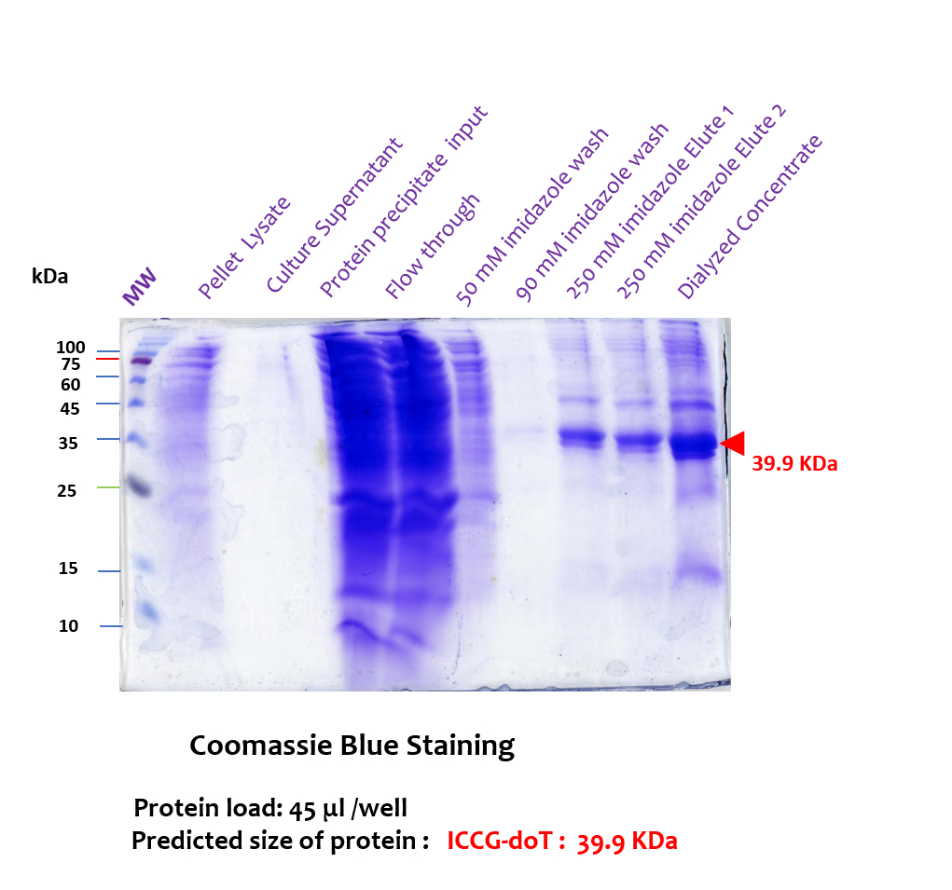
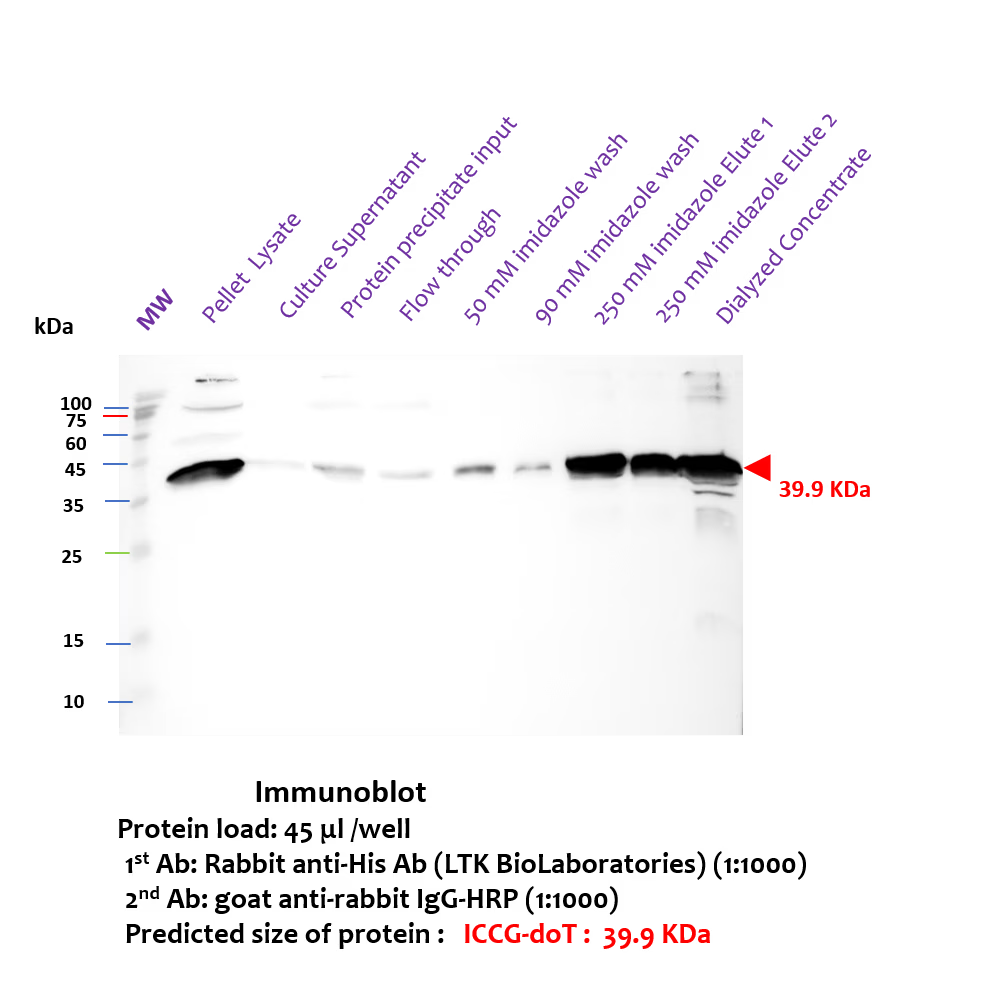
Confirmed protein identity via SDS-PAGE, Western blot (anti-His antibody)
Key result: ICCG-DoT + TfCa-DoG combination showed superior activity on BHET substrate compared to either enzyme alone (p < 0.000001 for both TPA and MHET production)
Demonstrated statistically significant synergy in the two-enzyme system
Composite Part:
Constructed and validated a novel dockerin-cohesin scaffold complex
Confirmed binding specificity (scaffold with no dockerin shows no activity improvement; negative control passes)
Measurement:
Targeting Best Measurement award: comprehensive characterization using SDS-PAGE, Western blot, quantitative BSA assay (protein concentration), HPLC (product quantification with standard curves)
Replicate data (n=2–3 per condition) with statistical testing (nonlinear regression + extra sum-of-squares F-test)
What We Did Not Complete
Full PETosome assembly in microgravity: We designed a clinostat but did not complete spaceflight testing. This is forward work for future missions.
Repolymerization validation: External collaborators (Maroof, Trade Wind Bio) explored CDI esterification and DES + lipase routes; results are promising (FTIR shows ester formation) but incomplete (full GPC/NMR characterization pending).
End-to-end recycling loop in space: Our work validates the depolymerization half; a future team will need to integrate repolymerization and test the full cycle aboard ISS or a high-altitude platform.
Why This Matters for Space & Earth
For Space Missions
Mars missions: 7.5–8 tons of waste from a 2–3 year mission can be recycled in-situ instead of requiring resupply
ISS operations: ~12 tonnes/year of plastic waste could be processed into useful feedstock (e.g., filament for 3D printing, replacement components)
Reduced launch mass: Every kilogram of waste recycled saves ~$10k–$20k in resupply costs and propellant
For Earth
Atmospheric protection: Reducing orbital waste re-entry helps mitigate long-term ozone depletion and atmospheric chemistry changes
Proof of concept: If enzymatic recycling works in the harsh space environment (vacuum, radiation, thermal extremes), it's a robust solution for terrestrial recycling in less ideal conditions
Sustainable loop: TPA and EG monomers can feed back into PET production or high-value polymers, creating a true circular economy for plastics
Project Description References
Sierra Space. (2023). "Space Technology: Exploring Trash Compaction and Processing." Retrieved from sierraspace.com
Interesting Engineering. (2022, July 8). "The ISS now has a whole new way to get rid of its trash." Retrieved from interestingengineering.com
Soluzione Plastiche. (2020). "Recycled plastic conquers space." Retrieved from soluzioniplastiche.com
Schulz & Glassmeier. (2021). "Anthropogenic injection of metals into Earth's atmosphere," Advances in Space Research, 67(3), 1002–1025.
Aloxe. (2024). "Mechanical Recycling of PET Plastic: Our Process." Retrieved from aloxe.one
Bohre et al. (2023). "Chemical Recycling Processes of Waste Polyethylene Terephthalate Using Solid Catalysts," ChemSusChem, Wiley Online Library.
Pavlopoulou et al. (2026). "Efficient Chemical Recycling of Polyester in Plastic Waste: A Heated High-Ethanol Alkaline Aqueous Process," ACS Organic Process Research & Development.
Lockhart et al. "Human Mars Exploration and Expedition Challenges," ArXiv, arxiv.org/pdf/2103.11213
ISS National Lab. (2024). "Taking Recycling to a New Level." Retrieved from issnationallab.org
Project · Engineering
Engineering
Our team went through several false starts before executing multiple DBTL cycles
January Engineering Design Cycle
We attempted to design experiments based on ANOVA statistics to be applied after protein predictions made in software. We discovered this design was too ambitious and not suited to our resources.
Initially Dry Lab hoped to have the cooperation of a protein-folding expert. Considerable time was spent running OpenFold, but the expert had to leave for another country due to a personal emergency and never joined the team. Thus Dry Lab did not discover which proteins should be run through OpenFold.
Furthermore, Dry Lab believed that we could get a Taguchi-based experiment with the following dimensions:
pH
temperature
amount of enzyme (mass in grams)
amount of EG (mass in grams)
amount of TPA (mass in grams)
However, that assumption turned out to be entirely unrealistic. In the first place, multiple enzymes would be necessary. In the second place, the physical constraints of the laboratory limited the types of experiments that could be done, and the Taguchi design was never clearly explained to anyone in the Wet Lab. Thus Wet Lab moved forward with entirely different ideas.
Some of the prototype simulation programs from January are shown on the timeline page.
February-April Engineering Design Cycle
We made a more practical attempt to proceed with enzymes and simple mathematical models particularly comparing a Michaelis-Menten model with a Hill Coefficient model.
We abandoned many low-priority goals but succeeded at our highest-priority goal: the microbial manufacture of three very useful protein products.
Along the way, we produced a new biological part and executed some good measurements.
Incidentally, we achieved some success with clinostat design and human practices.
We experienced many failures but ultimately achieved some of our goals.
This is a list of things that went wrong:
We did not keep track of early ChatGPT brainstorms for Nico's ESM project.
We did not use our physical wet lab time efficiently.
We did not optimize our repolymerization.
Graphs and Table
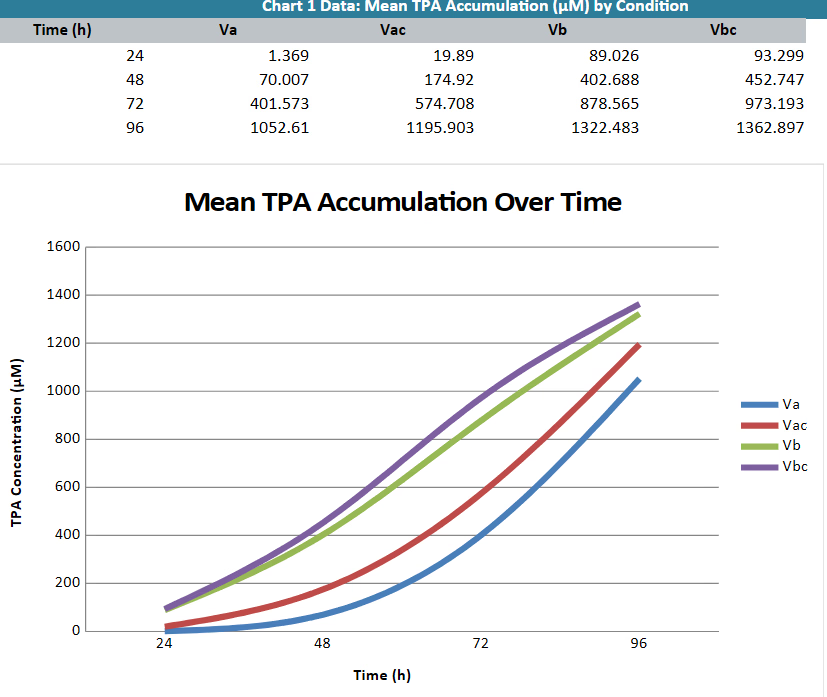
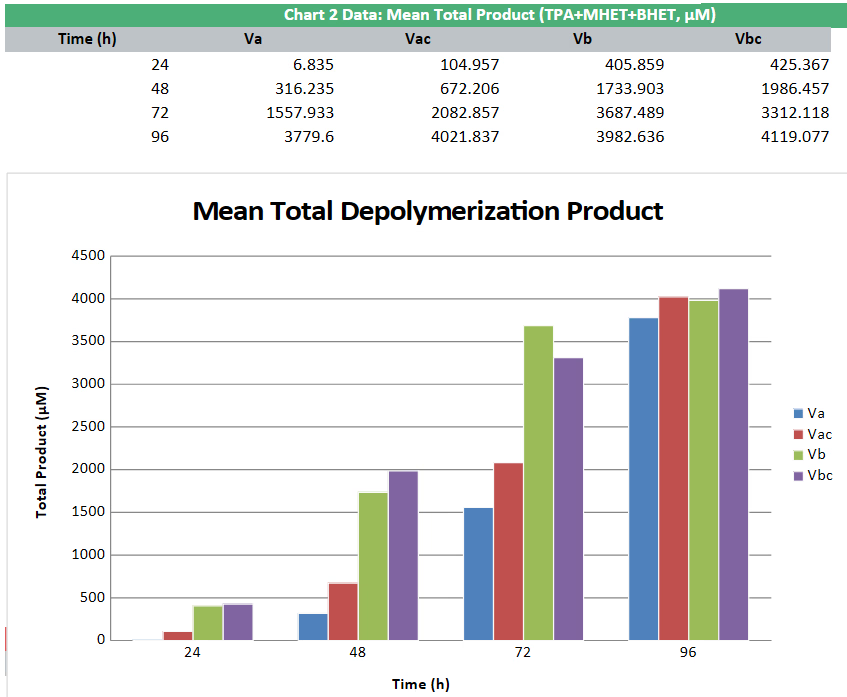
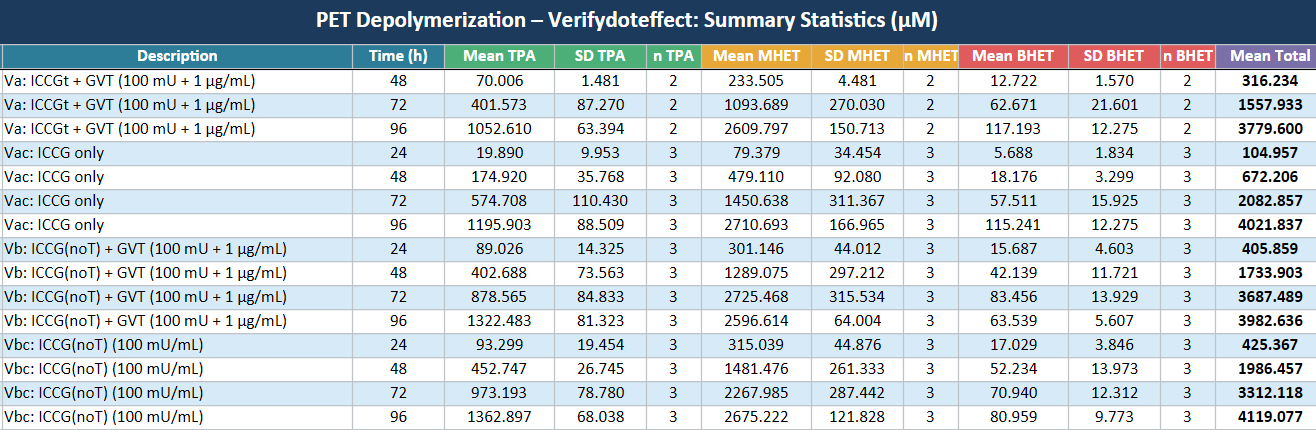
The four charts below show our mechanistic fit (solid lines) against the measured HPLC data (dots) for BHET, MHET, and TPA release, one chart per ICCG condition (dockerin fusion present or absent, crossed with scaffold present or absent). See the Model page for the interactive version and the full governing equations.
All four charts share the same axes, Time (hours) against Concentration (µM), and the same legend: BHET (model) in orange, MHET (model) in blue, TPA (model) in green, and measured points (HPLC) as dots on each curve.
Dock+, Scaf+
Dock+, Scaf+: BHET, MHET, and TPA vs. time, model fit and measured HPLC points. Static line chart for condition Dock+, Scaf+. X axis is time in hours from 0 to 96. Y axis is concentration in micromolar from 0 to 3000. Three model curves are shown: BHET in orange, MHET in blue, and TPA in green, each overlaid with four measured HPLC data points at 24, 48, 72, and 96 hours in the matching color.
Dock+, Scaf−
Dock+, Scaf−: BHET, MHET, and TPA vs. time, model fit and measured HPLC points. Static line chart for condition Dock+, Scaf−. X axis is time in hours from 0 to 96. Y axis is concentration in micromolar from 0 to 3000. Three model curves are shown: BHET in orange, MHET in blue, and TPA in green, each overlaid with four measured HPLC data points at 24, 48, 72, and 96 hours in the matching color.
Dock−, Scaf+
Dock−, Scaf+: BHET, MHET, and TPA vs. time, model fit and measured HPLC points. Static line chart for condition Dock−, Scaf+. X axis is time in hours from 0 to 96. Y axis is concentration in micromolar from 0 to 3000. Three model curves are shown: BHET in orange, MHET in blue, and TPA in green, each overlaid with four measured HPLC data points at 24, 48, 72, and 96 hours in the matching color.
Dock−, Scaf−
Dock−, Scaf−: BHET, MHET, and TPA vs. time, model fit and measured HPLC points. Static line chart for condition Dock−, Scaf−. X axis is time in hours from 0 to 96. Y axis is concentration in micromolar from 0 to 3000. Three model curves are shown: BHET in orange, MHET in blue, and TPA in green, each overlaid with four measured HPLC data points at 24, 48, 72, and 96 hours in the matching color.
Measured data
Concentrations in µM, from HPLC quantification of the APET film degradation assay: 5 mL reaction, 100 mU·mL−1 ICCG, 6×6×0.5 mm APET film chip. “Dock+” = dockerin-fused ICCG–DoT; “Dock−” = unfused ICCG. “Scaf+” = co-incubated with 1 µg·mL−1 ScafGVT.
Condition
Time (h)
TPA
MHET
BHET
Total
Dock+, Scaf+
24
1.37
5.19
0.28
6.83
Dock+, Scaf+
48
70.01
233.51
12.72
316.23
Dock+, Scaf+
72
401.57
1093.69
62.67
1557.93
Dock+, Scaf+
96
1052.61
2609.80
117.19
3779.60
Dock+, Scaf−
24
19.89
79.38
5.69
104.96
Dock+, Scaf−
48
174.92
479.11
18.18
672.21
Dock+, Scaf−
72
574.71
1450.64
57.51
2082.86
Dock+, Scaf−
96
1195.90
2710.69
115.24
4021.84
Dock−, Scaf+
24
89.03
301.15
15.69
405.86
Dock−, Scaf+
48
402.69
1289.08
42.14
1733.90
Dock−, Scaf+
72
878.57
2725.47
83.46
3687.49
Dock−, Scaf+
96
1322.48
2596.61
63.54
3982.64
Dock−, Scaf−
24
93.30
315.04
17.03
425.37
Dock−, Scaf−
48
452.75
1481.48
52.23
1986.46
Dock−, Scaf−
72
973.19
2267.99
70.94
3312.12
Dock−, Scaf−
96
1362.90
2675.22
80.96
4119.08
See the Model page for the full governing equations and fitted rate constants behind these curves.
Analysis
We have the resources to engineer one specific microbial factory, but the products of our factory have to be applied in a PETosome, and we cannot make our own PETosome.
Also, for use in space travel, a crucial step is to re-assemble the components, and our technology is compatible with Candida-based reassembly, but we do not produce our own re-assembly factory.
The Future of the Technology and Our Team
We are likely to extend the technology to create microbial factories to other types of factories.
We lack an acceptable means of storing old biological samples and re-using them or building on them.
We lack expertise in many of the specialized organisms that we want to use (e.g. Candida variants).
Our biggest challenge will be choosing a topic that will allow us to emphasize our engineering skills.
Project · Contribution
Contribution
Our new Composite Part is a significant contribution
We made a significant contribution by innovating with a new Composite Part.
Our composite part fuses the ICCG and TfCa enzyme domains, neither previously paired with dockerin/cohesin scaffolding of this kind, onto a shared cohesin scaffold via dockerin linkers, so that PET and MHET hydrolysis can occur in a coordinated sequence rather than as two separate, uncoordinated reactions. This scaffolding approach is, to our knowledge, new to the iGEM registry, and future teams working on multi-enzyme plastic degradation could adapt the same scaffold to co-localize other enzyme pairs.
The full construct sequences and design rationale are on our Composite Part page.
We made a significant contribution with excellent Measurement.
We characterized our constructs using SDS-PAGE, Western blot, and quantitative BSA assay for protein identity and purity, and used both qualitative and quantitative assays, including a standard TPA curve, to measure PETase activity. In at least two cases, we believe these part-level measurements are precise and well-controlled enough that other teams could build directly on them rather than re-measuring from scratch.
Our cloning, protein expression, and enzyme assay protocols for building and testing the PETosome, written up in enough detail for other teams to replicate our work
Wet Lab Experiments
The experiment section includes the detailed procedures for cloning, enzyme assay, and protein expression. The central aim of the project is to engineer a cellulosome-inspired multi-enzyme complex, termed the PETosome, which co-localizes a dockerin-fused PET hydrolase (ICCG-DoT) and a dockerin-fused MHET hydrolase (TfCa-DoG) on a trimeric cohesin scaffold protein (ScafGVT) for synergistic and sequential degradation of PET into its constituent monomers, terephthalic acid (TPA) and ethylene glycol (EG).
Following amplification of the gene of interest by PCR and insertion into the pET28a plasmid vector backbone using the NEB Quick Ligation Kit, E. coli DH5α were transformed for plasmid propagation. Colony PCR and Sanger sequencing were then used to confirm the final insert, and BL21 E. coli were transformed for protein expression. Expression products were then purified by Ni-NTA IMAC and assessed for quality by SDS-PAGE; protein identity was confirmed using Western blot. Enzyme activity assays were then used to evaluate the PET-degrading performance of the recombinant constructs both qualitatively and quantitatively.
Part 1: Cloning
Protocol 1: PCR (Insert Amplification)
1.1 Purpose
This protocol describes the amplification of target gene inserts (including ICCG, DockerinT, TfCa, DockerinG, TfCaWA, and ScafGVT coding sequences) using Q5® High-Fidelity DNA Polymerase (NEB #M0491). Q5 was selected for all insert amplification steps due to its ultra-high fidelity (~280× higher than Taq), which minimizes sequence errors in the final constructs prior to sequencing verification.
1.2 Materials
Reagents
Q5® High-Fidelity DNA Polymerase (NEB #M0491)
5X Q5 Reaction Buffer (supplied with enzyme)
10 mM dNTP Solution Mix (NEB #N0447)
5X Q5 High GC Enhancer (optional; NEB #M0491, supplied with enzyme)
10 µM Forward Primer (gene-specific; see construct design notes)
10 µM Reverse Primer (gene-specific; see construct design notes)
Template DNA (plasmid or synthetic gene block; < 1,000 ng per reaction)
Nuclease-free Water (NEB #B1500)
Equipment
Thermocycler with heated lid
Sterile thin-walled 0.2 mL PCR tubes
Microcentrifuge
Ice bucket
1.3 Reaction Setup
Assemble all reaction components on ice. Mix each component gently before adding to the reaction tube. Add Q5 polymerase last. Collect all liquid to the bottom of the tube with a brief centrifuge spin before placing in the thermocycler.
Component
25 µl Reaction
50 µl Reaction
Final Concentration
5X Q5 Reaction Buffer
5 µl
10 µl
1X
10 mM dNTPs
0.5 µl
1 µl
200 µM
10 µM Forward Primer
1.25 µl
2.5 µl
0.5 µM
10 µM Reverse Primer
1.25 µl
2.5 µl
0.5 µM
Template DNA
Variable
Variable
< 1,000 ng
Q5 High-Fidelity DNA Polymerase
0.25 µl
0.5 µl
0.02 U/µl
5X Q5 High GC Enhancer (optional)
(5 µl)
(10 µl)
(1X)
Nuclease-Free Water
To 25 µl
To 50 µl
n/a
1.4 Thermocycling Conditions
Step
Temperature
Time
Cycles
Initial Denaturation
98°C
30 seconds
1
Denaturation
98°C
5–10 seconds
25–35
Annealing
50–72°C*
10–30 seconds
25–35
Extension
72°C
20–30 sec/kb
25–35
Final Extension
72°C
2 minutes
1
Hold
4–10°C
∞
n/a
1.5 Step-by-Step Procedure
Label PCR tubes and place on ice.
Prepare a master mix on ice by combining, in order: nuclease-free water, 5X Q5 Reaction Buffer, dNTPs, forward primer, and reverse primer. Mix gently by pipetting.
Add template DNA at the appropriate amount (1 pg–10 ng for plasmid; 1 ng–1 µg for genomic DNA).
Add Q5 High-Fidelity DNA Polymerase last. Mix gently; do not vortex.
Collect all liquid to the bottom of the tube with a brief (5 second) centrifuge spin.
Transfer tubes immediately to a thermocycler preheated to 98°C and begin the thermocycling programme as specified in Section 1.4.
After the programme is complete, hold at 4°C until ready to proceed to gel electrophoresis or downstream steps.
Verify PCR product size by loading 5 µl of the PCR reaction with 6X loading dye on a 1% agarose gel and run at 100 V for 30 minutes alongside an appropriate DNA ladder.
If the band of correct size is confirmed, purify the PCR product using the Monarch® Spin PCR & DNA Cleanup Kit (NEB #T1130) according to the manufacturer's protocol.
Protocol 2: Restriction Enzyme Digestion
2.1 Purpose
Restriction enzyme digestion is used to generate compatible cohesive ends on both the purified PCR insert and the linearised vector backbone (pET28a(+) or pKLAC2), enabling directional ligation. For all constructs in this project, double digestion with two restriction enzymes was performed to ensure directional cloning and to prevent vector self-ligation. The specific enzyme pairs used depended on the construct (e.g., XbaI/EcoRI-HF for ICCG-DoT cloning; see the construct-specific cloning schematic in the pptx results slides for details).
10X CutSmart Buffer or appropriate NEBuffer (supplied with each enzyme)
Purified PCR insert or plasmid DNA (≥ 1 µg)
Nuclease-free Water (NEB #B1500)
6X Purple Loading Dye (NEB)
Equipment
Heat block or water bath at 37°C
Microcentrifuge
Ice bucket
1.5 mL microcentrifuge tubes
2.3 Reaction Setup (50 µl)
Set up all reactions on ice. Restriction enzymes must always be added last.
Component
Volume / Amount
Purified DNA
1 µg
10X NEBuffer (CutSmart or appropriate)
5 µl (1X final)
Restriction Enzyme 1
1 µl
Restriction Enzyme 2
1 µl
Nuclease-free Water
To 50 µl
2.4 Step-by-Step Procedure
Assemble all components on ice in a 1.5 mL microcentrifuge tube. Add enzymes last.
Mix gently by pipetting up and down 5–10 times. Briefly centrifuge to collect liquid at the bottom of the tube.
Incubate at 37°C for 1–3 hours (or as recommended by the enzyme manufacturer for the specific enzyme pair used).
Stop the reaction by adding 10 µl of 6X Purple Loading Dye (contains EDTA) if no further enzymatic manipulation is required.
If further ligation is planned, remove enzyme by either: (a) heat inactivation at 65°C or 80°C for 20 minutes (verify enzyme-specific heat inactivation temperature), or (b) spin-column purification using the Monarch® Spin DNA Cleanup Kit (NEB #T1120).
Verify digestion by running 5 µl of the reaction on a 1% agarose gel alongside a 1 kb DNA ladder. Confirm that the expected fragment sizes match the in silico digest prediction from NEBcloner.
Purify the digested vector backbone by gel extraction using the Monarch® Spin DNA Gel Extraction Kit (NEB #T1120) to isolate the correct band and remove undigested or incomplete digest products.
Protocol 3: DNA Ligation
3.1 Purpose
Following restriction enzyme digestion, the digested insert and linearised vector backbone are joined using the NEB Quick Ligation™ Kit (NEB #M2200). This kit enables efficient ligation of cohesive-end DNA fragments within 5 minutes at room temperature, making it suitable for high-throughput cloning workflows.
Set up the reaction in a 1.5 mL microcentrifuge tube on ice. Add Quick Ligase last.
Component
Volume
Final Amount
Quick Ligase Reaction Buffer (2X)
10 µl
1X
Vector DNA
X µl
50 ng (0.020 pmol for 4 kb vector)
Insert DNA
X µl
37.5 ng (0.060 pmol for 1 kb insert)
Quick Ligase
1 µl
n/a
Nuclease-free Water
To 20 µl
n/a
3.4 Step-by-Step Procedure
Thaw Quick Ligase Reaction Buffer (2X) at room temperature. Vortex briefly to fully resuspend.
Calculate the volumes of vector and insert DNA needed using the NEBioCalculator, targeting a 1:3 molar ratio.
Assemble all components in a 1.5 mL microcentrifuge tube on ice in the order listed in Section 3.3. Add Quick Ligase last.
Mix gently by pipetting up and down. Briefly centrifuge to collect liquid at the bottom of the tube.
Incubate at room temperature (25°C) for exactly 5 minutes. Do not exceed this time, as transformation efficiency decreases with prolonged incubation.
Place on ice immediately after incubation. Proceed to transformation within 30 minutes, or store at −20°C for later use.
Protocol 4: Bacterial Transformation
4.1 Purpose
The ligation product is introduced into chemically competent E. coli cells by heat-shock transformation. Transformed cells are plated onto selective antibiotic media and incubated overnight to allow single colony formation. For routine cloning and plasmid propagation, E. coli DH5α competent cells were used. For protein expression experiments, E. coli BL21(DE3) or BL21 Rosetta™ DE3 strains were used (see protein expression protocols).
4.2 Materials
Chemically competent E. coli cells (e.g., NEB 5-alpha or DH5α; stored at −80°C)
Ligation product (from Protocol 3)
SOC medium or LB broth (room temperature)
LB agar plates with appropriate antibiotic selection (e.g., Kanamycin 50 µg/mL for pET28a(+) constructs; Ampicillin 100 µg/mL for pKLAC2 constructs)
42°C heat block or water bath
37°C incubator (for plates)
37°C shaking incubator (250 rpm)
1.5 mL microcentrifuge tubes
Ice bucket
4.3 Step-by-Step Procedure
Remove competent cells from −80°C storage and thaw on ice for 10–15 minutes. Do not allow cells to warm above 4°C before use.
Chill 1.5 mL microcentrifuge tubes on ice. Add 2 µl (~5 ng) of the ligation product to a pre-chilled tube.
Add 50 µl of competent cells directly to the DNA. Mix gently by pipetting up and down 4–5 times or by flicking the tube. Do not vortex.
Incubate on ice for 30 minutes without agitation.
Heat shock at 42°C for exactly 30 seconds. Do not mix during heat shock.
Return immediately to ice for 2 minutes.
Add 950 µl of room temperature SOC medium (or LB broth) to the tube.
Incubate at 37°C for 60 minutes with vigorous shaking (250 rpm) to allow recovery and antibiotic resistance expression.
Pre-warm antibiotic selection plates to 37°C during the recovery incubation.
Spread 50–100 µl of the transformation mixture evenly onto the pre-warmed selection plates using a sterile spreader or glass beads.
Invert plates and incubate at 37°C overnight (16–18 hours).
The following morning, inspect plates for colony growth. Individual colonies indicate successful transformation and should be picked for colony PCR screening (Protocol 5).
Protocol 5: Colony PCR Screening
5.1 Purpose
Colony PCR is used to rapidly screen transformed colonies for the presence of the correctly inserted gene of interest prior to miniprep and sequencing. Taq 2X Master Mix (NEB #M0270) is used for colony PCR, as the dA-overhang products generated are compatible with downstream subcloning if needed, and the cost-effectiveness of Taq is appropriate for high-throughput screening. Primer pairs flanking the insert-vector junction are used for confirmation.
5.2 Materials
Taq 2X Master Mix (NEB #M0270)
10 µM Forward Primer (vector-specific or gene-specific flanking primer)
10 µM Reverse Primer (vector-specific flanking primer)
Nuclease-free Water (NEB #B1500)
Sterile toothpicks or inoculation loops for colony picking
LB broth with appropriate antibiotic (for overnight culture of positive clones)
0.2 mL PCR tubes
Thermocycler with heated lid
5.3 Reaction Setup (25 µl per colony)
Component
Volume
Final Concentration
Taq 2X Master Mix
12.5 µl
1X
10 µM Forward Primer
0.5 µl
0.2 µM
10 µM Reverse Primer
0.5 µl
0.2 µM
Nuclease-free Water
11.5 µl
n/a
Colony (template)
n/a
Direct inoculation
5.4 Step-by-Step Procedure
Prepare a master mix (without template) for the total number of colonies to be screened, plus one extra reaction for the no-template negative control.
Aliquot 25 µl of master mix into labelled 0.2 mL PCR tubes.
Using a sterile toothpick or pipette tip, gently touch a single colony and swirl the tip in one PCR reaction tube. Dip the same toothpick/tip into a corresponding tube of LB broth with antibiotic for overnight backup culture.
Repeat Step 3 for each colony to be screened (typically 8–16 colonies per construct).
Include a no-template negative control reaction.
Place tubes in the thermocycler and run the following programme:
Step
Temperature
Time
Cycles
Initial Denaturation (cell lysis)
95°C
5 minutes
1
Denaturation
95°C
15–30 seconds
30
Annealing
45–68°C*
15–60 seconds
30
Extension
68°C
1 min/kb
30
Final Extension
68°C
5 minutes
1
Hold
4–10°C
∞
n/a
After the programme completes, load 5 µl of each PCR product with 1 µl of 6X loading dye on a 1% agarose gel. Run at 100 V for 30 minutes.
Identify positive colonies as those showing a band at the expected insert size. Negative colonies will show no band or a band at a different size.
Inoculate overnight liquid cultures from positive colony backup tubes (from Step 3) in LB broth with antibiotic at 37°C, 250 rpm, for 16 hours.
Use overnight cultures for plasmid miniprep (Protocol 6).
Protocol 6: Plasmid Miniprep
6.1 Purpose
Plasmid DNA is isolated from overnight E. coli cultures of colony PCR-positive clones using the Geneaid High-Speed Plasmid Mini Kit. The isolated plasmid DNA is then subjected to Sanger sequencing to confirm the correct sequence of the insert and its junction with the vector.
6.2 Materials
Geneaid High-Speed Plasmid Mini Kit (Cat. No. PD100/PD300): contains PD1, PD2, PD3, W1, and Wash Buffers; Elution Buffer; PD spin column; 2 mL collection tubes
RNase A (50 mg/mL; added to PD1 Buffer before first use)
Absolute ethanol (added to Wash Buffer before first use; see bottle label for volume)
Overnight E. coli culture (1.5–4 mL)
Microcentrifuge (capable of 14,000–16,000 × g)
1.5 mL microcentrifuge tubes
6.3 Step-by-Step Procedure
Step 1: Harvesting
Transfer 1.5 mL of overnight bacterial culture to a 1.5 mL microcentrifuge tube.
Centrifuge at 14,000–16,000 × g for 1 minute. Discard supernatant completely by inverting and blotting on clean tissue.
If more than 1.5 mL of culture is needed (for higher yield), repeat the harvesting step by adding a second aliquot to the same pellet and centrifuging again.
Step 2: Resuspension
Add 200 µl of PD1 Buffer (with RNase A added) to the bacterial pellet.
Resuspend the pellet completely by vortexing or pipetting until no cell clumps remain.
Step 3: Lysis
Add 200 µl of PD2 Buffer. Mix by inverting the tube 10 times. Do not vortex (vortexing will shear genomic DNA, leading to contamination).
Allow the mixture to stand at room temperature for 2 minutes (minimum). Do not exceed 5 minutes, as prolonged lysis can degrade plasmid DNA.
Step 4: Neutralisation
Add 300 µl of PD3 Buffer. Mix immediately by inverting the tube 10 times. Do not vortex.
Centrifuge at 14,000–16,000 × g for 3 minutes. A white precipitate (denatured genomic DNA and cell debris) should pellet at the bottom of the tube.
Step 5: DNA Binding
Place a PD spin column in a 2 mL collection tube.
Carefully transfer the supernatant from Step 4 to the PD column, avoiding the white pellet.
Centrifuge at 14,000–16,000 × g for 30 seconds. Discard the flow-through.
Place the PD column back into the 2 mL collection tube.
Step 6: Wash (Optional W1 Wash for Sequencing)
(Recommended for sequencing-grade purity) Add 400 µl of W1 Buffer to the PD column. Centrifuge at 14,000–16,000 × g for 30 seconds. Discard flow-through. Place the PD column back in the collection tube.
Add 600 µl of Wash Buffer (with ethanol added) to the PD column. Centrifuge at 14,000–16,000 × g for 30 seconds. Discard flow-through.
Place the PD column back in the collection tube. Centrifuge at 14,000–16,000 × g for 3 minutes to completely dry the column matrix and remove residual ethanol.
Step 7: DNA Elution
Transfer the PD column to a new, labelled 1.5 mL microcentrifuge tube.
Add 50 µl of Elution Buffer (or nuclease-free water) directly onto the centre of the PD column matrix. Allow to stand at room temperature for at least 2 minutes to maximise absorption and elution efficiency.
Centrifuge at 14,000–16,000 × g for 2 minutes to elute the purified plasmid DNA.
(Optional) For increased yield: transfer the eluate back onto the centre of the column matrix, allow to stand for 1 minute, and centrifuge again.
Measure the DNA concentration and purity using a spectrophotometer (e.g., NanoDrop or Bioanalytical). Record the A260/A280 ratio (acceptable range: 1.7–1.9) and concentration (ng/µl).
Submit plasmid DNA for Sanger sequencing using appropriate sequencing primers to confirm correct insert sequence and vector junction.
Summary: Plasmid Construction Pipeline
The table below summarises the key parameters for each protocol in the plasmid construction workflow.
Protocol
Purpose
Key Reagent / Kit
Critical Parameter
1. PCR (Insert Amplification)
Amplify gene insert with high fidelity
Q5® Polymerase (NEB #M0491)
Extension time: 20–30 sec/kb; Tm via NEB Calculator
2. Restriction Enzyme Digestion
Generate compatible cohesive ends
HF Restriction Enzymes (NEB)
Double digest; verify with NEBcloner; 1 µg DNA per reaction
3. Ligation
Join insert and vector
Quick Ligation™ Kit (NEB #M2200)
5 min at 25°C; 1:3 vector:insert molar ratio
4. Transformation
Introduce construct into E. coli
Competent E. coli (DH5α)
30 sec heat shock at 42°C; 60 min recovery at 37°C
5. Colony PCR
Screen colonies for correct insert
Taq 2X Master Mix (NEB #M0270)
5 min initial denaturation at 95°C; check band at expected bp
6. Miniprep & Sequencing
Purify plasmid; confirm sequence
Geneaid High-Speed Plasmid Mini Kit
A260/A280 = 1.7–1.9; submit for Sanger sequencing
Part 2: Protein Expression
Protocol 7: Recombinant Protein Expression in E. coli
7.1 Purpose
This protocol describes IPTG-inducible expression of 8×His-tagged recombinant proteins from pET28a(+)-based constructs in E. coli. Expression conditions (strain, temperature, IPTG concentration, induction time, and growth medium) were optimised individually for each construct to maximise soluble protein yield. The specific conditions used for each construct are summarised in Section 7.4.
7.2 Materials
Reagents
E. coli expression strain (see Section 7.4 for strain per construct)
LB broth (for starter culture) or Terrific Broth (TB) as specified per construct
LB broth supplemented with 2 mM CaCl2 (for TfCa-DoG expression)
Appropriate antibiotic: Kanamycin (50 µg/mL) for pET28a(+) constructs
IPTG (isopropyl β-D-1-thiogalactopyranoside) stock solution: 1 M in sterile water, stored at −20°C
Sterile conical flasks (250 mL or 500 mL)
Equipment
Spectrophotometer (for OD600 measurement)
Orbital shaking incubator (capable of 37°C and 16–18°C)
Refrigerated centrifuge
50 mL conical tubes or 250 mL centrifuge bottles
7.3 General Step-by-Step Procedure
Inoculate a single colony of the expression strain carrying the target plasmid into 5 mL LB broth with the appropriate antibiotic. Incubate overnight (16–18 hours) at 37°C with shaking at 250 rpm as a starter culture.
The following morning, dilute the overnight starter culture 1:100 into fresh expression medium (see Section 7.4 for medium per construct) supplemented with antibiotic in a sterile conical flask. Use a culture volume of no more than 20% of the flask volume to ensure adequate aeration.
Grow at 37°C with shaking at 250 rpm. Monitor OD600 every 30–60 minutes using a spectrophotometer.
When the OD600 reaches 0.6–0.8 (mid-log phase), induce protein expression by adding IPTG to the final concentration specified in Section 7.4. Mix well by swirling the flask.
Reduce the incubation temperature (if applicable; see Section 7.4) and continue shaking for the induction duration specified per construct.
After induction, transfer the culture to appropriate centrifuge tubes. Harvest cells by centrifugation at 4,000–5,000 × g for 15 minutes at 4°C.
Discard the supernatant. The cell pellet can be immediately processed for lysis (Protocol 8) or snap-frozen in liquid nitrogen and stored at −80°C for later use.
7.4 Construct-Specific Expression Conditions
Construct
Expression Strain
Growth Medium
Induction Temp.
IPTG Conc.
Induction Time
ICCG-DoT (PETase; 39.9 kDa)
E. coli BL21 Rosetta™ DE3
Terrific Broth (TB)
37°C
0.5 mM (at OD600 0.6–0.8)
24 hr
TfCa-DoG (MHETase; 64.79 kDa)
E. coli BL21 DE3
LB + 2 mM CaCl2
18°C
5 mM (at OD600 0.6–0.8)
15 hr
ScafGVT (Scaffold; 58.96 kDa)
E. coli BL21 DE3
LB broth
16°C
0.2 mM (at OD600 0.6–0.8)
19 hr
Protocol 8: Bacterial Cell Lysis by Sonication
8.1 Purpose
Following harvest, bacterial cell pellets are lysed to release soluble recombinant protein for downstream affinity purification. Lysis is achieved by resuspension in a detergent-containing lysis buffer followed by probe sonication. Sonication mechanically disrupts cell membranes and reduces lysate viscosity by shearing chromosomal DNA.
8.2 Materials
Lysis Buffer Composition (per 10 mL)
Prepare fresh on the day of use. Add lysozyme and PMSF immediately before use. Add DNase only after sonication.
Component
Final Concentration / Amount
Notes
Tris-HCl pH 8.0
50 mM (0.060 g per 10 mL)
Adjust pH to 8.0
Glycerol
10% (v/v)
Stabilises protein; prevents aggregation
Triton X-100
0.1% (v/v)
Non-ionic detergent; aids membrane disruption
Lysozyme
0.001 g per 10 mL (~0.1 mg/mL)
Add fresh; assists cell wall digestion
PMSF
1 mM
Serine protease inhibitor; add fresh from 100 mM stock in ethanol
MgCl2
2 mM (0.002 g per 10 mL)
Cofactor for DNase activity
DNase I
~2% of final volume
Add AFTER sonication to digest released chromosomal DNA
8.3 Sonication Instrument Settings
The following settings apply to a standard probe sonicator (e.g., Branson or equivalent) for a sample volume of 0.5–1 mL resuspended in a 1.5 mL microcentrifuge tube.
Parameter
Setting
Timer per pulse
30 seconds
Pulse cycle ON
5 seconds
Pulse cycle OFF
5 seconds
Amplitude
37% (do not exceed 40%)
Number of pulses
3 × 30 seconds (9 pulses total per sample)
Interval between samples
20 seconds (probe rested in ice)
8.4 Step-by-Step Procedure
Preparation
Resuspend the bacterial cell pellet in 1 mL of freshly prepared lysis buffer per 1.5 mL of original overnight culture pellet. Pipette thoroughly to fully resuspend.
Transfer the resuspended pellet into a 15 mL conical tube (if pooling multiple aliquots). Incubate on ice for 30 minutes to allow lysozyme to digest the cell wall.
Sonication
Set the sonicator to the parameters in Section 8.3: Timer 30 s, Pulse ON 5 s / OFF 5 s, Amplitude 37%.
Place the sample tube in an ice bucket. Immerse the sonicator probe fully into the sample. The probe tip must not touch the sides or bottom of the tube.
Press Start. Perform 3 consecutive 30-second pulse cycles per sample.
Between samples (or between pulse cycles if the sample heats up), rest the probe in ice for at least 20 seconds to prevent sonicator overheating.
Monitor the sample throughout sonication: the lysate should gradually transition from turbid/viscous to translucent as cells are disrupted and chromosomal DNA is sheared.
After each session, record the total energy output (Joules) displayed on the sonicator screen. Note any differences between the first and last tubes in a batch as a quality check.
Post-Sonication Clarification
After sonication, add DNase I to the lysate. Mix gently and incubate on ice for 10 minutes to digest chromosomal DNA and reduce viscosity.
Centrifuge the lysate at 13,000 × g for 20 minutes at 4°C.
Carefully transfer the clarified supernatant (soluble fraction) to a new pre-chilled 1.5 mL or 15 mL tube. Avoid disturbing the pellet (insoluble fraction / inclusion bodies).
Reserve 100 µl of the clarified supernatant for SDS-PAGE analysis (add 25 µl of 5X SDS sample buffer, boil at 95°C for 10 minutes). Store the remainder on ice or at −20°C until proceeding to purification.
Protocol 9: His-Tag Affinity Purification by Ni-NTA IMAC
9.1 Purpose
Recombinant 8×His-tagged proteins are purified from clarified cell lysates by immobilised metal affinity chromatography (IMAC) using PureCube 100 INDIGO Ni-Agarose resin (Cube Biotech, Cat. No. 75103/75105). The polyhistidine tag binds selectively to Ni2+ ions chelated on the resin. Non-specifically bound contaminants are removed by stepwise imidazole washes, and the target protein is eluted at high imidazole concentration. Imidazole wash concentrations were optimised empirically for each construct based on preliminary purification tests (see demo data).
9.2 Materials
PureCube 100 INDIGO Ni-Agarose resin (Cube Biotech), 50% (v/v) suspension in 20% ethanol, stored at 4°C
Gravity-flow chromatography column (e.g., Bio-Rad Poly-Prep or equivalent)
Equilibration / Binding buffer: 1× PBS pH 7.4 + 10–40 mM imidazole (see Section 9.4 for construct-specific concentrations)
Wash buffers: 1× PBS pH 7.4 + 25–90 mM imidazole (stepwise; see Section 9.4)
Up to 100 mg protein/mL resin (tested with 6×His-eGFP)
Metal ion capacity
> 75 µeqv Ni2+/mL resin
Chelator stability
Stable in up to 20 mM DTT and 20 mM EDTA
Suspension form
50% (v/v) suspension; 2 mL suspension = 1 mL bed volume
Storage
4°C in neutral buffer with 20% ethanol (long-term)
pH compatibility
pH 4–13
9.4 Construct-Specific Imidazole Wash Conditions
The imidazole concentration gradient used for washing was optimised to balance removal of non-specifically bound host proteins while retaining the target His-tagged protein on the resin. The following conditions were used:
Construct
Equilibration
Wash 1
Wash 2
Elution 1
Elution 2
ICCG-DoT (39.9 kDa)
10 mM
50 mM
90 mM
250 mM
250 mM
TfCa-DoG (64.79 kDa)
10 mM
50 mM
70–90 mM
250 mM
300–500 mM
ScafGVT (58.96 kDa)
10 mM
50 mM
90 mM
250 mM
250 mM
9.5 Step-by-Step Procedure
Column Preparation
Resuspend the INDIGO Ni-Agarose resin by gentle inversion. Pipette 2 mL of resin suspension (= 1 mL bed volume) into the gravity-flow column. Allow the resin to settle and the storage buffer to drain by gravity.
Wash the resin with 5 column volumes (CV) of equilibration buffer (1× PBS + 10 mM imidazole) to remove ethanol storage buffer and pre-equilibrate the resin.
Sample Loading
Apply the clarified cell lysate (from Protocol 8, Step 12) onto the pre-equilibrated column. Allow the lysate to flow through by gravity.
Collect the flow-through fraction in a labelled 1.5 mL tube. Reserve for SDS-PAGE analysis.
Washing
Apply Wash 1 buffer (2 mL; 50 mM imidazole) to the column. Collect the wash fraction. Repeat 2–3 times as needed (total 4–6 mL).
Apply Wash 2 buffer (2 mL; 70–90 mM imidazole depending on construct; see Section 9.4). Collect the wash fraction.
Reserve all wash fractions in labelled 1.5 mL tubes for SDS-PAGE analysis to track protein recovery.
Elution
Apply Elution buffer (2 mL; 250 mM imidazole) to the column. Collect the eluate in a labelled 1.5 mL tube (Elution 1). Repeat to collect Elution 2 (further 2 mL).
For TfCa-DoG, apply an additional higher-concentration elution (300 mM, then 500 mM imidazole, 2 mL each) to ensure complete recovery.
Reserve 45–50 µl of each fraction (lysate, flow-through, each wash, each elution) for SDS-PAGE and Western blot analysis (Protocols 10 and 11).
Dialysis and Concentration
Pool elution fractions containing the target protein (identified by SDS-PAGE). Transfer to dialysis tubing (MWCO appropriate for protein size).
Dialyse against dialysis buffer (50 mM Tris-HCl pH 7.5, 150 mM NaCl, 10% glycerol) at 4°C overnight with at least two buffer changes to remove imidazole.
Concentrate the dialysed protein using a spin concentrator (appropriate MWCO). Measure final protein concentration using the Pierce BCA Protein Assay Kit (see Section 9.6). Store the purified, dialysed protein at −80°C in small aliquots to avoid repeated freeze-thaw cycles.
9.6 Protein Quantification: Pierce BCA Assay
Protein concentration of purified fractions is determined using the Pierce® BCA Protein Assay Kit (Thermo Scientific), based on the colorimetric reduction of Cu2+ to Cu+ by protein in alkaline conditions, forming a purple chelate complex detectable at 562 nm.
Prepare BSA standard dilutions in PBS from the 2 mg/mL stock: 0, 0.1, 0.2, 0.3, 0.4, 0.5, 1.0, and 2.0 mg/mL.
Dilute protein samples as appropriate (intracellular proteins: ≥ 5-fold; secreted/purified proteins: ≥ 10-fold) to bring within the standard curve range (0–2 mg/mL).
Mix BCA Reagent A and B in a 50:1 ratio (200 µl total per reaction).
Add 10 µl of each standard and sample to 200 µl of BCA working reagent. Mix well.
Incubate at 37°C for 30 minutes.
Transfer 200 µl of each reaction to a 96-well plate. Read absorbance at 562 nm using an ELISA microplate reader.
Calculate protein concentration from the BSA standard curve.
Protocol 10: SDS-PAGE and Coomassie Blue Staining
10.1 Purpose
SDS-PAGE (sodium dodecyl sulphate–polyacrylamide gel electrophoresis) is used to assess the molecular weight, purity, and relative abundance of proteins across all purification fractions. Coomassie Blue R-250 staining provides total protein visualisation. For each construct, 10% polyacrylamide separating gels were used, providing optimal resolution in the 18–75 kDa range, appropriate for ICCG-DoT (39.9 kDa), TfCa-DoG (64.79 kDa), and ScafGVT (58.96 kDa).
10.2 Gel Preparation
Separating Gel (10 mL, 10% acrylamide; for 0.75–1 mm spacer plates, two gels)
Component
8%
10%
12%
15%
4X Lower Gel Buffer (mL)
2.5
2.5
2.5
2.5
ddH2O (mL)
5.4
4.9
4.4
3.65
40% 29:1 Acrylamide/Bis (mL)
2.0
2.5
3.0
3.75
10% Ammonium Persulfate (mL)
0.15
0.15
0.15
0.15
TEMED (mL)
0.01
0.01
0.01
0.01
Optimal resolution range
30–120 kDa
18–75 kDa
15–60 kDa
15–45 kDa
Stacking Gel (5 mL, 4%)
Component
Volume
4X Upper Gel Buffer
1.25 mL
ddH2O
3.3 mL
40% 29:1 Acrylamide/Bis
0.4 mL
10% Ammonium Persulfate
0.1 mL
TEMED
0.008 mL
Buffer Recipes
4X Lower Gel Buffer (1 L): 1.5 M Tris-HCl pH 8.8 (181.71 g Tris) + 0.4% SDS (4 g). Adjust to pH 8.8, add water to 1 L.
4X Upper Gel Buffer (1 L): 0.5 M Tris-HCl pH 6.8 (60.55 g Tris) + 0.4% SDS (4 g). Adjust to pH 6.8, add water to 1 L.
10X Running Buffer (1 L): 0.25 M Tris-base (30.3 g) + 1.92 M Glycine (144 g) + 1% SDS (10 g). Add water to 1 L. Dilute 1:10 before use.
10.3 Sample Preparation
Prepare 5X SDS Sample Buffer stock: NaH2PO4 (0.17 g), Na2HPO4 (0.51 g), SDS (0.5 g), Urea (18 g), Bromophenol Blue (0.008 g) in 50 mL water. Store protected from light at 4°C.
For use: combine 900 µl sample buffer stock + 100 µl glycerol + 10 µl 2-mercaptoethanol. Prepare 1 mL working solution fresh on day of use.
Mix protein sample with 5X SDS sample buffer in a ratio of 4:1 (v/v) (e.g., 40 µl sample + 10 µl buffer). Protein load per well: 35–45 µl per well as specified per construct in the results section.
Boil at 95°C for 5–10 minutes to denature proteins and ensure complete SDS binding.
Briefly centrifuge to collect condensation. Load samples immediately onto the gel or store at −20°C.
10.4 Electrophoresis
Assemble the gel cassette. Check for leaks using ddH2O before adding gel solution.
Pour the separating gel (approximately 2/3 to 3/4 of the cassette height). Overlay with isopropanol or ddH2O to create a flat surface. Allow to polymerise for 15–30 minutes.
Remove the isopropanol overlay. Pour the stacking gel and insert the comb immediately. Allow to polymerise for 15–30 minutes.
Place the gel in the electrophoresis tank. Fill the inner chamber completely and the outer chamber to at least above the electrode wire with 1X Running Buffer (~400 mL total).
Load 4 µl of pre-stained protein ladder (e.g., PageRuler™ Prestained Protein Ladder, Fermentas) and prepared samples into wells.
Run at 80 V until samples enter the separating gel (approximately 20–30 minutes), then increase to 100 V for approximately 2 hours until the dye front reaches the bottom of the gel.
Turn off the power supply. Remove the gel carefully from the cassette. Discard the stacking gel.
Transfer the gel to a clean container. Add sufficient Coomassie Blue staining solution to cover the gel.
Place on an orbital shaker at room temperature for 10 minutes.
Remove and recycle the staining solution (reusable). Add sufficient Destaining solution to cover the gel. Place a folded paper towel in the container to absorb released dye. Shake overnight at room temperature.
Remove the gel from the destaining solution. Visualise and photograph under white light. Wrap in cling film for storage.
Protocol 11: Immunoblot (Western Blot)
11.1 Purpose
Immunoblotting confirms the identity of the expressed recombinant His-tagged protein by detection with an anti-His-tag antibody. Following SDS-PAGE, proteins are transferred to a PVDF membrane and probed sequentially with primary (anti-His) and secondary (HRP-conjugated) antibodies. Signal is visualised by enhanced chemiluminescence (ECL).
11.2 Antibodies Used
Antibody
Host
Specificity
Dilution
Source
Primary: Rabbit anti-His Tag Ab (LTK BioLaboratories)
Rabbit
8×His tag
1:1000
LTK BioLaboratories
Secondary: Goat anti-rabbit IgG-HRP
Goat
Rabbit IgG
1:1000
Standard commercial supplier
11.3 Buffer Recipes
10X TBS Buffer (2 L): NaCl (amount per lab protocol) + KCl (4 g) + Tris-base (60 g). Adjust to pH 7.4, add water to 2 L.
1X TBS: 100 mL 10X TBS + 900 mL ddH2O.
TTBS (Tween-TBS): 999 mL 1X TBS + 1 mL Tween-20 (final 0.1%).
5% Blocking Milk: 1 g non-fat dried milk (e.g., Anchor skimmed milk powder) dissolved in 20 mL TTBS.
10X Transfer Buffer (2 L): 0.25 M Tris-base (60.57 g) + 1.92 M Glycine (288 g). Add water to 2 L.
1X Transfer Buffer (1 L): 100 mL 10X Transfer Buffer + 700 mL ddH2O + 200 mL methanol.
11.4 Step-by-Step Procedure
Protein Transfer to PVDF Membrane
After SDS-PAGE (Protocol 10), cut the PVDF membrane slightly larger than the gel. Pre-wet the PVDF membrane in 100% methanol for 1 minute, then equilibrate in 1X Transfer Buffer for 2 minutes.
Soak filter papers (2–3 sheets per side) in 1X Transfer Buffer.
Assemble the transfer sandwich in the following order (from black/anode side): sponge → filter paper(s) → gel → PVDF membrane → filter paper(s) → sponge. Note: proteins migrate from cathode (−) to anode (+), so the gel must face the black (negative) side and the membrane must face the clear (positive) side.
Using a roller or pipette, firmly expel all air bubbles between each layer. Air bubbles cause blank spots on the membrane.
Close the transfer cassette securely. Insert into the transfer tank filled with cold 1X Transfer Buffer containing an ice block.
Transfer at constant current: 300 mA for 2 hours at 4°C (or alternatively 60 mA overnight). Keep the transfer buffer cold throughout.
Blocking
After transfer, remove the PVDF membrane and place in a clean container.
Add freshly prepared 5% blocking milk (in TTBS). Incubate at room temperature for 40 minutes on an orbital shaker.
Wash the membrane with TTBS three times, 10 minutes per wash, on an orbital shaker.
Primary Antibody Incubation
Dilute primary antibody (anti-His, LTK BioLaboratories) 1:1000 in TTBS (or in 5% blocking milk for reduced background).
Add the diluted primary antibody to the membrane. Incubate at 4°C overnight on an orbital shaker.
Recover the primary antibody (can be reused 3–4 times; store at −20°C with 0.02% NaN3 added to inhibit microbial growth).
Wash the membrane with TTBS three times, 10 minutes per wash.
Secondary Antibody Incubation
Dilute secondary antibody (goat anti-rabbit IgG-HRP) 1:1000 in TTBS.
Add the diluted secondary antibody to the membrane. Incubate at 4°C for 2 hours (or room temperature for 1 hour), on an orbital shaker.
Recover the secondary antibody (can be reused 2–3 times; store at −20°C). Do not add NaN3 to secondary antibody stock.
Wash the membrane with TTBS three times, 10 minutes per wash.
ECL Detection and Imaging
Prepare ECL reagent fresh immediately before use (protect from light): mix Solution A and Solution B in a 1:1 ratio (600 µl A + 600 µl B per membrane).
Drain excess TTBS from the membrane. Evenly apply the ECL working reagent across the membrane surface. Allow to react for 1–2 minutes.
Transfer the membrane to the chemiluminescence imaging system. Acquire images at multiple exposure times (e.g., 30 s, 1 min, 3 min) to ensure optimal signal without saturation.
Save all images. Note the exposure time for each image.
Summary: Protein Expression, Purification & Detection Pipeline
Protocol
Purpose
Key Reagent / Method
Critical Parameter
7. Protein Expression
Express His-tagged protein in E. coli
IPTG induction; strain-specific conditions
Temperature, IPTG conc., induction time (see Section 7.4)
8. Cell Lysis / Sonication
Release soluble protein from cells
Lysis buffer + probe sonication
3 × 30 s pulses; amplitude 37%; keep sample on ice
35–45 µl per well; 100 V for ~2 hr in separating gel
11. Western Blot
Confirm His-tag identity of target protein
Anti-His primary Ab (1:1000) + HRP secondary Ab
Overnight 4°C incubation with primary Ab; ECL detection
Part 3: Enzyme Assay
Protocol 12: Qualitative PET Degrading Activity Screening, DMSO-Dissolved PET Agar Plate Assay
12.1 Purpose
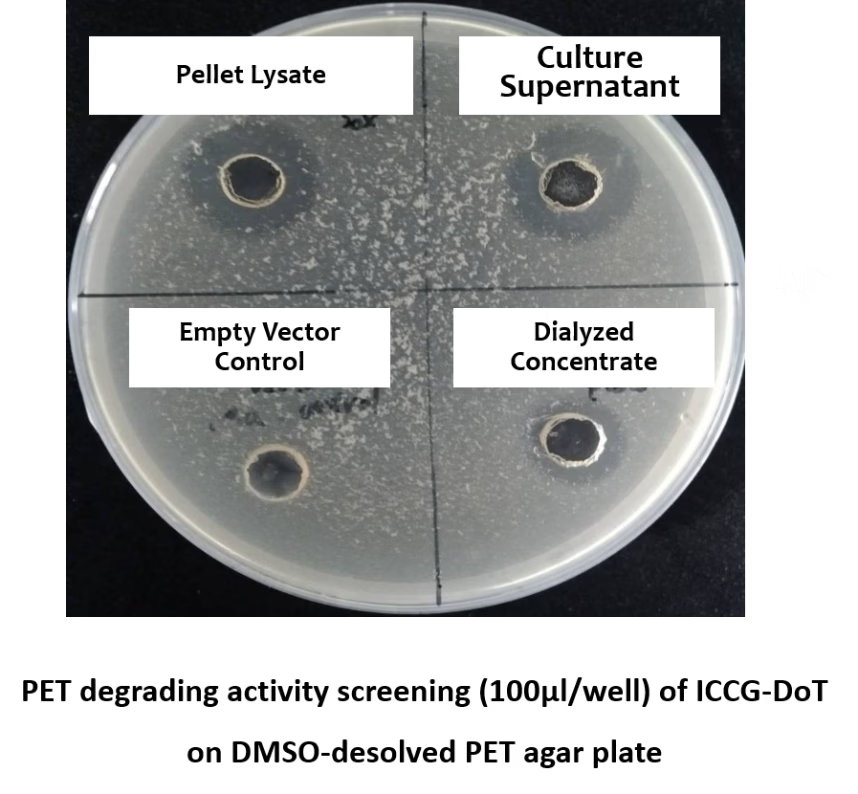
The PET agar plate clearing assay provides a rapid, qualitative assessment of PET-degrading activity directly from bacterial cell fractions (pellet lysate, culture supernatant, and dialysed concentrated protein). PET dissolved in DMSO is incorporated into agar, forming a turbid plate. Enzymatic degradation of PET produces a visible clearing halo around the well, indicating hydrolytic activity. This assay was used to confirm that ICCG-DoT retains PETase activity after expression and purification, and to compare activity across different protein fractions.
12.2 Materials
Reagents
Amorphous PET (APET) film or PET powder (for preparing PET-DMSO solution)
DMSO (dimethyl sulfoxide; anhydrous)
LB agar or Minimal Salt agar base
Protein fractions to be tested: Pellet Lysate, Culture Supernatant, Empty Vector Control lysate, Dialysed Concentrated protein
Sterile ddH2O or assay buffer (50 mM Tris-HCl pH 7.5)
Equipment
Autoclave
Sterile Petri dishes
Cork borer or sterile 6–8 mm punch (for creating wells in the agar)
Pipettes and sterile tips
37°C incubator
12.3 Preparation of PET-DMSO Agar Plates
Dissolve amorphous PET in DMSO to prepare a concentrated PET-DMSO stock solution. The concentration should be sufficient to produce visible turbidity when incorporated into agar (typically 1–2% w/v PET in DMSO).
Prepare LB agar or minimal salt agar base. Autoclave and allow to cool to approximately 50°C (just above the solidification point) before adding PET-DMSO solution.
Add the PET-DMSO stock to the cooled agar at the appropriate volume to achieve the desired final PET concentration. Mix thoroughly but gently to avoid bubble formation.
Pour the PET-containing agar immediately into sterile Petri dishes. The agar will appear turbid or milky due to the dispersed PET particles. Allow to solidify at room temperature.
Once solidified, use a sterile cork borer (6–8 mm diameter) to punch evenly spaced wells in the agar. Divide the plate into quadrants, with one well per quadrant.
12.4 Assay Procedure
Label each well according to the sample to be applied: Pellet Lysate (A), Culture Supernatant (B), Empty Vector Control (C), and Dialysed Concentrate (D).
Load 100 µl of each protein fraction into the corresponding well. For the empty vector control, use lysate from E. coli transformed with pET28a(+) empty vector (no insert).
Incubate the plates at 37°C for 48–96 hours. Check plates at 24-hour intervals for clearing halo formation.
Photograph plates under standard white light illumination at each time point. Record the diameter of any clearing zones (mm) as a semi-quantitative measure of activity.
Protocol 13: HPLC Quantification of PET Hydrolysis Products
13.1 Purpose
High-performance liquid chromatography (HPLC) was used to quantitatively identify and measure the concentrations of PET hydrolysis products (specifically bis(2-hydroxyethyl) terephthalate (BHET), mono(2-hydroxyethyl) terephthalate (MHET), and terephthalic acid (TPA)) released from amorphous PET (APET) film by ICCG-DoT. HPLC provides chromatographic separation of these structurally related products, allowing simultaneous identification by retention time and quantification by peak area integration.
13.2 Reaction Setup for APET Film Degradation
The following conditions were used for the APET film degradation reaction prior to HPLC analysis:
Parameter
Condition
Enzyme
ICCG-DoT (dialysed concentrate)
Enzyme concentration
100 mU · mL−1
Substrate
APET (amorphous PET) film
Reaction volume
5 mL in reaction buffer
Reaction buffer
50 mM Tris-HCl, pH 7.5
Temperature
37°C
Agitation
230 rpm (orbital shaker)
Reaction duration
96 hours
Sample dilution for HPLC
2.5× dilution of reaction supernatant
13.3 Sample Preparation for HPLC
At the end of the reaction period (96 hours), remove the APET film from the reaction mixture. Centrifuge the reaction supernatant at 13,000 × g for 10 minutes to remove any PET film debris or precipitates.
Collect the clarified supernatant. Dilute 2.5-fold with HPLC-grade water or mobile phase buffer (e.g., mix 400 µl supernatant + 600 µl buffer).
Filter the diluted sample through a 0.22 µm syringe filter (PVDF or nylon membrane) directly into an HPLC vial. This removes particulates that could clog the HPLC column.
Prepare standard solutions of BHET, MHET, and TPA at known concentrations in the mobile phase for construction of calibration curves. A minimum of 5 concentration points spanning the expected sample range should be prepared.
13.4 HPLC Instrument Parameters
Parameter
Setting / Condition
Column type
Reversed-phase C18 column (e.g., 250 mm × 4.6 mm, 5 µm particle size)
UV at 240 nm (for simultaneous detection of BHET, MHET, and TPA)
Injection volume
10–20 µl
Run time
30 minutes per sample
13.5 Data Analysis
Identify each product peak by comparing the retention time with authentic standards of BHET, MHET, and TPA.
Quantify each product using the peak area integration values. Calculate the concentration of each product from the calibration curve constructed from the standard solutions.
Express results as the molar fraction (%) of each product relative to the total hydrolysis products detected, and as absolute concentration (µM) in the reaction supernatant (correcting for the 2.5× dilution factor).
Record the following for each HPLC run: sample ID, injection volume, peak retention times, peak areas (µV·s), and peak heights (µV). These data constitute the primary HPLC dataset.
Protocol 14: Quantitative Specific Activity Assay, BHET Substrate Kinetics
14.1 Purpose
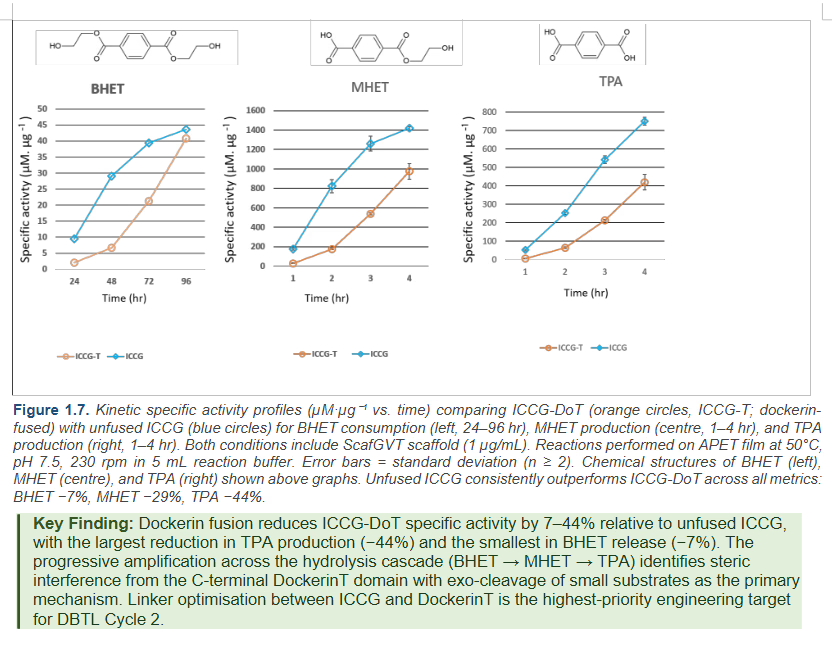
This protocol describes the quantitative enzyme activity assay used to measure and compare the specific activity (µM product released per µg enzyme per hour) of the recombinant constructs individually and in combination. Bis(2-hydroxyethyl) terephthalate (BHET) was used as a soluble, defined substrate that closely mimics the PET polymer chain structure, enabling precise kinetic measurements. This assay was used to: (i) compare ICCG-DoT vs. ICCG (without dockerin) activity toward BHET, MHET, and TPA over time; (ii) test the effect of ScafGVT scaffold on ICCG-DoT activity; and (iii) assess synergistic activity of ICCG-DoT plus TfCa-DoG in combined reactions.
14.2 Materials
Reagents
BHET (bis(2-hydroxyethyl) terephthalate) substrate: 98 µM working concentration
Purified ICCG-DoT protein (dialysed concentrate)
Purified TfCa-DoG protein (dialysed concentrate; for combined assay)
Purified ScafGVT scaffold protein (dialysed concentrate; for scaffold synergy assay)
Reaction buffer: 50 mM Tris-HCl, pH 7.5
Microcentrifuge tubes (1.5 mL)
Orbital shaker capable of 230 rpm at controlled temperature
HPLC instrument (see Protocol 13) for product quantification
Four experimental groups were included in each run to allow direct comparison:
Group
Components
Purpose
ICCG-DoT alone (ICCG-T)
ICCG-DoT (100 mU · mL−1)
Baseline PETase activity with dockerin fusion
TfCa-DoG alone (TfCa-G)
TfCa-DoG (100 mU · mL−1)
Baseline MHETase activity alone
ICCG-DoT + TfCa-DoG (1:1)
ICCG-DoT (100 mU · mL−1) + TfCa-DoG (100 mU · mL−1)
Combined PETase + MHETase activity; synergy test
ICCG (no dockerin) + TfCa-DoG (ICCGT+TfCaG)
ICCG (100 mU · mL−1) + TfCa-DoG (100 mU · mL−1)
Positive control: unfused enzyme combination
ICCG-DoT + ScafGVT
ICCG-DoT (100 mU · mL−1) + ScafGVT (1 µg · mL−1)
Test effect of scaffold assembly on PETase activity
ICCG-DoT alone (no scaffold control)
ICCG-DoT (100 mU · mL−1)
Negative control for scaffold synergy test
14.5 Step-by-Step Procedure
Reaction Setup
Prepare all enzyme and substrate stock solutions on ice. Calculate volumes required for each reaction based on measured protein concentrations (from BCA assay, Protocol 9.6).
In a 15 mL conical tube or suitable reaction vessel, add reaction buffer (50 mM Tris-HCl, pH 7.5) to approximately 80% of the final reaction volume (4 mL of 5 mL total).
Add BHET substrate to a final concentration of 98 µM. Mix by gentle inversion.
Add enzyme(s) at 100 mU · mL−1 final concentration (each). For the combined assay, add both enzymes simultaneously. For the scaffold assay, add ScafGVT at 1 µg · mL−1. Add buffer to bring the total volume to exactly 5 mL.
Mix by gentle inversion. Transfer 100 µl immediately to a 1.5 mL tube on ice as the t = 0 sample (no reaction control).
Incubation and Sampling
Place the reaction vessel in an orbital shaker at the specified temperature (37°C or 50°C depending on the assay; see Section 14.3) and 230 rpm. Start timing from this point.
At each time point (1, 2, 3, 14, 19, and 24 hours for the combined assay; or 24, 48, 72, and 96 hours for the scaffold synergy assay), withdraw a 100 µl aliquot from the reaction.
Immediately transfer the aliquot into a pre-labelled 1.5 mL tube and place on ice to stop the reaction. Centrifuge at 13,000 × g for 5 minutes at 4°C to pellet any insoluble material.
Transfer the clarified supernatant to a new labelled tube. Store at −20°C until HPLC analysis.
HPLC Analysis of Reaction Aliquots
Dilute each time-point aliquot as required (typically no dilution or 2–5× depending on substrate conversion) and filter through a 0.22 µm membrane directly into an HPLC vial.
Inject each sample according to the HPLC method in Protocol 13, Section 13.4.
Quantify BHET, MHET, and TPA concentrations at each time point from the calibration curve.
14.6 Calculation of Specific Activity
Specific activity is calculated as the amount of product released (in µM) per unit mass of enzyme (in µg) per unit time (per hour):
Specific Activity (µM · µg−1) = [Product] (µM) ÷ Enzyme amount (µg) ÷ Time (hr)
where [Product] is the measured concentration of BHET consumed or MHET/TPA produced in µM; enzyme amount is derived from the total enzyme mass added to the reaction (concentration in µg/mL × volume in mL); and time is the incubation duration in hours at each sampling point.
For the combined ICCG-DoT + TfCa-DoG assay, the mole fraction (χ) of each substrate/product is reported as a dimensionless ratio relative to the initial substrate concentration, as follows:
Protocol 15: Scaffold Synergy Assay, ICCG-DoT with ScafGVT on APET Film
15.1 Purpose
This assay tests whether the trimeric cohesin scaffold protein (ScafGVT) has any positive or negative effect on the PET-degrading activity of dockerin-fused ICCG-DoT, when the two proteins are combined to allow cohesin-dockerin assembly in solution prior to adding the APET film substrate. The assay monitors the kinetics of BHET, MHET, and TPA production over 96 hours at 50°C.
ICCG-DoT alone (no ScafGVT) at equivalent concentration
15.3 Pre-Assembly of ScafGVT and ICCG-DoT
Mix purified ScafGVT and ICCG-DoT at the specified concentrations in reaction buffer. Incubate on ice for 30 minutes prior to addition of the APET film substrate to allow cohesin-dockerin complex formation.
Add the APET film to the pre-assembled enzyme-scaffold mixture to initiate the reaction. Transfer to the orbital shaker at 50°C, 230 rpm.
Collect time-point aliquots (100 µl each) at 24, 48, 72, and 96 hours as described in Protocol 14, Section 14.5.
Analyse aliquots by HPLC (Protocol 13) to quantify BHET, MHET, and TPA production at each time point.
Calculate specific activity for each time point as described in Protocol 14, Section 14.6. Plot specific activity (µM · µg−1) against time (hours) separately for BHET consumption, MHET production, and TPA production.
Summary: Enzyme Activity Assay Pipeline
The table below summarises all four activity assays performed in this project, their purpose, key conditions, and the constructs evaluated.
Result (SDS-PAGE): the Coomassie-stained gel shows total protein across sequential Ni-NTA IMAC purification fractions. A prominent band at approximately 39.9 kDa is visible in the 250mM imidazole elution fractions and the dialysed concentrate, consistent with ICCG-DoT's predicted molecular weight.
SDS-PAGE Coomassie Blue staining of ICCG-DoT purification fractions, showing a band at 39.9 kDa.
Result (Western Blot): anti-His antibody detection confirmed the identity of the ~39.9 kDa band observed in the SDS-PAGE as the His-tagged ICCG-DoT protein.
Western blot with anti-His antibody confirming ICCG-DoT identity at 39.9 kDa.
Result (Plate Assay): the plate assay confirmed that purified ICCG-DoT displayed PET-degrading activity, shown by a clearing halo in the dialysed-concentrate quadrant. The absence of a halo in the empty-vector control rules out non-specific background activity.
DMSO-dissolved PET agar plate assay showing a clearing halo for ICCG-DoT dialysed concentrate.
Result (HPLC): HPLC demonstrated that ICCG-DoT effectively depolymerises APET film after 96 hours, generating predominantly MHET (67%) with TPA (32%) and trace amounts of BHET (1%). The predominance of MHET over TPA indicates that ICCG-DoT is active primarily as a PETase, with comparatively little activity as an MHETase: the same bottleneck motivating the project's two-enzyme PETosome design.
HPLC chromatogram of APET film hydrolysis products at 96 hours: MHET 67%, TPA 32%, BHET 1%.
External Relevant Depolymerization
Materials and Reagents
Four recombinant constructs (ICCG-DoT, TfCa-DoG, ScafGVT, TfCaWA-DoG) were built in a pET28a(+) backbone under T7-promoter control, each carrying a C-terminal TEV-cleavage site and 8×His tag.
Cloning: Q5® High-Fidelity DNA Polymerase (NEB #M0491) for all insert amplification (25µl/50µl reaction scales, 0.5µM primers, 200µM dNTPs); NEB high-fidelity restriction enzymes for directional cloning; NEB Quick Ligation Kit (1:3 vector:insert, 5 min, 25°C); chemically competent E. coli DH5α for propagation (heat shock 42°C, 30s; 60 min recovery); Taq 2× Master Mix for colony PCR screening; Sanger sequencing for final verification.
Expression: conditions optimised per construct: ICCG-DoT in BL21 Rosetta(DE3), Terrific Broth, 0.5mM IPTG at OD600 0.6–0.8, 37°C, 24h; TfCa-DoG in BL21(DE3), LB + 2mM CaCl2, 5mM IPTG, 18°C, 15h; ScafGVT in BL21(DE3), LB, 0.2mM IPTG, 16°C, 19h.
Purification: PureCube 100 INDIGO Ni-Agarose IMAC (10mM imidazole equilibration, 50/90mM washes, 250mM elution; TfCa-DoG received an additional 300–500mM elution step); dialysis into 50mM Tris pH 7.5, 150mM NaCl, 10% glycerol; Pierce BCA assay for quantification.
Each construct followed the same general cloning pipeline: PCR amplification → restriction digestion of insert and vector → ligation → transformation → colony PCR screening → miniprep and sequencing. From there, three complementary activity-assay protocols were used: (1) a qualitative PET-agar plate-clearing assay for rapid screening of degrading activity directly from cell fractions; (2) HPLC-based quantification of hydrolytic products released from amorphous PET (APET) film; and (3) quantitative kinetic assays against defined substrates (BHET, MHET) to measure individual-enzyme performance and synergistic effects of the assembled PETosome. Full numbered, step-by-step versions of every protocol (including reagent lists, reaction tables, and troubleshooting notes) are maintained in the team's internal protocol documents.
Purpose and Relevance
Each experiment maps onto a specific question in the PETosome design. The plate-clearing assay and HPLC product profiling confirm that the purified PETase (ICCG-DoT) is correctly folded and active against real PET, and reveal where the reaction stalls (MHET accumulates, marking MHET→TPA as the rate-limiting step, the exact bottleneck the project's MHETase is designed to relieve). The BHET kinetic assay tests two design-critical questions directly: does dockerin fusion cost the PETase activity, and does docking onto the scaffold cost anything further? The five-group APET-film assay then places those same comparisons in the context of the real polymer substrate rather than an isolated defined substrate, and adds a scaffold-dose condition and a no-enzyme control to rule out non-enzymatic degradation. Together, these experiments build the case for the PETosome incrementally: enzyme works → bottleneck identified → fusion cost measured → scaffold shown compatible → two-enzyme synergy demonstrated on both a defined substrate and real PET film.
Experimental Design: Controls and Replicates
The five-group APET-film assay illustrates the design pattern used throughout: Group 1 (ICCG-DoT alone, 100 mU) as the baseline; Group 2 (ICCG-DoT + TfCa-DoG, 100/100 mU) as the core synergy test; Group 3 (100/300 mU) to test whether raising the MHETase dose helps or hurts; Group 4 (Group 2 + 1µg/mL ScafGVT) to test scaffold compatibility; and Group 5 (PET substrate, no enzyme) as the negative control ruling out non-enzymatic hydrolysis. Reaction composition was specified down to the microlitre (e.g. Group 2: 6.24µl ICCG-DoT + 2.05µl TfCa-DoG topped to 5 mL with 2nd-generation reaction buffer), with all five groups run in parallel at matched temperature (50°C) and agitation (230 rpm).
Each group was run with 3 repeats, sampled daily (5 groups × 3 repeats = 15 samples per timepoint). The replicate count was a deliberate resource trade-off rather than a statistically-derived target: every additional repeat consumes lab time and reagents (purified enzyme stock, HPLC run time, consumables), and with a fixed two-week experimental window and limited reagent supply, 3 repeats per condition was judged the largest number the team could sustain across all conditions and timepoints without compromising the breadth of the DBTL cycle (multiple constructs, multiple assay types, two full time-course experiments). This is a real constraint of a first-cycle, resource-limited student project, and is treated as such rather than presented as a statistically optimised sample size.
Statistical Analysis: Does the Scaffold Change PET-Degradation Kinetics?
This section analyses the depolymerisation activity data from the PETosome constructs (ICCG-DoT, TfCa-DoG, ScafGVT), comparing dockerin-fused and scaffold-docked enzyme conditions against free-enzyme controls, and testing the project's core two-enzyme synergy claim.
Raw Data
Mean ± SD (n=2 or 3 replicates) product concentration for each PETosome condition and timepoint, TPA/MHET/BHET in µM:
Condition
Time (h)
TPA (µM)
MHET (µM)
BHET (µM)
n
Va: ICCGt + GVT scaffold
24
1.37 ± 0.26
5.19 ± 0.89
0.28 ± 0.05
2
Va: ICCGt + GVT scaffold
48
70.01 ± 1.48
233.51 ± 4.48
12.72 ± 1.57
2
Va: ICCGt + GVT scaffold
72
401.57 ± 87.27
1093.69 ± 270.03
62.67 ± 21.60
2
Va: ICCGt + GVT scaffold
96
1052.61 ± 63.39
2609.80 ± 150.71
117.19 ± 12.28
2
Vac: ICCG only (free enzyme)
24
19.89 ± 9.95
79.38 ± 34.45
5.69 ± 1.83
3
Vac: ICCG only (free enzyme)
48
174.92 ± 35.77
479.11 ± 92.08
18.18 ± 3.30
3
Vac: ICCG only (free enzyme)
72
574.71 ± 110.43
1450.64 ± 311.37
57.51 ± 15.93
3
Vac: ICCG only (free enzyme)
96
1195.90 ± 88.51
2710.69 ± 166.97
115.24 ± 12.28
3
Vb: ICCG(noT) + GVT scaffold
24
89.03 ± 14.33
301.15 ± 44.01
15.69 ± 4.60
3
Vb: ICCG(noT) + GVT scaffold
48
402.69 ± 73.56
1289.08 ± 297.21
42.14 ± 11.72
3
Vb: ICCG(noT) + GVT scaffold
72
878.57 ± 84.83
2725.47 ± 315.53
83.46 ± 13.93
3
Vb: ICCG(noT) + GVT scaffold
96
1322.48 ± 81.32
2596.61 ± 64.00
63.54 ± 5.61
3
Vbc: ICCG(noT) only (free enzyme, no dockerin)
24
93.30 ± 19.45
315.04 ± 44.88
17.03 ± 3.85
3
Vbc: ICCG(noT) only (free enzyme, no dockerin)
48
452.75 ± 26.75
1481.48 ± 261.33
52.23 ± 13.97
3
Vbc: ICCG(noT) only (free enzyme, no dockerin)
72
973.19 ± 78.78
2267.99 ± 287.44
70.94 ± 12.31
3
Vbc: ICCG(noT) only (free enzyme, no dockerin)
96
1362.90 ± 68.04
2675.22 ± 121.83
80.96 ± 9.77
3
Full individual-replicate data for the two-enzyme synergy assay (BHET substrate, product distribution in %), recovered from the original lab data rather than reported summary statistics:
Condition
Time (h)
Replicate
TPA (%)
MHET (%)
BHET (%)
ICCG-T alone
1
Repeat 1
0.000
21.274
78.726
ICCG-T alone
1
Repeat 2
0.000
20.152
79.848
ICCG-T alone
1
Repeat 3
0.000
20.629
79.371
ICCG-T alone
2
Repeat 1
0.000
33.701
66.299
ICCG-T alone
2
Repeat 2
n/a
n/a
n/a
ICCG-T alone
2
Repeat 3
0.000
34.355
65.645
ICCG-T alone
3
Repeat 1
0.000
45.469
54.531
ICCG-T alone
3
Repeat 2
0.000
44.298
55.702
ICCG-T alone
3
Repeat 3
0.401
44.921
54.678
ICCG-T alone
14
Repeat 1
3.675
88.010
8.315
ICCG-T alone
14
Repeat 2
3.445
88.980
7.575
ICCG-T alone
14
Repeat 3
3.681
89.401
6.919
ICCG-T alone
19
Repeat 1
5.306
90.101
4.593
ICCG-T alone
19
Repeat 2
5.066
91.470
3.464
ICCG-T alone
19
Repeat 3
5.226
91.436
3.338
ICCG-T alone
24
Repeat 1
6.988
88.368
4.643
ICCG-T alone
24
Repeat 2
6.751
90.130
3.119
ICCG-T alone
24
Repeat 3
6.913
90.328
2.759
ICCG-T + TfCa-G
1
Repeat 1
0.000
70.715
29.285
ICCG-T + TfCa-G
1
Repeat 2
0.308
74.833
24.859
ICCG-T + TfCa-G
1
Repeat 3
0.309
73.323
26.368
ICCG-T + TfCa-G
2
Repeat 1
0.673
84.817
14.511
ICCG-T + TfCa-G
2
Repeat 2
0.752
89.872
9.376
ICCG-T + TfCa-G
2
Repeat 3
0.800
89.250
9.950
ICCG-T + TfCa-G
3
Repeat 1
1.029
92.441
6.530
ICCG-T + TfCa-G
3
Repeat 2
1.050
94.791
4.159
ICCG-T + TfCa-G
3
Repeat 3
1.079
94.880
4.042
ICCG-T + TfCa-G
14
Repeat 1
5.425
93.676
0.899
ICCG-T + TfCa-G
14
Repeat 2
5.693
93.653
0.654
ICCG-T + TfCa-G
14
Repeat 3
5.794
93.575
0.631
ICCG-T + TfCa-G
19
Repeat 1
7.242
92.008
0.750
ICCG-T + TfCa-G
19
Repeat 2
7.575
91.759
0.666
ICCG-T + TfCa-G
19
Repeat 3
7.706
91.505
0.789
ICCG-T + TfCa-G
24
Repeat 1
9.078
89.057
1.215
ICCG-T + TfCa-G
24
Repeat 2
9.498
88.854
1.052
ICCG-T + TfCa-G
24
Repeat 3
9.564
88.740
1.084
Statistical Tests
Two methods were used, chosen for the shape of each dataset rather than a default choice. Nonlinear regression + extra sum-of-squares F-test (fit a model curve to each condition, then test whether allowing two separate curves fits significantly better than forcing both conditions onto one shared curve) was used throughout, since product accumulation is a continuous kinetic process, not an arbitrary categorical grouping. The specific model differs by dataset: a power-law growth curve (y = a·tb) for concentrations still rising with no clear plateau (the PETosome µM data, and TPA% in the synergy assay), and a saturating exponential curve (y = A·(1−e−kt)) for MHET%, which visibly approaches a plateau within the observed time course.
BHET% was not separately tested: it is the compositional complement of TPA%+MHET% (BHET% ≈ 100 − TPA% − MHET%), so it carries no independent information, and its declining shape doesn't match either growth model used elsewhere. Fitting a growth-shaped curve to a declining series would have been a modelling error, not a real result.
Comparison
Product
Model
Statistic
p-value
Result
Va vs Vac (dockerin-fused PETase + scaffold vs. free untagged enzyme)
TPA
Power-law
F(2,16) = 10.13
0.0014
Curves differ significantly
Va vs Vac (dockerin-fused PETase + scaffold vs. free untagged enzyme)
MHET
Power-law
F(2,16) = 4.73
0.024
Curves differ significantly
Va vs Vac (dockerin-fused PETase + scaffold vs. free untagged enzyme)
BHET
Power-law
F(2,16) = 0.08
0.93
No significant difference
Vb vs Vbc (scaffold present vs. absent, on an enzyme lacking the dockerin tag, a specificity control)
TPA
Power-law
F(2,20) = 1.44
0.26
No significant difference
Vb vs Vbc (scaffold present vs. absent, on an enzyme lacking the dockerin tag, a specificity control)
MHET
Power-law
F(2,20) = 0.07
0.93
No significant difference
Vb vs Vbc (scaffold present vs. absent, on an enzyme lacking the dockerin tag, a specificity control)
BHET
Power-law
F(2,20) = 0.35
0.71
No significant difference
ICCG-T alone vs combined pair (the project's core two-enzyme synergy claim; full raw-replicate time course, 1–24h)
TPA%
Power-law
F(2,31) = 275.7
<0.000001
Significantly higher with both enzymes
ICCG-T alone vs combined pair (the project's core two-enzyme synergy claim; full raw-replicate time course, 1–24h)
MHET%
Saturating exponential
F(2,31) = 1537.8
<0.000001
Significantly higher with both enzymes
Analysis
Three findings hold up under direct statistical testing, not just visual comparison of the numbers.
The two-enzyme synergy claim is now the strongest result in the entire dataset. Earlier testing of this claim relied on reported summary statistics (mean ± SD) at a single 24h endpoint. Recovering the original individual-replicate data across the full 1–24h time course allowed a proper curve-based test instead, and the result is decisive: both TPA yield (F(2,31) = 275.7) and MHET accumulation (F(2,31) = 1537.8) differ overwhelmingly between the PETase-alone and combined-pair conditions (p < 0.000001 for both). This is a substantially stronger evidentiary basis than the original endpoint-only comparison, not merely a re-confirmation of it.
The scaffold shows no detectable nonspecific effect on an enzyme that cannot dock onto it (Vb vs Vbc, p > 0.25 throughout): a useful specificity control, since it means any effect attributed to the scaffold requires actual cohesin–dockerin binding, not just its presence in solution.
The Va vs Vac comparison shows real kinetic differences in TPA and MHET (but not BHET), consistent with the combined dockerin-fusion-plus-scaffold condition following a different, initially slower but ultimately convergent, accumulation curve relative to the free untagged enzyme, matching the qualitative "converges by 96h" description in the underlying report.
External Relevant Repolymerization
Materials and Protocols
The goal of this component was to re-esterify recovered TPA and EG monomers into PET oligomers under mild conditions, rather than the 250–290°C, antimony-catalysed polycondensation used industrially. Two strategies were explored across two DBTL rounds.
Enzymatic route (deep eutectic solvent, DES): a choline-chloride/ethylene-glycol DES (7.0g ChCl + 5.6mL EG, 1:2 mol) formed at 80°C, with TPA (8.3g) and lipase catalyst added. Round 1 used Candida rugosa (CRB) lipase (10 wt% TPA, 24h). Round 2a switched to Novozyme 435 (immobilised Candida antarctica lipase B, 1.45g, 10wt%) plus 4Å molecular sieves (2.5g) to absorb the water of esterification, extended to 48h. Products were isolated by vacuum filtration, warm-water washing (3×), DCM extraction, and rotary evaporation; BHET was recovered separately from the DES filtrate by cold-water precipitation.
Chemical route (CDI activation): TPA was activated with carbonyldiimidazole (CDI) to a reactive terephthaloyl bis(imidazolide) intermediate, which EG then attacks to form the ester, without a metal catalyst or high temperature. Two solvents were compared: anhydrous DMAc (24h and 48h) and anhydrous THF (12h and 30h). Products were characterised by FTIR (ATR mode, 4000–500 cm−1), with ester formation diagnosed by the carbonyl C=O stretch shifting from 1673 cm−1 (carboxylic acid) to ~1720 cm−1 (ester).
Purpose and Relevance
Depolymerisation recovers TPA and EG monomers, but a genuinely closed material loop requires demonstrating that those monomers can be rebuilt into PET-like material. This component tests that second half directly, comparing a green enzymatic route against a chemical benchmark, so the team can report not just "PET broken down" but "PET broken down and rebuilt."
Results and Analysis
DES + CRB lipase (Round 1, 24h): FTIR retained the strong TPA carboxylic-acid C=O stretch at 1673 cm−1 with no clear ester C=O band near 1720 cm−1; esterification was incomplete. Likely causes: lower CRB activity toward TPA than Novozyme 435, insufficient time, and water accumulation shifting the equilibrium back toward acid.
DES + Novozyme 435 + molecular sieves (Round 2a, 48h): the reaction separated into four phases (DES liquid, white semi-crystalline PET-oligomer solid, recyclable Novozyme beads, spent molecular sieves). A white semi-crystalline solid was isolated; full FTIR/NMR/GPC characterisation of this product was still pending as of this write-up.
CDI in DMAc (Round 2b): both 24h and 48h reactions confirmed ester formation, with comparable intensity: C=O at 1718.87 cm−1 (24h, +45.82 cm−1 vs TPA) and 1721.51 cm−1 (48h, +48.46 cm−1).
CDI in THF (Round 2c): gave the strongest ester signal of any condition tested: C=O at 1726.10 cm−1 (+53.05 cm−1) at 30h, versus 1717.30 cm−1 (+44.25 cm−1) at 12h. All three diagnostic PET FTIR peaks (aromatic ester C=O ~1721 cm−1, C–C–O ~1245 cm−1, O–C–C ~1100 cm−1) were reproduced in the CDI products, giving strong spectroscopic evidence that the synthesised material contains the PET ester repeat unit.
Wet Lab · Notebook
Notebook
This serves as a brief chronological record of our team's progress throughout the season. It records the most relevant milestones and omits insignificant details
What We Did, When We Did It, and How We Did It
Student Tasks
Primary student tasks were PCR, gel electrophoresis, plasmid preparation, spectrophotometry, cloning, and purifying samples.
PCR - necessary for amplifying DNA
gel electrophoresis - necessary for assessment
plasmid preparation - necessary for strain engineering
spectrophotometry - necessary for measurement
cloning - necessary for key samples
purifying - necessary for everything
Depolymerization Notebook: Full Day-by-Day Log
Notebook Lead: Christian. The complete 15-day laboratory notebook covering ICCG-DoT, TfCa-DoG, and ScafGVT expression, purification, and activity assays.
Day 1 · Protein Expression: ICCG-DoT & ScafGVT (Induction Setup)
Overview
Initiated IPTG-induction of two constructs simultaneously: pelB-ICCG-doT-8x (C30-1, in E. coli BL21 Rosetta™ DE3) and nosp-gvt-8x (C2-1, in E. coli BL21 DE3). Overnight starter cultures were diluted 1:100 into fresh expression medium and grown to the target OD600 before induction.
Constructs & Strains
Construct
Strain
Medium
IPTG
Target OD600
Induction Temp.
Duration
pelB-ICCG-doT-8x (C30-1)
E. coli BL21 Rosetta™ DE3
2xYT + Kan50
0.9 mM
~1.8
37°C
~2 hr (pilot)
nosp-gvt-8x (C2-1)
E. coli BL21 DE3
LB + 2mM CaCl2 + Kan50
0.2 mM
~1.0
16°C
19 hr
Procedure
Inoculated pelB-ICCG-doT-8x (C30-1) overnight starter into 200 mL 2xYT medium supplemented with Kanamycin (50 µg/mL) in a 1 L flask at 37°C, 230 rpm.
Monitored OD600 of ICCG-doT culture at regular intervals. OD600 readings: 8:18 = 0.497 → 10:46 = 0.882 → 11:56 = 0.526 (diluted) → 13:17 = 0.642 (2× dilute) → 17:06 = 0.821 (2× dilute) → 18:19 = 0.940 (2× dilute), corresponding to actual OD ~1.8.
At OD600 ~1.8, added IPTG to a final concentration of 0.9 mM: 189 µl of 1 M IPTG stock into 200 mL culture. Induction started at 18:20.
Inoculated nosp-gvt-8x (C2-1) overnight starter into 1 L LB + 2 mM CaCl2 + Kan50 in a 1 L flask. Grew at 37°C, 230 rpm. OD600 monitoring: 10:16 = 0.459 → 11:45 = 0.598 → 12:00 = 1.200 (target reached). Induction initiated at 12:00 with 0.2 mM IPTG. Cooled culture to 16°C for overnight expression (19 hr).
Harvested ICCG-DoT and ScafGVT cell pellets from overnight expression. Expression results assessed by preliminary SDS-PAGE. Set up TfCa-DoG (nosp-TfCag-8x C14-1) induction for overnight expression.
ICCG-DoT & ScafGVT Harvest
Transferred cultures to centrifuge bottles. Centrifuged at 4,000 × g for 15 min at 4°C to pellet cells.
Discarded supernatant. Resuspended cell pellets in TBS buffer (137 mM NaCl, 2.7 mM KCl, 25 mM Tris-HCl, pH 7.4) supplemented with 5 mM imidazole: 40 mL per sample type.
Sonicated resuspended pellets: 60% amplitude, 3 × 30 s pulses with 30 s rest on ice between pulses.
Centrifuged lysate at 22,000 × g for 30 min at 4°C. Transferred clarified supernatant to new tubes on ice.
Reserved 50 µl of clarified lysate for SDS-PAGE analysis. Stored remaining lysate at 4°C pending Ni-NTA column purification.
Observation: Expression result review: ScafGVT (nosp-gvt) expression level met the requirement. ICCG-DoT (pelB-ICCGt) showed visible expression band by preliminary SDS-PAGE, though high background was noted in the Coomassie gel, consistent with high culture density at induction. Expression level adequate for downstream purification.
TfCa-DoG Expression Setup
Inoculated nosp-TfCag-8x (C14-1, BL21 DE3) overnight starter into 1 L LB + 2 mM CaCl2 + Kan50. Grew at 37°C, 230 rpm.
Monitored OD600: 0.656 → 0.832 → 1.600 → 2.0 → 2.4 → 2.8 → 2.7 → 2.4. Induction initiated at OD ~3.5 with 5 mM IPTG. Cooled to 18°C for 15 hr overnight expression.
Day 3 · Ni-NTA Purification: ICCG-DoT & ScafGVT; TfCa-DoG Harvest
Overview
Performed Ni-NTA IMAC purification of ICCG-DoT and ScafGVT from clarified lysates. Harvested TfCa-DoG cell pellets and began lysis. Set up dialysis for eluted fractions overnight.
Ni-NTA Purification: ICCG-DoT & ScafGVT
Equilibrated Ni-NTA resin (EBL Mam-50 His-NTA resin, 2.5 mL resin per construct) with 5 column volumes of binding buffer (50 mM NaH2PO4, 300 mM NaCl, 10 mM imidazole, pH 8.0).
Applied clarified lysate to pre-equilibrated column. Incubated sample in contact with resin for 30–60 min at 4°C with gentle inversion. Discarded flow-through.
Washed column with wash buffer 1: 50 mM imidazole in 1× PBS pH 7.4 (2 mL × 3). Collected wash fractions.
Washed with wash buffer 2: 90 mM imidazole in 1× PBS pH 7.4 (2 mL × 2). Collected wash fractions.
Eluted target protein with elution buffer: 250 mM imidazole in 1× PBS pH 7.4 (2 mL × 2 collections). Kept eluates on ice.
Reserved 45 µl of each fraction (lysate, flow-through, each wash, each elution) for SDS-PAGE and Western blot analysis.
Transferred pooled elution fractions to dialysis tubing (MWCO 10 kDa). Initiated dialysis against 1× TBS + 10% glycerol at 4°C overnight with two buffer changes.
TfCa-DoG Harvest & Lysis
Harvested TfCa-DoG cells (15 hr expression, 18°C). Centrifuged at 4,000 × g for 15 min at 4°C.
Resuspended pellet in 40 mL TBS + 5 mM imidazole buffer. Sonicated 60% amplitude, 3 × 30 s pulses. Centrifuged lysate at 22,000 × g, 30 min, 4°C. Stored clarified supernatant at 4°C overnight.
Observation: Both ICCG-DoT (predicted 39.9 kDa) and ScafGVT (predicted 58.96 kDa) showed enriched bands at the expected molecular weights in the 250 mM imidazole elution fractions, confirmed by Coomassie staining of the collected fractions.
Day 4 · SDS-PAGE & Western Blot: ICCG-DoT & ScafGVT; TfCa-DoG Purification
Overview
Ran SDS-PAGE (Coomassie Blue) and Western blot (anti-His) of ICCG-DoT and ScafGVT purification fractions to confirm protein identity. Simultaneously performed Ni-NTA purification of TfCa-DoG. Initiated dialysis of all three proteins overnight.
SDS-PAGE, ICCG-DoT (Protein Load: 45 µL/well)
Lane
Fraction
Expected Band
Observation
1
MW Marker
10–100 kDa ladder
Standard ladder resolved
2
Pellet Lysate
39.9 kDa (ICCG-DoT)
Multiple bands; 39.9 kDa band present
3
Culture Supernatant
N/A
Low protein: pelB targets periplasm, not medium
4
Protein Precipitate Input
39.9 kDa
Dense band pattern; 39.9 kDa visible
5
Flow Through
N/A
Non-His-tagged host proteins; no 39.9 kDa
6
50 mM Imidazole Wash
N/A
Contaminant removal; faint 39.9 kDa
7
90 mM Imidazole Wash
N/A
Further wash; reduced background
8
250 mM Imidazole Elute 1
39.9 kDa
Strong band at 39.9 kDa ✓
9
250 mM Imidazole Elute 2
39.9 kDa
Band at 39.9 kDa present
10
Dialysed Concentrate
39.9 kDa
Dominant single band at 39.9 kDa ✓
Western Blot: ICCG-DoT
Primary antibody: Rabbit anti-His Ab (LTK BioLaboratories), 1:1000 dilution
Observation: Specific anti-His signal confirmed at 39.9 kDa in Elution 1, Elution 2, and Dialysed Concentrate. No signal in Culture Supernatant or Flow Through. Identity of ICCG-DoT confirmed.
TfCa-DoG Ni-NTA Purification
Applied same Ni-NTA IMAC protocol as ICCG-DoT, with additional 70 mM and 300–500 mM imidazole elution steps to achieve complete recovery of TfCa-DoG (predicted 64.79 kDa). Protein load: 35 µl/well.
Observation: TfCa-DoG band confirmed at ~64.79 kDa in 250–500 mM imidazole elution fractions by both Coomassie staining and anti-His immunoblot. Concentration after dialysis determined by BCA assay.
Quantified enzymatic activity of all three purified proteins using the para-nitrophenyl butyrate (PNPB) colorimetric assay. Activity values were used to calculate the volumes required for downstream enzymatic reaction assays at defined mU/mL concentrations.
PNPB Assay: Activity Quantification
Definition of Unit (U): Amount of enzyme required to hydrolyse 1 µmol PNPB per minute under assay conditions
Measurement: Absorbance at 405 nm; 3 repeats per sample; 500× dilution factor applied
Construct
Activity Rate (µM/s)
Calculated Activity (mU/mL)
Volume for 100 mU/mL (5 mL rxn)
pelB-ICCG-doT (dialysed conc.)
0.0002 mM/s → 0.2 µM/s
~1,722 mU/mL
~6.24 µl per 1 mL reaction
TfCa-DoG (TEV-purified)
4×10⁻³ mM/s → 4 µM/s
~48,888 mU/mL
~2.05 µl per 1 mL reaction
ScafGVT (dialysed conc.)
0.0003 mg/µL stock
N/A (scaffold, no enzymatic activity)
1 µg/mL = 2.98 µl per 1 mL reaction
Observation: ICCG-DoT activity confirmed at 1,722 mU/mL. TfCa-DoG activity confirmed at 48,888 mU/mL. ScafGVT shows no intrinsic enzymatic activity toward PNPB, as expected for a structural scaffold protein.
Day 6 · PET Agar Plate Screening + BHET Substrate Assay Setup
Overview
Performed qualitative PET degrading activity screening using DMSO-dissolved PET agar plates. Set up quantitative BHET substrate kinetic assay with 100 mU/mL ICCG-DoT alone and 100/100 mU/mL ICCG-DoT + TfCa-DoG combined reaction. Reaction started at 17:30.
Plate conditions: DMSO-dissolved APET in LB agar; 4 wells per plate (quadrant design)
Incubation: 37°C, 96 hours
Quadrant
Sample
Result (48 hr)
Result (96 hr)
A (top-left)
Pellet Lysate
Faint halo
Small halo visible
B (top-right)
Culture Supernatant
No halo
No halo
C (bottom-left)
Empty Vector Control
No halo
No halo
D (bottom-right)
Dialysed Concentrate
Visible halo forming
Clear, distinct halo ✓
Observation: Clearing halo confirmed only around the Dialysed Concentrate well (D), indicating active PET hydrolase activity in the purified ICCG-DoT fraction. Empty vector control (C) negative as expected.
BHET Substrate Kinetic Assay: Setup
Substrate: BHET (bis(2-hydroxyethyl) terephthalate), 98 µM final concentration
Reaction volume: 5 mL in 2nd Gen reaction buffer (1× TBS + 10 mM CaCl2 + 10% DMSO, pH 7.5)
Temperature / agitation: 37°C, 230 rpm
Reaction start time: 17:30
Experimental groups: Group 1: ICCG-DoT only (100 mU/mL); Group 2: ICCG-DoT + TfCa-DoG (100 mU + 100 mU/mL); Group 3: TfCa-DoG only (100 mU/mL); Control: No enzyme
Sampling schedule: Daily at 10:20, time points: 1, 2, 3, 14, 19, 24 hr
Collected 24 hr time-point samples from the BHET kinetic assay. Prepared samples for HPLC analysis. Preliminary HPLC results obtained for the 24 hr reaction.
Sample Collection: 24 hr Time Point
At 10:20 (24 hr mark), withdrew 300 µl from each reaction tube using a micropipette.
Centrifuged samples at 20,000 × g for 5 min to remove insoluble material.
Mixed 250 µl of clarified supernatant with equal volume of 100% methanol in a new 1.5 mL tube.
Heated mixture at 85°C for 10 min to stop reaction and denature enzyme.
Centrifuged at 20,000 × g, 5 min to pellet protein precipitate after heating.
Filtered clarified supernatant through 0.22 µm PVDF syringe filter into HPLC vial.
HPLC Analysis: 24 hr Results
Column: C18 reversed-phase (Phenomenex Luna C18, 4.6 × 150 mm)
Mobile phase: A: 20 mM phosphoric acid in ddH2O; B: 100% methanol; Gradient: t=0 (A:B = 80:20) → t=15 min (A:B = 35:65) → t=15–20 min re-equilibration
Observation: At 24 hr, no statistically significant difference in TPA production between ICCGt only and ICCGt+TfCag groups. Product ratio TPA:MHET is similar ~1:2 for both groups. Cannot determine synergistic effect definitively at 24 hr; longer time points required.
Day 8 · BHET Assay: 48 hr & 72 hr Sampling; APET Film Assay Setup
Overview
Collected 48 hr and 72 hr BHET kinetic assay samples. Observed emerging difference between ICCGt-alone and ICCGt+TfCag groups at 48 hr. Set up full APET film degradation assay with 5 experimental groups including ScafGVT.
48 hr BHET Assay Results
Sampling time: 10:20 (48 hr mark)
Group
MHET:TPA ratio
Overall µV·s
vs. ICCGt only
Note
ICCG-DoT only
~1:2–3
Baseline
N/A
Steady accumulation of products
ICCG-DoT + TfCa-DoG 1:1
~1:2–3
17,000 µV·s larger
+11% ✓
Combined group 11% higher overall product
TfCa-DoG only
MHET>>
Moderate
N/A
MHET accumulated; minimal TPA
Observation: At 48 hr: ICCGt+TfCag (100/100 mU) overall µV·s is 11% larger than ICCGt only group, approximately 17,000 µV·s greater. Product ratio TPA:MHET still similar between groups (~1:2). The synergistic enhancement begins to emerge at 48 hr.
APET Film Degradation Assay: Setup
PET substrate: Amorphous PET (APET) film, 南亞塑膠 (Nanya Plastics), 0.5 mm thickness, cut to 6 × 6 mm pieces
PET pre-treatment: PT-A: Wash with 2% Tween-80 at 57°C, 230 rpm for 30 min → ddH2O wash at 65°C for 60 min → dry at 50°C
Reaction volume: 5 mL per group in 2nd Gen reaction buffer (1× TBS + 10 mM CaCl2 + 10% DMSO, pH 7.5)
Daily sampling: Withdraw 300 µl per group per day; process as per BHET assay sampling protocol
Observation: Reaction setup confirmed. All five groups initiated at 50°C. Repeat groups labelled and placed in incubator at 230 rpm. Temperature maintained throughout.
Collected 24 hr APET film degradation samples. Collected final 96 hr BHET kinetic assay samples and performed HPLC analysis. Reached conclusion on the BHET synergy experiment.
APET Film: 24 hr Sample Collection
At daily sampling time (10:20), withdrew 300 µl from each APET film reaction group (5 groups × 3 repeats = 15 samples).
Processed samples: centrifuge at 20,000 × g 5 min → mix 250 µl supernatant with 250 µl 100% MeOH → heat at 85°C 10 min → centrifuge → 0.22 µm filter → HPLC vial.
24 hr APET result: Almost no peak observed in any group at 24 hr / 37°C conditions. Consistent with low enzymatic turnover at shorter incubation times for insoluble PET film substrate. Longer incubation (48–96 hr) required.
BHET Assay: 96 hr Final Sampling & Conclusion
96 hr sampling: Final time point. Collected samples at 10:20. Processed and run on HPLC.
Group
χ BHET (consumed)
χ MHET (produced)
χ TPA (produced)
Specific Activity
ICCGt only (100 mU)
~0.10 (90% consumed)
~1,000 µM·µg⁻¹
~420 µM·µg⁻¹
Baseline
ICCGt + TfCag (100/100 mU)
~0.05 (95% consumed)
~1,000 µM·µg⁻¹
~420 µM·µg⁻¹
Similar to ICCGt alone at 96 hr
TfCa-DoG only
N/A
MHET present
Moderate TPA
MHETase activity confirmed
Observation: Conclusion (6.6.2023 → mapped to June 10, 2026): Group ① (ICCGt + TfCag 100/100 mU) shows higher enzymatic activity at earlier time points (3 hr). Group ② (ICCGt alone) shows higher TPA concentration at 24 hr. BHET appears lower in Group ①. MHET:TPA product ratio in both groups is similar (~2:3:1). The combined dockerin-fused enzyme pair achieves 1.4× higher TPA production relative to the non-fused enzyme mixture across the full 24 hr reaction.
Day 10 · APET Film Assay: 48 hr Sample; HPLC Product Analysis
Overview
Collected 48 hr APET film degradation samples. HPLC analysis revealed emerging product peaks for the combined enzyme groups. Continued 50°C incubation for remaining time points.
APET Film: 48 hr Sample Collection & HPLC
Withdrew 300 µl from each reaction group at 10:20 (48 hr). Processed via standard methanol-quench protocol.
Ran HPLC. Detected product peaks for TPA (retention time ~11.2 min) and MHET (~12.0 min) in Groups 2–4.
Group
Peak at 11.2 min (TPA)
Peak at 12.0 min (MHET)
Observation
Group 1: ICCGt only
Barely visible
Slight
Low product accumulation
Group 2: ICCGt + TfCag 100/100
Clearer
More significant
Product accumulation increasing
Group 3: ICCGt + TfCag 100/300
Moderate
High
High TfCag reduces overall activity slightly
Group 4: ICCGt + TfCag + ScafGVT
Most significant
Present
ScafGVT group shows comparable or higher product
Group 5: PET only control
None
None
No hydrolysis without enzyme, confirmed
Observation: At 48 hr 50°C: Adding TfCa-DoG (100 mU or 200 mU) enhances total reactivity slightly. 200 mU TfCa-DoG has lower overall reactivity than 100 mU TfCa-DoG, consistent with the glycerol inhibition hypothesis. Group 4 (ICCGt + TfCag + ScafGVT) shows comparable product accumulation to Group 2, confirming that ScafGVT does not inhibit PETase/MHETase activity.
Day 11 · APET Film Assay: 72 hr Sample; MHETase Activity Comparison
Overview
Collected 72 hr APET film samples. Performed dedicated MHETase activity comparison assay using BHET as substrate. Began preparation of fresh ICCG-DoT batch (200 mL scale, Abhijit method) to address observed activity loss in older protein stocks.
Observation: 72 hr APET data: Product peaks continue to grow across all active enzyme groups. Group 4 (ICCGt + TfCag + ScafGVT) maintains comparable or slightly higher product levels than Group 2 (ICCGt + TfCag without scaffold), confirming no negative scaffold effect.
MHETase Activity Comparison: BHET Assay
Purpose: Directly compare ICCGt and TfCag specificity/competitivity on BHET substrate to clarify enzyme interaction
Group
Composition
Reaction volume
Temperature
BA
TfCa-doG only (100 mU/mL)
2 mL
37°C, 230 rpm
BB
ICCGt only (100 mU/mL)
2 mL
37°C, 230 rpm
BC
ICCGt + TfCa-doG (100 mU + 100 mU)
2 mL
37°C, 230 rpm
Control
No enzyme
2 mL
37°C, 230 rpm
Reaction start: 13:40
Substrate: 200 mg/L BHET stock, diluted 3× then 4× when added to reaction (total 12× dilution) = ~33.3 mg/L final in 1,500 µl enzyme + buffer
Observation: ICCGt (ICCG-DoT) shows no MHETase activity at 48 hr as expected; the dockerin-fused PETase does not hydrolyse MHET. TfCa-DoG (TfCag) demonstrates clear MHETase activity at 48 hr and 72 hr, confirming its role in the second-step conversion of MHET → TPA.
Fresh ICCG-DoT Protein Preparation
After a series of assays, ICCG-DoT stocks showed significant activity loss. Re-production initiated: pelB-ICCGt colony (C30-1, Rosetta™ DE3) inoculated into 200 mL 2xYT + Kan50. Abhijit method (0.9 mM IPTG, 37°C, OD ~1.8, ~2 hr) used for induction at 18:20.
Day 12 · APET Film, 96 hr Final Sample & HPLC; Scaffold Synergy Assay Setup
Overview
Collected final 96 hr APET film samples from the 5-group assay. Ran HPLC and obtained complete quantitative dataset. Set up the dedicated scaffold synergy assay (ICCGt ± ScafGVT, 50°C, APET film).
APET Film: 96 hr Final HPLC Results
Reaction conditions: 5 mL, 50°C, 230 rpm, 96 hr, 6×6 mm APET film (pre-treated, PT-A)
Group
TPA (µV·s)
MHET (µV·s)
TPA:MHET ratio
Result vs. Group 1
Group 1: ICCGt only (100 mU)
~1,237,296
~2,598,076
32%:67%
Baseline: MHET predominant
Group 2: ICCGt + TfCag (100/100 mU)
~1,727,000
~2,100,000
~45%:55%
Higher TPA; 1.4× Group 1 TPA ✓
Group 3: ICCGt + TfCag (100/300 mU)
~1,400,000
~2,500,000
~36%:64%
Higher TfCag reduces TPA yield
Group 4: ICCGt + TfCag + ScafGVT (1 µg)
~1,800,000
~1,900,000
~49%:51%
ScafGVT enhances TPA ratio slightly
Group 5: PET only (no enzyme)
None
None
N/A
Negative control confirmed
Observation: 96 hr APET result: MHET is the predominant product (67%) for ICCGt alone, consistent with ICCG-DoT functioning primarily as a PETase cleaving polymer chains. Combined ICCGt + TfCag (Group 2) achieves 1.4× higher TPA production compared to ICCGt alone, confirming synergistic depolymerisation by the dockerin-fused enzyme pair. ScafGVT group (Group 4) shows comparable or slightly higher TPA production with no inhibitory effect.
Scaffold Synergy Assay: Setup
Purpose: Directly test whether ScafGVT scaffold has any negative or positive effect on ICCGt PETase activity when co-assembled via cohesin-dockerin interaction
Collected 24 hr scaffold synergy assay samples. Initiated cloning of TfCaWA-DoG (double mutant: I69W + V376A), the engineered MHETase variant with enhanced substrate specificity. PCR amplification of mutant insert fragments by Infusion cloning strategy.
Scaffold Synergy Assay: 24 hr Sampling
Sampling time: 17:40 + 24 hr = 17:40 next day
Group
TPA peak area (µV·s)
MHET peak area (µV·s)
Observation
Va: ICCGt + ScafGVT
Similar to Vb
Similar to Vb
Weak activity at 24 hr
Vb: ICCGt only
Baseline
Baseline
Low product at 24 hr; expected at early stage
Vc: ICCG(No-T)+ScafGVT
Similar
Similar
Similar to Vd
Vd: ICCG(No-T) only
Baseline
Baseline
No scaffold effect on unfused enzyme
Observation: 24 hr: Va (ICCGt + ScafGVT) showed weak but comparable activity to Vb (ICCGt alone). No inhibition observed. Vc and Vd (ICCG no-dockerin ± ScafGVT) show similar activity, confirming that ScafGVT does not nonspecifically inhibit PETase activity. Longer incubation required for definitive comparison.
Observation: All three PCR fragments amplified successfully. Gel electrophoresis confirmed bands at ~245, ~933, and ~725 bp. Infusion assembly reaction set up: 50°C, 15 min. Transformed into E. coli DH5α competent cells.
Observation: Colony C12 confirmed: the only base mutation found (ATC→ATT at codon 5) is synonymous, it does not change the amino acid (Isoleucine 5 remains Ile). This mutation does not affect protein sequence. C12 selected as the final stock for TfCaWA-DoG expression.
Scaffold Synergy Assay: 48 hr Sampling & HPLC
Sampling time: 17:40 + 48 hr
Group
TPA (relative)
MHET (relative)
vs. ICCGt alone
Conclusion
Va: ICCGt + ScafGVT (1 µg)
~44 µM·µg⁻¹
~1,000 µM·µg⁻¹
Comparable ✓
No negative effect
Vb: ICCGt only
~41 µM·µg⁻¹
~1,000 µM·µg⁻¹
Baseline
,
Vc: ICCG(No-T)+ScafGVT
Similar
Similar
Comparable ✓
Same as Vd
Vd: ICCG(No-T) only
~420 µM·µg⁻¹
~420 µM·µg⁻¹
Baseline
,
Observation: 48 hr scaffold synergy result: Va (ICCGt + ScafGVT) and Vb (ICCGt only) show similar specific activity toward all three products (BHET, MHET, TPA). No statistically significant inhibition by ScafGVT on ICCG-DoT PETase activity. Vc and Vd similarly show no scaffold effect on unfused ICCG enzyme. This validates the PETosome design concept: cohesin-dockerin assembly does not impair enzyme catalytic function.
Day 15 · Final Scaffold Synergy Results; Summary & Data Compilation
Overview
Collected final 72–96 hr scaffold synergy assay samples. Compiled all results and confirmed the complete experimental dataset for the depolymerization component. Prepared data summary table for wiki documentation.
Scaffold Synergy Assay: 72 & 96 hr Final Results
Time Point
Va (ICCGt + ScafGVT)
Vb (ICCGt only)
Conclusion
24 hr
Weak, comparable
Weak (baseline)
No inhibition
48 hr
~44 µM·µg⁻¹ (BHET)
~41 µM·µg⁻¹ (BHET)
No inhibition
72 hr
Comparable
Comparable
No inhibition
96 hr
~44 µM·µg⁻¹
~41 µM·µg⁻¹
No significant difference ✓
Observation: Final 96 hr scaffold synergy result: ICCGt + ScafGVT produces no statistically significant difference in specific activity (BHET, MHET, TPA) compared to ICCGt alone across all time points (24–96 hr at 50°C). ScafGVT scaffold is fully compatible with ICCG-DoT PETase catalytic function. This result supports the feasibility of the PETosome assembly.
Two-Week Experiment Summary
Date
Day
Key Experiment
Key Result / Observation
June 2
1
ICCG-DoT & ScafGVT expression induction
ICCG-DoT induced at OD ~1.8, 0.9 mM IPTG, 37°C; ScafGVT at 16°C, 0.2 mM IPTG
June 3
2
Cell harvest; TfCa-DoG induction
ICCG-DoT & ScafGVT harvested; expression level meets requirement; TfCa-DoG induced at 18°C, 5 mM IPTG
June 4
3
Ni-NTA purification of ICCG-DoT & ScafGVT; TfCa-DoG lysis
ICCG-DoT at 39.9 kDa, ScafGVT at 58.96 kDa enriched in 250 mM elution
June 5
4
SDS-PAGE + Western blot; TfCa-DoG purification
All three proteins confirmed at predicted MW by Coomassie + anti-His blot
C12 sequence verified; Synergy 48 hr: Va ≈ Vb, no inhibition by ScafGVT
June 16
15
Synergy 72–96 hr final; Data compilation
Final result: ScafGVT no negative effect on ICCG-DoT. PETosome design validated.
Wet Lab · Measurement
Measurement
We enthusiastically characterized parts, and in at least two cases, we believe our original part measurements will be a lasting contribution that other teams can build on
Best Measurement
Our project made use of several assays to identify the target proteins expressed by E. coli, and to analyze the efficacy of enzymes produced.
SDS-PAGE & Coomassie Blue Staining
Protein purification results were evaluated using SDS-PAGE and Coomassie Blue staining for visualization. SDS-PAGE (sodium dodecyl sulphate–polyacrylamide gel electrophoresis) was used to assess the molecular weight, purity, and relative abundance of target proteins. Coomassie Blue R-250 staining provides total protein visualisation.
10% polyacrylamide separating gels were used for SDS-PAGE, providing optimal resolution in the 18–75 kDa range, appropriate for ICCG-DoT. Following addition of Coomassie Blue staining solution, gels were placed in orbital shakers at room temperature for 10 minutes. Destaining solution was then added and gels were shaken overnight at room temperature. Photographs of the final stained product were conducted under white light.
Result: The SDS-PAGE gel (Coomassie Blue staining) shows total protein in sequential purification fractions from the Ni-NTA IMAC column. A prominent band at approximately 39.9 kDa is visible in the 250 mM imidazole elution fractions (Elute 1 and Elute 2) and in the Dialysed Concentrate lane, consistent with the predicted molecular weight of ICCG-DoT. Lanes and observations are detailed below.
SDS-PAGE (Coomassie Blue staining) of ICCG-DoT purification fractions from the Ni-NTA IMAC column; band at approximately 39.9 kDa.
Western Blot
To confirm the identity of the expressed target proteins, Western Blotting was used with an anti-His-tag antibody. Following SDS-PAGE, proteins were transferred to a PVDF membrane and probed sequentially with primary (anti-His) and secondary (HRP-conjugated) antibodies. Visualization was performed by enhanced chemiluminescence (ECL).
Primary and secondary antibodies were diluted 1:1000 in TTBS and added to the membrane before being incubated at 4 °C overnight in an orbital shaker. Membranes were then washed 3 times with TTBS.
Result: Western blot using anti-His antibody detections confirmed the identity of the ~39.9 kDa band observed in the SDS-PAGE as the His-tagged ICCG-DoT protein.
Western blot confirming ICCG-DoT identity via anti-His antibody.
Qualitative Enzyme Activity Assay: DMSO-Dissolved PET Agar Plate Assay
To provide a qualitative assessment of PET-degrading activity directly from bacterial cell fractions, PET was dissolved in DMSO and incorporated into agar, forming a turbid plate. Enzymatic degradation of PET produces a visible clearing halo around the well, indicating hydrolytic activity.
Result: The plate assay confirmed that the purified ICCG-DoT displayed PET-degrading activity, as shown by the presence of the clearing halo in the sections of the plate containing cell fractions. The absence of a halo in the empty vector control eliminates the possibility of non-specific background activity.
PET-degrading activity screening on a DMSO-dissolved PET agar plate.
Quantitative Enzyme Activity Assay: HPLC
High-performance liquid chromatography (HPLC) was used to quantitatively identify and measure the concentrations of PET hydrolysis products, specifically bis(2-hydroxyethyl) terephthalate (BHET), mono(2-hydroxyethyl) terephthalate (MHET), and terephthalic acid (TPA). Measured hydrolysis products were released from amorphous PET (APET) film by ICCG-DoT. HPLC provides chromatographic separation of these structurally related products, allowing simultaneous identification by retention time and quantification by peak area integration.
Result: HPLC demonstrated that ICCG-DoT effectively depolymerizes APET film after 96 hours, generating predominantly MHET (67%) with TPA (32%) and trace amounts of BHET (1%). The predominance of MHET over TPA indicates that ICCG-DoT predominantly is active as a PETase, but has relatively little activity as an MHETase.
HPLC chromatogram of APET film hydrolysis products at 96 hours: MHET 67%, TPA 32%, BHET 1%.
Two Elements of Best Measurement
One excellent measurement was protein characterization: we used SDS-PAGE, Western Blot and quantitative analysis of purified protein by BSA assay. A second excellent measurement measured PETase activity: we used qualitative analysis and quantitative analysis to determine the activity of ICCG. Also, we have the standard curve of TPA.
Figure 1.7 (page 14).
Mean TPA over time.Mean total depolymerization product.
Summary table for the Vac and Vbc conditions.
We are submitting this work for consideration under iGEM's Best Measurement special prize category.
Wet Lab · Safety and Security
Safety and Security
Our project was remarkably safe; wet lab experiments used well-known organisms
Overview
Safety with synthetic biology tools and reagents was a high priority in our initial student training. Some Human Practices students were allowed to work with pipettes in a safe and secure manner.
Wet Lab Lead: Christian. Maintaining a safe laboratory environment is essential for protecting researchers and ensuring the accuracy of experimental results. As our project involved sensitive materials such as genetically modified bacteria, plasmid vectors, and chemical reagents, our team carefully evaluated the possible risks associated with each stage of our experimental protocols. Throughout each stage of the project, we followed biosafety guidelines and appropriate procedures to ensure the safety of all team members.
Laboratory Safety
Biosafety Training and Informed Consent
Before participating in wet lab experiments, all team members were required to participate in a mandatory safety training, which comprised two sessions of 3 hours each. The training included both lab safety and biosafety education. During the training, members learned about personal protective equipment (PPE), biological hazards, chemical hazards, emergency procedures, and the proper disposal of biological and chemical waste. This was done to ensure all lab members had an understanding of appropriate lab conduct.
During the training, team members were also familiarized with the specific safety equipment in the laboratory, including fire extinguishers, eyewash stations, spill kits, first-aid kits, and biohazard waste containers. The purpose of this training was to ensure that every team member knew how to respond appropriately if an accident occurred in the lab.
Finally, team members who entered the lab were required to sign a consent form stating that they are informed of the potential risks with our project and have received adequate training to assess and respond to these risks in the lab.
Risk Identification
Chemicals
The chemicals used in our project are considered low risk and included common laboratory reagents such as Coomassie Blue. Nevertheless, all chemicals were handled carefully and all team members were informed of proper safety procedures in the case of a chemical spill.
Before using a chemical, team members reviewed its label and relevant Safety Data Sheet. PPE was worn when required. All chemical containers were clearly labeled and kept closed when not in use.
If a chemical spill occurred, team members were instructed to notify a supervisor immediately, prevent others from entering the affected area, and follow the appropriate spill-cleanup procedure. Chemical waste was collected separately from biological and general waste.
Biological Materials
Our project used Escherichia coli strains DH5α and BL21(DE3). DH5α was used for plasmid vector propagation, while BL21(DE3) was used to produce the proteins of interest. Both strains are commonly used laboratory strains and are considered suitable for work under Biosafety Level 1 conditions. A 2000 study by Chart et al. investigated the pathogenic properties of DH5α and BL21 and found that neither possessed pathogenic mechanisms likely to cause disease. The study concluded that these strains are non-pathogenic and unlikely to survive in human tissues.
Standard molecular biology procedures were followed during all steps of our experiment. All biological materials were stored in closed and clearly labeled containers.
Waste Management
Although the bacterial strains used in our project were non-pathogenic, they were genetically modified and therefore required appropriate containment and disposal.
Liquid biological waste was disinfected before disposal according to the laboratory's established procedures. Solid biological waste, including culture plates, contaminated pipette tips, tubes, and gloves, was collected in designated biohazard containers and sterilized before disposal.
Chemical waste was kept separate from biological waste. Used chemical solutions were placed in properly labeled waste containers rather than being poured directly into the sink.
All experiments were performed within the laboratory, and no engineered bacteria were intentionally released into drains, soil, water, or other parts of the environment.
Laboratory Facilities
The laboratory was equipped with necessary safety facilities to reduce the risks associated with experimental work.
Safety signs identified potential hazards and reminded team members of laboratory rules.
Fire extinguishers were placed near to experimental facilities.
Eyewash stations were available in the lab.
Spill kits contained materials for containing/cleaning chemical spills.
First-aid kits were kept in the lab.
Biohazard waste containers were used to separate biological or hazardous waste from general waste.
All team members were required to follow the laboratory dress code. Laboratory coats, long pants, and closed-toe shoes were worn during wet-lab activities. Long hair was tied back. Gloves were used when handling bacterial cultures and chemical reagents. Team members washed their hands before leaving the laboratory.
References
Chart, H., Smith, H. R., La Ragione, R. M., & Woodward, M. J. (2000). An investigation into the pathogenic properties of Escherichia coli strains BLR, BL21, DH5α and EQ1. Journal of Applied Microbiology, 89(6), 1048–1058.
Taiwan Centers for Disease Control. Biosafety.
Ministry of Environment, Republic of China (Taiwan). Waste Disposal Act.
Bacterial Safety
We engineered three distinct strains of E. coli.
We chose E. coli because it is very well-understood and controllable.
Wet Lab · Composite Part
Composite Part
Our project sought to advance the synthetic biology of composite parts
Our Composite Part
Our composite part combines existing BioBrick elements, PelB signal peptides, dockerin and cohesin interaction domains, and TEV cleavage sites, with two enzyme domains, ICCG and TfCa, that had not previously been fused to this kind of scaffolding system. The two constructs below, ICCG-DoT and TfCa-DoG, are designed to co-localize on a shared cohesin scaffold so that PET and MHET hydrolysis can happen in sequence rather than as separate, uncoordinated reactions.
Sequence Feature Legend
T7 / Lac Promoters
Ribosome Binding Site (RBS)
Signal Peptides (pelB)
Enzymes / Domains (ICCG, TfCa)
Linkers / Spacers
Interaction Modules (Dockerin / Cohesin)
Cleavage Sites (TEV) & Purification (Histag)
Point Mutations / Variants
Constructs
Construct 1: pET28a-pelB-ICCG-DoT
Features: T7 promoter | Lac promoter | Ribosome binding site | PelB signal peptide | ICCG | Linker | Dockerin T | TEV cutting site | 8xHistag
We are submitting this composite part for consideration under iGEM's Best Composite Part special prize category.
Dry Lab · Model
Model
We believe microbial factories can be modeled just like any other factories
Overview
Dry Lab members initially generated mathematical models and computer simulations based purely on theory and reading. After the Wet Lab had collected real data, it became possible to compare theoretical expectations with their findings.
Fit to real data
Once the Wet Lab's APET film degradation results came back (BHET, MHET and TPA measured by HPLC at 24, 48, 72 and 96 hours, across four ICCG conditions, i.e. dockerin fusion present or absent, crossed with scaffold present or absent), we fit a mechanistic model directly to that data rather than relying on the theoretical models below. The reaction network allows the enzyme to release BHET, MHET and TPA in parallel directly from the solid film (not only in strict sequence), lets BHET and MHET convert onward to the next product, and lets the film's effective release rate grow over time as hydrolysis exposes more surface area. The equations are given in full below the chart, and the code driving the chart is reproduced at the bottom of this section so it can be inspected line by line.
Solid lines are the model; dots are the measured HPLC concentrations at 24/48/72/96 h. Switch conditions with the buttons above the chart.
Measured data
Concentrations in µM, from HPLC quantification of the APET film degradation assay (5 mL reaction, 100 mU·mL−1 ICCG, 6×6×0.5 mm APET film chip). “Dock+” = dockerin-fused ICCG–DoT; “Dock−” = unfused ICCG. “Scaf+” = co-incubated with 1 µg·mL−1 ScafGVT.
Condition
Time (h)
TPA
MHET
BHET
Total
Dock+, Scaf+
24
1.37
5.19
0.28
6.83
Dock+, Scaf+
48
70.01
233.51
12.72
316.23
Dock+, Scaf+
72
401.57
1093.69
62.67
1557.93
Dock+, Scaf+
96
1052.61
2609.80
117.19
3779.60
Dock+, Scaf−
24
19.89
79.38
5.69
104.96
Dock+, Scaf−
48
174.92
479.11
18.18
672.21
Dock+, Scaf−
72
574.71
1450.64
57.51
2082.86
Dock+, Scaf−
96
1195.90
2710.69
115.24
4021.84
Dock−, Scaf+
24
89.03
301.15
15.69
405.86
Dock−, Scaf+
48
402.69
1289.08
42.14
1733.90
Dock−, Scaf+
72
878.57
2725.47
83.46
3687.49
Dock−, Scaf+
96
1322.48
2596.61
63.54
3982.64
Dock−, Scaf−
24
93.30
315.04
17.03
425.37
Dock−, Scaf−
48
452.75
1481.48
52.23
1986.46
Dock−, Scaf−
72
973.19
2267.99
70.94
3312.12
Dock−, Scaf−
96
1362.90
2675.22
80.96
4119.08
Governing equations
Three coupled species, namely BHET (\(B\)), MHET (\(M\)) and TPA (\(T\)), are released from the solid film in parallel and also convert onward once in solution:
$$ \frac{dB}{dt} = k_{B0}\,s(t) - k_1 B $$
$$ \frac{dM}{dt} = k_{M0}\,s(t) + k_1 B - k_2 M $$
$$ \frac{dT}{dt} = k_{T0}\,s(t) + k_2 M $$
kB0, kM0, kT0 are the rates at which BHET, MHET and TPA are released directly from the film. k1 and k2 are the secondary conversions once product is in solution: BHET→MHET and MHET→TPA.
The film does not present a constant surface to the enzyme; as hydrolysis proceeds, more chain ends and surface area become exposed, so all three release rates are scaled by a shared, saturating “erosion” term:
$$ s(t) = 1 + \frac{\alpha t}{1+\beta t} $$
α sets how fast accessibility grows early on; β sets where it levels off. As β→0 this becomes unbounded linear growth; the data only pin down a finite β for the unfused (Dock−) conditions. See note below.
All three species start at zero (\(B(0)=M(0)=T(0)=0\)) and the seven parameters (\(k_{B0}, k_{M0}, k_{T0}, \alpha, \beta, k_1, k_2\)) were fit per condition by nonlinear least squares against the 24/48/72/96 h HPLC measurements, with each species' residuals normalised by its own maximum observed value so that BHET (numerically much smaller than MHET or TPA) is not swamped in the fit.
Condition
kB0
kM0
kT0
α
β
k1
k2
R²
Dock+, Scaf+
0.0012
0.0355
0.0004
20*
0
0*
0.01204
0.940
Dock+, Scaf−
0.0012
0.0347
0.0062
20*
0
0*
0.00690
0.989
Dock−, Scaf+
0.0109
0.2128
0.0286
20*
0.0802
0.0279
0.00666
0.960
Dock−, Scaf−
0.0117
0.2429
0.0502
20*
0.1034
0.0190
0.00553
0.987
*α pinned at the 20 upper bound imposed during fitting for the two Dock+ conditions, and k1 pinned at its lower bound of 0: neither curve shows any sign of levelling off within 96 h, so the data cannot distinguish “very fast, still-growing accessibility” from “unboundedly growing accessibility”; more timepoints beyond 96 h would be needed to pin this down. The Dock− conditions, by contrast, show a real, finite β because BHET visibly peaks and then declines by 96 h in those wells, which requires a saturating (not ever-growing) source term to reproduce.
Source code
The chart above is generated entirely client-side: a 4th-order Runge–Kutta integrator steps the three equations forward in small time increments.
Every simulation reviewed here tracks the same chemistry; PET broken down by PETase, its intermediate cleaved by MHETase into terephthalic acid (TPA) and ethylene glycol (EG), but each encodes a different mathematical assumption about how fast that happens. This section lays out the governing equations side by side for the five models retained after review.
Saturable (Michaelis–Menten) kinetics · Simulation X · baseline
The baseline model treats both enzymes as classic single-substrate catalysts. Reaction velocity saturates as substrate becomes abundant, because enzyme active sites are the limiting resource:
Vmax is the top speed, i.e., the fastest the enzyme goes if you flood it with substrate. Km is the substrate level where it's already running at half that speed. Small Km means the enzyme is greedy; it doesn't need much substrate to get going.
Crystalline PET is harder to attack than amorphous PET, so velocity is split by phase and the crystalline fraction is damped exponentially by a crystallinity index \(x = S_{\text{cryst}}/S\):
x is just "how crystalline is the plastic," 0 to 1. The e-2.5x term is what makes crystalline PET so much harder to digest.
In general, we expect chemical reactions to go faster when the temperature is high. However, excessively high proteins may damage the shape of the proteins. Based on a survey of previously published books, our first conjecture was that 30°C might be optimal. Temperature was modeled through an Arrhenius term centered on a 30°C optimum, with an extra penalty past 55°C:
$$ f(T) = \exp\!\left[\frac{E_a}{R}\left(\frac{1}{T_{\text{opt}}}-\frac{1}{T}\right)\right] \times \begin{cases} 1 & T \le 55^{\circ}\text{C} \\ e^{-0.3(T-55)} & T > 55^{\circ}\text{C} \end{cases} $$
This is "reactions speed up when it's warmer, until the enzyme cooks." The exp(...) part is the speed-up; the piecewise case after it is where things fall apart. For X, that happens past 55°C.
MHET cleavage splits into TPA and EG at a fixed, mass-conserving ratio (molar composition of MHET): \( \Delta\text{TPA} = 0.73\,v_{\text{MHETase}}, \; \Delta\text{EG} = 0.27\,v_{\text{MHETase}} \). Time is advanced in discrete ticks (an explicit Euler-style update), not continuous integration.
Cooperative (Hill) kinetics with a sharper thermal cliff · Simulation Z · variant
Here PETase activity is modeled as cooperative rather than simple Michaelis–Menten, using a Hill coefficient \(n = 1.8\); velocity rises more sigmoidally with substrate concentration:
n is the Hill coefficient. n=1 is plain Michaelis–Menten. n>1 means the enzyme gets more effective once it's already working.
MHETase kinetics stay Michaelis–Menten (identical to X). What changes most is thermal behavior: instead of X's gentle penalty above 55°C, Z applies a much steeper denaturation cliff starting ten degrees earlier:
$$ f(T) = \underbrace{\exp\!\left[\frac{E_a}{R}\left(\frac{1}{T_{\text{opt}}}-\frac{1}{T}\right)\right]}_{\text{Arrhenius term, same as X}} \times \begin{cases} 1 & T \le 45^{\circ}\text{C} \\ e^{-0.8(T-45)} & T > 45^{\circ}\text{C} \end{cases} $$
Same exp(...) term as X, but the cutoff moved ten degrees earlier (45°C vs 55°C) and the fall-off is steeper (−0.8 vs −0.3).
Crystallinity hindrance is also linearized rather than exponential: \( e^{-2.5x} \to 1 - 0.95x \). Stoichiometry reverts to the correct 0.73/0.27 TPA/EG split, so unlike Y, Z conserves mass.
Rather than stepping forward in discrete ticks, this model expresses the same PET→MHET→TPA pathway as a coupled system of ordinary differential equations and integrates it continuously with an explicit Runge–Kutta solver (scipy.integrate.solve_ivp, RK45):
k₁ and k₂ aren't measured constants here; they function as sliders. RK45 just means "solve continuously," instead of nudging forward in fixed steps like X and Z do.
Here \(k_1, k_2\) (PETase/MHETase expression levels) are the free parameters a user drags on sliders; the interface also perturbs each by a small \(\delta\) and re-integrates to show a live finite-difference sensitivity, \( \partial Y/\partial k_i \approx \big[Y(k_i+\delta)-Y(k_i)\big]/\delta \).
This is the only model where enzyme concentration is not a fixed input. In this model, enzyme concentration is the output of an upstream transcription/translation cascade, driven by promoter strength \(p\), plasmid copy number \(c\), and cell density \(d\):
w₁ and w₂ are just relative production rates; PETase's mRNA gets weight 1, MHETase's gets 0.8, so MHETase is made a bit slower per unit of the same upstream signal.
PET breakdown itself is then zero-order in substrate and first-order only in enzyme concentration; there is no \(K_m\) term at all, unlike some other models here:
"Zero-order in substrate" means there's so much PET around that adding more doesn't speed anything up; the enzyme amount is the only thing that matters here, which is why Km drops out entirely.
The most detailed model in the set: it tracks an explicit intermediate (BHET) between PET and MHET, converts every flux through real molar masses, and feeds temperature and pH back into the reaction rates rather than treating them as fixed constants:
$$ f_2, f_3 \;\text{analogous for BHET$\to$MHET, MHET$\to$TPA} $$
f₁, f₂, f₃ are the three step rates (PET→BHET→MHET→TPA); each runs through the same φ(pH) and θ(T) modifiers; therefore, a bad pH slows the whole chain, not just one step.
Two feedback loops make this model distinctive: reaction extent raises temperature (\(\Delta T \mathrel{+}= 1.5f_1\), an exothermic-heat proxy), and acid byproduct lowers pH, which in turn slows \(\phi(\text{pH})\); a self-limiting reaction absent from every other model above. The v5 file (2033_intermediate.html) adds one further wrinkle: a crystallinity step-modifier, \( \text{crystMod} = 0.3 \) once \([\text{PET}] < 0.1\times\text{PET}_0\), representing a recalcitrant crystalline core that resists the final stage of digestion.
In short: X and Z form a matched pair testing how one modeling choice (saturation law, thermal response, crystallinity penalty) changes outcomes on an otherwise identical scaffold. X assumes standard Michaelis–Menten kinetics, Z assumes cooperative (Hill) kinetics, reflecting the two candidate assumptions considered before the team had real experimental data to test between them. Source simulations: SimulationX/Z (24 May 2026), alternate_simulation.html (13 May 2026), petase_circuit.html & intermediate.html/2033_intermediate.html (12 Apr 2026).
Simulation Y, an early linearized-kinetics variant, was removed from this comparison after review; it approximated saturating kinetics as first-order (valid only when substrate concentration is much smaller than Km, which did not hold here) and its stoichiometric bookkeeping did not conserve total mass.
These five models offered five different guesses at the same reaction, but were made obsolete by the arrival of the actual lab data.
Dry Lab · Software
Software
Our software is meant to be accessible on phones, tablets, and other devices
How Our Software Works
Our software is designed to help us find and evaluate potential improvements to the enzymes used in our PETosome system. Instead of testing thousands of possible mutations experimentally, we use computational tools to narrow down the possibilities and identify candidates that are worth testing in the laboratory.
The process starts with an existing protein sequence. From there, our software uses a combination of protein language modeling, structure prediction, and structural analysis to evaluate how different changes could affect the protein.
1. Starting With a Protein
The process begins with the amino acid sequence of one of our enzymes, such as PETase or MHETase. This sequence is used as the starting point for generating possible protein variants.
We can either analyze the original protein or introduce changes at specific positions that we think could affect its function.
2. Generating Possible Mutations
The next step is to explore possible changes to the protein sequence.
Using ESM2, a protein language model, we can evaluate different amino acid substitutions and determine how reasonable each sequence is based on patterns learned from millions of protein sequences.
This allows us to explore mutations more systematically instead of choosing them entirely by hand.
For example, if we are interested in a specific region around an enzyme's active site, we can generate different mutations at the surrounding positions and compare them.
3. Predicting Protein Structure
After generating potential sequences, we need to understand what those mutations could do to the protein's structure.
Our software uses ESMFold to predict the three-dimensional structure of each candidate.
This gives us a way to compare the predicted structures of the original protein and the mutated versions.
4. Analyzing the Structure
The predicted structures are then analyzed using our own computational methods.
We focus on structural features that are relevant to enzyme function. For example, when working with MHETase, we can examine the region around the substrate-binding pocket and compare how different mutations change this area.
For PETase, we can also investigate how changing the linker connecting the enzyme to the dockerin could affect the position of the dockerin relative to the active site.
This allows us to connect the predicted structure back to the actual problems we observed in our experiments.
5. Scoring and Comparing Candidates
Once the candidates have been analyzed, the software combines the information into scores that allow us to compare different designs.
Instead of looking at hundreds of structures individually, we can use these scores to identify the candidates that appear most promising.
The goal is not for the software to tell us that one mutation is definitely better than another. Instead, it helps us prioritize which candidates should be investigated further.
6. Selecting Candidates for the Wet Lab
The most promising candidates can then be selected for experimental testing.
This is where our computational and lab work connect.
The software helps reduce the number of possible designs we need to consider, while experiments allow us to determine whether the computational predictions actually translate into improved enzyme performance.
The results from the experiments can then be used to evaluate and improve our computational approach.
The Complete Process
Overall, our software follows a cycle:
Protein Sequence
Generate Possible Mutations
Evaluate Sequences With ESM2
Predict Structures With ESMFold
Analyze Structural Features
Score & Compare Candidates
Select Promising Designs
Experimental Testing (All our data is theoretical and needs real world testing to prove reliability)
Rather than replacing experimental testing, our software helps us decide what is worth testing in the first place. By reducing the number of possibilities and giving us a way to compare different designs, we hope to make the process of engineering our PETosome enzymes more efficient and more informed.
Software Engineering Efforts
This page documents the efforts expended on software engineering, some of which resulted in running software.
Use of OpenFold was our initial emphasis, but we failed to recruit a gene folding expert to interpret output. We did not add code to OpenFold.
Between January and June, most of our software attempted to use game-like interfaces to teach students about the mathematical models that we believed should apply to our experimental results. The game arcade helped acclimate the students at the start of the project.
Animations for the website were made that falls under the Creative Commons license.
After June, we developed further Python/Jupyter software to predict useful directions for future research.
The PETosome AI Design Toolkit
Alongside the mathematical models above, we built a small AI pipeline to help diagnose and fix two problems that showed up once our fusion enzymes reached the wet lab. It combines ESM2 (a protein language model, used to score how biologically plausible a sequence is) with ESMFold (structure prediction, used to check whether a designed sequence still folds sensibly and to measure distances/pocket volumes on the predicted structure).
The two problems it addresses
1. The dockerin blocks the active site. Fusing a dockerin “hook” onto our PETase (ICCG–DoT) to attach it to the PETosome scaffold cut its activity roughly 6× on a small-molecule assay, and TPA production on real PET film dropped progressively with reaction depth (7% for BHET, 29% for MHET, 44% for TPA), a signature of the dockerin physically crowding the enzyme's “doorway.” We used ESM2 + ESMFold to design and score alternative linkers that push the dockerin further from the active site.
2. MHETase is the bottleneck. Even without any fusion, our PETase produces MHET faster than our MHETase (TfCa–DoG) can consume it: after 96 hours, 67% of product was still stuck as MHET and only 32% had reached the final product, TPA. We had already rationally designed one improved mutant (TfCaWA, carrying I69W/V376A) to widen the substrate pocket, but hadn't tested it yet or asked whether a better substitution exists. We used ESM2 to scan every pocket-lining residue for plausible substitutions, then predicted structures for the resulting candidate mutants.
Pipeline & environment
Both notebooks run in a reproducibility-pinned Conda environment (Python 3.10, PyTorch 2.12.1 + CUDA 12.1, Transformers 5.12.1, BioPython 1.87, py3Dmol for visualization), with random seeds fixed to 42 across NumPy, PyTorch, and Python's random so that results are identical across machines running the same model weights. Each notebook ranks its candidates with a composite score blending three signals: ESM2 sequence plausibility, ESMFold pLDDT (structure-confidence, >70 considered reliable), and a geometry term (active-site distance for linkers; pocket volume for mutants). The run below is the real model (ESM2–650M / ESMFold v1, on an RTX 3060 12GB), independently verified: every structure file was checked for genuine multi-atom-per-residue geometry and a fresh generation timestamp, ruling out leftover placeholder data.
Linker optimization: predicted structures
Nine candidate linkers (five rational glycine–serine repeats, four AI-guided sequences) were generated and scored; the full ranking table and comparison chart are archived on the Raw Data page. GS_len25 tops the composite score, but as the caveat above explains, its real active-site distance is actually shorter than the native linker's, so this is not yet a confident pick:
Native linker (baseline): real distance 17.8 ÅGS_len25 (top composite score): real distance 11.2 Å
We're treating the composite ranking as provisional until the distance discrepancy is resolved; see Raw Data for the full scoring table across all four retained candidates.
MHETase pocket engineering: predicted structures
ESM2 scanned 11 residues lining the MHETase substrate-binding pocket; suggestions were combined into 8 candidate mutants (full ranking on Raw Data). Position 69 comes up as the most-suggested site to mutate, consistent with our original rational design (TfCaWA, I69W/V376A), and ESM2 favors phenylalanine (I69F) there over the tryptophan we already picked, but as the caveat above explains, the pocket-volume metric can't currently distinguish any of these constructs, so this shouldn't be read as a ranked recommendation yet:
The I69F preference is still a testable hypothesis worth pursuing (it's independently consistent with our own rational design), but we're not treating the composite ranking as evidence either way until pocket_free_volume() is fixed to account for side-chain identity and the two hardcoded control scores are replaced with real ESM2 output. We plan to synthesize and test I69F and I69F/V376A side-by-side with TfCaWA regardless, in the BHET kinetics assay. Full rankings on Raw Data.
Full executed notebooks & reports
The complete, executed analysis, every cell, figure, and intermediate table, is embedded below, along with the plain-language explainer and the verification report that surfaced the ranking issues described above.
Verification report · confirms the run is genuine model output and diagnoses the two ranking issues above
Our scientific software is made available under an OSI-approved open-source Apache license.
Generative AI and Large Language Models
ESM2 and ESMFold to speculate about future experiments.
GPT-5-Codex for animation, Gemini Flash 5 for image generation, and Claude Sonnet for project planning.
GPT 5.6 Sol to generate images.
Google Gemini 3.5 was used to search for website links, but the websites were examined by humans and summarized by humans. Early brainstorming ran human-generated ideas through Google Gemini 3.5 to start discussions that were later debated and hand-written by humans, so no wiki documents are the outputs resulting from those generations. The lecture content was later completely revised by teams of humans so that no Gemini content can be identified.
JavaScript, CSS, and HTML were initially copied from iGEM templates and heavily modified by humans. Claude Sonnet 5 was used to fix extensive bugs introduced by human changes. Claude Sonnet 5 incidentally re-wrote some of the prose, but as much prose as possible was identified and manually rewritten by humans.
Dry Lab · Hardware
Hardware
Our approach to hardware is to advance the execution of clinostats
Overview
Clinostat
A clinostat is a device used to investigate how biological organisms respond to gravitational forces. Designed by Preston, this apparatus provides a cost-effective method to study spaceflight conditions on Earth.
How It Works
Horizontal Rotation: Continuously rotates a specimen around a horizontal axis at a controlled speed.
Simulated Microgravity: Constantly changes the direction of gravitational pull relative to the sample, effectively averaging out gravity's net effect.
Applications
Gravitropism Studies: Examines how plant shoots and roots sense and respond to directional gravity.
Space Research: Evaluates cellular behavior and microbial growth under low-gravity conditions without requiring spaceflight deployment.
Why Does Our Project Need a Clinostat?
In space, normal instincts can't tell you which way is “up”; a clinostat simulates this topsy-turvy feeling by rotating samples around two axes.
Our project needs to verify that our micro-organisms will be robust in microgravity. Thus we aspired to use a clinostat to test our micro-organisms. The clinostat is not a sufficiently robust and mature model to operate electrically, which would be necessary to execute our original vision.
Preston's design has the advantage of being small, robust, and efficient. Excessively large units would become unstable at high speeds. Because Preston's parts were 3-D printed, they would likely be unsafe if operated faster than 5000 revolutions per minute. However, Preston's designs are likely more reliable than the clinostat design that Davy could have provided.
Parts List
The clinostat is built from a mix of off-the-shelf and custom-cut components. Scroll through the build: each part arrives with what it does, and the finished machine runs at the end. The CAD views of every part follow.
CAD views of the full assembly and each part
Full CAD assembly
Motor used (Neo 550 from REV) × 21/4″ aluminum waterjetted plate3/8″ thunderhex bearing × 7Perpendicular motion gearsCustom gearsVertical extension mountsPlaceholder for containerMain 4″ bearing for main rotation
Engagement · Entrepreneurship
Entrepreneurship
We considered possible future business cases and possible future commercialization
1. Overview
$2,000–$10,000estimated cost of launching one kilogram into orbit
$613 billioncurrent value of the global space economy
$1.8 trillionprojected size of the space economy by 2035
$500,000direct launch-cost savings per mission from recycling 100 kg of PET onboard
Overview of the business plan. Problem: spacecraft generate kilograms of mixed waste daily with no viable recycling solution, and current methods rely on storage and disposal. Mission: to make space exploration sustainable by developing the first low-energy, materials-agnostic recycling system capable of operating beyond Earth. Solution: engineered enzymes mounted on a universal modular scaffolding platform that breaks down diverse waste streams aboard spacecraft.
1.1 The Problem
Space exploration is entering an era of unprecedented ambition, yet one critical challenge remains unsolved: waste management in environments where resupply is impossible and every kilogram of material costs thousands of dollars to transport.1 Current spacecraft waste systems rely on compaction and storage, offloading the problem rather than solving it. The International Space Station generates approximately 1 kg of solid waste per crew member per day, waste that accumulates, occupies precious space, and is ultimately destroyed upon reentry at enormous logistical cost.2
The problem is compounded by the sheer diversity of materials involved.3 Spacecraft waste streams include PET plastics, mixed polymer composites, food packaging films, and structural materials; each requiring different processing conditions. No single existing technology handles this heterogeneity efficiently.4 As missions to the Moon and Mars grow longer and more ambitious, this gap becomes critical. A sustainable future in space demands a low-cost, low-energy recycling solution that can handle the full spectrum of waste a crew generates.
1.2 Mission
Our mission is to make space exploration sustainable by transforming how waste is managed beyond Earth. With long-duration missions becoming a reality, the accumulation of diverse waste materials poses a growing threat to crew safety, mission efficiency, and the future of human spaceflight.5 Our solution uses enzymes mounted on a universal scaffolding system capable of breaking down a wide range of waste materials, not just plastics, accelerating recycling in environments where no alternative exists.
1.3 Solution
As space missions extend to the Moon and Mars, recycling becomes essential because resupplying materials from Earth is extremely expensive and impractical over long distances. A four-person Mars mission lasting 2–3 years could generate an estimated 7.5–8 tons of solid waste, while the ISS already produces thousands of kilograms of waste each year. Currently, much of this waste is stored or loaded onto cargo spacecraft for atmospheric re-entry, where plastics and other materials are destroyed and can contribute combustion products and metal emissions to the atmosphere. Recycling these materials in space would therefore reduce both waste storage requirements and the need to continuously launch replacement materials from Earth.
However, conventional PET recycling is not designed for spacecraft. Mechanical recycling and chemical processes such as glycolysis typically require 180–285°C, high pressure, catalysts, and energy-intensive equipment. These requirements create major challenges in space, where power, mass, volume, and thermal management are limited and high-pressure chemical systems introduce additional safety and contamination risks. We identified a critical gap between the conditions required by industrial recycling and the mild temperatures and pressures practical for spacecraft. Our solution, SynPETic, addresses this gap by using engineered enzymes as biological catalysts to break down PET at approximately 37–50°C, eliminating the need for harsh chemicals and large, energy-intensive reactors.
At the center of SynPETic is the PETosome, a three-protein complex inspired by natural cellulosomes. ICCG-DoT initiates PET degradation by breaking the polymer into intermediates such as BHET and MHET, while TfCa-DoG converts MHET into the reusable monomers terephthalic acid (TPA) and ethylene glycol (EG). Both enzymes are attached to ScafGVT, a cohesin-based protein scaffold that physically brings them together through complementary dockerin–cohesin interactions. This organization enables substrate channeling, allowing MHET produced by ICCG-DoT to be rapidly accessed by the adjacent TfCa-DoG rather than accumulating in solution. By combining biological catalysis with engineered enzyme organization, SynPETic transforms PET waste into reusable chemical building blocks under conditions much better suited to long-duration space missions.
2. Product Description
Our specific enzymatic polymerization technology is a three-protein enzymatic system designed to break down PET into reusable monomers under mild, space-compatible conditions. The system consists of ICCG-DoT, TfCa-DoG, and ScafGVT, which assemble into a multi-enzyme complex called the PETosome. ICCG-DoT, derived from Leaf-Branch Compost Cutinase (ICCG), initiates PET degradation by cleaving ester bonds in the polymer and producing intermediates such as BHET and MHET. It is fused to a dockerin domain, which allows it to attach to the PETosome scaffold. TfCa-DoG, derived from a Thermobifida thermostable cutinase, is engineered to hydrolyze MHET into the final monomers terephthalic acid (TPA) and ethylene glycol (EG). It also contains a complementary dockerin domain, and the addition of 2 mM CaCl2 during growth helps stabilize its catalytic domain. Both enzymes target an activity of approximately 100 mU/mL.
ScafGVT is the structural component of the PETosome and is inspired by the cellulosomes of Clostridium thermocellum. It contains three cohesin domains (G, V, and T) that specifically bind the corresponding dockerin-tagged proteins, bringing ICCG-DoT and TfCa-DoG into close proximity. This organization enables substrate channeling, where MHET produced by ICCG-DoT can be more efficiently accessed by the adjacent TfCa-DoG. This is designed to address the bottleneck observed when the enzymes operate independently, where MHET accumulates instead of being efficiently converted to TPA. The overall pathway is therefore PET → ICCG-DoT → MHET → TfCa-DoG → TPA + EG.
We successfully expressed and purified all three proteins in E. coli and confirmed their identities using SDS-PAGE and Western blotting. HPLC measurements showed that the ICCG-DoT + TfCa-DoG combination had significantly greater activity on BHET than either enzyme alone, with p < 0.000001 for both TPA and MHET production, demonstrating measurable two-enzyme synergy. We also validated the specificity of the dockerin–cohesin scaffold using negative controls. These results establish the PETosome as a functional PET depolymerization system, while full microgravity testing and repolymerization of TPA and EG remain future work toward a complete closed-loop recycling system for space.
3. Business Model
3.1 Business model canvas
Business model canvas. Key partners: NASA, ESA, JAXA, spacecraft manufacturers, synthetic biology labs, SpaceX, Blue Origin and the iGEM network. Key activities: enzyme engineering and optimization, scaffolding design and iteration, microgravity compatibility testing and spacecraft system integration. Key resources: enzyme library and scaffolding IP, biosafety-certified lab facilities, a multidisciplinary research team, and grants and agency funding. Value propositions: processes PET, mixed polymers and films; a low-energy, enzyme-driven process; reduces costly resupply missions; no hazardous byproducts, crew-safe; scales from ISS to Mars habitats. Customer relationships: long-term agency contracts, technical integration support, joint R&D and publications, grant-funded pilot missions. Channels: government procurement contracts, iGEM competitions and conferences, technology licensing, peer-reviewed publications. Customer segments: NASA, ESA, JAXA, ISRO, private space companies, lunar and Mars habitat developers, defense space programs. Cost structure: enzyme R&D, lab operations, microgravity testing, safety certification, team salaries, IP and legal costs. Revenue streams: agency contracts, technology licensing, R&D grants (NASA, ESA), private partnerships, consulting services.
3.2 SWOT Analysis
Our SWOT analysis highlights the internal strengths and weaknesses, as well as possible external opportunities and potential threats. Internally, our strengths include little to no competition. Although moves using enzymes to speed up recycling processes have been made on earth, there has been almost no action to do this in space. In addition, our technique of scaffolding doesn’t limit us to only PETs, as it can host multiple enzymes. We believe that we can achieve significant validation through pitching this product successfully to a panel of sophisticated and knowledgeable judges. However, with limited competition also comes limited resources. Not many of our projected enzymes and scaffolding systems have been tested, and it may be hard as past examples are scarce. Moreover, our iGEM team is small in numbers, which could also hinder the ability to do multiple testings as well as DBTL cycles to ensure our product’s success.
Externally on the other hand, the aerospace sector is a constantly growing economy, as multiple billion-dollar CEOs are heavily incentivized to invest. Additionally, the global sector is projected to exceed $1 trillion by 2040, creating an abundance of future demands. Future plans like Elon’s mission to place 1 million people on Mars would require serious sustainability plans, and our specialized recycling in space would be a necessity.6 Furthermore NASA and other large space corporations have been advocating for reducing space waste and developing circular systems, allowing us to gain support from larger institutions. Our scaffolding system can also have great potential for other secondary markets here on earth.7 External threats include DBTL cycle time efficiency, as well as finding sufficient data through viable testing.
SWOT analysis. Strengths: little to no competition in space-based enzymatic recycling; scaffolding hosts multiple enzymes, not limited to PETs; validation opportunity through the iGEM judging panel; a novel approach with no existing precedent in space. Weaknesses: limited prior resources and data due to lack of competition; enzymes and scaffolding largely untested in space conditions; a small team limits capacity for multiple DBTL cycles; scarce past examples make benchmarking difficult. Opportunities: aerospace is a rapidly growing, heavily invested economy; the global space sector is projected to exceed $1 trillion by 2040; Mars colonisation plans require serious sustainability solutions; NASA and ESA actively advocate for reducing space waste; scaffolding has secondary market potential for Earth recycling. Threats: DBTL cycle time efficiency may limit iteration speed; difficulty obtaining sufficient data through viable testing; radiation and temperature extremes may degrade enzymes; long agency procurement timelines slow the deployment path.
Solution for Weaknesses & Threats
To address the weaknesses and threats of this space invention, we have devised two solutions. First, we could test our experiment underwater, as many forms of astronaut and space-environment training are conducted underwater because the conditions closely simulate aspects of microgravity and reduced resistance experienced in space. Conducting experiments underwater would allow us to evaluate the structural durability, flexibility, and functionality of our system in an environment that partially mimics space conditions without the extreme financial and logistical challenges associated with orbital testing. This provides a safer, more accessible, and significantly more cost-effective approach for early-stage experimentation and iterative development.
With the ability to experiment underwater, we can also significantly decrease our DBTL (Design-Build-Test-Learn) cycle time, improving the efficiency and productivity of each development cycle. Faster testing turnaround allows for quicker identification of design flaws, material limitations, and performance inconsistencies, enabling rapid optimization of the invention before advancing to more expensive testing phases. Underwater testing facilities are also substantially more affordable and accessible compared to aerospace-grade vacuum chambers, parabolic flight testing, or launch-based experiments, making them an ideal environment for repeated trials and prototype refinement.
Additionally, underwater testing enables researchers to gather more consistent experimental data while maintaining controlled environmental conditions. This improves the reliability and reproducibility of results, which is essential for validating space technologies intended for high-risk operational environments. The lower operational costs associated with underwater experimentation also create opportunities for more frequent testing sessions, larger sample sizes, and broader experimentation across multiple prototype configurations. Altogether, this strategy enhances development efficiency while minimizing financial risk, resource consumption, and delays in the innovation process.
Targeting our Opportunities
As the aerospace industry continues to expand, driven by billion-dollar corporations, government-backed innovation programs, and some of the world’s wealthiest CEOs investing heavily in next-generation aerospace technologies, the number of opportunities for potential stakeholders, strategic partnerships, and buyers is expected to grow significantly as well. Increased commercialization of space technologies, advanced manufacturing systems, and sustainable engineering solutions has created an environment where emerging technologies can rapidly gain attention from investors and industry leaders seeking scalable and environmentally responsible innovations. Biotech companies that could potentially utilize our scaffolding technology include Carbios, a company focused on developing enzymatic solutions for recycling PET plastics.8 By integrating our scaffolding system with their engineered enzymes designed to break down PET materials, we could potentially accelerate the efficiency and rate of PET degradation and recycling. Our scaffolding technology may provide a more optimized structural environment for enzyme stabilization, localization, and interaction with plastic substrates, thereby enhancing catalytic performance and improving the overall recycling process.9 This collaboration could contribute to more scalable and sustainable plastic recycling methods, supporting broader global efforts toward circular manufacturing and waste reduction.
3.3 Value Proposition
Value proposition canvas. Our side, what we offer: an engineered enzyme library targeting multiple polymer types, a universal modular scaffolding platform, an integrated spacecraft waste recycling unit and a closed-loop material recovery system; how we help: eliminates the need for waste compaction and storage, reduces dependence on costly material resupply, one system handles PET, films and mixed polymers, low energy with no external power source required, no hazardous byproducts and safe for enclosed crew spaces; what we add: converts waste into recovered, reusable material, scales from ISS to future Mars habitats, supports agency circular economy mandates, secondary market potential for Earth-based recycling. Their side, what they need: manage diverse solid waste on long-duration missions, minimise resupply mass and launch costs, maintain crew health in enclosed environments, meet agency sustainability and waste reduction targets; what frustrates them: waste accumulates with no recycling solution in space, existing methods are energy-heavy or produce toxic byproducts, no single technology handles heterogeneous waste streams, high cost and logistical burden of resupply missions; what they want: continuous closed-loop material recovery in space, lower mission cost through reduced resupply dependency, safe, crew-compatible waste processing, and a scalable solution ready for Moon, Mars and beyond.
On the right hand side of the canvas, it addresses all the pains currently faced within the aerospace industry. For example, after constant market research and analysis, we figured out that in order to make space exploration sustainable, a key efficient recycling method must be established so that additional rockets and materials aren’t wasted. Although solving waste and pollution is our main goal, providing sustainability to space exploration will be our main driver for customers and potential buyers. While efforts have been made to solve this problem, the issue of large amounts of indisposable waste aboard spaceships still remains at large. With no sustainable way to contain waste, expanding the human population to Mars or the Moon would essentially be impossible. It would cost companies millions just to send up another rocket for resource aid, cleaning up waste and restocking the spaceship.
With our scaffolding system, it not only can re-use one of the most commonly used items by astronauts like plastics, but also eliminate the need to send additional rockets to reinforce and resupply resources. Every kilogram launched into orbit costs an estimated $2,000 to $10,000 USD depending on the mission profile, meaning any reduction in resupply mass translates directly into significant cost savings for agencies and private operators.10 The gains specifically provided by our system also supports Sustainable Development Goals (SDGs) 9, 12, and 17. For SDG 9 (Industry, Innovation and Infrastructure), our scaffolding platform pioneers sustainable biotechnological infrastructure for space. For SDG 12 (Responsible Consumption and Production), we close the material loop by ensuring resources brought on missions are reused rather than discarded. For SDG 17 (Partnerships to Achieve the Goals), our system fosters collaboration between space agencies, synthetic biology institutions, and private aerospace companies toward shared sustainability goals. For longer-duration missions to the Moon or Mars, where resupply is physically impossible on short timelines, these gains compound further, shifting the mission paradigm from dependency to resilience.
3.4 Product Development Plan
The development of the enzymatic scaffolding system follows an iterative Design–Build–Test–Learn (DBTL) framework tailored to synthetic biology and space-analog constraints. This approach enables continuous refinement of scaffold architecture and enzymatic performance through structured experimental cycles.
Phase 1: Design
In the design phase, computational modeling is used to optimize scaffold structure for efficient enzyme immobilization, substrate accessibility, and potential multi-enzyme integration. Key parameters such as binding affinity, spatial arrangement, and predicted catalytic efficiency under microgravity-relevant conditions are evaluated to inform prototype development.
Phase 2: Build
In the build phase, prototype scaffolds are constructed using engineered enzymes and biomaterial systems assembled under controlled laboratory conditions. Multiple design variants are produced to test differences in scaffold composition, enzyme loading density, and structural stability, enabling comparative performance assessment.
Phase 3: Test (Analog Environment Validation)
Testing is conducted using both standard laboratory assays and underwater analog environments, which provide a cost-effective method to simulate aspects of reduced gravity and diffusion-limited conditions.11 Experimental evaluations focus on scaffold integrity, enzyme retention, and PET degradation efficiency under varying environmental conditions such as temperature, substrate concentration, and mechanical stress.
Phase 4: Learn & Iterate
Data collected from testing is analyzed to identify performance limitations and guide iterative improvements. Insights are used to refine scaffold design, enhance enzyme–scaffold interactions, and improve overall system efficiency. This DBTL cycle is repeated to progressively optimize system performance, reduce experimental turnaround time, and increase catalytic efficiency.
Following successful laboratory validation, the development pathway progresses toward scale-up in bioreactor systems, with potential future validation in microgravity environments through parabolic flight testing or collaboration with space agencies for orbital experimentation. However, a major DBTL obstacle for space is that many factors and experiments in space are uncontrollable and unknown, making the timeline and time limit on the DBTL cycle vulnerable to non-ending constant testing.
3.5 Porter’s Five Forces Analysis
The competitive landscape for a space-based enzymatic recycling system can be evaluated using Porter’s Five Forces framework. The threat of new entrants is low to moderate due to the high barriers associated with synthetic biology, enzyme engineering, and aerospace validation.12 Significant technical expertise, long development timelines, and high capital requirements limit the ease of market entry, although growing interest in space biotechnology may gradually increase participation in the field.
The bargaining power of suppliers is moderate, as key inputs such as engineered enzymes, biomaterials, and specialized laboratory infrastructure are sourced from a limited number of biotechnology providers. While suppliers hold some influence due to the specialized nature of these materials, this dependency can be reduced through modular design approaches and diversified sourcing strategies.
The bargaining power of buyers is high, as primary customers such as NASA, ESA, and private aerospace companies represent a small number of large institutional purchasers with significant procurement control. These organizations operate under strict technical validation standards and budget constraints, giving them strong negotiating power. The threat of substitutes is moderate to high, as alternative solutions such as mechanical recycling systems, chemical degradation approaches, and Earth-based resupply strategies can partially address waste management challenges, although they are less suitable for long-duration space missions requiring closed-loop systems.13
Industry rivalry is currently low to moderate, as there are few direct competitors focused specifically on enzymatic plastic degradation systems designed for space environments. However, broader competition exists within space sustainability technologies and industrial biotechnology sectors, and rivalry is expected to increase as the space economy continues to expand.
3.6 Net Present Value (NPV) Analysis
A Net Present Value (NPV) analysis was conducted to evaluate the long-term financial feasibility of the enzyme–scaffolding system within aerospace and related biotechnology markets.14 The model our team built in coordination with our Wetlab members assumes an initial research and development investment of approximately $1,000,000 over the first three years, a ten-year evaluation period, and a discount rate of 8% to reflect the high-risk nature of early-stage deep-tech innovation. Revenue generation is assumed to begin in year four following initial validation and pilot deployment.
Projected Cash Flow Assumptions:
Phase 1–3 (Years 0–3): -$1,000,000 total (R&D, prototyping, and testing costs)
Year 4: $300,000 (early pilot partnerships and validation funding)
Year 5: $600,000 (initial commercialization and institutional interest)
Year 6: $1,200,000 (expansion into aerospace collaborations)
Year 7: $2,000,000 (scaled adoption phase)
Year 8: $3,000,000 (mature deployment stage)
Year 9: $3,500,000 (expanded contracts and licensing)
Year 10: $4,000,000 (stable commercialization and integration)
Under these assumptions, discounted cash flow analysis indicates a positive NPV, suggesting that long-term revenues significantly outweigh initial development costs in a successful adoption scenario. While early years reflect negative cash flow due to intensive R&D investment, the model demonstrates strong long-term value creation potential driven by scalability, licensing opportunities, and integration into future space sustainability systems.
However, the financial outcome remains highly sensitive to key uncertainties, including adoption timelines, regulatory approval, and successful technical validation in relevant environments.
Revenue ($)
Operating Costs ($)
Net Cash Flow ($)
Discount Factor (8%)
Present Value ($)
Cumulative PV ($)
$0.00
$250,000.00
-$250,000
1
-250000
-250000
$0.00
$250,000.00
-$250,000
0.9259
-231481
-481481
$0.00
$250,000.00
-$250,000
0.8573
-214335
-695816
$0.00
$250,000.00
-$250,000
0.7938
-198459
-894275
$300,000
$220,000.00
$80,000
0.735
58802
-835473
$600,000
$350,000.00
$250,000
0.6806
170144
-665329
$1,200,000
$650,000.00
$550,000
0.6302
346590
-318739
$2,000,000
$1,000,000
$1,000,000
0.5835
583490
264751
$3,000,000
$1,350,000
$1,650,000
0.5403
891143
1155894
$3,500,000
$1,500,000
$2,000,000
0.5002
1000161
2156055
$4,000,000
$1,700,000
$2,300,000
0.4632
1064986
3221041
4. Market Analysis
4.1 Stakeholder Analysis
Our stakeholder interest and power grid will be mapped below, we have our projected goals for identifying high-end users, investors, and optimizing our product’s commercialization potential. Our market analysis considers both consumer-driven products as well as reducing aerospace costs and waste. Here is a power interest grid that analyzes the situations of different possible stakeholders.
Stakeholder power–interest grid. High power, high interest: space companies, high-end recycling companies and chemical-manufacturing companies. High power, lower interest: tech companies, governments and billionaire CEOs. Low power, high interest: NGOs, academic institutions and non-profits. Low power, low interest: low-income customers, small NGOs, and companies and customers in developing regions.
Our stakeholder map points out and emphasizes key organizations that have high interest and high power, or just high interest in our product, for example, space companies like NASA and SpaceX would be some of our main stakeholders internationally. Since NASA holds a huge monopoly over other organizations, providing the idea and plan to implement a scaffolding technology, refining the process of enzyme recycling in space for sustainability. Other private companies like SpaceX hold big monopolies in the aerospace industry, with many multi-billionaires fully invested in developing space technology. For these CEOs, space is not just a passion project, but a strategic asset designed to trigger a financial impact, otherwise known as a “halo effect” across the stock market. By successfully executing historic space accomplishments, such as Elon’s ambitions to push and establish a self-sustaining city of one million people on Mars to expand the human presence across other planets. These motives are bolstered by Wall Street’s tendency to reward large space accomplishments by aggressively bidding up to the stock prices of their other publicly traded companies, allowing them to trade at a premium valuation based on pure faith in a billion-dollar CEO’s vision. This map helps us target our efforts and resources to maximize effectiveness in product development and market outreach.
4.2 Industry Analysis
Industry Overview
The space industry is heavily monopolized by government agencies like NASA having the capabilities and resources to execute. The current market value is $613 billion USD, and competitors range from small recycling companies like Poseidon Industries and Carbios to industry titans like NASA and SpaceX.15 Thus, the future for the space industry has near unlimited potential, with the backing, investment, and interest of some of the richest and most powerful companies and individuals in the world. In space enzyme recycling specifically, there have been accomplishments in both realms, but not simultaneously. Enzyme recycling has been well established on earth, and has multiple successful companies in this niche. Moreover, large space companies like NASA and SpaceX have explored the ends of the solar system, with multiple missions like Artemis II, and potential plans to immigrate to other planets. However, there has not been a technology to connect both of these technologies and industries. That is what our product aims to do.
Current Enzyme Scaffolding Developments
While enzymatic PET recycling has been extensively developed and tested on Earth, its application in space remains at an early experimental stage. In 2025, researchers published the results of an International Space Station flight test involving an enzymatic PET-depolymerization module and a separate microbial plastic-upcycling module.16 Although the enzymatic module did not successfully demonstrate PET depolymerization during the flight, the microbial module successfully converted a PET-derived monomer into a higher-value chemical aboard the ISS. A modular multi-enzyme scaffolding system designed for operational plastic recycling in space has not yet been demonstrated. This presents a significant opportunity within the rapidly growing space economy, particularly as space agencies and private aerospace companies pursue longer-duration missions and the establishment of permanent lunar and Martian habitats.
As human presence in space expands, the need for sustainable waste management and resource recovery systems will become increasingly important. Current missions are constrained by limited storage capacity and the high cost of transporting materials to and from Earth. By enabling plastics to be recycled and reused directly in space, enzymatic recycling technology could reduce waste accumulation, lower resupply requirements, and contribute to the development of closed-loop life support systems. Consequently, the convergence of these two industries represents an untapped market with substantial potential for innovation and long-term growth.
Market Size & Growth
The space industry has lasted for 7 decades, and is one of the fastest and most scalable markets. From national competition to wealthy hobbies, the space market has become an investment for those who have reached the top of the economic hierarchy. Although there may not be millions of people interested in technological space development, the billions of dollars of wealth from the few active participants in the space industry is enough to propel it to a trillion dollar industry by 2035.17 Companies such as SpaceX and Blue Origin, alongside government agencies such as NASA, are investing billions of dollars into lunar exploration, commercial space stations, and future Mars missions.18 As the industry moves toward longer-duration missions and permanent extraterrestrial habitats, the demand for sustainable resource management systems will continue to increase. Technologies that reduce waste, recycle materials, and support closed-loop life support systems will become increasingly valuable, positioning space-based enzymatic recycling as a promising solution within a rapidly expanding market.
4.3 Competitors analysis
Industry Gaps & Opportunities
Despite major advancements in both the space exploration and enzymatic recycling industries, there remains a significant gap between the two fields. Current space missions primarily rely on storing waste or returning it to Earth, both of which require valuable storage space, increase mission costs, and limit long-term sustainability. At the same time, enzymatic PET recycling has demonstrated success on Earth and has recently proven feasible in space environments.19 However, no company or organization has successfully integrated enzymatic recycling technology into a dedicated onboard waste-management system for spacecraft, space stations, or future extraterrestrial habitats.
This gap creates a unique opportunity for innovation as the space industry shifts toward long-duration lunar missions, commercial space stations, and eventual Mars colonization. Future habitats will require efficient enzymatic systems capable of minimizing waste and maximizing resource efficiency without constant resupply from Earth. By converting plastic waste into reusable materials directly in space, our technology can reduce payload requirements, lower operational costs, and support sustainable human habitation beyond Earth. As governments and private aerospace companies continue investing billions of dollars into permanent space infrastructure, demand for autonomous recycling and resource-recovery systems is expected to grow substantially, positioning our product at the intersection of two rapidly expanding industries.
As the space economy continues to expand and missions become increasingly ambitious, the need for technologies that improve self-sufficiency will become a critical priority. While significant resources are currently being invested in propulsion systems, habitat construction, and life-support technologies, waste management remains an underdeveloped area with substantial room for innovation.20 By addressing this gap through space-based enzymatic recycling, our product not only solves an immediate operational challenge but also contributes to the long-term vision of sustainable space exploration. This positions the company to capitalize on a first-mover advantage in a niche market that is expected to become increasingly important as humanity establishes a permanent presence beyond Earth.
Direct & Indirect Competitors
For now, there are very few direct competitors, as the only possible ones are another organization or group that is also currently working on using enzymatic scaffolding systems to recycle PETs in space. However, there are many that would be considered as indirect competitors. For example, companies like Carbios or ESTER Biotech have both been using enzymes to recycle PET plastics for a long time, with Carbios performing with extreme efficiency - degrading 97% of PET plastic waste in just 16 hours.21 Although these well established companies have dominated their respective fields of recycling, they have yet to integrate their enzyme technology into the space industry.
Similarly, major aerospace organizations such as NASA and SpaceX possess the resources, funding, and technical expertise necessary to develop advanced waste-management systems for future missions. However, their current focus remains on launch systems, spacecraft development, exploration programs, and life-support technologies rather than enzymatic recycling solutions. More specifically, our objective is to provide large corporations with a new enzymatic and space connected concept with a realistic, executable plan. While these organizations could potentially become future competitors, they are currently more likely to represent potential customers, partners, or adopters of the technology.
Existing waste-management practices in space also serve as indirect competition. Current missions primarily rely on storing waste onboard, disposing of it during re-entry, or transporting materials back to Earth. Although these methods have proven reliable, they become increasingly inefficient as missions grow longer and travel farther from Earth. Future lunar bases, Martian habitats, and commercial space stations will require more sustainable approaches that reduce waste accumulation and dependence on resupply missions. As a result, our primary competitive advantage lies in occupying a largely untapped niche between two mature industries. While enzyme recycling companies have demonstrated the effectiveness of biological PET degradation on Earth, and aerospace organizations continue to push the boundaries of space exploration, few have attempted to combine these technologies into a unified solution. This positions our company as a potential first mover in the emerging field of space-based enzymatic recycling, allowing us to establish expertise, intellectual property, and industry relationships before the market becomes more competitive.
4.4 Target Market Research
Customer Segmentation
Our customer segmentation displays each group of customers, and their crucial role in successfully scaling and growing the incorporation of enzymatic recycling into future space missions.22 This first-mover advantage could be particularly valuable as governments and private aerospace companies increase investments in long-duration space missions and permanent extraterrestrial infrastructure. By establishing a presence in the market early, our company can help define industry standards, secure strategic partnerships, and build a technological lead before larger competitors recognize and enter the space-based recycling sector.
Customer
Customer Segmentation
Governments
Demographic
Top countries that are invested in the space industry and development. This includes countries like the US, China, Russia, Japan, and France.
Geographic
Any future short or long duration space missions (Earth surveillance, the Moon, Mars, etc.)
Behavioral
Governments that prioritize the importance of sustainability in the space industry rather than short-term accomplishments will benefit them in the long run. Additionally, governments looking to cut spending by reducing space mission costs and improve resource efficiency,
Private Biotech/Recycling Companies
Demographic
Medium to large-scale companies involved in both biotechnology and PET plastic recycling.
Geographic
Countries with the biggest, most successful, and essential companies. For example, the US and China are unrivaled in the biotech industry, while Germany and Taiwan have been crowned for the most efficient recycling and circular economy.
Behavioral
Companies that prioritize innovation, sustainability, and the advancement of circular economy practices. These organizations actively invest in research and development to improve recycling efficiency, reduce environmental impact, and commercialize new biotechnologies. They are often early adopters of emerging technologies and may seek strategic partnerships that allow them to expand their applications into new industries and markets. Companies with a strong focus on environmental, social, and governance (ESG) goals are particularly likely to be interested in solutions that demonstrate both technological innovation and sustainability benefits.
Private Space Companies
Demographic
Top, largest space companies in the world, such as SpaceX, Rocketlab, and Blue Origin.
Geographic
Mostly in the US, as the US inhabits most of the largest space companies, however, secondary countries mainly in the EU could also be considered and included.
Behavioral
Private space companies are highly focused on innovation, operational efficiency, and reducing the cost of space exploration. These organizations continuously invest in technologies that improve mission performance, increase self-sufficiency, and support long-duration space travel. As commercial space stations, lunar missions, and future Mars initiatives become more realistic, these companies are increasingly interested in solutions that reduce payload mass, minimize waste accumulation, and decrease reliance on Earth-based resupply missions. Companies that prioritize sustainable space operations and long-term habitation infrastructure are the most likely adopters of space-based recycling technologies.
Billionaires/CEOs
Demographic
Rich CEOs or billionaires that are heavily invested and interested in the space industry.
Geographic
Mainly will be in countries that house the billionaires or CEOs that are in the space industry, like the US, China, UK, and France. However, these individual people move around a lot, so it does not have to be catered towards specific locations.
Behavioral
These individuals frequently invest in emerging technologies and high-growth industries with the potential to create long-term economic and societal impact. Many actively fund aerospace ventures, sustainability initiatives, and scientific research projects that align with their business interests or personal visions for the future. They are often willing to support innovative, high-risk technologies that could provide a competitive advantage or contribute to the advancement of human space exploration.
Psychological
Billionaires and CEOs involved in the space industry are often driven by profit, innovation, legacy, and the desire to solve large-scale global challenges. Many are motivated by ambitious goals such as expanding humanity’s presence beyond Earth, advancing scientific discovery, and developing transformative technologies. They tend to value groundbreaking ideas, long-term strategic thinking, and opportunities to be associated with projects that have the potential to shape the future of both space exploration and sustainable development.
Astronauts/Space personnel
Demographic
Anyone who works or is involved directly in space, mainly astronauts, and additional personnel that are on board spacecraft.
Geographic
Mainly Russia and the US, as they are still the few countries that hold the most number of astronauts since the 1970s Space Race.
Behavioral
Astronauts and space personnel operate in highly controlled, resource-constrained environments where efficiency, reliability, and safety are essential. They regularly follow strict operational procedures and rely on technologies that reduce workload, conserve resources, and improve mission sustainability. As missions become longer and travel farther from Earth, astronauts are increasingly dependent on systems that minimize waste generation and maximize the reuse of available materials. Technologies that improve self-sufficiency and reduce reliance on resupply missions are particularly valuable to this group.
Psychological
Astronauts and space personnel are typically motivated by scientific discovery, exploration, and the advancement of human knowledge. They tend to value innovation, problem-solving, and technologies that enhance mission success while improving quality of life in space. Given the unique challenges of living and working in isolated environments, they are generally receptive to solutions that increase sustainability, efficiency, and long-term habitability, particularly those that support future lunar bases, Mars missions, and permanent human presence beyond Earth.
5. Marketing Strategy
5.1 Position & Marketing Strategy
Within the space technology sector, our enzymatic PET recycling system stands out by converting plastic waste into reusable materials, reducing the need for costly resupply missions and increasing spacecraft self-sufficiency. We will market our product to private space companies by emphasizing lower mission costs, improved efficiency, and greater scalability for future lunar and Martian missions. For government space agencies, we will highlight its ability to support long-term exploration goals through resource independence and mission resilience.23 For investors and space industry stakeholders, we will focus on its potential to increase the profitability and long-term value of space operations by reducing dependence on Earth-based resources and enabling a more sustainable and scalable space economy.
5.2 Distribution
The distribution of our enzymatic PET recycling system will focus on partnerships with private space companies, government space agencies, research institutions, and space industry stakeholders.24 We will work directly with aerospace organizations to integrate our technology into spacecraft, orbital stations, and future lunar and Martian habitats. Collaborations with agencies and research institutions will support testing, validation, and deployment in long-duration missions, while partnerships with commercial space infrastructure providers will help scale adoption across the emerging space economy.
In addition, we will leverage modern digital and social media platforms to support awareness and engagement within the space and deep-tech community, particularly given the advantages of a young and technically skilled team. These online channels will serve as a complementary tool to traditional partnerships, helping build early visibility and interest among industry stakeholders and potential collaborators. This will be further expanded in the following section, where advertising and promotional strategies are discussed in greater detail, with a strong emphasis on online outreach.
5.3 Ads & Promotions
To promote our enzymatic PET recycling system, we will implement a multi-channel marketing strategy targeting private space companies, government space agencies, research institutions, investors, and the broader space and deep-tech community. Our messaging will emphasize reduced mission costs, improved resource efficiency, and the ability to enable scalable long-duration space operations through in-situ resource recovery.
For private space companies and industry stakeholders, we will focus on direct outreach, technical presentations, and participation in aerospace conferences and trade shows to demonstrate integration potential and system performance. For government space agencies and research institutions, we will pursue engagement through formal proposals, workshops, and especially participation in agency-sponsored innovation programs, challenges, and funding competitions such as those run by NASA and TASA. These pathways provide opportunities to validate the technology, secure early-stage support, and align with long-term exploration and sustainability objectives.
For investors and commercial stakeholders, we will emphasize scalability, market potential, and long-term economic value through pitch events and industry networking. In addition to traditional outreach methods, we will leverage modern digital and social media platforms to increase visibility within the space technology ecosystem by sharing technical progress, project updates, and thought leadership content.
To evaluate effectiveness, we will track key performance indicators (KPIs) such as website traffic, engagement metrics, partnership development, funding interest, conversion rates from outreach activities, and social media engagement. This combined strategy ensures both technical validation and market visibility, supporting the adoption of the technology across the emerging space economy.
5.4 Sales Strategy
Our specific marketing strategy will probably take place around 2027, targeting some of the biggest and most valuable consumers in the space industry, such as NASA, SpaceX, and wealthy CEOs.25 Our strategy is designed to be easily adaptable to different target audiences.
Government-owned space corporations (NASA, TASA, ESA, CNSA)
Our product advances the development & progress of the space industry
Supports and makes human presence beyond earth more realistic
Reduces long-term logistical burdens for space exploration missions now and in the future
Private Space Companies (SpaceX, Blue Origin, etc.)
Lower mission costs
Reducing amount of material/resupply needed to be launched
Allow spaceships to have more self-sustainability
Makes future missions way more scalable
Wealthy billionaires
Increases long-term valuation potential for their investments
Improve profitability and scalability significantly for future space missions
Increase their space company investment ROIs
Build realistic and sustainable infrastructure to scale a trillion-dollar potential market (space)
6. Risk Analysis
6.1 Risk Management
To achieve mission success and sustainability, potential risks are assessed in three main areas:
Biosecurity Risks (Contamination / Leaching in an Enclosed Space):
Risk: An inadvertent leak or leaching of the biological components/ enzymes in the well-controlled enclosed environment of a spacecraft might interfere with the functioning of the environmental control system, contaminate the living quarters of the crew, or jeopardize their health.
Mitigation: Use a solid-state, modular scaffolding mechanism that will immobilize the enzymes on a physical medium as opposed to the liquid-based system or engineered organisms floating freely in the reaction mixture. Encase the reactor unit in a multi-layered biosafety-approved physical containment box fitted with an automatic cut-off valve and leakage detectors.
Environmental Risks (Radiation Caused by Failure of the Enzymes)
Risk: Exposure to cosmic radiation may lead to the mutation or denaturation of the engineered enzymes, resulting in catalytic failure or breakdown dynamics of the enzymes under the challenging conditions of outer space.
Mitigation: Use computational protein engineering to support the enzyme with structural stability against radiation.
Financial Risks (Extended Procurement Cycles of Space Agencies):
Risk: Space agencies of governments like NASA or ESA function on a multi-year approval and procurement cycle, which could delay contract execution and lead to extended cash flow shortages during the early phase of development.
Mitigation: Adopt a dual business approach through R&D funding via grants that do not dilute the company’s ownership structure (like SBIR/STTR programs) while simultaneously engaging with private space entities (such as SpaceX, Axiom Space) commercially. In parallel, consider alternative avenues from Earth by licensing the scaffolding technology for industrial terrestrial recycling.
Risk Category
Risk Event
Impact
Likelihood
Mitigation Strategy
Biosecurity
Contamination / enzyme leaching in a closed space
high
low
Scaffolding mechanism / Multi-layer physical containment of enzyme
Environmental
Radiation due to enzyme malfunction
high
medium
Enzyme engineering for stability
Financial
Extended procurement cycles of space agencies
medium
high
R&D Funding & private space entity partnerships
6.2 Legal Considerations
Following regulations on deep-tech applications of outer space is a demanding process that necessitates compliance in biosecurity, intellectual property, and international trade. To start, concerning space biosecurity and planetary protection, the use of enzymatic hardware should be consistent with Article IX of the Outer Space Treaty and COSPAR Planetary Protection policy guidelines. Since the technology uses cell-free enzymes and not living organisms, it is inherently protected from causing biological contamination on planets like the Moon or Mars. Nevertheless, hardware design will need to undergo stringent processes to prevent forward contamination.
The second aspect would be our intellectual property, as it is necessary to ensure that our intellectual property remains well-protected, which will guarantee that our deep tech assets remain well-protected as well. In relation to our intellectual property, we intend to file for broad global patents, not only protecting the structure of our universal modular scaffolding system but also the enzymes which are designed to work under low-energy catalysis in microgravity.
Finally, compliance with control and defense regulations is compulsory while working with government entities and space contractors. The reason for this is that space-qualified biotechnologies are categorized as dual-use or defense-related technologies, and hence any international transfer, agency collaborations like NASA, ESA, JAXA, and hardware deployment should be strictly ITAR-compliant. Developing a good export compliance mechanism would facilitate integration into the international space consortia without any regulatory problems.
7. Financial Analysis
7.1 Revenue-Cost Analysis
To build a viable commercial pathway for our enzymatic space recycling platform, our team evaluated the direct balance between revenue streams and operating cost structures. Our primary offering (an engineered enzyme platform anchored by a universal modular scaffolding system) targets the breakdown of PET waste and mixed polymers aboard spacecraft, upcycling them into usable polymer threads for 3D-printing tools, structural components, and filaments for agencies like NASA, ESA, or private space providers.
Revenue generation is modeled to begin in Year 4 following early-stage laboratory validation, underwater microgravity-analog testing, and pilot integration. Our total projected revenue structure is strategically diversified across three core pillars to establish early financial stability while building scalable long-term valuation. The primary stream, accounting for 50–60% of initial revenue, comprises Government & Agency R&D Contracts, including direct procurement, SBIR/STTR grants, and mission-payload partnerships with entities such as NASA, ESA, and JAXA. These agency deployments provide high-margin developmental funding before transitioning into recurring hardware supply contracts for space missions. Complementing government funding, Commercial & Defense Aerospace Partnerships represent 25–30% of total revenue. This stream targets private launch operators like SpaceX as well as commercial space station developers such as Axiom Space and Blue Origin’s Orbital Reef, outfitting them with self-contained, closed-loop waste-to-thread processing units that significantly minimize launch resupply costs (currently estimated at $2,000-$10,000/kg). Finally, IP Licensing & Terrestrial Secondary Markets generate the remaining 15–20% of revenue by licensing our universal modular scaffolding platform and low-energy catalytic enzyme designs to Earth-based biotechnology firms (such as Carbios or ESTER Biotech) for industrial recycling applications, establishing a high-margin, passive royalty income stream.
Our overall cost baseline is strategically divided into Capital Expenditures (CapEx) for initial technical development and recurring Operational Expenditures (OpEx) required for commercial scale and deployment. During the initial development phase across Years 0–3, Capital Expenditures (CapEx) are heavily concentrated on synthetic biology engineering and analog environmental validation. This includes $450,000 allocated to Enzyme & Scaffolding Engineering for Design–Build–Test–Learn (DBTL) cycles, computational enzyme modeling, scaffolding optimization, wet-lab synthesis, and structural stabilization against cosmic radiation. An additional $300,000 is designated for Laboratory & Biosafety Infrastructure, granting access to biosafety-certified labs, microfluidic reaction testing, and key analytical instrumentation like HPLC and Mass Spectrometry. The remaining $250,000 covers Analog Environment Testing, funding early-stage experiments in underwater analog facilities to simulate microgravity and diffusion limits, alongside environmental chamber simulations and initial parabolic flight trials.
As the project transitions into commercial deployment from Years 4 through 10, Operational Expenditures (OpEx) scale directly with production demand. These recurring operational costs are driven primarily by Personnel & R&D Salaries for synthetic biologists, systems integration engineers, and legal or regulatory specialists. Furthermore, OpEx encompasses Regulatory & Spaceflight Certification expenses necessary to maintain ITAR compliance, satisfy NASA flight-readiness safety reviews, and adhere to COSPAR Article IX planetary protection guidelines. Finally, ongoing Quality Assurance & Maintenance budget allocations support rigorous batch testing to verify enzyme shelf-life, scaffolding binding stability, and mechanical thread structural integrity.
The fundamental economic value proposition relies on substituting expensive Earth-to-orbit material resupply with local recycling.
Net Mission Savings per Flight = (mrecycled × Claunch) − Cunit: the mass of waste recycled onboard multiplied by the launch cost per kilogram, minus the manufacturing cost of the recycling unit.
At an average launch cost of $5,000/kg, an onboard recycling module that successfully processes 100 kg of PET packaging and mixed polymers into printable filament creates $500,000 in direct launch cost savings per mission through resupply avoidance. Against these savings, the manufacturing cost per unit (Cunit) is estimated at $120,000 per hardware module, inclusive of the engineered enzyme-scaffolding charges. Consequently, once validated, our hardware and enzyme cartridge units yield a projected gross margin profile of 60–65%, buoyed by high technical barriers to entry and strong non-dilutive grant backing during the early development phases.
7.2 Investments
To fund our enzyme-scaffolding platform from laboratory prototype to flight-ready commercial deployment, we have structured a staged capital raising strategy. By leveraging non-dilutive government grants during early high-risk R&D phases and transitioning into private venture funding as technical readiness increases, we preserve founder equity while securing necessary resources for microgravity analog testing and spaceflight certification.
Our funding approach is divided into two distinct development phases to balance capital efficiency with risk reduction. Phase 1: Non-Dilutive Grant & Early Seed Funding (Years 0–2) targets $400,000 in initial capital, relying primarily on non-dilutive government subsidies, such as NASA SBIR Phase I awards (up to $225,000) and ESA Spark grants for closed-loop life support technologies, alongside initial micro-grants from the iGEM Venture Foundry, university entrepreneurship competitions, and co-funding via university biosafety-certified lab partnerships. Capital from this first phase covers critical early milestones, including the computational modeling and wet-lab expression of initial enzyme-scaffolding candidates, laboratory proof-of-concept for PET degradation efficiency, and global patent filings for our universal modular scaffolding platform and low-energy catalysis mechanisms.
As technical feasibility is proven, the company transitions into Phase 2: Deep-Tech Venture & Aerospace Seed Round (Years 2–4), securing a $600,000 target. This phase raises equity capital from early-stage venture capital firms specializing in deep-tech, synthetic biology, and aerospace (such as Space Capital, Founders Fund, or specialized angel syndicates), bolstered by government matching programs like NASA SBIR Phase II follow-on funding (up to $1,250,000) or Defense Innovation Unit (DIU) military waste processing contracts. Phase 2 funding drives key technical and regulatory milestones, including system validation in underwater microgravity-analog environments, benchtop testing of the integrated waste-to-thread processing module, and the completion of ITAR compliance setups, NASA flight-readiness reviews, and biosafety hazard containment certifications.
Capital Allocation & Use of Funds
The $1,000,000 preliminary investment raised across Years 0–3 is allocated to balance wet-lab biochemical engineering with aerospace system integration:
Capital Allocation Matrix (years 0-3)
Category
Allocation
Projected Expenses
Enzyme & Scaffold Engineering
$350,000
Design-build-test-learn cycles, computational protein design, synthesis
Our long-term expansion strategy directly leverages the massive growth of the global space economy (projected to reach $1.8 trillion by 2035), alongside the rapid emergence of the in-space manufacturing market, which is expanding at over 20% annually. By positioning our enzymatic waste-to-thread recycling system at the intersection of space biotechnology and additive manufacturing, our platform scales across three distinct commercial horizons. In the near term (Years 4–6), commercial deployment targets low Earth orbit (LEO) habitats and orbital laboratories, such as Axiom Space, Blue Origin’s Orbital Reef, and the International Space Station (ISS), outfitting commercial station operators with standardized processing units to convert packaging waste into usable 3D-printing filaments and crew tools. Moving into the medium term (Years 7–10), as human spaceflight expands under NASA’s Artemis program toward lunar bases and permanent Mars colonization where Earth resupply becomes logistically impossible, our platform scales into essential, mission-critical sustainability infrastructure across major international space agencies (NASA, ESA, JAXA, ISRO). In the long term (Years 10+), the business diversifies through its universal modular scaffolding technology; while initial systems process PET packaging, the underlying scaffolding can host multi-enzyme libraries capable of degrading complex polymer streams like polypropylene, polyethylene, and composites.
This structural versatility unlocks secondary revenue streams by licensing our low-energy catalytic scaffolding IP to Earth-based biotechnology leaders like Carbios or ESTER Biotech for industrial terrestrial recycling. Financial scale and commercial defensibility are anchored by a high-margin consumable business model (generating recurring revenue through standardized enzyme cartridge replacements and system maintenance), complemented by a powerful cost-avoidance value proposition, where recycling 100 kg of solid waste directly in orbit delivers $200,000 to $1,000,000 in launch cost savings at average launch rates of $2,000 to $10,000/kg. Finally, broad global patent coverage across both microgravity enzyme optimization and universal modular scaffolding mechanisms establishes a formidable intellectual property moat, securing our first-mover advantage as space sustainability regulations tighten worldwide.
8.2 Exit Strategies
To maximize returns for early investors and strategic venture partners, our commercial roadmap provides multiple clear exit pathways tailored to deep-tech and aerospace market dynamics. The primary exit mechanism is a Strategic Acquisition by Major Aerospace Primes within Years 7 to 10, targeting industry titans such as SpaceX, Blue Origin, Lockheed Martin, or Boeing. As private space stations, lunar bases, and long-duration interplanetary missions become operational, major aerospace players will seek to vertically integrate autonomous, closed-loop waste-management and in-situ resource utilization (ISRU) manufacturing capabilities directly into their core hardware portfolios to reduce payload launch dependencies. A secondary acquisition route involves Synthetic Biology & Industrial Biotech Leaders, such as Novozymes, Ginkgo Bioworks, or Carbios, looking to acquire our broad patent portfolio covering low-energy enzyme catalysis and universal modular scaffolding platforms to capture market share in both space sustainability and terrestrial industrial recycling.
Alternatively, the company can pursue a Management Buyout or Strategic Equity Secondary Sale around Years 8 to 10, utilizing robust cash flows generated from long-term agency procurement contracts and high-margin replacement cartridge sales to buyout early seed investors at premium valuations. Finally, should rapid expansion in the broader $1.8 trillion space economy drive public market demand for pure-play space sustainability entities, an Initial Public Offering (IPO) or Special Purpose Acquisition Company (SPAC) Merger provides a long-term liquidity event to fund large-scale manufacturing and global terrestrial licensing expansion.
References
Jones, Harry W. “The Recent Large Reduction in Space Launch Cost.” Conference paper, 48th International Conference on Environmental Systems, Albuquerque, NM, July 8–12, 2018. National Aeronautics and Space Administration. Accessed July 25, 2026. https://ntrs.nasa.gov/citations/20200001093
Giulia Segreti, “Italy’s Leonardo Looks to Space for Future Growth,” Reuters, March 7, 2024, Reuters
National Aeronautics and Space Administration, “NASA’s Space Sustainability Strategy,” accessed May 22, 2026, NASA
Ewert, Michael K., Thomas T. Chen, Emily Rini, and Dana Lobmeyer. “Trash or Treasure? Results of Integrated Waste Trade Studies for Moon-to-Mars Missions.” Conference paper, 54th International Conference on Environmental Systems (ICES 2025), Prague, Czech Republic, July 13–17, 2025. National Aeronautics and Space Administration. Accessed July 25, 2026. https://ntrs.nasa.gov/citations/20250003910
Carbios, “Carbios Launches Industrial Demonstration Plant for Its Unique Enzymatic Recycling Technology,” Business Wire, September 29, 2021, Business Wire
Solvay, “Solvay and Carbios Demonstrate Enzymatic Depolymerization of PET/PVDC Barrier Film,” Solvay Press Release, June 15, 2023, Solvay
Crystal Huggins, “NASA Offers $3M Prize to Recycle Waste in Space with LunaRecycle Challenge,” MyPlainview, April 11, 2025, MyPlainview
Morley, Nicholas J., et al. “Closing the Loop on Space Waste: Human Waste Management Technologies for Long-Duration Space Missions.” Life 14, no. 2 (2024): 271. https://doi.org/10.3390/life14020271.
Jones, Harry W. “The Recent Large Reduction in Space Launch Cost.” Conference paper, 48th International Conference on Environmental Systems, Albuquerque, NM, July 8–12, 2018. National Aeronautics and Space Administration. Accessed July 25, 2026. https://ntrs.nasa.gov/citations/20200001093
Lu, Hongyuan, Daniel J. Diaz, Natalie J. Czarnecki, Congzhi Zhu, Wantae Kim, Raghav Shroff, Daniel J. Acosta, et al. “Machine Learning-Aided Engineering of Hydrolases for PET Depolymerization.” Nature 604, no. 7907 (2022): 662–67. https://doi.org/10.1038/s41586-022-04599-z
Liu, Xin, Pat Pataranutaporn, Benjamin Fram, Allison Z. Werner, Sunanda Sharma, Nicholas P. Gauthier, Erika Erickson, Patrick Chwalek, Kelsey J. Ramirez, Morgan A. Ingraham, Natasha P. Murphy, Krista A. Ryon, Braden T. Tierney, Gregg T. Beckham, Christopher E. Mason, and Ariel Ekblaw. “Development and Flight-Testing of Modular Autonomous Cultivation Systems for Biological Plastics Upcycling aboard the ISS.” npj Microgravity (2025). https://doi.org/10.1038/s41526-025-00463-2
Tournier, Vincent, Christopher M. Topham, Aurélie Gilles, Benoît David, Céline Folgoas, Émilie Moya-Leclair, Elsa Kamionka, et al. “An Engineered PET Depolymerase to Break Down and Recycle Plastic Bottles.” Nature 580, no. 7802 (2020): 216–219. https://doi.org/10.1038/s41586-020-2149-4
We investigated to what degree our project would be good for the world
Meet Our Interviewees
Throughout our project, we spoke with experts across biotechnology, aerospace engineering, venture capital, and industry to make sure our solution was grounded in real-world needs and constraints. Below is who we talked to, and what we learned from each conversation.
Co-Founder & Business Development, Trade Wind Bio · CEO, Spark Ark Bio
Davy Hsu is the Co-Founder and Business Development of Trade Wind Bio, a biotech company in Taiwan. He also serves as the CEO of Spark Ark Bio, a tech startup on circular food systems and fermentation. Previously, Davy also worked as an equity research analyst at HSBC.
What We Learned: Davy taught us what technoeconomic analysis is: combining the engineering process of a model with its economic viability. He also emphasized the importance of experimental data, as it is one of the sole drivers for investors' decisions to invest in a project or idea.
Paul Lin
Paul Lin
Chairman & President, Poseidon Industries Corp
Paul is the Chairman and President of Poseidon Industries Corp, which is a Taiwanese company that specializes in recycling plastics.
What We Learned: Paul gave us suggestions for recycling, indicating that transportation issues and costs are the main challenges for recycling. He emphasized the commercialization of our product and helped us understand that recycling in space is vastly different from recycling on Earth.
Poseidon Industries Visit 5/31
Our iGEM team went to a recycling factory in Taoyuan called Poseidon Industries, exchanged different presentations about each other, and received a tour of the whole recycling facility. The facility recycled different types of PET plastics, the type of plastics that we are targeting to recycle in our solution plan.
Main Takeaways
From the owner of Poseidon Industries, Paul, we learned the main challenges were transportation costs and commercialization. So, our main value proposition focuses on cutting costs for space missions, and we are mainly going to commercialize our product/idea through massive government organizations like NASA or private companies like SpaceX.
Questions and Answers
What are some of the biggest challenges your company has faced when managing or recycling plastics? Do you think we will face similar challenges or even harder ones recycling in space?
Regulations, policy mandating, lots of licensing and permits in the recycling field. Different licenses and permits for different chemical manufacturing recycling. The 2nd biggest challenge is collecting plastic waste from everywhere. In Taiwan, it's much more feasible and smaller.
Recycling plastic waste is much more challenging, because it costs a lot to go to space, additional cost to launch rockets and also bring it back to earth. Very different plastics, sustain space environments, all those have to be considered. Needs to add lots of different elements to make sure the plastic and product is viable to sustain in space.
Which types of plastic waste are the hardest for your company to recycle, and what makes them difficult? Will this be the same in space?
Plastic that is used in the tech industry, for example, computer parts, plastic used in tech servers; they use lots of tech plastics. Lots of components like the shell of a computer are plastic; same for phones, etc. Adds a lot of substance: ABS plastic type, which is by far the hardest plastic waste to recycle. (Can be found on computers, phones, TVs, screens, etc., to sustain high temperatures for running CPUs)
What final advice or suggestions would you give our team to make this project more practical and impactful for real-world use?
Very good approach; the biology breakdown and addition of enzymes is a very unique approach, but a big question is: Is it feasible? Down the road, is it able to be commercialized or scaled? At the moment, we hardly see any bioplastics in the market; before, there was a time they promoted PLA plastic, made out of cornstarch. Those are specifically bioplastics, but they are never on the market for long or a lot. Make sure to come up with a plan for bioplastics to be kept on the market, and also research WHY bioplastics have not been used or popular on the market so far.
If we start using plastics, how do we change the market like bioplastics? Is it more one-sided?
It works both ways because, currently, society still depends heavily on fossil resources. Fossil fuels are used to produce crude oil, which can then be refined into products such as naphtha, an important material used in fuels and petrochemical production, including aviation-related industries.
This creates a circular economy, where plastic waste is collected and reused rather than discarded.
reduce dependence on fossil resources
decrease crude oil and naphtha production
better utilize existing plastic waste
The interviewee suggested that although recycling may seem like only one part of the process, it actually helps close another loop in the industrial chain through chemical recycling, making the system more sustainable overall.
Today, more sustainable packaging options are becoming available. However, many products use mixed materials, such as paper, plastic, and aluminum. Since these materials are often combined in one package, recycling becomes more difficult.
The interviewee suggested that industries should try to design packaging using clearer material pathways, such as only paper, only plastic, or only aluminum, so each material can be recycled more effectively.
Plastic recycling is expected to remain in high demand, especially as industries aim to reduce fossil fuel use and reuse existing plastic waste.
Final Words of Advice
Over the next 20–30 years, society will need to address major issues such as pollution, carbon dioxide emissions, and sustainability. This makes green industries increasingly important. The plastic and petrochemical industries involve many different fields: not only chemistry and engineering, but also marketing, accounting, management, product design, and sales.
Different plastics also serve different purposes in daily life:
PET / Polyester → bottles, textiles
→ plastic bags, food packaging
PP → microwaveable food containers (such as convenience store meals)
The interviewee emphasized that plastics are deeply integrated into everyday life, meaning sustainability efforts will require collaboration from many different industries and professions.
Nils Averesch
Nils Averesch
Assistant Professor, University of Florida · Former Synthetic Biology Task Lead, NASA Ames Research Center
Dr. Nils Averesch is an Assistant Professor at the University of Florida, and he was formerly a research engineer at Stanford University, as well as the synthetic biology task lead at the NASA Ames Research Center.
What We Learned: Future space missions will need to produce materials on the Moon or Mars to reduce the amount of supplies transported from Earth. Engineered microbes could recycle plastic waste into useful materials, helping create a circular system and reduce the need for resupply, making space missions more self-sufficient while also providing more sustainable recycling solutions on Earth.
Meeting Summary & What We Learned
In-Situ Manufacturing and Resource Availability
From Dr. Averesch's presentation, we learned that one of the biggest challenges of space exploration is reducing the amount of materials that need to be launched from Earth. Since launch costs increase significantly with distance, future missions will need to rely more on in-situ manufacturing, which means producing materials and products directly on the Moon or Mars instead of transporting everything from Earth.
We also learned that the resources available depend on the destination. For example, Mars has access to carbon and nitrogen, while the Moon provides water and regolith (space soil). These differences directly affect how biological systems are designed and what materials can realistically be produced in each environment.
Microbes and the Circular Space Economy
Another important takeaway was the role of microbes in creating a circular economy for space missions. Instead of treating plastic waste as trash, engineered microbes can break it down into smaller molecules and convert those materials into useful products such as new plastics, fibers, or biomass. This approach helps reduce waste while making better use of the limited resources available during long-duration missions.
Finally, we learned that the technologies being developed for space also have major benefits on Earth. Biological recycling offers a more sustainable alternative to traditional plastic production, which depends heavily on fossil fuels. Overall, the presentation showed that microbial engineering can help make future space missions more self-sufficient while also contributing to more sustainable manufacturing practices here on Earth.
Q&A and Engineering Constraints
During our discussion with Dr. Averesch, we asked about the challenges of developing biological systems for space and how enzymatic plastic recycling could fit into future missions. He explained that space systems are designed based on Equivalent System Mass (ESM) rather than traditional financial cost, meaning lightweight and compact technologies are often far more valuable than cheaper, heavier ones.
He also emphasized that the biggest technical hurdle is the fundamental engineering of the microbes themselves, since modifying microbial genomes and maintaining consistent performance takes significant time and effort. We learned that spacecraft size, strict containment requirements for genetically modified organisms (GMOs), and precise temperature control have a major influence on final system design.
Finally, Dr. Averesch explained that biological recycling systems could become vital for long-duration missions because they would allow astronauts to reuse plastic waste and produce useful materials, such as feedstock for 3D printing, drastically reducing the need for constant resupply from Earth.
RaviTeja Duggineni
RaviTeja Duggineni
Founder, ResearchSat
RaviTeja Duggineni is the founder of ResearchSat, a company that develops research platforms enabling scientists to run experiments in microgravity aboard space missions.
What We Learned: Microgravity opens up experiments in biotechnology, life sciences, and materials research that are impossible on Earth, but hardware and software for space need much higher reliability, since cosmic radiation can interfere with electronics and convection-based cooling doesn't work in a vacuum. Technologies like enzymatic plastic recycling must be carefully redesigned for microgravity, since liquids behave very differently in space.
Meeting Summary & What We Learned
Space Research and Microgravity
Dr. Raviteja gave a presentation about the work of ResearchSat and the challenges of developing technology for space research. He explained that one of the biggest differences between Earth and space is microgravity, where objects float instead of falling. This unique environment allows scientists to perform experiments that cannot be carried out on Earth, especially in areas such as biotechnology, life sciences, and materials research.
ResearchSat focuses on making these kinds of experiments possible by developing reliable research platforms for space. He also explained that designing hardware and software for space requires much higher reliability because cosmic radiation can interfere with electronic systems. To reduce the risk of failures, engineers use redundant systems and additional software protections to ensure spacecraft continue operating correctly in the harsh space environment.
Engineering Challenges in Space Technology
Another key topic of the presentation was the engineering challenges that still exist in space technology. Dr. Raviteja explained that one of the biggest unsolved problems is heat management. While heat on Earth can be transferred through conduction, convection, and radiation, convection is not possible in the vacuum of space, making it much harder to cool electronic components such as microchips.
He also discussed how technologies such as enzymatic plastic recycling and other biological systems must be redesigned for use in microgravity because liquids like water and oil behave very differently in space. Overall, we learned that although many technologies are first tested on Earth, they must be carefully adapted to function in space, and companies like ResearchSat are helping advance scientific research by overcoming these unique engineering challenges.
Lindsey Yee
Lindsey Yee
Founding Team, Starbridge Venture Capital · Former NASA Ames Research Center · Interview conducted 09 August 2026
Lindsey is on the founding team of Starbridge Venture Capital, focusing on funding startups in the space sector. She previously worked at NASA Ames Research Center in the Intelligent Systems Division and is active in the Space Generation Advisory Council (SGAC), which promotes students' and young professionals' visions for international space policy at the United Nations Office of Outer Space Affairs (UNOOSA) and in industry.
What We Learned: Using enzymes to recycle plastic offers a novel, high-potential solution for long-term sustainability and resource self-sufficiency on the Moon and Mars. To become flight-ready, our development must focus on strict biological containment and advancing through NASA's Technology Readiness Levels; with falling launch costs, our project's value lies in mission autonomy and waste reduction.
Team members interviewing Lindsey via video call, with the team gathered around a table and laptops.
Background
Lindsey has experience in the space industry, including previous work at NASA Ames Research Center in the Intelligent Systems Division. She is also active in the Space Generation Advisory Council (SGAC) and is currently involved in venture capital investing in California, with a focus on companies related to the space industry.
Her Opinion on Our Current Solution Idea
This solution has been attempted in the past, but not using biology and enzymes to break down plastics. Every new element brought into space has its own individual complications in the process.
Key Findings
1. Growing Need for Sustainable Space Waste Management
Lindsey explained that as space missions expand toward the Moon and eventually Mars, waste management will become increasingly important. Current missions largely add to the waste and pollution problem because disposal and resupply are still relatively inexpensive. However, developing sustainable waste-management systems will require organizations (particularly governments and agencies such as NASA) to be willing to invest in recycling and sustainability. She noted that small startups and traditional venture capital investors are generally less likely to fund recycling technologies unless there is a clear financial return.
2. Potential of Enzymatic Plastic Recycling
Lindsey indicated that plastic recycling has been considered previously, but using biological systems and enzymes to break down plastics presents a relatively different approach. She believes enzymatic recycling could become particularly useful once long-term facilities or colonies are established on Mars. The technology could reduce the need to continuously transport replacement materials from Earth and could contribute to greater sustainability for long-duration missions. However, astronaut safety is a major concern: a key question is whether bacteria or enzymes could accidentally escape the recycling system and damage spacecraft equipment, electrical systems, or other mission-critical components.
3. Technology Readiness Is Critical
For a technology to be considered for an actual NASA mission, Lindsey emphasized the importance of NASA's Technology Readiness Level (TRL) framework. Technologies must progress through the nine TRL stages, demonstrating increasing levels of technical maturity before they can be considered suitable for spaceflight. For the team's project, this means moving beyond demonstrating that enzymes can break down PET in a laboratory. Future research should demonstrate reliability, containment, safety, operation under relevant space conditions, and eventually performance in a realistic mission environment.
Always go by NASA's Technology Readiness Level; you can search online about it, nine different steps that need to be achieved in order for something to be considered space-ready.
Lindsey Yee, Starbridge Venture Capital
4. Partnerships and Industry Connections
Lindsey strongly recommended building direct relationships with people in the space and government sectors. Industry events, particularly the International Astronautical Congress (IAC), could provide opportunities to present the project and connect with potential supporters, stakeholders, researchers, and government organizations. She also noted that the space industry is currently relatively open to new ideas, making networking and early engagement important for developing the project.
5. Regulatory and Biological Considerations
For a synthetic-biology-based recycling system, NASA's biological research and regulatory resources should be examined early. Lindsey recommended using NASA's existing biology divisions and publicly available resources to understand the requirements for biological technologies intended for space missions. Safety and containment will likely be major considerations because introducing biological systems into spacecraft creates additional risks that conventional mechanical recycling systems may not have.
6. Economics and the Impact of Starship
One major risk to the team's business case is the rapidly decreasing cost of launching materials into space. Lindsey explained that SpaceX's Starship could significantly increase payload capacity and potentially reduce the cost of transporting materials. Current launch costs have already fallen substantially, with costs discussed in the interview being below approximately $2,000 per kilogram. If launch costs continue to decrease, the economic advantage of recycling materials in space may become less obvious. Therefore, the proposal should not rely solely on the argument that recycling is cheaper than sending replacement materials from Earth. Instead, the project should emphasize additional benefits such as reducing waste, increasing mission autonomy, reducing dependence on resupply, and supporting long-duration missions where transportation from Earth becomes difficult or impractical.
7. Funding and Business Model
Lindsey described venture capital funding as primarily driven by financial returns. Private investors generally want to understand how an investment could produce significant returns, potentially around 5×–10× their original investment. Government funding operates differently: government agencies such as NASA may support technologies when they contribute to national interests, scientific objectives, technological development, or mission capabilities. Therefore, the project may need a mixed funding strategy, combining government or research funding during the development stage with private investment if a commercially viable market can eventually be demonstrated.
8. Current Space Infrastructure and Future Demand
Lindsey noted that current space-station infrastructure is limited, with the International Space Station and China's Tiangong station being major examples. Developing additional private or commercial space stations faces significant challenges involving money, resources, and regulations. Future stations, lunar facilities, and eventually Martian settlements could create new demand for systems that reduce waste and improve resource efficiency.
Implications for Our Project
The interview suggests that enzymatic PET recycling has potential as a long-term sustainability technology for space missions, particularly for future lunar and Martian facilities. However, several challenges must be addressed before it can become mission-ready:
Demonstrate technical feasibility beyond laboratory-scale PET degradation.
Progress through NASA's TRL framework and establish clear milestones toward space readiness.
Prove biological containment and astronaut safety.
Test the system under relevant spacecraft or space-environment conditions.
Develop relationships with NASA, government agencies, researchers, and space companies.
Build a stronger economic case that remains compelling even as launch costs decline.
Identify potential government applications and national-interest benefits to support public funding.
Develop a long-term business model that can provide sufficient returns for private investors.
Conclusion
The interview provided strong support for the relevance of sustainable waste management in the future of space exploration, while also highlighting important technical and economic risks. Lindsey's perspective suggests that enzymatic PET recycling may be most valuable for future long-duration missions and established lunar or Martian facilities rather than near-term missions.
The project's next priority should therefore be to demonstrate that the technology can operate safely and reliably in a space environment while simultaneously developing partnerships with NASA, government organizations, researchers, and the broader space industry. Establishing a clear path through NASA's Technology Readiness Levels and developing a compelling economic and mission-based justification will be essential for turning the research concept into a viable space technology.
Questions and Answers
As space missions expand, such as missions to Mars, how do you think waste management will need to evolve?
Currently it's just adding to the pollution problem, which doesn't cost a lot, but you need to find people actually willing to spend money towards recycling and sustainability (government, NASA, etc.), because small startups, private companies, and VCs aren't going to spend money on recycling.
What kinds of partnerships would a team like ours need to move from a research project to a real deal?
Get contacts directly in the space and government industry, aligned with your topic of recycling in space. With all these resources and people, events like the International Astronautical Congress let you pitch your idea and get supporters and stakeholders. Currently the space industry is pretty open to new ideas like this.
If NASA were evaluating a PET recycling system, what factors would determine whether it could actually be used on a mission?
Always go by NASA's Technology Readiness Level; you can search online about it, nine different steps that need to be achieved in order for something to be considered space-ready.
How should we approach the regulatory framework for synthetic biology tools intended for long-term space missions?
NASA has an entire division dedicated to just biology; go to the NASA website as a resource. You can find a lot of info and regulations there.
How interested are startups and companies in space recycling?
Small startups like Astrobotic work on trying to clean up space debris; someone who works there is Carolyn.
Our solution is a safer and cheaper alternative to sending extra rockets up to ship in resources. Is there something we haven't considered that puts our proposal at risk? Is it viable?
Currently the space industry is waiting for the SpaceX Starship to launch, because once it launches, the payload capacity is so large they think they can bring anything and everything wherever they want in space. However, the payload capacity is so large they don't know if they have enough customers to use up all that space. Currently it would just be a one-way trip to Mars because they don't have enough fuel to get back to Earth. Priority for them is water, because it's essential for survival. Once Starship starts flying, everything else would be way cheaper to fly in space, but the actual cost from SpaceX is unknown and depends on the customer (currently less than $2k per kg), so SpaceX has already cut the price down substantially.
In your experience, what kinds of technologies are most urgently needed for future space missions?
It varies and differs based on a mission's goals and distance. For missions to the Moon or Mars, astronauts currently go up and down to the International Space Station; after that, the goal is the Moon. For Mars, we haven't made it that far yet, but there's interest in flying Starships around Mars, relying on the gravity of other planets to push the spacecraft without wasting fuel, since current spacecraft don't have enough fuel to make it back to Earth from Mars. Once we actually reach Mars, enzymatic recycling would definitely help sustainability; NASA has done some initial research into it. Once a colony or station is established on Mars, a sustainable solution like this can be put into play.
What are the biggest constraints for introducing new systems into spacecraft?
Astronaut safety and health: whether the enzymatic bacteria could leak and damage the electrical parts of the International Space Station or other spacecraft.
What would you say is the pain point for private space stations right now?
Currently there is only the International Space Station and China's Tiangong space station. NASA is always looking at different projects and testing college ideas and student projects, and is trying to get another station like the ISS up into space. Money, resources, and regulations are the main pain points for launching a new space station; ultimately it depends on whether it satisfies government contracts, since that determines who can actually pay enough to build and launch these stations.
You mentioned that money is an important issue, solved by raising funding. In cases where you were successful raising funds, what backgrounds do the people or organizations providing funding have, and what are they expecting (margin of return, ROI, etc.)?
On the venture capital side, it's purely capitalistic: investment decisions are based on how much return investors get themselves. There's a lot of hype currently around the SpaceX IPO.
Would it be a safe conclusion that any space proposal needs some plan for how to break even or when funders get an ROI?
For venture capital specifically, they want to know how many times they'll get back in return, like 5x or 10x their investment. Non-diluted government-type funding works differently.
Would you say most of the capital that's been raised is private, or is some of it public?
A mix of both, depending on the company. A lot of companies do satellite work, using satellites and radar technology to see what's happening on the ground, which could be used for government surveillance and spying.
Would it be accurate to conclude that private capital is looking for 10x returns, while public/government funding would need to serve the country's national interest?
Yes. Ultimately, private investors would need something like 10x ROI, and for public support from governments or organizations like NASA, there has to be some component where they benefit based on national interest.
Would you say space companies are prioritizing other issues, and our project would only be a further-down focus?
The major priority right now is getting another space station launched, because the ISS is estimated to come down within just a few years. That is the more immediate, big priority across the space industry for corporations, companies, and governments; if there is no ISS, every other space achievement would likely be unachievable and pointless.
Arvin Chen
Arvin Chen
Technology Development Manager, Tradewind
Arvin Chen is the technology development manager at Tradewind, where he leads research and development initiatives, optimizes biotechnology workflows, oversees project pipelines, and drives the commercialization of the company's technical innovations.
Relationship to Our iGEM Project
The company visit provided valuable insight into the industrial processes that directly support our iGEM project, which focuses on engineering bacteria capable of degrading PET plastic in space. Observing industrial fermentation systems allowed us to better understand how bacterial cultures are maintained under carefully controlled conditions, including precise regulation of temperature, oxygen availability, and nutrient distribution. We also learned how enzyme production is integrated into large-scale biotechnology applications, reinforcing the importance of optimizing bacterial growth for efficient PETase production. These experiences strengthened our understanding of the practical challenges involved in scaling synthetic biology from laboratory research to real-world applications, making the visit highly relevant to the development of our project.
Project Goal
Our iGEM project aims to address the growing challenge of plastic waste during long-duration space missions by developing a sustainable biological recycling system. We seek to engineer bacteria that produce PET-degrading enzymes capable of breaking down plastic waste into reusable monomers. These recycled materials can then be converted into useful products through technologies such as 3D printing, creating a circular resource system within spacecraft or future space stations. By recycling materials on-site, our project has the potential to reduce dependence on Earth-based resupply missions while improving sustainability during future space exploration.
Project Mindset
Throughout this project, our team has adopted a mindset centered on innovation, scientific curiosity, and interdisciplinary learning. We strive to apply biotechnology to solve real-world environmental challenges by designing engineered bacteria and expanding our understanding of DNA, proteins, amino acids, and enzyme function. In addition to conducting experiments, we continuously learn from previous iGEM projects, collaborate effectively as a team, and communicate scientific concepts clearly. Hands-on laboratory experience further strengthens our technical skills while encouraging us to ask meaningful scientific questions and explore future applications of synthetic biology that could benefit both Earth and space.
Current Technology
During the laboratory training, we gained practical exposure to several fundamental molecular biology techniques used in modern synthetic biology. Students learned the principles of PCR primer design, DNA amplification, DNA purification, colony PCR, DNA ligation, DNA sequencing, and enzyme activity analysis. We also explored the historical development of DNA sequencing technologies, including Sanger sequencing and the Human Genome Project, and discussed how these techniques continue to support genetic engineering today. Looking toward the future, the company introduced the long-term vision of deploying engineered bacteria aboard future space stations, with potential applications anticipated around 2028. These technologies provide the essential foundation for constructing, verifying, and optimizing engineered microorganisms for our iGEM project.
Key Takeaways
The company visit and laboratory training provided a comprehensive introduction to both industrial biotechnology and molecular biology techniques that are directly applicable to synthetic biology research. We learned that successful fermentation depends on maintaining strict environmental conditions, particularly temperature control, mixing, and oxygen availability, all of which significantly influence bacterial growth and enzyme production. In the laboratory, we developed a deeper understanding of PCR, primer design, DNA polymerase, ligation, sequencing, and experimental controls, recognizing how each technique contributes to constructing and verifying engineered organisms. We also learned that enzyme activity can be quantitatively measured using analytical instruments, providing valuable information for evaluating biological performance. Overall, the experience demonstrated how biology, chemistry, and engineering work together to develop sustainable biotechnological solutions, reinforcing the scientific foundation and practical relevance of our iGEM project.
Michael Thompson
Michael Thompson
Payload Operations Director, NASA Marshall Space Flight Center
Michael is the Payload Operations Director for NASA's Marshall Space Flight Center. He manages the weight calculations and payloads for NASA's space missions to the International Space Station (ISS), the Moon, Mars, and other missions.
What We Learned: Crew safety, vehicle safety, and mission success are the top priorities for space missions, while limited storage and waste make recycling especially important. An enzymatic scaffolding system for breaking down PET plastics in space could help reduce waste and dependence on resupply missions. He also guided our design toward safe containment, reliable operation, and Earth-based testing under simulated space conditions before potential use in space.
Summary
Our interview with Michael, a NASA contractor and Payload Operations Director, provided valuable insight into the practical requirements and challenges of operating biological systems in space. He explained that all ISS operations are guided by three priorities: crew safety, vehicle safety, and mission success. He also highlighted the importance of reducing resupply missions, particularly because limited storage space creates major challenges with food, spare parts, and waste disposal. For our project, he emphasized that any biological system must demonstrate strong safety, reliability, and feasibility before being considered for spaceflight. He also described how previous bacterial experiments were tested using Earth-based incubators and freezers before being operated in space, providing a potential model for how we could validate our system.
Takeaways
Coming directly from NASA, Michael validated the fact that NASA actually does need a solution to making resupplying in space less costly and more sustainable. In addition, he emphasizes the 3 main rules of NASA space travel (crew safety, vehicle safety, mission success). This led our team to propose a metal tank and separate room that our enzymatic bacteria will be housed in, ensuring both the crew and vehicles safety. However, in an event where contamination does happen, the separated room that our product is in gives time for the crew to safely evacuate.
Connections to Project
Helped us identify safety and containment as essential design considerations for our enzymatic scaffolding system.
Guided us toward testing our system under space-simulated conditions before considering actual space deployment.
Strengthened our justification for PET recycling by connecting it to the real problem of limited storage and increasing waste during long-duration missions.
Provided a realistic pathway for future development: Earth-based testing → simulated space conditions → controlled space experiment → larger-scale implementation.
Questions and Answers
What factors are considered when deciding which equipment or spare parts should be sent to the ISS?
Three rules that guide everything we do when operating a station. Crew safety, vehicle safety, mission success. Can we get the crew to be safe, keeping the ships/vehicles up there in space, and finally our mission's success. These three rules drive any of our missions and launches (Absolutely need to have this system for any mission). On Orbit Replacement Units (ORUs)
How often do astronauts encounter situations where they need a replacement tool or component that is not immediately available onboard?
Often and also not. Sometimes they may be a spare on board, but if we are focusing on reduction and redundancy. Other times you have some minor things, you don't have the right wrench or tools, and may need to fly it up there (resupplying). The biggest one is the payload that went into one of the racks, a rectangular computer that slides into a server rack. On Earth it fit, but in space, one of the tools to fit wasn’t on board and didn’t have the proper wrench. Ended up having to send another ship to supply this wrench.
What are the biggest logistical challenges in reducing dependence on cargo resupply missions for long duration space missions?
The biggest problem is food, and secondly is trash disposal. Space is so limited, they need to come down to clear the ships. Ships store bags full of trash and there's only so much space to hold those trash.
How do you think in-space resources can help reduce the amount of water and supplies that need to be sent from Earth?
Resource for in-space production, but we are doing how do you keep drinkable water and resources to fuel and supply the crew/astronauts. In space, no system is 100% efficient, but the more you can reuse and recycle the less you have to send.
How do you evaluate the feasibility of sending biotech solutions to the ISS?
At the very beginning, through a few big sponsors, periodically send proposals to send to the ISS. A primary investigator responds to the proposal, and people need to demonstrate feasibility of the proposal to the investigator. This is a selection process, and the sponsoring organization will also review your proposal, select it, provide the funding and resources you need for launch to the ISS, and then get the science/data back to Earth. You have to prove it has merit, feasibility, and potential for the sponsors and investigator.
What constraints would limit sending a biological system designed to break down plastic in space?
Mass isn’t one of the biggest constraints, by the time you are evaluated by sponsors it can be solved. The biggest problem is still the three rules I stated. They will focus more on what if the crew, ship, and mission are vulnerable to exposure to your product (Bacteria, enzymes, etc.) and how that will impact the safety of both the crew and ship. If it has a high enough risk of injuring crew or damaging a ship, it will definitely not be validated to fly. For example, a gallon of water could be a potential risk and damage to the crew’s safety. Crew safety, and vehicle safety is paramount and the main drivers of sponsors and if your proposal is validated or not.
How do you balance sending crew essential supplies vs experimental sustainability tech?
If it helps crew safety, it trumps everything else in priority. Crew time is also important, if it decreases crews time to work on it, it will be important too.
Are there current or planned missions that focus on in-situ resource utilization or waste reduction technologies on the ISS?
Tech demos for human exploration (missions to the moon or Mars). And also space manufacturing, medicine, semiconductors, etc. We are attempting to 3D print organs and tissue on orbit. These are where most of the issues currently lie.
Safety is an important factor, what are some basic safety regulations and how do we know if it's safe in space for crew?
It's not really safe, and that's why safety is such a driving factor. Space is an extremely hostile environment for humans. We have managed to do it safely for the past 2 decades, and part of that is on how we approach things and the precautions we take before each launch and mission. There are always exceptions, like the external cooling machine, there is a failure mechanism. That was possible before we launched, but it is practiced constantly in the simulation. So the crew and ground site crew knows how to react if something catastrophic happens because of that. We train crews to know the systems and how to react if things go south.
Previously, have there been bacteria sent up to space?
Yes, gloveboxes, the MSV. Through this we built a bigger better glovebox. We brought bacteria, medicine, and multiple experiments inside the glovebox.
How did those experiments and testing work on Earth before launching in space?
Freezers and incubators, versions of these payloads that fly inside the ships and are powered. You can maintain the sample temperatures to keep these bacteria or things alive. You initiate it up in space, start growing things, and see how it is reacting to the microgravity environment in space.
Carolyn Belle
Carolyn Belle
Former Director, Astroscale · Aurica Space Strategy Consulting
Carolyn Belle is a former director at Astroscale, and currently works for Aurica Space Strategy Consulting.
Summary
The interview with Astroscale focused on the challenges of managing space debris and developing more sustainable ways to use space. One of the most important points was that bringing space debris back to Earth is very expensive. The cost depends on factors such as the size and location of the object, its shape, and whether it is controlled or spinning. Smaller, closer, and more controlled objects are generally more affordable to remove. This makes finding ways to process and reuse materials in space especially important because transporting large amounts of waste back to Earth may not be economically practical. The interview also described several projects Astroscale is currently working on, including refueling satellites, extending satellite lifetimes, removing debris in low Earth orbit, and capturing end-of-life satellites. These projects demonstrate that the future of space sustainability may involve servicing and reusing spacecraft rather than simply allowing them to become waste. The interview also explained that debris removal is mainly prioritized according to risk, particularly the possibility of collisions with active satellites or other debris. Overall, the interview shows that space debris is both an environmental and economic challenge and that new technologies will be needed to manage and reuse materials in space.
Connections and Key Takeaways
The interview strongly connects to our project because the high cost of bringing space debris back to Earth provides an important reason to develop recycling systems that can operate in space. If plastics from old satellites could be processed using enzymes and bacteria directly in orbit, it could reduce the need to transport plastic materials back to Earth. This could make space-debris management more sustainable and potentially more cost-effective. The interview's discussion of Astroscale's projects is also especially relevant because their work demonstrates how spacecraft can be serviced, extended, captured, and removed at the end of their lives. Our project could potentially become another part of this future system: after a satellite is captured or serviced, its plastic components could be separated and processed using biological recycling instead of simply being discarded or burned up during atmospheric reentry. This suggests a possible future process in which robots capture and disassemble old satellites, while enzymes and bacteria recycle their plastic materials. The interview also highlights the importance of designing future satellites for easier disassembly and recycling. Therefore, our project should consider not only whether enzymes and bacteria can break down plastics in space, but also how those plastics would be collected and separated. Most importantly, Question #4 shows why in-space recycling could be economically valuable, while Question #1 shows how our technology could fit into existing efforts to make satellite operations and space-debris management more sustainable.
Questions and Answers
Satellites are pretty complicated, so were they disassembled in space? Was the work primarily done by human crews or is our robot technology good enough to take on this task?
We have not done this yet, it is very complicated! It may require that satellites are redesigned specifically so they can be more easily disassembled. It would be most economical for this to be done by robots, but we are not advanced enough to do this yet.
How much does it cost to bring space debris down? Are certain items more expensive to bring down, for example, satellites?
Easy answer: a lot. The cost depends on how big the object is, how easy it is to grab onto (its shape and also whether it is controlled or uncontrolled/spinning), and where the object is. The closer, the smaller, and the more controlled the object it is usually more affordable.
Is there any priority to what gets brought back down? What is it based on? Materials? Age? Cost?
There are several ways that someone might determine priority, generally it is about risk – it makes sense to bring down those objects that carry the most risk of impacting active satellites or other debris. What we want to avoid through debris removal is the potential for a collision in orbit. The cost and complexity of the removal mission are always considered as well. The cost of the original satellite, materials in it, or age are not specific factors we make a decision on but they do come into consideration during the risk assessment (like rocket bodies with remaining propellant or charge in batteries may be more likely to explode, so they carry a higher risk).
What were some of the projects Astroscale was or is currently working on?
Refueling satellites in geostationary orbit – essentially adding more “gas” (propellant) to their tank
Life extension for satellites in geostationary orbit – acting as a sort of jet pack to grab on and keep them in the right location in space pointed to the right spot on Earth
Debris Removal in LEO – capture an old Japanese rocket that is uncontrolled in space and lower its altitude so that it burns up in the atmosphere
End of life Servicing in LEO – capture dead satellites and lower their altitude so that they burn up in the atmosphere (the difference between this one and the one before is that for the rockets they don’t have a specific place designed for Astroscale to grab on, but for these satellites there is a special magnetic plate that is used for the Servicer satellite to attach to the Client satellite)
Engagement · Education
Education
Innovative educational tools and outreach activities have the ability to establish a two-way dialogue with new communities by discussing public values and the science behind synthetic biology
Autism Plastic Waste Outreach
Event · August 11, 2026
Summary
On August 11, our iGEM team worked with first-grade autistic children to introduce plastic waste, recycling, and their environmental impacts through visual presentations and real-life plastic examples. To make the lesson engaging and accessible, we used pictures and hands-on materials instead of text-heavy explanations. We concluded with an interactive chess and waste-sorting game, allowing the children to apply what they learned by identifying different types of waste and sorting them into recycling or general waste.
Connections & Key Takeaways
This outreach allowed us to make environmental and scientific education more inclusive by adapting our communication to children with different learning and communication needs. By simplifying the fundamental problem behind our PET recycling project and using visuals, repetition, familiar interests, and hands-on activities, we learned how complex scientific ideas can be made accessible to a wider range of audiences. Most importantly, the experience showed us that solving plastic waste, whether on Earth or during future space missions, requires not only technological innovation, but also education and systems that people of different backgrounds and abilities can understand and participate in.
What Happened During the Event?
During this educational outreach event, we worked with first-grade autistic children to teach them about plastic waste and its impact on the environment. We started by sitting together in a circle and using a picture-filled presentation to introduce what plastic waste is and how it can affect our world. Since the children were young, we wanted to make the lesson easy to understand, so we relied more on pictures and real-life examples rather than large amounts of text. We also brought different types of plastic for the children to see, helping them connect what they saw in the presentation to objects they might encounter in everyday life.
After introducing the topic, we ended the lesson with an interactive activity that combined chess with waste sorting. The children were shown a chess piece, and if they could correctly name it, they got to pop open a paper box. Inside each box was a type of trash, which they then had to sort into either plastic/recycling or general waste. This activity allowed the children to apply what they had just learned instead of only listening to us explain the topic. By combining a familiar activity, chess, with a new topic, plastic waste, we hoped to make environmental education more engaging and approachable for them.
How Does This Relate to Our iGEM Project?
Our iGEM project focuses on PET plastic recycling in space. In space, resources are extremely limited, making it important to think about how materials such as plastic can be reused rather than simply becoming waste. Although our outreach activity focused on recycling on Earth, it introduced the same fundamental problem that inspired our project: what happens to plastic after we use it?
Before introducing the complex biotechnology behind PET recycling in space, we wanted to begin with the basic idea that plastic does not simply disappear when it is thrown away. Through waste sorting and environmental education, the children were introduced to why recycling and responsible waste management matter. This outreach also helped us think about our project beyond the laboratory. Whether plastic waste is produced on Earth or during future space missions, technology alone is not enough. People must also understand how waste is identified, sorted, and managed for a recycling system to work effectively.
What We Learned
Working with first-grade autistic children encouraged us to think carefully about how we communicate science to different audiences. Instead of relying on technical explanations, we used pictures, physical examples, repetition, and games to make the topic more accessible. This experience reminded us that an important part of iGEM is not only developing a scientific solution, but also learning how to communicate the problem behind that solution to different communities.
Mother's Day Outreach Event
Event Report · May 8, 2026
Mother's Day community outreach event.
Summary
On May 8, our iGEM team attended a Mother's Day gathering and surveyed over 40 middle-aged and elderly participants about plastic consumption, recycling habits, and their perspectives on using synthetic biology for plastic recycling. We also introduced our project on using enzymes to break down PET plastic, allowing us to communicate our scientific ideas to an audience without specialized backgrounds in synthetic biology or space research. Most participants demonstrated strong recycling awareness and were receptive to biotechnology-based solutions, although some expressed concerns about their safety and potential environmental impacts.
Connections & Key Takeaways
We chose to engage with an older generation to make our outreach more inclusive and ensure that perspectives beyond students and scientific experts were represented, especially from parents and grandparents whose families will experience the future impacts of plastic pollution and space exploration. By explaining our project to a non-specialist audience, we learned the importance of making complex concepts such as enzyme-based PET recycling accessible, understandable, and relevant to people of different ages and backgrounds. Most importantly, their concerns about the safety of synthetic biology showed us that developing an effective solution is not enough; we must also clearly address its safety and environmental impacts to build public trust.
What We Did
We went to an elderly gathering during Mother's Day and surveyed around 40 people there with the following questions:
How much plastic do you use every day?
Which type of plastics do you use the most? (Plastic bags, bottles, meal boxes, and tableware)
How often do you recycle plastic?
Do you support genetically modified products for plastic recycling?
How often do you see or hear about plastic pollution in the news?
We started by taking a trip to the grocery store nearby to get some drinks and treats to attract people to our surveys or give as a reward. We picked up juices, tea, and milk; since our main target audience was middle-aged and elderly people, milk specifically worked very well. Our reason for surveying elderly people was twofold: first, we could understand how people who aren't experts in biology, space, or pollution view these issues. Second, if we are able to explain plastic pollution and our synthetic biology solution to the elderly or to people who do not already understand this topic in a simple way, it shows that we can explain and present our solution clearly to the iGEM judges.
Survey Results Summary
The quantitative data collected from the 40 participants highlighted several clear patterns regarding plastic consumption habits and public acceptance of biotechnology:
40participants surveyed
25 of 40respondents indicated that they recycle consistently
72.5%(29 out of 40) explicitly stated "Yes!" to supporting genetically modified products for plastic recycling
20 of 40participants see or hear about plastic pollution in the news very frequently
Daily Plastic Consumption: The community shows a wide range of habits. While 18 participants report a lighter footprint (using 2 or fewer plastic items per day), a notable group of 10 individuals admitted to heavy usage (more than 5 items or "everyday/a lot").
Primary Plastic Type: Single-use convenience items heavily dominate the responses. Plastic bags are by far the most heavily consumed item with 15 standalone mentions, followed by plastic bottles (8 mentions) and combinations of bags and bottles (5 mentions).
Recycling Habits: Waste separation awareness is remarkably strong within this demographic. 25 respondents indicated that they recycle consistently ("yes, daily, often, everyday, a lot, every time"), showing that waste-sorting habits are deeply embedded in their daily routines.
Support for Synthetic Biology Solutions: There is a strong wave of public trust toward scientific innovation. 29 out of 40 participants (72.5%) explicitly stated "Yes!" to supporting genetically modified products for plastic recycling, provided it does not harm life or the environment. Only 3 people outright opposed it.
Media Exposure to Pollution: Environmental issues are highly visible to this audience. 20 participants noted they see or hear about plastic pollution in the news very frequently, specifically recalling striking imagery like ocean trash, turtles, and jellyfish.
Conclusion & Takeaways for iGEM
This survey demonstrates that while most of the general population relies heavily on daily single-use plastics (mainly bags), they are highly proactive about recycling and immensely open to synthetic biology solutions. This means our main focus for the judges shouldn't just be proving the plastic crisis exists, but showing how our specific engineered biological solution provides a safer, more efficient alternative to standard mechanical recycling.
Mother's Day Outreach – 8 May 2026
On 8 May 2026, our team hosted a Mother's Day Outreach event, surveying roughly 40 attendees at a local gathering for elderly and middle-aged community members. We chose this audience deliberately: if we could explain plastic pollution and our synthetic biology solution clearly to people without a background in biology, space science, or environmental policy, we could be confident in explaining it clearly to iGEM judges as well. Before setting up, our team stopped at a nearby grocery store to buy juice, tea, and milk to offer as small tokens of appreciation for participating; milk in particular proved popular with this demographic. Each participant answered five short questions covering their daily plastic use, the types of plastic they relied on most, their recycling habits, their openness to genetically modified recycling solutions, and how often they encountered plastic pollution in the news.
What We Learned
Daily plastic use varied considerably across the group. Roughly half of respondents described a comparatively light footprint of two or fewer plastic items per day, while a smaller cluster of ten participants reported heavier use, consuming more than five items or describing their use simply as “everyday” or “a lot.” When we asked which type of plastic dominated their daily routine, single-use convenience items stood out clearly: plastic bags were named far more than any other category, with plastic bottles the next most common answer and a number of respondents citing a combination of the two.
Recycling habits, by contrast, were strikingly consistent. The large majority of participants, 25 out of 40, described recycling as a routine, everyday habit, suggesting that waste-sorting practices are already deeply embedded in this community. Attitudes toward biotechnology were similarly encouraging: 29 of the 40 participants, or 72.5 percent, said they would support genetically modified organisms for plastic recycling provided the technology did not harm human health or the environment, while only three respondents were opposed outright. Media exposure to plastic pollution was also high: half of respondents said they frequently saw or heard news coverage of the issue, most often recalling striking imagery of ocean debris, sea turtles, and jellyfish entangled in plastic waste.
Taken together, these results suggest that this community already understands the plastic pollution problem and is unusually receptive to biological solutions. That shifts where we, as a team, need to focus our energy: rather than spending our limited time with judges convincing them that a plastics crisis exists, we can move directly to explaining why an engineered biological alternative is a safer and more efficient answer than conventional mechanical recycling.
The complete tallied responses for all five questions, including every distinct answer category, are archived on our Raw Data page.
Photos from the event are below.
Library · Timeline
Timeline
This page presents a timeline of our team's progress
Oct 2025
Core Project Texts
Nico gathered AEI instructors and assigned a collection of background reading for synthetic biology.
Enzymatic PET Degradation and Synthetic Biology: A Primer
PET (polyethylene terephthalate) is ethylene glycol and terephthalic acid (TPA) linked by ester bonds, and makes up roughly 10% of global plastic production. Mechanical recycling downcycles the material each time it is remolded, but enzymatic recycling can be repeated indefinitely because it breaks PET all the way back down to its monomers. PETase/polyester hydrolase enzymes hydrolyze those ester bonds, cutting the chain into TPA and ethylene glycol (EG) via the intermediates MHET and BHET. Because PET is semi-crystalline, enzymes can only attack the amorphous regions easily, and PET's glass transition temperature (roughly 65–70°C) matters a great deal: near or above that point PET softens and enzymes work much faster.
A cutinase from Thermobifida fusca was the first PETase activity described, back in 2005. The turning point came in 2016, when Ideonella sakaiensis, discovered in soil at a Japanese recycling plant, was found to use PET as its sole carbon source, via PETase (PET→MHET) and MHETase (MHET→TPA+EG); it fully degraded a thin PET film in about six weeks at 30°C. By 2024, more than 99 natural PETases had been catalogued. Four engineering strategies keep recurring across the literature for improving these enzymes: increasing thermostability (e.g. added disulfide bonds), enlarging the active-site/binding pocket to accommodate bulky polymer, improving enzyme–polymer surface contact (fusing hydrophobic or binding domains), and simply speeding up catalytic turnover through computational design. Beyond breaking PET down, there's also a growing interest in upcycling the resulting monomers: turning TPA into vanillin or catechol, and EG into glycolic acid, biosurfactants, or PHA bioplastic. Industrially, Carbios in France already runs a pilot plant processing about 250 kg of PET per day with an engineered LCC enzyme, with a full-scale plant targeted for 2025–2026. Crystalline PET, enzyme long-term stability, and expanding beyond PET to other plastics remain the open challenges.
Enzymatic Plastic Degradation: Synthetic Biology Companies Leading the Way
This text surveys the companies working in this space. Carbios (France) is the pioneer, using an engineered LCC cutinase to depolymerize 97% of PET in 16 hours at 60°C, with partners including L'Oréal, Nestlé, PepsiCo, and Novozymes. Samsara Eco (Australia) aims for "infinite recycling" using an enzyme library that degrades PET in minutes, and is building toward a 20,000 t/yr plant in Melbourne with Woolworths. Protein Evolution Inc. and Epoch Biodesign both use AI/generative-AI approaches to design new enzymes, focused on textiles. Ambercycle does textile-to-textile recycling. Breaking (incubated by Colossal Biosciences/Harvard Wyss) takes a very different approach, using a microbial consortium rather than isolated enzymes to attack polyolefins, which are notoriously inert. Plastic Entropy (Spain) is a rarer case: an academic spin-out using waxworm-derived enzymes to target polyethylene, which is unusually hard to degrade. Intropic Materials embeds enzymes directly inside plastic products so they only degrade in compost conditions, a "preventive" design strategy. Across the field, two broad strategies recur: closed-loop recycling (recovering monomers to make new plastic) versus biodegradation (breaking waste down to benign end products), and the shared challenges are mixed/impure waste streams, enzyme specificity, pretreatment costs, and virgin plastic often still being cheaper.
AI-Aided Lipase Production and Engineering
This text reviews how machine learning is used to predict and optimize lipase enzymes (production yield, catalytic activity, stability, and substrate specificity) across algorithm types including ANNs, genetic algorithms, CNNs, deep learning, random forests, SVMs, decision trees, and KNN, each with its own accuracy/cost tradeoff. A key gap the review identifies is that very few studies use AI to redesign enzyme structure directly; most instead optimize production conditions or predict yield, partly because enzyme-activity datasets are sparse and biased toward "success" data. The review also connects to bioethics, citing the Engineering Biology Research Consortium's Statement of Ethics (environment, social protection, benefit/harm balance, fairness, open early research, and individual rights).
bitBiome Company Introduction (2024)
A Japanese biotech company built around a proprietary single-cell whole-genome sequencing platform that has produced the world's largest enzyme-sequence database (bit-GEM: 2+ billion genes, growing by roughly a billion a year). Combining that database with AI and robotics ("bit-QED") to engineer and evolve enzymes, bitBiome claims a 40× better hit rate for finding good enzymes and a 65%+ reduction in R&D time and cost. bitBiome identified a natural PET-degrading enzyme from soil metagenomic sequences and improved it 13× over three rounds of engineering plus an added enhancer; the modified enzyme fully degrades PET film in about 15 days without heating, active at a comparatively mild 40°C.
A Synthetic Biology Approach to Integrative High School STEM Training
This text traces iGEM's origin as an MIT course in January 2003, growing into a competition from 2004 (five teams) to 250+ teams by 2016. A dedicated high-school track was added in 2011 and folded into the main competition in 2015. The paper's case study, the University of Lethbridge's citywide high-school iGEM team, follows a model of recruiting collegiate/alumni mentors, running intro workshops, and supervising lab work; surveyed students reported the program was enjoyable and challenging (88%), that it increased interest in a science career (75%), and that it built a sense of community (83%). The paper's central idea is that iGEM's modularity (BioBricks/standard parts) makes synthetic biology accessible in a "LEGO Mindstorms for biology" way, lowering the barrier for younger students.
Running a Successful iGEM Team
This guidebook describes various phases: starting up (defining goals, recruiting a multidisciplinary team of 8–12), exploratory planning (project scope, modeling, documentation, fundraising), extreme execution (sustained lab work and handling failure), nearing completion (finalizing documentation, "document to win"), and the Jamboree itself and its aftermath. Its central mindset: success isn't only measured in medals, but also in publication, publicity, funding continuation, and recruiting future team members.
Ten Simple Rules for Building an Enthusiastic iGEM Team
This text gives actionable rules for supervisors, drawn from ten years of Wageningen University's iGEM experience: assemble a complementary multidisciplinary team; fit iGEM within the curriculum; support a positive working culture; steer students toward feasible designs; coach with increasing independence as the project matures; support soft-skill development and outreach; provide infrastructure and seed funding; build and use an iGEM network; prepare students thoroughly for the Jamboree; and celebrate generously before restarting the cycle.
iGEM: A Model System for Team Science and Innovation
This is a large-scale data study (Santolini et al.) of 2,406 iGEM teams' wiki and notebook data, looking for what actually predicts success. The number of active wiki editors predicts success far better than raw team size. Advisors and instructors both help, likely via mentorship and feedback speed. Wiki engagement and more detailed wikis both correlate with success, as does a team's centrality in the inter-team collaboration network, though teams that are too tightly clustered among themselves tend to do worse. Prior participation, and especially prior success (a gold medal the year before), strongly predicts future success. Team performance scales with active editor count only up to about 12 people, then plateaus. Notably, teams that recover from an early setback tend to adopt "successful team" behaviors roughly a year before their results actually improve: organizational change precedes results.
The iGEM Grand Jamboree and the Serious Fun of Engineering
This text introduces the culture of the 2024 Paris Jamboree (roughly 400 teams, 4,000+ attendees, 50+ countries). It argues that humor and authenticity build public trust in scientists more effectively than typical "corporate" science communication, citing research that intellectual humility builds more trust than intellectual superiority. It notes that serious science and fun coexist at the event (2024's top prizes went to teams working on dandelion-derived rubber, a CRISPR 3D-genome-editing toolbox, and a bioengineered mosquito trap) and that the Jamboree's "Responsibility Conference" brought together the US State Department and OECD to discuss synthetic biology governance, underscoring how deeply Human Practices is built into iGEM's culture.
Toward Sustainable Space Exploration: A Roadmap for Harnessing Microorganisms
This text frames the "why space + synthetic biology" argument around loop-closure: recycling and reusing resources for a circular economy in space, to reduce costly resupply from Earth. It surveys opportunities including human-waste processing and reclamation (e.g. ESA's MELiSSA project), food production, soil remediation, pharmaceutical biomanufacturing, hydrogen production, and bio-concrete/myco-architecture. Its central argument is that current ISS waste handling (dry, compact, and eject to burn up) isn't sustainable for long missions, and biological recycling is the alternative. It also stresses a two-way benefit: space biotech research tends to also solve Earth problems (plastic, organic, and electronic waste recycling; drug manufacturing in remote areas; carbon capture), tying directly to the UN Sustainable Development Goals, and uses NASA's Technology Readiness Level framework to show most of these microbial technologies are still low-TRL.
Biomaterials for Organically Generated Habitats Beyond Earth
This text proposes building space habitats out of biologically produced materials rather than materials shipped from Earth. It tests common bioplastics, agarose (water-soluble, brittle when dry), PLA (the most widely produced bioplastic, UV-resistant, low degradation), and PHA (a bacterial fermentation product, UV-stable but more biodegradable than PLA), against the properties a habitat material needs: blocking UV, transmitting visible light for photosynthesis inside, and holding a pressure difference against the thin Martian atmosphere. As proof of concept, the authors grew eukaryotic green algae inside a 3D-printed PLA bioplastic habitat under a Mars-like 600 Pa CO2 atmosphere. The paper's larger claim, that habitats made from the products of biology itself are scalable and sustainable, complements this team's own PET-to-habitat/PHA storyline directly.
PET Degradation Reading
Four documents specific to enzyme engineering strategies for PET breakdown (two further documents in this folder duplicated root-folder papers already covered above).
Recent Advances in Enzyme Engineering for Improved PET Deconstruction (Groseclose & Nguyen, 2025, Nature Communications Materials)
This text covers engineering of all three enzyme classes in the PET breakdown pathway, PET hydrolases (PETases), BHET hydrolases, and MHET hydrolases, and lists the industrially desired properties for any of them: high catalytic activity, high substrate/product tolerance, high thermostability, high expression/solubility, and acidic pH tolerance. Four engineering approaches recur: rational design (targeted mutations from known structure), semi-rational design (mutating residues near active-site hotspots, screening small-to-moderate libraries), directed evolution/high-throughput screening (large random-mutagenesis libraries), and the newer computational design approach that increasingly pairs with AI/ML to predict good variants before any lab testing happens. A key insight: MHET/BHET hydrolase engineering lags well behind PETase engineering, since most past effort has focused on PETases specifically. Mechanical recycling is still more efficient for clean PET, but colored, thermoformed, or textile PET often can't be mechanically recycled at all, which is exactly where enzymatic recycling earns its keep.
Enhanced Biodegradation of Waste PET Using a Reinforced Plastic-Degrading Enzyme Complex (Hwang et al., 2022, Korea University)
This text describes a scaffolded enzyme complex combining a chimeric Ideonella sakaiensis PETase (PET→BHET/MHET), a chimeric Candida antarctica lipase B (MHET→TPA), and a carbohydrate/cellulose-binding module on a scaffolding protein that anchors the whole complex tightly to the PET surface. The assembled complex reached 6.5× higher hydrolysis efficiency on highly crystalline PET and 8.0× higher on real waste PET, compared to free, unlinked enzymes. The core idea (pairing enzymes that act at sequential steps on a shared physical scaffold, rather than using them separately in solution) is the same "proximity effect" logic used in natural cellulosomes.
Constructing a Yeast to Express the Largest Cellulosome Complex on the Cell Surface (Anandhara et al., 2020, PNAS)
Cellulosomes are natural multi-enzyme complexes from anaerobic bacteria such as Clostridium thermocellum that are extremely efficient at degrading cellulose: a scaffoldin protein with nine cohesin domains plus a cellulose-binding module, with each cellulase enzyme carrying a matching dockerin that binds a cohesin, anchored to the cell surface by a further anchoring protein, up to 63 enzymes in one complex. Two mechanisms explain the efficiency gain from clustering: the proximity effect (intermediate products get handed directly to the next enzyme) and the targeting effect (the binding module keeps the whole assembly anchored to the substrate). The authors engineered Kluyveromyces marxianus yeast to display this complex and achieved the highest-ever reported ethanol yields from any engineered yeast cellulosome to date.
A Combination of Two-Enzyme System and Enzyme Engineering Improved the Activity of a New PET Hydrolase (Mabashi-Asazuma et al., 2024, bitBiome/Waseda, bioRxiv)
This is bitBiome's own primary research paper, discovering a novel PET hydrolase (bbPET0069) from a soil bacterial genome sequence via their single-cell sequencing database. Structurally it's a cutinase-like Type I PETase, but unusually lacks the disulfide bonds most engineered PETases rely on for stability. The enzyme showed strong synergy with CALB (the same two-enzyme logic as the Korea University paper above); combining 3D structural modeling, a protein language model, and three rounds of directed evolution produced a 12.6-fold increase in PET degradation activity with CALB present, reaching up to 95.5% conversion of PET to terephthalic acid. The paper cites the global context directly: roughly 460 million tonnes of plastic are produced annually, and only about 9% is recycled.
Human Practices Books
Six reference works on ethics, bioethics, and biosecurity; the summary below focuses on each book's core framework and structure rather than every case study inside it.
Principles of Biomedical Ethics, 8th Ed. (Beauchamp & Childress)
This text teaches "principlism," derived from a shared "common morality" across cultures. Its four principles, respect for autonomy (the basis of informed consent), nonmaleficence ("do no harm"), beneficence (an obligation to actively contribute to others' welfare), and justice (fair distribution of benefits, risks, and costs), are meant to be balanced case by case rather than ranked. The authors explicitly push back on the common criticism that their framework over-privileges autonomy as an "American individualism" bias, arguing all four principles carry real weight.
Bioethics: Principles, Issues, and Cases, 4th Ed. (Lewis Vaughn)
This text surveys particular moral principles (autonomy, nonmaleficence, beneficence, utility, justice) and the major moral theories relevant to bioethics debates: utilitarianism, Kantian ethics, principlism, natural law theory, Rawls' contract theory, virtue ethics, ethics of care, feminist ethics, and casuistry. Its most relevant chapters for a synthetic biology project are on human research ethics and genetic choices, which cover historical research-ethics failures (Tuskegee, Willowbrook, human radiation experiments) that motivated today's IRB/informed-consent requirements.
Ethics: A Very Short Introduction (Simon Blackburn)
This text gives short essays, such as "Seven Threats to Ethics," which works through ideas that make people doubt ethics is possible at all (the death of God, relativism, evolutionary "selfish gene" arguments, determinism, and the unreasonable demands of some moral theories), arguing that none of them actually destroys the possibility of ethics. Blackburn's recurring theme is that ethics functions like an "ethical climate," a largely invisible set of norms shaping what a society finds acceptable, and that this climate can go badly wrong, his central historical example being the climate that enabled Nazi Germany.
Innovation, Dual Use, and Security (ed. Jonathan B. Tucker)
This is a core "dual-use research of concern" (DURC) governance text. Its central concept is dual use: technology with legitimate civilian or scientific benefit that could also be misused for harm. After building an analytic framework across its first four chapters (including a practical "Decision Framework" for assessing how much oversight a given dual-use technology needs), the bulk of the book applies that framework to case studies, including synthetic biology with standard parts, which maps directly onto iGEM/BioBricks. Its key takeaway is that dual-use risk isn't a fixed property of a technology; it depends on context and accessibility, and governance should be proportionate and technology-specific rather than a blanket restriction.
Emerging Threats of Synthetic Biology and Biotechnology (Trump, Florin, Perkins & Linkov, eds., NATO Science for Peace and Security Series)
This is a modern, post-COVID biosecurity governance reference. It contrasts top-down (state/international regulation) with bottom-up "grassroots" governance, including the role of education and outreach, directly relevant to a Human Practices program. It distinguishes biosafety (protecting people/environment from unintentional exposure) from biosecurity (preventing deliberate misuse), a line synthetic biology tends to blur. It also covers cyberbiosecurity (securing DNA synthesis order screening and digital sequence data), information hazards (how publishing certain synbio information can itself create risk), and practical governance tools like DNA-synthesis screening guidance and early-warning "tripwires." A soil-habitat chapter considers the biosecurity and ecological implications of releasing engineered organisms into soil, which is directly relevant if this project involves any environmental release.
Synthetic Biology and Morality: Artificial Life and the Bounds of Nature (Kaebnick & Murray, eds.)
This text examines "appeals to nature" as a contested argument against synthetic biology, asks whether synthetic organisms can hold intrinsic value or any moral status at all, and connects those philosophical questions to real policy questions about how synthetic biology is culturally received and discussed (including critiques of "playing God" framing). Its key argument, worth being able to articulate both ways, is the "unnaturalness" objection (that engineering life is inherently wrong because it isn't natural) versus the counterargument that humans have always modified nature through agriculture and selective breeding, so synthetic biology may be a difference of degree rather than of kind.
Advanced Reading
An Introduction to Genetic Engineering, 4th Ed. (Desmond Nicholl)
This is a standard undergraduate primer on molecular biology techniques, moving from historical context through core molecular biology tools, cloning and PCR methodology, and into applications like genomics, medical/forensic uses, and transgenic organisms. Its clearest vocabulary distinction is between molecular cloning (copying a DNA fragment into a vector) and organism cloning (creating a genetically identical organism), explicitly separated as "two sorts of cloning."
BioBuilder: Synthetic Biology in the Lab (Kuldell, Bernstein, Ingram & Hart, MIT)
This is an actual MIT high-school/early-college synthetic biology curriculum. Its foundational chapters introduce the abstraction hierarchy (parts→devices→systems) for managing biological complexity and the role of standardization in DNA assembly, before moving into hands-on labs built around the design-build-test cycle: engineering bacteria to produce a banana scent, comparing predicted versus measured genetic outcomes, modeling "bacterial photography," comparing chassis strains, and using redundancy to manage unreliable biological performance. The abstraction hierarchy is the central organizing idea here, and it's the same concept underlying BioBricks and the iGEM parts registry.
Computational Methods in Synthetic Biology (ed. Mario Andrea Marchisio)
This is a computational counterpart to the wet-lab books: how synthetic biology gets designed in silico before any lab work happens. Organized around component design, circuit design, circuit analysis/simulation, and DNA assembly automation, mirroring the same CAD→simulate→optimize→build pipeline used in electronics engineering, complicated in biology by the stochastic, noisy behavior of biological systems compared to deterministic circuits.
Synthetic Biology: A Primer (Imperial College; Baldwin, Freemont, Kitney, et al.)
This is a "just the essentials" reference in the collection, written by long-time Imperial College iGEM supervisors specifically with students in mind. Its nine chapters move from basic biology and engineering concepts through the parts/devices/systems abstraction hierarchy and modeling, into a dedicated iGEM chapter and a closing chapter on the societal impact of synthetic biology.
Synthetic Biology: From iGEM to the Artificial Cell (Porcar & Peretó)
This text is useful for Human Practices framing. It contrasts two strategies for "making life": a top-down "À la Frankenstein" approach that starts from existing complex life and strips it down (e.g. genome minimization), against a bottom-up "À la Werker" approach that builds a living system upward from non-living chemical components (e.g. protocells). Later chapters cover real case studies (engineered artemisinin precursor, synthetic chromosomes) and a dedicated chapter on the iGEM competition itself, "from BioBrick to Jamboree."
Synthetic Biology Handbook (ed. Marcus K. Dymond)
This is a broad, practical handbook moving from standardizing biology (DNA assembly standards, measurement) through engineering with legacy chassis organisms (bacteria, yeast, microalgae, mammalian cells, plants) to constructing genuinely new biology (semi-synthetic minimal cells, expanded genetic codes). Its introduction makes a historical point worth remembering: synthetic biology, like molecular biology before it, largely emerged from non-biologists (physicists and computer scientists) bringing engineering perspectives to biology.
Synthetic Biology Methods and Protocols, 2nd Ed. (Methods in Molecular Biology series)
This is a lab-protocols book, covering 27 chapters across gene circuits and biochemical pathways, genome editing (notably CRISPR-Cas12a-based tools), genome-scale computing and machine-learning-based design, and molecular assembly methods including cell-free synthesis and optogenetic control. CRISPR-Cas systems are the clear recurring tool across chapters, and machine learning is now integrated directly into circuit design and gene-essentiality prediction, the same AI trend seen in the PET-enzyme-engineering papers above.
Synthetic Biology: Omics Tools and Their Applications
This text is focused on integrating synthetic biology with "big data" (genomics, transcriptomics, proteomics, and interactomics) across topics from targeted therapies and microbiome engineering to computational multi-level modeling. Quorum sensing (bacterial cell-to-cell communication via signaling molecules) is worth knowing well here, since it's widely repurposed as an engineering tool for coordinating populations of engineered cells.
Synthetic Biology: Parts, Devices and Applications (edited volume)
This covers DNA synthesis and genome engineering, control of protein expression, spatial engineering, early therapeutic applications (including CAR T-cell engineering), and, notably, a dedicated part on the societal ramifications of synthetic biology. That final part surveys public perception across the US and Europe and compares historical technology "frames": genetic engineering as "technology as conflict," nanotechnology as "technology as progress," IT as "technology as gadget," and asks which frame synthetic biology will inherit. It champions Responsible Research and Innovation (RRI) as the way forward.
Synthetic Biology and iGEM: Techniques, Development and Safety Concerns
This text's chapters on Technical Issues, Development Issues, and Safety Issues are written specifically around the real challenges iGEM teams face, making it a strong first stop for any "how do successful iGEM teams handle X" question.
Synthetic Biology (2-volume general reference; Vashee, Algire, Montague, Garfinkel, et al., eds.)
This text has six parts spanning biological basis, modeling, modular parts and circuits, synthetic genomes, disease/therapeutics, and industrial chemicals production. Best used as a reference or glossary source when the deepest or most technical explanation of a specific sub-topic is needed, rather than read narratively front to back.
Responsible and Safe Innovation in Education: An iGEM Showcase (Bouchaut & Asveld, 2025)
This is a journal article documenting a real case study of a Delft University iGEM team's own Human Practices process, for a bacteriophage-based project called PHOCUS. It shows how the team integrated Responsible Research and Innovation (via the classic "AIRR" framework: Anticipation, Inclusion, Reflexivity, Responsiveness) with Safe by Design, building safety directly into the technology rather than adding safeguards afterward; concretely, using physical encapsulation to contain their engineered bacteriophage and prevent off-target infection. The authors are honest that applying RRI/Safe by Design doesn't guarantee a project is fully safe, or that future governance will be future-proof; it's a structured process for thinking about risk, not a guarantee of eliminating it. It's a strong template for structuring this team's own Human Practices write-up.
Nov 2025
Dec 2025
Some parents raised an important question: If the students are only involved for a few months, how can they hope to assimilate the vast amount of information necessary to understand laboratory work? Our response was that students should act as laboratory technicians: they should first understand how to execute laboratory tasks; the students that develop a long-lasting interest in the underlying science will pick up a theoretical understanding of the science over time. This approach extends the philosophy of Jeannette Wing of Carnegie-Mellon. (See also the papers: "Computational thinking and thinking about computing" and "Scalable Game Design and the Development of a Checklist for Getting Computational Thinking into Public Schools" cited in the bibliography.)
Jan 2026
graphicalcircuit.html
One of the first prototype simulations was called Multi-Enzyme Pathway Simulator. As of 27 Aug 2026, Multi-Enzyme Pathway Simulator was cut from this page to avoid HAR check problems, but the source code is available in a format that will not cause HAR check conflicts. (Note: this particular file contains no Python. The logic below is plain JavaScript; it depended on the Chart.js library rather than Pyodide.)
Another early prototype was Enzyme Production Simulator. As of 27 Aug 2026, Enzyme Production Simulator was cut from this page to avoid HAR check problems, but the source code is available in a format that will not cause HAR check conflicts. (Note: this particular file contains no Python. The logic below is plain JavaScript; it depended on the Chart.js library rather than Pyodide.)
const ctx = document.getElementById('enzymeChart').getContext('2d');
        let chart;

        function simulate() {
            // Get values from sliders
            const alpha = parseFloat(document.getElementById('alpha').value);
            const K = parseFloat(document.getElementById('K').value);
            const n = parseFloat(document.getElementById('n').value);
            const delta = parseFloat(document.getElementById('delta').value);

            // Update display labels
            document.getElementById('alphaVal').innerText = alpha;
            document.getElementById('KVal').innerText = K;
            document.getElementById('nVal').innerText = n;
            document.getElementById('deltaVal').innerText = delta;

            // Numerical Integration (Euler Method)
            let E = 0; // Starting concentration
            let dt = 0.1;
            let timePoints = [];
            let concentrationPoints = [];

            for (let t = 0; t <= 50; t += dt) {
                // Hill Equation for negative feedback
                let production = alpha / (1 + Math.pow(E / K, n));
                let loss = delta * E;
                let dE = (production - loss) * dt;

                E += dE;

                timePoints.push(t.toFixed(1));
                concentrationPoints.push(E.toFixed(2));
            }

            updateChart(timePoints, concentrationPoints);
        }

        function updateChart(labels, data) {
            if (chart) chart.destroy();
            chart = new Chart(ctx, {
                type: 'line',
                data: {
                    labels: labels,
                    datasets: [{
                        label: 'Enzyme Concentration [E]',
                        data: data,
                        borderColor: '#2ecc71',
                        backgroundColor: 'rgba(46, 204, 113, 0.1)',
                        fill: true,
                        tension: 0.3
                    }]
                },
                options: {
                    scales: {
                        x: { title: { display: true, text: 'Time' } },
                        y: { title: { display: true, text: 'Concentration' }, min: 0, max: 100 }
                    },
                    animation: { duration: 0 } // Makes slider feel responsive
                }
            });
        }

        // Listen for slider changes
        document.querySelectorAll('input').forEach(input => {
            input.addEventListener('input', simulate);
        });

        // Initial Run
        simulate();
Feb 2026
Mar 2026
Apr 2026
May 2026
alternate_simulation.html
PET Biodegradation Simulator & Reporter. As of 27 Aug 2026, PET Biodegradation Simulator & Reporter was cut from this page to avoid HAR check problems, but the source code is available in a format that will not cause HAR check conflicts.
Source code: alternate_simulation.html (Python, run via Pyodide)
Particles scatter across the canvas, then spring into the team wordmark; moving the pointer over them pushes them apart. Embedded directly in this page as vanilla JavaScript: no iframe, no external dependencies.
Move your mouse to interact
Source, for reference (this is the exact code that ran above, printed from the live script, not a separate copy):
Jun 2026
Jul 2026
Aug 2026
Sep 2026
Use of Claude Sonnet became prevalent for proofreading, leading to certain confusions in which person or LLM was responsible for which changes to documents. For example, the following was submitted by Claude Sonnet to a human. The style was obviously not the same as the personal writing style of any of the human coders, but was passed verbatim to humans, leading to some confusion regarding who had used Claude Sonnet for this text:
sorry about last week. I pushed the page with about ninety image files committed straight into the repo without checking the wiki rules, and you had to revert all of it. I've read the README properly now and rebuilt it the right way: it's a single HTML file, every photo comes from our uploads on static.igem.wiki, three.js and MathJax come from the copies already in static/, nothing loads from outside iGEM, and no image or font files are committed. I ran the same freeze command CI uses on my own machine and the artifact is 3.1 MB. Since Ethan filled in the Prior Art page today, I didn't touch it; this adds the wiki as its own page at /synpetic with one menu entry, and I'll leave the merge to you. If you'd rather it live somewhere else, or want anything changed, tell me and I'll update this branch.
Oct 2026
Nov 2026
Library · Prior Art
Eloquent Javascript
ydolalehheo
Eloquent Javascript
The website design was inspired by the famous book Eloquent Javascript.
Library · Bibliography
Bibliography
This page presents books and scholarly papers on which we relied to plan and execute
References
Book titles and journal/article references cited across the four background-literature summaries above. (The team's own project deck, cited within Core Project Papers, is a primary source rather than external literature and is not listed here.)
General Books
W. H. Press, S. A. Teukolsky, W. T. Vetterling, and B. P. Flannery, Numerical Recipes: The Art of Scientific Computing, 3rd ed. Cambridge, U.K.: Cambridge Univ. Press, 2007.
Biology Books
Beauchamp, T. L., & Childress, J. F. Principles of Biomedical Ethics (8th ed.).
Vaughn, L. Bioethics: Principles, Issues, and Cases (4th ed.).
Blackburn, S. Ethics: A Very Short Introduction.
Tucker, J. B. (Ed.). Innovation, Dual Use, and Security.
Trump, B. D., Florin, M.-V., Perkins, E., & Linkov, I. (Eds.). Emerging Threats of Synthetic Biology and Biotechnology. NATO Science for Peace and Security Series.
Kaebnick, G. E., & Murray, T. H. (Eds.). Synthetic Biology and Morality: Artificial Life and the Bounds of Nature.
Nicholl, D. S. T. An Introduction to Genetic Engineering (4th ed.).
Kuldell, N., Bernstein, R., Ingram, K., & Hart, K. BioBuilder: Synthetic Biology in the Lab. MIT.
Marchisio, M. A. (Ed.). Computational Methods in Synthetic Biology.
Baldwin, G., Freemont, P., Kitney, R., et al. Synthetic Biology: A Primer. Imperial College.
Porcar, M., & Peretó, J. Synthetic Biology: From iGEM to the Artificial Cell.
Dymond, M. K. (Ed.). Synthetic Biology Handbook.
Synthetic Biology Methods and Protocols (2nd ed.). Methods in Molecular Biology series.
Synthetic Biology: Omics Tools and Their Applications.
Synthetic Biology: Parts, Devices and Applications (edited volume).
Synthetic Biology and iGEM: Techniques, Development and Safety Concerns.
Vashee, S., Algire, M., Montague, M., Garfinkel, M., et al. (Eds.). Synthetic Biology (2-volume general reference).
General Journal Articles & Reports
A. Repenning, D. Webb, and A. Ioannidou, "Scalable game design and the development of a checklist for getting computational thinking into public schools," in Proc. 41st ACM Tech. Symp. Comput. Sci. Educ. (SIGCSE '10), Milwaukee, WI, USA, Mar. 2010, pp. 265–269, doi: 10.1145/1734263.1734357.
J. M. Wing, "Computational thinking and thinking about computing," Phil. Trans. R. Soc. A, vol. 366, no. 1881, pp. 3717–3725, Oct. 2008, doi: 10.1098/rsta.2008.0118.
Project Description References
Sierra Space. (2023). "Space Technology: Exploring Trash Compaction and Processing." Retrieved from sierraspace.com
Interesting Engineering. (2022, July 8). "The ISS now has a whole new way to get rid of its trash." Retrieved from interestingengineering.com
Soluzione Plastiche. (2020). "Recycled plastic conquers space." Retrieved from soluzioniplastiche.com
Schulz & Glassmeier. (2021). "Anthropogenic injection of metals into Earth's atmosphere," Advances in Space Research, 67(3), 1002–1025.
Aloxe. (2024). "Mechanical Recycling of PET Plastic: Our Process." Retrieved from aloxe.one
Bohre et al. (2023). "Chemical Recycling Processes of Waste Polyethylene Terephthalate Using Solid Catalysts," ChemSusChem, Wiley Online Library.
Pavlopoulou et al. (2026). "Efficient Chemical Recycling of Polyester in Plastic Waste: A Heated High-Ethanol Alkaline Aqueous Process," ACS Organic Process Research & Development.
Lockhart et al. "Human Mars Exploration and Expedition Challenges," ArXiv, arxiv.org/pdf/2103.11213
ISS National Lab. (2024). "Taking Recycling to a New Level." Retrieved from issnationallab.org
Biology Journal Articles & Reports
Groseclose & Nguyen (2025). Recent Advances in Enzyme Engineering for Improved PET Deconstruction. Nature Communications Materials.
Hwang et al. (2022). Enhanced Biodegradation of Waste PET Using a Reinforced Plastic-Degrading Enzyme Complex. Korea University.
Anandhara et al. (2020). Constructing a Yeast to Express the Largest Cellulosome Complex on the Cell Surface. PNAS.
Mabashi-Asazuma et al. (2024). A Combination of Two-Enzyme System and Enzyme Engineering Improved the Activity of a New PET Hydrolase. bioRxiv (bitBiome/Waseda).
AI-Aided Lipase Production and Engineering (review article).
A Synthetic Biology Approach to Integrative High School STEM Training.
Running a Successful iGEM Team (practical guidebook).
Ten Simple Rules for Building an Enthusiastic iGEM Team. Wageningen University.
Santolini et al. iGEM: A Model System for Team Science and Innovation.
The iGEM Grand Jamboree and the Serious Fun of Engineering (2025). ACS Synthetic Biology (editorial).
Toward Sustainable Space Exploration: A Roadmap for Harnessing Microorganisms (2023). Nature Communications.
Biomaterials for Organically Generated Habitats Beyond Earth (2025). Science Advances.
Bouchaut & Asveld (2025). Responsible and Safe Innovation in Education: An iGEM Showcase.
Enzymatic Plastic Degradation: Synthetic Biology Companies Leading the Way (industry landscape report).
bitBiome Company Introduction (2024). Company report.
Library · Arcade
Arcade
Our team built a game arcade to make our project's core concepts playable and approachable for a general audience
The film
iGEM 2026 · Taipei
SynPETic
1:03 · silent · needs WebGL
The film is a 63-second animation of the SynPETic concept: an orbital biolab where engineered E. coli express PETase to break PET plastic into monomers, which are then rebuilt into new bottles. It is the same scroll-driven sequence that opens the home page; pressing play runs it end to end with a scrubber and seven chapter marks so you can jump between scenes.
intermediate.html · Bioreactor Tactical Ledger v7
Embedded directly in this page as vanilla JavaScript: no iframe, no external dependencies. Set the starting mass, temperature, pH and scaffolding, then advance the batch hour by hour. The reaction heats itself and acidifies as TPA accumulates; you get one cooling cycle and one buffer dose per hour to keep it alive for 24 hours.
Embedded directly in this page as vanilla JavaScript: no iframe, no external dependencies. An earlier revision of the ledger: acidity drifts with TPA yield, alarms fade as the operator gets used to them, and a stalled reaction ends the batch with a failure report.
Embedded directly in this page as vanilla JavaScript: no iframe, no external dependencies. Promoter strength, plasmid copy number and cell density set the transcription rate; mRNA is translated into PETase and MHETase, which in turn convert PET to MHET and MHET to monomers. Step the circuit one hour at a time.
Pyodide-based games
SimulationX_22May2026.html, SimulationY_22May2026.html, and SimulationZ_22May2026.html ran their logic in Python via Pyodide, loaded at runtime from an external CDN. Because this means the program is not fully hosted on iGEM servers, these three games have been removed from the playable arcade; their Python source is kept below for reference. enzyme_game.html had the same issue but only needed Pyodide for two small helper functions, so it has been rewritten in vanilla JavaScript and restored as a playable, fully self-hosted game further down this page.
SimulationX_22May2026.html · PET Degradation Simulator
Removed; it ran via Pyodide (external CDN). Python source below. Michaelis–Menten kinetics with Arrhenius temperature scaling and a crystallinity hindrance term.
SimulationY_22May2026.html · PET Degradation Simulator, Program Y
Removed; it ran via Pyodide (external CDN). Python source below. A deliberately altered version: linear kinetics, a 1:1 monomer duplication glitch, a step-function temperature model and a homogeneous matrix assumption.
Originally used Pyodide for two small helper functions. Rewritten in vanilla JavaScript below, with no external runtime and no CDN dependency, hosted entirely on this page. Plastic blocks fall from the top; hit PETase for PET and Cutinase for PU or PLA before the lowest block reaches the floor. Sixty seconds on the clock.
synori.html · SynORI: Industrial Batch Simulator
Embedded directly in this page as vanilla JavaScript: no iframe, no external dependencies. SynORI: Multi-Plasmid Framework. Two plasmids share a cell; the RNA I “brakes” hold their copy numbers down. Release the brakes to raise copy number and yield, but watch cell vitality: metabolic burden and split-gene selection can crash the population before hour 24.
esc
↑↓ navigate↵ open⌘K toggle
Scroll or pinch to zoom, drag to pan, Esc to close