Dry Lab · Hardware
Hardware
Our approach to hardware is to advance the execution of clinostats
Overview
Clinostat
A clinostat is a device used to investigate how biological organisms respond to gravitational forces. Designed by Preston, this apparatus provides a cost-effective method to study spaceflight conditions on Earth.
How It Works
- Horizontal Rotation: Continuously rotates a specimen around a horizontal axis at a controlled speed.
- Simulated Microgravity: Constantly changes the direction of gravitational pull relative to the sample, effectively averaging out gravity's net effect.
Applications
- Gravitropism Studies: Examines how plant shoots and roots sense and respond to directional gravity.
- Space Research: Evaluates cellular behavior and microbial growth under low-gravity conditions without requiring spaceflight deployment.
Why Does Our Project Need a Clinostat?
In space, normal instincts can't tell you which way is “up”; a clinostat simulates this topsy-turvy feeling by rotating samples around two axes.
Our project needs to verify that our micro-organisms will be robust in microgravity. Thus we aspired to use a clinostat to test our micro-organisms. The clinostat is not a sufficiently robust and mature model to operate electrically, which would be necessary to execute our original vision.
Preston's design has the advantage of being small, robust, and efficient. Excessively large units would become unstable at high speeds. Because Preston's parts were 3-D printed, they would likely be unsafe if operated faster than 5000 revolutions per minute. However, Preston's designs are likely more reliable than the clinostat design that Davy could have provided.
Parts List
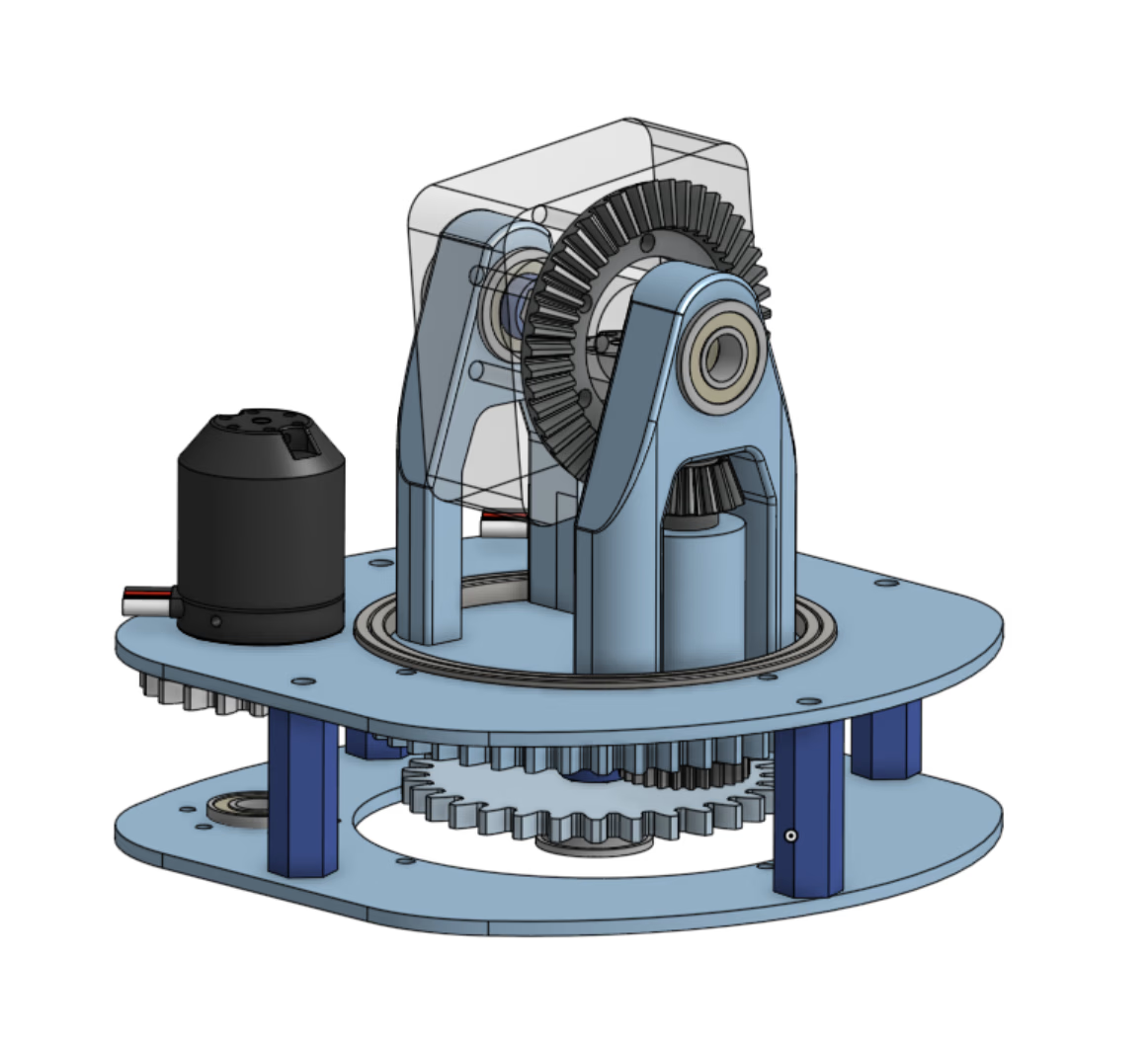
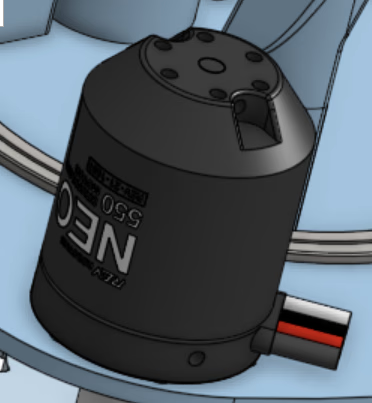
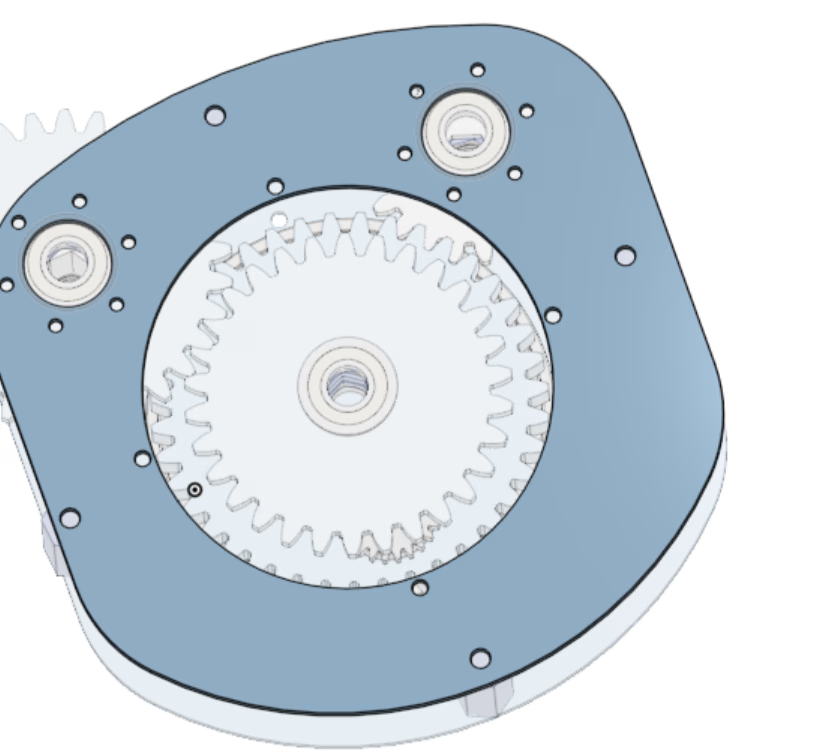
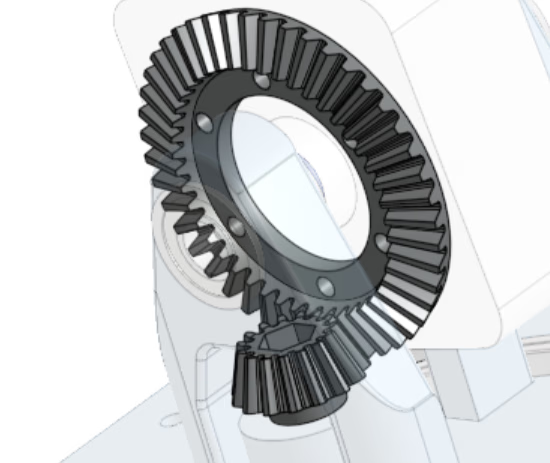
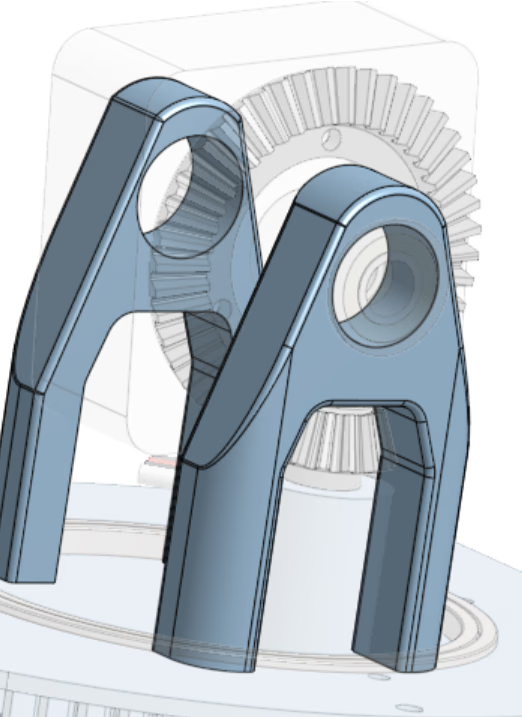
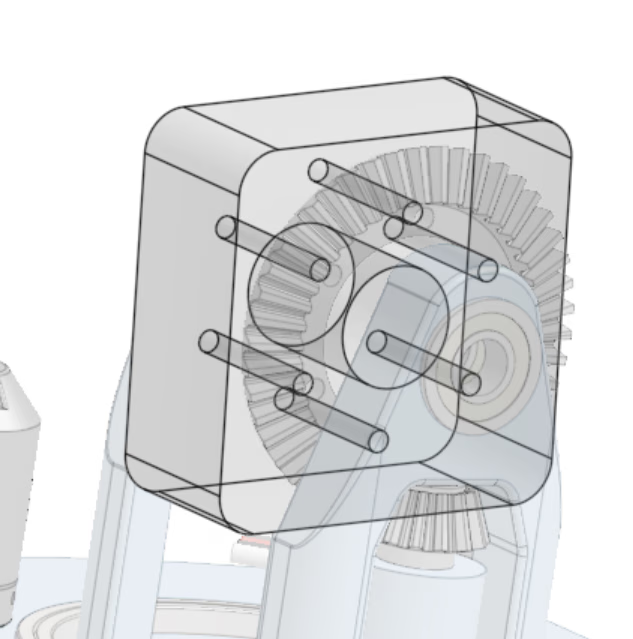
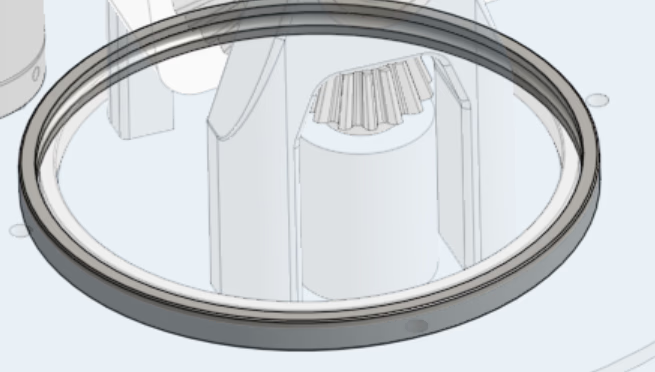
The clinostat is built from a mix of off-the-shelf and custom-cut components. Scroll through the build: each part arrives with what it does, and the finished machine runs at the end. The CAD views of every part follow.
CAD views of the full assembly and each part