Cycle 1 / Wet LabImproving Detection Specificity
Design
Our previous signal peptide screening using sfGFP identified DsbA and TolB as promising candidates for periplasmic targeting. We therefore selected these two signal peptides for further evaluation with three target proteins, G-CSF, PfCHT1, and human leptin. By expressing these proteins in our ala/pro-engineered chassis and comparing their levels in the soluble and insoluble fractions, we aimed to evaluate whether the combination of signal peptide-mediated targeting and our engineered chassis could improve soluble protein expression.
Build
We constructed pET-21a(+)-based expression plasmids encoding G-CSF, PfCHT1, and human leptin fused to either the DsbA or TolB signal peptide. These constructs were then transformed into our ala/pro-engineered chassis for protein expression.
Test
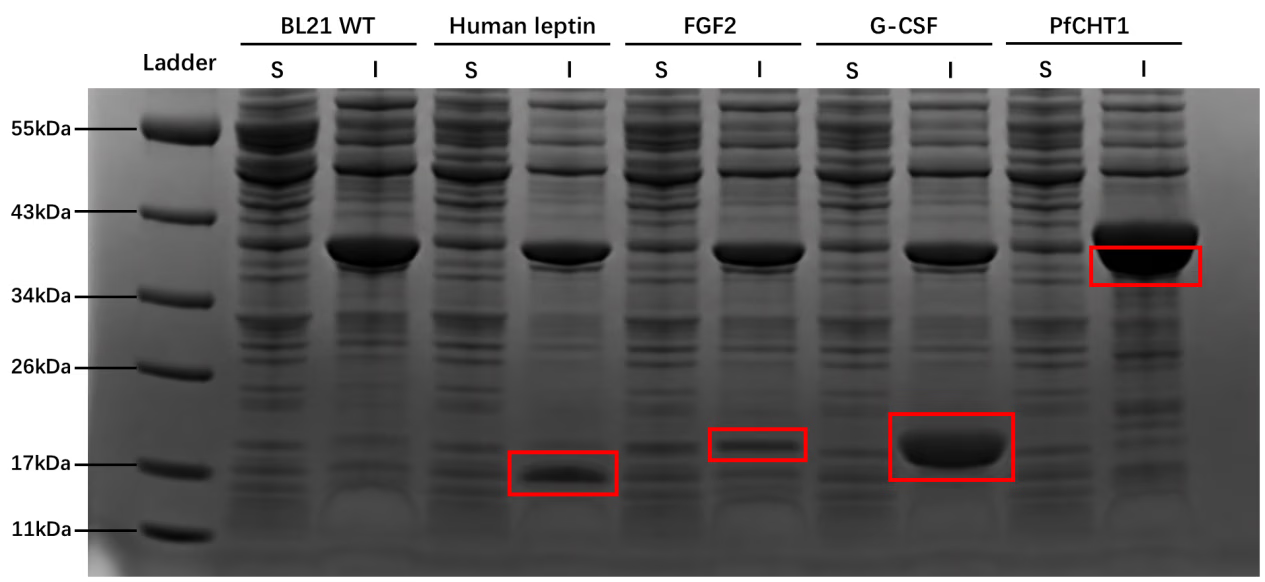
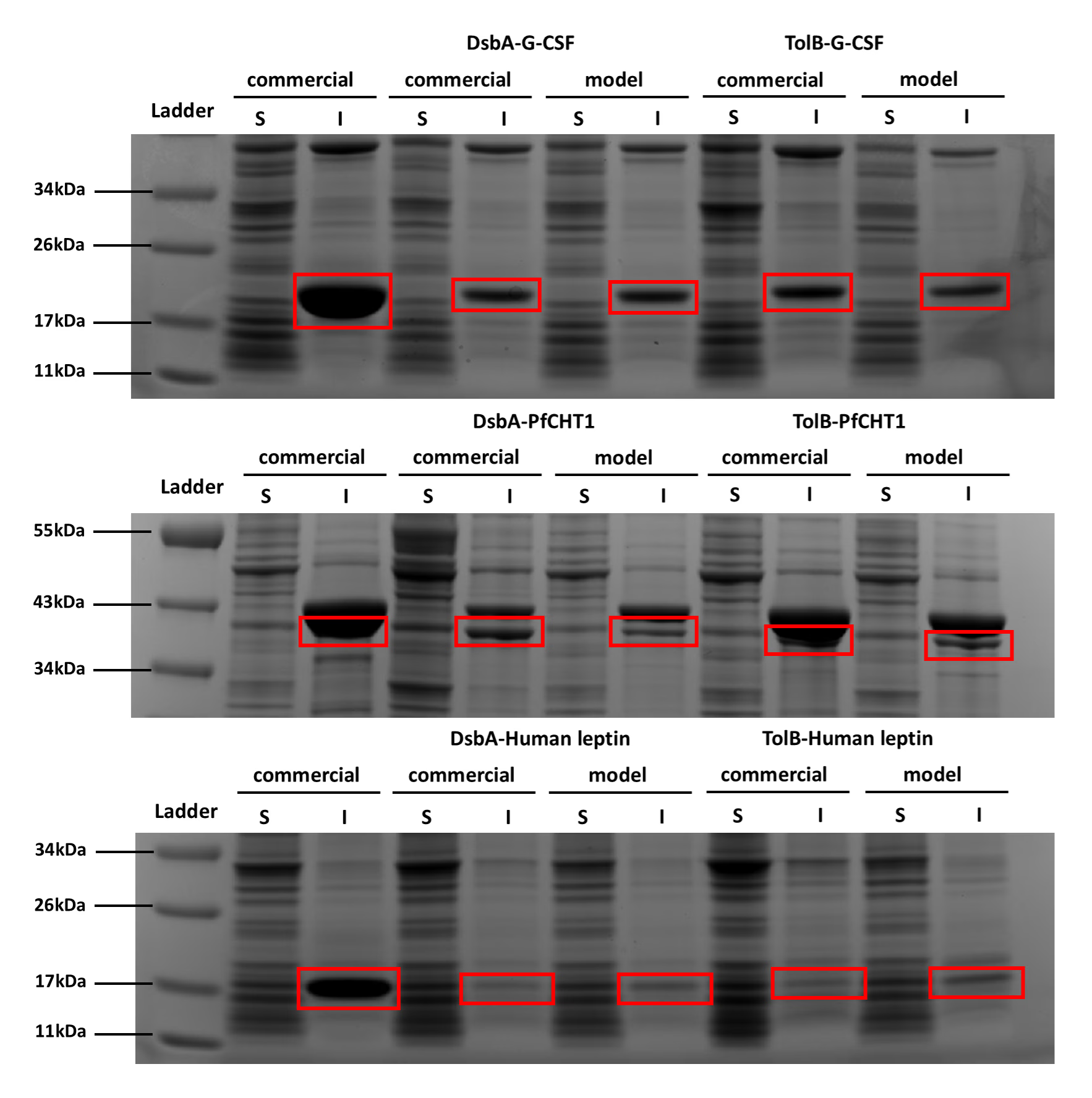
All experimental groups were cultured for the same duration under identical growth conditions and induced with the same IPTG concentration. Soluble and insoluble protein fractions were then prepared and analyzed by Coomassie-stained SDS-PAGE. Bands near the expected molecular masses of the target proteins were observed in the insoluble fractions. However, the complex host-protein background in the soluble fractions made it difficult to distinguish the target proteins and reliably assess differences in soluble expression between experimental groups.
Learn
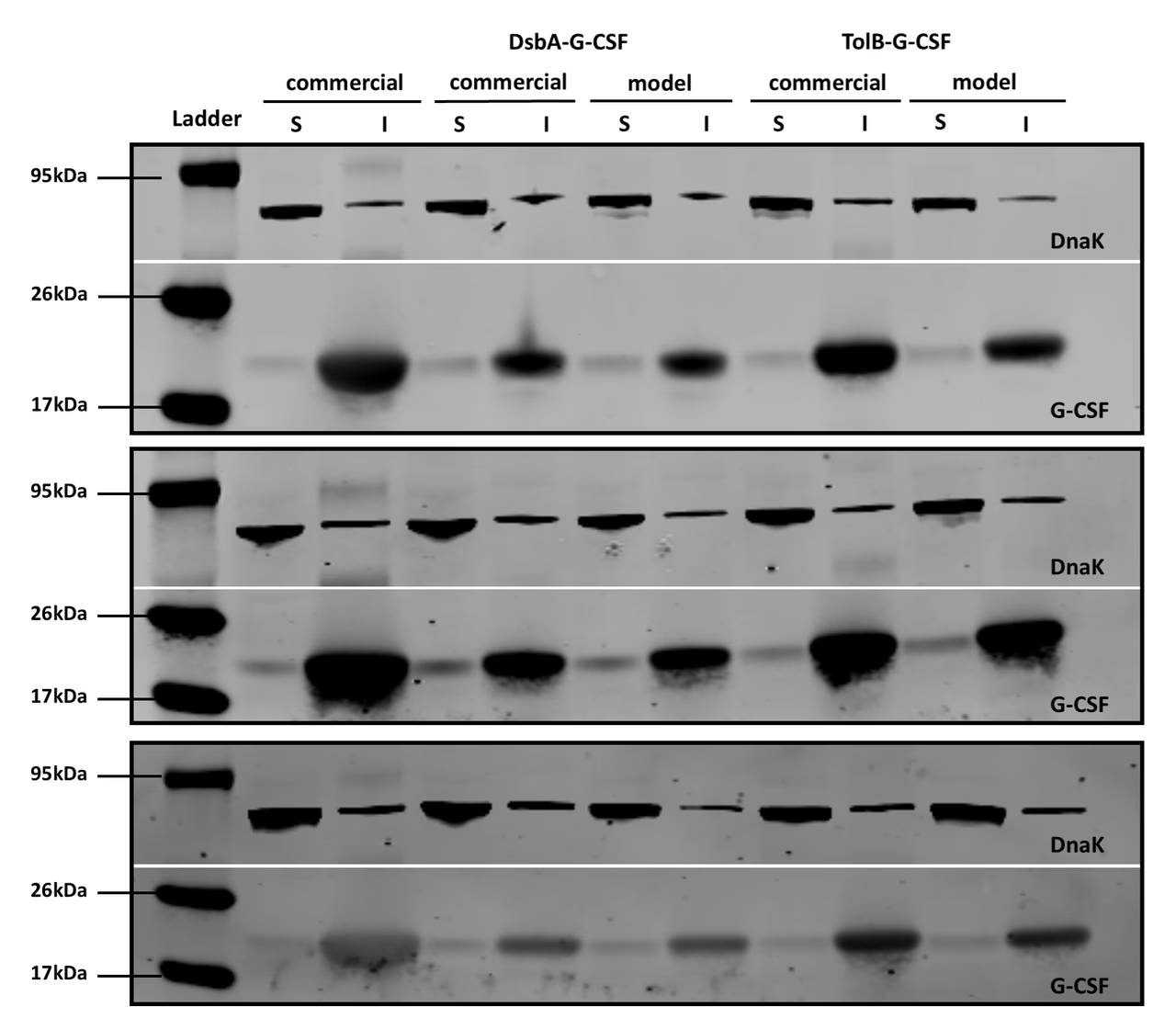
Coomassie-stained SDS-PAGE provided an initial view of protein expression, but its limited target specificity made it difficult to accurately evaluate soluble target protein levels. To obtain target-specific detection and enable further quantitative analysis, we adopted anti-His Western blotting for the signal peptide-fused proteins.