Science only matters when people can truly benefit from it. Starting from inclusion bodies and bio-manufacturing—a question the public rarely meets—we carry human practice into every step of dogmaOS.
Science and everyday life cannot and should not be separated.
— Rosalind Franklin
01 / Introduction
For Franklin, science and everyday life were always closely connected. In the same way, protein expression technologies have long become part of our daily lives. From medicines and food to diagnostic products, many seemingly ordinary applications depend on whether proteins can be produced reliably and cost-effectively.
From a Conversation to CARE
During our conversation with Dr. Lanlan Han, the discussion moved beyond whether dogmaOS could simply “work”. We began to consider what else should matter when a technology moves from an experimental idea toward real-world use.
Dr. Lanlan Han
“Technical feasibility is only one part of the question. Who can actually benefit from the technology? How strong is the evidence behind your decisions? Does it respond to real needs, and what responsibilities come with putting it into practice?”
XJTLU-China
That question led us to frame four concerns that we wanted to carry throughout the project:
Care about people — Who can access this technology, and who can truly benefit from it?
Care about experimentation — Are our experiments sufficient, and does the evidence support our conclusions?
Care about the world — Does the technology respond to real-world needs and constraints?
Care about consequences — What impacts and responsibilities may arise during its development and use?
Through literature research, education activities, field visits, and continuous dialogue with different stakeholders, we repeatedly brought these insights back into the design and development of dogmaOS. Over time, these reflections converged into our CARE framework: Create Accessibility, Accountable Storytelling, Real-world Alignment, and Ethical Design.
For us, CARE represents a commitment: innovation in technologies such as dogmaOS should not remain confined to theory and experimentation. It should also respond to the real needs behind the research and take seriously the responsibilities that come with putting technology into practice.
02 / Core Value: CARE
C
Create Accessibility
Create Accessibility means making the path toward usable protein more achievable, flexible, and understandable. Existing protein production processes often require substantial expertise, considerable resources for trial and error, or access to established external services. These requirements can be difficult to meet for academic laboratories, early-stage research teams, and iGEM teams with only basic facilities for E. coli cultivation and protein expression. dogmaOS aims to offer a more flexible upstream optimization option, giving these teams more opportunities to obtain proteins suitable for further research, even with limited resources, rather than being held back by repeated trial and error.
A
Accountable Storytelling
Accountable Storytelling means taking responsibility for every judgment and trade-off made throughout the project. We explain how key decisions were made and acknowledge the limitations and consequences associated with those choices. This includes documenting experimental results, model analyses, and stakeholder perspectives; explaining the trade-offs made after comparing alternative approaches; and showing how external feedback changed the project. We present an evolving development process in which we continually refine the project’s scope and avoid overstated claims, allowing readers to understand both the evolution of dogmaOS and its current limitations.
R
Real-World Alignment
The value of a technology lies in whether it responds to real-world needs. Through discussions with researchers, protein production companies, and industry experts, we focused dogmaOS on proteins that are hard to express in E. coli and have clear research uses. G-CSF, leptin, PfCHT1, FGF2 allow us to test strategy in contexts such as public health, rare disease, and basic research. Working toward a better future, dogmaOS also aligns with four Sustainable Development Goals (SDGs), including SDGs 3, 9, 12, and 17.
E
Ethical Design
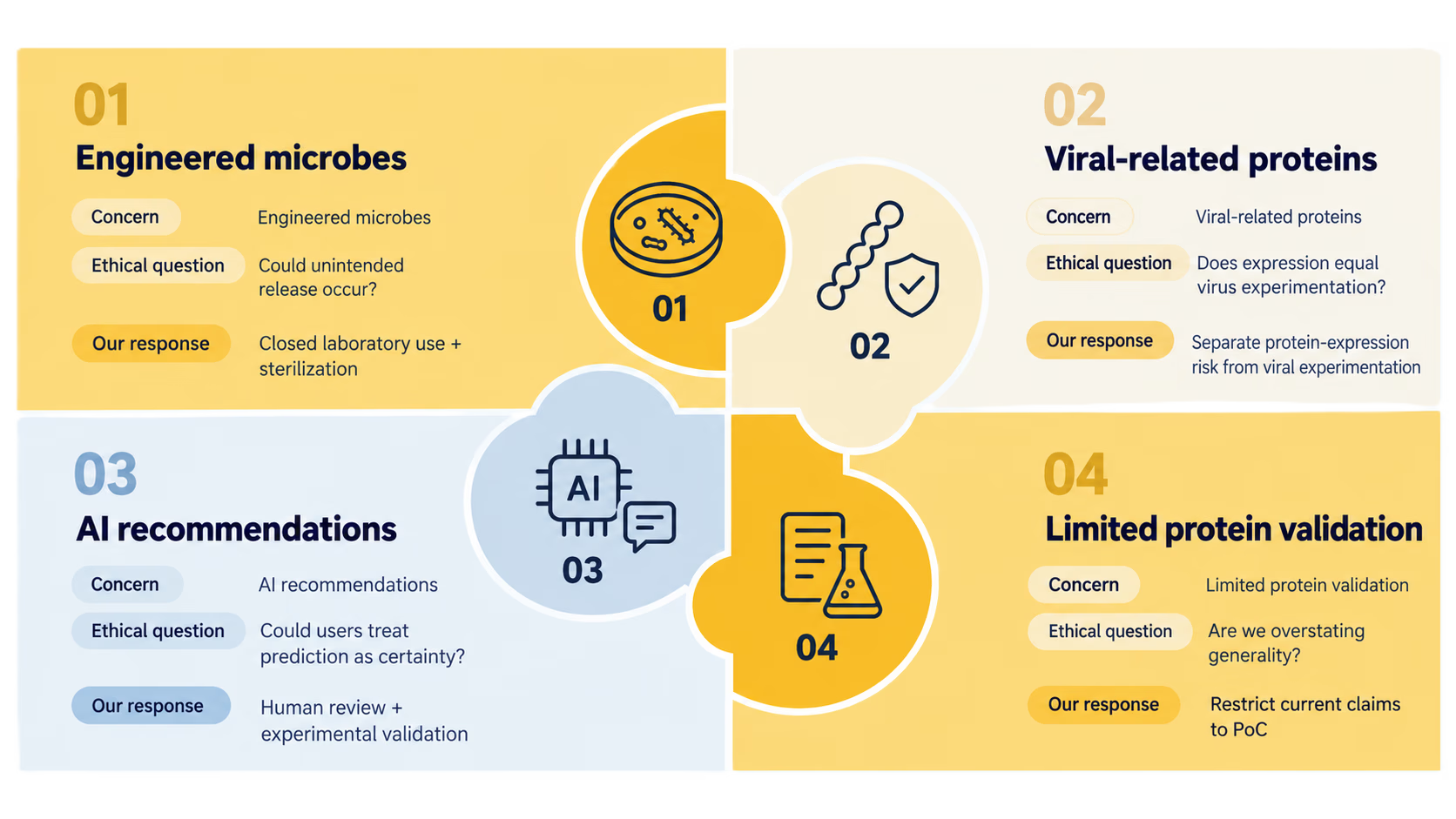
Ethical considerations should be integrated into design and practice throughout the project’s lifecycle. dogmaOS incorporates non-pathogenic laboratory strains, BSL-1 laboratory practices, autoclaving of biological waste, and FLP-FRT-mediated removal of the kanamycin-resistance cassette after genome editing. When considering industrial production, we prioritize biosafety and controllability in candidate protein selection, the use of engineered microorganisms, and the definition of application scenarios. We also avoid presenting unvalidated clinical applications, environmental release, or large-scale production as established uses of the platform. Our AI-assisted design work likewise incorporates data privacy protection, review of model bias, and safeguards against misuse.
03 / Interview Timeline
Recombinant proteins are widely used in scientific research, medicine and biotechnology, and E. coli is one of the most widely used hosts for their production. (Rosano & Ceccarelli, 2014) But high expression does not always guarantee usable protein: recombinant proteins may misfold or accumulate in inclusion bodies, reducing the amount recovered in soluble form. (Rosano & Ceccarelli, 2014) To see how this problem appears in practice, we read the literature, then talked with academic researchers and industry professionals.
What the literature told us
We began dogmaOS to boost heterologous protein expression in E. coli, assuming it could suit many proteins. The literature changed that view.
1. E. coli is useful, but not universal. It is fast, cheap, and widely used for biopharmaceuticals, but proteins needing disulfide bonds or eukaryotic modifications are hard to make in its reducing cytoplasm. (Rosano & Ceccarelli, 2014; de Marco, 2009)
2. Inclusion bodies shift difficulty downstream. Recovery needs solubilization, refolding, and purification, with refolding tuned per protein. High total expression is an incomplete measure of success. (Singh et al., 2015)
3. Existing fixes are protein-specific. Lower temperature, tags, chaperones, and periplasmic targeting help some targets, while translation pauses can coordinate synthesis with folding. (Zhang et al., 2009)
These findings raised two questions: what counts as successful expression, and does the problem matter in real production? We asked an academic expert from our school, Dr. Antony Kam.
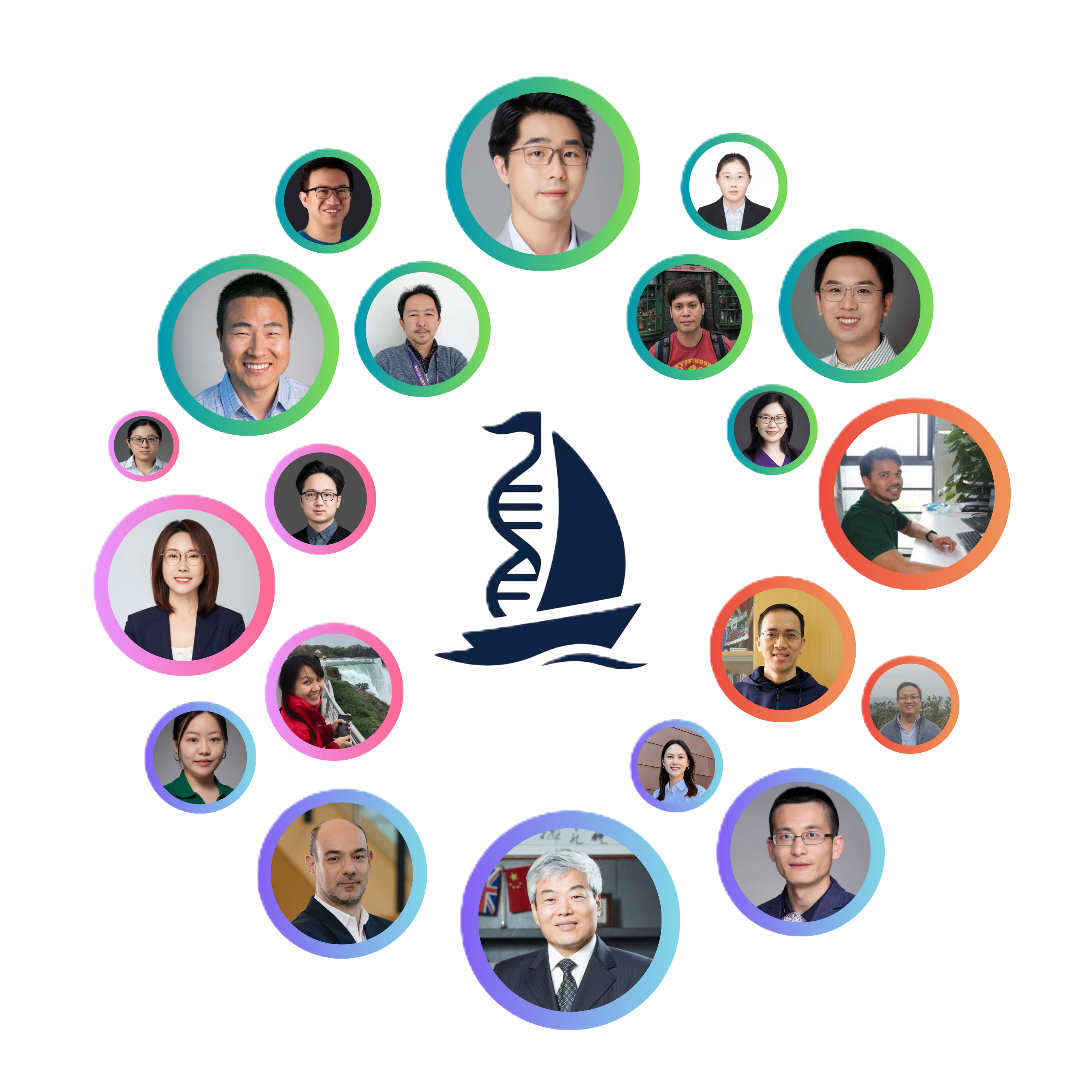
Dr. Antony Kam
Assistant Professor, Academy of Life and Natural Sciences, Xi’an Jiaotong-Liverpool University
Click to view details
Dr. Xijun Piao
Biotechnology Industry Expert, CATUG Biotechnology (Suzhou) Co., Ltd.
Click to view details
Our early problem definition
The combined literature review and stakeholder engagement led us to define the problem as follows:
For selected difficult-expression proteins, increasing total expression in E. coli may not improve protein usability. Aggregation, inclusion-body formation, and folding-related limitations can shift the burden to downstream recovery and reduce the value of the final product.
Therefore, dogmaOS is not positioned as a universal protein-production platform or a strategy to maximize expression under every condition. It is an upstream expression-optimization strategy that investigates whether translation-related design and folding-environment engineering can improve the soluble output of selected proteins in E. coli.
Dr. Yongtao Zhu
Associate Professor, Academy of Life and Natural Sciences, Xi’an Jiaotong-Liverpool University
Click to view details
Dr. Chun Chan
Assistant Professor, Academy of Life and Natural Sciences, Xi’an Jiaotong-Liverpool University
Click to view details
Dr. Sheng Yang
Professor, Shanghai Institutes for Biological Sciences, Chinese Academy of Sciences
Click to view details
Prof. Zhiliang Lu
Professor, Academy of Life and Natural Sciences, Xi’an Jiaotong-Liverpool University
Click to view details
Dr. Avinash Pandreka
Oxford Suzhou Centre for Advanced Research
Click to view details
Dr. Kozo Hamada
Associate Professor, Academy of Life and Natural Sciences, Xi’an Jiaotong-Liverpool University
Click to view details
Dr. Zhongmei Liu
Professor, School of Biotechnology, Jiangnan University
Click to view details
Our mid-stage refinement
Our consultations showed that translation speed alone could not explain protein folding outcomes. Model predictions also needed to be tested in living cells, while host tRNA supply, ribosome traffic, cotranslational folding, transport, and other protein-specific factors could all influence the result.
Therefore, we refined dogmaOS from a broad translation-control concept into a testable engineering strategy. We introduced experimental feedback, narrowed validation to representative proof-of-concept proteins, and began to distinguish solubility improvement from stronger claims about folding and function.
Mr. Weiqiang Liu
Co-founder & R&D Lead, SynBio Technologies
Click to view details
Ms. Zhaoli Zhou
Biopharmaceutical CMC and Process Development Professional, Xi’an Jiaotong-Liverpool University
Click to view details
Dr. Rong Rong
Senior Associate Professor, Academy of Life and Natural Sciences, Xi’an Jiaotong-Liverpool University
Click to view details
Dr. Wenjun Zhu
Assistant Professor, Xi’an Jiaotong-Liverpool University
Click to view details
Dr. Lanlan Han
Assistant Professor, Academy of Life and Natural Sciences, Xi’an Jiaotong-Liverpool University
Click to view details
Our late-stage positioning
Stakeholder engagement showed that the value of dogmaOS depends not on how broadly it could theoretically be applied, but on whether it addresses a real gap in existing protein-production workflows. Researchers and service providers may still face difficult-expression proteins when standard workflows are insufficient, while extensive optimisation or refolding can add time and complexity.
Therefore, we position dogmaOS as a complementary, context-dependent upstream optimisation strategy for selected difficult-expression proteins in E. coli. Our current evidence supports conclusions about expression and solubility, while function, usability, and broader applicability remain questions for further validation.
04 / Care Analysis
C — Create Accessibility
The Accessibility Gap
Create Accessibility means making the path toward usable protein more achievable, flexible, and understandable.
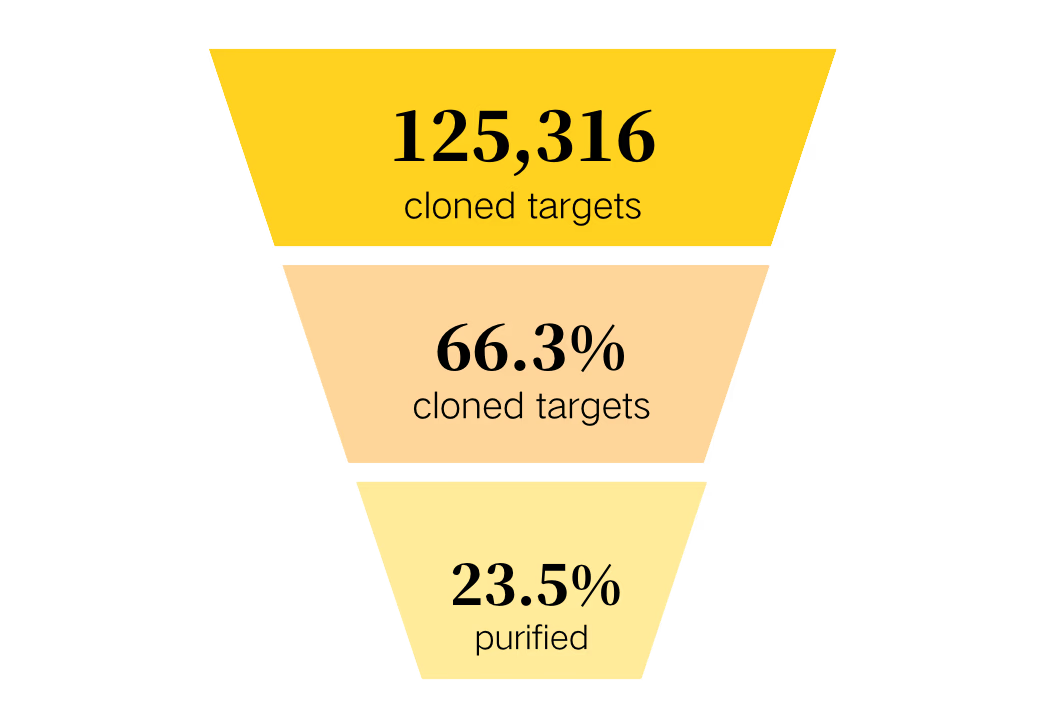
In recombinant protein expression, a gap remains between what researchers need and what production workflows can deliver. A review of large-scale, standardized protein production pipelines in structural genomics reported that, among 125,316 cloned protein targets, 66.3% were successfully expressed, but only 23.5% reached the purified-protein stage. (Terwilliger et al., 2009) The transition from expression to obtaining protein suitable for purification was one of the major points of loss. Another study drawing on standardized E. coli expression experience with more than 20,000 proteins showed that, even when many proteins achieved good expression levels, their solubility was generally much lower, and different proteins responded very differently to the same standardized workflow. (Makowska-Grzyska et al., 2014)
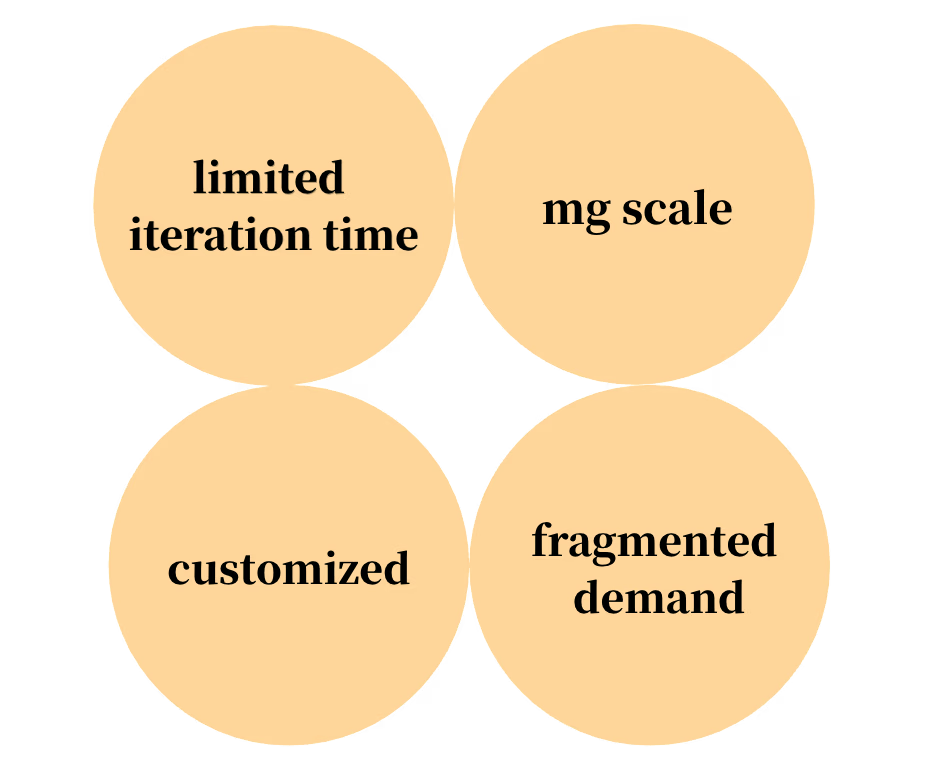
Our stakeholder feedback made this broader problem more concrete. Synbio Technologies told us that many of its recombinant protein projects come from universities and research institutes, where common requests involve milligram-scale quantities of diverse, customized proteins. For these projects, complex refolding procedures can significantly extend delivery times, while commercial providers cannot carry out unlimited rounds of trial and error for an individual protein. From the research user’s perspective, Wenjun Zhu also noted that, even when a team can outsource protein production, the service provider may not continue to optimize one particular protein in depth.
Where Does the Gap Appear?
Further discussions helped us recognize that accessibility challenges are not evenly distributed. For proteins with established expression workflows, stable demand, and clearly defined production scales, existing platforms can usually provide efficient solutions. The real gap lies in the middle ground, where standard workflows fail but dedicated process development is not practical.
In the research service contexts we encountered, these needs generally shared several characteristics:
Small and fragmented demand. Individual projects often require only milligram-scale quantities, but involve diverse proteins and fragmented demand.
Protein-specific optimization. Different proteins often require different expression optimization strategies.
Limited capacity for trial and error. Time, personnel, and equipment are limited, while commercial services face additional constraints from delivery timelines.
Therefore, Create Accessibility mainly focuses on academic laboratories, student research teams, and similar groups facing small-scale, customized needs for difficult-to-express proteins.
Redefining
Early in the project, we readily associated accessibility with low cost: E. coli is a relatively inexpensive expression host. Over time, however, we found that price was only one part of the picture.
For researchers, true accessibility also depends on whether usable results can be obtained, whether alternative options exist, whether trial-and-error remains manageable, and whether decisions are understandable. We therefore define Create Accessibility through four interconnected dimensions:
Outcome Accessibility — Access to usable protein The protein obtained should be usable for downstream research, rather than merely successfully expressed.
Option Accessibility — Access to alternative paths When standard expression workflows fail, researchers should still have practical optimization options.
Process Accessibility — Access within manageable constraints Requirements for time, experimental rounds, equipment, and expertise should remain manageable.
Knowledge Accessibility — Access to understandable decisions Researchers should understand why an option is worth trying, when it is applicable, and where it may fail.
Turning Accessibility into a Design Goal
To make accessibility a design goal, we need to translate it into specific design questions. dogmaOS explores whether an additional upstream optimization option can be offered alongside standard approaches. Our modeling aims to lower the barrier to decision-making: rather than providing predictions alone, it should explain which factors to test first, what assumptions the model relies on, and where it is not applicable.
However, our current results are not sufficient to demonstrate that dogmaOS has improved accessibility. More systematic comparisons at the user and workflow levels will be needed in the future.
A — Accountable Storytelling
As dogmaOS entered validation, we needed to decide what counted as improvement, which proteins were suitable for testing, and how far our evidence could support broader claims. Accountable storytelling means making these choices transparent and keeping every claim proportional to the evidence behind it.
Decision 1
Measuring Improvement
At the beginning of the project, our definition of improvement was relatively simple: if dogmaOS increased the amount of target protein produced, we would regard the strategy as effective.
This assumption was soon challenged. Dr. Antony Kam pointed out that higher expression could still be accompanied by aggregation and inclusion-body formation.
Xijun Piao further explained that insoluble protein may require additional isolation, denaturation, and refolding before use.
These discussions shifted our attention from how much protein was produced to how much remained soluble.
Our evaluation standard changed again as we considered what solubility could actually demonstrate. Dr. Kozo Hamada emphasized that soluble protein is not necessarily correctly folded or biologically active.
Prof. Zhongmei Liu suggested that solubility was still a practical preliminary indicator at our current stage.
Based on further advice from Lanlan Han, we therefore adopted total expression and soluble fraction as our primary readouts.
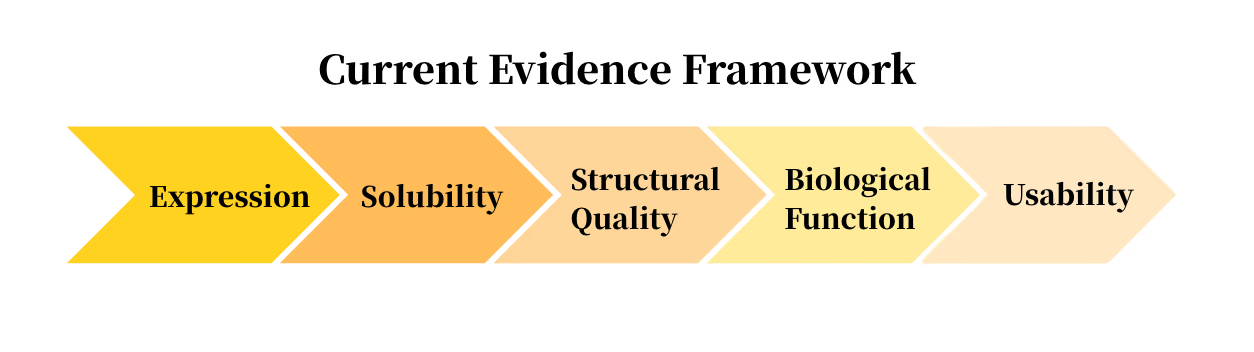
Through this process, our evaluation criteria evolved from a single measure of expression into a layered view of evidence:
Expression
Solubility
Structural Quality
Biological Function
Usability
This hierarchy also defined the limits of our claims. At the current stage, our data allow us to evaluate changes in expression and solubility, but not yet correct folding, biological function, reduced downstream burden, or industrial performance.
Decision 2
Reconsidering Candidates
Early in the project, BPTI and VHH nanobodies appeared to be attractive validation candidates.
From an HP perspective, both had clear value. BPTI is a classic model for protein folding and could help us discuss protein quality and correct folding, while VHH nanobodies are associated with research, diagnostic, and potential therapeutic applications, giving them strong real-world relevance.
However, as the experimental design became clearer, we began to balance social relevance, experimental feasibility, and interpretability, and gradually realized that a meaningful protein is not always the most suitable validation model.
For BPTI, its well-characterized folding behavior made it scientifically attractive. However, its multiple disulfide bonds mean that its folding is strongly influenced by oxidative folding and disulfide rearrangement. This could make it difficult to distinguish effects caused by translation pacing from those caused by the periplasmic folding environment.
For VHH nanobodies, their application potential remained attractive, but many VHHs can already achieve relatively good soluble expression in the E. coli periplasm. This made them less representative of the difficult-expression problems that later became central to our validation strategy. Functional validation would also require a defined VHH–antigen pair and an appropriate binding assay, adding further experimental requirements.
We therefore chose not to pursue these candidates because our final validation needed to balance social relevance, experimental feasibility, and interpretability.
Decision 3
Narrowing the Scope
Our early vision for dogmaOS was broad. We hoped that regulating translation could become a general strategy for improving recombinant protein production in E. coli.
As the project developed, this claim became increasingly difficult to justify. Protein-production professionals reminded us that different proteins respond very differently to expression strategies, and that no single method is likely to solve every expression problem. Industry feedback also showed that existing production workflows are shaped by application, scale, and downstream requirements. At the same time, validating only a small number of proteins could not support a claim of universal applicability.
We therefore gradually narrowed our description of dogmaOS from a broad protein-production platform to an upstream optimization strategy for selected difficult-expression proteins. At the current proof-of-concept stage, our conclusions are limited to the proteins, experimental conditions, and measurements we have actually tested.
For us, accountable storytelling means being honest not only about what dogmaOS can do, but also about what it has not yet proven.
R — Real-World Alignment
The Real Bottleneck
dogmaOS is an upstream expression-optimization platform. We first aimed to maximize total expression, but now we focus on improving the soluble expression of proteins that are hard to express in E. coli.
Dr. Antony Kam and SynBio Technologies told us that high expression does not necessarily produce a useful protein: misfolding, aggregation and inclusion bodies can compromise function, while refolding adds time and effort.
We therefore optimize an upstream bottleneck—not the entire journey from gene to product.
Where dogmaOS Fits
We position dogmaOS at the expression stage, exploring tRNA-pool engineering and periplasmic expression. Mr. Weiqiang Liu, Co-founder and R&D Lead of SynBio Technologies, told us that refolding can prolong delivery. Dr. Antony Kam highlighted production stability, consistency and cost as requirements for industries’ adoption of new methods. Ms. Zhaoli Zhou, who works in biopharmaceutical process development, noted that established production processes rarely switch expression systems, so a new approach is most useful for specific, high-value problems within existing workflows.
Our current validation is mainly at the expression stage, so it cannot yet clearly show downstream processing, scale-up, or economic value.
dogmaOS offers an upstream optimization strategy—not evidence of a complete, application-ready production process.
Representative Protein Contexts
We selected four proteins to connect dogmaOS validation with public-health research, clinical applications, rare-disease research, and laboratory use.
SDG Alignment
dogmaOS aligns with SDGs 3, 9, 12 and 17 by supporting health-relevant protein research, expanding expression-engineering tools, potentially reducing avoidable refolding burden, and building academic–industry dialogue. These are directions for future validation, not outcomes already achieved.
We do not claim lower drug prices, industrial-scale production, or clinical benefit. Our present contribution is to test an upstream expression strategy while making the downstream requirements—purification, endotoxin control, scale-up, consistency, Good Manufacturing Practice (GMP) and regulation—explicit.
E — Ethical Design
dogmaOS is a collaborative project involving the experimental, modeling, and HP teams. Ethical design is a shared responsibility across all three areas. Below, we outline our ethical practices at each level.
1. Biosafety
The experimental team’s ethical design centers on safety, covering both the current laboratory stage and potential future industrial applications.
Controlled Experimental Context
In its current implementation, dogmaOS was developed using laboratory strains of E. coli, with biosafety measures tailored to the genetic modifications and recombinant proteins involved. Engineered strains were handled within designated laboratory areas, while cultures and contaminated materials were managed through established biological waste-disposal procedures.
The recombinant proteins expressed in dogmaOS include human G-CSF and leptin, which have physiological signalling functions, and PfCHT1, a chitinase derived from Plasmodium falciparum. Their biological functions and origins were considered when assessing potential risks associated with unintended exposure, particularly during cell disruption and the handling of protein-containing lysates. For PfCHT1, our experiments involved recombinant expression in E. coli rather than cultivation of the malaria parasite itself.
These considerations led us to draw a clear boundary around our safety claims. What we can currently discuss is the safety of dogmaOS within the tested experimental context, rather than the safety of the platform across all possible applications.
Reducing Unnecessary Genetic Risk
Genome editing in dogmaOS involved auxiliary plasmids and antibiotic-resistance markers, whose retention after editing could leave unnecessary resistance determinants and genome-editing machinery in the final engineered chassis.
To minimise these risks, the chromosomal kanamycin-resistance cassette introduced during alaXW promoter replacement was excised, and the helper plasmids pSIM6 and pCP20 were subsequently cured. Similarly, pEcCas and pEcgRNA were removed following proL promoter modification. These removal steps were verified through antibiotic-resistance screening, PCR, and sequencing as appropriate, reducing the retention of editing-related genetic elements in the final chassis.
This changed how we understood biosafety within Ethical Design. Safety is not only about controlling engineered organisms after they have been created; it can also mean avoiding the unnecessary retention of genetic elements once they are no longer required.
Safety Is Context-dependent
A key feature of dogmaOS is the combination of synonymous codon optimization with host tRNA-pool engineering. Since tRNA availability influences the translation of both recombinant and endogenous proteins, applying this strategy to different microbial chassis could produce host-dependent effects.
Differences in genetic background, pathogenic potential, and environmental adaptability may further alter the associated biosafety risks. In addition, the potential use of this expression-optimization approach for producing biologically hazardous proteins raises dual-use concerns.
These considerations made us reconsider safety as a fixed property of the platform. Instead, the safety profile of dogmaOS should be assessed in the context of each application, rather than assumed to remain unchanged across different hosts and target proteins.
2. AI & Data Responsibility
The modeling team’s ethical design focuses on emerging risks associated with AI-assisted design.
Potential safety risks in the dogmaOS model fall into three categories: inaccurate predictions, unintended effects of host modifications, and misuse of expression optimization. Limited data coverage and differences between hosts or experimental conditions may prevent recommendations from translating reliably into practice.
To reduce these risks, we treat predictions as hypotheses rather than final decisions, document model limitations, and subject candidate designs to human review and experimental validation. Changes to the host’s tRNA pool may affect translation beyond the target protein and impair growth. Evaluation should therefore consider host fitness, broader changes in translation, and target protein yield together, rather than equating increased expression with safety.
Expression optimization may also have dual-use implications. Target proteins and intended applications should undergo biosafety review, and proposals that raise significant concerns should be paused and referred for expert assessment. Unpublished sequences and experimental results may be exposed through inappropriate storage or sharing; access should therefore be restricted, and reuse should require authorization. When code or data are released, they should be accompanied by clear licensing, attribution, and documentation of the model’s intended scope.
Together, these safeguards form a framework for reducing risk without treating computational performance as a substitute for biosafety assessment.
3. Societal Dialogue
The HP team’s ethical design focuses on the interface between the project and society: how we identify ethical issues, respond to external concerns, and translate ethical considerations into concrete actions as the project develops.
During our interviews, ethical issues did not arise primarily from direct questions we asked about ethics. Instead, they emerged as concerns repeatedly raised by interviewees during the discussions.
In public communication and institutional dialogue, we face a practical challenge: the technical details of dogmaOS can be difficult for the public to understand. Our strategy is to discuss scenarios and products rather than technical details. In our survey design, we distinguish between safety concerns and simple unfamiliarity. The former requires regulation and third-party testing, while the latter can be addressed through science communication. We will not use science communication as a substitute for addressing safety concerns, nor will we treat unfamiliarity as opposition. We also plan to interview the university’s ethics committee to understand common blind spots in the ethical review of synthetic biology projects. Interviews with legal professionals will likewise be included in our framework, focusing on issues such as GMO regulation, AI data compliance, and intellectual property.
The HP team’s ethical work can be summarized in three commitments:
Do not avoid ethical issues: actively identify and respond to them.
Do not overstate the project: present dogmaOS only as an engineering strategy that remains at the proof-of-concept stage.
Do not work in isolation: ethics is not the responsibility of the HP team alone. The experimental team is responsible for laboratory safety, the modeling team for AI risk management, and the HP team for communication with society. All three are essential.
05 / Conclusion
Inclusion bodies remain a major bottleneck in producing recombinant proteins, for research and for industry. As a protein translation optimization platform, dogmaOS could give small labs another route to usable protein, therefore support scientific innovation. For some proteins, fewer refolding steps could also indirectly ease the production burden. Throughout the project, we used our CARE framework to guide our interviews, outreach, and community engagement.
We thank everyone who helped us build dogmaOS. From the researchers who gave us honest feedback to the learners who talked with us openly during our activities, XJTLU-China iGEM is grateful to those who helped us create change.
Together, We hope dogmaOS can, step by step, contribute to a more sustainable future.
References
Rosano, G. L., & Ceccarelli, E. A. (2014). Recombinant protein expression in Escherichia coli: Advances and challenges. Frontiers in Microbiology, 5, Article 172. https://doi.org/10.3389/fmicb.2014.00172
de Marco, A. (2009). Strategies for successful recombinant expression of disulfide bond-dependent proteins in Escherichia coli. Microbial Cell Factories, 8, Article 26. https://doi.org/10.1186/1475-2859-8-26
Singh, A., Upadhyay, V., Upadhyay, A. K., Singh, S. M., & Panda, A. K. (2015). Protein recovery from inclusion bodies of Escherichia coli using mild solubilization process. Microbial Cell Factories, 14, Article 41. https://doi.org/10.1186/s12934-015-0222-8
Zhang, G., Hubalewska, M., & Ignatova, Z. (2009). Transient ribosomal attenuation coordinates protein synthesis and co-translational folding. Nature Structural & Molecular Biology, 16(3), 274–280. https://doi.org/10.1038/nsmb.1554
Makowska-Grzyska, M., Kim, Y., Maltseva, N., Li, H., Zhou, M., Joachimiak, G., Babnigg, G., & Joachimiak, A. (2014). Protein production for structural genomics using E. coli expression. In W. F. Anderson (Ed.), Structural genomics and drug discovery: Methods and protocols (Methods in Molecular Biology, Vol. 1140, pp. 89–105). Humana Press. https://doi.org/10.1007/978-1-4939-0354-2_7