History
The Antibiotic Era
|
History
The Discovery of Antibiotics
Before the discovery of antibiotics, bacterial infections represented one of the leading causes of death and a constant threat to human health. This scenario changed in 1928 with Alexander Fleming's discovery of penicillin, a molecule that revolutionized medicine by demonstrating that microbial compounds could selectively inhibit bacterial growth.
The development and large-scale production of penicillin during World War II transformed it into a life-saving therapy and marked the beginning of the "golden age" of antibiotic discovery. However, despite its effectiveness against many Gram-positive bacteria, penicillin was ineffective against pathogens such as Mycobacterium tuberculosis and several Gram-negative bacteria.
The urgent need for new treatments led Selman Waksman and Albert Schatz to screen bacterial isolates in search of new antimicrobial compounds. Their work resulted in the discovery of streptomycin in 1944, the first antibiotic identified from the genus Streptomyces. This discovery opened the way for the isolation of several other antibiotics from this bacterial group.
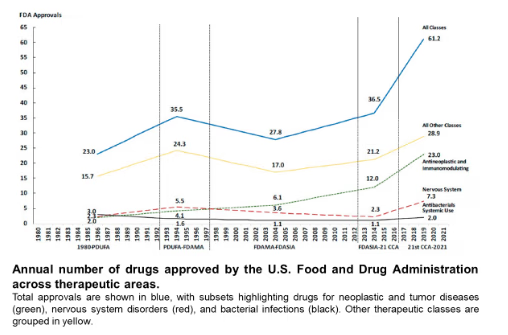
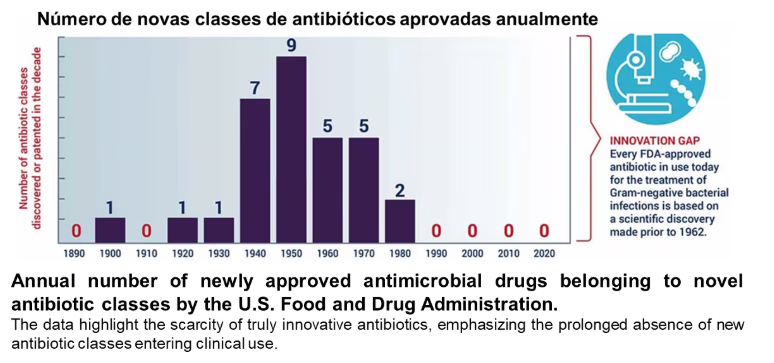
However, antibiotic discovery has slowed considerably. Since 1985, only a limited number of new antibiotic classes have been discovered, highlighting the urgent need for innovative strategies to combat antimicrobial resistance.
The Antibiotic Era
1928
Discovery of Penicillin
Alexander Fleming discovered penicillin, beginning the antibiotic era.
1940s
Golden Age of Antibiotics
Mass production of antibiotics transformed modern medicine.
1944
Discovery of Streptomycin
The first antibiotic discovered from Streptomyces.
1985–Present
Decline in Antibiotic Discovery
The slowdown in new antibiotic classes highlights the need for new solutions.
The Problem
The Antibiotic Discovery Crisis photo
From miracle drugs to antimicrobial resistance
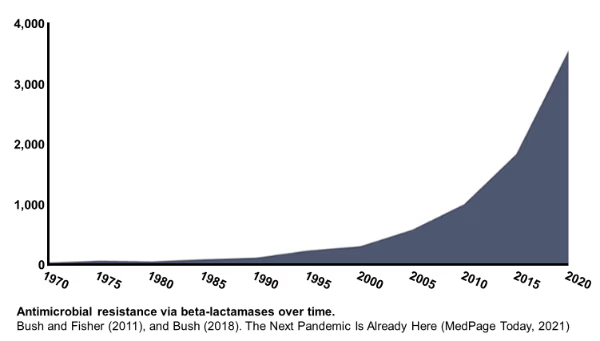
Penicillin transformed modern medicine by providing an effective treatment against bacterial infections. However, what was once considered a miracle of science was soon followed by a growing challenge: antimicrobial resistance. Already in 1940, Abraham and Chain described the first enzyme capable of degrading penicillin, revealing that bacteria could develop mechanisms to escape antibiotic action.
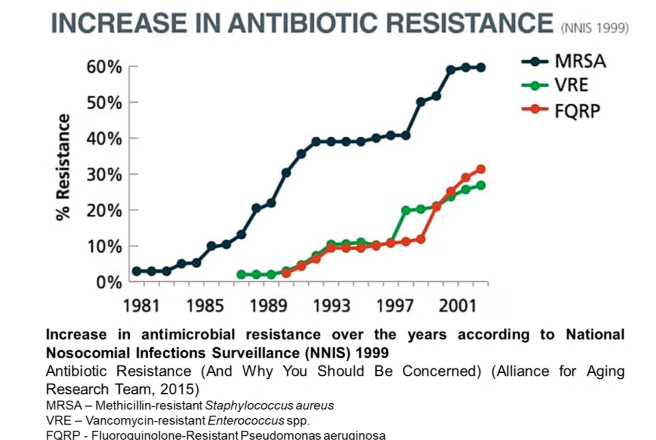
Shortly after, resistant strains of Staphylococcus aureus were identified in hospitals, marking the beginning of a continuous evolutionary arms race between antibiotic development and bacterial adaptation.
The Evolution
Bacteria kept evolving
To overcome increasing resistance, scientists developed semi-synthetic antibiotics, including beta-lactamase-resistant penicillins such as oxacillin, methicillin and dicloxacillin. However, bacterial populations continued to acquire resistance genes through mobile genetic elements such as plasmids and bacteriophages.
Resistance Timeline
First penicillin-degrading enzyme discovered
Second-generation penicillins developed
Aminopenicillins introduced
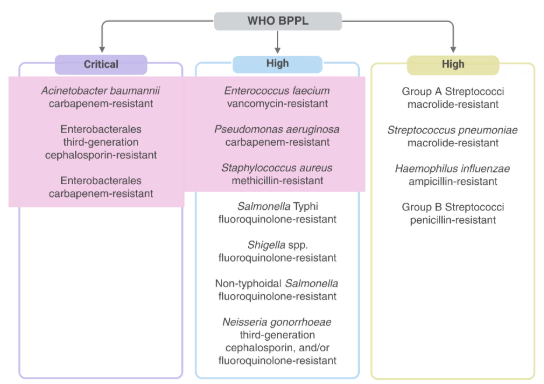
Multidrug-resistant pathogens threaten clinical treatments
The Challenge
A race we are losing
Resistance rises
Multidrug-resistant bacteria continue to emerge, reducing the effectiveness of available treatments.
Discovery slows
No new major antibiotic classes have reached clinical use for decades.
Innovation is needed
New strategies are required to discover unexplored antimicrobial molecules.